A 9-Year-Old Girl Buried Her Mother With Almost No One There—Then 30 Bikers Found Her and Made a Promise They Kept for 22 Years
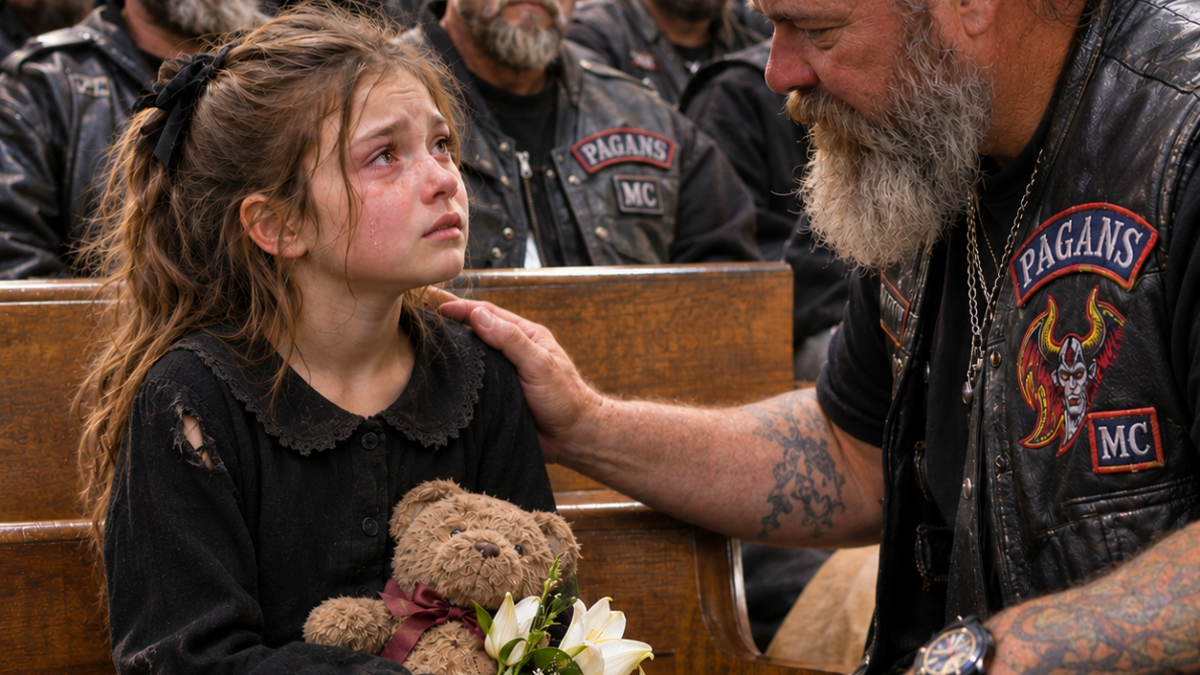
A 9-Year-Old Girl Buried Her Mother With Almost No One There—Then 30 Bikers Found Her and Made a Promise They Kept for 22 Years.
I was nine years old when my mother died with almost no family left in America, and three days after her nearly empty funeral, thirty patched bikers who had known her only as the waitress who remembered their coffee orders learned that she had left behind a little girl with nowhere permanent to go.
Those men could not undo the fact that they had missed her funeral, so they voted unanimously on something much stranger and much harder to keep: that every Thursday, for as long as I wanted them, they would sit me at the diner table my mother had served for six years, buy my dinner, tell me stories about her, and make sure I never had to grow up believing she had disappeared without leaving people behind who remembered her.
Twenty-two years later, I am preparing to marry a kind man named Jake, and when I walk into my wedding in May of 2026, twenty-six of those bikers will be there in their cuts, two more will be watching on a screen, two chairs will remain empty for the men we buried along the way—and every one of them will still be keeping the promise they made to a nine-year-old girl who answered one question with, “Okay. We can be sad together.”
My name is Hannah Maeve Pendergast.
I am twenty-nine years old.
I live in a small two-bedroom apartment off East 7th Street in the West Hill neighborhood of Allentown, Pennsylvania.
I teach special education at a public elementary school not far from where I grew up.
I spend my weekdays helping children find ways to communicate what they need when the words do not come easily.
Sometimes that means visual schedules.
Sometimes it means sensory breaks.
Sometimes it means sitting on the floor beside a child who has decided the floor is the only safe place in the entire building.
My principal, Mrs. Constance Ahrens, once asked me why I was so patient with children who did not trust adults right away.
I told her the truth.
Because when I was nine years old, a group of adults I had every reason to be afraid of gave me all the time in the world to decide whether I wanted them in my life.
I am writing this in November of 2025 because I am getting married next May.
The second Saturday.
Jake Wernicke and I have already booked the small ceremony venue.
The flowers will be simple.
The guest list is not.
There will be teachers.
Neighbors.
Friends.
A few relatives from Jake’s side.
And there will be bikers.
A lot of bikers.
Twenty-six men in leather cuts will walk into the ceremony together.
Two more will appear on a video screen because age and health have made travel impossible.
Two front-row chairs will remain empty.
One for Edmund “Cap” Whitlock.
One for Donny “Tank” Petrosky.
Cap died in 2017.
Tank in 2021.
Their chairs will still be there.
Jake suggested that.
I loved him a little more when he did.
To understand why, you need to understand my mother.
Her name was Maeve Niamh O’Connell-Pendergast.
She was born in County Galway, Ireland.
She came to the United States in 1992.
PART2:
She was young enough to believe starting over in another country could be difficult and still worth doing.
She gave birth to me on March 18, 1994.
She was twenty-two.
My father was not, by any generous version of the truth, a good man.
I do not hate him.
That took years.
I do not romanticize him either.
He left when I was four.
He did not remain meaningfully involved.
By the time I was old enough to understand that fathers were supposed to stay, my mother had already taught me that one reliable parent was better than two adults who made a child afraid.
She worked.
All the time.
That is how I remember her.
Not exhausted exactly, though she often was.
Moving.
Uniform.
Shoes.
Keys.
Apron.
Hair pinned up.
Coffee smell.
Diner smell.
A little Irish music on Sunday mornings when she cleaned.
She could stretch twenty dollars farther than anyone I have ever known.
PART3:
She could make dinner out of half a bag of potatoes, two eggs, and whatever remained in the refrigerator.
She could tell when I was lying before I finished the sentence.
She never yelled much.
That made disappointment worse.
We lived modestly.
Sometimes very modestly.
But I never felt poor as a child because my mother had an extraordinary ability to make scarcity feel organized rather than frightening.
Bills were paid in envelopes.
Groceries were planned.
School clothes came from sales.
Christmas happened.
Birthdays happened.
There was always enough food.
Not luxury.
Enough.
Her parents in Ireland died before I turned seven.
There was family overseas, distant and complicated, but nobody in America.
The person closest to family in our building was our downstairs neighbor, Mrs. Olga Yaworski.
I called her Babcia Olga.
She was Polish-American, widowed, and elderly enough to consider every child in the building inadequately fed.
She watched me on Thursday evenings.
That detail became important later.
My mother worked at Loretta’s Family Diner on Tilghman Street.
Twenty-four seats.
Small place.
The kind of diner where the coffee mugs never matched because replacements had been purchased one at a time for thirty years.
Loretta Strakosch had owned it since 1971.
My mother started there in November of 1997.
I was three.
For six years, she worked Thursday through Sunday lunch and dinner shifts.
I knew the diner almost as well as our apartment.
I had sat on a folding chair behind the counter.
Colored in old receipt books.
Done homework near the pie case.
Eaten grilled cheese sandwiches until Loretta once told my mother that if I turned orange, she would not accept liability.
But I was never there on Thursday nights.
My mother made that rule.
Thursday nights were different.
“Hannah, sweetheart,” she told me once, “Thursday nights at the diner are for grown-ups.”
I had asked what that meant.
“The customers are grown-ups. The bar is open. You stay with Babcia Olga.”
That explanation satisfied me.
I was six or seven.
Children accept categories adults give them.
School.
Home.
Church.
Grown-up night.
I never asked who those customers were.
My mother never told me.
I did not know that every Thursday at approximately 5:30 p.m., around thirty members of an eastern Pennsylvania chapter of the Pagans Motorcycle Club arrived at Loretta’s.
Their clubhouse was about four blocks away.
They had held Thursday meetings there since the late 1980s.
By 2003, the chapter had thirty-seven patched members.
About thirty attended most Thursday meetings.
Sometime in 1997, they had started going to Loretta’s before the meeting.
Three tables pushed together.
Dinner.
Coffee.
Then out the door around 6:45 to make their seven o’clock meeting.
My mother became their waitress.
Every Thursday.
For six years.
She learned every order.
Extra-crispy bacon.
No onions.
Egg substitute for the man whose cardiologist had apparently been fighting a losing war with him for years.
Decaf for older members.
Real coffee for younger men.
Extra hash browns for several of them.
No charge.
Loretta knew.
Loretta allowed it.
My mother did something else that mattered to them more than I understood until years later.
She used their names.
Their actual names.
Not road names.
Not patches.
Not “hey, biker.”
Names.
Frank.
Edmund.
Stanley.
Donny.
The first time Frank told me that, I asked why it mattered so much.
He said:
“Because most people decided what we were before we sat down.”
My mother did not.
She saw thirty men who came in hungry at the same time every Thursday, tipped well, never bothered her, and drank more coffee than seemed medically advisable.
That was all.
The men told me later that she never flirted with them.
They never flirted with her.
Cap Whitlock had apparently made the tone clear early.
Maeve was the waitress.
She was a working mother.
Treat her properly.
They did.
To them, she became simply Maeve.
I knew none of it.
The last Thursday she served them was October 9, 2003.
Table seven.
Same routine.
Orders.
Coffee.
Jokes.
Hash browns.
They left.
She worked Friday.
Then Saturday.
On Saturday evening, October 11, my mother finished her shift and drove home.
She never made it.
A brain aneurysm ruptured while she was driving.
The doctors later explained it to me in words a nine-year-old could almost understand.
Something in her brain had broken suddenly.
She had not caused it.
Nobody could have predicted it.
She died at thirty-one.
I remember the next several days in fragments.
A police officer kneeling.
Mrs. Holzapfel’s voice.
Someone packing my clothes.
My mother’s coat still hanging by the door.
The smell of Mrs. Holzapfel’s house in Whitehall.
Cinnamon and furniture polish.
A guest room with floral wallpaper.
My toothbrush in a cup that was not ours.
I spent three nights with Bernadette Holzapfel before the funeral.
Mrs. Holzapfel was a social worker with Lehigh County Children and Youth Services.
Nineteen years in child welfare by then.
Sharp.
Kind.
Careful.
She had seen adults at their worst.
She had also seen them at their best.
Her husband Glen was quiet, patient, and good with his hands.
He did woodworking in the basement.
Their house felt safe.
It did not feel like home.
Nothing did.
My mother’s funeral was held Tuesday, October 14, at Saint Anastasia Catholic Church on East Cedar Street.
Two in the afternoon.
Father Anthony Brennan presided.
I sat in the front pew with Mrs. Holzapfel.
The church felt enormous.
That is one of my strongest memories.
Empty churches are bigger than full churches.
The ceiling goes higher.
Every cough travels farther.
Every movement feels public.
There were a few people connected to the diner and church who came and went around the service, but no great extended family.
No line of relatives from Ireland.
No father sitting beside me.
No siblings.
No grandparents.
My mother’s coffin was at the front.
I remember her photograph.
I remember staring at it because the person in the photograph looked more alive than the entire church.
Father Brennan spoke carefully.
I do not remember most of the words.
I remember the word “mother.”
Every time he said it, I wanted him to stop.
The men from the diner were not there.
They did not know.
That fact became almost sacred to them later.
They had not chosen absence.
They simply had not known Maeve Pendergast was Maeve from Loretta’s until afterward.
They did not even know she had a daughter.
When my mother died, nobody had a list labeled:
Thirty bikers who loved your waitress.
Loretta knew they were regulars.
But in the shock and confusion, she did not know about the funeral until after it had happened.
The brothers learned the following Thursday.
October 16.
They rode to Loretta’s.
Maeve wasn’t there.
Loretta was.
Crying.
Three of them had come earlier than the usual dinner crowd.
They asked where Maeve was.
Loretta told them.
Dead.
Saturday.
Funeral Tuesday.
Nine-year-old daughter.
Children and Youth Services.
No family here.
Frank later told me that nobody said much for a while.
They sat at table seven.
The same table my mother had served them at two days before she died.
They ordered nothing.
Loretta brought coffee anyway.
They paid for it with a hundred-dollar bill.
Then they rode back to the clubhouse.
That evening, they called an emergency chapter meeting.
Thirty men attended.
I have seen the meeting log.
The paper is ordinary.
The handwriting is not dramatic.
No music plays when you read it.
But that line changed my life.
The motion said that because the chapter had missed the funeral, through no fault of their own, of a woman who had treated them kindly for six years, they would find her daughter and offer themselves as godfathers in whatever form the daughter and her caseworker allowed, for as long as she wanted them, with no condition and no expectation of return.
Thirty votes in favor.
Zero opposed.
Zero abstentions.
They did not vote to take custody.
They did not vote to make some grand legal claim.
They voted to show up.
That difference matters.
Two days later, Saturday, October 18, I was sitting at Mrs. Holzapfel’s kitchen table eating Rice Krispies with banana slices.
Pajamas.
Cartoons playing in the next room.
Cold morning.
Red maple leaves outside.
Then we heard motorcycles.
Not one.
Many.
The sound grew.
Mrs. Holzapfel looked out the window.
Her body changed.
I noticed.
Adults try to hide fear from children.
Children notice posture.
She said:
“Glen. Get up here.”
Mr. Holzapfel came from the basement.
They both stood at the front window.
I joined them.
Thirty Harley-Davidson motorcycles were parked along the street.
Thirty men.
Leather cuts.
Patches.
Engines going quiet one after another.
I did not understand the club.
I understood appearance.
Big men.
Beards.
Boots.
Leather.
Motorcycles.
Mrs. Holzapfel later admitted that for a few seconds, she considered calling police.
Then she watched three men walk up the path.
The first was tall and thin with glasses and a short gray beard.
Frank “Big Frank” Demitrius.
The nickname made less sense when you saw him.
He was not especially large.
People said it referred to presence.
Maybe.
Behind him were Cap Whitlock and Stanley “Pretzel” Stevenson.
Pretzel carried a small wrapped package.
Cap carried folded paper.
Frank’s hands were empty.
Mrs. Holzapfel told me years later that she decided not to call police because of how Frank walked.
She described it beautifully.
“The way a man walks when he has been to a lot of difficult places and does not want to make this one of them.”
She opened the door before he knocked.
Frank stopped several feet away.
Removed his glasses.
Introduced himself.
Then he said something that defined him for the rest of my life.
“I am not here to upset you, ma’am.”
He explained who they were.
How they knew my mother.
That they had learned two days earlier she was dead.
That they had missed the funeral.
That they understood I was in Mrs. Holzapfel’s care.
Then he said:
“With your permission. With your full ability to say no. With no further communication from us if you say no.”
Mrs. Holzapfel told him to ask.
Frank asked whether the chapter could invite me to dinner at Loretta’s every Thursday.
With Mrs. Holzapfel present.
Or another guardian.
As long as I wanted.
No other expectation.
Just dinner.
Because Maeve had had a Thursday shift with them for six years.
They wanted her daughter to have a Thursday too.
“We want to feed her,” he said.
“We do not want anything else.”
Mrs. Holzapfel did not say yes.
That is another part I love.
She said:
“Come in.”
All three.
Kitchen table.
Coffee.
Questions.
For almost two hours, they talked.
I sat in the next room pretending to watch cartoons.
I heard more than they thought.
Mrs. Holzapfel asked about the club.
Their histories.
Their jobs.
Families.
Why thirty men would suddenly take responsibility for a child they had never met.
Frank did not pretend the patch meant nothing.
He did not pretend the larger organization had no history.
He said, in essence:
I will not defend everything associated with this patch.
I will tell you exactly what we are asking.
Nothing more.
He told her most of the men were working men.
Many fathers.
They were not asking for guardianship.
Not asking to take me.
Not asking to be alone with me without supervision.
They were asking to be regular.
Present.
To feed me.
Because my mother had made six years of Thursdays better for them.
They had missed the only chance to publicly honor her.
They wanted to honor her afterward by not disappearing from her daughter’s life.
Mrs. Holzapfel cried.
I did not understand why adults cried so much during that week.
Everybody seemed broken.
Eventually she called Father Brennan.
He came.
Sat with the bikers.
Asked his own questions.
Then he did something I learned about later.
He asked Frank to take him to the clubhouse.
He spent four hours there.
Met the other twenty-seven men.
Talked to them.
Observed.
Returned to Mrs. Holzapfel’s house after five.
He told her:
“I think this should happen.”
Not recklessly.
Framework.
Supervision.
First six dinners with Mrs. Holzapfel.
Then reassess.
Let Hannah decide.
Frank, Cap, and Pretzel stood.
Then Frank came into the room where I was sitting.
He knelt in front of my chair.
That is my first clear memory of him.
Not the motorcycles.
Not the patch.
His eyes.
Red.
He had been crying.
Adults had been trying not to cry in front of me all week.
Frank did not hide it well.
“Hannah.”
I looked at him.
“My name is Frank.”
He told me my mother had poured them coffee for six years.
That she remembered their orders.
That she made Thursday dinner better.
That she had been one of the best people many of them saw every week.
Then he apologized.
“We were not at her funeral, sweetheart.”
I remember his voice changing.
“We did not know.”
He told me if they had known, all thirty would have been there.
Then he asked.
Every Thursday.
Dinner at Loretta’s.
Mrs. Holzapfel with me.
As long as I wanted.
Until I told them to stop.
I was nine.
The adult version of me understands how strange that question was.
The child version understood something simpler.
These men missed my mother too.
So I asked:
“Are you guys going to be sad too?”
Frank answered immediately.
“Yes, sweetheart.”
“We are going to be sad too.”
“For a long time.”
I thought about that.
Then said:
“Okay.”
“We can be sad together.”
Frank started crying.
He tried not to.
Failed.
“Yes, Hannah.”
“We can be sad together.”
That became the foundation.
Not protection.
Not money.
Not motorcycles.
Grief.
Shared grief was the first thing we had.
The first Thursday dinner was October 23.
Five thirty.
Frank, Cap, and Tank came in Tank’s pickup truck.
Not motorcycles.
Mrs. Holzapfel rode in front.
I sat between Frank and Cap in the back.
Both men smelled faintly of leather and cigarette smoke.
Neither smoked inside the truck.
Frank asked if I wanted music.
I said no.
We drove mostly in silence.
When we arrived, the other twenty-seven men were already inside.
Three tables together.
Loretta behind the counter.
Crying again.
I had started expecting that from adults.
Then I walked in.
All thirty bikers stood.
Every one of them.
Nobody spoke.
I almost turned around.
It was overwhelming.
Thirty strangers looking at me.
Men my mother had known.
Men who knew things about her I did not.
Frank touched my shoulder very lightly.
“It’s okay.”
I walked to the table.
There was a chair at the head.
That was supposedly “Maeve’s seat.”
My mother had never actually sat there during their dinners.
She was working.
But for six years the men had joked that the head chair belonged to her because she controlled everything anyway.
Now they gave it to me.
Mrs. Holzapfel sat right.
Frank left.
The men sat.
Frank asked:
“What do you want for dinner?”
“Grilled cheese.”
Of course.
Grilled cheese.
Fries.
Milk.
That was my order for years.
They started telling stories.
Small stories.
That is why it worked.
Nobody tried to tell me who my mother was.
Nobody gave a speech about sacrifice.
They told me tiny things.
Pretzel’s real name was Stanley.
One night, my mother called him Stanley in front of his old high school principal.
Apparently Pretzel had spent twenty years convincing people nobody knew that name.
My mother ruined it in three seconds.
The table had laughed for weeks.
There was the Saint Patrick’s Day card.
March 17, 2001.
My mother had drawn three shamrocks.
Nothing expensive.
Just a little card.
Frank kept it in his wallet for fifteen years.
There was the new brother whose order she remembered after hearing it once.
The man whose coffee she switched to decaf without permission after he complained about heart palpitations.
The time she threatened to stop serving extra hash browns if they made a waitress cry.
Small things.
I laughed.
Then cried.
Then laughed.
Then cried again.
So did they.
That mattered.
Nobody told me to be brave.
Nobody told me my mother was in a better place.
Nobody asked me to stop crying because it made them uncomfortable.
They cried with me.
For two hours.
At the end, Frank paid.
Everybody.
Cash.
I learned years later he also gave Loretta $150 and made a request.
The back table.
Thursday.
Five thirty.
Hannah’s table.
Hold it.
Indefinitely.
Loretta did.
For fifteen years.
That first dinner became the second.
Then third.
Then fourth.
Mrs. Holzapfel came with me.
At first she watched everybody closely.
I noticed.
She listened.
She tracked who picked me up.
Who brought me home.
No biker ever took me somewhere unplanned.
No one deviated.
Two men for pickup whenever possible.
Truck.
Seat belt.
Door-to-door.
Dinner.
Home at seven-thirty.
If plans changed, Mrs. Holzapfel knew.
What I did not know was that she was doing something else.
Investigating them.
Literally.
Mrs. Holzapfel did not confuse emotion with safety.
That is one of the greatest lessons she ever taught me.
The men had moved her.
Their offer seemed sincere.
Father Brennan endorsed it.
But I was nine.
Sincerity was not enough.
So she hired Vincent Fiorello.
Retired Allentown police detective.
A private investigator she trusted.
She paid him herself.
He checked all thirty men.
Criminal histories.
Federal records.
Sex-offender registries.
Employment.
Family histories.
Whatever could reasonably establish whether any of them presented a known risk to a child.
Three weeks.
Forty-seven pages.
Most had nothing beyond traffic offenses.
A few old nonviolent records from youth.
One serious assault conviction dating back to 1989, sentence served, no later offenses.
No record involving children.
No sexual offenses.
No pattern indicating risk to me.
The report confirmed what Frank had told her.
They were who they said they were.
That did not make them saints.
Mrs. Holzapfel never required sainthood.
She required truth.
The dinners continued.
She attended eighteen of them.
More than originally planned.
Then, with everybody’s agreement, she stopped coming regularly.
I began going with the brothers.
Always structured.
Always predictable.
Thursday became part of childhood.
School Monday through Friday.
Thursday dinner with bikers.
That sounded strange only to people who did not know us.
To me it became normal.
Cap helped me with multiplication.
Badly.
Pretzel was better.
Tank knew every bad joke written before 1980.
Frank insisted children should know how to order respectfully from waitstaff because “your mother would haunt me if you turned rude.”
I believed him.
At ten, I started learning their lives too.
Jobs.
Families.
Children.
Divorces.
Illnesses.
Some were mechanics.
Some construction.
Some warehouse work.
Some union trades.
A few small businesses.
Some had rougher histories than others.
They never pretended differently.
But around me, boundaries were clear.
I was Maeve’s daughter.
Eventually, Hannah.
Then their goddaughter.
Not legally.
Emotionally.
By the time I was eleven, none of us bothered explaining the terminology.
Thirty godfathers.
Fine.
Children accept what adults make reliable.
Every Thursday, the table.
Every Thursday, dinner.
Every Thursday, stories.
My mother remained present without being turned into a saint.
That was important.
The men remembered her as funny.
Sharp.
Sometimes irritated.
She once told Cap that if he sent back eggs one more time, she would bring him the chicken and let him negotiate directly.
I loved that story.
It sounded like her.
I needed the flaws.
Grief can flatten the dead into perfect people.
My mother was not perfect.
She got impatient.
She swore when bills arrived.
She burned toast.
She hated folding laundry.
She would start cleaning one room and somehow dismantle three.
The bikers remembered that kind of Maeve.
Alive.
That helped.
My father surfaced once in conversation when I was eleven.
I asked Frank if he hated him.
Frank took a long time.
Then said:
“It isn’t my job to teach you who to hate.”
That answer stayed.
He could have shaped my anger.
He did not.
He taught me that adults should be careful about placing their bitterness into children.
Thursday dinners evolved as I grew.
At twelve, I complained about teachers.
The men usually sided with the teachers.
Betrayal.
At thirteen, I began caring deeply about clothes.
Tank told me every outfit looked fine.
He was useless.
Cap had daughters.
Better.
At fourteen, boys became a subject.
The table became unbearable.
Thirty men pretending not to care while caring professionally.
Frank had one rule:
“You do not threaten boys.”
This was directed at the brothers.
“Why?”
Tank asked.
“Because Hannah needs judgment, not fear.”
That sentence also stayed.
They did not scare boys away.
They taught me what to look for.
Does he speak respectfully to waitresses?
Does he apologize when wrong?
Does he keep promises?
How does he talk about his mother?
What happens when he gets angry?
Does he need everyone to be impressed?
Those lessons mattered more than intimidation ever would.
At fifteen, one of the brothers taught me to change a tire.
Then another insisted the first had taught me incorrectly.
A two-hour debate followed.
I learned two methods.
At sixteen, they helped me shop for a used car.
I had thirty unofficial inspectors.
The salesman looked exhausted.
They did not buy the car for me.
That was another pattern.
They helped.
They did not take over.
Frank said:
“You need to learn what money costs.”
By then, money had already entered the story quietly.
When I turned ten, the brothers began putting small birthday gifts into a custodial account.
Nobody announced it.
No giant check.
Twenty dollars here.
Fifty there.
Some gave more.
Some less.
Over years, it accumulated.
College help.
Emergency security.
Wedding money eventually.
By 2025, deposits totaled just over $94,000.
None of them ever told me what to do with it.
That was the point.
Not control.
Support.
They never used money to make decisions for me.
If I had wanted to spend all of it on something ridiculous at eighteen, I suspect Frank would have had a conversation with me, but legally and morally they considered the money mine.
I did not spend it recklessly.
That was probably because the same men depositing it taught me how to balance a checkbook.
Cap showed me monthly budgeting.
Pretzel taught me taxes.
Tank taught me how to negotiate a repair bill.
Frank taught me to read contracts slowly.
My mother’s absence created a vacuum.
They never tried to replace her.
That restraint was part of why they became family.
No one said:
I am your father now.
No one tried to erase what I lost.
They stood around the empty space instead.
That is what good grief support looks like.
You do not fill the hole.
You keep the person from falling through it.
Mrs. Holzapfel remained the central adult in my life during those years.
She never became “Mom.”
She did not ask to.
She was Bernadette.
Mrs. Holzapfel.
Sometimes Bernie when I became older.
She eventually arranged long-term stability for me through the proper systems.
I stayed connected to her and Glen.
Their house became one version of home.
Thursday night became another.
Church sometimes a third.
Loretta’s diner, definitely.
The bikers respected Mrs. Holzapfel because she had made them prove themselves.
Years later, Frank told me they never knew about the private investigator until much later.
When he learned, he was pleased.
Not insulted.
“She should’ve checked.”
That response told me almost everything.
Good adults are not offended when someone protects a child.
They help.
Mrs. Holzapfel finally told me about the report when I was twenty.
March 2014.
Her back porch.
I was in college.
Old enough to understand what she had done.
She brought out the box.
Fireproof.
Forty-seven-page report.
Names I knew as family reduced to files.
Records.
Addresses.
Employment.
Past mistakes.
She told me:
“I did not let those men take you to dinner without checking.”
I cried.
Not because I had suddenly doubted the brothers.
Because I understood her love in a new way.
She had wanted the beautiful thing to be true.
Then she verified it.
That is mature love.
Not blind trust.
Not blind suspicion.
Check.
Then decide.
She told me someday I might have a child and would need to know how to evaluate adults.
“You check.”
“If the check comes back clean and the men are who they said they were, you trust them.”
“And if you trust them, you let them love your child.”
That line became part of my teaching philosophy too.
Not literally background checks for every adult interaction.
The principle.
Children need safety.
Children also need connection.
Fear cannot be the only filter.
Evidence.
Observation.
Boundaries.
Then room for love.
Mrs. Holzapfel died in 2019.
Pancreatic cancer.
I was twenty-five.
Losing her was different from losing my mother.
I was an adult.
I had language.
I understood prognosis.
None of that made it easy.
I gave her eulogy.
Twenty-three of the original thirty bikers attended.
The other seven were physically unable to travel.
Frank walked to the casket first.
By then he was older.
Slower.
He had stepped down as chapter president in 2013.
His beard almost entirely white.
He placed a folded napkin from Loretta’s on the casket.
I knew what it meant immediately.
On the nine Thursdays I missed dinner during the fifteen years Loretta’s remained open, the men still met.
They left my chair empty.
A folded napkin on the seat.
Reserved.
Waiting.
Frank put one of those napkins on Mrs. Holzapfel’s casket.
“Bernadette.”
“Thank you.”
“From all of us.”
He went back to the pew.
Cried.
The same men who had once arrived at her home as people she considered calling police about were now mourning her as one of the people who made our family possible.
Life changes relationships in ways nobody can predict.
Loretta’s closed in 2018.
Loretta retired.
The last Thursday there was June 14.
I had eaten dinner at Hannah’s table 764 Thursdays.
I missed nine.
Seven illness.
Two out-of-state college visits.
The brothers missed none.
Even when I was sick, they came.
Ate.
Left the chair.
Napkin.
That consistency became almost absurd.
Blizzard?
Smaller turnout, still dinner.
Holiday conflict?
Dinner.
Work?
Whoever could attend attended.
Men aged.
Some stopped riding.
Some changed motorcycles for trucks.
Bodies failed before commitment did.
When Loretta’s announced closure, I was twenty-four.
I walked into the diner that final Thursday and cried before I reached the table.
Loretta cried.
Everybody cried.
That building had held my mother longer than any place I could still enter.
Closing felt like losing her again.
Frank did what Frank always did.
Turned emotion into a plan.
“We need another table.”
That was it.
Not:
This is over.
Where next?
Sal’s.
A small Italian restaurant on Hamilton Boulevard.
Owner Salvatore Caruso.
Frank and several brothers explained the history.
Sal listened.
Then reserved a table at the back every Thursday.
Same time.
He called it Hannah’s table from day one.
We moved.
The deal continued.
By then Cap was gone.
He died in 2017.
That first Thursday without Cap was one of the hardest dinners of my adult life.
His chair remained empty.
Napkin.
Exactly the same ritual they had used when I was sick.
Only Cap was not coming back the following week.
That is the cost of a promise lasting twenty-two years.
Eventually it includes funerals.
We buried Tank in 2021.
Another empty chair.
The number changed.
The promise did not.
People hear thirty bikers and imagine a frozen photograph.
Thirty men in 2003.
Life does not freeze.
Men age.
Children grow.
Jobs change.
Marriages change.
Some quit riding.
Some die.
Some need oxygen.
Some cannot travel.
Family is not preserved by everyone staying identical.
It is preserved by continuing to make room.
That is what Hannah’s table became.
A place that could absorb change without losing meaning.
I became a teacher.
Nobody was surprised.
Mrs. Holzapfel said I had been bossing adults since age nine.
Frank said special education required the same skill as managing thirty bikers:
Repeat yourself calmly until someone realizes you are not going away.
There may be truth there.
My first teaching job terrified me.
I had children with needs I worried I could not meet.
I called Mrs. Holzapfel.
She said:
“Do the next right thing.”
Frank said:
“Show up Monday.”
Those were basically the same advice.
I did.
Six years later, I love the work.
Some of my students have unstable homes.
Some have extraordinary families.
Some communicate verbally.
Some do not.
Some trust quickly.
Some need a year.
I never confuse silence with lack of thought.
I never assume a child who refuses connection is incapable of connection.
Maybe because thirty men once waited for me to decide.
I met Jake when I was twenty-four.
After Loretta’s had closed.
He entered my life during the Sal’s era.
The first time I brought him near the table was not intentional.
We had been dating a few months.
He knew about the Thursday dinner.
Not the full history.
Nobody gets the full history in one sitting.
I told him:
“I have dinner with family Thursday.”
He asked:
“Your relatives?”
I said:
“Sort of.”
Dangerous answer.
Eventually he met Frank.
Then Pretzel.
Then the others.
He did not perform.
That was the first thing I noticed.
Men sometimes react strangely when confronted by large groups of older bikers who clearly care about the woman they are dating.
They either become defensive or overconfident.
Jake stayed Jake.
Polite.
Calm.
He shook hands.
Remembered names.
Did not make jokes about shotguns or threats.
Good start.
The brothers observed.
Quietly.
I knew what was happening.
Jake did too eventually.
On our third date, before he had met most of them, I already thought he was kind.
That quality was familiar.
Not weakness.
Kindness.
Consistency.
He listened.
He did not turn every conversation back toward himself.
He did not become cruel when inconvenienced.
He treated service workers like people.
He did not punish silence.
He kept commitments.
I recognized the pattern because I had been raised around thirty men who had spent decades showing me what reliable male care looked like.
That is perhaps their greatest gift.
They did not simply protect me from bad men.
They taught me how good men behave.
There is a difference.
Fear teaches avoidance.
Example teaches recognition.
I recognized Jake.
Frank eventually did too.
At our engagement party in March 2025, Frank took Jake aside.
I pretended not to notice.
Later Jake told me Frank said:
“Hannah does not need our permission to marry you.”
Good.
Then:
“But you have our blessing.”
Jake cried.
He denies this.
He cried.
Frank gave him a hug.
That was the closest thing to father-of-the-bride approval I will ever have.
Except I have twenty-eight versions of it.
The wedding planning has been chaotic because logistics involving elderly bikers require more spreadsheets than anybody expects.
Who can walk?
Who needs assistance?
Who can travel?
Who needs hotel rooms?
Who refuses hotel rooms because “it’s only an hour”?
Who absolutely should not be driving an hour at night?
That last category is large.
The ceremony venue asked about the wedding party.
I said:
“Complicated.”
Twenty-six men.
Two video.
Two empty chairs.
The coordinator stared.
“Are all twenty-six walking?”
“Yes.”
“In the wedding party?”
“Yes.”
She opened another page in her notebook.
Smart woman.
Jake and I decided there will be no matching suits.
The cuts matter.
They are part of the story.
Not because I endorse every act ever associated with the organization whose patch they carry.
Frank taught me too much honesty for that.
The patch is complicated.
So are people.
Those specific men showed up for me.
That is what I can testify to.
Not mythology.
Not blanket absolution.
My life.
Their actions.
Twenty-two years.
I know exactly what they did for me.
I also know Mrs. Holzapfel was right to check.
Both truths can exist.
The table taught me that complexity.
The world loves simple categories.
Good people.
Bad people.
Safe-looking.
Dangerous-looking.
Hero.
Villain.
My childhood would be impossible to understand that way.
The men who looked frightening enough to make Mrs. Holzapfel consider calling police became the adults who taught me taxes.
The social worker who distrusted them enough to investigate every one became the woman they loved enough to mourn like family.
The priest who could have dismissed them because of their patch spent four hours at the clubhouse and came back recommending dinner.
Trust was built.
Not assumed.
That is the version of humanity I believe in.
I am not naive because of them.
I am probably less naive.
I learned that kindness should have evidence.
Frank’s evidence was Thursday.
Then another Thursday.
Then another.
Years.
Promises are behavior repeated over time.
At nine, I understood none of that.
I just liked grilled cheese.
I waited for stories about Mom.
I learned which biker would give me his pickle.
Tank.
Always Tank.
I learned Pretzel pretended not to like children but brought me school supplies every August.
I learned Cap read every report card like a corporate earnings statement.
B minus in math?
“What happened here?”
I was eleven.
“I’m bad at fractions.”
“Nobody’s bad at fractions. Fractions are badly explained.”
He spent two Thursdays teaching me fractions using pie.
Excellent methodology.
Frank taught me to balance a checkbook when I was thirteen.
I asked why.
He said:
“Because people who don’t understand their money are easy to control.”
At fourteen, I learned to check oil.
At fifteen, a tire.
At sixteen, used-car negotiation.
At seventeen, college applications.
Pretzel edited my essay like he was reviewing military intelligence.
“Too many adjectives.”
“You use too many motorcycles.”
“Motorcycles are nouns.”
We argued.
He was right about the adjectives.
When I got into college, Hannah’s table celebrated.
Not with champagne.
Milkshake.
Tradition.
When I left for the first campus visit, I missed Thursday.
The chair remained empty.
Napkin.
Frank texted:
“Table survived.”
When I came back:
“You people ate without me?”
Cap:
“Painfully.”
They made me feel necessary without making me responsible for their happiness.
That balance is rare.
They never said:
After everything we’ve done for you.
Never.
Not once.
No emotional debt.
That was part of the original motion.
No expectation of return.
They meant it.
When I became busy in college and sometimes arrived exhausted, nobody guilted me.
When I dated.
Changed plans.
Became independent.
They let me.
Good caregivers do not make a child repay care with permanent dependence.
They raise the child toward freedom.
That is what they did.
At twenty-two, I signed my first teaching contract.
Frank made me read every line.
At twenty-three, I negotiated salary.
Not dramatically.
But I asked the questions they taught me to ask.
At twenty-four, I met Jake.
At twenty-five, Mrs. Holzapfel died.
At twenty-seven, Tank died.
At twenty-nine, I am planning a wedding.
The table remains.
Thursday.
Every Thursday.
I still go.
Not always all twenty-eight surviving men attend now.
Age.
Health.
Distance.
But the commitment remains.
Some weeks eighteen.
Some twenty.
Some more.
Phones at the table for brothers who cannot come.
The older men complain about technology while using FaceTime incorrectly.
One spends entire calls showing us his ceiling.
We love him anyway.
The Thursday before my wedding, Jake will come to Hannah’s table.
Formally.
He has eaten with them before.
Many times.
This one is different.
Frank insisted.
Sal already knows.
Twenty-eight men.
Two empty chairs.
One for me.
One for Jake.
For the first time in twenty-three years, the table will make permanent room for the man I chose.
The brothers are going to feed him.
I love that sentence.
Not interrogate.
Not threaten.
Feed.
That is the original language of the relationship.
My mother fed them.
They fed me.
Now they will feed the man joining my life.
The deal continues.
There is a photograph on my apartment wall.
My mother’s Saint Patrick’s Day card.
Three shamrocks.
March 17, 2001.
Frank carried it in his wallet until my eighteenth birthday.
Fifteen years.
The card is worn.
Fold lines.
Corners soft.
He gave it to me in a small envelope.
I cried.
He shrugged.
“Your mother’s.”
That was all.
Another object survived because somebody cared enough to carry it.
Sometimes I stare at the handwriting.
That is grief after twenty-two years.
It changes.
At nine, grief was the fact she was gone.
At twenty-nine, grief is handwriting.
A recipe.
A phrase.
A story I did not remember until someone else told me.
The bikers gave me pieces of my mother I would otherwise have lost.
That may be worth more than every dollar they put in that account.
A child loses a parent and also loses access to future stories.
Who tells you what she was like at twenty-five?
Who remembers the joke she made at work?
Who remembers her coffee routine?
Those men did.
They became accidental archivists of my mother.
Every Thursday, another piece.
Not all at once.
Enough that I grew up with a mother who was dead but not erased.
That was their greatest kindness.
They kept her in the present tense long enough for me to survive the past tense.
By the time I was old enough to understand the full story, I realized my mother had done something similar for them.
She had treated them as individuals when others saw the patch first.
Names.
Orders.
Coffee.
Respect.
She was kind in a way that did not require performance.
Then after she died, that kindness came back to me multiplied by thirty.
I do not believe every act of kindness returns.
Life does not promise that.
My mother did not serve them coffee for six years expecting protection for her daughter.
She did not know she would die at thirty-one.
They did not know I existed.
That is what makes it meaningful.
Her kindness had no strategy.
Their response had no debt.
One human pattern met another.
That is the story.
When people hear it, they often want a dramatic explanation.
Why did the bikers care so much?
Because she was nice?
Yes.
For six years.
Consistency matters.
Maybe they were men used to being treated as a category.
Maeve refused.
Maybe Thursday dinner became one stable ritual in lives that were not always stable.
Maybe she made coffee exactly right.
Maybe extra hash browns matter more than philosophers understand.
I do not know.
Frank always answered simply:
“Your mother was good to us.”
That was enough.
Mrs. Holzapfel’s part matters just as much.
Without her, none of it happens safely.
She did not shut the door because she was afraid.
She did not fling it open because the story felt beautiful.
She investigated.
Created boundaries.
Stayed eighteen dinners.
Watched.
Then trusted.
That is why I tell her story whenever I tell theirs.
She did not ruin kindness by verifying it.
She protected it.
She made it sustainable.
There is a lesson there for anybody working with children.
Safety and love are not enemies.
Verification and trust are not enemies.
A healthy adult does not demand trust before earning it.
Frank never did.
He literally told her:
You can say no.
We will leave.
No further contact.
That gave his request integrity.
Manipulation hates a genuine no.
Kindness can survive one.
Mrs. Holzapfel said yes only after asking every question she needed.
Then she kept asking.
That structure allowed thirty men to become family instead of chaos.
I think about that in my classroom.
Boundaries are not rejection.
They are the architecture that lets trust stand.
One of my students recently asked why I was getting married.
Children ask better questions than adults.
I said:
“Because Jake is kind and I like my life better with him in it.”
The student thought.
Then:
“Does he have a motorcycle?”
I laughed.
“No.”
“Then how do the bikers like him?”
Excellent question.
Jake has no motorcycle.
He is not trying to become one of them.
That helped.
He does not cosplay somebody else’s world for acceptance.
Frank noticed.
Jake is careful.
Gentle.
He listens.
At my engagement party, one of the brothers dropped a glass.
Jake immediately helped clean it without making the older man feel embarrassed.
Frank saw.
Later:
“He’s good.”
That was the review.
After twenty-two years, I knew what Frank meant.
Not perfect.
Good.
I have enough good men in my life to recognize another.
The wedding will not be huge.
I do not want spectacle.
The biker procession is unavoidable spectacle.
Twenty-six cuts tend to change a room.
But I want the ceremony itself simple.
Two empty chairs.
A photograph of Mom.
A photograph of Mrs. Holzapfel.
The shamrock card maybe near the guest book.
Jake asked if I wanted someone to walk me down the aisle.
That question took weeks.
Which one?
Frank?
All?
Nobody?
Eventually I decided I will walk halfway alone.
Then Frank will meet me.
And the surviving brothers will stand.
Not walk with me physically.
Stand.
That feels right.
I have been walking on my own for years.
Their role was never to carry me.
It was to make sure there were people standing when I looked up.
Frank cried when I told him.
Again, he denies things.
He has always cried more than his reputation suggests.
The Thursday before the wedding may be harder than the wedding.
Hannah’s table.
Jake’s chair.
Cap’s empty chair.
Tank’s.
Twenty-three years since the porch.
Frank will be eighty-something.
Pretzel’s hands shake now.
Several men use canes.
The motorcycles are fewer.
The trucks more comfortable.
Leather cuts still fit some.
Others required alterations.
Time leaves no one untouched.
But I will look around and still see the men from my childhood layered beneath the old faces.
Cap with fractions.
Tank giving me his pickle.
Pretzel attacking adjectives.
Frank asking a nine-year-old whether she wanted to be sad together.
I know what I will order.
Grilled cheese.
I do it every October 23.
Tradition.
Jake says I should order something grown-up after twenty-two years.
The brothers told him this was his first official mistake.
Grilled cheese stays.
Some rituals deserve no improvement.
There will be milk too.
Probably.
Frank will complain that I am twenty-nine.
I will remind him he created this.
He will pay the check if we let him.
We will not.
Jake wants to.
That argument is already scheduled.
Family.
This is what family looks like in my life.
Arguments over checks.
Napkins.
Empty chairs.
Old men pretending they are not sentimental.
A woman from Ireland who still shapes Thursday nights twenty-two years after her death.
A social worker who checked everything before saying yes.
A priest who spent four hours in a motorcycle clubhouse because a child needed adults willing to look beyond appearances without abandoning caution.
A diner owner who held a table fifteen years.
A restaurant owner who picked up the tradition without hesitation.
A fiancé willing to marry not only me but twenty-eight advisory board members.
This is my inheritance.
Not conventional.
Real.
I sometimes imagine my mother seeing one Thursday dinner.
Not all twenty-two years.
Just one.
Maybe when I was twelve.
Maybe sixteen.
Maybe now.
Would she be horrified?
Possibly at first.
Thirty bikers raising my daughter?
Then she would look closer.
She knew them.
That matters.
She knew Frank.
Cap.
Tank.
Pretzel.
She knew their orders before I knew their names.
Maybe she would understand faster than anyone.
Maybe she would ask why they were giving me extra fries.
Maybe she would complain I was staying out too late.
Maybe she would stand behind the table with coffee and say:
“What did I tell you boys about spoiling her?”
I can hear that even though I never heard her say it.
That is where memory and imagination blur.
I try to know the difference.
The true memories are precious enough.
I do not need to invent many.
The facts already feel impossible.
A working mother from Galway serves coffee.
Dies suddenly.
Thirty regular customers find out too late.
Emergency meeting.
Unanimous vote.
A porch.
A social worker.
A priest.
A question.
A child says yes.
764 dinners at one diner.
Nine missed.
Not one Thursday abandoned by the chapter.
A new restaurant.
Twenty-two years.
A wedding.
You could accuse the facts of being sentimental.
I cannot help that.
They happened.
The only thing I can control is whether I tell them honestly.
Honestly means also saying the patch has history.
Frank taught Mrs. Holzapfel that on day one.
He did not sanitize the club.
He said some people associated with the broader organization had done things he would not defend.
Then he narrowed the claim.
This chapter.
These men.
This promise.
Judge that.
Mrs. Holzapfel did.
So do I.
I will not turn thirty men into symbols for every biker.
They are individuals.
That was my mother’s original gift to them.
It would be disrespectful to take it away now.
Frank is Frank.
Cap was Cap.
Tank was Tank.
Pretzel is Pretzel.
Each responsible for his own life.
Each responsible for how he treated me.
My testimony is specific.
They kept the promise.
That is enough.
When Mrs. Holzapfel showed me the investigator’s report, she taught me not to confuse nuance with blindness.
You can acknowledge risk and still recognize goodness.
You can check history and still trust.
You can love imperfect people without rewriting their past.
That is adulthood.
Children want simple heroes.
Adults should know better.
What I had were not superheroes.
I had men.
They got divorced.
Made bad decisions.
Argued.
Smoked too much.
Some drank too much when younger.
Some had records.
One had a felony.
They were not morally airbrushed.
They also showed up every Thursday.
For fifteen years at Loretta’s.
Then seven more at Sal’s.
And counting.
Character is not the absence of history.
Sometimes character is what someone does consistently after it.
That is something else they taught me.
I have had people ask whether I ever felt afraid around them.
At first?
Yes.
Nine-year-old me saw leather, beards, motorcycles.
But fear faded because experience replaced imagination.
No one grabbed me.
No one shouted at me.
No one used me as a club mascot.
No photographs were taken without Mrs. Holzapfel’s agreement.
No one told me secrets I had to keep.
No one asked me to choose them over her.
Those are important details.
Healthy adults do not isolate children from other healthy adults.
The brothers welcomed oversight.
That is why the arrangement worked.
Mrs. Holzapfel could attend.
Father Brennan could ask questions.
The investigator could check.
No one demanded secrecy.
I was not recruited into their world.
They came into mine.
Diner.
Dinner.
Homework.
Life.
That distinction is enormous.
By high school, I knew enough about the club’s broader reputation to ask harder questions.
Frank answered.
Sometimes:
“I don’t know.”
Sometimes:
“That happened.”
Sometimes:
“I wasn’t involved.”
Sometimes:
“That was wrong.”
He never asked me to defend the patch.
I respected him more for that.
My loyalty was to people.
Not mythology.
That is how they raised me.
Think.
Check.
Decide.
My mother’s approach to them was simpler.
Coffee.
Names.
Respect.
Maybe the two approaches belong together.
Humanity first.
Then judgment based on behavior.
That framework has served me well.
Especially as a teacher.
Especially in love.
Jake benefited from it.
I did not choose him because he impressed the men.
I chose him.
Then they observed.
Then they agreed with my judgment.
That order matters.
I am not a nine-year-old girl anymore.
The godfathers know that.
They do not own my choices.
They support them.
Frank told Jake directly:
“She doesn’t need permission.”
Exactly.
The best parental love eventually gives authority back to the adult child.
They did.
I have never felt trapped by gratitude.
That may be why my gratitude is so deep.
No debt.
Just love.
When I became engaged, I looked at the account balance.
Over $94,000 deposited over the years.
I could pay for the wedding.
That should feel like the big gift.
It does not.
The big gift is still Thursday.
Money can solve many problems.
They made sure I never wanted for anything money could solve.
But grief was not one.
Loneliness was not one.
Learning what kind men look like was not one.
Those required presence.
The dollars mattered.
The chairs mattered more.
That is why I want the empty chairs at the wedding.
Cap and Tank cannot come.
Their presence still shaped me.
Empty chairs are not only symbols of absence.
At Hannah’s table, an empty chair always meant:
You still belong here.
When I was sick, they left mine.
When Cap died, we left his.
When Tank died, his.
At the wedding, same message.
Death does not erase membership in a story.
My mother will have a place too.
Not an empty chair exactly.
A photograph.
I have lived long enough with grief to know rituals should help the living, not drown them.
I want joy.
She would want joy.
The bikers taught me how to grieve without making grief the only identity available.
We told stories.
Ate.
Laughed.
That is why Thursday worked.
If every dinner had been a memorial service, I would have stopped going.
Instead, my mother became part of normal life.
One story.
Then homework.
Then fries.
Then a joke.
Grief integrated.
That may be the healthiest thing they gave me.
At nine, I thought missing my mother meant I had to be sad all the time or I was betraying her.
Frank corrected me without making a speech.
One night I laughed hard at something Tank said.
Then immediately felt guilty.
Frank noticed.
He said:
“Your mother liked laughing.”
That was all.
Permission.
I kept laughing.
I tell grieving children versions of that now.
Not Frank’s exact words.
The principle.
Love is not measured by continuous suffering.
You may laugh.
Eat.
Play.
Grow.
Marry.
Live.
The dead do not become less loved because you become more alive.
I had thirty adults demonstrating that every week.
They missed Maeve.
Then they ate.
They told stories.
Then went to their meeting.
Life continued.
That taught me resilience better than any book.
Mrs. Holzapfel taught me safety.
The bikers taught me consistency.
My mother taught me dignity.
Jake teaches me partnership.
I am the product of all of them.
When I stand in my classroom and a child refuses to come out from under a desk, I do not begin with:
You need to get up.
I sit nearby.
Give space.
Remain.
Maybe that child learns:
This adult is not leaving because I am difficult.
I know what repeated presence can do.
Thirty men taught me.
There is a little boy in my class now who never says goodbye at the end of the day.
Every other child does.
He just walks out.
At first, another teacher thought it was rude.
I did not.
He had moved through three placements in two years.
Goodbye may not mean what it means to us.
So I say:
“See you tomorrow.”
Every day.
No demand for response.
Last month, he turned at the door and said:
“Tomorrow.”
I went into the supply closet and cried.
Consistency changes nervous systems.
I learned that at Hannah’s table.
The brothers probably never knew they were teaching trauma-informed education.
They would be unbearable if I told them.
So I won’t.
Except maybe Frank.
He would understand.
He always understood more than he pretended.
He is old now.
That is hard for me.
The men who seemed permanent when I was nine are not.
None of us are.
Frank walks slower.
His hands shake some days.
He sometimes forgets which story he already told me.
I let him repeat.
He listened to the same grief from me for years.
I can hear a story twice.
He worries about the wedding.
Not emotionally.
Logistics.
Where will he sit?
How far from restroom?
Will the floor be slippery?
Old age reduces big reputations to practical questions.
I find that tender.
The man who once led thirty motorcycles to a social worker’s house now asks whether the venue has handrails.
It does.
I checked.
Jake checked too.
That is how love changes with time.
They once made the world safer for me.
Now I think about making the room easier for them.
That feels right.
On the Thursday before the wedding, I suspect nobody will leave Sal’s at 6:45.
No chapter meeting schedule controlling dinner anymore.
The old structure has softened.
We may stay until Sal throws us out.
Jake will sit.
The men will tell stories he has heard.
They will probably embarrass me.
They have twenty-two years of material.
Frank will bring up my haircut at thirteen.
I have threatened litigation.
No effect.
Someone will tell Jake about the first grilled cheese.
Someone will talk about Maeve.
Eventually the room will get quiet.
I know what I want to say.
I have rehearsed it privately.
Probably will fail.
I want to tell them:
You did not raise me because my mother asked you.
She never got the chance.
You raised me because you decided kindness should not end when the person who gave it died.
That is one of the most beautiful decisions adults ever made on my behalf.
I want them to know that.
Maybe they do.
Still worth saying.
I also want to tell Jake that the table is not a test he passed.
It is a family he is joining.
The difference matters.
The chair is not a prize.
It is responsibility.
Thursday now belongs partly to him too.
If he marries me, he marries the ritual.
He knows.
He is ready.
His first question when we set the wedding date:
“Thursday dinner before?”
I said:
“Obviously.”
Good man.
The brothers loved that.
Frank pretended it was expected.
He called me later.
“He’ll do.”
High praise.
Sometimes I think the entire wedding is just the twenty-third-year continuation of a dinner arrangement nobody expected to last past childhood.
Frank originally said:
For as long as she wants.
Nobody imagined I would still want it at twenty-nine.
I do.
Not because I need supervision.
Because ritual can outgrow its original purpose.
Thursday started as grief support for a child.
Then family dinner.
Then life anchor.
Now tradition.
One day, if I have children, I will bring them.
That thought makes me emotional.
I have not even married yet and I am imagining a toddler dropping pasta at Hannah’s table while twenty elderly bikers pretend not to be delighted.
If I have a daughter, she will know who Maeve was.
Not as tragedy.
As woman.
Irish.
Funny.
Hardworking.
Good waitress.
Terrible laundry folder.
Kind enough to call thirty bikers by their names when everybody else saw the patch first.
If I have a son, same.
He will learn that gentleness in men is not contradiction.
I had thirty examples.
Maybe fewer by then.
That is difficult to accept.
The table will keep changing.
Eventually I may be the oldest person at it.
The thought terrifies me.
But traditions survive by changing hands.
My mother handed Thursday unknowingly to the bikers.
They handed it to me.
Maybe I hand it forward.
That is how memory stays alive without becoming a museum.
Use it.
Feed someone.
Tell a story.
Keep the chair.
The smallest version of this story is tempting because it sounds almost impossible.
A little girl loses her mother.
Thirty bikers show up.
They become godfathers.
But the truth is more powerful because it was not one grand entrance.
They missed the funeral.
That failure hurt them.
Then instead of making one dramatic gesture afterward, they built twenty-two years of small ones.
That is harder.
Anyone can be moved for an afternoon.
Show up next Thursday.
Then next year.
Then when the girl becomes a teenager and stops being cute.
Then college.
Then adulthood.
Then funeral for the social worker.
Then wedding.
That is love.
Not intensity.
Duration.
They kept going after nobody was watching.
No cameras.
No viral post in 2003.
No social media audience waiting for updates.
They did it because they voted to.
Then because I became theirs.
Then because they became mine.
That is why I do not like stories that make kindness look spontaneous and effortless.
The best kindness often becomes scheduling.
Five-thirty Thursday.
For twenty-two years.
Calendar kindness.
Reliable kindness.
Boring kindness.
The kind children can build a life around.
At nine, I asked Frank:
“Are you guys going to be sad too?”
I did not ask:
Will you protect me?
Will you pay for college?
Will you teach me taxes?
Will you approve my husband?
I asked the only question I understood.
Will I be alone in this feeling?
He said no.
That was the first promise.
Everything else grew from it.
We can be sad together.
Then we can eat together.
Then learn together.
Then argue.
Then celebrate.
Then bury people.
Then welcome Jake.
The deal expanded because life did.
But the core stayed.
You are not alone.
That is the sentence underneath every Thursday.
I think children need that more than they need most things adults rush to give them.
Not:
Nothing bad will happen.
That would have been a lie.
Bad things did.
Cap died.
Mrs. Holzapfel died.
Tank died.
People got sick.
Relationships ended.
Jobs disappeared.
Life remained life.
The promise was not safety from grief.
It was company inside it.
That is realistic love.
It does not promise no storm.
It says:
I will be at the table afterward.
That is what they did.
I am twenty-nine now.
My mother died at thirty-one.
That fact has started haunting me in a new way.
For most of my life, thirty-one sounded adult.
Now it is close.
Two years.
She was so young.
When I was nine, she seemed like a complete adult.
Now I realize she was still becoming herself.
Working shifts.
Raising a child.
Probably scared about money.
Probably lonely sometimes.
Probably imagining a future she never reached.
That realization made me grieve her again.
Adult grief is strange.
You keep meeting the dead at new ages.
At sixteen, I missed the mother who could teach me driving.
At twenty-two, the mother who might have watched graduation.
At twenty-nine, the woman I could have known as an adult.
The bikers helped with that too.
They knew her at twenty-five through thirty-one.
The age I am now.
They remembered her as peer, not mother.
That gave me access to Maeve the woman.
I treasure it.
Frank once said she was “funny when annoyed.”
I asked what that meant.
“She’d smile right before saying something that made you feel stupid.”
That sounds exactly like the mother I remember.
Layers.
Memory needs multiple witnesses.
That is another reason community matters.
No single person can carry all of someone.
When the thirty men tell Maeve stories, the pieces overlap.
One remembers coffee.
One hash browns.
One a joke.
One the card.
Together:
Person.
That is what they saved for me.
At the wedding, I will have the shamrock card displayed.
Maybe people will ask why an old piece of paper matters.
I will tell them.
My mother made it for thirty men at a diner.
One man kept it in his wallet fifteen years.
Then gave it to her daughter.
Objects become important because people carry them.
Like napkins.
A folded diner napkin means nothing.
Until it means:
Your seat is still here.
That is how ritual works.
Ordinary object.
Repeated meaning.
At Mrs. Holzapfel’s funeral, Frank put the napkin on her casket because she had preserved my seat in the world when everything else disappeared.
I understood that without explanation.
That was our language by then.
The wedding chairs are the same language.
Cap.
Tank.
Still part of the table.
My mother.
Still part of me.
Mrs. Holzapfel.
Still part of every careful decision I make with children.
Love survives in practice.
Not magic.
Practice.
I think Maeve would approve.
She was practical.
Coffee practical.
Bills practical.
Feed people.
Remember names.
Do the work.
That may be why the entire story remained grounded.
Nobody built a foundation in her name.
Nobody made speeches every year.
They fed her daughter.
Very Maeve.
If she could have chosen, I think she would have said:
“Make sure Hannah eats.”
They did.
Then they made sure I learned how to take care of myself.
That second part mattered.
Feeding a child forever is not the same as raising one.
They wanted independence.
Frank would correct me if I let them solve something I could learn.
At seventeen, I asked him to call a mechanic who had overcharged me.
“No.”
I was furious.
“Why?”
“You call.”
“I don’t know what to say.”
“I’ll tell you.”
He coached.
I called.
Got the charge corrected.
Frank smiled.
“That is better than me doing it.”
He was right.
At nineteen, I had a roommate conflict.
Pretzel listened.
Then:
“You’re wrong.”
Traitor.
He explained.
He was right too.
Love did not mean automatic siding.
That built judgment.
I knew they wanted my good, not simply my agreement.
That is why I trusted them.
The same applies to Jake.
He does not agree with me automatically.
Thank God.
Thirty godfathers agreeing with me would have ruined me.
Instead I got thirty opinions.
Sometimes simultaneously.
You learn discernment fast.
When I told them I wanted special education, several worried about burnout.
One thought I should become a lawyer.
Another accountant.
Frank said:
“Whose life?”
Mine.
“Then decide.”
I did.
They came to graduation.
Too many.
The venue staff hated us.
Worth it.
At my first classroom open house, Frank sent flowers.
Card:
“Remember their names.”
That destroyed me.
My mother had remembered theirs.
Now I teach children whose names are sometimes the first thing adults reduce to a diagnosis.
I remember names.
Always.
Maybe that is her inheritance more than anything.
A person is not category first.
Not biker.
Not disability.
Not foster child.
Not teacher.
Not widow.
Name.
Individual.
That principle passed from my mother to them to me.
Strange lineage.
Beautiful.
I am preparing vows for Jake now.
I keep rewriting.
Teacher problem.
Too many words.
Pretzel would complain about adjectives.
Maybe I will ask him to edit.
Probably not.
He is merciless.
My vows will include one promise inspired by Thursday.
Not exact wording.
But something like:
I will keep showing up.
Because that is what I understand marriage to be.
Not constant romance.
Presence.
Thursday.
Again.
Again.
Again.
A marriage should have its own version of Hannah’s table.
A place where both people know the other returns.
Jake understands that.
That is why I chose him.
The brothers recognized it too.
The pattern was familiar.
Kind men are not always soft-spoken.
Some of my godfathers are loud.
Kindness is behavior.
Does he make room?
Does he honor no?
Does he show up?
Does he tell the truth when the truth makes him look worse?
Does he protect without controlling?
Does he help you become more capable instead of more dependent?
Jake does.
So did the men.
That is how I knew.
When I say thirty bikers raised me, people imagine intimidation.
The actual lessons were mostly boring.
Taxes.
Tires.
Budget.
Work.
Grief.
Apologies.
Reliable used cars.
How much to tip.
How to host Thanksgiving.
How to evaluate a contract.
How not to stay in a relationship just because leaving feels embarrassing.
How to ask for help before crisis.
How to forgive without pretending harm did not happen.
Those are father lessons.
Uncle lessons.
Life lessons.
They gave me enough pieces that I never had to name which man filled which role.
Collectively, they formed something stable.
Not replacement father.
Community.
Maybe children need more community and fewer perfect-role fantasies.
I had one absent father.
Thirty imperfect godfathers.
I did okay.
Better than okay.
I am loved.
That is the outcome.
Sometimes I wonder what would have happened if Loretta had never told them my mother had a daughter.
If they had simply learned Maeve died.
Maybe they would have mourned.
Raised a glass.
Moved on.
No Hannah’s table.
My life would be different.
I might still have been okay.
Mrs. Holzapfel was extraordinary.
The system would have worked toward placement.
I could have built a good life.
It is important not to pretend the bikers were the only line between me and disaster.
That would diminish Mrs. Holzapfel and everyone else.
But they added something no system could manufacture.
Continuity with Maeve.
They knew her.
That made them irreplaceable.
They linked my before and after.
Without them, my mother’s diner life might have become a closed room I could never enter.
They opened it every Thursday.
That is why Loretta’s closure hurt.
Physical connection disappeared.
But by then the ritual was strong enough to move.
Sal’s proved the relationship did not belong to the building.
The building held it first.
Then we carried it.
That gives me comfort about the future.
Eventually Sal’s may close.
Sal will retire.
The men will continue aging.
Places end.
The table can move.
The deal lives in people, not furniture.
One day there may be only a few of us.
Maybe me and Jake.
Maybe our children.
Maybe photographs.
Still Thursday.
Still dinner.
Still names.
That is enough.
Frank once told me promises should be designed to survive inconvenience.
I did not understand.
He said:
“If a promise only works when it’s easy, it’s a preference.”
The chapter’s Thursday promise survived inconvenience.
Work.
Weather.
Age.
Illness.
Change.
That is why it became real.
I carry that into marriage.
Teaching.
Friendship.
Everything.
Maybe one day Jake will be sick Thursday.
We will stay home.
Maybe Hannah’s table becomes takeout.
The point is not rigid performance.
The point is return.
When life interrupts, come back.
The nine Thursdays I missed did not break the deal.
They left the chair.
That is one of the kindest symbols I know.
You may be absent.
You still belong.
As a special-ed teacher, I wish every child had a chair like that somewhere.
A place that does not disappear because they could not come today.
A family.
Classroom.
Community.
Something.
Maybe that is why I tell this story.
Not because thirty bikers are visually surprising.
Because children need repeated evidence that absence does not equal abandonment.
I had that evidence.
Every Thursday.
Even when I was not there.
That changed me.
In May, when the wedding music begins, there will be leather in the front rows.
Older faces.
Canes.
Maybe oxygen.
Jake’s family.
My colleagues.
Children I once taught may send cards.
My mother’s photograph.
Mrs. Holzapfel’s.
Two empty chairs.
I will walk halfway down the aisle alone.
Frank will meet me.
Not because he owns the right to give me away.
He does not.
Because he was the man who knelt in front of me when I was nine and asked permission before entering my life.
That is why I want him there.
He asked.
I said yes.
Twenty-two years later, I am still saying yes.
Not to dependence.
To family.
Frank will probably take my arm.
We will walk the rest.
At the front, Jake.
Behind me, thirty years of complicated grace.
I hope I can make it without crying.
Impossible.
The men will cry too.
Then deny it.
Some traditions never change.
The reception will have one table labeled simply:
HANNAH’S TABLE.
Jake suggested that too.
It will seat the surviving brothers together.
Cap and Tank represented by the empty chairs at one end.
I considered putting my mother there.
No.
Her place is everywhere.
In the shamrock card.
In my middle name.
In the reason the table exists.
In every man sitting there because six years of coffee became twenty-two years of care.
That is enough.
When people ask how thirty bikers became part of my wedding, I will not tell the whole story at the reception.
Too long.
I may give them the smallest version.
My mother was a waitress.
She served them every Thursday.
She died.
They found out too late.
Then they found me.
They asked if I wanted dinner.
I said yes.
They kept asking with their actions for twenty-two years.
I kept saying yes by showing up.
Now I am getting married.
The man I love gets a chair.
That is the whole story.
Except it isn’t.
Stories like this are never really whole.
There are too many Thursdays to record.
Too many conversations.
Too many people.
Every life contains more evidence than any story can hold.
All I can do is choose the moments that explain the pattern.
The porch.
The question.
The first grilled cheese.
The report.
The napkin.
The shamrock card.
Sal’s.
Jake.
Wedding chairs.
Those pieces point to the truth.
Thirty men did not save me in one afternoon.
They loved me in increments.
Dinner-sized pieces.
One week at a time.
I think that is more impressive.
Rescue narratives often love sudden arrival.
Doors open.
Heroes walk in.
Everything changes.
My life changed because the heroes were late.
They missed the funeral.
That failure mattered.
They could not repair it.
So they chose something harder than arriving dramatically once.
They arrived repeatedly afterward.
Maybe that is the version people need more often.
You miss something important.
You fail to be there.
Do not assume the chance to love is gone.
You cannot rewrite Tuesday.
Show up Thursday.
Then again.
That is what Frank and the others did.
They could not stand in Saint Anastasia at my mother’s funeral.
They could stand at Loretta’s the next week.
Then twenty-two years.
That is how regret became responsibility.
That is why I do not resent them for missing the funeral.
How could I?
They have spent most of my life answering for an absence they did not cause.
Enough.
More than enough.
Frank still says he will never forgive himself.
I tell him:
“Frank, you didn’t know.”
He says:
“Still.”
Old men can be stubborn about guilt.
I understand.
I carry irrational guilt too.
I was nine and sometimes think I should have known my mother was sick.
Grief makes people claim responsibility for things they never controlled.
Maybe that is another bond between us.
We had to teach each other.
Not your fault.
Not mine.
Still sad.
Still here.
We can be sad together.
That sentence became prophecy.
Not only about Mom.
Cap.
Mrs. Holzapfel.
Tank.
Every loss.
The table was where sadness became shareable.
That is why joy could happen there too.
Shared sorrow creates room for shared celebration.
College acceptance.
New job.
Engagement.
Wedding.
Eventually babies maybe.
The table holds all of it.
My mother’s last Thursday at Loretta’s was October 9, 2003.
She served them.
Then left.
I have wondered whether any of the men sensed anything.
No.
Of course not.
Life does not provide music before final conversations.
She brought coffee.
They complained about something ordinary.
Paid.
Left.
That is usually how last times happen.
You do not know.
That is why consistency mattered afterward.
You cannot control which dinner is final.
Treat people well at the ordinary ones.
My mother did.
That may be the simplest legacy.
She did not know kindness was being archived.
She was just working.
That gives me hope.
Most good we do will not become visible.
Maybe it still matters.
Remember a name.
Extra hash browns.
A small card.
A cup of coffee.
Maybe years later, someone carries it forward in a way you never see.
Maeve did not see mine.
I wish she had.
But maybe the fact that she did not is part of why it means so much.
No transaction.
No reward.
Just continuity.
I think about that when teaching.
I will not know what every child remembers.
Maybe nothing.
Maybe one sentence.
Say the sentence kindly.
That is enough.
In November 2025, my life is ordinary in the best way.
Apartment.
Lesson plans.
Groceries.
Wedding spreadsheets.
Jake leaving shoes in places I consider criminal.
Thursday dinner.
Frank calling too early.
Pretzel asking whether I have finished my vows.
The brothers arguing about wedding transportation.
Normal.
After a childhood shaped by sudden death, normal feels luxurious.
I do not need dramatic happiness.
I want reliable happiness.
Maybe that is why Jake fits.
Reliable.
The men trained my nervous system to recognize consistency as love.
I am grateful.
I know what chaos feels like.
Father leaving.
Mother dying.
Placement.
Funeral.
Then Thursday became reliable.
That reliability rebuilt something.
Jake brings the same feeling.
Not excitement every second.
Home.
That is the highest compliment I know.
When I marry him, I will not be leaving Hannah’s table.
I will be extending it.
That is what the brothers understand.
The deal does not end because the child grew up.
The original motion said:
For as long as the daughter wants us.
I still do.
So the deal continues.
Maybe forever is too large a word.
But “rest of my life” feels accurate.
As long as I can sit at a table on Thursday, I will remember.
As long as somebody is alive to join me, we will eat.
And if someday I am the only person left who remembers those thirty men as young enough to ride together every week?
I will still set the table.
Maybe a napkin on each empty chair.
Maybe that is sentimental.
I have earned sentimental.
I grew up with bikers.
We pretend we are tougher than we are.
The truth is, all of us have always been soft around that table.
That was the secret.
Leather outside.
Napkins folded carefully.
Coffee.
Grilled cheese.
Tears.
Human beings are allowed contradictions.
That is another lesson.
I do not know whether strangers reading this will believe every detail.
That is okay.
My life does not require unanimous approval.
The meeting log exists.
The report exists.
The shamrock card exists.
The money records exist.
The table existed fifteen years at Loretta’s and continues at Sal’s.
More importantly, I exist.
I am the evidence of what consistent care can do.
Not a perfect person.
Not a miracle.
A teacher.
A woman getting married.
Someone who knows how to change a tire and overthinks vows.
Someone who lost her mother at nine and still built a life that feels full.
That did not happen because sadness disappeared.
It happened because sadness became communal.
Frank offered that.
I accepted.
“Are you guys going to be sad too?”
“Yes.”
“We are going to be sad too.”
“For a long time.”
“Okay.”
“We can be sad together.”
That conversation lasted less than a minute.
The answer has lasted twenty-two years.
On the Thursday before the wedding, I will look across Hannah’s table at Jake.
Around him will be men who first knew me when I could barely see over the tabletop.
Some will remember my mother better than I do.
Some will remember my first grilled cheese.
Some will remember me at thirteen and therefore possess dangerous information.
Two chairs will be empty.
The old shamrock card will be in my purse.
Frank will probably try to pay.
Jake will try to stop him.
Sal will complain both are being difficult.
And somewhere in the middle of all of it, I will understand again what my mother accidentally left me.
Not thirty bikers.
Not money.
Not a table.
A pattern.
Treat people like individuals.
Tell the truth.
Check before you trust.
Then, when trust is earned, do not be afraid to let people love you.
Show up.
Remember names.
Feed people.
Keep promises through inconvenience.
Leave a chair when someone is absent.
Make room when someone new arrives.
Those rules built my life.
They are the rules I will take into my marriage.
The rules I teach my students.
The rules I hope to give my children someday.
My mother served thirty men coffee for six years.
Then she died at thirty-one.
They found out too late to stand beside me at her funeral.
They could not change that.
So they found me afterward.
They asked one careful question.
Then they honored my answer.
Not for a week.
Not for a news story.
Not until I stopped being a grieving child.
For twenty-two years.
And counting.
That is the entire story.
Or maybe the smallest true version is this:
A nine-year-old girl lost her mother.
Thirty men missed the funeral.
They regretted it.
They found the girl.
Their president knelt in front of her and asked if she wanted to have dinner every Thursday with the people her mother had served.
The girl asked whether they would be sad too.
He said yes.
She said:
“Okay. We can be sad together.”
So they were.
Then they learned to be happy together too.
And next May, when that little girl becomes a bride, those same men will stand up again.
Not because they ever replaced her mother.
Not because they became heroes.
Because they kept showing up long enough to become family.








