The HOA president stood beneath the oldest tree in the neighborhood, pointed at its trunk like she was condemning a building, and told me I had fourteen days to make it disappear. When I refused, she smiled and said the fines would keep climbing until I learned that homeowners in her community did not get to tell her no.
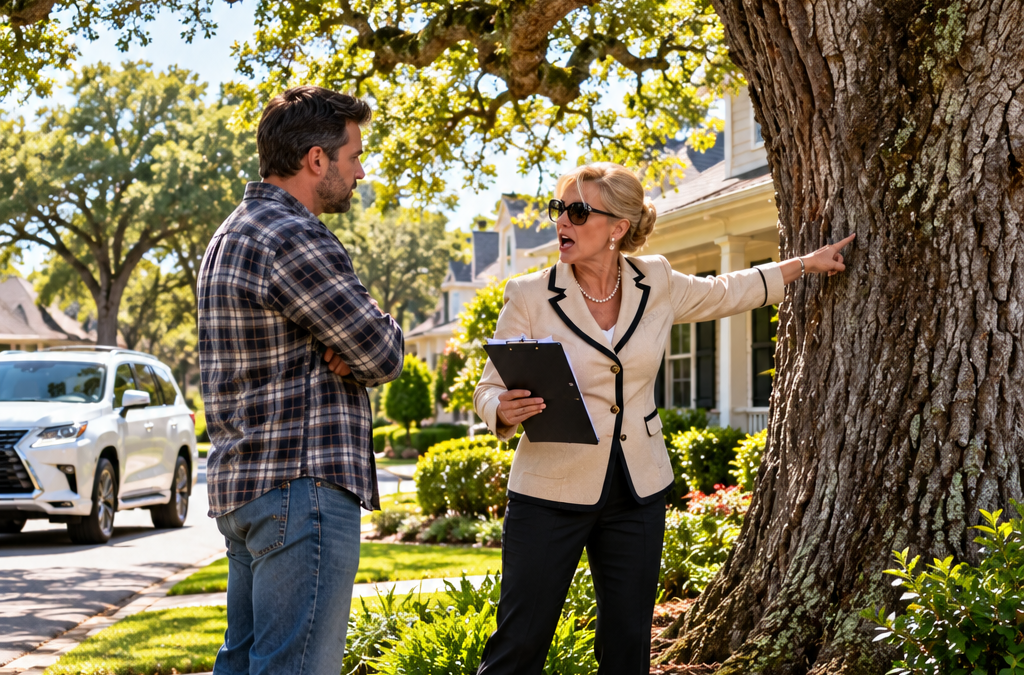
The HOA president stood beneath the oldest tree in the neighborhood, pointed at its trunk like she was condemning a building, and told me I had fourteen days to make it disappear. When I refused, she smiled and said the fines would keep climbing until I learned that homeowners in her community did not get to tell her no.
I had owned the house for six months when all of this started.
Six peaceful months.
That was what made the whole thing so difficult to understand at first.
Nothing about the neighborhood had seemed hostile when I moved in. In fact, the place had been almost unnervingly perfect.
Quiet streets.
Clean sidewalks.
Well-kept lawns.
Children riding bicycles in the evenings.
People waving from driveways.
The kind of place where packages could sit on a porch for three hours without disappearing and where neighbors still knew each other’s names.
After years of apartment living and saving every dollar I could, it felt like I had finally reached the place I’d been working toward.
My own home.
The house itself wasn’t enormous.
Three bedrooms.
A two-car garage.
A small back patio.
A kitchen that needed updating.
But none of that was what made me fall in love with the property.
It was the oak tree.
You couldn’t miss it.
The trunk was so wide that two grown men probably couldn’t have wrapped their arms around it together.
Its branches stretched across most of my front yard, some reaching toward the street, others arching back over the roof without touching it.
In summer, the canopy shaded nearly half the property.
Even on the hottest afternoons, the grass beneath it stayed several degrees cooler.
Birds nested high in the branches every spring.
Squirrels treated the limbs like highways.
When the wind moved through the leaves, the sound filled the yard with a steady whisper that made the whole street seem slower.
Older.
Calmer.
The first time my real estate agent showed me the house, I barely made it through the front door before turning around to look at the tree again.
“That’s something,” I said.
The agent laughed.
“Everybody says that.”
The previous owner was an older man named Harold Bennett.
He had lived there for nearly thirty years.
On closing day, after we signed the last documents, he met me at the house to hand over a few keys and explain the irrigation system.
Before leaving, he stopped beneath the oak.
For several seconds he just looked up.
Then he smiled.
“Take good care of the old giant.”
I smiled back.
“I will.”
He patted the trunk with one hand.
“Been here longer than all of us.”
“How old is it?”
“Nobody knows exactly. More than a hundred years, from what I’ve been told.”
I looked upward through the branches.
“That’s incredible.”
Harold nodded.
“It’s part of the street now. Wouldn’t look right without it.”
I remember saying, “Nobody’s touching this tree as long as I own the house.”
At the time, I thought I was making a sentimental promise to an old man.
I had no idea that six months later I would be fighting to keep it.
For those first six months, my relationship with the homeowners association was uneventful.
The HOA president was a woman named Cynthia Wallace.
She was probably in her late fifties, always perfectly dressed, even for casual neighborhood meetings.
Pressed slacks.
Matching jewelry.
Hair that seemed incapable of moving no matter how windy it was.
Cynthia lived three streets over in one of the largest houses in the development.
Everything about her property looked measured.
Every shrub was identical.
Every flower bed symmetrical.
Her driveway never had so much as a leaf on it.
At first, I thought she was simply proud of the neighborhood.
She introduced herself a week after I moved in.
I was pulling weeds near the front walkway when a white SUV stopped beside the curb.
She lowered the window.
“You must be the new owner.”
“That’s me.”
She smiled.
“Cynthia Wallace. HOA president.”
I wiped my hand on my jeans before walking over.
“Nice to meet you.”
“We like to introduce ourselves personally. Keeps the community feeling connected.”
“That’s nice.”
Her eyes moved toward the oak.
I noticed it.
Not because she said anything.
Because she stared at it for slightly too long.
Then she looked at me again.
“You’ve read the association guidelines?”
“Most of them.”
“I’d recommend all of them.”
Her smile remained.
“We take standards seriously here.”
“I’ll keep that in mind.”
“I’m sure we’ll get along just fine.”
Then she drove away.
At the time, I thought nothing of it.
The HOA sent small reminders occasionally.
Trash cans needed to be brought in by a certain time.
Grass couldn’t get too tall.
Holiday decorations had to come down within a few weeks.
Nothing unusual.
Nothing worth fighting over.
I followed the rules.
My yard was clean.
My house was maintained.
I caused nobody any problems.
Then one Tuesday afternoon, I came home and found a certified envelope in my mailbox.
The HOA logo was printed across the top.
Something about certified mail from a homeowners association immediately puts a knot in your stomach.
I opened it standing beside the mailbox.
NOTICE OF LANDSCAPE VIOLATION.
I read further.
The violation concerned the oak tree.
According to the letter, the tree had created an “undesirable visual condition” because falling leaves accumulated along the sidewalk and street.
The roots, the board claimed, posed a potential future risk to pavement.
The canopy allegedly restricted sunlight to neighboring properties.
Several residents, according to the notice, had complained.
The board therefore required complete removal of the oak within fourteen days.
Failure to comply would result in a $500 weekly fine.
I read the letter once.
Then again.
Then a third time.
I actually looked around as though somebody might be filming me.
Remove the tree?
I walked across the lawn and stood beneath it.
The canopy spread above me like a ceiling.
Two cardinals hopped between branches.
A squirrel ran along one limb.
Children rode bicycles down the sidewalk beneath the shade.
There was no split trunk.
No major dead wood.
No obvious root upheaval.
Nothing suggested an emergency.
I looked back at the letter.
Undesirable appearance.
Leaves.
Potential pavement damage.
Blocked sunlight.
That was it.
I laughed quietly.
Not because it was funny.
Because it was absurd.
I assumed there had been some kind of misunderstanding.
Maybe a generic violation template.
Maybe the board meant trimming.
Maybe somebody had entered the wrong address.
The next morning I called the HOA office.
A manager named Sharon answered.
I explained who I was.
“I received a removal notice regarding the oak in my front yard.”
“Yes.”
That answer stopped me.
“You know about it?”
“The board voted on the matter Monday evening.”
“Without speaking to me?”
“The board doesn’t need individual homeowner approval to issue violations.”
“I understand that. I’m asking why anyone thinks the tree needs to be removed.”
“It’s inconsistent with current landscape standards.”
“How?”
“The letter explains the concerns.”
“The letter says it drops leaves.”
“Yes.”
“Trees drop leaves.”
There was silence.
I continued.
“It also says roots might damage pavement someday.”
“Correct.”
“Have the roots damaged anything?”
“I’m not an arborist.”
“Did an arborist inspect it?”
“You’ll need to direct technical questions to the board.”
“Fine. When can I speak with them?”
“The decision has already been made.”
I frowned.
“That wasn’t my question.”
“The board voted.”
“So there’s no appeal?”
“You may submit a written response.”
“Will enforcement pause while it’s reviewed?”
“No.”
I looked out my kitchen window at the tree.
“Which HOA rule specifically requires removal?”
“All landscaping must comply with community standards.”
“Which standard?”
“Our governing documents are available online.”
“I’ve read them. I don’t remember anything saying mature trees can be removed because they drop leaves.”
Her tone changed slightly.
“The president has already reviewed this.”
“Can I speak with Cynthia?”
“She’s unavailable.”
“I’ll wait.”
“She’s unavailable today.”
“Then have her call me.”
There was a pause.
“I’ll pass along the message.”
She never called.
I sent an email that afternoon requesting the specific covenant section, copies of the complaints, the basis for the claimed pavement risk, and any professional report supporting removal.
The next morning, Cynthia called me personally.
Her voice was friendly.
Too friendly.
“I understand you’re unhappy.”
“I’m confused.”
“It’s fairly straightforward.”
“You ordered me to cut down a tree that’s probably more than a hundred years old.”
“The board ordered correction of a landscaping violation.”
“You’re talking about it like it’s an overgrown hedge.”
“If homeowners begin treating every landscape decision as personal, enforcement becomes impossible.”
“It is personal. It’s on my property.”
She sighed.
“That’s a common misunderstanding.”
I sat up straighter.
“What is?”
“Living in an HOA means your property is still subject to community standards.”
“I know what an HOA is, Cynthia.”
“Then you understand why the board’s authority exists.”
“I understand authority. I also understand that authority should have a basis.”
“It does.”
“Then tell me the rule.”
“The board has discretion in aesthetic matters.”
“You want to destroy a hundred-year-old tree because of aesthetics?”
“It’s too large.”
“That’s not in the notice.”
“It creates maintenance issues.”
“Whose?”
“The community’s.”
“My landscaper handles the leaves.”
“Leaves still blow.”
I almost laughed.
“That’s your argument?”
“Don’t be disrespectful.”
I went silent.
Something in her tone had shifted.
The neighborly friendliness was gone.
She sounded like I was a child she had caught talking back.
I said, “Has an arborist evaluated the tree?”
“We don’t need an arborist to recognize a landscaping problem.”
“What about the root damage?”
“It’s foreseeable.”
“What pavement has been damaged?”
“We don’t wait for damage before addressing a risk.”
“What neighbors complained?”
“Complaints are confidential.”
“How many?”
“I’m not discussing that.”
“So you won’t identify the rule, won’t provide evidence, won’t tell me how many complaints there were, and won’t show me any professional assessment.”
“The only thing you need to understand is that the board voted.”
That sentence told me exactly who Cynthia was.
Not what.
Who.
For her, the vote itself was enough.
Authority was self-justifying.
If the board had decided it, then questioning the decision was the real offense.
I looked out at the oak again.
“I am not cutting down that tree based on this notice.”
Her answer came immediately.
“Then you’re choosing fines.”
“No. I’m choosing not to destroy something without knowing whether you’re even allowed to order it.”
“You have fourteen days.”
“Cynthia—”
“Fourteen days.”
Then she hung up.
That afternoon, instead of calling a tree removal company, I called the city’s planning department.
It was almost an afterthought.
I wanted to know whether mature-tree regulations applied in my area.
A woman named Melissa answered.
I explained the situation.
“My HOA has ordered me to remove an old oak tree. I’m trying to find out whether the city requires any kind of permit.”
“What’s the address?”
I gave it to her.
I heard typing.
“Front yard?”
“Yes.”
“Large oak?”
“Very large.”
More typing.
Then silence.
“Sir?”
“Yes?”
“Can you hold for a moment?”
“Sure.”
She put me on hold.
I stared at the phone.
About a minute later she returned.
Her voice sounded different.
More attentive.
“Okay. I found the property record.”
“And?”
“Your oak is listed on the city’s heritage tree registry.”
I didn’t understand.
“I’m sorry?”
“It’s a protected heritage tree.”
I sat down.
“What does that mean?”
“It means the tree was formally identified as historically and environmentally significant.”
“When?”
“Let me check.”
I heard more typing.
“Initial designation was decades ago. There were subsequent inspections.”
“So I can’t remove it?”
“Not without city authorization.”
“Even though it’s on my property?”
“Correct.”
“What if I wanted it gone?”
“You’d need to apply for removal, and based on the designation there would need to be a qualifying reason.”
“What counts?”
“Severe disease, structural failure, imminent safety threat, things like that.”
“Leaves?”
She paused.
Then laughed softly.
“No.”
“Blocked sunlight?”
“No.”
“Roots that might someday damage pavement?”
“If there is actual infrastructure damage, that can be evaluated. Potential future inconvenience is not grounds to remove a protected heritage tree.”
I leaned back in the chair.
My anger began turning into disbelief.
“The HOA gave me fourteen days.”
“To remove it?”
“Yes.”
“Your HOA should know the tree is protected.”
That sentence stayed with me.
“Are they required to know?”
“I can’t speak to their internal obligations, but the designation is part of the city’s records. The tree also should have an identification marker.”
I walked outside while still on the phone.
Near the base of the trunk, partially hidden by ivy and old mulch, was a small metal tag.
I brushed dirt from it.
There was a number.
“I found it.”
“That’ll correspond to the registry.”
I stared at the tag.
For six months I’d walked past it without noticing.
“What happens if somebody cuts the tree down without approval?”
“That can lead to significant penalties.”
“How significant?”
“Potentially very significant, depending on circumstances and applicable ordinances.”
I looked at the HOA letter in my hand.
“So they’re ordering me to do something the city says I legally can’t do.”
“Based on what you’re describing, I would absolutely not remove anything until this is reviewed.”
“Can you send me documentation?”
“Yes.”
By the end of the day, my inbox contained more than I expected.
Heritage registry entry.
Historical documentation.
Municipal code provisions.
Tree identification records.
Maps.
Prior inspection notes.
The oak had been formally recognized years before I bought the house.
It wasn’t just a big tree.
It was protected.
I felt relieved.
Honestly, I thought the fight was over.
I imagined sending Cynthia the documents.
She would realize the board had made a mistake.
Maybe she wouldn’t apologize warmly, but she’d withdraw the notice.
Everybody would move on.
I forwarded the records that evening.
My email was calm.
I explained that I had contacted the city.
I attached the heritage designation.
I included the regulation governing removal.
I asked the board to rescind the violation immediately.
The next day passed.
Then another.
No reply.
On the third day, I came home to another certified envelope.
I opened it in my driveway.
SECOND NOTICE—CONTINUING NONCOMPLIANCE.
The board claimed I had refused corrective action.
My weekly fine was increased.
One thousand dollars.
Every week.
The letter warned that continued refusal could result in legal action.
I stood there reading it while anger moved through me so quickly my hands started shaking.
They knew.
That was the difference now.
The first notice could have been ignorance.
The second couldn’t.
I had given them the records.
City documents.
Regulations.
The heritage designation.
They had looked at all of it and decided to push harder.
My phone rang.
Cynthia.
I answered immediately.
“Did you get my email?”
“I did.”
“Then why did I just receive another violation?”
“Because you haven’t complied.”
“The city says compliance with your order would violate municipal law.”
“That’s your interpretation.”
“No, Cynthia. It’s written in the documents.”
“The HOA has its own authority.”
“It does not override the city.”
“Don’t lecture me about authority.”
“I’m not lecturing you.”
“You’re refusing a lawful board directive.”
“A directive to remove a protected tree.”
“According to information you obtained after the board made its decision.”
I stared at the house.
“What difference does that make?”
“It makes a great deal of difference procedurally.”
“No, it doesn’t. If the tree is protected, it’s protected.”
“We have counsel.”
“Then ask your counsel.”
“You don’t know what we’ve discussed.”
“Apparently nobody discussed the heritage ordinance.”
Her voice hardened.
“Your attitude is becoming a problem.”
“My attitude?”
“Yes.”
“You ordered me to destroy a protected tree and now you’re fining me a thousand dollars a week because I won’t break city law.”
“You keep using inflammatory language.”
“What would you call it?”
“I would call it homeowner noncompliance.”
I closed my eyes.
“You know what? Send me everything in writing from now on.”
“You don’t dictate how this association communicates.”
“I’m telling you I want a record.”
“You’re creating unnecessary conflict.”
“No. You are.”
There was a long pause.
Then Cynthia said quietly, “You haven’t lived here long enough to understand how this community works.”
That was the sentence that changed the fight for me.
Not the fine.
Not the notice.
That sentence.
You haven’t lived here long enough.
As if ownership had seniority.
As if my rights depended on Cynthia deciding I had been in the neighborhood long enough to deserve them.
I said, “My deed doesn’t have a probation period.”
She hung up.
Over the next week, the atmosphere around my house changed.
Maybe Cynthia had spoken to people.
Maybe word simply spread.
Neighbors started looking toward the oak when they walked past.
A man two doors down asked whether I was “still fighting the board.”
A woman I barely knew told me it might be easier just to remove the tree.
“It’s only a tree,” she said.
Only a tree.
I didn’t argue.
Most people didn’t know what it meant to me yet.
They didn’t know about Harold.
They didn’t know the city had protected it.
They didn’t know the HOA was demanding something the municipality prohibited.
And honestly, for a few days, I started doubting myself.
Not about the law.
About whether the fight was worth the stress.
Every time I opened my mailbox, my stomach tightened.
I started calculating fines even though I didn’t believe I owed them.
One thousand a week.
Four thousand a month.
What if they added legal fees?
What if they filed a lien?
What if I had to hire an attorney?
What if they could drag this out for a year?
That’s how institutional pressure works.
It doesn’t always convince you the other side is right.
Sometimes it simply makes being right too exhausting.
One evening, I stood beneath the tree after work.
The sun was low.
The branches threw long shadows across the lawn.
I found myself thinking about what the property would look like without it.
The front of the house would be exposed.
The yard would feel empty.
Every bird nest would be gone.
Every scar in the bark.
Every branch that had grown over decades.
All of it replaced by a stump.
And for what?
Because Cynthia didn’t like leaves?
Because somebody wanted more sunlight?
Because a board decided destroying something was easier than understanding it?
My next-door neighbor, Evelyn, walked over.
She was in her seventies.
Small woman.
Silver hair.
She’d lived in the neighborhood longer than almost anyone.
“You all right?”
I forced a smile.
“Trying to be.”
She looked up at the oak.
“I heard.”
“Everybody has, apparently.”
She lowered her voice.
“Cynthia wants this tree down?”
“Very much.”
Evelyn shook her head.
“She’s been after it before.”
I turned.
“What?”
“Not officially.”
“What do you mean?”
She glanced toward the street.
“Years ago, before you bought the house, there was talk about removing it.”
“Why?”
“Same reasons. Leaves. Shade. Roots.”
“What happened?”
“Harold told them no.”
“Was Cynthia president?”
“No. She was on the landscaping committee.”
That caught my attention.
“So she knew about this tree before I moved in.”
“Oh, absolutely.”
“The city says it’s protected.”
Evelyn’s eyebrows rose.
“Of course it is.”
“You knew?”
“Honey, I’ve lived here thirty-two years.”
She pointed toward the trunk.
“There used to be a little city plaque by the sidewalk. Somebody removed it when they redid the landscaping, but that tree has always been protected.”
I felt a slow chill.
“If you knew that, Cynthia had to know.”
Evelyn didn’t answer.
She didn’t need to.
Suddenly the dispute looked different.
Cynthia wasn’t merely careless.
She may have known exactly what she was doing.
“Why would she push this if she knew?”
Evelyn shrugged.
“Cynthia doesn’t like being told no.”
That simple explanation was somehow the most believable thing I’d heard.
The city scheduled an inspection for the following Friday.
I hadn’t demanded one.
Melissa from planning said they wanted an updated condition assessment because the HOA’s removal order had raised questions about the tree’s health and status.
At nine that morning, a city arborist named Daniel Ruiz arrived.
Reflective vest.
Work boots.
Clipboard.
Measuring tools.
He introduced himself and immediately went to work.
I tried to stay out of his way.
He measured the trunk circumference.
Examined major limbs.
Looked for decay.
Checked root flare.
Studied the pavement.
Took photographs.
Compared the identification tag to his records.
At one point, he knelt near the sidewalk for several minutes.
“Problem?” I asked.
“No.”
“What are you looking at?”
“Root interaction.”
“Is it damaging the sidewalk?”
“Not meaningfully.”
“The HOA says it might.”
Daniel looked up.
“Lots of things might happen someday.”
I laughed.
“So the tree isn’t dangerous?”
“I haven’t finished yet.”
Fair enough.
By then, neighbors had started gathering.
Not openly.
Nobody formed a crowd in my yard.
They stood across the street.
Pretended to walk dogs.
Slowly watered flowers.
Found suspicious reasons to inspect mailboxes.
Everyone knew something was happening.
About forty minutes into the inspection, Cynthia arrived.
Of course she did.
Her white SUV stopped directly across from my house.
She stepped out wearing sunglasses and carrying a leather folder.
Beside her was another board member named Greg.
Cynthia walked across the street with the confidence of someone arriving to supervise her own employee.
Daniel was inspecting the trunk.
“Good morning,” she said.
He looked over.
“Morning.”
“Cynthia Wallace. HOA president.”
Daniel nodded.
“Daniel Ruiz. City arborist.”
“We’re aware.”
I almost smiled.
Of course she was.
Cynthia glanced at me.
Then back at Daniel.
“We wanted to make sure you have the association’s concerns.”
“If they’re relevant to tree condition, I’m happy to hear them.”
She opened her folder.
“The canopy is excessive.”
Daniel looked upward.
“In what sense?”
“It affects neighboring sunlight.”
“That’s not a tree-health concern.”
“It also drops substantial debris.”
“Leaves?”
“And acorns.”
Daniel waited.
Cynthia seemed irritated by the silence.
“There are also root concerns.”
“Where?”
She pointed vaguely toward the sidewalk.
“Along the frontage.”
Daniel walked over.
“Show me.”
For the first time, she hesitated.
“Well, the risk is obvious.”
“Show me existing damage.”
“It’s a preventive concern.”
“So there isn’t current damage you’re identifying?”
Cynthia’s jaw tightened.
“The association is entitled to manage landscaping.”
Daniel straightened.
“Within whatever authority your governing documents and applicable law provide.”
“Exactly.”
“But not this tree.”
The entire street seemed to get quieter.
Cynthia stared at him.
“I’m sorry?”
Daniel pointed to the small identification tag near the trunk.
“This is a designated heritage tree.”
“We’re aware of the city’s classification.”
There it was.
We’re aware.
I felt anger rise immediately.
She had known.
Daniel said, “Then you understand removal requires city authorization.”
“The HOA has authority over landscaping inside the community.”
“Your landscaping authority doesn’t supersede municipal tree protection.”
Cynthia’s voice sharpened.
“We’re not asking the city to manage our neighborhood.”
“I’m not managing your neighborhood.”
Daniel remained completely calm.
“I’m telling you this specific tree is legally protected.”
Cynthia opened her folder.
“We have resident complaints.”
“Resident complaints don’t void the ordinance.”
“Blocked sunlight is a legitimate quality-of-life issue.”
“Not grounds for unauthorized removal.”
“The roots could damage infrastructure.”
“Then you document actual damage and request evaluation.”
“The board has already determined removal is appropriate.”
Daniel looked at her.
“The board doesn’t determine whether a protected heritage tree can be removed.”
I will never forget Cynthia’s face.
It wasn’t embarrassment.
Not yet.
It was outrage.
She genuinely seemed offended that someone else’s authority existed.
She turned toward me.
“This is exactly the kind of unnecessary escalation I warned you about.”
I stared at her.
“I called the city because you ordered me to break city law.”
“That’s your characterization.”
Daniel interrupted.
“No.”
Cynthia looked at him.
He continued.
“That’s essentially accurate.”
Greg, the board member beside her, shifted uncomfortably.
Cynthia said, “Excuse me?”
Daniel held up his clipboard.
“Unless you have information I haven’t reviewed, the tree is protected. Mr. Carter could not simply comply with an HOA removal demand without municipal approval.”
“Then he should have applied for approval.”
Daniel frowned.
“For removal?”
“Yes.”
“Why?”
“Because the board ordered it.”
Daniel stared at her for a moment.
Then said, “That’s not how this works.”
Cynthia folded her arms.
“Are you saying a homeowner can ignore HOA requirements simply because the city has designated a tree?”
“I’m saying an HOA cannot compel somebody to violate municipal law.”
Several neighbors were openly listening now.
Cynthia noticed.
That made her angrier.
She lowered her voice.
“This conversation should not be happening in front of residents.”
Daniel glanced around.
“We’re standing in his front yard.”
“You understand what I mean.”
“I really don’t.”
Greg leaned toward Cynthia.
“Cynthia, maybe we should take this back to counsel.”
She ignored him.
Instead, she turned to me.
“You could have handled this privately.”
I almost couldn’t believe it.
“I tried.”
“You became confrontational.”
“You doubled my fine.”
“Because you refused compliance.”
“You knew the tree was protected.”
“I knew it had some historical designation.”
“That’s what protected means.”
“Don’t twist my words.”
Daniel stepped between us slightly.
“Let’s keep this focused.”
Then he looked at Cynthia.
“I’ll be issuing an updated report. Based on today’s preliminary inspection, I’m seeing no condition that would justify emergency removal.”
Cynthia’s face changed.
“Preliminary?”
“The formal report will follow.”
“And if we disagree?”
“You can communicate with the city.”
“What happens if the homeowner removes it anyway?”
Daniel looked directly at me first.
“Don’t.”
“I don’t intend to.”
Then he answered Cynthia.
“Unauthorized removal of a protected heritage tree can result in substantial enforcement consequences.”
“What kind?”
“That depends on the circumstances.”
Cynthia went silent.
Daniel continued.
“And if an organization knowingly pressures a property owner to carry out an unlawful removal after being informed of the designation, I would strongly recommend that organization consult legal counsel before creating additional written records.”
That did it.
Cynthia’s face went pale.
Greg closed his folder.
“We’re done here.”
She looked at him.
“I’m not—”
“We’re done.”
It was the first time I’d seen anyone on the board interrupt her.
Cynthia turned toward Daniel.
“This is not over.”
Daniel nodded.
“That’s fine.”
No anger.
No threat.
Just fine.
Cynthia walked back toward her SUV.
Before getting in, she looked at me.
Not at the tree.
At me.
The look was cold enough that I understood something clearly.
She hadn’t wanted compliance.
She’d wanted obedience.
And now, in front of half the street, she had lost control of both.
Daniel finished his inspection.
Before leaving, he handed me a card.
“Don’t do anything to the tree beyond routine care until the written report comes through.”
“I won’t.”
“And save every HOA communication.”
“I already have.”
He nodded.
“Good.”
The formal report arrived Monday.
The oak was healthy for its age.
No evidence of imminent structural failure.
No qualifying basis for removal.
Heritage protection remained fully active.
Routine professional pruning could be performed as needed, subject to proper care standards.
That was it.
The city couldn’t have been clearer.
Tuesday night was the monthly HOA meeting.
Usually fifteen people attended.
Maybe twenty.
That night, nearly every chair was filled.
People stood along the back wall.
Someone had brought folding chairs from another room.
The tree dispute had become neighborhood news.
I arrived early and sat near the middle.
Evelyn sat beside me.
“You nervous?” she whispered.
“A little.”
“You shouldn’t be.”
“I’ve learned not to underestimate Cynthia.”
Evelyn smiled.
“That’s wise.”
At exactly seven, Cynthia entered.
The room changed.
Conversations stopped.
She walked to the front carrying a thick binder.
Greg followed.
Two other board members sat down without speaking.
Cynthia called the meeting to order.
She moved through routine agenda items quickly.
Budget.
Pool maintenance.
Landscape contract.
Gate repairs.
Nobody cared.
Everyone was waiting.
Finally she reached my address.
She cleared her throat.
“Regarding the pending landscape enforcement matter at 2147 Briar Glen Drive, the board has reviewed supplementary information provided by the municipal planning department.”
Supplementary information.
That was how she described a law she had ignored.
Cynthia continued.
“Based on the city’s position concerning the existing tree designation, the board has elected to withdraw the current violation.”
Someone behind me whispered, “Elected?”
I almost smiled.
“All fines associated with this matter are canceled.”
The room remained silent.
“The removal requirement is rescinded effective immediately.”
She closed the folder.
“Moving on—”
“No.”
The voice came from the back.
A man named Michael stood.
Cynthia stared at him.
“Excuse me?”
“You don’t get to move on.”
Murmurs of agreement moved through the room.
Michael continued.
“If the tree was already protected, why was he ordered to remove it?”
Cynthia’s mouth tightened.
“As I stated, additional information became available.”
Evelyn spoke beside me.
“That tree has been protected for decades.”
Several people turned toward her.
Cynthia said, “Evelyn, please wait to be recognized.”
“I’ve been here thirty-two years.”
“That doesn’t exempt you from meeting procedure.”
“It apparently makes me more informed than the board.”
A few people laughed.
Cynthia’s face reddened.
She hit the table lightly with her hand.
“Let’s maintain order.”
Another homeowner raised her hand.
“Did the board know about the heritage designation before issuing the first notice?”
Cynthia hesitated.
“The board was aware there had historically been certain references to the tree.”
“That’s not what she asked,” Michael said.
Greg looked down at the table.
Cynthia said, “We did not have complete current documentation.”
I stood.
Everyone looked toward me.
I hadn’t planned a speech.
I didn’t need one.
I said, “I sent you complete documentation before you doubled my fine.”
Silence.
Cynthia looked at me.
“You sent documents asserting—”
“City records.”
“Yes.”
“Heritage registration.”
“Yes.”
“Municipal regulations.”
She didn’t answer.
I continued.
“And after receiving them, the board increased my fine from five hundred dollars a week to one thousand.”
“Because the original violation remained unresolved.”
“The city says I was legally prohibited from resolving it the way you demanded.”
Her voice sharpened.
“That’s why the board has withdrawn the matter.”
“No.”
I shook my head.
“You’re trying to make this sound like new information fixed an innocent mistake.”
I held up the second notice.
“You had the information when you sent this.”
The room went completely quiet.
Cynthia stared at the paper.
I continued.
“You also told the city arborist you were already aware of the tree’s historical designation.”
Cynthia looked toward Greg.
He didn’t help her.
One homeowner asked, “Is that true?”
Cynthia said, “The terminology surrounding the designation was not clear.”
Evelyn laughed once.
“Protected is pretty clear.”
The room erupted.
Not screaming.
But voices.
Questions.
Frustration.
Other homeowners started mentioning notices they’d received.
A fence color dispute.
Shrub height.
A basketball hoop.
A mailbox.
One woman said she’d been fined before receiving a hearing.
Another said the board had ignored her emails for two months.
Cynthia kept trying to regain control.
“One at a time.”
Nobody listened.
“Please follow meeting procedure.”
People continued.
“This isn’t productive.”
More questions.
Finally, Greg raised his hand.
Not toward the residents.
Toward Cynthia.
“I think we need to address the process failure.”
She turned sharply.
“What process failure?”
“The tree.”
“We addressed it.”
“No.”
Greg looked around the room.
“We withdrew it. That’s not the same thing.”
For the first time that evening, Cynthia looked genuinely uncertain.
Greg continued.
“We issued an enforcement demand without verifying whether compliance was legally possible.”
Cynthia said, “We relied on the information available.”
“Then after he gave us better information, we increased the fine.”
She stared at him.
He didn’t back down.
That was the moment Cynthia stopped looking powerful.
Not when the city arborist corrected her.
Not when the fine was canceled.
When someone from her own board publicly admitted what had happened.
The meeting lasted another hour.
By the end, homeowners were demanding changes.
Formal review before major landscape enforcement.
Better documentation.
Clear appeal procedures.
No escalating fines while legal questions remained unresolved.
Some wanted Cynthia removed immediately.
Others wanted the matter taken up at the next board election.
I stayed mostly quiet.
I hadn’t come to overthrow the board.
I wanted my tree left alone.
Nothing more.
When the meeting finally adjourned, people gathered around me.
Some apologized.
A few admitted they’d assumed I was simply refusing to follow rules.
One man shook my hand.
“I thought you were being stubborn.”
“I was.”
He laughed.
“Apparently for a good reason.”
Evelyn walked outside with me.
The night was warm.
We could see the upper canopy of the oak from down the street.
She looked toward it.
“Harold would be happy.”
That hit me harder than I expected.
“I hope so.”
“He loved that tree.”
“I know.”
“No.”
She looked at me.
“I mean he really loved it.”
We started walking.
“His wife used to sit under it every afternoon when she got sick.”
I stopped.
I hadn’t known that.
Evelyn continued quietly.
“Cancer. The last summer she was alive, she couldn’t walk far. Harold put a chair beneath that tree because it was the only place outside where she could sit comfortably in the heat.”
I looked down the street toward my yard.
“He never told me.”
“He probably wouldn’t.”
We kept walking.
“After she died, he planted flowers around the base every spring.”
Suddenly the promise he’d asked me to make on closing day felt different.
Take good care of the old giant.
It hadn’t just been nostalgia.
The tree had held pieces of lives I knew nothing about.
Harold’s.
His wife’s.
Evelyn’s memories.
Children who had grown up under it.
Families that had moved away.
Generations of birds and animals.
That was what Cynthia had reduced to an undesirable appearance.
Leaves on a sidewalk.
I stood beneath the oak for a long time after Evelyn went home.
The porch light cast a faint glow across the trunk.
I put my hand against the bark.
Rough.
Cool.
Solid.
For the first time since the violation arrived, I wasn’t angry.
I was relieved.
The fight was over.
At least the official part.
The fines disappeared from my account the following week.
The violation notices were formally withdrawn.
The city sent me recommendations for maintaining a heritage oak.
I hired a certified arborist to perform minor pruning and remove a few dead branches.
The tree didn’t need much.
It had survived more than a century without Cynthia Wallace managing it.
It seemed capable of continuing.
The HOA changed too.
Slowly.
The board adopted a requirement that major landscaping removal orders be checked against municipal regulations before notices were issued.
Homeowners received a clearer process for disputing violations.
Several enforcement policies were reviewed.
At the next election, Cynthia lost her position as president.
She remained in the neighborhood.
For a while, whenever she drove past my house, she looked straight ahead.
No wave.
No smile.
That was fine with me.
I didn’t need revenge.
I didn’t need an apology.
What I needed was already standing in my yard.
One Saturday morning, about a month after the board election, I was raking leaves beneath the oak.
Yes, leaves.
The terrible threat to community standards.
I had filled three bags when I heard a car slow beside the curb.
Cynthia’s SUV.
She lowered the window.
For a moment, neither of us spoke.
Then she said, “That’s a lot of leaves.”
I rested both hands on the rake.
“It is.”
“Exactly the problem we were trying to address.”
I almost laughed.
Even after everything, she couldn’t help herself.
“Cynthia, the tree stays.”
“I’m aware.”
“Good.”
She looked toward the canopy.
“You made the whole community hostile over this.”
I stared at her.
“I did?”
“You could have handled it more quietly.”
“I called you privately.”
“You challenged the board publicly.”
“After the board fined me for obeying city law.”
She shook her head.
“You still don’t understand.”
“What?”
“Communities only work when homeowners cooperate.”
I nodded slowly.
“You’re right.”
That seemed to surprise her.
Then I continued.
“Boards too.”
Her expression hardened.
I picked up the rake again.
“Have a good morning, Cynthia.”
She drove away.
That was the last real conversation we ever had.
Life settled.
Seasons changed.
Spring brought new leaves.
Summer filled the canopy.
Autumn covered my yard in gold and brown.
Winter exposed branches so enormous they looked like a skeleton against the sky.
The more time I spent with the tree, the more ridiculous the original order seemed.
Remove within fourteen days.
As if a century of growth could be treated like an overdue trash bin.
I sometimes thought about what would have happened if I’d obeyed.
Suppose I’d been afraid of the first $500 fine.
Suppose I’d called a tree company immediately.
Suppose nobody had checked the city records.
A crew might have arrived.
Chainsaws.
Ropes.
Crane.
By the time anyone from the city noticed, the oak could have been gone.
No amount of canceled fines could bring it back.
No apology could rebuild a hundred years of growth.
That frightened me more than anything Cynthia actually did.
Because the system almost depended on me assuming the official-looking letter had to be correct.
That’s what made the pressure effective.
The logo.
The certified envelope.
The deadline.
The words FINAL NOTICE.
The threat of weekly fines.
Legal action.
All of it designed to create urgency.
Urgency makes people stop asking questions.
Fourteen days.
Call the tree company.
Pay the money.
Comply.
Move on.
But some decisions can’t be undone.
Once the chainsaw hits the trunk, finding out later that the order was wrong doesn’t matter much.
That experience changed the way I read every official letter that comes to my house.
I don’t assume it’s wrong.
I don’t assume it’s right either.
I read the rule.
I check the authority.
I ask what evidence supports the demand.
I find out whether some higher regulation applies.
That isn’t being difficult.
It’s being responsible.
The oak is still there.
Years have passed now.
Its branches are slightly different.
A storm took one large limb two winters ago.
The city-approved arborist removed the damaged section and checked the rest of the tree.
Still healthy.
Still protected.
Still enormous.
Sometimes I sit under it in the evening.
I’ve placed a bench not far from where Evelyn told me Harold’s wife once sat.
I didn’t put a plaque there.
Didn’t turn it into a memorial.
It doesn’t need one.
The tree remembers in its own way.
There are scars in the bark.
Old pruning cuts.
Tiny nail holes from signs or decorations people hung decades ago.
One branch has a strange bend that Evelyn says came from a storm before I was born.
You can read time in a tree if you know how to look.
One evening, Harold came by.
He was visiting friends in the neighborhood and saw me outside.
I hadn’t seen him since closing.
He parked at the curb.
“Still standing,” he said.
I smiled.
“So far.”
He walked slowly across the lawn.
Age had caught up with him.
He placed a hand on the trunk just as he’d done the day he gave me the keys.
“Heard you had some trouble.”
“Word travels.”
“Especially around here.”
I laughed.
He looked upward.
“They really wanted it gone?”
“Very much.”
“Idiots.”
That was the entire judgment.
No long speech.
Just idiots.
I said, “The city protected it.”
“I know.”
“You knew?”
“Of course.”
“Why didn’t you tell me?”
Harold looked confused.
“I thought it was in the property paperwork.”
“It probably was somewhere.”
He shook his head.
“Should’ve mentioned it.”
“Would’ve saved me some stress.”
He smiled.
“Still would’ve had to deal with Cynthia.”
“That’s true.”
We stood quietly.
Then I told him what Evelyn had said about his wife.
His smile disappeared.
For several seconds he looked toward the bench.
“She told you that?”
“Yeah.”
Harold swallowed.
“Margaret loved this spot.”
“I’m sorry.”
“It was a long time ago.”
He walked toward the bench and sat.
I joined him.
After a while, he said, “When she was near the end, she didn’t like being inside. Said the house smelled like medicine.”
He looked up at the leaves.
“So I’d bring her out here.”
I didn’t say anything.
“Some days she slept most of the afternoon.”
His voice became quieter.
“That’s why I asked you to take care of it.”
I nodded.
“I understand now.”
He looked at me.
“You didn’t cut it.”
“No.”
“Good.”
We sat beneath the oak until the light faded.
After Harold left, I thought about all the reasons Cynthia had given for removing it.
Leaves.
Shade.
Possible future pavement damage.
Appearance.
Administrative convenience.
Then I thought about Margaret sleeping beneath those branches during the last summer of her life.
Harold watering flowers afterward.
Children riding bicycles through the shade.
Cardinals nesting overhead.
The city recognizing the tree decades ago because someone understood that some things become more valuable simply by surviving.
None of that meant a dangerous tree should remain standing forever.
Trees die.
They become unstable.
Sometimes they have to come down.
But that wasn’t what happened here.
Cynthia hadn’t been protecting anyone.
She had been enforcing preference and calling it authority.
That distinction matters.
I believe communities need rules.
I believe homeowners should maintain their properties.
I believe nobody should buy into a neighborhood association and then pretend the covenants don’t exist.
But rules have boundaries.
So do boards.
Authority isn’t the right to do whatever you can convince people not to challenge.
And leadership isn’t measured by how quickly people obey you.
Cynthia never understood that.
To her, resistance itself was proof of wrongdoing.
If I had complied immediately, I would’ve been a good homeowner.
Because I asked questions, I became difficult.
When I provided city records, I became argumentative.
When the arborist agreed with me, I had escalated unnecessarily.
When residents demanded answers, I had divided the community.
There was always a way for her to make my refusal the problem.
That may have been the most valuable thing I learned.
Whenever someone in power focuses more on your obedience than on whether they’re correct, pay attention.
The evening after Harold’s visit, a storm moved through.
Nothing severe.
Heavy wind.
Hard rain.
I stood behind the front window watching the oak move.
The branches swayed.
Leaves tore free and spun across the yard.
A few landed on the sidewalk.
I laughed.
Thousands of them.
The exact offense that had started everything.
By morning, the storm had passed.
I went outside.
The oak was fine.
I picked up fallen branches.
Swept the walkway.
Raked leaves.
Normal maintenance.
No drama.
No violation.
No emergency.
Just the ordinary work that comes with caring for something living.
Evelyn passed while walking her dog.
“Tree still causing trouble?” she called.
“Constantly.”
“You should cut it down.”
I stared at her.
She laughed so hard she had to stop walking.
That became our joke.
Every fall, when leaves covered my lawn, she’d ask when I was finally going to deal with the menace.
Every time, I’d tell her I had fourteen days.
Then we’d laugh.
Maybe that’s why the story eventually stopped feeling like a fight.
The oak outlasted the anger.
It outlasted Cynthia’s presidency.
It outlasted the violation notices.
The fines.
The threatening letters.
The board meeting.
All of it became temporary.
The tree remained.
Sometimes the simplest ending is the most satisfying.
I didn’t get rich from the dispute.
Nobody went to jail.
There was no dramatic lawsuit.
No television crew.
No giant settlement.
The HOA admitted just enough to withdraw the enforcement.
Cynthia lost the authority she’d abused.
The neighborhood changed its procedures.
And the oak stayed where it had always been.
That was enough.
More than enough.
One afternoon, years after the fight, I found a young couple standing at the edge of my yard.
They had recently moved onto the street.
The husband looked embarrassed.
“Sorry. We were just looking at the tree.”
“You’re fine.”
His wife said, “Is this really the heritage oak?”
I smiled.
“That’s what the city says.”
“We heard the HOA tried to make someone cut it down.”
“They did.”
She looked surprised.
“You were that homeowner?”
“Unfortunately.”
“What happened?”
I looked up through the canopy.
“It’s a long story.”
The husband laughed.
“We’ve heard three versions.”
“None of them probably agree.”
“One says you sued the HOA for a million dollars.”
“No.”
“Another says the city arrested the president.”
“Definitely no.”
His wife smiled.
“So what’s true?”
I thought about it.
Then I said, “They sent me a letter ordering me to remove the tree. I checked whether they actually had the authority. They didn’t.”
That was the whole story stripped of drama.
They made a demand.
I checked.
They were wrong.
But standing there beneath the branches, I realized how much emotion existed inside those three sentences.
Fear.
Anger.
Isolation.
Doubt.
Defiance.
Relief.
The young couple thanked me and continued walking.
I watched them disappear down the sidewalk.
Then I looked at the metal heritage tag near the trunk.
I keep it visible now.
No ivy.
No mulch covering it.
Not because I expect another fight.
Because I like knowing it’s there.
A small piece of metal.
Easy to overlook.
But behind it are records.
History.
Law.
Evidence.
All the things Cynthia assumed didn’t matter because she had a board vote.
Sometimes power is loud.
Certified envelopes.
Deadlines.
Fines.
Threats.
Sometimes protection is quiet.
A number stamped into a metal tag beneath an old oak.
You have to know to look for it.
That’s what saved the tree.
Not luck.
Not stubbornness alone.
Information.
One phone call.
One question.
Am I actually required to do this?
I think about that every time autumn comes.
Leaves cover the lawn.
They cover the sidewalk.
A few blow into neighboring yards.
I rake them.
Bag them.
Compost some.
Life goes on.
Nobody suffers.
The pavement hasn’t been destroyed.
The neighborhood hasn’t collapsed.
Property values haven’t vanished because birds still have somewhere to nest.
The disaster Cynthia predicted never arrived.
What did arrive was another spring.
And another.
New leaves replaced the old ones.
Cardinals returned.
Children who were barely tall enough to reach the lower branches when I moved in became teenagers.
The oak kept measuring time.
One morning I noticed a little boy standing beneath it with his father.
The boy looked straight up and said, “Dad, is this the biggest tree in the world?”
His father laughed.
“Probably feels like it.”
I was working near the garage.
The father waved.
I waved back.
The boy pressed both hands against the trunk.
For some reason, that moment affected me.
Maybe because I imagined another homeowner standing there thirty years from now.
Maybe the boy himself.
Maybe someone I’d never meet.
I hoped the oak would still be there.
Not because everything old must be preserved forever.
But because some things deserve better than being destroyed for convenience.
That was what Cynthia never understood.
A community isn’t protected by making everything easier to control.
Sometimes a community is worth protecting because it contains things nobody controls.
Old trees.
Long memories.
Different opinions.
People willing to say no.
I didn’t move into that neighborhood planning to become one of those people.
I wanted a house.
A quiet street.
A yard.
A garage.
A place to come home after work.
But ownership has a way of teaching you where your boundaries really are.
Sometimes the boundary is a survey line.
Sometimes it’s a regulation.
Sometimes it’s standing in your own front yard while someone tells you they have authority over something they haven’t bothered to understand.
The day Cynthia gave me fourteen days, she thought the clock belonged to her.
Every passing day was supposed to frighten me.
Fourteen.
Thirteen.
Twelve.
Fines waiting at the end.
But the deadline that mattered wasn’t hers.
It was the moment before I made an irreversible mistake.
I had enough time to ask one question.
That question led to the city.
The city led to the registry.
The registry led to the inspection.
And the inspection forced the truth into a room where Cynthia could no longer redefine it.
The tree was protected.
It had always been protected.
Nothing about Cynthia’s confidence changed that.
Sometimes when I sit on the bench beneath the oak, I remember the day she stood a few feet away arguing with Daniel Ruiz.
“The HOA has authority over landscaping.”
She said it with absolute certainty.
Daniel’s answer was quieter.
“Not this tree.”
Three words.
That was the entire conflict.
Not this tree.
Not because I was special.
Not because the HOA had no authority at all.
Because their authority stopped somewhere.
Everyone’s does.
That’s what Cynthia couldn’t accept.
And that’s what I had almost forgotten.
The tree still stands outside my front window as I write this.
Morning sun comes through the eastern branches.
There are leaves on the grass.
Probably a few on the sidewalk.
A squirrel is sitting halfway up the trunk.
Two birds are arguing over something in the canopy.
Nothing extraordinary is happening.
That’s exactly how I want it.
The old giant is still doing what it has done for more than a century.
Standing.
Shading.
Sheltering.
Dropping leaves.
Surviving storms.
Outlasting people who thought they could decide its future with one letter.
And every time the wind moves through those branches, I remember the afternoon I stood beneath them holding that first violation notice.
Back then, the paper felt powerful.
Official logo.
Formal language.
Fourteen-day deadline.
Five-hundred-dollar weekly fine.
I thought the document was telling me what I had to do.
Now I know better.
A letter can demand almost anything.
Authority is a separate question.
The tree taught me that.
And in the end, protecting it wasn’t about proving Cynthia wrong.
It wasn’t about humiliating the HOA.
It wasn’t even about winning.
It was about refusing to destroy something irreplaceable simply because someone with a title expected me to obey before I checked whether she had the right to ask.
The fines disappeared.
The violation disappeared.
Cynthia’s presidency disappeared.
The old oak did not.
And every autumn, when its leaves cover my front yard all over again, I look at the mess, pick up my rake, and smile.




