𝗙𝗨𝗟𝗟 𝗦𝗧𝗢𝗥𝗬 The HOA Fined Me $900 for Parking on a Strip of Grass They Swore Belonged to Them, and One Line on an Old Deed Made Me Question Everything
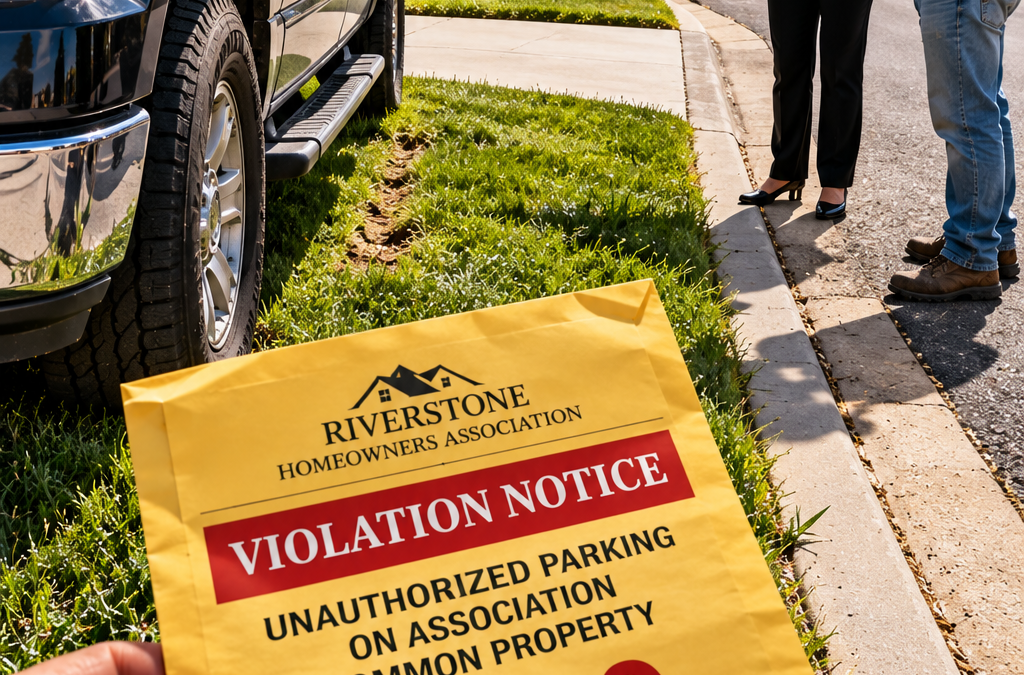
𝗙𝗨𝗟𝗟 𝗦𝗧𝗢𝗥𝗬
Her tone changed slightly.
“They are common areas.”
“I understand what you’re calling them.”
“Then I’m not sure what the issue is.”
“The violation says association-owned property.”
“That is how the area is classified.”
“By whom?”
“The association.”
I leaned back in my office chair.
“Denise, I’m asking a very simple question. Is there a deed showing that the association owns that specific strip of land?”
She stopped typing.
“I would need to check with legal.”
“Please do.”
“I can submit a request.”
“Good.”
“Anything else?”
“Yes. I’d like the parcel number.”
“For the common area?”
“For the strip you’re saying I parked on.”
“I don’t have that information.”
“Then how did the HOA determine I was trespassing?”
Her voice cooled.
“The violation was documented by the board.”
“That isn’t what I asked.”
“Mr. Turner, if you disagree with the violation, you are welcome to appeal.”
“To whom?”
“The board.”
“The same board that issued it?”
“That is the procedure.”
I pinched the bridge of my nose.
“Okay. Please have someone send me the deed or recorded document establishing ownership.”
“I’ll make a note.”
“When should I expect that?”
“I can’t give you an exact timeline.”
“Before my payment deadline?”
“I would assume so.”
She never called back.
Nobody did.
Three days passed.
Then five.
At first I was annoyed.
By the end of the week, I was curious.
There is a point in every argument where silence becomes information.
If the HOA had a clean deed proving ownership, why would it be difficult to provide?
It should have been the easiest question imaginable.
Here is the parcel.
Here is the deed.
Here is the legal description.
Case closed.
Instead, I got nothing.
So the following Monday, I took a long lunch break and drove to the county recorder’s office.
I had never been inside before.
It was one of those government buildings with fluorescent lights, gray carpet, and signs printed in fonts that looked older than I was.
A clerk named Marjorie helped me.
She was probably in her sixties and wore reading glasses on a chain around her neck.
“What are we looking for?” she asked.
I gave her my address.
“I’m trying to confirm the exact property boundary.”
“Survey dispute?”
“HOA dispute.”
She smiled immediately.
“Ah.”
That single sound contained years of experience.
“Bad?”
“Depends on the HOA.”
“Mine says a strip beside my driveway belongs to them.”
“Let’s see what the county says.”
She pulled up the subdivision records.
Then the original plat.
The development had been recorded in 1987.
I leaned over the counter while she zoomed into my lot.
My property line extended from the front corner toward the road.
Then it continued farther than I expected.
“Wait.”
Marjorie stopped.
“What?”
I pointed at the screen.
“That line.”
“Yes.”
“That’s my boundary?”
“According to the recorded plat.”
“It goes through the grass strip.”
“Yes.”
“How far?”
She checked the scale.
“Approximately three feet beyond what looks like your driveway edge.”
I stared.
“That can’t be right.”
She looked at me over her glasses.
“Why not?”
“The HOA says they own it.”
She clicked another layer.
“I’m not seeing a separate association parcel there.”
“Then what is this?”
I pointed to a shaded marking running along several lots.
She enlarged the notation.
UTILITY AND ACCESS EASEMENT.
I read it slowly.
“Easement.”
“Yes.”
“So that isn’t common property.”
“Not from what I’m looking at.”
“Who owns the land underneath it?”
She clicked again.
“Your parcel description appears to include it.”
I looked at her.
“You’re saying I own that strip?”
“I’m saying the underlying fee title appears to be part of your lot. The easement is a separate right burdening that portion of the property.”
I felt something in my chest shift.
All week I had assumed I might be wrong.
Now the problem looked very different.
“So an easement doesn’t mean the HOA owns it.”
“No.”
“Who holds the easement?”
She studied the original filing.
“Looks like it was granted to the county water authority.”
“When?”
“1987.”
“Before the HOA existed.”
“Yes.”
I stood there staring at the map.
The yellow violation notice flashed through my mind.
ASSOCIATION-OWNED COMMON PROPERTY.
They had written it as fact.
They had threatened a lien based on it.
And the county records appeared to say the exact opposite.
I paid for certified copies of the plat, my deed, and the easement instrument.
Then I walked outside and sat in my truck.
I did not start the engine.
For about ten minutes, I just looked at the papers.
My first emotion should have been triumph.
It was not.
It was anger.
Not explosive anger.
The slow kind.
The kind that builds when you realize somebody has been speaking confidently about something they never bothered to verify.
I had maintained that strip for six years.
The HOA never mowed it.
Never watered it.
Never repaired it.
Yet suddenly they had decided it was theirs when they wanted $900 from me.
I pulled out my phone and called Denise.
Voicemail.
“Hi, Denise. This is Michael Turner. I’m following up on the ownership question. I’ve now obtained the county plat and deed. The strip appears to be inside my parcel and subject to a utility easement, not owned by the association. Please call me back.”
She did not.
The next day, I emailed the HOA.
I attached the plat.
I highlighted the boundary.
I quoted the easement notation.
My message was polite.
I asked for the fine to be withdrawn.
Forty-eight hours later, Denise replied.
The board has reviewed your correspondence and determined that the violation remains valid. The area has historically been treated as common-use property and remains subject to association regulation.
Historically treated.
I read those two words several times.
That was not ownership.
That was habit.
I wrote back.
Please identify the recorded document granting the association ownership or enforcement authority over this specific area.
No response.
Two days later, another yellow envelope appeared.
$150 additional fine.
CONTINUED UNAUTHORIZED PARKING.
The strange part?
I had not parked there since the first notice.
I called Denise immediately.
“I moved the truck.”
“The board has photographs.”
“Of what date?”
“I don’t have them in front of me.”
“I have a security camera.”
Silence.
“I can prove the truck hasn’t been on that grass since the first notice.”
“You can appeal.”
“Denise, how can you fine me for something that didn’t happen?”
“I don’t issue the fines.”
“Who does?”
“The board.”
“Who specifically?”
“I’m not going to discuss individual board members.”
That answer told me more than she intended.
The board had shifted from asserting ownership to defending itself.
That evening I attended the HOA meeting.
The board president was a woman named Cynthia Marsh.
Cynthia had lived in the neighborhood longer than I had.
She was elegant, controlled, and deeply certain of herself.
She wore a navy blazer despite the Arizona heat and kept a leather folder open in front of her like a judge’s case file.
During public comment, I raised my hand.
She called on me with obvious reluctance.
“Mr. Turner.”
“I’m here about the parking fines.”
“We’ve already addressed your complaint in writing.”
“No. You rejected it without answering the ownership question.”
Cynthia smiled tightly.
“The matter has been reviewed.”
“Then this should be easy.”
I held up the plat.
“Can you show me the document proving the HOA owns the strip beside my driveway?”
A few homeowners turned.
Cynthia did not look at the map.
“The association has exercised control over that area for decades.”
“That isn’t what I asked.”
Her smile disappeared.
“Please don’t interrupt.”
“I’m responding to your answer.”
“You were given an opportunity to speak.”
“So was the HOA. I’m still waiting for the deed.”
The room became quieter.
Cynthia leaned forward.
“Mr. Turner, homeowners do not get to reinterpret community boundaries simply because they dislike enforcement.”
“I’m not interpreting anything.”
I placed the certified plat on the table in front of me.
“This is the recorded subdivision map.”
She barely glanced at it.
“Our attorney is familiar with the governing documents.”
“Then why hasn’t anyone sent me the deed?”
Cynthia’s expression hardened.
“You are attempting to turn a straightforward parking violation into something it is not.”
“No. I’m trying to determine whether you fined me for parking on my own property.”
Someone in the back whispered, “What?”
Cynthia heard it.
Her eyes moved toward the audience.
Then back to me.
“The greenbelt is controlled by the association.”
“Owned or controlled?”
“Both.”
“Show me.”
Her face changed.
Not much.
But enough.
For the first time, she looked irritated rather than confident.
“You are out of order.”
“That’s convenient.”
“Your comment period is over.”
“Then put my question in the minutes.”
She struck the gavel.
“Next homeowner.”
I sat down.
My hands were shaking.
Not because I was afraid of Cynthia.
Because I knew what had just happened.
She did not have the answer.
Or worse, she had the answer and did not want the room to hear it.
When I got home, I spread the documents across my kitchen table.
My deed.
The 1987 plat.
The easement instrument.
The HOA declaration.
I read until midnight.
Then one in the morning.
Then nearly two.
The easement fascinated me.
It had originally been granted to the county water authority for installation, inspection, repair, and access to a water line.
That explained why the strip ran beside several driveways.
The problem was that the water line had been rerouted years earlier.
I remembered the construction.
Crews had opened part of the road back when I first moved in.
I started searching county records.
Eventually, I found a 2009 utility project document showing that the original line serving our section had been abandoned and replaced.
That raised another question.
What happened to the easement?
I was smart enough not to assume the answer.
Property law is full of traps.
So I called a real estate attorney.
Her name was Rachel Monroe.
Her website listed easements, boundary disputes, and quiet title actions among her specialties.
I emailed the records.
She called me the next afternoon.
“This is interesting,” she said.
“That sounds expensive.”
She laughed.
“Probably less expensive than your HOA thinks.”
“So am I reading this correctly?”
“Partly.”
“Meaning?”
“You appear to own the underlying land.”
“That part is clear?”
“From the documents you sent, yes.”
“And the HOA?”
“I don’t see anything giving them title.”
“What about control?”
“That’s more complicated.”
Of course it was.
She continued.
“The original easement appears to have benefited the water authority, not the association. I need to confirm whether any rights were later assigned or reserved.”
“If they weren’t?”
“Then the HOA’s position is weak.”
“Weak enough to reverse the fine?”
“Possibly.”
I looked at the $1,050 worth of notices on my table.
“That’s good enough for me.”
Rachel paused.
“You said the water line was abandoned?”
“Yes.”
“When?”
“2009.”
“Did you find a formal release?”
“No.”
“That matters.”
“Why?”
“An abandoned utility easement may still remain of record unless formally released or otherwise extinguished. Depending on how it was created and state law, there may be a process to clear it or acquire the dormant rights.”
“Acquire?”
“Yes.”
I sat straighter.
“You mean buy the easement?”
“Potentially.”
My mind started moving quickly.
“If I owned both the land and whatever remaining access rights existed—”
“Slow down.”
Rachel laughed again.
“I haven’t confirmed anything yet.”
“But theoretically?”
“Theoretically, if the rights are transferable and the holder is willing or the abandonment process allows it, you could consolidate control.”
I stared at the documents.
The idea felt absurd.
The HOA had fined me for parking on land they claimed to control.
What if I could legally acquire the very rights they had been pretending belonged to them?
Rachel must have sensed where my mind was going.
“Michael.”
“Yes?”
“Do not do anything dramatic.”
“I’m not dramatic.”
“You’re calling an easement attorney because of a parking ticket.”
“A nine-hundred-dollar parking ticket.”
“Point taken.”
She spent the next week reviewing the chain of title.
What she found changed the dispute completely.
The underlying land was mine.
That much was confirmed.
The HOA had never held title.
The utility easement had originally belonged to the county water authority.
When the pipeline was rerouted in 2009, the authority stopped using the strip.
There was no evidence the easement had ever been transferred to the HOA.
More importantly, the utility holder had classified the old corridor as abandoned for operational purposes.
Rachel found a statutory process available in our jurisdiction to petition for release and clarification of dormant easement rights.
Because my parcel contained the burdened land, I had standing to initiate the process.
It was not as simple as writing a check and saying, “Mine.”
There were notices.
Filings.
A title search.
Potential objections.
The county had to be notified.
The original utility holder had to be notified.
Affected parties had an opportunity to respond.
If someone could establish a valid continuing interest, my claim could fail.
Rachel explained all of this during a meeting in her office.
“So there is no guarantee,” she said.
“I understand.”
“And I want to be clear about something else.”
“What?”
“The HOA may have some contractual regulatory argument separate from ownership. We’re still reviewing the declaration.”
“But they don’t own the land.”
“Correct.”
“And they don’t own the easement.”
“Correct.”
“And the current easement holder no longer uses it.”
“Correct.”
I leaned back.
“So why are they fining people?”
Rachel looked at me.
“That is a very good question.”
People.
I noticed the word immediately.
“People?”
“You said people?”
“You mentioned in your email that neighbors had also been ticketed.”
I had almost forgotten.
During the HOA meeting, another homeowner had stopped me in the parking lot.
His name was Larry.
He lived four houses down.
“You got fined for the grass?” he asked.
“Yes.”
He shook his head.
“They got me last year.”
“How much?”
“Six hundred.”
“For parking?”
“My daughter visited for Thanksgiving. Her tires were half on the green strip.”
“Did you pay it?”
“What choice did I have?”
That phrase bothered me.
What choice did I have?
The next weekend, I knocked on doors.
Not many.
Just the homes whose driveways bordered the same green strip.
I asked one question.
“Has the HOA ever fined you for parking on the grass beside your driveway?”
The answers surprised me.
Larry: $600.
Mrs. Jenkins: $450.
The Meyers family: $750 spread across three notices.
Another neighbor named Patrick had received warnings but no fine.
One homeowner had paid $1,200 after a contractor parked there during a kitchen remodel.
Every one of them assumed the HOA owned the land.
“Cynthia told us it was common area,” Mrs. Jenkins said.
She was eighty-one.
Her husband had died two years earlier.
She kept every HOA letter in a shoebox.
“I didn’t know I could question it.”
I sat at her dining-room table while she found the notice.
There it was.
ASSOCIATION COMMON PROPERTY.
Same wording as mine.
“How did you pay this?”
“I sent a check.”
“Four hundred fifty dollars?”
She nodded.
“My Social Security had just come in.”
I felt something tighten in my chest.
“Did you call them first?”
“Oh, yes.”
“What did they say?”
“That repeated parking could lead to legal action.”
“Who parked there?”
“My grandson.”
She looked embarrassed.
“He came over to fix my sink.”
That was the moment the dispute stopped being just about my truck.
I had been irritated over $900.
Mrs. Jenkins had paid half a month’s living money because her grandson’s tires touched land she apparently owned.
I left her house angry enough that I had to walk around the block before going home.
That night I emailed Rachel.
I want to proceed.
She called the next morning.
“You’re sure?”
“Yes.”
“This will cost more than the original fine.”
“I know.”
“You may never recover the legal fees.”
“I know.”
“And the outcome is not guaranteed.”
“I understand.”
She was quiet.
Then she said, “All right.”
The petition was filed on a Thursday.
Notice went to the county.
Notice went to the former utility authority.
Notice went to parties identified in the title search.
The process began.
I told nobody on the HOA board.
That was deliberate.
Not illegal.
Not deceptive in any formal sense.
They would receive whatever notice the law required if they had a recorded interest.
They had repeatedly claimed ownership.
If that claim were real, I assumed someone would object.
Nobody did.
Meanwhile, the fines continued.
That part became surreal.
I started parking on the strip again.
Rachel had confirmed that I owned the underlying land.
There was no county restriction preventing me from parking there.
The dormant utility rights did not prohibit ordinary surface use.
So I put my truck exactly where it had always been.
Two days later, another notice appeared.
$450.
I paid it.
Rachel thought I had lost my mind.
“You paid?”
“Yes.”
“Why?”
“Because I want a clean record.”
“You are creating a very expensive clean record.”
“They’ll refund it.”
“You sound confident.”
“I’m motivated.”
Another fine arrived eleven days later.
Then another.
Cynthia apparently interpreted payment as surrender.
At the next HOA meeting, she smiled when she saw me.
“Mr. Turner.”
“Cynthia.”
“I assume you’ve received our latest notices.”
“I have.”
“Good.”
She seemed almost pleased.
“I hope this means we can finally resolve the issue.”
“What would resolution look like?”
“Stop parking on association property.”
I looked at her for a long moment.
“You’re still calling it association property.”
“That is what it is.”
“Have you found the deed yet?”
Her jaw tightened.
“This issue has been reviewed by counsel.”
“Did counsel find the deed?”
“You seem unusually fixated on semantics.”
I almost laughed.
“Ownership isn’t semantics.”
A few people in the room murmured.
Cynthia shifted in her chair.
“The board will continue enforcing the rules.”
“That’s your decision.”
“Yes.”
“It is.”
For the first time, she seemed unsettled by my lack of resistance.
I was not arguing anymore.
I was not threatening.
I was paying.
Documenting.
Waiting.
People who rely on intimidation need reactions.
Anger gives them something to punish.
Fear gives them something to exploit.
Calm uncertainty is harder.
Cynthia did not know what I was doing.
I could see it every time she looked at me.
Another month passed.
The total fines climbed past $3,000.
Then $4,000.
Then more.
I paid every one.
Each check received a copy.
Each notice went into a folder.
Dates.
Amounts.
Photographs.
Meeting minutes.
Emails.
I kept everything.
Meanwhile, Rachel handled the petition.
The county filed no objection.
The water authority confirmed it no longer required the corridor for active utility operations.
No successor utility claimed a continuing need.
No HOA attorney appeared.
No board representative objected.
Nothing.
The same organization that had been threatening me for “trespassing” apparently did not know enough about the property to defend the interest it insisted it owned.
At day sixty-two, I asked Rachel how things looked.
“Quiet.”
“Good quiet?”
“So far.”
“At what point does silence become useful?”
“When the statutory objection period closes.”
“How long?”
“Twenty-eight more days.”
Those twenty-eight days felt longer than the previous two months.
I kept thinking the HOA would discover what was happening.
I expected a letter from their attorney.
Nothing.
At day seventy-eight, Cynthia sent me another violation.
At day eighty-four, Denise emailed me:
Your continued disregard for community parking standards demonstrates willful noncompliance. Further violations may result in referral to association counsel.
I forwarded it to Rachel.
She replied with one sentence.
Save that.
I did.
On day ninety-one, Rachel called.
“Congratulations.”
I stood in my kitchen.
“What happened?”
“The order was entered.”
My heart started beating faster.
“No objections?”
“None.”
“County?”
“No objection.”
“Utility authority?”
“No objection.”
“HOA?”
“No filing.”
I sat down.
“So what does that mean?”
“It means the record has been clarified and the dormant easement rights at issue have been released and consolidated according to the order. Your title now reflects the updated status.”
I looked out the kitchen window toward the strip.
My truck was parked there.
“So they spent three months fining me for using land they never owned.”
“That is the short version.”
“And now?”
“Now you have a very strong answer to the question you asked them at the beginning.”
Who owns it?
I smiled.
For the first time since the yellow envelope appeared, I stopped feeling defensive.
I printed three certified copies of the recorded order and updated title documents.
One went into my safe.
One stayed with Rachel.
The third I placed inside a plain manila folder.
The next HOA meeting was on Wednesday.
I arrived early.
Cynthia was already there.
She looked at me from the front table.
I sat in the third row.
No conversation.
The meeting began at seven.
For forty minutes, I listened.
Budget update.
Pool chemicals.
Roof color applications.
Landscaping complaints.
A discussion about whether holiday decorations should be removed by January 10 or January 15.
I watched Cynthia speak with that same effortless authority.
She corrected people.
Interrupted homeowners.
Reminded them to “respect procedure.”
At one point Mrs. Jenkins asked a question about irrigation.
Cynthia cut her off before she finished.
“Please submit maintenance concerns in writing.”
Mrs. Jenkins lowered her hand.
That made me angry all over again.
Finally, public comment opened.
Cynthia looked toward the room.
“Anyone?”
My hand went up.
Her expression changed.
Not surprise.
Exhaustion.
“Mr. Turner.”
I stood with the folder.
“I want to address the parking enforcement along Brookhaven Lane.”
Cynthia sighed.
“We’ve covered this repeatedly.”
“I know.”
“Your fines remain valid.”
“I understand that’s your position.”
She glanced toward another board member.
“Then what is there to discuss?”
“Ownership.”
Her face stiffened.
“We are not reopening—”
“I’m not asking you to reopen anything.”
I walked toward the front.
“I’m giving you documents.”
She looked at the folder but did not take it.
“What documents?”
“Recorded county documents.”
The room quieted.
Denise sat at the side table with her laptop.
Her hands stopped moving.
I placed one certified copy in front of Cynthia.
“This is the original 1987 subdivision plat.”
“I’ve seen your plat.”
“This is the current recorded order clarifying the easement and title status.”
That got her attention.
“What?”
I handed her the next page.
“The grass strip beside my driveway was never owned by the HOA.”
Cynthia’s eyes moved across the document.
I continued.
“It was part of my parcel subject to a utility and access easement.”
“I’m aware of your interpretation.”
“It isn’t an interpretation anymore.”
I tapped the recording stamp.
“It’s recorded.”
One of the board members leaned toward her.
“What is that?”
Cynthia ignored him.
I continued.
“The utility corridor was abandoned operationally years ago after the water line was rerouted. I petitioned to resolve the dormant easement interest and clarify title.”
Denise slowly put down her pen.
“No,” she said quietly.
Everyone heard her.
Cynthia looked at Denise.
Then back at me.
“When did you do this?”
“Ninety-one days ago.”
Her face changed.
“Ninety-one?”
“Yes.”
“You filed a property action without notifying the association?”
“I followed the legal notice process.”
“You were required to notify interested parties.”
“I did.”
“The HOA is an interested party.”
“Then your attorney should have had a recorded interest to point to.”
Silence.
I let that settle.
“No objection was filed.”
Cynthia stared at the page.
“You deliberately hid this.”
“No.”
My voice stayed calm.
“I asked you for your deed on the first day.”
Her eyes lifted.
“You ignored me.”
A man in the second row whispered, “Wow.”
I continued.
“I asked again by email.”
No response from Cynthia.
“I asked at a board meeting.”
She shifted in her chair.
“You told me ownership was semantics.”
“I never said—”
“Yes, you did.”
I opened the folder.
“I have the meeting recording.”
Her mouth closed.
“I asked the HOA to show one recorded document proving that you owned or controlled that strip.”
I looked around the room.
“You never produced one.”
A woman behind me said, “So whose land is it?”
I turned slightly.
“Mine.”
Murmurs spread across the room.
Cynthia struck the gavel.
“Please.”
The room quieted.
Her face had gone pale, but she was still trying to maintain control.
“Even assuming this document says what you claim, the association may retain regulatory authority through the declaration.”
“Rachel reviewed that too.”
“Rachel?”
“My attorney.”
That landed.
Cynthia looked down at the papers again.
I continued.
“There is no recorded HOA easement over that strip. There is no association ownership interest. And there is no declaration language turning privately titled land outside common ownership into HOA property simply because the board has treated it that way.”
Denise closed her laptop.
Cynthia noticed.
“Why are you closing that?”
Denise looked at her.
“Because we need counsel.”
The room went very still.
I almost felt sorry for Cynthia.
Almost.
Then I remembered Mrs. Jenkins’ $450 check.
I remembered the lien threat.
I remembered the additional fine for a parking violation that had not even occurred.
So I continued.
“There’s another issue.”
Cynthia looked at me.
“What?”
“Access.”
Her expression tightened.
“What access?”
“The sprinkler control box.”
Now Denise looked at me.
I pointed toward the neighborhood map mounted on the wall.
“The landscaping crew crosses that exact strip every month to reach the irrigation control box serving the common landscaping.”
Nobody spoke.
“That access previously fell within the utility corridor.”
Cynthia understood before I finished.
I could see it.
Her eyes widened slightly.
I placed another document on the table.
“Going forward, the association needs permission for nonpublic access across that portion of my property.”
One board member whispered, “Are you serious?”
“Yes.”
Cynthia pushed the paper away.
“This is extortion.”
“No.”
The word came out sharper than I intended.
“It’s exactly what you told me for three months.”
Her face reddened.
“You charged me because you claimed I needed your permission to use land you said you controlled.”
I pointed at the record.
“Now we finally know who controls it.”
“That is not the same thing.”
“No. It isn’t.”
I looked around the room.
“Because I actually have the paperwork.”
For the first time all night, several people laughed.
Cynthia slammed the gavel.
“This is not funny.”
“No.”
I looked directly at her.
“It really isn’t.”
The laughter stopped.
“Mrs. Jenkins paid you $450 because her grandson parked partly on land she owned.”
Mrs. Jenkins turned toward the board.
“Is that true?”
Cynthia looked at me.
“Do not involve other residents.”
“They’re already involved.”
I pulled out a sheet.
“Larry paid $600.”
Larry raised his hand from the back.
“That’s true.”
“The Meyers family paid $750.”
Mr. Meyers spoke.
“Three notices.”
“Another homeowner paid $1,200 because a contractor parked there.”
The room was becoming restless.
People were looking at each other now.
Cynthia’s control was slipping.
I placed the last page on the table.
“I’m willing to give the HOA a written access agreement for the irrigation equipment.”
Cynthia stared at me.
“Under what conditions?”
“One.”
I looked around.
“Every parking fine issued for use of that strip during the previous three years is refunded.”
The room went silent.
“Every one.”
Cynthia leaned back.
“That is impossible.”
“No.”
I shook my head.
“It’s inconvenient.”
“We can’t simply refund lawfully collected penalties.”
“They weren’t lawful if they were based on the claim that residents were parking on association-owned land.”
“Our attorney would have to review that.”
“I hope they do.”
I slid Rachel’s business card onto the table.
“My attorney would like that too.”
Cynthia looked at Denise.
Denise looked miserable.
“What else?” Cynthia asked.
“The parking bylaw gets corrected.”
“To say what?”
“To reflect the actual ownership boundaries.”
“That language applies throughout the community.”
“Then fix the language carefully.”
I folded my arms.
“But stop calling privately owned property HOA common property.”
Cynthia looked at the other board members.
Nobody wanted to meet her eyes.
I continued.
“And the access agreement is free.”
That surprised them.
One board member looked up.
“Free?”
“Yes.”
“I’m not charging the HOA.”
Cynthia narrowed her eyes.
“Why?”
“Because I don’t want money from you.”
I glanced at Mrs. Jenkins.
“I want you to return money you never should have taken.”
That was the moment the room changed.
Until then, some people probably thought this was revenge.
My parking spot versus Cynthia’s authority.
But it was not about that anymore.
Mrs. Jenkins had paid money she needed for groceries.
Larry had paid because his daughter came home for Thanksgiving.
Families had been punished because someone decades earlier looked at a strip marked EASEMENT and casually decided the word meant HOA property.
Maybe the mistake had originally been innocent.
What happened afterward was not.
Because once I showed them the deed, they had a choice.
Check.
Correct.
Refund.
Instead, Cynthia doubled down.
She fined me again.
And again.
And again.
That transformed a mistake into arrogance.
The board went into executive session.
Residents were told to wait.
We waited forty minutes.
Then fifty.
People gathered in small groups.
Mrs. Jenkins came over.
“Michael.”
“Yes?”
“You really own it?”
“I really do.”
She shook her head slowly.
“All these years.”
“I know.”
“You think they’ll refund us?”
“They should.”
“That isn’t what I asked.”
I smiled.
“I think they’re going to have a difficult time explaining why they shouldn’t.”
She touched my arm.
“Thank you.”
“You don’t have to thank me.”
“I do.”
“No.”
I looked toward the closed boardroom door.
“They should never have taken it.”
At fifty-eight minutes, the doors opened.
The board returned.
Cynthia looked furious.
The association attorney had joined by speakerphone.
Denise reopened her laptop.
Cynthia called the meeting back to order.
She read from a handwritten note.
“Following consultation with counsel, the board has agreed to enter into a temporary access arrangement with Mr. Turner while ownership and historical enforcement issues are reviewed.”
I raised my hand.
Cynthia glared.
“What?”
“Permanent access agreement.”
She closed her eyes briefly.
“Subject to documentation.”
“Already drafted.”
I held up the folder.
Someone laughed.
Cynthia ignored it.
She continued.
“The board has also agreed to suspend parking enforcement relating to the disputed strip.”
“Refunds?”
Her jaw tightened.
“That matter is under review.”
The association attorney’s voice came from the speaker.
“Madam President, I recommend you state the agreement as discussed.”
Cynthia looked like she wanted to throw the phone.
Then she read again.
“The board has agreed, subject to verification of individual payment records, to reimburse parking penalties assessed against homeowners for parking on the affected easement area during the prior three-year period.”
The room erupted.
Not cheering exactly.
More like dozens of people exhaling at once.
Larry whispered, “No way.”
Mrs. Jenkins covered her mouth.
I remained standing.
“And the bylaw?”
Cynthia looked at the paper.
“The board will amend the enforcement language to distinguish association common property from privately owned property subject to recorded easements.”
“How long?”
“Thirty days.”
“And my fines?”
She stared at me.
“All affected fines will be included in the reimbursement review.”
“How much have I paid?”
Denise checked her computer.
Her eyes widened.
“Six thousand… seventy-five dollars.”
The room turned toward me.
I had known the amount.
Hearing it aloud still hurt.
Cynthia looked shocked.
Maybe she had never added them up.
Maybe individual fines felt small from behind a board table.
Four hundred here.
Six hundred there.
Another five hundred.
To her, they were enforcement tools.
To me, they were money I had earned one hour at a time.
I sat down.
The motion passed seventeen minutes later.
Unanimous.
Every board member voted yes.
Even Cynthia.
Especially Cynthia.
Because by then the alternative was obvious.
If they refused, attorneys would start asking broader questions.
How long had they been fining homeowners?
What document had they relied on?
Who authorized the interpretation?
Why did enforcement continue after I provided the recorded plat?
How much money had been collected?
Had liens ever been threatened?
Had anyone paid attorney fees?
Nobody at that table wanted those questions answered in court.
Three weeks later, I received my refund.
$6,075.
I sat at my kitchen table with the check in front of me.
It was strange.
For months, I had imagined that moment.
I thought I would feel victorious.
I mostly felt tired.
I thought about everything I could have done with that money.
Mortgage payments.
Repairs.
Savings.
A trip.
Instead, I had handed it to an HOA because they put official words on yellow paper.
Mrs. Jenkins received her refund the same week.
She called me.
“They sent it.”
“Good.”
“I’m going to buy my grandson dinner.”
“For fixing your sink?”
“For getting me fined.”
I laughed.
“So you’re rewarding him?”
“He still fixed the sink.”
Fair enough.
Larry got his money.
The Meyers family got theirs.
Every verified homeowner who had paid fines related to that strip during the covered period received reimbursement.
Some got a few hundred dollars.
Others more than a thousand.
The total was far higher than I expected.
That part bothered me most.
I had spent six years assuming the HOA knew where its property ended.
So had everyone else.
Apparently that assumption had been worth thousands of dollars to them.
Within a month, the parking regulations were rewritten.
The phrase association common property was removed from the affected section.
New maps were attached to the enforcement policy.
Actual common parcels were identified by parcel number.
Privately owned strips subject to utility rights were treated separately.
Imagine that.
Property rules based on actual property records.
Cynthia did not apologize.
Not publicly.
Not privately.
She continued serving as board president until the next election, though she became noticeably quieter.
At the first meeting after the refunds, she refused to look at me.
I almost felt bad.
Then I remembered how she had spoken to Mrs. Jenkins.
I remembered her telling me ownership was semantics.
I remembered the lien language.
Whatever embarrassment she felt had been earned.
Denise stopped returning my calls entirely.
That was fine.
I had no reason to call anymore.
The landscaping crew continued crossing the strip once a month under the written access agreement.
No fee.
No drama.
They drove a small utility cart to the sprinkler control box, did whatever maintenance they needed, and left.
The agreement was simple.
Reasonable access.
Advance notice for major work.
Repair any damage.
Nothing complicated.
That was all I had wanted from the HOA from the beginning.
Reasonableness.
What still amazes me is how close I came to simply paying the original $900 and forgetting about it.
I almost did.
That would have been the easy choice.
Write the check.
Move the truck.
Complain to a friend.
Move on.
The lien threat was designed to encourage exactly that.
Most people do not have time to research property law because somebody put two tires on grass.
Most people do not want to spend lunch breaks at county offices.
Most people see an HOA logo and assume somebody already checked the paperwork.
I did.
Until Denise could not answer one question.
Where is the deed?
That question changed everything.
The HOA had rules.
They had letterhead.
They had a property manager.
They had lawyers.
They had a board president with a gavel.
They had fines.
They had decades of habit.
What they did not have was ownership.
And habit is not ownership.
Confidence is not ownership.
A bylaw does not magically rewrite a deed.
Calling land “common area” for twenty years does not necessarily make it common property.
The county map did not care how many times Cynthia said it.
The deed did not care how confident Denise sounded on the phone.
That became the part of the story I remembered most.
Facts are remarkably indifferent to authority.
The strip of grass still looks exactly the same.
Three feet wide.
Nothing special.
In summer it gets brown around the edges no matter how much I water it.
My truck still sits partly on it sometimes.
Nobody leaves yellow envelopes anymore.
Every few weeks, I mow it.
The first time I did that after the title issue was resolved, Larry walked past with his dog.
He stopped.
“How’s your empire?”
I looked around.
“What empire?”
He pointed at the grass.
“All three feet of it.”
I laughed.
“Expanding rapidly.”
He nodded solemnly.
“Dangerous man.”
We both laughed.
Then he became serious.
“You know, I never would’ve looked.”
“At what?”
“The deed.”
“Neither would I if they’d fined me fifty bucks.”
“That’s crazy.”
“No.”
I looked toward the clubhouse in the distance.
“That’s probably why the system lasted.”
He nodded.
The original $900 fine was big enough to make me angry but not so big that the HOA expected a full-scale legal fight.
They assumed I would calculate the cost.
Attorney versus fine.
Time versus money.
Stress versus surrender.
Most enforcement systems like that survive because the person being targeted asks the wrong question.
“How do I make this go away?”
Instead of:
“Are they actually allowed to do this?”
There is a difference.
I learned another lesson too.
I could have gone into that first meeting yelling.
I could have accused Cynthia of theft.
I could have threatened lawsuits.
I could have posted angry messages online.
None of that would have helped.
The strongest thing I did was boring.
I went to the recorder’s office.
I asked for the plat.
I hired someone who understood easement law.
I saved every notice.
I let the paperwork speak.
Every time Cynthia exaggerated her authority, she created another document.
Every fine became evidence.
Every written claim that the HOA owned the strip became harder to defend once the title records were clear.
Eventually, they had built my argument for me.
I often think about that ninety-day waiting period.
That was the hardest part.
Not because I doubted the documents.
Because every new fine tested my patience.
Cynthia thought she was teaching me a lesson.
She probably saw my continued payments as proof that the system worked.
Issue a notice.
Collect money.
Repeat.
What she did not understand was that I was no longer paying because I believed she was right.
I was paying because I wanted an indisputable record.
By the time I walked into that Wednesday-night meeting, the dispute was no longer my word against hers.
It was her claim against recorded title.
That is a much harder argument to win.
The funniest part was that I never wanted to control the HOA’s access.
I had no interest in blocking landscapers.
I did not want sprinklers failing.
I did not want the entrance landscaping dying out of spite.
That would have hurt everybody.
I only needed the board to understand something they had refused to understand when the situation was reversed.
Access to property is not something you invent because it is convenient.
It comes from ownership, agreement, or law.
Cynthia had spent months insisting permission mattered when she believed she was the person granting it.
The moment she needed permission from me, suddenly cooperation sounded reasonable.
That irony was impossible to miss.
But revenge would have ruined the point.
If I had demanded thousands in access fees, the dispute would have become about money.
If I had blocked the maintenance crew, Cynthia could have painted me as vindictive.
So I offered access for free.
The only price was correction.
Return the fines.
Fix the rule.
Acknowledge the boundary.
That was enough.
Months later, Rachel called me about an unrelated document.
Before we hung up, she said, “You know you’re now the only client I’ve had who spent thousands of dollars to prove he could park three feet to the left.”
“That makes it sound stupid.”
“It is objectively a little stupid.”
“You took my money.”
“I’m an attorney.”
“Fair.”
She laughed.
Then she said something that stuck with me.
“The parking wasn’t really the issue, was it?”
“No.”
“What was?”
I thought for a second.
“Someone telling me they owned something without ever checking whether they did.”
“That’ll do it.”
She was right.
The $900 fine started the fight.
The lie kept it going.
Maybe lie is too strong for the beginning.
Maybe decades earlier somebody made a mistake.
Maybe a board member saw a utility easement shaded on a plat and assumed it was HOA land.
Maybe the property manager inherited an old map.
Maybe nobody intended anything at first.
But after I brought them the county records, intent stopped mattering as much.
They had information.
They chose authority over verification.
That is what bothered me.
Cynthia could have said:
“You may be right. Give us a week.”
Everything would have ended differently.
Instead she said:
“We’ve always controlled it.”
As if years of acting like something belonged to you could substitute for a deed.
It could not.
The next annual HOA election drew nearly three times the normal turnout.
Cynthia ran again.
She lost.
Not dramatically.
Nobody stood up and gave a speech.
There was no public humiliation.
Residents simply voted.
A retired civil engineer named Thomas Bell became president.
His first announcement was almost painfully dull.
“We are commissioning a boundary and records review of all association-owned parcels and easements.”
The room applauded.
I laughed.
Only an HOA could make accurate maps feel revolutionary.
The review uncovered several smaller inconsistencies.
Nothing as serious as mine.
Old access rights.
Outdated landscaping references.
A storage area everybody thought belonged to the association but was actually leased.
Things that should have been corrected years earlier.
Thomas handled them quietly.
No threats.
No drama.
Just records.
That was the real difference.
Good administration is boring.
Bad administration creates stories.
About a year after the original fine, I found the first yellow envelope while cleaning out a desk drawer.
I had saved it.
VIOLATION NOTICE.
$900.
Unauthorized parking on association common property.
I stood there holding it.
For a moment I remembered exactly how I felt that Tuesday morning.
Confused.
Embarrassed.
Worried about the lien language.
Unsure whether I had somehow misunderstood my own property.
Then I looked out the window.
My truck was parked partly on the grass.
The grass was freshly cut.
The sprinkler box sat several yards beyond it.
Everything looked ordinary.
That was the strange thing.
Nothing physical had changed.
The earth had not moved.
No fence shifted.
No survey marker appeared overnight.
The only thing that changed was knowledge.
Before I checked, the HOA’s confidence felt like ownership.
After I checked, it was just confidence.
That distinction cost them thousands of dollars.
It gave several neighbors their money back.
And it permanently changed the way people in our community responded to official-looking letters.
Now residents asked questions.
Which section?
Which parcel?
Which recorded document?
Who authorized this?
Can I see the record?
Some board members complained that meetings became slower.
I considered that progress.
Authority should slow down when money and property are involved.
Mrs. Jenkins started attending meetings too.
She sat near the front.
The first time the new board discussed a parking rule, she raised her hand.
Thomas called on her.
She said, “Have you checked the deed?”
The room burst out laughing.
Even Thomas.
“Mrs. Jenkins,” he said, “I promise we checked the deed.”
“Good.”
She sat back down.
That might have been my favorite moment in the whole story.
Not the refund.
Not Cynthia losing the election.
Not even the recorded order.
Mrs. Jenkins asking that question without fear.
Because a year earlier, she had handed over $450 simply because someone told her she had to.
Now she wanted proof.
That was better than revenge.
The HOA still exists.
It still has rules.
We still pay dues.
There are still meetings that last too long.
There are still arguments over landscaping and paint colors and whether basketball hoops can remain in driveways overnight.
I never became anti-HOA.
Shared communities need some structure.
Roads need maintenance.
Pools need insurance.
Common property actually does exist.
The problem was never the existence of rules.
The problem was pretending rules reached somewhere they did not.
There is a boundary between administration and ownership.
Between an easement and a deed.
Between habit and legal authority.
Cynthia crossed that boundary because she assumed nobody would make her prove where it was.
For years, nobody did.
Then she put a $900 yellow envelope on the wrong truck.
Sometimes people ask whether I planned everything from the beginning.
Absolutely not.
On that first morning, I was ready to pay.
I probably would have paid the $900 before the deadline.
What changed my mind was not anger.
It was Denise going silent when I asked for the deed.
That hesitation opened the door.
Then the plat opened it wider.
Then the easement records.
Then the abandoned utility line.
Then the other fines.
One question led to another until the whole claim collapsed.
That experience changed how I think about power.
The most effective kind of authority often does not need to prove itself because people assume someone else already did.
A letter arrives.
It has a logo.
A deadline.
A dollar amount.
Maybe a lawyer’s name.
And suddenly the burden feels like it belongs to you.
Prove you are innocent.
Prove you own your property.
Prove you are allowed to do what you have always done.
But sometimes the correct response is much simpler.
Prove your claim.
That was all I ever asked Cynthia to do.
She could not.
The strip beside my driveway is not valuable.
Nobody would build on it.
Nobody would buy a house because of it.
If I sold it separately, assuming I even could, the amount probably would not change my life.
But its value was never measured in square feet.
It mattered because it was mine.
More importantly, the truth mattered because people had been charged for years based on something that was not true.
The HOA had mistaken familiarity for authority.
And the longer nobody challenged them, the more certain they became.
That confidence disappeared quickly once the county records reached the table.
I still have one of the certified copies in my safe.
Not because I think Cynthia is coming back.
She moved to another neighborhood about eighteen months after losing the election.
I heard she sold her house quietly.
No farewell.
No announcement.
Denise eventually left the management company too.
I do not know where either of them ended up.
I do know the community survived without them.
Property values did not collapse.
Cars still park.
Grass still grows.
The world kept turning.
Every once in a while, when I park the truck beside the driveway, I notice exactly where the tires sit.
Three feet.
Such a small distance.
Yet that narrow strip changed almost everything about how I understood my neighborhood.
It taught me that lines on maps matter.
Words matter.
Ownership matters.
And when somebody uses authority to take money from you, asking them to show exactly where that authority comes from is not being difficult.
It is being responsible.
The yellow envelope was supposed to end the conversation.
Instead, it started the first question.
Who owns this?
Once I knew the answer, every other question became much easier.
And in the end, that was all it took.
Not screaming.
Not threats.
Not revenge.
Just a deed, an old easement, ninety days of patience, and the refusal to let somebody else’s confidence become more powerful than the truth recorded on paper.




