𝗙𝗨𝗟𝗟 𝗦𝗧𝗢𝗥𝗬 The first time Vivian Whitfield laughed at my grandfather’s 1987 deed, she did it in front of twenty-two neighbors as if forty years of recorded property law could be erased by confidence. I walked out of that clubhouse without arguing because I already knew there was one piece of steel three miles downstream that would eventually force everyone in that room to read the document she had mocked.
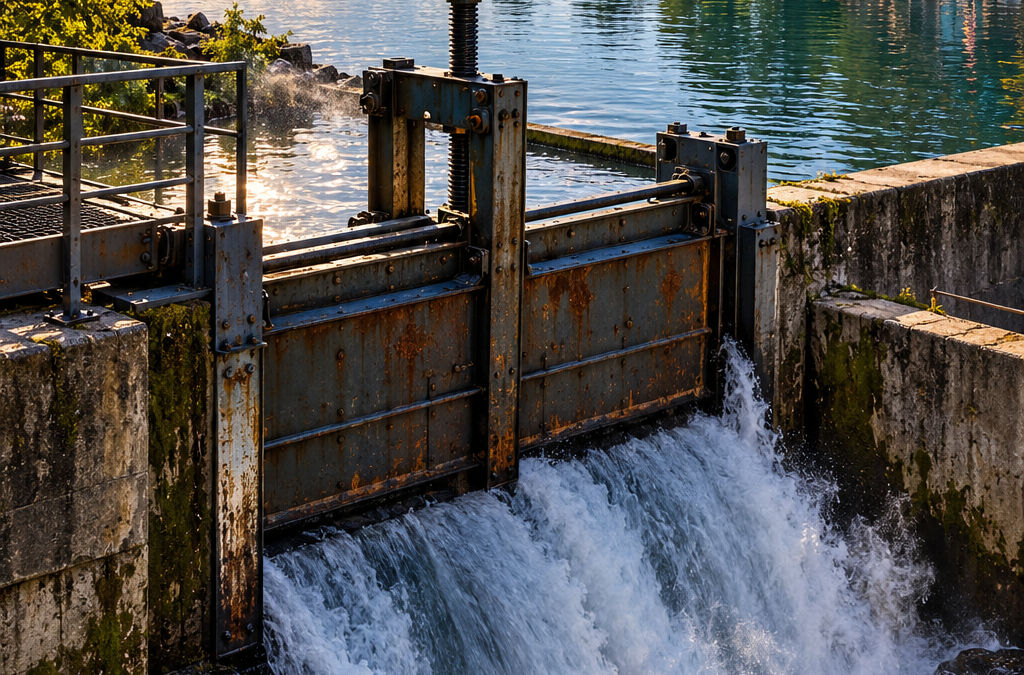
𝗙𝗨𝗟𝗟 𝗦𝗧𝗢𝗥𝗬
I nodded.
He put his hand on the steel.
“Most people around this lake will never think about this.”
I remember looking across the water.
“Why would they?”
“Exactly.”
Then he smiled.
“If you do your job right, they never have to.”
That sentence stayed with me.
For decades, my grandfather and father had quietly managed something nearly everyone around Cedar Hollow took for granted.
Stable water.
Nobody cared who maintained it.
Nobody asked who legally controlled it.
There had never been a reason to.
Then Vivian Whitfield became president of the Cedar Hollow HOA.
Vivian had moved into the neighborhood two years before the trouble started.
Her house was one of the largest on the western shoreline, a massive stone-and-glass place with three boat slips and landscaping that looked like it had been measured with a ruler.
Within her first year, she joined the board.
Six months later, she was president.
Some people liked her at first because she was energetic.
She answered emails.
She organized committees.
She pressured contractors.
She talked constantly about increasing property values.
But Vivian had a particular idea about what leadership meant.
To her, leadership meant control.
She didn’t ask.
She announced.
She didn’t suggest.
She instructed.
Whenever homeowners questioned her, she had a way of looking over her glasses and saying, “The board has already reviewed this.”
As if review automatically meant authority.
Under Vivian, Cedar Hollow became obsessed with appearance.
Dock paint colors were standardized.
Mailboxes were replaced.
Restrictions were added for landscaping.
One homeowner received a warning because his fishing boat remained visible from the road for three days.
Another was fined after putting a storage shed behind his house without submitting the correct architectural form.
Most people complained privately and complied publicly.
I stayed out of it.
My property was not under the same HOA restrictions as the newer parcels because of the way the original subdivision had been structured.
Vivian disliked that.
She never said it directly at first.
But I could tell.
At neighborhood functions, she would make little comments.
“You know, Daniel, it would be simpler if all the shoreline parcels operated under one set of standards.”
I’d smile.
“For you, maybe.”
She rarely laughed.
Another time, she approached me during a summer picnic.
“We’re trying to create a more unified waterfront.”
“What does that mean?”
“Consistent docks. Consistent shoreline treatment. Better community access.”
“Sounds ambitious.”
“It is.”
Then she looked toward my end of the lake.
“Eventually, we’ll need cooperation from everyone.”
The emphasis on everyone was not accidental.
I let it go.
I had learned that arguing with Vivian over hypothetical problems only gave her more energy.
The real trouble began on a Tuesday in March.
I came home from work and found a glossy flyer sticking halfway out of my mailbox.
At first I thought it was real estate advertising.
Then I saw the Cedar Hollow logo across the top.
COMMUNITY BOAT RAMP INITIATIVE.
Underneath was a full-color architectural rendering.
A broad concrete boat launch descended into the water.
There was a floating courtesy dock.
Landscaped parking.
Lighting.
A decorative Cedar Hollow sign.
The flyer described the project as a major investment in recreational access.
Estimated cost: $340,000.
Construction scheduled to begin in April.
Grand opening planned for June.
Ribbon cutting ceremony to follow.
I read the entire flyer twice.
Nobody had spoken to me about it.
That alone bothered me, but the rendering bothered me more.
I recognized the shoreline.
South Cove.
Right beside the dam and spillway.
I went inside and laid the flyer on the kitchen counter.
My wife, Elena, picked it up.
“When did they approve this?”
“I have no idea.”
“You didn’t know?”
“No.”
She studied the map.
“Isn’t that right beside your spillway?”
“Yes.”
“Can they build there?”
“That depends what they’re actually building.”
I called Vivian.
She answered on the fourth ring.
“Daniel.”
She always said my name as though she had been expecting trouble.
“I just got your boat-ramp flyer.”
“Good. We wanted everyone to receive the announcement before contractors mobilized.”
“Everyone?”
“Yes.”
“Interesting, because nobody asked me anything.”
There was a pause.
“About what?”
“The ramp.”
“What about it?”
“You’re building it beside the dam.”
“On community land.”
“You’re excavating beside infrastructure I control.”
“The project does not cross your property boundary.”
“That wasn’t my question.”
Her voice became slightly sharper.
“Daniel, the HOA owns the South Cove parcel.”
“I know.”
“The board voted.”
“I wasn’t at that meeting.”
“Notice was mailed to all eligible association members.”
“I’m not an association member.”
“Exactly.”
There was something almost triumphant in the way she said it.
I leaned against the counter.
“So you didn’t notify me.”
“You don’t vote in HOA matters.”
“You’re building next to my spillway.”
“We are building on HOA property.”
“Did anyone review the water-control rights?”
Silence.
Then Vivian laughed softly.
Not because she found it funny.
Because she found the question inconvenient.
“Daniel, this is a community lake.”
“That wasn’t my question either.”
“The lake serves the entire community.”
“So nobody checked.”
“Checked what?”
“The recorded water rights.”
Another pause.
Then she sighed.
“You’ve mentioned these old family documents before.”
“They aren’t family stories. They’re recorded documents.”
“Whatever historic arrangement existed when your grandfather divided the land has no bearing on an HOA improvement being built on HOA property.”
“You’re sure?”
“Yes.”
Very sure.
That confidence got my attention.
“Who told you that?”
“Our project consultants.”
“Did they review the 1987 plat?”
“Daniel, we are not going to reopen forty years of history every time the association wants to improve common property.”
I stared at the flyer.
The ribbon cutting date was already printed.
She had contractors booked.
Money allocated.
Designs completed.
And she had never checked the document that governed the lake itself.
“How close is the ramp to the spillway?”
“The engineering plan satisfies setback requirements.”
“How close?”
“Approximately eighteen inches from the existing structure at the nearest point.”
I straightened.
“You’re pouring concrete eighteen inches from the spillway gate?”
“The edge of the launch corridor.”
“Vivian.”
“Don’t start.”
That stopped me.
“Don’t start?”
“Yes. I know how you get about old property records.”
I almost laughed.
“You’ve never discussed my property records with me.”
“I’ve heard enough.”
“From who?”
“It doesn’t matter.”
“It matters when you’re pouring $340,000 of concrete beside infrastructure my family controls.”
Her tone became cold.
“The board has made its decision.”
“This isn’t only a board issue.”
“It is community property.”
“The shore may be.”
“There you go again.”
“Again?”
“With the technicalities.”
Technicalities.
People like Vivian love that word when a fact interferes with something they want.
“Water rights aren’t a technicality.”
“Daniel, the lake has been used communally for decades.”
“I’ve never disputed that.”
“Then what exactly is your problem?”
“You are building permanent infrastructure designed around a specific lake level without asking the person legally responsible for that lake level.”
She was quiet for half a second.
Then she laughed.
Actually laughed.
“Do you hear yourself?”
“Yes.”
“You’re telling me you control the entire lake?”
“I’m telling you to read the documents.”
“We’ve already spent months planning this.”
“That doesn’t make the documents disappear.”
“We are not stopping construction because your grandfather wrote something into a deed in the eighties.”
The casual contempt in her voice irritated me more than shouting would have.
“You should probably find out what he wrote before you say that.”
“I have a meeting, Daniel.”
Then she added, almost dismissively:
“Don’t worry. Nothing we’re doing affects your property line.”
And hung up.
She was right about one thing.
The project did not cross my property line.
That wasn’t the problem.
The problem was that Vivian believed a property line was the only line that mattered.
Construction began in April.
I could see parts of it from my porch through the trees.
Excavators arrived first.
Then dump trucks.
Then concrete forms.
The HOA newsletter celebrated every stage.
PHASE ONE UNDERWAY.
A NEW ERA OF LAKE ACCESS.
CEDAR HOLLOW INVESTING IN OUR FUTURE.
I drove past the site occasionally.
Workers had cut into the shallow cove and graded a wide launch lane.
The concrete descended toward the existing waterline.
The ramp’s entire geometry depended on that water remaining almost exactly where it was.
That was obvious.
A boat ramp has to reach deep enough for trailers to float boats.
Too high, and vehicles enter dangerous water.
Too low, and the concrete stops before the lake begins.
One afternoon, I pulled over near the site.
The foreman walked toward me.
“Can I help you?”
“You running this project?”
“Site side, yeah.”
I introduced myself.
He recognized my last name.
“Oh. You’re the property owner up north.”
“That’s me.”
I pointed toward the spillway structure.
“How much information did they give you about that?”
He glanced over.
“Existing drainage structure?”
“It’s the lake-level control.”
“Okay.”
“Did anybody verify water rights before designing the ramp?”
He frowned.
“Water rights?”
“Yes.”
“We have a site survey.”
“That’s not what I asked.”
He looked genuinely confused.
“I’d have to talk to engineering.”
“So nobody discussed operating elevations?”
“We have design water level.”
“Based on what?”
“The lake.”
“The lake changes.”
“Not much, from what they told us.”
I looked at him for a few seconds.
“Who told you that?”
“The association.”
There it was.
I thanked him.
On the drive home, curiosity started turning into concern.
I knew what my father had told me.
I knew what our family records said.
But I wanted more than memory.
If this became a fight, I wanted documents that Vivian could not dismiss as family folklore.
So I went to the county assessor and recorder.
I requested the original subdivision file.
The clerk brought me a thick set of old records.
Some pages had been scanned.
Others were photocopies of documents typed decades earlier.
I found the 1987 plat.
Then the subdivision agreement.
Then the deed language.
And finally the clause.
I had heard my father summarize it many times.
I had never read the exact wording.
Water level management and spillway control shall remain the sole right and responsibility of the grantor and successive title holders of Parcel 4 in perpetuity absent written transfer.
I read it again.
Then again.
Parcel 4 was mine.
Grantor was my grandfather.
Successive title holders meant my father.
Then me.
Absent written transfer.
I searched the records.
No transfer.
Nothing to the HOA.
Nothing to the county.
Nothing to any successor developer.
The right was still attached exactly where my grandfather had placed it in 1987.
I sat there feeling two things at once.
Relief.
And anger.
Because Vivian had been warned.
Not formally yet.
But enough to ask a question.
Enough to pause construction for one day.
Enough to tell an attorney, “Check this before we pour hundreds of thousands of dollars into concrete.”
Instead, she had laughed.
I requested certified copies.
The clerk asked whether there was a dispute.
“Maybe.”
“What kind?”
“HOA.”
She gave me a sympathetic look that told me I was not the first person to answer that way.
I sat in my truck outside the building and photographed the clause.
Then I called the project foreman.
“Remember me?”
“Yeah.”
“I found the original water-control language.”
There was a pause.
“Okay.”
“The HOA never received those rights.”
Another pause.
“That’s above my pay grade.”
“I understand.”
“You should probably talk to them.”
“I have.”
“And?”
“They laughed.”
He sighed.
“Look, I’m building what’s on the approved drawings.”
“I know.”
“I’m not a title lawyer.”
“I know.”
“I can’t stop a project because someone tells me there’s a deed issue.”
“I know that too.”
He sounded relieved.
I wasn’t trying to blame him.
The contractor had been hired to pour concrete.
The board was responsible for verifying that the thing they were building made legal and practical sense.
I brought the certified records to the next HOA meeting.
Twenty-two homeowners attended.
Vivian sat at the center of the board table.
Beside her were four other members.
A projector displayed the boat-ramp construction schedule behind them.
I waited through forty minutes of normal business.
Landscaping.
Insurance.
Dock repairs.
Then Vivian reached the ramp update.
“Construction remains on schedule, and we expect substantial completion by late May.”
I raised my hand.
She saw me.
Her mouth tightened.
“Daniel.”
“I need five minutes.”
“This meeting is for association members.”
“The project you’re discussing is tied directly to infrastructure I legally control.”
People turned around.
Vivian leaned back.
“We’ve discussed this.”
“Privately.”
“And I explained the board’s position.”
“You told me you weren’t going to read the documents.”
“I never said that.”
“You called them old family paperwork.”
A few people looked at her.
Vivian’s expression hardened.
“What exactly do you want?”
“To put the issue on record.”
She hesitated.
Then waved one hand.
“Fine. Three minutes.”
I walked to the front with my folder.
I placed copies on the table.
“These are certified county records from the 1987 subdivision.”
Vivian did not touch them.
I continued.
“When my grandfather created the shoreline parcels, he retained sole water-level management and spillway control.”
One board member picked up the page.
Vivian looked bored.
“The HOA owns the construction parcel.”
“I haven’t disputed that.”
“Then I’m struggling to understand your point.”
“The ramp is designed around water elevation.”
“Obviously.”
“You don’t control the water elevation.”
That got some attention.
A man in the second row leaned forward.
Vivian gave me an incredulous smile.
“Daniel, nobody owns the water level.”
“Read the clause.”
She finally picked it up.
Her eyes moved across the page.
Then she laughed.
Out loud.
“Seriously?”
Nobody else laughed.
She held the document between two fingers.
“This is what all the drama is about?”
“It’s a recorded property right.”
“It’s a fifty-year-old grandfather clause.”
“Thirty-eight.”
“Whatever.”
She pushed it away.
“This is a community lake now.”
“That doesn’t extinguish recorded rights.”
“You are not shutting down a three-hundred-and-forty-thousand-dollar project because your grandfather reserved some maintenance responsibility in 1987.”
“That’s not what the document says.”
“It says water management.”
“Exclusive water-level management and spillway control.”
Vivian’s voice rose.
“So what exactly are you threatening to do?”
“I haven’t threatened anyone.”
“You come in here waving a deed around telling us you control the lake while we’re building a public amenity.”
“Community amenity.”
“Same difference.”
“No. It isn’t.”
She rolled her eyes.
Behind me, I heard somebody whisper.
Vivian leaned toward me.
“Let’s be clear. Thirty-one families live on this lake. Children swim here. Residents boat here. The HOA maintains shoreline access. Your family sold the land.”
“Not all the rights.”
“According to a piece of paper nobody has cared about in four decades.”
“I care.”
“Of course you do.”
There was something dismissive in her tone that made my face warm.
I kept my voice level.
“This ramp was designed without my approval.”
“You don’t have approval authority.”
“I do over changes dependent on managed lake level.”
“That is your interpretation.”
“It’s written in plain English.”
“Then hire a lawyer.”
A few people shifted uncomfortably.
I stared at her.
“I’m trying to avoid that.”
“No, Daniel. You’re trying to make yourself relevant to a project that has nothing to do with you.”
That was the moment I understood Vivian completely.
This wasn’t ignorance anymore.
Ignorance can be corrected.
She had seen the document.
She simply believed she could overpower it.
I closed my folder.
“All right.”
She looked almost disappointed.
“That’s it?”
“Yes.”
“You’re done?”
“I gave you the warning.”
She scoffed.
“You gave us your opinion.”
“No.”
I looked directly at her.
“I gave you the record.”
Then I walked out.
Elena was waiting at home.
“How’d it go?”
“She laughed.”
“At the deed?”
“Yep.”
“What did everyone else do?”
“Mostly stared.”
She studied my face.
“What are you going to do?”
I put the folder on the counter.
“Nothing tonight.”
“Daniel.”
“I mean it.”
She knew me well enough to hear the difference between doing nothing and having no plan.
“What are you thinking?”
“I want to make sure everything I do from here is documented.”
That week, I contacted a property attorney named Sarah Bennett who specialized in water rights and land-use disputes.
She reviewed the documents.
Then she reviewed the project plans I had obtained through HOA records.
Her first reaction was not dramatic.
She simply took off her glasses.
“They built this without a water-rights review?”
“Apparently.”
“Did they get a dam-adjacent construction review?”
“I don’t know.”
“That would concern me more.”
“Why?”
“Because they’re altering land immediately beside controlled hydraulic infrastructure.”
I told her about Vivian.
About the meeting.
About the laughter.
Sarah looked at the certified clause.
“Your HOA president either doesn’t understand property law or doesn’t believe anyone will force her to.”
“Probably both.”
“Do you want an injunction?”
I thought about it.
I could have tried.
But construction was already far along.
And an injunction would have meant immediate litigation.
Money.
Depositions.
Emergency motions.
Months of hostility.
“What if I simply continue managing the lake the way my family always has?”
Sarah looked at me carefully.
“Meaning?”
“Seasonal adjustment.”
“Is one due?”
“Yes.”
That spring had been wet.
The water was higher than my father historically kept it approaching summer.
I had not adjusted the spillway in six years because conditions had remained stable.
But according to the old maintenance logs, lowering the level during certain seasonal conditions was neither unusual nor unprecedented.
Sarah reviewed the logs.
“You have records going back this far?”
“My father kept everything.”
“Your father was a smart man.”
“He hated lawyers.”
“That may be why he kept good records.”
She became serious.
“If you make any adjustment, it needs to be for legitimate management reasons. Not retaliation.”
“I understand.”
“Follow the same process your family historically used.”
“I will.”
“Photograph everything.”
“I always do.”
“Log the gauge.”
“Yes.”
“And don’t communicate with the HOA in a way that suggests you’re doing this to damage their ramp.”
“I wouldn’t.”
She nodded.
“Then manage your property.”
The ribbon cutting happened in June.
Vivian turned it into a spectacle.
Balloons lined the new parking area.
A red ribbon stretched across the entrance.
Someone hired a local photographer.
A small television crew from the county news station showed up.
The HOA newsletter called it “a historic investment in Cedar Hollow’s shared future.”
I watched from my porch through binoculars for a few minutes, then stopped because it felt ridiculous.
Later, Thomas Keller, one of my neighbors, sent me photographs.
Vivian stood in a white blazer holding oversized ceremonial scissors.
Behind her, the concrete ramp descended perfectly into about three feet of water.
Boats lined up.
Children jumped from the floating dock.
The HOA had banners hanging from temporary poles.
According to Thomas, Vivian gave a speech.
“This project belongs to every family in Cedar Hollow.”
That line eventually made it into the local news clip.
I watched the segment that evening.
Vivian smiled into the camera.
“Projects like this are about maximizing the value of shared resources.”
I paused the video.
Shared resources.
Elena sat beside me.
“You’re doing that thing.”
“What thing?”
“The quiet thing.”
“I’m watching.”
“No. You’re thinking.”
I smiled.
“Maybe.”
Two days later, I drove to the spillway.
I carried the maintenance notebook my father had used.
Same battered cover.
Same handwriting on dozens of old pages.
The lake gauge confirmed what I already knew.
The level remained higher than the historical seasonal target recorded during comparable conditions.
I photographed the gauge.
Recorded the date.
Recorded the weather conditions.
Then I made a documented maintenance adjustment to the spillway gate.
Eleven inches.
Nothing more.
Nothing reckless.
Nothing unusual by the historical standards preserved in my family’s records.
Water began leaving Cedar Hollow at the controlled rate the system was designed to manage.
I stood there for a while listening to it.
I didn’t feel triumphant.
That surprised me.
Part of me had imagined I might.
After weeks of Vivian talking down to me, laughing at my grandfather’s deed, and acting as if the board’s spending decision somehow created legal authority, I thought I would feel satisfaction.
Instead, I felt tired.
Because this could have been avoided with a phone call.
One meeting.
One person reading one paragraph before committing $340,000.
The first few days, nobody noticed.
Cedar Hollow is large enough that an inch of water is difficult to see casually.
The shoreline shifted slightly.
Mud appeared around a few rocks.
Docks sat lower relative to the banks.
By day five, the difference became obvious in shallow areas.
South Cove was one of the shallowest.
The brand-new ramp had been built there because the HOA owned the adjacent land and because it offered easy vehicle access.
It had also been engineered for a narrow assumed range of water elevation.
By day seven, boat trailers began scraping bottom farther out than expected.
By day nine, the end of the ramp was becoming visible through the water.
By day twelve, the lake had dropped nineteen inches.
The concrete no longer met the water.
There was a strip of exposed shoreline between the ramp and Cedar Hollow.
Mud.
Stone.
A section of reinforcement and unfinished transition area that had never been intended to sit in open air.
By day fourteen, the $340,000 boat ramp was functionally useless.
You couldn’t launch a normal boat from it.
You could barely launch a canoe without dragging it.
I didn’t post anything.
I didn’t drive down there to take victory photographs.
I mowed my lawn.
Fixed a fence.
Changed the oil in my truck.
Vivian called Monday morning.
I let it go to voicemail.
Her voice was controlled.
“Daniel, this is Vivian Whitfield. There appears to be an abnormal change in Cedar Hollow’s water level. I need you to call me immediately.”
Immediately.
Interesting word.
That afternoon, she called again.
“Daniel, this is not optional. The HOA needs an explanation.”
I saved that voicemail too.
On Tuesday, she came to my house.
I was in the driveway cleaning grass from the mower deck when her SUV pulled in without invitation.
She got out wearing sunglasses and carrying a leather folder.
“Daniel.”
“Vivian.”
“What did you do?”
No greeting.
No question about conditions.
“What do you mean?”
“You know exactly what I mean.”
“I adjusted the spillway.”
She stared at me.
“You lowered the lake.”
“I performed a seasonal management adjustment.”
“Nineteen inches.”
“So far.”
Her face changed.
“So far?”
“The level is approaching the appropriate target.”
“The boat ramp is unusable.”
“I noticed.”
“You did this deliberately.”
I stood.
“I deliberately managed the spillway.”
“Don’t play games with me.”
“I’m not.”
She stepped closer.
“We just spent three hundred and forty thousand dollars.”
“I know.”
“You attended the ribbon cutting?”
“No.”
“You knew lowering the water would strand the ramp.”
“I knew the ramp had been designed without consulting the person responsible for the water level.”
Her jaw tightened.
“So this is revenge.”
“No.”
“Don’t lie to me.”
“Vivian, be very careful.”
She took off her sunglasses.
“You expect me to believe this has nothing to do with the meeting?”
“I expect you to understand that my family’s water-management rights existed before your board decided to pour concrete.”
“You could have warned us.”
I stared at her.
For several seconds, neither of us spoke.
Then I actually laughed.
Not loudly.
Just once.
“I did.”
“You did not tell us you were going to drain the lake.”
“I didn’t drain the lake.”
“You dropped it nineteen inches.”
“Within historic operating conditions.”
“You stood in that clubhouse and threatened us with paperwork.”
“I brought you the deed.”
“You should have been explicit.”
“I said your ramp depended on a water level you didn’t control.”
“You were vague.”
“I was extremely clear.”
She pointed toward the lake.
“Raise it back.”
There it was.
Not please.
Not can we discuss this.
Raise it back.
I folded my arms.
“No.”
Her eyes widened slightly.
“Excuse me?”
“No.”
“You cannot intentionally deprive the entire community of lake access because you are angry at me.”
“People still have lake access.”
“Our ramp is useless.”
“That isn’t the same thing.”
“The HOA will take action.”
“Then take whatever action your attorney recommends.”
“You really think an old deed lets you hold thirty-one families hostage?”
There was that word.
Hostage.
I felt my anger finally surface.
“Don’t do that.”
“Do what?”
“Use those families to cover for your mistake.”
“My mistake?”
“You approved a $340,000 structure without checking the legal mechanism that determines whether it touches water.”
“The lake has remained at the same level for years.”
“Because I kept it there.”
“You never told anyone you might change it.”
“My family has managed it since 1987.”
“Not like this.”
I walked toward the garage and retrieved a copy of the maintenance log.
I opened it.
“1991. Seventeen-inch seasonal reduction.”
She said nothing.
“1994. Twenty-two inches.”
I turned the page.
“1998. Eighteen.”
Another.
“2003. Twenty-one.”
I looked at her.
“This isn’t new.”
She stared at the notebook.
Then at me.
“That doesn’t make what you’re doing reasonable.”
“It makes it documented.”
She closed her folder.
“You’re going to regret this.”
I had heard that kind of sentence before.
It is what people say when authority stops working and intimidation becomes the replacement.
“Get off my property, Vivian.”
Her expression hardened.
“You don’t speak to me like that.”
“This isn’t a board meeting.”
“I represent every homeowner in Cedar Hollow.”
“Not in my driveway.”
She opened her mouth.
I pointed toward her SUV.
“Leave.”
For one moment, I thought she might refuse.
Then she turned, got into the vehicle, and backed out.
The county compliance officer arrived two days later.
His name was Mark Ellison.
He was calm.
Professional.
He showed me identification and explained that the county had received a complaint regarding a significant lake-level modification and possible unpermitted work at the spillway.
I knew exactly who had filed it.
“Come on.”
I drove him to the structure.
He inspected the gate.
Looked at the gauge.
Reviewed my maintenance logs.
Checked photographs.
Then I handed him the certified 1987 records.
He read the relevant clause twice.
“Any transfer after this?”
“No.”
“Any recent structural alteration to the spillway?”
“No.”
“You changed gate position?”
“Yes.”
“Normal operation?”
“Yes.”
“Within historical range?”
I handed him the older logs.
He flipped through them.
Then he looked toward the water.
“Who built the new ramp?”
“The HOA.”
“That wasn’t here during our last dam inventory.”
“No.”
“How close?”
“About eighteen inches at the nearest construction point.”
His eyebrows lifted.
“They built that beside the spillway?”
“Yes.”
“With whose review?”
“You’d have to ask them.”
“Environmental review?”
“I don’t know.”
“Water-rights coordination?”
I smiled slightly.
“I know the answer to that one.”
He understood.
Mark spent another fifteen minutes taking photographs.
Before leaving, he said, “Your records look good.”
“So I’m in violation?”
“Not based on what you’ve shown me.”
“What happens now?”
He looked toward South Cove.
“I need to review the construction file.”
The county inquiry started the next week.
That was when Vivian’s problem became bigger than an unusable ramp.
The HOA had obtained ordinary site approvals for construction on its parcel.
But because the board had treated the project as a simple community improvement, they had not completed the environmental and water-rights review now being requested in connection with work adjacent to the spillway.
Questions emerged about whether the design adequately accounted for operational lake-level variation.
Then came questions about shoreline disturbance.
Then questions about the assumptions engineers had been given.
The engineering firm had used a fixed design elevation supplied by the HOA.
The HOA had represented the lake level as effectively permanent.
It wasn’t.
The local news station came back.
The same reporter who had covered the ribbon cutting stood beside the exposed concrete less than a month later.
The headline read:
NEW CEDAR HOLLOW BOAT RAMP LEFT HIGH AND DRY AMID WATER-RIGHTS DISPUTE.
I watched the segment from my kitchen.
The reporter explained the basic history.
1987 subdivision.
Private spillway rights.
Recent lake-level adjustment.
County inquiry.
Then the camera cut to Vivian walking quickly from the clubhouse toward her SUV.
“Ms. Whitfield, did the HOA conduct a water-rights review before construction?”
She kept walking.
“No comment.”
“Were you aware Mr. Reyes controlled lake elevation?”
“No comment.”
“Residents paid more than three hundred thousand dollars for the ramp. Do you expect additional costs?”
Vivian opened her car door.
“This is an ongoing legal matter.”
Then she drove away.
Elena looked at me.
“Still think it’s a technicality?”
I laughed.
“Apparently it’s an ongoing legal matter now.”
The neighborhood reaction was mixed at first.
Some people were furious with me.
I received emails accusing me of sabotaging the community.
One anonymous note said I was “punishing families over ego.”
That one bothered me more than I expected.
Not because I thought it was true.
Because the families were exactly who I had never wanted to hurt.
The children using the lake had done nothing wrong.
The retirees fishing from docks had done nothing wrong.
Most homeowners had simply trusted their board.
But that’s what made Vivian’s behavior so effective.
She had placed herself between the community and her own mistake.
If residents blamed me, she didn’t have to explain why the project had been built without proper review.
Then something changed.
The HOA released meeting records after homeowners requested them.
Residents discovered that I had raised the water-rights issue before construction finished.
They saw that I had brought certified records to the meeting.
They saw that the board had continued anyway.
Thomas called me.
“I owe you an apology.”
“For what?”
“I thought you blindsided them.”
“I didn’t.”
“I know that now.”
He sounded embarrassed.
“The minutes say you warned them.”
“I did.”
“And Vivian said your deed wasn’t relevant.”
“Pretty much.”
He exhaled.
“People are angry.”
“At me?”
“Not anymore.”
That evening, a woman named Carol Bishop called.
Carol had been at the meeting where Vivian laughed at my deed.
She was the woman who had rolled her eyes while I spoke.
“Daniel?”
“Yes.”
“This is Carol.”
“I know.”
A pause.
“I owe you an apology too.”
“You don’t owe me anything.”
“I do.”
I waited.
“I thought you were being difficult.”
“Most people did.”
“I thought you were trying to stop the ramp because you didn’t want outsiders near your side of the lake.”
“I never said that.”
“I know.”
Her voice became quieter.
“I read the records.”
“All of them?”
“Enough.”
“Then you know I warned them.”
“Yes.”
Another pause.
“Can we talk about a path forward?”
Those words mattered.
Not because I wanted to hear someone surrender.
Because for the first time, somebody from the HOA side had asked the right question.
Not:
How do we force Daniel to raise the lake?
Not:
How do we defeat the deed?
Not:
How do we punish him?
A path forward.
“Yes,” I said. “We can talk.”
Carol became part of a small group of homeowners who pressured the board to mediate.
Vivian resisted.
Of course she did.
Her first proposal was almost insulting.
The HOA wanted me to sign a permanent waiver allowing the lake to be maintained within a narrow elevation band chosen by their engineering consultant.
No compensation.
No acknowledgment of my existing rights.
No reimbursement.
Essentially, they wanted me to sign away the thing they had spent months insisting did not matter.
Sarah read the proposal and laughed.
“This is extraordinary.”
“What?”
“They’re asking you to transfer practical control for free.”
“Vivian called it a cooperation agreement.”
“Of course she did.”
We rejected it.
The second proposal offered a one-time payment.
Still no formal recognition of my management authority.
Rejected.
The third involved a permanent easement but gave the HOA broad power to dictate lake-level adjustments.
Rejected.
Vivian became furious.
At the first mediation session, she sat across from me with two attorneys and opened by saying:
“Daniel has intentionally created a crisis.”
Sarah spoke before I could.
“My client did not design the ramp.”
Vivian ignored her.
“He changed a stable lake level knowing exactly what would happen.”
I answered.
“I managed the lake within documented historical parameters.”
“For the first time in six years.”
“Yes.”
“Convenient timing.”
Sarah placed the maintenance history on the table.
“The right does not expire because it was exercised infrequently.”
Vivian turned toward the mediator.
“Thirty-one families should not be dependent on one man’s mood.”
That made me angry.
“My mood?”
“Yes.”
“You still don’t understand what happened.”
“Oh, I understand perfectly.”
“No. You don’t.”
I leaned forward.
“You think this is about me wanting power.”
“Isn’t it?”
“If I wanted everyone to know I controlled the lake, I had eleven years to announce it.”
She said nothing.
“I didn’t.”
I continued.
“I maintained the system. I kept records. I paid for repairs. I made sure the water stayed where people expected it.”
“No one asked you to.”
“My deed did.”
She rolled her eyes.
That same gesture.
The same contempt.
I felt something settle inside me.
“You know what your mistake was, Vivian?”
She looked at me.
“You thought because nobody talked about the valve, the valve didn’t matter.”
The room became quiet.
“You thought because families swam here and boats crossed the lake, nobody could possibly own a legal right that your HOA didn’t control.”
I pointed toward the documents.
“And when I told you otherwise, you laughed because admitting I might be right would have required you to pause your ribbon cutting.”
Her attorney shifted.
I kept going.
“You didn’t make a $340,000 mistake because I lowered the water.”
“You made it months earlier when you decided due diligence was less important than proving you were in charge.”
Vivian’s face flushed.
“You are enjoying this.”
“No.”
I meant it.
“If I were enjoying it, I wouldn’t be sitting here trying to save your ramp.”
That stopped her.
The mediator looked at me.
“What would resolution look like?”
I answered clearly.
“A formal easement.”
Vivian immediately shook her head.
“Absolutely not.”
I ignored her.
“The HOA gets predictable lake elevations within an agreed operating range during normal recreational months.”
The mediator nodded.
“In return?”
“My existing rights are formally recognized.”
Vivian scoffed.
“They’re already in the deed.”
“Apparently not clearly enough for you.”
Her attorney put a hand on her arm.
I continued.
“Any permanent infrastructure that depends on managed lake elevation requires consultation.”
“Reasonable,” the mediator said.
“The HOA reimburses agreed legal costs.”
Vivian shook her head again.
“No.”
“And because water-level management now directly supports association infrastructure, the HOA pays an annual resource-management stipend.”
Vivian laughed.
“There it is.”
“What?”
“The money.”
I stared at her.
“You spent $340,000 on concrete without asking me and now you’re offended that managing the resource your investment depends on has value?”
“You’ve been doing it for free.”
“For my property.”
“The whole lake benefited.”
“Yes.”
“So now you’re charging your neighbors?”
“No. The HOA is paying for an ongoing management obligation attached to infrastructure it voluntarily built.”
“You’re exploiting this.”
Sarah finally leaned forward.
“Ms. Whitfield, if your board prefers, my client can decline to enter any agreement and continue exercising the recorded rights exactly as they exist today.”
Vivian stopped talking.
Everyone understood what that meant.
The ramp would remain dependent on whatever lake level was appropriate under my existing legal authority.
No guaranteed recreational elevation.
No schedule.
No certainty.
The second mediation was quieter.
By then, homeowners were openly questioning Vivian at board meetings.
Why had there been no water-rights review?
Why had construction started before all relevant title documents were examined?
Why had she dismissed my warning?
Why was the HOA paying attorneys to fight over a right the county records plainly showed had never been transferred?
One resident asked the question that hurt Vivian most.
“Did you know before construction that Daniel controlled the spillway?”
She tried to avoid answering.
The resident repeated it.
Finally Vivian said, “He made various claims.”
“That’s not what I asked.”
“I was aware he believed he possessed certain historical rights.”
Someone from the back said, “He handed you the deed.”
The room erupted.
Vivian began losing the support that had allowed her to dominate the board.
Two members who had originally voted with her started pushing for settlement.
Carol became especially vocal.
At one meeting, Vivian snapped:
“You were one of the people supporting this project.”
Carol answered, “Before I knew you ignored a property-rights warning.”
The difference mattered.
Residents were no longer arguing about whether the ramp was a good idea.
Many still liked it.
They were arguing about whether their president had been reckless.
Four months after the lake level first dropped, we reached an agreement.
The final document was detailed.
The HOA received a formal easement securing agreed recreational water levels during defined periods, subject to weather, dam safety, drought conditions, emergency conditions, and regulatory requirements.
I retained legal spillway control.
Nothing transferred ownership of the underlying right.
The HOA could not modify the dam, spillway, or adjacent infrastructure without proper authorization.
Future construction depending on water elevation required written coordination.
The agreement was recorded with the county.
The HOA reimbursed agreed legal expenses.
And there was the provision Vivian hated most.
The association would pay an annual stipend for water-resource management services.
The amount wasn’t enormous.
That was never the point.
The point was recognition.
For decades, my grandfather, father, and I had quietly maintained the system everyone depended on.
The HOA had treated that work as invisible until its $340,000 investment suddenly needed it.
Now it was written down.
Defined.
Acknowledged.
At the final signing meeting, Vivian sat across from me.
She looked exhausted.
The attorney placed the document in front of her.
She flipped to the compensation section.
“I still think this is outrageous.”
Nobody answered.
She looked at me.
“You’re going to get paid every year for opening and closing a valve.”
That sentence irritated me.
Even at the end, she needed to reduce everything to something trivial.
I could have argued.
Explained inspections.
Recordkeeping.
Maintenance.
Seasonal decisions.
Liability.
Regulatory responsibility.
Instead, I said:
“Then you should’ve checked who owned the valve before you spent $340,000.”
Carol looked down, trying to hide a smile.
Vivian didn’t.
She signed.
So did I.
The agreement was recorded two weeks later.
Once the seasonal management schedule allowed it, the lake gradually returned to an elevation that made the ramp usable.
No dramatic overnight restoration.
No magical reversal.
Just water slowly rising within the agreed operating range.
Eventually the concrete touched Cedar Hollow again.
The first boat launched without incident.
Then another.
By the following summer, children were jumping from the dock as though nothing had happened.
That’s the funny thing about infrastructure disputes.
Once they’re resolved, most people stop thinking about them.
They just want things to work.
The ramp works.
The lake works.
The spillway works.
That’s exactly how it should be.
Vivian resigned from the board that fall.
Her letter thanked residents for allowing her to serve and said it was time for “new leadership to guide Cedar Hollow into its next chapter.”
There was no mention of the ramp.
No mention of the county inquiry.
No mention of my grandfather’s deed.
No apology.
I didn’t expect one.
Carol eventually became vice president under a new board president.
One of the first things they did was commission a full review of old easements, shoreline rights, and infrastructure agreements.
They found several minor issues.
Nothing as expensive as the boat ramp.
But enough to prove the lesson had been worth learning.
Read the documents first.
Build second.
Every HOA meeting packet now contains a budget line most residents barely notice.
Water Resource Management.
Underneath is the annual payment to me.
I don’t attend many meetings.
I never wanted a role in HOA politics.
I still prefer sitting on my porch.
I still mow my own fields.
I still drive down to the spillway when conditions require an inspection.
And I still use my father’s notebook.
The original one is too fragile for daily use now, so I keep it at home and maintain newer records separately.
But sometimes I take the old notebook out.
The pages smell faintly of oil and damp paper.
My father’s handwriting covers most of them.
Dates.
Gauge readings.
Rainfall notes.
Repairs.
Tiny comments in the margins.
He never wrote anything dramatic.
He didn’t need to.
One entry from when I was a kid simply says:
Daniel came along today. Showed him gate operation. Asked too many questions.
I laugh every time I read it.
He would have found the whole HOA disaster absurd.
Not funny exactly.
But predictable.
My father had very little patience for people who confused titles with knowledge.
He once told me that land doesn’t care who chairs a meeting.
Water doesn’t care who wins an argument.
Steel doesn’t care who has the nicest letterhead.
Everything physical eventually answers to reality.
Vivian had tried to govern Cedar Hollow through confidence.
She thought if the board voted, the decision became fact.
She thought spending money created authority.
She thought thirty-one households calling something a community lake somehow erased a recorded property right.
Most of all, she thought history stopped mattering simply because she had arrived after it happened.
But property does not work that way.
Neither does water.
Today, Cedar Hollow looks almost exactly as it did before the fight.
On summer weekends, trailers line up near the South Cove launch.
Parents unload coolers.
Kids carry life jackets.
Fishing boats idle beside the dock.
The ramp Vivian championed is finally doing what it was supposed to do.
I don’t resent that.
I never wanted it destroyed.
I never wanted the neighborhood to lose access.
That part matters to me.
The story people sometimes tell now is that I “shut down the HOA’s boat ramp.”
That’s not really what happened.
I didn’t close it.
I didn’t block it.
I didn’t damage it.
I didn’t pour dirt over the concrete or put chains across the entrance.
I simply continued exercising the legal responsibility my family had held since 1987.
The ramp failed because nobody designing it had bothered to ask what the lake was allowed to do.
There’s a difference.
A big one.
The county inquiry eventually closed after the required reviews, corrections, and documentation were completed.
The HOA had additional expenses.
Nothing catastrophic.
But enough that homeowners noticed.
Those costs probably would have been avoided entirely if Vivian had done what I asked during that first phone call.
Read the document.
That’s all.
One old clause.
A few lines typed in 1987.
The kind of language people skip because it doesn’t look important.
No dramatic warning.
No bold font.
No red ink.
Just:
Water level management and spillway control shall remain the sole right and responsibility of the grantor and successive title holders of Parcel 4 in perpetuity absent written transfer.
That sentence survived developers.
Deed transfers.
New houses.
New roads.
New boards.
New presidents.
It outlasted my grandfather.
Then my father.
Eventually, it reached me.
Vivian thought it was obsolete because it was old.
But age doesn’t make a recorded right disappear.
Sometimes age is exactly what makes it powerful.
The older I get, the more I understand why my grandfather wrote it that way.
He wasn’t trying to control future neighbors.
He was protecting something too important to leave ambiguous.
The dam didn’t only affect recreation.
It affected shoreline stability.
Downstream flow.
Flood risk.
Drought response.
Infrastructure safety.
He wanted one clear chain of responsibility.
One person legally accountable for managing it.
For decades, that arrangement worked because nobody tried to build around it without asking.
Then Vivian arrived with a board vote, a construction schedule, and a ribbon-cutting date.
She saw an empty cove.
She saw HOA-owned shoreline.
She saw an opportunity to create another amenity she could put in a newsletter.
What she didn’t see was everything beneath the surface.
History.
Responsibility.
A recorded right.
And one old steel control gate hidden three miles downstream.
I still inspect that gate.
The metal is rusted in places.
I’ve replaced several components over the years.
The concrete around it shows its age.
Nobody would ever photograph it for a real estate brochure.
There are no balloons.
No ribbon cuttings.
No plaques.
Most residents couldn’t find it if I gave them a map.
But every boat floating at Cedar Hollow owes something to that structure.
So does every dock.
So does the $340,000 ramp.
Sometimes I stand beside it and remember Vivian in the clubhouse.
Her laugh.
Her hand pushing my grandfather’s deed away.
Her telling me:
This is a community lake now.
She wasn’t entirely wrong.
Cedar Hollow is a community lake.
Thirty-one families share it.
Generations of children have grown up around it.
People have fallen in love there.
Retired there.
Raised families there.
Buried pets beneath trees overlooking the water.
Community matters.
But community does not mean ownership disappears.
It doesn’t mean the loudest person gets to rewrite a deed.
It doesn’t mean a board can take control simply because something would be useful.
The final agreement worked because it recognized both truths.
The neighborhood deserves reliable access.
My family’s legal rights deserve recognition.
Those things never had to be enemies.
Vivian made them enemies because she treated cooperation as surrender.
Today, nobody has to fight.
The HOA knows its rights.
I know mine.
The lake has a documented management schedule.
The ramp functions.
And every summer, the same South Cove that once exposed a useless slab of concrete fills with families launching boats.
Sometimes I’m there.
Usually I’m not.
But on certain mornings, I’ll take my truck down the old service road before sunrise.
I’ll check the gauge.
Inspect the mechanism.
Make notes.
The lake will be almost perfectly still.
Maybe a fishing boat will move somewhere in the distance.
Maybe lights will begin coming on in the houses along the western shore.
And in those moments, I think about my father standing beside me when I was twelve.
“If you do your job right,” he told me, “they never have to think about this.”
For a long time, he was right.
Nobody thought about it.
Then one HOA president spent $340,000 without thinking about it either.
That turned out to be the problem.
The best outcome was never that Vivian lost.
It wasn’t that the news embarrassed the board.
It wasn’t that the ramp spent weeks sitting uselessly above a strip of exposed mud.
It wasn’t even the annual check.
The best outcome was that nobody around Cedar Hollow will ever again confuse silence with permission.
My grandfather’s deed had been quiet for decades.
So had the spillway.
So had I.
Vivian mistook all three for irrelevance.
She learned otherwise.
And so did everyone else.
The ramp is still there.
The lake is still there.
The families are still there.
Vivian isn’t.
And whenever I turn the old steel mechanism and hear water moving through the spillway, I remember exactly what my father taught me.
The most important things on a piece of land are not always the things people notice.
Sometimes they’re the things everyone ignores until the day they suddenly need them.
At Cedar Hollow, that thing was a rusted gate.
And after everything that happened, nobody on that lake forgets who is legally responsible for it anymore.




