THEY MOCKED MY DEAD GRANDFATHER AT THE GATE—THEN I LEARNED THEIR ENTIRE HOA WAS BUILT ON THE 1,000 ACRES HE NEVER SOLD
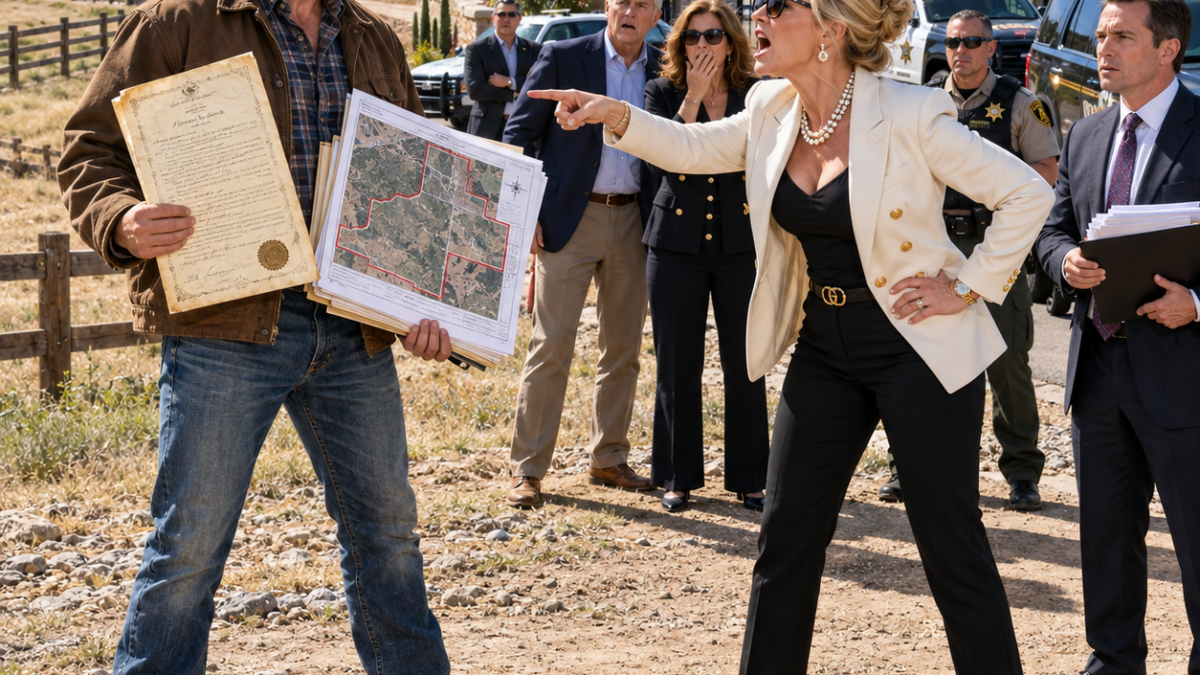
PART 2
I didn’t confront Victor again.
That was the first decision that probably saved the case.
Every angry instinct in me wanted to turn the rental car around, drive through those gates, find the clubhouse, and demand answers in front of whoever happened to be standing there. I wanted Victor to hear every letter my grandfather had written. I wanted to tell him what it felt like to clean out a trailer after burying a man who had apparently spent half his life being dismissed by people who knew he was telling the truth.
But anger makes terrible evidence.
So I drove back to Phoenix.
Three days later, I was sitting in the office of Diane Ortega, a real-estate litigation attorney whose name Evelyn Caldwell had given me with one warning.
“She doesn’t scare easily.”
That was exactly what I needed.
Diane’s office didn’t look impressive in the way Victor Stanton’s entrance did. There were no marble floors or decorative fountains. There were stacks of files, battered legal books, yellow notes taped around a computer monitor, and framed court judgments covering one wall.
She spent almost an hour reading without speaking.
The original 1952 deed.
County tax records.
My grandfather’s correspondence.
The current subdivision plat.
Evelyn’s preliminary title research.
Then she leaned back and looked at me.
“Christopher, if these documents are authentic, this isn’t a boundary misunderstanding.”
“What is it?”
“Potentially systematic fraud.”
The words landed heavier than I expected.
“An entire neighborhood?”
“Potentially.”
“One hundred eighty houses?”
“Potentially.”
“A golf course, clubhouse, streets—everything?”
Diane raised one hand.
“Don’t get ahead of the evidence. What we know right now is simple. Your grandfather appears in the chain of title. I do not see a legitimate recorded conveyance taking the property from him. Somewhere between that reality and the construction of Desert Crown Estates, somebody created another version of reality.”
“And people built houses on it.”
“Yes.”
I stared at the documents between us.
“What happens to the homeowners?”
“That depends on what we find.”
“They didn’t do this.”
“Most likely not.”
I thought about the houses behind Victor’s gate. Families. Retirees. Kids. People who had probably spent everything they had believing their deeds were legitimate.
Diane must have seen the conflict on my face.
“Ownership disputes this old are messy,” she said. “There may be title insurers, lenders, developers, statutes, equitable claims, innocent purchasers, and a dozen other issues we haven’t even identified. Don’t start imagining yourself evicting one hundred eighty families.”
“I don’t want their houses.”
“What do you want?”
I looked down at my grandfather’s notebook.
“The truth.”
Diane watched me for several seconds.
“Then that’s where we start.”
For two weeks, we did almost nothing dramatic.
No confrontations.
No television cameras.
No threats.
Just records.
Hundreds of them.
We requested every document connected to Walter Howard’s original parcel: deeds, surveys, tax histories, easements, plats, liens, transfers, planning submissions, and recorded claims.
Then we requested the development records for Desert Crown Estates.
The subdivision plat.
The HOA’s formation documents.
Its covenants.
The paperwork filed by Crown Development Group.
Every available record tied to the chain of title.
Fraud investigations are rarely exciting at the beginning.
They are repetitive.
Slow.
Boring enough to make an impatient person quit.
That is exactly why sophisticated fraud survives.
Most people are looking for a smoking gun.
Real fraud usually hides in a date nobody checks, an account nobody recognizes, a signature slightly different from the others, or a transaction that exists in one file but disappears in another.
On the eighth day, Diane called me into her conference room.
Two maps were spread across the table.
“This is the original survey from 1952.”
She tapped the first.
“And this is the plat filed when Desert Crown was created in 1989.”
I leaned over them.
It took me less than thirty seconds.
“The boundaries are different.”
“Very.”
My grandfather’s recorded parcel extended significantly farther east than the subdivision plat acknowledged.
Someone had not merely misunderstood a line.
Someone had moved it.
I followed Diane’s finger to the surveyor’s signature.
“Gerald Hutchkins.”
“I researched him,” she said. “Lost his professional license in 1994 after accusations involving falsified boundary reports in two other developments.”
I stared at the name.
“So a surveyor later disciplined for falsifying boundaries happened to sign the map that erased part of my grandfather’s land?”
“That is what the paper says.”
“Coincidence?”
Diane gave me a dry look.
“I don’t bill clients for coincidences.”
The second problem was worse.
Crown Development had claimed the land was vacant desert acreage obtained through a county auction.
We searched auction records.
Then searched again.
Nothing.
No auction.
No sale.
No county ownership.
The transaction Crown Development described simply did not exist.
Someone had declared land available for development that the county had never possessed.
The county couldn’t sell Walter Howard’s property because Walter Howard had never given it to the county.
That night, I spread my grandfather’s notebook across the hotel bed.
For years, the entries had probably looked like the work of an obsessed old man to anyone who found them.
To me, they looked like raw data.
March 14, 1992 — east survey marker moved. County notified. No response.
March 8, 2003 — covenant filed without consent. Legal description wrong.
March 19, 2008 — reserve charge. Ask again where funds transferred.
Dates.
Names.
Amounts.
I entered everything into a spreadsheet.
By two in the morning, a pattern appeared.
Nearly every questionable filing associated with the development had been submitted during March.
It seemed trivial until I checked county administrative calendars from those years.
March was when the planning office faced annual budget work, staffing adjustments, and a flood of routine administrative filings.
The office had been overloaded.
The fraudulent submissions had not been random.
Someone had understood exactly when oversight would be weakest.
I called Diane the next morning.
“This was planned.”
“I suspected that.”
“No, I mean timed. They didn’t just submit false paperwork. They repeatedly chose the same administrative window.”
There was silence on the phone.
Then Diane said, “Send me your analysis.”
Four days later, another piece fell into place.
Crown Development Group had been founded by Raymond Stanton and his son.
Victor Stanton.
I read the corporate record twice.
Victor hadn’t simply become HOA president later.
His family had been involved at the beginning.
Crown Development still technically existed, although it had done almost no legitimate business for years.
Raymond Stanton had died in 2008.
Victor had inherited control.
Suddenly his behavior at the gate made sense.
He wasn’t defending an HOA from a nuisance claim.
He was defending his family’s history.
I sat in Diane’s office with the incorporation records in front of me.
“He knew.”
Diane didn’t answer immediately.
“We can prove he had reason to know.”
“He offered me his HOA attorney’s card before he even looked at my evidence.”
“Christopher.”
“He called my grandfather confused.”
“I know.”
“He knew exactly who Walter was.”
“Probably.”
“Then why didn’t my grandfather ever connect Victor directly?”
“Maybe he did.”
I shook my head.
“Not in anything I’ve found.”
Diane leaned forward.
“Your grandfather wasn’t a forensic investigator. He was one property owner fighting institutions with better lawyers, more money, and more information. Stop judging his investigation by what you can do with resources he never had.”
That sentence hit me harder than I expected.
I had spent weeks reading his failures.
Letters nobody answered.
Complaints that went nowhere.
Meetings he wasn’t allowed into.
Legal bills he couldn’t afford.
But Diane was right.
The remarkable thing wasn’t what Walter Howard had failed to prove.
The remarkable thing was that he had kept collecting evidence at all.
I returned to the hotel and opened the notebook again.
This time I stopped seeing gaps.
I started seeing persistence.
My grandfather had been trying to leave a trail.
Maybe not for me specifically.
Maybe for anyone who would one day believe him.
Then I found the seven lawsuits.
Seven homeowners had challenged Desert Crown HOA over the previous fifteen years.
Every one had failed.
Not in the same way.
That was what bothered me.
Two had been dismissed on procedural grounds.
Two had settled privately.
One homeowner had withdrawn her complaint without explanation.
Another had been sent to arbitration and lost.
One case had simply died after years of inactivity.
Different complaints.
Different plaintiffs.
Different legal paths.
Same destination.
Silence.
I called Diane.
“There is another pattern.”
“With the land?”
“With the people.”
I explained the seven cases.
She was quiet.
“What are you thinking?”
“I think the boundary fraud may only explain why Victor needed control. It doesn’t explain what he did with that control.”
“You think there’s more.”
I opened my grandfather’s notebook to a page filled with special assessments.
Beside each number, Walter had written the same question.
Where?
“Yeah,” I said. “I think there is.”
The first former plaintiff I visited was Helen Nakamura.
She opened the door wearing gardening gloves.
She was in her seventies, small, composed, with tired eyes that changed the moment I told her my name.
“Walter’s grandson?”
“Yes.”
She stared at me.
“He said somebody might come one day.”
The words stopped me.
“What?”
“Your grandfather. He said eventually somebody younger would keep asking the questions.”
She let me inside.
We sat at a kitchen table with chipped ceramic cups between us.
Her husband had died from pancreatic cancer after forty-four years of marriage.
His favorite flowers had been chrysanthemums.
After his funeral, Helen planted a small bed of them in the front yard.
The HOA fined her for an unauthorized landscaping modification.
Fifteen thousand dollars.
I thought I had misheard her.
“Fifteen thousand?”
She nodded.
“For flowers.”
“They put a lien on the house?”
Her hands tightened around the cup.
“My husband and I bought this place twenty-six years earlier. We paid every bill. We never caused trouble. Then I planted his favorite flowers and suddenly somebody could take our house.”
She sued.
Three weeks later, the HOA’s management company sent her a twelve-page legal threat listing possible foreclosure costs, attorney fees, counterclaims, and other consequences if she continued.
Helen withdrew.
“I was seventy years old,” she whispered. “I was alone. They made me believe I could win and still lose my home.”
I asked if she still had the letter.
She did.
I photographed every page.
At the door, she touched my sleeve.
“Your grandfather came here once.”
“When?”
“Years ago. He wanted homeowners to sign a complaint with the state.”
“What happened?”
“People were afraid.”
She looked toward the front garden.
“Victor had already gone after another family. Everyone knew what could happen if you became the example.”
My next interview was Derek Manning.
Former Marine.
Two tours in Afghanistan.
Paralyzed from the waist down after a roadside bomb.
He had installed a wheelchair ramp at his own front entrance.
The HOA ordered him to remove it because he had not submitted the right architectural request before construction.
“I thought they were joking,” Derek told me.
They weren’t.
The dispute dragged through legal proceedings for eighteen months.
He eventually lost on a procedural technicality.
But his attorney had obtained partial HOA financial records before the case was dismissed.
Derek rolled to a filing cabinet and dropped a thick folder into my lap.
“They fought harder over these papers than they fought over the ramp.”
I opened it.
One contractor appeared again and again.
Stanton Construction LLC.
Forty-two thousand dollars.
Sixty-seven thousand.
Ninety thousand.
Drainage.
Paving.
Clubhouse work.
Maintenance.
I looked up.
“Victor’s company?”
Derek nodded.
“He votes to approve work that goes to himself.”
“How is that allowed?”
“That depends on who you ask.”
I turned another page.
The numbers were too large for the work described.
My pulse started climbing.
“Can I copy this?”
Derek smiled without humor.
“I’ve been waiting five years for someone to ask.”
Sophia Reyes gave me the next piece.
She was a single mother who worked in hospital administration.
During the pandemic, she had been furloughed and fallen $2,400 behind on HOA dues.
Desert Crown began foreclosure proceedings.
She borrowed from her sister and paid before the deadline.
But because she worked in finance, she had started reading HOA budgets.
“Administrative expenses tripled,” she told me. “But services got worse.”
Landscaping crews were cut.
Pool maintenance declined.
Road repair was postponed.
Yet assessments climbed.
By the end of that week, I had spoken to seventeen residents.
The details changed.
The pattern didn’t.
Fines.
Threats.
Liens.
Procedural traps.
Financial opacity.
Fear.
I created a spreadsheet from Derek’s partial records.
Over roughly a decade, Desert Crown had collected close to two million dollars in special assessments and fines beyond ordinary dues.
Stanton Construction had received hundreds of thousands.
Visible improvements didn’t come close to justifying the costs.
At first, I had been angry for my grandfather.
Now I was angry for people who were still alive.
That changed the case.
Helen told me something during my second visit that I never forgot.
“Walter wasn’t trying to prove he was smarter than Victor,” she said. “He was trying to get us to stand together.”
“He couldn’t?”
“We were scared.”
She looked ashamed.
I shook my head.
“You were threatened.”
“We still left him alone.”
I didn’t know how to answer that.
Driving back to the hotel, I finally understood my grandfather’s biggest defeat.
It had not been legal.
It had been isolation.
Victor Stanton’s real power wasn’t his attorneys.
It wasn’t the gate.
It wasn’t even the money.
It was his ability to make every person believe they would have to fight him alone.
If I wanted to beat him, I couldn’t simply prove my family owned the land.
I had to destroy that isolation.
The next breakthrough came from Helen.
Because I was not technically an HOA homeowner, Diane recommended using a cooperating resident to request the association’s financial records.
Helen volunteered immediately.
“Tell me where to sign.”
“You understand they may retaliate?”
She looked at me for a long moment.
“They already taught me what fear costs.”
She signed.
Eleven days later, a box arrived.
Budget summaries.
Expense reports.
Contractor invoices.
Bank reconciliation statements.
Everything looked clean.
Too clean.
That was the first warning.
People imagine fraud as sloppy books.
Good fraud is the opposite.
Good fraud gives you beautiful records.
Balanced numbers.
Professional invoices.
Categories that make sense.
The trick is that the records answer the questions they want you to ask.
My job was to ask different ones.
I started with Stanton Construction.
Over five years, the HOA records showed roughly $1.2 million paid to Victor’s company.
I pulled comparable market rates.
A paving job billed at $340,000 should have cost around a third of that.
Pool equipment charged at $52,000 could be sourced and installed for far less.
Drainage work was billed at several times ordinary market estimates.
Then I drove through Desert Crown photographing the supposed improvements.
Cracked pavement.
Old equipment.
Drainage channels showing little evidence of the work described.
Some invoices seemed inflated.
Others looked suspiciously like work that had never happened at all.
Then I noticed Southwest Infrastructure Partners.
Three invoices.
Total: $89,000.
Consulting services.
I searched Arizona registrations.
Nothing.
Nevada.
Nothing.
California.
New Mexico.
Utah.
Nothing.
I called the phone number.
Disconnected.
I checked the address.
A commercial mailbox.
Ghost vendor.
I remember sitting alone in the hotel room staring at those invoices and whispering, “There you are.”
But the real break came when Diane obtained the underlying bank statements.
The records the HOA had supplied were reconciliations.
Summaries.
The bank records showed what had actually moved.
Several payments to Stanton Construction existed in the bank statements but had been omitted from the official books.
Three alone totaled $147,000.
Then we found recurring transfers into an account described as an administrative reserve.
Five thousand.
Six thousand.
Eight thousand.
Month after month.
Over several years, approximately $320,000 disappeared into it.
Diane traced the receiving entity.
Desert Crown Enterprises LLC.
Nevada.
No visible business operation.
Anonymous ownership structure.
A shell.
My grandfather had suspected one.
He had even written SHELL? in the margin of an old HOA budget.
But he had never identified it.
I did.
The company had been created in 2008.
The same year Raymond Stanton died.
The year Victor took greater control.
We requested historical incorporation documents.
When they arrived, I almost missed the detail.
The registered-agent paperwork had a witness.
Gerald Hutchkins.
The disgraced surveyor.
The man who had signed the questionable 1989 boundary plat.
He had not vanished after losing his license.
He had remained connected to the Stanton network for years.
I called Diane.
“The surveyor is tied to the shell company.”
There was a long silence.
“Send me everything.”
“I already did.”
“Christopher.”
“Yeah?”
“We are no longer looking at one bad deed.”
I knew.
We were looking at a system.
Then there was Leonard Marsh.
HOA treasurer.
His signature appeared beside Victor’s on financial approvals.
Marsh owned a small insurance agency.
Soon after joining the board, his agency had received Desert Crown’s insurance business.
Another insider transaction.
Another person benefiting from the structure.
I drove to the storage unit my grandfather had rented for twenty years.
Until then, I had only gone through what he kept in his trailer.
The storage unit was different.
Boxes filled the back wall.
Photographs.
Meeting minutes.
Copies of checks.
Maps.
Rejected complaints.
Letters.
More than three decades of one man’s refusal to forget.
I sat on the concrete floor for almost an hour.
The air smelled like dust and cardboard.
For the first time since his funeral, I cried.
Not because he had lost.
Because I finally understood how long he had fought.
He had known enough to be terrified.
Not enough to win.
He had seen the inflated contracts.
The administrative charges.
The unexplained reserves.
He had suspected Victor.
He had suspected Marsh.
He had known Hutchkins was dirty.
But one man with a trailer, a pension, and no subpoena power had been trying to reconstruct a machine built by lawyers, developers, shell companies, and people who controlled the records he needed.
He hadn’t failed.
He had held the line until someone else could take over.
I found an envelope addressed simply:
FOR WHOEVER FINALLY LISTENS.
My hands shook opening it.
Inside was one sheet of paper.
My grandfather’s handwriting had grown unsteady with age.
If you are reading this, I probably did not get them to admit what they did. Do not punish the families for buying houses here. Most of them don’t know. Find the people who knew. Protect the people who didn’t.
I read it four times.
That sentence decided what happened next.
I called Diane from the parking lot.
“I know what I want.”
“Tell me.”
“I don’t want the homeowners’ houses.”
“I figured that much.”
“I want the land recognized legally. I want the financial fraud exposed. And I want every family who didn’t participate protected as much as possible.”
“That is a more complicated strategy.”
“I don’t care.”
“It could cost you.”
“I know.”
“You may own leverage worth tens of millions.”
“I know.”
“And you’re prepared to limit what you recover from innocent residents?”
I looked back at the storage door.
“Yes.”
Diane exhaled.
“All right.”
“One more thing.”
“What?”
“The annual HOA meeting is in three weeks.”
Silence.
Then: “Christopher, don’t.”
“I want everyone in the same room.”
“Public confrontation is unpredictable.”
“So is letting Victor control the story.”
“We can file quietly.”
“He has operated quietly for thirty-five years.”
“That isn’t a legal argument.”
“No. It’s a strategic one.”
Diane knew I had made up my mind.
“If we do this, we do it correctly.”
“Agreed.”
“No surprises for me.”
“Agreed.”
“No emotional speeches you haven’t cleared.”
I smiled despite myself.
“I’ll try.”
“Christopher.”
“Fine. No surprise speeches.”
For the next three weeks, we barely slept.
Diane prepared the quiet-title action asserting ownership of the underlying thousand acres.
She drafted civil claims connected to the alleged fraud and insider transactions.
A criminal referral packet documenting possible embezzlement, false records, shell-company transfers, and self-dealing went to the appropriate authorities.
Every claim had exhibits.
Every exhibit had a source.
Every number could be recreated.
I wanted Victor to be able to attack my motives.
I wanted him to attack my character.
I wanted him to insult my grandfather.
Because if he did, he would be avoiding the one thing he could not survive.
The documents.
Diane introduced me to Professor Harold Jenkins, a retired Arizona law professor who had studied HOA governance for decades.
He reviewed my presentation at a coffee shop in Tempe.
When I finished, he closed the folder.
“You’re making one major mistake.”
My stomach tightened.
“What?”
“You’re leading with your grandfather.”
“He’s why this happened.”
“He’s why you’re here.”
Jenkins tapped my financial exhibits.
“But he is not why two hundred homeowners will listen.”
I frowned.
“They should care that their houses—”
“They will eventually. First, you need them to understand that you are not there to take their homes.”
“That is already my position.”
“Then prove it with the order of your presentation.”
He pointed at the vendor analysis.
“Lead with their money.”
I understood.
“Make them angry before I show them the land.”
“Not angry. Informed.”
There was a difference.
“Show them the inflated contracts. Show them the ghost vendor. Show them the shell-company transfers. Let the board explain those. Then show them why the people controlling the money may have needed control in the first place.”
“The title fraud.”
“Exactly.”
He leaned back.
“Victor Stanton will want you to look like an outsider seeking a fortune. Don’t let him choose your role.”
That changed everything.
I rewrote the presentation.
Then I delivered a short notice to residents explaining that significant information about HOA governance and finances would be presented at the annual meeting.
No accusations.
No inflammatory language.
Just a date.
A time.
And one sentence:
If you have ever paid a special assessment, fine, legal charge, or major fee to Desert Crown Estates, you deserve to hear the records for yourself.
The response came quickly.
The HOA’s management company warned residents about “fraudulent claims.”
Leonard Marsh sent an email calling me a financially motivated outsider.
Victor’s attorney threatened defamation litigation.
Then the pressure moved toward my witnesses.
Helen received a visit about the old lien on her house.
Derek’s pending architectural request was suddenly denied.
Sophia was informed her account faced a compliance review.
That was Victor’s style.
Never the obvious punch.
A thousand little pressures.
Each one defensible in isolation.
Together, unmistakable.
Then I noticed the white sedan.
First in my hotel parking lot.
Then outside Diane’s building.
Then across the street from Helen’s house.
Same car.
Same man.
Always looking at his phone when I looked toward him.
I photographed the plate.
It traced back to a private security firm.
I filed a police report.
Diane stared at me after I told her.
“Do not confront whoever is following you.”
“I wasn’t planning to.”
“You were absolutely planning to.”
“Maybe briefly.”
“No.”
I laughed.
She didn’t.
Then Victor finally changed tactics.
Friday afternoon, Diane called.
“They made an offer.”
“How much?”
“Three million dollars.”
I stopped typing.
“For what?”
“Everything. You dismiss the claims, sign a confidentiality agreement, release the HOA and related parties, and leave.”
“Three million.”
“Yes.”
I looked across the hotel room at my grandfather’s notebook.
For a moment, I let myself imagine it.
No more lawyers.
No more hotel.
No more white sedan.
No more court filings.
Three million dollars.
I could return to Chicago.
Buy a house.
Invest.
Never work another fraud case unless I wanted to.
Diane’s voice came through the phone.
“You’re allowed to think about it.”
“Would you?”
“This isn’t my inheritance.”
“That’s not what I asked.”
She was quiet.
“No.”
“Why?”
“Because people who think a claim is worthless don’t offer three million dollars to make it disappear before a community meeting.”
I laughed once.
“That’s what I thought.”
That night I opened the envelope from the storage unit again.
Protect the people who didn’t know.
Three million dollars would protect me.
Silence would protect Victor.
I called Diane.
“No.”
“You’re sure?”
“Yes.”
“Then Tuesday it is.”
Monday night, my phone rang at 11:47.
Unknown number.
I answered.
“Christopher.”
Victor Stanton.
No greeting.
No lawyer.
Just Victor.
“You’ve made your point.”
“Have I?”
“Five million.”
I said nothing.
“Five million dollars,” he repeated. “Final offer. You walk away tomorrow. No presentation. No lawsuit. No interviews. You go back to Chicago.”
My heartbeat slowed.
That surprised me.
I wasn’t scared anymore.
“Why five?”
“What?”
“If I’m a grieving outsider with a worthless old deed, why am I suddenly worth five million dollars?”
“Because litigation is expensive.”
“So is prison.”
Silence.
When Victor spoke again, the polished tone had thinned.
“You have no idea what you’re doing.”
“I know exactly what I’m doing.”
“You could destroy property values for one hundred eighty families.”
“You should have thought about those families before using their money.”
“You don’t understand this community.”
“I understand the bank statements.”
Another silence.
Then he said, “Your grandfather made the same mistake.”
My hand tightened around the phone.
“What mistake?”
“He thought being technically right meant anyone cared.”
There it was.
Not an admission.
Something better.
Contempt.
Confidence hardened over decades.
I looked at the recording indicator on my second phone.
“Victor, I want you to know this conversation is being recorded lawfully.”
His breathing changed.
“Five million,” he said again.
“No.”
“Christopher—”
“I’ll see you tomorrow.”
I hung up.
The annual meeting began at seven.
By 6:15 the community center was already half full.
By 6:45, people were standing along the walls.
Helen sat near the back.
Derek positioned his wheelchair beside the center aisle.
Sophia stood with her sister.
Professor Jenkins was three rows from the front with a legal pad.
Diane sat where she could see both me and the board.
Victor entered wearing a navy blazer.
Leonard Marsh followed him.
Neither looked worried.
That impressed me.
People who have controlled a room long enough eventually forget that control is conditional.
At 7:05, Victor called the meeting to order.
“Before beginning tonight’s formal agenda, I want to address recent disturbances caused by an individual making unsubstantiated accusations against this association.”
I stood.
“Point of order.”
Two hundred faces turned toward me.
Victor’s eyes narrowed.
I referred to my written request that the financial and title concerns be addressed.
Victor denied it and tried to move on.
I requested the denial be entered formally into the minutes.
Derek spoke before Victor could continue.
“If we’re voting on finances tonight, we should hear the financial allegations before the vote.”
A longtime board supporter named Frank Bellamy objected.
“We are seriously going to let an outsider hijack our meeting?”
Derek turned his chair toward him.
“I’ve been paying dues here for twelve years. I want to know where they went.”
Another resident stood.
“So do I.”
Then another.
“Let him speak.”
Victor tried to hold the room.
He couldn’t.
Finally he raised one hand.
“Ten minutes.”
I walked to the front.
Connected my laptop.
Looked at the screen.
Then at the homeowners.
“My name is Christopher Howard. Before I discuss my family’s land, I want to discuss your money.”
Victor’s expression changed.
Just slightly.
Professor Jenkins had been right.
That was not where he expected me to begin.
I displayed the special assessments.
Then the contracts.
“Over approximately ten years, residents of Desert Crown Estates paid roughly two million dollars in fines and special assessments above normal dues.”
People shifted.
I moved to the paving contract.
“Your HOA paid Stanton Construction approximately $340,000 for this resurfacing project.”
Next slide.
“Comparable licensed contractors quoted approximately one-third of that amount for substantially the same scope.”
Next.
Pool equipment.
Next.
Drainage.
Next.
Photographs of cracked pavement and aging infrastructure.
Then I said the sentence that changed the temperature in the room.
“Stanton Construction is controlled by Victor Stanton.”
Voices erupted.
Victor leaned toward his microphone.
“This is deliberately misleading. My construction company was selected because it has decades of experience and—”
I clicked.
Three competitor estimates appeared beside the Stanton invoice.
“Same scope.”
Victor stopped.
Leonard Marsh intervened.
“Quotes generated years after a project do not account for historical labor fluctuations, procurement costs, material differences—”
I clicked again.
“I anticipated that.”
Archived pricing.
Comparable dates.
Comparable materials.
Detailed scope.
Marsh’s face tightened.
I looked directly at him.
“If the board believes my methodology is wrong, I will provide every source file to an independent auditor selected by the residents instead of the board.”
Someone shouted, “Do it!”
Another voice: “Independent audit!”
Victor checked his watch.
“Your time is almost finished.”
“Let him finish!”
This time the shout came from Frank Bellamy.
The same man who had called me an outsider minutes earlier.
Victor looked at him.
Frank folded his arms.
“I want to hear the rest.”
That was the moment Victor lost the room.
Not when I arrived.
Not when I stood up.
When one of his own supporters stopped trusting him.
I continued.
“Southwest Infrastructure Partners received eighty-nine thousand dollars from this association.”
I put the invoices on the screen.
“I cannot locate this company in the state business records I searched. Its listed number is disconnected. Its address does not correspond to an operating consulting firm.”
Marsh leaned forward.
“Consultants often operate under trade names.”
I looked at him.
“Then identify the legal entity.”
He opened his mouth.
Nothing came out.
“Who received the eighty-nine thousand dollars?”
Silence.
Someone behind me whispered, “Oh my God.”
I switched slides.
“Now Desert Crown Enterprises LLC.”
The Nevada filing appeared.
“Over several years, approximately three hundred twenty thousand dollars was transferred into an account associated with this entity.”
Victor stood.
“This presentation is over.”
Nobody moved.
I kept talking.
“Desert Crown Enterprises has no obvious operating purpose corresponding to these payments.”
“Shut the projector off.”
The technician near the wall didn’t move.
Victor snapped, “I said shut it off.”
Derek’s voice cut across the room.
“Sit down, Victor.”
The room went silent.
Victor stared at him.
Derek did not look away.
I clicked again.
Gerald Hutchkins’s name appeared.
“This shell entity’s historical paperwork contains a witness connected to Gerald Hutchkins.”
I changed slides.
The 1989 subdivision plat.
“Mr. Hutchkins was also the surveyor whose signature appears on the boundary documents used when Desert Crown Estates was developed.”
Next slide.
The disciplinary history.
“He later lost his professional license in connection with falsified boundary work elsewhere.”
The room exploded.
People were no longer whispering.
They were demanding answers.
Victor’s face had gone red.
“This man is constructing a conspiracy from unrelated documents!”
“Then explain them.”
“I don’t owe you an explanation.”
That was the worst thing he could have said.
The room reacted immediately.
A woman near the front stood.
“We paid you for twenty years!”
Another resident shouted, “You absolutely owe us an explanation!”
Victor tried to speak over them.
His authority was dissolving by the second.
I waited.
Eventually the noise lowered.
Then I turned to the final section.
“My grandfather’s name was Walter Howard.”
Victor stared at me.
I put the 1952 deed on the screen.
“This document records his family’s ownership of one thousand acres.”
Then the original survey.
Then the modern map.
Then Desert Crown Estates overlaid across it.
Nobody spoke.
I let them see it.
One hundred eighty homes.
The clubhouse.
The roads.
The pool.
The common areas.
All sitting inside the old parcel.
“This land was never legally conveyed by my grandfather to Crown Development Group.”
Frank Bellamy stood.
“What does that mean for our houses?”
His voice was no longer angry.
It was frightened.
That question mattered more than anything I had presented.
I looked at him.
“It means the title history underlying this development has serious defects.”
A woman covered her mouth.
Someone cursed.
I raised my hand.
“But I want every homeowner in this room to hear the next part clearly.”
The room settled.
“I did not come here to throw innocent families out of their homes.”
I saw Helen begin crying.
“My grandfather specifically left instructions that the families who bought here without knowing what happened should not be punished for the actions of the people who created this problem.”
Victor stared at me.
He hadn’t known about the letter.
I continued.
“My legal action is focused on establishing the truth of ownership, tracing the fraud, and holding responsible the people who knowingly participated.”
Victor grabbed the microphone.
“Don’t believe him! If he obtains title, he can control every property in this subdivision!”
Diane stood.
“Mr. Stanton, that is not an accurate characterization of the relief proposed in our filings.”
Victor pointed at her.
“You stay out of this.”
The room reacted again.
Diane calmly sat.
I almost smiled.
Victor was doing more damage to himself than I ever could.
Then he made one last attempt.
“This is extortion,” he said. “Mr. Howard came here with an ancient document and fabricated financial allegations because he wants money.”
I reached for my phone.
“Last night you offered me five million dollars to cancel this presentation and walk away.”
Victor froze.
No one breathed.
He looked at me.
I watched the calculation happen behind his eyes.
Deny.
Attack.
Threaten.
Then I added:
“I recorded the call.”
Something inside Victor Stanton broke.
His face twisted.
“Your grandfather was a senile old fool!”
The words cracked through the room.
Helen gasped.
My hands went cold.
Victor didn’t stop.
“He wasted thirty years complaining because he couldn’t accept what progress looked like! My father built this community. We took worthless desert and created millions of dollars in value. People have homes because of us!”
Nobody interrupted him.
That silence was worse than shouting.
Victor swept one arm toward the crowd.
“All of you benefited!”
There it was.
Not a legal confession.
Not a perfect admission.
But the truth of the man.
He believed success had made the original wrongdoing irrelevant.
Margaret Chen, a resident of twenty years, rose slowly.
“I move that this board be suspended pending an independent audit and investigation.”
“Second,” someone said immediately.
“Third.”
“Second.”
“Call the vote.”
Victor slammed his hand on the table.
“You cannot do this!”
Frank Bellamy turned toward him.
“We just did.”
The vote was overwhelming.
Leonard Marsh closed his leather portfolio without looking at anyone.
Two board members moved their chairs farther away from Victor.
Another resigned verbally before the meeting ended.
Residents surrounded Derek, Helen, Sophia, and Diane.
People demanded copies of records.
Others apologized to me.
I barely heard them.
I was looking at Victor.
Thirty-five years earlier, he and his father had entered a system believing time would eventually turn an illegal act into an unquestioned fact.
And for decades, they had been right.
Until that night.
Victor stared back.
I expected to feel victorious.
I didn’t.
I felt tired.
Then Helen touched my arm.
“Christopher.”
I turned.
She was crying.
“Your grandfather should have been here.”
I swallowed.
“He was.”
The morning after the meeting, state regulators opened a formal investigation.
Soon afterward, federal investigators became involved because of the interstate financial transfers and suspected wire activity.
The white sedan disappeared.
Sentinel Property Management suddenly became very cooperative.
So did several people who had spent years insisting they remembered nothing.
The machine only looked powerful while everyone believed it was permanent.
Once people realized it could fall, they started running from it.
Victor was arrested at home.
Leonard Marsh was questioned the same day.
The news reached me while I was sitting in Diane’s conference room.
She put her phone down.
“They took Victor.”
I said nothing.
“You okay?”
“I don’t know.”
“You wanted accountability.”
“I did.”
“This is what it looks like.”
I stared at my grandfather’s notebook.
“I thought it would feel better.”
Diane leaned back.
“Revenge feels clean in imagination. Legal consequences are paperwork, frightened families, expensive lawyers, and people discovering somebody they trusted lied to them for twenty years.”
I nodded.
“Still worth it?”
I thought of Helen’s chrysanthemums.
Derek’s ramp.
Sophia borrowing money to save her home.
My grandfather writing letters nobody answered.
“Yes.”
“Good.”
She pushed another file toward me.
“Because we’re nowhere near finished.”
The case lasted fourteen months.
Victor fought everything.
Every subpoena.
Every record request.
Every allegation.
Every procedural ruling.
His attorneys attacked Helen’s involvement, arguing records had been obtained through her on my behalf.
For a period, part of our evidence was restricted.
The case suddenly felt fragile.
I remember sitting in Diane’s office after one ruling.
“We can lose this?”
“You can always lose.”
“I thought the documents were clear.”
“The documents are clear. Procedure is still procedure.”
I hated that answer.
Sophia didn’t.
She organized residents.
If one records request could be challenged as acting for me, eleven independent homeowners could request the same categories for themselves.
One by one, they did.
The same people who once avoided my grandfather at their doors began signing their names.
When the disputed records returned to the case, I understood what had changed.
My grandfather had fought alone.
I wasn’t.
That was the difference.
The quiet-title case resolved first.
The court determined the original thousand-acre parcel had never been lawfully transferred out of the Howard ownership chain.
I sat beside Diane while the ruling was read.
For thirty-five years, my grandfather had been treated like a delusional man clutching obsolete papers.
Now his name was being spoken in a courtroom as the record owner whose title had never legitimately disappeared.
Diane nudged me lightly.
“You won.”
I shook my head.
“Not yet.”
The hard question came next.
What would I do with the homeowners?
Technically, the ruling gave me extraordinary leverage.
People speculated I would demand enormous settlements.
Some residents feared ground rents.
Others worried about forced sales.
Real-estate investors began contacting me.
One group offered to purchase my interest in the parcel for an amount that made the five-million-dollar settlement look small.
Their proposal was simple.
They would take over the problem.
Then monetize it.
I read the term sheet once.
Closed it.
Called them.
“No.”
The man on the phone sounded surprised.
“Mr. Howard, I don’t think you appreciate the value of the position you’re in.”
“I appreciate it.”
“Our investors are prepared to assume all litigation risk.”
“And then what?”
“We would negotiate market-based occupancy arrangements.”
“With one hundred eighty families?”
“Correct.”
“People who didn’t steal anything.”
A pause.
“We’re discussing property rights.”
“No. You’re discussing leverage.”
He started to respond.
I hung up.
My grandfather’s instructions were still in my wallet.
Protect the people who didn’t know.
With Diane’s help, I proposed ninety-nine-year land leases for current homeowners at one dollar per year, paired with documents designed to stabilize their ownership position while preserving the court’s recognition of the underlying land history.
When we announced it at a community meeting, nobody spoke for several seconds.
Then Frank Bellamy stood.
“One dollar?”
“A year.”
“For ninety-nine years?”
“Yes.”
“Why?”
I looked at him.
“Because you bought a house. You didn’t forge a survey.”
His eyes filled.
He looked away before sitting down.
Most families accepted.
Seventeen chose to sell and move.
I didn’t blame them.
For some, the memories had become too ugly.
For others, uncertainty had poisoned the place.
Eight houses sat vacant for months.
The HOA’s budget suffered.
Property values dipped before recovering.
Not every consequence could be repaired by a court order.
That mattered to me.
Because by then newspapers had begun describing the outcome as a spectacular victory.
It wasn’t.
Real justice leaves debris.
Victor eventually accepted a plea agreement after the evidence became overwhelming.
Twelve years in federal prison.
Asset forfeiture.
Permanent prohibition from serving in fiduciary positions.
Leonard Marsh cooperated.
He received a shorter prison term and restitution obligations.
Gerald Hutchkins died before the system could fully resolve his role, taking some answers about Raymond Stanton and the early development years with him.
Hundreds of thousands in suspicious money were recovered.
Some were not.
The final victim recovery exceeded a million dollars.
But not every dollar returned.
Not every person apologized.
Not every wrong became measurable.
Helen received relief connected to the lien and fines that had terrorized her for years.
The day that paperwork became final, she called me.
“What are you doing tomorrow?”
“Why?”
“I need help.”
“With what?”
“Gardening.”
I laughed.
“Helen, I know absolutely nothing about gardening.”
“You know how to dig through dirt.”
I laughed harder.
“Fair point.”
I drove out the next morning.
She had bought yellow chrysanthemums.
We planted them in the same front bed that had started her nightmare.
Derek rolled down the sidewalk while we worked.
“Those approved?”
Helen looked up.
“Try stopping me.”
For the first time since I’d met her, she looked mischievous rather than frightened.
Derek laughed so loudly a neighbor came outside.
The new HOA board looked very different from the old one.
Derek Manning was elected president.
Helen became treasurer.
Sophia chaired financial oversight.
Their first act was not dramatic.
They published the books.
Every contract.
Every major payment.
Every reserve account.
Every conflict-of-interest disclosure.
Residents could see where their money went.
It sounded simple.
It was revolutionary only because secrecy had become normal for so long.
Self-government was not magically easy.
Derek discovered that within weeks.
People still argued.
Landscaping contracts caused a fight.
Pool hours caused another.
Two committee members quit from exhaustion.
One resident accused the new board of being too transparent because publishing financial disagreements was “bad for property values.”
Another wanted every expenditure to require a community vote.
Derek called me one night.
“I think I preferred Afghanistan.”
“You’re exaggerating.”
“Barely.”
“You volunteered.”
“Never remind me of that.”
The community did not become perfect.
That was important.
The old story had been built around one dangerous illusion—that a strong leader who controlled information could keep everything orderly.
The new version was messier.
People disagreed in public.
Minutes recorded dissent.
Contracts were questioned.
Board members sometimes lost votes.
But nobody had to be afraid of asking where the money went.
The entrance sign eventually changed.
Not because I demanded it.
The residents voted.
HOWARD COMMUNITY
Below it:
Established 1989 — Restored 2024
I argued against using my family name.
Derek ignored me.
“Walter earned it.”
“Walter wanted the truth, not a monument.”
“Good. Then consider it a reminder.”
Not everyone approved.
About fifteen residents formed a group opposing the changes.
They believed I had destroyed the prestige Desert Crown once had.
One man told a reporter, “Maybe Victor did things wrong, but the community was stable before Howard showed up.”
When I read that quote, I understood something uncomfortable.
Some people will always prefer a comfortable lie to a disruptive truth.
I couldn’t change that.
I had spent nearly $220,000 in legal costs, travel, lost work, investigators, consultants, and related expenses.
People assumed I emerged richer because of the land ruling.
Financially, the reality was complicated.
I had given up opportunities to monetize the homeowners.
I had turned down settlements.
I had stepped away from months of normal work.
But I had gained something money couldn’t have given me.
I could finally read my grandfather’s letters without feeling that somebody should have saved him.
We had finished what he started.
Six months after Victor was sentenced, I returned to the cemetery outside Phoenix.
It was early.
The desert air was still cool.
I carried three things.
A yellow chrysanthemum.
A certified copy of the quiet-title judgment.
And the battered leather notebook.
Walter James Howard’s headstone was plain.
That fit him.
I knelt.
For a while, I didn’t say anything.
Then I placed the flower against the stone.
“Helen picked this.”
My voice sounded strange in the empty cemetery.
“She says yellow ones are better.”
I put the judgment beside it.
“This is official now.”
I swallowed.
“The county record reflects what you spent half your life trying to tell them.”
Wind moved through the dry grass.
“I wish you had been there when the judge said it.”
My throat closed.
I looked down at the notebook.
“I used to think you were stubborn.”
I laughed quietly.
“Mom said that about you too.”
I wiped my face.
“But I get it now.”
There were things I wished I had asked him.
Why hadn’t he called me more?
Why had he let distance grow between us?
Why hadn’t he told me what he was fighting?
Maybe pride.
Maybe shame.
Maybe he didn’t want his grandson to see him as a defeated old man in a trailer battling people who lived behind stone gates.
Or maybe he thought he had more time.
We always think we have more time.
“You were right about one thing,” I said.
“The families weren’t the enemy.”
That mattered most.
If I had arrived angry enough to punish everybody, Victor would have won in a different way.
He would have turned my grandfather’s land into the weapon everyone expected it to become.
Instead, the people he had controlled became the people who finally exposed him.
I left the certified judgment at the grave for a few minutes before putting it back in its protective folder.
The original belonged in the court file.
A copy would go into my grandfather’s storage archive.
Not as proof that he had owned the land.
As proof that eventually someone listened.
I thought that would be the end of it.
I intended to return to Chicago and rebuild the career I had paused.
For about three weeks, I did.
Then Derek called.
“I have a strange question.”
“Those are the only kind you ask.”
“A woman in Nevada contacted us.”
“Why us?”
“She heard about the case.”
I groaned.
“What does she want?”
“Her HOA has a contractor owned by the president’s brother. Fees are climbing. Financial statements don’t match the work being done.”
I was silent.
“Derek.”
“Yeah?”
“I am not becoming some kind of HOA vigilante.”
“Of course not.”
“Good.”
“More of an HOA forensic investigator.”
I closed my eyes.
“No.”
“You’re already thinking about it.”
“No.”
“Christopher.”
“What?”
“You found a fake vendor in a box of invoices.”
“That is literally my profession.”
“Exactly.”
“Corporate fraud is my profession.”
“This is corporate fraud with swimming pools.”
I laughed despite myself.
He knew he had me.
I didn’t answer the Nevada woman that day.
But I kept thinking about her.
And about all the boxes like my grandfather’s that probably existed in garages, closets, spare bedrooms, and storage units across the country.
People saving letters.
People noticing strange fees.
People believing they were crazy because institutions told them the numbers were fine.
Evidence waiting for someone patient enough to connect it.
A week later, I agreed to review her records.
Only review.
That was what I told myself.
On my final drive through Howard Community before heading back to Chicago, I slowed near the entrance.
Someone was kneeling beside the median.
Helen.
Gardening gloves.
Small shovel.
Yellow chrysanthemums.
I pulled over.
“What are you doing?”
She looked up.
“Improving property values.”
I laughed.
“Does Derek know?”
“Derek knows better than to question my flowers.”
I walked toward her.
The new sign stood behind us.
My family name looked strange carved into stone.
Too permanent.
Too public.
Helen followed my eyes.
“You still don’t like the sign.”
“No.”
“You’ll survive.”
“I suppose.”
She pressed soil around another flower.
“Your grandfather would have liked these.”
“The flowers?”
“This.”
She gestured toward the houses.
Children rode bicycles in the distance.
A man washed his truck.
Two women argued good-naturedly over where a community notice should be posted.
Nothing looked dramatic.
That was the beauty of it.
The place no longer needed drama to function.
Helen stood carefully and brushed dirt from her gloves.
“Walter used to tell me this could be a good community.”
I looked at her.
“He said that?”
“All the time.”
“Even after what they did to him?”
“He didn’t hate the people living here.”
I smiled.
“No. He didn’t.”
“He hated what fear made us become.”
That landed deeply.
She looked toward the entrance.
“I think we’re getting better.”
I remembered Victor at the gate.
This isn’t yours. It never was.
He had been wrong about the land.
But standing there, I realized something else.
The community was not mine.
And I didn’t want it to be.
Land could belong to a person on paper.
A community belonged to the people willing to take responsibility for one another.
Victor had confused control with ownership.
My grandfather never had.
Maybe that was why Victor could build gates and still lose everything, while Walter could die in a trailer and leave behind something powerful enough to outlive him.
I looked at the chrysanthemums moving in the Arizona breeze.
“Yeah,” I said.
“I think you’re getting there.”
Helen smiled.
“You mean we’re getting there.”
I shook my head.
“No.”
I looked toward Derek speaking with a neighbor near the clubhouse, Sophia carrying a folder toward the community office, and residents who once lowered their voices when Victor’s name came up now arguing openly about budgets and contracts.
“You don’t need me for this part.”
Helen’s expression softened.
“Maybe not.”
She pointed her trowel at me.
“But don’t become a stranger.”
I promised I wouldn’t.
Then I walked back toward my rental car.
At the gate, I stopped one last time.
The first time I had arrived there, a man had taken the deed from my hand, called my grandfather a fool, and ordered me to leave.
I had believed I was inheriting one thousand acres.
I was wrong.
The land was only the beginning.
What my grandfather actually left me was thirty-five years of unfinished courage.
He left me Helen’s flowers.
Derek’s refusal to surrender.
Sophia’s questions.
A leather notebook full of numbers nobody wanted explained.
A warning about what happens when powerful people convince ordinary people they are helpless alone.
And one final responsibility:
Never use the truth the same way Victor had used fear.
I got into the car and looked through the windshield at the sign.
For thirty-five years, Walter Howard had been told he was confused.
Difficult.
Obsessed.
Wrong.
In the end, the deed had been valid.
The survey had been corrupted.
The money had been diverted.
The threats had been real.
And the old man living in the trailer had understood more than every polished person who mocked him.
Victor Stanton thought he had built a kingdom on empty desert.
What he had actually built was evidence on top of a deed he never managed to erase.
He offered me millions to stay silent.
He threatened the people who helped me.
He spent decades turning neighbors against one another because he understood that frightened people rarely compare notes.
But once they did, his entire empire lasted less than one community meeting.
My grandfather never got to see Victor led away.
He never heard a judge confirm his ownership.
He never saw Helen plant chrysanthemums without asking permission.
That used to break my heart.
Now I saw it differently.
Walter had spent thirty-five years planting something too.
Not flowers.
Evidence.
Page by page.
Letter by letter.
Name by name.
He had no guarantee anyone would ever understand what he was leaving behind.
He did it anyway.
And sometimes that is what courage looks like.
Not winning.
Not being believed.
Not living long enough to hear someone admit you were right.
Sometimes courage is simply refusing to let the truth disappear before the next person arrives.
My grandfather held onto it until I did.
Then I carried it far enough for two hundred other people to pick it up with me.
Victor Stanton had believed time belonged to men like him.
He learned too late that time can also belong to the people who keep records.
I drove away from Howard Community with the windows down and the desert stretching toward the horizon.
For the first time since my grandfather’s funeral, I wasn’t thinking about what had been stolen from him.
I was thinking about what he had managed to leave behind.
And that inheritance was worth more than every acre.








