PART 2: We Found Phoenix Face-Down in a Freezing Puddle—What Happened After He Opened His Eyes Changed Everything
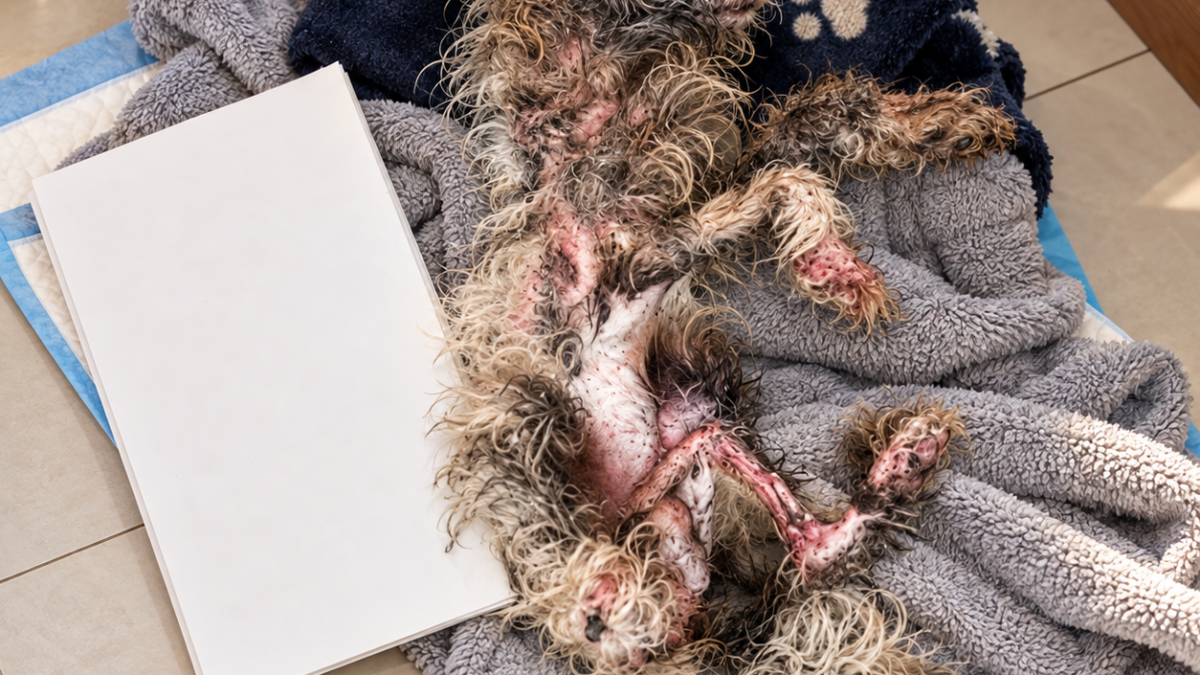
PART 2
For the first three days, Phoenix’s recovery was measured in minutes.
Not milestones.
Not dramatic transformations.
Minutes.
An hour without his temperature dropping.
Two hours with steady breathing.
A few teaspoons of water.
A little food kept down.
Another wound that didn’t worsen.
That was enough.
People often imagine rescue as the moment an animal is lifted from danger.
The truth is that lifting Phoenix from the puddle was the easy part.
Keeping him alive afterward was where the real fight began.
I arrived at the clinic before sunrise the next morning.
Phoenix was still asleep beneath the warming blankets.
One of the overnight technicians looked exhausted.
“How was he?”
She rubbed her eyes.
“Up and down.”
My stomach tightened.
“What does that mean?”
“His temperature stabilized for a while, then dipped again. His blood pressure worried us around three.”
“And now?”
“Better.”
I walked toward his kennel.
“Did he eat?”
“Not yet.”
I crouched.
Phoenix opened one eye.
“Morning.”
Nothing.
“You survived the night.”
His eye remained on me.
“That was the assignment.”
One ear twitched.
I smiled despite myself.
“Good. You’re already becoming difficult.”
Behind me, the technician laughed.
That tiny sound changed the room.
For hours, everyone had been speaking in low voices.
Carefully.
As though Phoenix’s body might hear optimism and punish us for it.
But something about that ear twitch gave us permission to hope.
Only a little.
Hope had to be rationed too.
The veterinarian arrived an hour later.
He examined Phoenix’s skin.
Some areas looked marginally less angry.
Others remained deeply inflamed.
“We need to keep watching for secondary infection.”
“What worries you most?”
He looked at me.
“Everything.”
Not the answer I wanted.
But I appreciated honesty.
“His immune system has been under stress for a long time. The skin is only one part of the problem.”
He reviewed the test results again.
“Malnutrition. Dehydration. Significant inflammation. His body has been fighting for too long.”
“Can we tell how long?”
“Not exactly.”
He looked toward Phoenix.
“But this wasn’t a week.”
That sentence stayed with me.
This wasn’t a week.
Someone had watched him decline.
Perhaps several people had.
There had been countless moments when Phoenix could have been helped before he ended up face-down in rainwater.
A bowl of food.
A veterinarian.
A phone call.
A door opened.
Someone choosing to care.
Instead, nothing.
I felt anger beginning to build beneath my ribs.
I pushed it down.
Phoenix didn’t need my anger.
He needed breakfast.
We offered him a small amount of soft food.
He smelled it.
Turned away.
My heart sank.
“Phoenix.”
The veterinarian shook his head.
“Don’t force him.”
“I know.”
We waited.
Ten minutes later, Phoenix lifted his head.
Barely.
He sniffed again.
One lick.
Then another.
He ate perhaps a spoonful.
I nearly cried.
“That counts.”
The technician smiled.
“It absolutely counts.”
By afternoon, he had eaten twice more.
Tiny amounts.
But enough.
That evening, I went home for the first time since he arrived.
The rain had stopped.
The streets were wet and reflective beneath the lights.
I drove past the place where he had been found.
I slowed.
The puddle was still there.
Smaller now.
Just dirty water beside a curb.
I pulled over.
For a few minutes, I sat staring at it.
How many people had passed him?
I didn’t know.
Maybe some hadn’t seen him.
Maybe some thought he was dead.
Maybe some saw him and assumed somebody else would help.
That last possibility bothered me most.
Somebody else.
The most dangerous person in the world is sometimes somebody else.
Somebody else will stop.
Somebody else will call.
Somebody else will feed him.
Somebody else will report it.
Somebody else will care.
Until nobody does.
I drove home angry.
The next morning, Phoenix looked worse.
Recovery has a cruel way of punishing certainty.
One night you believe you are winning.
The next morning, the animal you were beginning to imagine healthy looks weaker than before.
Phoenix had developed a fever.
One area near his shoulder appeared more infected.
He would not eat.
The veterinarian changed medications.
We cleaned the damaged skin again.
Phoenix trembled through most of it.
I kept my hand close to his face.
“Look at me.”
His eyes shifted.
“That’s it.”
I wanted to sound confident.
I wasn’t.
By afternoon, the fever had climbed.
The veterinarian finally said what none of us wanted to hear.
“If he doesn’t respond to the new treatment, we may have a very difficult decision.”
I understood.
Nobody needed to explain.
“What kind of decision?”
He hesitated.
I knew anyway.
“At some point, we have to ask whether treatment is helping him or extending suffering.”
I looked through the glass.
Phoenix lay motionless.
The same way he had lain in the puddle.
My chest tightened.
“How long?”
“Let’s see how he responds tonight.”
I sat beside Phoenix for most of that night.
I talked.
I don’t even remember everything I said.
I told him about dogs I had known.
About the woman who had stopped for him.
About the dry bed waiting if he ever became strong enough to leave.
At some point, I said, “You don’t owe us anything.”
His eyes opened slightly.
“You don’t have to survive because we want a happy ending.”
That was important.
Rescue must never become selfish.
Sometimes loving an animal means fighting.
Sometimes it means stopping the fight when the animal cannot continue.
I stroked the clean skin between two sores.
“But if you still want to fight, we’re here.”
Phoenix breathed slowly.
“If you give us one more morning, we’ll give you everything we have.”
I slept in a chair beside him.
At five-thirty, a technician woke me.
“Look.”
I sat up.
Phoenix was licking the edge of his food bowl.
I blinked.
“What?”
“He started about five minutes ago.”
I moved closer.
Phoenix took another bite.
Then another.
Not much.
But enough.
I laughed quietly.
“You are unbelievable.”
His tail did not move.
Not yet.
But he ate.
The fever began dropping later that morning.
Not dramatically.
A fraction.
Then another.
By evening, it was closer to normal.
The veterinarian looked at me.
“I’m not saying we’re safe.”
“I know.”
“But this is good.”
“I’ll take good.”
For the next week, Phoenix gave us a new version of himself almost every day.
Sometimes stronger.
Sometimes weaker.
His skin remained painful.
We had to clean and treat him constantly.
The first few sessions were exhausting for him.
He would lie still with his eyes shut while we worked.
Then one morning, he lifted his head and tried to turn toward the medication.
The technician laughed.
“Oh, now you have opinions?”
Phoenix pulled his head away.
“That’s new.”
I smiled.
“Good.”
She looked at me.
“He’s becoming stubborn.”
“Excellent.”
A sick dog that protests is often a dog rediscovering life.
Phoenix started drinking more.
Then eating more.
His trembling decreased.
His eyes followed people around the room.
When someone entered carrying food, he noticed.
When someone left, he watched.
The emptiness disappeared from his expression.
That was the first transformation.
Not the skin.
Not the weight.
His eyes.
They stopped looking defeated.
A week later, Phoenix tried to stand.
Nobody had encouraged him.
I was changing the blanket beneath him when he planted his front paws.
“Hold on.”
His legs shook.
“Phoenix.”
He pushed.
His chest rose.
Then his back end followed.
For perhaps two seconds, he stood.
His whole body trembled violently.
I put my hands under him.
“Easy.”
He took one step.
Then collapsed into my arms.
I laughed and cried at the same time.
“You lunatic.”
His breathing was fast.
“You could have warned me.”
A technician came running.
“What happened?”
“He stood.”
“What?”
“He stood.”
Phoenix looked exhausted.
The technician stared at him.
“You did?”
His tail moved.
Once.
Both of us froze.
“Was that—”
His tail moved again.
I covered my mouth.
The same dog who had not moved his head from a rain-filled puddle had just wagged his tail.
That evening, I called the woman who found him.
“He wagged.”
She was quiet.
Then I heard her crying.
“Really?”
“Twice.”
“Oh my God.”
“He also tried to stand.”
She laughed through tears.
“I knew he wanted to live.”
I remembered the first night.
Maybe she had.
Maybe Phoenix had simply needed someone else to believe it first.
The weeks that followed were not easy.
His wounds began closing, but hair does not return overnight.
For a long time, Phoenix looked strange.
Large sections of his body were bare.
New skin was pink.
Scars were visible.
Some people who saw photographs asked whether he would ever look “normal.”
I hated that question.
Phoenix was alive.
That was normal enough for me.
We gradually increased his movement.
Three steps.
Five.
Across the room.
Into the hallway.
He became curious.
That curiosity created problems.
One morning, I walked into the treatment area and found an empty bed.
My heart stopped.
“Where is he?”
A technician pointed.
Phoenix was standing beside a cabinet, nose pressed against a bag of treats.
I stared.
“You escaped.”
Tail wag.
The technician laughed.
“He walked there by himself.”
“You understand you’re supposed to be recovering.”
Phoenix sniffed the bag.
“You have no remorse.”
Tail wag.
That became his personality.
Phoenix was gentle.
But once he felt safe, he became mischievous.
He discovered treats.
He discovered blankets.
He discovered that if he leaned into someone’s legs while they were sitting, they almost always scratched his head.
He used this knowledge shamelessly.
One afternoon, a new volunteer entered.
Phoenix walked directly toward her.
She crouched.
“Hi.”
He pushed his head beneath her hand.
“Oh.”
I watched from across the room.
“Don’t fall for it.”
She looked at me.
“What?”
“He knows exactly what he’s doing.”
Phoenix leaned harder.
The volunteer laughed.
“He’s perfect.”
“Manipulative.”
Phoenix wagged.
“See?”
But while Phoenix healed, I kept thinking about his past.
Nobody knew where he had come from.
The woman who found him had not seen anyone abandon him.
No collar.
No tag.
No microchip information that led anywhere useful.
At first, we assumed we might never know.
Then a photograph changed everything.
A local resident saw an online post about Phoenix and contacted us.
“I think I know that dog.”
I read the message twice.
Then called.
The man who answered sounded nervous.
“Are you sure?”
“I’m almost sure.”
“Where did you see him?”
There was a pause.
“A property a few streets from where he was found.”
My grip tightened around the phone.
“When?”
“Many times.”
“How recently?”
“Before the storm.”
My heartbeat changed.
“What kind of condition was he in?”
Another pause.
“Bad.”
“How bad?”
“I didn’t realize it was that bad.”
I closed my eyes.
There it was again.
People had seen.
“Who owned him?”
The man gave me an address and a name.
I wrote everything down.
“Why didn’t you report it?”
Silence.
“I thought the owner was treating him.”
“Did he look treated?”
“No.”
“Did you ever ask?”
“No.”
I wanted to be furious.
Part of me was.
But anger at witnesses could wait.
“What else do you remember?”
Phoenix had apparently spent long periods in a dirty yard behind an old rental property.
Neighbors occasionally heard him scratching at a gate.
Some remembered seeing him thin.
Others remembered the skin condition.
One woman had once left food near the fence.
She thought the owner would eventually take him to a veterinarian.
Nobody knew whether Phoenix had escaped during the storm or had been dumped.
But the address gave us somewhere to start.
I contacted the appropriate animal welfare authorities.
The veterinary team documented everything.
Photographs.
Medical findings.
The extent of inflammation.
The chronic nature of the skin disease.
The malnutrition.
The condition of the coat.
The infections.
The evidence suggested prolonged neglect.
Phoenix could not tell us how long.
His body told enough.
The man connected to the property denied everything.
I will call him Marcus.
He claimed Phoenix had never been his dog.
He said strays came into the yard sometimes.
Neighbors disagreed.
One had photographs.
Another remembered Phoenix wearing an old rope around his neck while inside the property.
A third said Marcus had once complained that the dog was “too much trouble.”
When I heard that sentence, I had to walk outside.
Too much trouble.
Phoenix had been too much trouble to medicate.
Too much trouble to bathe.
Too much trouble to feed properly.
Too much trouble to take to a clinic.
But apparently not too much trouble to leave suffering for months.
That anger stayed with me.
A few days later, Marcus appeared at the veterinary hospital.
I recognized him from the description.
He walked in demanding to know who had “reported him.”
I stepped into the reception area.
“Can I help you?”
“You people are telling lies.”
Nobody had told him who I was.
I already knew enough.
“What lies?”
“That dog wasn’t neglected.”
“You know which dog?”
He stopped.
I let the silence sit between us.
He realized his mistake.
“I saw the pictures online.”
“Of course.”
He pointed toward the treatment area.
“You can’t prove anything.”
I kept my voice calm.
“I’m not the person you need to convince.”
His face reddened.
“People are saying I hurt him.”
“Did you?”
“No.”
“Did you feed him?”
“He wasn’t mine.”
“Did you know him?”
Silence.
“Did he live behind your house?”
“He came around.”
“For how long?”
“I don’t know.”
“Months?”
He glared.
“Are you police?”
“No.”
“Then stop interrogating me.”
I nodded.
“That’s fair.”
I stepped aside.
“But someone with authority will probably ask you similar questions.”
That made him angry.
“You think you’re some hero because you picked up a sick dog?”
“No.”
I looked toward Phoenix’s room.
“Actually, I wasn’t even the one who picked him up.”
His eyes followed mine.
“The hero was the woman who stopped.”
Marcus snorted.
“It’s just a dog.”
Everything inside me went quiet.
Sometimes one sentence tells you everything you need to know about somebody.
“Exactly.”
I looked at him.
“Just a dog.”
He expected anger.
I gave him none.
“A dog that couldn’t call an ambulance.”
Silence.
“A dog that couldn’t open your gate.”
His expression changed.
“A dog that couldn’t buy medication.”
Nothing.
“A dog that depended entirely on human beings noticing his pain.”
I stepped closer.
“And that’s why this matters.”
Marcus left.
He did not see Phoenix that day.
I was grateful.
Phoenix was learning that people were safe.
He did not need the past walking into his room.
The investigation continued quietly.
We focused on recovery.
Phoenix eventually became strong enough to leave the clinic temporarily.
I volunteered to foster him.
I told everyone it was temporary.
Nobody believed me.
A technician handed me his medication bag.
“You’re keeping him.”
“I’m fostering.”
She nodded.
“Sure.”
“He needs a quiet place.”
“Your house.”
“Temporarily.”
“Of course.”
Phoenix stood beside me wearing a soft harness.
His coat had started growing back in thin patches.
His skin remained visible in places.
But he was upright.
That alone felt impossible.
I opened the car door.
“Ready?”
Phoenix looked inside.
Then at me.
“You’ve been through worse.”
He put one paw on the floorboard.
Stopped.
I lifted gently beneath his chest.
He climbed in.
During the drive, he sat curled on a blanket.
Every few minutes, I checked him in the mirror.
“Still there?”
Phoenix stared back.
“Good.”
At my house, he stood at the front door for almost a minute before stepping inside.
New spaces made him cautious.
I let him decide.
Living room.
Kitchen.
Hallway.
He sniffed everything.
Then he found the bed I had prepared.
He walked in a circle.
Once.
Twice.
Three times.
Lay down.
Exhaled.
That sound nearly broke me.
Not because it was dramatic.
Because it was ordinary.
A dog settling into a bed.
Phoenix had been denied ordinary things for so long that each one felt enormous.
The first night, I left a small lamp on.
Phoenix woke several times.
Each time, his head rose quickly.
Each time, he looked for me.
“I’m here.”
His body relaxed.
At two in the morning, I woke because something touched my hand.
Phoenix had left his bed.
He stood beside the couch.
I reached down.
“What?”
He pushed his nose into my palm.
I rubbed his forehead.
“Go back to sleep.”
He remained there.
I moved onto the floor.
Phoenix lay beside me.
Within minutes, he was asleep.
I stayed.
The next morning, my back hurt terribly.
Phoenix looked excellent.
“You owe me.”
Tail wag.
Recovery at home changed him quickly.
His appetite became ridiculous.
The dog who once refused food now appeared whenever he heard a package open.
I tested him.
I opened a bag of rice.
Phoenix appeared.
“That isn’t for you.”
Tail wag.
I opened a drawer.
Phoenix appeared.
“Also not food.”
Tail wag.
I opened the refrigerator.
Phoenix was already there.
“Okay. That one is understandable.”
He gained weight steadily.
His wounds continued closing.
The new fur came in slowly.
At first like soft fuzz.
Then thicker.
Week by week, less damaged skin was visible.
The veterinarian remained cautious.
“Skin cases can relapse.”
“I know.”
“Stay consistent with treatment.”
“I will.”
“And don’t let him scratch.”
I looked at Phoenix.
Phoenix looked at me.
“We are negotiating that.”
The veterinarian laughed.
Phoenix hated his protective clothing.
The first time I put it on him, he froze.
Wouldn’t move.
“Phoenix.”
He stared at me.
“It’s not permanent.”
No response.
“You look handsome.”
Nothing.
“You’re being dramatic.”
He slowly turned his head away.
I sent a photograph to the clinic.
The technician replied:
He looks betrayed.
I wrote back:
He is filing a complaint.
Those moments mattered.
They meant Phoenix had moved beyond survival.
Sick animals do not waste energy being offended by clothing.
Loved dogs do.
Eventually, Phoenix began taking real walks.
At first, only to the end of the driveway.
Then the sidewalk.
Then around the block.
He loved grass.
The first time he stepped into a small park, he stopped completely.
His nose lifted.
Wind moved through his new coat.
Children were playing in the distance.
Another dog barked.
Phoenix looked at me.
“Go.”
He pulled gently toward the grass.
For ten minutes, he smelled everything.
Tree trunks.
Leaves.
Benches.
A trash can.
A patch of dirt that apparently contained the most important information in the world.
I laughed.
“You almost died in a puddle, and this is what you choose to investigate?”
Phoenix sneezed.
“Fair enough.”
Then he did something I had never seen.
He ran.
Not fast.
Not far.
A few playful steps.
Almost a bounce.
Then he stopped, turned, and ran back to me.
My eyes filled.
“Again.”
Phoenix wagged.
I unclipped nothing.
I did not encourage him to push harder.
I simply walked.
He trotted beside me.
The veterinary staff cried when I sent the video.
One technician called immediately.
“That’s Phoenix?”
“That’s him.”
“He’s running.”
“A little.”
“Oh my God.”
I laughed.
“You people saved him.”
“No.”
She was quiet.
“We treated him.”
“You saved him.”
“He decided whether he wanted to stay.”
Maybe that was true.
The legal case moved slower than Phoenix’s recovery.
Authorities inspected the property.
Conditions raised additional concerns.
Other animals had apparently been kept there previously.
Neighbors gave statements.
Marcus continued denying responsibility.
Then investigators found veterinary records under his name from years earlier.
Phoenix had been treated once as a younger dog.
The description matched.
The ownership denial began falling apart.
When I learned that, I felt something I had expected to feel earlier.
Satisfaction.
Not joy.
Not revenge.
Relief.
Because Phoenix’s suffering would no longer be dismissed as something mysterious that simply happened.
Someone had been responsible for him.
Someone had known him before his skin became infected.
Before his body weakened.
Before the storm.
And that person had failed him.
The hearing took place months later.
By then, Phoenix looked transformed.
His coat had returned over most of his body.
His weight was healthy.
His sores had healed into scars.
His eyes were bright.
I almost didn’t want to bring photographs of the beginning.
Part of me wanted the old Phoenix erased.
But the evidence mattered.
So the first images shown were brutal.
Phoenix face-down.
Phoenix soaked.
Phoenix shaved.
Phoenix’s inflamed skin.
Phoenix beneath blankets.
Then came the new photographs.
Phoenix walking.
Phoenix eating.
Phoenix at the park.
Phoenix asleep on my couch.
The contrast silenced the room.
The veterinarian explained that Phoenix’s condition was consistent with prolonged untreated disease and neglect.
The woman who found him described the puddle.
Neighbors described the yard.
The old record connected Marcus to Phoenix.
Marcus said he had been overwhelmed.
He said money had been tight.
He said Phoenix’s skin problems became too difficult.
He said he had intended to get help.
Intended.
That word made my hands clench.
Intentions do not feed a dog.
Intentions do not clean infected wounds.
Intentions do not stop rainwater from filling around a body too weak to rise.
The official outcome included penalties and restrictions on Marcus keeping animals.
It was not dramatic enough for some people.
Nobody dragged him away in handcuffs.
Nobody applauded.
Real accountability is usually quieter than people imagine.
But one part mattered enormously.
He could not simply repeat the same neglect with another animal.
When the hearing ended, Marcus approached me.
I did not want to speak with him.
He spoke anyway.
“You got what you wanted.”
I looked at him.
“No.”
He laughed bitterly.
“Really?”
“What I wanted was for Phoenix never to suffer in the first place.”
He looked away.
“That’s impossible now.”
“Yes.”
For several seconds, neither of us spoke.
Then he said, “I didn’t dump him in the puddle.”
“I don’t know who did.”
“He got out.”
“Maybe.”
“You think I’m a monster.”
I considered the question.
“No.”
That surprised him.
“I think calling people monsters can make everyone else feel too comfortable.”
He frowned.
“What does that mean?”
“It means ordinary people can cause terrible suffering.”
Silence.
“You didn’t need to hate Phoenix to neglect him.”
His face tightened.
“You only needed to stop caring enough.”
He looked toward the courthouse doors.
“I had problems.”
“So did Phoenix.”
He looked back at me.
“He was a dog.”
“Yes.”
I nodded.
“And you were the human.”
Marcus said nothing after that.
He walked away.
I never saw him again.
For a long time, I imagined that confrontation would feel like revenge.
It didn’t.
The real revenge happened later.
Phoenix was lying upside down on my couch.
His legs were in the air.
His tongue was slightly out.
He snored loudly.
I stood in the doorway staring at him.
This animal had once been unable to lift his face from freezing water.
Now he was occupying three cushions and somehow sleeping as if he paid the mortgage.
“That’s my seat.”
Phoenix didn’t move.
“I know you can hear me.”
One eye opened.
“Move.”
He closed it again.
I laughed.
There it was.
Victory.
Not Marcus losing.
Phoenix winning.
Every comfortable nap was revenge.
Every full bowl.
Every park walk.
Every wagging tail.
Every person Phoenix learned to trust.
The neglect had tried to reduce him to pain.
His new life refused.
Months passed.
Phoenix became almost unrecognizable.
People who had seen the original photographs sometimes cried when meeting him.
One woman stared for several seconds.
“That’s really him?”
“Yes.”
She knelt.
Phoenix walked straight toward her.
“He looks so happy.”
“He is.”
She touched his coat.
“You can barely see the scars.”
I smiled.
“I can.”
She looked up.
“Does that bother you?”
“No.”
I rubbed Phoenix’s shoulder.
“They remind me what healing had to grow over.”
Phoenix developed favorite places.
The park.
My couch.
The passenger seat.
A sunny spot near the kitchen window.
He also developed enemies.
Vacuum cleaners.
Bath time.
One particular plastic bag.
And rain.
I discovered the rain problem during the first major storm after his recovery.
I opened the door for our evening walk.
Phoenix looked outside.
Rain fell steadily.
He backed away.
“Come on.”
No.
He sat.
“Phoenix.”
Nothing.
“We have to go.”
He walked toward the couch.
My chest hurt.
Until then, I had not considered what rain might mean to him.
Maybe dogs remember differently than we do.
Maybe he simply hated getting wet.
But when thunder sounded, Phoenix pressed against my legs.
I closed the door.
“Okay.”
I knelt.
“We’ll wait.”
I sat with him until the storm weakened.
When we finally went outside, Phoenix stayed close.
I carried an umbrella.
He kept glancing up at me.
“I’m here.”
That became something I said often.
“I’m here.”
During veterinary visits.
During storms.
When loud noises frightened him.
When strangers approached too quickly.
It was a simple sentence.
But Phoenix had lived through a time when nobody was there.
Now somebody was.
A year after we found him, the woman who had stopped in the rain came to visit.
Phoenix hadn’t seen her in months.
I wondered whether he would remember.
She walked through the gate.
Phoenix froze.
His head tilted.
She crouched.
“Hi, baby.”
His tail started moving.
Slowly at first.
Then his entire body wiggled.
He ran toward her.
She covered her face.
“Oh my God.”
Phoenix jumped against her carefully.
She hugged him.
I watched from several feet away.
“You remember me?”
Phoenix licked her chin.
She cried harder.
“I thought you were dead.”
He wagged.
“I thought I was picking up a dead dog.”
She looked at me.
“Look at him.”
“I know.”
Phoenix leaned into her.
She whispered into his fur.
“I almost kept driving.”
I said nothing.
She looked at me.
“I saw him and went past by maybe twenty yards.”
“You stopped.”
“I almost didn’t.”
“But you did.”
She nodded.
“I kept thinking somebody else would stop.”
Somebody else.
There it was again.
She wiped her face.
“Then I thought, what if everyone thinks that?”
I smiled.
“And you turned around.”
“Yes.”
Phoenix sat at her feet.
One decision.
Twenty yards.
That was the distance between Phoenix dying anonymously in a puddle and Phoenix sleeping on my couch.
People sometimes believe they need extraordinary power to change a life.
Sometimes they need brakes.
A phone.
Two hands.
The willingness to turn around.
Phoenix’s story began reaching people beyond our neighborhood.
Messages came from people caring for animals with severe skin disease.
Others asked how to help neglected dogs safely.
We worked with local volunteers to organize basic veterinary assistance for owners who genuinely could not afford treatment.
That distinction mattered to me.
Poverty is not the same as cruelty.
Struggling is not the same as indifference.
Some people love animals deeply and simply need help.
So we created a small program.
Medication support.
Transport.
Food.
Basic treatment.
The goal was simple.
No dog should have to reach Phoenix’s condition because someone was ashamed to ask for help.
At the first event, an elderly woman arrived with a small dog whose skin was beginning to worsen.
She looked embarrassed.
“I don’t have enough money for the clinic.”
I sat beside her.
“You came early.”
She looked confused.
“What?”
“You came before it became an emergency.”
Tears appeared in her eyes.
“I didn’t want people to think I was a bad owner.”
I thought of Phoenix.
“Bad owners usually don’t sit here crying because they’re worried.”
We helped her.
The dog improved.
Then another came.
And another.
Phoenix attended some of the events.
Mostly he slept.
People recognized him.
“That’s Phoenix?”
Tail wag.
“The puddle dog?”
I hated that nickname.
But I understood why people used it.
I preferred something else.
The dog who got up.
Because that was what mattered.
Yes, Phoenix had been found in a puddle.
But he did not remain there.
He stood.
He ate.
He healed.
He trusted.
He ran.
Years later, I still had one photograph from the first night.
I rarely showed it.
Phoenix looked barely alive.
Skin inflamed.
Body exhausted.
Eyes half open.
Next to it, I kept another photograph.
Phoenix in the park.
Mouth open.
Running toward me.
Ears bouncing.
Grass beneath his paws.
If you only saw the second photograph, you would never know what came before.
If you only saw the first, you might never believe the second was possible.
That gap between the photographs was filled with hundreds of ordinary acts.
Medicine.
Cleaning.
Feeding.
Bandage changes.
Vet appointments.
Laundry.
Patience.
Late nights.
Early mornings.
Money.
Fear.
Hope.
And one dog refusing to stop.
Phoenix eventually became completely comfortable with most people.
Children especially.
He seemed to understand when someone was gentle.
One afternoon, I took him to an educational event at a school.
I told the children about animal neglect without showing graphic photographs.
A boy raised his hand.
“Why didn’t the dog just leave?”
The question stopped me.
Because children often ask the cleanest questions.
“Maybe he couldn’t.”
“Because he was sick?”
“Yes.”
The boy thought.
“Then the person was supposed to help him.”
“Yes.”
Another child raised her hand.
“Why didn’t he?”
I looked at Phoenix.
He was lying beside my chair.
“I don’t know.”
That was the truth.
“I can explain what happened. I can explain neglect. But I can’t tell you why someone sees suffering and decides not to act.”
The girl frowned.
“I would help.”
“I hope you always do.”
Afterward, the children approached Phoenix one at a time.
He loved it.
Ten hands scratched his ears.
Another rubbed his back.
Phoenix closed his eyes in happiness.
This dog who had once learned that human hands did nothing while he suffered now leaned into every gentle touch.
That was healing.
Not forgetting.
Relearning.
At home, Phoenix continued being wonderfully ordinary.
He stole one sandwich.
Destroyed two pillows.
Barked at his own reflection once.
Refused to admit it had happened.
He learned the sound of my car.
He learned when meals happened.
He learned which cabinet contained treats.
He learned that bath time was unavoidable despite his legal objections.
He learned that if he rested his chin on my knee during dinner, I eventually became weak.
“You are exploiting me.”
Tail wag.
“You understand that?”
More wagging.
“I saved your life.”
He rested his chin harder.
I gave him chicken.
This was why he had no respect for me.
The more Phoenix settled into life, the less I thought about Marcus.
That surprised me.
At first, my anger toward him had felt permanent.
Then it became less important.
Punishment had happened.
Restrictions had happened.
But Phoenix did not wake each morning thinking about the person who neglected him.
He woke thinking about breakfast.
Perhaps dogs understand revenge better than humans.
They move toward what is good.
They don’t waste healthy days living inside yesterday’s cruelty.
I tried to learn from him.
One day, years after his rescue, I drove past the street where Phoenix had been found.
I hadn’t planned to.
Construction had changed my usual route.
Phoenix was in the passenger seat.
The weather was clear.
As we approached the curb, I recognized the spot.
My hands tightened on the wheel.
Phoenix looked out the window.
I slowed.
The puddle wasn’t there.
The drainage had been repaired.
People walked along the sidewalk.
Phoenix showed no reaction.
I pulled over.
For a moment, I considered leaving.
Then I opened his door.
“Want to walk?”
He jumped out.
We walked along the curb.
Phoenix sniffed a tree.
Then a fence.
Then something apparently fascinating beside a garbage can.
He did not tremble.
He did not collapse.
He did not remember the street the way I did.
Or perhaps he remembered and no longer cared.
I stopped at the place where the woman had found him.
Phoenix looked back.
“Here.”
He wagged.
“This is where you were.”
He sniffed my shoe.
“You were lying right here.”
Phoenix looked toward a patch of grass.
Then pulled the leash.
I laughed.
“Okay.”
We kept walking.
That was the answer.
You cannot change where suffering happened.
But you can make sure it is no longer where the story ends.
We walked past the spot.
Phoenix never looked back.
When he grew older, his pace slowed.
The fur around his muzzle turned gray.
Some of the areas damaged by infection remained thinner than the rest.
His skin needed occasional treatment.
The veterinarian told me that was not unusual.
Phoenix hated getting older with tremendous enthusiasm.
If a young dog ran past him, he tried to follow.
His body disagreed.
“Act your age.”
Phoenix pulled.
“You’re ridiculous.”
He looked offended.
We shortened walks.
Added joint support.
Bought a better bed.
Then an even better bed because apparently I had become the kind of person who compared orthopedic dog mattresses.
Phoenix approved.
One winter evening, rain began falling.
Hard.
I noticed Phoenix standing near the window.
Years earlier, he would have hidden.
This time, he simply watched.
Thunder sounded.
His ears moved.
I sat beside him.
“You okay?”
He looked at me.
Then walked to his bed.
Turned three circles.
Lay down.
I smiled.
The rain kept falling.
Phoenix slept.
That moment meant almost as much to me as his first steps.
Fear had loosened its grip.
Eventually, the rescue program named its emergency medical fund after him.
The Phoenix Fund.
I resisted at first.
“He doesn’t know anything about finances.”
The veterinarian laughed.
“He also doesn’t pay taxes.”
“Excellent point.”
The fund helped animals whose owners were facing genuine financial crises and rescued dogs suffering from severe neglect.
Every time we approved treatment, I thought about the night Phoenix arrived.
What if we had needed one more resource and didn’t have it?
What if the woman who stopped had believed treatment would be too expensive?
What if we had surrendered to probability before Phoenix had the chance to surprise us?
The fund could not save every animal.
Nothing can.
But it saved some.
That was enough.
A badly burned dog.
A malnourished puppy.
A senior dog with an untreated infection.
A cat found beneath an abandoned building.
One by one, Phoenix’s second chance became theirs.
That, more than Marcus’s penalty, became the justice I wanted.
The suffering he had caused one dog now indirectly helped prevent suffering in others.
Cruelty had produced consequences Marcus never intended.
Phoenix’s survival became louder than his neglect.
When Phoenix eventually reached old age, people often asked me how long I thought he had left.
I never answered.
A veterinarian had once been unable to promise him one night.
I learned not to bargain with time.
Instead, I gave him days.
Breakfast.
Walk.
Nap.
Medication.
Treat.
Another nap.
Dinner.
Couch.
Life.
One evening, Phoenix struggled to stand after sleeping.
I helped him.
His legs steadied.
“You used to run.”
He looked at me.
“You still think you do.”
Tail wag.
I laughed.
“Delusional.”
He leaned against me.
I supported his weight.
There was a time when touching Phoenix meant avoiding open sores.
Now my hand rested on thick fur.
Warm.
Clean.
Healthy.
I never stopped appreciating that.
Near the end of his life, Phoenix returned to the clinic more often.
Nothing dramatic.
Age.
Joints.
Kidneys beginning to work less efficiently.
The ordinary problems of an old body.
The veterinarian who had treated him from the beginning examined him one afternoon.
“You realize how impossible this still feels.”
“What?”
He pointed toward Phoenix.
“This.”
Phoenix was attempting to steal a treat from his pocket.
“Professional thief?”
“Alive.”
The word landed softly.
I looked at Phoenix.
Years.
The dog whose body seemed finished had been given years.
“I remember the first night.”
“So do I.”
“You thought he might die.”
“I thought he probably would.”
Phoenix successfully stole the treat.
The veterinarian sighed.
“I regret saving him.”
I laughed.
Phoenix chewed happily.
Later that day, we went to the park.
Phoenix couldn’t run anymore.
He walked slowly beside me.
We sat beneath a tree.
A light rain began.
Just a drizzle.
I almost stood.
Then I looked at Phoenix.
He remained where he was.
Raindrops landed on his coat.
He lifted his nose.
No fear.
I stayed.
For a few minutes, we sat together in the rain.
Not because he was trapped.
Not because he was too weak to leave.
Because he chose to stay.
I rubbed his shoulder.
“This is better than the first time, huh?”
Phoenix leaned against my leg.
I smiled.
The rain stopped quickly.
Sunlight broke through the clouds.
I wish I could say Phoenix lived forever.
No rescue story ends that way.
Eventually, his body grew tired.
He began having more difficult days.
Then difficult weeks.
We managed pain.
Adjusted medication.
Changed food.
Helped him stand.
Carried him when needed.
The question slowly shifted from how long can we keep him alive to how comfortable can we keep him living.
That distinction matters.
I had promised Phoenix from the beginning that we would not give up on him.
But love is not the same as refusing death at any cost.
Sometimes the final act of protection is making sure fear and pain do not return.
His last days were quiet.
He slept near the same window where he used to lie in the sun.
The woman who had found him came to visit.
She sat on the floor beside his bed.
Phoenix lifted his head.
His tail tapped once.
She began crying.
“Hey, baby.”
Phoenix rested his head on her hand.
She looked at me.
“Do you remember how cold he was?”
“Yes.”
“I thought he’d die in my car.”
“I know.”
She stroked his ears.
“I’m so glad I turned around.”
“So am I.”
Phoenix closed his eyes.
That sentence contained his entire life.
I’m glad I turned around.
Twenty yards changed everything.
When Phoenix’s final day came, the veterinarian came to us.
Phoenix hated clinic rooms near the end.
I wanted him home.
He lay on his favorite blanket.
I sat beside his head.
Rain tapped lightly against the windows.
For a moment, I hated that.
Then I realized I didn’t anymore.
The first rain had almost taken him.
This rain found him inside.
Warm.
Loved.
Safe.
I put my hand between his eyes.
“Hey.”
Phoenix opened them.
“You remember me?”
His tail moved faintly.
I laughed through tears.
“Of course you do.”
The veterinarian waited.
There was no rush.
I looked at Phoenix.
Years earlier, I had watched him lying motionless while wondering whether he would survive the night.
Now I watched him knowing he had already done far more than survive.
He had lived.
“You did enough.”
His breathing was slow.
“You don’t have to fight anymore.”
That was difficult to say.
For years, his identity had been the dog who fought.
But nobody should have to fight forever.
“You can rest.”
Phoenix relaxed under my hand.
I whispered one last thing.
“You never belonged in that puddle.”
His eyes stayed on mine.
“You belonged here.”
And when Phoenix finally left us, he did not leave alone.
He did not leave soaked.
He did not leave cold.
He did not leave wondering whether anybody would stop.
He left with hands on him.
Voices he knew.
A blanket that smelled like home.
For a while afterward, I could not look at his empty bed.
Then one morning, the Phoenix Fund approved treatment for a dog with severe untreated skin disease.
The photographs reminded me painfully of him.
Red skin.
Missing fur.
Frightened eyes.
The rescue volunteer asked whether we could help.
“Yes.”
No hesitation.
Treatment began.
Weeks later, she sent a photograph.
The dog was standing in a yard.
New fur.
Bright eyes.
Tail wagging.
I sat at my kitchen table staring at the image.
For the first time since Phoenix died, I smiled without immediately crying.
There it was.
His story continuing.
People sometimes ask what happened to the man who neglected Phoenix.
They want a dramatic ending.
They want him destroyed.
Humiliated.
They want revenge to look like pain returned for pain.
I understand that feeling.
I had it too.
But that was never Phoenix’s ending.
Marcus faced consequences.
He lost the ability to quietly repeat what happened.
People learned the truth.
But Phoenix’s greatest revenge was far more complete.
He became everything neglect tried to prevent him from becoming.
Healthy.
Playful.
Trusting.
Loved.
Old.
He lived long enough to become old.
Do you understand what a victory that was?
The dog who was once too weak to lift his face from a puddle eventually needed help standing because of ordinary old age.
Those two kinds of weakness were completely different.
The first came from abandonment.
The second came from having lived.
Phoenix got years nobody expected him to have.
Years of food.
Beds.
Parks.
Visitors.
Rainstorms survived indoors.
Sunlight.
Treats stolen from veterinarians.
Children scratching his ears.
Other animals saved in his name.
That is the ending I choose.
Not the puddle.
Not the wounds.
Not the man who failed him.
Phoenix running through grass.
Phoenix sleeping across my couch.
Phoenix learning that rain could fall outside while he stayed warm inside.
Phoenix looking up whenever I said his name.
And one woman making one decision on one terrible night:
She turned around.
That is how Phoenix survived.
Not because the world suddenly became kind.
Because one person decided not to keep driving.
Sometimes that is where mercy begins.
Not with a miracle.
With somebody finally stopping.
And because she stopped, Phoenix got to stand.
Because Phoenix stood, people listened.
Because people listened, other animals received help earlier.
And because those animals received help, Phoenix’s story never truly ended.
Whenever rain begins now, I still think about him.
I imagine that dark street.
Cold water.
A motionless body.
Then I replace the image.
I see the park.
Phoenix coming toward me.
Ears bouncing.
Tail high.
No puddle beneath him.
Only grass.
And every time, I think the same thing.
Run, Phoenix.
Nobody is leaving you behind anymore.
The months after Phoenix was gone were quieter than I expected.
Not empty.
Quiet.
There is a difference.
Empty means nothing remains.
But Phoenix had left pieces of himself everywhere.
His bowl was still beside the kitchen cabinet.
His leash still hung from the hook near the door.
There were scratches on the bottom corner of the couch where he used to turn three circles before settling down.
One of his old blankets still carried enough of his scent that I couldn’t bring myself to wash it.
For weeks, I left everything exactly where it was.
People told me I would eventually know when it was time to put his things away.
I didn’t.
So I stopped trying.
One morning, rain began tapping against the windows.
Not a storm.
Just steady autumn rain.
For years, rain had always made me think about the night Phoenix was found.
I could still picture him lying face-down in that freezing puddle.
Soaked.
Inflamed.
Too exhausted to lift his head.
But something had changed.
That morning, the first image that entered my mind wasn’t the puddle.
It was Phoenix standing at the park during one of his final healthy years, his gray muzzle lifted toward a light drizzle while I stood beside him expecting him to be afraid.
He hadn’t been.
He had simply watched the rain.
Then he had looked at me.
Almost bored.
As if asking why I was making such a big deal out of water falling from the sky.
I smiled at the memory.
“You beat that too,” I whispered.
The house stayed quiet.
A few hours later, my phone rang.
It was the veterinary clinic.
For half a second, my heart reacted as though Phoenix were still alive and something had happened to him.
Grief does strange things to time.
“Hello?”
It was one of the technicians who had cared for Phoenix from his first night.
“I hope I’m not bothering you.”
“No.”
“There’s a dog here.”
I closed my eyes.
Of course there was.
There would always be another dog.
“What happened?”
“She was found behind an abandoned warehouse.”
“How bad?”
There was a pause.
“Her skin.”
That was all she had to say.
My chest tightened.
“Like Phoenix?”
“Not quite as advanced. But getting there.”
“Owner?”
“Unknown.”
“Age?”
“Maybe four.”
“What do you need?”
“We’re trying to cover treatment through the Phoenix Fund.”
I sat down.
The name still hurt.
But not in the same way.
“How much?”
She told me.
The fund had enough for most of it, but not all.
“I’ll cover the difference.”
“You don’t have to.”
“I know.”
Silence.
Then she said softly, “I thought you might.”
An hour later, I drove to the clinic.
I told myself I was only going to see the dog.
That was a lie.
Some part of me needed to see what Phoenix’s life had become after Phoenix himself was gone.
The young dog was curled inside a treatment kennel.
Her coat was patchy.
Her skin was inflamed around her back and neck.
She looked up when I approached, then immediately lowered her head.
Fear.
I knew that look.
I sat several feet away.
Didn’t touch the kennel.
Didn’t call her.
Just waited.
A technician came beside me.
“We’ve been calling her Hope.”
I almost laughed.
“That’s subtle.”
“We’re veterinarians, not poets.”
Hope watched us.
“Will she recover?”
“We think so.”
Think so.
Years earlier, those words would have frightened me.
Now I understood what they meant.
Possibility.
Not promise.
Possibility was enough.
I looked at Hope.
“Phoenix got possibility too.”
The technician smiled.
“He turned it into quite a lot.”
Hope stayed at the clinic for several weeks.
I visited more than I planned.
At first, she wouldn’t approach me.
Then she began taking food from my hand.
Then allowing me to scratch beneath her chin.
One afternoon, she stood when I entered the room.
Her tail moved.
I stopped walking.
For one second, I was back years earlier.
Phoenix.
Barely standing.
A single tail wag.
The beginning of everything.
I swallowed hard.
“Don’t do that to me.”
Hope wagged again.
The technician laughed.
“You okay?”
“No.”
I wiped my face.
“But yes.”
Hope recovered.
A family adopted her.
A good family.
They had two children, a fenced yard, and an old Labrador who seemed deeply unimpressed by everyone.
When they came to take Hope home, the little girl knelt beside her.
“We bought you a yellow bed.”
Hope wagged.
“And Daddy says you’re not allowed on the couch.”
Her father laughed.
“That rule is already being reconsidered.”
I looked at him.
“It won’t survive twenty-four hours.”
He shook my hand.
“We’ve read Phoenix’s story.”
I didn’t know what to say.
The girl’s mother smiled.
“That’s why we asked about dogs that needed more medical care.”
Hope leaned against the little girl’s knees.
My throat tightened.
There it was again.
Phoenix changing decisions after he was gone.
The family left.
Hope looked back once through the car window.
Then they disappeared around the corner.
I stood outside the clinic longer than necessary.
The veterinarian eventually came out.
“You’re smiling.”
“Am I?”
“Yes.”
I looked toward the road.
“Phoenix would have hated her.”
He laughed.
“Why?”
“She would have stolen his bed.”
“He had three.”
“Exactly. All of them were his.”
We stood silently for a moment.
Then the veterinarian said, “The fund has helped fourteen animals since he died.”
I turned toward him.
“Fourteen?”
“Fourteen.”
I had lost count.
“Some treatment. Some medication. Two surgeries. One emergency boarding situation.”
I shook my head.
“He did more after he died than most dogs manage while they’re alive.”
The veterinarian looked at me.
“He did more while he was alive too.”
That evening, I finally moved Phoenix’s bowl.
Not because I wanted to erase him.
Because I didn’t need the bowl to remember anymore.
I washed it.
Dried it.
Placed it carefully inside a cabinet.
The leash stayed.
That one I wasn’t ready for.
Maybe I never would be.
Time moved.
The Phoenix Fund became larger.
A few people donated every month.
Some gave five dollars.
Some fifty.
Once, an anonymous donor sent enough money to cover an entire emergency surgery.
Attached to the donation was a single sentence:
For the dog who taught me to stop.
I stared at those words for a long time.
Stop.
Such a small action.
The woman who found Phoenix had simply stopped.
That was the first miracle.
Not medicine.
Not antibiotics.
Not the veterinarians.
Those came later.
First, someone stopped.
The rescue group started using that idea when speaking at schools and community events.
If you see suffering, stop.
Stop walking.
Stop driving.
Stop assuming.
Stop waiting for somebody else.
Look.
Decide.
Act safely.
Ask for help.
Because sometimes twenty seconds of attention separates life from death.
One afternoon, we visited the school where Phoenix had once met children.
Many of the teachers remembered him.
Most of the students were new.
I brought photographs.
Not the worst ones.
Children don’t need horror to understand kindness.
I showed Phoenix in recovery.
Phoenix walking.
Phoenix at the park.
Phoenix gray and old, lying comfortably on his bed.
A little boy raised his hand.
“Did he know people loved him?”
The question caught me off guard.
“Yes.”
“How do you know?”
I looked at Phoenix’s final photograph.
“Because eventually he stopped being afraid to sleep.”
The room became quiet.
“When Phoenix first came to us, he slept like an animal who expected danger. He woke at sounds. He watched doors. He watched people.”
I pointed to the photograph of him stretched across the couch.
“Later, he slept like this.”
The children laughed at the ridiculous position.
Belly up.
One leg hanging off the cushion.
Mouth open.
“That is a dog who thinks nothing bad is coming.”
The boy nodded as though the answer made perfect sense.
And maybe it did.
Safety is difficult to measure medically.
But animals show it.
They sleep deeply.
They turn their backs.
They expose their stomachs.
They leave food unfinished because they believe more will come later.
Phoenix did all those things.
That was how I knew.
Years passed.
Not many.
Enough.
One afternoon, the woman who had originally found Phoenix called me.
Her voice sounded strange.
“I drove down that street today.”
“The street?”
“The one where I found him.”
I knew immediately.
“Oh.”
“They’ve rebuilt part of it.”
I hadn’t been there in a long time.
She continued.
“There’s a small tree near the spot now.”
“A tree?”
“New landscaping.”
I smiled.
“What kind?”
“I don’t know. I’m terrible with trees.”
“That sounds useful.”
She laughed.
Then went quiet.
“I was thinking.”
Dangerous words.
“What?”
“What if we put something there?”
My first instinct was no.
I didn’t want Phoenix turned into a monument beside the place where he suffered.
He had been so much more than what happened on that road.
She seemed to understand my silence.
“Not a big memorial.”
“Then what?”
“A water station.”
I sat up.
“For dogs.”
“Yes.”
She continued.
“A simple bowl system. Maybe something shaded. The city allows community water stations in that area if someone maintains them.”
I smiled.
“That I like.”
We arranged it.
No giant photograph.
No dramatic plaque.
Just a sturdy water station beneath the young tree.
There was a small metal plate attached.
It said:
PHOENIX’S STOP
And beneath it:
Water. Rest. Kindness.
That was all.
The day we installed it, rain threatened but never arrived.
The woman who found Phoenix stood beside me.
“You think this is too much?”
“No.”
“Too little?”
“No.”
A man walking a dog passed.
The dog immediately pulled toward the bowl.
We both laughed.
The dog drank.
His owner read the plate.
“Who’s Phoenix?”
I looked at the woman beside me.
She answered.
“A dog somebody stopped for.”
Perfect.
No tragedy.
No long explanation.
A dog somebody stopped for.
Over the next months, photographs occasionally appeared online.
Dogs drinking from Phoenix’s Stop.
A stray sleeping beneath the shade.
A delivery worker refilling the bowl.
Children checking that it was clean.
Somebody left a tennis ball beside it once.
Another person added a small container of sealed dog food.
Kindness accumulated there in ordinary pieces.
Exactly the way Phoenix had recovered.
One action at a time.
Then something happened I never expected.
Marcus wrote to me.
Years had passed since the hearing.
I recognized his name immediately.
For a long time, I didn’t open the message.
I had no interest in reopening that part of Phoenix’s story.
Finally, I read it.
It was short.
He didn’t ask for forgiveness.
I respected that.
He wrote that after the restrictions placed on him had ended, he had not owned another dog.
He said he didn’t believe he should.
He said he had seen a photograph of Phoenix’s Stop.
Then he wrote:
I know saying sorry doesn’t change what I did. I should have gotten help before it became what it became. Phoenix deserved better than me.
I read the sentence three times.
Years earlier, I would have wanted that admission desperately.
Now it felt strangely small.
Not meaningless.
But small.
Because Phoenix’s life no longer depended on Marcus understanding his failure.
Still, I replied.
Only once.
You’re right. It doesn’t change what happened. But if you see another animal suffering, don’t look away. Help that one.
He responded the next day.
I will.
That was the last time we communicated.
I never learned whether he kept his word.
I hope he did.
But Phoenix’s peace no longer depended on it.
Mine didn’t either.
One spring morning, I returned to Phoenix’s Stop alone.
The young tree had grown.
The water bowl was empty, so I filled it from the bottle I carried.
I sat on the low curb nearby.
For several minutes, nobody came.
Traffic moved.
Birds called from somewhere above me.
Sunlight reflected from the wet pavement left by an early shower.
I looked at the exact place where the puddle had once formed.
There was no marker there.
Nothing telling strangers that a nearly dead dog had once lain on that pavement.
And I realized that was okay.
Not every place of suffering needs to become sacred.
Sometimes healing means the world becomes ordinary again.
A woman eventually came walking a large brown dog.
He drank from Phoenix’s bowl.
Then wandered toward me.
“Sorry,” she said.
“He likes people.”
“That’s okay.”
The dog pushed his head under my hand.
I scratched his ears.
“He’s friendly.”
“Too friendly.”
She smiled.
Then noticed the plate.
“Phoenix?”
“A dog I knew.”
“Was he yours?”
I thought about it.
The easy answer was yes.
But Phoenix had belonged to so many people by the end.
The woman who stopped.
The veterinarians.
The technicians.
The children who learned from him.
The donors.
The animals treated through his fund.
All of us had carried some piece of his second life.
“He was family,” I said.
She nodded.
That was enough.
After they left, I stayed another minute.
Then rain began.
Lightly.
Tiny drops touched the pavement.
Years earlier, rain had felt like the villain in Phoenix’s story.
Now I understood it never was.
The rain had only revealed what was already happening.
Neglect was the villain.
Indifference.
Silence.
The belief that somebody else would act.
And the answer had been equally simple.
One woman stopped.
People treated.
Phoenix fought.
Others learned.
More animals survived.
I stood.
Raindrops collected on my jacket.
For once, I didn’t rush toward shelter.
I looked down the street.
In my memory, Phoenix appeared the way he did during his healthiest years.
Not lying down.
Running.
He crossed the grass toward me with that awkward, joyful stride he had after his body recovered.
His ears bounced.
His mouth was open.
His tail was high.
No wounds.
No cold water.
No fear.
I knew memory was creating something that had never happened exactly that way.
I didn’t care.
Some truths are larger than photographs.
Phoenix had been found face-down in a puddle because human beings had failed him.
But that failure did not get the final word.
The final word was Hope going home with a little girl.
The final word was fourteen animals receiving treatment.
Then twenty.
Then thirty.
The final word was children learning that seeing suffering creates responsibility.
The final word was a water bowl beneath a growing tree.
The final word was the woman who found him still stopping years later to refill it.
The final word was an old dog falling asleep safely while rain struck the windows.
And maybe the final word was still being written every time someone noticed an animal everyone else had passed.
I put my hand against the little metal plate.
“Water. Rest. Kindness.”
Phoenix had once been denied all three.
Now his name offered them to strangers.
I smiled.
“You did all right, buddy.”
A car passed through a shallow patch of water.
The sound made me remember that first night.
But it didn’t hurt the same anymore.
I stepped away from the tree.
The rain grew heavier.
Before getting into my car, I looked back once.
A skinny stray dog had appeared at the corner.
He approached the water station cautiously.
Stopped.
Looked around.
Then drank.
I stood completely still.
The dog finished.
Lifted his head.
Rain ran down his face.
For one terrifying second, the image of Phoenix returned.
Then the stray shook himself violently, spraying water everywhere, and trotted away with his tail lifted.
I laughed.
“That’s better.”
I got into the car.
For years, Phoenix’s story had begun in my mind with a question.
How could so many people pass him?
Eventually, the question changed.
What happens when one person doesn’t?
Phoenix answered that.
A dying dog lives.
A frightened dog learns trust.
A neglected animal grows old.
A woman who almost kept driving spends years helping others stop.
A veterinarian who expected one terrible night watches the same dog steal treats years later.
Children learn that kindness isn’t a feeling.
It’s an action.
Strangers donate money.
Sick animals receive medicine.
An old enemy admits what he did.
A little tree grows beside a road.
And somewhere, another dog gets water before he becomes a tragedy.
I started the engine.
Rain moved across the windshield.
The wipers cleared it away.
For the first time, I realized Phoenix had taught me something about endings.
We always want them to be clean.
Justice delivered.
Wounds healed.
Villain punished.
Dog rescued.
Story finished.
Real endings aren’t like that.
Phoenix still carried scars.
I still wished someone had helped him sooner.
The consequences never made his suffering fair.
His years of happiness did not cancel the pain that came first.
But healing doesn’t require the past to become acceptable.
It only requires the past to stop controlling what comes next.
Phoenix did that.
The puddle didn’t define the park.
Neglect didn’t define his home.
Marcus didn’t define Phoenix.
And death didn’t erase what Phoenix had changed.
I drove away slowly.
At the next intersection, I stopped at a red light.
On the sidewalk, a young woman was crouched beside a wet dog without a collar.
She had one hand extended.
The dog looked frightened.
Cars moved around her.
She stayed.
Then another person came with a towel.
Someone else brought water from a nearby store.
Three strangers gathered around one frightened dog.
I watched from my car.
The light turned green.
For a moment, traffic behind me waited.
Then I drove on.
I didn’t know that dog’s name.
I didn’t know what would happen next.
But I knew one thing.
Somebody had stopped.
And somewhere in whatever place dogs carry the memory of kindness, I liked to imagine Phoenix was running again.
Not away from the rain.
Not away from pain.
Not toward me.
Just running because he could.
Free.
Safe.
Loved.
And this time, the whole world had finally learned not to pass him by.








