PART 2: We Found Coquito Collapsing in the Rain—Then the Vet Told Me Why His Empty Stomach Wasn’t the Worst Part
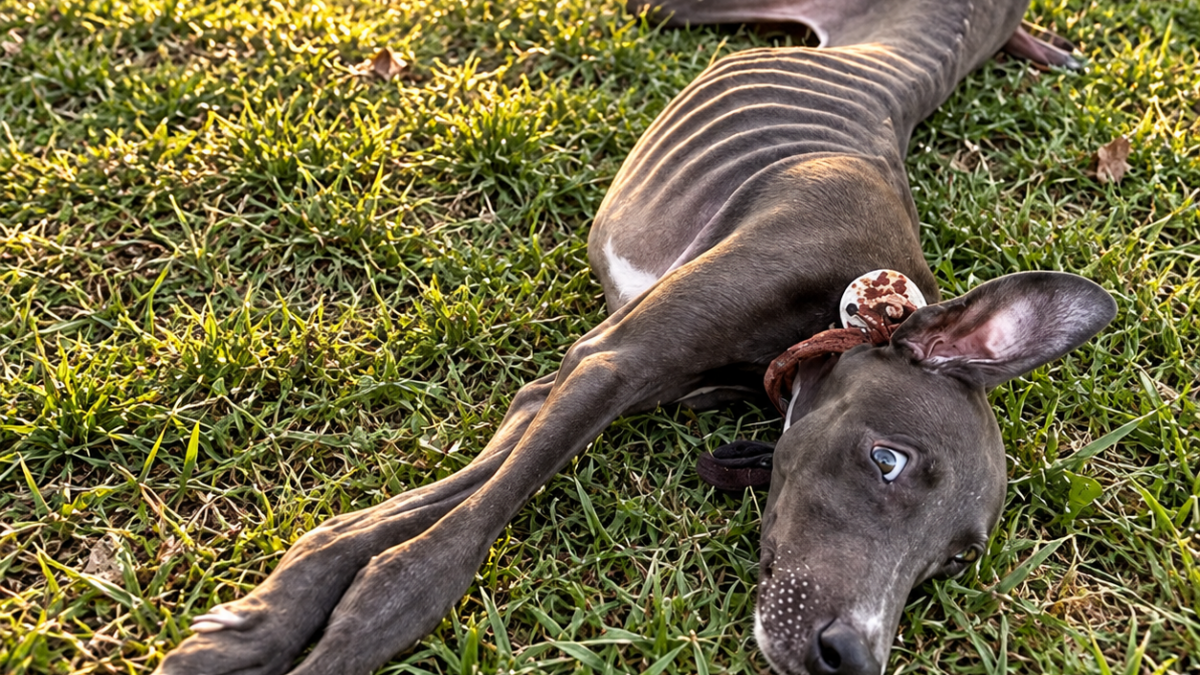
The puppy was lying in the rain so weak that when I slipped my hands beneath his body, his legs hung uselessly and his head fell against my wrist as if even holding it up had become too much work.
He was painfully thin and clearly starving, but when we finally placed food in front of him somewhere warm, he turned his face away and curled around his stomach as though eating hurt more than hunger.
By the time the veterinarian showed me his first blood results, I understood that getting him off that wet sidewalk had only solved the easiest part of the problem.
I first heard about him from a woman named Elena who lived two streets from our small rescue center.
She called just before dark.
“There’s a puppy outside my building,” she said. “I brought him in, but something’s wrong.”
“How old?”
“I don’t know. A few months maybe.”
“Is he injured?”
“I can’t see anything broken. He just can’t stand.”
That was enough.
I drove over with blankets, gloves, a crate, and the emergency bag we used for strays.
The rain had been falling for most of the afternoon, and Elena met me downstairs holding the smallest bundle of towels I had ever seen.
Inside was a tan-and-white puppy.
His fur was still damp despite the towels. His hips and ribs stood out sharply beneath his skin. He lifted his eyes when I spoke but didn’t raise his head.
“I found him by the curb,” Elena said. “He tried to get up when I went near him, but his legs just folded.”
“Did he eat anything?”
“I tried chicken.”
She pointed upstairs.
“He smelled it, then started shaking.”
I carried him into her apartment.
A bowl containing shredded chicken sat beside a dish of water.
I placed the puppy on a dry blanket.
“Hey, little guy.”
His eyes followed me.
I touched his abdomen gently.
He tightened immediately.
Then he twisted away with a small, breathless whine.
“His stomach hurts.”
Elena nodded quickly.
“He’s been doing that.”
A few seconds later the puppy gagged.
Nothing came up at first.
Then a small amount of yellow fluid spilled onto the towel.
I looked at Elena.
“We’re going to the clinic.”
She didn’t argue.
The emergency veterinarian examined him as soon as we arrived.
The puppy weighed far less than he should have for his frame. He was dehydrated, his gums were pale, and his abdomen was painfully sensitive.
Then came diarrhea.
Then more vomiting.
A technician drew blood.
We waited.
Elena sat beside me with both hands locked together.
“Is he going to die?”
“I don’t know.”
I hated saying it.
The veterinarian returned holding the laboratory printout.
“His white blood cell count is very low.”
“What does that mean?”
“It means his body may be dealing with a serious infection or severe inflammatory illness. Right now I’m more concerned with how weak he is, the vomiting, the diarrhea, and the fact that he isn’t eating.”
“His stomach is empty,” I said.
“Yes.”
“Then why won’t he eat?”
The veterinarian glanced toward the treatment room.
“Because whatever is happening inside him hurts.”
The puppy had no collar, no microchip, and no identification.
We needed a name for his chart.
Elena looked through the glass at the little dog curled beneath a warming blanket.
“Coquito.”
I smiled.
“Coquito?”
“My grandmother used to call tiny things that.”
The veterinarian wrote it down.
That night Coquito received fluids, medication for nausea and pain, and treatment aimed at stabilizing him while the team continued testing and monitoring his bloodwork.
I stayed until after midnight.
Before leaving, I offered him one tiny piece of food.
Coquito smelled it.
For half a second, I thought he might take it.
Instead he curled tighter around his belly.
The next morning he had vomited several more times.
The day after that, he still would not eat.
By the third night, the veterinarian called me into the treatment room.
“We can’t keep waiting for him to start eating on his own.”
I looked at the little puppy beneath the blanket.
“What do we do?”
She held up a thin tube.
“We feed him another way.”
And as I watched the team prepare Coquito for a feeding tube that would pass through his nose and into his stomach, I realized we were no longer waiting for him to get better.
We were trying to keep him alive long enough to have the chance.
PART 2
I had seen feeding tubes before, but never in a puppy that small.
The tube itself looked impossibly thin.
Dr. Lang explained every step because she could see I was hovering near the doorway pretending not to panic.
“It goes through the nostril, down the esophagus, and into the stomach,” she said. “We confirm placement before we use it.”
“Will it hurt him?”
“It’ll be uncomfortable going in. We’ll use local numbing medication and keep him as calm as we can.”
Coquito was already exhausted.
That was the one advantage.
He didn’t have the strength to fight much.
A technician named Marissa wrapped him gently in a towel.
“Easy, sweetheart.”
Coquito’s eyes found my voice when I said his name.
That nearly broke me.
“Right here.”
He didn’t understand what the tube was.
He didn’t understand why strangers kept touching him.
He only knew that he felt sick.
When the tube was finally secured against his face, Coquito looked so tiny beneath all the medical tape that I had to step outside for a minute.
Elena was waiting in the hallway.
“How is he?”
“They got it in.”
“Can he eat now?”
“Not normally. But they can feed him through the tube.”
She sat down hard in one of the plastic chairs.
“Good.”
It wasn’t exactly good.
But it was something.
That became our standard for the next week.
Something.
A little hydration.
A little nutrition.
A little sleep.
A little less vomiting.
Then more vomiting.
A slightly better blood result.
Then diarrhea again.
The nights were the worst.
During the day, the clinic was full of motion.
Phones ringing.
Dogs barking.
Technicians crossing hallways.
Machines beeping.
At night, everything became quieter, and every bad sound from Coquito’s kennel seemed enormous.
I wasn’t supposed to stay all night.
The hospital had staff for that.
Still, I stayed late whenever I could.
One night, around two in the morning, Coquito began writhing again.
He tucked his abdomen.
Stretched.
Changed position.
Whined.
Marissa adjusted his bedding.
Dr. Lang checked him.
I sat on the floor outside the kennel.
“Come on, little man.”
His eyes opened.
“You don’t have to eat tonight.”
His ears shifted.
“You don’t have to stand.”
I placed my fingers near the opening.
“You just have to stay.”
That became my request.
Stay.
Not improve.
Not recover.
Not become the happy dog I wanted to imagine.
Just stay.
The tube allowed the team to give him carefully measured nutrition in tiny amounts.
Too much too quickly could make things worse.
Everything with Coquito seemed to require patience.
Feed slowly.
Hydrate carefully.
Treat the nausea.
Protect his stomach.
Monitor his blood.
Wait.
He vomited every day for nearly a week.
By day four, I stopped asking Dr. Lang, “Is this normal?”
Nothing felt normal.
Instead I asked, “Is he worse?”
Sometimes she said no.
That had to be enough.
His white blood cell count remained concerning.
The doctors kept evaluating him for serious gastrointestinal and infectious disease while supporting him through the symptoms. They never gave me a dramatic, certain answer that tied everything together in one neat sentence.
That frustrated me at first.
I wanted a name.
If we had a name, I thought we could fight it.
Dr. Lang corrected me.
“Names are useful.”
“Exactly.”
“But treatment doesn’t become less real because we’re still working through causes.”
I looked through the glass.
Coquito was asleep.
“So what are we fighting?”
“Dehydration. Malnutrition. Pain. Vomiting. Diarrhea. Weakness.”
She paused.
“And time.”
That answer stayed with me.
Time was the enemy.
Every day a puppy refuses food, his body spends reserves he barely has.
Every episode of vomiting costs more.
Every night of diarrhea pulls fluid away.
Coquito had arrived with almost nothing left to spend.
That was what made the feeding tube so important.
He didn’t have to choose food yet.
We could give his body energy while his stomach and intestines recovered enough to let appetite return.
The first sign of improvement was so small I almost missed it.
On the sixth day, I entered his room carrying fresh blankets.
Coquito lifted his head.
Not just his eyes.
His whole head.
I stopped.
“Did you just do that?”
Marissa laughed from behind me.
“He’s been doing it all morning.”
“Why didn’t you tell me?”
“I wanted to watch your face.”
“That’s cruel.”
“Worth it.”
I crouched beside the kennel.
“Coquito.”
He held his head up for several seconds.
Then lowered it again.
I grinned like an idiot.
“Show-off.”
The following morning, we tried a tiny amount of food on a spoon.
Coquito smelled it.
My stomach clenched.
For days, that was where the sequence ended.
Smell.
Turn away.
Pain.
This time, his tongue touched the food.
Once.
Dr. Lang held perfectly still.
Coquito licked again.
Nobody celebrated yet.
We had learned not to celebrate too soon.
Then he took the smallest bite.
Marissa covered her mouth.
I whispered, “Don’t scare him.”
Coquito chewed slowly.
Swallowed.
Then looked toward the spoon.
Dr. Lang smiled.
“Well.”
I started crying.
She laughed.
“You rescue people cry over very strange things.”
“He ate.”
“One bite.”
“He ate.”
She offered another.
Coquito took it.
The feeding tube stayed in place.
Two bites did not mean his digestive system was ready to carry the entire load.
But it meant appetite had returned.
And appetite is one of the most beautiful things you can see in a starving animal.
That afternoon something bigger happened.
Coquito tried to stand.
The first attempt failed.
His front legs pushed.
His hindquarters lifted halfway.
Then he collapsed onto the blanket.
I reached in automatically.
Dr. Lang stopped me.
“Wait.”
Coquito lay still for several seconds.
Then tried again.
This time his legs shook beneath him.
His back arched slightly.
He looked impossibly fragile.
But he was standing.
I stared.
Nobody breathed.
Coquito took one half-step.
Then sat down hard.
The entire room exploded.
Not loudly.
But every face changed.
Marissa laughed.
Dr. Lang clapped once before remembering she was supposed to be professional.
I had both hands over my mouth.
Coquito looked confused by us.
He had no idea what standing meant to the people who had watched him disappear into blankets for a week.
To him, he had simply wanted to move.
To us, it meant his body had finally found enough strength to lift itself.
That night, for the first time, I drove home believing he might actually leave the hospital alive.
The next day was better.
Not perfect.
He vomited once.
But he ate several small bites on his own.
The day after that, more.
The tube remained as backup.
By the end of the week, Dr. Lang began reducing what went through it because Coquito was voluntarily eating enough to participate in his own recovery.
He became interested in smells.
Chicken.
Wet food.
A tiny piece of scrambled egg.
He had opinions.
He loved chicken.
Disliked one prescription food so intensely that he pushed the bowl with his nose and turned his back.
I laughed.
“A week ago you wouldn’t eat anything.”
Coquito looked at me.
“Now you’re a food critic?”
Tail.
One tiny wag.
That was the first one I saw.
His personality arrived in pieces.
First appetite.
Then tail.
Then curiosity.
He began watching people walk through the hallway.
He barked once when a larger dog passed his room.
The sound surprised him so badly that he looked around as though somebody else had done it.
By the second bark, he understood.
Marissa called me.
“Your child found his voice.”
“He is not my child.”
“You’re here every day.”
“I work with the rescue.”
“You bought him a blanket.”
“The hospital blankets are ugly.”
“You embroidered his name on it.”
I looked at the blanket.
That might have weakened my argument.
The feeding tube came out after Coquito proved he could maintain enough nutrition by mouth.
I expected that removal to feel dramatic.
It took less than a minute.
Then suddenly the little line taped to his face—the thing that had symbolized how sick he was—was gone.
His nose looked tiny without it.
“Hello,” I told him.
He licked my hand.
Three days later, Dr. Lang said the words I had been waiting for.
“He can leave.”
I looked at her.
“Leave the room?”
“The hospital.”
I didn’t react.
She frowned.
“You heard me?”
“Say it again.”
“Coquito can be discharged into supervised foster care.”
I sat down.
The relief made me dizzy.
Then came reality.
He wasn’t cured.
His digestive system remained sensitive.
His weight was still low.
His blood values needed monitoring.
He had follow-up visits ahead.
Medication.
Special meals.
Activity restrictions until he rebuilt strength.
Leaving the hospital was another beginning.
Not an ending.
Our rescue began looking for an experienced foster home.
That was when the Rivera family called.
I knew Maria Rivera casually.
She had adopted an older dog from another rescue years earlier and had occasionally donated food to ours.
She lived with her husband, Luis, and their daughter Sofia.
They also had two dogs.
A gentle seven-year-old mixed breed named Benny and a smaller terrier named Lola.
Maria had seen one of our private volunteer updates about Coquito.
Not a public plea.
Just a message asking for a medical foster.
She called Susan.
“I can do it.”
Susan asked the usual questions.
Schedule.
Experience.
Other pets.
Ability to attend veterinary appointments.
Transportation.
Separation space.
Maria answered everything correctly.
Still, I worried.
“He just got out of intensive care.”
“I know.”
“He may vomit again.”
“I know.”
“He needs small frequent meals.”
“I know.”
“Medication on schedule.”
“I wrote it down.”
“He can’t play rough.”
“Benny hasn’t played rough since 2019.”
I looked at her.
She smiled.
“You can come inspect the house yourself.”
“I was going to.”
“I figured.”
The Rivera home passed easily.
Clean.
Fenced.
Quiet.
A small room off the kitchen could be used for Coquito at first.
They had already bought washable pads.
Food dishes.
A soft bed.
I saw another bed beside it.
“What’s that?”
“Sofia thought he needed options.”
“Of course.”
Sofia appeared in the doorway.
She was fourteen.
“I also got him a stuffed duck.”
“He may destroy it.”
“That’s okay.”
“He may ignore it.”
“That’s okay too.”
I liked her immediately.
The day Coquito left the hospital, Elena came.
The woman who first carried him in from the rain had visited several times during his hospitalization.
She cried the moment she saw him walking.
Not walking well.
His legs remained skinny.
His gait looked cautious.
But he walked across the treatment room under his own power.
Elena crouched.
“Is this the same dog?”
Coquito sniffed her.
Then licked her chin.
She laughed through tears.
“You were wet enough to fit in my arms.”
He still fit in her arms.
But differently.
Alive.
Alert.
Interested.
Maria signed the foster agreement.
Dr. Lang reviewed medication.
I reviewed it again.
Maria looked at me.
“I heard her.”
“I know.”
“You’re doing it again.”
“What?”
“Worrying at me.”
I stopped.
“Sorry.”
She smiled.
“I’d do the same.”
We loaded Coquito into a small crate padded with his embroidered blanket.
That blanket went with him.
Obviously.
At the Rivera house, he did exactly what sick animals often do in new places.
Nothing.
He slept.
For almost four hours.
Maria texted me:
**Still sleeping. Breathing normally. Ate two teaspoons. No vomiting.**
Then:
**He peed.**
Then:
**Is it weird that I’m celebrating urine?**
I replied:
**Welcome to rescue.**
The first week at home went better than I expected.
Coquito ate.
Small meals.
Frequently.
Maria kept a notebook.
7:00 a.m. food.
7:30 medication.
8:05 stool.
Color.
Consistency.
Water intake.
Energy.
Every detail.
When she brought the notebook to the follow-up appointment, Dr. Lang stared at it.
“This is more organized than some medical charts.”
Maria looked proud.
Coquito gained weight.
Slowly.
His ribs became less sharp.
The hollow spaces beside his hips began filling.
His coat looked softer.
Then, on day nine, he vomited.
Maria called me immediately.
“He threw up breakfast.”
“One time?”
“Yes.”
“Any diarrhea?”
“No.”
“Energy?”
“He looks tired.”
My fear returned instantly.
Hospital hallways.
Feeding tube.
White blood cell counts.
Long nights.
I drove over even though Maria told me not to.
Coquito was lying in his bed.
He raised his head when I entered.
Tail wag.
I exhaled.
Maria folded her arms.
“You thought he was dying again.”
“Yes.”
“He vomited once.”
“Yes.”
“You are not emotionally stable.”
“No.”
She laughed.
We called Dr. Lang.
She adjusted the feeding schedule and asked us to monitor him.
No hospitalization.
No emergency.
Coquito ate later that afternoon.
Kept it down.
Recovery had scared me into believing every setback meant a return to the beginning.
It didn’t.
Bodies can stumble forward.
They do not always reset to zero.
Coquito taught me that repeatedly.
Two weeks after entering the Rivera home, he met Benny properly.
They had already smelled each other beneath doors.
Seen each other through gates.
That day, Maria brought Benny into the yard on leash.
Benny was large, brown, gray-faced, and deeply uninterested in drama.
Coquito stood several feet away.
His tail moved.
Benny sniffed.
Coquito stepped closer.
Benny looked at Maria as if asking why this tiny creature had been introduced into his retirement.
Then Coquito licked his muzzle.
Benny sighed.
That was it.
Friendship by exhaustion.
Lola was different.
Lola weighed twelve pounds and believed she owned the western hemisphere.
She barked.
Coquito jumped backward.
Lola barked again.
Coquito hid behind Sofia.
Sofia looked down.
“She’s half your size.”
Lola barked.
Coquito stayed hidden.
“Fair.”
Within a week, he followed Lola everywhere.
She taught him where treats were kept.
Where sunlight hit the hallway floor in the afternoon.
How to stand at the kitchen entrance looking starved after already eating.
The last lesson worked especially well.
Coquito’s energy increased.
At first, play lasted ten seconds.
He would paw at a toy.
Shake it.
Then lie down.
A week later, thirty seconds.
Then two minutes.
Soon Sofia sent me a video of him chasing a soft ball across the living room.
His legs were still thin.
He ran badly.
Too much enthusiasm, not enough coordination.
He overshot the ball.
Slid on the rug.
Got up.
Tried again.
Sofia laughed behind the camera.
“Coquito!”
He grabbed the ball.
Ran toward her.
That video made me cry almost as much as the day he stood in the hospital.
I sent it to Elena.
She replied with one sentence.
**Those are the legs I thought would never hold him.**
She was right.
I remembered his body in her towels.
Legs hanging.
No resistance.
Now those legs carried him across a living room because a teenager had thrown a ball.
We began discussing adoption.
Normally, medical fosters eventually move to adoptive placement once cleared.
Maria avoided the subject.
Suspiciously.
I asked her directly.
“Are you filling out the application?”
“What application?”
“The one where you pretend this wasn’t your plan.”
She looked offended.
“We agreed to foster.”
“Yes.”
“We are responsible adults.”
“Sure.”
“We knew we might have to say goodbye.”
Coquito ran through the kitchen carrying one of Luis’s socks.
Maria pointed.
“Drop it.”
He ran faster.
I waited.
She sighed.
“Fine.”
“Fine what?”
“We’re adopting him.”
I smiled.
“I knew it.”
“No, you did not.”
“Susan knew too.”
Maria stared at me.
“You people are terrible.”
The adoption was not finalized immediately.
Dr. Lang wanted another round of bloodwork first.
His white blood cell count had improved significantly.
His hydration was normal.
Weight was rising.
Vomiting had become rare.
The diarrhea had resolved.
His abdomen was no longer painful on examination.
Dr. Lang smiled when she finished.
“He looks like a puppy.”
I laughed.
“What did he look like before?”
“A patient.”
That difference mattered.
A patient becomes defined by measurements.
Temperature.
Weight.
Blood counts.
Fluid rates.
Coquito was becoming defined by behavior.
Socks.
Balls.
Lola.
Sofia’s bedroom.
Benny’s tail.
He was turning into a dog outside medicine.
The adoption papers were signed three months after Elena found him.
Sofia insisted on writing his full name on a family board in the kitchen.
**COQUITO RIVERA.**
Luis objected.
“He has my last name now?”
Sofia looked at him.
“You signed.”
“I didn’t know this was legally binding.”
Coquito barked.
Maria smiled.
“Too late.”
I brought the embroidered hospital blanket on adoption day.
Maria looked at it.
“You’re giving that up?”
“It belongs to him.”
Sofia held it.
“He still sleeps on this.”
“I know.”
They framed a small photograph from his hospital stay.
Not the worst one.
I asked why.
Sofia answered.
“So when he’s being annoying, we remember we wanted him healthy enough to be annoying.”
Smart kid.
For a while, everything became wonderfully boring.
Checkups.
Weight gain.
Vaccines when medically appropriate.
Training.
Walks.
Play.
Coquito grew.
Not into a huge dog.
He stayed compact.
Long legs.
Tan ears.
White chest.
His eyes looked too large for his head when he was excited.
He loved people.
He loved Benny.
He worshiped Lola despite her ongoing verbal abuse.
He loved Sofia most.
If she went upstairs, he followed.
If she sat on the floor, he climbed into her lap.
If she cried, he became quiet and pressed against her.
One evening, Maria called me laughing.
“You need to come get your dog.”
“My dog?”
“He stole an entire tortilla.”
“That sounds like your dog.”
“He ran under the table.”
“Definitely yours.”
“He growled at Lola when she tried to take it.”
“Resource guarding?”
“No. More like panic.”
That caught my attention.
We worked on it.
Not punishment.
Trade games.
Safe feeding spaces.
Teaching him food would return.
The behavior made sense.
Coquito had once been starving.
The body can recover before the brain trusts abundance.
For several months, he ate as though every meal might be the last.
Then slowly, he changed.
He left food in his bowl.
That may sound insignificant.
It wasn’t.
The first time Maria sent a photo showing three pieces of kibble left after dinner, I stared at it.
**He walked away.**
She replied:
**I KNOW.**
He trusted there would be another meal.
That was recovery too.
A year after his rescue, Elena asked to visit.
She had not seen him in months.
We arranged it at the Rivera home.
Coquito was in the backyard when she arrived.
Sofia opened the gate.
“Elena’s here.”
Coquito looked toward the unfamiliar voice.
Elena crouched.
“Coquito?”
He stopped.
Then ran.
Straight toward her.
She barely had time to open her arms.
Coquito jumped into her lap.
Not gracefully.
Elena fell backward onto the grass.
Everyone laughed.
She held him.
“Oh my God.”
Coquito licked her face.
“You remember me?”
Maybe he did.
Maybe he only recognized smell or voice.
Maybe he simply loved humans.
It did not matter.
Elena buried her face against his neck.
“I carried you like a wet rag.”
Sofia laughed.
“He’s heavier now.”
“A lot heavier.”
Coquito escaped her arms and ran toward Benny.
Then back.
Then around the yard.
Elena watched.
“I thought he was dying.”
I stood beside her.
“So did I.”
She wiped her face.
“I still remember his stomach.”
“How tight?”
“He curled around it.”
We both watched him sprint.
His legs looked strong now.
“You know what bothered me most?”
“What?”
“He was hungry.”
She looked at me.
“I knew he was hungry. But he couldn’t eat.”
I nodded.
“That felt cruel.”
It had.
An empty stomach should want food.
Coquito’s body had been trapped in a situation where the thing he needed hurt too much to accept.
Now he stole tortillas.
The correction seemed appropriate.
Time moved.
Benny died peacefully two years later.
Old age.
Coquito searched for him for several days.
Maria said he walked room to room sniffing.
He sat beside Benny’s bed.
Wouldn’t lie in it.
Lola stayed near him more than usual.
Even she understood something was missing.
Sofia slept downstairs with both dogs the first night.
The loss changed Coquito.
He became more attached to Lola.
She became slightly less tyrannical.
Only slightly.
By then Sofia was preparing for college.
That transition worried Maria.
“Coquito sleeps in her room.”
“He’ll adjust.”
“Will he?”
“Yes.”
“How do you know?”
“I don’t.”
She glared.
“Helpful.”
We prepared.
Sofia began letting Coquito spend more evenings downstairs with the family.
She left worn shirts in his bed after moving into the dorm.
She came home weekends.
The first weekend, Coquito screamed.
Actually screamed.
Sofia opened the front door.
A sound came from him that no dignified dog should produce.
He raced around her in circles.
Lola barked from the couch.
Luis filmed everything.
Sofia sat on the floor.
Coquito climbed onto her.
“I was gone five days.”
He didn’t care.
When she returned to school Sunday night, he watched the door.
But he ate dinner.
Slept downstairs.
By Monday, routine returned.
Another version of resilience.
Different from surviving illness.
Still real.
Coquito became a regular at our rescue reunions.
People often didn’t recognize him.
I kept his original intake photograph on my phone.
Sometimes volunteers asked:
“Is that really him?”
Yes.
The wet puppy.
The feeding tube.
The one who vomited for a week.
The dog racing across the event lawn after a ball.
Same animal.
At one reunion, a new volunteer stared at the old photo.
“What saved him?”
I began listing things.
Fluids.
Nutrition.
Medication.
Hospitalization.
Monitoring.
Then stopped.
The answer was too complicated.
“All of it.”
Medical care saved him.
Elena stopping saved him.
The rescue taking responsibility saved him.
Dr. Lang’s decisions saved him.
Marissa staying overnight mattered.
The feeding tube mattered.
Maria’s notebook mattered.
Sofia’s patience mattered.
Recovery is rarely one heroic moment.
Usually it is dozens of ordinary decisions made before anyone knows whether they will work.
That became especially clear when another puppy came in with symptoms that reminded me painfully of Coquito.
Small.
Weak.
Vomiting.
Not eating.
Different diagnosis.
Different outcome.
He did not survive.
I took it badly.
Too badly.
I sat in the rescue laundry room after we lost him.
For almost an hour.
Susan found me.
“You need to go home.”
“I’m fine.”
“You’re sitting beside industrial detergent crying.”
“Still fine.”
She sat.
“I keep thinking we did the same things.”
“I know.”
“Coquito lived.”
“Yes.”
“So why—”
“Because care is not control.”
I hated that sentence.
She continued.
“We give them a chance. We don’t purchase an outcome.”
That was the lesson Coquito had tempted me to forget.
His survival made the story feel inevitable afterward.
It wasn’t.
There were nights he could have died.
There were treatments that could have failed.
There was nothing guaranteed about the puppy in Elena’s towels becoming the healthy dog stealing socks from Sofia’s room.
Knowing that made his life feel bigger.
Not miraculous in some vague way.
Specific.
Fragile.
Earned through chance, medicine, care, and time.
When Coquito was four, Maria brought him to the clinic for a routine examination.
Dr. Lang happened to be working.
She had not seen him in nearly a year.
Coquito walked into the treatment room confidently.
She looked at the chart.
Then at him.
“No.”
Maria laughed.
“Yes.”
Dr. Lang crouched.
“Coquito?”
Tail explosion.
He remembered enough to love her.
She examined his abdomen.
No pain.
Healthy body condition.
Normal appetite.
Good energy.
She listened to his heart.
Checked his mouth.
Then looked at me.
“I remember when touching his belly made him curl up.”
“So do I.”
She scratched beneath his chin.
“Look at you.”
Coquito tried to eat a treat from her pocket before she offered it.
Dr. Lang laughed.
“Appetite is fine.”
We agreed.
Coquito’s greatest achievement, according to himself, was becoming hungry constantly.
By five, his face had matured.
He was still energetic.
Still affectionate.
Still convinced Sofia’s room belonged to him even after she graduated and moved into an apartment across town.
She wanted to take him.
Maria refused.
“He is the family dog.”
“He’s my dog.”
“You went to college.”
“That doesn’t terminate custody.”
Luis stayed out of it.
Coward.
They reached a compromise.
Coquito spent weekends with Sofia.
The first time he stayed in her apartment, he barked at the elevator.
Wouldn’t enter.
Sofia called me.
“How do I convince him?”
“Food.”
“That’s your professional answer?”
“With Coquito? Yes.”
Chicken worked.
Of course.
Soon he understood elevators meant walks.
He became an apartment expert.
Weekend bag.
Harness.
Sofia.
Monday return to Maria.
He had two homes and accepted this as his natural right.
Years passed faster after that.
Lola grew old.
The little dog who once terrorized Coquito developed heart disease.
Her barking weakened.
She slept more.
Coquito changed around her.
He stopped crashing into her space.
Waited before climbing onto shared beds.
Walked beside her outside.
When Lola no longer wanted long walks, Coquito stayed back with her more often than anyone expected.
One evening, Maria sent me a photo.
Lola asleep beneath a blanket.
Coquito curled around her.
Caption:
**He won’t leave her tonight.**
Lola died at home several weeks later.
Coquito was there.
Afterward, he slept in her bed.
Unlike with Benny.
Maybe age had taught him grief differently.
Or maybe he simply wanted what smelled familiar.
By then Coquito was no longer little.
Not physically.
Not emotionally.
But I still called him “the puppy” whenever Maria sent updates.
“You know he’s seven.”
“I know.”
“He has gray on his chin.”
“Puppy.”
“He has arthritis starting in one knee.”
“Old puppy.”
Maria gave up.
At eight, Coquito developed a sensitive stomach again.
Nothing like the original illness.
Still, the first vomiting episode sent all of us into panic.
Maria called.
“He threw up.”
“How many times?”
“Once.”
“Diarrhea?”
“No.”
“Eating?”
“Yes.”
“Energy?”
“He stole toast.”
I exhaled.
“He’s fine.”
“You were scared too.”
“Yes.”
“Good.”
The vet diagnosed mild dietary upset.
No crisis.
The fear had outlived the danger by years.
That happens.
We carry old emergencies forward.
Coquito did not.
He ate dinner that night.
Years after that, Elena visited again.
She was older.
Coquito was too.
When he saw her, he still wagged.
Not the explosive puppy reaction.
A slow, certain one.
She sat beside him.
“You still remember rain?”
I looked at her.
“That’s a strange question.”
“I wonder.”
Coquito placed his head on her leg.
Elena touched one of his paws.
“The first time I held these, they were cold.”
I remembered.
“I thought he wouldn’t make the drive.”
She nodded.
“Me too.”
Coquito sighed.
We sat quietly.
Then Elena smiled.
“His belly was empty.”
“And now?”
Coquito’s head turned toward the sound of Maria opening the refrigerator.
Everyone laughed.
“Apparently still empty.”
Some things never change.
When Coquito reached ten, arthritis slowed him.
The little legs that once could not support him had carried him for a decade.
Runs became walks.
Walks became shorter.
Sofia bought him a ramp for her apartment couch.
Luis built another for the Rivera porch.
Maria added rugs over slick floors.
Coquito adapted without complaint as long as food schedules remained intact.
He still visited me.
Still recognized the rescue.
Still tried to walk toward the treatment hallway where Dr. Lang once worked, even after she moved to another clinic.
One afternoon, I found the original embroidered blanket in a storage box Maria brought to the reunion.
“You kept it?”
“Of course.”
It was faded.
The stitching around **COQUITO** had started fraying.
I ran my hand across it.
“That thing was in the hospital with him.”
“I know.”
“He vomited on it.”
“Multiple times.”
“And you kept it?”
Maria looked offended.
“It survived.”
I laughed.
So had he.
Coquito developed kidney disease in his later years.
Not surprising for an older dog.
Manageable at first.
Diet changes.
Medication.
More frequent tests.
He hated the prescription food.
Some things returned us to the beginning.
Except now, when Coquito refused a meal, it wasn’t because he was a tiny puppy curled around abdominal pain.
It was because he had spent years learning that humans would eventually improve the menu if he complained enough.
Maria called me.
“He won’t eat the renal food.”
“Mix it gradually.”
“I did.”
“Warm it.”
“I did.”
“Add the approved topper.”
“I did.”
“What does he want?”
“Chicken.”
“Of course.”
The vet helped them find a compromise.
Coquito remained medically stable for longer than expected.
Then, one winter, he began losing weight.
His kidneys were worsening.
His appetite faded.
For everyone else, those were clinical signs.
For me, appetite was symbolic.
The puppy’s entire story had once revolved around not being able to eat.
Seeing the bowl untouched again hurt more than I expected.
I visited.
Coquito was lying near the kitchen.
Older now.
Gray muzzle.
Thinner.
Still himself.
I sat down.
“Hey.”
Tail.
Slow.
He placed his head on my knee.
Maria handed me a piece of chicken.
“He’ll take it from you.”
“That is emotional blackmail.”
“Yes.”
I offered it.
Coquito smelled it.
For half a second, my mind went backward ten years.
Clinic.
Spoon.
Feeding tube.
Pain.
Then Coquito ate the chicken.
Maria smiled.
“See?”
I laughed through tears.
“You manipulative old man.”
He ate another.
We weren’t pretending chicken could cure kidney disease.
But eating still meant pleasure.
That mattered.
Over the following months, good days became fewer.
Sofia visited constantly.
By then she was married and expecting her first child.
She sat on the floor with Coquito.
“You have to meet the baby.”
Maria looked at her.
“No bargaining.”
“I’m allowed.”
Coquito slept.
He did meet the baby.
Barely.
Sofia brought her daughter, Emma, to the Rivera house when she was three weeks old.
Coquito smelled the blanket.
His tail moved.
Sofia sat beside him.
“This is Emma.”
Coquito sniffed carefully.
Then lay back down.
Sofia cried.
Maria took a photograph.
Old dog.
New baby.
Two ends of a family story in one frame.
Coquito lived another four months.
Then one morning, Maria called.
No greeting.
“Today.”
I closed my eyes.
“I’m coming.”
The home veterinarian was scheduled for late afternoon.
Elena came too.
So did Sofia with Emma.
Not because Coquito needed a crowd.
Because the people who had carried pieces of his life wanted to be near.
He lay on the same embroidered blanket from the hospital.
Maria had taken it from storage.
I stared at it.
“You planned that.”
“Yes.”
The name was faded.
Still readable.
COQUITO.
He rested near the fireplace.
No rain.
No cold.
No feeding tube.
No clinic sounds.
His stomach was not twisted in pain.
Medication had kept him comfortable.
His body was simply tired.
Elena sat beside his front paws.
“You remember me?”
Tail movement.
She started crying.
“You were so little.”
Sofia sat on the other side.
“You were still little when I met you.”
Maria laughed through tears.
“He was never little in attitude.”
Luis rubbed Coquito’s back.
The veterinarian explained the process.
We all knew it.
That didn’t make it easier.
Before the sedative, Maria offered one last tiny piece of chicken.
Coquito smelled it.
Took it slowly.
Chewed.
Swallowed.
We all laughed and cried at once.
Of course.
His story began with an empty stomach that couldn’t accept food.
It seemed right that one of his last choices was eating something he loved.
The sedative went in.
Coquito relaxed.
His head grew heavier against Maria’s hand.
I touched one paw.
Warm.
I thought about Elena telling me his paws were cold when she found him.
I whispered:
“Look what these did.”
No one asked what I meant.
His legs had carried him out of the hospital.
Across the Rivera living room.
Behind Lola.
Toward Benny.
Into Sofia’s room.
Through parks.
Up ramps.
Into elevators.
Toward people who loved him.
Thousands upon thousands of ordinary steps.
The legs that could not hold him in the rain.
The veterinarian gave the final medication.
Coquito breathed slowly.
Maria pressed her forehead to his.
“You can sleep.”
One breath.
Then another.
Then stillness.
Emma made a small noise from Sofia’s arms.
Nobody moved for a long time.
Coquito was cremated.
The Riveras kept most of his ashes.
A small amount went beneath a tree in their yard where he liked to sleep in summer.
Sofia kept the embroidered blanket.
Elena kept the first photograph she had taken after bringing him in from the rain.
I kept something less tangible.
A habit.
Every time I see a sick animal refuse food now, I remember not to confuse refusal with absence of hunger.
Pain can overpower need.
Fear can overpower instinct.
Illness can make the thing that would save you feel impossible.
Sometimes care means feeding through a tube until the body can make its own choice again.
Years later, Greenfield renovated the medical room.
They replaced old photographs with a new display.
Susan asked if I wanted Coquito included.
“Yes.”
“Which picture?”
She expected the hospital photo.
I chose another.
Coquito at about two years old.
Running across the Rivera yard.
Sofia crouched in the distance.
Lola behind him.
His ears flying backward.
All four feet off the ground.
Underneath, we put his name.
Nothing else.
No sad caption.
No description of the rain.
No feeding tube.
No illness.
Visitors who ask about him get the story if they want it.
But the photograph says enough.
The last time Elena and I stood in front of it together, she smiled.
“That doesn’t look like the dog I found.”
“Yes, it does.”
She looked at me.
I pointed at his eyes.
“Same dog.”
She studied the picture again.
Then nodded.
I understood what she meant, though.
The puppy she carried from the rain looked like he had no future beyond the next hour.
The dog in the photograph was running toward one.
That distance—between helpless and home—was measured in more than medicine.
It was measured in nights someone stayed awake.
Tiny feedings.
Clean blankets.
Phone calls.
Follow-up appointments.
A family saying yes.
Another dog sharing a bed.
A girl throwing a ball.
A bowl being filled tomorrow.
And tomorrow.
And tomorrow.
When I think about Coquito now, I don’t picture the tube taped to his face.
I remember one morning shortly after the hospital discharged him.
I had gone to Maria’s house to check on him.
The back door was open.
Sunlight reached across the patio.
Sofia was kneeling in the yard holding a soft toy.
Coquito stood near the doorway.
His legs were thin.
Still uncertain.
She called him.
“Come on, Coquito.”
He hesitated.
Then started forward.
One step.
Another.
Then faster.
By the time he reached her, his tail was going so hard that his whole body twisted.
Sofia caught him.
He climbed into her lap.
I stood in the doorway watching.
The rain was long gone.
And for the first time, so was the fear that those little legs might never carry him anywhere at all.
[END OF STORY]








