PART 2: We Found a Paralyzed Cat Beside an Old Doghouse—Then One Tiny Change Made Us Refuse to Give Up
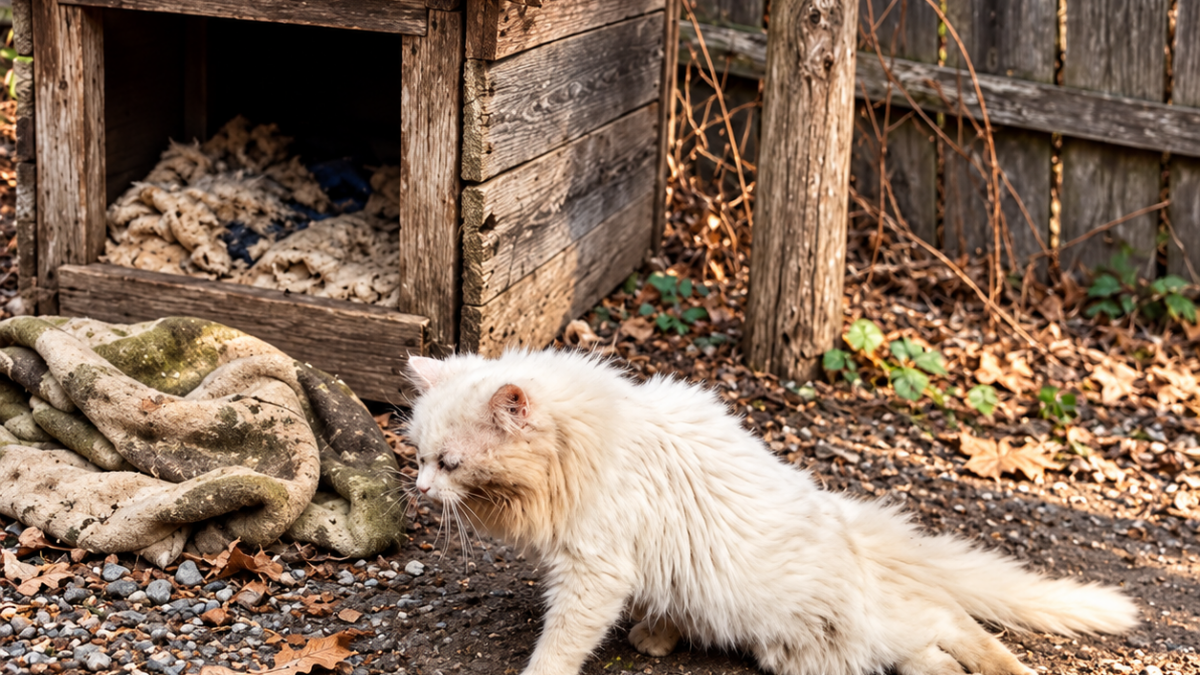
Koksik was lying beside a collapsing wooden doghouse with both back legs stretched uselessly behind him, and when I reached toward his filthy fur, he flinched as if my hand frightened him more than the fact that he could no longer run away.
At the clinic, we learned he couldn’t move his hindquarters or control his bladder and bowels, and by the second night he was eating so little that even the veterinarian began asking the question none of us wanted to answer.
But when we drove him to a specialist in another city and the neurologist placed his scans under the light, she noticed something that forced us to rethink what saving him was actually going to mean.
My name is Anna, and I’d been volunteering with a small animal-rescue group for six years when we got the call about the cat behind an abandoned workshop.
The man who called wasn’t sure Koksik was alive.
“He’s been next to that doghouse since yesterday,” he told me. “I put food out, but I don’t think he moved.”
“Did he eat?”
“I don’t know.”
“Can he stand?”
A pause.
“No.”
Twenty-five minutes later, I was kneeling in cold mud beside him.
He was smaller than I’d expected.
Long-haired, once probably beautiful, but his coat had collapsed into dirty mats around his thin frame. His front paws were tucked under his chest. His hind legs trailed behind him at strange angles.
When I moved closer, Koksik turned his head.
His eyes were open.
That was almost the only reaction I got.
“Hey, buddy.”
His ears flattened.
I offered my fingers.
He flinched.
He wanted to retreat, but his front paws only pulled him a few inches before his useless back half dragged against the ground.
I stopped immediately.
“Okay. I’m not coming closer.”
My partner, David, crouched beside me.
“How bad?”
“Bad.”
We placed a towel over Koksik and lifted him together.
He didn’t fight.
That scared me more than claws would have.
At the clinic, Dr. Harris examined him while I stood near the table.
“No deep pain response in either hind leg,” she said.
“What does that mean?”
“It means I can’t get a neurological reaction where I should.”
She checked his abdomen.
Then her expression changed.
“His bladder is extremely full.”
“Can he urinate?”
“Not normally.”
She showed me how gentle pressure released urine.
I stared at the table.
“So he can’t control that either?”
“Probably not.”
The X-rays didn’t show a simple fracture we could repair.
Whatever had happened to Koksik involved his spine or spinal cord.
“How long has he been like this?” I asked.
“Impossible to know.”
“Can he recover?”
Dr. Harris looked at me for several seconds.
“I don’t know yet.”
Koksik refused food that night.
The next morning, he licked a little gravy and stopped.
On the second day, he barely responded when I changed the blanket beneath him.
David stood beside his cage.
“Anna.”
“No.”
“I haven’t said anything.”
“I know what you’re going to say.”
“We have to talk about quality of life.”
“He’s been here forty-eight hours.”
“He can’t walk. He can’t toilet himself. He won’t eat.”
“He’s terrified.”
“He may also be suffering.”
I looked at Koksik.
He had turned his face toward the wall.
“Then we find out.”
Our local clinic didn’t have advanced neurological imaging.
The closest specialist who could evaluate him properly was nearly three hours away.
The rescue didn’t have much money.
We had twelve other animals receiving treatment.
I called our director.
She sighed when I told her the estimate.
“Anna, we can’t keep saying yes to every impossible case.”
“I know.”
“Do you?”
“Yes.”
Silence.
Then:
“Take him.”
The next morning, Koksik traveled inside a padded carrier beside me while David drove.
For almost three hours, he didn’t make a sound.
At the specialty hospital, a neurologist named Dr. Rebecca Mason reviewed his records and performed another examination.
Then Koksik disappeared through a set of double doors for imaging.
I waited nearly two hours.
When Dr. Mason finally returned, she carried a folder.
She sat across from me.
Didn’t smile.
“Before we discuss treatment,” she said, “there’s something you need to understand about what we’re seeing.”
She opened the folder and turned the first image toward me.
PART 2
I stared at the scan without understanding any of it.
Gray.
Black.
White.
Bones that looked obvious once Dr. Mason pointed them out and meaningless when she didn’t.
She tapped a section of Koksik’s lower spine.
“This is where I’m concerned.”
“Can you fix it?”
She didn’t answer immediately.
That was when I knew the answer wouldn’t be simple.
“There appears to have been significant trauma to the spinal cord,” she said. “Not today. Not yesterday. This injury has had time to evolve.”
“How much time?”
“Days at minimum. Possibly longer.”
I felt my stomach tighten.
“So he was paralyzed before we found him.”
“Yes.”
“Can surgery help?”
“There’s no unstable fracture compressing the cord that I can remove and suddenly restore function.”
I looked down at my hands.
“Then what are we doing here?”
Dr. Mason leaned forward.
“That’s not the same as saying nothing can be done.”
I looked up.
“What can be done?”
“We can treat secondary problems. Control pain. Manage his bladder. Prevent infection. Improve nutrition. Protect his skin. Start rehabilitation.”
“And the legs?”
Her voice softened.
“I think you need to prepare yourself for the possibility that he may never regain useful function in them.”
I had spent three days insisting we needed answers.
Now that I had one, I hated it.
“Never?”
“I don’t say never easily. Neurology can surprise us. But based on the duration, the examination, and the imaging, his prognosis for normal hind-limb function is poor.”
“What about bladder control?”
“Also poor.”
I sat back.
Koksik wasn’t even two years old, as far as anyone could estimate.
Maybe younger.
A whole life ahead of him.
And every day of that life might involve somebody else emptying his bladder, cleaning him, repositioning him, checking his skin, watching for urinary infections.
I heard David’s words again.
Quality of life.
Dr. Mason must have recognized what I was thinking.
“A paralyzed cat can still have a good life.”
I looked at her.
“Can.”
“Yes.”
“Not necessarily.”
“No.”
“What makes the difference?”
“Pain. Overall health. Temperament. Ability to adapt. Whether someone can provide the care.”
I almost laughed.
“That last one sounds important.”
“It is.”
“What if nobody wants him?”
She didn’t answer.
That was not her question to solve.
I called our director from the parking lot.
Her name was Susan.
I gave her the prognosis.
For several seconds, all I heard was traffic passing behind me.
Finally she asked, “What does the specialist recommend?”
“Supportive treatment. Rehab. Time.”
“And after that?”
“We reassess.”
“Anna.”
“I know.”
“Do you?”
Apparently that had become everybody’s favorite question.
“We can’t keep him hospitalized for months,” Susan said.
“I know.”
“We don’t have a sanctuary facility.”
“I know.”
“We’ve already spent more than we planned.”
“I know.”
“And if he is permanently incontinent—”
“I know.”
Susan exhaled.
“I am not saying put him down.”
“Sounds like you’re getting close.”
“I’m saying we need to decide what we’re trying to achieve.”
I looked through the glass doors of the hospital.
Somewhere inside, Koksik was probably lying on another unfamiliar blanket while another stranger touched him.
“Comfort,” I said.
“What?”
“For now, that’s the goal.”
“And after that?”
“I don’t know.”
Susan went quiet.
Then she said, “Bring him back.”
Koksik returned to our local clinic two days later.
There was no miracle.
That disappointed people.
I could see it in their faces.
Rescue stories train us to expect transformation on schedule.
Animal found.
Animal treated.
Animal stands.
Animal runs.
Music swells.
Everybody cries.
Koksik didn’t cooperate with that kind of story.
He remained paralyzed.
The first week after returning, he ate only when we hand-fed him.
Sometimes he swallowed willingly.
Sometimes he turned his head away.
He hated bladder expression.
He hated being cleaned.
He hated physical therapy.
He seemed to hate me.
“That’s encouraging,” Dr. Harris said one morning after he swatted weakly at my wrist.
I looked at her.
“He just tried to scratch me.”
“Exactly.”
“I don’t see how this is progress.”
“He cared enough to object.”
That was the first time I considered irritation a good medical sign.
We made a routine.
Morning:
Check temperature.
Express bladder.
Clean hindquarters.
Inspect skin.
Medication.
Food.
Reposition.
Gentle stretching.
Midday:
Repeat most of it.
Evening:
Again.
Koksik had no ability to move his hind end away from urine or feces, which meant cleanliness wasn’t cosmetic.
It was survival.
Urine scald could damage his skin.
Stagnant urine could lead to infections.
Pressure against the same areas could create sores.
One careless day could become a medical crisis.
The work was intimate.
Unglamorous.
Sometimes unpleasant.
It also required trust from a cat who trusted nobody.
The first few times I expressed his bladder, Koksik flattened his ears and stared at me as if he’d chosen the exact location where he’d bury my body once his legs started working again.
“I’m sorry,” I told him.
He growled.
“I agree.”
Growl.
“This is humiliating.”
Another growl.
“Still doing it.”
He tried to bite me.
“Very persuasive.”
I began talking to him during every procedure.
Not because I believed he understood the sentences.
He understood tone.
Predictability.
The difference between hands that arrived suddenly and hands that announced themselves.
“I’m touching your side.”
Pause.
“I’m lifting you.”
Pause.
“Bladder time. Yes, I know. Everyone’s favorite.”
He hated me less when I warned him.
Or maybe he simply accepted that I was an idiot who narrated everything.
Either way, he stopped flinching quite as violently.
That was our first improvement.
Not walking.
Not tail movement.
A smaller flinch.
It took eleven days.
I wrote it in his chart.
**Less defensive with handling.**
David read it.
“You’re recording that?”
“Yes.”
“He still looks like he wants to kill you.”
“Less.”
“Scientific.”
“You’re welcome to take over.”
He backed away.
“I respect your research.”
Koksik ate slightly better in the second week.
We discovered he liked warm chicken more than prescription wet food.
Dr. Harris approved small amounts mixed into his diet.
I held a spoon near his nose.
Koksik sniffed.
Licked.
Then ate half the bowl.
I texted Susan:
**HE ATE.**
She replied:
**GOOD.**
Then, thirty seconds later:
**PLEASE STOP USING CAPITAL LETTERS FOR NORMAL CAT ACTIVITIES.**
I wrote:
**NO.**
There were setbacks.
Of course there were.
During week three, Koksik developed a urinary infection.
He stopped eating again.
His temperature rose.
His urine smelled wrong.
Dr. Harris started antibiotics after testing.
I sat beside his cage that night convinced we had reached the point everyone had warned me about.
One complication.
Then another.
Then another.
Maybe keeping him alive wasn’t kindness.
That thought had been waiting for me since the first clinic.
I hated it.
But pretending it didn’t exist would have been worse.
Susan joined me after closing.
“You look terrible.”
“So does he.”
Koksik slept beneath a fleece blanket.
His breathing was steady.
“He has an infection,” Susan said.
“I know.”
“Treatable.”
“For now.”
She sat beside me.
I said nothing for a minute.
Then:
“What if we’re doing this because we can’t admit we failed?”
Susan looked at me.
“Failed what?”
“Saving him.”
“He’s alive.”
“That isn’t automatically success.”
“No.”
I appreciated that she didn’t give me a sentimental answer.
“What if he’s miserable?”
“Then we need to be honest about it.”
“How?”
“Does he have uncontrolled pain?”
“No.”
“Can he eat?”
“When he feels okay.”
“Does he show interest in anything?”
“Sometimes.”
“Does he rest?”
“Yes.”
“Does he interact?”
“He insults me regularly.”
Susan smiled.
“Then maybe we don’t make the final decision for him while he’s in the middle of a treatable infection.”
I looked at Koksik.
His ears moved when I said his name.
That tiny movement mattered.
Not enough by itself.
But something.
The antibiotics worked.
His fever disappeared.
His appetite returned.
Three days later, I opened the cage and Koksik slapped my hand before I could touch him.
Susan happened to be standing behind me.
“Excellent.”
“Everybody needs to stop celebrating violence against me.”
She laughed.
By the end of the first month, Koksik had gained almost a pound.
His coat began changing.
We cut away the worst mats carefully.
Underneath was softer fur.
Dark gray along the back.
Cream near the chest.
A ridiculous little white patch under his chin.
“He’s actually handsome,” David said.
Koksik stared at him.
“Don’t sound so surprised.”
“I thought he was brown.”
“That was dirt.”
“Oh.”
Koksik hissed.
“See?” I said. “You’ve offended him.”
“I didn’t know he understood English.”
“He understands disrespect.”
That personality kept growing.
Koksik hated cold food.
He liked having his blanket tucked around his front paws.
He tolerated me.
He liked Dr. Harris more.
He adored one veterinary technician named Megan because she had discovered his weakness for a soft brush.
The first time she brushed his head, Koksik closed his eyes.
Not in fear.
Not exhaustion.
Pleasure.
Megan stopped.
“Did you see that?”
“Yes.”
She brushed again.
Koksik leaned forward.
Only half an inch.
But he leaned into the brush.
Megan looked at me.
“Anna.”
“I know.”
That evening I sat in my car and cried.
Again.
Rescue work involves an embarrassing amount of crying in parking lots.
Not because something dramatic happened.
Because a cat moved his head toward a brush.
A month earlier, every hand had meant danger.
Now one hand held something he wanted.
That was progress.
Slow.
Invisible if you were waiting for him to walk.
Huge if you understood what he’d been refusing to do.
By week six, the medical conversation changed.
Dr. Harris no longer asked whether Koksik would survive the week.
She asked:
“What are we doing long-term?”
There it was.
The question we’d postponed.
Koksik was stable.
He was eating.
He had gained weight.
His skin looked good.
His bladder could be managed.
The infection had cleared.
His legs remained completely paralyzed.
There was no meaningful neurological improvement.
Dr. Mason reviewed videos and examination results remotely.
Her conclusion remained the same.
Permanent disability was likely.
So now survival wasn’t the problem.
Life was.
Where would he live?
Who would do this every day?
We couldn’t keep him indefinitely at a veterinary clinic.
It wasn’t fair to staff.
It wasn’t ideal for him.
Our foster volunteers were wonderful, but most had jobs, children, other animals.
Bladder expression three to four times every day frightened people.
So did fecal care.
So did the words “permanently paralyzed.”
We posted Koksik for medical foster.
The first week, thirty-seven people reacted to his photograph.
Nine wrote comments.
Three sent messages.
None completed the foster form.
The second week, one woman applied.
She sounded promising.
Retired.
No other animals.
Experienced with senior cats.
She visited.
Koksik watched her from his bed.
She stroked his head gently.
“He’s beautiful.”
I smiled.
“He is.”
Then I showed her bladder expression.
Her face changed.
“How often?”
“Usually three to four times daily depending on hydration.”
“Every day?”
“Yes.”
“For how long?”
I didn’t soften it.
“Possibly for the rest of his life.”
She looked at Koksik.
Her hand stopped moving.
“I don’t think I can.”
“That’s okay.”
“I feel terrible.”
“Don’t.”
“I wanted to help.”
“You are helping by being honest before taking him home.”
She cried.
I hugged her.
After she left, Koksik looked at me.
“Don’t start.”
He blinked.
“This is not your fault.”
He began washing one front paw.
“Very supportive.”
A second applicant lived too far from veterinary care.
A third had two large dogs who became intensely focused on cats during introductions.
A fourth wanted to use diapers full-time instead of learning bladder expression.
That wasn’t safe.
A fifth asked whether Koksik could “just live outside since he can’t climb.”
I ended that call quickly.
Weeks passed.
Our online posts became more detailed.
Not:
**Special needs cat needs hero.**
I hated that language.
We wrote the truth.
**Koksik is paralyzed in his hind limbs. He requires manual bladder expression several times per day, assistance with hygiene, skin monitoring, and periodic veterinary follow-up. He is not currently in chronic pain. He eats independently, enjoys gentle grooming, and has begun seeking affection from familiar people.**
Fewer people applied after that.
Good.
We didn’t need many.
We needed one suitable home.
In the meantime, Koksik moved into a temporary room at our rescue center.
Not a cage.
A small converted office.
We padded the floor.
Placed washable blankets everywhere.
Added low-sided beds.
Food and water within easy reach.
Koksik could move using his front legs.
At first, he barely did.
Then curiosity took over.
One afternoon I entered and found him two feet away from where I’d left him.
“You moved.”
He stared at me.
I checked the room.
Nothing had shifted him.
“You moved.”
Koksik looked bored.
I called David.
“He moved.”
“With his front legs?”
“Yes.”
“Cats do that.”
“Paralyzed cats?”
“Yes, Anna.”
“Why aren’t you excited?”
“Because I saw him do it yesterday.”
I stared at him.
“What?”
“He dragged himself to the water bowl.”
“You didn’t tell me?”
“I thought you knew.”
“You are the worst person alive.”
Koksik made a low chirp.
David pointed.
“Even he agrees.”
That was the beginning of Koksik taking control of space again.
He learned to pull himself onto thicker blankets.
He turned in circles using his front paws.
He repositioned himself when uncomfortable.
We helped protect his hind legs from friction.
Eventually we tried a soft drag bag designed for paralyzed animals.
Koksik hated it.
Then tolerated it.
Then realized he could move farther without scraping his legs.
Within a week, he was crossing the room like an angry little seal.
The first time Susan saw him, she stopped in the doorway.
Koksik spotted her.
He dragged himself toward her because she was carrying chicken.
Susan looked at me.
“That’s the cat we discussed euthanizing.”
“Yes.”
Koksik reached her shoe.
He slapped it.
“For food,” I said.
Susan crouched and gave him chicken.
“He has terrible manners.”
“He has standards.”
Susan scratched beneath his chin.
Koksik lifted his head.
There was something almost peaceful in his face now.
Not every day.
Not every moment.
But enough.
Around that time, we received an email from a woman named Claire Matthews.
The subject line was:
**About Koksik—serious inquiry**
I had learned not to get excited.
Her message was longer than most.
She and her husband, Ben, lived forty-five minutes away.
They had a twelve-year-old daughter, Sophie.
Their previous cat had developed mobility problems late in life.
They had experience giving medication and managing chronic illness.
Not bladder expression.
Claire wrote:
**I don’t know if we’re capable of giving him what he needs, but we’re willing to learn before we decide. We don’t want to promise something we can’t do.**
That sentence got my attention.
Not:
We’ll save him.
Not:
We’re his miracle.
Not:
Love conquers everything.
We’re willing to learn before we decide.
I replied.
We scheduled a visit.
Claire arrived with Ben.
No Sophie.
That impressed me.
Most families wanted to bring children immediately.
Claire explained:
“We wanted to understand the medical routine before involving her.”
Koksik was asleep when they entered.
He opened his eyes.
Claire sat on the floor several feet away.
Didn’t reach.
Didn’t call him.
Didn’t make kissing noises.
Koksik watched her.
Ben asked questions.
Good ones.
“What happens if the bladder isn’t fully emptied?”
“Higher infection risk.”
“How do we know it’s empty?”
“We teach you by feel.”
“What about vacations?”
“You need a trained caregiver.”
“How often does he need veterinary rechecks?”
“Depends on stability.”
“What happens if he gets diarrhea?”
I laughed.
“More laundry.”
Ben nodded seriously.
“Expected.”
Then came the demonstration.
Megan showed them how to support Koksik.
Where to feel for the bladder.
How much pressure.
What not to do.
Claire watched carefully.
“Can I try?”
“Not today,” Megan said. “First visit is observation.”
“Good.”
Koksik hissed once during the procedure.
Ben didn’t flinch.
Claire asked:
“Is that pain?”
“More often annoyance,” Megan said. “We watch body language.”
“What would pain look like?”
Another good question.
They stayed nearly two hours.
When they left, Claire said:
“We need to think.”
My heart dropped a little.
But I nodded.
“You should.”
She looked surprised.
“You don’t want an answer?”
“I want the right answer.”
Three days passed.
Nothing.
Day four.
Nothing.
I told myself it was fine.
Day five, Claire emailed.
**We would like a second visit, and this time we’d like Sophie to come if that’s okay.**
I read it twice.
Then forwarded it to Susan with:
**DON’T SAY ANYTHING.**
Susan replied:
**I HAVE SAID NOTHING.**
Then:
**BUT I AM USING YOUR CAPITAL LETTERS.**
Their second visit happened Saturday.
Sophie was quieter than I’d expected.
Twelve.
Glasses.
Purple sweatshirt.
She sat cross-legged on the floor.
Koksik watched her.
Claire had clearly explained the rules.
No grabbing.
No lifting.
No forcing interaction.
Sophie placed one treat near herself.
Koksik ignored it.
Five minutes later, she moved it halfway between them.
Still nothing.
Ten minutes later, Koksik dragged himself toward it.
He ate the treat.
Sophie didn’t touch him.
She placed another slightly closer.
Koksik ate that too.
Then, without any treat, he moved another six inches.
Sophie whispered:
“Can I pet him?”
“Offer your hand,” I said.
She did.
Koksik sniffed.
Then turned his face away.
Sophie immediately lowered her hand.
“Not yet.”
I looked at Claire.
Claire smiled.
That mattered more to me than whether Koksik accepted petting.
Sophie understood no.
Their visits continued for three weeks.
Not because I was trying to make adoption difficult.
Because this adoption would fail catastrophically if it failed.
A healthy cat returned to rescue is stressful.
A paralyzed incontinent cat returned after losing a stable routine can face medical danger.
I needed them to understand mornings when they were tired.
Evenings when friends invited them out.
Weekends away.
Vet bills.
Laundry.
Urine.
Mess.
The possibility of another infection at 2:00 a.m.
We trained Claire.
Then Ben.
Then, at an age-appropriate level, Sophie learned how to help with bedding and observe skin condition, but bladder care remained the adults’ responsibility.
One Saturday, Ben struggled to locate the bladder.
He looked frustrated.
“I can’t feel it.”
Megan guided his hand.
“There.”
“I still don’t.”
“Relax your fingers.”
He tried again.
Then:
“Oh.”
“You feel it?”
“Yes.”
“That’s it.”
He smiled like he’d just passed a final exam.
Koksik bit his sleeve.
Ben looked at him.
“Thank you for the encouragement.”
That was when I started believing it might happen.
Then we hit a problem.
Their house had stairs.
Bedrooms upstairs.
Living room downstairs.
Koksik couldn’t safely roam them.
Claire proposed keeping him in one downstairs room.
I said no.
Not because a dedicated room was cruel.
Koksik already had one.
But if this was going to be his home, I didn’t want his disability to make him invisible.
Claire didn’t argue.
She invited me to inspect their house.
The downstairs had a living room, kitchen, small office, laundry room, and bathroom.
Plenty of space.
They built ramps over two small thresholds.
Covered hardwood sections with washable runners.
Blocked staircase access.
Placed low beds in three rooms.
Created a care station inside the laundry room.
Towels.
Gloves.
Wipes.
Medication drawer.
Cleaning supplies.
Waterproof pads.
A laminated instruction sheet.
Ben looked embarrassed.
“Claire made a spreadsheet.”
Claire crossed her arms.
“Spreadsheets prevent divorce.”
I laughed.
Koksik wasn’t even adopted yet and already had inventory management.
The home passed.
The family passed.
There was only one person left to decide.
Koksik.
We arranged a trial day.
No overnight.
Just six hours.
I drove him there myself.
The carrier sat beside me.
“Do not embarrass me.”
Koksik stared through the mesh.
“You’ve got one job.”
He meowed.
“Don’t bite the child.”
Another meow.
“Excellent.”
At the Matthews house, Claire opened the carrier in the living room.
Koksik stayed inside for fifteen minutes.
Then twenty.
Nobody pulled him out.
Sophie sat at the table doing homework.
Ben made coffee.
Claire pretended not to watch.
Finally Koksik emerged.
Front paws.
Shoulders.
Dragging the protected hind legs behind him.
He sniffed the rug.
Moved toward a chair.
Stopped.
Looked back at the carrier.
Then continued.
He explored twelve feet of living room and rested.
An hour later, he ate.
Two hours later, he allowed Claire to express his bladder successfully.
Three hours later, he slept.
At five hours, Sophie was reading on the floor.
Koksik woke.
He dragged himself toward her.
Not quickly.
Not dramatically.
He stopped beside her leg.
Sophie froze.
She looked at me.
I whispered:
“Do nothing.”
Koksik rested his chin against her knee.
Sophie started crying silently.
She didn’t touch him.
Didn’t ruin it.
Just kept holding her book.
I looked toward Claire.
She was crying too.
Ben walked into the kitchen because apparently he had developed a sudden interest in cabinets.
That was the moment I knew.
Not because Koksik had chosen them forever.
Cats don’t sign contracts.
But he had chosen to rest against a person when he had the option not to.
Months earlier, he’d flinched from every hand.
That mattered.
The adoption trial began the following week.
Two weeks.
Our rescue remained legally responsible for him.
They handled daily care.
I visited on day two.
Everything looked good.
Day four, Claire called at 6:30 a.m.
My heart jumped.
“What happened?”
“I can’t express him.”
“Okay.”
“He’s tense.”
“Did he urinate overnight?”
“No.”
“I’m coming.”
I drove there.
Koksik was irritated, not distressed.
Claire was more frightened than he was.
I watched her technique.
She was pressing too high.
We adjusted.
Urine flowed.
Claire exhaled so hard she almost laughed.
“I thought I’d hurt him.”
“You stopped and called.”
“I feel incompetent.”
“Good.”
She stared at me.
“Good?”
“People who think they’re experts after two weeks scare me.”
She smiled.
“Fair.”
Day seven, Koksik had loose stool.
Laundry disaster.
Ben texted me a photograph of a ruined blanket.
**WE HAVE ENTERED A NEW PHASE OF PARENTHOOD.**
I replied:
**WELCOME.**
Day nine, Sophie accidentally dropped a metal water bottle.
Koksik startled and hid beneath the low couch.
Nobody dragged him out.
He emerged twenty minutes later.
Day eleven, he stopped eating breakfast.
Claire called.
They monitored.
He ate lunch.
Day thirteen, Koksik slept stretched on his side in the middle of the living room.
That photograph became my favorite.
Not because he looked cute.
Because vulnerable animals don’t sleep exposed like that unless some part of them feels safe.
On day fourteen, I arrived with adoption papers.
Sophie opened the door.
“Are you taking him back?”
The fear in her voice hit me.
“No.”
Her shoulders dropped.
“Okay.”
Claire came from the kitchen.
Ben followed.
Koksik was lying on a blanket under the window.
I sat beside him.
“Here’s the deal.”
He looked at me.
“They’re weird.”
Tail still.
“The kid reads too much.”
Sophie protested.
“I can hear you.”
“Adults are obsessed with spreadsheets.”
Claire nodded.
“Accurate.”
“They’ve passed the medical exam.”
Ben raised a hand.
“Barely.”
“And I’m getting tired of cleaning your butt.”
Koksik slapped my wrist.
Everyone laughed.
I signed.
Claire signed.
Ben signed.
Koksik did not sign because his legal literacy remained poor.
Then Sophie finally got to pet him.
She’d been allowed before, but only when Koksik initiated.
That afternoon, he was already beside her.
She brushed the top of his head once.
Koksik closed his eyes.
I stood.
That was when it hit me.
I was leaving.
For months, Koksik had structured my days.
Morning checks.
Messages.
Medication.
Food.
Worry.
Progress.
Setbacks.
The smell of clinic disinfectant.
His increasingly dramatic complaints.
Now he had people.
He didn’t need me in the same way.
I should have been happy.
I was.
I also wanted to cry.
Again.
Parking lots, living rooms, apparently anywhere.
Claire noticed.
“You okay?”
“Fine.”
“You don’t look fine.”
“I hate cats.”
Ben laughed.
Sophie didn’t.
She looked worried.
I crouched beside Koksik.
“You’ve got my number.”
He began licking his paw.
“Ungrateful.”
Claire hugged me.
I didn’t expect that.
“Thank you.”
“Don’t thank me yet.”
“For what?”
“Wait until he wakes you at five.”
“He can’t jump on the bed.”
“You underestimate him.”
I walked to the door.
Behind me, Sophie said:
“Anna?”
I turned.
“We’ll take care of him.”
I believed her.
That made leaving harder.
And easier.
Koksik’s first month in his permanent home went well.
Not perfectly.
He developed another urinary infection.
Claire noticed because his urine smelled different and he became irritable during expression.
They caught it early.
Treatment worked.
That mattered.
The family didn’t panic and give up.
They did what families do.
They handled the problem.
His second month, Ben built a low platform beside the living-room window.
A wide ramp led to it.
Koksik learned to drag himself upward.
The first time he reached the top, he spent forty minutes watching birds.
Ben sent me a video.
Koksik’s ears moved with every sparrow.
I watched it six times.
His third month, Sophie started calling him “Sir Koksik” because he screamed when dinner was three minutes late.
“He has a schedule,” she told me.
“He lived beside a doghouse.”
“Exactly. He’s making up for lost service.”
By month six, his coat had transformed.
Thick.
Soft.
Fluffy around his neck.
The cat we’d found matted and dirty now looked almost absurdly luxurious.
Susan showed me a photograph.
“Are you sure that’s him?”
“No.”
“You should return him. Clearly fraudulent adoption.”
“Absolutely.”
Koksik never walked again.
There was no surprise recovery.
No morning when he stood on all four legs.
No miracle that made the hard parts disappear.
He remained incontinent.
His hind legs remained paralyzed.
Claire and Ben expressed his bladder every day.
They cleaned him.
Trimmed fur where hygiene required it.
Checked skin.
Washed bedding.
Scheduled veterinary monitoring.
Adjusted routines when the family traveled.
Sophie grew old enough to help more, though her parents still handled medical procedures.
And Koksik lived.
Not merely remained alive.
Lived.
He learned where the sunny spots appeared during different seasons.
He learned the sound of Ben opening the refrigerator.
He learned that Sophie ate chicken while studying and could sometimes be manipulated.
He learned Claire’s alarm meant breakfast would appear soon.
He learned to drag himself fast enough that visitors were shocked.
One afternoon I visited after not seeing him for nearly two months.
Claire opened the door.
“Koksik! Anna’s here.”
I heard movement.
Then he appeared from the hallway.
His front paws pulled.
His body followed inside a soft protective bag.
He moved faster.
Much faster.
“Hey.”
Koksik stopped.
Looked at me.
For one painful second, I wondered if he’d forgotten.
Then he came forward.
Straight toward me.
I crouched.
“Hi, jerk.”
He stopped against my knees.
Lifted his head.
And pushed his forehead into my hand.
I stopped breathing.
Claire smiled.
“He remembers.”
I scratched his cheeks.
Koksik began purring.
Loudly.
A real purr.
Not the tiny vibration we’d first heard under Megan’s brush.
A motor.
“You’ve gotten soft.”
Koksik bit my finger.
“There he is.”
Sophie came down the hall.
“He only bites people he likes.”
“That is propaganda.”
“He never bites Dad.”
Ben called from the kitchen:
“Because I’m his favorite.”
Koksik turned toward the refrigerator.
Traitor.
I stayed for dinner.
That evening, watching Koksik complain from his blanket because Ben was taking too long to open a food pouch, I remembered the first discussion with David.
Quality of life.
At the time, I’d heard those words as a warning.
Now I understood them differently.
Quality of life wasn’t measured by how many legs worked.
It wasn’t measured by whether an animal needed help urinating.
It wasn’t measured by whether care looked inconvenient from the outside.
It was measured in comfort.
Interest.
Appetite.
Connection.
Choice.
Freedom from uncontrolled pain.
The ability to enjoy something.
For Koksik, those things existed.
Not because paralysis was easy.
It wasn’t.
Not because every paralyzed animal could live comfortably.
That wasn’t true either.
His life worked because his medical condition could be managed and because people were willing and able to manage it.
The distinction mattered.
A year after his adoption, our rescue received a new case.
A small dog with spinal trauma.
Different injury.
Different prognosis.
The dog’s family was devastated.
They came to us because they’d heard about Koksik.
The mother asked me:
“Does your cat walk now?”
I shook my head.
“No.”
Her face fell.
I understood.
People still wanted the miracle.
“So he’s still paralyzed?”
“Yes.”
“Then what was the happy ending?”
I looked at her.
“He went home.”
She didn’t understand immediately.
Then she did.
That conversation stayed with me.
The happiest part of Koksik’s story was never that his body changed.
It was that his circumstances did.
Cold ground became warm blankets.
A collapsing doghouse became a living room.
Fear became routine.
Routine became trust.
Being handled became being cared for.
Survival became belonging.
Two years passed.
Then three.
Sophie entered high school.
Koksik became heavier.
Not overweight.
Just healthy.
He had shoulders now.
His face rounded out.
His coat required regular grooming because apparently the universe has a sense of humor and gave the paralyzed cat who needed hygiene assistance enough fur for three animals.
Claire sent photographs constantly.
Koksik under a Christmas tree.
Koksik wearing absolutely nothing because I had forbidden costumes after one disastrous Santa hat.
Koksik asleep against Sophie’s homework.
Koksik glaring at Ben.
Koksik beside the window.
Koksik stretched on his back, front paws curled against his chest, looking completely defenseless.
That last one made me stare.
I saved it.
Years earlier, he had flinched before I touched him.
Now he slept with his belly exposed in the middle of a room where three people walked around him every day.
That’s what safety looked like.
Not dramatic.
A sleeping cat who didn’t expect the next footstep to hurt.
There were still difficult periods.
At four years in the home, Koksik developed recurring urinary infections.
The veterinarian recommended additional testing.
His bladder wall had changed from years of neurological dysfunction.
Claire called me from the clinic parking lot.
Her voice shook.
“I’m scared.”
“What’s the vet saying?”
“We may need to change his medication and expression schedule.”
“Okay.”
“What if we’re missing something?”
“You aren’t.”
“How do you know?”
“Because you’re calling me from the parking lot after already taking him to the vet.”
She laughed weakly.
“I sound like you.”
“That is unfortunate.”
The treatment plan changed.
They adjusted.
Koksik stabilized.
A year later, he developed a pressure sore near one hock.
They adjusted again.
New bedding.
More frequent repositioning.
Different protective garment.
It healed.
Every complication reminded us that disability did not disappear simply because love entered the picture.
Care remained care.
Work remained work.
Sometimes exhausting work.
Ben once admitted he’d sat in the laundry room at midnight staring at soiled blankets and thought:
“I cannot wash one more thing.”
“So what did you do?” I asked.
“Washed one more thing.”
Claire elbowed him.
“He complained the entire time.”
“Complaining improves efficiency.”
Koksik meowed from his bed.
Ben pointed.
“He agrees.”
The family didn’t become saints.
That’s part of why I trusted them.
They got tired.
They argued about who had done the evening care.
They forgot to reorder pads once.
They canceled plans because Koksik had diarrhea.
They paid vet bills they’d rather not have had.
They sometimes wished the routine were easier.
And then they kept doing it.
That’s family too.
Six years after I found Koksik, Susan invited me to speak at our annual volunteer orientation.
I resisted.
She ignored me.
I showed new volunteers two photographs.
The first:
Koksik beside the doghouse.
Thin.
Matted.
Back legs stretched behind him.
Eyes guarded.
The second:
Koksik at the Matthews house.
Fluffy.
Healthy.
Resting in sunlight while Sophie’s hand lay near his head.
Not touching.
Just there.
I asked:
“What difference do you see?”
A volunteer said:
“He looks healthier.”
Another:
“He gained weight.”
Another:
“His coat.”
Then a young man in the back said:
“He isn’t looking at the camera.”
I turned.
“What do you mean?”
“In the first picture, he’s watching whoever is near him.”
I looked again.
He was right.
Even exhausted, Koksik’s eyes had been locked on the person approaching.
Ready.
Afraid.
In the second photo, his eyes were closed.
He wasn’t monitoring anybody.
He was sleeping.
That became the thing I noticed every time afterward.
The transformation wasn’t just fur.
It was vigilance disappearing.
Not completely.
No animal forgets everything.
But enough.
When Koksik was around nine, arthritis began developing in his front legs.
That scared us more than the paralysis ever had.
His front legs were his mobility.
His independence.
His way of reaching food, beds, people, windows.
Dr. Harris had retired by then.
A younger veterinarian, Dr. Patel, managed his care.
Weight management.
Joint support.
Pain medication.
Modified movement.
Ben rebuilt the window ramp with a gentler slope.
Sophie, now in college but still living nearby, came home on weekends and carried Koksik more often.
He tolerated being carried now.
From Sophie.
From Claire.
From Ben.
From me.
Not strangers.
Standards remained.
One afternoon Sophie asked:
“Do you remember when he wouldn’t let me touch him?”
“Yes.”
“I thought he hated me.”
“He didn’t know you.”
“Same thing when you’re twelve.”
We watched Koksik sleep.
She had grown into a young woman beside him.
“I barely remember our house without him,” she said.
“You were twelve.”
“I know.”
“That’s most of your teenage years.”
She smiled.
“He ruined every sleepover.”
“How?”
“My friends would ask why my parents were squeezing the cat.”
I laughed.
“They thought we were insane.”
“Reasonable.”
Sophie looked at Koksik.
“I’m glad you didn’t give up.”
I knew what she meant.
Those first days.
The conversations.
The question.
Should we continue?
I didn’t give her a heroic answer.
“We almost did.”
She looked at me.
“Really?”
“Of course.”
“I thought you always knew.”
“No.”
“What made you decide?”
I considered lying.
Something beautiful.
Something about his eyes.
Instead:
“We didn’t decide once.”
She frowned.
“What?”
“We decided every day.”
Treat the infection.
See how he does.
Get him eating.
Try the specialist.
Give him time.
See whether he can adapt.
See whether he wants interaction.
Find out whether pain is manageable.
Find out whether care is manageable.
“People tell the story like we chose life on day one,” I said. “It wasn’t that clean.”
Sophie rested her hand near Koksik’s paw.
“He chose too.”
I looked at her.
Maybe she was right.
Not in a sentimental way.
Koksik couldn’t understand prognosis charts.
But he ate.
Explored.
Objected.
Sought warmth.
Approached people.
Purred.
Those were answers too.
He lived to an old age.
Older than any of us expected in those first weeks.
His final year required more care.
Kidney function declined.
His front legs weakened.
He slept longer.
A younger Koksik would drag himself across an entire room for chicken.
Old Koksik sometimes looked at the chicken and waited for Sophie to deliver it.
She always did.
“Manipulative,” I told him.
He purred.
I visited more often.
Not because anyone asked.
Because I knew time had changed shape.
One winter afternoon, Claire called.
Not texted.
Called.
I knew before answering.
“Anna.”
“How bad?”
“He stopped eating.”
My chest tightened.
“Since when?”
“Yesterday afternoon.”
“Vet?”
“We’re here.”
I grabbed my coat.
The drive to their clinic took fifty minutes.
Koksik lay on a blanket in an exam room.
Claire beside him.
Ben near the window.
Sophie had driven home from college.
Dr. Patel showed us bloodwork.
Kidney failure.
Advanced.
There were treatment options.
Hospitalization.
Fluids.
Medication.
Possibly more time.
The question wasn’t whether medicine could do something.
Medicine almost always can do something.
The question was what that something would mean for Koksik.
Dr. Patel knelt beside him.
“He’s tired.”
Claire cried quietly.
“Is he in pain?”
“Uncomfortable. Nauseated. Weak.”
“Can we fix it?”
“We can try to improve the numbers.”
Ben asked the harder question.
“Will we give him his good life back?”
Dr. Patel looked at him.
“Probably not for long.”
The room became very quiet.
Koksik lifted his head when Sophie touched the blanket.
Not him.
The blanket.
She still remembered.
Choice.
Even after all those years.
She offered her hand.
Koksik moved his nose toward it.
Touched her fingers.
Then lowered his head.
Sophie covered her mouth.
I turned toward the wall.
Claire asked:
“Can we take him home tonight?”
Dr. Patel nodded.
“Yes.”
So they did.
No hospital.
No fluorescent cage.
No final desperate battle against numbers.
We brought medication for nausea and discomfort.
Warm fluids under the skin.
Instructions.
Koksik went home.
His bed was placed beneath the living-room window.
Same window where Ben had built the first ramp.
Snow fell that night.
Koksik slept.
Claire expressed his bladder one last time.
Ben changed the blanket.
Sophie brushed his head.
I sat on the floor nearby.
Nobody gave speeches.
Nobody needed to.
Around midnight, Koksik opened his eyes.
He looked toward the kitchen.
Ben smiled through tears.
“You want chicken?”
Koksik blinked.
Ben brought a tiny piece.
Koksik sniffed it.
Licked once.
Didn’t eat.
“Still demanding service,” Ben whispered.
At 2:00 a.m., his breathing changed.
Not dramatic.
Slower.
Claire called the emergency veterinarian.
We already knew what came next.
We drove together.
Koksik remained wrapped in the fleece blanket he’d used for years.
At the clinic, Dr. Patel met us.
She asked whether we were sure.
Claire cried.
Ben nodded.
Sophie couldn’t speak.
I looked at Koksik.
At the old cat whose body had failed him long before his life did.
I remembered cold dirt.
The rotten doghouse.
His matted fur.
The way he’d flinched from my hand.
I placed my hand near his face.
Didn’t touch.
Waited.
Even now.
Koksik opened his eyes.
He moved his head.
Slowly.
Pressed his cheek into my palm.
I laughed once.
It came out broken.
“Okay.”
He stayed there.
Dr. Patel gave the medication.
Sophie brushed his head.
Claire rested one hand against his shoulder.
Ben kept his hand on the blanket.
Koksik’s breathing slowed.
Then stopped.
There was no dramatic sound.
No final movement.
Just stillness.
But it was nothing like the stillness beside that doghouse.
That first stillness had been exhaustion.
Fear.
A body with nowhere safe to go.
This one was different.
He was warm.
Clean.
Full of years.
Surrounded by people whose hands he had learned one by one.
I cried all the way home.
Two weeks later, Claire sent me a photograph.
The living room.
Empty window bed.
No Koksik.
I stared at it for a long time.
Then another image arrived.
A framed photograph placed beside the window.
Koksik in sunlight.
Thick fur.
Eyes closed.
Underneath, Sophie had written a small card.
It said:
**He never walked again. He still went everywhere that mattered.**
I saved that too.
Months passed.
The rescue took another paralyzed cat.
Not the same.
No two cases are.
Different injury.
Different needs.
Different prognosis.
A new volunteer looked frightened when I demonstrated bladder expression.
“Does this ever get normal?”
“No.”
“Then how do people do it for years?”
“Routine.”
“That’s it?”
“Routine and commitment.”
She looked toward the cat.
“What if nobody wants him?”
I smiled a little.
“I’ve heard that question before.”
Years later, people who only saw the before-and-after photographs sometimes described Koksik’s story as a miracle.
I understood why.
The first picture looked hopeless.
The last pictures looked peaceful.
But I never called it a miracle.
Miracles sound effortless.
Koksik’s life after rescue was built out of work.
Veterinary care.
Laundry.
Medication.
Bladder expression.
Missed plans.
Late-night phone calls.
Special bedding.
Infections caught early.
Ramps rebuilt.
Hands learning where to press.
A twelve-year-old girl learning to wait until a frightened cat chose her.
Parents deciding that inconvenience didn’t cancel commitment.
A rescue admitting we didn’t know what the future would look like.
And one cat slowly deciding the people around him might be worth trusting.
That was better than a miracle.
It was real.
When I think of Koksik now, I rarely picture the doghouse.
I don’t picture the scans either.
I don’t remember the conversations about whether we were doing too much or not enough.
I see one ordinary afternoon at the Matthews house.
Koksik was already middle-aged.
Sunlight covered half the living-room rug.
Sophie sat doing homework.
Claire folded laundry.
Ben complained about something in the kitchen.
Koksik lay on his side.
Fluffy.
Heavy.
Completely relaxed.
His back legs were still useless.
His bladder still needed help.
Nothing medical had been magically repaired.
Then Claire walked past him.
Her foot came within inches of his body.
Koksik didn’t open his eyes.
He didn’t flinch.
Didn’t monitor her.
Didn’t prepare to escape.
He just kept sleeping.
The cat I’d first met beside an old doghouse had once been terrified of a hand reaching toward him because he couldn’t run from it.
Years later, people could move around him while he slept because he knew exactly what those hands were there to do.
Feed him.
Clean him.
Lift him.
Brush him.
Help him.
Hold him when he needed it.
And, eventually, let him rest.
Koksik never walked again.
There was no dramatic morning when Claire opened the bedroom door and found him standing on four legs.
No video of him taking his first steps.
No veterinarian staring at an X-ray and calling his recovery impossible.
His back legs remained paralyzed for the rest of his life.
His bladder still had to be expressed several times a day. His bedding still had to be washed constantly. His skin had to be checked. His urine had to be watched for changes in smell or color. Every vacation required planning around someone who knew how to provide his care.
And somehow, none of that became the most important thing about him.
A year after the adoption, I visited the Matthews family on a cold Saturday afternoon.
Sophie opened the door.
She was thirteen by then, taller than when I’d first met her and wearing the kind of oversized sweatshirt teenagers seemed determined to disappear inside.
“He’s in the living room,” she said.
“Where else?”
She smiled.
“You’ll see.”
I walked in expecting to find Koksik on one of his blankets.
He wasn’t there.
“Koksik?”
Something scraped softly against the hallway floor.
Then he appeared.
He wore a padded drag bag protecting his back legs, and his front paws pulled him forward with practiced strength.
Not slowly.
Not helplessly.
He came around the corner like he owned the house.
“Look at you.”
He stopped.
His ears tilted forward.
For one second, I wondered if too much time had passed.
Then Koksik pulled himself straight toward me.
I crouched.
“Hey, troublemaker.”
He reached my knees and lifted his face.
I offered my hand.
He smelled my fingers.
Then pushed his forehead firmly against my palm.
My throat tightened.
Claire stood in the kitchen doorway watching.
“He remembers.”
“Apparently he remembers who used to torture him with bladder care.”
Claire laughed.
Koksik started purring.
Not the quiet vibration we’d heard when Megan first brushed him.
This was loud.
Deep.
Confident.
“He does that constantly now,” Sophie said.
“Don’t ruin it for me.”
She sat beside him.
“He especially does it when he wants food.”
Koksik immediately turned toward the kitchen.
I looked at him.
“Unbelievable.”
Ben called from near the refrigerator.
“Chicken?”
Koksik started moving.
Fast.
Everyone laughed.
That afternoon, I watched a cat who had once spent his days lying beside an old doghouse travel through an entire house under his own power.
Yes, his body moved differently.
Yes, he dragged his back half.
But he chose where he went.
Living room.
Kitchen.
Window.
Sophie’s bedroom doorway.
Back to the kitchen because Ben had opened something that sounded suspiciously like food.
He wasn’t waiting for someone to reposition him anymore.
He had taken control of the parts of his life he could control.
That distinction mattered.
Over the next several years, the Matthews family stopped treating Koksik’s routine as extraordinary.
It became normal.
Claire expressed his bladder before breakfast.
Ben usually handled the evening routine.
They kept waterproof pads in one cabinet and medication in another.
There were washable rugs across the hardwood floors.
Low beds sat in several rooms.
A ramp led to a wide window platform where Koksik spent hours watching birds.
If you visited without knowing his history, you might have thought the house had simply been designed around a very demanding cat.
In a way, it had.
There were hard days.
I don’t want to turn their life into a sentimental story where love somehow erased every difficult part.
It didn’t.
Some mornings Claire was late for work because Koksik’s bladder wouldn’t empty easily.
Sometimes Ben washed bedding at midnight after a bowel accident.
Once they canceled a weekend trip because the sitter they’d trained became sick.
There were urinary infections.
Skin irritation.
A pressure sore near one hock that required weeks of careful treatment.
There were vet bills.
There were arguments.
Ben admitted that once, after his third load of laundry in a single evening, he’d stood in front of the washing machine and said:
“I cannot do this one more time.”
Claire had asked:
“What did you do?”
“Did it one more time.”
She smiled when she told me.
That was the reality.
Commitment didn’t mean never being tired.
It meant being tired and still changing the blanket.
It meant being frustrated and still checking the skin.
It meant wishing something were easier without wishing the animal away.
Koksik contributed absolutely nothing toward making their lives easier.
He became more opinionated as he grew healthier.
Dinner five minutes late?
Complaint.
Blanket not arranged properly?
Complaint.
Someone moving him while he was comfortable?
Very loud complaint.
Veterinary appointment?
Personal betrayal.
Medication?
Attempted murder.
Sophie started calling him “Sir Koksik.”
Ben preferred “His Royal Paralysis.”
Claire said both names encouraged bad behavior.
Koksik ignored everyone.
By his third year with them, he had become almost absurdly fluffy.
The dirty, matted coat from the doghouse seemed to belong to another animal.
His fur grew thick around his chest and neck.
His face became rounder.
Healthy.
Bright.
The transformation photographs always surprised people.
They’d look at the first image and then the later one and ask:
“Is that really the same cat?”
It was.
But the fur wasn’t what I noticed.
I noticed his eyes.
In the first photograph, he was watching the person taking the picture.
Not casually.
Monitoring.
Even half-starved and exhausted, Koksik had been ready for whatever a human might do next.
In the later photographs, his eyes were often closed.
That became my favorite part.
He slept in the middle of rooms.
Stretched out.
Belly partly exposed.
People stepped around him.
Doors opened.
Voices moved through the house.
Hands reached nearby.
And Koksik kept sleeping.
That kind of sleep only happens when an animal stops expecting every sound to become a threat.
One afternoon, nearly six years after we’d found him, Susan asked me to speak at volunteer orientation.
I tried to refuse.
She had recently retired as director, but retirement hadn’t reduced her ability to interfere with my life.
“You’re doing it.”
“I don’t give speeches.”
“You talk constantly.”
“That’s different.”
“How?”
“Nobody is officially listening.”
She ignored me.
At orientation, I showed the new volunteers two pictures.
The first was Koksik beside the doghouse.
Cold dirt beneath him.
Matted fur.
Back legs extended behind him.
The second had been taken at the Matthews house.
Koksik was lying in sunlight beside Sophie.
Healthy.
Fluffy.
Eyes closed.
I asked:
“What changed?”
People gave the obvious answers.
“Weight.”
“His fur.”
“He looks healthier.”
“Better living conditions.”
Then a young man in the back raised his hand.
“He isn’t watching anyone.”
I turned toward him.
“What?”
“In the first one.”
He pointed.
“He’s looking at whoever is near him. In the second, he’s asleep.”
I stared at the pictures.
I’d looked at them dozens of times.
He was right.
The biggest difference wasn’t his body.
It was vigilance.
I thought about that for days afterward.
Koksik never became physically independent.
He always needed people.
But dependence and helplessness weren’t the same thing.
Helplessness was lying beside that doghouse unable to move away from a hand you feared.
Dependence was sleeping while Claire lifted you because you already knew where she was taking you.
Helplessness was having no choice.
Trust was allowing someone else to help because experience had taught you help was actually coming.
When Koksik reached middle age, another problem appeared.
His front legs began developing arthritis.
That frightened all of us.
His front half was everything.
His mobility.
His ability to reposition himself.
His ability to travel from one room to another.
Dr. Patel, the veterinarian managing his care by then, adjusted his medication.
Ben rebuilt the window ramp with a gentler incline.
The family added thicker rugs.
Sophie, now in college, came home on weekends and carried Koksik when he became tired.
I visited one Sunday afternoon.
Sophie lifted him from the floor.
Koksik settled against her without protest.
I laughed.
“What?”
She looked at me.
“I remember when you weren’t allowed to touch him.”
“I know.”
“You waited almost an hour for one sniff.”
“I was twelve.”
“You were terrified he’d hate you.”
“He did hate me.”
“No.”
“It felt like it.”
She carried him toward the couch.
“When did he stop being scared?”
I started to answer.
Then stopped.
There wasn’t one moment.
No specific day.
No switch.
“I don’t know.”
Sophie lowered Koksik onto his blanket.
“I thought you’d remember.”
“I remember pieces.”
“What pieces?”
“The first time he didn’t flinch.”
“The first time he ate while I was standing nearby.”
“The brush.”
“Your knee.”
“What about my knee?”
“The first day at your house. He put his chin on it.”
She smiled.
“I forgot that.”
“I didn’t.”
Koksik began washing one front paw.
Sophie sat beside him.
“So you didn’t know he’d get like this?”
“No.”
“You always tell people you believed in him.”
“I hoped.”
“That’s different?”
“Very.”
She thought about that.
“Were you ever going to give up?”
I looked at her.
“Yes.”
Her face changed.
“Really?”
“Of course.”
“When?”
“Several times.”
I told her about the first clinic.
The infection.
The nights when he wouldn’t eat.
The conversation with Susan.
The question we’d all been afraid to say plainly.
Was continuing treatment helping Koksik?
Or were we continuing because stopping felt like failure?
Sophie looked toward him.
“I thought you just decided to save him.”
“No.”
“We didn’t make one big decision.”
“What did you do?”
“We made a lot of small ones.”
Treat the infection.
Give him another day.
See whether he eats.
Try rehabilitation.
Watch pain.
Watch appetite.
See whether he interacts.
See whether he rests comfortably.
See whether he starts choosing things again.
“Eventually,” I said, “he gave us more answers than the scans did.”
Sophie scratched lightly beneath his chin.
Koksik leaned into her finger.
“He chose too.”
Maybe he did.
Not the medical plan.
Not the diagnosis.
But life leaves clues.
Interest is a clue.
Appetite.
Curiosity.
Annoyance.
Seeking affection.
Choosing where to sleep.
Complaining when dinner is late.
Koksik became extremely good at that last one.
Years passed.
His world grew physically smaller as his front legs weakened.
But emotionally, it had never been larger.
He knew every member of the family differently.
Claire was routine.
If Claire entered the room in the morning, Koksik expected breakfast and bladder care.
Ben was food.
The sound of Ben opening the refrigerator could wake Koksik from across the house.
Sophie was quiet company.
Books.
Homework.
Later, college papers.
When she came home, Koksik often spent hours beside her while she worked.
I was the visitor who smelled like the rescue center and apparently remained worth remembering.
Whenever I arrived, he usually stared first.
Then came over.
Slowly by then.
But always eventually.
When Koksik was old, his kidneys began failing.
At first, changes were subtle.
More drinking.
Less appetite some mornings.
Weight loss.
Dr. Patel adjusted food.
Added medication.
Monitored bloodwork.
The Matthews family did what they’d always done.
Adapted.
For almost another year, the changes worked.
Then one winter morning Claire called me.
Not texted.
Called.
I knew immediately.
“Anna.”
I sat up.
“How bad?”
“He hasn’t eaten since yesterday afternoon.”
“Have you seen Patel?”
“We’re here now.”
“I’m coming.”
The drive took almost an hour.
It felt longer than the drive to the neurologist years earlier.
When I entered the examination room, the entire family was there.
Claire sat beside the table.
Ben stood against the wall with his arms folded tightly.
Sophie had driven home from college.
Koksik lay wrapped in a familiar blue fleece blanket.
He looked smaller.
Not like the cat beside the doghouse.
Different.
Old.
Tired.
Dr. Patel showed us the blood results.
His kidneys were failing badly.
There were treatment options.
IV fluids.
Hospitalization.
Medication for nausea.
More testing.
Possibly several more weeks.
Possibly months if he responded unusually well.
Claire asked:
“Would it make him better?”
Dr. Patel paused.
“It may improve the numbers.”
Ben asked:
“That’s not what she asked.”
Dr. Patel nodded.
“No.”
Silence.
“What would hospitalization feel like for him?” Sophie asked.
“Needles. Fluids. Monitoring. Several days here.”
“Would he understand why?”
“No.”
Claire started crying.
I looked at Koksik.
He was awake.
But barely interested in the room.
That mattered.
For years, he had been nosy.
Food interested him.
Movement interested him.
A plastic bag could be important enough to investigate immediately.
Now Sophie held a piece of chicken near his nose.
Koksik sniffed it.
Then turned away.
Ben looked toward the window.
That tiny refusal hurt more than the blood test.
Dr. Patel spoke carefully.
“We can treat him aggressively.”
Nobody answered.
“Or we can focus completely on comfort.”
Claire stroked the blanket beside him.
Not his body.
She still respected his choices after all those years.
“Can we take him home?”
“Yes.”
So they did.
Not because we were giving up.
That distinction had once terrified me.
Now I understood it.
There comes a point when fighting disease and fighting an animal’s body become the same thing.
Koksik had spent his life after rescue receiving care because that care gave him more life.
Warmth.
Food.
Windows.
Chicken.
Sophie.
Sleep.
Choice.
If treatment could no longer give those things back, treatment itself stopped being the goal.
We brought Koksik home.
Ben placed his bed near the living-room window.
Snow fell outside.
Soft.
Slow.
Koksik had always liked watching snow.
He couldn’t focus for long anymore.
Claire gave him his medication.
Expressed his bladder.
Cleaned him.
Then tucked the blanket around his front paws exactly the way he had always preferred.
Routine.
Even at the end.
Especially at the end.
Sophie sat beside him with a book.
She didn’t read.
Around eleven that night, Koksik opened his eyes.
Ben was in the kitchen.
The refrigerator opened.
Koksik’s ears moved.
Ben froze.
Then smiled.
“You heard that.”
His voice broke.
He brought a tiny piece of chicken.
Held it near Koksik.
The old cat sniffed.
Licked it once.
Didn’t eat.
Ben laughed through tears.
“Still making me serve you.”
Koksik closed his eyes.
After midnight, his breathing changed.
Longer spaces.
Shallower breaths.
Claire called Dr. Patel.
We all knew.
This wasn’t going to be another infection.
Another adjustment.
Another comeback.
We drove to the clinic together.
Koksik stayed wrapped in the blue blanket.
Sophie held him.
Years earlier, she had been a twelve-year-old girl who wouldn’t touch him until he gave permission.
Now he slept in her arms.
At the clinic, Dr. Patel met us at the door.
Nobody rushed.
Nobody made decisions for us.
She examined Koksik quietly.
Then looked at Claire.
“He’s very tired.”
Claire nodded.
“Is it time?”
Dr. Patel’s eyes softened.
“Yes.”
Ben covered his face.
Sophie started crying.
I didn’t.
Not yet.
I sat beside Koksik.
The room smelled like disinfectant.
For a second, I was back at the first clinic.
Cold cat.
Thin body.
Hands he didn’t trust.
I remembered trying to touch him beside that doghouse.
His flinch.
The way he’d pulled with his front legs because he desperately wanted distance.
I put my hand near his face now.
Not on him.
Near.
It was an old habit.
Ask.
Wait.
Koksik opened his eyes.
He stared at my fingers.
Then moved his head.
Slowly.
It seemed to require almost everything he had left.
He pressed his cheek into my palm.
That’s when I cried.
“Oh, buddy.”
His eyes closed.
I stroked him.
No flinch.
Claire placed her hand gently on his shoulder.
Ben kept one hand against the blanket.
Sophie brushed Koksik’s forehead with the same slow movement she’d used when she was twelve.
Dr. Patel gave the first medication.
Koksik relaxed.
His breathing became easier.
For the first time all day, the tension left his face.
Then came the final injection.
Nobody spoke.
His breathing slowed.
One breath.
Then another.
Long pause.
One more.
Then stillness.
I’d seen Koksik still before.
Beside the doghouse.
That stillness had terrified me.
He had been alive but seemed almost absent from his own body.
Cold.
Weak.
Unable to escape.
This stillness was nothing like that.
He was warm.
Clean.
Old.
Loved.
His fur was soft beneath my fingers.
His body lay inside the blanket his family had used for years.
He wasn’t alone beside something abandoned.
He was surrounded by the people who had built their lives around his needs.
The cat who once feared hands had four of them resting gently on him when he died.
We stayed for almost an hour afterward.
Nobody wanted to be the first to stand.
Finally Ben said quietly:
“He made so much laundry.”
Sophie laughed while crying.
Claire did too.
I wiped my face.
“He was inconsiderate.”
“Very,” Ben said.
“Terrible manners.”
“The worst.”
That was Koksik.
Not a tragedy.
Not an inspiration poster.
A difficult, funny, stubborn cat who had lived a real life.
Two weeks later, Claire sent me a photograph.
The living room window.
Koksik’s bed was gone.
The space looked painfully empty.
I stared at it.
Then another picture arrived.
A framed photograph sat on the window ledge.
Koksik at his healthiest.
Thick fur.
Eyes closed.
Sunlight across his face.
Beside it was a small card Sophie had written.
He never walked again. He still went everywhere that mattered.
I saved the photograph.
Years later, I still have it.
When people hear Koksik’s story, some call it a miracle.
I never do.
Miracles sound instantaneous.
Effortless.
Something impossible corrected in one breathtaking moment.
Koksik’s spine was never corrected.
His legs never recovered.
His bladder never started working normally.
Nothing erased the daily labor of caring for him.
His transformation was made from thousands of ordinary things.
A bowl held near his face.
Hands learning where to press.
Antibiotics at the right time.
Clean towels.
Warm blankets.
A brush.
A child who understood that “not yet” meant wait.
A father rebuilding a ramp because the old angle had become too steep.
A mother noticing that urine smelled slightly different.
A family canceling plans.
A veterinarian choosing comfort when medicine could no longer restore joy.
And a frightened animal gradually discovering that people could become predictable.
Safe.
Useful.
Loved.
Months after Koksik died, another paralyzed cat came into our rescue.
A new volunteer stood beside the examination table while I showed her how bladder expression worked.
She looked overwhelmed.
“Every day?”
“Every day.”
“For the rest of his life?”
“Maybe.”
She stared at the cat.
“What kind of person can do this for years?”
I thought of Claire.
Ben.
Sophie.
Not heroes.
Not saints.
People who got tired.
People who complained.
People who made spreadsheets and forgot supplies and washed one more blanket at midnight.
“Someone who turns it into Tuesday,” I said.
She looked confused.
“What?”
“The first time, it feels impossible.”
I adjusted my hands gently beneath the cat.
“Then eventually it becomes breakfast, medication, bladder, laundry, work.”
“Normal?”
“Normal for that family.”
She nodded slowly.
Then asked the question I had once asked.
“Can a cat really be happy like this?”
I didn’t answer immediately.
There was no universal answer.
There never had been.
“Some can.”
“How do you know?”
“You watch the animal.”
I thought of Koksik.
Does he eat?
Does he rest?
Does he seek people?
Does he care where he sleeps?
Does he complain?
Does he still want chicken?
Does he close his eyes when someone walks past?
The volunteer looked toward the cat on the table.
I smiled.
“You don’t decide based only on whether his legs work.”
That evening, I went home and opened the photograph Claire had sent.
Koksik in sunlight.
Eyes closed.
I thought about the first time I’d seen him.
Cold ground.
Rotting doghouse.
Matted coat.
His back legs lying uselessly behind him.
When I reached toward him that day, he had flinched.
Not because touching necessarily hurt.
Because he didn’t know what my hand was going to do.
That fear had been his world.
Years later, his world was a living room where people stepped over him while carrying laundry and he didn’t even bother opening his eyes.
That was the ending.
Not that he walked.
He didn’t.
Not that his disability vanished.
It never did.
Not that caring for him became effortless.
It wasn’t.
The ending was that he stopped being afraid of the help he couldn’t live without.
The ending was warm blankets instead of cold dirt.
A window instead of a doghouse.
Chicken instead of hunger.
Complaint instead of silence.
Routine instead of uncertainty.
And hands.
So many hands.
Hands that fed him.
Hands that cleaned him.
Hands that lifted him when he couldn’t move himself.
Hands that brushed his fur.
Hands that learned every signal his body could give.
Hands he once watched with terror.
Hands he eventually slept beside without opening his eyes.
And when Koksik reached the end of his long, imperfect, completely worthwhile life, those same hands were the last thing he chose to lean into.
[END OF STORY]








