PART 2: They Used Hope as a Breeding Machine for Four Years—Then Dumped Her When Her Body Broke, But They Never Expected Her to Survive
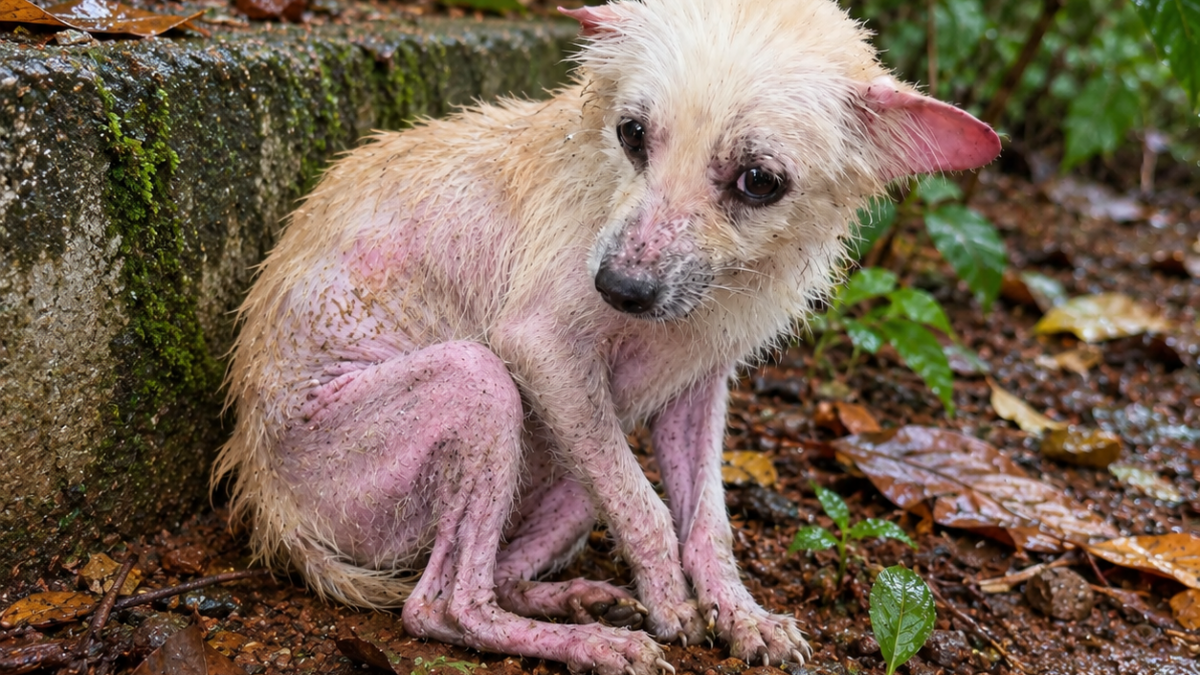
PART 2
The first week was less about recovery than preventing Hope from slipping any farther.
Her medical chart became longer every day.
Severe skin inflammation.
Parasites.
Malnutrition.
Dehydration.
Muscle wasting.
Spinal deformity.
Pelvic damage.
Hernia.
Possible complications from repeated pregnancies.
Her bloodwork showed the kind of exhaustion we could already see in her eyes.
The veterinarian, Dr. Morgan, leaned against the counter after reviewing everything.
“I need you to prepare for a slow recovery.”
“How slow?”
“Months.”
“I have months.”
He studied me.
“You may also have permanent problems.”
I looked through the treatment-room window.
Hope was lying on a blanket, head pressed against the corner of the kennel.
“What kind?”
“Her spine isn’t going to suddenly straighten.”
“I know.”
“Her pelvis may always affect the way she walks.”
“Okay.”
“She may develop chronic pain.”
“We manage it.”
He nodded.
“And psychologically?”
That was the question neither of us could answer.
Four years.
Hope had been alive for approximately four years, and almost every behavioral clue suggested that human contact had rarely meant anything good.
She didn’t understand doors.
She didn’t understand leashes.
She didn’t understand toys.
She didn’t understand affection.
Even open space frightened her.
The first time we carried her into the clinic’s small enclosed yard, I expected her to sniff around.
Instead, she froze.
Ten feet of grass stretched in front of her.
Nothing blocked the way.
No cage bars.
No walls.
Hope stared at it.
I placed her carefully down.
Her front paws touched the grass.
She jerked them back.
I swallowed.
“Have you never felt grass?”
Hope looked at me.
I wish I could say she immediately stepped forward.
She didn’t.
She remained exactly where I put her.
So I sat beside her.
The veterinary technician, Carla, came outside.
“How long has she been there?”
“Eight minutes.”
“Moved?”
“Her nose.”
Carla sat on the other side.
We waited.
Then Hope extended one paw.
Grass touched it.
She pulled back.
Tried again.
This time she left the paw down.
“That’s it,” I whispered.
Another paw.
Then one awkward step.
Her body swayed.
I reached instinctively to steady her.
Hope flinched and almost collapsed.
I pulled my hand away immediately.
“Sorry.”
My chest hurt.
Even help frightened her.
But she took another step.
Then another.
Four steps into grass.
Hope stopped.
Her head lowered.
She sniffed.
Carla started crying.
“Don’t,” I whispered.
“You’re crying too.”
“I know.”
Hope took a fifth step.
Five steps.
That was all.
Then her legs gave out.
We carried her inside.
That night I wrote the number in a notebook.
**Five steps.**
I didn’t know then that I would keep that notebook for years.
—
Hope came home with me after she was medically stable enough to leave the clinic.
Temporary foster.
That was the plan.
People who rescue animals lie to themselves with those two words more than they realize.
Temporary foster.
I prepared the quietest room in my house.
Low bed.
Washable blankets.
Food.
Water.
No clutter.
No loud television.
No other animals allowed inside at first.
Hope entered in my arms.
When I set her down, she immediately moved into the corner.
Not onto the bed.
The corner.
I sat on the opposite side of the room.
“That’s yours.”
She watched me.
“The bed.”
No reaction.
“You’re allowed to use it.”
Nothing.
I left the room.
Ten minutes later, I checked through the doorway.
Still corner.
An hour.
Still corner.
That evening I placed one blanket on the floor beside her.
Hope sniffed it.
Nothing else.
At two in the morning, I woke and checked again.
She was asleep.
Not on the bed.
On half the blanket.
Progress.
The next morning, the entire blanket.
Three days later, one front paw on the bed.
A week later, Hope climbed onto it voluntarily.
I took a photograph.
It looked completely ordinary.
A nearly hairless dog lying on a soft bed.
To me it was a victory.
She had chosen comfort.
Maybe for the first time in her life.
—
Food became another strange battle.
Hope was hungry.
That part was obvious.
But she didn’t eat the way most hungry rescue dogs do.
She didn’t inhale meals.
She approached them cautiously.
One bite.
Stop.
Look around.
Another bite.
Freeze at a sound.
It reminded me of an animal that had learned eating could be interrupted at any moment.
I began sitting nearby without looking directly at her.
“Take your time.”
She ate.
Stopped.
I pretended to read.
A few bites.
The refrigerator clicked on.
Hope dropped flat.
I put the book down.
“Just the fridge.”
Her breathing was fast.
“No one is coming.”
I hated saying things I couldn’t prove to her in a language she understood.
But repetition became our language.
“No one is coming.”
Door closes.
“No one is coming.”
Dish drops.
“You’re okay.”
Footsteps.
“Still okay.”
Eventually, she started believing the room would remain safe after noises.
That seemed simple.
It was not.
Hope had spent years learning the opposite.
—
The investigation started because of the cage.
Or rather, what was left of it.
The area where Hope had been discovered was remote but not untouched.
The bushes bordered an access road near several rural properties.
When volunteers returned to search for clues, they found pieces of dirty bedding, broken plastic crates, old feed bags, and sections of wire fencing dumped farther into the brush.
Then one volunteer found a collar.
Not Hope’s.
Small.
Pink.
Filthy.
That changed everything.
We called county animal welfare investigators.
An officer named Martinez came out.
He photographed the area.
“You think more dogs were dumped here?”
“I don’t know.”
He studied the wire panels.
“Could be trash.”
“Could be.”
We both knew it might not be.
Hope had evidence of repeated breeding.
That did not prove where she came from.
But it gave investigators a reason to look closer.
A week later, another dog was found less than three miles away.
Female.
Small breed.
Clearly overbred.
Poor condition.
Then a third report came in.
The pattern got attention.
I remember standing in my kitchen while Martinez called.
“We may have something.”
“What?”
“Someone recognized Hope.”
My hand tightened around the phone.
“Who?”
“A former employee of a breeding operation.”
Everything in me went still.
“Are they sure?”
“They’re not certain.”
I hated that word.
But investigators were right to be careful.
“What do they remember?”
“A female dog kept in an enclosure. Similar appearance. Similar spinal posture.”
Hope lay across the room.
Still thin.
Fur just beginning to return.
I lowered my voice.
“Can they identify the owner?”
“Yes.”
My anger arrived before any facts did.
I forced it down.
“What happens next?”
“We investigate.”
“That’s it?”
“For now.”
I hated procedure when I was emotional.
Later, I learned to respect it.
Anger wants immediate justice.
Real cases require evidence.
—
The suspected property sat thirty minutes away.
You couldn’t see much from the road.
Tall fencing.
Metal sheds.
A farmhouse.
Dogs barking somewhere behind everything.
Neighbors described puppies being sold frequently.
Cash sales.
Online advertisements that disappeared quickly.
People coming and going.
Nothing automatically illegal.
Breeding dogs itself was not proof of cruelty.
Then investigators obtained enough information for an inspection.
I was not part of the first entry.
I was waiting at the clinic with Hope when Martinez called.
His first sentence made my stomach drop.
“You were right to push.”
“What did you find?”
He paused.
“Dogs.”
“How many?”
“Twenty-three so far.”
I closed my eyes.
“What condition?”
“Mixed.”
That word terrified me.
“Some okay. Some not.”
“And the cages?”
Another pause.
“Small.”
I looked at Hope.
Her back curved beneath the blanket.
“How small?”
“Some barely larger than the dogs.”
My hand started shaking.
“Females?”
“Yes.”
“Breeding?”
“Yes.”
I sat down.
“Is there another Hope?”
Martinez breathed out.
“There are several.”
That was when revenge stopped being abstract.
Before that moment, I imagined consequences for whoever had hurt Hope.
After that call, I wanted only one thing.
Get the others out.
—
The seizure took hours.
Veterinary teams arrived.
Transport vans.
County officers.
Rescue volunteers.
The property owner argued.
Claimed the dogs were valuable breeding stock.
Claimed the conditions were temporary.
Claimed inspectors were exaggerating.
Photos told another story.
Females with overgrown nails.
Pressure sores.
Untreated dental disease.
Skin infections.
Some dogs so poorly socialized they flattened themselves against cage floors when doors opened.
A few were healthier and clearly received better treatment.
Others looked like earlier versions of Hope.
One small cream-colored female had legs so weak she couldn’t stand properly.
A volunteer sent me a photograph.
I couldn’t look at it for long.
“Bring her to Morgan.”
They did.
Her name became Lily.
Another was called Fern.
Another June.
Names.
That mattered to me.
Inventory becomes harder to ignore when it has names.
The breeder’s records were confiscated.
That was where investigators found the first strong connection.
A female listed only as:
**B-17. Brown. Producing female.**
Approximate age matched Hope.
Physical description matched.
The notes showed repeated litters.
Then, six months before Hope was found, a line:
**Poor structure. Hernia. Remove.**
Remove.
I read that word three times.
Not treat.
Not retire.
Not rehome.
Remove.
Martinez showed me the photocopy.
“We still have to prove B-17 is Hope.”
“How?”
“Old photos if we find them. Veterinary records. Microchip if any. Employee identification.”
Hope had no chip.
Of course.
A former worker eventually identified photographs.
“She was B-17.”
“Did she have a name?”
He looked ashamed.
“No.”
“What happened to her?”
“I don’t know exactly.”
“Did dogs disappear?”
“Yes.”
“How?”
He looked down.
“Sometimes they were sold cheap.”
“Sometimes?”
“Taken away.”
“By who?”
“The owner.”
“To where?”
“I didn’t ask.”
I hated him for that answer for about ten seconds.
Then I saw his face.
Shame.
Fear.
Maybe guilt.
Not the same as innocence.
But useful.
“Why are you talking now?”
He looked at the seized dogs.
“Because I should’ve before.”
That answer wasn’t enough to erase anything.
But it mattered.
He testified later.
—
Hope knew nothing about the case.
That was one of the strange comforts.
She didn’t know someone had called her B-17.
She didn’t know records described her pregnancies.
She didn’t know photographs of her old cage existed.
She didn’t know the man who had used her body was facing charges.
Hope cared about breakfast.
Quiet rooms.
Whether I was sitting close enough.
Eventually, toys.
Justice belonged to us.
Healing belonged to her.
And healing was moving slowly.
Three weeks after rescue, Hope stood without support for longer than a few seconds.
I was in the kitchen preparing medication when I heard Carla shout from the living room.
“COME HERE!”
I ran.
Hope was standing.
All four legs beneath her.
Shaking.
But standing.
“Oh my God.”
I stopped several feet away because sudden movement could frighten her.
Hope looked at me.
Her tail moved.
Not much.
A tiny movement.
Then another.
“Stay there.”
I laughed through tears.
“Don’t do anything.”
Carla laughed.
“She is literally just standing.”
“I know.”
“She’s allowed to move.”
“No.”
Hope took a step.
We both screamed.
Too loudly.
Hope startled and sat down.
Carla covered her face.
“We ruined it.”
I crouched.
“Sorry.”
Hope looked at us like we were idiots.
Probably correct.
That evening, I wrote:
**Day 21: stood alone. Three steps. Tail wag.**
The next week:
**Nine steps.**
Then:
**Walked across living room.**
Then:
**Went outside voluntarily.**
Progress became measurable.
—
Her fur returned in patches.
First soft fuzz.
Then a thicker brown coat.
The bright inflammation faded.
Ticks gone.
Nails trimmed gradually because cutting too much at once would have hurt.
Her body still looked unusual.
That never fully changed.
Her spine remained curved.
Her gait remained awkward.
But awkward movement is still movement.
Hope began following me.
At first from room to room.
Then into the yard.
One afternoon I turned and almost tripped over her.
“Where did you come from?”
Tail wag.
That tail became my favorite thing.
For weeks it had stayed tucked.
Now it moved.
At first cautiously.
Then with confidence.
Hope discovered the refrigerator meant food.
The leash meant outside.
The couch meant softness.
My shoes meant I might leave.
She hated the last one.
Separation training became another project.
I would step outside for thirty seconds.
Return.
Hope shaking.
One minute.
Return.
Two minutes.
Slowly she learned:
People leave.
People come back.
Imagine needing to learn that at four years old.
—
Lily, one of the females seized from the breeder, became Hope’s first dog friend.
We didn’t know how Hope would react to another dog.
Her entire known life may have involved dogs nearby but no real social freedom.
The introduction happened through a fence.
Lily approached.
Hope froze.
Lily sniffed.
Tail wag.
Hope sniffed back.
Then looked at me.
“It’s okay.”
Lily play-bowed.
Hope had absolutely no idea what that meant.
Lily bounced sideways.
Hope stepped back.
Lily bounced again.
Hope watched.
Then, impossibly, Hope’s tail moved.
Lily ran in a small circle.
Hope took two faster steps after her.
Her body couldn’t run yet.
But her mind wanted to.
We ended the session early.
No overdoing it.
The next day Hope waited at the gate.
For Lily.
That was the first time I saw Hope anticipate something joyful.
Not food.
Not safety.
Fun.
Weeks later, the two of them lay in the grass together.
Hope rested her head across Lily’s back.
I took a photograph.
Two former breeding dogs.
No cages.
Nothing expected from their bodies.
Just sleeping.
That image became more important to me than any courtroom photograph later.
—
The prosecution moved forward.
Multiple cruelty counts.
Licensing violations.
Improper veterinary care.
Unsanitary confinement.
Records documenting repeated breeding despite known medical problems.
The breeder’s attorney argued that the dogs were livestock-like business assets being properly managed.
That phrase made me furious.
Business assets.
I went home that evening and found Hope asleep upside down on her bed.
Her curved spine made the position slightly strange.
Her mouth was open.
One paw twitching in a dream.
Business asset.
I sat beside her.
Hope woke.
Tail wag.
“You know what they called you?”
She stretched.
“Never mind.”
I rubbed her chest.
“You don’t need to know.”
The best revenge was already happening.
Hope was becoming useless to the world that exploited her.
Useless for breeding.
Useless for profit.
Perfect for living.
—
The breeder requested return of several seized dogs before trial.
That terrified everybody.
Temporary custody hearings can determine where animals remain while cases drag on.
Our evidence mattered.
Veterinary reports.
Photographs.
Employee statements.
Breeding records.
Condition scores.
Cage measurements.
Hope’s structural abnormalities.
Dr. Morgan testified about her.
Not emotionally.
Clinically.
That made it stronger.
“Scoliosis and pelvic deformation are consistent with prolonged abnormal confinement and developmental stress.”
The defense challenged him.
“Can you prove the cage caused every condition?”
“No.”
“Can you prove the dog was never exercised?”
“No.”
“Then your conclusion is speculation.”
Dr. Morgan remained calm.
“My conclusion is that the total clinical presentation is highly consistent with chronic confinement, inadequate care, and repeated reproductive stress.”
The attorney changed direction.
Hope’s records were shown.
B-17.
Litters.
Dates.
The note:
**Poor structure. Hernia. Remove.**
The former employee testified.
The breeder stared at him the entire time.
I watched the witness’s hands shake.
Still he continued.
He described females kept primarily for breeding.
Dogs rotated based on reproductive cycles.
Medical issues ignored unless they interfered with producing puppies.
“What did ‘remove’ mean?” the prosecutor asked.
The witness swallowed.
“It meant get them off the property.”
“How?”
“Different ways.”
“Were they surrendered to shelters?”
“Not usually.”
“Rehomed?”
“Sometimes.”
“Abandoned?”
The defense objected.
The judge required a narrower question.
“Did you personally see dogs transported away and later learn they had not been sold or formally rehomed?”
“Yes.”
That was enough for the custody issue.
The dogs stayed in rescue care.
I left the courthouse and sat in my car.
Not cheering.
Not celebrating.
Just breathing.
Hope remained safe.
Lily remained safe.
Fern.
June.
All of them.
Next useful thing.
—
Hope ran for the first time during month four.
Calling it running may be generous.
Her gait was uneven.
Back legs moved awkwardly.
Her spine curved.
But she ran.
Lily started it.
They were in the yard together.
Lily spotted a butterfly.
Charged after it.
Hope watched.
Then followed.
Two steps.
Three.
Faster.
I stood up.
“Hope?”
She accelerated.
Maybe fifteen feet.
Then twenty.
Her ears lifted.
Mouth open.
Tail high.
She looked ridiculous.
She looked beautiful.
I started crying before she even reached the other side.
Hope turned.
Ran back.
Carla was filming.
Thank God.
Because the entire thing lasted less than thirty seconds.
Afterward Hope collapsed happily into the grass.
I sat beside her.
“You ran.”
She panted.
“You actually ran.”
Lily dropped nearby.
Hope rolled slightly onto her side.
I thought about the measurements of the cage investigators had documented.
Barely enough room to turn comfortably.
Four years.
Then twenty feet in open grass.
I hated the people responsible.
But that day, hatred felt small compared with what Hope was doing.
She was using space.
Taking it.
Claiming it.
The yard belonged to her body now.
—
Her first trip to the ocean happened almost a year after rescue.
We had waited until her health was stable and travel would not overtax her.
I expected the waves to frighten her.
They did.
At first.
Hope stood on the sand staring.
A wave rolled in.
She backed up immediately.
Lily, who had been adopted by my friend Carla by then, ran straight into the water like an idiot.
Hope watched.
Another wave.
She stepped forward.
Water reached her paws.
Hope jumped backward.
I laughed.
“Cold?”
She stared at the moving water.
Nothing in her previous world moved like that.
Cages are static.
Walls stay.
Bars stay.
The ocean refuses stillness.
Hope tried again.
One wave.
Two.
Then she began walking along the edge.
Her paws sank into wet sand.
Wind moved through her full coat.
She lifted her face.
That moment has never left me.
The dog who had spent four years breathing the air of a cramped cage was standing before an ocean with no visible end.
I sat in the sand.
Hope came beside me.
She looked at the horizon.
I know dogs do not assign symbolism the way humans do.
Hope was probably smelling dead fish.
But I saw something else.
The opposite of a cage.
Space so large it could not be measured.
I whispered:
“That’s yours too.”
Hope wagged.
Good enough.
—
The criminal case ended more than a year after Hope’s rescue.
The breeder accepted a plea agreement after additional evidence was presented.
Animal ownership restrictions.
Fines.
Probation.
Forfeiture of the seized dogs.
Closure of the breeding operation under its existing structure.
Some people were furious the punishment wasn’t harsher.
I understood.
Part of me wanted years of prison.
I wanted cages.
I wanted the person responsible to understand confinement.
That was anger speaking.
Then I visited the rescue network the next morning.
Lily had a family.
Fern had been adopted.
June had learned to walk on leash.
A senior male from the property had dental surgery and could finally eat without pain.
Another female was sleeping beside a retired teacher every night.
Twenty-three dogs.
Twenty-three lives no longer producing money for the person who had kept them there.
The operation was gone.
That mattered more than my fantasy.
The breeder could not get Hope back.
Could not breed Lily again.
Could not replace them easily under the same legal circumstances.
That was accountability.
Imperfect.
But real.
The former employee who testified later volunteered with a rescue group.
I saw him once.
He recognized Hope.
Stopped.
She didn’t recognize him.
Or didn’t care.
He stood several feet away.
“That’s her?”
“Yes.”
“She looks…”
He struggled.
“Different.”
Hope sniffed the grass.
“She is.”
He looked ashamed.
“I should’ve done something sooner.”
“Yes.”
I did not soften it.
He nodded.
“I know.”
Then he asked:
“Can I touch her?”
I looked at Hope.
She was relaxed.
I crouched beside her.
He approached slowly.
Hope sniffed his hand.
Allowed one gentle touch.
Then walked away.
He started crying.
“I’m sorry.”
Hope kept walking.
That was almost poetic.
She didn’t need his apology.
Humans did.
Hope had somewhere else to be.
—
I officially adopted her after fourteen months.
Everyone had been making fun of me for eleven.
“You’re fostering,” Carla would say.
“Yes.”
“Hope sleeps in your bedroom.”
“Medical monitoring.”
“She has a personalized orthopedic bed.”
“Medical.”
“She has six sweaters.”
“Skin protection.”
“One says ‘Mama’s Girl.’”
“Therapeutic.”
Carla laughed.
“You’re pathetic.”
Probably.
The adoption paperwork asked for the animal’s name.
I wrote:
**Hope.**
Breed:
Mixed.
Age:
Approximately five.
Color:
Brown.
Then came a box for identifying marks.
I stared at it.
I could have written:
Curved spine.
Pelvic deformity.
Scars.
Instead I wrote:
**Small white patch on chest.**
Because for once, her injuries did not need to be her main description.
I signed.
Hope became mine legally.
In reality, I think I had belonged to her for months.
—
Living with Hope taught me that trauma recovery is not a straight climb toward happiness.
She improved.
Then regressed.
Thunderstorms brought back shaking.
Crates were impossible.
Even large open crates.
The sight of metal bars caused panic.
We never forced it.
Veterinary hospitalization required alternatives whenever possible.
If she had to be kenneled, staff covered parts of the enclosure and kept the door open until absolutely necessary.
Hope hated being confined more than anything.
Understandably.
One Christmas, someone gave her a decorative puppy playpen.
I returned it.
No explanation.
Some scars deserve accommodation.
She also feared pregnancy-related smells at the clinic.
That took us longer to identify.
When nursing dogs came in, Hope sometimes became restless.
Maybe scent memory.
Maybe coincidence.
We did not pretend to know.
We simply watched.
Adjusted.
Listened.
That was enough.
The first time Hope chose to sleep in another room without me, I felt rejected.
Then I realized what it meant.
Security.
She no longer needed visual proof that I was still there.
I stood in the doorway.
Hope was asleep on the living-room couch.
Belly exposed.
Head hanging over one edge.
I whispered:
“Look at you.”
She didn’t wake.
That was even better.
—
Years passed.
Hope’s body aged faster than I wanted.
Chronic orthopedic damage caught up with her.
Pain medication.
Physical therapy.
Hydrotherapy.
Ramps.
Rugs.
Massage.
The world adapted to her.
That felt right after four years when she had been forced to adapt herself to a cage.
She still ran sometimes.
Not far.
A few ridiculous steps after Lily during visits.
Then she would stop.
Pant.
Look proud.
She loved car rides.
Hated motorcycles.
Loved scrambled eggs.
Hated carrots unless hidden inside chicken.
Loved children who sat quietly.
Distrusted men wearing heavy boots.
Loved the ocean.
Every year we returned.
The second trip, she entered the water willingly.
The third, she barked at waves.
The fourth, she simply lay on the sand.
Hope had become wonderfully demanding.
The dog who once made herself invisible learned to stand in front of the refrigerator and stare until somebody responded.
She learned to paw my leg when petting stopped.
She learned to bark when delivery drivers approached.
The first time she barked loudly, I applauded.
Hope looked confused.
“You have opinions now.”
Tail wag.
“Excellent.”
A life belongs to you when you feel entitled to complain about it.
Hope complained constantly by the end.
I loved every second.
—
One afternoon, a woman contacted the rescue after seeing Hope’s story.
She said she had bought a puppy from the breeder years earlier.
My stomach tightened.
“How old is the dog?”
“Six.”
“What kind?”
She described him.
Then she sent a photograph.
Brown coat.
White chest patch.
Something in his face looked familiar.
Not proof.
But possible.
She had paperwork.
Breeding dates.
Parent identification codes.
B-17 appeared on the dam line.
I sat down.
Hope may have been his mother.
We could not prove beyond the breeder’s records that the identification corresponded perfectly.
But it was strong enough to make the possibility real.
The dog’s name was Winston.
Healthy.
Loved.
Sleeping on couches since puppyhood.
His owner cried when I explained Hope’s history.
“I had no idea.”
“Most buyers don’t.”
“I saw the mother once.”
My heart stopped.
“What?”
“When I picked Winston up.”
“Do you remember her?”
“She was behind a barrier.”
“What condition?”
The woman closed her eyes.
“I thought she looked thin.”
I waited.
“They said nursing puppies did that.”
“Did you notice her back?”
“Yes.”
She started crying.
“They said she was born that way.”
Maybe partly true.
Maybe not.
“I’m sorry.”
I shook my head.
“You didn’t do this.”
“But I paid them.”
That guilt was complicated.
Demand sustains bad breeding operations.
But many buyers are deliberately kept ignorant.
“What can I do?”
“Now?”
“Yes.”
“Take care of Winston.”
She looked surprised.
“And if you ever buy from a breeder again, ask to see everything.”
“Everything?”
“Where dogs live. Medical records. Parents. Conditions. Retirement plans.”
She nodded.
Then:
“Would Hope want to meet him?”
I looked across the room.
Hope was sleeping.
“I don’t know.”
We arranged a careful meeting.
No expectation.
Winston entered the yard.
Hope looked up.
He approached politely.
Sniffed.
Hope sniffed back.
Nothing dramatic happened.
No cinematic maternal recognition.
No instant reunion.
Good.
Real life rarely performs for us.
Then Winston lay down near her.
Hope stayed.
After several minutes, she rested her chin on the grass.
He rested beside her.
The woman cried.
I didn’t tell her to stop.
Maybe genetics meant something.
Maybe they were simply two friendly dogs.
It didn’t matter.
For an hour, Hope existed beside a dog who might have been one of the puppies taken from her.
No cage between them.
Nobody selling anyone.
That was enough.
—
Hope became a symbol in our rescue community despite my resistance.
People wanted to call her a miracle.
I preferred survivor.
Miracles sound effortless.
Hope’s recovery was work.
Veterinarians.
Medication.
Physical therapy.
Behavioral rehabilitation.
Money.
Time.
Relapses.
Patience.
Her body did not magically return to normal.
It adapted.
We adapted around it.
That distinction matters.
Survival is not always becoming what you would have been without trauma.
Sometimes survival is building a good life around what trauma changed.
Hope never became physically perfect.
She became happy.
That is more important.
—
When she was around eight, Hope developed worsening weakness in one back leg.
MRI.
Consultations.
More medication.
The specialists believed her spinal history was contributing to nerve compression.
Surgery was discussed.
Risky.
Expensive.
Uncertain benefit.
We chose conservative management first.
Hydrotherapy helped.
I would stand beside the rehabilitation pool while Hope paddled with tremendous seriousness.
She hated getting into the water.
Loved being praised afterward.
One therapist joked:
“She works entirely for chicken.”
“Don’t we all?”
Hope eventually learned the ramp.
Water supported her twisted body in ways land couldn’t.
Her legs moved more freely.
I watched her and thought about the cage again.
How confinement had helped damage those muscles.
Now water carried them.
Life occasionally provides symmetry if you look too hard.
—
On the sixth anniversary of Hope’s rescue, I received an envelope.
No return address.
Inside was a photocopy of an old photograph.
Hope.
I knew immediately.
Younger.
More fur.
Inside a wire enclosure.
Her body already beginning to curve.
Beside the photo was a note.
**I worked there. I took this because I knew it was wrong and then did nothing. I am sorry.**
No name.
I stared at the image for a long time.
Then I put it away.
I never showed Hope.
Obviously.
I almost posted it publicly.
Then stopped.
Why?
What would it add?
We already knew.
Hope’s life did not need another picture of suffering to prove the suffering happened.
I kept it in the case archive.
Evidence of the past.
Not décor.
In my house, the photographs were different.
Hope asleep upside down.
Hope at the ocean.
Hope running badly.
Hope beside Lily.
Hope in a Christmas sweater looking furious.
Hope with sand on her nose.
Hope smiling.
People think dogs don’t smile.
Call it relaxed facial muscles if you prefer.
I know what I saw.
—
The last legal connection to the breeder came years later.
He attempted to register a new breeding business through a relative.
Authorities noticed.
Ownership restrictions and prior case records triggered scrutiny.
The application failed.
When Martinez told me, I felt something I hadn’t expected.
Peace.
Not excitement.
No desire to confront anyone.
Just peace.
The system remembered.
That mattered.
People often ask whether justice happened for Hope.
Yes.
And no.
Nothing gives her four years back.
No fine straightens her spine.
No conviction returns the litters taken from her.
No ownership ban erases nights inside the cage.
Justice cannot reverse time.
But it can change the future.
Dogs were removed.
An operation closed.
Restrictions stayed.
Another business attempt failed.
Hope lived.
That is what justice looked like in our case.
Imperfect.
Forward-facing.
Real.
—
Hope eventually became an old dog.
Older than the four-year-old body I first carried from the bushes ever seemed likely to become.
Her face grayed.
Hearing weakened.
Vision softened.
Her gait became slower.
The hernia had been addressed years earlier.
Her skin remained healthy.
Her coat was thick enough that strangers sometimes had no idea what she had once looked like.
That gave me strange satisfaction.
At the beach one year, a woman stopped us.
“She’s beautiful.”
I looked down.
Hope was sniffing seaweed.
“Yes.”
“What kind is she?”
“Rescued.”
The woman laughed.
“No, breed.”
“I know.”
I smiled.
“We’re not sure.”
She scratched Hope’s ears.
Hope leaned into her.
“She’s very friendly.”
“Yes.”
That sentence almost made me cry.
Friendly.
Not broken.
Not terrified.
Not breeder female.
Not B-17.
Friendly.
Hope had earned the right to be described with ordinary adjectives.
—
The end came slowly.
I wish every rescued animal got endless time.
They don’t.
Hope’s spine deteriorated further.
Walking became difficult.
Then painful.
We increased medication.
Added supportive harnesses.
Reduced distances.
She still wanted outside.
Still wanted food.
Still wanted me.
Quality of life remained good.
Until it didn’t.
That line is harder to identify when you love someone.
One morning, Hope tried standing and couldn’t.
I helped her.
She made it outside.
Did what she needed.
Then looked toward the yard.
Lily had died the year before.
No friend waiting now.
Hope stood alone in the grass.
Her back legs shook.
I supported her with the harness.
She looked up at me.
I knew.
Not that exact day.
But soon.
At the clinic, Dr. Morgan was older too.
He had treated her from the beginning.
He examined Hope slowly.
When he finished, he sat beside me on the floor.
“We’ve reached the part we always hoped would be far away.”
I hated him for saying it beautifully.
“How long?”
“I can’t answer that.”
“Can we change medication?”
“Yes.”
“Therapy?”
“Maybe.”
“Surgery?”
He shook his head.
“Not realistically now.”
I looked at Hope.
She was lying with her head on my shoe.
“Is she suffering?”
“Sometimes.”
That answer broke me.
“Can we control it?”
“For now.”
So we did.
For several more weeks.
Good mornings.
Hard afternoons.
A few trips to the yard.
Scrambled eggs.
One final beach visit.
That mattered.
I drove Hope to the ocean on a warm morning.
Not crowded.
I carried her down the final stretch in a support sling.
When her paws touched sand, she sniffed.
Wind moved across her gray face.
We reached the water slowly.
A small wave came toward us.
Hope stood.
Water touched her feet.
She didn’t step away.
I sat beside her in the wet sand.
“You remember this?”
Probably not the way I did.
She leaned against me.
For almost an hour, we watched the ocean.
No cage.
No walls.
No borders.
I thought about the first outdoor yard.
The terror of five steps.
Now the horizon had no end.
I put my hand against her chest.
“You got so much farther.”
Hope closed her eyes.
I cried into her fur.
Nobody there knew our story.
Good.
It belonged to us for that hour.
—
Her last day came at home.
That was my choice.
The veterinarian agreed.
Hope had spent enough of life in unfamiliar enclosed places.
She would leave from the room she knew.
Her bed.
Her blanket.
Open window.
Morning light.
I cooked scrambled eggs.
Too many.
Hope ate some.
Then refused more.
That told me everything.
The woman who once struggled to eat because she was afraid now refused because her body was tired.
Different reason.
Same quiet motion.
I sat beside her.
“You know what?”
Hope looked at me.
“They called you B-17.”
Her ear moved.
“Terrible name.”
Tail movement.
Barely.
“Then I called you Hope.”
I laughed through tears.
“Also kind of dramatic.”
She breathed slowly.
“But it worked.”
I touched the white patch on her chest.
“The first day, I picked Hope because I needed to believe you had a future.”
My voice broke.
“You did.”
Years.
Ocean.
Grass.
Friends.
Soft beds.
Winston.
Chicken.
Car rides.
Sunlight.
Everything that cage had denied.
“You had a whole life.”
Hope’s head rested against my leg.
When Dr. Morgan arrived, he sat on the floor too.
No white-coat distance.
No steel table.
Just us.
He examined her once more.
Looked at me.
I nodded.
Hope never became afraid.
That mattered more than anything.
I kept my hand beneath her chin.
“You don’t have to stand.”
Her breathing was slow.
“You don’t have to be brave.”
I pressed my forehead against hers.
“You already did enough.”
The medication made her sleepy.
Her body relaxed.
The curved spine softened into the blanket.
For the first time since I had known her, every muscle seemed completely loose.
No trembling.
No curling inward.
No anticipation.
I whispered:
“This life was yours.”
Hope exhaled.
“And nobody gets to take it back.”
Then she was gone.
I stayed on the floor for a long time.
Years earlier, I had found a dog trying to disappear beneath bushes.
Now the entire house felt too large without her.
—
After Hope died, people asked whether I regretted taking such a medically complicated dog.
I found the question strange.
Did treatment cost money?
Yes.
A lot.
Did my schedule change?
Completely.
Did I lose sleep?
Absolutely.
Did I organize vacations around medication?
Yes.
Did I worry more than I should?
Constantly.
Would I do it again?
Before they finished asking.
Yes.
Because rescue is not an investment where you calculate years against dollars.
Hope did not owe me longevity in exchange for care.
She deserved care because she was alive.
Everything after that was a gift.
—
We created a fund in her name.
Not immediately.
At first, I couldn’t stand hearing “Hope” used in meetings.
Eventually, it felt right.
The Hope Project focused on breeding dogs removed from severe confinement and long-term commercial exploitation.
Medical exams.
Spay surgeries.
Orthopedic assessment.
Foster support.
Behavioral rehabilitation.
Especially foster support.
Because dogs raised inside cages often don’t know how to be pets.
People interpret shutdown behavior as calm.
Fear as obedience.
Incontinence as stubbornness.
Freezing as refusal.
We taught foster families differently.
Don’t force the doorway.
Wait.
Don’t drag the leash.
Give space.
Don’t demand eye contact.
Don’t assume silence means comfort.
Five steps can be victory.
That became part of our training.
**Five Steps.**
Hope’s first journey across grass.
We told every foster:
“Measure progress in the animal’s language, not yours.”
That saved adoptions.
Maybe lives.
—
Years after Hope died, a foster volunteer called me.
She had a female dog from another breeding seizure.
The dog refused to leave her crate even with the door open.
“What do I do?”
“How long has she been with you?”
“Two days.”
“Then nothing.”
“What?”
“Sit nearby.”
“She won’t come out.”
“I know.”
“Should I carry her?”
“Not unless medically necessary.”
“How long do I wait?”
“As long as safe.”
She sounded uncertain.
I told her about Hope.
Not the viral version.
The real one.
Corner.
Blanket.
One paw on the bed.
Five steps.
The volunteer called three days later.
“She came out.”
“How far?”
“Maybe four feet.”
I smiled.
“Excellent.”
“That’s all?”
“That is everything.”
Weeks later, the dog slept on her couch.
Another life.
Another cage becoming past tense.
That became Hope’s legacy.
Not being remembered as the dog whose spine twisted inside a cage.
Being the reason we knew how to wait beside the next one.
—
I still have one of Hope’s sweaters.
The one she hated least.
Blue.
Tiny tear near the neck.
I keep it in a drawer.
Not displayed.
Not sacred.
Sometimes memory should be allowed to rest too.
On the wall is my favorite photograph.
Hope at the ocean.
Her body faces the water.
Curved spine visible.
Not hidden.
I could have chosen an angle that made her look physically perfect.
I didn’t.
Because she wasn’t.
She didn’t need to be.
Healing never required erasing what happened.
The scarred body stood in front of an endless horizon.
That is the truth.
Her past existed.
So did freedom.
Both fit in one photograph.
—
People often say Hope forgave humanity.
I don’t know.
Maybe she never thought about humanity as one thing.
She learned particular people.
My hands.
Carla’s voice.
Dr. Morgan’s clinic.
Maddison-like children who sat quietly.
The woman who owned Winston.
She learned these people were safe.
That is enough.
Hope didn’t owe humanity forgiveness.
We owed her better behavior.
That’s different.
The breeder lost control of her future.
The cage lost control of her movement.
Fear gradually lost control of her choices.
In the end, that was the revenge.
Not suffering returned to the person who hurt her.
Hope becoming unreachable to the meaning they had assigned her.
They thought her value lived in reproduction.
She never had another litter.
They thought her body was useful until it broke.
Her broken body became beloved.
They called her B-17.
She became Hope.
They put her inside a cage measured in feet.
She stood before an ocean measured beyond sight.
They discarded her when she stopped serving them.
Years later, strangers donated money in her name to save dogs they would never meet.
That is a defeat cruelty understands even if cruel people do not.
They tried to make her life small.
She made it bigger than theirs.
—
If I close my eyes now, I can still return to the bushes.
Branches scratching my arms.
A faint sound.
The terrible shape of Hope curled into herself.
Red skin.
Missing fur.
Ticks.
Long nails.
Head down.
A dog trying not to be noticed.
I remember crouching.
“I’m not going to hurt you.”
She did not believe me.
Why would she?
Words are cheap when every experience says the opposite.
So I spent years proving that sentence.
Meal after meal.
Walk after walk.
Vet appointment after vet appointment.
Storm after storm.
Leaving and returning.
Touching only when she allowed it.
Waiting when she didn’t.
Love was not the sentence.
Love was proving the sentence true for the rest of her life.
That is what Hope taught me.
Rescue is not saying:
“You’re safe.”
It is building enough safe days that the animal no longer needs to check.
And Hope eventually stopped checking.
She slept through doors closing.
Ignored footsteps.
Demanded breakfast.
Barked at delivery drivers.
Rolled in grass.
Ran badly.
Loved deeply.
Stood at the ocean.
Became old.
An old dog.
Those words still feel miraculous.
The four-year-old dog whose body had already been used almost beyond endurance lived long enough to gray.
Long enough to develop preferences.
Long enough to become demanding.
Long enough for people meeting her to know nothing about B-17 unless we told them.
That is the ending.
Not the cage.
Not the breeder.
Not the court case.
Not even the rescue.
Hope’s real ending was ordinary life.
That is what abused animals are denied first.
Ordinary mornings.
Ordinary naps.
Ordinary walks.
Ordinary irritation when breakfast is late.
Ordinary aging.
Hope got those things back.
And sometimes, when new rescuers ask what Hope’s story means to me, I tell them about her first five steps.
Not the ocean.
Not the conviction.
Not the viral photographs.
Five steps.
A frightened dog in a yard.
One paw on grass.
Then another.
Her body shaking.
Nothing forcing her forward.
No cage forcing her still.
For the first time, the decision belonged to her.
One step.
Then another.
Then another.
Years later she would run.
But freedom began with five uncertain steps.
That is why I named her Hope.
Not because I knew she would survive.
Not because I knew everything would end beautifully.
I named her Hope because we did not know.
Hope exists precisely there.
Between what has happened and what might still happen.
The breeder had already decided her story.
Broken.
Finished.
Remove.
They were wrong.
Hope stood up.
Hope walked.
Hope ran.
Hope saw the ocean.
Hope became family.
Hope became old.
Hope became the name on a fund that keeps opening cages long after hers disappeared.
And every time another breeding dog steps onto grass for the first time, I think of her.
Five steps.
Sometimes that is how an entire life begins again.








