PART 2: They Thr3w Russell From a Moving Car and Left Him Paralyzed—But the Woman Who Found Him Refused to Let That Be His Ending
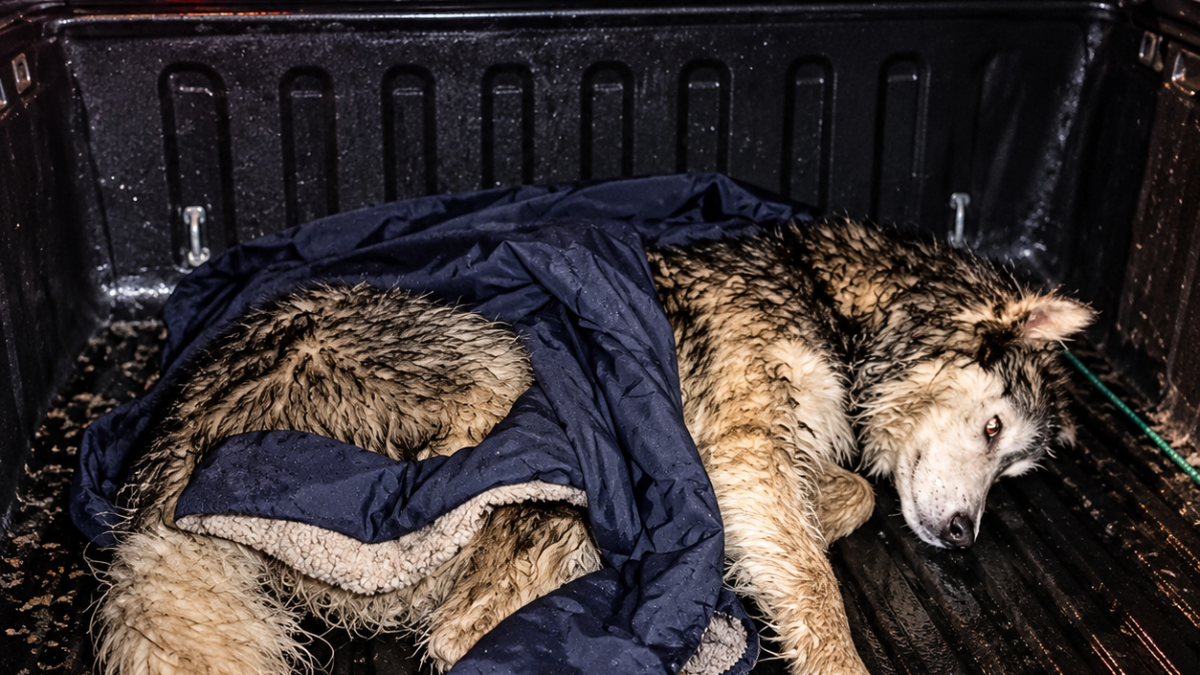
When I found Russell beside the highway, he was lying exactly where witnesses said his owner had thrown him from a speeding car, unable to move his legs, lift his body, or make enough sound for anyone farther than a few feet away to know he was still alive.
The emergency surgeon told me his spine was broken and that even if Russell survived the night, there was a very real chance he would never walk again, but the only other option was to let a young dog who was still looking at me with frightened, conscious eyes lose his chance before we had even tried.
I agreed to the operation before I understood how much it would cost, how many times we would have to start over, or what I would eventually discover about the person who had decided Russell was disposable.
I hadn’t planned to rescue a dog that afternoon.
I was driving home from work when traffic slowed near an access road outside town. Two people were standing in the grass, waving at passing cars. At first I thought there had been an accident.
Then I saw him.
A brown-and-white dog lay several yards from the pavement.
His eyes were open.
Nothing else moved.
I pulled over.
A woman rushed toward me.
“Do you have a phone? We called animal control, but they said it could take a while.”
“What happened?”
Her face tightened.
“The man threw him.”
I stared at her.
“What?”
“From a car.”
Another witness, an older man, pointed down the road.
“Black SUV. Dog came out of the passenger side while they were moving. Rolled twice. Driver slowed down, looked in the mirror, and kept going.”
I crouched beside the dog.
“Hey, buddy.”
His eyes shifted toward me.
That was the only response.
No tail.
No paw.
No attempt to raise his head.
I slid my fingers carefully beneath his gums. Pale.
His breathing was shallow.
When I touched his rear paw, there was no obvious reaction.
My stomach dropped.
“We need a board.”
The older man ran to his truck.
I called the nearest emergency veterinary hospital and told them we were coming with a suspected spinal injury.
The dog never cried while we moved him.
That frightened me more than screaming would have.
I rode in the back of the witness’s truck with one hand beside his face, terrified that every bump in the road was doing more damage.
“Stay with me.”
His eyes moved toward my voice.
“You don’t know me, but stay anyway.”
At the hospital, they took him from my arms and disappeared behind double doors.
Twenty minutes later, a technician came out.
“No chip that we can detect.”
“Is he alive?”
“Yes.”
That was the only good news.
X-rays and advanced imaging showed a spinal fracture with severe compression. There were abrasions across his side consistent with sliding against pavement, bruising around his chest, and swelling near the damaged vertebrae.
Dr. Elena Morris sat across from me.
“Surgery is his best chance.”
“How good a chance?”
She paused.
“Not good.”
My hands tightened around the edge of the chair.
“What happens if we don’t operate?”
“He may remain paralyzed. The swelling could worsen. There are also complications from immobility.”
“Could he die?”
“Yes.”
I looked through the glass at the dog.
“What would you do?”
Dr. Morris didn’t answer immediately.
“I can’t make that decision for you.”
“He isn’t even mine.”
“No.”
But nobody else was there.
No owner calling.
No family rushing through the door.
Just me.
“How much?”
She gave me the estimate.
I stared at the number.
It was more than I had in checking and close to everything I had in savings.
Then a nurse came through the door holding a clear evidence bag.
Inside was a torn piece of blue nylon caught around the dog’s collar.
Attached to it was half of a metal identification tag.
Only one word was still readable.
**RUSSELL.**
I looked through the glass again.
“His name is Russell.”
Dr. Morris nodded.
I signed the surgical authorization.
Hours later, she came back.
Russell had survived.
But when she examined him after anesthesia began wearing off, her face told me the rest before she spoke.
“There’s still no purposeful movement in his hind legs.”
I swallowed.
“What does that mean?”
“It means surgery fixed what we could fix structurally.”
“And?”
She glanced toward Russell’s recovery room.
“Now we wait to find out whether his body can do the rest.”
Then my phone rang.
It was one of the witnesses.
She had remembered something about the black SUV.
Something that might tell us exactly who had thrown Russell onto that road.
PART 2
I stepped into the hallway before answering.
The woman’s name was Karen. She had stayed at the accident scene long enough to give a statement to police, then gone home. I could hear traffic in the background when she called.
“I remembered the plate,” she said.
“You got the whole thing?”
“Not exactly. But I took a picture.”
My hand tightened around the phone.
“You have a picture of the SUV?”
“I thought the driver might stop farther down, so I grabbed my phone. The shot is terrible.”
“Send it.”
The message arrived while we were still speaking.
The photograph was blurry and taken at an angle, but the rear of a black SUV was visible. Four characters on the license plate could be read clearly. The rest were obscured by glare.
More important was the back window.
There was a white decal in the lower corner.
A contractor’s logo.
**MASON RIDGE ROOFING.**
“I know that company,” I said.
“So do I.”
Karen’s voice became quieter.
“My cousin used them last year.”
I forwarded the image to the officer who had taken the witnesses’ statements.
Then I returned to Russell.
He was still heavily medicated.
A band of clipped fur ran along his back where the surgeons had worked. His body seemed too still beneath the blankets.
I pulled a chair close.
“Apparently you have a name.”
His eyes shifted.
“Russell.”
Nothing.
I tried again.
“Russell.”
His right ear moved.
My throat tightened.
“There you are.”
I didn’t know whether he recognized the name or simply the sound of my voice.
At that point, I didn’t care.
For the first twenty-four hours after surgery, Russell’s condition remained unchanged.
He could move his head a little.
His front legs worked.
His rear legs did not.
Dr. Morris performed repeated neurological examinations.
Deep pain sensation was difficult to assess because of medication and swelling.
I learned phrases I never wanted to know.
Spinal cord compression.
Proprioception.
Nociception.
Neurogenic bladder.
Pressure sores.
Assisted range-of-motion exercises.
Every phrase seemed to come with another warning.
“We need to see whether function returns.”
“When?”
“There isn’t a clock.”
“Days?”
“Could be.”
“Weeks?”
“Yes.”
“Months?”
“Possibly.”
“And if it doesn’t?”
Dr. Morris looked at me carefully.
“Then we adapt.”
That was the first time anyone said it like that.
Not fail.
Not give up.
Adapt.
I carried that word home with me.
Except I didn’t really go home.
I went there to shower and change clothes, then came back.
By the third night, the hospital staff had stopped asking whether I was family.
I wasn’t.
Not technically.
But Russell had nobody else.
Police confirmed the roofing company’s SUV belonged to a man named Daniel Harker.
Forty-two years old.
Owner of Mason Ridge Roofing.
The partial plate matched.
So did the vehicle description.
Officer Travis Boone called me on the second afternoon.
“We contacted him.”
I stepped away from Russell’s kennel.
“What did he say?”
“He says the dog jumped.”
I stared at the wall.
“From a moving car?”
“That’s his statement.”
“Why was the passenger door open?”
“He says Russell was loose in the rear cargo area and somehow pushed against the door while he was driving.”
“Was the door broken?”
“Not when officers inspected the vehicle.”
“So he’s lying.”
“Maybe.”
“Two people saw him throw the dog.”
“They saw the dog come out of the vehicle. One says she saw his arm extend toward the dog. The other couldn’t see inside clearly.”
I shut my eyes.
“He owned Russell?”
“That part he initially denied.”
“Initially?”
“Russell’s collar had part of a rabies tag wedged beneath the fabric. Veterinary clinic traced the number.”
My grip tightened around the phone.
“To Harker?”
“Yes.”
Silence.
“He told you Russell wasn’t his?”
“Then changed his story when we mentioned the veterinary record.”
“What story now?”
“That he was transporting Russell to someone else.”
“Who?”
“He hasn’t provided a name.”
I felt anger crawling up my neck.
Boone must have heard it in my breathing.
“Don’t contact him.”
“I wasn’t planning to.”
“I’m serious.”
“So am I.”
“Good.”
I hung up.
Then I did exactly what Officer Boone told me not to do.
Not immediately.
But I searched Daniel Harker’s name.
That was mistake number one.
Mason Ridge Roofing had a public business page.
Family photographs.
Work crews.
Finished roofs.
A fishing trip.
And there, buried nearly two years back, was a photograph of Daniel standing beside a younger, healthy Russell.
Same white chest.
Same brown patch around his left eye.
The caption read:
**Best jobsite supervisor in the business.**
I stared at it until my vision blurred.
He had not been transporting a stranger’s dog.
He had owned Russell.
Apparently for years.
I saved the image and sent it to Officer Boone.
Then I looked at the dog lying beside me.
“What happened?”
Russell couldn’t answer.
The police eventually pieced together part of it through veterinary records and neighbors.
Russell had been adopted by Daniel as a young dog.
He went to worksites.
Rode in the truck.
Slept on the porch.
Then Daniel remarried.
His new wife had two small children.
According to one neighbor, Russell began spending more time outside.
Another said Daniel had complained that Russell was “too much dog” for the house.
There were also reports that Russell had developed occasional accidents indoors after suffering a previous back injury.
Not paralysis.
Just pain.
A former employee remembered Daniel complaining about veterinary bills.
“He said the dog was becoming expensive,” the employee told police.
None of that proved he threw Russell from the SUV.
But it gave the witnesses’ account a motive.
Convenience.
Russell had become difficult.
By the fifth day after surgery, I officially signed foster responsibility through the rescue organization affiliated with the hospital.
Susan, the director, looked at me across her desk.
“You understand this could be months.”
“I know.”
“He may need bladder expression.”
“I know.”
“He may never walk.”
“I know.”
“He could need a wheelchair.”
“I know.”
She leaned back.
“You keep saying that.”
“Because I know.”
“No.”
She looked at me.
“You know the words. You don’t know what it feels like yet.”
That irritated me.
She was also right.
Russell came home eleven days after the first surgery.
I had transformed my living room.
Area rugs over every slick surface.
A large orthopedic bed.
Washable pads.
Baby gates.
A low water bowl.
A support sling.
Medication schedule taped to the refrigerator.
I had watched videos about helping paralyzed dogs urinate.
I had read veterinary rehabilitation papers until midnight.
I had even measured my hallway in case a wheelchair became necessary.
Still, when the technician wheeled Russell to my car, panic hit me.
“What if I hurt him?”
“You won’t.”
“What if I miss something?”
“Call.”
“What if he gets worse?”
“Call.”
“What if—”
Dr. Morris put one hand on my shoulder.
“Take him home.”
So I did.
The first night was awful.
Russell hated being repositioned.
He panted from discomfort.
He couldn’t settle.
At 2:00 a.m., I convinced myself his breathing sounded strange and called the emergency line.
It was fine.
At 3:40, I worried his paws felt cold.
They were fine.
At 5:10, he urinated all over both of us while I was trying to help empty his bladder.
I sat on the kitchen floor in wet pajamas and started laughing.
Russell looked at me.
“You have terrible timing.”
He licked my chin.
That was the first time he did it.
I froze.
Then wrapped both arms around his neck.
“You’re disgusting.”
He licked me again.
For the next three weeks, Russell became part of my house.
I stopped calling him “the foster” because it sounded ridiculous.
He knew where the kitchen was.
He knew the sound of the refrigerator.
He learned my morning alarm meant breakfast.
He learned that my sister, Emily, always brought chicken when she visited.
He learned that my elderly terrier, Benny, hated having his bed invaded.
Russell invaded it anyway.
His back half didn’t work, but his personality did.
That mattered.
The first surgery had not restored movement.
Dr. Morris referred Russell to a veterinary neurologist at the university hospital.
New imaging showed persistent compression from damaged material and scar formation around the injured area.
The neurologist, Dr. Cameron Lee, explained the options.
“We can continue rehabilitation and see what function develops.”
“Or?”
“We can operate again.”
My stomach tightened.
“Is that normal?”
“Not common. But the first surgery was performed under emergency conditions. We now have clearer imaging.”
“What chance does a second operation give him?”
Dr. Lee did not pretend.
“A chance. Not a promise.”
I looked at Russell.
He was lying on the floor chewing one of Benny’s toys.
Benny watched with murderous resentment.
“How dangerous?”
“Any spinal surgery carries risk.”
“Could he be worse?”
“Yes.”
“Could he die?”
“Anesthesia always carries risk, though he’s stronger now.”
I hated every answer.
I went home with pages of information.
That night, Russell dragged himself across the rug using his front legs until he reached my feet.
I had been sitting at the dining table trying to calculate money.
The first surgery had taken most of my savings.
Friends had donated some.
The rescue covered part.
The second surgery would still leave thousands unpaid.
Russell put his chin on my shoe.
“What do you think?”
He sighed.
“Helpful.”
I looked at his legs.
Still.
Then at his face.
Alive.
I scheduled the operation.
The morning of the second surgery, I sat in the parking lot longer than necessary.
I suddenly hated myself.
What if I was putting Russell through another operation because I couldn’t accept him as he was?
That question stayed with me.
Inside, Dr. Lee saw my expression.
“You can change your mind.”
“Would you?”
“If he were my dog?”
“Yes.”
“Why?”
“Because there is still a surgically addressable problem.”
“And if it fails?”
“Then we stop treating walking as the only measure of a good outcome.”
There was that idea again.
Adapt.
I signed.
The second operation lasted nearly four hours.
Dr. Lee removed additional material compressing the spinal cord and stabilized the affected area.
Russell recovered smoothly.
Then we waited.
Day one.
Nothing.
Day two.
Nothing.
Day three.
I held his rear paw.
“Move.”
Nothing.
“I am literally asking for one toe.”
Nothing.
Day five.
No purposeful movement.
Dr. Lee examined him.
The look on his face told me before the words.
“I’m sorry.”
I stared at Russell.
“So it didn’t work.”
“I didn’t say that.”
“He still can’t move.”
“We may need time.”
“How much time?”
“Weeks.”
“You said that after the first one.”
“I know.”
I became angry.
Not because Dr. Lee had lied.
Because nobody could give me certainty.
I wanted a transaction.
Surgery equals walking.
Money equals improvement.
Pain equals reward.
Medicine does not work that way.
Russell came home again.
For another month, we did everything.
Passive range-of-motion exercises.
Supported standing.
Water therapy once the incision healed.
Electrical stimulation.
Massage.
Balance work.
Dr. Lee showed me how to watch for tiny muscle contractions.
I watched constantly.
Too constantly.
I became obsessed.
If Russell’s paw twitched in his sleep, I recorded it.
If a leg tightened during therapy, I called.
If his tail moved, I studied whether it was voluntary.
Finally, our rehabilitation specialist, Jenna, stopped me during a session.
“You have to stop.”
“What?”
“Looking at him like a test result.”
I stared at her.
“I don’t.”
“You do.”
Russell was lying on a padded mat between us.
Jenna sat beside him.
“He’s playing.”
Russell had a rope toy between his front paws.
“He’s eating.”
“Yes.”
“He likes your house.”
“Yes.”
“He annoys Benny.”
“Constantly.”
“He goes outside in the wagon and tries to eat leaves.”
“Yes.”
“Then he has a life right now.”
I looked away.
“I want him to walk.”
“I know.”
“What’s wrong with that?”
“Nothing.”
Her voice softened.
“But if he never does, he shouldn’t spend his whole life feeling like you’re waiting for him to become something else.”
That hurt.
Because I knew she was right.
I drove home crying.
At a red light, Russell was lying on the padded platform in the back seat.
I looked at him in the mirror.
“Apparently I’m being emotionally unhealthy.”
Tail wag.
“Don’t agree with her.”
Another wag.
That night, I put the therapy notebook away.
For the first time in months, I sat on the floor with Russell and did nothing medical.
No stretches.
No toe checks.
No videos.
I gave him a toy.
He destroyed it in nine minutes.
Benny stole the stuffing.
I laughed.
That became a turning point for me.
Not for Russell’s spine.
For us.
I stopped measuring every day by movement.
Then the police called.
They had obtained dash-camera footage from a delivery truck traveling behind Daniel’s SUV.
The truck had been farther away than the witnesses, but the angle was better.
Officer Boone asked me to come to the station.
“You sure?”
“No.”
He slid a laptop across the desk.
The video began.
Black SUV.
Russell’s head visible near the passenger window.
The vehicle slowed slightly.
Then the passenger door opened.
At first, all I saw was movement.
Boone replayed it.
Slower.
Daniel’s right arm extended toward Russell.
Russell’s body disappeared through the door.
He hit the pavement shoulder-first.
Rolled.
The SUV continued.
I stopped breathing.
Boone paused the video.
“Claire.”
I stood so fast the chair scraped backward.
“I need a minute.”
I walked into the hallway.
Pressed both hands against the wall.
I had believed the witnesses.
Still, belief and seeing are different.
Russell had not jumped.
He had been pushed.
Thrown.
Officer Boone found me several minutes later.
“He’s being arrested.”
I looked at him.
“For what?”
“Animal cruelty charges. Abandonment. Additional charges the prosecutor approves based on the evidence.”
“Does he know?”
“Not yet.”
I thought revenge would feel like satisfaction.
It didn’t.
I felt sick.
“Why?”
Boone understood the question.
“We may know more after interview.”
Daniel was arrested the next morning.
Local news covered it.
The business page disappeared.
His attorney issued a statement saying the video was misleading and that Daniel had been attempting to restrain Russell after the dog became dangerously agitated inside the vehicle.
Then investigators found text messages.
Daniel had sent one to his brother less than an hour before the incident.
**I can’t deal with this dog anymore.**
His brother replied:
**Take him to the shelter.**
Daniel:
**They’ll ask questions about his back.**
Brother:
**Then tell them.**
Daniel:
**Forget it. I’ll handle it.**
Another message from two days earlier:
**Vet wants another $900 just to diagnose him. I’m done.**
Done.
The word stayed with me.
Russell had become a financial problem.
A medical problem.
A dog who needed more than Daniel wanted to give.
So he “handled it.”
I went home after reading the messages and sat beside Russell.
He was asleep.
I looked at his motionless legs.
“You know something?”
His eyes opened.
“You were never the problem.”
His tail moved.
I kissed his forehead.
“The wrong person just decided you were.”
The criminal case moved slowly.
Russell’s medical records became evidence.
Dr. Morris documented his injuries.
The surgeon documented the spinal fracture.
The witnesses testified before the prosecutor.
The dashcam footage was preserved.
Daniel’s attorney challenged everything.
Maybe Russell was already injured before the fall.
Maybe Daniel’s movement was misinterpreted.
Maybe the door opened accidentally.
Maybe the dog lunged.
Maybe.
Maybe.
Maybe.
Then Daniel made his worst mistake.
He called me.
I answered because I didn’t recognize the number.
“Claire?”
The voice was male.
“Who is this?”
“You have my dog.”
My entire body went still.
“Daniel?”
“Russell belongs to me.”
I nearly laughed.
“You threw him out of a car.”
“That’s not what happened.”
“I’ve seen the video.”
“You saw what police wanted you to see.”
“Do not call me again.”
“You think you saved him?”
I started to hang up.
Then he said:
“You’re making money off my dog.”
I stopped.
“What?”
“Fundraisers. Posts. Donations.”
“The money pays his veterinary bills.”
“Those bills are your choice.”
My hand tightened around the phone.
“Your dog’s spine was broken.”
“He had back problems already.”
“So you threw him?”
“I didn’t throw him.”
“Then tell it to the court.”
His voice dropped.
“You don’t know the whole story.”
“You’re right.”
I looked at Russell across the room.
“He’s alive, so I have time to learn it.”
I hung up.
Then immediately called Officer Boone.
The call became part of the case.
Daniel’s bail conditions were modified to prohibit contact with me and the rescue.
That should have ended the harassment.
Instead, anonymous comments began appearing on our rescue page.
**Scammers.**
**Dog was already crippled.**
**They’re exploiting him for money.**
One account posted my home address.
That crossed a line.
Police became involved.
The account was eventually connected not directly to Daniel, but to one of his employees.
The roofing company fired the employee publicly.
Then two other employees quit.
One contacted police.
He had information.
Daniel had talked about Russell before the incident.
Complained about the dog’s medical issues.
Complained that his wife wanted Russell gone.
According to the employee, Daniel once said:
**If he can’t walk right, what good is he?**
That sentence almost broke me.
Russell couldn’t walk at all now.
And I had never known a dog with more purpose.
He got me out of bed.
He made my sister visit more often.
He gave Benny someone to hate with passion.
He made strangers donate wheelchairs to dogs they would never meet.
He made children stop at rehabilitation events and ask why his legs didn’t work.
He taught me patience against my will.
What good was he?
Daniel had asked the wrong question.
The right one was why a life had to prove usefulness before deserving care.
Several months after the second surgery, Dr. Lee ordered new imaging.
Russell’s spine was stable.
The damaged area had healed structurally.
Neurological function remained poor.
Then Dr. Lee pointed at one image.
“There’s another problem.”
My stomach dropped.
“What?”
“Scar tissue and residual compression lower than we expected.”
I stared at him.
“No.”
“Claire—”
“No more surgery.”
He waited.
“I said no.”
“That is a completely reasonable choice.”
I expected him to argue.
He didn’t.
That confused me.
“Then why are you showing me?”
“Because you asked what options remain.”
“What’s the chance?”
“Small.”
“How small?”
“I can’t responsibly give you a percentage.”
“Could it help?”
“Yes.”
“Could it do nothing?”
“Yes.”
“Could it hurt him?”
“Yes.”
I put my face in my hands.
Not again.
I went home.
For three days, I said no.
Then I watched Russell during hydrotherapy.
The warm water supported his body while Jenna moved his legs through a walking pattern.
Near the end, his right rear leg pulled forward.
Not reflexively.
Jenna froze.
“Do that again.”
Russell looked at her.
She repositioned him.
The leg moved.
Small.
But different.
She looked at me.
“Call Lee.”
My heart started pounding.
New testing suggested there might still be limited neural pathways functioning below the injury.
Dr. Lee did not promise anything.
He was almost aggressively cautious.
“A third surgery is a major decision.”
“I know.”
“You have already done more than most people could.”
“I know.”
“He can have a good life without walking.”
“I know.”
That mattered.
This time, unlike the first surgery, I truly knew.
Wheelchair dogs can live.
Paralyzed dogs can play.
A life on wheels is still a life.
I no longer needed the surgery to make Russell whole.
He already was.
The question was simply whether another medically reasonable attempt could improve his function without asking too much from him.
I spent a week deciding.
I spoke to three neurologists.
All reviewed his imaging.
Two thought surgery could be justified.
One advised against it.
I appreciated that disagreement.
Real medicine should have uncertainty.
I checked my savings account.
Almost gone.
A small inheritance from my grandmother remained untouched.
I had planned to use it toward a down payment someday.
I stared at the number.
Then at Russell.
“You are absolutely destroying my financial plan.”
Russell chewed Benny’s blanket.
“Very mature.”
I used part of the inheritance.
The rescue raised some money.
The hospital discounted part of the procedure.
And I signed for surgery number three.
The night before, I slept on the floor beside Russell.
Or tried to.
He snored.
At 1:00 a.m., I whispered:
“This is the last one.”
He slept.
“I mean it.”
Nothing.
“We’re not doing surgery four.”
Snore.
“And you don’t have to walk.”
His breathing slowed.
“I finally understand that.”
I put my hand on his chest.
“We’re just taking the chance that’s left.”
The third surgery lasted almost five hours.
I sat in the waiting room with Emily, Susan, Jenna, and Benny’s blanket because somehow I had grabbed it while leaving home.
Emily looked at the blanket.
“Why do you have that?”
“I don’t know.”
“You’re holding dog bedding in a surgical waiting room.”
“Don’t judge me.”
At 4:17 p.m., Dr. Lee appeared.
I stood so fast my knees hurt.
“He’s okay.”
I exhaled.
“The procedure went as planned.”
“And?”
“Claire.”
“I know.”
“No promises.”
“I know.”
“We wait.”
I hated that word.
We waited.
Day one.
Nothing.
Day two.
Nothing.
Day three.
Russell was painful and exhausted.
I began regretting the entire thing.
Day four.
Jenna touched his rear paw.
A contraction.
She looked at me.
“Don’t.”
“What?”
“Don’t get ahead of it.”
Day five.
Another movement.
Day six.
Russell pulled his right rear leg slightly when his paw was placed awkwardly.
Dr. Lee tested again.
Then again.
He became very quiet.
“What?” I asked.
He moved to the other leg.
A smaller response.
“What?”
He looked at me.
“That’s purposeful.”
My eyes filled instantly.
“Say it again.”
“Purposeful movement.”
“Both?”
“Right stronger than left.”
“Does that mean he’ll walk?”
“No.”
Of course not.
I laughed through tears.
Dr. Lee smiled.
“No promises.”
“I know.”
“But this is different from what we saw after the first two procedures.”
I crouched beside Russell.
“Move it.”
Nothing.
Everyone laughed.
“Russell, you have one job.”
Tail wag.
He did not suddenly stand.
That would have made a beautiful story.
It would also have been false.
Recovery came in millimeters.
A rear paw pulling back.
A thigh muscle tightening.
A leg trying to participate during water therapy.
Some days we saw movement.
Some days almost none.
Two months later, Russell could briefly activate both hind legs during supported standing.
He still could not carry his weight.
He still dragged without support.
But his body was talking to itself again.
Faintly.
That was enough to celebrate.
Then Jenna brought out the wheelchair.
I hated it on sight.
Not because wheelchairs are bad.
Because part of me still associated it with failure.
Jenna saw my face.
“We’ve discussed this.”
“I know.”
“It’s freedom.”
“I know.”
“You’re doing the face.”
“What face?”
“The ‘if I use a wheelchair I’m giving up on walking’ face.”
I looked away.
She crouched beside Russell.
“The chair isn’t a surrender.”
I knew that intellectually.
Emotionally, I needed proof.
We fitted Russell into the cart.
Two large rear wheels.
Support under his pelvis.
Front legs free.
At first, he froze.
Then he took one step.
The wheels moved.
Russell stopped.
Looked backward.
Another step.
Wheel movement.
He stared at me.
I laughed.
“Yeah.”
He took three steps.
Then ten.
Then he discovered speed.
Russell launched down the rehabilitation hallway.
“Russell!”
Jenna grabbed the handle before he hit a cabinet.
I was laughing so hard I had to sit down.
He turned.
Wheels squeaked.
Came back.
Tail wagging wildly.
That was the moment the wheelchair stopped looking like failure.
It looked like what it was.
A door.
Russell learned quickly.
Grass was harder.
Ramps required control.
Corners took practice.
Benny hated getting his paws run over.
We added small guards near the wheels after the second incident.
At home, Russell would wait beside the door when he saw the wheelchair.
“Outside?”
Tail explosion.
The first time I took him to the park, people stared.
Children were fascinated.
One little boy asked:
“Is he a robot dog?”
His mother looked horrified.
I laughed.
“Part-time.”
The boy crouched.
“Can he race?”
Russell answered by trying to run toward a squirrel.
“Yes.”
The boy nodded seriously.
“Fast robot.”
Russell’s world expanded.
He could go down sidewalks.
Across the yard.
Into pet stores.
Around outdoor markets.
We kept rehabilitation because the neurological movement was worth maintaining.
But walking independently stopped being the price of admission to a good life.
Meanwhile, Daniel’s criminal case reached court.
The prosecutor offered a plea.
Daniel refused.
He insisted the incident was accidental.
So the case went to trial.
I testified.
Karen testified.
The older witness, Mr. Harold Price, testified.
The delivery driver authenticated his dashcam.
The video played.
I had seen it before.
It still made my stomach twist.
Russell leaving the SUV.
His body striking pavement.
Rolling.
Lying still.
Daniel continuing down the road.
Daniel’s attorney argued perspective.
“It appears your vehicle is several car lengths behind, correct?”
The delivery driver nodded.
“Yes.”
“So you could not see exactly what was happening inside the SUV.”
“No.”
“You cannot testify that Mr. Harker intentionally pushed the dog.”
“I can testify that a dog came out.”
The attorney nodded.
“Exactly.”
Then Karen testified.
She had the clearest view from the opposite direction.
“I saw his arm.”
“What did the arm do?”
“Pushed.”
“Could he have been reaching to restrain the dog?”
“No.”
“How can you know?”
Karen looked directly at the attorney.
“Because I watched the dog move away from him before it left the vehicle.”
Daniel’s lawyer challenged her distance.
Memory.
Stress.
Timing.
She did not become dramatic.
That helped.
Then Mr. Price testified.
He had seen the SUV slow beforehand.
Not stop.
Slow.
“What made you notice?”
“The dog was halfway in the passenger seat.”
Daniel’s attorney frowned.
“Halfway?”
“Front paws near the dashboard. Man was yelling.”
“Could you hear words?”
“No.”
“Then how do you know he was yelling?”
“I’m seventy-one, not blind.”
A few people smiled.
The judge shut that down quickly.
Then came the text messages.
**I can’t deal with this dog anymore.**
**Take him to the shelter.**
**They’ll ask questions about his back.**
**Forget it. I’ll handle it.**
The prosecution did not need to explain much.
Daniel testified.
That surprised us.
His attorney apparently believed the jury needed to hear another interpretation.
Daniel said Russell had become difficult after back pain started.
He had begun snapping when lifted.
He soiled the house.
Chewed doors.
His wife was afraid around the children.
Some of that may have been true.
I could almost understand desperation.
Then the prosecutor asked:
“Why not surrender him?”
Daniel looked tired.
“I was embarrassed.”
“About?”
“His condition.”
“Why?”
“I’d put off treatment.”
“Because?”
“Money.”
“You owned a roofing company.”
“That doesn’t mean I had cash.”
Fair.
Businesses can struggle.
The prosecutor continued.
“Why not contact a rescue?”
“I didn’t know who.”
“Why not animal control?”
“I thought they’d fine me.”
“So instead?”
Daniel’s jaw tightened.
“The dog panicked in the car.”
“Did you push him?”
“No.”
The prosecutor displayed the dashcam still frame.
Daniel’s arm was extended.
Russell’s body was moving outward.
“What is your hand doing?”
“Trying to grab his harness.”
“He wasn’t wearing a harness.”
Silence.
That mattered.
Only a collar had been found.
Daniel’s attorney objected.
The prosecutor produced the intake inventory from the hospital.
Collar.
Broken tag.
No harness.
Daniel changed slightly in his chair.
“I meant collar.”
“You grabbed his collar?”
“Tried to.”
“With your hand against his side?”
“I don’t know. It happened fast.”
“After Russell struck the road, why didn’t you stop?”
Daniel swallowed.
“I panicked.”
“Why didn’t you call 911?”
“I panicked.”
“Animal control?”
“I panicked.”
“An emergency veterinarian?”
“I panicked.”
“You drove twelve more miles to a hardware store.”
His head came up.
The prosecutor displayed store surveillance.
Timestamped twenty-one minutes after Russell was thrown from the vehicle.
Daniel walking inside.
Buying roofing screws.
Then coffee.
“You were too panicked to call for help.”
No answer.
“But not too panicked to shop.”
Daniel’s attorney objected.
The judge allowed the prosecutor to rephrase.
She did.
Daniel looked toward the jury.
I knew then.
Not that conviction was guaranteed.
Nothing is.
But his story had stopped fitting.
The jury deliberated for less than four hours.
Guilty on the primary animal-cruelty charge.
Guilty on abandonment.
Another related count resulted in a lesser finding.
Daniel stood without reacting.
I waited to feel victorious.
Instead, I looked down at my hands.
Russell was at home in his wheelchair.
Benny was probably stealing his blanket.
The verdict could not change his spine.
Still, it mattered.
At sentencing, the judge spoke about the dashcam footage.
About responsibility.
About the fact that Daniel had alternatives.
Shelters.
Veterinarians.
Rescue organizations.
Friends.
Family.
He had chosen none of them.
The sentence included incarceration allowed under the convictions, probation, fines, restitution toward Russell’s veterinary care, and a prohibition on owning animals for a significant period.
The restitution number looked large.
It still did not cover everything.
That almost made me laugh.
Three surgeries.
Imaging.
Hospitalization.
Rehabilitation.
Medication.
Wheelchair.
Follow-ups.
Russell had become the most expensive “free” dog I had ever met.
Daniel’s company also suffered.
Not because we organized a boycott.
I refused to.
But criminal convictions are public.
Several customers canceled contracts after local coverage.
A business partner bought out Daniel’s share while the case and sentence made his future uncertain.
People called that karma.
I didn’t.
It was consequence.
Daniel made choices.
Those choices became evidence.
Evidence became conviction.
Simple enough.
The night after sentencing, I came home exhausted.
Russell was lying beside the back door.
His wheelchair leaned against the wall.
I sat on the floor.
“Your old owner went to court today.”
Tail wag.
“Very interested, I see.”
He pulled himself closer with his front legs.
I helped position his hindquarters.
“You want to know what happened?”
Russell licked my hand.
“No?”
He licked again.
“Good.”
I realized something.
Russell never needed the verdict explained.
He had already received the only thing he understood.
Daniel was gone.
The road was gone.
Pain was managed.
Food arrived.
Doors opened.
Someone came back every day.
Weeks later, the rescue held a fundraiser.
Russell attended in his wheelchair.
People recognized him from the news.
That worried me.
I didn’t want him reduced to “the dog thrown from the car.”
So Susan changed the display board.
Instead of his roadside photograph, she used one from the park.
Russell racing in his wheelchair.
Ears flying.
Tongue out.
The sign underneath said:
**RUSSELL — PROFESSIONAL WHEELCHAIR MENACE.**
Much better.
Children lined up to throw his ball.
Russell learned an unfortunate trick.
If he intentionally dropped the ball near someone, they picked it up.
If they picked it up, they usually threw it.
By the end of the afternoon he had trained approximately twenty strangers.
“You manipulative animal.”
Tail wag.
Then a woman named Grace approached me.
She had been watching Russell for almost half an hour.
“Is he adoptable?”
My heart stopped.
Technically, yes.
I had never completed the adoption.
Russell remained my foster because of the active legal case and medical uncertainty.
Now the case was largely resolved.
His health was stable.
The rescue had begun mentioning permanent placement.
I hated every conversation about it.
“Yes,” I said.
Grace looked surprised by my tone.
“You don’t sound happy.”
“I’m his foster.”
“Oh.”
She smiled.
“One of those.”
“One of what?”
“The ones who says foster and means my dog until paperwork proves otherwise.”
“I absolutely do not.”
Behind me, Susan laughed.
I turned.
“Stay out of this.”
Grace met Russell.
He liked her.
Of course he did.
Russell liked almost everyone who had food.
She had a single-story house.
Experience with disabled animals.
Worked from home.
Large fenced yard.
Financially stable.
Excellent veterinary references.
On paper, she was perfect.
I spent two nights angry at her for existing.
Then Emily came over.
“You’re adopting him.”
“No.”
“Yes.”
“I foster.”
“You refinanced your car to pay for his second surgery.”
“That was temporary financial insanity.”
“You used Grandma’s money for surgery three.”
I stared at her.
“That was private.”
“You told me.”
“Still private.”
She pointed toward Russell.
He was sleeping with his front half in Benny’s bed and his wheelchair harness still partly on.
“You built a ramp across your entire porch.”
“For accessibility.”
“You replaced your back door.”
“The threshold was too high.”
“You bought a larger car.”
“I needed one.”
“You never needed one before.”
I hated siblings.
Susan brought the adoption papers the next morning.
I refused to sign for almost forty-five seconds.
Then Russell ran over my foot with his wheelchair.
I signed.
Grace adopted another special-needs dog from us two months later.
Everyone won.
Russell was officially mine.
I changed his tag.
Front:
**RUSSELL**
Back:
**I HAVE A HOME. CALL CLAIRE.**
The first anniversary of finding him came quietly.
I took the day off.
We drove—not to the road.
I never wanted to make that place important.
We went to the lake.
Russell wore his wheelchair.
Benny rode in a stroller because at fourteen he had decided walking was beneath him.
My sister came.
Jenna came.
Dr. Morris stopped by after work.
We grilled chicken.
Russell ate too much of it.
At sunset, I took him along the paved path.
His wheels clicked softly over the seams.
The third surgery had given him some movement, but not enough for independent walking.
He could activate his legs during therapy.
Sometimes support a little weight.
That was still true.
Maybe one day more would return.
Maybe not.
I no longer built my hopes around it.
Russell stopped beside the water.
The wind moved through his ears.
I crouched.
“One year.”
He looked at me.
“You know how much you cost?”
Tail wag.
“Don’t be proud.”
He licked my nose.
“Disgusting.”
We watched the lake.
I thought about the first night.
Dr. Morris saying surgery offered only a small chance.
Me thinking the only acceptable ending involved Russell walking.
I had been wrong.
Walking was one possible victory.
Living was the larger one.
The wheelchair became ordinary.
That surprised me.
At first every outing felt like an event.
People stared.
Asked questions.
Took pictures.
Eventually I barely noticed the chair.
It was like a leash.
You put it on.
Go outside.
Come home.
Clean the wheels.
Benny still complained.
Russell developed incredible upper-body strength.
He could pull himself across carpet faster than I could follow.
Without the wheelchair indoors, he learned to scoot between rooms.
We padded certain corners.
Moved furniture.
Installed washable runners.
My house stopped looking like mine.
It looked like ours.
Two years passed.
Russell became a local ambassador for special-needs adoption, mostly against his will.
He attended schools with our rescue education program.
Children asked brutally direct questions.
“Why don’t his legs work?”
“His spine was injured.”
“Will they ever work?”
“Maybe not.”
“Is he sad?”
I always looked at Russell before answering.
Usually he was trying to steal crackers.
“No.”
One child asked:
“Does he know he’s different?”
I thought about that.
“He knows how his body works.”
“Is that different?”
“Only if you compare him to someone else.”
The boy nodded.
Then threw Russell a ball.
That answer stayed with me.
We spend so much time comparing disabled animals to what they were before.
Or to healthy animals.
Can he run like them?
Can he climb like them?
Can he walk normally?
Russell did not wake every morning comparing himself to a four-legged dog.
He woke because breakfast happened at seven.
He barked at squirrels.
Annoyed Benny.
Loved car rides.
Dragged blankets into the wrong room.
Ate socks.
His disability required management.
It did not require constant mourning.
At three years post-injury, something unexpected happened.
Russell stood.
Not independently in the way I once dreamed.
He was in hydrotherapy.
The water level was lower than usual.
Jenna supported lightly under his abdomen.
Russell planted both rear paws.
His muscles engaged.
For three seconds, he bore partial weight.
Jenna froze.
I stopped breathing.
Then he collapsed into the water.
We stared at each other.
“Did—”
“Yes.”
“Was that—”
“Yes.”
“Do it again.”
Jenna laughed.
“You haven’t changed.”
Russell did it twice more that month.
Then not again for weeks.
Neurological recovery can continue slowly.
Or plateau.
We celebrated without turning it into a demand.
Three seconds.
Good.
Wheelchair tomorrow.
Also good.
That balance took me years to learn.
Benny died when Russell was about six.
Old age.
Kidney failure.
Peacefully at home.
Russell searched for him for days.
That surprised me.
He moved from room to room.
Smelled Benny’s bed.
Waited near the kitchen.
The first night without him, Russell refused to sleep in his usual spot.
I moved Benny’s blanket beside him.
Russell settled.
I lay on the floor next to his bed.
“You annoyed him every day.”
Russell sighed.
“He hated your wheels.”
Tail movement.
“He loved you too.”
I cried into his fur.
Losing Benny taught me something else about Russell.
He had become family so gradually I had forgotten there was ever a time he wasn’t.
The dog I thought I was temporarily saving had reorganized my life.
My career changed too.
Watching Russell’s rehabilitation made me interested in special-needs animal care.
I completed certifications in canine rehabilitation support.
Eventually I left my old office job and joined Greenfield full time.
Susan blamed Russell.
She was correct.
We created a small mobility fund.
Wheelchairs.
Harnesses.
Ramps.
Rehabilitation sessions for dogs whose families could not afford them.
The fund was named **Russell’s Road**.
I almost rejected the name because I hated connecting him to the highway.
Then a volunteer explained:
“Not that road. The road after.”
I kept it.
Daniel completed his sentence and eventually disappeared from local news.
I heard once that he had moved to another county after selling the remainder of his business interest.
I did not search.
Did not check social media.
Did not care.
Years earlier, I had imagined confronting him.
I had rehearsed speeches.
What kind of person does that?
How could you?
Look what you did.
By the time I could have found him, I no longer wanted the conversation.
Russell had taken up the space Daniel once occupied in my anger.
That was better.
When Russell turned eight, his front legs began showing signs of overuse.
That scared me more than I expected.
Paralyzed dogs rely heavily on their front end.
We adjusted everything.
Shorter wheelchair sessions.
Weight management.
Joint supplements.
More swimming.
New cart positioning.
I bought rugs with better traction.
Russell hated the diet.
His vet said he needed to lose six pounds.
Russell considered this a personal betrayal.
Every evening he sat beside the treat cabinet.
“No.”
Stare.
“You’re overweight.”
Stare.
“Dr. Morris said so.”
Stare.
“Take it up with her.”
He barked.
I sent Dr. Morris a video.
She replied:
**Tell him medical advice stands.**
I showed Russell.
He ate my phone case.
At nine, his face turned gray.
At ten, the neurological movement in his back legs was roughly where it had been for years.
Small voluntary contractions.
Occasional supported weight-bearing.
No independent walking.
That was our reality.
And it was okay.
Russell’s wheelchair had been replaced twice.
The newest model was lighter.
Bright aluminum.
Better tires.
He could move across grass more easily.
Children still called him a robot dog.
I still said part-time.
One autumn afternoon, I took Russell to the same university hospital where he had undergone surgeries two and three.
Dr. Lee had become department head.
He knelt beside Russell.
“Still causing problems?”
Russell licked him.
“I’ll take that as yes.”
He reviewed the old images.
The original fracture looked brutal.
Even after years, seeing it made me wince.
“You know,” I said, “I spent a long time thinking surgery three failed because he never walked.”
Dr. Lee looked at me.
“And now?”
I watched Russell sniff around the exam room.
“It gave him movement.”
“Yes.”
“Maybe not enough for walking.”
“Yes.”
“But enough that we kept muscle. Enough for some sensation. Enough that I know those legs aren’t completely gone.”
Dr. Lee smiled.
“Medicine often gives partial answers.”
“I hated you for that.”
“I know.”
“You never promised me anything.”
“Correct.”
“Also hated that.”
“I know.”
I laughed.
“Thank you.”
He looked at Russell.
“You did most of it.”
“No.”
I shook my head.
“He did.”
Russell turned toward his name.
Tail wag.
At eleven, he developed a urinary infection that became serious quickly.
Paralyzed dogs can be vulnerable to them.
He spent two nights hospitalized.
I barely functioned.
That surprised me.
We had dealt with medical crises before.
But Russell was older now.
Every problem carried a new question.
Is this the one?
He recovered.
Came home.
Immediately knocked over his water with his wheelchair.
I cried from relief while cleaning the floor.
The following spring, Russell began slowing.
Not dramatically.
He still wanted the chair.
Still wanted the park.
But sessions shortened.
Twenty minutes became fifteen.
Then ten.
He spent more time lying in sunlight near the patio door.
One afternoon, I sat beside him.
“You know, you were supposed to be temporary.”
His gray face rested on his paws.
“That worked out badly.”
Tail movement.
I touched the scar along his back.
It was barely visible beneath fur.
“What would you have done if that woman hadn’t stopped?”
I regretted asking immediately.
There was no value in imagining it.
Karen had stopped.
That was the life we had.
Karen still sent Russell a birthday card every year.
So did Mr. Price.
On Russell’s twelfth birthday, they both came.
Karen had gray hair now.
Mr. Price walked with a cane.
Russell approached them in his wheelchair.
Karen knelt carefully.
“You old thing.”
Russell licked her.
She looked at me.
“Twelve?”
“We think.”
“He looked dead that day.”
“I know.”
Mr. Price rubbed Russell’s ears.
“Hardheaded dog.”
Russell leaned into him.
We ate cake.
Human cake for us.
Dog-safe cake for Russell.
He ate his before we finished singing.
Perfect.
A few months later, tests showed kidney disease.
Early.
Manageable.
Then arthritis worsened in his shoulders.
Medication helped.
Hydrotherapy helped.
I adjusted the wheelchair again.
The goal became comfort.
Not improvement.
That shift felt familiar.
Years earlier, I had fought to make Russell walk.
Now I fought to make each day feel good.
Morning sun.
Food he liked.
Enough movement to satisfy him.
Rest before exhaustion.
Pain controlled.
Bladder comfortable.
People nearby.
One evening, Emily visited.
Russell was asleep between us.
She asked:
“Do you ever regret spending Grandma’s money?”
I looked at her.
“No.”
“Not even once?”
I thought about the house I never bought.
The vacations I skipped.
The car loan.
The years of veterinary bills.
Russell started snoring.
“No.”
Emily smiled.
“Good.”
“Grandma would’ve called me stupid.”
“She absolutely would.”
“She would’ve loved him.”
“Also yes.”
Russell woke and looked at us.
“You cost me real estate.”
Tail wag.
“No remorse.”
None.
The final winter came quietly.
Russell was thirteen, give or take.
His appetite declined.
Bloodwork worsened.
Kidneys.
Liver changes.
Chronic pain.
We managed what we could.
Then he stopped wanting the wheelchair.
That was the sign that scared me.
For years, the chair meant freedom.
I would bring it out and Russell would become excited.
Now he looked away.
The first time, I assumed he was tired.
The second, I knew.
Dr. Morris examined him.
She had more gray hair than the night we met.
So did I.
She sat on the floor beside Russell.
“We can adjust medications.”
“For how long?”
“I don’t know.”
“Can we make him comfortable?”
“Yes.”
“Happy?”
She looked at me.
“Some days.”
I nodded.
That was the answer.
Not yet.
But soon.
Russell had another good week.
Chicken.
Sunlight.
Visitors.
A short ride to the lake.
I put the wheelchair in the car but never used it.
Russell lay on a blanket near the water.
Wind moved through his fur.
I sat beside him.
“Remember this place?”
He probably didn’t.
Or maybe he remembered smell.
Sound.
The first anniversary.
Who knows.
I placed my hand on his chest.
“No surgeries this time.”
His tail moved once.
“I promised.”
He closed his eyes.
Three days later, he refused breakfast.
Then water.
When I helped reposition him, he looked exhausted.
I called Dr. Morris.
“Today.”
My voice broke.
She didn’t ask whether I was sure.
“I’ll come at four.”
I called Emily.
Susan.
Jenna.
Not everyone came.
I didn’t want a crowd.
Karen asked if she should.
I said yes.
That felt important.
The woman who stopped first should be there at the end if she wanted.
She arrived carrying nothing.
No flowers.
No treats.
Just herself.
Russell was on his bed near the patio door.
Karen sat beside him.
“Hey.”
His eyes opened.
Tail.
One small movement.
She started crying.
“You remember me?”
I sat across from her.
“He remembers kind people.”
“That’s not an answer.”
“It’s the one I have.”
She touched his head.
“I almost kept driving.”
I looked at her.
“What?”
“Traffic was heavy. I was late.”
Her voice shook.
“For maybe five seconds, I thought somebody else would stop.”
Russell breathed slowly.
“Then I saw his eyes.”
She wiped her face.
“I couldn’t.”
I reached across him and held her hand.
“You stopped.”
“That’s all?”
“That’s everything.”
Dr. Morris arrived at four.
She greeted Russell like an old friend.
Because he was.
She had watched him survive surgery one.
Recover from two.
Prepare for three.
Learn a wheelchair.
Age.
Now she sat beside him.
“You did a lot of work, mister.”
Tail.
I laughed through tears.
“He wants overtime.”
Dr. Morris prepared the medications.
I removed Russell’s collar.
The tag read:
**I HAVE A HOME. CALL CLAIRE.**
I held it tightly.
Russell’s head rested in my lap.
Exactly where I wanted it.
Karen sat near his shoulders.
Emily beside me.
The first injection relaxed him.
His breathing deepened.
I stroked his face.
“I need you to know something.”
His eyes stayed partly open.
“You never had to walk for me.”
That sentence had taken me years to learn.
“I’m sorry it took me so long to understand.”
Russell exhaled.
“You were enough before surgery two.”
Another breath.
“Before surgery three.”
His body softened.
“Before the wheelchair.”
I bent over him.
“You were enough beside that road.”
My tears fell into his fur.
“The second you looked at me.”
Dr. Morris waited.
I nodded.
The final medication entered slowly.
Russell breathed in.
Out.
Again.
Then stillness.
I kept my hand on his chest even after his heart stopped.
No rushing.
No monitor.
No road noise.
No stranger deciding his life had become inconvenient.
Just home.
His bed.
His people.
And the body we had fought so hard to protect finally allowed to rest.
After Russell died, I left the wheelchair beside the back door for almost a month.
I couldn’t move it.
Every time I passed, I expected his bark.
Eventually, a young shepherd mix named Milo came through Greenfield with a spinal injury.
His family loved him.
They could afford basic veterinary care.
They could not afford a wheelchair.
Susan called.
“I know this is difficult.”
I looked at Russell’s chair.
“No.”
“I can find another.”
“No.”
I touched the frame.
“This is what it’s for.”
We refitted it for Milo.
Different harness.
Adjusted length.
New padding.
When Milo took his first steps in it, his family cried.
I did too.
Obviously.
Jenna laughed.
“You still cry at everything.”
“That was someone else.”
“Liar.”
Russell’s Road continued.
More wheelchairs.
More ramps.
More rehabilitation grants.
Some dogs walked again.
Some did not.
We stopped treating those as opposite endings.
Years earlier, I would have called independent walking success and wheelchair life compromise.
Russell taught me better.
Mobility is mobility.
Joy is joy.
Home is home.
I kept his tag.
His collar hangs beside my desk.
Not as evidence.
Not as tragedy.
A reminder.
**I HAVE A HOME. CALL CLAIRE.**
Sometimes visitors ask about it.
I tell them about a dog found beside a road.
Three surgeries.
A small movement after the third.
A wheelchair.
A criminal case.
Thirteen years.
They usually focus on the wrong part.
“Three surgeries?”
“Yes.”
“He never walked?”
“Not independently.”
Their faces fall.
Then I show them a photograph.
Russell in his wheelchair at the lake.
Mouth open.
Ears back.
Front legs stretched forward.
Flying.
I say:
“Look again.”
That usually fixes it.
On the anniversary of his rescue, Karen and I still meet sometimes.
We don’t go to the roadside.
Neither of us wants that place to own the story.
We meet near the lake.
There is a bench now funded by Greenfield volunteers.
The plaque does not describe the cruelty.
It says:
**FOR RUSSELL**
**HE KEPT MOVING.**
The first time I saw it, I complained.
“He did not always technically move.”
Susan rolled her eyes.
“You’re impossible.”
But I understood.
Russell’s legs did not recover the way I once begged them to.
His life did.
That distinction matters.
The last photograph I keep on my phone is not from the hospital.
Not surgery.
Not court.
Not even the wheelchair.
It was taken two months before he died.
Russell is lying on the grass by the lake.
Gray face turned toward me.
Wheelchair parked several feet away.
He wasn’t using it.
He didn’t need to be going anywhere.
I remember sitting beside him after the picture.
For years, I had always been trying to get Russell somewhere.
To surgery.
To rehab.
To standing.
To movement.
To the park.
To court appointments connected to his case.
To the next milestone.
That afternoon, for once, there was nowhere left to go.
Russell rested his head across my ankle.
I looked at the water.
Wind moved through the trees.
A family laughed somewhere behind us.
Russell sighed.
And I finally understood that the life I had spent years trying to save was already happening right there.
Not later.
Not when he walked.
Not when the lawsuit ended.
Not when some miracle arrived.
There.
Grass beneath him.
My hand on his head.
No road.
No fear.
No one leaving.
Russell had been thrown away by someone who decided his needs were too much.
He spent the rest of his life proving something that had nothing to do with revenge and everything to do with being wanted.
His needs were real.
His life was still worth the work.
And in the end, the dog who could not move when I found him had carried me farther than I ever expected to go.
[END OF STORY]








