PART 2: They Shot Her, Left Her Under a Dumpster, and Walked Away—But Luna’s Story Wasn’t Over
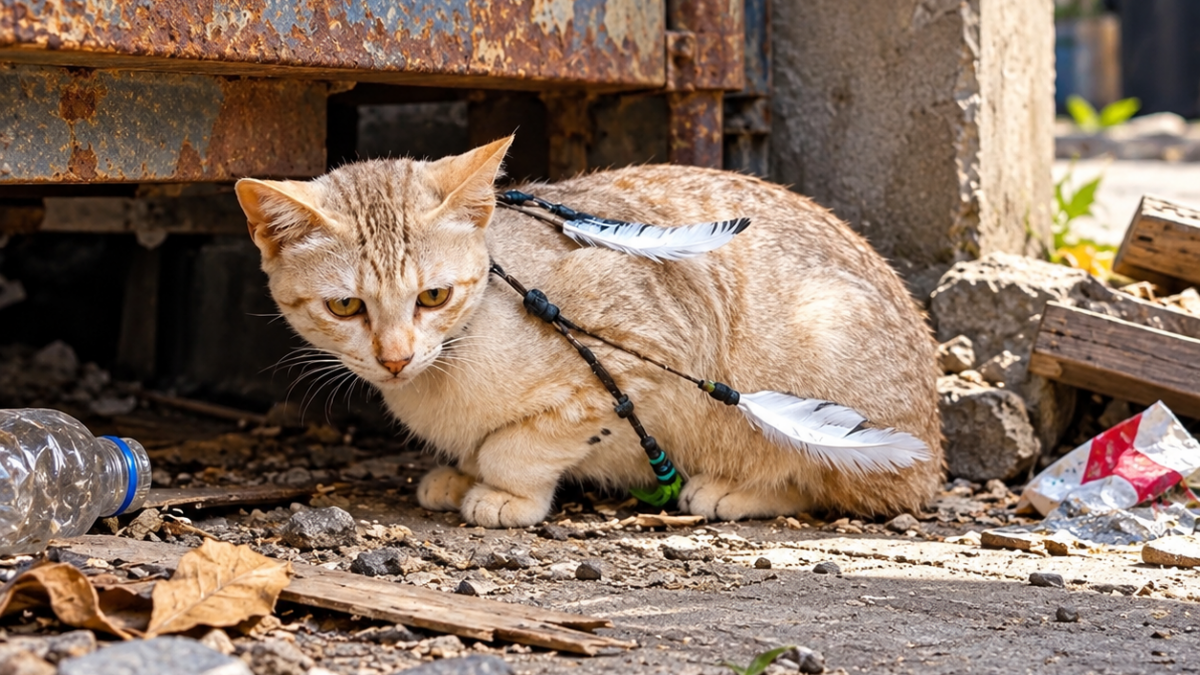
PART 2
I took the evidence container without opening it.
Even through the clear plastic, the darts looked disturbingly ordinary.
Small.
Manufactured.
Cleanly shaped.
The kind of object you could hold between two fingers and never imagine buried inside a living animal.
Rachel stood beside me.
“What markings?”
The veterinarian pointed without touching the container.
“There’s a manufacturer stamp near the base. Possibly a model number. I’m not saying it will identify whoever did this, but if law enforcement becomes involved, preserve everything.”
I looked through the window toward the recovery area.
Luna was somewhere behind those doors.
Sedated.
Bandaged.
Alive.
“I’m calling them.”
The responding officer arrived just after sunrise.
His name was Officer Daniel Ruiz, and unlike some people who hear the phrase injured stray cat and assume it is a minor matter, he became serious the moment he saw the X-rays.
“How many projectiles?”
“Five,” the veterinarian said.
“Were they all similar?”
“Yes.”
“Any possibility this was accidental?”
The veterinarian looked at him.
“Five penetrations from multiple angles?”
Ruiz nodded slowly.
“That answers that.”
He photographed the evidence container, collected our statements, and requested that the clinic maintain chain-of-custody documentation before releasing the darts to investigators.
Then he asked exactly where we had found Luna.
“Behind Harrison Plaza,” I said.
“Businesses there?”
“Six or seven.”
“Cameras?”
Rachel and I looked at each other.
The anger I had been holding since I found Luna suddenly sharpened into something useful.
“Yes,” I said. “Probably a lot of them.”
Officer Ruiz closed his notebook.
“Then we start there.”
I wanted to go with him immediately.
Instead, the veterinarian stopped me.
“Your cat needs you here.”
I almost corrected her.
She wasn’t my cat.
At least, not then.
But I looked through the glass again and said nothing.
For the next six hours, Luna barely moved.
The surgery had been successful, but successful did not mean easy.
Five wounds had been cleaned.
Several required sutures.
She needed fluids, antibiotics, pain medication, and constant monitoring.
When I was finally allowed to see her, I almost didn’t recognize the cat from beneath the dumpster.
Without the metal protruding from her body, she somehow looked even smaller.
Her fur had been clipped around the surgical sites.
Bandages covered parts of her side and shoulder.
Her amber eyes opened when I approached.
“Hey,” I whispered.
Luna watched me.
I reached toward the kennel door, then stopped.
She had spent enough time having hands do things to her.
So I placed my fingers on the floor just outside the opening.
“You decide.”
For several seconds, she did nothing.
Then her nose moved.
She smelled my fingertips from a distance.
That was enough.
I sat there until my back hurt.
When I finally stood, the veterinarian smiled.
“You can go home.”
“I know.”
“You’ve been awake almost twenty-four hours.”
“I know.”
“Go.”
I glanced at Luna.
“She’ll still be here?”
The vet’s expression softened.
“Yes.”
I hated that I needed to hear it.
For the first time since finding her, I allowed myself to believe we might actually get a tomorrow.
I went home for three hours.
I showered.
Changed clothes.
Tried to sleep.
Failed.
Every time I closed my eyes, I saw the dumpster.
The darts.
Luna looking at my hands.
At 10:30 that morning, Rachel called.
“Police found cameras.”
I sat up.
“What did they see?”
“They’re collecting footage now.”
“Anything useful?”
“I don’t know yet.”
I looked at the clock.
“Is Luna stable?”
“Yes.”
“I’m coming back.”
At the clinic, Luna had eaten less than a teaspoon of food.
The staff considered that progress.
I sat beside her kennel.
“You survived surgery,” I told her. “Now you have to eat.”
Luna stared at the bowl.
“No pressure.”
She looked at me.
“Actually, some pressure.”
Nothing.
I dipped my finger into the soft food and held it near her nose.
She turned away.
“Fine.”
I sat back.
Five minutes later, Luna leaned toward the bowl.
One lick.
Then another.
I nearly celebrated loud enough to scare her.
Instead I whispered, “Good girl.”
Her ears moved.
She ate four tiny bites and stopped.
That became our first victory.
Over the next three days, everything happened in measurements that would have seemed ridiculous to anyone outside rescue.
Two more bites.
One step forward.
Thirty seconds standing instead of lying down.
A wound looking slightly less inflamed.
A temperature returning to normal.
Luna spent most of her time curled in the farthest corner of her recovery kennel.
Whenever someone opened the door, her eyes went directly to their hands.
Not their face.
Their hands.
That detail stayed with me.
If a volunteer moved too quickly, Luna flattened herself.
If someone reached from above, she backed away.
But she never attacked.
That almost made it harder.
Animals who defend themselves tell you clearly where their boundary is.
Luna seemed to believe resistance was useless.
So we changed how everyone approached her.
No grabbing.
No reaching over her head.
No cornering.
Food placed down, then hands removed.
Medicine given calmly.
Touch offered only when necessary.
And whenever possible, choice.
On the fourth morning, I sat beside Luna holding a soft treat.
“You don’t have to take it.”
She watched.
I placed it halfway between us.
She stared at it for almost a minute.
Then crawled forward.
A few inches.
Stopped.
Another few inches.
Stopped again.
Finally, she took the treat and immediately retreated.
“That counts,” I said.
Rachel was watching from the doorway.
“You’re negotiating with a seven-pound cat.”
“She’s winning.”
Luna ate another treat.
Rachel smiled.
“So are you.”
By the end of the week, Luna’s wounds were healing.
But the investigation had barely begun.
Officer Ruiz called me late Friday afternoon.
“We have video.”
My stomach tightened.
“Of Luna?”
“We think so.”
“Of the person?”
“Possibly.”
He wouldn’t send it electronically while the case was active, but he asked whether I could come to the station and confirm that the cat in the footage matched Luna’s appearance when we found her.
Rachel came with me.
The video began at 6:12 p.m., two nights before Luna was discovered.
A camera above the rear entrance of a convenience store showed an alley running behind Harrison Plaza.
The image was grainy.
Cars passed at the far end.
Dumpsters lined one wall.
At 6:17, a small cat appeared.
Luna.
Even from a distance, I recognized the pale patch beneath her chin and the shape of her tail.
She walked cautiously along the wall.
She had no visible darts in her body.
I felt Rachel grab my wrist.
“Keep watching,” Ruiz said.
At 6:23, a man entered the frame.
He was perhaps thirty yards away.
Baseball cap.
Dark sweatshirt.
Something long in his hands.
He stopped near the opposite side of the lot.
Luna froze.
The video had no useful audio.
The man raised the object.
Luna jumped.
Ran.
He moved after her.
Raised it again.
My stomach turned.
“No.”
Rachel whispered, “Turn it off.”
Ruiz paused the footage.
“You don’t have to watch the rest.”
I looked at the frozen image.
The man.
The weapon.
Luna disappearing behind a dumpster.
“Can you identify him?”
“Not from this angle.”
“What about the vehicle?”
“That’s where it gets interesting.”
He switched to another camera.
A black pickup drove into the lot several minutes earlier.
The license plate was partially visible.
Not enough for a clean automated match.
But enough letters and numbers to narrow possibilities.
Another camera from a pharmacy showed the truck from the side.
A white contractor logo was printed on the door.
Ruiz zoomed in.
The text was blurry.
But one word was readable.
MERCER.
“Local company?” I asked.
“We found three businesses with Mercer in the name.”
Rachel crossed her arms.
“So what happens?”
“We investigate.”
“That’s it?”
Ruiz looked at her.
“That’s how cases work.”
“I know how cases work.”
“Then you know I’m not arresting the wrong person because we’re angry.”
Rachel looked away.
I understood both sides.
I wanted someone held responsible immediately.
But I had already learned something from animal rescue.
Urgency can save a life.
Impatience can destroy a case.
So we waited.
Luna did not know any of this.
Her world had shrunk to a recovery kennel, medicine, food, and a handful of people trying to convince her that hands could mean comfort.
One afternoon, I was cleaning around her bedding when she surprised me.
She moved toward me.
Not because of food.
Not because I called her.
She simply stepped forward and pressed one side of her face against my index finger.
I froze.
Luna rubbed again.
Very gently.
I felt a vibration.
At first I thought I imagined it.
Then I heard it.
A faint purr.
Rachel was across the room.
“Are you hearing this?”
She looked over.
Luna purred again.
Rachel’s eyes filled.
“Don’t move.”
“I wasn’t planning to.”
Luna pressed her cheek against me for almost thirty seconds.
Then she retreated to her blanket.
It was the first affection she had offered anyone.
Not tolerated.
Offered.
I went into the supply closet afterward and cried.
There are tears you shed because something hurts.
There are other tears because something that was broken just moved one millimeter toward whole.
Those are harder to explain.
Two weeks after surgery, Luna was transferred from the clinic to our rescue facility.
We prepared a private room instead of placing her in the communal cat area.
A low hiding box.
Soft blankets.
Food and water separated from the litter box.
A window.
A small scratching pad.
And toys she ignored completely.
For the first day, Luna remained under the hiding box.
On the second, she came out to eat while I sat in the room.
On the third, she walked to the window.
Sunlight fell across her back.
I watched her close her eyes.
No one moved.
Rachel whispered from behind me, “That might be the first warm thing she’s trusted in a long time.”
A week later, Luna batted at a feather toy.
Once.
Then acted as though nothing had happened.
I laughed.
“You did that.”
Luna looked offended.
The next day, she did it twice.
Then five times.
Soon she began waiting for the toy.
Her body was healing faster than her fear, but the two seemed connected.
As pain diminished, curiosity returned.
As curiosity returned, personality appeared.
Luna was not timid by nature.
That surprised all of us.
She was opinionated.
She hated chicken-flavored treats but loved salmon.
She ignored expensive toys and became obsessed with cardboard rings from milk jugs.
She would sit beneath the window for an hour watching pigeons, then chirp at them as though conducting negotiations.
And once she trusted someone, she wanted to supervise everything they did.
If I cleaned the room, Luna followed the cloth.
If Rachel filled food bowls, Luna sat directly in the way.
If a volunteer tried to read quietly beside her, Luna eventually climbed onto the book.
“She’s becoming demanding,” Rachel said.
“That means she feels safe enough to have standards.”
Then Officer Ruiz called again.
“We identified the truck.”
I stepped out of Luna’s room and closed the door.
“Who owns it?”
“A landscaping contractor named Mercer Outdoor Services.”
“Who was driving?”
“We believe the owner’s adult son had the vehicle that evening.”
“Name?”
“I can’t give you every detail yet.”
I clenched my jaw.
“Did you talk to him?”
“Yes.”
“And?”
“He says he was in the plaza but denies shooting any animal.”
“Of course.”
Ruiz continued.
“We also obtained a search warrant.”
I stopped pacing.
“For what?”
“A pellet rifle and related projectiles were visible in photographs posted publicly from the same property.”
My anger sharpened again.
“Metal darts?”
“We’ll know after the lab examines them.”
The investigation moved faster after that.
A weapon was recovered.
So were containers of specialized metal darts.
The manufacturer matched the markings found on the projectiles removed from Luna.
That alone was not enough.
Thousands could have existed.
But forensic examination found characteristics consistent with the weapon.
Then another witness came forward.
A teenager who worked at a pizza place had been taking trash outside that evening.
He hadn’t seen Luna get hit.
But he had heard someone laugh and say, “Watch this,” shortly before a cat screamed.
He had been afraid to say anything at first.
When local police posted a request for information, his mother convinced him to come forward.
The suspect was named Tyler Mercer.
Twenty-six years old.
He lived with his father.
No known connection to Luna.
No dispute.
No reason.
That fact somehow made me angrier.
He hadn’t hurt her because she attacked him.
He hadn’t made a terrible split-second decision during some conflict.
According to investigators, Luna had simply been there.
Available.
Smaller than him.
Unable to fight back.
When Ruiz explained that prosecutors were preparing charges under the state’s animal cruelty statutes, I expected satisfaction.
Instead, I felt sick.
“Why?” I asked.
Ruiz knew what I meant.
“He hasn’t given a meaningful explanation.”
“What does that even mean?”
“It means people don’t always have explanations that make what they did understandable.”
I looked through the glass door at Luna.
She was lying in sunlight.
“So he just decided to use her for target practice?”
Ruiz didn’t answer directly.
He didn’t need to.
For several days, I carried rage around like a second skeleton.
I imagined confronting Tyler.
I imagined making him look at Luna’s surgical photographs.
I imagined asking whether he remembered every sound she made.
But the more Luna healed, the more I understood something.
She was moving away from him.
I was the one staying emotionally trapped in that alley.
So I made a decision.
I would cooperate fully with the case.
I would testify if asked.
I would make sure every medical record, photograph, bill, and statement was preserved.
But I would not let Tyler become the center of Luna’s life.
He had already taken enough space.
Three weeks after her rescue, Luna played for the first time.
Really played.
Not one cautious paw toward a feather.
She chased a stuffed mouse across the room, slid into the wall, looked shocked, then attacked it again.
Rachel recorded part of it.
I laughed so hard I had tears in my eyes.
Luna stopped.
Looked at me.
Then pounced on my shoe.
“There she is,” Rachel said.
I knew exactly what she meant.
There was the cat underneath the fear.
Four weeks after surgery, the veterinarian cleared Luna medically.
Her wounds had closed.
The sutures were gone.
Her coat was beginning to grow over the shaved areas.
Follow-up imaging showed no retained metal.
Her bloodwork had improved.
She had gained weight.
“She’s physically recovered beautifully,” the vet said.
“And emotionally?”
The veterinarian looked through the carrier door.
Luna was rubbing her cheek against my hand.
“I think she’s already answering that.”
That was when adoption conversations began.
I hated them.
Not because I didn’t want Luna adopted.
Because I wanted something impossible.
I wanted absolute certainty.
I wanted to know no one would ever scare her.
No one would ever raise their voice.
No one would ever forget a door open.
No one would ever decide she was inconvenient.
No one would ever make her fear human hands again.
Rescue does not offer guarantees like that.
You investigate.
You interview.
You check references.
You educate.
Then you trust.
The first application looked perfect on paper.
Young couple.
Large house.
No children.
Previous cat experience.
They met Luna.
The man reached immediately toward her face.
Luna recoiled.
“Just let her smell you first,” I said.
He laughed.
“She’ll get over it.”
My stomach tightened.
Luna moved behind me.
The woman asked whether Luna would eventually tolerate being held whenever they wanted.
“Maybe,” I said. “But she needs choice.”
“She’s a cat.”
“Yes.”
The application was declined.
Rachel asked afterward, “Too harsh?”
“No.”
“You didn’t even think about it.”
“I did.”
“For three seconds.”
“Long enough.”
The second applicant had two large dogs with no cat history.
Not necessarily impossible.
But not ideal for Luna.
The third wanted an outdoor cat.
Absolutely not.
Then a woman named Emily Carter applied.
Thirty-eight.
Worked from home as a graphic designer.
Owned a quiet townhouse with an enclosed sunroom.
One resident cat had died from cancer six months earlier at age seventeen.
No other animals.
No children.
Veterinary reference excellent.
But applications are paper.
People matter in person.
Emily arrived on a rainy Tuesday afternoon.
She wore a gray sweater and carried a book.
Not treats.
Not toys.
A book.
“What’s that for?” Rachel asked.
Emily looked embarrassed.
“Your application page said Luna can be nervous with strangers. I thought maybe I’d sit and read so she doesn’t feel like I came here to stare at her.”
Rachel looked at me.
I tried not to smile.
We brought Emily into Luna’s room.
Luna was on the windowsill.
She saw the stranger and jumped down.
Not hiding.
Just moving to the opposite side.
Emily sat on the floor.
Opened her book.
And read silently.
Ten minutes.
Twenty.
Luna watched.
Emily turned pages.
Thirty minutes.
Luna approached her bag.
Sniffed.
Emily did nothing.
Luna moved closer.
Emily kept reading.
Then Luna touched Emily’s knee with her nose.
Emily’s eyes lifted toward me.
I whispered, “Don’t rush.”
She nodded.
Luna sniffed her fingers.
Emily kept her hand still.
Then Luna rubbed her cheek against one finger.
Emily’s mouth trembled.
She looked back at her book.
“Good girl,” she whispered.
Luna rubbed again.
By the end of the visit, Luna was sitting beside Emily.
Not on her lap.
Not yet.
But beside her.
Emily came back two days later.
Then again Saturday.
On her fourth visit, Luna climbed into her lap.
Emily cried without making a sound.
Luna stayed.
That was when I knew.
Adoption day arrived five days later.
I barely slept the night before.
Luna seemed completely unconcerned.
She spent breakfast attacking a cardboard ring.
“You could at least pretend this is emotional,” I told her.
Luna knocked the ring beneath a shelf.
Then stared at me until I retrieved it.
“Right. Servant until the end.”
Emily arrived with a carrier lined in a blanket that smelled like her house.
Smart.
She had prepared one quiet room for Luna instead of giving her full access immediately.
She had bought the same litter.
Same food.
Same style of scratching pad.
She showed me photographs of the sunroom.
Large windows.
Soft cushions.
A cat tree positioned beside the glass.
Luna would love it.
I hated how much I loved it.
We completed the paperwork.
Emily knelt beside Luna.
“Ready?”
Luna walked into the carrier without being forced.
That nearly broke me.
The first time I had put her in one, she had been trembling with five metal darts inside her.
Now she walked into one because she trusted the hands holding the door.
I closed the latch.
Emily looked at me.
“I know you hear promises all the time.”
“I do.”
“So I’m not going to promise she’ll never be scared again.”
That got my attention.
“I’m going to promise that when she is scared, she won’t face it alone.”
I had to look away.
“That’s better.”
Emily smiled.
“I thought so.”
I carried Luna to the car.
Before placing the carrier inside, I crouched.
Luna pressed her nose to the door.
I put my finger against the mesh.
“You survived.”
She blinked.
“You did the hardest part.”
Her paw touched the mesh.
I swallowed.
“Now go have an ordinary life.”
That was all I wanted for her.
Ordinary.
Sunlight.
Naps.
Food bowls.
Ridiculous toys.
Someone complaining because she stole their chair.
The beautiful boring things abused animals should always have had.
Emily drove away.
I cried before the car reached the end of the street.
The first update came forty minutes later.
Luna had emerged from the carrier.
The second came three hours later.
She was beneath Emily’s desk.
That night, Luna ate.
The next morning, Emily sent a photograph.
Luna was sitting in the sunroom.
Amber eyes half closed.
Her body stretched across a cushion.
No metal.
No bandages.
No concrete.
No dumpster.
I stared at that picture for a long time.
Rachel walked behind me.
“Is that her?”
I handed her the phone.
She covered her mouth.
“Oh.”
That was all she managed.
Over the next month, Luna transformed.
She discovered stairs.
She discovered that printers were apparently enemies.
She discovered heated blankets and became impossible to remove from them.
She slept at the foot of Emily’s bed.
Then halfway up the bed.
Then directly on Emily’s pillow.
“She’s taking over,” Emily texted.
I replied, “This is normal cat governance.”
But not everything was easy.
One afternoon, construction workers outside fired a pneumatic nail gun.
The sound echoed through the townhouse.
Luna disappeared.
Emily searched quietly and found her wedged behind a dresser, shaking.
She called me.
“I don’t know what to do.”
“Don’t pull her out.”
“I won’t.”
“Sit nearby.”
“For how long?”
“As long as she needs.”
Emily sat on the floor for almost two hours.
She worked from her laptop without looking directly at Luna.
Eventually, Luna crept out.
She crossed the room.
Climbed into Emily’s lap.
And stayed there.
That night, Emily sent one sentence.
“She came to me because she was scared.”
I understood why that mattered.
Fear had once made Luna hide from human beings.
Now fear made her seek one out.
That was not a small change.
It was everything.
Meanwhile, Tyler Mercer’s case moved toward court.
He had pleaded not guilty.
His attorney challenged the identification.
Questioned the video quality.
Questioned whether every dart came from Tyler’s weapon.
Questioned whether Luna had been wounded somewhere else.
That last claim angered the veterinarian.
“She arrived with the darts still embedded,” she told me. “We documented everything.”
Prosecutors asked whether I would testify about the rescue.
“Yes.”
“Are you comfortable seeing the defendant?”
“Yes.”
I wasn’t.
But I would.
The hearing was scheduled for a Monday morning.
Emily asked whether she could attend.
“Without Luna.”
“Obviously.”
I hesitated.
“You don’t need to put yourself through that.”
“I know.”
“Then why?”
She looked toward Luna, who was stretched across the sunroom window.
“Because she can’t speak.”
I nodded.
“Neither could she when we found her.”
Courtrooms are less dramatic than television makes them look.
Mostly waiting.
Paper.
Whispered conversations.
People checking clocks.
Then suddenly a few minutes happen that carry months of pain.
Tyler sat with his attorney.
Clean shirt.
Short haircut.
Nothing about him looked monstrous.
That disturbed me more than I expected.
We like villains to announce themselves.
Real cruelty often wears ordinary faces.
When photographs from Luna’s rescue were introduced, Tyler looked down.
Five darts.
The X-rays.
Surgical images.
The dumpster.
The blanket.
I watched him.
He never looked toward us.
I testified about finding Luna.
“How did the animal respond when you approached?”
“She cried.”
“Did she attempt to flee?”
“No.”
“Why not?”
“She was too weak.”
“Did she resist being handled?”
“No.”
“What was her condition during transport?”
“She trembled. Every movement appeared painful.”
The prosecutor paused.
“What did you believe would happen if she did not receive immediate veterinary treatment?”
I looked at the judge.
“She could have died.”
Tyler shifted in his seat.
For the first time, I saw his face change.
Not much.
Enough.
The veterinarian testified after me.
Her evidence was clinical.
Precise.
That somehow made it stronger.
She explained how deeply the darts had penetrated.
Why removing them required surgery.
How one projectile came dangerously close to vital structures.
Then came the surveillance footage.
The judge watched silently.
Black pickup.
Figure entering frame.
Weapon raised.
Cat running.
Another shot.
Another.
Emily gripped my hand beneath the bench.
The defense argued the image did not clearly show Tyler’s face.
Then investigators testified about the truck.
The weapon.
The matching type of darts.
The witness.
The digital evidence.
What finally damaged the defense most was something I hadn’t known.
Investigators had recovered messages.
Not a confession exactly.
But close.
Tyler had sent a photograph of his pellet rifle to a friend that evening.
The message beneath it read:
“Got practice behind the plaza.”
A later message said:
“Fast little thing.”
I closed my eyes.
Emily whispered, “Don’t.”
I looked at her.
“Don’t give him your attention.”
I understood.
So I looked at the photographs of Luna after recovery instead.
I had brought one in my bag.
Luna asleep in sunlight.
That was the cat I chose to see.
The case did not end that day.
Legal cases rarely provide instant satisfaction.
There were motions.
Negotiations.
Another hearing.
Eventually Tyler changed his plea.
The resolution included a conviction under applicable animal cruelty provisions, probation, financial penalties, restitution for a significant portion of Luna’s veterinary expenses, mandatory counseling, community-service requirements, and restrictions on possessing animals during the court-imposed period.
Some people online said it wasn’t enough.
Others said it was too much “over a cat.”
I stopped reading comments.
Neither group had sat beside Luna when she cried beneath a dumpster.
The sentence mattered.
The record mattered.
The restrictions mattered.
But no punishment could reverse what happened.
Then something occurred I had not expected.
Tyler’s father contacted the rescue.
I almost refused to speak with him.
His name was Robert Mercer.
He owned the landscaping company whose truck had led investigators to Tyler.
“I’m not calling to defend my son,” he said.
I remained silent.
“I need you to know that first.”
“All right.”
“He used my truck without permission that evening.”
I said nothing.
“I should’ve noticed things before.”
“What things?”
“Anger. Recklessness. The way he talked about animals sometimes.”
My grip tightened around the phone.
“And?”
“And I ignored it because I told myself he was just talking.”
I looked through the office window.
Luna wasn’t there anymore.
Her old room had another cat in it.
“Why are you telling me?”
“Because I watched the court footage.”
I waited.
Robert’s voice changed.
“I saw that cat.”
“So did we.”
“I’m ashamed.”
“That belongs to you and your son.”
“I know.”
There was a long silence.
Then he said, “I want to pay the remaining veterinary costs.”
“Restitution already covers—”
“Not all of it.”
“You don’t owe us for what your adult son did.”
“No. But I spent years making excuses for him. I’m done doing that.”
I didn’t know how to respond.
Robert eventually donated the remaining amount anonymously.
At least he asked for anonymity.
People found out anyway.
Some praised him.
Some attacked him.
I cared only that Luna’s medical fund was replenished enough to help another injured animal.
Months passed.
Luna’s hair grew back completely.
If you didn’t know where to look, you couldn’t see the scars.
Emily said Luna still occasionally startled at sharp metallic sounds.
But recovery was no longer the main event of her life.
Life was.
She had favorite windows.
Favorite blankets.
A preferred brand of salmon treats.
A deep hatred of the vacuum cleaner.
An irrational fascination with the bathroom faucet.
She slept with Emily every night.
Sometimes on her chest.
Sometimes across her legs.
Frequently in positions specifically designed to make moving impossible.
Then, nearly one year after the rescue, Emily invited Rachel and me to Luna’s adoption anniversary.
“You’re having a party for a cat?”
Rachel asked.
Emily sounded offended.
“I’m having a tasteful gathering honoring Luna.”
“With a cake?”
“Two.”
Rachel looked at me.
“We’re going.”
Of course we were.
The townhouse looked exactly like the photographs.
Quiet.
Warm.
Sunlight filling the front room.
A tall cat tree stood beside the window.
Luna was at the top.
For a moment, she stared at us.
I wondered whether she remembered.
Then her ears lifted.
She climbed down.
Slowly at first.
Then faster.
She walked directly toward me.
I crouched.
“Hey, Luna.”
She smelled my fingers.
One second.
Two.
Then pressed her entire face into my hand.
I laughed and cried at the same time.
Rachel knelt beside us.
Luna rubbed against her too.
Emily stood near the kitchen.
“I think she remembers.”
“She remembers something.”
Luna walked around us, tail high.
That detail meant more to me than anyone outside animal rescue would understand.
Tail up.
Confident.
Comfortable.
No crouching.
No shaking.
No eyes fixed nervously on human hands.
Emily brought out the photograph from Luna’s first night at the clinic.
I hated seeing it.
Tiny body.
Bandages.
Exhausted eyes.
Then she placed a recent photograph beside it.
Luna stretched across the sunroom.
Same amber eyes.
Different world.
Rachel whispered, “That doesn’t even look like the same cat.”
I shook my head.
“Yes, it does.”
She looked at me.
“It’s exactly the same cat.”
I pointed toward Luna, who was trying to steal frosting from an unattended plate.
“This is who she always was.”
Cruelty had not created the frightened animal beneath that dumpster.
Cruelty had covered her.
Pain had hidden her.
Fear had compressed her entire personality into one desperate goal:
survive.
Safety allowed the rest of her to return.
Later that afternoon, Emily told us something she had never mentioned before.
“The night before I applied to adopt her, I almost didn’t.”
“Why?”
“I was afraid I wasn’t enough.”
“For Luna?”
She nodded.
“I saw the rescue pictures. I thought she needed someone experienced with severe trauma.”
Rachel smiled.
“She needed someone patient.”
Emily looked at Luna.
“I worried I’d do something wrong.”
“We all do things wrong.”
“Very reassuring.”
I laughed.
“I mean it. Perfect owners don’t exist. People who pay attention do.”
Emily watched Luna bat a toy beneath the couch.
“I think she taught me that.”
“What?”
“That trust isn’t something you ask for once.”
She looked at me.
“You earn it again every day.”
That sentence stayed with me.
Near sunset, Luna climbed into the window.
The light caught her fur.
She stretched.
Long front legs.
Back arched.
Tail curled.
No metal protruding from her body.
No wounds.
No bandages.
Nothing between her and the sunlight.
For a few seconds, the entire room went quiet.
Rachel touched my shoulder.
“That’s the picture.”
“What picture?”
“The one we wanted the first night.”
I knew exactly what she meant.
Not literally.
That first night, none of us had imagined a window or a home.
We had wanted morning.
Just morning.
We had wanted Luna to survive until sunrise.
Everything after that had been extra.
Luna jumped down and chased a toy mouse across the floor.
Emily laughed.
The sound filled the room.
I thought about the person who had stood behind a shopping plaza and raised a weapon toward a tiny animal.
Maybe Tyler had wanted to feel powerful.
Maybe he had wanted amusement.
Maybe he hadn’t thought about Luna at all.
It didn’t matter anymore.
Because the real ending belonged to her.
Tyler had created a few minutes of terror.
Luna built years beyond them.
He had tried to reduce her life to something disposable.
She became somebody’s family.
He had left marks on her body.
Time covered most of them with fur.
He had made human hands frightening.
Patient hands taught her something different.
If there was revenge in Luna’s story, it was not violence.
It was abundance.
It was every meal arriving on time.
Every safe night.
Every stupid toy.
Every veterinary checkup.
Every patch of sunlight.
Every time Emily reached toward her and Luna leaned closer instead of shrinking away.
Cruelty expected fear to have the last word.
It didn’t.
A few months later, I received one final photograph that I keep on my desk.
Emily had fallen asleep on the couch.
Luna was curled beneath her chin.
One paw rested against Emily’s wrist.
Her eyes were closed.
Completely relaxed.
Under the photograph, Emily had written:
“She sleeps like nobody is coming to hurt her.”
That sentence broke me more than the X-rays had.
Because that was the transformation.
Not the healed wounds.
Not the regrown fur.
Not even the court case.
This.
A cat sleeping deeply beside human hands.
The same hands she once watched with terror.
People often ask whether animals remember what happened to them.
I don’t know exactly what Luna remembers.
Maybe sharp sounds still carry an echo.
Maybe the smell of pavement after dark means something we cannot understand.
Maybe certain movements always make her pause.
Trauma does not have to vanish for healing to be real.
Healing means the past is no longer the only thing deciding what happens next.
And Luna has a lot happening next.
Breakfast.
Sunshine.
A cardboard box Emily was absolutely forbidden to throw away.
A stuffed mouse that has already lost one ear.
A window full of birds.
A warm bed.
A woman who says goodnight to her every evening.
And tomorrow.
Most of all, tomorrow.
The night Luna was found, tomorrow was uncertain.
Now it is ordinary.
That might be the most beautiful word in her entire story.
Ordinary.
No emergency surgery.
No police evidence.
No courtroom.
No frightened rescuers waiting outside an operating room.
Just a cat stretching in sunlight.
Years from now, someone might look at Luna sleeping in Emily’s window and never know what happened behind Harrison Plaza.
They might never know about the five metal darts.
They might never know about the surgeon who worked through the night.
They might never know about Rachel squeezing my wrist while security footage played.
They might never know about the officers who followed a blurry truck through several cameras.
They might never know about the teenage witness who finally decided to speak.
They might never know about the courtroom or the conviction.
And maybe that is exactly how it should be.
Because Luna should not have to spend her entire life being introduced by the worst thing someone did to her.
She is not “the cat who was shot.”
Not anymore.
She is Luna.
She hates chicken treats.
She loves salmon.
She steals Emily’s pillow.
She chirps at pigeons.
She attacks cardboard rings.
She sleeps in the afternoon sun.
She runs to the door when Emily comes home.
She purrs when someone she trusts scratches beneath her chin.
She is loved.
And one evening, when I visited again, I watched Emily reach down from the couch.
Luna immediately pushed her head beneath Emily’s palm.
No hesitation.
No trembling.
No watching the hand first.
Just trust.
I remembered the tiny cat beneath the rusted dumpster.
I remembered saying, “Come on, baby. Give me something.”
That night she gave us one weak cry.
Then another.
Just enough to tell us she was still there.
Just enough for us to find her.
Now she had a whole life to give.
As I stood to leave, Luna followed me toward the door.
I crouched one last time.
“You know something?”
She blinked.
“You won.”
Emily smiled from behind me.
Luna purred.
And I realized that was the revenge everyone had wanted.
The person who hurt her got a court record.
Luna got a home.
He got consequences.
Luna got years.
He became a chapter people would eventually stop talking about.
Luna became the entire story.
I rubbed beneath her chin.
She leaned closer.
Then she turned away from me and trotted back toward the sunlit room where Emily was waiting.
She never looked back.
And I couldn’t have imagined a better ending.
The first time I saw Luna sleeping without fear, I almost didn’t recognize her.
She was stretched across Emily’s couch with one front paw hanging over the edge, her face turned toward the afternoon sunlight pouring through the window. Her breathing was slow. Deep. Peaceful.
No twitching.
No sudden lift of the head when a car door slammed outside.
No amber eyes opening to check whether someone was coming toward her.
Just sleep.
I stood in Emily’s living room and stared at her.
Emily noticed.
“You okay?”
I nodded, but I couldn’t answer right away.
My mind had taken me back to the night we found Luna beneath that rusted dumpster.
I could still hear the little sounds she had made.
Not proper meows.
Not cries for attention.
They had sounded like the noises an animal makes after she has almost given up expecting anyone to answer.
I remembered kneeling on cold concrete.
I remembered the flashlight beam moving across her body.
I remembered seeing the first metal dart.
Then the second.
Then realizing there were more.
Five pieces of metal had been driven into a cat that weighed barely seven pounds.
Somebody had raised a weapon.
Aimed.
Fired.
Watched her run.
Then fired again.
Yet here she was now, months later, asleep on a cream-colored couch as though the world had finally convinced her that closing her eyes was safe.
“She does that all afternoon,” Emily said.
“What?”
“Sleeps.”
I laughed softly.
“She earned it.”
Emily sat in the armchair across from Luna.
“She still wakes up if there’s a really sharp noise.”
I looked toward her.
“The construction next door?”
“That got better.”
“What scares her now?”
Emily thought about it.
“Sometimes the sound of something hitting metal. If I drop a fork into the sink too hard, she freezes.”
My chest tightened.
“But then she looks at me,” Emily continued, “and if I don’t react, she settles down.”
That mattered.
Not because Luna had forgotten.
She probably never would completely.
It mattered because memory was no longer controlling every decision she made.
There had been a time when a raised hand caused her to shrink into the back of a kennel.
Now Emily could reach down from the couch and Luna would push her forehead beneath her palm.
There had been a time when Luna watched every door.
Now she sometimes slept through Emily walking from one room to another.
There had been a time when food was something Luna approached only after checking that no person was close enough to grab her.
Now, according to Emily, she began demanding dinner thirty minutes early every evening.
“She sits in the kitchen and screams at me,” Emily said.
“Good.”
“Good?”
“Absolutely.”
Emily laughed.
“I think you created a monster.”
“No. You created a cat who has realized customer service in this house is terrible.”
As if she had heard us discussing her, Luna opened one eye.
Emily leaned toward her.
“You’ve already eaten.”
Luna closed her eye again.
“See?” Emily said. “Judgment.”
I smiled.
That was the Luna I wanted people to know.
Not the wounded cat.
Not the evidence photographs.
Not the animal cruelty case.
This Luna.
The one who believed she owned the furniture.
The one who stole Emily’s pillow.
The one who sat in the bathroom sink while Emily brushed her teeth.
The one who refused chicken treats but appeared from nowhere at the sound of a salmon packet being opened.
The problem was that outside Emily’s house, people still knew Luna because of what had happened to her.
Her story had spread farther than any of us expected.
A local television station had covered Tyler Mercer’s court case.
Then another outlet picked it up.
Soon photographs of Luna from the night of the rescue were circulating online.
People were furious.
Some demanded harsher punishment.
Some wanted Tyler’s photograph posted everywhere.
Others sent the shelter messages asking for his address.
Those were the messages that frightened me.
Pain can make people hungry for punishment.
But there is a line between justice and becoming another version of the thing you hate.
We refused to cross it.
Whenever someone asked where Tyler lived, we ignored them.
When someone suggested hurting him, we deleted the comment.
When a stranger emailed asking what kind of car he drove because he wanted to “teach the guy a lesson,” I forwarded the message to Officer Ruiz.
Rachel understood my frustration.
Still, one evening at the shelter, she slammed her phone onto the desk.
“People are unbelievable.”
“What now?”
She turned the screen toward me.
Someone had written that Tyler deserved to experience exactly what he had done to Luna.
I read the sentence.
Then handed the phone back.
“I understand the anger.”
“So do I.”
“But no.”
Rachel sighed.
“I know.”
I looked through the window toward the cat room.
Another injured stray had arrived that afternoon.
Nothing like Luna’s case.
A leg injury.
Treatable.
The little tabby was curled beneath a blanket.
“That’s why revenge can’t be the story,” I said.
Rachel leaned against the desk.
“What do you mean?”
“If everybody spends their energy fantasizing about hurting him, Luna disappears.”
Rachel was quiet.
“The point is her.”
I nodded.
“The point has always been her.”
That realization changed the way we talked about the case publicly.
When reporters asked about Tyler, we answered only what was necessary.
When they asked about Luna, we talked.
We talked about her first purr.
Her first toy.
Her first full meal.
The day she stopped watching our hands.
The afternoon she stretched in the window.
The first time she walked into Emily’s lap.
We refused to let the person who had hurt her become more interesting than the life she had rebuilt.
Tyler had already taken enough from her.
He didn’t get the rest.
A few weeks after the conviction, Officer Ruiz stopped by the shelter.
He wasn’t in uniform.
He carried a cardboard box.
“What’s this?”
“Donation.”
“From you?”
“No.”
He placed the box on the front counter.
Inside were medical supplies.
Bandages.
Sterile gauze.
Disposable gloves.
Small bottles of wound-cleaning solution.
Rachel began pulling items out.
“Who sent this?”
Ruiz hesitated.
“Robert Mercer.”
Tyler’s father.
My expression changed.
“He already paid the remaining part of Luna’s veterinary costs.”
“I know.”
“Why this?”
Ruiz shrugged.
“He said he couldn’t change what happened, but he wanted something useful to come from it.”
I stared into the box.
For months, Robert Mercer had occupied an uncomfortable place in my mind.
He had not hurt Luna.
There was no evidence he had known what Tyler intended to do.
But he had admitted that he had ignored warning signs in his son.
Angry comments.
Cruel jokes.
An attitude toward animals that should have bothered him more than it did.
When we first spoke, I had been angry with him too.
Maybe unfairly.
Maybe not.
Neglect isn’t always physical.
Sometimes people neglect the truth because recognizing it would require them to act.
Still, Robert had done something Tyler never had.
He accepted responsibility for what was his.
Not the crime.
The silence before it.
Rachel held a roll of gauze.
“Do we take it?”
I looked at Officer Ruiz.
“Is there any reason legally not to?”
“No.”
I nodded.
“Then we use it.”
The supplies were gone within two months.
Bandages went to an injured terrier.
Gauze went to a kitten with burns on her paws.
Gloves disappeared as fast as gloves always disappear in a shelter.
Nothing in the box fixed Luna’s past.
But it helped animals who came after her.
I decided that mattered.
Emily brought Luna back to the shelter again in early spring.
This time Luna walked in wearing a purple harness.
The transformation was so complete that one of our new volunteers didn’t recognize her.
“Who’s this?”
Rachel looked offended.
“You don’t know Luna?”
The volunteer shook her head.
Rachel pointed dramatically toward the cat.
“This is royalty.”
Emily laughed.
Luna ignored everyone and walked toward the window.
The volunteer whispered to me, “Is she the dart cat?”
I looked at Luna.
“I’d rather call her Luna.”
The volunteer immediately understood.
“Right. Sorry.”
“No problem.”
It wasn’t that we denied what happened.
We couldn’t.
Those scars were part of her history.
But calling her “the dart cat” reduced an entire life to one act of cruelty.
Animals deserve more than that.
So do people.
Luna spent nearly an hour exploring her old recovery room.
She sniffed the corner where her kennel used to sit.
Then the window.
Then the storage cabinet.
Emily watched carefully.
“Do you think she remembers this room?”
“Probably parts of it.”
“Is bringing her here bad?”
I shook my head.
“Look at her.”
Luna’s tail was upright.
Ears relaxed.
No crouching.
No searching for somewhere to hide.
“She’s telling you.”
Emily smiled.
A few minutes later, Rachel found an old feather toy in a drawer.
It was almost identical to the first toy Luna had played with after surgery.
She moved it slowly across the floor.
Luna’s pupils widened.
Rachel dragged the feathers around a chair leg.
Luna pounced.
We both laughed.
Emily recorded her.
For a moment, I saw the frightened cat we had once coaxed into touching a toy one cautious time.
Then Luna launched herself sideways, missed completely, crashed into an empty cardboard box, and emerged looking furious that anyone had witnessed it.
Rachel doubled over laughing.
“There she is.”
The visit ended with Luna climbing onto the front desk and attempting to steal a pen.
That evening, Emily sent me the video.
I watched it four times.
Not because anything dramatic happened.
That was exactly why I loved it.
Luna was allowed to be ridiculous.
Animals who have survived cruelty are so often photographed only in sadness.
The rescue image.
The medical image.
The recovery image.
People forget they also deserve photographs where nothing meaningful happens.
A blurry picture because they moved too fast.
A photograph of them sleeping upside down.
A video of them falling off a cushion.
Those images mean life has become ordinary enough for silliness.
Summer arrived.
Luna discovered insects.
Specifically, Luna discovered that moths occasionally appeared outside the sunroom windows at night.
Emily sent me a message at 11:30 one evening.
“Your daughter is insane.”
Attached was a video.
Luna stood with both front paws against the glass, making tiny chirping noises as a moth fluttered outside.
Every time the moth moved, Luna’s entire body shifted.
At one point she attempted to jump directly through the glass.
She bounced backward.
Sat down.
Then looked toward Emily as though the architecture had personally betrayed her.
I laughed so loudly Rachel looked over from the other side of the shelter office.
“What?”
“Luna versus window.”
“Who won?”
“The window.”
“Temporary victory.”
By autumn, nearly a year had passed since we found her.
The anniversary bothered me more than I expected.
All day, I kept checking the clock.
6:12 p.m.
That was when Luna first appeared on the surveillance camera.
6:17.
The man entered.
6:23.
The attack began.
I hated knowing those times.
I hated that my brain had memorized them.
At 6:20 that evening, Emily called.
“Are you busy?”
“Not really.”
“I thought you might be thinking about her.”
I looked at the clock.
“How did you know?”
“Because I am.”
There was silence.
Then Emily said, “Can I show you something?”
A video arrived.
Luna was sitting in the sunroom.
Emily had placed a new cat tunnel across the floor.
Luna sniffed one end.
Walked around it.
Sniffed the other.
Then ran through so fast she knocked over a cushion.
The video ended with Emily laughing.
I called her back.
“You planned this?”
“I figured today should belong to something new.”
My throat tightened.
“What do you mean?”
“I don’t want the anniversary to be the day she got hurt.”
I sat down.
“What should it be?”
“The day before she got rescued.”
I smiled slowly.
Emily continued.
“Because that was the last day she ever had to survive alone.”
That sentence changed the date for me.
I stopped thinking of the anniversary as the beginning of Luna’s suffering.
Her suffering had begun before we knew about it.
Instead, I thought of it as the final night when she belonged to no one.
The final night without treatment.
The final night without someone looking for her.
The final night before a blanket wrapped around her body and carried her toward something better.
A few months later, the shelter received a letter.
No return address.
Typed.
I almost threw it away because we get strange mail occasionally.
Then I saw Luna’s name.
I opened it.
The letter was from someone claiming to have been a friend of Tyler Mercer.
He said he had seen the news coverage.
He said he had been one of the people who received Tyler’s messages that night.
He admitted he had responded with laughing emojis.
My stomach turned.
The writer said he had never seen Luna in person.
Never fired the weapon.
Never thought Tyler would actually hurt an animal.
But when Tyler sent the message about “practice,” he had suspected something was wrong.
And he had done nothing.
The letter continued:
“I thought because I wasn’t there, I wasn’t part of it. I know that’s not exactly true. I encouraged the kind of person he was when I laughed at things that weren’t funny.”
I read that sentence twice.
At the bottom, he said he had begun volunteering at an animal food pantry in another county.
He didn’t ask forgiveness.
He didn’t sign his full name.
He simply wrote:
“I wanted somebody who cared about Luna to know that what happened changed more than the court record.”
I handed the letter to Rachel.
She finished it and set it down.
“You believe him?”
“I don’t know.”
“Could be anybody.”
“Yes.”
“You going to respond?”
“There’s no address.”
“Right.”
She looked at the letter again.
“What do you think?”
I considered the question.
“I think if it’s true, good.”
“That’s it?”
“What else?”
Rachel leaned back.
“I expected you to be angrier.”
“I am angry.”
“At him?”
“At every person who laughs when cruelty is still only a joke.”
She nodded.
“That’s where things start sometimes.”
Exactly.
The violence done to Luna had not appeared from nowhere.
People imagine cruelty as a switch.
Normal person one moment.
Monster the next.
Reality is often messier.
Cruelty can grow when small warning signs are excused.
When someone talks about hurting animals and everyone laughs.
When anger becomes entertainment.
When empathy is treated as weakness.
When no one wants to be the person who says, “That isn’t funny.”
Maybe Tyler’s friend had finally understood that.
If so, Luna had changed one more life without ever meeting him.
Emily eventually framed one of Luna’s X-rays.
At first, I hated the idea.
“Why would you want that on your wall?”
“It’s not going in the living room.”
“That wasn’t my concern.”
She smiled.
“Come see.”
She brought me into the small room she used as a home office.
The X-ray was mounted in a simple black frame.
Beside it was another photograph.
Luna asleep in the window.
Below both images was a tiny engraved plate.
It read:
BEFORE.
AFTER.
I stared.
Emily stood beside me.
“I don’t look at the X-ray because I want to remember what was done to her.”
“Then why?”
“Because sometimes I get frustrated.”
“With Luna?”
“With everything. Work. Life. Small problems.”
She looked at the frame.
“Then I remember how much can change if somebody survives long enough to reach the next chapter.”
I didn’t know what to say.
Emily smiled.
“Too dramatic?”
“A little.”
“I knew you’d say that.”
“But I like it.”
Luna entered the room while we were talking.
She jumped onto Emily’s desk.
Walked across the keyboard.
And deleted half an email.
Emily stared.
“See? Survivor. Criminal.”
I laughed.
Another year passed.
Then another.
Luna became one of those animals whose beginning felt almost impossible to reconcile with her present.
People meeting her for the first time assumed she had always been confident.
She greeted familiar visitors.
She tolerated veterinary appointments with offended dignity.
She learned the sound of Emily’s car and waited at the window each afternoon.
She slept with her stomach exposed.
She demanded breakfast at unreasonable hours.
She developed a habit of carrying one specific stuffed mouse upstairs every night.
Emily named the mouse Harold.
Why?
No one knew.
Luna ignored every expensive cat bed Emily purchased and continued sleeping in a cardboard shipping box.
At some point, I realized months had passed without me thinking about the darts.
That surprised me.
For so long, those pieces of metal had been the first thing I saw when Luna’s name entered my mind.
Then slowly they became second.
Then third.
Eventually I thought first of her sunroom.
Her purr.
Her ridiculous arguments with moths.
That was healing too.
Not Luna’s.
Mine.
Rescue workers carry pieces of cases home with us.
We pretend we don’t.
But we do.
A dog you couldn’t save.
A kitten that arrived too late.
An animal returned after years because somebody moved and decided leaving the pet behind was easier.
You remember.
Sometimes anger is easier to carry than grief because anger feels active.
Grief just sits there.
Luna’s case had given me plenty of both.
But watching her life unfold taught me something I hadn’t understood before.
You cannot measure rescue only by what you prevented.
Sometimes you have to measure it by what eventually became possible.
A quiet couch.
A full stomach.
A stupid stuffed mouse.
Years.
Luna got years.
On her fourth adoption anniversary, Emily invited us again.
By then Luna was no longer a young cat.
Not old either.
Comfortably adult.
She had filled out.
Her coat was glossy.
The scars beneath it were almost impossible to find.
Dana came.
Rachel came.
Officer Ruiz stopped by for twenty minutes while off duty.
Even Robert Mercer sent a donation to the shelter in Luna’s name.
No note this time.
Just a check.
We used it for emergency surgery on an injured kitten found beside a highway.
Life moving forward.
One rescue helping another.
During the party, Luna disappeared upstairs.
Emily sighed.
“She hates gatherings after about forty minutes.”
“Smart.”
I went looking for her.
She was lying on Emily’s bed.
Sunlight crossed the blanket.
I sat near the edge.
Luna lifted her head.
Then stood.
Walked toward me.
And climbed into my lap.
She had not done that in months.
I barely breathed.
Her weight settled against my legs.
Then the purring began.
I ran my fingers lightly over her back.
Somewhere beneath that fur were scars.
I knew where.
I didn’t search for them.
I didn’t need to.
“You have a good life, don’t you?” I whispered.
Luna closed her eyes.
“I’m going to take that as yes.”
I thought about Tyler.
Not with hatred.
That surprised me too.
He had completed the court-ordered parts of his sentence that could be completed by then.
I didn’t know where he lived.
I didn’t know what job he had.
I didn’t know whether he had changed.
Those things were no longer part of my life.
For a long time, I had imagined that satisfaction would come from hearing he suffered.
That was anger speaking.
Real satisfaction came from realizing I no longer cared enough about him to check.
He had become small.
Luna had become enormous.
Not physically.
In meaning.
In connection.
In the number of lives touched by hers.
Emily.
Rachel.
Dana.
Me.
The veterinarian.
Officer Ruiz.
The teenager who testified.
Robert Mercer.
Perhaps even the friend who wrote that letter.
People who donated to the shelter because they heard Luna’s story.
Animals treated using those donations.
There was the revenge.
Cruelty had attempted to make Luna’s world smaller.
Instead, her survival made the circle around her larger.
Downstairs, someone laughed.
Luna’s ears moved.
Then Emily called from the hallway.
“Luna?”
Luna immediately raised her head.
Emily appeared in the doorway.
“There you are.”
Luna climbed off my lap.
No hesitation.
She walked directly toward Emily.
Emily bent down.
Luna pushed her forehead into Emily’s hand.
I watched them.
The movement was so simple.
So ordinary.
And because I knew the beginning, it felt miraculous.
Emily looked at me.
“What?”
I shook my head.
“Nothing.”
“You’re doing that face.”
“What face?”
“The emotional rescue-person face.”
“I don’t have one.”
“You absolutely do.”
I laughed.
Then Luna walked out of the room with Emily.
I stayed behind for a moment.
There were photographs on the dresser.
Luna curled beside Emily.
Luna wearing a ridiculous birthday hat.
Luna asleep against a laptop.
Luna looking through the window.
Luna on Christmas morning.
None showed the dumpster.
None showed wounds.
None showed metal.
That felt right.
The past had its place.
But it didn’t deserve every frame.
Before I left that evening, Emily handed me a new photograph.
“For the shelter.”
Luna was sitting in the sunroom.
The light turned the edges of her fur gold.
Her eyes were half closed.
Beneath the photo, Emily had written one sentence.
She doesn’t sleep like she survived anymore.
She sleeps like she belongs.
I put the photograph above my desk.
Visitors sometimes ask about it.
I tell them Luna’s story when it helps.
But I always begin with who she is now.
“She’s spoiled,” I say.
“She’s bossy.”
“She hates chicken.”
“She likes salmon.”
“She has a stuffed mouse named Harold.”
Only then, if it matters, do I tell them about the dumpster.
Because I refuse to let cruelty introduce her first.
Years ago, somebody saw a tiny animal and decided her pain could be entertainment.
That person probably never imagined strangers would carry her into a clinic.
Never imagined surgeons working through the night.
Never imagined investigators studying grainy security footage.
Never imagined a courtroom watching the evidence.
Never imagined a woman named Emily sitting quietly on a shelter floor with a book because she understood trust couldn’t be rushed.
And he certainly never imagined Luna years later, asleep beneath a sunlit window, loved so completely that the worst night of her life had become only one chapter.
That is why I no longer think of her story as one about revenge.
Revenge gives the person who caused the pain too important a role.
Luna’s story is about reclamation.
She reclaimed sleep.
She reclaimed curiosity.
She reclaimed play.
She reclaimed the right to decide which hands could touch her.
She reclaimed an ordinary life.
And if there is anything more satisfying than watching cruelty punished, it is watching cruelty fail.
It failed with Luna.
The darts came out.
The wounds closed.
Her fur grew back.
The fear loosened its grip.
The frightened cat beneath the dumpster eventually learned that a hand reaching toward her might carry food.
Might carry a toy.
Might scratch gently beneath her chin.
Might belong to the person who came home every evening.
Luna survived long enough to learn the difference.
And once she did, she never became the helpless animal someone tried to make her.
She became loud at dinner.
Impossible around cardboard boxes.
Terrible at respecting personal space.
Obsessed with birds she could never catch.
Safe enough to complain.
Safe enough to play.
Safe enough to sleep.
Safe enough to love.
One rainy evening, Emily sent me a final video before bed.
Luna was curled against her chest.
Rain tapped against the windows.
Thunder rolled somewhere in the distance.
Once, that sound might have sent Luna hiding beneath furniture.
In the video, one ear moved.
That was all.
Emily stroked her head.
Luna purred.
The camera moved closer.
Her eyes remained shut.
Then Emily whispered, “You’re home.”
I watched the video twice.
Then I turned off my phone.
I didn’t think about Tyler Mercer.
I didn’t think about the darts.
I didn’t think about the courtroom.
I pictured only Luna.
Warm.
Heavy with sleep.
Curled beside someone whose hands she trusted.
The tiny cat we once carried away from a dumpster had spent enough of her life surviving.
Now she was simply living.
And in the end, that was the only victory she ever needed.
[END OF FULL STORY]








