PART 2: They Left This 3-Month-Old Puppy Too Weak to Stand—Then Benito Did Something Nobody Expected
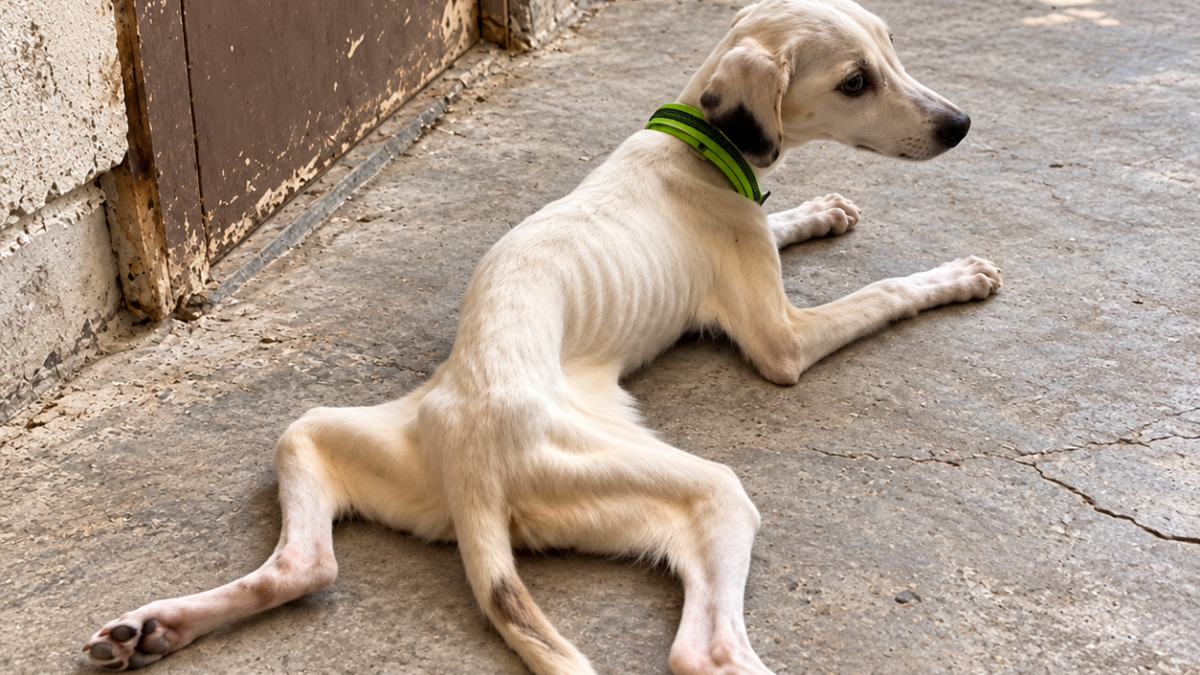
PART 2
I kept my hands a few inches from Benito’s body.
Every instinct in me wanted to catch him before he fell.
But Elena, who had come through the doorway carrying medication, saw what was happening and whispered, “Wait.”
Benito pushed.
His front legs straightened first.
Then his back legs tried to follow.
For one astonishing second, all four paws were beneath him.
His body shook so violently that his ears trembled.
Then he tipped sideways.
I caught him before his shoulder hit the floor.
“You did it,” I whispered.
Benito lay against my forearm, breathing hard.
“You actually did it.”
Elena knelt beside us.
Her eyes were shining.
“One second,” she said.
“One second counts.”
“It absolutely counts.”
We placed him back on his blanket.
He rested his head down as if he had just climbed a mountain.
That became our measurement of progress.
Not miles.
Not even steps.
Seconds.
One second standing.
Then two.
Then four.
Sometimes the next day was worse.
There were mornings when Benito seemed exhausted again, when his legs folded the instant they touched the floor.
Those were the days that tested us.
Recovery is rarely the clean upward line people imagine.
It is frustrating.
Uneven.
Cruel sometimes.
A puppy can do something miraculous on Tuesday and seem unable to repeat it Wednesday.
By Thursday, you begin wondering whether Tuesday happened at all.
But Benito kept trying.
And so did we.
A veterinarian named Dr. Harris began monitoring him closely.
After one examination, she sat back on her stool and looked at me.
“The stiffness worries me less than it did initially.”
“That’s good?”
“It’s good. I think much of what we’re seeing is profound weakness combined with nutritional deprivation.”
“Meaning he can recover?”
“I think he has a chance.”
A chance.
Two words.
Nothing guaranteed.
But when you work around injured animals long enough, you learn not to disrespect a chance.
“What does he need?”
“Nutrition. Rest. Controlled rehabilitation. Time.”
“We can give him those.”
Dr. Harris looked toward Benito.
“And patience.”
“We can give him that too.”
She smiled.
“I figured you’d say that.”
For the next week, Benito became the center of our routine.
We never forced him beyond what his body could tolerate.
We supported him beneath the belly with a soft sling.
We helped position his paws correctly.
We encouraged him to shift his weight.
When he got tired, we stopped.
No heroics.
No rushing.
His body had spent too long surviving.
Now it had to learn living.
Food brought the first visible changes.
His eyes became brighter.
His coat stopped looking quite so dull.
The sharpness of his ribs softened slightly.
Even his personality began appearing.
One morning, I reached into his enclosure to change his blanket and discovered that Benito had grabbed the edge of the clean towel between his teeth.
I pulled gently.
He held on.
I stared at him.
“You’re fighting me over laundry now?”
He tugged again.
Elena laughed from across the room.
“That’s a puppy.”
It was.
For the first time, Benito was behaving like one.
I let him win.
He dragged perhaps four inches of towel toward himself before becoming exhausted and lying down on it.
“You’re a terrifying opponent,” I told him.
His tail moved.
Not a full wag.
Just one soft tap against the blanket.
I stopped smiling.
“Elena.”
“What?”
“Look.”
She turned.
Benito’s tail moved again.
Tap.
Tap.
Elena covered her mouth.
We had celebrated bowel movements, ounces gained, stronger paw placement, and three-second stands.
But somehow those two little taps nearly broke us.
Because strength was returning to his body.
Trust was returning to his mind.
And joy—something I wasn’t sure Benito had ever been allowed to experience—was beginning to appear.
Then, three days later, a man walked into the shelter and changed everything.
His name was Daniel Ruiz.
He wasn’t there to adopt.
He wasn’t a volunteer.
He stood near the front desk gripping a faded baseball cap between both hands.
“Are you the person taking care of the little brown puppy?” he asked.
I happened to be passing through the lobby.
I stopped.
“What puppy?”
“The one who couldn’t walk.”
My stomach tightened.
We had shared very limited information about Benito because the circumstances surrounding his arrival were unclear.
“Why are you asking?”
Daniel looked toward the receptionist, then back at me.
“I think I know where he came from.”
Everything inside me went still.
“Come with me.”
I took him into a small office and closed the door.
Daniel sat across from me but didn’t relax.
He twisted the cap again.
“I saw a photograph somebody showed me.”
“Where?”
“My sister follows rescue pages. She sent it because she knew I’d been worried about a puppy.”
“What puppy?”
He swallowed.
“The people living behind my house had a litter.”
I didn’t interrupt.
“There were five puppies originally. Maybe six. I’m not sure.”
“Did you see Benito there?”
“I think so.”
“Think or know?”
Daniel looked at me directly.
“Know.”
I leaned back.
“Tell me everything.”
The property belonged to a man named Curtis Hale.
According to Daniel, Curtis had several dogs in a fenced backyard and occasionally bred them.
Nothing elaborate.
Nothing professional.
Mostly accidental litters followed by cash sales.
Daniel had heard puppies crying at different times, but he had never been inside the property.
Then one afternoon, while repairing part of his fence, he saw a small puppy lying near a wooden shed.
“That puppy barely moved,” Daniel said.
“What did you do?”
“I called over the fence.”
“To Curtis?”
“He wasn’t there. His girlfriend came outside.”
“Name?”
“Melissa.”
“What did she say?”
“That the puppy was sick and they were handling it.”
“When?”
“About three weeks before I saw the rescue picture.”
Three weeks.
I thought about Benito’s condition on arrival.
“How often did you see him after that?”
“Several times.”
“Outside?”
“Yes.”
“Was there food?”
“Sometimes bowls. Sometimes empty. I couldn’t tell whose they were.”
“Water?”
“Same.”
“Did you contact anyone?”
Daniel lowered his eyes.
That answer was written on his face before he spoke.
“No.”
Anger rose in me, but I controlled it.
“Why?”
“I thought about it.”
“That isn’t what I asked.”
His jaw tightened.
“I didn’t know if it was really neglect. They had other dogs. Those dogs looked normal.”
“And the puppy?”
“He didn’t.”
Silence filled the office.
Daniel looked miserable.
“I should’ve called.”
“Yes,” I said.
He flinched.
I didn’t soften the truth.
“But you’re here now. So help us now.”
He nodded quickly.
“I will.”
“Do you have photographs?”
“No.”
“Messages? Anything where you discussed the puppy with someone?”
His eyes lifted.
“My wife.”
“Find them.”
He pulled out his phone.
While he searched, I called Dr. Harris and asked her to come to the office.
Then I contacted the shelter director, Marisol.
Within twenty minutes, the small room had become crowded.
Daniel found six text messages.
The earliest was dated seventeen days before Benito arrived.
He had written to his wife:
That little pup behind us is down again. I don’t think it can stand.
Three days later:
Still there by shed. I’m going to say something if they don’t take it in.
His wife had replied:
Call animal control.
Daniel’s response:
I don’t want war with neighbors if they’re treating it.
Another message five days later:
Puppy looks worse.
I photographed the screen with his permission and asked him to email screenshots.
Marisol folded her arms.
“Did anyone else see the dog?”
“My son.”
“How old?”
“Seventeen.”
“Anyone else?”
“Maybe the guy across the alley.”
Marisol looked at me.
“We need animal control involved immediately.”
Dr. Harris agreed.
Daniel looked confused.
“Can’t you just confront Curtis?”
“No,” I said.
“Why?”
“Because if there are other animals on that property, the worst thing we can do is warn somebody before authorities look.”
His face changed.
“There are still dogs there.”
Exactly.
By that afternoon, we had filed a report.
We documented Benito’s weight at intake.
His body condition.
Muscle wasting.
Parasite burden.
Inability to stand.
Skin irritation.
Every medication.
Every photograph.
Every observation.
Dr. Harris wrote a medical summary describing severe malnutrition consistent with prolonged inadequate nutrition.
She was careful with every word.
Facts.
Not emotion.
Facts survive courtrooms.
Anger does not always.
But my anger kept growing anyway.
That evening, I sat beside Benito.
He had no idea any of this was happening.
He had spent ten minutes practicing weight shifts and had managed two unassisted steps before falling gently into my hands.
Now he was asleep.
I studied his tiny paws.
“You don’t know it yet,” I whispered, “but people are finally asking questions.”
Benito twitched in his sleep.
“And somebody is going to answer them.”
The next morning, Animal Control Officer Renee Cole called.
“I’m heading to the property.”
“Can I come?”
“No.”
“I knew you were going to say that.”
“Then why ask?”
“Optimism.”
She almost laughed.
“I’ll contact you afterward.”
“Please check every animal.”
“That’s why I’m going.”
The next four hours felt like a full day.
Every time the phone rang, I grabbed it.
Adoption inquiry.
Supplier.
Volunteer.
Wrong number.
Finally, shortly after two, Renee called.
Her voice was different.
Controlled.
Professional.
But tight.
“How many?” I asked immediately.
“Five adult dogs. Four puppies.”
My heart sank.
“Condition?”
“Mixed.”
“What does mixed mean?”
“Some appear healthy. Two puppies are underweight. One adult female is thin.”
“Did you remove them?”
“I can’t discuss everything yet.”
“Renee.”
“I know.”
“Was Benito there?”
A pause.
“We found veterinary paperwork with a puppy matching his age and description.”
My hand tightened around the phone.
“Whose name?”
“Curtis Hale.”
There it was.
The first hard connection.
“What did he say?”
“That he gave the puppy away.”
“To who?”
“He claims he doesn’t remember.”
“That’s convenient.”
“Yes.”
I heard papers moving.
“He also says the puppy had a congenital problem and wouldn’t eat.”
Dr. Harris, standing beside me, heard enough from my expression.
I repeated it aloud.
She immediately shook her head.
“Ask her whether they have veterinary records supporting that.”
I did.
Renee answered, “None presented.”
Dr. Harris held out her hand.
I put the call on speaker.
“This is Dr. Harris,” she said. “I’m treating Benito. Nothing in my examination currently supports a congenital condition as the primary cause of his inability to stand. We’re seeing generalized weakness and severe loss of muscle mass associated with malnutrition.”
Renee said, “Can you put that in an updated report?”
“Today.”
“Good.”
Then Renee became quiet.
“There’s something else.”
I knew from her tone that I wasn’t going to like it.
“What?”
“We found a plastic storage bin behind the shed.”
My stomach turned.
“Inside?”
“Old towels. Fecal material. Food residue.”
Nobody spoke.
Renee continued.
“Curtis says it was used temporarily for a sick puppy.”
I closed my eyes.
A plastic storage bin.
Benito, unable to stand.
Lying wherever someone placed him.
Suddenly I pictured him alone inside it.
Not understanding why his legs no longer worked.
Not able to move away from his own waste.
Waiting for food.
Waiting for water.
Waiting for someone.
“Was there a lid?”
“Yes.”
My eyes opened.
“With ventilation?”
“A few holes.”
Dr. Harris whispered, “My God.”
I could barely speak.
“Are you telling me they kept him in a box?”
“I’m telling you what we found. The investigation determines the rest.”
Facts.
Again.
Facts.
But Benito wasn’t a fact to me.
He was three months old.
He tugged towels.
He had just discovered tail wagging.
And somebody may have put him inside a plastic bin because caring for him was inconvenient.
That was the moment I stopped wanting only an explanation.
I wanted accountability.
Real accountability.
Not internet outrage.
Not insults.
Not somebody losing an argument online.
I wanted every photograph dated.
Every medical finding documented.
Every witness interviewed.
Every contradiction preserved.
I wanted a case strong enough that nobody could dismiss what had happened as a misunderstanding.
And while adults began building that case around him, Benito kept doing the one thing that mattered most.
He kept getting stronger.
Three days later, he took four steps.
Elena was kneeling six feet away holding a tiny piece of chicken.
I supported Benito beneath the belly with the sling but left it loose.
“Come on, baby,” she whispered.
Benito leaned forward.
One paw.
Then another.
His rear leg swung awkwardly.
He planted it.
Step.
His body swayed.
“Easy.”
Another step.
Then another.
Four.
On the fifth attempt, he sat down suddenly.
Elena laughed through tears.
“You walked.”
Benito stared at the chicken.
She gave it to him.
Apparently he considered food more important than history.
Within two weeks, his weight had increased steadily.
His legs were still thin, but muscles were beginning to return.
He could stand long enough to eat from a raised bowl.
He began barking when Elena arrived in the morning.
His voice surprised all of us.
The first time he did it, I nearly dropped a tray.
A sharp little yap came from his enclosure.
I turned.
Benito stared at me.
“Was that you?”
Yap.
Elena walked in.
“He found his opinion.”
“He seems angry.”
“He lives with you. He learned from the best.”
I ignored her.
Benito barked again.
“See? He agrees with me.”
The case against Curtis moved more slowly.
That frustrated me, but Renee kept reminding me that slow did not mean inactive.
Animal cruelty investigations had procedures.
Veterinary assessments.
Ownership verification.
Statements.
Search documentation.
Evidence handling.
Meanwhile, the dogs removed from Curtis’s property were being evaluated.
The two underweight puppies responded quickly to regular feeding.
The thin adult female had parasites and untreated dental problems.
None were in Benito’s condition.
That complicated things.
Curtis’s attorney would later use it.
If Curtis intentionally starved animals, the argument went, why were most of his dogs relatively healthy?
Dr. Harris answered that question before anyone asked her in court.
“Neglect doesn’t have to affect every animal equally,” she told me. “Sometimes one sick or weaker animal becomes the one people stop investing in.”
“Because it requires more effort.”
“Yes.”
The thought disgusted me.
Benito may have become inconvenient.
A puppy who didn’t grow fast enough.
A puppy who developed parasites.
A puppy who weakened.
Instead of increasing care, someone may have reduced it.
A cruel circle.
Too weak to reach food.
Fed less because he was weak.
Too weak to stay clean.
Isolated because he became messy.
Then weaker still.
A week later, Renee came to the shelter in person.
She brought a manila folder.
“I need you to identify something.”
She showed me a photograph taken from Curtis’s phone after a warrant authorized examination of certain records and images.
The picture showed several puppies in a yard.
One was unmistakably Benito.
He was smaller than the others but standing.
Standing.
My breath caught.
“When was this?”
“Timestamp says six weeks before he came to you.”
I stared.
Benito stood beside a red rubber ball.
His legs were normal beneath him.
His body was thin but not emaciated.
“He could walk.”
“Yes.”
I looked at Renee.
“That destroys the congenital explanation.”
“It damages it.”
“What else?”
She pulled out another photograph.
Four weeks before intake.
Benito looked thinner.
Still upright.
Another.
Three weeks.
Sitting near the shed.
Then a short video.
Renee hesitated.
“You sure?”
“Play it.”
Curtis’s voice could be heard behind the camera.
A puppy—Benito—was trying to get up.
He staggered.
Someone laughed.
Then Curtis said, “This one’s defective.”
The video ended.
For several seconds, I couldn’t move.
Renee shut the phone screen.
“I thought you should know what exists.”
I stood and walked across the room.
“Defective.”
“I know.”
“He was starving and they called him defective.”
“We don’t know his exact nutritional condition that day.”
I turned sharply.
Renee met my anger without reacting.
She wasn’t minimizing it.
She was keeping the case clean.
I understood.
I hated it, but I understood.
“Right,” I said.
She nodded.
“Right.”
I looked toward the rehabilitation room.
Benito was inside.
Working.
Trying.
Every day.
And the man responsible for caring for him had apparently filmed his weakness instead.
“What happens now?”
“Charges are being reviewed.”
“How serious?”
“That depends on what prosecutors believe they can prove.”
“Renee.”
She sighed.
“Neglect. Potential cruelty. Failure to provide necessary care. Possibly more depending on jurisdiction and evidence.”
“And the other dogs?”
“Custody proceedings are separate.”
“Will he get them back?”
“I don’t know.”
That answer haunted me.
The idea of Benito returning to Curtis was impossible, but technically his ownership status still had to be resolved.
Marisol reassured me.
“We will fight that.”
“What if he demands Benito back?”
“He hasn’t.”
“Yet.”
“He may not.”
But he did.
Three days later, Curtis Hale formally claimed Benito.
When Marisol told me, I thought she was joking.
“He wants him back?”
“He says the shelter is unlawfully withholding his property.”
“Property.”
“That’s the legal framing.”
I stood so fast my chair hit the wall.
“He nearly starved that puppy until he couldn’t stand.”
“I know.”
“He filmed him falling.”
“I know.”
“And now he wants him returned?”
“Probably because surrendering him makes the case look worse.”
That stopped me.
Of course.
This wasn’t affection.
It was strategy.
If Curtis said he had intentionally given Benito away, prosecutors could ask why he dumped a severely ill puppy without care.
If he claimed Benito was stolen or improperly removed, he could portray himself as an owner trying to retrieve an animal.
“He doesn’t care about Benito,” I said.
Marisol’s expression hardened.
“No.”
“What do we do?”
“We let the legal process work.”
“I hate that sentence.”
“So do I.”
Curtis’s attorney sent a letter demanding release of the puppy.
We refused based on the active investigation and applicable protective hold.
Then the lawyer escalated.
Suddenly the rescue was accused of exploiting Benito’s condition for donations.
The accusation made my blood boil.
We had barely mentioned the investigation publicly.
But Curtis began talking.
He told people that Benito had been born disabled.
That he had fed him.
That a “rescue activist” neighbor had stolen the puppy.
That we were inventing abuse.
None of it matched what we knew.
But lies do not need to be consistent to spread.
One morning, Elena came into the office holding her phone.
“Don’t read the comments.”
“I wasn’t planning to.”
“You’re lying.”
“Yes.”
She sat opposite me.
“People are saying we made him look thinner.”
“How exactly would we do that?”
“I told you not to read them.”
“I’m not.”
“You’re asking what they say.”
“That’s different.”
“It absolutely isn’t.”
I reached for my phone.
She took it from my desk.
“Elena.”
“No.”
“Give me my phone.”
“No.”
“I run intake.”
“And currently I run your blood pressure.”
Despite myself, I laughed.
That was Elena.
But the attacks worsened.
Curtis gave an interview to a small online channel.
He sat on his porch and described himself as a hardworking dog owner being targeted by “animal rights people.”
He said Benito had a neurological disorder.
He said he had been hand-feeding him.
He said the plastic bin was a clean recovery area.
Then he said something that destroyed his credibility.
“The puppy was eating fine right up until they took him.”
Dr. Harris paused the video.
“Eating fine?”
“Yes.”
She reopened Benito’s intake records.
“If he was eating adequate calories consistently, his body condition makes no sense unless there was another major disease process.”
“Which we didn’t find.”
“Correct.”
“So either he’s lying about feeding him…”
“Or there’s an undiagnosed catastrophic condition that has mysteriously improved under appropriate nutrition and routine care.”
I looked at her.
“That sounded sarcastic.”
“I’m a doctor. I don’t do sarcasm.”
“You absolutely do sarcasm.”
“Prove it.”
For the first time in days, I smiled.
Then she turned serious.
“Document the interview.”
We did.
Curtis’s own public statements became evidence.
Benito, meanwhile, was approaching a milestone none of us dared predict when he arrived.
Ten consecutive steps.
We lined the rehabilitation room with nonslip mats.
I sat at one end.
Elena sat at the other.
Benito stood between us.
No sling.
No hands under him.
Just Benito.
“Come here,” I said.
He looked at me.
Then at Elena.
Elena held chicken.
Traitor.
He turned toward her.
“Seriously?”
She grinned.
“One.”
Benito stepped.
“Two.”
Another.
“Three.”
His hips wobbled.
“Four.”
His rear paw slipped slightly, but he corrected it.
“Five.”
I stopped counting aloud because my voice was shaking.
Six.
Seven.
Eight.
Nine.
Ten.
At eleven, Benito reached Elena and practically collapsed into her lap.
She picked him up, laughing and crying at once.
I sat on the mat.
For months afterward, I would remember that moment more clearly than anything from the legal case.
Not Curtis.
Not his attorney.
Not the hearing.
Benito walking.
Because revenge, I eventually learned, did not look like destroying someone.
Sometimes it looked like the life they discarded becoming beautiful in spite of them.
Still, justice mattered.
And ours was only beginning.
The first court hearing concerned custody of the seized animals.
Curtis entered wearing a pressed shirt and an expression of injured dignity.
His lawyer argued that animal control had overreacted based on one “medically compromised puppy.”
Then Dr. Harris testified.
She brought records.
Numbers.
Images.
Science.
Benito had entered care severely underweight for his age and frame.
He had significant muscle wasting.
He was too weak to ambulate normally.
He had parasites requiring treatment.
His condition had improved substantially with controlled feeding, deworming, hygiene, and rehabilitation.
Curtis’s attorney stood.
“Doctor, is it possible that a congenital disorder could cause weakness?”
“Certainly.”
“So Mr. Hale’s explanation is medically possible.”
“A congenital disorder causing weakness is possible.”
I knew what she was doing.
“So you agree with him?”
“No.”
The lawyer paused.
“Why not?”
“Because you asked whether congenital disorders can cause weakness. They can. You did not ask whether the evidence in this puppy supports Mr. Hale’s claimed explanation.”
“And does it?”
“Not based on my examinations.”
She explained that Benito’s rapid functional improvement tracked nutritional recovery and physical rehabilitation.
No imaging or examination had revealed the kind of severe permanent defect Curtis had described publicly.
Then the prosecutor introduced the photographs.
Benito standing six weeks before intake.
Then thinner.
Then weaker.
Then the video.
“This one’s defective.”
The courtroom became completely silent.
Curtis stared straight ahead.
I watched the judge.
His face revealed nothing.
The prosecutor replayed the clip.
Curtis’s lawyer objected to context.
The judge allowed limited questioning.
Then Daniel testified.
He admitted something that made him look bad but made him believable.
He had seen Benito suffering.
He had delayed reporting it.
“I should have called sooner,” he said.
The prosecutor asked, “Why didn’t you?”
“Because I didn’t want trouble with my neighbor.”
“Do you regret that?”
Daniel looked toward me.
Then toward the table where photographs of Benito’s intake condition had been placed.
“Every day.”
Curtis’s lawyer attacked his credibility.
“You disliked my client, correct?”
“No.”
“You had disputes over fencing?”
“One.”
“So there was conflict.”
“A disagreement about six inches of fence.”
“Enough to motivate you to report him?”
“If I wanted revenge over a fence, I wouldn’t have waited three weeks while a puppy got worse.”
The courtroom shifted.
Even the judge glanced up.
Daniel swallowed.
“That’s the part I’m ashamed of.”
It was one of the most powerful statements of the day because it carried no performance.
He wasn’t pretending to be a hero.
He wasn’t.
He had failed Benito at first.
Then he chose to stop failing him.
There is value in that truth too.
The judge temporarily denied Curtis’s request for immediate return of the seized animals pending resolution of the cruelty investigation.
I exhaled for what felt like the first time in hours.
But Curtis still wasn’t finished.
Outside the courthouse, he walked toward us.
Renee stepped between us immediately.
Curtis stopped several feet away.
His face was red.
“You people ruined my life over a dog.”
I stared at him.
“A puppy.”
“What?”
“He was a puppy.”
“You know what I mean.”
“Yes,” I said. “I do.”
His attorney approached quickly.
“Curtis, don’t.”
But Curtis pointed at me.
“He was sick before any of this.”
“And when he got sicker?”
“I fed him.”
“When he couldn’t stand?”
“I fed him.”
“When he lay in his own waste?”
His jaw tightened.
“You weren’t there.”
“No,” I said quietly. “I was there afterward.”
That silenced him.
I took one step closer, still keeping distance.
“I was there when he was too weak to lift his chest to reach a food bowl.”
His attorney repeated, “Curtis, leave.”
“I was there when we changed his blankets because he couldn’t crawl away from the place where he urinated.”
Curtis looked away.
“I was there when he stood for one second and his whole body shook.”
“Stop talking to my client.”
I looked at the attorney.
“I’m finished.”
Then I looked at Curtis again.
“Benito isn’t.”
We walked away.
That evening, Benito ran.
Not far.
Not gracefully.
But he ran.
Elena had taken him into a small fenced exercise yard.
He spotted me through the gate.
His ears lifted.
Then he came toward me with a strange bouncing gait.
Three fast steps.
Four.
Five.
His front half moved faster than his rear half, and for a second I thought he would tumble.
He corrected himself.
Then he reached my shoes and attacked my laces.
I dropped to my knees.
“You ran.”
Benito growled at the shoelace.
“You actually ran.”
Elena leaned against the fence.
“You know he’s going to be impossible now.”
“Good.”
“He’ll eat your furniture.”
“Great.”
“Your shoes.”
“Fine.”
“Phone chargers.”
I picked Benito up.
He licked my chin.
“Let him.”
The legal case took another two months.
During that time, Benito changed so much that new volunteers sometimes didn’t believe his intake photographs showed the same puppy.
He gained weight.
His coat grew glossy.
His posture improved.
His hind legs remained slightly weaker than normal, but Dr. Harris expected continued improvement.
He learned toys.
At first, squeakers terrified him.
Then he discovered that biting them caused the noise.
After that, peace ended.
He learned beds.
Specifically, he learned that expensive orthopedic dog beds were inferior to cardboard boxes containing freshly folded towels.
He learned doors.
If a door opened, Benito believed it had opened specifically for him.
He learned people.
Most importantly, he learned that hands could mean something different.
Hands could lift gently.
Hands could clean.
Hands could feed.
Hands could steady.
Hands could scratch behind his ears until his back leg started kicking.
His fear didn’t disappear overnight.
But trust accumulated.
One ordinary moment at a time.
Then came the criminal hearing.
The prosecutor offered Curtis a plea arrangement involving animal cruelty-related charges, forfeiture of the dogs, restitution for veterinary expenses, probation conditions, mandatory animal-care education, and restrictions on possessing or breeding animals for a defined period.
Curtis refused.
He wanted trial.
His decision shocked his lawyer.
It did not shock me.
People who spend enough time rewriting reality sometimes begin believing they can make everyone else live inside their version of it.
Trial began on a Monday.
The prosecution’s case was simple.
Benito had been under Curtis’s control.
Benito progressively deteriorated.
Curtis knew he was deteriorating.
Curtis failed to obtain adequate veterinary intervention.
He confined Benito in conditions inappropriate for a debilitated puppy.
By the time Benito left the property, he was severely malnourished and unable to stand independently.
The defense tried three arguments.
First, congenital illness.
Second, theft.
Third, financial hardship.
The congenital argument weakened under medical testimony.
The theft claim weakened under contradictory statements Curtis himself had made.
Financial hardship almost made me angrier than the others.
There were low-cost clinics.
Animal control.
Rescues.
Surrender options.
Neighbors.
Dozens of possible doors he could have knocked on.
Instead, there was a plastic bin.
During cross-examination, the defense asked Dr. Harris whether she could prove exactly how many calories Benito had received each day.
“No.”
“Can you prove Mr. Hale intentionally withheld food?”
“I can testify to Benito’s medical condition.”
“So no.”
“I cannot testify to an event I did not witness.”
“Thank you.”
The attorney turned toward the jury as though he had scored something significant.
Then the prosecutor stood for redirect.
“Doctor, does severe neglect require that someone count every missed meal?”
“No.”
“What does the animal’s body tell you?”
Dr. Harris looked toward the jury.
“That its needs were not being met.”
The prosecutor showed Benito’s intake photograph.
“Were this puppy’s nutritional needs being met?”
“No.”
“His hygiene needs?”
“No.”
“His medical needs?”
“No.”
“Did he improve after those needs began being met?”
“Dramatically.”
No further questions.
Then came evidence I hadn’t known existed.
A text exchange recovered from Curtis’s phone.
Melissa had messaged him eleven days before Benito disappeared from the property:
He needs a vet. He’s not getting up now.
Curtis replied:
Not paying hundreds for one pup.
Melissa:
Then surrender him.
Curtis:
Nobody wants a messed-up dog.
I felt something cold settle in my chest.
Not paying hundreds.
There it was.
Not confusion.
Not ignorance.
A choice.
Melissa sent another message.
At least call the shelter.
Curtis replied:
They’ll ask questions.
The prosecutor let that message remain on the courtroom screen for several seconds.
They’ll ask questions.
Eventually, somebody had.
Curtis testified in his own defense.
That was the turning point.
His attorney asked why he didn’t seek veterinary treatment.
Curtis said, “I thought the puppy would recover.”
“How were you caring for him?”
“I fed him by hand.”
“How often?”
“Several times a day.”
“With what?”
“Puppy food softened with water.”
That sounded plausible.
Until cross-examination.
The prosecutor stood.
“You fed Benito several times a day?”
“Yes.”
“Every day?”
“Yes.”
“Up until he left your property?”
“Yes.”
“So when you wrote to Melissa that you weren’t paying hundreds for a veterinarian, you nevertheless believed he was seriously enough impaired that veterinary care might cost hundreds?”
“My girlfriend was overreacting.”
“Yet you also called him defective in a video.”
“Joking.”
“You put him inside a storage container?”
“To keep him safe.”
“From what?”
“The other dogs.”
“Did you clean it?”
“Yes.”
“How often?”
“All the time.”
“All the time?”
“Every day.”
The prosecutor picked up a report.
“Animal control documented layered dried fecal material inside that container.”
Curtis shifted.
“After the puppy left.”
“The container filled itself afterward?”
His attorney objected.
Sustained.
The prosecutor continued.
“You claimed Benito was born unable to walk correctly.”
“Yes.”
A photograph appeared.
Benito standing normally.
“Is this Benito?”
Curtis hesitated.
“It looks like him.”
“Photograph recovered from your phone.”
“Then probably.”
“He’s standing.”
“For a second maybe.”
Another photograph.
Benito walking behind another puppy.
Another.
Benito upright with a ball.
Then a video from weeks earlier.
Benito running clumsily across the yard.
The prosecutor stopped the video.
“Born unable to walk?”
Curtis stared at the screen.
“I said correctly.”
“You told investigators he had always been basically crippled.”
“That’s not exactly what I said.”
The prosecutor opened the interview transcript.
“Would you like me to read exactly what you said?”
Curtis looked toward his lawyer.
That moment mattered.
Not because it was dramatic.
Because juries notice when people search for rescue from their own words.
The prosecutor read the statement.
Then she asked the question that ended the defense’s central story.
“If Benito’s inability to stand was congenital, why was he running six weeks before he came into rescue?”
Curtis had no answer.
He eventually said, “I’m not a veterinarian.”
The prosecutor nodded.
“Exactly.”
Closing arguments came the next morning.
I barely slept the night before.
Benito stayed with a foster volunteer because I knew I would be useless.
At 3:00 a.m., I stared at my ceiling thinking about every version of the outcome.
Guilty.
Not guilty.
Reduced charges.
Mistrial.
Appeal.
The law does not promise emotional satisfaction.
It promises process.
Sometimes.
But I also realized something important.
Curtis could never reverse Benito’s recovery.
No verdict could take away those first steps.
No judge had authority over the tail wag.
No defense attorney could cross-examine joy out of him.
Benito had already won the part that mattered most.
The verdict came shortly after noon.
Guilty on the primary neglect charge.
Guilty on an associated failure-to-provide-care count.
Another allegation was dismissed for insufficient evidence.
I was surprised by my own reaction.
I didn’t cheer.
I didn’t smile.
I just closed my eyes.
Elena gripped my hand.
“That’s it,” she whispered.
“No.”
She looked at me.
I thought about Benito waiting at the foster home.
“That’s not it.”
She understood.
Sentencing occurred later.
Curtis was ordered to pay restitution toward medical and care costs, received probation with strict animal-possession restrictions, lost ownership rights to the animals involved in the proceeding, and was prohibited from breeding dogs during the court-imposed period.
The sentence wasn’t the fantasy punishment angry people online would have demanded.
It was real.
Enforceable.
Documented.
And most important for us, Benito was free.
Legally free.
The other dogs were transferred into appropriate placements after medical clearance and individual assessments.
Some were adopted quickly.
The thin adult female went to an experienced foster home.
One of the underweight puppies was adopted by a veterinary technician.
Daniel eventually adopted another.
When he told me, I stared at him.
“You sure?”
“Yes.”
“You understand puppies destroy property?”
“I have teenagers.”
“Fair point.”
He grew serious.
“I can’t undo waiting too long with Benito.”
“No.”
“I know.”
“But you can do better now.”
He nodded.
“That’s what I’m trying to do.”
Months later, Daniel sent me a photograph of his adopted dog sleeping upside down on a couch.
The caption read:
Reporting this one early: dangerous levels of comfort.
I laughed harder than I expected.
Not every person in Benito’s story had been cruel.
Some had simply been afraid.
Some uncertain.
Some late.
There is a difference between the people who fail and keep walking and the people who turn around.
Then we reached the question I had been avoiding.
Who would adopt Benito?
His medical hold ended.
His legal hold ended.
He was healthy enough.
Applications arrived almost immediately.
Families.
Couples.
A retired teacher.
A veterinary student.
A woman with a huge fenced yard.
Each application seemed wonderful.
I hated all of them.
Marisol noticed.
“You’re rejecting people in your head before interviews.”
“I am not.”
“You read one application and complained that their living room rug looked slippery.”
“It did.”
“They said they own nonslip runners.”
“Could be lying.”
She stared at me.
“Another applicant has twenty years of dog experience.”
“Too confident.”
“One works from home.”
“Benito needs independence.”
“One doesn’t work from home.”
“Benito shouldn’t be alone.”
Marisol leaned back.
“Interesting.”
“What?”
“You’ve discovered that no household on Earth is acceptable.”
“That’s not true.”
“Name one.”
I opened my mouth.
Nothing came out.
Marisol smiled.
“Oh.”
“Don’t.”
“Oh.”
“I said don’t.”
“You’re adopting him.”
“I work too much.”
“So?”
“I already have a dog.”
“Who loves him.”
“My house is small.”
“He is also small.”
“He may need continued therapy.”
“You do his therapy.”
“This is manipulation.”
“This is observation.”
I left her office annoyed.
Mostly because she was right.
My older dog, Jasper, had met Benito several times during supervised socialization.
Jasper was ten.
Patient.
Unimpressed by puppy chaos.
Benito worshiped him.
The first time Benito watched Jasper walk up a small ramp, Benito followed.
Not because any human called him.
Because Jasper did it.
At my house, Benito had already spent several weekends as a temporary foster.
He knew the kitchen.
He knew which door led outside.
He knew the bed beside my desk.
He knew that Jasper got one biscuit after the evening walk and that persistent staring might result in a second biscuit being divided unfairly in his favor.
But adoption felt different.
Permanent.
I told myself I was afraid of making an emotional decision.
The truth was simpler.
I was afraid of admitting he had become mine long before any paperwork said so.
That Friday, I took Benito home again.
I placed his travel bag by the door.
Jasper sniffed it.
Benito trotted directly to the living room, grabbed Jasper’s favorite stuffed duck, and ran away.
Jasper looked at me.
“I know.”
He sighed.
“I know.”
Benito crashed into the coffee table, recovered, and continued.
His gait still had a tiny hitch when he became tired.
Dr. Harris said he might always have one.
I loved it.
Not because I wanted him imperfect.
Because every uneven step reminded me that he was taking steps at all.
That evening, rain tapped against the windows.
I sat on the floor.
Jasper slept beside the couch.
Benito crawled into my lap carrying the mutilated duck.
I scratched behind his ears.
“You know people want you.”
He chewed the duck.
“Really good people.”
Chew.
“Big yards.”
Chew.
“More free time than me.”
He dropped the toy.
Then he curled against my stomach and fell asleep.
That was unfair.
“You planned this.”
His breathing became slow.
I looked at Jasper.
“Don’t judge me.”
Jasper opened one eye.
“I said don’t.”
The following Monday, I walked into Marisol’s office.
She didn’t look up from her computer.
“No.”
I stopped.
“I didn’t say anything.”
“You’re not allowed to criticize another adoption application.”
“I’m not.”
She looked up.
I placed an application on her desk.
My application.
Marisol tried not to smile.
Failed.
“Your yard is small.”
“Apparently the applicant understands ramps and physical rehabilitation.”
“You work too much.”
“The applicant has permission to bring the dog to work occasionally.”
“You have an elderly dog.”
“Excellent role model.”
She picked up a pen.
“References?”
“You’ve known me eight years.”
“Could be lying.”
I laughed.
She signed the first page.
Benito became mine officially three days later.
The shelter staff held a ridiculous little celebration.
Elena tied a blue bandana around his neck.
Someone brought a dog-safe cake.
Someone else made a certificate.
Benito ate part of the certificate.
“Symbolic,” Elena said.
“Of what?”
“His feelings about bureaucracy.”
Then she became quiet.
“You remember his first night?”
“Yes.”
“I thought he might not make it.”
“So did I.”
Benito was busy licking frosting from the floor.
Elena watched him.
“Look at him.”
I did.
And for a second, the room disappeared.
I saw the wet blanket.
The hollow body.
The paws that couldn’t carry him six inches toward a bowl.
Then I saw the puppy in front of me.
Standing.
Strong enough to steal cake.
Strong enough to run.
Strong enough to become annoying.
It was perfect.
But there was one final thing I needed to do.
Months after the trial, Curtis’s property went up for sale.
I only knew because Daniel mentioned the sign.
“He’s moving?”
“Looks that way.”
I expected satisfaction.
Instead, I felt almost nothing.
Curtis had become smaller in my mind.
Not forgiven.
Not excused.
Just less important.
Then Daniel told me something else.
“The plastic bin is still behind the shed.”
I looked at him.
“What?”
“I can see it through the fence.”
I thought about that bin for days.
I hated that it existed.
Hated what it represented.
Eventually, I contacted the appropriate person handling the property cleanup after the evidentiary release had concluded and asked whether the abandoned container could legally be disposed of.
When permission was confirmed, Daniel offered to handle it.
“No,” I said.
“I can toss it.”
“I want to.”
So one Saturday morning, I drove over.
Benito came with me but stayed safely inside my vehicle with Elena while I went through the proper access arrangements.
The yard looked ordinary.
That disturbed me.
Cruelty rarely announces itself with dramatic scenery.
There was a fence.
Grass.
A shed.
An old hose.
A broken chair.
And behind the shed, faded by months of sun, was the gray plastic storage bin.
I stood in front of it.
For a long time, I did nothing.
There were scratches inside.
I couldn’t know which were Benito’s.
Maybe none.
Maybe all.
I closed my eyes.
In my imagination I heard the quiet scratching of a puppy too weak to climb out.
Then I heard barking from the car.
Benito.
Alive.
Impatient.
Probably angry that he wasn’t included.
I opened my eyes.
Daniel stood nearby.
“You okay?”
“Yes.”
“Want help?”
I shook my head.
I lifted the bin.
It was almost weightless.
That shocked me.
Something that had carried so much meaning weighed almost nothing.
We placed it with the waste scheduled for removal.
No ceremony.
No smashing it.
No dramatic destruction.
Just garbage.
Exactly where it belonged.
When I returned to the car, Elena opened the door.
Benito practically launched himself toward me.
I caught him.
“Hey!”
He covered my chin in frantic kisses.
“All right.”
More kisses.
“I was gone five minutes.”
His tail whipped against the seat.
Elena smiled.
“Worth it?”
I looked back toward the yard.
Then at Benito.
“Yes.”
On the drive home, I realized that was the revenge I had wanted without knowing how to name it.
Curtis had looked at a struggling puppy and decided he wasn’t worth the cost of saving.
Benito answered by living.
Curtis called him defective.
Benito answered by walking.
Curtis let him lie helpless.
Benito answered by running.
Curtis treated him like something disposable.
Benito became the center of a home, a rescue team, and a legal case that forced people to confront exactly what neglect can do.
And the box that once represented the limits of Benito’s world ended up exactly where it belonged.
Thrown away.
While Benito rode home with his head in my lap.
Life after rescue did not become a perfect movie ending.
Benito still had bad days.
Cold weather sometimes made his rear legs stiff.
Long walks tired him.
He needed continued exercise to maintain strength.
He once stole an entire sandwich from my kitchen counter and then limped dramatically when I confronted him.
I called Dr. Harris in a panic.
She examined him.
Nothing wrong.
“He’s manipulating you.”
“Dogs don’t fake injuries.”
Dr. Harris looked at Benito.
Benito looked innocent.
She stared at me.
“Your dog does.”
On the way home, Benito stood perfectly normally in the passenger footwell.
“You are a criminal.”
Tail wag.
“He was right about one thing.”
Benito tilted his head.
“You are defective.”
His ears dropped.
I immediately hugged him.
“No, no, no. I’m kidding. You’re perfect.”
That dog had me completely trained.
Jasper lived another two years.
During that time, he taught Benito things none of us could.
How to wait by the door.
How to lie in the sunny patch beside the window.
How to ignore thunderstorms.
How to inspect every grocery bag in case one contained chicken.
When Jasper’s health began failing, Benito changed.
The wild puppy slowed down around him.
He slept closer.
He waited when Jasper struggled with stairs.
One evening, I watched Benito stand at the bottom of the little ramp we had originally purchased for him.
Jasper hesitated at the top.
Benito looked back.
Waited.
Jasper descended carefully.
Benito remained there until he reached the floor.
Then they walked together into the kitchen.
I sat down and cried.
Because years earlier, Benito had been the one who needed another body beside him.
Now he had become that body for someone else.
When Jasper died, Benito searched the house for days.
He checked his bed.
His bowls.
The porch.
For the first time since his rescue, Benito refused breakfast.
That frightened me.
I sat on the kitchen floor beside him.
“I miss him too.”
Benito rested his head against my knee.
“He took care of you.”
His eyes lifted.
“You took care of him.”
Eventually he ate.
Eventually we both learned a different routine.
Grief, like rehabilitation, comes in strange increments.
A bite of breakfast.
A walk around the block.
One morning when you realize you smiled before remembering you were sad.
Benito grew into a dog people described as joyful.
That word meant more to me than healthy.
Healthy was wonderful.
Joyful was extraordinary.
He loved children.
He adored elderly people.
He became strangely fascinated by wheelchairs and walkers, perhaps because they moved slowly enough for him to inspect thoroughly.
Eventually, with professional evaluation and training, Benito began participating in supervised educational visits.
Not as a formal medical therapy animal at first.
Just as a rescue ambassador.
We visited schools to teach children about responsible animal care.
I never showed graphic photographs.
I showed one picture from Benito’s first week.
Then I showed him standing beside me.
Children always noticed his back legs.
“Does it hurt?” one little girl asked.
“Not usually.”
“Why does he walk funny?”
“His body got very weak when he was a baby.”
She frowned.
“Did somebody hurt him?”
I chose my words carefully.
“Somebody didn’t take care of him the way they should have.”
She reached down.
Benito placed his paw in her hand.
The girl looked at me.
“But somebody does now.”
“Yes.”
She scratched his ear.
“Good.”
Children have a way of reducing complicated things to the sentence that matters.
Somebody does now.
Years passed.
Benito’s story spread farther than I expected.
People contacted AMOA saying they had reported neglected animals because they remembered him.
A woman wrote that she had stopped driving past a thin dog chained behind a house and finally called authorities.
A teenager convinced his parents to surrender a sick puppy they couldn’t afford to treat instead of waiting.
Daniel began volunteering occasionally.
He always chose cleaning duty.
When I teased him, he said, “Feels appropriate.”
We eventually spoke openly about the weeks he waited before reporting Benito.
“I’ve replayed it a thousand times,” he told me.
“Don’t.”
“How can I not?”
“Because guilt is useful only while it changes what you do next.”
He considered that.
“You forgive me?”
“It’s not mine to forgive.”
He looked down at Benito.
Benito walked over and sat on Daniel’s shoe.
Daniel smiled sadly.
“I guess that’s fair.”
Benito leaned against his leg.
Maybe dogs understand something humans make unnecessarily difficult.
They do not erase yesterday.
They simply decide what you are today.
Curtis disappeared from our lives.
As far as I knew, he complied with the court order.
I never searched for him.
I never wanted another confrontation.
That surprised people.
Some expected me to hate him forever.
I did hate what he had done.
But permanent rage would have given Curtis more years of my life than he deserved.
Benito needed those years instead.
So we spent them badly, wonderfully, ordinarily.
Camping trips where Benito refused to sleep in the expensive dog tent and crawled into mine.
Birthday photographs he sabotaged by eating the decorations.
A Christmas when he stole a wrapped toy before morning and Jasper, still alive then, calmly helped him destroy the evidence.
Mud.
Vet appointments.
Nail trims.
Chewed slippers.
Car rides.
Sunlight.
Life.
The revenge wasn’t that Curtis suffered forever.
The revenge was that Benito didn’t.
On Benito’s fifth birthday, I placed five little dog-safe treats on a plate.
Elena came over.
Daniel came with his dog.
Marisol brought a ridiculous party hat.
Dr. Harris brought nothing because, in her words, “I maintain professional boundaries.”
She then spent twenty minutes feeding Benito pieces of chicken beneath the table.
I caught her.
“Professional?”
“Medical nutrition.”
“Of course.”
Benito wore the hat for eleven seconds.
We sang badly.
He barked during the final line.
Then I watched him sprint across the yard after Daniel’s dog.
Sprint.
Not wobble.
Not practice.
Not struggle.
Run.
His legs stretched beneath him.
His ears flew backward.
Grass kicked behind his paws.
He made a wide circle, raced toward me, then changed direction at the last second.
I laughed.
“Show-off.”
Elena came to stand beside me.
“You thinking about the first day?”
“Yes.”
“Me too.”
Benito raced past again.
“You remember when we counted one second?”
“I remember.”
We watched him disappear behind a tree and emerge at full speed.
Elena laughed.
“Good thing we kept counting.”
That night, after everyone left, Benito fell asleep beside me on the porch.
Gray had begun appearing around his muzzle.
Not much.
Just enough to remind me that even miracles age.
I placed my hand on his side.
Strong heartbeat.
Warm body.
I thought about the first time I touched him.
How carefully I had slipped my fingers beneath a paw that could barely move.
I thought about the bowl he couldn’t reach.
The blankets he couldn’t leave.
The first tail taps.
One second standing.
Four steps.
Ten.
Running.
Living.
People sometimes ask which moment saved Benito.
They expect me to say the day he arrived at AMOA.
But rescue rarely happens in one moment.
Benito was saved in hundreds of moments.
When someone brought him through our door.
When Elena replaced a dirty blanket.
When Dr. Harris examined him.
When food was placed close enough for him to reach.
When somebody held a sling beneath his belly.
When Daniel finally spoke.
When Renee investigated.
When evidence was preserved instead of ignored.
When a prosecutor refused to dismiss severe neglect as “just a dog.”
When the court gave him legal freedom.
When people chose responsibility over convenience.
And when a tiny puppy whose body had almost stopped trying decided, somehow, to push one paw beneath himself.
That was the part nobody could give him.
We could support him.
Feed him.
Protect him.
But Benito chose to try.
I looked down at him sleeping beside me.
“Hey.”
His eyes opened halfway.
“You know something?”
His tail tapped once against the porch.
The same sound it had made all those years ago.
Tap.
I smiled.
“You won.”
Benito closed his eyes again.
And maybe that was the clearest ending I could ever give his story.
A man once decided this puppy was not worth saving.
A court proved that neglect had consequences.
A rescue gave him a chance.
But Benito did something greater than revenge.
He grew into living proof that the value of a life is not decided by the person who fails to recognize it.
The puppy who couldn’t crawl away from a dirty blanket eventually ran across open grass.
The puppy who had to be carried to food eventually stole sandwiches from my counter.
The puppy somebody called defective became the dog children lined up to meet.
And the little body I once feared might never support itself grew strong enough to carry Benito through years filled with people who loved him.
That was his justice.
That was our victory.
And that was the ending he had deserved from the beginning.








