PART 2: They Left Their Dying Dog Chained to an Oak Tree—But She Still Wagged Her Tail When We Came Close
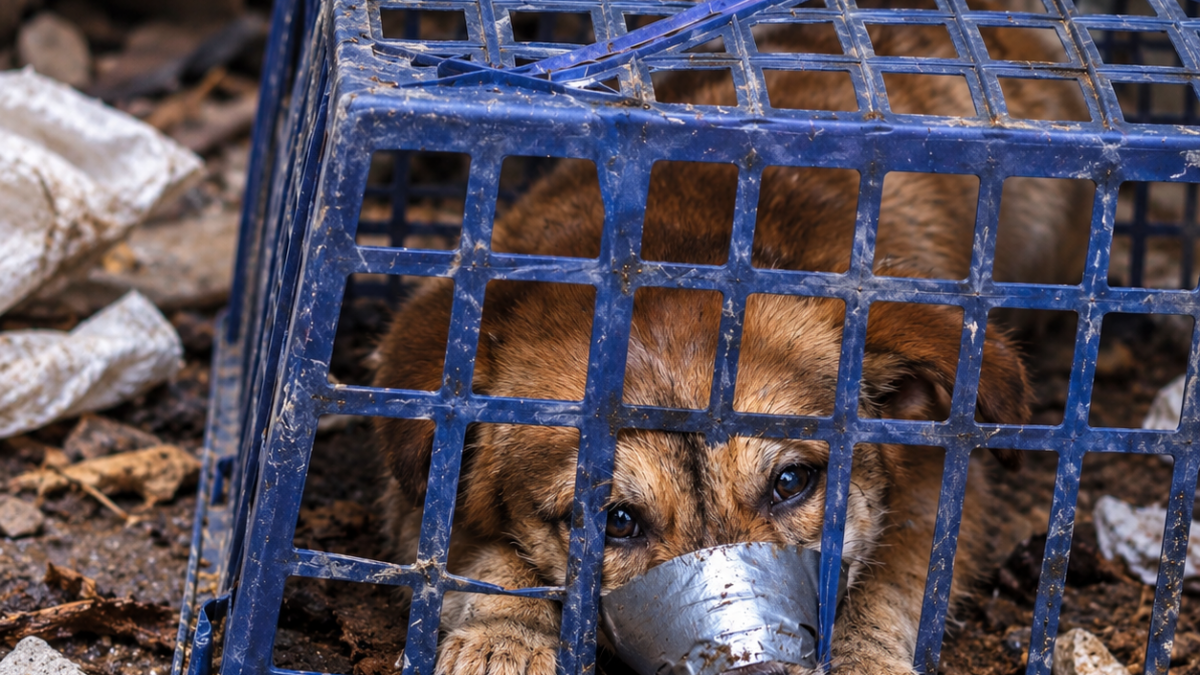
PART 2
For several seconds, none of us spoke.
The oak leaves moved overhead.
The chain shifted faintly against the dirt when the dog breathed.
I looked at Dr. Anton.
“What do you need to know?”
“Everything I can know before we make a decision.”
“Bloodwork?”
“Immediately. Ultrasound. X-rays if we can stabilize her enough to transport safely. Kidney values. Liver function. Red-cell count. We need to know whether the tumor has spread.”
Irina was still kneeling beside the dog.
“What if it has?”
Anton did not soften the answer.
“Then surgery may not help her.”
The dog’s eyes opened again.
Irina stroked between them.
“We need a name for her.”
The woman who had called us was standing several yards away near the gate. She had introduced herself as Elena when we arrived, but until then she had remained quiet, visibly ashamed even though none of this was her doing.
At the mention of a name, she spoke.
“They called her Bella.”
I turned.
“You knew her?”
“I live two houses down.”
“How long was she here?”
Elena looked toward the empty house.
“I don’t know exactly.”
“Years?”
She nodded.
“How many?”
“Maybe six. Maybe seven.”
Irina’s hand stopped on Bella’s head.
“On this chain?”
Elena lowered her eyes.
“Most of the time.”
The anger came so quickly that I had to put both hands on my hips to keep from saying something useless.
“Most of the time?”
“In winter they sometimes put straw under the tree.”
“That’s not what I asked.”
“I know.”
“What did she eat?”
“Scraps. Bread. Sometimes bones.”
“And water?”
“There was usually a bucket.”
I looked at the two plastic bowls.
“Usually?”
Elena’s eyes filled.
“I brought water sometimes.”
Irina looked at her.
“Why didn’t anyone call before today?”
That question landed differently.
Elena wiped her cheek with the heel of her hand.
“I did.”
The anger shifted.
“What?”
“Last year. And once before that.”
“To whom?”
“The local office. Someone came by once.”
“What happened?”
“They talked to the owner.”
“And?”
“He moved Bella behind the shed for a while. Then she was back under the tree.”
I stared at the abandoned house.
“Do you know where they went?”
“No.”
“Did they say anything about the dog?”
Elena hesitated.
That hesitation was enough.
“What?”
“They told another neighbor she was dying anyway.”
Irina’s expression hardened.
“They said that?”
Elena nodded.
“They said she had that growth and was old, and there was no point spending money on her.”
I looked at Bella.
Her ribs rose and fell beneath the dirty coat.
No point.
She had wagged her tail for us.
Once.
With almost no strength left.
And someone had decided that meant nothing.
Dr. Anton snapped the cap onto a blood tube.
“We can deal with them later.”
He looked at me.
“Right now we deal with her.”
He was right.
Anger was easier than medicine.
Medicine was what Bella needed.
We had to cut the chain.
The collar could not simply be unbuckled because the buckle had rusted and the skin beneath it was swollen.
I slid bolt cutters around one link several inches away from her neck.
The metal was thick.
It took both hands.
Irina kept one hand on Bella’s shoulder.
“Easy, girl.”
I squeezed.
The cutters slipped.
Bella flinched.
“Sorry.”
I repositioned them.
This time the link snapped.
The sound was sharp.
Bella’s head lifted.
For the first time in years—however many it had been—the chain between her neck and the tree was no longer whole.
I remember staring at that broken link for much longer than made sense.
Freedom, in that moment, weighed less than a pound of metal.
But Bella did not stand.
She couldn’t.
We slid a blanket beneath her using four people so we could move her body without twisting her hips.
She whimpered when we lifted.
It was the first sound of pain she had made.
Irina immediately lowered her side.
“Stop.”
Anton checked her.
“Keep going. Slow.”
Bella’s eyes found Irina’s.
“You’re okay,” Irina whispered. “You’re okay.”
We placed her on a padded stretcher and carried her toward the van.
Halfway there, Bella turned her head back toward the oak tree.
I noticed.
So did Irina.
For a moment, I wondered what she understood.
Was that tree home?
A prison?
Both?
Then the van door closed.
She never saw it again.
At the clinic, the first goal was not surgery.
It was survival.
Bella’s body temperature was low.
Her gums were pale.
Her blood pressure was dangerously weak.
Her dehydration was severe enough that Anton warned us not to correct it too aggressively.
“Why not just give her as much fluid as she needs?” I asked.
“Because after prolonged dehydration, especially with compromised kidneys, too much too quickly can create other problems.”
He placed an IV catheter.
“Slow. Controlled. Everything with her has to be slow.”
That became the rule.
Slow fluids.
Slow feeding.
Slow cleaning.
Slow movement.
Slow hope.
The mats in Bella’s fur were so tight against her skin that we could not simply brush them out.
Some contained dirt, dried feces, plant debris, and insects.
A technician named Mara began clipping them carefully.
Underneath, the skin was angry red.
In some places it had broken open.
Bella lay quietly.
Too quietly.
“She’s not reacting,” I said.
Mara shook her head.
“That doesn’t mean she isn’t hurting.”
The sentence stayed with me.
People often imagine abused dogs screaming, growling, snapping, fighting.
Some do.
Others become silent.
Bella had learned silence.
When Mara reached the collar, she stopped.
The leather had been hidden beneath the fur.
What I had mistaken outside for a simple collar was actually an old, wide strap reinforced with metal.
It had been left on so long that the skin had grown swollen around its edges.
Anton sedated Bella lightly—barely enough to make removal tolerable.
Then he cut the collar away piece by piece.
Underneath was a wound shaped like a ring.
Irina stood beside me.
She whispered, “How long does that take?”
Anton looked at the injury.
“Months.”
I swallowed.
“Could be longer?”
“Yes.”
The bloodwork came back that afternoon.
Anton called us into his office.
I knew by his face that nothing was simple.
He placed the results on the desk.
“Her kidneys are impaired.”
“How impaired?”
“Enough that anesthesia today would be irresponsible.”
Irina leaned forward.
“So no surgery?”
“Not today.”
“You said without surgery she dies.”
“I know.”
“Then what are we waiting for?”
“For her to survive the surgery we’re trying to give her.”
The room went quiet.
Anton pointed to several values.
“She’s severely anemic. Her protein is low. Electrolytes are abnormal. She’s dehydrated. She has evidence of infection. If I put her under anesthesia now, there’s a very real chance her blood pressure collapses and I can’t bring her back.”
“How long do we have?”
“I don’t know.”
That answer again.
I hated it.
“Days?”
“Possibly.”
“Weeks?”
“If we’re lucky.”
“And the tumor?”
“We need imaging.”
The X-rays were done that evening.
The ultrasound followed.
We stood in the darkened room while Anton moved the probe across Bella’s abdomen.
The tumor appeared as irregular shapes on the monitor.
I understood almost none of what I was looking at.
Anton became quiet.
“What?” Irina asked.
“I’m checking lymph nodes.”
“And?”
“Some are enlarged.”
My stomach tightened.
“Cancer?”
“Possibly.”
He moved the probe again.
“What about her organs?”
“Her liver doesn’t look terrible.”
“Lungs?”
“X-rays don’t show obvious large metastases.”
“Is that good?”
“It’s better than seeing them.”
He looked at us.
“But it does not guarantee the tumor hasn’t spread microscopically.”
I hated how medicine gave hope with one hand and took certainty away with the other.
“What would you do if she were your dog?” I asked.
Anton stared at the screen.
“I would stabilize her for as long as she needs and as long as she is comfortable. Then I would reassess.”
“And if her kidneys improve?”
“I’d operate.”
“And if they don’t?”
He turned off the machine.
“Then we have to decide whether the operation would be for her or for us.”
That night, Bella slept in a heated kennel on thick bedding.
I stayed at the clinic until almost midnight.
Irina left only because I forced her.
“You’ve been awake since five.”
“So have you.”
“One of us needs to be functional tomorrow.”
“Which one?”
“Good point.”
She eventually went home.
I sat beside Bella.
The kennel door was open.
She did not try to move.
I put a water bowl near her head.
She smelled it.
Then drank.
Three small laps.
Stopped.
Three more.
I smiled.
“That’s right.”
She drank again.
It was such a small thing.
Water.
But I had seen the dry bowl under the oak tree.
I knew what those mouthfuls meant.
I offered a spoonful of the recovery food Anton had approved.
Bella smelled it.
Turned away.
“Come on.”
Nothing.
I touched a tiny amount to her lip.
She licked it.
Then looked at the spoon.
“One bite.”
She took it.
I wanted to celebrate.
Instead, I gave her another.
Then stopped exactly when Anton had instructed.
Malnourished animals could not simply be given unlimited food.
Her body had to remember how to receive nourishment safely.
Everything slow.
Including kindness, apparently.
I lay down on a folded blanket beside the kennel.
At some point after midnight, I fell asleep.
I woke because something touched my hand.
Bella’s nose.
She had moved her head several inches.
Her nose rested against my fingers.
I stayed still.
Her breathing was slow.
Then her tongue touched my knuckle.
Once.
I closed my eyes.
“You really are determined to make this difficult, aren’t you?”
Her tail moved beneath the blanket.
One soft thump.
The next morning, she ate four spoonfuls.
By afternoon, six.
On the third day, she lifted her head when Irina entered the room.
On the fourth, she tried to sit.
Her front legs trembled.
Mara called us.
“She’s trying.”
We rushed in like idiots.
Bella pushed up.
Her chest rose from the bedding.
Her back legs failed.
She fell sideways.
Irina caught her.
“That’s enough.”
Bella tried again.
Anton appeared in the doorway.
“Don’t let her overdo it.”
“She wants to stand.”
“Wanting to stand and being ready to stand are different things.”
He was right.
Bella hated that.
We supported her with a rehabilitation sling.
The first time we lifted her, her paws touched the floor.
Her rear legs shook violently.
“Easy,” I said.
Bella shifted weight onto one front paw.
Then the other.
She stood for four seconds.
Five.
Her back legs buckled.
We lowered her.
Irina was crying.
“Did you see that?”
“I was holding half the dog.”
“She stood.”
“For five seconds.”
“Five more than yesterday.”
Bella looked exhausted.
But her tail moved.
By the end of the first week, she could stand for almost twenty seconds with support.
Her kidney values improved slightly.
Not normal.
Improved.
Her anemia stabilized.
She gained a small amount of weight.
The skin infection began responding to treatment.
The wound around her neck started to granulate.
Every day, Anton repeated the same warning.
“She is still fragile.”
Every day, Irina answered the same way.
“So treat the fragile dog.”
On day nine, Anton ordered new bloodwork.
We waited in the hallway.
I had started recognizing the sound of the lab machine finishing its cycle.
When Anton came out, he had the paper in his hand.
“Well?”
“Better.”
“How much better?”
“Enough that I’m willing to discuss surgery.”
Irina stood.
“Discuss?”
“Sit.”
We sat.
He placed the results down.
“Her kidney values have improved, but they’re still abnormal. Her anemia remains a concern. Her age is a concern. Her heart is not young. The tumor is large, and removing it will not be a short procedure.”
“What are the odds?”
Anton disliked numerical predictions.
I knew that.
This time I made him answer.
“Anton.”
He sighed.
“Higher risk than I would accept for an elective procedure.”
“This isn’t elective.”
“I know.”
“Does she have a chance?”
“Yes.”
“Without surgery?”
He shook his head.
“Not much of one.”
Irina looked at me.
The decision felt enormous even though there was only one direction to go.
“Do it.”
Anton did not move.
“You both need to understand something.”
“We do.”
“No. Listen.”
He leaned forward.
“If she arrests under anesthesia, I may not be able to bring her back. If there is more cancer than imaging shows, I may have to stop. If the tumor involves tissue I cannot safely remove, surgery could become palliative rather than curative.”
I looked through the office window toward Bella’s kennel.
“Can she understand risk?”
“No.”
“Can she understand pain?”
“Yes.”
“Can she understand being hungry?”
“Yes.”
“Being chained?”
Anton’s jaw tightened.
“Yes.”
“Then she’s understood enough bad things. Give her the chance at one good thing.”
Surgery was scheduled for the following morning.
I barely slept.
At six, I was at the clinic.
Bella was awake.
Fasting meant no breakfast.
She was offended.
For a dog who had refused food ten days earlier, this felt like progress.
She stared at her empty bowl.
“I know.”
She looked at me.
“You can complain to management.”
Tail thump.
When Anton came for her, I walked beside the stretcher.
At the surgery doors, I had to stop.
Irina bent down.
“Bella.”
The dog lifted her head.
Irina kissed the top of it.
“You come back.”
I touched Bella’s cheek.
“Don’t make liars out of us.”
The doors closed.
Then there was nothing to do.
Waiting is its own kind of violence.
You cannot help.
You cannot see.
You cannot bargain.
You sit.
Irina walked the hallway.
I drank coffee I didn’t taste.
At forty minutes, I checked the clock.
At an hour, I checked again.
At ninety minutes, I stood.
“Sit down,” Irina said.
“You’ve been walking for an hour.”
“That’s different.”
“How?”
“I don’t know.”
Two hours.
A technician came out.
My heart stopped.
“What happened?”
“She’s stable.”
“Why are you here?”
“Anton asked for another unit of blood to be prepared.”
“Why?”
“Her blood pressure dipped. They’re managing it.”
The technician disappeared again.
Irina sat beside me.
Neither of us spoke.
At two hours and forty-seven minutes, the surgery door opened.
Anton walked out.
His cap was still on.
There was a dark mark of sweat across his forehead.
I stood.
He pulled down his mask.
“She’s alive.”
My knees weakened.
Irina grabbed the back of a chair.
“Did you get it?”
“We removed the entire visible mass with margins as safely as I could.”
“Visible?”
“It was attached more broadly than the imaging suggested.”
“Cancer?”
“We won’t know exactly until pathology.”
“Did she arrest?”
“No.”
“Blood pressure?”
“Dropped twice.”
“Kidneys?”
“We’ll monitor.”
“Can we see her?”
“In a few minutes.”
Anton held up a hand.
“She is not out of danger.”
“I know.”
“Tonight matters.”
“I know.”
He looked at both of us.
“You always say that.”
“Because you always tell us something terrifying after good news.”
For the first time that day, he smiled.
“Fair.”
Bella woke slowly.
She was wrapped in warming blankets.
The surgical incision ran across much of her lower abdomen.
I will never forget how vulnerable she looked.
Not weak.
Vulnerable.
There is a difference.
Weakness is lack of strength.
Vulnerability is strength placed in someone else’s hands.
Bella had no choice but to trust us now.
I sat beside her until evening.
Around seven, her eyes opened.
They wandered.
Then focused.
“Hey.”
Her tail did not move.
Too much medication.
I touched her head.
“You did it.”
Her eyes closed.
At ten, her blood pressure dropped.
Anton adjusted fluids.
At midnight, her temperature fell.
Mara added warming support.
At two in the morning, she vomited.
At three, she refused water.
At four, I sat in the hallway with my head against the wall and wondered whether we had made the wrong decision.
Anton found me there.
“You need to sleep.”
“Is she dying?”
“No.”
“Could she?”
“Yes.”
I looked at him.
“I hate you.”
“I know.”
“What if we did this because we couldn’t stand letting her go?”
Anton sat beside me.
It was rare for him to stop moving during a crisis.
He did then.
“That question matters.”
“So answer it.”
“I can’t answer your motive.”
“You know what I mean.”
He looked through the glass at Bella.
“She was eating. Engaging. Trying to stand. Responding to people. She had pain, but it was manageable. Without surgery, the tumor would have ulcerated further, infected, bled, and eventually killed her.”
“So you think we did right?”
“I think we gave her a chance she was medically stable enough to take.”
“That’s not the same thing.”
“No.”
I rubbed my face.
“Nothing ever is with you.”
He smiled faintly.
“Medicine is irritating that way.”
At sunrise, Bella drank water.
At eight, she ate half a spoonful of food.
At ten, her temperature stabilized.
At noon, she thumped her tail when Irina arrived.
Irina burst into tears.
Anton, who happened to be standing nearby, pretended not to see.
By the second postoperative day, Bella was sitting upright.
By the third, she stood with the sling.
On the fourth morning, she took one step.
Then another.
Then her back legs slipped.
I caught her.
“Absolutely not.”
She looked annoyed.
“You have arthritis, stitches, kidney disease, and the judgment of a teenager.”
Tail thump.
Five days after surgery, the pathology report arrived.
Anton called me.
“Come to the clinic.”
“Tell me now.”
“I’d rather—”
“Anton.”
Silence.
“It was malignant.”
I closed my eyes.
“What kind?”
“Mammary carcinoma.”
“Margins?”
“Mostly clear.”
“Mostly?”
“One area is close.”
“Lymph nodes?”
“One sampled node has suspicious cells.”
My stomach sank.
“So it spread.”
“Possibly.”
“Possibly?”
“The pathologist cannot say from this sample that she has widespread metastatic disease.”
“But she might.”
“Yes.”
“What do we do?”
“We stage again once she heals. Chest imaging. Follow-up ultrasound. Then decide whether additional treatment is appropriate.”
I sat at my desk.
The rescue office around me disappeared.
“How long?”
“No one can tell you.”
Weeks earlier, that answer had made me angry.
Now it only made me tired.
“How is she today?”
“Demanding breakfast.”
I smiled despite everything.
“I’m coming.”
Bella was eating when I arrived.
Not delicately.
Not cautiously.
Eating.
Her muzzle was buried in the bowl.
Irina was sitting beside her.
“She yelled at Mara.”
“I did not yell,” Mara said from across the room.
“Bella did.”
“She barked once.”
Irina looked at me.
“First bark.”
I crouched beside Bella.
“You’ve found your voice?”
Bella lifted her head.
Food clung to her nose.
She barked.
Once.
I laughed.
“Okay.”
That bark mattered more than the pathology in that moment.
Not because the pathology did not matter.
Because Bella was not a report.
Not kidney values.
Not cancer cells.
Not survival curves.
She was standing in front of me asking for more food.
We could deal with the rest when it arrived.
A week later, we had another problem.
The former owners returned.
Not to the house.
To the clinic.
I was in the back when the receptionist called.
“There are two people asking about Bella.”
My stomach tightened.
“Names?”
She told me.
Elena had given us the family name earlier.
It matched.
I walked to the lobby.
A man in his early fifties stood beside a woman slightly younger.
Neither looked distressed.
The man looked irritated.
“We’re here for our dog.”
I stopped several feet away.
“Your dog?”
“The big shepherd mix.”
“Bella?”
“Yes.”
The woman crossed her arms.
“We heard someone took her.”
I stared at them.
It took every bit of restraint I had not to laugh.
“Took her?”
“From our property.”
“You abandoned the property.”
“That’s not your concern.”
“You left Bella chained to a tree.”
The man’s jaw tightened.
“She’s ours.”
I heard footsteps behind me.
Irina.
I put one hand out slightly.
Not because I thought she would hit him.
Because I was not certain she wouldn’t.
I kept my voice level.
“Animal control has documented her condition.”
“We didn’t abandon her.”
I looked at the woman.
“You moved.”
“We were coming back.”
“When?”
“That weekend.”
“You left no food.”
“There was food.”
“Moldy bread.”
“That dog always ate bread.”
“There was no water.”
“She knocked bowls over.”
“The chain had grown into her neck.”
“That’s a lie.”
I felt Irina move beside me.
The man pointed toward the hallway.
“Bring the dog out.”
“No.”
His face changed.
“What?”
“No.”
“She’s legally our property.”
“Then you can make that argument to animal control.”
The woman stepped forward.
“You people cut her chain.”
“Yes.”
“You stole her.”
I took out my phone.
“I’m calling Officer Petrescu.”
The man reached toward me.
“Don’t start this.”
I stepped back.
“Do not touch me.”
The lobby went quiet.
The receptionist had already moved toward the panic button beneath the desk.
The man lowered his hand.
Irina spoke for the first time.
“Do you know she had surgery?”
The woman looked at her.
“What?”
“A tumor.”
“We knew about that.”
Those four words changed the room.
Irina’s face went still.
“You knew?”
The woman looked away.
The man answered.
“She was old.”
“So you knew she had a tumor.”
“Yes.”
“And you did nothing.”
“What were we supposed to do? Spend thousands on a dog that’s going to die?”
Bella barked from the back.
One deep sound.
Every person in the lobby heard it.
The man looked toward the door.
Something inside me settled.
I stopped being angry.
Anger would have been easier for him to dismiss.
I became precise.
“You knew she was ill. You knew she was unable to move normally. You left her restrained outdoors without adequate food or water. She arrived severely dehydrated, malnourished, infected, with an embedded collar injury and an untreated malignant mass.”
The woman’s face reddened.
“You’re exaggerating.”
“We photographed everything.”
That silenced her.
The man recovered first.
“Pictures don’t prove how long she was like that.”
“No.”
I raised my phone.
“But veterinary records help.”
The clinic door opened.
Officer Petrescu entered with another officer.
I had not realized the receptionist had already called.
The man turned.
“What is this?”
Petrescu looked at him.
“You’re the registered property owner?”
“Yes.”
“Good. We’ve been trying to reach you.”
The man looked at me.
“You called police?”
Petrescu corrected him.
“Animal welfare enforcement. And I need you both to stay here while we discuss the abandonment complaint.”
The woman began speaking quickly.
“We did not abandon her.”
Petrescu took out a notebook.
“Then tell me who was responsible for her care after you left.”
Silence.
The question looked simple.
It wasn’t.
The man finally said, “We were coming back.”
“When?”
“Couple days.”
“What arrangements did you make for feeding and water?”
More silence.
“Did you arrange veterinary care?”
“No.”
“Did you leave medication?”
“No.”
“Did you notify a neighbor?”
The woman said, “Everyone knew she was there.”
Petrescu stared at her.
“That is not an answer.”
They spent more than forty minutes in the lobby.
I did not hear all of it.
I did hear the man raise his voice twice.
I heard Petrescu tell him to lower it.
I heard the woman insist Bella had always been thin.
Then Anton walked into the lobby carrying a folder.
He rarely involved himself in disputes unless medically necessary.
This was medically necessary.
He introduced himself.
The man immediately said, “You don’t know how she was before.”
Anton opened the file.
“No. I know how she was when she was admitted.”
He listed it.
Body condition.
Dehydration.
Anemia.
Skin infection.
Chronic neck wound.
Severe arthritis.
Renal impairment.
Mammary cancer.
The man crossed his arms.
“She was old.”
Anton closed the folder.
“Age did not tie her to a tree.”
Nobody spoke.
It may have been the quietest sentence I ever heard him say.
The former owners left without Bella.
The investigation continued.
Ownership was temporarily transferred into protective custody pending proceedings.
The rescue was authorized to continue treatment.
The couple tried to challenge it.
For several weeks, I worried some technicality would send Bella back.
Petrescu assured me that was unlikely given the medical evidence.
“Unlikely isn’t impossible.”
“No.”
I hated that word too.
Then Elena agreed to give a formal statement.
So did another neighbor.
And another.
One had photographs taken months earlier showing Bella beneath the same oak tree with the same collar.
Another had text messages from the male owner after she had asked whether Bella needed veterinary care.
The message said:
She’s old. We’re not wasting money on her.
When Petrescu showed it to me, I read it twice.
“Can you use this?”
“Yes.”
The second message was worse.
The neighbor had asked if she could take Bella to a rescue.
The answer:
No. She’s my dog. Leave her alone.
That changed the case.
It was no longer plausible that no one had offered help.
Help had been offered.
It had been refused.
The former owner’s own words did more damage than anything we could have said.
Irina looked at the screenshot.
“He wouldn’t care for her.”
“No,” I said.
“And he wouldn’t let anyone else care for her.”
That was the part I could not understand.
But control is not the same thing as love.
Some people confuse ownership with the right to decide everything, even suffering.
Bella’s case moved slowly.
Her recovery did not.
Three weeks after surgery, she walked ten steps without a sling.
We counted every one.
“One.”
Bella shifted forward.
“Two.”
Her rear legs trembled.
“Three.”
She paused.
Irina held out a piece of chicken.
“Four.”
Bella’s eyes locked on it.
Suddenly rehabilitation had purpose.
“Five.”
Six.
Seven.
At eight she wobbled.
At nine, I reached toward her.
Anton stopped me.
“Let her correct.”
Bella spread her rear legs slightly.
Balanced.
Ten.
Then she reached Irina and took the chicken.
Irina sat on the floor and hugged her.
Bella nearly knocked her over.
I laughed.
“You’re encouraging bad technique.”
“I don’t care.”
By the end of the month, Bella could walk across the clinic courtyard.
Slowly.
Her hips remained stiff.
She would always have arthritis.
But she moved.
The first time she reached grass, she stopped.
The clinic courtyard had a small patch beside the fence.
Bella lowered her nose.
Smelled it.
Then stepped onto it.
One paw.
Two.
She stood there for almost a minute.
Irina was crying again.
“You cry constantly now,” I told her.
“Shut up.”
Bella sniffed the grass.
Then rolled.
We were not ready.
Her legs went up.
The incision was healed enough, but Anton nearly had a heart attack anyway.
“Bella!”
She rolled onto her other side.
For the first time since I had known her, she looked ridiculous.
Not tragic.
Not sick.
Ridiculous.
I laughed until my stomach hurt.
The dog who had lain beneath an oak tree waiting to die was scratching her back in clinic grass.
That afternoon, we took her outside on a long leash.
No chain.
A leash.
There is a difference.
A chain controls where an animal may exist.
A leash connects two moving bodies.
Bella walked where she wanted.
We followed.
Her cancer staging was repeated at six weeks.
No obvious lung metastases.
Her lymph nodes remained a concern.
Anton recommended monitoring rather than aggressive chemotherapy because of her age and kidney disease.
“Could chemo extend her life?”
“Possibly.”
“How much?”
“Impossible to predict.”
“What would it do to her kidneys?”
“Potentially complicate them.”
“Quality of life?”
“That’s the question.”
We discussed it for almost an hour.
In the end, we chose comfort-focused monitoring.
Bella had already spent too much of her life enduring things chosen by others.
We were not going to turn her remaining time into treatment for the sake of treatment.
She would get pain management.
Kidney support.
Good nutrition.
Regular imaging.
Medication for arthritis.
And whatever ordinary happiness we could give her.
The next question was where.
She could not live permanently at the clinic.
The rescue shelter was too loud.
Bella tolerated dogs but did not enjoy being surrounded by them.
She needed a quiet foster home.
Preferably one-story.
Few stairs.
Fenced yard.
Someone home often.
We posted the request.
Dozens of people responded.
Most were kind.
Few were appropriate.
Then a woman named Sarah called.
“I have an old dog house.”
I almost stopped listening.
Bella was never living in a dog house again.
Sarah continued.
“I mean inside my house. The dog house is in the garage because my husband refuses to throw anything away.”
I laughed.
“That clarification helped.”
Sarah was sixty-two.
Widowed.
Retired elementary-school teacher.
One-story home.
Fenced yard.
No pets.
Her shepherd had died two years earlier at fourteen.
She had experience with arthritis medications and kidney diets.
“When can I meet her?”
“First, I need to ask about stairs.”
“Two steps at the front. None in back.”
“Flooring?”
“Mostly rugs and wood. I can add runners.”
“How long would Bella be alone?”
“I’m retired. Maybe grocery shopping.”
“Are you prepared for accidents?”
“My late husband raised three sons.”
I paused.
“That is not the answer I expected.”
“It is the answer you needed.”
She came to the clinic two days later.
I watched carefully.
Bella had become friendly with staff, but strangers still made her cautious.
Sarah entered the courtyard and stopped ten feet away.
She did not call Bella.
Did not crouch.
Did not reach.
She sat on a bench.
Bella noticed her.
Sniffed the air.
Then looked at me.
Sarah spoke quietly.
“She’s bigger than I expected.”
“She’s underweight compared with what she probably was.”
“She’s beautiful.”
Bella took one step toward her.
Sarah kept her hands in her lap.
Another step.
Then another.
Bella stopped beside the bench.
Sarah still did not touch her.
She looked at me.
“May I?”
“That’s her decision.”
Sarah lowered one hand beside her knee.
Bella smelled it.
Then pushed her head beneath the palm.
Sarah’s face changed.
I knew that look.
I had seen it in Irina.
I had felt it myself.
Bella’s tail moved.
Thump.
Sarah whispered, “Hi, old girl.”
That was it.
Bella moved into Sarah’s house the following week as a foster.
I inspected everything.
Rugs.
Doors.
Yard fence.
Water bowls.
Medication storage.
Sleeping area.
Sarah eventually said, “Are you always like this?”
“Yes.”
“Good.”
Bella entered the house slowly.
The hardwood near the entrance worried her.
Sarah had placed rubber-backed runners from the door to the living room.
Bella followed them.
She found the dog bed.
Ignored it.
Lay beside the couch.
Sarah looked at me.
“I bought the most expensive orthopedic bed in the store.”
“She’ll use it eventually.”
“When?”
“Right after you stop caring.”
That night, Sarah sent a picture.
Bella was on the bed.
I replied:
Do not let her know we discussed it.
For the first few nights, Bella struggled.
At the clinic, someone had always been awake.
At Sarah’s house, nighttime was silent.
Around two in the morning, Bella began pacing.
Sarah called me the next day.
“She kept going to the back door.”
“Did she need outside?”
“She went out. Then came back. Ten minutes later she did it again.”
“Could be anxiety.”
“What should I do?”
“Routine. Same bedtime. Same door. Same light. Maybe leave a lamp on.”
Sarah did.
It helped.
The next week, Bella started sleeping through the night.
Then she discovered Sarah’s kitchen.
This was a problem.
A dog starved for years does not instantly trust that food will continue existing.
Bella began stealing.
Bread.
A banana peel.
A bag of rice she somehow dragged from a low shelf.
One afternoon Sarah called.
“Your dog committed burglary.”
“She’s your foster dog.”
“She opened the pantry.”
“How?”
“I would also like to know.”
“What did she eat?”
“Half a package of tortillas.”
I closed my eyes.
“Call Anton.”
“I already did.”
“Good.”
“She’s fine.”
“Good.”
“I moved the food.”
“Good.”
Pause.
“She looks very pleased with herself.”
“That sounds medically significant.”
Bella gradually learned.
Meals came twice a day.
Every day.
No competition.
No empty bowl.
No one took the food away.
Within a month, the pantry raids stopped.
She began leaving kibble in her bowl.
The first time Sarah sent me a picture of leftover food, I stared at it.
That may sound strange.
But a dog who has known hunger eating until satisfied and walking away from food is trust made visible.
She believed breakfast would happen again.
The legal case reached its final hearing almost four months after Bella’s rescue.
I attended.
So did Irina.
Sarah came because by then Bella was more hers than ours, even though the paperwork was not final.
The former owners sat across the room.
The man looked smaller than he had in the clinic.
Not physically.
In certainty.
Their attorney argued financial hardship.
They had been preparing to move.
Bella was old.
They believed she was terminally ill.
They had intended to return.
The prosecutor—or the local animal welfare officer handling the case—presented the photographs.
Bella beneath the tree months apart.
The embedded collar wound.
The moldy bread.
The empty water container.
Medical reports.
Then Elena testified.
Her voice shook.
“Yes, I offered water.”
“Why?”
“Because sometimes there wasn’t any.”
“Did you discuss Bella’s condition with the owners?”
“Yes.”
“What was said?”
“They told me to mind my business.”
Another neighbor testified.
She had the messages.
The room changed when they appeared on the screen.
She’s old. We’re not wasting money on her.
Then:
No. She’s my dog. Leave her alone.
The male owner stared straight ahead.
His attorney tried to argue that the messages were frustration, not evidence of intentional neglect.
Then Anton testified.
He was calm.
Technical.
Almost painfully unemotional.
That made him more powerful.
He explained malnutrition.
Dehydration.
Chronic skin disease.
The neck injury.
The untreated tumor.
The kidney impairment.
He was asked whether all of these could simply be explained by age.
“No.”
“Could the tumor?”
“Cancer can occur with age.”
“The arthritis?”
“Yes.”
“The dehydration?”
“No.”
“The embedded collar injury?”
“No.”
“The severe malnutrition?”
“No.”
“The skin infection?”
“Not by age alone.”
The attorney asked, “Doctor, would you agree Bella was already a very sick dog when she was found?”
“Yes.”
“Would you agree she may have died regardless of treatment?”
“Yes.”
The man beside the attorney shifted.
For one second, I worried.
Then Anton continued.
“But the fact that an animal may die does not make withholding basic care medically neutral.”
The attorney stopped.
Anton looked toward the hearing officer.
“Terminal animals still require water. Food. Pain control. Hygiene. Veterinary assessment. If suffering cannot be relieved, humane euthanasia is an option. Leaving an animal chained outdoors without those things is not treatment.”
The room went still.
The ruling did not send anyone to prison.
Real cases are rarely as cinematic as people expect.
There were fines.
A prohibition on owning or keeping animals for a period determined under local regulations.
Court costs.
Formal surrender of Bella.
Additional monitoring conditions.
The case became part of the official record.
The man looked furious.
I expected satisfaction.
I felt something quieter.
Relief.
Bella was no longer legally his.
That mattered more than watching him lose.
Outside, Irina exhaled.
“That’s it?”
“That’s it.”
“He just walks away?”
“He doesn’t get Bella.”
She looked at me.
“That’s not enough.”
“Maybe not.”
Sarah, who had remained quiet during the hearing, said, “It’s enough for Bella.”
We both looked at her.
“She doesn’t know what happened in that room.”
Sarah folded the papers she was holding.
“She knows what happens tonight.”
That stopped me.
“What happens tonight?”
“She eats chicken with her kidney food, complains because I won’t give her my toast, walks around the yard, and sleeps on an orthopedic bed she pretends she doesn’t like.”
Irina smiled.
Sarah continued.
“That’s the part she gets.”
She was right.
We had spent months pursuing accountability.
Bella had spent those months learning how to live.
The foster became an adoption two weeks later.
Everyone pretended it was a decision.
It wasn’t.
Sarah had already reorganized her house around Bella.
Bella had already reorganized Sarah’s day.
Breakfast at seven.
Medication at seven-fifteen.
Slow yard walk at eight.
Nap.
Lunch inspection even though Bella did not receive lunch.
Afternoon nap.
Short evening walk.
Dinner.
Television.
Bed.
When I brought the adoption paperwork, Sarah had baked a cake.
“For us?”
“For me.”
“That’s honest.”
“For you too.”
Bella lay beneath the table.
I signed the rescue representative line.
Sarah signed the adopter line.
Then she looked down.
“Bella.”
The dog lifted her head.
“You’re officially stuck with me.”
Bella stood.
Walked to Sarah.
Placed her head on her knee.
Irina whispered, “She knows.”
“No, she doesn’t.”
“Let me have this.”
“Fine.”
We ate cake.
Bella received a veterinarian-approved treat.
Her life became wonderfully boring.
That was everything I wanted.
Checkups.
Medication refills.
Photos.
Small health scares.
Long naps.
Nothing dramatic.
Her kidney disease remained stable for almost a year.
Her cancer did not appear on the first follow-up scans.
Nor the second.
At the third, Anton found a small suspicious spot in one lymph node.
We watched it.
Three months later, it had grown.
I sat with him again.
“Cancer?”
“Most likely.”
“Another surgery?”
“Not advisable.”
“Chemo?”
“Possible.”
“Would you recommend it?”
He leaned back.
“No.”
I knew how difficult it was for him to say that.
“Why?”
“Bella is comfortable. Her kidneys are more fragile than before. The disease appears slow. Treatment could buy time, but it could also make the time worse.”
“How long without it?”
Anton shook his head.
“Don’t ask me for a date.”
“I hate you.”
“I know.”
Sarah made the decision.
“No chemo.”
She said it quietly.
Not because she didn’t care.
Because she did.
“I promised her we weren’t going to spend every good day chasing one more month.”
Bella remained on pain control and supportive treatment.
For another year, the cancer behaved more slowly than we feared.
She turned into a neighborhood celebrity.
Children knew her.
The mail carrier carried treats approved by Sarah.
One little boy who was afraid of dogs learned to touch Bella because she moved so slowly.
At first, he stood behind his mother.
Bella sat.
The boy reached out.
Touched her back.
Immediately withdrew.
Bella did nothing.
The next week, he touched her longer.
A month later, he hugged her neck.
Sarah stopped him gently.
“Not around the neck.”
The boy looked confused.
“Why?”
Sarah glanced at Bella.
“She had a bad collar once.”
The boy frowned.
“Did it hurt?”
“Yes.”
He considered this.
Then he petted Bella’s shoulder instead.
“Here better?”
Sarah smiled.
“Much better.”
Bella wagged.
The boy laughed.
There were dozens of moments like that.
Moments no one had expected her to live long enough to experience.
A first snowfall in Sarah’s yard.
Bella stepped outside.
Sniffed the snow.
Sneezed.
Then tried to eat it.
A summer afternoon under a patio umbrella.
Not tied.
Just sleeping in shade.
A birthday we invented because we did not know her real one.
We called the rescue date her birthday.
Sarah put a paper hat beside Bella.
Bella ate the corner.
Irina took fifty photographs.
On the second anniversary, we visited the old property.
Not with Bella.
We had no reason to take her there.
The house had been sold.
The yard had been cleaned.
The broken swing was gone.
The rusted buckets gone.
The oak remained.
The old chain was gone.
I stood beneath the tree.
There was a lighter ring in the bark where something had once rubbed against it.
Maybe the chain.
Maybe unrelated.
I touched it.
Irina stood beside me.
“Do you think she remembers?”
“Of course she remembers things.”
“I mean this place.”
“Probably.”
“Do you think dogs forgive?”
I thought about Bella greeting strangers.
Trusting Sarah.
Letting Anton examine her.
Wagging at children.
“I don’t know.”
Irina looked at the tree.
“People always say dogs forgive.”
“Maybe.”
“You don’t sound convinced.”
“I think we call it forgiveness because that makes sense to us.”
“What do you call it?”
I looked toward the empty yard.
“Moving forward.”
Bella did not need the people who hurt her to become different people.
She did not need an apology.
She did not need to understand why.
She needed safety.
Her life did the rest.
By her third year with Sarah, age began catching up.
Her muzzle was almost entirely white.
Her hearing faded.
Her hind legs weakened.
Sarah added more rugs.
Then ramps.
Then a harness for difficult mornings.
Bella accepted assistance with terrible dignity.
She still refused to admit the orthopedic bed was useful.
Even while sleeping on it fourteen hours a day.
One winter morning, Sarah called.
Her voice was different.
“She didn’t finish breakfast.”
I was already reaching for my keys.
“How much did she eat?”
“Maybe half.”
“Anything else?”
“She doesn’t want to stand.”
“Call Anton. I’m coming.”
At the clinic, Bella’s kidney values had worsened.
So had her anemia.
The cancer had progressed.
This time, there were small spots in the lungs.
I stared at the X-ray.
“How long?”
Anton didn’t answer immediately.
“Days?”
“Could be.”
“Weeks?”
“Maybe.”
“Months?”
He looked at me.
“Unlikely.”
Sarah stood with one hand on Bella’s back.
Bella was awake.
Comfortable after pain medication.
Tired.
Irina came later.
None of us said the thing we were all thinking.
Not yet.
Anton adjusted her medication and let her go home.
“She’s not in crisis today.”
Today.
That word became everything.
Bella had a good evening.
She ate chicken.
Walked halfway around the yard.
Slept beside Sarah during television.
The next morning she ate almost nothing.
The following day, she rallied.
She stood at the kitchen doorway demanding toast.
Sarah sent us a video.
We laughed.
Three days later, she stopped wanting to go outside.
Anton visited the house.
He examined Bella on her bed.
No clinic.
No fluorescent lights.
No stress.
When he finished, Sarah asked.
“Is she hurting?”
“Some.”
“Can we control it?”
“For now.”
“And when we can’t?”
Anton looked at her.
“You’ll know.”
Sarah shook her head.
“I don’t trust that.”
“What do you mean?”
“I’m afraid I’ll keep her too long because I’m not ready.”
That honesty broke something open in the room.
Anton sat beside her.
“Then don’t decide based on whether you’re ready.”
Sarah began crying.
Bella lifted her head.
“Decide based on whether she still has more comfort than suffering.”
“How do I measure that?”
“Does she eat because she wants to? Can she rest comfortably? Can she breathe without distress? Does she still seek things she enjoys? Are bad days becoming more common than good ones?”
Sarah wiped her face.
“She still wants me.”
Anton looked at Bella.
“That matters.”
For another week, Bella stayed comfortable.
Then one morning, she did not get up.
Sarah helped her outside with the harness.
Bella stood in the yard.
The sun was just coming up.
She sniffed the air.
Her legs trembled.
Sarah supported her.
Bella urinated.
Then lay down in the grass.
Not collapsed.
Lay down.
She looked around.
Sarah sat beside her.
Bella put her head in Sarah’s lap.
That afternoon, Sarah called us.
“I think it’s time.”
I drove there with Irina.
Anton came too.
Bella was on her orthopedic bed beside the open back door.
Fresh air moved through the screen.
Sarah had placed Bella’s favorite blanket beneath her.
The same dog who once lay on bare dirt beneath an oak tree now lay on layers of softness so thick Anton joked he needed climbing equipment to reach her.
No one laughed much.
I knelt.
“Hey, old girl.”
Bella opened her eyes.
Her tail moved.
One.
Soft.
Thump.
I looked at Irina.
She heard it too.
The first day returned to me so sharply that for a second I was back under the oak tree.
Dirty fur.
Empty bowl.
Metal chain.
One tail thump.
Still trusting.
I put my hand against Bella’s cheek.
“You really kept doing that, didn’t you?”
She breathed slowly.
Sarah sat on the other side.
“I’m scared.”
Anton prepared the medication quietly.
Irina reached for Sarah’s hand.
Bella’s breathing had become more effortful that morning.
Her gums were pale.
She had refused food.
This was not surrender.
It was the last form of care we had left.
Anton explained each step.
Sarah listened.
Then she bent close to Bella’s ear.
“You were never too old.”
Her voice broke.
“Do you hear me?”
Bella’s eyes stayed on her.
“You were never too sick. You were never too much trouble.”
Bella exhaled.
Sarah pressed her forehead gently against hers.
“You were worth every day.”
Anton administered the sedative.
Bella relaxed gradually.
The tension left her legs.
Her breathing softened.
I stroked her shoulder.
Irina touched her paw.
Sarah never moved her hand from Bella’s face.
When she was fully asleep, Anton looked at Sarah.
She nodded.
The final injection was quiet.
No struggle.
No fear.
Just breath.
Then another.
Then no next one.
Anton listened.
Waited.
Listened again.
He removed the stethoscope.
“She’s gone.”
Sarah made a sound I hope never to hear again.
She folded herself over Bella’s body.
Irina began crying.
I did too.
Anton stepped outside.
We stayed.
There was no rush.
After years of being left alone, Bella would not be alone now.
We stayed until sunset.
Sarah eventually told us something I had never known.
“The first night she came here, I thought I made a mistake.”
I looked at her.
“Why?”
“She paced for hours. She wouldn’t sleep. She kept checking the doors.”
“I remember.”
“I sat on the kitchen floor around three in the morning.”
Sarah smiled through tears.
“She walked over and put her head on my shoulder.”
I closed my eyes.
“She did that?”
“Yeah.”
“And you never told me?”
“I wanted one memory that belonged only to us.”
I nodded.
“That’s fair.”
Bella was cremated.
Sarah kept some ashes.
The rest were placed beneath a young oak planted at the edge of her yard.
At first, I objected to the tree.
“An oak?”
Sarah smiled.
“I thought about that.”
“Feels cruel.”
“No.”
She looked at the sapling.
“That first oak wasn’t cruel.”
I didn’t understand.
“The people were.”
She touched the thin trunk.
“A tree is just a tree.”
I looked at it differently then.
Bella had spent years under one oak because she had no choice.
Now another would grow where she had been loved.
We planted it together.
Irina placed a small stone beneath it.
No dramatic inscription.
Just:
BELLA
And beneath the name:
She was worth saving.
Months later, the grass covered the disturbed soil.
Sarah kept the orthopedic bed for a long time.
Eventually she donated it to the rescue.
“It feels wrong that it’s empty.”
We placed it in the quiet recovery room.
The first dog to use it was a frightened senior spaniel recovering from surgery.
He curled into the center.
Sarah saw the photo.
She replied:
Bella would have stolen his food.
I laughed.
Life at the rescue continued.
There were other calls.
Other chains.
Other tumors.
Other owners with excuses.
Other good people who arrived before the bad ending.
I wish I could say Bella’s case changed how I handled every rescue.
It didn’t.
Some lessons have to be relearned.
But she changed one question I used to ask.
Before Bella, when an old or severely ill animal arrived, some part of me always wondered:
How much time can we give them?
After Bella, I asked something else first.
What can we make that time feel like?
Bella did not get a decade.
She did not become young again.
Her kidneys were never cured.
Her arthritis never disappeared.
Cancer eventually returned.
None of those facts erased what happened between the oak tree and Sarah’s living room.
She learned that water bowls refill.
That food comes again tomorrow.
That human hands can touch a neck without hurting it.
That doors opening do not always mean someone is leaving.
That a leash can lead somewhere instead of holding you in one place.
That grass can be something you roll in rather than something you are forced to sleep on.
And that when her legs finally became too tired to carry her, someone would carry her instead.
One spring afternoon, nearly a year after Bella died, I visited Sarah.
The oak sapling had grown.
Not much.
A few new branches.
Fresh green leaves.
Sarah brought coffee outside.
We sat beneath a patio umbrella.
For a while we did not talk about Bella.
Then a breeze moved through the yard.
The young oak leaves rustled.
Sarah looked at the tree.
“I still hear her at night sometimes.”
“What?”
“Her nails on the kitchen floor.”
I nodded.
“I still expect her to bark when I walk into Anton’s clinic.”
“She only barked when she wanted something.”
“She wanted everything.”
“After what she had before, I think she was entitled.”
We laughed.
Then Sarah became quiet.
“Do you ever think about the people who left her?”
“Less than I used to.”
“Me too.”
“Good.”
“At first I wanted to hate them forever.”
“That’s exhausting.”
“It is.”
She looked at the little stone beneath the oak.
“Bella didn’t spend her last years thinking about them.”
“We don’t know that.”
“No.”
She smiled faintly.
“But she spent them demanding my toast.”
“That we know.”
The wind moved again.
I thought about that first morning.
A ruined yard.
A boarded house.
A rusted chain.
A bowl with moldy bread.
A dog too weak to stand.
And then that tail.
One thump.
It would have been easy to interpret Bella’s life through the worst thing that happened to her.
But that would have been another injustice.
The chain was part of her story.
It was not the whole story.
The tumor was part of it.
The kidney disease.
The hearing.
The legal case.
The surgery.
The pain.
All part.
But so was chicken mixed into her dinner.
So were rubber-backed rugs across Sarah’s floors.
So was stealing tortillas.
Rolling in grass.
Frightening Anton by ignoring postoperative restrictions.
Teaching a child not to be afraid of dogs.
Sleeping through thunderstorms.
Leaving food in a bowl because she trusted another meal would come.
Growing old somewhere safe enough to actually become old.
I finished my coffee.
Before leaving, I crouched beside the small stone.
My fingers brushed the engraved letters.
BELLA
For some reason, the memory that came back was not the surgery.
Not the confrontation with her former owners.
Not the hearing.
Not even her final afternoon.
It was the first touch.
Irina kneeling beneath the old oak.
Bella too exhausted to lift her head properly.
A human hand approaching.
And that tail rising with whatever strength she still had.
One slow thump against the dirt.
At the time, I thought it meant she still trusted people.
Years later, I’m not sure that was exactly right.
Maybe trust was too much to ask from her then.
Maybe it meant something simpler.
Maybe it meant she was still willing to see what happened next.
For Bella, that was enough.
Because the next thing was water.
Then food.
Then medicine.
Then freedom from the chain.
Then surgery.
Then grass.
Then Sarah.
Then home.
I stood.
The young oak moved gently in the breeze.
There was no chain around it.
There never would be.
[END OF STORY]








