PART 2: They Left Sarita Under a Tree to Di3—Then Her Foster Mom Saw One Tiny Movement the Vets Said Might Never Come
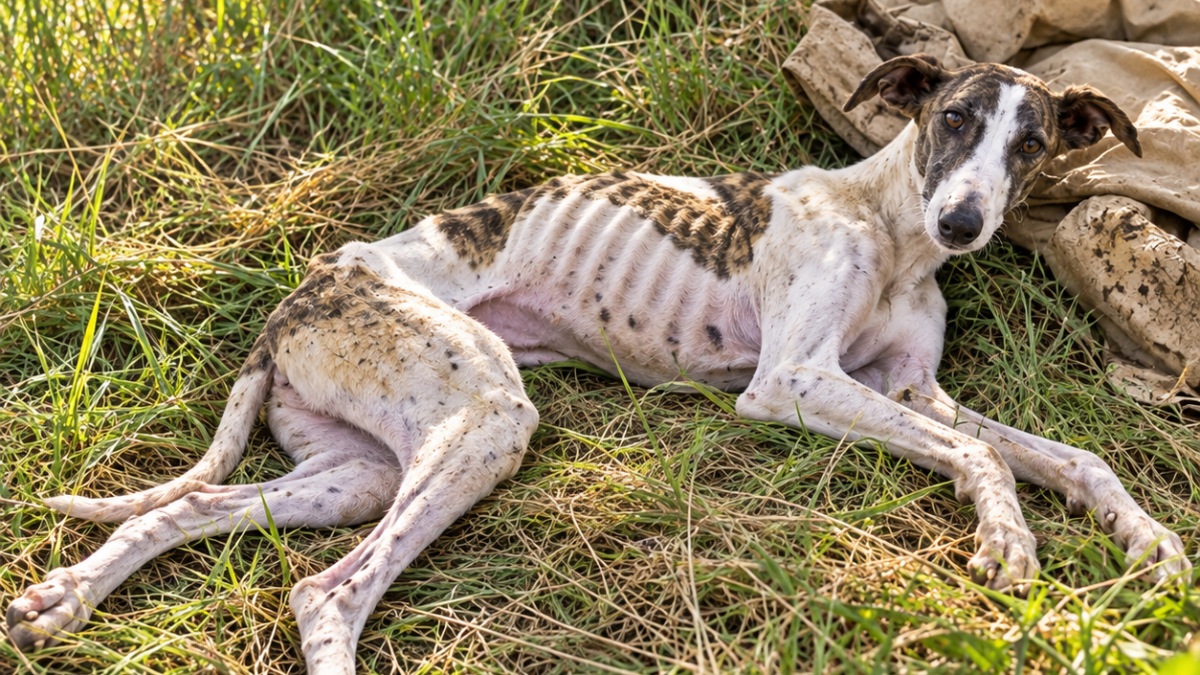
PART 2
At first, I thought I had imagined it.
Sarita was lying on her side on a thick folded blanket in the quietest room of my house.
I had covered the floor with washable pads.
Her medications were lined up on a small table beside the wall.
Bandages.
Sterile gauze.
Gloves.
Saline.
Ointment.
A notebook where I had begun recording everything.
Time she ate.
How much she drank.
Medication.
Urination.
Bowel movements.
Wound cleaning.
Any sign of pain.
Any movement.
Especially movement.
I had been told to document everything because when an animal cannot stand, changes that look insignificant can matter.
I was cleaning the skin near her rear leg when her tail moved.
Not much.
A little sweep against the blanket.
I froze.
“Sarita?”
Nothing.
I waited.
Her eyes lifted toward me.
Then her tail moved again.
Two inches.
Maybe three.
I laughed before I could stop myself.
“Oh my God.”
Sarita looked at me as though I had lost my mind.
I reached for my phone.
“Eve?”
Her physiotherapist answered.
“What happened?”
“She moved.”
“What moved?”
“Her tail.”
There was a short pause.
“On purpose?”
“I think so.”
“Do it again.”
“I can’t make her—”
“Say something she responds to.”
I looked down.
“Sarita.”
Nothing.
Then I picked up the bowl I used for her food.
Her ears shifted.
The tail tapped once.
I started crying.
“Did you hear that?”
Eve laughed softly.
“I heard you crying.”
“She did it again.”
“That’s good.”
“Does that mean her legs are coming back?”
The silence lasted only a second.
But I understood it.
“Cata.”
“I know.”
“A tail response is encouraging.”
“But?”
“It doesn’t tell us yet what her walking prognosis will be.”
I sat on the floor.
Sarita’s tail moved again when I touched her neck.
I wiped my face.
“But it’s something.”
“Yes.”
That was all I needed.
Something.
In those first weeks, our entire world became a collection of somethings.
Sarita ate half a bowl without being encouraged.
Something.
She slept through three hours without waking in distress.
Something.
One wound looked cleaner.
Something.
Her temperature stayed normal.
Something.
Her tail moved when I entered the room.
Something.
People who have never cared for a severely injured animal sometimes imagine recovery as a straight line.
Day one: terrible.
Day ten: better.
Day thirty: walking.
Reality was nothing like that.
Sarita could have a good morning and a terrible afternoon.
One wound improved while another became inflamed.
She ate well one day and refused breakfast the next.
Sometimes I convinced myself she was stronger.
Then I tried helping her change position and felt how little muscle remained in her legs.
The first time I lifted her for cleaning, I cried after putting her down.
Not in front of her.
I went into the bathroom.
Closed the door.
Sat on the toilet lid.
And cried.
Because she was so light.
Greyhounds are naturally lean.
Sarita was beyond lean.
My hands could feel nearly every ridge along her spine.
I remember looking at my palms afterward as though they might contain an explanation.
How does a dog reach that condition?
How long does suffering have to continue before someone decides it matters?
I had no answers.
So I went back into the room.
Sarita looked at me.
Her tail moved.
That became our agreement.
She would keep trying.
I would keep coming back.
Every morning began the same way.
I checked her breathing before I even fully opened my eyes.
Her bed was near enough that I could hear her move.
Then I checked her wounds.
Cleaned her.
Changed bedding if necessary.
Helped her eat.
Moved each leg carefully through the exercises Eve taught me.
Bend.
Straighten.
Support.
Massage.
Repeat.
The motions looked small.
Almost pointless.
But inactive muscles disappear frighteningly quickly.
If Sarita’s nerves ever began communicating properly again, she would still need muscle strength to use what returned.
Eve was direct with me.
“We’re preparing her body for a possibility.”
“Not a promise.”
“Exactly.”
I appreciated that.
Hope without honesty can become cruelty.
We never told ourselves Sarita would definitely walk.
We told ourselves she deserved every reasonable chance to show us what she could do.
Donations started coming in.
Some were large.
Most were small.
People sent enough for a therapy session.
Medication.
Bandaging supplies.
Transportation.
Five thousand pesos.
Ten thousand.
A little more.
Every contribution bought time.
Time was what Sarita needed most.
By November 2024, her legs still weren’t responding the way we hoped.
That was the period when my optimism became hardest to maintain.
We had been working for weeks.
Massages.
Warm compresses.
Passive range-of-motion exercises.
Positioning.
Assisted standing.
Nothing dramatic.
People online sometimes saw photographs and wrote:
“She’s going to walk. I know it.”
I loved their faith.
But I also hated it a little.
Because they could close the photograph afterward.
I couldn’t.
At midnight, I was the one helping Sarita shift because she was uncomfortable.
At six in the morning, I was cleaning her again.
I saw the legs still lying where I placed them.
I saw how much effort it took her just to hold her chest upright.
One afternoon after therapy, I asked Eve the question I had avoided.
“Are we doing this for her or for ourselves?”
Eve looked at me carefully.
“That’s an important question.”
“I need an honest answer.”
“I know.”
Sarita was resting between us.
Eve touched the dog’s shoulder.
“Is she eating?”
“Yes.”
“Does she interact with you?”
“All the time.”
“Does she show sustained uncontrolled pain?”
“No.”
“Does she enjoy attention?”
“Yes.”
“Does she get excited about food?”
Sarita lifted her head at the word.
We both laughed.
Eve continued.
“Then right now, she has quality of life.”
“But she can’t walk.”
“Walking is important.”
Eve looked at me.
“But walking is not the only measurement of whether a life has value.”
I stared down at Sarita.
That sentence changed the way I understood everything afterward.
We wanted Sarita to walk.
Desperately.
But our love for her could not depend on whether she performed the miracle we hoped for.
If she never walked again, we would adapt.
Wheels.
Support slings.
Home modifications.
Whatever she needed.
I whispered, “Okay.”
Eve smiled.
“Now we keep working.”
And we did.
Twice a day when possible.
Sarita’s rehabilitation expanded.
Acupuncture.
Water therapy.
Supported treadmill work.
Massage.
Warm compresses.
Assisted standing.
At first, water therapy frightened her.
The moment her body entered the rehabilitation pool, her eyes widened.
I stayed close to her face.
“You’re okay.”
Her legs floated awkwardly beneath her.
Eve supported her abdomen.
“Let her feel it.”
“Feel what?”
“That the legs can move without carrying all her weight.”
Sarita paddled once with a front leg.
Then stopped.
“Good.”
“That looked accidental.”
“It may have been.”
Eve smiled.
“Accidental movement is still movement.”
That became our entire philosophy.
No progress was too small to notice.
Weeks passed.
Sarita gained weight.
The hollows around her hips became less severe.
Her coat improved.
Her eyes changed too.
That is difficult to measure medically, but anyone who spent time with her noticed it.
At first, she watched people with caution.
Not terror.
Something closer to uncertainty.
Will you stay?
Will this hurt?
Are you coming back?
Over time, that look softened.
When I entered the room, her tail began beating against the bed.
Sometimes so hard it made a ridiculous thumping noise.
“Good morning.”
Thump.
“You hungry?”
THUMP THUMP THUMP.
“You only love me because I have breakfast.”
THUMP.
I laughed.
One morning, while changing the bedding, I saw her rear foot twitch.
I stopped.
Sarita was not moving her upper body.
I touched the pad of the foot.
Nothing.
I rubbed gently between two toes.
The leg jerked.
My heart exploded.
“Eve!”
I called her so often during those months that she eventually stopped greeting me normally.
“What moved?”
That was how she answered.
“The right hind leg.”
“How much?”
“A twitch.”
“Reflex?”
“I don’t know.”
“Record it.”
I did.
Again.
Again.
Sometimes nothing happened.
Then another tiny movement.
We showed the veterinarian.
Neurological recovery is complicated.
Reflexes do not always mean voluntary control.
But the team agreed that what we were seeing justified continued rehabilitation.
That tiny twitch changed my energy.
Not because it guaranteed anything.
Because after so much silence from those legs, there was finally a reply.
Sarita had spent weeks sending messages into a body that seemed unable to answer.
Now something answered back.
Her rehabilitation intensified.
The treadmill was one of the hardest parts.
We used support beneath her abdomen.
I stayed at her head.
Eve worked behind.
“Come on, Sarita.”
The belt moved slowly.
Her front legs tried to coordinate.
Rear legs dragged.
We stopped.
Reset.
Tried again.
“Come on.”
One step.
Not independent.
But a pattern.
“Good girl.”
Another.
Then she collapsed into the support.
We rested.
Some days we achieved less than the day before.
Those were the dangerous days emotionally.
When you work this hard, regression feels personal.
As though someone has taken back something you earned.
Eve constantly reminded me:
“Nervous systems don’t follow calendars.”
I hated that sentence.
Because I wanted a calendar.
Week one.
Week two.
Week three.
Stand.
Week four.
Walk.
Life refused.
So did Sarita.
Session eighteen.
Assisted standing for fourteen seconds.
Session nineteen.
Seven seconds.
I went home devastated.
Session twenty.
Twenty-one seconds.
Session twenty-one.
She moved one rear foot underneath herself.
Session twenty-two.
She held weight briefly.
Then came session twenty-three.
I remember everything.
The light through the rehabilitation room window.
The towel over my shoulder.
The squeak of Eve’s shoes.
A bowl of small treats.
Sarita looked particularly alert.
Eve positioned her.
“Let’s try without as much support.”
My stomach tightened.
“Are you sure?”
“No.”
I laughed.
“Excellent.”
“We’re testing.”
We brought Sarita upright.
I supported her chest.
Eve supported the rear.
“Ready?”
Sarita’s paws were placed carefully.
Front legs first.
Then hind.
Eve reduced pressure from the sling.
Sarita wobbled.
I reached instinctively.
“Wait.”
Eve’s voice was sharp.
I froze.
Sarita’s legs trembled.
Her back dipped.
I thought she was going down.
Then she corrected.
A tiny adjustment through her hips.
Eve loosened the sling more.
Sarita remained upright.
“Cata.”
“I see it.”
“Don’t touch her.”
“I’m not.”
My hands hovered six inches away.
Sarita stood.
Alone.
No one holding her.
No sling carrying her weight.
No hands beneath her belly.
One second.
Two.
Three.
Her entire body shook.
Four.
Five.
I was already crying.
Six.
Then Sarita sat down awkwardly.
I dropped to my knees.
“Oh my God.”
Eve laughed and wiped her face.
Sarita looked between us as though she could not understand why two adult women had suddenly lost all emotional control.
I kissed her forehead.
“You stood.”
Her tail wagged.
“You stood by yourself.”
That moment traveled quickly through the rescue team.
Messages exploded.
Videos were replayed.
People cried.
One rescuer wrote:
“Remember the tree.”
As if any of us could forget.
The tree.
The dirt.
The wounds.
The maggots.
The unmoving legs.
The conversation about euthanasia.
And now five or six seconds of standing felt like watching someone reach the summit of a mountain.
But Eve warned us immediately.
“One stand is not walking.”
I knew.
“One stand is not recovery.”
“I know.”
“She can lose progress.”
“I know.”
“We keep expectations realistic.”
“Eve.”
“What?”
“Let me be happy for ten minutes.”
She laughed.
“Fine. Ten.”
I was happy for the rest of the week.
Then we went back to work.
Standing became the next goal.
Five seconds.
Ten.
Twenty.
Thirty.
Sarita learned balance.
Her body had forgotten it.
Standing is something healthy dogs do without thought.
For Sarita, every muscle seemed to need retraining.
Front.
Rear.
Core.
Neck.
Weight shift.
Balance.
Sometimes one paw folded under incorrectly.
We reset.
Again.
Then we worked toward a step.
One afternoon, Eve placed a treat several feet away.
I frowned.
“That’s cruel.”
“It’s motivation.”
“She loves food.”
“Exactly.”
Sarita stood.
I was beside her.
Not touching.
Just close.
“Come on.”
Sarita leaned forward.
Her front paw moved.
Then the second.
Her rear leg tried to follow.
Collapsed.
I caught her.
“Okay.”
Reset.
Another attempt.
Front.
Front.
Rear twitch.
Down.
Again.
At some point, rehabilitation becomes partly physical and partly stubbornness.
Fortunately, Sarita was becoming extremely stubborn.
She wanted the treat.
She tried again.
Front leg.
Second front leg.
Then her right hind foot lifted.
Not dragged.
Lifted.
Moved.
Landed.
Eve made a sound behind me.
“Did you see that?”
“Yes.”
Left hind.
Small movement.
Sarita lurched forward.
I supported her before she fell.
Two assisted steps.
We celebrated.
The next day she refused.
Of course she did.
Recovery has a sense of humor.
Eventually, the pattern returned.
Then improved.
Then came the day I will remember almost as clearly as the day she first stood.
We were outside on a flat section of the rehabilitation center.
Sarita had become strong enough for short supported walks.
I held the sling loosely.
Eve walked several feet ahead.
“Bring her.”
Sarita stepped.
I barely lifted.
Another step.
Another.
I realized the sling had gone slack.
“Eve.”
“Keep moving.”
“I’m not holding her.”
“I know.”
Sarita took another step.
Her hips swayed.
But she remained upright.
I released the sling completely.
My hands hovered.
Sarita walked.
One.
Two.
Three.
Four steps.
Then five.
Her tail wagged.
She nearly lost balance because of the tail movement.
I laughed so hard I cried.
“Sarita!”
She kept going.
Six.
Seven.
Then she stopped.
Eve knelt.
Sarita walked toward her.
No support.
The greyhound who had once been unable to lift herself beneath a tree crossed the small yard by herself.
Nothing about it looked elegant.
Her gait was uneven.
Her hind legs lacked strength.
Her balance was imperfect.
To me, it was the most beautiful walk I had ever seen.
I remember thinking:
Someone passed this dog and kept going.
Now look at her.
That was the closest thing to revenge I ever wanted for Sarita.
Not violence.
Not punishment.
Not some dramatic confrontation with whoever abandoned her.
Her revenge was being alive.
Her revenge was every step.
Every meal.
Every squeaky toy.
Every night on a warm bed.
Whoever had treated her as disposable no longer controlled the ending.
Sarita did.
From there, progress slowly began accelerating.
Walking strengthened muscles.
Stronger muscles improved walking.
Her confidence grew.
She started exploring the yard.
At first, only a few feet.
Then the fence.
Then the water bowl.
One morning, I carried her breakfast outside.
Before I reached her usual spot, I heard paws behind me.
I turned.
Sarita was walking toward the bowl.
“Excuse me?”
She ignored me.
Food mattered.
She reached the bowl.
Stood.
And ate.
Standing.
No support.
I took a photograph.
Later I compared it with the first photograph under the tree.
I almost couldn’t believe it was the same dog.
Eventually, toys entered the story.
I bought her a squeaky toy.
Terrible mistake.
Sarita became obsessed.
The first time it squeaked, she froze.
Head tilted.
Squeak.
She stepped closer.
Squeak.
Then she bit it.
The expression on her face was priceless.
She bit again.
SQUEAK.
Her tail went wild.
For ten minutes, the dog who had spent months in rehabilitation forgot she was a medical case.
She was simply a dog murdering a squeaky animal in my living room.
I laughed until my stomach hurt.
Those moments became increasingly common.
Sarita learned the yard.
She followed the other dogs.
At first, they adjusted to her slower movements.
One particularly patient dog named Bruno would walk beside her.
If Sarita stopped, Bruno stopped.
If she moved again, so did he.
Then one afternoon Bruno ran past her.
Sarita watched.
Something changed.
She leaned forward.
Took several quick steps.
Almost stumbled.
Recovered.
Then accelerated.
Not a full greyhound run.
Not yet.
But faster than a walk.
I shouted:
“Sarita!”
She kept going.
For maybe fifteen feet.
Then stopped.
Turned.
And looked at me.
I swear she looked proud.
“You’re insane.”
Tail wag.
“You’re going to give me a heart attack.”
Tail.
“Come here.”
She trotted back.
Months earlier, I had carried her into that yard.
Now I had to tell her to slow down.
Seven months after rehabilitation began, Sarita was formally discharged from intensive therapy.
The word “discharged” felt impossible.
Eve handed me the paperwork.
I stared at it.
“That’s it?”
“No.”
“What do you mean, no?”
“She still needs normal exercise. Strength maintenance. Monitoring.”
“So not it.”
Eve smiled.
“Not therapy twice a day.”
I started crying.
She pointed at me.
“No.”
“What?”
“If you start, I’ll start.”
Too late.
We hugged.
Sarita stood between us wagging her tail, completely unaware that a chapter had just ended.
Then came the question everyone had been avoiding.
Where would Sarita go?
I was her foster.
Temporary.
Remember?
That was the agreement.
Temporary foster near the clinic.
Medical support.
Recovery.
Then adoption.
The rescue organization began discussing potential homes.
I nodded professionally.
Asked responsible questions.
Fenced yard?
Other dogs?
Experience?
Time?
Follow-up care?
All reasonable.
Then one night, I sat on the couch.
Sarita was asleep with her head across my feet.
The room was quiet.
I looked at her.
“You know they’re trying to find you a family.”
One ear moved.
“That’s good.”
Nothing.
“You deserve a great home.”
She sighed.
“I’m not allowed to be selfish.”
Sarita opened one eye.
I laughed.
“You don’t care.”
Tail thump.
“You like it here.”
Tail.
I scratched her neck.
“What if they find somewhere better?”
Sarita stood.
Turned around.
Climbed partly onto the couch despite knowing she wasn’t supposed to.
Then put her head in my lap.
I stared down.
“That is emotional manipulation.”
She closed her eyes.
The next morning, I called the rescue.
“I need to talk about Sarita.”
There was silence.
Then:
“You’re adopting her.”
“How do you know?”
Laughter.
“Cata, everyone knows.”
“I’m serious.”
“So are we.”
“You were going to let me suffer through the conversation?”
“Yes.”
I looked at Sarita.
She was chewing the squeaky toy.
“Fine.”
“Fine what?”
“She’s staying.”
That was how Sarita stopped being my foster dog.
Not with a dramatic ceremony.
Not with music.
I signed paperwork.
Bought a new collar.
Then went home with the same dog I had already been waking up beside for months.
But everything felt different.
Permanent is a powerful word.
The first night after the adoption became official, Sarita slept deeply.
I sat beside her longer than necessary.
I thought about the first promise I made.
You’re not going back under that tree.
Now I could add another.
You’re not leaving here either.
Sarita’s life after rehabilitation became almost boring.
I mean that as the highest compliment.
She ate.
She slept.
She played.
She stole spots from other dogs.
She discovered that blankets were best when arranged into enormous nests.
She stood beside the kitchen whenever food was prepared.
She learned the sound of the treat container.
She occasionally ran.
Actually ran.
The first time I saw it happen properly, I screamed.
We were outside.
A dog dashed across the yard.
Sarita followed.
Her long greyhound body stretched.
Rear legs pushing.
Front legs reaching.
For only a few seconds, she became what her body had been built to become.
Fast.
Free.
Then she slowed.
I put both hands over my mouth.
Someone beside me whispered:
“Remember when they said she might never walk?”
I did.
Of course I did.
I always would.
People sometimes misunderstood that sentence later.
“The vets were wrong.”
No.
That wasn’t true.
The veterinarians told us honestly what the damage meant.
Sarita might never walk again.
Might.
Medicine is not prophecy.
They gave us risks.
Possibilities.
Sarita gave us the answer her body ultimately produced.
Her recovery did not prove experts were foolish.
It proved outcomes can remain uncertain even when the situation looks terrible.
And it proved what rehabilitation, resources, time, and sustained care can sometimes achieve.
Not every paralyzed dog will walk.
Not every severe rescue will have Sarita’s outcome.
That mattered to me.
Because I never wanted her story to make another person feel guilty if their animal could not achieve the same recovery.
Sarita was extraordinary.
But her worth had never depended on running.
She had been worthy under the tree.
Worthy when she couldn’t stand.
Worthy when her legs did not respond.
Worthy when we thought she might need lifelong assistance.
Walking changed her options.
It did not create her value.
Over time, Sarita became a symbol for something larger in Chile.
Greyhounds and similar hunting dogs can face abandonment and mistreatment when they are no longer useful to people.
Rescuers kept emphasizing that Sarita was not unique simply because someone had hurt her.
She was unique because the world happened to see what came afterward.
There were others.
Dogs nobody photographed.
Dogs nobody reached in time.
Dogs who never made it from rural areas to advanced care in Santiago.
That reality angered me.
At first, when people asked:
“Aren’t you furious at whoever did this?”
I said yes.
Later, my answer changed.
Anger was easy.
What mattered was what we did with it.
We used Sarita’s story to talk about reporting suffering early.
About not waiting because you fear becoming involved.
About sterilization.
Responsible ownership.
Medical care.
Rescue resources.
And especially abandonment.
One day, someone asked whether I wanted the person who left Sarita to see videos of her running.
I answered immediately.
“Yes.”
Not because I wanted to shame them publicly.
I wanted them to understand what they had thrown away.
A dog who loved people.
A dog who wagged her tail whenever I entered a room.
A dog who fought through pain without becoming cruel.
A dog who learned to walk again.
A dog who now slept under blankets like she owned my house.
That was Sarita’s revenge.
Whoever abandoned her had reduced her to a body under a tree.
Our answer was to give her a life so full that the tree became only the first page people remembered.
There were difficult days even after discharge.
Her body carried history.
Cold weather sometimes made her stiff.
Her gait was never perfectly ordinary.
After too much activity, she needed rest.
We watched her weight carefully.
Continued exercises.
Adjusted routines.
Recovery did not erase injury.
It made life possible around it.
That distinction became important as Sarita aged.
Some mornings, I caught myself worrying too much.
A slower step.
A hesitation before standing.
A slightly different movement.
Immediately my brain went backward.
Paralysis.
Fractures.
Tree.
No.
I had to teach myself to see the dog in front of me, not only the patient I remembered.
“Sarita.”
She looked up.
“You’re allowed to get tired.”
Tail.
“You’re allowed to be normal.”
She sneezed.
“Thank you.”
One anniversary of her rescue, Eve visited us.
Sarita heard her voice at the gate.
She ran.
Not elegantly.
But fast.
Eve dropped her bag.
“Oh, no.”
Sarita reached her.
Jumped up.
Eve caught her.
“Look at you!”
I stood by the door.
“You created a monster.”
Eve laughed.
“She was already like this.”
We sat outside.
Sarita moved between us.
Eve rubbed her hind leg.
The muscle was strong now.
“Do you remember the first twitch?”
I asked.
“Yes.”
“I called you like the house was burning.”
“You called me every time she moved a toe.”
“I was dedicated.”
“You were exhausting.”
Sarita lay down.
Eve looked at her.
“Worth it.”
“Yes.”
We became quiet.
Then Eve said:
“You know what I remember most?”
“Session twenty-three?”
“No.”
“The first week.”
I looked at her.
“Why?”
“Because nobody knew if there would be a session twenty-three.”
That was true.
Success makes uncertainty easy to forget.
Once you know the ending, every earlier moment begins to look like part of a plan.
It wasn’t.
We were improvising around hope.
Making decisions with incomplete information.
Trying to keep Sarita comfortable.
Trying not to promise ourselves an outcome.
Trying again the next day.
That was the real story.
Not a miracle.
Persistence under uncertainty.
One ordinary morning years later, I woke before my alarm.
The house was quiet.
I expected Sarita beside the bed.
She wasn’t there.
My heart jumped.
“Sarita?”
Nothing.
I got up.
“Sarita?”
Then I heard movement outside the bedroom.
I found her in the living room.
Standing by the window.
Sunlight touched her face.
She looked toward the yard.
I opened the door.
Sarita walked outside.
Slowly at first.
Then faster.
One of the other dogs ran.
Sarita followed.
She crossed the yard.
Turned.
Ran back.
I stood barefoot in the doorway watching.
No camera.
No rescuers.
No therapists.
No audience.
Just Sarita running because she wanted to.
That may have been my favorite moment of all.
When her recovery stopped being a performance anyone needed to witness.
When every step no longer required applause.
When she was allowed simply to live.
Sometimes visitors saw her and asked:
“Is that the dog?”
“Yes.”
“The one who couldn’t walk?”
“Yes.”
They expected something dramatic.
Sarita usually disappointed them by demanding treats.
Perfect.
Let her be ordinary.
She had earned ordinary.
Years earlier, her entire world had been a patch of dirt beneath a tree.
People passed.
Her wounds worsened.
Her legs stopped responding.
Someone finally stopped.
Then someone called.
Someone transported her.
Someone donated.
Someone treated her.
Someone exercised her legs.
Someone changed dressings.
Someone held her upright.
Someone believed standing for five seconds mattered.
No single person saved Sarita.
That matters too.
Rescue is a chain.
If one link fails, the outcome changes.
The person who reported her mattered.
The driver to Santiago mattered.
The medical team mattered.
Eve mattered.
Every person who donated mattered.
I mattered.
Sarita mattered most.
Because she still had to do the hardest work inside her own body.
The final lesson she gave me came much later.
We were at a small rescue event.
Someone displayed two photographs side by side.
Sarita under the tree.
Sarita running.
People naturally gathered around the running photograph.
They smiled.
Pointed.
Said:
“Incredible.”
I watched for a while.
Then a little boy stood in front of the first picture.
He studied it.
His mother tried moving him along.
He stayed.
Finally he asked:
“Was she still a good dog there?”
His mother looked confused.
“What?”
“When she couldn’t walk.”
My throat tightened.
“Yes,” I said from behind them.
They turned.
I pointed at the photograph.
“She was exactly as good there.”
The boy looked at the running picture.
“So running didn’t make her better?”
I smiled.
“It made her stronger.”
He thought.
“But not better?”
“No.”
The boy nodded.
Children sometimes understand things faster than adults.
Sarita’s greatest victory was not that she became worthy of love by walking.
Her victory was that someone finally treated her as worthy while she could not.
Everything else grew from that.
Today, when I think about revenge, I think differently than I used to.
I don’t imagine the person who abandoned Sarita suffering.
That would not undo anything.
I imagine Sarita sleeping on a clean bed while rain falls outside.
I imagine her standing at her food bowl.
I imagine Eve crying during session twenty-three.
I imagine her first unsupported steps.
The squeaky toy.
The backyard.
The first real run.
The adoption papers.
Her head in my lap.
That is the only revenge that matters to me.
Someone decided her life could be discarded.
Sarita lived.
Someone left her unable to rise.
Sarita stood.
Someone abandoned her body beneath a tree.
Sarita eventually ran across a yard surrounded by people who would have moved mountains to keep her safe.
And the woman who once agreed to foster her temporarily?
I never gave her back.
Sometimes I still kneel beside Sarita when she sleeps.
I put one hand against her side and feel the slow rhythm of her breathing.
Her scars remain.
Some are hidden beneath fur.
Others aren’t.
I don’t hate them.
They are not beautiful because suffering is beautiful.
Suffering isn’t.
They are simply evidence that what happened to her was real.
And so was everything after.
The rescue.
The uncertainty.
The work.
The fear.
The tiny twitch.
The first stand.
The first step.
The first run.
The home.
If I could go back to the woman I was the night I carried Sarita through my door, I know exactly what I would tell her.
Not:
“She’s going to walk.”
I couldn’t promise that.
Not:
“Everything will be okay.”
Some things would remain difficult.
I would tell her:
“Don’t measure this dog’s future only by what her legs can do.”
Because the most important recovery had already begun before she stood.
It began when she lifted her eyes beneath that tree and somebody finally answered.
It continued when she learned that hands could clean wounds instead of causing them.
That footsteps could mean someone was coming back.
That a door closing did not mean abandonment.
That food would come again tomorrow.
That sleep could be safe.
That people could be consistent.
By the time Sarita took her first unsupported step, she had already traveled farther than any of us understood.
She had gone from waiting to belonging.
The walking was extraordinary.
The belonging saved her.
And that is how I choose to remember her story.
Not as the greyhound covered in wounds.
Not as the paralyzed patient.
Not even as the dog who defied terrible odds.
I remember her running across my yard one ordinary morning, tail high, chasing another dog because life had finally become ordinary enough for her to waste energy on play.
No one was holding her.
No sling.
No harness.
No therapist.
No one telling her where to place her feet.
She simply ran.
I stood in the doorway crying like an idiot.
Sarita turned.
Looked at me.
Then ran faster.
Under a tree in Marchigüe, she had once waited for someone to stop.
Now I was the one standing still.
Watching her go.








