PART 2: They Left Him Tied to a Tree Too Weak to Stand—Then We Saw What Was Hidden Beneath His Matted Fur
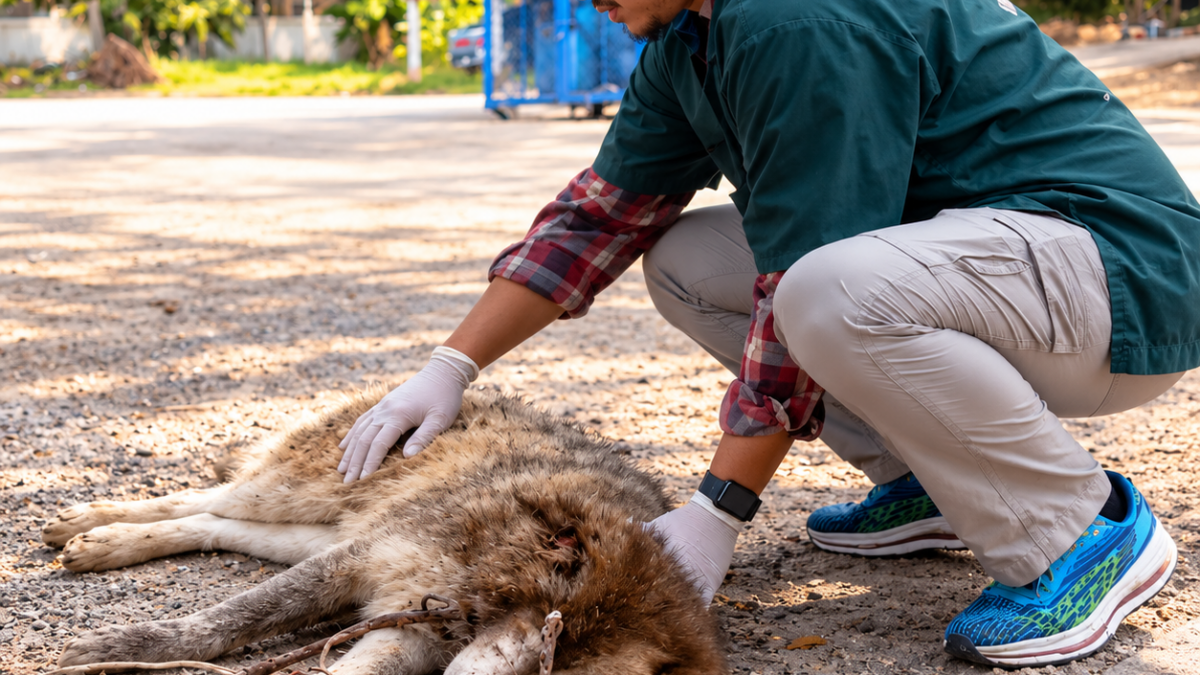
PART 2
Rachel disappeared through the treatment-room doors with Marley.
I stood in the hallway holding the piece of rope I had cut from the tree.
I hadn’t consciously brought it inside.
It was still wrapped around my hand.
Mia noticed.
“Why do you have that?”
I looked down.
“I don’t know.”
“Throw it away.”
I almost did.
Then I stopped.
“Not yet.”
She didn’t ask why.
Neither of us knew whether Marley would survive the next hour.
Maybe keeping the rope felt like evidence that he had at least made it that far.
Away from the tree.
Inside a hospital.
Somewhere pain was finally being treated instead of ignored.
The surgery took longer than I expected.
Rachel had suspected a deep abscess.
She was right.
The infection had spread through tissue along the side of Marley’s head and around the base of his ear.
We later learned that there was likely an untreated wound beneath all of it.
Maybe a bite.
Maybe trauma.
Maybe something that started small and became catastrophic because no one treated it.
The precise beginning no longer mattered medically.
What mattered was drainage.
Cleaning.
Removing dead tissue.
Protecting the healthier structures around it.
Marley was already weak from dehydration and malnutrition, which made anesthesia riskier.
That was why every extra minute felt personal.
I sat beside Mia in the waiting room.
Neither of us talked much.
At one point she said, “He wagged.”
“What?”
“His tail.”
“I saw.”
“Before we moved him.”
“I know.”
She rubbed both hands over her face.
“That dog couldn’t stand and still wagged.”
“Don’t.”
“What?”
“Make me emotional right now.”
“You’re already emotional.”
“I’m trying to be useful.”
“By staring at a vending machine?”
I realized I had been staring at the same row of crackers for several minutes.
I sat down.
Eventually the treatment-room door opened.
Rachel stepped out.
Her surgical cap was pushed back.
“He’s awake.”
I stood so quickly the chair scraped behind me.
“He made it?”
“He made it through surgery.”
That distinction mattered.
“How bad?”
“The infection was extensive.”
“Did you get all of it?”
“We cleaned what we could and placed drainage. He’ll need antibiotics, wound care, pain management, and close monitoring.”
“But he’s alive.”
“Yes.”
I exhaled.
Rachel held up one finger.
“We’re not celebrating yet.”
Of course not.
She led us to the recovery area.
Marley lay beneath warming blankets.
Part of his face had been clipped.
The swelling looked even more dramatic without the dirty fur hiding its outline.
A small drain had been placed.
He looked exhausted.
His eyes opened when I approached.
“Hey.”
One blink.
That was all.
I touched the blanket instead of him.
Rachel looked toward the rest of his body.
“Now we need to deal with the coat.”
We waited until he was stable enough.
The mats had become more than a grooming problem.
They trapped moisture and waste against his skin.
They pulled with every movement.
Some were so tight around his legs that we worried about circulation and hidden sores.
Because Marley was already sedated and exhausted, Rachel decided removing the worst sections while he remained under close monitoring was kinder than making him endure the process fully awake.
The clippers started at his shoulder.
The first strip fell away.
Then another.
What emerged underneath shocked me almost as much as his infected face.
He was painfully thin.
The coat had created an illusion.
From a distance at the tree, Marley looked bulky.
Once the mats came off, his ribs appeared sharply.
His spine rose beneath skin.
His hips were prominent.
Mia held a black trash bag open.
Within minutes it was heavy.
There was dirt in those mats.
Burrs.
Dried waste.
Bits of leaves.
Flea dirt.
Dead insects.
Live fleas.
Tiny ticks attached near the thinner skin.
Each pass of the clippers revealed something else.
Rachel stopped near one front leg.
“Look.”
A raw patch circled part of the skin where a mat had tightened.
Another sore appeared beneath his chest.
Then one near the tail.
“He’s been like this for a long time,” Mia whispered.
Rachel nodded.
“Long enough.”
Marley slept through most of it.
At one point he shifted.
His paw moved.
I touched the blanket.
“You’re okay.”
The sentence felt ridiculous.
He wasn’t okay.
Not yet.
But maybe he was finally somewhere okay could eventually become possible.
By the time we finished, Marley looked like a different species.
Patchy.
Half shaved.
Thin.
Bandaged.
His head still swollen.
His ribs obvious.
No beautiful rescue transformation.
No miracle.
Just the real dog underneath everything neglect had allowed to accumulate.
Rachel weighed him.
He was significantly underweight.
Bloodwork showed anemia, dehydration, elevated infection markers, and low protein consistent with prolonged poor nutrition.
His kidneys were stressed but still functioning.
His liver values worried Rachel less.
“Can he recover?”
I asked.
“Possibly.”
“That’s not a comforting answer.”
“It’s an honest one.”
“What worries you most?”
“Tonight.”
There was that word.
Tonight.
Not next month.
Not adoption.
Not whether his hair would grow back.
Tonight.
He needed to maintain his temperature.
Tolerate fluids.
Respond to antibiotics.
Remain stable after surgery.
Not vomit.
Not develop worsening systemic infection.
Not crash from everything his body had been carrying.
We moved him into a warm kennel where we could watch continuously.
I went home for exactly forty minutes.
Showered.
Changed.
Returned.
Mia stared when I walked back in.
“You were supposed to sleep.”
“So were you.”
“I didn’t leave.”
“Then you don’t get to judge.”
We stayed.
Around eleven, Marley opened his eyes.
Rachel offered a tiny amount of water.
He turned his head away.
My stomach tightened.
“Is that bad?”
“He’s nauseated.”
She adjusted medication.
An hour later, she tried again.
One lick.
Then another.
He swallowed.
“That’s something.”
Rachel nodded.
“A small something.”
At two in the morning, Marley slept deeply enough that I began worrying.
I checked his breathing repeatedly.
Mia finally said, “If you wake him every five minutes, he’s going to hate us.”
“I’m not waking him.”
“You’re hovering like a ghost.”
“I’m monitoring.”
“You’re staring.”
There is no dignity in rescue at two in the morning.
We sat on the floor drinking terrible coffee while Marley slept.
The hospital became quiet.
Machines beeped.
A cat complained occasionally in another room.
Somewhere down the hall, a washing machine ran.
I looked at Marley’s kennel.
“What kind of person ties a dog to a tree like that?”
Mia shook her head.
“We don’t know what happened.”
“He didn’t tie himself.”
“I know.”
“No water.”
“I know.”
“His face looked like that.”
“I know.”
She turned toward me.
“Being angry isn’t going to get him through tonight.”
“No.”
“But I’m still angry.”
“Me too.”
At five-thirty, Rachel returned from checking another patient.
“He needs calories.”
“He won’t eat.”
“We’ll see.”
She prepared a small amount of easily digestible liquid nutrition.
Not much.
Marley smelled it.
Nothing.
She touched a little to his lips.
His tongue appeared.
Once.
Then again.
He swallowed.
Rachel waited.
Offered more.
Marley drank.
Only a small amount.
But he drank.
I smiled for the first time all night.
“There.”
Rachel gave me a warning look.
“Don’t turn three teaspoons into a parade.”
“Too late.”
Mia leaned toward the kennel.
“Good boy.”
Marley’s ear moved.
That was the first morning.
Not dramatic.
Milk replacer and nutritional formula.
A few swallows.
A temperature heading in the right direction.
Pain controlled.
Drain functioning.
He had survived the night.
By noon, he ate a small amount of soft food.
I watched him take the first real bite.
Chew.
Swallow.
Then look at the bowl.
I almost laughed.
“You want more?”
He ate another bite.
Mia walked in during the third.
“Is he eating?”
“Yes.”
She came closer.
Marley kept going.
For people outside animal rescue, a dog eating lunch is not news.
For us, that meal felt like the first door opening.
The second day brought complications.
His diarrhea worsened.
Parasites were confirmed.
Skin irritation appeared in places the mats had hidden.
The wound on his head required flushing.
Marley hated that.
The first time Rachel approached with supplies, he tried to stand.
His legs failed.
He scrambled anyway.
“Easy.”
I supported his chest.
He turned his face away from us.
Rachel stopped.
“We need to do this, buddy.”
No response.
“I know it hurts.”
She worked quickly.
When it was over, Marley was shaking.
I sat beside him.
That was when he placed his chin on my wrist.
Not dramatically.
He was simply tired.
But I stayed still.
Maybe he wanted warmth.
Maybe contact.
Maybe he just ran out of strength.
I didn’t assign meaning.
I just stayed.
By day three, he could hold himself upright for a few seconds.
Rachel supported his back end while I held a leash loosely.
“Come on.”
Marley took one step.
Stopped.
Another.
His legs shook.
“That’s enough.”
We lowered him onto a padded mat.
His tail moved.
Mia saw.
“He knows.”
“Knows what?”
“That he did it.”
“Or he likes you.”
“Let me have this.”
I laughed.
The first bath came after Rachel decided his surgical site and overall condition were stable enough.
It was not a cosmetic bath.
His exposed skin still carried grime.
Flea dirt.
Oil from his own skin.
Residue trapped beneath the old mats.
We used medicated products according to Rachel’s plan to protect damaged skin and continue parasite management.
Marley hated water.
Or maybe he had never experienced a gentle bath.
The moment his paws touched the tub, he stiffened.
I supported him.
“You can leave when we’re done.”
Mia looked at me.
“He doesn’t speak English.”
“I know.”
“Then why are you explaining?”
“Because I need to.”
Marley’s head rested against my forearm while we slowly worked through what remained of the dirty coat.
Warm water ran brown at first.
Then clearer.
The smell of neglect disappeared little by little.
Underneath, his skin was pale in some areas, angry pink in others.
I remember looking at the water spiraling down the drain and thinking how strange it was that something so ordinary could feel important.
Dirt.
Parasites.
Months of suffering.
Not literally disappearing with the water, of course.
His body still carried everything.
But for the first time, we could touch clean skin.
When the bath ended, we wrapped him in towels.
Marley shivered.
Mia rubbed carefully.
“Look at you.”
He leaned into her.
She froze.
Then smiled.
“Okay.”
That afternoon, he slept for four straight hours.
Pain medication finally gave him rest.
Not the exhausted collapse we had seen beneath the tree.
Real sleep.
His breathing slowed.
His paws twitched.
At one point, he made a tiny sound in his sleep.
I wondered what dogs dream about after experiences like his.
Then I stopped myself.
We know less about their internal worlds than our emotions want to pretend.
I knew only what I could see.
Marley was warm.
Fed.
Medicated.
Clean.
Safe.
That was enough.
On day four, his appetite improved.
On day five, the swelling around his head began decreasing noticeably.
On day six, Rachel removed one section of drainage.
The wound still looked frightening, but the infection had stopped spreading.
His bloodwork moved in the right direction.
Every day brought one small victory.
The kind that becomes invisible in a before-and-after story.
Marley drank without assistance.
Marley stood for fifteen seconds.
Marley walked four steps.
Marley finished breakfast.
Marley slept through wound cleaning without panicking.
Marley lifted his leg outside and nearly fell over while trying to urinate like a normal dog.
That one made us laugh.
He looked offended.
“Sorry.”
Tail wag.
By the end of the first week, his personality began appearing.
Marley was not timid.
That surprised me.
Given what we had seen, I expected fear.
Instead, once pain reduced, he became curious.
He wanted to inspect everything.
Laundry cart.
Food cabinet.
Shoelaces.
Other dogs through the glass.
If someone entered the room, Marley lifted his head.
People became interesting.
Food became extremely interesting.
One afternoon, I opened a container of chicken near his kennel.
Marley stood.
Not gracefully.
But stood.
“Really?”
His tail moved.
I held a piece.
He crossed three steps.
Then four.
His rear legs wobbled.
“Don’t overdo it.”
He sat.
I gave him the chicken.
Apparently physical rehabilitation could be purchased.
The best moment came around day nine.
I entered after lunch.
Marley was standing beside Mia.
She scratched beneath his chin.
His mouth opened.
Not panting.
Something softer.
The corners of his mouth lifted.
“Is he smiling?”
Mia looked at me.
“He’s a dog.”
“You know what I mean.”
Marley leaned into her hand.
His eyes narrowed.
His tail wagged.
There was the expression.
The first time I saw anything resembling uncomplicated pleasure on his face.
No tension.
No collapse.
No pain pulling everything downward.
Just a dog enjoying his neck scratched.
I took a photograph.
Later, I compared it with the tree photo.
I almost didn’t recognize him.
The body was still thin.
The fur uneven.
His head still healing.
But the eyes were different.
People often say rescue changes an animal’s eyes.
I don’t know if that is objectively true.
What changes is everything around them.
Pain.
Posture.
Hydration.
Muscle tension.
Sleep.
Fear.
An exhausted dog’s expression changes when the body finally gets relief.
Whatever the mechanism, Marley looked alive.
On day eleven, he went outside into the hospital courtyard.
Sunlight hit his face.
He stopped.
I thought he might be afraid.
Then he lifted his nose.
Smelled the air.
One step.
Another.
He found grass.
Sniffed for so long I started laughing.
“You know other dogs have been there, right?”
Marley ignored me.
He rolled one shoulder downward.
Then, before I understood what he was doing, collapsed sideways into the grass and rubbed his body along it.
“Marley.”
Mia laughed.
“He’s going to need another bath.”
“I just got him clean.”
Marley rolled again.
His tail beat against the ground.
I stopped complaining.
There are worse problems than a formerly dying dog getting grass on himself.
He began spending short periods outside.
Always supervised.
Always limited.
His stamina was still poor.
But sunlight became one of his favorite things.
He would stand in it.
Then lower himself carefully.
Stretch.
Sleep.
The dog who had been left beneath a tree now chose shade or sun according to preference.
Choice mattered.
By day thirteen, we introduced him to a shallow water basin in the yard because temperatures had climbed.
I expected him to avoid it after the bath.
Instead, Marley stepped into the water.
One paw.
Second.
He looked down.
Pawed.
Water splashed his face.
He jumped backward.
Mia laughed.
Marley stared at the basin.
Then attacked.
Both paws.
Splash.
Again.
Within minutes, he was soaked.
“Seriously?”
He splashed harder.
I filmed it.
The difference between that scene and the rescue morning was so enormous it almost hurt.
A dog who couldn’t lift himself from dirt was playing in water less than two weeks later.
That did not mean his recovery was complete.
We had setbacks.
One section of the head wound became irritated again.
Rachel adjusted treatment.
His weight gain slowed temporarily.
Parasite management continued.
He had one day of poor appetite that sent me into immediate panic.
Rachel examined him.
“He’s fine.”
“He didn’t eat breakfast.”
“Dogs occasionally skip meals.”
“Marley doesn’t.”
“He ate half.”
“That counts as disaster.”
“No. You count as disaster.”
She was right.
I had become hypervigilant.
Every sleepy afternoon looked like decline.
Every missed bite looked like crisis.
Rescuers can carry trauma too, though I’m careful with that word.
We become accustomed to animals disappearing quickly.
Sometimes the dog who ate yesterday crashes today.
So when one begins recovering, part of us waits for the reversal.
Rachel saw it.
“Stop watching him like he’s dying.”
“He almost did.”
“He isn’t right now.”
“What if—”
“Right now.”
She pointed at Marley.
He was chewing the edge of his blanket.
“That dog is currently destroying hospital property.”
I looked.
Marley pulled harder.
“Marley.”
Tail wag.
Rachel smiled.
“See?”
Right now.
That became important.
On day seventeen, we took another set of photographs.
Marley stood outside.
No support sling.
Head upright.
The swelling dramatically reduced.
The wound healing cleanly.
His shaved coat beginning to grow.
Weight still needed work.
But he looked like a dog again.
Mia pulled up the first photograph on her phone.
The contrast was brutal.
“That was seventeen days ago?”
“Yes.”
“It looks like months.”
Marley moved toward the water basin.
“Stop.”
He stepped in.
“Of course.”
Splash.
Mia lifted her phone.
“Let him.”
He pawed the water.
Tail going.
I watched.
Seventeen days.
The number became important because it was the first point when I allowed myself to believe he would probably live.
Not hope.
Believe.
Rachel still wouldn’t call him fully recovered.
But his infection was controlled.
Bloodwork improved.
Appetite strong.
Mobility returned.
Skin healthier.
Parasite burden addressed.
He was no longer a critical patient.
He was becoming a dog awaiting the rest of his life.
That created a new problem.
Where would the rest of his life happen?
We moved Marley into a foster home once Rachel cleared him.
His foster was a woman named Sarah who had cared for recovering dogs before.
She had a quiet house.
Fenced yard.
No young children.
One elderly beagle named Walter who regarded all newcomers as inconvenient.
When Sarah came to meet Marley, he walked directly to her.
Sniffed.
Then leaned against her knee.
She looked at me.
“Friendly?”
“Very.”
“House trained?”
“Unknown.”
“Crate?”
“Unknown.”
“Cats?”
“Unknown.”
“Chews furniture?”
“Probably if expensive.”
She smiled.
“So basically you know he eats.”
“He definitely eats.”
Marley followed Sarah into the foster yard.
Walter sniffed him once.
Marley wagged.
Walter walked away.
Sarah nodded.
“That’s acceptance.”
“Really?”
“For Walter, yes.”
Marley’s first night in foster was messy.
He urinated inside twice.
Stole bread from a counter.
Barked at his reflection in a glass door.
Then refused to sleep alone.
Sarah called me at 11:30.
“He’s standing beside my bed.”
“What do you want me to do from here?”
“I want you to tell me whether I’m allowed to let him up.”
I laughed.
“That’s your bed.”
“He’s staring.”
“Then decide fast. He’s good at manipulation.”
Five minutes later she sent a photo.
Marley asleep against her legs.
Caption:
**I lost.**
The second night, same thing.
By the fourth, Marley had learned where the back door was.
By the seventh, no accidents.
He followed Walter everywhere.
Walter tolerated it with visible disappointment.
His coat grew.
The head wound shrank into healing skin.
Fur slowly returned around the edges.
His face, which had once been defined by swelling, became soft and expressive.
Sarah began sending photos that had nothing to do with recovery.
Marley sleeping upside down.
Marley stealing Walter’s bed while Walter stared from the floor.
Marley carrying a gardening glove.
Marley standing in a kiddie pool.
Marley discovering a sprinkler and apparently declaring war on it.
Those were the updates I had wanted from the beginning.
Not medical numbers.
Normal trouble.
At thirty days, Rachel performed another full examination.
Marley had gained substantial weight.
His muscles were returning.
His coat looked better.
His skin was clear.
His surgical site nearly healed.
Parasite treatment working.
She listened to his heart.
Checked his mouth.
Examined his ears.
Then she wrote something on the chart.
I leaned closer.
“What?”
“Stop.”
“What did you write?”
“Medically cleared for adoption pending final follow-up.”
I stared at her.
“Say it again.”
“No.”
“Rachel.”
“You heard.”
“Healthy enough?”
“Yes.”
I hugged her.
She stood completely still.
“This is inappropriate.”
“You love it.”
“I do not.”
Marley tried joining.
That ruined her protest.
We updated his adoption profile.
The rescue photo was not the first image.
That was deliberate.
We chose a current photograph.
Marley outside.
Mouth open.
Ears relaxed.
Healthy enough to look like himself.
Then we included part of his history.
Found tied to a tree.
Unable to stand.
Severe infection.
Emergency surgery.
Recovery.
We did not write:
**Poor abused dog desperately needs someone.**
Marley didn’t need pity.
He needed a compatible home.
Applications arrived quickly.
Some were emotional.
“I cried when I saw him.”
Understandable.
Not sufficient.
Others focused too much on the rescue.
“We want to show Marley humans can be good.”
He already knew that.
Sarah had shown him.
So had the hospital staff.
He didn’t need an adopter seeking redemption through him.
He needed someone prepared for an energetic dog with unknown long-term history.
Then we received a call from Daniel and Rebecca Foster.
Married couple.
Mid-forties.
One teenage son, Lucas.
Fenced yard.
No current pets.
Their previous dog had died the year before at fourteen.
Daniel’s application was short.
Almost too short.
Under:
**Why are you interested in Marley?**
He wrote:
**He looks happy around water. We have a pool and miss having a dog who makes the yard feel alive.**
That caught my attention.
Not the tree.
Not the infection.
Water.
Current Marley.
They came to meet him.
Sarah brought Marley to the rescue yard.
Rebecca knelt.
Marley approached immediately.
Sniffed.
Tail wag.
Daniel held back.
Lucas sat on a bench.
Marley greeted Rebecca first.
Then Daniel.
Then walked straight to Lucas.
The teenager extended a hand.
Marley sniffed.
Placed his chin on Lucas’s knee.
Lucas looked toward his parents.
“Oh, no.”
Rebecca laughed.
“What?”
“He’s doing the thing.”
“What thing?”
“The thing where the dog chooses you before anyone discusses it.”
Marley climbed halfway into his lap.
Lucas smiled.
That smile told me more than the application.
They stayed almost two hours.
Not because Marley put on a performance.
Because they asked questions.
Follow-up medical care.
Skin sensitivity.
Head wound.
Parasite prevention.
Exercise.
Whether he liked other dogs.
Whether he might have separation anxiety.
What food he tolerated.
How much weight he still needed.
Daniel eventually asked:
“Do you know who left him?”
“No.”
“No idea?”
“None we could prove.”
He nodded.
“Does it matter for the adoption?”
“No.”
“Good.”
That answer impressed me.
Some adopters become obsessed with finding the villain in a rescue story.
Marley didn’t need detectives.
He needed family.
We arranged a home visit.
The yard was secure.
The swimming pool had a safe shallow step and fencing around the larger property.
Inside were tile floors downstairs and carpet upstairs.
Lucas’s bedroom door was open.
A dog bed already sat beside his desk.
I pointed.
“Confident?”
Lucas looked embarrassed.
“Optimistic.”
Rebecca smiled.
“We can return it.”
“No need.”
They fostered Marley for a trial weekend.
Sarah cried when he left.
She tried hiding it.
“I’m just tired.”
“You’re lying.”
“I know.”
Walter the beagle watched Marley walk to the car.
Then immediately climbed into the bed Marley usually stole.
Sarah stared.
“Traitor.”
The first night, Lucas slept downstairs because Marley hesitated at the staircase.
Nobody forced him.
The next morning he climbed three steps.
Back down.
Later, five.
By evening, all the way.
Daniel sent a video.
Marley reached the top.
Lucas cheered.
Marley wagged.
Then ran back down and stole a dish towel.
Normal.
The pool became the deciding factor.
On day two, Daniel sent a video.
Marley walked into the yard.
Saw the water.
Stopped.
Then trotted directly toward the shallow step.
“Marley,” Rebecca warned.
Too late.
Splash.
He entered.
Paddled.
Climbed out.
Shook water over Daniel.
Lucas laughed behind the camera.
Marley went back in.
I watched the video three times.
A dog once too weak to stand was swimming voluntarily.
That was enough to make anyone emotional.
But something else mattered more.
Nobody in the video was treating him like a tragedy.
They were simply laughing at their wet dog.
The trial became a week.
Then two.
At forty days after rescue, I asked Rebecca:
“How are you feeling?”
“Like we’re waiting for you to tell us he can stay.”
“You know he’s still technically foster-to-adopt.”
“I know.”
“Any problems?”
“He steals socks.”
“Serious.”
“Lucas encourages him.”
“More serious.”
“He woke Daniel by licking his ear at five yesterday.”
“I see no problem.”
Daniel took the phone.
“Of course you don’t.”
Marley’s final follow-up was scheduled for day forty-five.
Rachel examined the head.
Scar tissue remained.
Fur had grown around most of it.
No infection.
Weight good.
Skin good.
Bloodwork stable.
She looked at me.
“He’s done.”
“With treatment?”
“Routine preventive care from here.”
I stared at her.
“Completely?”
“No dog is completely anything.”
“Rachel.”
“He’s healthy.”
There it was.
Healthy.
The word that had seemed absurd beneath the tree.
The adoption was scheduled for two days later.
Day forty-seven.
I remembered the number because I had written the rescue date on his intake sheet myself.
Forty-seven days.
From rope to contract.
From unable to stand to trying to steal a pen while Daniel filled out paperwork.
“Marley.”
He dropped the pen.
Lucas laughed.
“He does that at home.”
“At home?”
I raised an eyebrow.
Lucas corrected himself.
“At our house.”
Rebecca smiled.
“Nice save.”
The paperwork took twenty minutes.
Medical records transferred.
Microchip registration updated.
Medication history reviewed.
Diet.
Vaccination schedule.
Preventive treatments.
Then I slid the final page across.
Daniel signed.
Rebecca signed.
I signed.
Marley did not care.
He was trying to open a cabinet.
“Congratulations.”
Rebecca’s eyes filled.
“Thank you.”
Lucas knelt beside Marley.
“So he’s ours?”
“He’s yours.”
Marley licked his face.
Lucas laughed.
I turned away for a second.
Not because I was sad.
Because there are moments in rescue that feel too large and too ordinary at the same time.
A signature.
A collar.
A leash.
A dog walking through a door.
That’s all adoption looks like.
But forty-seven days earlier, Marley had been lying beneath a tree unable to stand.
Now he pulled Lucas toward the parking lot.
Not from fear.
Because he wanted to reach the car.
The family brought a new collar.
Blue.
Simple.
Lucas clipped it on.
The old collar from the tree had already been discarded after the cruelty investigation determined there was no identifiable owner information to trace.
But I still had the rope.
It sat in a sealed bag in our office.
I hadn’t looked at it in weeks.
As Marley reached the car, he stopped.
Turned.
I braced myself for some emotional goodbye.
He saw Sarah.
Ran toward her.
Nearly pulled Lucas off balance.
Sarah crouched.
Marley climbed into her arms.
She laughed and cried simultaneously.
“You’re supposed to leave.”
Tail wag.
“You have a family now.”
Marley licked her chin.
Walter wasn’t there, but she whispered:
“Walter gets his bed back.”
Marley had no reaction.
Eventually Sarah stood.
“Go.”
Lucas called.
Marley turned.
And that was it.
He followed Lucas.
One family ending.
Another beginning.
The first update came less than an hour later.
Marley asleep in the back seat.
Head on Lucas’s leg.
The second arrived that evening.
Marley standing in the kitchen staring at Daniel cooking chicken.
Caption:
**He has identified the useful family member.**
The third came the next morning.
Marley in the pool.
Of course.
Over the following months, his coat fully returned.
The shaved areas disappeared beneath healthy fur.
The scar along his head remained faintly visible if you knew where to look.
He gained muscle.
His body filled out.
The eyes that once barely followed us from the dirt became alert and bright.
But again, the physical transformation was only part of it.
Marley learned household noises.
The dishwasher frightened him initially.
Vacuum cleaner worse.
He barked at the television the first time another dog appeared.
He didn’t understand mirrors.
He loved the sound of the refrigerator.
He figured out that Lucas came home from school around the same time every afternoon.
By month two, he waited near the front window.
Not anxiously.
Expectantly.
School bus.
Footsteps.
Door.
Lucas.
That became their ritual.
Marley would hear the key.
Run.
Lucas opened the door.
Marley spun in circles.
Every day.
Rebecca sent me videos.
I never got tired of them.
There was something powerful about predictability for an abandoned dog.
A person leaves.
Then comes back.
Dinner happens.
Then happens again tomorrow.
A bed remains in the same place.
Water is always available.
Pain gets noticed.
No one ties you to a tree and disappears.
Marley did show one behavior that worried the family.
He panicked when anyone tied him to a fixed object.
They discovered it by accident.
Daniel was working in the garage with the main door open.
He clipped Marley’s leash temporarily to a heavy workbench while moving something.
Marley froze.
Then pulled.
Hard.
Daniel immediately unclipped him.
Marley ran directly into the house.
Rebecca called me.
“We messed up.”
“You didn’t know.”
“We should have.”
“No.”
“He looked terrified.”
“Then now you know.”
“What do we do?”
“Don’t tether him to fixed objects.”
“That simple?”
“Yes.”
“Shouldn’t we train him through it?”
“Why?”
“So he gets over it.”
I thought about the tree.
“No.”
There are fears worth addressing because a dog must encounter the trigger safely in normal life.
Marley did not need to be tied to workbenches.
The family stopped tethering him.
Problem solved.
He could wear a leash.
Walk normally.
Be held.
Ride in the car.
He simply panicked when the leash became fixed to something that wouldn’t move.
We respected it.
Sometimes healing means teaching.
Sometimes healing means not recreating the thing that hurt.
Months later, the family attended one of our rescue events.
Marley came through the gate wearing his blue collar.
I barely recognized him.
Full coat.
Healthy weight.
Muscle.
Tail moving constantly.
He spotted me.
Stopped.
Then ran.
I crouched.
He hit me in the chest hard enough to push me backward.
“Okay.”
He licked my face.
“I remember you too.”
Lucas laughed.
“He does that.”
Marley went to Mia next.
Then Sarah.
Then Rachel.
Rachel crouched.
“Do you remember all the things I did to you?”
Marley licked her.
“Apparently not.”
I smiled.
“Or he forgave you.”
“I prefer forgetfulness.”
We stood around him.
People nearby saw a healthy dog greeting old friends.
Most had no idea what he looked like on day one.
One volunteer pulled out the original photo.
A stranger stared.
“That’s him?”
“Yes.”
“No.”
“It is.”
The stranger looked at Marley playing beside Lucas.
Then back at the picture.
“How?”
I could have given a dramatic answer.
Instead I said:
“Surgery. Antibiotics. Food. Parasite treatment. Pain control. Baths. Rest. Time.”
The stranger smiled.
“That’s all?”
“That’s a lot.”
The dramatic part had been finding him.
The transformation itself was made of ordinary care repeated until his body caught up.
That is how most real rescues happen.
Months became years.
Marley remained obsessed with water.
The family bought him a plastic splash pad for his birthday.
He ignored the fancy dog toys and attacked the water jets.
Lucas grew taller.
Marley’s muzzle slowly developed white hairs.
Rebecca sent fewer updates as time passed.
That was good.
It meant Marley’s life no longer needed to be news.
He went camping.
Took family trips.
Slept in hotel rooms.
Learned to walk beside a bicycle for short distances when he was younger.
Later preferred slower walks.
He developed a habit of carrying one of Lucas’s shoes around whenever the boy left for school.
Never chewing it.
Just carrying.
When Lucas eventually left for college, that habit became important.
The first week, Marley checked Lucas’s bedroom several times each day.
Sat outside.
Carried a sneaker downstairs.
Rebecca called.
“He’s sad.”
“Probably.”
“What do we do?”
“Keep his routine.”
“Should Lucas video call him?”
“You can try.”
They did.
Apparently Marley reacted more strongly to hearing Lucas’s voice than seeing the screen.
He ran to the front door.
That made Rebecca cry.
It also confused Marley.
So they stopped trying to use video as reassurance.
Instead, Lucas left a sweatshirt on Marley’s bed.
Marley slept on it.
Within two weeks, his routine stabilized.
Walk.
Breakfast.
Pool.
Daniel working from home.
Rebecca returning.
Dinner.
Bed.
Then fall break came.
Lucas walked through the front door.
Marley screamed.
That was how Rebecca described it.
Not barked.
A strange high sound of pure excitement.
He ran.
Jumped.
Spun.
Nearly knocked Lucas into the wall.
The boy who had knelt beside him on adoption day was now almost a man.
He sat on the floor anyway.
Marley climbed on top.
Some rituals don’t need dignity.
The head infection never returned.
The scar remained beneath the coat.
At yearly examinations, Rachel sometimes ran her fingers over that side.
“Still good.”
Marley didn’t care.
He had developed the normal adult-dog dislike of veterinary thermometers but otherwise tolerated exams.
At eight, arthritis appeared mildly in one hip.
Medication and weight management helped.
At ten, his swimming became slower.
He still entered the pool.
But instead of launching himself in repeatedly, he walked onto the shallow step and stood with water around his legs.
Lucas visited one summer and sent me a photo.
Marley stood chest-deep in blue water.
White muzzle.
Sunlight on his coat.
Caption:
**Still his favorite place.**
I compared it with the hospital basin from day thirteen.
There was a straight line between those two images.
Not in suffering.
In choice.
Water had become something he sought.
That made me happy.
Years after his rescue, the land where we found him changed ownership.
A small house was eventually built near the tree.
The original tree remained.
I learned that accidentally when the man who had first called us contacted the rescue.
“I drive past there sometimes,” he said.
“Why?”
“Work route.”
“Is the tree still there?”
“Yes.”
I didn’t know how I felt about that.
“You want a picture?”
“No.”
The answer came too quickly.
Then I reconsidered.
“Actually, yes.”
He sent one.
The tree looked ordinary.
That surprised me.
In my memory, it had become enormous.
Dark.
Almost symbolic.
In the photograph it was just a tree beside a road.
Grass around it.
No rope.
No dog.
No sign anything terrible had happened there.
That felt unfair for a moment.
Then better.
Places don’t need to preserve suffering forever.
Neither do animals.
I still had the rope.
That same afternoon I took it from the cabinet.
It was faded.
Dirty.
Nothing remarkable.
Mia walked in.
“You still have that?”
“Yes.”
“Why?”
I thought about it.
“Habit.”
“You keeping it as evidence?”
“The case went nowhere years ago.”
There had never been enough information to identify who tied Marley there.
No microchip registration pointing to an owner.
No useful witnesses.
No clear cameras.
No confession.
The rescue had reported the abandonment and documented everything.
But sometimes there is no satisfying culprit.
That bothered me for years.
Then less.
Marley got justice of another kind.
Not punishment.
Life.
I held the rope.
“Maybe I should throw it away.”
Mia shrugged.
“Ask Marley.”
“He’s a dog.”
“Exactly. He doesn’t care about your rope.”
I laughed.
She was right.
I cut one small section.
Kept the knot.
Threw away the rest.
Why the knot?
I’m not sure.
Maybe because that was the part someone had intentionally tied.
And the part we intentionally undid.
Marley was almost eleven when Rebecca called about a lump.
My stomach tightened immediately.
“Where?”
“Chest.”
“Size?”
“Small.”
“Vet?”
“Tomorrow.”
Testing showed a benign fatty mass.
We all overreacted.
Marley did not.
He celebrated the veterinary appointment by stealing treats from an open drawer.
Rachel sent me a message:
**Patient currently committing theft. Prognosis excellent.**
The following year was different.
Marley began coughing occasionally.
At first, nothing obvious appeared.
Then more tests.
Cardiac changes.
Manageable.
Medication started.
He adjusted.
The family adjusted.
Pool time shortened.
Walks became slower.
Lucas visited more often.
Marley grew older in the ordinary, unfair way good dogs do.
One day Rebecca said something during a call that stayed with me.
“I used to think the rescue gave him extra time.”
“What do you mean?”
“When we adopted him, I thought every year felt borrowed.”
“And now?”
“Now he’s just old.”
I understood.
That was a gift.
For years they had stopped seeing him as the dog who almost died.
He had simply become Marley.
Family.
Old dog.
The rescue story no longer stood between them and the present.
By thirteen, Marley needed help getting into the car.
Daniel built a small ramp.
Marley refused it.
Lucas demonstrated.
Marley stared.
They put chicken on the ramp.
Marley reconsidered his principles.
Some things remained unchanged.
The final winter was difficult.
His heart disease progressed.
Arthritis worsened.
Appetite became inconsistent.
Medication schedules expanded.
Still, Marley wanted his yard.
Every morning, Rebecca opened the back door.
Marley walked out.
Slowly.
Smelled the air.
Checked the pool even when it was covered.
Then chose a patch of sunlight.
One January morning, he refused breakfast.
Then lunch.
By evening, his breathing was heavier.
Emergency evaluation showed progression they could no longer meaningfully reverse.
The veterinarian adjusted medication and told the family they might have days.
Maybe weeks.
Comfort became the focus.
Lucas drove home.
I visited two days later.
Marley was lying beside the sliding glass door.
His coat was thick.
Muzzle white.
The scar along his head almost impossible to see.
He lifted his head when I entered.
Tail moved once.
That single wag returned me instantly to the tree.
I sat beside him.
“Hey.”
Marley smelled my hand.
Then rested his head on my leg.
Lucas sat across from us.
“He still remembers you.”
“Maybe.”
“He does.”
I didn’t argue.
Rebecca brought water.
Marley drank.
Slowly.
Daniel opened the door to the yard.
“Want outside?”
Marley looked.
Tried standing.
Lucas supported him.
They walked together.
I followed.
The swimming pool was covered.
Marley went toward it anyway.
Stopped beside the shallow edge.
Sniffed.
Then turned toward a sunny patch.
He lay down.
We sat around him.
No one discussed the tree.
No one discussed surgery.
No one needed to tell his story.
He was old.
Loved.
Tired.
That was enough.
The next morning, Rebecca called.
“It’s time.”
I knew before she said it.
Marley had been restless overnight.
Couldn’t get comfortable.
Breathing had worsened.
He refused chicken.
For Marley, refusing chicken was nearly a legal document.
The family chose home euthanasia.
The veterinarian arrived in the afternoon.
They placed Marley’s bed near the open patio door.
Fresh air came through.
Lucas sat on one side.
Rebecca on the other.
Daniel behind him.
I joined them because they asked.
Marley looked toward the yard.
The pool cover had been removed that morning even though no one expected him to swim.
Daniel said, “He likes seeing it.”
I understood.
The veterinarian gave the sedative.
Marley relaxed gradually.
Lucas rubbed his chest.
“You were supposed to be my dog for one weekend.”
Rebecca smiled through tears.
“Foster trial.”
“Worst foster fail ever.”
Marley’s eyes became heavy.
I touched his shoulder.
The same dog we once carried because he couldn’t stand had spent more than a decade walking, running, swimming, stealing food, waiting for Lucas, and sleeping across furniture that was supposedly for humans.
The veterinarian waited.
Then gave the final medication.
Marley’s breathing slowed.
One breath.
Another.
Then stillness.
The room remained quiet.
No one rushed.
Eventually Lucas bent down and kissed the top of Marley’s head.
The side that had once been destroyed by infection was now covered with soft gray-white fur.
“You’re okay,” he whispered.
The phrase caught me.
Years earlier, I had said those same words while Marley was nowhere near okay.
Now the words meant something different.
No more pain.
No more medication.
No more struggling to stand.
Marley had reached the end of a life nobody beneath that tree could have reasonably imagined.
Afterward, Rebecca gave me his old blue collar.
“I don’t know why.”
“You don’t have to.”
“You want it?”
I looked at the collar.
Then shook my head.
“Keep it.”
“Why?”
“Because it belongs to his life with you.”
I already had enough of the first life.
A small knotted piece of rope in a box.
The rescue photograph.
That was enough.
The blue collar belonged somewhere else.
Months later, Lucas sent one final picture.
The pool.
Empty yard.
On a chair beside it rested Marley’s blue collar.
I stared for a long time.
Then another photograph arrived.
A young shelter dog.
Not Marley.
Lucas had started volunteering at an animal adoption center near his university.
He was crouched beside a frightened dog.
No dramatic caption.
Just:
**This guy needed someone to sit with him.**
That was how Marley’s story kept moving after he was gone.
Not through the rescue post.
Not through photographs of his infected head.
Through what people learned to do because they knew him.
Wait.
Notice.
Stay.
I eventually stopped showing Marley’s worst photograph first when training new volunteers.
Instead, I showed the pool picture.
Healthy Marley.
Wet.
Mouth open.
Tail high.
Then the tree.
People always stared.
“Same dog?”
“Yes.”
The order mattered.
I wanted them to meet Marley before meeting what happened to him.
Because neglect was something inflicted on him.
It was never who he was.
He was curious.
Food-obsessed.
Affectionate.
Terrible with unattended socks.
Suspicious of vacuum cleaners.
Unwilling to use ramps unless bribed.
Loved water.
Loved Lucas.
Loved sunlight.
Those facts deserved more space than the rope.
Years after Marley died, I drove past the road where we found him.
I didn’t plan it.
A detour took me that way.
The tree appeared before I realized where I was.
I slowed.
The new house stood farther back.
Someone had planted flowers near the fence.
The tree was still there.
No rope.
I pulled over.
For a moment, I considered getting out.
I didn’t.
I remembered Marley lying beneath it.
Then the hospital.
Then the first drink.
The first meal.
The bath.
The water basin.
The pool.
Lucas on the floor beside him.
The old dog sleeping in sunlight.
All those images crowded the first one until the tree no longer felt like the main scene.
I started the car.
Drove on.
That evening, I opened the small box where I kept the knot from Marley’s rope.
I held it for a few seconds.
Then put it back.
Not as the symbol of his whole life.
Just one object from one terrible day.
Forty-seven days after that day, Marley had walked into a home.
He stayed there for years.
Long enough to grow old.
Long enough for his coat to gray.
Long enough for the boy who adopted him to leave for college.
Long enough for the family to stop thinking of him as a rescue and start complaining about his snoring.
That was the transformation that mattered most.
Not infected to healed.
Not matted to clean.
Not weak to strong.
Marley went from being somebody’s discarded dog beneath a tree to becoming so completely part of a family that eventually his rescue story was only something people mentioned when strangers asked about the scar hidden under his fur.
The rope had once decided where he could move.
Forty-seven days later, a blue collar rested around his neck, attached to a leash held by a boy who was taking him home.
Years after that, even the leash became unnecessary in his own fenced yard.
Marley would wander toward the pool.
Check the water.
Turn back toward the house.
And choose where he wanted to be.
That was freedom.
Not the moment I cut the rope.
The thousands of ordinary mornings afterward when no rope was there at all.
I thought Marley’s story had ended there.
For a while, I even wanted it to.
There was something clean about remembering him that way: an old dog wandering through a fenced yard, choosing between sunlight and water, no rope controlling the distance he could travel.
But rescue rarely leaves you with clean endings.
Months after Marley died, Rebecca called me late on a Sunday afternoon.
“I found something.”
Her voice sounded different enough that I stopped what I was doing.
“What?”
“We’re cleaning out the garage.”
“Okay.”
“There’s a box from his first year.”
I sat down.
“What kind of box?”
“Vet receipts. Old collars. Medication bottles I apparently thought I needed to keep forever.”
“That sounds normal.”
“There’s also a notebook.”
I didn’t remember a notebook.
“What notebook?”
“The one Lucas kept.”
That surprised me.
“Lucas kept a notebook about Marley?”
“Apparently.”
There was a pause.
“He was thirteen when we adopted him. I forgot he did this.”
“What’s in it?”
Rebecca laughed softly.
“You should probably see it.”
Two days later, she brought the notebook to the rescue.
It was small.
Blue cover.
Corners bent.
Someone had written MARLEY across the front in black marker.
The first page was dated the evening of the adoption.
Day forty-seven.
Lucas’s handwriting was larger and messier then.
Marley is home.
Below that:
He drank from the pool. Dad says he cannot drink pool water. Marley disagrees.
I laughed.
Rebecca smiled.
“Keep reading.”
The next page:
He slept by my bed but woke up three times. At 2:14 he barked because the ice machine dropped ice.
Then:
He followed me to the bathroom. Mom says this is love. Dad says this is no boundaries.
Further down:
Today he let me clean near his ear without moving away.
I stopped.
That line looked different from the others.
No joke.
No exclamation point.
Just a thirteen-year-old noticing something small.
Rebecca pointed.
“Turn the page.”
Week 2
Marley went into the pool by himself.
He stole toast.
He doesn’t like the vacuum.
He waits outside my room when I do homework.
Then:
Sometimes I think he checks if we are still here.
I looked at Rebecca.
“He noticed.”
“I know.”
There were pages of it.
Not every day.
Sometimes gaps of a week.
Then a month.
Marley gained three pounds.
Marley destroyed a flip-flop.
Marley learned “down.”
Marley ignored “down.”
Marley met a neighbor’s dog.
Marley slept through a thunderstorm.
Then one entry nearly a year after adoption:
I forgot he was rescued today.
That stopped me.
I read it again.
Underneath, Lucas had written:
Not really forgot. I know. But I was mad because he stole my sandwich and Mom said remember what he’s been through and I said being abandoned doesn’t make stealing turkey okay. Then we laughed.
Rebecca wiped one eye.
“That’s my favorite.”
Mine too.
Because there it was.
The thing we wanted for every rescued animal.
Not permanent reverence.
Not a family walking on emotional eggshells forever because the dog once suffered.
Normal expectations.
Normal irritation.
A stolen sandwich becoming a stolen sandwich instead of another symptom of tragedy.
I kept reading.
When Lucas was fifteen:
Marley doesn’t wait by the door when we leave anymore. He just goes to the couch.
Sixteen:
Marley fell asleep while I was practicing guitar even though Dad says no living thing could sleep through it.
Seventeen:
He still waits for the bus even though I drive now.
Then the entry from the night before Lucas left for college.
The handwriting had changed.
Smaller.
More controlled.
I’m scared he’ll think I left him.
Below it:
Mom says dogs understand routines better than we think and that Marley knows this is his house now.
Then one final line:
I hope she’s right.
I closed the notebook.
Rebecca stared at the table.
“She was right,” I said.
“I know.”
“Eventually.”
“He carried Lucas’s shoe around for two weeks.”
“That was dramatic.”
“He learned from us.”
I smiled.
“That is also possible.”
Rebecca left the notebook with me for several days.
I read parts of it again.
Not because Marley needed a better ending.
Because the notebook contained the years between the rescue photographs.
Exactly the part people rarely see.
There was one entry from the first anniversary of his rescue.
Lucas had written:
Mom showed me the old picture again. I don’t like looking at it.
Then:
He doesn’t look like Marley in that picture. He looks like a dog who doesn’t know us yet.
That sentence stayed with me.
Not:
He doesn’t look like the same dog.
He doesn’t know us yet.
Lucas understood something before I did.
Physical transformation gets attention because it is visible.
But belonging is the larger transformation.
The first photograph wasn’t only a sick Marley.
It was Marley before Lucas.
Before Rebecca.
Before Daniel.
Before the pool.
Before a bedroom door he could sleep outside.
Before anybody knew his favorite place to be scratched.
Before people knew he preferred chicken to beef.
Before someone recognized the expression he made when he wanted to go outside.
His body healed in weeks.
Being known took years.
That was the real distance between the photographs.
After Rebecca took the notebook home, I started paying more attention to long-term adopters.
Not just the first happy update.
The boring ones.
The dog who still sleeps on the couch four years later.
The dog who hates rain.
The dog whose arthritis medication changed.
The dog who learned to steal food from a toddler.
Those updates were evidence of permanence.
We eventually created a simple anniversary form.
Nothing formal.
No obligation.
Once a year, adopters could send one photograph and answer three questions:
What does your dog love now?
What makes them ridiculous?
What changed this year?
I expected people to ignore it.
They didn’t.
One woman wrote:
My dog loves sleeping under clean laundry, hates delivery vans, and finally stopped barking at ceiling fans.
Another:
She learned how to open the pantry. This is not progress.
Another:
He turned eleven and now needs a ramp. He pretends not to need it when guests visit.
Those stories mattered.
They reminded us rescue was not a moment.
It was maintenance.
Marley’s family became part of that tradition even after he was gone.
On what would have been his fifteenth birthday, Lucas emailed one photograph.
A young dog at the university shelter where he volunteered.
Not adopted.
Not transformed.
Just sitting beside Lucas.
The dog’s head rested against his leg.
The message said:
He reminds me of Marley only because he needs time. Not because they look alike.
That distinction made me smile.
People often search for replacement animals that resemble the one they lost.
Same breed.
Same color.
Same eyes.
Lucas had learned to recognize need instead of appearance.
A few months later, that dog was adopted by someone else.
Lucas didn’t take him home.
That mattered too.
Not every animal you help becomes yours.
Marley had never taught possession.
He had taught attention.
Years passed.
Daniel eventually replaced the old pool.
He called me before the renovation.
“I have a stupid question.”
“Those are my specialty.”
“The contractor wants to remove the shallow entry.”
“The part Marley used?”
Silence.
“Yes.”
“And?”
“I know it’s ridiculous.”
“No.”
“It’s a pool.”
“Yes.”
“But I keep thinking he stood there.”
I waited.
“What do you want?”
“To keep the shallow step.”
“Then keep it.”
“It costs more.”
“You’re calling a rescue worker for financial advice?”
He laughed.
“Point taken.”
They kept it.
Not as a monument.
Future dogs could use it.
Children could sit there.
It was useful.
I liked that better than preserving something purely as memory.
The places Marley loved continued serving life.
Rebecca adopted another dog eventually.
Not right away.
Almost two years later.
Her name was Penny.
Small.
Brown.
Completely healthy.
Three years old.
Surrendered because her owner had become ill.
Nothing about her story resembled Marley’s.
Rebecca called me before bringing her home.
“I feel guilty.”
“Why?”
“Because she’s easy.”
I understood immediately.
“Easy compared with Marley?”
“Yes.”
“She’s house trained.”
“Yes.”
“No medical emergency.”
“No.”
“No trauma around tethering?”
“None we know of.”
“And that makes you guilty?”
“It feels like I’m choosing something simple.”
I thought about it.
“You already proved you can care for a complicated dog.”
“That’s not what I mean.”
“I know.”
I softened my voice.
“You don’t owe suffering loyalty.”
She went quiet.
Then laughed.
“That sounds like something Rachel would say.”
“I’m becoming unbearable.”
Penny moved in.
She did not like water.
At all.
The first time Daniel invited her near the pool, she looked offended and went inside.
Rebecca sent me a photo.
Marley would revoke her dog license.
Penny preferred blankets.
Chasing lizards.
Sleeping under tables.
She barked at squirrels.
Marley had ignored squirrels completely.
Again, no replacement.
Just another life.
The blue collar stayed in a drawer for years.
Then Lucas asked for it.
Rebecca gave it to him.
He had moved into his first apartment after college.
No dog yet.
The collar sat on a shelf with the old notebook.
When he eventually adopted his own dog, he didn’t use Marley’s collar.
He bought a new one.
I asked why.
“Because that was his.”
Simple.
I respected that.
Marley’s belongings did not need to be recycled into meaning.
Some things could simply remain his.
The knotted piece of rope stayed with me.
For years I considered whether keeping it was unhealthy.
Then it became less emotional.
Just an object.
One day a volunteer named Sophie found the box while reorganizing supply records.
“What’s this?”
She held up the sealed bag.
“Marley.”
She knew the name from old photographs.
“The tree dog?”
“Yes.”
She stared at the knot.
“This held him there?”
“Yes.”
“For how long?”
“We don’t know.”
She put it down.
“Why keep it?”
I gave the answer I had eventually settled on.
“Because sometimes evidence needs to survive longer than anger.”
She looked confused.
So I explained.
The rope reminded me that abandonment was an action.
Not an abstract tragedy.
Someone tied a knot.
Someone walked away.
That mattered.
But the rope was small.
The box beside it held years of later photographs.
That mattered more.
I showed Sophie the pool image.
Then the adoption photo.
Then old Marley in sunlight.
“Which one do you think is the story?”
She smiled.
“All of them?”
“Exactly.”
Rescue work can flatten animals into categories.
Abandoned.
Abused.
Neglected.
Injured.
Those words describe circumstances.
They don’t describe personalities.
Marley was abandoned.
He was also impatient.
Affectionate.
Water-obsessed.
Manipulative around chicken.
Suspicious of vacuum cleaners.
Deeply attached to Lucas.
Able to distinguish the sound of the refrigerator from every other appliance in the house.
All of those details eventually mattered more to the people who loved him.
I began telling new volunteers something simple:
“Learn the dog after the diagnosis.”
A dog can enter as “fractured leg.”
But eventually learn whether he likes tennis balls.
Another enters as “mange case.”
Find out whether she likes blankets.
A dog comes in as “abandonment.”
Learn which person makes his tail move fastest.
Medical history matters.
Behavior history matters.
But identity grows beyond intake notes.
Marley taught me that as much as any dog.
Several years after his death, I unexpectedly saw the man who had first found him.
He recognized me at a hardware store.
“Marley lady?”
I laughed.
“That’s apparently my legal name.”
He smiled.
“How’d he end up?”
I realized he didn’t know Marley had died.
“He lived a long time.”
“Still with that family?”
“Until the end.”
The man nodded slowly.
“Good.”
I showed him the latest photo I still kept on my phone.
Old Marley beside the pool.
His expression changed.
“He got old.”
“He did.”
“That’s good.”
People rarely call aging good when it happens to us.
For rescue dogs, old age can feel like proof.
They reached something once uncertain.
The man asked:
“Did you ever figure out who left him?”
“No.”
“That bother you?”
“It used to.”
“And now?”
I thought.
“Less.”
“Why?”
“Because Marley didn’t spend his life waiting for an answer.”
Neither should I.
There are cases where legal accountability matters enormously.
Where evidence can protect other animals.
Where identifying the person responsible is necessary.
We had reported Marley’s case.
Authorities investigated what they could.
There simply wasn’t enough.
At some point, accepting that uncertainty stopped feeling like giving up.
It became refusing to let an unknown person remain the most important human in Marley’s story.
Rebecca.
Daniel.
Lucas.
Sarah.
Rachel.
Mia.
The caller.
Those people had names.
They stayed.
The person who tied the rope could remain unknown.
Marley’s life was not waiting for them to become known.
That realization changed something in me.
I had spent years mentally returning to the tree asking:
Who?
Why?
How could someone?
Marley had spent zero years doing that, as far as I could tell.
Once healthy, he cared about dinner.
Water.
Lucas.
The pool.
A shoe.
Tomorrow’s walk.
Dogs can carry fear from the past.
But they do not build moral courtrooms inside their heads the way humans do.
Sometimes that is their advantage.
The final time Rebecca brought Marley’s notebook to the rescue was during our tenth anniversary event.
We had displayed old photographs from memorable cases.
Marley’s was included.
Not the tree photo.
The water one.
A child asked:
“Why is this dog here?”
I said, “He was one of our rescues.”
“What happened to him?”
I almost began with the tree.
Then stopped.
“He got adopted by a boy named Lucas.”
The child looked disappointed.
“That’s it?”
I smiled.
“That’s the important part.”
Rebecca heard me.
Later she said:
“You’ve changed the way you tell it.”
“I know.”
“Why?”
“Because I used to think the rescue was the day we found him.”
“And now?”
“It was the forty-seven days after.”
She shook her head.
“No.”
I looked at her.
“The years after.”
She was right.
Again.
The rope got cut in seconds.
Surgery took hours.
Recovery took weeks.
Belonging took the rest of his life.
That was the full rescue.
Not removing him from danger.
Keeping him safe after the emergency stopped being interesting.
I thought about how much work families do that rescuers never see.
Rebecca cleaning medication from a resistant dog’s ear.
Daniel checking a fence latch.
Lucas sitting beside Marley when he refused stairs.
Everybody adjusting around old-age heart medication.
Nobody taking pictures.
No applause.
That is where rescue becomes home.
One afternoon, I drove out to visit Rebecca and Daniel.
Penny was there.
She barked when I arrived.
Then hid behind Daniel.
“Very brave.”
“She’s selective.”
Marley’s pool remained.
Shallow step included.
I walked toward it.
Penny stayed ten feet away.
“You really hate water?”
She stared.
Daniel laughed.
“Completely.”
We sat on the patio.
Rebecca brought coffee.
For a while nobody said Marley’s name.
Then I noticed something beside the pool.
One old plastic ball.
Faded.
Bite marks along one side.
“Was that his?”
Daniel looked.
“Oh.”
Rebecca smiled.
“We thought we lost that years ago.”
Daniel picked it up.
Marley had apparently pushed it beneath a storage bench.
It had remained there through weather and renovation.
Rebecca held it.
For a second I expected tears.
Instead she laughed.
“He hated that ball.”
“What?”
“He never played with it.”
“Then why keep it?”
“We didn’t.”
That made all three of us laugh.
Not every old object is meaningful.
Sometimes a ball is just garbage someone forgot to throw away.
Daniel tossed it into the trash.
I loved that too.
Memory does not require turning every object into a relic.
Marley had already left enough.
Scars on people’s habits.
A shallow pool step.
A notebook.
A teenager who became the kind of man who sits beside frightened shelter dogs.
A family that checks fence latches twice.
A rescue team that asks whether fixed tethering has a history before assuming a dog is “difficult.”
Those things carried him better than any faded toy.
Before I left, Rebecca showed me the blue collar.
Still in its drawer.
“You want to see something?”
She turned the tag over.
The engraving was worn.
MARLEY
Then their phone number.
She rubbed the metal with her thumb.
“When we first put this on him, I kept checking it.”
“Checking what?”
“That our number was right.”
“Why?”
“I had this irrational fear he’d disappear.”
I smiled.
“Rescue anxiety.”
“Maybe.”
“Did he ever?”
“No.”
“Not even with the open gate?”
“No.”
She looked toward the yard.
“He always came back.”
That sentence carried more weight than it should have.
Marley had once been deliberately left somewhere.
Then spent the rest of his life becoming a dog who returned.
To the house.
To Lucas.
To the pool.
To the people calling him.
The opposite of abandonment is not simply rescue.
It is return.
People leave and return.
Dogs wander and return.
Meals return.
Morning returns.
Safety repeats itself.
That was what rebuilt Marley.
Not one extraordinary act.
Repeated ordinary reliability.
I drove away as evening settled over the road.
I passed the turn that would eventually lead toward the old tree.
For a moment I considered taking it.
I didn’t.
There was nothing there I needed anymore.
The tree was only where Marley’s rescue began.
Not where his life was.
His life had been in that yard behind me.
In a boy’s notebook.
In a pool.
On a couch.
In a thousand breakfasts.
In the way a family eventually forgot to think of him as abandoned.
That last part may be the greatest success any rescued animal can have.
Not to have the past erased.
To become too fully present for the past to remain the first thing anyone sees.
I still remember Marley as he was beneath the tree.
I probably always will.
His head swollen.
Body too weak to stand.
Matted coat hiding the shape of him.
Rope pulled toward the trunk.
One tiny movement of the tail.
But that image no longer arrives alone.
Immediately behind it comes another.
Marley seventeen days later, standing in sunlight.
Then water splashing around his paws.
Then Lucas crouched beside him on adoption day.
Then the pool.
Then the gray muzzle.
Then the open patio door.
The memories line up differently now.
The worst moment first only because it happened first.
Not because it mattered most.
Marley’s life continued long enough to change the order of importance.
The rope became a footnote.
The scar became hidden fur.
The rescue photograph became something Lucas disliked looking at because it didn’t feel like the dog he knew.
And eventually, somewhere along the way, Marley stopped being the dog we saved from a tree.
He became Rebecca and Daniel’s dog.
Lucas’s dog.
The dog who loved water.
The dog who waited by the window.
The dog who stole bread.
The old dog who needed help getting into the car.
The dog who grew old.
That was the ending I had missed when I first thought cutting the rope was freedom.
Freedom was not simply having nothing tied around his neck.
It was having enough years afterward that the rope stopped being the most interesting thing about him.
[END OF STORY]








