PART 2: They Left Cher Sick and Starving Beneath a Roadside Tree—But the Tag Under Her Matted Fur Led Us Back to the People Who Walked Away
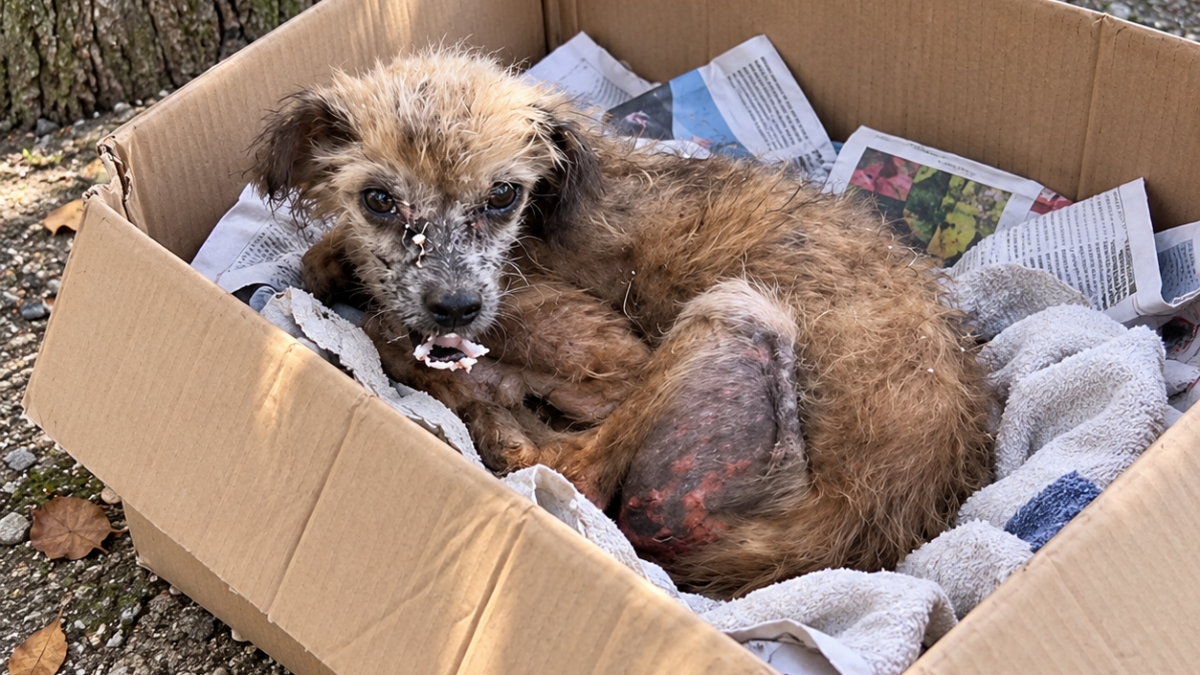
PART 2
The name on the tag was Daisy.
For several seconds I just stared at it.
Daisy.
Not Cher.
Not “stray.”
Not “unknown female.”
Daisy.
Someone had named her.
Someone had once fastened that collar around her neck.
Someone had known exactly who she was.
Melissa came into the room behind me.
“What?”
I held up the evidence bag.
“She has a tag.”
Melissa’s expression changed immediately.
“Active?”
“We don’t know yet.”
Dr. Harris turned the tag under the light.
The phone number was still readable.
The nylon collar itself had been hidden beneath the remaining fur and crusted skin around Cher’s neck. It had been cut almost completely through, as though somebody had tried to remove it or it had snagged on something.
“Could she have escaped from somebody months ago?” I asked.
“Of course,” Dr. Harris said. “Everything you see could have happened after she got loose.”
“Or before.”
“Yes.”
He gave me the look veterinarians give rescuers when they want us to remember that suspicion is not diagnosis.
“Call animal control before you call the number.”
I sighed.
“I know.”
“You were going to call.”
“I was thinking about it.”
“Thinking is how you end up arguing with a stranger in a parking lot.”
Melissa pointed at him.
“He knows you.”
“I dislike both of you.”
We contacted Buncombe County Animal Services.
Officer Nicole Grant arrived that evening.
Nicole was the kind of person who rarely raised her voice and somehow made that more intimidating.
She photographed the tag.
Cher’s condition.
The remaining collar fibers.
The sores.
The overgrown nails.
The infected skin.
Then she sat at the small counter outside the treatment room.
“Tell me exactly where you found her.”
I gave her the location.
“Anything nearby?”
“Tree line. Old gravel pull-off. No houses immediately visible.”
“Food bowls?”
“No.”
“Blanket?”
“No.”
“Leash?”
“No.”
“Vehicle tracks?”
“It’s a roadside pull-off. There were tracks, but that doesn’t mean much.”
She nodded.
“Good.”
“What’s good?”
“You’re not trying to solve it for me.”
“I can if you want.”
“I absolutely do not.”
She ran the phone number.
The line was still active.
Registered to a man named Marcus Dale.
Address: fifteen miles away.
A rural property on the edge of Madison County.
Nicole called.
A man answered.
I watched her face.
“This is Officer Grant with Buncombe County Animal Services. I’m calling about a dog.”
Pause.
“Female. Light-colored. Medium-sized.”
Longer pause.
Then Nicole said, “Do you own a dog named Daisy?”
Something in her expression shifted.
She turned away slightly.
“What happened to her?”
Another pause.
“I see.”
She wrote something down.
“When did that happen?”
More writing.
“Did you report her missing?”
She listened.
“No, sir. I’m asking because she was found today.”
That got a reaction.
Nicole moved the phone slightly away from her ear.
I could hear the man’s voice, though not the words.
Sharp.
Fast.
Then Nicole said, “She is alive.”
I stopped breathing.
She continued.
“She is receiving veterinary treatment.”
Another pause.
“No, I am not releasing her location at this time.”
Marcus apparently did not like that.
Nicole’s voice remained flat.
“We’ll need to speak with you in person.”
She ended the call.
I looked at her.
“Well?”
“He says Daisy ran away seven months ago.”
“Seven months.”
“Yes.”
“Did he report her missing?”
“He says no.”
“Why?”
“He assumed she was dead or had been taken.”
Melissa crossed her arms.
“Seven months is a long time to look like this.”
Nicole nodded.
“It is also a long time for anything to happen.”
“What did he sound like?”
“Defensive.”
“That’s not evidence.”
She gave me a small smile.
“You are learning.”
“I hate that phrase.”
She stood.
“I’m going to the address tomorrow.”
“Can I come?”
“No.”
“Why?”
“Because this is not television.”
“I could stay in the car.”
“No.”
“Nicole—”
“No.”
Fine.
I stayed with Cher.
That became its own investigation.
Not into the person who left her.
Into who she was when nobody was asking anything from her.
The first twenty-four hours were quiet.
Cher ate carefully.
A few tablespoons at a time.
Soft food.
Water.
Then more sleep.
She barely lifted her head when technicians changed bedding.
But if anyone moved suddenly toward her, she tensed.
If a metal bowl clanged against a kennel door, her eyes flew open.
If a man entered wearing heavy work boots, she flattened herself against the bed.
We wrote everything down.
Not because behavior proved abuse.
It did not.
But because recovery meant understanding what frightened her.
By the third day, Cher began lifting her head when I entered.
By the fourth, her tail moved.
One little sweep against the blanket.
I almost shouted.
Melissa saw it too.
“She wagged.”
“I know.”
“She likes you.”
“She tolerates my chicken.”
“Same thing.”
Dr. Harris checked her skin.
“Good response.”
“To antibiotics?”
“And treatment.”
“Will the fur come back?”
“Most of it should.”
“How long?”
“Months.”
I looked at Cher.
She was watching him.
“Months is okay.”
He glanced at me.
“That depends on whether you’re planning to foster her.”
“No.”
He stared.
“I have two dogs.”
“Yes.”
“One cat.”
“Yes.”
“And no space.”
He looked toward Cher.
She looked toward me.
“This is manipulation.”
“By whom?”
“Both of you.”
On day five, Nicole called.
“Rachel.”
“What did you find?”
“Marcus Dale does own the property.”
“And?”
“There are other dogs.”
My stomach tightened.
“How many?”
“Five.”
“Condition?”
“Mixed.”
That answer scared me more than “bad.”
“What does mixed mean?”
“Two appear healthy. One thin. Two outdoor hounds with inadequate shelter.”
“Daisy?”
“He admits she lived there.”
“When did she disappear?”
“He still says seven months.”
“Do you believe him?”
“Not yet.”
“Did you find photos?”
“Yes.”
“Recent?”
“One from about eight months ago.”
“How did she look?”
“Better.”
“Healthy?”
“Not exactly.”
I gripped the phone.
“What does that mean?”
“Thin. Coat already patchy.”
My jaw tightened.
“So she was sick before she supposedly ran away.”
“Yes.”
“Did he treat her?”
“He says he used over-the-counter flea medication.”
“That’s it?”
“According to him.”
I closed my eyes.
“What about a vet?”
“No records.”
“Why?”
“Money.”
That word appears in more neglect cases than cruelty ever does.
Money.
Sometimes true.
Sometimes excuse.
Often both.
Nicole continued.
“There’s something else.”
“What?”
“He says Daisy did not belong to him originally.”
“Then who?”
“His sister.”
“Where is she?”
“Dead.”
That changed everything.
Her name was Ellen Dale.
Marcus’s older sister.
She had died eleven months earlier from complications after a stroke.
Daisy had been her dog.
After Ellen died, Marcus took Daisy because no other family member wanted her.
For a few months, according to him, things were fine.
Then Daisy developed skin problems.
Then she lost weight.
Then she “became impossible to keep inside.”
That phrase bothered me.
“What does that mean?”
“Marcus says she scratched doors and had accidents.”
“So he put her outside.”
“Yes.”
“Tied?”
“Sometimes.”
“Fenced?”
“Partially.”
Nicole went quiet.
“Rachel, I’m still investigating.”
“I know.”
“Do you?”
“Yes.”
“Good.”
She hung up before I could ask more.
Two days later, Cher stood up without being coaxed.
Really stood.
Not pushed onto her elbows.
Not lifted.
She rose on all four legs.
Her back was narrow.
Her knees trembled.
But she stood.
I crouched near the kennel.
“That’s it.”
She took one step.
Then another.
Her tail tucked beneath her.
She crossed the small run and stopped beside me.
I held out my hand.
She sniffed.
Then, for the first time, she leaned her shoulder against my knee.
Not surrender.
Choice.
That difference nearly broke me.
Within the week, Cher began walking short distances.
She still tired fast.
Her skin needed medicated baths.
She hated those.
The first bath took two technicians and an unreasonable amount of peanut butter.
Cher stood frozen for thirty seconds.
Then discovered peanut butter.
Apparently trauma could be temporarily suspended by legumes.
Melissa laughed.
“Look at her.”
Cher licked the spoon.
“She’s going to forgive medicine if we keep bribing her.”
“Good.”
The transformation was tiny at first.
More eye contact.
Tail movement.
Following footsteps.
Choosing to lie near the front of the kennel instead of the back.
Then one afternoon, I sat on the floor to answer emails.
Cher walked from her bed.
Stopped beside me.
Turned twice.
And lay down with her back touching my leg.
I stopped typing.
She fell asleep.
No watching the door.
No checking my hands.
Just asleep.
That was the moment I knew she was not merely recovering physically.
She was beginning to believe staying close to someone could be safe.
The investigation grew darker at the same time.
Nicole obtained Ellen’s veterinary records.
Daisy had been healthy.
Spayed.
Vaccinated.
Regularly groomed.
Ellen had treated allergies in the past.
Nothing severe.
Two months before Ellen’s stroke, Daisy weighed forty-one pounds.
The day we found her, she weighed twenty-three.
That loss had not happened in a week.
Nicole also found a neighbor.
A woman named Susan Whitmore lived across from Marcus.
She remembered Daisy.
“Pretty dog.”
“Friendly?”
“With Ellen, yes.”
“With Marcus?”
Susan hesitated.
“She kept trying to get through the gate.”
“When?”
“After Ellen died.”
“Did Marcus keep her outside?”
“Mostly.”
“Did you see her condition change?”
Susan’s face tightened.
“Yes.”
“Did you report it?”
“No.”
“Why?”
“I thought he was having a hard time.”
That was honest.
And ugly in the way honest things can be.
Marcus had lost his sister.
He had taken in her dog.
He worked construction irregularly.
His wife had left several years earlier.
He was behind on property taxes.
Susan watched all of that.
She saw a grieving man with too much responsibility.
Then she saw Daisy getting thinner.
Those two images competed.
She chose compassion for the man.
The dog paid the price.
“Did you ever speak to him?” Nicole asked.
“Yes.”
“What did you say?”
“That Daisy looked rough.”
“What did he say?”
“That she had mange.”
“Did he say he was treating it?”
“He said he would.”
“When?”
“Spring.”
“How long before she disappeared?”
Susan thought.
“Maybe six weeks.”
That mattered.
If Daisy disappeared seven months earlier, as Marcus claimed, the timeline might still fit.
But Nicole found another witness.
A teenage boy named Caleb who delivered firewood to Marcus’s property.
He had taken a photograph in June because one of Marcus’s hounds climbed into his truck.
In the background stood Daisy.
Thin.
Patchy.
Alive.
June was four months after Marcus claimed she disappeared.
When Nicole confronted him, his story changed.
He had “mixed up the dates.”
Maybe Daisy left three months ago.
Then another photograph appeared.
This one from a building contractor who had inspected Marcus’s porch in late August.
Daisy visible beneath the deck.
August.
Six weeks before we found her.
Marcus changed again.
“I don’t remember exactly.”
That was when Nicole stopped treating bad memory as an innocent explanation.
She obtained a warrant related to the conditions of the remaining dogs.
Animal control returned with law enforcement.
The thin dog was removed.
The two hounds received immediate shelter improvements under order.
The two healthy indoor dogs remained temporarily.
Then they found something in a burn barrel behind the shed.
A red collar.
Cut.
No tag.
The collar material matched the faded strip around Cher’s neck in general type and width.
Not unique.
But important.
Marcus said it belonged to another dog.
Which one?
Couldn’t remember.
Nicole asked where Daisy’s tag went after the collar was cut.
Marcus said he had no idea.
Except Cher had been found wearing part of the collar and the tag.
So how did the rest end up in his burn barrel?
He claimed coincidence.
That answer lasted until investigators examined his security camera.
Marcus had one cheap camera facing his driveway.
He thought recordings deleted after two weeks.
Most did.
But motion-triggered clips had been backed up to a cloud account tied to his phone.
He had forgotten the service included ninety-day storage.
Nicole called me.
“I need you not to react.”
“That is an unfair opening.”
“We found Daisy.”
“On video?”
“Yes.”
“When?”
“Six days before you found her.”
I sat down.
“What does it show?”
“Marcus loading her into his pickup.”
My hand tightened around the phone.
“Condition?”
“Bad.”
“Can she walk?”
“Yes.”
“Where does he go?”
“Camera doesn’t show.”
“Does he come back with her?”
“No.”
My stomach dropped.
“He dumped her.”
“I said don’t react.”
“You just said he loaded her six days before we found her.”
“Yes.”
“After claiming she disappeared months ago.”
“Yes.”
“And returns without her.”
“Yes.”
“Nicole.”
“We are working on the route.”
The route came from gas stations.
Traffic cameras.
One rural convenience store captured Marcus’s truck headed toward the county road where we found Cher.
Then returning forty minutes later.
No dog visible.
Not perfect evidence by itself.
Then investigators obtained location data from his phone with proper process.
His phone stopped near the roadside pull-off for nine minutes.
Exactly where Cher was found.
The case changed.
Marcus was interviewed again with an attorney present.
At first, denial.
He had taken trash.
He had visited a friend.
The phone location was inaccurate.
The camera angle hid Daisy.
Then Nicole placed photographs in front of him.
Cher beneath the tree.
The tag.
The collar.
The veterinary records.
The June and August photographs.
The driveway video.
The gas-station footage.
He stopped talking.
His attorney requested a break.
Afterward, Marcus admitted driving Daisy out there.
He did not admit cruelty.
He called it surrender.
“Who were you surrendering her to?”
“No one.”
“Did you call a shelter?”
“No.”
“Rescue?”
“No.”
“Veterinarian?”
“No.”
“Did you leave food?”
“A little.”
Investigators found no food when we rescued her.
“Water?”
“No.”
“Why not?”
“There was a creek somewhere.”
There was no accessible creek near the pull-off.
“Did you expect someone to find her?”
“Yes.”
“When?”
“I don’t know.”
“What if nobody did?”
Marcus stared at the table.
“She was a dog.”
That sentence would later follow him into court.
Not because dogs matter more than people.
Because his answer revealed the scale on which he had weighed her suffering.
Just a dog.
But even then, the story was not as simple as I wanted.
Marcus started crying.
He talked about Ellen.
His sister.
How Daisy sat beside her hospital bed during home recovery after the first stroke.
How Ellen made him promise to keep her.
How he meant to.
At first.
Then Daisy developed skin disease.
Veterinary estimates were more than he could afford.
She scratched floors.
Had accidents.
Barked at night.
His work hours dropped.
Electricity was behind.
His truck needed repairs.
Every part of his life felt like another demand.
“I didn’t hit her,” he said.
Nicole answered, “Neglect doesn’t require hitting.”
“I fed her.”
“Not enough.”
“She wouldn’t eat.”
“Did a veterinarian evaluate that?”
“No.”
“I washed her.”
“With what?”
“Farm shampoo.”
The product was not appropriate for her skin condition.
Maybe he had tried.
Badly.
Then stopped.
That became the pattern.
Attempt.
Frustration.
Withdrawal.
Daisy’s suffering became another problem he resented.
Finally he drove her away.
“I thought somebody with money would take her.”
Nicole asked, “Why not walk into a shelter and say exactly that?”
Marcus looked down.
“Because they’d judge me.”
That line made me angrier than almost anything else.
Not because shame is trivial.
Because Cher had spent days beneath a tree carrying the cost of his fear of judgment.
Nicole told me later that she almost lost her patience too.
Instead she asked:
“So you chose the possibility she would die beside a road rather than risk somebody thinking badly of you?”
Marcus cried harder.
“Yes.”
That was the truth.
Not cruelty for pleasure.
Cowardice.
Neglect.
Pride.
Exhaustion.
Shame.
And then a choice.
A terrible one.
Cher had no idea any of that was happening.
She was learning to play.
Her first toy was a yellow stuffed duck.
Melissa tossed it lightly.
Cher watched.
No movement.
Melissa nudged it toward her.
Cher sniffed.
Then looked away.
The next day, she mouthed one wing.
The day after, she carried it three steps.
A week later, she shook it so hard she fell sideways.
Everyone cheered.
Cher froze.
We immediately stopped.
Then her tail started wagging.
She shook it again.
That video became the first image of her recovery we allowed ourselves to save for happiness instead of documentation.
Her coat began returning too.
Soft cream fur along her shoulders.
Then her ribs.
The dark diseased patches shrank.
Medicated baths continued.
Good food.
Supplements where indicated.
Parasite treatment.
Antibiotics until Dr. Harris said stop.
No miracle products.
No magic.
Just boring, consistent care.
Weight returned slowly.
Twenty-five pounds.
Twenty-seven.
Thirty.
At thirty-two, Dr. Harris smiled.
“We’re winning.”
“Target?”
“Thirty-eight to forty, depending on muscle.”
Cher was standing beside him.
She nudged his pocket.
“She wants treats.”
“She knows where they are.”
Dr. Harris gave her one.
Cher took it gently.
Then sat.
I stared.
“Did you teach her that?”
“No.”
She already knew.
That was the first reminder that Cher had once had a real home.
Ellen’s home.
We found photographs through a relative.
Cher—Daisy—on a couch.
Healthy coat.
Red collar.
Beside Ellen, an older woman with silver hair.
One showed Daisy asleep across Ellen’s feet.
Another showed her wearing a ridiculous Christmas bandana.
Marcus had not invented their bond.
Ellen had loved her.
I printed one photograph.
Then wondered if I should show it to Cher.
Ridiculous question.
Dogs do not understand photographs the way we do.
Still, I put it near her bed.
Cher ignored it.
Then lay on top of it.
I laughed.
“Message received.”
Ellen’s daughter lived in Oregon.
Her name was Karen.
She had been estranged from Marcus for years.
When Nicole contacted her, Karen cried after learning Daisy was alive.
“I thought Uncle Marcus rehomed her.”
“Why?”
“He told me she went to a family with land.”
That was another lie.
“Did your mother leave instructions?”
“Yes.”
There was a handwritten note.
Not a formal trust.
Not legally complex.
Simply:
If anything happens to me, please make sure Daisy stays with family or goes to someone kind. She is afraid of storms and hates being alone.
I stared at that sentence when Karen later shared it.
Hates being alone.
And Marcus left her beneath a tree beside a road.
The prosecution used the note only carefully.
It did not prove criminal intent.
But in the family, it mattered enormously.
Karen called Marcus.
Not through us.
Not recorded.
Later she told me what she said.
“Mom trusted you.”
Marcus apparently answered, “I know.”
“That dog slept next to her every night.”
“I know.”
“You told me she was safe.”
“I know.”
“Why?”
He did not answer.
Karen said she screamed at him.
Then cried.
Then hung up.
She later apologized to me for not taking Daisy herself after Ellen’s death.
“I was three thousand miles away. I had two cats and a rental.”
“You didn’t know what was happening.”
“I should’ve checked.”
That sentence appears constantly around neglect.
I should have checked.
I should have called.
I should have asked twice.
Sometimes true.
But responsibility has levels.
Karen could have checked.
Marcus was there every day.
He had the dog.
He had the promise.
He made the final choice.
Those things were not equal.
Cher moved to my house as a medical foster in the sixth week.
Dr. Harris gave me a medication schedule.
“I know.”
“Skin treatment.”
“I know.”
“Measured meals.”
“I know.”
“No rough play yet.”
I looked at Cher.
She was trying to climb into my tote bag.
“Tell her.”
He pointed.
“No rough play.”
Cher sneezed.
“Defiance.”
My dogs, Lucy and Ben, met her through gates.
Lucy sniffed.
Walked away.
Ben play-bowed immediately.
Cher froze.
Ben stopped.
Good boy.
Then Cher’s tail moved.
One inch.
The next day, they walked side by side.
Within two weeks, Cher was following Ben around the yard.
Not running.
Not yet.
But walking.
She discovered grass.
That sounds absurd.
She had been found outside.
But roadside weeds are not a safe backyard.
The first time she rolled on clean grass, she looked shocked by her own behavior.
Then rolled again.
And again.
Her pale belly flashed in the sun.
I sat on the steps laughing.
Melissa filmed.
“This is going in her adoption profile.”
“She’s not ready.”
“Eventually.”
I went quiet.
Melissa noticed.
“Oh no.”
“What?”
“You’re keeping her.”
“No.”
“You’re making that face.”
“What face?”
“The foster-fail face.”
“I have three animals.”
“Four.”
“Temporary four.”
“Sure.”
Cher ran—actually ran—for the first time that afternoon.
Short distance.
From the tree to me.
Clumsy.
Tail high.
Ears back.
She reached my knees and stopped.
I touched her head.
“Okay.”
Melissa said nothing.
She did not need to.
The criminal case moved toward indictment.
Marcus’s attorney argued that he had attempted to rehome Daisy informally and that abandonment laws were being stretched.
The prosecution focused on condition and conduct.
Veterinary records showed prolonged untreated disease.
Photographs showed progressive weight loss while she remained in Marcus’s custody.
Video placed her at his home six days before rescue.
His phone and traffic footage placed him at the abandonment site.
His own statement admitted leaving her there.
That part was not complicated.
What was complicated was public reaction.
Somebody leaked Marcus’s name.
Social media exploded.
People called him a monster.
Posted his address.
Threatened him.
One person wrote that his remaining dogs should be “taken by force.”
I hated it.
Nicole hated it more.
“Anyone showing up at his house is going to become my problem.”
“What can we do?”
“Tell people to stop.”
The rescue posted a statement.
No threats.
No harassment.
Let the case proceed.
Do not contact family members.
Do not trespass.
Some people listened.
Others accused us of protecting an abuser.
Justice becomes less useful when people turn it into entertainment.
Cher did not need spectacle.
She needed treatment.
The remaining dogs needed legal oversight.
The case needed witnesses who had not been contaminated by online rumors.
So we stayed quiet.
Marcus’s two hounds were eventually removed after a follow-up inspection found continuing shelter violations.
The two indoor dogs were transferred voluntarily to relatives.
The thin dog recovered in county foster care.
Marcus was temporarily barred from acquiring more animals while the case proceeded.
Then his defense found something that scared me.
A veterinary receipt.
Marcus had taken Daisy to a low-cost clinic once.
Three months after Ellen’s death.
Diagnosis:
Dermatitis.
Possible allergy.
Flea infestation.
Recommended follow-up.
Medication dispensed.
His attorney argued this proved he had sought care.
It did.
That mattered.
My first reaction was anger.
Nicole corrected me.
“Evidence is allowed to help him too.”
“I know.”
“Say it like you mean it.”
“I know.”
The receipt complicated the moral story.
Marcus had not ignored Daisy from day one.
He had tried once.
The medication ran out.
He did not return.
Why?
Money.
Frustration.
He claimed the treatment “didn’t work.”
Dr. Harris reviewed the record.
“Skin disease like this often requires follow-up. One visit doesn’t fix chronic disease.”
“So the receipt helps him?”
“It shows he recognized a problem.”
I stared at him.
“And then stopped.”
“Yes.”
Which could also help the prosecution.
Knowledge.
He knew she was sick.
A veterinarian told him more care was needed.
He did not provide it.
The case became less about whether he noticed and more about what he did after he noticed.
That was stronger.
Then came the neighbor’s text messages.
Susan Whitmore had saved them.
SUSAN: Daisy looks really thin. Is she okay?
MARCUS: Allergies.
SUSAN: She needs a vet.
MARCUS: Been there.
Two weeks later:
SUSAN: She’s scratching herself raw.
MARCUS: Mind your own property.
Another month:
SUSAN: I’m serious. I’ll take her if you can’t handle it.
MARCUS: No.
That last message changed my understanding.
Someone had offered.
A neighbor.
Not a perfect legal surrender.
But a way out.
Marcus refused.
When Nicole confronted him, he said he did not trust Susan.
“Why?”
“She’s nosy.”
“So you preferred keeping a dog you could not care for.”
“She was Ellen’s.”
There it was.
Possession.
Guilt.
Promise.
Pride.
He could not care for Daisy.
Could not let her go.
Until eventually he let her go in the worst possible way.
That contradiction became central to the prosecution.
Marcus had other options.
He refused them because surrender felt like failure.
Then abandonment let him hide the failure.
Or so he thought.
Cher’s recovery continued.
Her coat filled in.
She gained enough muscle that the hollow around her hips disappeared.
Her eyes changed.
That is hard to describe without sounding sentimental.
Same brown eyes.
Different focus.
At first, Cher watched people as if preparing for the next thing.
Now she looked at us because she wanted something.
Food.
Walk.
Touch.
A toy.
Attention.
Demand is a luxury.
Fearful animals rarely demand.
Cher became demanding.
Breakfast at six.
Not 6:05.
If I sat on the couch and did not invite her up, she placed one paw on my knee.
If ignored, second paw.
Then full-body lean.
Ben taught her to steal socks.
Lucy taught her how to bark at the mail carrier.
I blamed both.
The first real bark startled Cher more than us.
Mail truck stopped.
Lucy barked.
Ben barked.
Cher barked once.
A rough, surprised sound.
She looked behind herself.
I laughed until I cried.
“You did that.”
Cher wagged.
Then barked again.
Louder.
There she was.
The dog beneath the tree had barely lifted her head.
Now she had opinions about federal mail delivery.
That was the transformation I cared about.
Not fur.
Not weight.
Voice.
The trial began nine months after we found her.
By then Cher was unrecognizable from intake.
Forty pounds.
Full coat.
Healthy skin.
Strong legs.
She still had a few thin patches around the ears.
Dr. Harris said some follicles had been permanently damaged.
I liked them.
Proof without being the whole story.
I attended the trial.
Cher did not.
Dogs do not need courtrooms to validate survival.
Marcus looked older.
Gray beard.
Suit that did not fit perfectly.
He did not look monstrous.
That mattered.
People often think accountability requires believing the person across the room is inhuman.
It does not.
The prosecution began with me.
I described the roadside.
The tree.
Cher’s condition.
The drive.
The clinic.
The tag.
The defense attorney asked:
“Ms. Bennett, did you see Mr. Dale leave the dog?”
“No.”
“Did you see him fail to feed her?”
“No.”
“Did you observe her at his property?”
“No.”
“So everything you know about what happened before you found her comes from others.”
“Yes.”
“Then your testimony cannot tell the jury what my client intended.”
“No.”
“Thank you.”
It sounded like a win for him.
That was fine.
My job was not to prove the entire case.
Just my part.
Dr. Harris testified next.
He described Cher’s body condition.
Skin disease.
Parasite burden.
Dehydration.
Nail overgrowth.
Muscle loss.
The defense asked, “Could a dog living outside for several weeks deteriorate significantly?”
“Yes.”
“So some of what you observed could have happened after she was allegedly abandoned.”
“Yes.”
“Could she have contracted parasites outside?”
“Yes.”
“Could weight loss accelerate when a dog has no food?”
“Of course.”
The attorney looked satisfied.
Then the prosecutor asked:
“Doctor, was all of this likely to have developed in six days?”
“No.”
“Which findings?”
“Chronic skin changes. Nail overgrowth. Muscle wasting. Hair loss pattern. Some inflammation.”
“Could those predate abandonment?”
“They almost certainly did.”
“Meaning she was already medically compromised while still at Mr. Dale’s property.”
“Based on the timeline provided, yes.”
That mattered.
Then came the photographs.
Ellen’s Daisy.
Healthy.
Then three months after Ellen’s death.
Still mostly healthy.
Then neighbor photos.
Thinner.
Patchy.
August contractor photo.
Much worse.
Driveway video six days before rescue.
Cher clearly emaciated.
Progression.
Not one sudden collapse.
A slow disappearance in plain sight.
Susan testified about offering to take Daisy.
The defense attacked her relationship with Marcus.
“You disliked him.”
“Yes.”
“You argued over property lines.”
“Yes.”
“You once called police over his burning trash.”
“Yes.”
“So you had reasons to make him look bad.”
Susan looked at him.
“I had reasons to dislike him. That doesn’t change my text messages.”
The prosecutor displayed them.
I’LL TAKE HER IF YOU CAN’T HANDLE IT.
MARCUS: NO.
That exchange sat on the screen.
Then the low-cost veterinary receipt.
The defense used it first.
“Mr. Dale sought treatment, correct?”
Clinic representative: “Yes.”
“He paid for medication.”
“Yes.”
“He did not ignore the dog completely.”
“That is correct.”
The defense returned to the table.
Then the prosecutor stood.
“What follow-up was recommended?”
“Recheck in two to four weeks if not improving.”
“Did that occur?”
“No record.”
“Would this condition typically require continued management?”
“Yes.”
“Did the veterinarian document poor body condition then?”
“Mildly underweight.”
“So months before roadside abandonment, concerns already existed.”
“Yes.”
The receipt that had initially frightened me became part of the prosecution’s timeline.
That was the thing about real evidence.
It rarely belongs entirely to one side.
Then Nicole testified.
She walked the jury through Marcus’s changing timeline.
Seven months.
Then three.
Then uncertainty.
Then video.
Gas-station footage.
Phone-location data.
Roadside stop.
Return home without Daisy.
The defense challenged the location accuracy.
Fair.
Digital-location evidence has limits.
Nicole acknowledged them.
Then the prosecutor asked whether Marcus ultimately admitted leaving Daisy.
“Yes.”
“What reason did he give?”
“He hoped someone would find her.”
“Did he call anyone?”
“No.”
“Leave water?”
“No.”
“Stay until someone arrived?”
“No.”
“Return to check?”
“No.”
Then they played the driveway clip.
Marcus guiding Daisy into the truck.
Cher moving slowly.
Marcus lifting her rear end because she lacked strength to climb.
That detail hurt.
He knew.
He physically handled the dog.
Saw how weak she was.
Then drove her away.
The defense attorney later argued that lifting her showed concern.
Maybe.
Human beings can act with concern in one minute and cruelty in the next.
Contradiction does not equal innocence.
Then Marcus took the stand.
I did not expect him to.
His attorney probably wanted the jury to hear grief.
They did.
Marcus talked about Ellen.
Their childhood.
Her illness.
Promising to keep Daisy.
He cried.
I believed him.
He talked about construction work drying up.
Bills.
His own back injury.
Daisy scratching herself bloody.
Medication not working fast enough.
Accidents in the house.
Barking.
Neighbors complaining.
It was difficult to listen because the situation sounded solvable until you remembered he stopped trying to solve it.
His attorney asked:
“Did you ever intentionally hurt Daisy?”
“No.”
“Did you strike her?”
“No.”
“Starve her deliberately?”
“No.”
“Did you want her to suffer?”
“No.”
“Why take her to the roadside?”
Marcus stared at his hands.
“I couldn’t do it anymore.”
“What did you expect?”
“Someone to find her.”
“Why there?”
“People drive that road.”
His lawyer sat.
The prosecutor approached.
“Mr. Dale, Ms. Whitmore offered to take Daisy.”
Marcus’s jaw tightened.
“I didn’t trust her.”
“Why?”
“She was always in my business.”
“Did she have a history of harming animals?”
“No.”
“Did she have dogs?”
“Yes.”
“Healthy?”
“Yes.”
“So why not let her take Daisy?”
“Daisy was Ellen’s.”
“Yet later you left Ellen’s dog beside a road.”
Silence.
The prosecutor continued.
“You testified you could no longer care for Daisy.”
“Yes.”
“You knew shelters existed.”
“Yes.”
“You knew veterinarians existed.”
“Yes.”
“You had used one.”
“Yes.”
“You knew rescues existed?”
“I guess.”
“Did you call any?”
“No.”
“Why?”
Marcus looked down.
“I was ashamed.”
The prosecutor did not raise her voice.
“Ashamed of what?”
“Her condition.”
“So you knew her condition was bad enough that people might judge you.”
“Yes.”
“And instead of risking judgment, you left her where nobody knew your name.”
Marcus’s attorney objected to characterization.
The judge instructed the prosecutor to rephrase.
“Did your fear of being judged affect your decision not to surrender her directly?”
Marcus closed his eyes.
“Yes.”
The room became still.
“Did Daisy have any choice in that?”
“No.”
Then the prosecution showed the image from the driveway.
Cher weak beside his truck.
“Could she run normally?”
“No.”
“Could she easily find food?”
“I don’t know.”
“Did you believe she was healthy?”
“No.”
“Did you believe she needed care?”
Marcus began crying.
“Yes.”
“And you drove away anyway.”
“Yes.”
That was the case.
Not whether he loved his sister.
Not whether poverty existed.
Not whether Daisy was difficult.
He knew she needed care.
He had alternatives.
He chose abandonment because it hid his failure.
The jury convicted him on the main abandonment and neglect charges that survived to trial.
Not every accusation resulted in conviction.
That was appropriate.
The law separated what could be proven from what people felt.
At sentencing, Marcus apologized.
Not to me.
To Karen.
To Ellen, indirectly.
And to Daisy.
“I failed her.”
His voice shook.
“I kept telling myself I was overwhelmed. I was. But I had chances.”
He looked toward Susan.
“She offered.”
Susan stared ahead.
“I said no because I didn’t want her telling people I couldn’t take care of my sister’s dog.”
He swallowed.
“Then I proved I couldn’t by doing something worse.”
That was probably the most honest thing he ever said.
The sentence included probation, a period of incarceration appropriate to the combined offenses, restitution for veterinary and rescue costs, mandatory animal-care restrictions, counseling, and a prohibition on owning or possessing animals for a substantial period.
The remaining dogs had already been legally placed elsewhere.
Marcus lost them.
He also lost work when the conviction became public.
I did not celebrate that part.
Poverty had contributed to the problem in the first place.
Making somebody desperate does not automatically make animals safer.
The satisfying consequence came elsewhere.
The judge required restitution.
Not symbolic.
Real.
Thousands toward Cher’s treatment.
Marcus had refused follow-up care because it cost money.
Now his money would pay for the care he denied.
His own choices completed the circle.
But even that was not the revenge I remember.
The real payback happened weeks later.
Cher attended a small rescue open house.
Not a spectacle.
Just an adoption event.
Her coat had filled in completely across her back.
Cream-colored fur.
Soft.
Healthy.
Her tail wagged at everyone.
A little girl sat on the floor.
Cher walked over.
Placed her head in the girl’s lap.
Exactly as she had eventually done with me.
The child stroked her ears.
“Was she always this pretty?”
I laughed.
“She was always Cher.”
The girl’s mother smiled.
“That’s not what she asked.”
I looked at Cher.
“Then yes.”
Because beauty was never the fur.
The court case ended.
Cher’s life kept going.
That was the better ending.
Except one decision remained.
Adoption.
I had fostered her for months.
Everyone knew what was coming except me.
Linda, our rescue director, brought paperwork to my house.
“What is this?”
“You know.”
“No.”
“Rachel.”
“I have dogs.”
“Yes.”
“And a cat.”
“Yes.”
“Cher deserves a dedicated home.”
Cher was asleep with her head on my foot.
Linda looked down.
“Tragic lack of dedication.”
“This is manipulation.”
“You say that a lot when reality becomes inconvenient.”
I did not sign immediately.
Not because I did not love Cher.
Because foster homes matter.
Every foster failure closes a temporary space.
Another dog might need it.
I thought about that.
Then Dr. Harris asked me one question.
“When Cher is scared, who does she look for?”
I hated him.
“Me.”
“When she wakes up, where does she go?”
“My kitchen.”
“When you leave, who sleeps by the door?”
“Cher.”
“When you come back?”
“She acts like I returned from war.”
He smiled.
“You’re not deciding whether you love her.”
I looked at him.
“You’re deciding whether guilt about other dogs is allowed to overrule the dog already telling you what she needs.”
I signed.
CHER BENNETT.
I kept the name Cher because Daisy belonged to Ellen’s chapter.
Cher belonged to the life she chose after.
Karen understood.
She sent me Ellen’s old red leash.
Not the damaged collar.
A soft leash from a box of her mother’s belongings.
“I thought maybe she should have something good from before.”
The first time I clipped it to Cher’s harness, she sniffed it.
No reaction.
Then walked to the door.
That was enough.
We took a long walk.
No roadside tree.
No fear.
Just neighborhood sidewalks and Ben pulling too hard because squirrels continued to threaten national security.
Cher became an ordinary dog.
That is the highest compliment I can give rescue.
Ordinary.
She barked at vacuum cleaners.
Stole bread.
Hated rain.
Loved car rides once she learned car rides ended at home.
She dug one enormous hole under my hydrangeas.
I filled it.
She dug it again.
I threatened eviction.
She remained unmoved.
Her favorite place became the couch beside the front window.
Every afternoon, sunlight hit the cushion.
Cher curled there.
Sometimes I looked at her sleeping and remembered the veterinary hospital.
How tightly she had folded herself.
How every footstep opened her eyes.
Now the mail carrier could slam the box outside and Cher might not even wake.
That was healing.
Not dramatic.
Not one moment.
Sleep.
Weight.
Fur.
Trust.
Repetition.
Safety becoming boring.
Two years after the trial, Marcus wrote Karen.
She forwarded part of the letter to me with permission.
He was working again.
Still under animal restrictions.
Attending counseling.
He did not ask for Cher back.
That mattered.
He wrote:
I used to think keeping Daisy proved I honored Ellen. I was wrong. I kept her because surrender felt like admitting I was failing. Then I failed her in the worst way because I cared more about what people thought of me than what was happening to her.
I am not asking anyone to forgive me.
I hope she is safe.
I did not answer.
Karen did.
She wrote:
She is.
That was enough.
Years passed.
Cher aged.
The fur around her muzzle turned white.
Her skin remained sensitive, so we kept a careful routine.
Good diet.
Veterinary checks.
Medication during flare-ups.
Nothing dramatic.
At eight or nine, arthritis appeared.
At ten, a heart murmur.
At eleven, mild kidney disease.
I became familiar with bloodwork.
Cher became familiar with cheese containing pills.
She never caught on to that trick.
Or maybe she did and considered cheese fair compensation.
Ben died before her.
Cancer.
Cher searched the house for two days.
Then slept on his bed.
Lucy died the following year.
Suddenly Cher was the last dog in the house.
The animal once abandoned beneath a tree became the one who had outlived everybody.
I worried loneliness would hurt her.
It did.
But she adjusted.
We fostered again.
A senior beagle named Otis.
Cher hated him for one week.
Then slept beside him.
Otis was adopted.
Next came a terrified young hound.
Cher showed her the yard.
No training session.
No magical therapy.
The hound simply watched Cher walk through the door, eat, sleep, and return.
Sometimes calm is contagious.
Our rescue started using Cher as a quiet companion during carefully managed introductions for frightened dogs.
Never forcing.
Never pretending she was a certified therapy animal.
She was just steady.
That was enough.
The dog who once watched every person suspiciously had become the animal other frightened dogs watched.
Karen visited when Cher was around twelve.
She flew from Oregon for a family event and drove to my house.
I worried about the reunion.
Would Cher remember Ellen’s daughter?
Probably not.
Karen had met her only a few times years earlier.
She came inside quietly.
Cher stood.
Sniffed.
Karen crouched.
“Hi, Daisy.”
Cher’s ears moved.
That startled me.
Karen started crying.
Cher walked to her.
Not dramatically.
No recognition I could prove.
She simply rested her head on Karen’s knee.
Karen put both hands over her face.
“My mom would be so relieved.”
I sat beside them.
“Your mom loved her.”
“I know.”
“She had a good life before Marcus too.”
Karen nodded.
“That matters.”
It did.
I had spent years unconsciously dividing Cher’s life into before and after.
Before: neglect.
After: rescue.
But before Marcus, there had been Ellen.
Warm couch.
Christmas bandana.
Veterinary care.
Someone who loved her.
Cruelty had interrupted Cher’s life.
It had not created her identity.
That was important.
We framed one photograph of Ellen and Daisy.
Kept it on a shelf.
Beside it was a newer photograph of Cher covered in mud after destroying my hydrangeas.
Balanced historical record.
When Cher was thirteen or fourteen, her kidneys worsened.
Slowly.
More water.
Special diet.
Fluids eventually.
She tolerated them because cheese followed.
Our new veterinarian, Dr. Maya Collins, was careful.
“We’re managing disease. Not curing it.”
“I know.”
“Watch quality of life.”
“I know.”
“Appetite.”
“Yes.”
“Interest.”
“Yes.”
“Comfort.”
“Yes.”
Cher still had all three.
Then came a cold February morning.
She did not get off the couch.
I called her.
Tail moved.
But she stayed down.
I brought breakfast.
She sniffed.
Turned away.
That was wrong.
Cher never turned away food.
At the clinic, bloodwork was much worse.
Kidneys.
Anemia.
Dehydration.
Dr. Collins offered hospitalization.
“How long?”
“Twenty-four to forty-eight hours initially.”
“Chance?”
“She may rally.”
“Then?”
“Could be days. Could be weeks. Occasionally longer.”
I stared at Cher.
She was lying on the blanket.
Watching me.
Same tired eyes from the roadside.
Older now.
Not afraid.
That difference mattered.
“Will hospitalization scare her?”
“Probably some.”
“Can I stay?”
“Partly.”
We tried.
Cher received fluids.
Anti-nausea medication.
She ate a little.
The next day, she stood.
I celebrated.
Too early.
We came home.
She had three good days.
Sunlight.
Cheese.
Short walk.
One bark at the mail truck.
Then, on the fourth morning, she fell trying to stand.
I sat beside her.
“Okay.”
Her eyes found mine.
I knew.
There are decisions in rescue that feel like opposites but come from the same place.
Years earlier, we chose treatment because Cher wanted life and medicine could give her comfort.
Now continuing aggressive treatment would mostly buy time for me.
Not her.
I called Dr. Collins.
Then Karen.
Then Melissa.
Melissa came first.
She was older too.
She sat on the floor beside Cher.
“You still like peanut butter?”
Cher’s tail moved.
Melissa gave her a tiny amount.
Cher licked it slowly.
“There she is.”
Karen joined by video call from Oregon.
She cried the moment she saw Cher.
“Hi, Daisy.”
Cher lifted her head.
Again that ear movement.
Maybe the name.
Maybe Karen’s tone.
Maybe nothing.
We did not need certainty.
Karen whispered:
“My mom loved you.”
I looked away.
“You were her best girl.”
Cher rested her head again.
Then Karen said something I will always remember.
“You don’t have to keep anybody’s promise anymore.”
That broke me.
Marcus’s promise.
My promise.
Rescue.
Recovery.
Survival.
Cher had carried none of those words.
Humans did.
Cher had simply lived.
Dr. Collins came to the house that afternoon.
We put Cher on her favorite couch cushion beside the window.
Sunlight across her back.
Full cream-colored coat.
No bare skin.
No roadside dust.
No tension.
I sat beside her.
Cher placed her head in my lap.
Exactly the way she had finally learned to do months after rescue.
I stroked her ears.
“You know, I thought you were going to be temporary.”
Melissa laughed through tears.
Cher exhaled.
“You were terrible at temporary.”
Tail movement.
Dr. Collins gave the sedative.
Cher relaxed.
Her breathing slowed.
For the first time that day, she looked comfortable.
I kept one hand on her shoulder.
“You can sleep.”
Those words took me back to the veterinary hospital.
Her first real sleep.
Warm bed.
Body slowly unclenching.
Everything had begun with rest.
Now it would end with rest too.
The final medication went in.
Cher took one breath.
Then another.
Then none.
Dr. Collins listened.
Waited.
“She’s gone.”
I stayed there for a long time.
Sun moved across the couch.
Nobody rushed.
Eventually I looked at the old red leash hanging near the door.
Ellen’s leash.
Cher’s harness.
Artifacts of two lives that were really one.
A loved dog.
A neglected dog.
An abandoned dog.
A rescued dog.
A demanding dog.
An old dog.
Cher.
Weeks later, Karen sent me a package.
Inside was Ellen’s Christmas photograph.
Daisy wearing that ridiculous bandana.
On the back, Ellen had written years earlier:
MY GIRL ALWAYS FINDS THE SOFTEST PLACE IN THE HOUSE.
I laughed until I cried.
Because she had.
Even after everything.
The roadside tree had not been her final place.
The clinic had not been.
My foster room had not been.
Court had not been.
Cher spent the largest part of her life somewhere much less dramatic.
On my couch.
In sunlight.
Taking up too much space.
Years later, our rescue built a small recovery suite for severe neglect cases.
Linda asked whether we should name it after Cher.
I said no.
“No sad memorial?”
“No.”
“Why?”
“She hated kennels.”
Fair.
Instead, we placed one simple sentence above the sleeping area:
LET THEM REST FIRST.
That was all.
New volunteers asked what it meant.
I told them:
“You can’t ask an animal to trust you while it’s still trying to survive the room.”
So we started with warmth.
Food.
Medicine.
Quiet.
Then choice.
Sometimes a frightened dog eventually approached.
Sometimes not.
Both were allowed.
One winter afternoon, years after Cher died, a rescue transport arrived with a dog from another county.
Thin.
Patchy coat.
Scared.
Not as sick as Cher had been.
But close enough that my chest tightened.
A young volunteer started toward the kennel.
I stopped her gently.
“Sit first.”
She looked confused.
“Shouldn’t we comfort her?”
“We are.”
“How?”
“By not making her do anything yet.”
We sat.
The dog watched.
Ten minutes.
Fifteen.
Then she shifted forward.
One paw.
Then another.
Eventually she lay near the edge of the bed.
Her eyes closed.
The volunteer whispered, “She’s sleeping.”
I smiled.
“Good.”
Outside, traffic moved past the shelter.
Inside, the dog slept.
No one touched her.
No one demanded gratitude.
No one asked her to prove she wanted saving.
We simply let her rest.
And every time I see that happen, I still think of Cher beneath the oak tree, too tired to run, lifting her head toward me with those exhausted eyes.
I used to believe the important moment was when I stopped my car.
It wasn’t.
The important moment came later, when Cher finally realized she could close her eyes around us and nothing bad would happen while she slept.
Everything else grew from there.
The fur.
The weight.
The tail wags.
The running.
The ruined hydrangeas.
The barking.
The couch.
The years.
The home.
Marcus had left her beneath a roadside tree because he was afraid people would see what his failure looked like.
In the end, the thing he tried to hide became visible anyway.
But Cher’s life did not become his punishment.
That would have given him too much ownership over it.
Her real transformation was quieter.
She stopped watching the door.
She stopped sleeping curled into the smallest shape she could make.
She stretched out.
Took up room.
Chose people.
Demanded breakfast.
And finally grew into the kind of dog who could fall asleep in the middle of a noisy house because she knew, with complete certainty, that when she opened her eyes again, she would still be home.
[END OF STORY]








