PART 2: They Called Her a Monster for Five Years—Then a Car Hit Her, and Everyone Stepped Back Except Me
PART 2
The security guard’s name was Sam Keller.
I’d seen him hundreds of times walking the aisles of the old market with a radio clipped to his belt, but we’d probably exchanged fewer than twenty words in three years.
That night he couldn’t seem to look me in the eye.
The police officer introduced himself as Officer Grant, then asked Hannah if there was somewhere private we could talk.
She led us into her office.
Sam placed the flash drive on the desk.
His hand was shaking.
Officer Grant noticed.
“What exactly is on that?”
Sam rubbed the back of his neck.
“Our exterior camera caught the collision.”
My stomach tightened.
“Can you see the plate?”
“Part of it.”
“Then why did you say it wasn’t just the accident?”
Sam looked at me.
“Because when I went through the footage, I remembered some other clips.”
“What clips?”
He swallowed.
“I should’ve done something sooner.”
That sentence changed the temperature in the room.
Officer Grant pulled out a notebook.
“Start from the beginning.”
Sam sat down.
The market’s security system kept ordinary footage for thirty days, but Sam had been saving certain incidents separately for almost a year.
Not because of Mila.
Not at first.
There had been vandalism behind the stalls, teenagers breaking bottles, people dumping trash, vendors accusing one another of stealing deliveries.
Sometimes Mila appeared in the recordings.
Sometimes people appeared with her.
Sam’s voice became quieter.
“There’s a man named Martin Voss. He owns the butcher stall near the east entrance.”
I knew Martin.
Everyone did.
He’d worked at the market for nearly twenty years and served on the market association’s board.
He was loud, opinionated, and friendly when he wanted something.
He was also one of the people I’d heard call Mila a monster.
“What about him?” Officer Grant asked.
Sam stared at the flash drive.
“I saved three clips.”
He opened his laptop.
The first video had been recorded nine months earlier.
Mila was curled inside a cardboard box behind the market.
Martin came through the service door carrying garbage.
He saw her.
Stopped.
Then kicked the box.
Hard.
It flipped over.
Mila shot out and disappeared beneath a dumpster.
Martin laughed.
My fingers went cold.
The second clip was worse.
Six months earlier.
Mila was eating something beside the loading area.
Martin walked toward her carrying a broom.
She backed away.
He kept coming.
When she hissed, he swung.
The first strike missed.
The second didn’t.
The video had no sound, but I saw Mila tumble sideways.
I turned my face away.
“Jesus,” Officer Grant muttered.
Sam paused the recording.
“I reported that one to the market manager.”
“What happened?” I asked.
“He said Martin was protecting customers.”
“There weren’t any customers back there.”
“I know.”
“Did you contact animal control?”
Sam looked ashamed.
“No.”
“Why?”
“Martin sits on the board that approves our security contract.”
There it was.
Not hatred.
Not some dramatic conspiracy.
A paycheck.
Fear.
A hundred ordinary reasons people use when they know something is wrong but don’t want to be the one who pays for saying so.
I wanted to be furious with Sam.
Part of me was.
Then I remembered the circle of people under the awning watching Mila bleed.
Silence hadn’t belonged to one person.
Officer Grant pointed toward the laptop.
“Third clip.”
Sam took a breath.
It showed Martin coming out of the butcher stall with another man.
The other man was younger.
Mid-twenties.
Similar face.
Same broad shoulders.
“That’s his son, Eric,” Sam said.
Eric tossed an empty plastic bottle toward Mila.
It hit the pavement beside her.
She ran.
He threw another.
Martin watched.
Neither man looked angry.
That was the part that bothered me most.
They were amused.
Officer Grant wrote something.
“Is Eric the registered owner of a dark sedan?”
Sam’s face tightened.
“Yes.”
Nobody spoke for several seconds.
My heart started beating harder.
“The car?” I asked.
Sam nodded.
“I think it was his.”
Officer Grant held up a hand.
“Let’s not jump ahead.”
Then Sam played the accident footage.
The camera angle looked down across the wet street.
At 8:41 p.m., Mila appeared beneath an awning.
She waited.
A delivery truck passed.
Then she started across.
Halfway through the road, headlights appeared around the corner.
Fast.
Too fast.
Mila froze.
The dark sedan struck her.
I flinched even though I’d already seen the result.
The car braked approximately thirty yards farther down.
Its brake lights stayed on.
One second.
Two.
Three.
Then it drove away.
Sam froze the clearest frame.
A damaged rear bumper.
A dealer sticker on the trunk.
And enough of the license plate to make out four characters.
Officer Grant photographed the screen.
“Do not contact Martin or Eric.”
I stood.
“You think I’m going to confront them?”
“Yes.”
He said it so calmly that I almost laughed.
“I have a cat in there who may not survive.”
“Exactly.”
I looked toward the treatment room.
Hannah had returned to Mila.
Officer Grant continued.
“Let us verify the vehicle.”
“And the other videos?”
“We’ll copy everything.”
“Is kicking a stray cat actually going to matter to anyone?”
His expression hardened.
“It matters to me.”
That was the first thing anyone in authority said that night that made me believe something might actually happen.
At 2:17 in the morning, Hannah came looking for me.
Mila had stabilized enough for imaging.
Her jaw was fractured in two places.
Her right front leg was broken just above the wrist.
The pelvis had two fractures but appeared potentially repairable without surgery if she remained confined.
The left eye was badly damaged.
“Can she keep it?” I asked.
Hannah didn’t answer immediately.
“Probably not.”
I looked through the glass.
Mila was sedated.
A tube delivered oxygen near her nose.
Her gray fur had dried in uneven patches.
Without anger in her face, without her back arched or her teeth showing, she looked impossibly small.
“What happens next?”
“Jaw surgery as soon as she’s strong enough. Repair the leg. Remove the damaged eye if pressure continues rising.”
“And if you don’t?”
“She’ll be in pain.”
“Then remove it.”
Hannah studied me.
“You understand she’s not your cat.”
“I understand she’s nobody’s cat.”
“That isn’t quite the same thing.”
“It is tonight.”
She gave a tired smile.
Then she handed me another paper.
An estimate.
The number at the bottom made my stomach drop.
I worked retail.
I wasn’t poor, but I wasn’t a woman who had several thousand dollars sitting around for emergency veterinary surgery.
Hannah saw my face.
“We can prioritize.”
“No.”
“Olga—”
“You said the jaw needs surgery?”
“Yes.”
“The leg?”
“Yes.”
“The eye?”
“Yes.”
“Then prioritize all three.”
“I need authorization.”
I signed.
My hand shook once.
Then I stopped thinking about the money.
Mila went into surgery the following afternoon.
I went home at dawn, slept for ninety minutes, showered, and returned to work.
My manager, Diane, took one look at me.
“What happened to you?”
“I was at the emergency vet all night.”
“For your cat?”
“Not exactly.”
I told her.
By lunchtime, half the market knew.
By two, everyone knew.
That’s how places like the old market work.
News travels faster than receipts.
Some people expressed sympathy.
Some acted embarrassed.
A few said things that made me understand why Mila trusted nobody.
One vendor shook his head.
“All that money for that cat?”
I stared at him.
He shrugged.
“I’m just saying. She’s wild.”
“She was hit by a car.”
“Still.”
“What does ‘still’ mean?”
He looked uncomfortable.
“You know what she’s like.”
I did.
She was five years of fear compressed into nine pounds of gray fur.
What I didn’t know yet was how much of that fear people had deliberately taught her.
Around three that afternoon, Martin Voss walked into my store.
He wore his white butcher’s apron even though his stall was at the other end of the building.
There was a faint smear of blood near his waist.
Animal blood, I assumed.
He smiled.
“Olga.”
I folded a sweater and placed it on the display table.
“Martin.”
“Heard you picked up that cat.”
“She has a name.”
His smile stayed in place.
“Sure.”
“Mila.”
“Right.”
He glanced toward Diane, who was watching us from behind the register.
“I heard the police came around asking about Eric’s car.”
There it was.
Too fast.
Officer Grant had told me not to contact them.
Apparently the police already had.
“I don’t know anything about that.”
Martin’s smile thinned.
“Sam showed you video.”
It wasn’t a question.
I felt Diane straighten behind me.
“I think you should leave.”
“Come on. We’re neighbors here.”
“No. We work in the same building.”
“Same thing.”
“Not really.”
His jaw moved once.
Then he leaned closer.
“That cat has caused problems for years.”
“What kind of problems?”
“She scratches. Hisses. Gets into trash. Customers complain.”
“So you kick her?”
His face changed.
Only for a fraction of a second.
Enough.
“I don’t know what Sam thinks he saw.”
“I saw it too.”
“Video can make things look different.”
“You swung a broom at her.”
“She came at me.”
“No, she didn’t.”
“You weren’t there.”
“I watched it.”
Martin looked toward Diane again.
Then his voice dropped.
“You should be careful before accusing people of animal cruelty over some feral cat.”
“Is that a threat?”
“No.”
“Good.”
I stepped around the display table.
“Then get out.”
For a moment I thought he might refuse.
Instead he smiled again.
But it wasn’t the same smile.
“You’re going to spend thousands of dollars, get bitten for your trouble, and then find out everybody was right about her.”
He walked out.
Diane waited until he disappeared.
Then she said, “That man has always made my skin crawl.”
“You could’ve mentioned that ten minutes ago.”
“I was standing beside the panic button.”
I looked at her.
She shrugged.
“I’m supportive, not stupid.”
That night, Eric Voss’s sedan was impounded.
Officer Grant called me only because I had filed the initial witness statement.
The partial plate matched.
Damage on the bumper was consistent with the collision.
Eric admitted driving.
He denied seeing what he had hit.
The video made that difficult to believe.
He had stopped.
Then left.
But the investigation into the old abuse clips was separate.
Animal control became involved.
So did a county prosecutor.
The story might have ended there if Martin had done the intelligent thing.
He didn’t.
Two days after Mila’s surgery, Sam was fired.
Official reason: unauthorized duplication of security footage.
Real reason?
Everyone knew.
Sam called me from the parking lot.
“I knew this would happen.”
“Do you have copies?”
A pause.
“Of the videos?”
“Yes.”
“Several.”
“Good.”
“I lost my job, Olga.”
The anger in his voice wasn’t aimed at me.
Not entirely.
“I know.”
“I’ve got a mortgage.”
“I know.”
“I should’ve stayed out of this.”
That sentence hurt.
I looked through the clinic window at Mila.
She was awake.
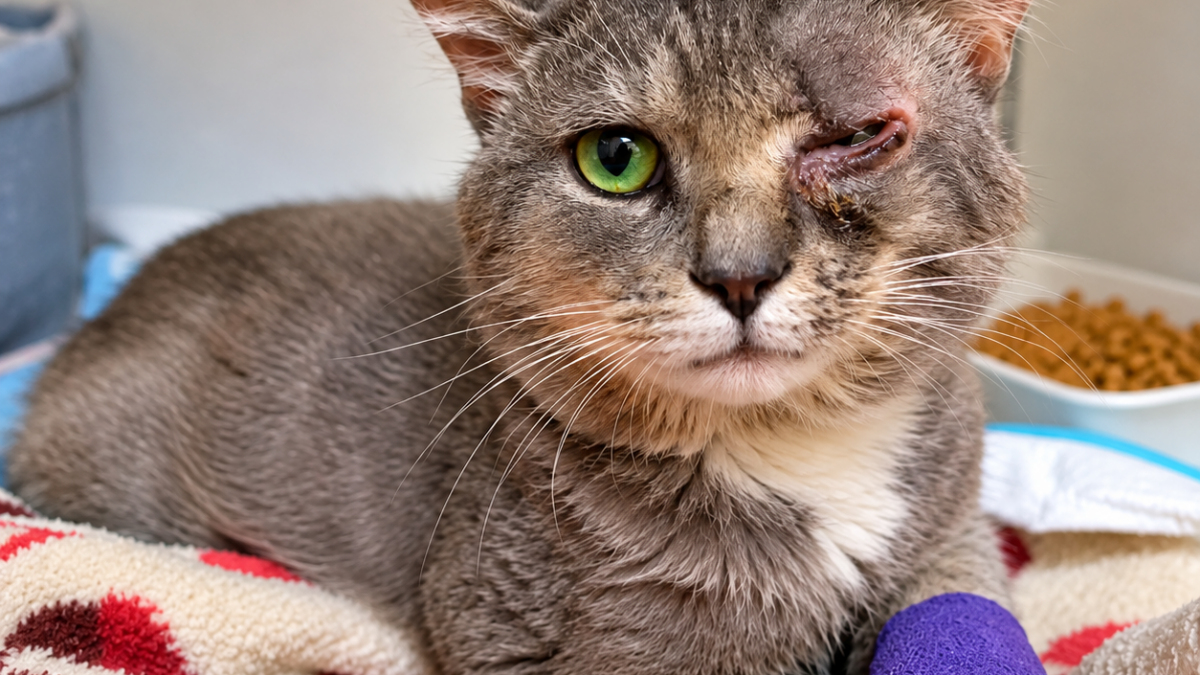
One green eye remained.
The other side of her face was shaved around the surgical area.
Her jaw had been stabilized.
Her right leg was wrapped.
She looked like she had lost a war.
Maybe she had.
“Sam.”
“What?”
“If you had stayed out of it, Martin would still know those videos existed.”
Silence.
“He would’ve fired you anyway.”
Another pause.
Then Sam gave one bitter laugh.
“That’s exactly what my wife said.”
“She’s smarter than both of us.”
“Probably.”
“Don’t delete anything.”
“I won’t.”
Martin had underestimated Sam.
The market security system belonged to the association, but the clips Sam had saved before being fired had metadata.
Dates.
Times.
Camera identifiers.
More important, he’d emailed two of the older clips to the market manager months earlier.
That created a record nobody could pretend had suddenly appeared after Mila’s accident.
But Martin fought.
His attorney sent cease-and-desist letters to Sam.
Then to me.
Mine arrived at the clothing store.
It accused me of spreading “defamatory allegations” that were damaging Martin’s reputation and business.
Diane read it over my shoulder.
“Are you spreading anything?”
“No.”
“Good.”
She handed it back.
“Frame it.”
I didn’t.
I sent it to Officer Grant.
The threats didn’t frighten me as much as Martin probably hoped.
What frightened me was Mila.
She survived the surgery.
That should have felt like victory.
Instead, the next week showed me survival and recovery were two very different things.
She woke terrified.
Any hand near her face made her thrash.
The first time a technician tried to adjust her feeding tube, Mila twisted so violently that Hannah stopped the procedure.
“Give her a minute.”
“She’ll hurt herself,” the technician said.
“I know.”
Mila flattened herself against the back of the cage, breathing fast.
I stood several feet away.
“Mila.”
Her remaining eye fixed on me.
I had no idea whether she recognized my voice.
I’d never touched her before the accident.
I was just the woman who left food by a door.
I crouched.
“I’m not coming closer.”
Her breathing slowed slightly.
Hannah looked at me.
“Keep talking.”
“About what?”
“Anything.”
I felt ridiculous.
So I told Mila about the clothing store.
I told her Diane had reorganized the winter coats and somehow made them look worse.
I told her the coffee machine in the employee room had finally died.
I told her someone had bought the green scarf she’d slept on once after dragging it off a display.
“I charged full price,” I said.
Mila blinked.
Hannah smiled.
For the next twenty minutes, I talked.
Eventually the technician adjusted the tube without Mila fighting.
That became our routine.
I visited before work.
Again at lunch if I could.
Then after closing.
At first, Mila tolerated me.
Nothing more.
She hissed when I came too close.
I respected it.
People had spent five years ignoring every warning she gave.
I wasn’t going to teach her that hissing didn’t matter.
When she hissed, I stopped.
When she backed away, I gave her room.
When she watched, I waited.
On the twelfth day, I placed my hand inside the kennel without moving toward her.
Mila stared at it.
Five minutes passed.
My shoulder started aching.
Then she leaned forward.
Sniffed one finger.
And retreated.
That was all.
I cried in my car afterward.
Not because she’d touched me.
Because she had chosen to.
The investigation grew at the same pace.
Slowly.
Then all at once.
A fruit vendor named Carmen contacted Officer Grant.
She had worked two stalls away from Martin for seven years.
She admitted she’d seen him chase Mila more than once.
“Why didn’t you report it?” the prosecutor asked later.
Carmen looked down.
“Because I needed my stall.”
Martin had influence over lease renewals.
Another vendor came forward.
Then a delivery driver.
Then a teenage boy named Caleb who worked summers at his uncle’s bakery.
Caleb had something nobody expected.
Video on his phone.
He’d recorded Martin nearly a year earlier because he’d thought it was funny when Martin got angry at Mila.
The video began with teenage laughter.
That part was hard to hear.
Caleb’s younger voice said, “Watch this.”
Martin walked toward Mila.
She was under a bench.
He poked at her with a broom handle.
She hissed.
He poked again.
She swatted.
Martin jerked back and shouted.
Then he kicked the bench hard enough that it slid several inches and struck her.
Mila ran.
Someone laughed.
The video ended.
Caleb was seventeen when he gave it to police.
He cried during the interview.
“I thought it was funny.”
His mother sat beside him.
He couldn’t look at her.
“I didn’t hurt her.”
Officer Grant reportedly said, “No. But you helped make hurting her normal.”
When Caleb told me that later, he looked as if he expected me to hate him.
I didn’t.
I was angry.
Those aren’t always the same thing.
“Why did you save the video?” I asked.
“I forgot it existed.”
“What made you look?”
“The news about Mila.”
By then local media had picked up the story.
I hated that.
Reporters showed up outside the clinic.
People I had never met began calling me a hero.
I wasn’t.
I had picked up an injured cat.
The word hero felt insulting when Sam had lost his job, Hannah had kept Mila alive through two surgeries, and Mila was the one learning how to exist in a world that had taught her hands were dangerous.
But attention changed the market.
People who once called Mila a monster suddenly remembered feeding her.
Some claimed they’d always loved her.
Others deleted old social media posts joking about the “demon cat.”
Martin went on camera.
That was his next mistake.
He stood outside his butcher stall and told a reporter:
“That animal has attacked customers for years. I’m being targeted because people are emotional.”
The reporter asked if he’d ever struck Mila.
“No.”
“Have you seen the security footage?”
“It’s been manipulated.”
“Did you kick the box she was sleeping in?”
“No.”
“Did you strike her with a broom?”
“No.”
The interview aired that evening.
Sam called me ten minutes later.
“He just lied on television.”
“Apparently.”
“I have the original files.”
“I know.”
“No, I mean original-original.”
“What does that mean?”
“My home computer automatically backed up some of the exports.”
“Sam.”
“What?”
“I think I love you.”
His wife shouted from somewhere in the background:
“Get in line!”
For the first time in weeks, I laughed.
Martin’s attorney changed tactics.
Instead of denying the videos existed, he argued Martin’s actions had been misunderstood.
The box had been obstructing a fire exit.
The broom was used to move a dangerous animal.
The bench had been moved accidentally.
Every act became reasonable when described by a lawyer who charged by the hour.
Then Hannah called me into her office.
She had received Mila’s full radiology review.
“You remember the old rear-leg fracture?”
“Yes.”
“We dated it as best we could.”
“How old?”
“Probably between eight months and fourteen months.”
My stomach tightened.
The time window overlapped the phone video.
“Can you prove the bench caused it?”
“No.”
That answer frustrated me.
“But?”
“The fracture pattern is consistent with blunt-force trauma.”
“Meaning a kick?”
“Could be.”
“A car?”
“Could be.”
“A fall?”
“Yes.”
“So it proves nothing.”
“By itself.”
There was more.
Old rib fractures.
One had healed badly.
Another appeared newer.
There was scar tissue near her tail consistent with a severe pulling injury.
Hannah looked furious.
“She didn’t become afraid because she was born mean.”
I stared through the window at Mila.
She was sitting now.
Awkwardly, because of the pelvic injury.
But sitting.
“Can fear make a cat like that?”
“Absolutely.”
“Permanent?”
“Not necessarily.”
I looked at Hannah.
“You’ve seen cats recover?”
“Yes.”
“Completely?”
She chose her words carefully.
“They don’t forget everything. But forgetting isn’t the goal.”
“What is?”
“Learning that the next thing isn’t always going to hurt.”
That sentence stayed with me.
Mila came home with me four weeks after the accident.
“Temporarily,” I told everyone.
Diane laughed.
Hannah laughed.
Sam’s wife laughed when she heard.
Even Officer Grant smiled.
I was apparently the only person who believed me.
I prepared my spare bedroom.
Low bed.
Food.
Water.
Litter box.
Hideaway.
No high furniture because of her healing pelvis.
I carried Mila’s crate inside and opened the door.
She didn’t come out.
I sat on the floor.
Twenty minutes.
Forty.
An hour.
Eventually one gray paw appeared.
Then her nose.
Then her one green eye.
She stepped into the room.
Every movement careful.
Her right front leg was still healing.
Her jaw allowed only soft food.
The missing eye made her depth perception uncertain.
She sniffed the rug.
The wall.
The water dish.
Then she looked at me.
I stayed still.
Mila walked toward the closet and disappeared beneath a hanging row of coats.
She remained there for six hours.
At midnight, I heard her eating.
I didn’t go in.
The next morning, the bowl was empty.
That was enough.
For three days, I mostly saw Mila through shadows.
She ate when I left.
Used the litter box when the apartment was quiet.
Moved around at night.
On the fourth evening, I sat outside the room reading.
The door was open.
Mila appeared in the doorway.
I kept reading.
She took one step into the hall.
Then another.
A car horn sounded outside.
She vanished.
Progress isn’t a straight line.
I learned that from Mila.
Some days she came within two feet of me.
The next day she’d hide because I dropped a spoon.
A grocery bag rustling could send her running.
Men’s voices in the hallway made her flatten herself against the floor.
The smell of meat from the market sometimes made her pace.
But slowly, the apartment changed.
Or maybe Mila’s map of it changed.
The couch became safe.
Then the kitchen.
Then the windowsill.
My bedroom came last.
One night, almost two months after the accident, I woke at 3:14 a.m. because something touched the blanket near my feet.
Mila stood there.
I didn’t move.
She stared at me.
Then stepped onto the mattress.
One paw.
Pause.
Another paw.
Pause.
She walked halfway up the bed.
Then curled into a tight ball near my knees.
I lay awake until sunrise because I was afraid moving would break whatever trust had brought her there.
When I told Hannah, she smiled.
“She owns you.”
“She slept there once.”
“Sure.”
“She may never do it again.”
“She will.”
“How do you know?”
“Cats enjoy winning.”
The legal case was less satisfying.
Eric pleaded guilty to reckless driving and leaving the scene after striking an animal.
Because Mila had been considered an unowned community cat at the time, some potential charges were complicated.
That made me furious.
“If she’d belonged to someone, it would matter more?”
Officer Grant shook his head.
“That’s not what I’m saying.”
“It sounds like it.”
“I’m explaining why prosecutors have to prove certain elements.”
“So what happens?”
“License suspension. Fine. Probation. Restitution may be part of it.”
“Restitution for what?”
“Veterinary costs.”
I laughed.
It wasn’t a happy sound.
“His father sent me a letter threatening to sue, and now his son might repay the bills?”
“That’s possible.”
“Wonderful.”
“Olga.”
“What?”
“This isn’t television. Cases don’t resolve in one dramatic hearing.”
“I know.”
“Do you?”
“No.”
That made him smile.
Martin’s case was stronger in some ways and weaker in others.
There was video of him abusing Mila.
But proving exactly which old injuries he caused was difficult.
His attorney argued that he had used “reasonable force” to remove a dangerous feral animal from commercial property.
Then Martin tried to make that argument stronger.
He produced incident reports.
Dozens of them.
Mila had supposedly scratched customers.
Bitten a vendor.
Ruined merchandise.
Attacked a child.
The reports covered three years.
For one terrible afternoon, it looked like they might work.
The market manager gave copies to investigators.
I sat at my kitchen table reading them until my hands shook.
**March 12 — aggressive cat lunged at customer.**
**April 7 — cat attacked employee near loading area.**
**June 18 — child scratched by gray cat.**
**September 3 — animal destroyed packaged goods.**
Page after page.
Maybe everyone had been right.
Maybe Mila really had attacked people.
Maybe Martin had still been cruel, but the picture was more complicated than I wanted.
Mila jumped onto the chair beside me.
She still couldn’t jump well, so she climbed using the side.
I looked at her.
“Tell me something.”
She blinked.
“Were you terrorizing the whole market?”
Mila began washing her paw.
“Very useful.”
Then I noticed the date.
June 18.
I remembered something.
The market had been closed that week.
A burst water main had forced the entire east building to shut down for six days.
I pulled up old messages from work.
There it was.
Diane’s text:
**Don’t come in. Building closed through Friday.**
June 18 was Thursday.
No customers.
No child.
No open market.
I called Officer Grant.
He answered on the third ring.
“Please tell me this is important.”
“One of Martin’s incident reports is impossible.”
Silence.
“Explain.”
I did.
He didn’t sound excited.
That disappointed me.
“I’ll check.”
“You don’t sound excited.”
“Because one false report doesn’t prove all are false.”
“Can you pretend?”
“No.”
“Fine.”
Two days later, he called.
“Olga.”
“You sound excited.”
“I don’t get excited.”
“That means you found something.”
He had.
Nine of Martin’s reports described incidents on dates when parts of the market were closed.
Four listed employees who denied witnessing anything.
One named a customer whose phone number belonged to Martin’s cousin.
Three reports had been created digitally within forty-eight hours of Mila’s accident despite being dated months earlier.
The metadata gave them away.
Martin had tried to create a history of aggression after the fact.
That changed everything.
The prosecutor expanded the investigation.
Not just animal cruelty now.
Potential falsification of business records.
Possible witness tampering.
Obstruction.
Martin had taken a defensible case and poisoned it himself.
But he wasn’t finished.
He called me.
I was closing the store one evening when my phone rang from a blocked number.
“Hello?”
“You really think you’re going to win this?”
I recognized his voice immediately.
I motioned to Diane.
She looked over.
I mouthed, **Martin.**
She reached for her own phone.
“What do you want?” I asked.
“I want you to stop lying about me.”
“You called me.”
“Drop it.”
“It’s not mine to drop.”
“You started this.”
“A car hit Mila.”
“You picked her up.”
I almost laughed.
That was his logic.
The crime wasn’t the cruelty.
The problem was that someone had interrupted it.
“I saved a dying cat.”
“You’ve cost people jobs.”
“Sam lost his job because he showed police evidence.”
“He stole footage.”
“He preserved it.”
“You don’t know how this market works.”
“No. Apparently I didn’t.”
Martin’s voice became quieter.
“That store you’re working in? Diane’s lease comes up in three months.”
My eyes moved toward Diane.
She was already listening through my phone’s speaker.
Martin continued.
“Would be a shame if all this drama affected renewal.”
Diane’s eyebrows rose.
I said nothing.
“Olga?”
“I’m here.”
“You understand me?”
“Yes.”
“Good.”
Diane stepped forward and spoke clearly.
“I understand you too, Martin.”
Silence.
Then the line disconnected.
Diane looked at me.
“Tell me you recorded that.”
“I didn’t.”
She smiled and lifted her phone.
“I did.”
Martin Voss had spent months claiming everyone else misunderstood him.
That recording was harder to misunderstand.
The prosecutor added it to the file.
The market association called an emergency meeting.
Martin arrived with his attorney.
Sam attended with his wife.
Diane went.
So did several vendors.
I almost stayed home.
Then Diane said, “If Mila could walk into that room, Martin would spend the whole meeting telling everyone she was dangerous. You should be there to tell them why she isn’t.”
So I went.
The meeting took place in a plain community room above the market office.
Forty folding chairs.
Bad coffee.
Fluorescent lights.
Nothing cinematic.
Martin sat at the front table looking as if he owned the building.
For years, in a way, he almost had.
The association president opened by saying they were there to discuss “recent events affecting the market’s reputation.”
Martin’s attorney objected immediately.
“There is an ongoing criminal matter. My client will not participate in a public trial.”
Sam laughed from the second row.
Martin turned.
“What?”
Sam looked at him.
“You didn’t mind trying the cat for five years.”
The room went silent.
Martin’s attorney asked that Sam be removed.
He wasn’t.
Then Diane played the phone recording.
Martin’s face changed when his own voice filled the room.
**That store you’re working in? Diane’s lease comes up in three months.**
Nobody spoke afterward.
The association president removed his glasses.
“Martin, did you threaten a member’s lease because her employee cooperated with an investigation?”
“I was speaking hypothetically.”
Diane laughed.
“Try again.”
Martin looked toward me.
There was real hatred in his face now.
“You brought this into our market.”
That was the moment I stopped being afraid of him.
Not because I suddenly became brave.
Because the sentence was so absurd.
I stood.
“No.”
My voice shook anyway.
“You brought it here every time you kicked that box.”
He looked away.
“Every time you chased her.”
His attorney said, “This is inappropriate.”
I kept going.
“Every time somebody called her a monster because being afraid was easier than asking why she was afraid.”
Martin pushed his chair back.
“You’re acting like that animal is a person.”
“No.”
I looked around the room.
“I’m acting like pain is pain even when the thing feeling it can’t hire a lawyer.”
Nobody clapped.
I’m glad they didn’t.
Real meetings aren’t movies.
Instead, people looked uncomfortable.
That’s better.
Uncomfortable people sometimes change.
The association voted that night to suspend Martin from the board pending the criminal case.
His stall remained open temporarily.
Two weeks later, health inspectors arrived.
That had nothing to do with me.
At least not directly.
Once people started looking closely at Martin’s operation, employees began talking.
Temperature logs had been altered.
Waste disposal records were incomplete.
An unauthorized storage freezer was being used in a back room.
None of those violations were dramatic alone.
Together, they became expensive.
Martin blamed me.
He told everyone I had “sent the county after him.”
I hadn’t.
His own employees had finally stopped protecting him.
That was the pattern.
Martin believed loyalty meant silence.
Once silence broke, everything followed.
Eric broke next.
He had spent months following his father’s version of events.
The cat ran out.
He couldn’t stop.
He didn’t know what he hit.
People exaggerated.
Then prosecutors showed him the accident video.
They showed him his father’s falsified reports.
They showed him Diane’s recording.
Eric accepted a plea agreement.
As part of it, he gave a statement about his father.
The most important part wasn’t about the car.
It was about Mila.
According to Eric, Martin had hated her for years because she often slept behind the butcher stall and once frightened a customer.
After that, he made chasing her away into a game.
Employees copied him.
Teenagers copied the employees.
Customers learned Mila was “bad.”
The story fed itself.
Eric admitted throwing bottles.
He admitted laughing.
Then he said something that made me put down the transcript when Officer Grant later allowed me to read part of his statement.
**“I don’t think any of us thought of her as something that could be scared.”**
That sentence stayed with me longer than all the others.
Not something that could be scared.
That’s how cruelty becomes easy.
You rename fear as aggression.
Pain as nuisance.
Survival as bad behavior.
Then you don’t have to feel responsible.
Mila knew nothing about any of it.
She was busy discovering radiator heat.
And tuna.
Especially tuna.
The first time she purred, I thought something in my refrigerator was vibrating.
I was sitting on the couch with my hand resting beside her.
Not touching.
Mila had climbed onto the cushion on her own.
Her side barely touched my wrist.
Then I heard it.
Low.
Rough.
Almost rusty from lack of use.
I stopped breathing.
Mila kept purring.
I called Hannah.
At eleven at night.
She answered sounding alarmed.
“What happened?”
“She purred.”
Silence.
“Olga.”
“I’ve never heard her do it.”
“You called the emergency line?”
“I called your cell.”
“Which I gave you for emergencies.”
“This feels significant.”
Hannah sighed.
Then her voice softened.
“Where is she?”
“Beside me.”
“Are you touching her?”
“No.”
“Good.”
“What do I do?”
“Nothing.”
“That can’t be right.”
“Do absolutely nothing.”
So I sat there for forty minutes.
My arm went numb.
Mila slept.
It was one of the best nights of my life.
Her jaw healed.
The leg healed more slowly.
The pelvis left her with a slight hitch when she ran.
Her missing eye never seemed to bother her as much as it bothered me.
At first I couldn’t look at that side of her face without remembering the road.
Eventually, I just saw Mila.
A cat with one eye.
A torn ear.
A crooked little walk.
And very strong opinions about chicken.
The trial began seven months after the accident.
Martin could have accepted a plea.
He refused.
His attorney argued he had become a target of public outrage.
There was truth in that.
People hated him by then.
Some crossed lines.
Anonymous threats appeared online.
Someone painted **MONSTER** on the metal shutter outside his stall.
I disliked the irony.
I also disliked the act.
I told Officer Grant.
Martin’s supporters used the vandalism to portray him as a victim.
For a while, it worked.
That’s the thing about revenge.
It feels satisfying for five minutes and can make justice harder for months.
I stopped using the word.
What I wanted wasn’t revenge anymore.
I wanted the record to be correct.
Martin’s trial focused primarily on animal cruelty, falsification of records, and attempted intimidation connected to the investigation.
I testified on the second day.
His attorney began politely.
“Ms. Novak, you love this cat now, correct?”
“Yes.”
“You’ve spent considerable money on her?”
“Yes.”
“Thousands?”
“Yes.”
“You consider her family?”
I hesitated.
Then answered honestly.
“Yes.”
“So you’re emotionally invested.”
“Very.”
“Would it be fair to say you hate my client?”
The prosecutor objected.
The judge allowed the question.
I looked at Martin.
He was watching me.
Months earlier, I would have said yes.
That day?
“I hate what I saw him do.”
The attorney leaned forward.
“That wasn’t my question.”
“I know.”
“Do you hate Mr. Voss?”
I thought about it.
“No.”
Martin’s expression shifted.
The attorney looked surprised.
“No?”
“No.”
“After everything you’ve accused him of?”
“I don’t need to hate him for the video to exist.”
The courtroom went quiet.
The attorney changed direction.
“You had been secretly feeding Mila for years?”
“Sometimes.”
“So you encouraged a feral cat to remain near a food market.”
“I fed her behind my workplace.”
“Against market policy?”
“I wasn’t aware of a policy.”
“There was one.”
“Then I broke it.”
He paused.
Perhaps he’d expected me to argue.
“So you contributed to the animal remaining on the premises.”
“Probably.”
“And if the animal presented a hazard—”
“Feeding her didn’t give anyone permission to hit her.”
The attorney’s voice sharpened.
“Please answer only the question asked.”
The judge looked at me.
I nodded.
“Yes.”
Then he showed photographs of scratches.
A former vendor claimed Mila had injured him.
The picture showed three red lines across his wrist.
“When was this?” the attorney asked.
“Two years earlier.”
“Did Mila do that?”
“Yes.”
“Why?”
The man shifted.
“She attacked.”
The prosecutor rose later.
“Where were you standing when this happened?”
“Behind the produce stalls.”
“What were you doing?”
Silence.
“Sir?”
“I was moving boxes.”
“Did you touch Mila?”
“No.”
The prosecutor placed another image on the screen.
A still from security footage.
The vendor was holding Mila by the tail.
The entire courtroom changed.
I heard someone inhale sharply behind me.
The man stared at the image.
The prosecutor asked again.
“Did you touch Mila?”
His face went red.
“Yes.”
“How?”
“I grabbed her.”
“By what?”
He looked down.
“Her tail.”
“And then she scratched you.”
“Yes.”
“After you grabbed her by the tail.”
“Yes.”
That single moment dismantled years of stories.
One by one, incidents that had been used to prove Mila was aggressive looked different under scrutiny.
She scratched when cornered.
Hissed when chased.
Bit when grabbed.
Ran when objects were thrown.
Her behavior wasn’t mysterious.
It was predictable.
The strongest testimony came from Hannah.
She explained defensive aggression.
Pain behavior.
Trauma responses.
Then Martin’s attorney asked:
“Doctor, are you saying this cat was incapable of aggression?”
“No.”
“Could she bite?”
“Yes.”
“Scratch?”
“Yes.”
“Hiss?”
“Obviously.”
“So she could be dangerous.”
Hannah looked at him.
“So can a frightened dog. So can a cornered horse. So can you.”
A few people laughed.
The judge silenced them.
Hannah continued.
“The question is not whether an animal has teeth. The question is what causes the behavior.”
The attorney moved on.
Sam testified about the footage.
His firing.
The reports he’d made.
The pressure.
Martin’s attorney attacked his credibility.
“You were angry after losing your job.”
“Absolutely.”
“You blamed Mr. Voss.”
“I blamed the people who fired me.”
“You copied private surveillance footage without authorization.”
“Yes.”
“You violated your employer’s policy.”
“Yes.”
“Yet we’re supposed to trust your judgment?”
Sam leaned toward the microphone.
“No.”
The attorney paused.
Sam continued.
“You don’t have to trust my judgment. Trust the timestamps.”
That line made it into the newspaper.
Sam hated that.
His wife loved it.
Then came the fabricated incident reports.
A digital forensics specialist explained the metadata.
Three years of supposed history.
Created over two nights.
Martin sat absolutely still.
His attorney argued an office employee could have created them while updating old paper records.
Then the prosecutor called that employee.
A woman named Janice Hall.
She had worked for Martin for eleven years.
I expected her to protect him.
Everyone did.
She walked to the witness stand carrying a tissue.
The prosecutor asked:
“Did you create these reports?”
Janice looked at Martin.
He looked back.
Eleven years of loyalty passed between them in that glance.
Then Janice looked away.
“Yes.”
My stomach dropped.
Martin’s attorney visibly relaxed.
The prosecutor didn’t.
“Why?”
“Mr. Voss told me to.”
The attorney’s face changed.
“When?”
“The day after police took Eric’s car.”
“Did the incidents described in the reports occur?”
“Some might have. I don’t know.”
“Where did the details come from?”
Janice began crying.
“Martin.”
The courtroom was completely silent.
“What exactly did he tell you?”
She wiped her face.
“He said we needed to show that the cat had always been a safety problem.”
“Did he tell you to backdate the reports?”
“Yes.”
Martin whispered something to his attorney.
The prosecutor continued.
“Why are you testifying today?”
Janice took several seconds to answer.
“Because I watched the accident video.”
Nothing dramatic happened.
No gasps.
No shouting.
Just a woman sitting under fluorescent lights realizing she’d helped protect the wrong person.
She said:
“I kept telling myself it was just a cat.”
Her voice broke.
“Then I saw her try to stand.”
I looked down.
I couldn’t watch Janice cry.
Maybe because I understood too well how easy it was to become one of the people standing beneath the awning.
The jury deliberated for five hours.
I didn’t wait inside.
I sat on a bench behind the courthouse with Sam and Diane.
Hannah had stayed at the clinic.
Mila was home.
Alone for no more than four hours, which I was worried about even though she routinely ignored me for longer than that.
Sam handed me coffee.
“Think they’ll convict?”
“I don’t know.”
“You’re supposed to say yes.”
“Why?”
“For morale.”
“Ask Diane.”
He did.
Diane said, “If they don’t, I’m buying the butcher stall and turning it into a vegan bakery.”
Sam stared at her.
“That is disturbingly specific.”
“I’ve had months to plan revenge.”
I looked at her.
She smiled.
“Strategic commercial redevelopment.”
The courthouse door opened.
Officer Grant stepped outside.
He didn’t smile.
That terrified me.
I stood.
“Well?”
“Come inside.”
“Grant.”
“Inside, Olga.”
My legs felt weak.
We returned to the courtroom.
Martin stood beside his attorney.
The jury entered.
I couldn’t look at him.
The clerk read the verdicts.
Guilty on the primary animal-cruelty count.
Guilty on falsification.
Guilty on attempted intimidation.
One lesser charge dismissed.
One acquittal.
I barely heard the details after the first guilty.
Martin didn’t react.
Not visibly.
Then the judge revoked his release conditions pending sentencing after the prosecutor presented evidence that he had recently contacted another witness.
Two deputies approached.
That was when he finally turned toward me.
“You happy now?”
His voice was low.
But everyone near us heard it.
I looked at him.
No.
I wasn’t happy.
Mila had still been hit.
She had still lost an eye.
She had still lived five years learning to fear hands.
Sam had still lost his job.
Janice had still spent years helping the wrong man.
Eric had still driven away.
A guilty verdict didn’t travel backward through time.
So I gave Martin the only answer that felt true.
“I’m going home to my cat.”
I turned away.
That bothered him more than any speech could have.
Sentencing happened six weeks later.
Martin received a combination of jail time, probation, fines, restitution, and a prohibition on owning or caring for animals during the court-ordered period.
Some people thought the sentence was too light.
Others thought it was excessive.
I stopped reading comments.
Eric’s sentence included probation, a driver’s-license suspension, community service, and restitution toward Mila’s medical expenses.
The judge also ordered him to complete an animal-welfare education program.
Eric paid the restitution.
His father didn’t.
Not willingly.
A civil judgment handled that.
Martin eventually lost his market stall.
Not because I demanded it.
Not because the association suddenly became heroic.
His criminal conviction triggered a clause in the lease.
The market board voted.
This time, Martin couldn’t vote on his own future.
His butcher stall closed after nineteen years.
The metal shutter stayed down for nearly two months.
Then a family opened a small bakery in the space.
Diane was furious.
“I wanted the vegan bakery.”
“You don’t bake.”
“That’s why I was going to hire people.”
Sam found another job.
Better pay.
Day shifts.
His new employer had seen his testimony in the paper and called him.
The first time he returned to the market, several vendors applauded.
He hated that even more than the newspaper quote.
Caleb, the teenager who had recorded the old video, started volunteering twice a month at a local animal shelter.
He never told people it was because of Mila.
I knew.
Carmen began leaving clean water behind her fruit stall.
Then someone added a weatherproof cat shelter.
Then another.
The market association partnered with a rescue group to establish a managed community-cat program.
Vaccination.
Spay and neuter.
Feeding stations.
Rules against harassment.
It wasn’t perfect.
Nothing is.
But the next frightened cat that appeared behind the market wouldn’t automatically be called a monster.
Mila never returned there.
I made that decision.
Some people suggested bringing her back for photographs.
A “homecoming.”
Absolutely not.
The market was part of her past.
She didn’t owe anybody a symbolic ending.
Her world had become smaller and safer.
My apartment.
Hannah’s clinic when necessary.
The windowsill.
The couch.
My bed.
Eventually, the balcony after I enclosed it properly.
Spring arrived.
Mila discovered sunlight.
She would lie in one bright patch on the rug until the sun moved, then get up and follow it across the room.
The first time I vacuumed, she disappeared for three hours.
The first time my neighbor dropped a pan upstairs, Mila hid beneath the bed.
But she always came back out.
That mattered.
One evening, almost a year after the accident, someone knocked on my door.
I checked through the peephole.
Eric Voss stood outside.
My stomach tightened.
I didn’t open it.
“What do you want?”
He looked directly at the peephole as if he knew exactly where my eye was.
“I want to talk.”
“No.”
“I understand.”
He didn’t leave.
I picked up my phone.
“Eric.”
“I’m not here to cause trouble.”
“Then go.”
He held something up.
An envelope.
“I’ve got another restitution payment.”
“Send it through your attorney.”
“I know.”
“Then why are you here?”
He lowered his hand.
For several seconds, he said nothing.
Then:
“I wanted to ask if she’s alive.”
I almost laughed from anger.
“You know she is.”
“I mean… is she okay?”
Behind me, Mila jumped onto the couch.
I could hear the soft thud.
“Why?”
Eric looked down.
“I keep seeing it.”
“The accident?”
He nodded.
“You should.”
“I know.”
That answer surprised me.
He sat on the hallway floor outside my closed door.
I didn’t invite him to.
He just sat.
“My dad always hated that cat.”
“I know.”
“I thought it was funny.”
“I know.”
“I threw stuff at her.”
“I know.”
His voice cracked slightly.
“I didn’t mean to hit her that night.”
I believed him.
That didn’t make what followed acceptable.
“You drove away.”
“I know.”
“You stopped.”
Silence.
“You knew you’d hit something.”
“Yes.”
“Why didn’t you get out?”
He rubbed his face.
“I was scared.”
I almost opened the door just to shout at him.
Instead I stayed where I was.
“Mila was scared too.”
“I know.”
“No. You know now.”
He didn’t answer.
I looked toward the couch.
Mila was watching me.
One green eye.
Calm.
Eric said:
“I was like him.”
“Your father?”
“Yeah.”
“That isn’t something I can fix.”
“I know.”
“Why are you telling me?”
“Because I’m trying not to be.”
That silenced me.
People like clean endings.
Bad man punished.
Good people vindicated.
Everyone chooses a side and stays there.
Real life is messier.
Eric had done cruel things.
Then something terrible happened.
He made a cowardly choice.
Then another.
Then eventually, maybe, he started making different ones.
That didn’t erase Mila’s pain.
But maybe erasing wasn’t the point.
I remembered what Hannah had told me.
The goal wasn’t forgetting.
It was learning the next thing wouldn’t always hurt.
I said:
“She’s alive.”
Eric closed his eyes.
“Good.”
“She runs.”
He smiled faintly.
“Really?”
“A little crooked.”
His smile disappeared.
I almost regretted saying it.
Almost.
“She sleeps on my bed. Steals chicken. Hates the vacuum.”
He nodded.
“I’m glad.”
I didn’t forgive him that night.
He didn’t ask me to.
That mattered.
Before leaving, he slid the envelope beneath the door.
Inside was a money order and a handwritten note.
Not to me.
To Mila.
It said:
**You didn’t deserve any of it.**
I kept the note for a while.
Then I threw it away.
Mila couldn’t read.
And apologies are only useful if the person who gives them changes what they do afterward.
Months later, Hannah told me Eric had begun completing some of his court-ordered community service at a municipal shelter outside town.
“Does he work with cats?” I asked.
“No.”
“Good.”
“Dogs.”
“Do they know?”
“They know everything.”
“Why tell me?”
Hannah shrugged.
“I thought you’d want to know.”
I wasn’t sure I did.
But I was glad he was carrying food bowls instead of throwing bottles.
That was enough.
The second anniversary of Mila’s accident came on another rainy evening.
I remembered the date without trying.
I was closing the store.
For a moment, when headlights swept across the wet road, my whole body reacted.
I heard the thud again.
Saw Mila in the street.
Felt her weight inside my jacket.
Memory can be physical that way.
Diane noticed.
“You okay?”
“Yes.”
She looked toward the road.
“Oh.”
“I hate rain now.”
“No, you don’t.”
“I hate this rain.”
“That I believe.”
We locked the store together.
The market looked different.
Martin’s old stall glowed warmly behind bakery windows.
A little sign near the service entrance read:
**COMMUNITY CATS — PLEASE DO NOT CHASE OR FEED OUTSIDE DESIGNATED AREAS**
Below it sat a clean water bowl.
Five years earlier, people had thrown bottles.
Now there was water.
Small change.
Still change.
I walked home.
Mila was waiting behind my apartment door.
Not because she was affectionate.
Because dinner was late.
She yelled at me the moment I entered.
Her damaged jaw had healed slightly crooked, which gave her meow a strange rough quality.
I loved it.
“Terrible service, I know.”
Mila followed me into the kitchen.
“Two whole minutes late.”
She yelled again.
“You should file a complaint.”
I put down her food.
She ate.
Then followed me to the couch.
That had become our routine.
She sat beside me.
Not on me.
Mila believed laps were suspicious.
Hands required consideration.
But shoulders?
Apparently safe.
Sometimes she’d press the side of her face against my arm.
That was affection in Mila’s language.
I learned not to demand translation.
A few weeks later, the old market held an anniversary meeting about the community-cat program.
They invited me.
I almost declined.
Then Sam called.
“You’re going.”
“Why?”
“Because they’re putting up a plaque.”
I groaned.
“If my name is on it, I’m taking it down.”
“Your name isn’t on it.”
“Good.”
“Neither is Mila’s.”
“Even better.”
“So you’ll come?”
“What does it say?”
He read it:
**KINDNESS BEGINS BEFORE AN ANIMAL LEARNS TO TRUST YOU.**
I was silent.
“Too sentimental?” he asked.
“Extremely.”
“That’s what I said.”
“You’re going?”
“My wife is making me.”
“Then I’ll go so you suffer less.”
We stood at the back during the ceremony.
No reporters.
No speeches longer than five minutes.
Exactly how I liked it.
Caleb was there.
Older.
College now.
Carmen brought fruit.
Diane complained about the folding chairs.
Officer Grant had been promoted, though he still denied enjoying anything.
Hannah arrived late in scrubs.
For the first time, I realized the story no longer belonged to the worst night.
It had spread outward.
Into choices people made afterward.
Sam had spoken.
Caleb had changed.
Carmen had started helping.
Diane had refused to be intimidated.
Janice had told the truth.
Eric had stopped denying.
Hannah had saved a cat everyone else thought wasn’t worth saving.
Even the market had changed.
Not because it suddenly became good.
Because enough people finally stopped pretending they hadn’t seen what they’d seen.
When I got home, Mila was asleep on the blanket I’d used the night of the accident.
Not the same jacket.
That had been ruined.
But the same dark blue fleece blanket Hannah had wrapped around her after surgery.
I’d brought it home months later.
Mila usually ignored it.
That night she was curled directly in the middle.
I sat beside her.
She opened her eye.
“Big day.”
Tail flick.
“They put up a plaque.”
Another flick.
“Very dramatic.”
Mila yawned.
“You would’ve hated it.”
She lowered her head again.
I reached out.
Stopped several inches away.
Even after years, I still did that sometimes.
Waited.
Mila looked at my hand.
Then leaned forward and placed her forehead against my palm.
No hesitation.
No hiss.
No arched back.
Just warm gray fur against my skin.
I thought about all the people who had called her a monster.
They’d seen the hiss.
Not the bottle thrown before it.
The claws.
Not the hand that grabbed first.
The running.
Not the broom behind her.
The broken trust.
Never what broke it.
For years, Mila had behaved exactly like an animal who had learned that humans were dangerous.
And humans had punished her for learning the lesson they taught.
The car almost ended her story.
Instead, it forced us to look at it.
Not just at one driver.
Not just at Martin.
At all the little permissions that came before.
The jokes.
The chasing.
The names.
The people who watched.
The people who stayed quiet because speaking was inconvenient.
Including me.
That part took me the longest to accept.
I had fed Mila for almost three years.
I’d seen people chase her.
I’d heard the names.
I had disliked it.
But I hadn’t stopped it.
Not really.
I told myself she was a street cat.
That she could handle herself.
That it wasn’t my responsibility.
Then I carried her bleeding body off the road and discovered responsibility doesn’t always begin when something becomes unbearable.
Sometimes it begins much earlier, when something is merely wrong.
I couldn’t change those years.
Neither could Martin’s conviction.
Neither could Eric’s apology.
Neither could a plaque.
But Mila didn’t need any of us to rewrite her past.
She needed the present to stop repeating it.
And it did.
Years passed.
Mila became an old cat.
The gray around her face turned silver.
The crooked walk grew slower.
She developed arthritis in the pelvis that had been broken the night I found her.
Hannah prescribed medication.
Mila hated taking it.
Some things remained consistent.
Her remaining eye stayed bright green.
Her torn ear never changed.
She still hissed at the vacuum.
She still distrusted strangers.
And I never forced her to become the friendly cat people thought a “rescued” animal was supposed to become.
She didn’t owe anyone proof of gratitude.
She didn’t need to sit in visitors’ laps.
She didn’t need to enjoy being picked up.
She didn’t need to become easy.
She only needed to know she was safe.
By the time she was eleven, she slept beside me every night.
Not near my feet anymore.
Beside my ribs.
Sometimes I’d wake with her one front paw resting on my wrist.
The same cat nobody dared touch in the road had decided, slowly and entirely on her own, that my hand was a safe place to sleep.
One rainy night, almost six years after the accident, I woke to the sound of tires on wet pavement outside.
For one terrible second, I was back there.
The market.
The headlights.
The impact.
Then I felt something warm against my palm.
Mila.
She was awake.
Watching me.
I stroked the side of her face.
Her eye closed.
A low, rough purr started in her chest.
Still rusty.
Still imperfect.
Still my favorite sound.
“Go back to sleep,” I whispered.
She did.
For five years, people had called her a monster because they only knew what fear looked like from the outside.
I was lucky enough to learn what it looked like when fear finally felt safe enough to rest.
And in the quiet of that rainy room, with Mila’s head heavy in my hand, the cat nobody wanted to approach trusted me enough to close her only eye.
[END OF STORY]








