PART 2: They Built 180 HOA Homes on the 1,000 Acres I Inherited—Then Their President Offered Me $5 Million to Keep the Deed Buried
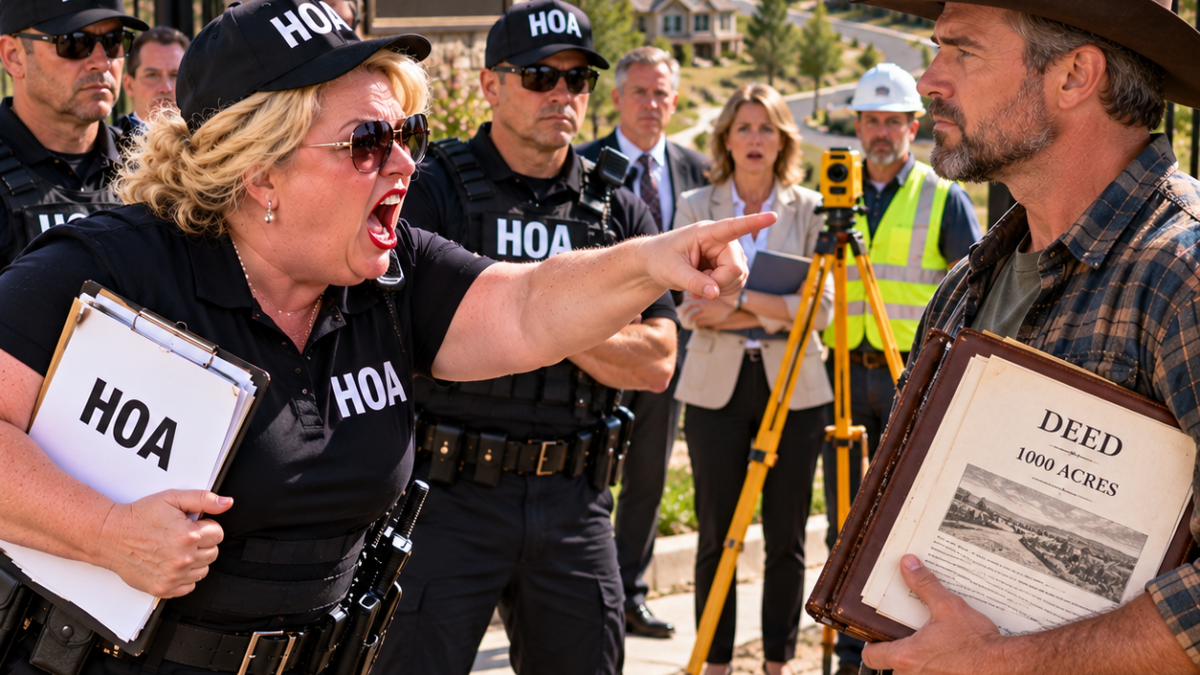
Three days after I buried my grandfather, an HOA president stood behind a guarded gate, crumpled the deed showing I owned every acre beneath his 180-home subdivision, and told me to go back to Chicago before I caused trouble I couldn’t afford.
What he didn’t know was that I had spent twelve years tracing corporate fraud for a living, and the leather notebook my grandfather left behind contained enough names, dates, payments, and buried records to turn an entire luxury community into the most expensive mistake of Victor Stanton’s life.
The lawyer’s office was too cold.
That is the first thing I remember clearly.
Not the framed diplomas on the wall. Not the shelves filled with property-law books. Not even the old deed lying between us on Evelyn Caldwell’s desk.
The cold.
I had flown from Chicago to Phoenix because my grandfather, Walter Howard, had died at ninety-two. I expected to handle the ordinary things families handle after a death: funeral arrangements, a trailer full of old tools, maybe a modest savings account, perhaps a few acres of desert land no one else wanted.
Instead, Evelyn slid a yellowed document toward me.
“Read the legal description.”
I did.
Then I read it again.
One thousand acres.
Maricopa County.
Howard family ownership.
Recorded in 1952.
I looked up.
“This can’t be right.”
Evelyn removed her glasses.
“I thought the same thing.”
“My grandfather lived in a trailer.”
“I know.”
“He never talked about owning a thousand acres.”
“He did own them.”
“Past tense?”
“No.”
Her answer was so calm that it took a second to land.
“Christopher, your grandfather never sold this parcel.”
I stared at her.
“That’s impossible.”
“Why?”
“Because there’s a subdivision there.”
She opened a second folder and spread a current plat map beside the deed.
Desert Crown Estates.
One hundred eighty homes.
Clubhouse.
Pool.
Golf course.
Private roads.
Landscaped entrance.
I had driven past it as a teenager.
My grandfather had once referred to the residents as “the people next door.”
Evelyn traced the boundary line with one finger.
“They aren’t next door.”
My stomach tightened.
She looked at me.
“They are inside it.”
I leaned closer.
The subdivision sat almost entirely inside the original parcel.
I felt that strange pressure behind my eyes that comes when numbers refuse to reconcile.
I had spent my career as a forensic accountant. Corporate fraud, hidden transfers, shell entities, embezzlement, manipulated financial statements. My job was to look at information other people had accepted and ask the question they stopped asking.
Does this make sense?
This did not.
“How?”
Evelyn pulled another document.
“In 1989, Crown Development Group filed papers claiming this land was unowned desert acreage acquired through county disposition.”
“Was it?”
“No.”
“Tax sale?”
“No.”
“Foreclosure?”
“No.”
“Condemnation?”
“No.”
“Deed transfer?”
“No.”
I looked again at the map.
“Then they built one hundred eighty houses on stolen land.”
“That is the simplest description of what the records suggest.”
I sat back.
The room suddenly seemed even colder.
“What did Grandpa know?”
Evelyn had been waiting for that question.
She reached into a thick accordion folder and handed me a stack of letters.
His handwriting was instantly recognizable.
Careful.
Straight.
Old-fashioned cursive from a generation that believed correspondence mattered.
The first letter was dated 1990.
Then 1991.
1993.
1996.
2003.
2008.
2012.
2015.
County officials.
Developers.
HOA attorneys.
Surveyors.
Property offices.
In one letter, he wrote:
*I am requesting for the fourth time that your office review unauthorized construction occurring inside my recorded property boundary.*
The reply attached behind it contained three paragraphs of polished dismissal.
**Your claims have been reviewed and found to be without merit. Further correspondence regarding this matter will not receive a response.**
I felt my jaw tighten.
“How long?”
Evelyn knew what I meant.
“About twenty-five years, actively.”
“And then?”
“He stopped.”
“Why?”
“I don’t know.”
I did.
Or at least I thought I did.
Because eventually institutions teach people when to stop expecting answers.
My grandfather had been stubborn, but he had also been alone.
There is a particular kind of exhaustion that comes from repeatedly holding proof in your hands while everyone with the authority to examine it tells you the proof means nothing.
I knew that exhaustion from fraud victims.
I had just never imagined it had lived in my own family.
That afternoon, I drove to Desert Crown Estates.
Not to confront anyone.
At least that’s what I told myself.
I needed to see it.
The entrance looked expensive.
Stone columns.
Black iron gates.
Guard station.
Desert landscaping maintained to the point of artificial perfection.
The sign read:
**DESERT CROWN ESTATES
ESTABLISHED 1989
A PREMIER COMMUNITY**
1989.
The same year the suspicious filings appeared.
I pulled up to the guard booth.
A man in a pressed uniform looked at my rental car like it had personally offended him.
“Resident?”
“No.”
“Guest?”
“No.”
“Delivery?”
“No.”
His expression hardened.
“Then what are you doing here?”
I handed him a copy of the deed.
“My name is Christopher Howard. I’m the landowner.”
He looked at the page.
Then at me.
Then back at the page.
He did not read it.
He picked up his radio.
Five minutes later, a black Mercedes rolled toward the gate.
The driver parked diagonally as though he expected everyone else to wait.
A silver-haired man stepped out.
Early sixties.
Deep golf-course tan.
Perfectly fitted polo.
The casual confidence of someone who had spent a long time being the most important man in every room he entered.
He walked toward me.
“Christopher Howard.”
Not a question.
“Yes.”
“Victor Stanton.”
He smiled.
“President of Desert Crown for eighteen years.”
He glanced at the deed.
“And Walter’s grandson.”
The way he said my grandfather’s name told me more than his smile did.
“You knew him.”
Victor laughed softly.
“Everybody knew Walter.”
“That doesn’t sound affectionate.”
“He was persistent.”
“He claimed your development was on his land.”
“He claimed many things.”
I held up the deed.
“This is not a claim.”
Victor’s eyes dropped toward it.
For half a second, something changed.
Not confusion.
Recognition.
That mattered.
Then the confidence returned.
“This development has been here thirty-five years.”
“That doesn’t answer the deed.”
“We have title insurance.”
“That doesn’t answer the deed.”
“We have one hundred eighty homeowners.”
“Still not the deed.”
His smile disappeared.
“Mr. Howard, I understand you’re grieving.”
I almost laughed.
“Do you?”
“Your grandfather was an old man who became increasingly confused during his final years.”
The anger came immediately.
I kept it out of my voice.
“These letters began in 1990.”
Victor shrugged.
“He had obsessions.”
I looked at him.
“You mean property.”
“I mean grievances.”
I stepped closer to the gate, not to him.
“I’d like to review the title history with you and your counsel.”
“There is nothing to review.”
“Then you shouldn’t mind reviewing it.”
His eyes hardened.
For the first time, I knew the conversation was not about misunderstanding.
Victor knew enough to be afraid.
He pulled a business card from his pocket.
“Our attorney.”
He pressed it against my chest instead of handing it to me.
“If you want to waste money, waste yours. Not ours.”
I took the card.
He looked through the gate toward the houses behind him.
“One hundred eighty families live here.”
“I know.”
“They’re not moving.”
“I didn’t say they were.”
“They have mortgages. Children. Retirement plans. Property values.”
“I know.”
“You come in here with a piece of paper from seventy years ago and think the world stops?”
“No.”
Victor moved closer.
His voice became softer.
“People who create problems for this community tend to discover that problems become expensive.”
There it was.
Not a direct threat.
PART 2
Something more polished.
“Legal bills,” he continued. “Reputation. Career. Time. You’re from Chicago, right?”
“Yes.”
“Go home.”
He glanced at my rental car.
“Enjoy whatever your grandfather left you.”
Then he gestured behind him.
“But this?”
His smile returned.
“This was never his.”
I looked at him for several seconds.
Then I looked at the gate.
At the homes.
At the golf course beyond them.
At the guard watching us.
Victor started toward his Mercedes.
“Mr. Stanton.”
He turned.
“You said my grandfather was confused.”
“Yes.”
“Then why are you nervous?”
He stopped.
That tiny pause answered more than anything else.
Then he laughed.
“Good luck, Mr. Howard.”
He drove away.
I sat in the rental car for almost ten minutes after the gate guard waved me off.
My grandfather had been dead three days.
I could still smell the dusty cemetery.
Still hear the minister saying Walter Howard had been “a private man.”
Private.
That was the polite word families use when someone has spent decades carrying something nobody else understood.
I looked at the deed on the passenger seat.
Then at the business card.
Then at a small leather notebook I had found inside my grandfather’s trailer.
Until that moment, I had barely examined it.
The pages contained dates.
Dollar amounts.
Names.
Short abbreviations.
Addresses.
Contractors.
Assessment figures.
Survey references.
It looked like random obsession.
But random numbers were rarely random.
Victor thought he was dealing with a grieving grandson.
He had no idea what I did for a living.
I drove back to Phoenix.
Three days later, I sat across from Diane Ortega.
Diane was a real-estate litigation attorney with a reputation for taking cases other firms avoided.
Her office looked the opposite of Victor’s.
No staged photographs.
No expensive furniture.
Files everywhere.
Legal pads covered with handwriting.
Three coffee cups she claimed were all from that morning.
She reviewed the deed for almost twenty minutes.
Then the subdivision plat.
Then Evelyn’s letters.
Finally:
“This is either the cleanest impossible case I’ve ever seen or the ugliest title fraud I’ve ever seen.”
“Which one?”
“I don’t know yet.”
“That’s why I’m here.”
She tapped the deed.
“No transfer?”
“None found.”
“Tax sale?”
“No.”
“Probate issue?”
“No.”
“Adverse possession?”
“Not cleanly, given his continuous objections.”
“Recorded abandonment?”
“No.”
“Release?”
“No.”
She leaned back.
“Then we start from zero.”
“What does that mean?”
“We assume nothing.”
For two weeks, we conducted what Diane called a forensic title examination.
Every instrument tied to the original parcel.
1952 deed.
Surveys.
Tax records.
Boundary descriptions.
Potential easements.
Transfers.
Liens.
Condemnation records.
Then everything tied to Desert Crown.
Subdivision plat.
Development agreements.
HOA formation.
Recorded covenants.
Title records.
Corporate ownership.
The first major problem appeared when archived survey maps arrived.
Diane placed the 1952 survey beside the 1989 subdivision plat.
“Look.”
I did.
“They changed the boundary.”
“Exactly.”
Not slightly.
Almost half a mile on one side.
The subdivision plat effectively redrew the edge of my grandfather’s parcel so the development could appear to sit on different acreage.
I pointed at the surveyor’s signature.
“Gerald Hutchkins.”
“I checked him.”
“And?”
“Lost his license in 1994.”
“For?”
“Falsified boundary reports.”
I looked up.
“Other developments?”
“Two documented cases.”
The room became quiet.
“How did this get approved?”
“County planning was understaffed in 1989. Very understaffed.”
“That’s not enough.”
“No.”
“Someone exploited it.”
“Probably.”
The second anomaly was worse.
Crown Development claimed it had acquired the land through a county auction.
There was no auction.
We checked every relevant county record.
Nothing.
The county could not have sold property it never owned.
The transaction described in the development filing appeared to be fictional.
Diane stared at the record.
“They invented the acquisition.”
I nodded.
“Or relied on a fabricated supporting document that disappeared later.”
“Either way…”
“Either way, somebody knew.”
That night, I opened my grandfather’s notebook properly for the first time.
I stopped treating it like the rambling notes of an old man and treated it like evidence.
Once I did that, the pages changed.
1992.
**Survey marker moved. Reported. No response.**
2003.
**CC&Rs filed using incorrect parcel description. Attorney says no standing.**
2008.
**Reserve fees increasing. Ask where money going.**
2010.
**Admin reserve? shell company?**
2012.
**Stanton contracts. Same family.**
My grandfather had been following pieces of the same structure for decades.
But he lacked one advantage I had.
Pattern recognition across financial systems.
I started creating timelines.
Every suspicious land filing.
Every board action.
Every corporate change.
Dates.
Names.
Months.
One pattern stood out.
Many questionable filings had been submitted in March.
I checked county staffing and review cycles.
March coincided with heavy budget and planning workloads.
Oversight was stretched.
Was that proof?
No.
Was it useful?
Yes.
Fraud often hides inside institutional distraction.
Then Diane called.
“You sitting down?”
“Yes.”
“I pulled Crown Development’s corporate history.”
“And?”
“Founding partners were Raymond Stanton and Victor Stanton.”
I stared at the wall.
“Victor’s father.”
“Yes.”
“When did Raymond die?”
“2008.”
“And Victor?”
“Became sole director afterward.”
There it was.
Victor had not simply inherited an HOA presidency.
His family had created the development.
The same development built on land they apparently never bought.
I suddenly understood why he recognized the deed.
He had seen it before.
I was sure of that now.
Over the next week, the case widened.
County court records showed seven prior lawsuits involving Desert Crown.
Different homeowners.
Different complaints.
But the endings bothered me.
Two dismissed on technical grounds.
Two confidential settlements.
One withdrawn abruptly.
One lost in arbitration.
One allowed to die slowly from inactivity.
Seven challenges.
Seven residents isolated.
Seven problems contained.
Diane said:
“That could be ordinary litigation.”
“It could.”
“But you don’t think it is.”
“No.”
“Why?”
“Because the outcomes vary too neatly.”
She looked at me.
“Explain.”
“If one tactic fails, another appears. Dismissal. Settlement. Arbitration. Delay. Pressure.”
“You think they’re not just defending cases.”
“I think they’re managing dissent.”
The phrase sat between us.
Then I remembered another section of my grandfather’s notebook.
Special assessments.
Large amounts.
One word repeated beside them.
**Where?**
Where did the money go?
That question became the next case.
The seven lawsuits gave me names.
I started knocking on doors.
Helen Nakamura opened hers wearing gardening gloves.
Seventy-something.
Small house.
Carefully maintained.
When I introduced myself, her eyes changed.
“Walter’s grandson?”
“Yes.”
She held the door open wider.
“He said somebody might come someday.”
That sentence stopped me.
“What did he mean?”
“Come inside.”
Over tea, Helen told me about her husband.
Forty-four years married.
Pancreatic cancer.
After he died, she planted chrysanthemums in the front yard because they had been his favorite flower.
The HOA fined her $15,000.
I thought I had misheard.
“For flowers?”
“They called it unauthorized structural landscaping.”
“How many flowers?”
She gave me a tired smile.
“Apparently enough to threaten civilization.”
The humor vanished quickly.
She could not pay.
The HOA recorded a lien.
She filed suit.
Three weeks later, a twelve-page letter arrived from Sentinel Property Management.
Foreclosure threats.
Attorney fees.
Counterclaims.
Defamation warnings.
A promise that if she lost, she might owe far more than the original amount.
Helen placed the letter on the table.
“I was seventy.”
Her fingers trembled.
“I had just buried my husband.”
I said nothing.
“I didn’t know whether the letter was true.”
“Some of it was likely exaggerated.”
“I know that now.”
She looked toward the chrysanthemums outside.
“But at the time, all I knew was that I might lose the house we spent twenty-six years paying for.”
“So you withdrew.”
“Yes.”
“Did Victor ever speak to you directly?”
“Once.”
“What did he say?”
She swallowed.
“He said grief makes people make irrational decisions.”
My chest tightened.
The same tactic.
My grandfather was confused.
Helen was grieving.
Anyone who challenged Victor was emotionally defective.
Never the documents.
Always the person.
Derek Manning’s story was different.
Former Marine.
Two tours in Afghanistan.
Wheelchair after an IED injury.
He installed a ramp at his front entrance.
The HOA ordered him to remove it because he had not submitted the architectural request first.
He invoked disability accommodation rights.
They sued.
He fought eighteen months.
Lost on a procedural deadline.
But his lawyer had obtained partial financial discovery.
Derek rolled to a filing cabinet and handed me a folder.
“They fought harder to hide these than they fought the ramp.”
Inside were incomplete HOA financial records.
One vendor appeared over and over.
**STANTON CONSTRUCTION LLC**
$42,000.
$67,000.
$89,000.
Road work.
Pool work.
Drainage.
Landscaping.
“Victor’s?”
Derek nodded.
“He approves the contracts.”
“Board knows?”
“Everybody knows.”
“Why no challenge?”
Derek laughed without humor.
“You’ve met him.”
Sophia Reyes understood the money better.
Single mother.
Hospital administrator.
During the pandemic she was furloughed and fell $2,400 behind on HOA payments.
Desert Crown initiated foreclosure proceedings.
No phone call.
No payment plan.
Certified notice.
Sixty days.
She borrowed from her sister.
Saved the house.
But while reviewing the HOA’s annual financial statement, she noticed administrative costs had tripled even as services declined.
Pool maintenance dropped.
Landscaping reduced.
Road repairs delayed.
Yet fees increased.
By the end of that week, I had spoken with five of the seven litigants and more than a dozen other residents.
The stories were different.
The architecture was not.
Pressure.
Isolation.
Escalation.
Fear.
Money.
I began building a financial model.
Over ten years, nearly $2 million in fines and special assessments beyond ordinary dues.
Stanton Construction had received roughly $780,000 in the early records I could verify.
Yet visible improvements could not justify the spending.
I returned to Helen before leaving one evening.
She stopped me at the door.
“Your grandfather tried this.”
“Tried what?”
“To bring us together.”
“When?”
“2012.”
I had never heard that.
“He went door to door. Wanted signatures for a state complaint.”
“What happened?”
“People were afraid.”
“Of Victor?”
“Yes.”
She looked down.
“The Henderson family had just lost their house.”
“What happened?”
“Lien. Foreclosure. HOA bought it at auction. Someone connected to Victor resold it.”
My stomach turned.
“Grandpa couldn’t get signatures?”
“Five.”
Helen looked at me.
“He didn’t fail because he was wrong.”
“What then?”
“He was alone.”
That sentence followed me back to the hotel.
Forensic accounting is usually lonely work.
Spreadsheets do not care about courage.
Bank records do not get frightened.
But this case was different.
The evidence existed inside a community where fear had become part of the accounting system.
Victor’s real protection wasn’t the lawyers.
It was fragmentation.
Every victim thought their experience was personal.
My grandfather had evidence.
He did not have a coalition.
That became my strategy.
Diane requested full financial records through Helen, who had the legal standing as a homeowner.
The HOA responded late.
One box.
Five years of records.
Beautifully organized.
Too beautiful.
Fraud investigators learn to distrust perfection.
Not because clean books prove fraud.
Because when documents look designed to create confidence instead of provide transparency, you ask a different question.
What is missing?
I started with Stanton Construction.
Five years.
$1.2 million.
Victor approved the contracts.
Treasurer Leonard Marsh countersigned nearly everything.
I compared invoice prices with market rates.
Road resurfacing:
Billed $340,000.
Comparable quotes:
Around $115,000.
Pool equipment:
Billed $52,000.
Comparable work:
About $18,000.
Drainage:
Billed $127,000.
Comparable bids:
Around $40,000.
Estimated overbilling approached $860,000.
Then I drove the development.
The roads showed cracking inconsistent with recent major resurfacing.
Pool equipment looked old.
Drainage improvements appeared minimal.
Maybe some work had been performed.
Maybe not all.
Then I found Southwest Infrastructure Partners.
Three invoices.
$89,000.
No Arizona business registration.
No Nevada registration.
No California record.
Disconnected phone.
No website.
No employees.
Ghost vendor.
I called Diane.
“I found one.”
“One what?”
“Company that doesn’t exist.”
She went quiet.
“How much?”
“Eighty-nine thousand.”
“That enough?”
“For fraud?”
“Yes.”
“For the full picture?”
“No.”
Then came the bank statements.
Not summaries.
Raw records.
It took Diane two weeks of legal pressure.
When I finally received them, I barely left my hotel room for three days.
I cross-referenced every outgoing payment.
The official books were carefully maintained.
The bank was not.
Three payments to Stanton Construction totaling $147,000 appeared in the bank records but not the formal HOA statements.
Then recurring transfers.
$5,000.
$7,000.
$8,000.
Monthly.
**DCE ADMINISTRATIVE RESERVE**
Over five years:
About $320,000.
I traced the account.
Desert Crown Enterprises LLC.
Nevada.
Anonymous structure.
Registered agent at a Las Vegas law firm.
No obvious business purpose.
Same initials as Desert Crown Estates.
Cute.
Diane asked:
“Can you prove Victor owns it?”
“Not yet.”
“Then don’t say he does.”
“I know.”
That distinction mattered.
Evidence first.
Conclusion second.
I ordered original incorporation records.
The beneficial ownership remained hidden.
But the witness line contained a name.
Gerald Hutchkins.
The surveyor.
The man whose 1989 plat altered my grandfather’s boundaries.
The man who later lost his license for falsifying surveys.
Still connected to the Stanton network almost twenty years later.
I stared at the name.
My grandfather had written “shell company?” in 2010.
He had gotten so close.
No subpoena power.
No forensic tools.
No team.
No one listening.
I felt something between grief and anger.
Then Leonard Marsh.
HOA treasurer.
Signature everywhere.
He owned an insurance agency.
Shortly after joining the board, his company became Desert Crown’s exclusive insurance broker.
Another conflict.
Another reason not to question Victor.
The machine was larger than one man.
At my grandfather’s storage unit, I found boxes.
Photos.
Meeting minutes.
Letters.
Old budgets.
Notes.
Nothing changed the central story.
It only deepened the tragedy.
Walter had spent thirty years circling the same truth.
He knew contracts were inflated.
He knew reserves disappeared.
He knew land records were wrong.
He knew Victor’s family was involved.
But he never had enough pieces in one place.
I sat in the storage-unit parking lot surrounded by boxes.
Then called Diane.
“I’m done waiting.”
“What does that mean?”
“Annual HOA meeting is in three weeks.”
Silence.
“You want to present?”
“Yes.”
“Publicly?”
“Yes.”
“That adds risk.”
“I know.”
“Victor will attack you.”
“I know.”
“He’ll say you’re a greedy heir.”
“I know.”
“He’ll say you’re trying to steal one hundred eighty homes.”
“I know.”
Diane exhaled.
“Then we prepare for exactly that.”
We filed a quiet-title action.
My ownership claim.
One thousand acres.
We filed a separate civil fraud complaint naming Victor, Stanton Construction, Desert Crown Enterprises, Leonard Marsh, and associated entities where evidence supported it.
We prepared a referral package for state investigators.
Land records.
Money flows.
Ghost vendors.
Conflicts.
Potential falsification.
Professor Harold Jenkins, a retired Arizona law professor, reviewed our strategy.
He was blunt.
“If you lead with your land, you lose the room.”
I frowned.
“Why?”
“Because they live there.”
“The deed is the strongest fact.”
“Legally.”
He tapped the financial spreadsheets.
“Emotionally, you’re the outsider threatening their homes.”
“I’m not threatening their homes.”
“Victor will say you are.”
“So?”
“So lead with what Victor took from them.”
He pointed at the assessments.
“Their money.”
Then the inflated contracts.
“Their money.”
Then the shell transfers.
“Their money.”
He leaned back.
“Once they understand the board may have been exploiting them, then show the deed.”
I nodded slowly.
“Make the land the final reveal.”
“Exactly.”
The meeting agenda placed resident comments last.
Victor could easily run out the clock.
We filed a written request to move the presentation forward.
Copied regulators.
Forced a public denial if the board refused.
Then I sent a one-page letter to every household.
No accusation.
No legal conclusion.
Just:
**Significant information regarding community finances, governance, and property records will be presented at the annual meeting. Attendance is strongly recommended.**
Victor retaliated immediately.
Sentinel Property Management warned residents about “fraudulent outside claims.”
Leonard Marsh described me in a community email as a “known litigant with a financial interest in destabilizing Desert Crown.”
The HOA attorney threatened defamation litigation.
Then the pressure spread.
Helen received a surprise “compliance review.”
Derek’s old architectural request was suddenly denied.
Sophia’s account was audited.
A white sedan started appearing outside my hotel.
Same car.
Same man.
Three nights.
Then it followed me to Diane’s office.
Then Helen’s house.
I photographed it.
License traced to a private security fleet.
I filed a police report.
No confrontation.
No chase.
Documentation.
Victor wanted fear.
I gave him timestamps.
Friday afternoon, Diane called.
“They offered settlement.”
“How much?”
“Three million.”
I said nothing.
“Nondisclosure agreement. Drop quiet title. Drop fraud claims. Walk away.”
Three million dollars.
For a moment, I allowed myself to imagine it.
Mortgage gone.
Retirement funded.
No more hotel.
No more threats.
No more eighteen-hour research days.
No more Victor.
“What do you think?” I asked.
“I think frightened people don’t offer three million dollars to someone whose case is worthless.”
That night, I sat with my grandfather’s lockbox.
The money would have changed my life.
But the question that mattered was simpler.
What would happen to Helen?
Derek?
Sophia?
The one hundred eighty families still paying into the same system?
What would happen when the next resident challenged Victor?
My grandfather had spent decades trying to prove what happened to him.
But maybe proof alone was never enough.
Maybe truth had to be shared before it could become power.
I called Diane.
“No.”
“You’re sure?”
“Yes.”
“Then Tuesday.”
Monday night.
11:47.
My phone rang.
Victor Stanton.
I answered.
“Christopher.”
His voice was almost warm.
“Victor.”
“Three million was a lawyer’s opening number.”
I said nothing.
“Five.”
I stood by the hotel window.
The white sedan was parked across the lot.
“Five million dollars?”
“Yes.”
“For what?”
“You know what.”
“I want you to say it.”
He laughed softly.
“You drop the litigation. No public accusations. No meeting stunt. We all move forward.”
“What about the land?”
“You walk away from the claim.”
“What about the financial records?”
“You stop.”
There it was.
Not legal confidence.
Purchase price for silence.
I looked at my phone.
“Victor.”
“Yes?”
“This call is being recorded.”
Silence.
“Arizona permits one-party consent.”
Longer silence.
“You think you’re clever.”
“No.”
“You have no idea what you’re doing.”
“I’ll see you tomorrow.”
I hung up.
The next evening, the community center was almost full forty-five minutes early.
Helen sat near the rear.
Derek’s wheelchair was positioned beside the center aisle.
Sophia stood with her sister.
Professor Jenkins held a legal pad.
Diane sat near the front.
A representative from the state real-estate regulatory office had accepted our request to observe.
Victor arrived at 6:45.
Navy blazer.
Perfect hair.
Leonard Marsh beside him.
Board members took their places beneath a screen reading:
**ANNUAL MEETING — BUILDING COMMUNITY TOGETHER**
I almost admired the irony.
At 7:05, Victor called the meeting to order.
“Before we begin, I want to address recent disturbances caused by an outside individual making false claims about this community.”
I stood.
“Point of order.”
Two hundred heads turned.
Victor’s fingers stopped moving.
I cited our written agenda request.
He said it had been denied.
I asked that the denial and our request be entered into the minutes.
Then I gestured toward the regulator.
Victor saw her.
The room felt different.
He tried to move on.
Derek spoke.
“If we’re voting on finances, we should hear the financial concerns first.”
A longtime resident named Frank Bellamy objected.
“Victor has run this place for eighteen years. We’re going to let an outsider hijack the meeting?”
Murmurs.
Then another voice.
“Let him speak.”
Another.
“I want to hear it.”
Another.
“So do I.”
Victor saw the room moving.
His smile tightened.
“Ten minutes.”
I walked to the projector.
Connected the laptop.
No speech about Grandpa.
No deed.
Not yet.
I started with money.
“In the last ten years, Desert Crown has collected approximately two million dollars in special assessments and fines beyond ordinary dues.”
People looked at one another.
“I want to show you where a significant portion of those funds appears to have gone.”
Slide one.
Stanton Construction.
Road work:
$340,000.
Comparable bids:
$115,000.
Pool equipment:
$52,000.
Comparable:
$18,000.
Drainage:
$127,000.
Comparable:
Around $40,000.
Photos of cracked roads.
Old pool equipment.
Questionable work.
Leonard leaned toward his microphone.
“Those comparisons are misleading.”
“I expected that response.”
Next slide.
Same project specifications.
Same scope.
Same material assumptions.
Three independent bids.
Leonard’s hand tightened around his pen.
“Why,” I asked, “has Stanton Construction repeatedly charged this community two to three times market rates?”
No answer.
Victor looked at the clock.
“Mr. Howard, your time—”
“Let him finish!”
Someone shouted it.
Then another.
“Let him talk!”
Derek:
“We have a right to hear this.”
Victor looked toward his board.
Nobody helped him.
I moved to the ghost vendor.
“Southwest Infrastructure Partners received eighty-nine thousand dollars.”
Slide.
Business searches.
No registration.
Disconnected phone.
No officers.
No functioning entity.
A woman near the front gasped.
I continued.
“Three invoices. No identifiable company.”
Leonard tried again.
“Some vendors operate under trade names.”
“There is no underlying entity.”
Silence.
Next.
Desert Crown Enterprises LLC.
Nevada.
$320,000 over five years.
Monthly transfers.
No disclosed business purpose.
Then the incorporation witness.
Gerald Hutchkins.
Victor moved.
Just slightly.
That was the first visible fear.
I clicked.
Hutchkins’s survey history.
1989 Desert Crown plat.
Later license revocation tied to falsified boundary reports.
Victor stood.
“This is absurd.”
I looked at him.
“Sit down.”
The room reacted before he did.
A few people laughed nervously.
Victor’s face reddened.
“You are constructing a conspiracy from unrelated documents.”
“Then explain them.”
“This is not a courtroom.”
“No.”
I looked around.
“It’s worse.”
People leaned forward.
“This is the room where the people who paid the money are sitting.”
Silence.
Then I brought up the final slide.
1952 deed.
Howard family.
One thousand acres.
I let the image sit.
No commentary for several seconds.
Then:
“This is the recorded deed to the land beneath Desert Crown Estates.”
The room erupted.
Victor shouted into his microphone.
“Enough!”
I raised my voice for the first time.
“This property was never legally transferred from my grandfather.”
People stood.
Questions everywhere.
“What does that mean?”
“Are our houses illegal?”
“Do we own our lots?”
“What happened?”
Victor grabbed control.
“This man is attempting to extort this community.”
I waited.
Then:
“Last night you offered me five million dollars to make these claims disappear.”
Silence.
Absolute.
Victor’s face changed.
“You—”
“I recorded the call.”
A woman whispered:
“Oh my God.”
Victor stood so fast his chair struck the wall.
“Your grandfather was a senile old fool!”
The room froze.
His voice cracked.
“We built this!”
He pointed toward the residents.
“We created value from nothing!”
No one moved.
“Your grandfather sat in that trailer complaining while my father turned worthless desert into homes!”
I stared at him.
He had just said the quiet part himself.
Not *we bought the land.*
Not *your deed is wrong.*
Not *our title is valid.*
We built it.
He continued, losing control.
“Every one of these people benefited!”
Someone shouted:
“From stolen land?”
Victor turned.
The room turned on him.
Fast.
Frank Bellamy—the man who had defended him minutes earlier—stood.
“Victor, did you know?”
Victor ignored him.
Frank shouted louder.
“Did you know?”
Leonard Marsh began packing papers.
Another resident:
“Where’s the money?”
Another:
“What is Desert Crown Enterprises?”
Another:
“Why is your company getting contracts?”
Helen stood.
Her voice shook.
“You put a lien on my house for flowers.”
Victor looked at her.
She kept going.
“My husband was dead.”
The room became quiet around her.
“You knew I was alone.”
Victor looked away.
Derek rolled into the aisle.
“You sued me over a wheelchair ramp.”
Sophia stepped forward.
“You threatened foreclosure while your own books were moving money into shell accounts.”
Then Margaret Chen, a twenty-year resident, stood.
“I move that the board be suspended pending an independent audit.”
“Second.”
“Third.”
People shouted agreement.
Victor tried to reclaim procedure.
“You cannot simply—”
“Yes, we can,” Professor Jenkins said from the third row.
Diane was already on her phone.
The regulator was writing.
The vote was overwhelming.
Victor sat.
For the first time since I met him, he looked old.
Not powerful.
Not polished.
Just a man watching his version of reality disappear.
I expected triumph.
It didn’t come.
What I felt was lighter.
My grandfather had spent thirty-five years being told he was confused.
Two hundred people had just watched Victor confirm he wasn’t.
The next morning, the state opened a formal investigation.
By the end of the week, federal investigators joined after reviewing the financial transfers and interstate elements.
Victor was arrested at his home.
Leonard Marsh was questioned the same day.
The news cameras arrived.
I avoided them where I could.
The legal process took fourteen months.
Real cases are not clean.
They stall.
They fracture.
Motions get filed.
Evidence gets challenged.
Five months in, Victor’s attorneys attacked Helen’s records request, arguing she had acted as my agent rather than independently.
A judge temporarily excluded part of the production.
For six weeks, our financial case weakened.
I slept badly.
Diane did not pretend confidence.
“This is a problem.”
“How bad?”
“Not fatal.”
“Meaning?”
“We rebuild.”
Sophia did what my grandfather had once failed to achieve.
She organized homeowners.
Eleven separate residents submitted independent financial requests.
Different names.
Different dates.
Different legal rights.
The board could not characterize all of them as my agents.
The paper trail became too broad to contain.
On appeal, the excluded records returned.
The quiet-title case came first.
I sat beside Diane as the judge reviewed the chain.
1952 deed.
No transfer.
No auction.
No relinquishment.
No valid conveyance.
The ruling was blunt.
The one thousand acres had never legally left the Howard estate.
When I heard the words, I thought about my grandfather’s letters.
Fourth request.
Seventh request.
No response.
Claim denied.
No standing.
Confused old man.
I looked down.
Diane touched my arm.
“You okay?”
“No.”
Then I laughed once.
“Yes.”
The victory created a new problem.
One hundred eighty families now lived on land technically belonging to me.
I had spent months insisting they were victims too.
Now I had to prove I meant it.
Victor’s lawyers expected leverage.
Higher land payments.
Evictions.
Mass settlements.
I proposed ninety-nine-year land leases.
One dollar per year.
Existing homeowners.
Renewable protections.
No one displaced because of fraud they did not commit.
Diane stared at me when I proposed it.
“You understand what that means financially?”
“Yes.”
“You could demand far more.”
“I know.”
“You may be giving away millions.”
“I’m not giving away their homes.”
“They don’t legally own the underlying land.”
“They bought them in good faith.”
“That distinction matters.”
“It matters to me.”
Most residents accepted.
Seventeen families sold and left.
Some could not tolerate the uncertainty.
Some blamed me.
One man called me a thief during a community meeting.
I let him finish.
Then said:
“I understand why you’re angry.”
He shouted:
“No, you don’t.”
Maybe he was right.
Victory did not make everyone grateful.
Nor should it.
The truth disrupted lives.
Even when the disruption was necessary.
Victor’s criminal case was stronger.
Seventeen counts.
Financial fraud.
Conspiracy.
Wire-related offenses.
Other charges tied to the scheme.
His attorneys fought.
Then Leonard cooperated.
That changed everything.
Victor accepted a plea.
Twelve years in federal prison.
Asset forfeiture.
Permanent prohibition from serving in fiduciary roles.
Leonard received four years and restitution obligations.
Gerald Hutchkins died before sentencing in his own proceedings, leaving questions about Raymond Stanton that would never be fully answered.
The financial recovery exceeded $1.4 million.
Some money was gone forever.
Approximately $300,000 associated with one ghost-vendor chain could not be traced.
That bothered me more than it should have.
Forensic accountants hate unresolved numbers.
Diane reminded me:
“Justice is not the same as reconciliation.”
I knew.
Still hated it.
The community elected new leadership.
Derek Manning became president.
Helen Nakamura became treasurer.
Sophia headed financial oversight.
Their first meetings were messy.
Painfully messy.
People shouted about landscaping.
Budgets.
Legal bills.
Lease language.
Whether the entrance should be renamed.
Two committee chairs resigned in six months.
A contractor dispute almost split the board.
Derek called me one night.
“This is awful.”
“You wanted democracy.”
“I wanted justice.”
“Same problem.”
“What?”
“People.”
He laughed.
Then groaned.
“I liked fighting Victor better.”
“Victor made decisions alone.”
“Efficient.”
“Exactly.”
He was quiet.
“That’s the danger, isn’t it?”
“Yes.”
Good governance is slower because it requires people to disagree without destroying one another.
That turned out to be harder than exposing fraud.
The entrance sign eventually changed.
**HOWARD COMMUNITY
ESTABLISHED 1989
RESTORED**
Some residents hated the name.
I did too.
“It sounds like I own the place,” I told Derek.
“You technically do.”
“That’s not helping.”
The compromise kept it temporarily.
Justice left scars.
Legal fees cost me almost $220,000.
Lost work cost more.
The process consumed eighteen months of my life.
Some residents still believed I had done more damage than Victor.
Bill Thornton organized a gathering of fifteen homeowners who wanted the old name restored and the Howard leases challenged.
He called me a “financial opportunist.”
I almost responded publicly.
Then Helen stopped me.
“Don’t.”
“He’s lying.”
“Let him.”
“That isn’t how facts work.”
“It is how communities work.”
I looked at her.
She smiled.
“You taught us to ask for records.”
“So?”
“Now let him ask.”
Bill never proved misconduct.
But his anger was real.
I learned to accept that truth and popularity are different things.
Six months after Victor’s sentencing, I drove to the cemetery.
My grandfather’s headstone was simple.
**WALTER JAMES HOWARD
1931–2023**
I carried two things.
A yellow chrysanthemum.
And a certified copy of the quiet-title judgment.
I knelt.
The desert was cool that morning.
Phoenix heat had not yet arrived.
For a while, I said nothing.
Then:
“It’s official.”
My voice sounded strange in the open air.
I set the judgment beside the stone.
“Every acre.”
I laughed softly.
“You were right.”
That hurt more than I expected.
“You were right for thirty-five years.”
The wind moved across the cemetery.
I thought about how many times he must have questioned himself.
Maybe the survey really was wrong.
Maybe the deed was defective.
Maybe people smarter than him understood something he didn’t.
That is what institutional dismissal does.
It does not merely deny a claim.
It teaches the person bringing it to distrust their own memory.
I touched the granite.
“They know now.”
My eyes burned.
“Victor knows.”
I swallowed.
“The county knows.”
Another breath.
“The people know.”
Then I shook my head.
“But that wasn’t what you wanted, was it?”
I knew the answer.
My grandfather had not wanted one thousand acres back so he could become rich.
If he had, he would have sold long ago.
He wanted recognition.
The truth.
Proof that the paper meant what it said.
That his voice had not been worthless simply because powerful people treated it that way.
I left the chrysanthemum.
Helen had taught me why.
Her husband’s favorite flower.
A symbol tied to grief.
Defiance.
Memory.
On the drive back, I thought I was finished.
I returned to Chicago briefly.
Opened my apartment.
Restarted client work.
Sat in front of familiar spreadsheets.
Everything should have felt normal.
It didn’t.
Three weeks later, Derek called.
“I’ve got someone who wants to talk to you.”
“About what?”
“Nevada.”
“That narrows it down tremendously.”
“HOA.”
I closed my eyes.
“No.”
“Christopher.”
“I just spent eighteen months doing this.”
“She has inflated contractor invoices.”
I said nothing.
“Board president’s brother owns the vendor.”
Still nothing.
“Residents who complain get violations.”
I rubbed my forehead.
“Derek.”
“She has boxes.”
That was the word.
Boxes.
My grandfather had boxes.
Helen had envelopes.
Derek had partial discovery.
Sophia had budgets.
Every abused system seemed to leave evidence somewhere.
Not enough to matter alone.
Too much to ignore once assembled.
“You’re good at this,” Derek said.
“I’m a forensic accountant.”
“Exactly.”
“That doesn’t make me an HOA investigator.”
“No.”
Pause.
“But you already know how.”
I did not answer.
Back in Arizona, the community continued changing.
I visited months later.
The entrance median had new flowers.
Yellow chrysanthemums.
Helen was kneeling in the dirt.
I parked.
She looked up.
“Those legal?”
She laughed.
“I approved myself.”
“Corruption already.”
“Call the regulator.”
I walked over.
The old Desert Crown sign had been replaced.
The road looked the same.
Homes.
Palm trees.
Golf carts.
Children riding bicycles.
Ordinary.
That was the strangest thing about huge scandals.
Eventually, ordinary life grows over them.
Helen brushed soil from her gloves.
“Your grandfather would have liked this.”
“The sign?”
“The flowers.”
I looked at them.
“Probably.”
“He always said this place could be good.”
I stared toward the homes.
“Did he?”
“He hated Victor.”
“That sounds more like him.”
She smiled.
“But he never hated the residents.”
That mattered.
I looked at the chrysanthemums moving in the wind.
My grandfather had spent thirty-five years being treated like an intruder beside land he owned.
Now his name was in the county record.
Victor was gone.
The board was elected.
The books were open.
The road still needed repair.
People still argued.
Some residents still disliked me.
The community was not perfect.
That made it real.
For the first time, I understood something my grandfather had never gotten to see.
Winning was not getting the land back.
Winning was removing the lie that allowed one man to own everyone’s fear.
The legal deed mattered.
The prison sentence mattered.
The recovered money mattered.
But the deeper change was simpler.
Helen could plant flowers.
Derek could enter his home using the ramp he needed.
Sophia could read a financial statement and ask questions without wondering whether foreclosure papers would arrive the following week.
Residents could disagree with the board without being targeted.
That was the property Victor had actually stolen.
Not the thousand acres.
Trust.
I stood beside Helen.
She handed me a small trowel.
“What?”
“Help.”
“I’m wearing clean shoes.”
“So?”
“I’m from Chicago.”
“You inherited a thousand acres of desert and still don’t know how to plant flowers?”
“That is accurate.”
She pushed the trowel into my hand.
I knelt.
We planted chrysanthemums beside the entrance to the community built on my grandfather’s land.
Nobody asked permission.
Nobody issued a violation.
Nobody threatened a lien.
When we finished, I stood and looked back at the road.
The first time I had arrived, a guard stopped me here.
Victor Stanton told me I did not belong.
Told me the deed meant nothing.
Told me my grandfather was confused.
Told me to go home.
Now I finally understood.
He had been right about one thing.
I needed to go home.
He was just wrong about where home was.
I looked at Helen.
“You think we’re getting there?”
She followed my gaze.
“Slowly.”
“That seems inefficient.”
“Democracy usually is.”
I laughed.
The flowers moved in the Arizona breeze.
Behind us, the community carried on.
Not healed.
Not united.
Not perfect.
But awake.
And after thirty-five years of silence, awake was enough.
A few weeks after I helped Helen plant those chrysanthemums, I learned that “awake” did not mean peaceful.
It meant people had finally started asking questions, and once people begin asking questions after years of silence, the first thing they usually discover is that they do not agree on what the answers should be.
The ninety-nine-year lease proposal had protected most families from losing the ground beneath their homes, but it had also created an argument that seemed to change shape every week. Some residents saw the one-dollar annual lease as proof that I had never intended to punish innocent homeowners for what Crown Development had done. Others saw my ownership itself as an insult, no matter how symbolic the rent might be. They had purchased houses believing they owned everything beneath them, and I understood why a court judgment could not instantly make that loss of certainty disappear.
At one community meeting, a man named Bill Thornton stood near the back of the room and pointed directly at me.
“You keep saying you’re protecting us,” he said. “But your name is still on the deed.”
“I’ve never said otherwise.”
“So you own the ground under my house.”
“Legally, yes.”
“And I’m supposed to thank you because you only charge a dollar?”
“No.”
That answer seemed to surprise him.
I continued.
“You don’t owe me gratitude.”
The room became quieter.
“You bought your home believing the title was clean. You paid your mortgage. You paid taxes. You maintained the property. None of you created the original fraud.”
Bill folded his arms.
“But we’re still the ones living with it.”
“Yes.”
“And you get to walk around being the hero.”
That one hit harder than I expected.
I could have defended myself. I could have told him about the legal fees, the threats, the months in hotel rooms, the white sedan that followed me, the years my grandfather spent being dismissed, the money Victor offered me to disappear.
Instead, I looked at Bill and said, “I understand why you’re angry.”
“No, you don’t.”
Maybe he was right.
A court victory had validated my grandfather, but it had destabilized Bill’s home in a way my grandfather had never intended. Truth can be necessary and still hurt people who did nothing wrong.
Derek rolled his wheelchair forward.
“Bill, Christopher didn’t create this.”
“I know who created it.”
“Then stop talking like he did.”
Bill turned toward him.
“And if you woke up tomorrow and learned somebody else owned the land under your house?”
Derek’s expression changed.
“I did.”
The room went quiet again.
Bill looked away.
Derek continued.
“All of us did.”
That was the first meeting where I realized the new community would not be built by pretending everyone felt relieved.
Some felt grateful.
Some felt betrayed.
Some were furious with Victor.
Some were furious with me.
Some were simply tired.
And strangely, that messiness reassured me.
Victor’s system had required people to suppress disagreement.
The new community allowed it.
The arguments were exhausting, but they were honest.
Helen once told me after a particularly ugly meeting, “I think democracy is just people being mad in public until they find a compromise.”
“That should be printed on the entrance sign.”
“Derek would approve it.”
“He’d make it twelve feet tall.”
She laughed.
The financial recovery created another round of conflict.
Forensic accountants working with prosecutors traced more than a million dollars through Victor’s companies, but returning money to residents was not as simple as dividing a number by one hundred eighty. Some families had paid special assessments. Others had paid fines. Some had overpaid for projects whose actual value was impossible to calculate precisely. A portion of recovered assets had to satisfy government claims and legal expenses before restitution could be distributed.
Every check required documentation.
Every disputed claim required review.
People who had once been afraid to challenge a fifty-dollar charge were now arguing over thousands.
Sophia volunteered to help the oversight committee, which meant she spent evenings surrounded by spreadsheets after spending her days managing hospital budgets.
I found her in the community office one night at almost ten.
Coffee beside her.
Shoes kicked off.
Two laptops open.
“You know you’re allowed to go home,” I said.
She didn’t look up.
“So are you.”
“I’m visiting.”
“You’ve been visiting for four hours.”
“That is different.”
“How?”
“I don’t have committee responsibilities.”
She finally looked at me.
“Lucky you.”
I pulled up a chair.
“What are you working on?”
“The 2016 assessment.”
“How bad?”
“Depends which version you believe.”
She rotated the laptop.
Victor’s board had charged homeowners a special assessment for drainage improvements.
The assessment raised nearly $210,000.
Stanton Construction reported using most of it.
Actual documented work appeared to total less than half.
“Where did the rest go?”
“That’s what I’m tracing.”
I smiled.
Sophia groaned.
“I hate that look.”
“What look?”
“The forensic accountant look.”
“I don’t have a look.”
“You absolutely have a look.”
She pointed toward the screen.
“Do it.”
I studied the transfers.
One went to Stanton Construction.
Another to a subcontractor.
The subcontractor’s registered address matched a residential property owned by Victor’s cousin.
“That.”
Sophia leaned forward.
“What?”
I pointed.
“Related party.”
She stared at the address.
“Again?”
“Probably.”
She dropped her head onto the desk.
“I used to think accounting was boring.”
“It is.”
“No, it isn’t. Boring accounting is beautiful.”
“That is the saddest thing anyone has ever said to me.”
She laughed.
Then grew serious.
“I almost lost my house because of these people.”
“I know.”
“My kids still don’t know how close we came.”
“Maybe they don’t need to.”
“They’re old enough now.”
She looked at the numbers.
“I keep thinking about how many nights I blamed myself.”
“For falling behind?”
“For everything.”
Her voice lowered.
“I thought I had failed them.”
I said nothing.
She continued.
“I was furloughed. I had two kids. I was trying to make groceries stretch. And then the HOA letters started coming, and every one sounded like I was irresponsible, like I had chosen not to pay.”
She swallowed.
“I borrowed money from my sister and spent almost a year paying her back.”
Sophia looked at me.
“And meanwhile Victor was moving our money through shell companies.”
That was the emotional math behind fraud.
A number on Victor’s spreadsheet became shame inside someone else’s house.
The more I saw that, the less interested I became in calling the case a victory.
Victory sounded too clean.
Helen had her own difficult moment during the first anniversary of her husband’s death after Victor’s conviction.
I found her in the front garden.
The chrysanthemums were blooming.
She was sitting on a small stool, holding a pruning tool without using it.
“You okay?”
She looked at the flowers.
“Today would’ve been our anniversary.”
“I’m sorry.”
“Forty-six years if he were here.”
I sat on the low wall near the garden.
After a while she said, “Do you know why I planted these?”
“For him.”
“Yes, but not just because he liked them.”
I waited.
“When he got sick, he couldn’t sleep. Pain medication helped, but some nights he’d sit outside until morning.”
She touched one of the yellow flowers.
“These bloomed late that year.”
Her voice softened.
“He told me he liked looking at them because they made the yard feel alive even when everything else felt like it was ending.”
I looked toward the house.
“And then the HOA fined you.”
“A month after the funeral.”
She laughed once, bitterly.
“I remember opening the letter and thinking maybe I had misunderstood the amount. Fifteen thousand dollars.”
She shook her head.
“I called Victor.”
“What did he say?”
“That grief didn’t exempt me from standards.”
My hands tightened.
Helen noticed.
“Don’t.”
“What?”
“Make that face.”
“I’m allowed.”
“He’s in prison.”
“That doesn’t make the sentence less disgusting.”
She smiled faintly.
“You know what the strangest part is?”
“What?”
“I thought removing the lien would make the garden feel like mine again.”
“Didn’t it?”
“Not immediately.”
She looked down.
“For years I looked at these flowers and saw paperwork.”
That sentence stayed with me.
The legal victory removed the lien.
It could not remove the association Victor had created in her mind.
So we sat there.
No strategy.
No evidence.
No lawyer.
Just two people beside a flower bed.
Eventually Helen picked up her pruning tool.
“I’m keeping them.”
“Good.”
“And next year I’m planting twice as many.”
“That sounds like spite.”
“It is.”
“Healthy spite?”
“The best kind.”
I laughed.
Derek’s recovery looked different because Derek had never surrendered publicly. He had fought for eighteen months and lost on procedure, which meant his anger carried a sharper edge.
As HOA president, he became almost obsessive about deadlines.
Every notice.
Every filing.
Every meeting packet.
Everything delivered early.
Three copies.
Digital backup.
Certified mail if necessary.
One afternoon I found him arguing with a landscaping contractor over a missing insurance certificate.
The contractor said, “We’ve worked here for fifteen years.”
Derek answered, “That is exactly the sentence everybody used before we discovered fifteen years of corruption.”
The contractor looked at me.
“Can you talk to him?”
“No.”
Derek smiled.
“See?”
But his rigidity started exhausting the board.
Sophia called me.
“He’s becoming impossible.”
“Derek?”
“He wants every expense approved three times.”
“That sounds safer than Victor.”
“That doesn’t mean it’s functional.”
She was right.
I met Derek at the clubhouse.
He knew why before I spoke.
“Sophia called you.”
“Yes.”
“She thinks I’m paranoid.”
“She thinks you’re making it impossible to replace a broken sprinkler without a committee vote.”
“It’s a twelve-hundred-dollar sprinkler controller.”
“Exactly.”
“That’s money.”
“Yes.”
“Residents’ money.”
“Yes.”
“Then why are you defending shortcuts?”
“I’m not.”
He rolled back from the desk.
“Sounds like it.”
I sat across from him.
“You spent eighteen months fighting a board that weaponized procedure against you.”
His jaw tightened.
“So?”
“So don’t let them keep controlling you.”
He stared at me.
“I’m not following.”
“They taught you that anything informal is dangerous.”
“Because it was.”
“Under them.”
He said nothing.
“Transparency is not the same thing as paralysis.”
“I’m protecting people.”
“I know.”
“What if I loosen something and we miss another Victor?”
“Then residents catch it.”
“You’re confident.”
“No.”
I leaned forward.
“That’s the point. No system can guarantee that a bad person never gets power again.”
Derek looked frustrated.
“Then what was all this for?”
“To make abuse harder.”
“Not impossible?”
“No.”
He looked away.
I understood why that answer disappointed him.
After everything we had uncovered, everyone wanted the repaired system to be perfect.
Perfect systems do not exist.
People do.
Controls.
Audits.
Checks.
Transparency.
Elections.
None guarantee goodness.
They create friction against abuse.
Eventually Derek nodded.
“I hate that.”
“So do I.”
He changed.
Slowly.
The board adopted spending thresholds.
Small operational expenses required documentation but not full votes.
Larger contracts required competing bids.
Major expenditures required public review.
Derek hated compromise.
Then became surprisingly good at it.
One evening he called.
“We approved the landscaping contract.”
“How many meetings?”
“Two.”
“That’s progress.”
“Don’t patronize me.”
“How many pages was the vendor review?”
“Forty-seven.”
“Derek.”
“It used to be eighty.”
I laughed so hard I had to sit down.
The seventeen families who sold created another wound.
Empty houses appeared around the community.
Lawns browned.
For-sale signs stayed too long.
Rumors spread that property values would collapse because the land-title scandal had made Desert Crown radioactive.
For several months, prices did soften.
I received angry emails.
One homeowner calculated exactly how much he believed my lawsuit had reduced his equity.
Another sent me photographs of his daughter’s college acceptance letter and wrote:
THIS HOUSE WAS SUPPOSED TO PAY FOR HER EDUCATION.
I read that message five times.
Then forwarded it to Diane.
Not because it was threatening.
Because it hurt.
“Am I doing the right thing?” I asked her.
It was the first time I had said those words aloud.
Diane answered carefully.
“You did the legally necessary thing.”
“That isn’t what I asked.”
“No.”
She looked at me.
“The honest answer?”
“Yes.”
“I don’t know whether there was a path where every innocent person came out unharmed.”
I stared at the email.
“That’s not very satisfying.”
“Truth isn’t always satisfying.”
She closed the folder in front of her.
“Victor created a situation where fixing the fraud necessarily exposed people to consequences of the fraud.”
“So they pay again.”
“Some do.”
“That feels wrong.”
“It is wrong.”
I looked at her.
“But it isn’t your wrongdoing.”
I wanted that sentence to comfort me.
It didn’t.
That night I drove through the community without telling anyone.
Slowly.
Past empty houses.
Past Helen’s garden.
Past Derek’s ramp.
Past the clubhouse.
This had once been nothing but lines on financial schedules to me.
Assets.
Lots.
Assessments.
Contracts.
Now each house contained a story.
A family.
A mortgage.
A memory.
I finally understood why Professor Jenkins had warned me not to lead with the deed.
Land law reduced the question to ownership.
Human beings made it complicated.
When the first one-dollar lease documents were recorded, I personally signed every batch.
Diane told me an assistant could handle much of it.
I refused.
One hundred eighty homes existed because my grandfather’s ownership had been ignored.
I wanted my signature on the paperwork that protected the people who had bought those homes in good faith.
One afternoon, an older couple named Raymond and Carol Foster came to Diane’s office.
They had lived in Desert Crown twenty-seven years.
Raymond held the lease agreement.
“One dollar?”
“Yes.”
“Per year?”
“Yes.”
“Ninety-nine years?”
“Yes.”
“What happens when you die?”
“Successor ownership remains bound by the lease.”
“My children?”
“Protected under its terms.”
He studied me.
“What’s the catch?”
“There isn’t one.”
He looked at Diane.
She said, “There isn’t one.”
Carol started crying.
Raymond put his arm around her.
I felt uncomfortable, not because of their emotion, but because gratitude felt undeserved.
They were thanking me for not exploiting a legal position created by fraud against them.
That was not generosity.
It was basic fairness.
Raymond shook my hand.
“Your grandfather must have been some man.”
I looked down.
“He was stubborn.”
“Good.”
“He spent most of his life trying to prove this.”
Raymond squeezed my hand.
“Then I’m sorry we didn’t listen.”
That mattered more than the lease.
After Victor had been sentenced, reporters repeatedly asked whether I believed twelve years was enough.
I always avoided the question.
Punishment is strange when you have spent your professional life around fraud.
People imagine the sentence brings emotional closure.
Sometimes it does.
More often, it creates a date.
Before sentencing.
After sentencing.
The actual damage continues on both sides of that date.
Victor lost his freedom.
Residents still had to rebuild finances.
Helen still remembered the lien.
Sophia still remembered nearly losing her home.
Derek still had eighteen months of legal documents stored in a cabinet.
My grandfather was still dead.
No sentence changed that.
I watched Victor’s sentencing from the gallery.
He looked older than he had at the gate.
No golf tan.
No perfect confidence.
His attorney spoke about his age, his family, his charitable work, his years of community leadership.
Prosecutors spoke about manipulated accounts, shell companies, false records, and residents deliberately pressured into silence.
Then Victor asked to speak.
I expected denial.
Instead, he said something that surprised me.
“I built Desert Crown.”
The judge corrected him.
“Your father’s company developed it.”
Victor shook his head.
“No. I mean what it became.”
His voice trembled.
“I spent my entire adult life there.”
For one second, I almost understood him.
Then he continued.
“I made decisions necessary to protect the community from people who didn’t understand what it took.”
There it was.
Still.
The belief that control justified deception.
The judge asked:
“Did protection require diverting money?”
Victor looked down.
No answer.
“Did protection require falsified invoices?”
Silence.
“Did protection require intimidating residents who questioned you?”
His attorney touched his arm.
Victor stopped speaking.
That was his tragedy.
Not that he did not understand the evidence.
That even at the end, he could not understand why his intentions did not erase his methods.
After the sentence, I went outside.
Reporters gathered near the courthouse steps.
I avoided them.
Helen caught up with me.
“Twelve years.”
“Yes.”
“You okay?”
“I don’t know.”
She studied me.
“You wanted more?”
“No.”
“Less?”
“No.”
“Then what?”
I looked toward the courthouse.
“I thought I’d feel something.”
“You don’t?”
“Not enough.”
Helen nodded.
“My husband died before Victor could ever apologize to us.”
We stood there together.
Then she said:
“Maybe closure is another word people made up because they’re uncomfortable with things staying complicated.”
I laughed quietly.
“You should’ve been the lawyer.”
“No.”
She smiled.
“I have flowers.”
The community eventually stabilized.
The vacant houses sold.
Not immediately.
Not at the prices everyone wanted.
But they sold.
New buyers received full disclosure about the land leases and the quiet-title history.
Some walked away.
Others appreciated that the new structure was unusually transparent.
Property values recovered gradually.
Not spectacularly.
Enough.
The entrance sign caused one final argument.
HOWARD COMMUNITY
I hated it.
Bill Thornton hated it for different reasons.
Derek liked it.
Helen said it was historical.
Sophia said changing every marketing document would cost too much anyway.
At the meeting, I stood.
“Remove my name.”
Derek frowned.
“Why?”
“Because it isn’t my community.”
“You own the land.”
“I own an interest in the land.”
“Same thing.”
“No.”
Bill shouted from the back:
“For once I agree with him.”
Everybody laughed.
I continued.
“Name it whatever residents want.”
Someone suggested Desert Crown.
The room groaned.
Someone else suggested Chrysanthemum Estates.
Helen threatened to leave.
Eventually they kept Howard temporarily because replacing the sign again seemed wasteful.
That was how grand historical symbolism died.
Budget efficiency.
I thought my grandfather would have appreciated that.
When I finally returned to his storage unit to clear it, I found one last box I had missed.
Inside were photographs.
Walter younger.
The trailer newly installed.
Desert before development.
Old survey stakes.
Then photographs taken during Desert Crown construction.
Bulldozers.
Concrete forms.
Roads being cut into the sand.
On the back of one photograph he had written:
They act like I’m invisible.
I sat on the concrete floor.
That sentence hurt more than any legal document.
He had not simply lost control over property.
He had watched strangers transform his land while institutions treated him as though he did not exist.
I found another photograph.
The first row of houses.
Back:
Families moving in. They don’t know. Not their fault.
I stared at that for a long time.
Even then, he knew.
He did not blame the homeowners.
That settled something inside me.
The one-dollar leases had not betrayed him.
They completed what he wanted.
Recognition without revenge.
Truth without punishing people who had been deceived too.
At the bottom of the box was an unsent letter.
No recipient.
No date.
Only:
If Christopher ever finds these papers, tell him not to become angry for me. Anger is heavy. Find out what happened. That is enough.
I read it twice.
Then again.
For eighteen months, I had told myself I was finishing his fight.
Maybe I had misunderstood.
He did not want me carrying his anger.
He wanted an answer.
I folded the letter carefully.
That weekend I returned to the cemetery.
No reporters.
No lawyers.
No certified judgment this time.
Just the letter.
I sat beside his grave.
“You could’ve mentioned that sooner.”
Wind moved through the dry grass.
“I spent two hundred twenty thousand dollars.”
Nothing.
“Diane charges a lot.”
Still nothing.
I laughed.
Then cried.
Not dramatically.
Quietly.
I had been too busy proving he was right to fully grieve him.
That day, I finally did.
When I left, I took the letter with me.
Some things belong in a grave.
That did not.
It belonged in the lockbox.
Months later, Derek called again about the homeowner in Nevada.
This time I said yes.
Not immediately.
I asked for documents first.
She sent financial statements.
Contracts.
Meeting minutes.
Violation letters.
I reviewed them.
There were warning signs, but not enough to call fraud.
I told her that.
She seemed disappointed.
“You’re saying I don’t have a case?”
“I’m saying I don’t have enough evidence to tell you that you do.”
“But it looks just like Desert Crown.”
“Some parts.”
“So what do I do?”
“Ask for records.”
“And if they refuse?”
“Document the refusal.”
“And then?”
“One step at a time.”
That became my new rule.
No crusades.
No assumptions.
No turning every bad HOA into Victor Stanton.
Evidence first.
Always.
Over the next year, I accepted a handful of cases.
Some became investigations.
Some resolved with a letter.
One turned out to be simple incompetence.
Another involved legitimate spending that had just been poorly explained.
Not every ugly spreadsheet hid a crime.
That discipline mattered.
The danger of surviving one conspiracy is that you start seeing conspiracies everywhere.
I refused to become that man.
My grandfather had spent decades being called paranoid when he was right.
I would not dishonor him by treating suspicion itself as proof.
On my next visit to Arizona, I drove through the community entrance just before sunset.
No guard stopped me.
The chrysanthemums had spread.
Helen was nowhere in sight.
Children rode bicycles near the clubhouse.
Derek was arguing with someone about irrigation.
Normal.
I parked near my grandfather’s old trailer.
It still stood at the edge of the acreage.
I had considered removing it.
Instead, I repaired the roof.
Replaced the broken steps.
Left the rest mostly untouched.
Inside, the kitchen table remained where he had kept his notebooks.
I sat there.
The sunset came through dusty blinds.
For the first time, the trailer did not feel like the place where an old man had lost thirty-five years fighting.
It felt like the place where he had refused to let the truth disappear.
That distinction changed everything.
I opened his notebook.
Pages of numbers.
Names.
Questions.
Some answered now.
Some never would be.
Near the back, one line I had overlooked:
Maybe I won’t see the end. Still worth writing down.
I closed the notebook.
That was Walter Howard.
Not victorious.
Not defeated.
Simply unwilling to let reality vanish because powerful people preferred another version.
Outside, I could hear voices from the community beyond the desert brush.
People living ordinary lives on land that had once been the center of a thirty-five-year lie.
I stepped onto the trailer porch.
The sky turned orange.
Then purple.
For years, Victor Stanton had believed power meant controlling who could speak, what records people could see, and how much fear could be attached to asking questions.
My grandfather had possessed almost none of that power.
He had paper.
A pen.
A lockbox.
And enough stubbornness to keep copies.
In the end, that was enough to outlive Victor’s entire system.
Not because paper is magical.
Because truth stored carefully can wait.
It can wait through bad boards.
Through corrupt developers.
Through dismissive officials.
Through frightened neighbors.
Through decades.
It waits for someone willing to pick it up and ask one more question.
I looked toward the houses.
Then down at the notebook in my hand.
“You were right, Grandpa.”
I paused.
“Writing it down mattered.”
The lights inside the community came on one by one.
Homes.
Families.
Lives continuing.
That was the ending I wanted for him.
Not empty land returned to one heir.
Not one hundred eighty families displaced.
Not revenge.
A community finally standing on the truth instead of underneath a lie.
And this time, nobody had to be invisible.




