PART 2: They Abandoned a Paralyzed 2-Month-Old Kitten Beside Traffic—One Year Later, Wasim Was Unrecognizable
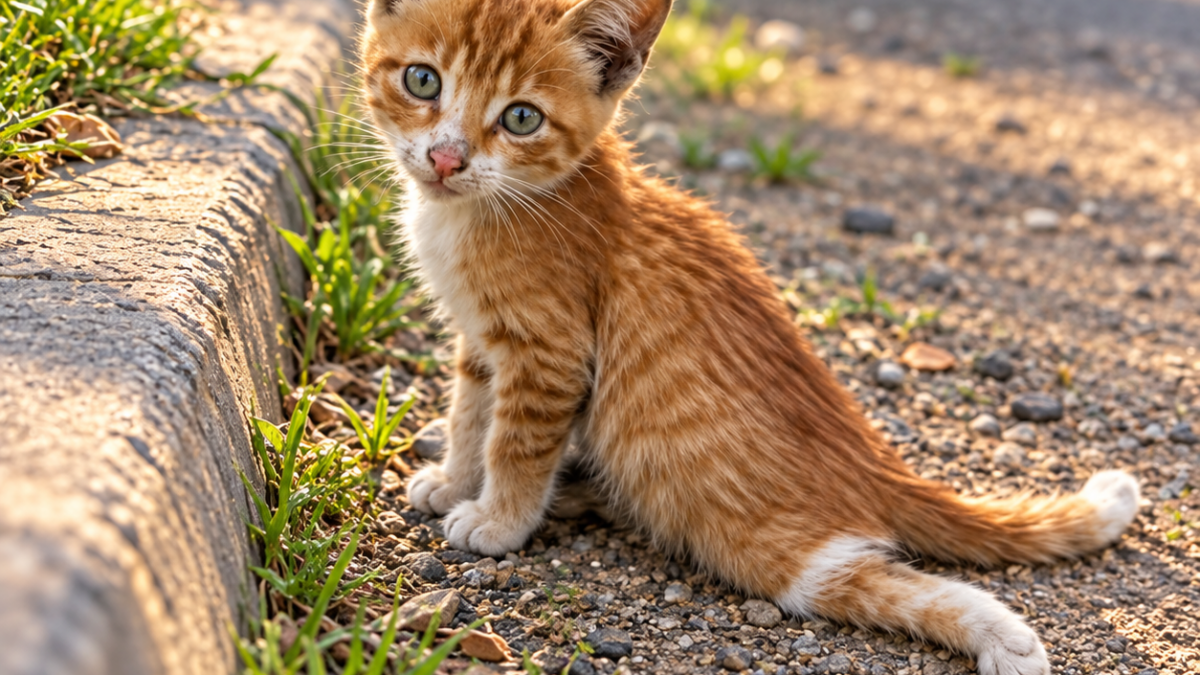
PART 2
He ate quickly.
Too quickly.
“Slow down,” I whispered.
He ignored me.
For the first time since finding him, I smiled.
“Fine. Be stubborn.”
That stubbornness would become one of the things I loved most about him.
The bladder care was harder.
The veterinarian had shown me how to position him and how to apply gentle pressure.
The first time I tried on my own, I was terrified.
Was I pressing too hard?
Not hard enough?
Was I hurting him?
Was his bladder actually empty?
Was I doing any of this correctly?
Wasim squirmed.
I stopped.
He made a small sound.
My heart broke.
“I’m sorry.”
I called the clinic.
They talked me through it again.
I tried.
Stopped.
Adjusted.
Tried again.
Eventually, I felt the change the vet had described.
Relief.
Not just for Wasim.
For me too.
I held him afterward and apologized even though he couldn’t understand the words.
“I know you hate this.”
He looked up at me.
“But I need you to stay alive.”
That became our routine.
Morning care.
Food.
Medication.
Cleaning.
Massage.
Rest.
Bladder care again.
More food.
More cleaning.
More massage.
Then the same thing the next day.
And the next.
People sometimes imagine rescue as the moment someone lifts an animal out of danger.
That is the beautiful part.
The dramatic part.
The part that photographs well.
But rescue is rarely one moment.
Rescue is repetition.
It is doing something uncomfortable because the animal needs it.
It is cleaning bedding late at night.
It is counting medication.
It is learning things you never thought you would need to know.
It is watching for tiny changes nobody else would notice.
And sometimes it is doing all of that while wondering whether anything is improving.
For weeks, Wasim’s back legs remained limp.
Sometimes they seemed worse.
The stiffness worried me.
During massage, I would gently move each leg, flexing the joints as I had been shown.
“Come on,” I would whisper. “Just give me something.”
Nothing.
I would touch his paw pads.
Nothing.
Stroke his leg.
Nothing.
Try again the next day.
Nothing.
Friends would ask about him.
“How’s the kitten?”
“He’s okay.”
“Is he walking?”
“No.”
“Can he move his legs?”
“Not really.”
They meant well.
But every time someone asked, I heard the question differently.
Is this working?
Are you doing all this for nothing?
Nobody actually said that.
The words existed mostly in my own head.
There were nights when I stared at Wasim sleeping and wondered what his future would look like.
Would he always need his bladder expressed?
Would the stiffness become permanent?
Would he spend his whole life pulling himself with his front legs?
Would he develop infections?
Would his skin become injured from dragging?
Would he ever run?
Would he ever jump?
I had no answers.
One evening, after a particularly difficult day, I sat beside him on the floor.
Wasim had eaten.
His bedding was clean.
His medication was finished.
His bladder was empty.
I should have felt satisfied.
Instead I felt exhausted.
“I wish you could tell me what you need,” I whispered.
Wasim blinked.
“You could make this easier.”
He blinked again.
I laughed quietly.
“Right. Very helpful.”
He shifted his front paws beneath his chest and pulled himself closer.
It took effort.
He dragged his back half behind him.
Then he rested one paw against my leg.
I froze.
He wasn’t trying to get food.
He wasn’t trying to escape.
He had moved toward me.
I put my hand down.
He sniffed it.
For the first time, instead of tensing when I touched his head, he leaned slightly into my fingers.
That moment changed something in me.
I had been measuring progress only through his legs.
But Wasim was recovering in other ways.
When I first found him, every touch made him tense.
He watched hands cautiously.
He did not know whether being picked up meant safety or danger.
Now he was beginning to seek contact.
That mattered.
The next evening, I started his massage.
He lay on his blanket.
I worked slowly along one back leg.
Usually he remained alert.
That night, his eyes began to close.
His breathing slowed.
Then I heard it.
A quiet vibration.
I stopped.
The vibration stopped too.
I touched him again.
The sound returned.
Wasim was purring.
I stared at him.
“You’re purring?”
One eye opened.
He looked annoyed that I had interrupted.
I laughed.
“I’m sorry.”
I continued the massage.
His purr became louder.
I had to look away for a second because my eyes filled with tears.
This kitten had been abandoned beside traffic.
His body had failed him.
Every day strangers handled him, pressed his abdomen, moved his stiff legs, gave him medicine and injections.
Yet he had decided that my hands were safe enough to purr beneath.
I understood then that trust was another kind of recovery.
And it was happening.
Slowly.
Quietly.
Day after day.
Not long after that, I noticed another change.
During bladder care, his bladder seemed different.
Less full.
At first I assumed I had misjudged the timing.
Then it happened again.
He had urinated a little on his own.
I didn’t celebrate immediately because I was afraid to believe it.
At the next veterinary appointment, I explained what I had noticed.
The vet examined him.
“That’s encouraging.”
That word again.
Encouraging.
“How encouraging?”
The veterinarian smiled slightly.
“It means there may be some neurological function returning.”
“Will he regain complete bladder control?”
“I can’t promise that.”
Of course.
No promises.
“But this is good?”
“Yes. This is good.”
I drove home feeling lighter than I had in weeks.
Wasim slept most of the way.
“You have no idea what you just did,” I told him.
He opened his eyes briefly.
“You went to the bathroom and made my entire week.”
He closed them again.
Our routines continued.
Nothing happened quickly.
Some days there was more bladder function.
Other days he still needed almost complete assistance.
Some days his legs seemed slightly looser.
Other days they felt stiff again.
Recovery did not move in a straight line.
That was one of the hardest things to accept.
I wanted each improvement to stay.
I wanted yesterday’s success to become today’s baseline.
But Wasim’s body had its own timetable.
Then came the movement I would never forget.
It was late afternoon.
Wasim was lying on his side while I massaged his back leg.
By then he usually purred through the routine.
I ran my fingers carefully along his paw.
Something moved.
I stopped.
I thought my hand had shifted.
I touched him again.
Nothing.
I waited.
Then one of his toes twitched.
My heart started pounding.
“Wasim.”
His ear moved.
I touched his paw again.
Another tiny movement.
It was almost nothing.
If I had looked away, I would have missed it.
But I saw it.
I felt it.
After weeks of silence from those legs, his body had answered.
I reached for my phone and called the veterinarian.
“There was movement.”
“What kind?”
“His paw. His toes. They moved during massage.”
“Voluntarily?”
“I don’t know. But they moved.”
The veterinarian told me not to get ahead of myself.
One twitch could be reflexive.
It did not prove that Wasim would walk.
It did not predict the extent of recovery.
I knew all of that.
But I didn’t care.
For the first time, those useless little paws had done something.
That night I barely slept.
Every few hours I checked on him.
Wasim, completely unimpressed by his own medical breakthrough, slept comfortably.
The next day there was no movement.
My excitement crashed.
I massaged him.
Nothing.
The next evening, nothing again.
I began wondering whether I really had imagined it.
Then, three days later, his paw twitched.
This time stronger.
“There you are,” I whispered.
Wasim purred.
From that point forward, the changes remained tiny but undeniable.
Sometimes his toes flexed.
Sometimes one leg shifted slightly when I touched it.
Sometimes there was no response for days.
But the absolute stillness was gone.
Something was happening.
Meanwhile, Wasim was growing.
The tiny dusty kitten became longer.
His face became more expressive.
His personality became impossible to ignore.
He loved food.
He loved attention.
And he was far more mobile than anyone expected.
His front body became incredibly strong.
He learned to pull himself quickly across blankets and rugs.
I would place him in one comfortable spot, turn around for a few minutes, and find him somewhere completely different.
“How did you get there?”
He would stare at me.
One afternoon, I heard something fall in the next room.
I rushed in.
Wasim was beside a small basket of toys.
The basket had been several feet away.
One toy was now on the floor.
He had hooked it with a front paw and dragged it down.
“You’re impossible.”
Wasim bit the toy.
I sat beside him.
He attacked it with both front paws.
Then his left hind leg moved.
Not a twitch.
A push.
Small.
Weak.
But purposeful.
I stopped breathing.
Wasim continued playing.
His leg shifted again.
I laughed.
Not a polite laugh.
A ridiculous, relieved laugh that made him look at me like I had lost my mind.
“You did that.”
He returned to his toy.
“You actually did that.”
That evening I wrote down everything I had seen.
I had started keeping notes because progress was too easy to miss.
When recovery happens slowly, your memory can betray you.
You forget how bad things were.
You become frustrated because today doesn’t look much different from yesterday.
But when I read my older notes, I could see it.
Week one: no movement.
Week three: severe stiffness.
Later: partial bladder emptying.
Then: paw twitch.
Then: toes flexing.
Then: slight voluntary leg movement.
Each step was small.
Together they formed a story.
Wasim was changing.
His emotional transformation was even more obvious.
He no longer feared being held.
He began seeking me out.
One morning, I sat on the floor organizing his medication.
Wasim was across the room.
He looked at me.
Then he started moving.
Front paw.
Pull.
Other paw.
Pull.
His body slid across the rug.
I watched him.
“Where are you going?”
He kept coming.
When he reached me, he pulled himself onto my leg.
It took effort.
His front paws gripped my clothing.
I supported his body.
He climbed halfway into my lap and settled there.
Then he began purring.
I didn’t move for several minutes.
This was the same kitten who had stiffened when I first lifted him from the road.
Now he had crossed an entire room just to sit with me.
“You chose me,” I whispered.
Wasim pressed his head against my stomach.
I scratched behind his ears.
“You really chose me.”
He had.
And that trust felt like something sacred.
As months passed, I adjusted the house around him.
I placed rugs where smooth floors made movement difficult.
I kept his food and water accessible.
I made sure his sleeping areas were soft.
I checked his skin.
I blocked places where he might get trapped.
I learned which surfaces helped him move best.
I stopped thinking of those changes as special accommodations.
They were simply part of our home.
Wasim adapted too.
He figured out routes.
He knew how to reach his favorite spots.
He knew exactly where I kept his food.
He knew which room received the best afternoon sunlight.
He knew where I usually sat.
And he knew that if he stared at me long enough, I would eventually pick him up.
At some point, visitors stopped seeing his disability before they saw him.
They noticed how demanding he was.
How curious.
How affectionate.
How stubborn.
“How does he move that fast?” someone asked once.
“Motivation,” I said.
At that exact moment, Wasim was racing—if that was the word—toward his food bowl.
His front paws worked rapidly.
His hindquarters followed.
And for several seconds, one back leg pushed faintly against the floor.
I smiled.
That tiny push would have meant nothing to someone who had never seen the beginning.
To me, it meant everything.
But not every day was hopeful.
There were setbacks.
There were days when his bladder function seemed worse again.
There were days when his legs stiffened.
There were moments when I worried about infection.
Whenever he seemed unusually quiet, fear came rushing back.
I became obsessed with small details.
Was he eating enough?
Drinking?
Was his bladder too full?
Did his urine look normal?
Was that leg more rigid today?
Was he moving less?
Caring for an animal with a chronic condition teaches you how quickly love can become vigilance.
You notice everything.
Sometimes too much.
One evening, Wasim refused part of his meal.
My heart dropped.
I watched him for an hour.
He seemed tired.
Immediately, every frightening possibility entered my mind.
I called the clinic.
They asked questions.
Was he vomiting?
No.
Was he responsive?
Yes.
Was his bladder emptying?
With help.
Temperature?
Normal.
They told me to watch him closely.
That night I barely slept.
Wasim, naturally, woke up hungry at an absurd hour and demanded food as though he had never caused me a moment of concern.
I sat on the floor watching him eat.
“You are going to destroy my nerves.”
He continued eating.
“Do you understand that?”
Nothing.
“Not even sorry?”
He looked up, then put his face back into the bowl.
I laughed.
Those were the moments that made everything bearable.
Wasim did not experience his life as a tragedy.
That realization changed the way I saw disability.
He didn’t wake up every morning grieving the legs he should have had.
He woke up wanting breakfast.
He wanted toys.
Warm blankets.
Attention.
Interesting smells.
He wanted to get from one side of a room to another because something had caught his attention.
If his body required a different method, he used a different method.
He did not compare himself with other cats.
People did that for him.
Wasim simply lived.
I began to understand that my job was not to force him into some idea of normal.
My job was to help him live safely, comfortably, and fully in the body he had while giving his nervous system every reasonable opportunity to recover.
That distinction mattered.
The goal was no longer, “Wasim must walk normally.”
The goal became, “Wasim must have a life worth living.”
And by that measure, he was succeeding spectacularly.
His bladder control continued improving little by little.
There were times when he could empty much more on his own.
He still required monitoring and assistance, but the situation was different from those first terrifying weeks when nothing happened without help.
His legs also became more responsive.
I continued massage.
He continued purring.
Our evening routine became one of my favorite parts of the day.
I would place him on a blanket.
He would stretch out.
I worked gently along his legs.
Sometimes his toes moved.
Sometimes a leg pulled slightly.
Sometimes he became bored and tried to attack my fingers.
“Physical therapy is not a game.”
He bit gently at my hand.
“Wasim.”
He grabbed my wrist with his front paws.
I laughed.
“Fine. Five-minute break.”
He had learned to trust my hands so completely that he could play with them.
I never forgot what that meant.
Nearly half a year after his rescue, I found myself looking through the first photographs I had taken of him.
I had avoided them for a while.
Seeing him in those early days hurt.
But that evening I opened them.
There he was beside the road.
Tiny.
Dirty.
Back legs dragging.
His face looked so serious.
Then I looked across the room at the cat he had become.
Wasim was lying on a clean blanket, grooming one front paw.
His coat was soft.
His body had filled out.
His eyes looked bright.
He noticed me watching him.
“What?”
He continued grooming.
I held the phone beside my face, comparing the image with the living animal in front of me.
The transformation was already enormous.
Not because he had become physically perfect.
He hadn’t.
But he looked safe.
There is a visible difference between an animal surviving and an animal belonging.
The roadside kitten looked like every second demanded effort.
The Wasim in my living room looked annoyed because I was interrupting his grooming.
That was progress.
One day, someone who knew his story said something that stayed with me.
“He’s lucky you found him.”
I looked down at Wasim.
People said that often.
I understood what they meant.
But the sentence never felt complete.
“Yes,” I said. “But I think I was lucky too.”
They smiled politely, probably thinking I was being sentimental.
I wasn’t.
Wasim had changed the way I understood patience.
Before him, I thought patience meant waiting.
With Wasim, patience meant working without knowing whether the work would produce the result you hoped for.
It meant doing today’s massage even though yesterday’s showed no improvement.
It meant helping his bladder again even though you wished desperately he could do it alone.
It meant celebrating movement so small nobody else would care.
It meant loving an animal without demanding that he recover in exchange.
That last lesson was the biggest one.
Love could not be conditional on Wasim walking.
I had to be willing to care for him even if nothing else improved.
Once I accepted that, every improvement became a gift rather than a requirement.
Months continued passing.
Wasim became stronger through his shoulders and chest.
His hind legs still trailed much of the time, but he had more control over his body.
He could turn more easily.
Position himself more comfortably.
Sometimes push slightly.
His balance while eating improved.
I no longer needed to support him the same way every meal.
The first time I noticed that, I almost intervened automatically.
Then I stopped.
He was holding himself.
Not perfectly.
But enough.
I moved my hand away.
Wasim kept eating.
I stared.
“You don’t need me for this?”
He ignored me.
I slowly sat back.
It was strange how happy independence could make me and how sad it could make me at the same time.
For months, supporting him had been necessary.
Now, in one tiny area of life, he needed less help.
That was exactly what I wanted.
Still, my hand felt strangely empty.
“You’re growing up.”
Wasim finished eating and immediately demanded something else.
The emotional moment lasted about five seconds.
That was probably for the best.
Around the anniversary of the day I found him, I became more aware of time.
Ramadan was approaching again.
The season itself brought back memories.
I could see that dusty road.
Feel the heat.
Hear the traffic.
Remember the way his body felt in my hands when I first lifted him.
One year.
Could it really be almost one year?
I started thinking about the phrase people use in rescue stories.
“Before and after.”
Before Wasim.
After Wasim.
It sounded simple.
But between those two images lived thousands of moments.
Hundreds of bladder expressions.
Dozens of appointments.
Medication.
Supplements.
Vitamin injections.
Massage after massage.
Clean blankets.
Worry.
Hope.
Tears.
Laughter.
Tiny victories.
Setbacks.
Late-night checks.
Early morning meals.
There was no single day when Wasim became the cat he was now.
Transformation had happened quietly.
So quietly that I almost missed how far we had come.
One afternoon, I placed Wasim on the floor while I cleaned his bedding.
He saw something across the room.
A toy.
He started toward it.
His front paws pulled.
His body followed.
One hind leg pressed against the floor.
Then the other shifted beneath him.
He moved faster.
Not walking in the way a healthy cat would.
Not even close.
But he had control.
Direction.
Confidence.
Halfway to the toy, he stopped and looked at me.
I stared back.
“What?”
He continued.
When he reached it, he attacked the toy with both front paws.
I sat down.
For some reason, that ordinary scene hit me harder than the first paw twitch.
Wasim was not waiting to be rescued anymore.
He was busy living.
I thought about the person who left him.
I had spent months trying not to think about them.
Sometimes anger returned.
It was difficult not to feel it.
Who leaves a paralyzed baby beside traffic?
What kind of person sees an animal unable to walk and decides the road is acceptable?
Maybe they felt overwhelmed.
Maybe they thought he would die anyway.
Maybe they considered him useless.
Maybe they didn’t care.
I would probably never know.
For a while, I imagined what I would say if I ever met them.
Look at him now.
Look at the kitten you threw away.
Look at what you decided wasn’t worth saving.
That anger could have consumed the story.
But Wasim taught me something about that too.
The person who abandoned him had already received the worst possible judgment.
They had been wrong.
Wrong about his value.
Wrong about his future.
Wrong if they believed paralysis meant his life was over.
Wasim’s revenge, if I could call it that, was not punishment.
It was survival.
Every comfortable night was revenge.
Every bowl of food.
Every purr.
Every toy he chased.
Every time he leaned into a loving hand.
Every morning he woke up safe.
The best revenge against abandonment was belonging so completely that the abandonment became only the first chapter.
I didn’t need anything more dramatic than that.
As the one-year mark approached, I scheduled another veterinary evaluation.
I was nervous.
Even after all that time, veterinary appointments brought back the anxiety of that first day.
The veterinarian who examined Wasim had access to the earlier notes.
They checked his bladder function.
His reflexes.
His muscle tone.
His hind legs.
They watched him move.
I stood nearby.
“Well?” I asked.
“There’s definitely improvement.”
Those words felt better than I expected.
“How much?”
“He has more function than he did initially. His bladder control has improved. There’s more response in the hind limbs.”
“Will he ever walk normally?”
The veterinarian paused.
A year earlier, that pause would have terrified me.
Now I understood it.
“We still can’t predict the final outcome.”
I smiled.
“Of course.”
“But look at him.”
We both looked.
Wasim was trying to climb out of his carrier because he had decided the appointment was over.
The veterinarian laughed.
“He seems to have opinions.”
“He has many.”
“Quality of life looks good.”
That mattered more than anything else said that day.
Quality of life.
Good.
I had spent a year afraid of what Wasim might never have.
Normal movement.
Full independence.
A body without limitations.
But there he was, furious about being in a carrier, curious about the room, interested in everything around him.
He was not merely alive.
He was engaged with life.
On the drive home, I kept thinking about that.
He is happy.
Such a simple sentence.
So much work behind it.
When we got home, I opened the carrier.
Wasim pulled himself out immediately.
“You could at least pretend you missed me.”
He kept going toward his favorite blanket.
I followed.
“You know they said you’re doing well?”
He settled down.
“I assume that means you’ll become even more demanding.”
He started grooming.
I sat beside him.
“Thank you.”
That got his attention.
He looked at me.
“I mean it.”
I scratched his head.
“Thank you for staying.”
He closed his eyes.
I know it sounds strange to thank an animal for surviving.
Survival isn’t always a conscious decision.
Wasim didn’t understand prognosis.
He didn’t know what paralysis meant.
He didn’t know that people worried about whether his body would recover.
But every day, he participated in his own life.
He ate.
Played.
Adapted.
Trusted.
Tried.
And in doing those things, he gave all of us reasons to keep trying too.
The anniversary arrived quietly.
There was no party.
No crowd.
No dramatic announcement.
Just another morning in our home.
I woke up.
Wasim was awake before me.
Naturally.
He wanted breakfast.
“Good morning.”
He looked toward the food.
“Yes, I know.”
I prepared his meal.
He moved toward his usual spot.
As I watched him, an image flashed through my mind.
Two-month-old Wasim dragging himself through roadside dust.
The contrast was almost unbearable.
His coat now was clean.
His body stronger.
His eyes calm.
He knew where food would come from.
He knew nobody would take it away.
He knew the hands approaching him would help.
After breakfast, I sat beside him.
He moved closer.
I began the massage routine we had repeated hundreds of times.
My fingers worked gently along his hind leg.
Wasim stretched.
Then he purred.
I smiled.
“Do you remember when you hated this?”
The purr continued.
“You used to look at me like I was torturing you.”
One paw moved slightly.
I laughed.
“Yes. I know. I’m annoying.”
I scratched under his chin.
His head lifted.
He leaned harder into my hand.
That was when the entire year seemed to collapse into one moment.
The road.
The clinic.
The diagnosis.
The full bladder.
The stiff legs.
The first meal I had to hold him through.
The fear.
The medications.
The vitamin injections.
The massages.
The first purr.
The first bladder improvement.
The first twitch.
The first push.
The first time he crossed the room just to sit against me.
All of it led here.
Not to a miracle ending where Wasim suddenly became a completely able-bodied cat.
Something better.
A truthful ending.
A little cat who had once been treated as though his life had no value was now surrounded by evidence that it did.
Wasim still had limitations.
His hind legs were not normal.
He still required attention and care.
Some things remained uncertain.
But uncertainty no longer frightened me the way it once had.
Because I knew something I had not known in the beginning.
A good life does not require a perfect body.
Wasim proved that every day.
He explored.
He played.
He rested in sunlight.
He looked out windows.
He argued about food.
He interrupted whatever I was doing when he wanted attention.
He found ways to move that worked for him.
And when his body improved, we celebrated.
When it didn’t, we adjusted.
That was our life.
There was one particular afternoon, almost exactly a year after his rescue, that I will never forget.
Sunlight came through the window and fell across the floor.
Wasim had been sleeping.
Then he woke and noticed me sitting nearby.
He lifted his head.
I held out my hand.
There was a time when that gesture would have made him tense.
Now he came toward it.
No hesitation.
He moved across the floor confidently.
When he reached me, he pushed his forehead directly into my palm.
His eyes closed.
The purring started.
I scratched the side of his face.
“You trust people too easily now.”
He leaned harder.
“Actually, no. You trust the right people.”
His paw rested against my wrist.
I looked down at it.
That paw had once trembled while pulling his broken little body through dirt beside speeding cars.
Now it rested gently against someone he trusted.
I swallowed.
“You made it.”
Wasim opened his eyes.
I don’t know why those three words affected me so much.
Maybe because I finally understood what “making it” meant.
It did not mean becoming the cat he would have been if nothing bad had ever happened.
We could never rewrite his beginning.
It meant reaching a place where his past no longer controlled every second of his present.
It meant safety lasted longer than danger.
Kindness lasted longer than abandonment.
Comfort lasted longer than pain.
Trust became stronger than fear.
That was victory.
I often think about people who see an injured animal and immediately focus on cost, inconvenience, or imperfection.
I understand that not every case has the same outcome.
I understand that love cannot cure everything.
Sometimes medicine reaches its limits.
Sometimes the kindest decision is not the one we hoped for.
But Wasim taught me never to confuse disability with the absence of possibility.
On the roadside, he looked broken.
At the clinic, his list of problems looked overwhelming.
Paralyzed back legs.
Urinary dysfunction.
Stiffness.
Weakness.
Uncertain prognosis.
It would have been easy to describe him only by what didn’t work.
But a medical list cannot tell you everything important about an animal.
It couldn’t tell us that Wasim would become stubborn.
That he would love food.
That he would learn to trust hands.
That he would purr during his massages.
That he would discover toys.
That he would become strong enough to pull himself everywhere he wanted to go.
That his bladder function would improve.
That movement would slowly return.
That he would become curious and affectionate and occasionally impossible.
Those things were also part of his prognosis.
We just couldn’t see them on the first day.
When I remember his rescue now, I don’t think first about the paralysis.
I think about the way he kept looking up.
Cars passed.
People passed.
His back legs didn’t work.
His front paws trembled.
And still he lifted his head.
Still looked.
Still waited.
Maybe I’m giving that moment more meaning than a kitten could consciously understand.
Maybe he wasn’t “hoping” in the human sense.
But I know what I saw.
A tiny animal who had not stopped trying.
He had dragged himself forward until someone noticed.
I’m grateful I happened to be the one who did.
There are still nights when Wasim sleeps beside me and I look at him longer than necessary.
His breathing is slow.
His body relaxed.
Nothing in his posture says danger.
Nothing says he expects to be moved or abandoned.
Sometimes one hind leg stretches slightly while he sleeps.
Whenever that happens, I smile.
I remember begging those legs for the smallest response.
“Give me something.”
Now even an unconscious movement feels like an answer from the past.
You wanted something.
Here it is.
But Wasim gave me far more than movement.
He taught me to see progress differently.
Before him, I thought progress was dramatic.
A huge change.
A clear breakthrough.
With Wasim, progress was often almost invisible.
One drop of urine passed without help.
One softer muscle.
One tiny twitch.
One day without fear.
One purr.
One step toward a hand instead of away.
One ordinary meal eaten with less support.
One new corner of the room explored.
One more day.
Then another.
Then another.
A year of tiny changes became a transformed life.
People sometimes ask what I think saved Wasim.
Veterinary care mattered.
Medication mattered.
Supplements mattered.
B12 injections mattered.
Massage and physical support mattered.
Bladder management was essential.
But if I had to name the thing that held all of those pieces together, I would say consistency.
Nothing we did once would have been enough.
Wasim needed care again tomorrow.
Then the next day.
Then the next.
That can be difficult for people to understand when they see the final result.
A rescue transformation looks dramatic when you put the first image beside the last.
But the space between those images is mostly ordinary work.
I think that is what makes the ending more meaningful.
There was no magical morning.
There were hundreds of normal mornings.
And together they changed everything.
One afternoon, near the end of that first year, I found Wasim trying to reach a place I had deliberately made difficult for him to access.
“What are you doing?”
He continued.
“No.”
Pull.
“Wasim.”
Pull.
“That is not for you.”
He looked back at me.
Then continued.
I laughed.
“You almost died beside a road and now your biggest problem is that I won’t let you climb somewhere ridiculous.”
He kept trying.
I picked him up.
Wasim protested.
“Absolutely not.”
He twisted toward the forbidden area.
“No.”
He gave me a look of pure betrayal.
I started laughing again.
That moment was everything I wanted for him.
Not gratitude.
Not solemnity.
Normal problems.
I wanted Wasim’s world to become so safe that he could be annoyed by rules.
So comfortable that he could be mischievous.
So certain of tomorrow that he could waste energy trying to get somewhere he wasn’t allowed.
And that is exactly what happened.
If the person who abandoned him could see him now, I wonder what they would think.
Would they recognize him?
Probably not.
The frightened, dusty baby they left behind had become a confident young cat.
Maybe they would be surprised he survived.
Maybe they would regret what they did.
I don’t know.
And I no longer care very much.
Their role in Wasim’s life ended on that roadside.
Everything after that belonged to him.
That is the ending I prefer.
Not revenge built from cruelty.
Revenge built from proof.
Proof that he mattered.
Proof that a body with limitations could still contain enormous joy.
Proof that patience could change a life.
Proof that being abandoned once did not mean being unwanted forever.
Wasim had the last word simply by surviving long enough to become happy.
One evening, a year after his rescue, I went through our normal routine.
Food.
Bladder check.
Clean bedding.
Massage.
Wasim purred.
When I finished, I placed him on his favorite blanket.
He looked toward me.
I started to walk away.
Then I heard the soft sound of his front paws moving across the floor.
I turned.
He was following me.
I waited.
Wasim pulled himself forward.
One back leg shifted.
Then the other moved slightly beneath him.
He reached my feet.
I bent down.
“Well?”
He lifted his head.
I picked him up.
Wasim immediately settled against my chest.
I could feel his purr through my shirt.
For a long time, I simply stood there holding him.
I thought about that first lift beside the road.
Back then, his body had been rigid with uncertainty.
Now he melted into my arms.
Same kitten.
Same pair of hands.
A completely different world.
“You’re home,” I whispered.
His eyes closed.
There was no dramatic music.
No crowd cheering.
No perfect cure.
Just a human holding a cat who knew he was safe.
That was enough.
More than enough.
Today, Wasim is not defined by the roadside.
He is not defined by paralysis.
He is not defined by the person who left him.
He is defined by the life he built afterward.
When he wants attention, he asks for it.
When he wants food, everyone knows.
When he wants to explore, he finds a way.
When he is tired, he sleeps deeply because he no longer needs to remain alert for danger.
And when a gentle hand reaches toward him, he does not shrink away.
He leans into it.
That may be my favorite part of his entire transformation.
Not the improved bladder control.
Not the returned movement.
Not even the stronger body.
Trust.
Wasim learned that hands could mean something other than abandonment.
He learned they could lift him away from danger.
Hold him steady while he ate.
Give medicine.
Massage stiff legs.
Clean him.
Comfort him.
Play with him.
Scratch beneath his chin.
And eventually, he began reaching for those hands himself.
Sometimes I think that was the bravest thing he ever did.
His body had been injured before I knew him.
But trust is different.
Trust requires risk.
Wasim took that risk.
And we spent the next year proving it was worth taking.
If I could go back to the roadside and speak to the tiny kitten I found there, I know exactly what I would say.
I would not promise him that he would walk normally.
I still could not make that promise.
I would not promise him that recovery would be easy.
It wasn’t.
I would not tell him everything would become perfect.
Life rarely works that way.
I would tell him something simpler.
Keep pulling yourself forward.
Someone is coming.
Soon you will sleep somewhere soft.
Soon you will eat without worrying about where the next meal comes from.
Soon someone will learn how to care for your bladder.
Soon those painful, stiff legs will be touched gently every day.
Soon your body will surprise us.
Soon you will purr.
Soon you will discover toys.
Soon you will cross a room because you want to sit in someone’s lap.
Soon you will know your own name.
Soon you will have favorite places.
Soon the sound of footsteps will make you curious instead of afraid.
Soon a hand will reach down, and instead of wondering whether it will hurt you, you will push your face into it.
And one day, almost a year from now, someone will look at you and barely recognize the frightened baby from the roadside.
Not because every scar disappeared.
But because happiness changed your face.
That is Wasim’s story.
A two-month-old kitten was abandoned beside traffic with both back legs paralyzed.
He could not properly empty his own bladder.
His legs were becoming stiff.
He needed help to balance while eating.
Nobody knew how much function he would regain.
Nothing about his future was certain.
Except one thing.
Once I picked him up, he would never have to face it alone again.
That promise turned out to be enough.
We took the uncertain days one at a time.
When there was no movement, we massaged.
When there was stiffness, we kept working gently.
When his bladder needed help, we helped.
When he was frightened, we moved slowly.
When he trusted, we protected that trust.
When his paw twitched, we celebrated.
When nothing happened the next day, we continued anyway.
When he purred, I knew we were healing more than his body.
When he started moving toward me on his own, I knew he had begun believing in home.
A year later, Wasim had become everything the roadside said he never should have had the chance to become.
Healthy enough to play.
Strong enough to explore.
Confident enough to be stubborn.
Loved enough to trust.
His body still carried the story of what happened to him.
But his eyes carried a different story.
They no longer searched passing strangers for rescue.
They looked at familiar people expecting affection.
And every time Wasim leans into my hand, I think about the day I first saw him.
Tiny front paws trembling.
Back legs dragging through the dust.
Traffic rushing beside him.
Still pulling.
Still looking up.
He did not know where he was going.
He only knew he had to keep moving.
Maybe that is why his story stays with me.
Because sometimes survival is not one heroic act.
Sometimes survival is moving forward one painful inch when you have no proof that anything better is waiting.
Wasim kept moving.
And eventually, something better found him.
One year after I carried him away from that road, I sat beside him on the floor.
He moved toward me with the confidence of an animal who knew exactly where he belonged.
I held out my hand.
He pressed his forehead into my palm.
His purr filled the quiet room.
I ran my fingers gently behind his ears.
Outside, somewhere beyond the walls, cars moved along roads just like the one where I had found him.
Inside, Wasim was warm.
Fed.
Safe.
Loved.
I looked down at him.
“You made it, little man.”
He opened his eyes.
Then he pushed his face harder against my hand because apparently the scratching had stopped for too long.
I laughed.
“All right.”
I kept scratching.
Wasim closed his eyes again.
And in that quiet moment, I finally understood that I did not need a more dramatic ending.
The kitten who once had to drag himself beside traffic just to stay alive no longer had anywhere he needed to escape from.
He had nothing left to prove.
He was already home.
And this time, nobody was leaving him behind.
I thought reaching the one-year mark would feel like the end of Wasim’s story.
It didn’t.
If anything, it felt like the first time I truly understood where his story had begun.
For months, I had measured our lives by medical milestones.
Was his bladder improving?
Were his legs less stiff?
Could he move a paw?
Was he gaining strength?
Could he balance while eating?
Was there more sensation in his back feet?
Every small change had become important enough to shape my entire day.
But sometime around that first anniversary, I began realizing something else.
I wasn’t checking on a patient anymore.
I was living with Wasim.
There was a difference.
A patient was something fragile you watched constantly.
Wasim was now the cat who woke me because breakfast was late.
The cat who had favorite places in the house.
The cat who knew exactly which cabinet contained food.
The cat who complained if I moved him from a warm patch of sunlight.
The cat who could recognize my footsteps before I even entered the room.
The cat who had somehow learned that staring at me long enough usually resulted in getting whatever he wanted.
I had spent so much time trying to save his life that I almost missed the moment when he began simply living it.
One morning, I woke to a scratching sound.
I opened my eyes.
Nothing.
Then I heard it again.
Scratch.
Pause.
Scratch.
“Wasim?”
Another scratch.
I got out of bed and followed the sound.
He was near the doorway, trying to pull a small cloth toward himself.
I stared at him.
The cloth had originally been several feet away.
“How long have you been doing this?”
Wasim grabbed the edge with his teeth.
“You don’t even need that.”
He continued pulling.
I laughed.
“You have three blankets.”
He dragged the cloth another inch.
Apparently, three blankets were not enough.
I sat down beside him.
Wasim finally got what he wanted, turned awkwardly, then arranged himself directly on top of his stolen treasure.
I stared at him.
“Happy now?”
He began washing one paw.
That was my answer.
Moments like that became increasingly common.
Wasim was developing preferences.
Strong ones.
And watching that happen made me strangely emotional.
When I first found him, he had no control over anything.
Not where he slept.
Not what happened to his body.
Not whether a car passed dangerously close.
Not whether anyone stopped.
Not even whether he could empty his own bladder.
Now he was deciding which blanket belonged to him.
Which toy he wanted.
Which corner of the room was comfortable.
When he wanted attention.
When he had finished tolerating me.
Those tiny acts of choice meant freedom.
And freedom was something the roadside had almost stolen from him.
His physical therapy continued.
By now Wasim recognized the routine immediately.
I would spread out his blanket.
He would look at me.
“Don’t give me that face.”
The face continued.
“Yes, we’re doing it.”
I would place him comfortably on his side and begin gently working his legs.
By then I knew every little difference in them.
Where one muscle stayed tighter.
Which paw responded more often.
How far each joint moved comfortably.
Where he sometimes showed sensation.
I knew his body almost like a map.
One evening, while I was flexing his left hind leg, he suddenly pulled it away from me.
I froze.
Wasim looked equally surprised.
I touched the same area.
He pulled again.
“Oh.”
I tried once more.
“Wasim.”
His leg moved away.
I laughed.
“You’re telling me to stop?”
He tried to turn around and bite my fingers.
Not hard.
Just enough to express an opinion.
I leaned back.
“You are telling me to stop.”
For anyone else, an annoyed cat resisting physical therapy might have seemed like a problem.
For me, it was beautiful.
Months before, I could touch those legs and receive almost no response.
Now Wasim was using one to complain.
“Fine,” I said. “You win.”
He settled back down.
“But tomorrow we’re doing it again.”
He stared at me.
“You can complain tomorrow too.”
His tail moved slightly.
I took that as an agreement.
The improvements remained inconsistent.
That was something I had learned to accept.
There were days when Wasim seemed stronger.
Days when his hindquarters participated more actively in movement.
Then there were days when he dragged himself almost exactly as he had weeks earlier.
In the beginning, those fluctuations devastated me.
Every bad day felt like losing something.
Now I understood that neurological recovery could be unpredictable.
A weaker day did not erase the stronger days before it.
That lesson helped me with more than Wasim.
It taught me that progress should not always be judged from one moment.
Sometimes you have to step back.
Look at the month.
Look at six months.
Look at a year.
If I had judged Wasim by one difficult morning, I might have thought nothing had changed.
If I compared him with the kitten beside the road, the difference was enormous.
His bladder was one of the clearest examples.
There was a time when everything depended on me.
Several times each day, I had to help him.
Missing that care was dangerous.
I lived with the constant awareness that his body might not tell him what it needed.
Slowly, however, he began doing more for himself.
Not perfectly.
Not always.
But enough that the burden changed.
The first time I realized he had emptied his bladder almost completely without assistance, I checked twice because I didn’t trust myself.
Then I sat beside him.
“You’re becoming independent.”
Wasim was eating at the time.
He did not care about my emotional speech.
“You know, some gratitude would be appropriate.”
He continued chewing.
“Nothing?”
He looked up briefly.
Then continued eating.
I smiled.
“Exactly.”
Normality.
That was what I wanted.
I didn’t want Wasim spending his life as an inspirational story.
I wanted him busy being a cat.
There is something unfair about expecting rescued animals to behave like they understand the emotional significance of their survival.
Wasim didn’t owe anybody gratitude.
He didn’t owe us constant sweetness.
He was allowed to be impatient.
Mischievous.
Demanding.
Stubborn.
Even annoying.
Actually, he became extremely good at annoying me.
Especially around food.
If his meal was late, he would move toward the area where I prepared it and stare.
If staring failed, he made noise.
If that failed, he moved closer.
Once I caught him trying to pull at something he definitely should not have touched.
“Wasim.”
He stopped.
“What are you doing?”
He looked directly at me.
Then resumed.
“Wasim.”
He continued.
I walked over and moved the object away.
He looked offended.
“You’re welcome.”
That look became familiar.
I sometimes wondered what the terrified kitten from the roadside would think if he could see himself now.
Would he recognize this confident creature?
Would he believe there would come a day when his biggest concern was that someone moved an interesting object out of reach?
Maybe not.
I barely believed it myself.
One afternoon, a visitor sat on the floor near Wasim.
She had never met him before.
I watched carefully because I always paid attention to how he reacted to new people.
She didn’t reach for him immediately.
She simply placed one hand on the floor.
Wasim looked at her.
Then at the hand.
For several seconds, he remained still.
I thought about the first weeks after his rescue.
Back then, unfamiliar touch made him tense.
Now he moved closer.
Slowly.
He sniffed her fingers.
She waited.
Then Wasim lowered his head beneath her palm.
She looked at me.
“He wants me to pet him?”
I smiled.
“Yes.”
She scratched gently between his ears.
The purr started almost immediately.
Her eyes filled.
“I can’t believe this is the same kitten.”
Neither could I.
There were photographs proving it.
Videos.
Medical notes.
My own memories.
But emotionally, it was difficult to connect them.
The animal leaning into a stranger’s hand seemed too confident to be the abandoned baby who once looked at every approaching person with uncertainty.
That was when I realized Wasim’s trust had grown beyond me.
He had not only learned to trust one rescuer.
He had learned that the world could contain safe people.
That might have been an even bigger victory.
Later that evening, after everyone left, I sat with him.
“You were charming today.”
He looked at me.
“Don’t let it go to your head.”
Wasim pushed his face into my hand.
“Too late.”
I scratched his chin.
His eyes closed.
I thought about how easy it would have been for his life to end before any of this happened.
That thought still came unexpectedly.
Sometimes while he slept.
Sometimes while he ate.
Sometimes during completely ordinary moments.
I would suddenly picture the road.
The cars.
His tiny body.
And for a second, I would imagine the version of the day where I kept driving.
I hated that thought.
But I allowed myself to think it because it reminded me why noticing matters.
The world is full of suffering that becomes invisible because people are busy.
Someone assumes somebody else will help.
Someone believes an animal is already dead.
Someone thinks they don’t have time.
Someone decides the situation looks too complicated.
I was not extraordinary for stopping.
I simply stopped.
Everything else came after.
And the difference between stopping and continuing to drive had become an entire life.
Wasim’s life.
Months after his first anniversary, I found myself talking with the veterinarian again about his long-term care.
We discussed maintaining mobility.
Watching his bladder.
Keeping his weight healthy because extra weight could make movement harder.
Protecting his skin.
Monitoring him for urinary problems.
Making sure his environment remained accessible.
I listened carefully.
Then I asked the question I always asked.
“Do you think he’ll improve more?”
The veterinarian smiled.
“You still ask that?”
“I probably always will.”
“It’s possible. But you know the more important question now.”
I did.
“Is he happy?”
The vet nodded.
I looked at Wasim.
He was attempting to escape from the examination table.
“Yes.”
That answer required no hesitation.
He was happy.
Not every second.
No animal is.
He disliked some treatments.
He disliked being told no.
He disliked waiting for meals.
He disliked the carrier.
But happiness isn’t the absence of inconvenience.
It is the presence of enough comfort, security, stimulation, affection, and choice that life remains something worth engaging with.
Wasim engaged with everything.
Sometimes too enthusiastically.
At home after that appointment, I placed him on the floor.
He immediately headed away from me.
“That’s the thanks I get?”
He kept moving.
“Excellent. Very touching reunion.”
He disappeared around the corner.
A few minutes later, I heard something.
I followed.
He was playing.
Of course.
I watched without interrupting.
His front paws caught the toy.
His body twisted.
One hind leg pushed slightly.
His entire body shifted.
He attacked again.
There had been a time when I watched his paws waiting for the smallest twitch.
Now I could watch him play without analyzing every movement.
That felt like freedom for me too.
Caring for Wasim had changed my own relationship with fear.
At first, fear was everywhere.
I feared losing him.
Feared infection.
Feared making a mistake.
Feared his paralysis becoming worse.
Feared that his improvement would stop.
Feared allowing myself to hope too much.
Over time, those fears became quieter.
Not because all risks disappeared.
Because life grew larger than them.
There were too many good things to notice.
Wasim sleeping with his paws stretched forward.
Wasim grooming himself.
Wasim staring out the window.
Wasim recognizing the sound of food preparation from another room.
Wasim choosing someone’s lap.
Wasim purring before my hand even touched him.
Those moments filled the spaces fear used to occupy.
One night, I woke unexpectedly.
The room was dark.
I reached toward the place where Wasim usually slept.
He wasn’t there.
Immediately I was awake.
“Wasim?”
Nothing.
I turned on a light.
Empty blanket.
My heart started pounding.
I checked the nearby area.
Nothing.
“How did you—”
Then I heard movement.
He had somehow made his way farther across the room than I expected and settled beneath a piece of furniture in a spot he apparently considered superior.
I found him staring at me sleepily.
“You nearly killed me.”
He blinked.
“You can’t disappear like that.”
Another blink.
“I thought something happened.”
Wasim put his head back down.
I sat on the floor and laughed quietly.
A year earlier, I worried because he couldn’t move.
Now I worried because he could move farther than expected.
Progress had a sense of humor.
I reached beneath and scratched his head.
“Fine. Sleep there.”
He purred.
“But warn me next time.”
He did not.
Of course.
As time passed, people who learned Wasim’s story often wanted a simple answer.
“Can he walk now?”
I understood why.
It was the obvious question.
But I started wishing people would ask something else.
“Does he enjoy his life?”
Because walking was only one measurement.
Wasim’s recovery could not be reduced to whether he moved exactly like another cat.
Yes, function had returned.
Yes, there were improvements no one could deny.
But his greatest success was not becoming less disabled.
It was becoming more alive.
He had a relationship with his environment.
Preferences.
Routines.
Affection.
Curiosity.
Security.
Those things mattered just as much as muscles and nerves.
Maybe more.
One evening, I sat beside the window while Wasim watched outside.
He loved that spot.
There were birds sometimes.
People walking.
Shadows moving.
Sounds that made his ears turn.
That evening, the street was particularly busy.
Cars passed in the distance.
I watched his face.
He seemed completely calm.
I wondered whether sounds like that reminded him of anything.
Probably not in the way humans remember.
Maybe the road existed in his body somewhere.
A sound.
A smell.
A feeling.
I would never know.
Wasim turned away from the window and looked at me.
Then he moved closer.
I held out my hand.
He rubbed his cheek against it.
I smiled.
“You know what I love about you?”
He continued rubbing.
“You don’t care what happened yesterday.”
That wasn’t entirely true scientifically, of course. Animals can carry trauma and associations.
But Wasim did not construct his identity around his worst day.
Humans do that sometimes.
Something terrible happens, and years later we still introduce ourselves internally through the wound.
Wasim seemed to live differently.
The road was something that happened.
It was not who he was.
Who was he?
He was Wasim.
The cat who wanted breakfast.
The cat who liked that window.
The cat who stole blankets.
The cat who complained during therapy.
The cat who purred when someone scratched under his chin.
Maybe that was another thing he taught me.
A terrible beginning does not have to become a permanent identity.
One afternoon, while cleaning his old supplies, I found the tiny cloth I had wrapped him in on the day of his rescue.
I hadn’t seen it in months.
I held it in my hands.
It looked unbelievably small.
Wasim had once fit inside it.
I sat down.
Memories came back so clearly that I could almost feel his weight again.
Or rather, his lack of weight.
That frightened little body.
The rigidity when I first lifted him.
His fast breathing.
His eyes tracking every movement.
I looked toward him.
Wasim was sprawled comfortably nearby.
“You were this small.”
He opened one eye.
I held up the cloth.
“This was you.”
He closed his eye again.
I laughed.
“You’re not sentimental at all.”
I folded it carefully.
I thought about throwing it away.
Instead, I kept it.
Not because I wanted to remember his suffering.
Because I wanted proof of distance.
Sometimes when life changes slowly, you need an object from the beginning to understand how far you have traveled.
That cloth was mine.
The next time Wasim had a difficult day, I remembered it.
His legs seemed stiff again.
He was less active.
Nothing alarming, but enough to make the old worry return.
I caught myself thinking, We should be farther along.
Then I stopped.
Farther than what?
Farther than the kitten wrapped in that tiny cloth?
We were already unimaginably far.
I sat beside Wasim.
“Sorry.”
He looked at me.
“I get impatient.”
He blinked.
“You don’t.”
That wasn’t completely true either.
Wasim was extremely impatient about dinner.
But about recovery?
He lived at the speed his body allowed.
Maybe humans could learn from that.
That evening, instead of focusing on what his legs weren’t doing, I noticed what was happening.
He ate well.
He sought affection.
He emptied part of his bladder independently.
He played for several minutes.
He slept comfortably.
It had been a good day.
A very good day.
And I almost missed it because I was comparing him with an imaginary future.
That realization stayed with me.
From then on, I tried to hold two things at once.
Hope for improvement.
Gratitude for the life he already had.
Those ideas did not have to compete.
I could want more function for Wasim without treating his current life as incomplete.
I could hope his nerves continued healing while loving him exactly as he was.
That became the foundation of everything afterward.
There would still be appointments.
Still be care.
Still be uncertain days.
But Wasim did not need to earn his place in our home through recovery.
He had already earned nothing.
Because belonging was not a prize.
It was simply his.
One day, I watched him approach another person and put his head beneath their hand.
I remembered the roadside.
And suddenly I understood his transformation in the simplest possible way.
On that first day, Wasim saw an approaching hand and had no idea what it meant.
Now he saw a hand and expected kindness.
That was the entire story.
Everything else—the medication, massages, injections, bladder care, small movements, veterinary visits—had built the physical bridge.
But trust was the place on the other side.
I crouched beside him later.
“You know something?”
Wasim looked at me.
“You won.”
He moved closer.
“They left you with almost nothing.”
I scratched his cheek.
“But look at you.”
His eyes closed.
“You got the whole life anyway.”
Wasim began purring.
That sound still affected me.
Even after hearing it thousands of times, I sometimes remembered the first evening it happened.
The surprise.
The relief.
The realization that he felt safe enough to relax.
I leaned closer.
“That’s your revenge.”
Not anger.
Not punishment.
Not suffering returned to the people who caused suffering.
This.
A full stomach.
A warm home.
Hands he trusted.
Toys.
Sunlight.
Care.
A future.
Whoever left Wasim beside the road had made a statement with their actions.
This kitten isn’t worth the trouble.
Every day afterward answered them.
Yes, he was.
Every medicine dose answered.
Every massage.
Every clean blanket.
Every veterinary appointment.
Every person who touched him gently.
Every improvement.
Every purr.
Every ordinary morning.
The best revenge wasn’t making someone else hurt.
It was making sure Wasim never again believed he was disposable.
That was a victory I could live with.
As I write this, the image of him beside that road is still painful.
I suspect it always will be.
But it is no longer the image that defines his story for me.
Now when I think of Wasim, I see him moving confidently across his home.
I see him finding a toy.
I see him turning toward familiar footsteps.
I see him relaxing during a massage that once frightened him.
I see him leaning into gentle hands.
I see him demanding food.
I see him choosing where to sleep.
I see him living with absolutely no understanding that anyone might consider his body imperfect.
And perhaps that is the happiest ending I could have hoped for.
Not that the past vanished.
Not that every medical problem disappeared.
Not that some impossible miracle erased everything his body had been through.
The happy ending is that those things stopped being the most important things about him.
Wasim became bigger than what happened to him.
One evening, I sat beside him after finishing his routine.
His bedding was clean.
His stomach was full.
His bladder was comfortable.
The room was quiet.
Wasim moved toward me.
He placed one paw on my hand.
Then his head followed.
I ran my fingers over his fur.
“So this is it?”
He looked up.
“This is the life you fought for?”
He pushed into my palm.
I laughed quietly.
“Not bad.”
Outside, the sound of traffic moved faintly through the evening.
For a moment, I remembered that first road.
But this time the memory didn’t end with the kitten dragging himself through dirt.
In my mind, I followed the story all the way forward.
The car stopping.
My footsteps.
The clinic.
The diagnosis.
The first difficult nights.
The uncertainty.
The first purr.
The twitching paw.
The improving bladder.
The toys.
The stolen blanket.
The window.
The warm home.
And finally the cat sitting beside me now.
I placed both hands around him gently.
“You really did make it.”
Wasim purred.
I smiled.
Then he shifted away because apparently the emotional moment had lasted long enough.
He moved toward his favorite sleeping place and settled down.
I watched him close his eyes.
There was nothing dramatic about the scene.
That was exactly why I loved it.
A cat sleeping safely in his own home should not be extraordinary.
For Wasim, once, it would have been impossible.
Now it was Tuesday.
That might be the greatest transformation of all.
Safety had become ordinary.
Love had become expected.
Care had become routine.
Home was no longer something Wasim needed to search for.
It was simply where he woke up every morning.
I turned off the light.
Before leaving, I looked back once.
Wasim was already asleep.
His body was completely relaxed.
No traffic rushing beside him.
No dust.
No need to pull himself another desperate inch.
No reason to watch every passing stranger.
Tomorrow there would be food.
Tomorrow there would be clean blankets.
Tomorrow there would be his medicine if he needed it.
Tomorrow there would be gentle hands.
And the day after that too.
When I first found him, I thought I was saving a kitten from the side of a road.
I know better now.
Rescue was never only the moment I picked him up.
Rescue was every tomorrow we gave him afterward.
And Wasim’s life became the answer to everyone who might once have looked at his paralyzed legs and thought there was nothing ahead of him.
There was an entire future waiting.
He only needed someone to help him reach it.
Now, when Wasim lifts his face toward me, I no longer see the abandoned kitten first.
I see the cat he became.
Safe.
Confident.
Curious.
Stubborn.
Loved.
Home.
And that is exactly where his story deserves to end.
Not beside the road where someone gave up on him.
But beneath a warm roof, surrounded by people who never did.
This time, when Wasim closes his eyes, he doesn’t have to wonder who will stop.
Someone already did.
And we never left him behind again.








