PART 2: The Tiny Chihuahua Cried at the Shelter Door Every Night—Then One Morning, We Learned Who She Was Waiting For
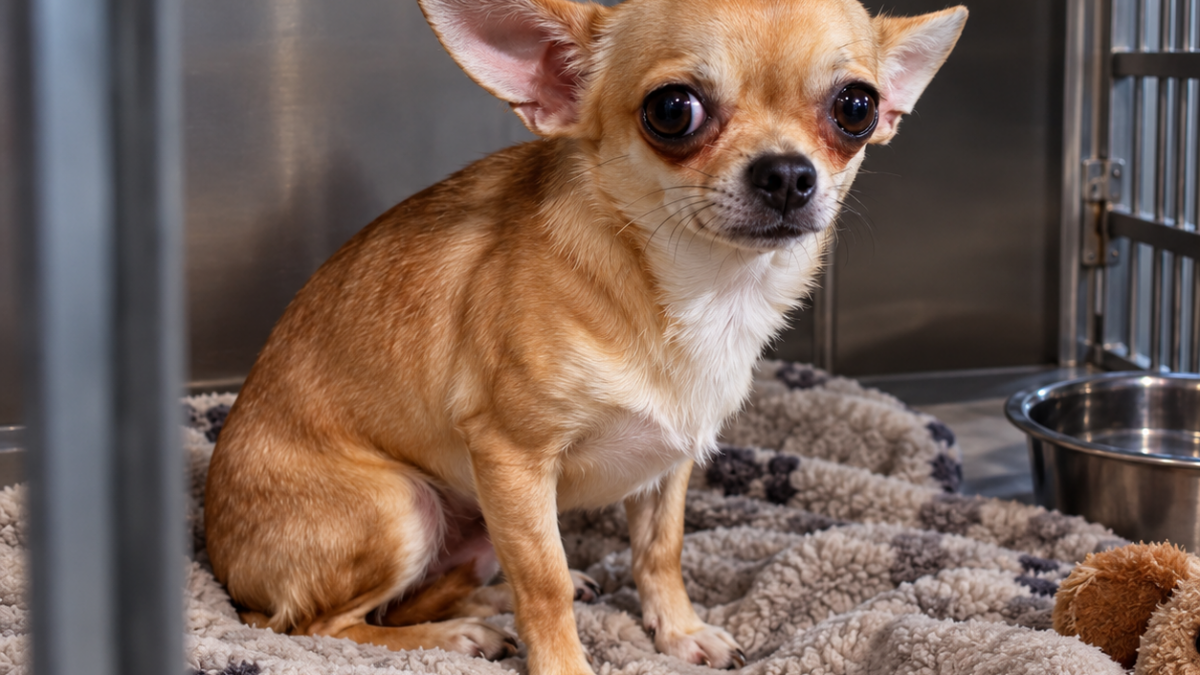
Mulia was so small I could lift her with one hand, yet every night after the shelter went quiet, that three-year-old Chihuahua sat facing the locked entrance and cried as if the person she loved might still walk through it. She reacted to jangling keys, slamming car doors, and footsteps in the hallway with the same desperate burst of hope, but whenever those sounds passed her kennel, she returned to the thin blanket she had rolled into a little shape beside her body and pressed her back against it until she fell asleep. We thought we were watching a frightened dog adjust to abandonment, until one ordinary morning a piece of information buried in her records told us she had been waiting for someone very specific.
I was one of the evening volunteers at the county shelter when Mulia arrived.
Her intake form told us almost nothing.
**Female. Chihuahua. Approximately three years old. Owner surrender.**
No explanation.
No medical history beyond routine vaccinations.
No note about behavioral problems.
Nothing that explained why a dog whose pale tan coat was clean, whose nails had been trimmed recently, and who clearly understood life inside a home had suddenly been handed across a shelter counter and left behind.
She weighed just over five pounds.
Viktor, one of our senior attendants, called her “the palm-sized girl.”
The name stuck.
Mulia wasn’t aggressive. She wasn’t even particularly shy during the day. She accepted treats, allowed us to pick her up, and would sometimes sit quietly in a volunteer’s lap.
But evening changed her.
Around six, she began watching the entrance.
At seven, when visitors thinned out, she became restless.
By closing time, she was sitting at the kennel gate.
Waiting.
The first night I heard her cry, I thought another dog was hurt.
The sound was barely louder than the ventilation system.
A thin whimper.
Then another.
I found Mulia sitting upright on her blanket, staring through the bars.
“Hey, sweetheart.”
Her ears lifted.
I crouched.
“You okay?”
She looked past me.
Not at me.
Past me.
Toward the hallway.
Viktor came around the corner carrying a mop.
“She does that every night.”
“For how long?”
“Since she arrived.”
“Maybe she hears something.”
“She hears people leaving.”
That answer stayed with me.
A few days later, we replaced several worn dog beds with thick new mattresses.
Every dog in the row immediately claimed one.
Except Mulia.
She approached hers cautiously.
Sniffed it.
Put one paw on it.
Then backed away and lay on the concrete.
I tried treats.
Nothing.
I sat beside the bed.
Nothing.
Finally, I dragged a thin fleece blanket onto the floor and lay down next to it.
“Come here.”
Mulia watched me.
Five minutes passed.
Then she approached.
She didn’t lie on the blanket.
Instead, she caught one edge between her teeth and pulled.
She folded it once.
Pulled again.
Then she pushed it into a narrow roll.
Only after that did she lie down.
Not on top of it.
Beside it.
Her spine pressed firmly against the rolled fabric.
I stopped moving.
Viktor had been watching from the doorway.
“She made herself a pillow,” I whispered.
He shook his head slowly.
“No.”
“What?”
He looked at Mulia.
“I think she’s used to sleeping against somebody.”
After that, I noticed it every night.
She rolled the blanket.
Pressed against it.
Watched the door.
Waited until the building went completely silent.
Then cried.
One morning, about ten days after her arrival, our veterinary technician asked me to hold Mulia while she checked a discrepancy in the intake paperwork.
“Her surrender sheet says no chip,” she said.
“She doesn’t have one?”
“That’s what it says. But I want to scan her again.”
The scanner passed over Mulia’s shoulders.
Nothing.
Then down her back.
A beep.
We both froze.
“Again.”
She moved the scanner.
**Beep.**
A number appeared.
The technician frowned.
“That chip wasn’t entered on intake.”
“Can you trace it?”
She typed the number into the registry.
I watched her face change.
“What?”
She turned the monitor slightly away from me.
“The registered owner isn’t the person who surrendered her.”
My stomach tightened.
“Who is it?”
She clicked through an old record.
Then she reached for the phone.
The first number was disconnected.
The second rang.
Once.
Twice.
A woman answered.
The technician introduced herself and read Mulia’s microchip number.
There was silence.
Then the woman on the other end whispered:
“Mulia? You have Mulia? My mother’s dog is alive?”
PART 2
I looked at the technician.
She looked at me.
Neither of us spoke.
The woman on the phone did.
“Hello?”
Her voice had changed.
There was panic in it now.
“Please don’t hang up.”
Our technician, Rachel, straightened in her chair.
“I’m here. My name is Rachel. I’m calling from the West County Animal Shelter.”
“Where is she?”
“Mulia?”
“Yes. Where is she?”
“She’s here with us. She’s safe.”
The woman inhaled so sharply that I heard it from several feet away.
Then she started crying.
Not quietly.
The kind of crying that interrupts breathing.
Rachel glanced at me.
I picked Mulia up.
She settled automatically against my chest, but when the woman’s voice came through the speaker again, one of Mulia’s ears moved.
“My name is Claire,” the woman said. “Claire Bennett. Mulia belonged to my mother.”
Rachel looked at the registry.
“The chip is registered to Margaret Bennett.”
“That’s my mom.”
“Can you tell me what happened?”
There was a long pause.
“My mother died six weeks ago.”
Mulia shifted in my arms.
I looked down at her.
Her big dark eyes were fixed on the phone.
Rachel’s voice softened.
“I’m sorry.”
“Thank you.”
Claire tried to steady herself.
“Mulia was with her when she died.”
I felt something tighten behind my ribs.
“How long had your mother had her?” Rachel asked.
“Almost three years. Since she was a puppy.”
That explained the grooming.
The indoor manners.
The clean white chest.
The way she knew laps and blankets and doors and car sounds.
Claire continued.
“My mom lived alone after my dad died. Mulia was basically attached to her. Slept in her bed every night. Sat in the bathroom when she showered. Followed her from room to room.”
I looked at the rolled blanket in Mulia’s kennel.
Viktor had been right.
Rachel asked, “Who surrendered her here?”
Silence.
“I don’t know.”
Rachel turned her eyes toward the intake form.
“I have a name.”
Claire stopped breathing for a second.
“What name?”
Rachel read it.
“Daniel Mercer.”
Claire’s voice went flat.
“My stepfather.”
That was the first moment I understood this wasn’t going to be a simple lost-dog reunion.
Rachel closed the office door.
I remained inside because Mulia was still in my arms.
Claire explained.
Her mother, Margaret, had married Daniel eight years earlier.
Claire had never been close to him, but she had tolerated him because her mother loved him.
Three months before Margaret died, she had been diagnosed with an aggressive cancer.
She deteriorated quickly.
Claire lived about two hours away and drove in whenever she could.
“Mulia never left Mom,” she told us. “Even when Mom got too weak to walk, Mulia slept beside her.”
“What happened after your mother died?” Rachel asked.
Claire went quiet again.
“I asked Daniel to keep Mulia for one week.”
“One week?”
“I was moving.”
“Because of the dog?”
“No. My lease didn’t allow pets. I had already been trying to relocate because Mom asked me to take Mulia if anything happened to her.”
Rachel glanced at me.
Claire continued.
“I found a pet-friendly apartment. I just needed seven days until the move-in date. Daniel told me not to worry. He said Mulia could stay with him until I came.”
My hand tightened around Mulia.
“What happened when you went back?” I asked.
Rachel looked at me but didn’t stop me.
Claire’s answer came slowly.
“He said she was gone.”
“Gone where?”
“He said a friend of his had taken her.”
“Did he tell you who?”
“No.”
“Did you ask?”
“Of course I asked.”
Her voice cracked.
“He told me the friend lived out of state and that Mulia was happy. He said it was better because she needed stability and I was dealing with too much.”
Rachel’s jaw tightened.
“And you believed him?”
“No.”
One word.
Immediate.
“I asked for the friend’s number. He refused. I asked for photos. He said he didn’t want me interfering. We had a huge fight.”
“When was this?”
“About a month ago.”
Rachel looked at the intake date.
Mulia had been surrendered to us eleven days earlier.
“Claire,” she said carefully, “your stepfather surrendered Mulia to this shelter.”
Nothing came through the phone.
Then:
“When?”
Rachel told her.
There was another silence.
I could hear traffic in the background on Claire’s end.
Then she said, “He surrendered her three weeks after telling me she was already living with someone?”
“Yes.”
“Why?”
“I don’t know.”
Claire made a sound that wasn’t quite a laugh.
“I do.”
Rachel leaned closer.
“What do you mean?”
“He hated that dog.”
I looked down.
Mulia was trembling now.
Not violently.
Just enough for me to feel it.
I tucked her under my chin.
Claire continued.
“Not because she did anything. Because Mom loved her.”
I didn’t understand at first.
Rachel did.
“Jealousy?”
“Maybe. Control. I don’t know.”
Claire exhaled.
“He used to complain that Mom spent too much money on Mulia. Grooming. Good food. Veterinary care. Toys. He’d say things like, ‘That dog eats better than I do.’”
“But he agreed to keep her.”
“He agreed because Mom made him promise.”
Rachel looked at the screen.
“Did your mother leave written instructions regarding Mulia?”
“Yes.”
That mattered.
A lot.
“What kind?”
“Her will.”
Rachel stopped typing.
“Her will mentions the dog?”
“Yes. Mom left me Mulia.”
I looked at her.
Now the case had changed again.
Rachel asked Claire to email anything she had.
Within fifteen minutes, the shelter director, Helen, was involved.
Within thirty, our county attorney had been contacted.
Within an hour, we had a copy of part of Margaret Bennett’s estate documents showing that her dog was to go to Claire.
That did not automatically settle everything.
Animals are property under most legal systems, and estate transfers can become complicated.
But it made Daniel’s surrender look very different.
Especially because he had signed the shelter paperwork declaring himself the lawful owner and authorized person.
Helen went through the file.
“Did he disclose the previous chip?”
“No.”
“Did he provide veterinary records?”
“No.”
“Reason for surrender?”
“Blank.”
“Behavioral issues?”
“None.”
“Medical?”
“None known.”
Helen leaned back.
“He knew Claire wanted the dog.”
Rachel nodded.
“He told her Mulia had already been rehomed.”
Helen rubbed her forehead.
“We freeze the adoption.”
Mulia had technically become eligible for adoption that morning.
Her photograph was scheduled to go online that afternoon.
Rachel removed her listing before it ever appeared.
I held Mulia through all of it.
She had no idea that adults were arguing over forms, signatures, wills, and ownership.
She only knew there had been a familiar voice through a plastic box.
And that voice had said her name.
When Claire spoke again, Mulia did something I had never seen.
She struggled out of my arms.
I lowered her to the desk.
“Claire,” I said, “say her name again.”
“What?”
“Just say it.”
A pause.
Then:
“Mulia?”
The Chihuahua’s head snapped toward the phone.
Her entire body stiffened.
Claire gasped.
“Mulia?”
The little dog stepped closer.
“Mulia, baby?”
She put both front paws against the phone.
Claire began crying again.
So did Rachel.
I lasted approximately three seconds longer.
Mulia whined.
Not the low nighttime crying.
This was different.
Sharp.
Urgent.
She scratched at the phone.
“Mulia,” Claire repeated. “It’s Claire.”
The dog barked.
One tiny bark.
Then another.
Claire made a sound like she had been punched.
“She remembers me.”
“Yes,” I whispered.
“She remembers.”
Claire wanted to drive to the shelter immediately.
Helen asked her not to until the legal situation was clarified enough that we knew what kind of visit could be permitted.
That was one of the hardest parts.
Claire had just discovered the dog she thought had been secretly given away was less than two hours from her.
And we had to tell her not to come yet.
“How long?” she asked.
“I don’t know,” Helen said.
“Today?”
“Probably not.”
“Tomorrow?”
“We’re trying.”
“I can prove she’s mine.”
“I believe you.”
“Then give her to me.”
“I can’t do that until we verify the estate documents and the surrender authority.”
Claire’s voice rose.
“He lied.”
“I understand.”
“He lied on your form.”
“We are looking into that.”
“My mother wanted Mulia with me.”
“I understand.”
“No, you don’t.”
Helen did not react defensively.
“You’re right.”
That quiet answer took some of the fight out of Claire.
Helen continued.
“But if I hand Mulia over without documenting this properly and Daniel challenges it, I may put you and Mulia in a worse position.”
Claire was silent.
Finally she said, “Please don’t let anyone adopt her.”
“No one will.”
“Promise me.”
“I promise.”
That evening was the first evening Mulia did not sit at the kennel door.
She sat near the office.
At six thirty, she started whining.
I knew what she wanted.
I called Claire.
I wasn’t sure whether I should.
I did it anyway.
She answered instantly.
“Is she okay?”
“She’s fine.”
“Why are you calling?”
“I thought maybe you could talk to her.”
I put the phone on speaker.
“Mulia?”
The dog came running.
Not toward the main entrance.
Toward me.
She stood beneath the phone.
Claire talked.
Nothing dramatic.
She told Mulia she was a good girl.
She told her she was coming.
She told her she was sorry.
She told her she had not forgotten her.
Mulia eventually lay down.
I placed her blanket beside her.
She did not roll it.
For the first time since she arrived, she stretched out flat and fell asleep.
I sat there long after the call ended.
Viktor came through on his final round.
He stopped.
“No pillow?”
I shook my head.
“She heard the person she’s been waiting for.”
He looked at Mulia.
Then at me.
“That can be dangerous.”
“What?”
“Hope.”
I understood what he meant the next morning.
Claire called before we opened.
Her voice was strained.
“Daniel called me.”
My stomach dropped.
“What did he say?”
“He knows you contacted me.”
“How?”
“I texted him.”
I closed my eyes.
“Claire.”
“I know. I shouldn’t have.”
“What did you say?”
“I asked why he surrendered Mulia.”
“And?”
“He said she was his dog too.”
“What else?”
“He told me Mom’s will isn’t final.”
That was legally possible depending on probate status.
I hated that he knew enough to make the situation messy.
Claire continued.
“He says the shelter accepted his surrender, so Mulia belongs to the shelter now and I have no rights.”
“He may be wrong.”
“He also said if I try to take her, he’ll challenge the estate.”
That was bigger than the dog.
Margaret’s estate included a house.
Savings.
Personal belongings.
Claire had already told us that Daniel and she were arguing about several items.
Now Mulia was part of that conflict.
I began to understand what Helen meant.
This was not about walking into the kennel and handing Claire a leash.
That afternoon, Daniel came to the shelter.
I recognized him from the copy of his driver’s license attached to the surrender form.
He was in his late fifties, neatly dressed, carrying a leather folder.
He asked for Helen.
I was at the front desk.
“She’s in a meeting.”
“I’ll wait.”
He looked past me toward the kennel hallway.
“Is the Chihuahua still here?”
I felt my shoulders stiffen.
“Mulia?”
“Yes.”
“She’s here.”
“I want to see her.”
“I can’t authorize that.”
His expression hardened.
“I surrendered her here.”
“I know.”
“So why can’t I see her?”
“Because the director is reviewing her case.”
He put the folder down.
“I made a lawful surrender.”
I looked at him.
“That’s what’s being reviewed.”
He understood the implication.
“Claire called you.”
I did not answer.
He leaned closer.
“You people need to stay out of a family dispute.”
“I’m a volunteer.”
“Then volunteer somewhere else.”
I should have said nothing.
Instead I asked, “Why did you tell Claire Mulia had gone to a friend?”
His eyes narrowed.
“That’s none of your business.”
“You surrendered her three weeks later.”
“She wouldn’t let it go.”
“Who?”
“Claire.”
“No.”
I shook my head.
“Mulia.”
For the first time, something shifted in his face.
Small.
But real.
I had guessed correctly.
He looked away.
“She sat at the bedroom door every night.”
I said nothing.
Daniel continued before he seemed to realize he was doing it.
“Margaret was gone. The room was empty. The dog would sit there and cry.”
The same way she cried at our shelter door.
“And that bothered you?”
He looked at me sharply.
“You have no idea what that house was like.”
Maybe I didn’t.
He went quiet.
Then said, “Everywhere I looked, there was something of hers. Clothes. Medicine. Photographs. That dog.”
His voice changed on the last two words.
Not hatred.
Pain.
That did not excuse what he had done.
But for the first time, I saw the human shape of it.
Mulia reminded him of his dead wife.
Claire wanted Mulia because of her mother.
Daniel wanted her gone for exactly the same reason.
He had lied because he did not want the argument.
Then, apparently unable to tolerate Mulia any longer, he had surrendered her.
“You could have called Claire,” I said.
“She would have taken her.”
“I know.”
“Then why didn’t you?”
His jaw tightened again.
“That dog was Margaret’s.”
“And Margaret left her to Claire.”
He stared at me.
For a second I thought he might yell.
Instead he picked up his folder.
“Tell your director I’m waiting.”
Helen met with him privately.
I do not know everything they discussed.
I know he left an hour later angry.
I know he did not take Mulia.
I know Helen called the county attorney again.
And I know the next forty-eight hours felt longer than Mulia’s first ten days combined.
Claire sent copies of veterinary bills proving she had paid for Mulia’s care when her mother was ill.
She sent photographs.
Hundreds.
Mulia as a puppy asleep on Margaret’s shoulder.
Mulia wearing a ridiculous red sweater.
Mulia sitting in a grocery cart.
Mulia beside Margaret in a hospital bed during home hospice care.
That photograph silenced the office.
Margaret looked extremely ill.
Mulia was curled beside her hip.
Her head rested on Margaret’s hand.
The blanket beneath them was pale blue.
Rolled along one side.
Rachel noticed first.
“Oh.”
I zoomed in.
The blanket was folded into a narrow support against Margaret’s back.
Exactly the shape Mulia made every night at the shelter.
It had never been a pillow for Mulia.
It was where Margaret had been.
Mulia had recreated the shape of the person she slept against.
I sat down.
Viktor looked at the photo.
Then walked away without speaking.
Later I found him in the supply room wiping his eyes and pretending dust had gotten into them.
The legal questions finally began clearing on the third day.
Margaret’s will had been signed months before her death.
Mulia was specifically identified by name and microchip number.
Claire was specifically named as the person who should receive her.
Daniel had never been registered on the chip.
He was not the purchaser listed in the veterinary file.
And, most importantly, once he learned that the shelter intended to challenge the validity of his surrender declaration, his attorney advised him not to pursue ownership of the dog.
He still argued over other parts of the estate.
But not Mulia.
Helen called Claire.
“You can come.”
Claire didn’t understand.
“Come where?”
“Here.”
Silence.
“Today?”
“Yes.”
“Are you giving her to me?”
“We need you to sign transfer paperwork.”
Claire began crying before Helen finished.
“I’m leaving now.”
It should have been simple after that.
It wasn’t.
Because two hours is a long time when you know someone is coming.
Especially for Mulia.
I don’t know whether dogs understand specific promises through phone calls.
But that morning she was different.
She wouldn’t settle.
Every sound sent her toward the front.
At one point she climbed into my lap, jumped down immediately, ran to the gate, returned, then repeated the entire cycle.
“Your person is coming,” I told her.
Her ears lifted.
“Yes.”
She stared at me.
“I hope you understand English because I am making a dangerous promise.”
At 2:17 p.m., a silver hatchback pulled into the parking lot.
I saw it through the lobby window.
A woman got out.
Early thirties.
Dark hair pulled into a loose ponytail.
She closed the door.
Mulia heard it.
Her whole body froze.
The woman started toward the entrance.
Mulia began shaking.
Not fear.
Every muscle in her tiny body seemed charged.
The lobby doors opened.
Claire stepped inside.
She saw Mulia.
Mulia saw her.
For half a second, nothing happened.
Then Mulia screamed.
I have no better word for the sound.
It was too high for a bark.
Too intense for a whine.
She launched herself from my arms.
I barely managed to lower her before she jumped.
Her paws hit the floor.
She ran.
Claire dropped to her knees.
“Mulia!”
The little dog collided with her chest.
Claire caught her.
Mulia climbed.
There was nowhere else to go, but she kept trying.
Onto Claire’s lap.
Her chest.
Her shoulder.
Her face.
She licked Claire frantically.
Whined.
Barked.
Cried.
Her tail moved so fast her entire back end shook.
Claire buried her face in Mulia’s fur.
“I’m sorry.”
Mulia licked her.
“I’m so sorry.”
Everyone in the lobby stopped working.
No one pretended otherwise.
Claire held her tightly.
“I thought you were gone.”
Mulia pressed against her neck.
“I looked for you.”
The dog whined.
“I should have looked harder.”
I crouched nearby.
“Claire.”
She looked at me.
“This isn’t your fault.”
“I believed him.”
“You didn’t stop looking because you didn’t care.”
“I should have known.”
“You called rescues. You asked questions. He gave you a believable story.”
Claire closed her eyes.
Mulia licked her cheek.
The dog did not care about guilt.
She had found someone familiar.
That was enough.
Then something happened that made even Viktor cry.
Claire stood.
Mulia was still in her arms.
“I brought something.”
She walked to her car.
I followed.
She opened the back door.
There was a box.
Inside were a few of Margaret’s things Claire had been allowed to remove from the house.
A framed photograph.
A ceramic mug.
Two sweaters.
And a pale blue blanket.
The blanket from the hospice photograph.
Claire lifted it.
“Mulia slept on this with Mom.”
The Chihuahua began wriggling violently.
“Easy.”
Claire carried the blanket inside.
We laid it on the floor.
Mulia buried her face in it.
Immediately.
She sniffed every inch.
Then she circled twice.
Claire sat beside her.
Mulia pulled one edge.
Rolled it.
Then stopped.
She looked at Claire.
Claire lay down.
Mulia abandoned the rolled portion entirely and pressed herself against Claire’s stomach.
No substitute needed.
I had to leave the room.
Not because I didn’t want to see it.
Because sometimes emotion becomes physically embarrassing when you are trying to maintain the illusion that you are a competent adult.
Rachel found me near the laundry room.
“You okay?”
“No.”
“Me neither.”
“Good.”
We stood there silently.
When I returned, Claire was signing papers with Mulia asleep in her lap.
Helen explained everything.
Vaccinations.
Food.
Transition stress.
Potential separation anxiety.
Microchip update.
Veterinary follow-up.
Claire listened carefully.
“I’ve already booked a vet appointment for Monday.”
Rachel raised an eyebrow.
“You booked that before you knew she was legally leaving?”
“Yes.”
I smiled.
“That’s optimistic.”
“I needed to be.”
Before they left, I took Mulia back for one final weight.
Five pounds, three ounces.
Still palm-sized.
Still watching Claire through the doorway.
When I carried her back, she nearly climbed over my shoulder trying to reach her.
“Okay, okay.”
Claire laughed.
“I think she’s done with the shelter.”
“Can’t imagine why.”
I placed Mulia into her arms.
For a second, the Chihuahua looked at me.
I had told myself this was the part shelter volunteers were trained for.
Animals leave.
That is the job.
The goal is an empty kennel.
Still, my throat tightened.
“You don’t have to wait by doors anymore,” I whispered.
Mulia licked my chin.
Then turned toward Claire.
That was fair.
They left together.
I watched through the glass.
Claire opened the passenger door.
There was a secured dog seat inside with a harness attachment.
She placed Mulia in it.
Mulia immediately stood with her paws on the edge, watching Claire walk around the car.
For one terrifying moment I wondered if the old anxiety would return.
Then Claire got into the driver’s seat.
Mulia relaxed.
The car pulled away.
Her kennel was empty.
I went back to it anyway.
The rolled blanket was still there.
I picked it up.
Viktor stopped beside me.
“Hard one?”
“Yeah.”
“Good ending.”
“I hope so.”
He looked at the empty kennel.
“We usually don’t get to know.”
He was right.
Most shelter stories continue somewhere else.
People leave carrying dogs.
Cats disappear into carriers.
We get photographs sometimes.
Updates if we’re lucky.
Often, we simply have to trust that goodbye means something better happened afterward.
With Mulia, Claire made sure we knew.
The first picture arrived forty-three minutes later.
Mulia was asleep in the passenger seat.
Not curled.
Not upright.
Flat on her side.
Completely relaxed.
Claire wrote:
**She fell asleep before we hit the highway.**
The next photograph arrived that evening.
Mulia was standing inside Claire’s new apartment.
There was a small bed beside the couch.
A water bowl.
Toys.
The pale blue blanket.
Then a video.
Mulia walked from room to room.
Kitchen.
Bedroom.
Hallway.
Back to Claire.
Away again.
Back again.
Checking.
Confirming.
Every thirty seconds, she made sure Claire still existed.
“She’s shadowing me,” Claire said in the video.
Mulia followed her into the bathroom.
Claire laughed.
“Just like Mom.”
The first night was difficult.
Claire called the next morning.
“She cried.”
My heart sank.
“At the door?”
“No.”
“Where?”
“Bedroom.”
“What happened?”
“I put her bed beside mine. She wouldn’t use it.”
I already knew.
“What did she do?”
“She tried to get onto my bed.”
“And?”
“I picked her up.”
I smiled.
“She slept against my back.”
There it was.
No rolled blanket.
No concrete floor.
No kennel door.
A person.
The next few weeks were not perfect.
Mulia developed severe separation anxiety whenever Claire left the apartment.
The first time Claire went grocery shopping, she returned twenty minutes later to hear barking before she reached the hallway.
A neighbor complained.
Claire panicked.
“I can’t lose the apartment.”
“You won’t,” I told her.
“You don’t know that.”
“No. But we can work on this.”
We connected her with a certified behavior consultant.
The plan was painfully gradual.
Seconds apart at first.
Claire walked to the door.
Touched the handle.
Returned.
Reward.
Opened the door.
Closed it.
Returned.
Reward.
Stepped outside for three seconds.
Returned before Mulia panicked.
Then five.
Ten.
Twenty.
A minute.
Progress was slow.
On bad days, Mulia regressed.
Once Claire called crying.
“We got to twelve minutes last week. Today she panicked at thirty seconds.”
“That happens.”
“I’m failing her.”
“No.”
“She spent weeks thinking everybody disappeared.”
I stayed quiet.
That part was true.
Claire’s voice softened.
“I don’t want her to feel that again.”
“Then teach her the difference.”
“What difference?”
“People can leave and come back.”
That became the whole project.
Leave.
Return.
Leave.
Return.
Keys stopped meaning abandonment.
Shoes stopped meaning disaster.
The apartment door became something Claire walked through in both directions.
For Mulia, that distinction had to be learned from scratch.
After six weeks, Claire could leave for half an hour.
Then an hour.
Then two.
She installed a camera.
The first time Mulia lay down while Claire was gone, Claire called me from a coffee shop.
“She’s sleeping.”
“Good.”
“No, you don’t understand.”
“I think I do.”
“She’s actually sleeping.”
On camera, Mulia was curled on the blue blanket.
Claire stayed away another twelve minutes.
Then went home.
“She didn’t even run to the door until I put the key in.”
“That’s huge.”
“She still ran.”
“She’s a Chihuahua. Let her have some drama.”
Claire laughed.
It was the first time she sounded like someone whose life was no longer being organized entirely around guilt.
Then Daniel complicated things again.
Three months after Mulia went home, Claire called me.
“I got a letter.”
“What kind?”
“From Daniel’s attorney.”
My stomach tightened.
“About Mulia?”
“About Mom’s estate.”
That was not technically shelter business.
But by then Claire and I had become friends.
“What happened?”
“He’s challenging part of the will.”
“Mulia?”
“No. Not her.”
I exhaled.
“But he wrote something in a statement about her.”
“What?”
“He says I manipulated Mom when she was sick and that I used Mulia as part of it.”
I sat down.
“What does that mean?”
“I don’t know.”
Claire sounded exhausted.
“He says Mom wasn’t competent when she changed the will.”
“Did she change the part about Mulia?”
“Yes.”
“When?”
“Four months before she died.”
I remembered the documents.
“What did the previous version say?”
“Nothing about Mulia. She didn’t have her yet.”
That mattered.
Mulia had only been three.
Margaret had adopted her after the earlier will.
“So the update makes sense.”
“I know.”
“Does Daniel have evidence she was incompetent?”
“His attorney says she was under heavy medication.”
“Was she?”
“Later. Not when she signed it.”
Claire sighed.
“I’m sorry. This isn’t your problem.”
“No.”
I looked toward the empty kennel row.
“But Mulia made it partially my problem.”
Claire laughed weakly.
The estate dispute lasted months.
Most of it had nothing to do with Mulia.
Money did.
Property.
Jewelry.
A dispute about Margaret’s savings.
Old resentments disguised as legal arguments.
But Mulia’s existence became strangely important because she was one of the few things Margaret had described in detail near the end of her life.
Claire found a letter among her mother’s papers.
It was handwritten.
Not legally significant by itself.
Emotionally, it was devastating.
Claire sent me a photograph.
Margaret had written:
**If anything happens to me, please take Mulia. She sleeps against my back because she’s afraid of thunder. She likes chicken more than beef, hates the blue raincoat, and pretends she doesn’t like strangers until they sit down. Don’t let Daniel give her away because he doesn’t understand how much she depends on us.**
I read the last sentence three times.
She knew.
Margaret knew there could be a problem.
Claire later provided the letter to her attorney.
Along with emails between her and her mother discussing the apartment Claire planned to move into.
One email said:
**I’m glad you found somewhere that allows Mulia. I’ll sleep easier knowing where she’ll be.**
The challenge to that portion of the estate eventually failed.
Daniel’s broader claims were resolved through mediation.
Claire did not get everything she wanted.
Neither did he.
Real family disputes rarely produce perfect victories.
But one thing never changed.
Mulia stayed with Claire.
Daniel never asked for her again.
Months passed.
Mulia changed.
The first difference I noticed was in her photographs.
Her eyes.
At the shelter, even when she was being held, her eyes were always searching past the person.
Toward the door.
Toward the hallway.
Toward whatever sound might mean someone had returned.
In Claire’s pictures, she looked directly at the camera.
Present.
She gained a little weight.
Not much.
A five-pound Chihuahua does not become large.
But her ribs disappeared beneath the coat.
Her fur became shinier.
Claire brushed her every evening.
Exactly as Margaret had.
“Do you think she remembers Mom when I do that?” Claire asked once.
“Probably.”
“Is that bad?”
“Why would it be?”
“I don’t want her to be sad.”
I thought about Mulia crying into the shelter ventilation.
“I don’t think remembering someone automatically means suffering.”
Claire was quiet.
“I miss Mom when I brush her.”
“Maybe you both do.”
That became another kind of healing.
Mulia did not replace Margaret for Claire.
Claire did not replace Margaret for Mulia.
They carried the same missing person from different sides.
Sometimes that seemed to make them understand each other better than either of them understood anyone else.
On the first anniversary of Margaret’s death, Claire took Mulia to the cemetery.
I did not know she planned to.
She sent me a photograph afterward.
Mulia sat beside the grave.
No dramatic pose.
No miraculous behavior.
She sniffed grass.
Watched a bird.
Then climbed into Claire’s lap.
Claire wrote:
**I thought she might react. She didn’t. Maybe I expected too much.**
I replied:
**Maybe being with you was the reaction.**
Claire called later.
“She slept on Mom’s blanket afterward.”
“Does she still roll it?”
“No.”
That answer made me smile.
“What does she do?”
“Steals the whole thing and takes it to bed.”
“Progress.”
“Definitely.”
At the shelter, Mulia’s story changed how we handled owner surrenders.
Not legally.
Procedurally.
Helen added an extra microchip scan before every adoption listing, even if intake paperwork said an animal had already been scanned.
We began verifying chip numbers twice.
We started asking more specific questions when surrendering owners seemed vague about how they acquired an animal.
Was it bureaucracy?
Yes.
Did it slow us down?
Sometimes.
Did Viktor complain about paperwork?
Constantly.
But six months later, the new protocol identified another dog whose chip was registered to a former partner of the person surrendering him.
That case was different.
There was no dramatic reunion.
But it proved the point.
One overlooked beep had given Mulia back part of her life.
I never forgot that.
About a year after Mulia left, Claire brought her to visit.
I was cleaning kennels when Rachel called me.
“Someone’s here.”
I stepped into the lobby.
Mulia stood on the floor wearing a red harness.
For a second she stared at me.
Then her tail started.
I crouched.
“Palm-sized girl?”
She ran toward me.
I picked her up.
She licked my chin.
“You remember me?”
Claire smiled.
“She remembers everybody who fed her.”
“Unfair.”
Mulia settled into my arms.
Then a metal kennel door slammed in the back.
Her body stiffened.
I felt it immediately.
She looked toward the hallway.
For a moment, the old Mulia returned.
Ears forward.
Eyes wide.
Waiting.
I held my breath.
Then Claire said:
“Mulia.”
The dog looked at her.
“Come on.”
Mulia jumped from my arms.
Ran to Claire.
And stayed there.
No frantic search.
No crying.
No checking the entrance.
Claire clipped on her leash.
Viktor walked out.
He stopped when he saw her.
“Well.”
Mulia wagged.
“The pillow dog.”
Claire looked confused.
“The what?”
We told her.
About the rolled blankets.
The way Mulia pressed her spine against them.
Claire’s expression changed.
“My mother slept on her side.”
“I know.”
“How?”
“The photo.”
Claire looked down at Mulia.
“When Mom got sick, she needed pillows behind her back. Mulia always squeezed between Mom and the pillow.”
That completed the picture.
Mulia had not merely slept beside Margaret.
She had lived in the small protected space between Margaret’s back and a rolled blanket.
At the shelter, when Margaret was gone, she rebuilt that shape.
Night after night.
Claire crouched.
“Oh, baby.”
Mulia licked her nose.
Viktor turned away suspiciously quickly.
I pretended not to notice.
Before leaving, Claire asked if she could donate something.
“Money?”
“That too.”
She opened a bag.
Inside were ten soft fleece blankets.
Rolled neatly.
I laughed.
“You’re kidding.”
“No.”
“For the kennel dogs?”
“For anyone who needs something to sleep against.”
We used every one.
Years passed.
I continued volunteering.
Viktor eventually retired.
Rachel became clinic supervisor.
Helen left for another rescue.
Dogs came.
Dogs left.
Some stories ended beautifully.
Some did not.
Mulia aged in photographs.
Three years old became five.
Five became seven.
Her muzzle lightened.
One ear began leaning slightly sideways.
She developed a heart murmur that her veterinarian monitored.
Then a dental problem.
Then the kind of ordinary middle-aged Chihuahua stubbornness that made Claire send messages like:
**She refused breakfast because I did not cut the chicken small enough.**
Or:
**It is raining, so apparently bathrooms no longer exist.**
I loved those updates.
Normal problems are a privilege after crisis.
Claire married.
Mulia attended the backyard ceremony wearing a collar with a tiny white flower.
Claire’s husband, Ben, knew the rules immediately.
Mulia slept on Claire’s side of the bed.
Non-negotiable.
She hated being cold.
Non-negotiable.
She got one small piece of chicken when they cooked it.
Negotiable, according to Ben.
Not negotiable, according to Mulia.
Two years later, Claire had a baby.
She worried about how Mulia would respond.
I worried too.
The first meeting was controlled.
Mulia sniffed the baby’s blanket.
Then the baby.
Then looked at Claire with what Claire described as profound disappointment.
Apparently babies were less interesting than expected.
Within weeks, Mulia had taken a position beside the rocking chair.
The first photograph Claire sent showed the baby sleeping in Claire’s arms.
Mulia was pressed against Claire’s hip.
Behind Mulia was the pale blue blanket.
The same one.
Margaret’s blanket.
Three generations in one photograph.
I saved it.
When Mulia was eight, Claire called.
I knew from her voice something was wrong.
“We’re at the vet.”
“What happened?”
“She collapsed this morning.”
My chest tightened.
“Heart?”
“They think so.”
The murmur had progressed.
Mulia had early congestive heart failure.
Medication helped.
For a while, very well.
She returned home.
Returned to stealing warm spots.
Returned to demanding chicken.
Returned to sleeping pressed against Claire.
But Claire became vigilant.
Maybe too vigilant.
Every cough terrified her.
Every long nap.
Every missed meal.
One night she called me at eleven.
“She coughed three times.”
“Did you call the emergency vet?”
“They said monitor her breathing.”
“What is it?”
“Twenty-eight breaths per minute asleep.”
“That’s within what your vet told you, right?”
“Yes.”
“So watch her.”
“I can’t sleep.”
“I know.”
“I keep thinking about the shelter.”
I understood.
“What part?”
“She waited for Mom and Mom never came.”
Claire’s voice broke.
“What if one day she waits for me and I don’t come?”
I sat in my dark kitchen.
“That isn’t happening tonight.”
“You don’t know.”
“No.”
I hated saying the next part.
“But nobody gets a guarantee.”
Silence.
“What can I guarantee?”
“You can keep coming back while you can.”
Claire cried quietly.
“She still watches the door when I leave.”
“Does she cry?”
“No.”
“Does she eat?”
“Yes.”
“Does she sleep?”
“Yes.”
“Then she learned.”
“What?”
“That leaving and abandonment aren’t the same thing.”
Claire did not answer for a while.
Then she whispered, “Okay.”
Mulia lived almost two more years.
Her heart disease progressed slowly.
Medication increased.
Walks shortened.
Stairs became difficult.
Ben built a small ramp to the couch even though Mulia frequently ignored it and demanded to be lifted instead.
Their daughter, Lily, grew old enough to say Mulia’s name.
Her version was “Lia.”
Mulia tolerated toddler affection with remarkable patience.
Claire taught Lily early:
“Gentle hands.”
“No pulling ears.”
“Let Mulia come to you.”
Most importantly:
“If she walks away, we let her.”
Mulia had spent enough of one chapter of her life without choices.
In Claire’s house, even a child learned to respect them.
The last time I saw Mulia healthy, she was almost ten.
Claire brought her to the shelter’s fundraising picnic.
Mulia wore a little beige sweater.
I picked her up.
She felt even smaller than I remembered.
Old dogs sometimes do.
Not because their bodies change dramatically.
Because our memories make their younger selves enormous.
“Palm-sized girl.”
Her cloudy eyes found me.
Tail wag.
“She still knows you,” Claire said.
“I am unforgettable.”
“You gave her hot dog pieces.”
“That too.”
Mulia rested her chin on my shoulder.
The shelter was noisy that day.
Children.
Dogs.
Music.
Car doors.
Keys.
Voices.
Years earlier, every one of those sounds would have sent her running toward an entrance.
Now she barely reacted.
Claire walked five steps away to get water.
Mulia watched.
Then relaxed against me.
She knew Claire was coming back.
That simple fact may have been the greatest thing she ever learned.
The following winter, Mulia’s heart worsened.
Medication stopped controlling the fluid as well.
She tired after crossing a room.
Her appetite became inconsistent.
Claire called me after another emergency visit.
“The vet says we’re getting close.”
I did not ask what that meant.
I knew.
“How is she now?”
“Asleep.”
“Comfortable?”
“Yes.”
“Then be with her.”
“I am.”
Over the next several weeks, there were good days.
Mulia ate chicken.
She sat in sunlight.
She barked at a delivery driver.
Claire sent a video with the caption:
**Apparently death itself is less offensive than FedEx.**
Then came bad days.
More coughing.
Restlessness.
Breathing that required effort.
One morning, Claire called before seven.
“I think today is the day.”
I closed my eyes.
“Do you want me there?”
“Yes.”
I drove to her house.
Mulia was on the couch.
Pale blue blanket beneath her.
Claire sat beside her.
Ben held Lily in the kitchen.
Their veterinarian had agreed to come to the house.
No clinic.
No kennel.
No unfamiliar room.
Mulia’s breathing was shallow.
She lifted her head when I entered.
I crouched.
“Hey.”
Tail movement.
Tiny.
But there.
I touched her forehead.
“You really are still palm-sized.”
Claire laughed and cried simultaneously.
The veterinarian arrived thirty minutes later.
She examined Mulia.
Listened to her heart.
Watched her breathing.
Then sat beside Claire.
“We can increase medication again, but I don’t think we’re buying comfortable time anymore.”
Claire nodded.
She had already made the decision.
That did not make it easier.
Lily came in.
She was five.
Ben had explained in the simplest terms that Mulia was very sick and would not come home again after that day because the veterinarian was helping her body stop hurting.
Lily climbed carefully onto the couch.
“Mulia tired?”
Claire swallowed.
“Very tired.”
Lily stroked one ear.
“Lia sleep?”
“Yes, baby.”
“For long?”
Claire’s face folded.
Ben picked Lily up.
Mulia watched them.
Then looked back at Claire.
Claire lay beside her.
Exactly beside her.
On her side.
Mulia moved closer.
Her spine pressed into Claire’s stomach.
The old position.
The one she had used with Margaret.
The one she had tried to rebuild from rolled fleece on a shelter floor.
Claire saw it too.
“Oh.”
She covered her mouth.
Mulia settled.
The veterinarian gave the sedative.
Slowly, the tension left Mulia’s body.
Her breathing became easier.
For the first time that morning, she looked completely comfortable.
Claire whispered into her ear.
“Mom loved you.”
Mulia’s eyes were half closed.
“I loved you.”
One tiny breath.
“Lily loves you.”
Another.
“You waited long enough, okay?”
I looked away.
Claire’s hand moved along Mulia’s back.
“You don’t have to wait for anybody anymore.”
The final medication was given.
Mulia died pressed against a person.
Not a rolled blanket.
Not a kennel wall.
Not a closed door.
A person.
Claire kept the blue blanket.
Of course she did.
For a while, she could not fold it.
It remained on the couch exactly where Mulia had been.
Then one afternoon Lily dragged it onto the floor and rolled one side.
Claire froze.
“Why did you do that?”
Lily shrugged.
“Make pillow.”
Claire called me afterward.
“She rolled Mom’s blanket.”
“Kids copy things.”
“I know.”
“She probably saw you do it.”
“I don’t roll it.”
I didn’t know what to say.
Then Claire laughed softly.
“It doesn’t matter.”
She sent a picture.
Lily was lying on the blanket.
Behind her was the rolled section.
Claire wrote:
**Some habits travel farther than we understand.**
Months later, Claire brought a donation to the shelter.
More fleece blankets.
A lot more.
Viktor had been retired for years, but Rachel and I were still there.
We placed one in a kennel occupied by a terrified little terrier.
He ignored it at first.
That evening, I checked on him.
He had pulled the blanket into a pile.
Not a roll.
Just a pile.
Then curled against it.
I sat outside his kennel.
For a moment, I thought about Mulia’s first nights.
The tiny Chihuahua staring at the door.
Keys.
Car doors.
Footsteps.
Always believing this sound might be hers.
I used to think her story was about abandonment.
Later I thought it was about reunion.
Then grief.
Then love.
But after all those years, the image that stayed with me was smaller.
A five-pound dog lying beside a piece of fleece because she remembered the shape of a human body.
Animals notice the spaces we leave.
Sometimes they spend years trying to fill them.
Sometimes someone comes back.
Sometimes someone new sits down in the empty place.
Claire did both.
She carried Margaret forward without pretending to replace her.
And Mulia, eventually, stopped waiting at doors.
Her last years were full of ordinary departures.
Claire went to work.
Returned.
Went to the store.
Returned.
Took Lily to school.
Returned.
Closed the bathroom door.
Returned.
Hundreds of tiny repetitions teaching one simple truth.
Not everyone who leaves is gone forever.
The last photograph Claire ever sent me of Mulia alive was taken a week before she died.
Mulia was asleep beneath a patch of sunlight on the couch.
Her face was white with age.
One ear folded sideways.
The blue blanket was beneath her.
Claire’s hand rested nearby.
Not holding her.
Not restraining her.
Just there.
Mulia had placed one paw over Claire’s fingers.
I printed that photograph.
It still hangs inside the staff room at the shelter.
New volunteers sometimes ask who she was.
I tell them.
Not every detail.
That would take too long.
I usually point at the tiny dog and say:
“She taught us to scan twice.”
Then, if they ask more, I tell them about the door.
About the crying.
About the rolled blanket.
About the morning a hidden microchip beeped.
And about the woman on the telephone who heard the name Mulia and said:
“My mother’s dog is alive?”
The kennel where Mulia once slept has held hundreds of dogs since then.
The floors have been resurfaced.
The gates replaced.
The ventilation system upgraded.
Nothing physical remains from those nights.
But sometimes, late in the evening, I still see a nervous dog watching the entrance after visitors leave.
When that happens, I sit nearby.
I do not promise anyone is coming.
Shelter work teaches you not to make promises you cannot keep.
Instead, I put down a blanket.
Sometimes the dog lies on it.
Sometimes not.
And occasionally, one pulls the fabric into some strange shape that means something only to them.
When that happens, I leave it exactly where they put it.
Because Mulia taught me that what looks like a pile of fabric to us can be a memory to them.
A shoulder.
A back.
A heartbeat.
A place where somebody used to be.
And sometimes that memory is the last thing keeping hope alive until a door finally opens for the right person.
Mulia was small enough to fit against my chest with room to spare, yet every night after the shelter doors locked, that three-year-old Chihuahua sat facing the entrance and cried as though the person she loved might still walk through it. Keys jingling in the hallway, a car door slamming outside, even footsteps crossing the lobby could send her racing to the bars with desperate hope, only for her to return to the concrete floor when those sounds moved on without stopping for her. We thought we were watching an abandoned dog slowly accept that nobody was coming back—until one ordinary morning a forgotten microchip revealed that Mulia had been waiting for someone very specific.
I was volunteering evening shifts at the county shelter when she arrived.
Her paperwork contained almost nothing.
Female. Chihuahua. Approximately three years old. Owner surrender.
No reason.
No behavioral complaints.
No medical explanation.
Just a signature and a dog weighing barely over five pounds.
Her coat was pale tan across her back and white over her chest. Her nails had been trimmed recently, and her fur was clean enough that I knew she hadn’t spent much time outdoors.
Someone had cared for her.
That was what made her behavior harder to understand.
During the day she was gentle. She accepted treats, tolerated being picked up, and sometimes settled in a volunteer’s lap.
But around closing time, everything changed.
She started watching the door.
The first evening I heard her crying, I thought another animal was injured.
The sound was so faint it almost disappeared beneath the ventilation system.
A little whimper.
Then another.
I found Mulia sitting against the kennel gate.
“Hey, sweetheart.”
Her ears shot up.
I crouched.
She looked straight past me.
Toward the lobby.
Viktor, one of our older attendants, stopped beside me carrying a mop.
“She does this every night.”
“For how long?”
“Since the day she came.”
“Maybe she hears someone.”
“She hears everyone leaving.”
That sentence stayed with me.
A week later, we replaced several worn beds with new padded mattresses.
The dogs went crazy for them.
Mulia wouldn’t touch hers.
She approached it cautiously, sniffed it, put one paw on the edge, then backed away and curled directly on the concrete.
I tried treats.
Nothing.
Finally I pulled a thin fleece blanket onto the floor and sat beside it.
“Come on.”
Mulia watched me.
I lay down.
That seemed ridiculous, but shelter work sometimes involves looking ridiculous for animals that don’t care about your dignity.
After several minutes, Mulia approached.
She didn’t lie on the blanket.
Instead, she caught the edge between her teeth.
Pulled.
Folded it.
Then pulled again until she had made a narrow roll.
Only then did she lie down.
Not on it.
Against it.
Her spine pressed into the rolled fleece.
I stopped breathing for a second.
Viktor was standing behind me.
“She made a pillow,” I whispered.
He shook his head.
“No.”
“What?”
He watched Mulia close her eyes.
“I think she’s used to sleeping against somebody.”
After that, we noticed she did it every night.
Roll the blanket.
Press her back against it.
Watch the entrance.
Cry.
Sleep.
It became a routine none of us knew how to fix.
Then, ten days after she arrived, Rachel, our veterinary technician, called me into the exam room.
“Hold her for a second.”
“What’s wrong?”
“Probably nothing. Intake paperwork says she wasn’t chipped, but I’m rescanning.”
She passed the scanner over Mulia’s shoulders.
Nothing.
Then lower.
Beep.
Rachel froze.
“So did I.”
She moved it again.
Beep.
A number appeared on the display.
“That chip wasn’t entered at intake.”
“Can you trace it?”
Rachel opened the registry.
I watched her expression change.
“What?”
“The registered owner isn’t the person who surrendered her.”
My stomach tightened.
“Who is?”
Rachel clicked into an older record.
A woman’s name appeared.
Margaret Bennett.
There were two phone numbers.
The first was disconnected.
Rachel called the second.
It rang twice.
A woman answered.
Rachel introduced herself and read Mulia’s microchip number.
Silence.
Then the woman whispered:
“Mulia?”
Rachel looked at me.
“Yes.”
Another silence.
Then the stranger’s voice cracked.
“You have Mulia? My mother’s dog is alive?”
[END OF FACEBOOK OPENING]
[FULL STORY CONTINUATION]
Mulia’s ears lifted at the sound of the woman’s voice.
Rachel turned the phone to speaker.
“My name is Claire,” the woman said between shaky breaths. “Claire Bennett. Margaret was my mother.”
Rachel pulled a chair closer.
“I’m sorry, Claire. Can you tell us what happened?”
“My mother died six weeks ago.”
Mulia shifted in my arms.
I looked down at her.
Claire continued.
“Mom had cancer. It happened fast. Mulia stayed with her through everything.”
“How long had your mother owned her?”
“Since she was a puppy.”
That explained so much.
The clean coat.
The clipped nails.
The way she understood beds and laps and household sounds.
Claire’s voice softened.
“Mulia slept beside Mom every night. Usually pressed right against her back. If Mom went to the bathroom, Mulia followed. If she sat down, Mulia climbed beside her.”
I looked toward Mulia’s kennel.
The rolled blanket.
Viktor had been right.
Rachel asked carefully, “Who surrendered Mulia here?”
She read the name from the intake form.
Claire stopped speaking.
“Claire?”
“That’s my stepfather.”
Her tone had changed.
“Daniel.”
Rachel glanced at me.
“What was Mulia doing with him?”
“My mother asked him to keep her for one week after she died. I was moving into a pet-friendly apartment. Mom wanted Mulia to come with me.”
“And Daniel agreed?”
“Yes.”
Claire’s breathing became uneven again.
“When I went back for Mulia, he told me she was gone.”
“Gone where?”
“He said a friend had taken her.”
“Did he give you the friend’s information?”
“No.”
“Did you ask?”
“I begged.”
Claire’s voice hardened.
“He told me the friend lived out of state. Said Mulia was better off there and I needed to stop causing problems.”
Rachel looked at Mulia’s intake date.
Daniel had surrendered her eleven days earlier.
Claire had supposedly been told Mulia was rehomed almost a month before that.
“He lied to you,” Rachel said.
“I knew he was hiding something.”
“Why would he do that?”
A long silence.
Then Claire said, “He hated how much Mom loved that dog.”
That afternoon, our shelter director, Helen, joined the case.
Claire emailed us documents from her mother’s estate.
There it was.
A specific instruction.
Margaret Bennett wanted Mulia to go to Claire.
Even the microchip number was written into the document.
Helen immediately placed a hold on Mulia’s adoption.
“She goes nowhere until this is settled.”
Claire wanted to drive to us that second.
Helen stopped her.
“If Daniel challenges ownership, we need everything documented properly.”
“He lied on the surrender form.”
“I know.”
“He had no right.”
“We’re investigating that.”
“He told me she was already gone.”
“I understand.”
“No, you don’t.”
Helen stayed calm.
“You’re right. But I do understand that the worst thing I could do now is hand Mulia over incorrectly and create a legal excuse for him to take her back.”
That silenced Claire.
Finally she whispered, “Just don’t let anyone else take her.”
“We won’t.”
After the call ended, Mulia remained near my feet.
Then I had an idea.
“Rachel, call Claire again.”
“Why?”
“Put her on speaker.”
Claire answered.
“Mulia?” she said.
The Chihuahua froze.
Her head turned sharply.
“Mulia, baby?”
She ran toward the phone.
Claire gasped.
“She remembers.”
Mulia put both front paws against the desk.
Her tail started moving.
“Mulia, it’s Claire.”
The tiny dog whined, scratched at the phone, and barked once.
Claire began crying.
So did Rachel.
I was doing fine until Mulia pressed her entire chest against the phone as though she could somehow get through it.
That evening, something changed.
Normally she spent closing time beside the kennel door.
Instead, I called Claire again.
Claire talked to her for fifteen minutes.
She told Mulia she loved her.
That she had been searching.
That she was coming.
Mulia eventually lay down.
I placed her fleece blanket beside her.
She sniffed it.
Then stretched out without rolling it.
For the first time since she arrived, she slept flat on her side.
The next morning, Claire called.
“Daniel knows.”
My stomach sank.
“How?”
“I confronted him.”
“Claire.”
“I know.”
“What did he say?”
“That Mulia belonged to him too.”
“Anything else?”
“He says Mom’s will hasn’t finished probate and that I can’t prove the dog belongs to me.”
Daniel came to the shelter that afternoon.
He was neatly dressed, carrying a leather folder.
“I want to see the Chihuahua.”
I was behind reception.
“Mulia?”
“Yes.”
“She’s under administrative hold.”
His expression tightened.
“I surrendered her.”
“That’s being reviewed.”
“Claire called you, didn’t she?”
I didn’t answer.
He leaned toward the desk.
“You people need to stay out of a family dispute.”
I should have said nothing.
Instead I asked, “Why did you tell Claire Mulia had been given to a friend?”
His face changed.
Only slightly.
But enough.
“That’s none of your business.”
“She spent every night crying at the door.”
Daniel looked toward the kennel hallway.
Then, unexpectedly, some of the anger left him.
“She did that at home too.”
I went still.
“What?”
“After Margaret died.”
He rubbed a hand over his face.
“She sat outside the bedroom every night and cried.”
Suddenly I understood something.
Not enough to excuse him.
But enough to see the shape of his decision.
Mulia reminded him of Margaret.
Every sound.
Every routine.
Every night she waited outside an empty bedroom.
He had wanted the reminder gone.
“You could have given her to Claire.”
Daniel’s jaw hardened again.
“Claire wanted everything.”
“We’re talking about a dog.”
“You don’t know my family.”
“No.”
I looked toward the hallway.
“But I know that dog spent ten nights believing someone was coming for her.”
Daniel looked away.
Helen met with him privately.
He left without Mulia.
The following two days were a mess of calls, documents, and legal review.
Claire sent veterinary bills.
Photographs.
Emails.
Then she sent one picture that stopped everyone.
Margaret was lying in a home hospice bed.
She looked thin and tired.
Mulia was curled beside her.
Behind Margaret’s back was a pale blue blanket rolled into a long narrow support.
Mulia was wedged between Margaret and that rolled blanket.
Rachel whispered, “That’s why.”
At the shelter, Mulia hadn’t been making herself a pillow.
She had been rebuilding the space where Margaret used to be.
My throat tightened.
Night after night, she had recreated the shape of the person she had lost.
Then another document surfaced.
A handwritten note from Margaret.
It said:
Please make sure Claire takes Mulia. She sleeps beside me every night and doesn’t do well alone. Daniel gets frustrated with her, but she’s a good girl.
That note was not the primary legal document.
The will was stronger.
But emotionally, it ended the argument for me.
Margaret had known exactly where she wanted Mulia to go.
By the third day, Daniel’s attorney advised him not to contest ownership of the dog.
He still disputed other parts of the estate.
But not Mulia.
Helen called Claire.
“You can come get her.”
Claire went silent.
“What?”
“You heard me.”
“Today?”
“Yes.”
“I’m already getting my keys.”
She lived almost two hours away.
Those were the longest two hours of Mulia’s stay.
She paced.
Every car made her run toward the entrance.
Every voice made her ears rise.
At 2:17 p.m., a silver hatchback entered the parking lot.
I saw it from the window.
A woman stepped out.
Mulia heard the car door.
She froze.
Claire came through the shelter entrance.
For half a second, neither moved.
Then Mulia made a sound I had never heard from a dog before.
It was somewhere between a scream and a cry.
I put her down.
She ran.
Claire dropped to her knees.
“Mulia!”
The little Chihuahua hit her chest so hard Claire nearly fell backward.
Mulia climbed frantically over her lap, chest, shoulders.
She licked Claire’s face.
Whined.
Barked.
Her whole body shook with excitement.
Claire wrapped both arms around her.
“I’m sorry.”
Mulia licked her.
“I thought you were gone.”
The dog pressed her face beneath Claire’s chin.
“I looked for you.”
I turned away because my eyes had filled.
When I looked back, Claire was crying into Mulia’s fur.
“I should have come sooner.”
I crouched beside her.
“You came.”
“That doesn’t feel like enough.”
“To her, it is.”
Claire had brought something with her.
She returned to the car and brought in a cardboard box.
Inside were several things that had belonged to Margaret.
A sweater.
A photograph.
A coffee mug.
And the pale blue blanket.
The moment Claire lifted it, Mulia began wriggling.
We spread it on the floor.
Mulia rushed over and buried her face in it.
She sniffed wildly.
Then caught one edge in her teeth.
Pulled.
Started rolling it.
Exactly as she had done every night.
Claire covered her mouth.
“Oh, baby.”
Then Claire lay down beside the blanket.
Mulia stopped pulling it.
She looked at Claire.
Then walked directly to her and pressed herself against Claire’s stomach.
No rolled substitute.
No cold concrete.
No kennel.
A person.
The right person.
When the paperwork was complete, Claire carried Mulia toward the door.
I whispered, “You don’t have to wait here anymore.”
Mulia licked my chin.
Then turned immediately toward Claire.
That hurt a little.
It was also exactly what I wanted.
The first photo arrived less than an hour later.
Mulia was asleep in the passenger seat.
Flat on her side.
Claire wrote:
She fell asleep before we reached the highway.
The reunion was not the end of the story.
Mulia had been through too many sudden disappearances.
At Claire’s apartment, she followed Claire everywhere.
Kitchen.
Bathroom.
Bedroom.
Hallway.
If Claire crossed a room, Mulia followed.
If Claire closed a door, Mulia cried outside.
The first time Claire left for groceries, she returned twenty minutes later and heard Mulia barking from the hallway.
A neighbor complained.
Claire called me in tears.
“What if the landlord makes me give her up?”
“We’ll work on it.”
“She thinks I’m abandoning her.”
“Right now, maybe she does.”
That was hard to say.
We connected Claire with a behavior consultant.
They started with seconds.
Claire touched the doorknob.
Reward.
Opened the door.
Closed it.
Reward.
Stepped into the hallway for three seconds.
Returned.
Five seconds.
Ten.
One minute.
The lesson was painfully simple.
People leave.
And people come back.
Sometimes Mulia improved.
Sometimes she regressed.
Once, after reaching twelve minutes alone without panicking, she cried when Claire disappeared for thirty seconds the next day.
Claire called me.
“I’m failing her.”
“No.”
“She trusted Mom. Mom disappeared. Then Daniel disappeared. Then she went to the shelter.”
“She doesn’t understand death or probate or shelter paperwork.”
“I know.”
“So teach her what she can understand.”
“What?”
“That your key in the lock means you come home.”
Months passed.
Mulia learned.
Half an hour alone.
Then an hour.
Then two.
Claire installed a camera.
One afternoon she called from a coffee shop, whispering as if Mulia might hear.
“She’s sleeping.”
“Good.”
“No. She’s actually asleep while I’m gone.”
On the camera, Mulia was curled on Margaret’s blue blanket.
Not crying.
Not sitting at the door.
Sleeping.
“That’s trust,” I said.
Claire stayed out ten more minutes before going home.
Mulia eventually became part of Claire’s ordinary life.
And ordinary turned out to be exactly what she needed.
Morning walks.
Chicken mixed into dinner.
Evening brushing.
Sleeping against Claire’s back.
Claire told me she brushed Mulia the way Margaret used to.
“Sometimes I wonder whether it reminds her of Mom.”
“Probably.”
“Does that make her sad?”
“Maybe remembering isn’t always the same as hurting.”
Claire went quiet.
“I miss Mom when I brush her too.”
That was when I realized Mulia and Claire had inherited the same absence.
Neither replaced Margaret for the other.
They simply understood the empty space.
A year later, Claire brought Mulia back to visit us.
The Chihuahua walked through the lobby wearing a red harness.
I crouched.
“Palm-sized girl.”
Her tail exploded into motion.
She ran to me.
I picked her up.
She licked my face.
Then a kennel door slammed somewhere behind us.
Mulia stiffened.
For a second, I felt the old dog return.
The dog listening for footsteps.
Waiting for a door to open.
Then Claire said:
“Mulia.”
Her ears turned.
“Come on.”
Mulia immediately jumped from my arms and ran to Claire.
No crying.
No searching.
She knew who she was leaving with.
Viktor came into the lobby.
“The blanket dog.”
Claire frowned.
We explained how Mulia had rolled her blankets every night.
Claire looked down.
“My mother slept on her side. When she got sick, we placed rolled blankets behind her back.”
She swallowed.
“Mulia always squeezed between Mom and the blanket.”
There it was.
The final piece.
Before leaving, Claire donated a stack of fleece blankets to the shelter.
“For dogs who need something to sleep against.”
We used every one.
The years passed.
Claire married.
Mulia attended the backyard wedding.
Claire later had a daughter named Lily.
Mulia became older, grayer, and increasingly opinionated.
Claire sent me messages.
She refused breakfast because the chicken pieces were too large.
Another:
It’s raining, so apparently she has decided bathrooms are optional.
Normal complaints.
Beautiful complaints.
At eight, Mulia developed a heart murmur.
Later, early congestive heart failure.
Medication helped.
For almost two years, she continued her normal routines.
But Claire became frightened every time Mulia coughed.
One night she called.
“I keep thinking about the shelter.”
“What part?”
“She waited for Mom. Mom never came.”
Claire went quiet.
“What if someday she waits for me and I don’t come?”
I sat at my kitchen table.
“You can’t promise forever.”
“I know.”
“But you can keep coming back today.”
Silence.
Then:
“She still watches the door when I leave.”
“Does she cry?”
“No.”
“Does she sleep?”
“Yes.”
“Then she learned the difference.”
“What difference?”
“Between someone leaving and someone abandoning her.”
Mulia lived long enough for Lily to learn her name.
“Lia.”
She slept beside Claire.
Sat beneath Lily’s high chair.
Demanded chicken.
Ignored expensive dog beds unless placed exactly where she wanted them.
The final winter was harder.
Her heart disease progressed.
Medication stopped controlling her symptoms.
She tired crossing a room.
Then came the morning Claire called me before sunrise.
“I think it’s time.”
I drove to her house.
Mulia was on the couch.
Margaret’s pale blue blanket lay beneath her.
Her breathing was shallow.
Claire sat beside her.
The veterinarian agreed to come to the house.
No shelter.
No examination table.
No unfamiliar room.
Lily, now five, carefully stroked Mulia’s ear.
“Mulia tired?”
Claire swallowed.
“Very tired.”
“Lia sleep?”
“Yes.”
Claire’s face crumpled.
“For a long time.”
Ben carried Lily into the kitchen.
Claire lay down beside Mulia.
Mulia shifted slowly.
Then pressed her spine against Claire’s stomach.
The exact position.
The same shape she had spent those first shelter nights trying to recreate with rolled fleece.
Claire saw it.
So did I.
“Oh, baby.”
The veterinarian gave the sedative.
Mulia gradually relaxed.
Claire stroked her back.
“Mom loved you.”
Mulia’s eyes grew heavy.
“I love you.”
Her breathing softened.
“Lily loves you.”
Claire pressed her forehead against Mulia’s.
“You waited long enough.”
One more breath.
“You don’t have to wait for anybody anymore.”
Mulia died pressed against a human body.
Not against a rolled blanket.
Not beside a kennel gate.
Not watching a door.
Months later, Claire brought another stack of blankets to the shelter.
One evening, I placed one inside the kennel of a frightened little terrier.
He ignored it at first.
Later I returned.
He had dragged the fleece into a pile and curled against it.
I sat outside his kennel.
Mulia had taught us something that no intake form ever could.
Animals remember spaces.
The shape of a person.
The smell of a blanket.
A hand beside them in bed.
The sound of certain keys.
The exact kind of footsteps that once meant somebody they loved was coming home.
The kennel where Mulia slept has held hundreds of dogs since then.
The floor has been resurfaced.
The doors have been replaced.
Nothing remains from her stay.
But the last photograph Claire sent me still hangs in our staff room.
Mulia is old in it.
Her muzzle is white.
One ear leans sideways.
She is sleeping on Margaret’s blue blanket in a patch of sunlight.
Claire’s hand rests nearby.
Not gripping her.
Not holding her in place.
Just there.
Mulia has one tiny paw resting across Claire’s fingers.
New volunteers sometimes ask who she was.
I point at the photograph.
“She was the reason we started scanning every surrendered dog twice.”
If they ask more, I tell them about the crying.
The door.
The rolled blanket.
The forgotten microchip.
The phone call.
And the moment a woman heard one name and whispered:
“My mother’s dog is alive?”
I don’t promise frightened shelter dogs that their person is coming back.
Sometimes no one is.
But when I see one arranging a blanket into some strange little shape, I never straighten it anymore.
I leave it exactly where they put it.
Because sometimes a blanket isn’t just a blanket.
Sometimes it is the space behind someone’s back.
A familiar shoulder.
A heartbeat remembered in the dark.
A place where somebody used to be.
And sometimes, if a tiny dog is lucky enough, the door really does open again—and this time the person standing there has come to take her home.
[END OF STORY]








