PART 2: The Three-Month-Old Kitten Had Nine Fractures—Then We Learned Why Some of Them Were Already Healing
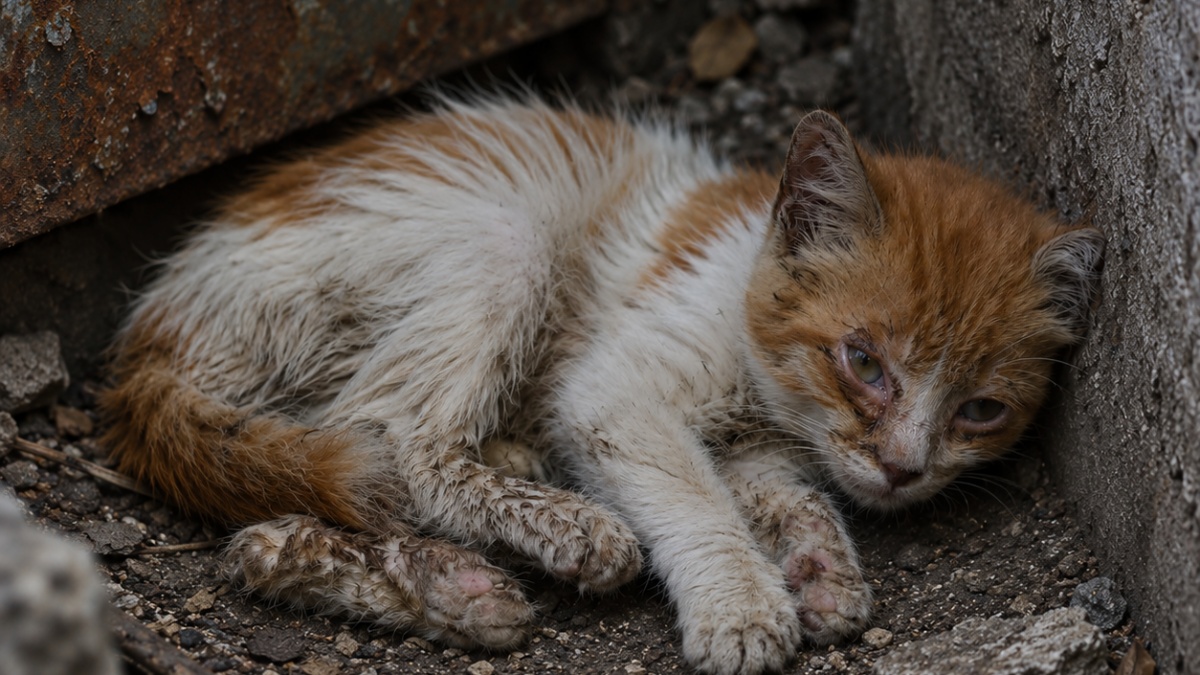
PART 2
“BAXT.”
I leaned closer.
The fragment was no bigger than my thumbnail.
“What is that?”
Dr. Whitaker pointed with the end of a pen.
“Small piece of thin metal. Superficial. It was under the skin near his left flank.”
“From what?”
“We removed it during wound cleaning.”
He placed a sealed specimen cup on the counter.
Inside was the bent gray piece.
The letters were clearer there.
BAXT.
Megan looked at me.
“The warehouse.”
Baxter Industrial Storage.
The abandoned property where we found him had once been part of Baxter Packaging and Distribution, a company that moved operations two years earlier.
“That could have come from the building,” I said.
“Exactly,” Dr. Whitaker answered. “Sharp metal, old shelving, debris. It doesn’t tell us how he was injured.”
“Could falling debris cause nine fractures?”
“One event could cause multiple fractures.”
“But not at different ages.”
“No.”
He folded his arms.
“That is the part I don’t like.”
Neither did I.
The kitten was still under anesthesia.
His surgeries were technically successful, but the next forty-eight hours mattered most.
He needed pain control.
Fluids.
Antibiotics.
Monitoring for internal bleeding.
Monitoring for neurological problems from the pelvic and vertebral injuries.
Monitoring for infection in the damaged eye.
I stared through the glass at the incubator.
“What are we calling him?”
Megan answered first.
“Felix.”
“No.”
“Why?”
“He doesn’t look like a Felix.”
“He looks unconscious.”
I almost laughed.
Almost.
Dr. Whitaker looked at the chart.
“What about Milo?”
The kitten’s ear moved slightly.
Megan pointed.
“He voted.”
“Milo, then.”
That afternoon, Officer Carmen Diaz from county animal control arrived.
Dr. Whitaker had filed the mandatory report because the pattern of injuries raised concern for abuse.
Carmen photographed everything.
The external wounds.
The X-rays.
The fragment.
The blanket.
The location coordinates Denise had sent.
Then she asked us to tell the story from the beginning.
We did.
No assumptions.
No guesses.
Only what we saw.
When we finished, she asked, “Did either of you see anyone at the warehouse?”
“No.”
“Vehicles?”
“One white van leaving the service road when I pulled in,” Megan said.
I turned.
“You didn’t mention that.”
“I didn’t think it mattered.”
Carmen immediately looked at her.
“What kind of van?”
“Cargo van. Older. Maybe Ford.”
“Logo?”
“I couldn’t see.”
“Plate?”
“No.”
“Time?”
“Eight-thirty-ish.”
Carmen wrote it down.
“Which direction?”
Megan pointed.
“South.”
That became the first thing we had besides a broken kitten.
Not evidence.
Just a van.
The property itself was more complicated than we expected.
Baxter no longer occupied the warehouse, but the company still owned it.
A private maintenance contractor checked the building twice a week.
Security cameras remained active around the loading dock because theft had become a problem.
That sounded promising.
It wasn’t.
The camera facing the rear lot had been broken for three months.
At least according to the property manager.
Carmen asked for maintenance records anyway.
The front camera worked.
Side entrance camera worked.
Rear loading dock did not.
The broken camera irritated me in a way I could not explain.
“It’s always the useful camera.”
Carmen looked at me.
“Real cases are built out of all the inconvenient pieces nobody wants.”
“That sounds depressing.”
“It is.”
The first night after surgery, Milo crashed.
His temperature dropped.
Blood pressure fell.
I was at home when Dr. Whitaker called.
“Rachel, I need you to understand he’s unstable.”
I sat straight up.
“Internal bleeding?”
“Not significant enough to explain it. He’s very depleted. His body has been compensating for too much.”
“Do I come?”
There was a pause.
“If you want to.”
That meant yes.
I drove through rain at midnight.
When I reached the clinic, Milo was wrapped in warmed blankets.
One technician adjusted his fluids.
Another watched the monitor.
He looked smaller than ever.
I put one finger near his face.
His nose moved.
“Hey.”
His eye opened halfway.
“You survived nine fractures. You’re not leaving now.”
Dr. Whitaker stood behind me.
“Don’t make promises for him.”
“I’m not.”
“You are.”
“Then I’m making a request.”
Milo’s paw twitched.
The good one.
Barely.
I stayed until four in the morning.
At 4:26, his blood pressure improved.
At 5:10, he fell asleep without crying.
It was the first time I had seen him rest.
I put my head down on my folded arms beside the kennel and slept too.
When I woke, sunlight was coming through the blinds.
Milo was staring at me.
“You look terrible,” Megan said from behind me.
“So does he.”
Milo blinked.
“Sorry.”
He survived the second night.
Then the third.
The swollen eye began responding to treatment.
He ate a teaspoon of soft food.
Then another.
The first time he licked food from a spoon, three technicians stopped working to watch.
Milo did not appreciate an audience.
He turned his head away.
“That is attitude,” Dr. Whitaker said.
“Good?”
“Excellent.”
The medical battle became a matter of inches.
Less swelling.
More appetite.
Stable temperature.
Fewer pain spikes.
No major surgical infection.
The fractures would take weeks to heal.
Rehabilitation longer.
But the immediate threat was receding.
That gave my anger room to grow.
I hated that.
When Milo was actively dying, there was no mental space for rage.
Only tasks.
Once he stabilized, I kept looking at the X-rays.
Fresh fracture.
Older fracture.
Another older injury.
One rib starting to callus.
A shoulder already healing.
Somebody had either repeatedly hurt him or repeatedly failed to protect him from something causing serious trauma.
Carmen warned me not to build a story before she had one.
“I know.”
“You say that every time you’re already building one.”
“I’m allowed to think.”
“You’re allowed to think. You’re not allowed to confront anyone, post names, or contaminate witnesses.”
“I know.”
“Rachel.”
“What?”
“Promise.”
“Fine. I promise.”
She gave me the look people give addicts.
I did not appreciate it.
Three days later, she called.
“Your white van exists.”
My heart jumped.
“What?”
“Front camera caught it.”
“Warehouse camera?”
“Yes.”
“Plate?”
“Not fully. But enough.”
“What company?”
“Northline Property Services.”
I knew the name.
They handled maintenance for several commercial properties.
Including, apparently, Baxter.
“Who was driving?”
“Not clear yet.”
“How many employees?”
“Seven.”
“Who was scheduled there?”
“According to Northline, one technician.”
“Name?”
“Rachel.”
“Come on.”
“No.”
“Why?”
“Because I haven’t interviewed him.”
She hung up.
I stared at my phone.
Megan laughed.
“She likes you.”
“She enjoys psychological warfare.”
The technician’s name was Tyler Mason.
Thirty-four.
Maintenance worker.
No violent criminal record.
A couple of traffic tickets.
One disorderly conduct citation from years earlier after a bar fight.
Nothing that proved anything.
Northline’s work log showed Tyler had been at Baxter that evening from 6:30 until 8:18.
The van left at 8:27.
Megan arrived a few minutes later.
Carmen interviewed him.
Tyler said he had never seen Milo.
He had been replacing exterior lights and checking copper lines.
Cats lived around the warehouse.
He ignored them.
Did he ever trap them?
No.
Feed them?
No.
Touch them?
No.
Why did the rear camera not work?
Not his responsibility.
When did he first know it was broken?
Months ago.
Did he report it?
Property manager already knew.
Nothing.
Carmen described the kitten.
Orange and white.
Approximately twelve weeks.
Tyler shrugged.
“Could be any of them.”
That sentence bothered her.
Why?
Because she had not told him there was a colony.
Only that a kitten had been found.
“How many cats are back there?” she asked.
Tyler realized his mistake.
“I’ve seen a few.”
“When?”
“Different times.”
“How many?”
“Three. Four. I don’t know.”
“Adults?”
“Some.”
“Kittens?”
“I guess.”
“Orange-and-white one?”
“I don’t remember.”
He ended the interview soon after.
Suspicious?
Maybe.
Proof?
Not even close.
Then the warehouse property manager mentioned something offhand.
“Tyler complained about cats.”
Carmen stopped.
“When?”
“Couple months ago.”
“About what?”
“They were getting into insulation.”
“Anything else?”
“Leaving mess around the loading area.”
“What did he want done?”
“Pest company.”
“Did Baxter approve it?”
“No. We told Northline to use humane deterrents and contact animal control if needed.”
“Was that communicated to Tyler?”
“Yes.”
Carmen asked for emails.
There they were.
PROPERTY MANAGER: No lethal traps. No poison. No injury to animals. If cats are present, contact county animal services.
Northline supervisor forwarded the message.
TYLER: Fine.
One word.
Still not enough.
The next break came from a woman who lived behind the warehouse.
Her name was Patricia Gomez.
She fed the local cat colony.
When the rescue posted a generic notice asking for information about injured cats near the Baxter property—without showing Milo’s worst injuries—Patricia called.
“I know that kitten.”
I drove with Carmen to meet her.
She lived in a small brick duplex behind a railroad spur.
Patricia showed us photographs on her phone.
Cats around metal dishes.
Two adults.
Three kittens.
Then Milo.
Healthy.
Standing on all four legs.
Date: six weeks earlier.
My throat tightened.
“He was okay.”
Patricia looked confused.
“What happened to him?”
Carmen answered carefully.
“He was badly injured.”
Patricia covered her mouth.
“Oh no.”
“Did you notice him disappear?”
“Yes.”
“When?”
“Maybe three weeks ago.”
“Then he came back?”
Patricia scrolled.
“I saw him limping once.”
Another photograph.
Milo under a pallet.
Front leg held up.
Date: eleven days before we found him.
One injury already present.
“Did you try to catch him?”
“Yes. He ran.”
“He could run then?”
“Slowly.”
“Did anyone around the warehouse bother the cats?”
Patricia hesitated.
“What?”
“There was a man.”
Carmen leaned forward.
“Tell me.”
“Maintenance guy. White van.”
“Do you know his name?”
“No.”
“What did he do?”
“He hated them.”
“How do you know?”
“He yelled at me once.”
“What did he say?”
“That if I kept feeding them, I was making his job harder.”
“Did he threaten the cats?”
“He said they were vermin.”
My hands clenched.
Carmen noticed.
“Rachel.”
“I’m fine.”
Patricia continued.
“One time I saw him throw something.”
“At a cat?”
“Yes.”
“What?”
“Small piece of wood.”
“Did it hit the cat?”
“I don’t know.”
“Which cat?”
“Black one.”
Not Milo.
Carmen asked, “Anything else?”
Patricia looked toward me.
“There was a trap.”
“What kind?”
“Live trap.”
“Who set it?”
“I assumed the company.”
“Did you see a cat inside?”
“Yes.”
“When?”
“A couple weeks ago.”
“What happened?”
“The next day, trap was gone.”
“Which cat?”
“I couldn’t see.”
Carmen wrote everything.
Then Patricia said something that made both of us look up.
“I heard screaming once.”
“Cat?”
“Yes.”
“When?”
“Maybe five nights before you found him.”
“What time?”
“Late. Around ten.”
“From the warehouse?”
“The back lot.”
“Did you call anyone?”
Patricia looked ashamed.
“No.”
“Why?”
“I thought cats were fighting.”
That answer was believable.
Painfully.
Cats scream during territorial fights.
Nobody hears a sound near a warehouse and automatically thinks a kitten is being systematically injured.
But five nights before discovery fit one set of fresh fractures.
The case was forming.
Still, there was a problem.
Tyler could have been cruel without being the person who caused Milo’s nine fractures.
The warehouse had trespassers.
Copper thieves.
Teenagers.
People dumping trash.
Patricia’s testimony established hostility.
Not causation.
Carmen needed more.
Milo went into medical foster with me during the investigation.
Dr. Whitaker objected for exactly three seconds.
“You have experience?”
“Yes.”
“With orthopedic recovery?”
“Yes.”
“With nine fractures?”
“Oddly, no.”
He handed me a four-page schedule.
Milo came home inside a padded carrier like a tiny piece of glass.
For the first two weeks, he lived in a large recovery pen in my spare bedroom.
No jumping.
No climbing.
No running.
Milo considered these rules offensive.
By day four, he was trying to pull himself over the side.
“You have metal pins in both front legs.”
He stared.
“That means no.”
He continued climbing.
I lowered the wall and added a cover.
He attacked the zipper.
Recovery changed him quickly.
Pain control gave him personality.
Personality gave me trouble.
He screamed for food.
Pulled bandages.
Bit medication syringes.
Batted at my fingers.
The first time he tried to bite me, I almost cried.
Not because it hurt.
Because the kitten behind the warehouse had not defended himself at all.
Now he believed his body belonged to him again.
That was progress.
At his two-week recheck, Dr. Whitaker compared X-rays.
“Everything is holding.”
“Pelvis?”
“Stable.”
“Ribs?”
“Healing.”
“Spine?”
“The small process fractures are healing without instability.”
“Will he walk normally?”
“Maybe.”
I hated that word.
“He’s three months old.”
“Which helps.”
“What’s the worst case?”
“Chronic limp. Limited range in one front leg. Arthritis later. Possibly neurological weakness depending on how the pelvic injury resolves.”
“Best?”
“He becomes a cat and ignores every medical prediction.”
Milo bit his stethoscope.
Dr. Whitaker nodded.
“Promising.”
The investigation stalled for almost two weeks.
Then Northline fired Tyler.
Not because of Milo.
At least officially.
He had been caught falsifying work hours on another property.
That gave investigators access to something they had not known existed.
His work tablet.
Northline owned it.
When IT reviewed it, they found photographs.
Most were routine.
Broken lights.
Damaged locks.
Water leaks.
Then one folder labeled BAXTER.
Inside were pictures of the cat colony.
At first, I thought that might be innocent documentation.
Then Carmen showed me one photograph.
A live trap.
Inside was Milo.
Healthy.
Date: seventeen days before we found him.
Another photograph, next day.
Milo still inside.
His front paw was caught awkwardly against the trap door.
Another.
Empty trap.
Then, three days later, Milo beneath the loading dock.
Limping.
My stomach turned.
“Why photograph this?”
Carmen said, “His supervisor asked him to document animal activity.”
“So he documented hurting him?”
“We don’t know the trap caused the first fracture.”
“Look at his leg.”
“I see it.”
“Carmen.”
“We prove one thing at a time.”
There were messages from Tyler to another employee named Bryan.
TYLER: Caught the orange rat.
BRYAN: Cat?
TYLER: Same thing.
BRYAN: Call animal control.
TYLER: They won’t come fast enough.
BRYAN: Then leave it alone.
TYLER: I’m teaching it not to come back.
My whole body went cold.
“What does that mean?”
Carmen’s face was hard.
“We intend to ask.”
Another message two days later.
BRYAN: You let that kitten out?
TYLER: Eventually.
BRYAN: Dude.
TYLER: It can still move.
That was the first time I had to sit down.
It can still move.
Not it’s okay.
Not it escaped.
Not it’s alive.
It can still move.
Milo was asleep in my lap when Carmen called later that evening.
I put one hand over his back.
He purred.
I thought about those words.
Somebody had evaluated his suffering based on whether movement remained.
The next search warrant covered Tyler’s garage and personal phone.
The case widened.
Investigators found commercially available live traps.
Wooden stakes.
A metal-handled grabber.
Nothing illegal.
Nothing automatically connected to Milo.
Then the phone extraction produced video.
Carmen called me before showing it.
“You do not have to watch.”
“Does it show him?”
“Yes.”
“Does it show Milo?”
“Yes.”
“Then I’m watching.”
“That is not necessary for you to help the case.”
“I need to know.”
She hesitated.
“Dr. Whitaker recommends you don’t.”
“Why did you ask him?”
“Because unlike you, he occasionally follows good advice.”
I almost laughed.
Then I saw her face.
“How bad?”
“Bad enough.”
I chose not to watch.
That remains one of the better decisions I made.
I did read the summary.
The video was thirty-two seconds.
Recorded eleven days before Milo was found.
It showed Milo inside a live trap.
Tyler visible.
He struck the outside of the trap with a long object to frighten the kitten.
Milo threw himself against the metal repeatedly.
At one point, his front leg became trapped.
The video ended.
Was that when one fracture occurred?
Likely.
Could it explain nine?
No.
A second video was worse.
Recorded six days later.
Milo had been recaptured.
Tyler pulled him from the trap using thick gloves.
The kitten struggled.
The phone shifted.
Then there was impact and a cry.
Investigators believed Tyler had thrown or dropped him onto the concrete.
The camera did not perfectly show the motion.
Audio and aftermath mattered.
Milo lay still.
Tyler said, “See if you come back now.”
I read that sentence once.
Then put the report down.
Megan sat beside me.
“You okay?”
“No.”
“Good.”
I looked at her.
“What?”
“If you said yes, I’d worry.”
The final video was not from Tyler’s phone.
It came from Bryan.
The coworker.
Bryan had started recording because he was worried.
He had previously told Tyler to stop.
But he had not reported him.
That mattered.
In the footage, Tyler complained the cats were damaging insulation.
Bryan said, “Call animal control.”
Tyler replied, “I’m tired of calling.”
Bryan said, “Then leave them.”
Tyler kicked the bottom of a pallet.
Milo crawled out.
Already injured.
Tyler moved toward him.
Bryan stepped between them.
“Dude, stop.”
Tyler laughed.
“What, you’re an animal cop now?”
The video ended there.
Bryan had kept it because he later considered reporting Tyler.
He never did.
Until investigators found the messages.
When Carmen interviewed him, he cried.
“I should have called.”
“Yes,” she said.
“I thought he was just scaring them.”
“You watched him hurt one.”
“I know.”
“Why didn’t you call?”
“My wife was pregnant. I needed the job.”
Carmen told me she did not soften that part.
Fear explains silence.
It does not transform silence into protection.
Bryan eventually became a key witness.
Tyler was arrested and charged under state animal-cruelty statutes, including serious counts related to knowingly causing substantial injury to a companion animal.
The prosecutor did not claim every fracture could be assigned to one specific act.
That would have been difficult medically.
Instead, they built the timeline.
Healthy kitten.
Trap.
First injury.
Continued recapture.
Escalating trauma.
Video.
Witnesses.
Medical ages of fractures.
Tyler’s own messages.
His own words.
Teaching it not to come back.
It can still move.
See if you come back now.
His own evidence became the revenge.
Nothing I could have done to him would have been cleaner than that.
But Tyler did not simply surrender.
His attorney attacked everything.
First, the cat was feral.
That did not matter legally the way he hoped.
You cannot intentionally torture a feral animal because nobody owns it.
Then they argued the injuries came from traffic.
No road trauma pattern.
No external injuries consistent with a vehicle strike.
Then they argued other people had access to the warehouse.
True.
Then that Milo might have been attacked by dogs.
Possible in theory.
Dr. Whitaker explained why the pattern was inconsistent with bite trauma.
Then they argued the videos were taken out of context.
That was harder to say when Tyler’s own voice provided context.
The defense also attacked Bryan.
“You waited to report.”
“Yes.
“You disliked Mr. Mason after he received a promotion you wanted.”
“Yes.”
“You had motive to hurt him professionally.”
Bryan looked miserable.
“Yes.”
“So why should anyone trust you?”
He swallowed.
“Because I’m admitting the parts that make me look bad too.”
The attorney paused.
Bryan continued.
“I saw things I should have reported. I didn’t. I’m not proud of it.”
That honesty helped him.
Patricia testified too.
She described feeding the colony.
Tyler yelling.
The trap.
The screams.
The defense asked whether she actually saw Tyler injure Milo.
“No.”
“So your testimony cannot prove he caused these fractures.”
“No.”
She looked toward the prosecutor.
“But I wish I had gone outside when I heard him crying.”
The judge told the jury to consider only what she observed.
That was fine.
This case did not need emotional exaggeration.
The facts were already enough.
Milo had another surgery before trial.
One front pin had shifted slightly as bone remodeled.
Dr. Whitaker corrected it.
Recovery restarted.
That setback crushed me more than it crushed Milo.
He woke from anesthesia furious and hungry.
I sat beside him.
“I’m sorry.”
He glared.
“This is not permanent.”
Glare.
“You’ll walk.”
Glare.
“Probably.”
He bit the blanket.
“That’s the spirit.”
At five months old, Milo took his first unsupported steps in my kitchen.
Three.
Then four.
His right front leg remained stiff.
The left worked better.
One hind leg rotated slightly outward.
He walked like a tiny drunken cowboy.
Megan laughed.
I nearly threw a towel at her.
“He’s beautiful.”
“He’s sideways.”
“He’s healing.”
Milo walked toward the food bowl.
Fell.
Got up.
Kept going.
I cried.
He ignored me.
At six months, he ran.
Not elegantly.
Across the rug after a toy mouse.
He reached it.
Rolled.
Got up.
Attacked again.
I sent the video to Dr. Whitaker.
He replied:
THAT CAT DID NOT READ HIS CHART.
The criminal case went to trial when Milo was around eight months old.
I attended every day.
Not because I enjoyed it.
Because I wanted to hear the truth without social-media summaries.
Tyler looked ordinary.
That was difficult.
Thirty-five by then.
Clean shirt.
Short hair.
Wedding ring.
He had a five-year-old daughter.
His wife sat behind him during parts of the trial.
Nobody wants villains to have children.
It complicates anger.
But real people are complicated.
The prosecution’s case began with Dr. Whitaker.
He explained the nine fractures.
The different stages of healing.
The old shoulder injury.
The ribs.
The pelvis.
The vertebral-process fractures.
The defense attorney asked, “Doctor, can you say Mr. Mason caused all nine injuries?”
“No.”
“Any of them?”
“I can testify that injuries visible in the videos are medically consistent with some of the injuries I treated. I cannot assign every fracture to a specific recorded event.”
“So you cannot prove nine separate acts.”
“I was not asked to.”
The attorney frowned.
Dr. Whitaker continued only when asked.
The prosecutor said, “Doctor, what does different-stage healing tell you?”
“That trauma occurred on more than one occasion.”
“Could normal kitten play create this pattern?”
“No.”
“A short fall from a chair?”
“No.”
“Another cat?”
“Extremely unlikely.”
“A car?”
“One collision could cause severe trauma, but the healing stages show more than one injury event.”
“Was Milo capable of protecting himself?”
“At that age and size, barely.”
The prosecutor showed the intake photograph.
Milo curled on the blanket.
Barely conscious.
“Did he fight treatment?”
“No.”
“Why not?”
“I can’t know his thoughts. Medically, he was exhausted and in extreme pain.”
The room became quiet.
Then Patricia.
Then Bryan.
Then the digital evidence specialist.
Tyler’s messages appeared on screen.
CAUGHT THE ORANGE RAT.
I’M TEACHING IT NOT TO COME BACK.
IT CAN STILL MOVE.
The defense objected to emotional interpretation.
The prosecutor did not need interpretation.
The words sat there.
Then the first video played.
I looked down.
I had chosen not to see it before.
I chose the same in court.
I heard metal rattle.
A kitten cry.
Someone behind me gasped.
I stared at my hands.
Megan put one hand over mine.
The second video played.
Impact.
Then Tyler’s voice.
“See if you come back now.”
I closed my eyes.
That sentence followed me for weeks.
The defense case argued Tyler had been frustrated with a feral-colony problem the property owner failed to address.
That part was true.
Emails showed repeated complaints.
Insulation was damaged.
Waste cleanup cost money.
Northline had asked Baxter to arrange professional removal.
Baxter delayed.
Tyler’s supervisor told him to “deal with it until we get approval.”
Ambiguous wording.
Tyler’s attorney tried to use it.
“Did your supervisor tell you to handle the cat problem?”
“Yes.”
“Were you given equipment?”
“Live traps.”
“For what purpose?”
“To catch cats.”
“So your employer instructed you to trap them.”
“Yes.”
That created a temporary problem for the prosecution.
Tyler was authorized to use humane live traps.
The question was what happened after capture.
The prosecutor asked his supervisor, “Did you authorize employees to strike traps?”
“No.”
“Throw animals?”
“No.”
“Hold kittens for days without water?”
“No.”
“Attempt to frighten them through injury?”
“Absolutely not.”
“Did company policy require captured animals to be transferred to animal control?”
“Yes.”
“Was that done with Milo?”
“No.”
The supervisor had his own failure.
He knew animal control response was delayed.
He knew Tyler hated the cats.
He had not checked.
Northline later faced administrative consequences and a civil claim tied to inadequate supervision.
That did not erase Tyler’s responsibility.
It showed how neglect can operate around active cruelty.
One person acts.
Others fail to interrupt.
Systems make the failure easier.
Then Tyler testified.
His attorney almost certainly hoped to humanize him.
It worked at first.
Tyler talked about overtime.
A newborn son.
Pressure from his supervisor.
Repeated cleanup.
Cat urine in insulation.
Fleas.
Scratches.
Complaints from Baxter.
Animal control taking days to respond.
He sounded like a frustrated maintenance worker.
I could understand frustration.
Then the prosecutor asked, “What did a three-pound kitten have to do with your staffing problem?”
Tyler’s face changed.
“He was part of the colony.”
“Was he responsible for Baxter’s delayed pest-control contract?”
“No.”
“Responsible for your supervisor’s instructions?”
“No.”
“Responsible for animal control response time?”
“No.”
The prosecutor displayed the trap photograph.
“Why was he inside this cage?”
“To keep him out of the building.”
“For how long?”
“I don’t remember.”
“Records show at least overnight.”
“Maybe.”
“Food?”
“I don’t know.”
“Water?”
“I don’t remember.”
The prosecutor changed images.
Milo limping.
“Did you notice he was injured?”
“Yes.”
“Did you seek veterinary care?”
“He was feral.”
“That was not my question.”
“No.”
“Animal control?”
“No.”
“Rescue?”
“No.”
“Why?”
“I didn’t think he was that hurt.”
Then the messages appeared.
IT CAN STILL MOVE.
The prosecutor read them aloud.
“You knew he was injured.”
“I knew he was limping.”
“And your standard for whether he needed help was whether he could still move?”
“That’s not what I meant.”
“What did you mean?”
Tyler stared at the screen.
“I was being sarcastic.”
“About an injured kitten?”
His attorney objected.
The judge allowed the prosecutor to rephrase.
“Were you concerned about his injury?”
“At the time? No.”
“Why?”
Tyler’s shoulders rose.
“I was angry.”
There it was.
The honest part.
“Angry at whom?”
“The cats. The property manager. My boss. Everybody.”
“Did Milo know any of that?”
No answer.
“Did he cause any of that?”
“No.”
“Then why take it out on him?”
Tyler looked at his attorney.
The judge instructed him to answer if he could.
Finally, he said, “I don’t know.”
The prosecutor played the second video.
“See if you come back now.”
Then she asked, “What were you trying to accomplish?”
Tyler’s jaw tightened.
“Scare him away.”
“By hurting him?”
“I didn’t mean to break bones.”
That sentence changed the room.
His attorney moved.
Too late.
The prosecutor waited.
“You did not mean to break bones.”
“No.”
“So you admit you intentionally did something physical enough that broken bones were a possible result.”
His attorney objected immediately.
The judge sustained and told the jury to disregard the characterization.
But Tyler’s words remained.
He tried to repair them.
“I meant I pushed him away.”
The prosecutor returned to the video.
“Does that sound like a push?”
No answer.
Then the strongest evidence appeared.
Something investigators had held back from public reporting.
A security audio recording from inside the loading-dock office.
The rear camera had been broken.
The interior system still captured sound and motion through a microphone used with the alarm panel.
The audio had not surfaced initially because the property manager did not know it was archived separately by the security vendor.
Digital forensics recovered clips triggered by door movement.
In one recording, Bryan’s voice:
“Tyler, leave the kitten alone.”
Then Tyler:
“It keeps coming back.”
Bryan:
“Because its mother is back there.”
Tyler:
“Then maybe she’ll learn too.”
Metal noise.
A cry.
Bryan saying:
“Stop.”
That was the piece Tyler had not expected.
The evidence he did not know existed.
His own voice.
His own explanation.
Not pest control.
Not accident.
Punishment.
The courtroom went silent.
The defense attorney asked for a recess.
Afterward, the tone changed.
The case no longer centered on whether Tyler was merely careless.
His own words established intent to frighten and punish.
The jury deliberated less than a day.
Guilty on the most serious cruelty count they considered.
Guilty on additional related counts.
Some charges merged for sentencing.
Nobody applauded.
I did not feel victorious.
I thought about Milo asleep in my house with one crooked front leg stretched across my pillow.
Punishment could not unbreak bones.
It could not erase the nights he woke from pain.
But it could do something.
It could put a boundary around what happened and say:
This was not normal.
This was not pest control.
This was not frustration.
This crossed a line.
At sentencing, Bryan spoke first.
That surprised me.
He was not a victim in the legal sense, but the court allowed a limited statement about what he witnessed and his own role.
“I should have reported him the first time.”
He looked toward Tyler.
“I told myself stepping between him and the cat was enough.”
He paused.
“It wasn’t.”
Then Patricia.
She admitted she heard Milo crying and assumed cats were fighting.
“I don’t blame myself for not knowing,” she said. “But I will never ignore that sound again.”
Then the prosecutor asked whether I wanted to speak.
I almost said no.
I had rehearsed something angry.
It sounded stupid by the time I stood.
So I told the truth.
“When I found Milo, he did not scratch me.”
Tyler looked down.
“He did not bite. He did not run. He barely moved.”
I swallowed.
“For weeks, people described him as feral. By the time I met him, he had learned that movement hurt.”
The courtroom was silent.
“I don’t know which act caused which fracture. I’m not a veterinarian.”
I looked toward Dr. Whitaker.
“What I know is that now he bites me when I trim his nails.”
A few people smiled.
“He runs badly. He jumps where he shouldn’t. He knocks water off tables. He steals food.”
I looked at the judge.
“That is what healing looks like in my house.”
Then I sat.
No speech about monsters.
No wish for suffering.
I was done giving Tyler more emotional space than Milo deserved.
The judge imposed a sentence that included incarceration, probation after release, restitution toward veterinary and investigative costs, counseling requirements, and a long prohibition on owning, possessing, or working unsupervised with animals.
Northline terminated him permanently.
The company also paid part of Milo’s costs under a civil settlement after acknowledging supervisory failures and incomplete response to repeated animal-control concerns.
Baxter repaired the rear security system and contracted a licensed trap-neuter-return group to manage the colony.
That part mattered more to me than almost anything.
The adult cats were humanely trapped.
Vaccinated.
Spayed or neutered.
Returned where appropriate.
Two friendly cats were adopted.
The colony shrank naturally over time.
No poison.
No violence.
No “teaching them a lesson.”
Just management.
The thing Tyler had insisted was impossible turned out to be ordinary once somebody actually did it correctly.
Bryan left Northline a few months later.
He enrolled in an HVAC program.
Before he left, he donated five hundred dollars toward Milo’s rehabilitation.
I almost returned it.
Then Megan said, “Why?”
“He failed him.”
“Yes.”
“He’s trying to do something now.”
I kept it in Milo’s medical fund.
Redemption should cost something.
Not just feelings.
Milo continued healing.
At nine months old, the last orthopedic pin came out.
Dr. Whitaker held the tiny piece of metal with forceps.
“You keeping this?”
“No.”
“You kept his baby tooth.”
“That was different.”
“How?”
“It was adorable.”
“This is surgical history.”
“This was expensive.”
“Exactly.”
I took the pin.
Fine.
It lives in a small jar in my desk.
Milo’s right front leg never became perfectly straight.
His pelvis healed with mild asymmetry.
He could run.
Climb.
Jump.
Do every dangerous thing a cat with an orthopedic history should reconsider.
He reconsidered nothing.
The first time he jumped onto the refrigerator, I screamed.
He looked down.
“What are you doing?”
He sat.
“Milo.”
He washed his paw.
“You have nine-fracture history.”
No response.
“You are not medically cleared for arrogance.”
He knocked a magnet off.
I called Megan.
“He’s on the refrigerator.”
“Congratulations.”
“This is not congratulations.”
“It is if you remember where he started.”
I looked up.
Milo was now trying to climb onto the cabinet above the refrigerator.
I hated when she was right.
I formally adopted him before his first birthday.
Nobody was surprised.
Susan, our rescue director, put the paperwork in front of me.
“You know this means we lose a foster.”
“He was never fosterable.”
“You fostered him.”
“Technicality.”
“You have his portrait on your mantel.”
“Medical documentation.”
“You bought stairs for your bed.”
“Orthopedic accommodation.”
“Milo has trained you.”
I signed.
MILO MORGAN.
Orange and white.
Male.
Estimated birthday: July.
Special medical history.
I looked at the line.
Nine fractures.
I crossed nothing out.
That history belonged to him.
But it did not define the animal asleep inside my purse.
Years passed.
Milo became enormous.
Not physically.
Emotionally.
He was twelve pounds of confidence.
He hated closed doors.
Loved tuna.
Despised one specific ceiling fan.
Slept across my throat.
Attacked shoelaces.
If a stranger entered, he hid for thirty seconds, then emerged to inspect whether they had brought food.
Men with work boots frightened him for the first two years.
That faded.
Metal clanging remained harder.
If I dropped a baking sheet, Milo vanished.
I learned to warn him before vacuuming.
Trauma leaves strange maps.
Some roads disappear.
Some remain.
Dr. Whitaker warned me arthritis would likely come early.
He was right.
At five, Milo developed stiffness in the right front leg.
We managed it.
Weight control.
Supplements with reasonable evidence.
Pain medication when needed.
Low shelves.
Ramps he ignored.
At seven, I volunteered to foster a tiny black kitten recovering from a leg amputation.
Her name was June.
Milo hated her for exactly forty-eight hours.
Then I found them asleep together.
June had one front leg.
Milo had one crooked front leg.
Together they moved through my house with zero respect for furniture.
Megan called them “the orthopedic crime syndicate.”
Accurate.
June was adopted after six weeks.
Milo searched the spare room for her for two days.
Then stole her leftover toys.
Resilience has poor manners.
A few years after Tyler’s release, I received a letter.
Not from him.
From his wife.
Her name was Claire.
I almost did not open it.
Inside was one page.
Rachel,
You don’t know me except from court.
I’m not writing to ask you to forgive Tyler.
Our daughter was five when he was arrested. She is older now and asks questions.
I want you to know that what happened changed our family. I left during his incarceration. Not because of the case alone, but because I finally stopped explaining away his anger.
I saw the videos after trial.
I wish I had understood sooner who he became when he believed something weaker was inconveniencing him.
I hope Milo is well.
Claire.
I read it twice.
Then put it away.
Tyler’s cruelty had consequences beyond the courtroom.
Not because I wanted his family broken.
Because patterns rarely live in one room.
Claire’s sentence stayed with me.
Who he became when something weaker inconvenienced him.
That was the center of it.
Milo had not betrayed him.
Threatened him.
Cost him anything meaningful.
He simply existed where Tyler did not want him.
That was enough.
I never answered Claire.
Not because I was angry.
I did not know what answer she needed.
Sometimes a letter is not asking for one.
When Milo was eight, Dr. Whitaker retired.
His final week, I brought Milo to the clinic.
“Look at this disaster.”
Milo immediately bit the end of his stethoscope.
Dr. Whitaker laughed.
“Still violent.”
“Tragic.”
He ran his hands gently along Milo’s legs.
“Arthritis?”
“Manageable.”
“Jumping?”
“Constant.”
“Good.”
“You told me to restrict jumping.”
“I lost authority when I retired.”
Milo climbed onto his lap.
Dr. Whitaker scratched beneath his chin.
“Do you remember the first night?”
“Yes.”
“I thought we might lose him.”
“So did I.”
“I didn’t tell you how close.”
“Thank you.”
“I’m telling you now.”
“Why?”
He smiled.
“Because now it sounds like history instead of a threat.”
That was true.
History.
Nine fractures.
Six-hour surgery.
Falling blood pressure.
Metal pins.
Words that once felt like the only things in the world.
Now they were lines in a file.
Milo was busy trying to open Dr. Whitaker’s treat drawer.
Before we left, Dr. Whitaker handed me the original intake X-ray.
A copy.
Not the diagnostic original.
“You want this?”
“Why would I?”
“So one day, when he jumps off something stupid and you yell at him, you remember you begged for him to move.”
I took it.
Years later, it still hangs in my office.
Not prominently.
Just beside a photograph of Milo running across my living room.
Broken bones beside motion.
Past beside present.
At ten, Milo’s kidney values began creeping upward.
Nothing catastrophic.
Early chronic kidney disease.
We adjusted food.
Increased hydration.
Monitored.
At eleven, arthritis worsened.
He stopped jumping onto the refrigerator.
That was the first sign of age that truly hurt me.
I found him one morning sitting below it.
Looking up.
“You thinking about it?”
He looked at me.
I put a small stool nearby.
Then another.
Within a week, he had a staircase to the refrigerator.
Megan saw it.
“You built him a ladder?”
“No.”
“What is that?”
“Accessibility.”
“You once yelled at him for going up there.”
“I have evolved.”
“You have surrendered.”
Also true.
At twelve, he developed high blood pressure.
Medication.
He hated pills.
I hid them in chicken.
He learned to eat around them.
I crushed them where medically appropriate.
He detected that too.
We entered a pharmaceutical arms race.
Milo won most rounds.
At thirteen, June’s adopter contacted me.
June had died peacefully after a short illness.
I sat beside Milo.
“You remember the tripod?”
He opened one eye.
“She died.”
He washed one paw.
“That’s emotionally unavailable.”
He put his paw on my arm.
Accident?
Probably.
I counted it.
By then, Milo’s face had whitened around the muzzle.
His orange coat faded.
The right front leg bent more noticeably when he walked.
But he still played.
Still demanded breakfast.
Still climbed onto my chest at night.
Every morning at 5:40, he yelled.
A normal cat meow.
Loud.
Clear.
I never got tired of it.
Because the kitten behind the warehouse had been too hurt to make more than one small scream.
Years later, that same animal was waking an entire house because breakfast was six minutes late.
That was wealth.
The final year came slowly.
Kidneys worse.
Weight dropping.
Arthritis difficult.
Then one afternoon, Milo fell while walking toward the water bowl.
He stood again.
I pretended not to panic.
At the clinic, Dr. Elena Park—Whitaker’s successor—examined him.
“He’s losing muscle.”
“I know.”
“Kidneys are progressing.”
“I know.”
“Pain?”
“Managed?”
She looked at me.
“For now.”
I hated those two words.
For now.
We added fluids at home.
Milo hated the needle.
Loved the attention afterward.
I learned to give subcutaneous fluids while he ate chicken paste.
He tolerated injustice in exchange for poultry.
Months passed.
Then he stopped eating.
The first day, I bribed.
The second, I called.
Bloodwork showed what I feared.
Kidneys failing.
Anemia.
Dehydration despite fluids.
Dr. Park admitted him overnight.
I went home.
The house felt wrong.
At 2:00 a.m., I found myself standing in the spare room where his recovery pen had once been thirteen years earlier.
I could still see it.
Small orange-and-white body.
Two splinted front legs.
One pelvis held together by tiny hardware.
Eyes watching.
The next morning, Dr. Park called.
“He ate a little.”
Hope is cruel when it arrives in teaspoons.
I drove immediately.
Milo looked tired.
But he purred when I touched him.
“What do we do?”
Dr. Park sat beside me.
“We can continue hospitalization.”
“Will it reverse anything?”
“No.”
“Will he feel better?”
“Maybe temporarily.”
There it was.
Maybe.
The word I had hated since his first X-ray.
I looked at him.
“What would you do?”
“I’d ask whether the treatment is buying him comfort or buying you time.”
I closed my eyes.
“That is a terrible answer.”
“It’s an important one.”
We brought him home.
For three days, Milo rallied.
Ate chicken.
Walked to the window.
Yelled once at a bird.
I convinced myself we had weeks.
Then one morning he did not get up.
I sat beside him.
“Milo.”
His eyes opened.
Tail moved.
Barely.
I placed my hand near his face.
He pushed his forehead into it.
He had never done that behind the warehouse.
Then, touch had meant pain.
Now my hand was where he went when everything hurt.
That difference broke me.
I called Megan first.
Then Dr. Park.
Megan came with Susan.
We sat on the floor.
Nobody pretended this was easy.
Milo lay on his favorite blanket.
The same orange-and-white coat.
Thinner.
Older.
Safe.
Megan scratched his cheek.
“You were a terrible foster.”
Milo’s tail moved.
Susan laughed through tears.
“He agrees.”
Dr. Park arrived at noon.
She examined him.
Then looked at me.
“He’s ready.”
I asked the question anyway.
“Could we have another day?”
“Yes.”
“Would it be a good day?”
She paused.
“Probably not.”
That was enough.
I placed the old copy of his first X-ray on the table.
Megan noticed.
“Why?”
“I don’t know.”
Maybe I needed the beginning in the room with the end.
Nine fractures.
Thirteen years later.
Milo’s life did not fit inside either image.
It lived between them.
Dr. Park gave the sedative.
Milo relaxed.
His head became heavy in my palm.
I leaned close.
“You know what Dr. Whitaker said after your surgery?”
No answer.
“He said you made it.”
His breathing slowed.
“You kept doing that.”
Megan covered her mouth.
I continued.
“Every time.”
The final medication went in.
Milo exhaled.
Then his paw moved.
One front paw.
The right one.
The leg that had once been broken and pinned.
He laid it over my wrist.
Weakly.
Almost nothing.
But there.
I stopped breathing.
“Milo.”
One final purr vibrated under my hand.
Then stillness.
Dr. Park listened.
Waited.
Then whispered, “He’s gone.”
I stayed on the floor for almost an hour.
Nobody hurried me.
When I finally stood, I looked at the X-ray again.
Nine fractures.
That number had been the first thing everyone knew about him.
It was never the most important.
Years later, county animal control opened a small recovery room for severe cruelty cases.
Carmen had become supervisor by then.
She called me.
“We’re naming rooms.”
“No.”
“You don’t know what I’m asking.”
“You’re going to name something after Milo.”
“Yes.”
“He would hate that.”
“He was a cat.”
“He had strong administrative opinions.”
She laughed.
Eventually, we compromised.
No memorial plaque with a sad photograph.
No description of abuse.
Just a small sign above the orthopedic recovery space.
ROOM NINE.
Under it:
FOR THE ONES STILL MOVING.
I hated how much I loved it.
The first patient was a young dog with a repaired femur.
Then a cat after pelvic surgery.
Then a rabbit recovering from an untreated leg fracture.
Some healed completely.
Some kept limps.
Some needed amputation.
A few, despite every effort, could not be saved.
Nobody pretended Milo’s outcome meant every injured animal had to survive.
That would have been cruel in its own way.
The rule was simpler.
Pain deserved treatment.
Fear deserved attention.
And nobody’s life became worthless because recovery was inconvenient.
Bryan came to see Room Nine once.
He stood outside for a long time.
“I don’t deserve to be here.”
Carmen answered before I could.
“Then earn being here.”
He began volunteering in equipment cleaning.
Never handled animals unsupervised at first.
He scrubbed carriers.
Washed bowls.
Folded towels.
For months.
One afternoon, I saw him sitting outside a kennel.
Inside was a frightened kitten.
He did not reach in.
He waited.
Eventually the kitten approached.
Bryan cried.
Quietly.
I kept walking.
Some consequences punish.
Others make people practice being different.
Both matter.
Tyler never contacted me.
I was grateful.
I heard through public records that he completed his sentence and probation years later.
Whether he changed, I do not know.
I stopped needing to know.
Milo’s story did not belong to him anymore.
That may have been the final payback.
Tyler tried to teach one injured kitten not to come back.
Milo came back from surgery.
From infection.
From fractures.
From fear.
He came back to food.
To play.
To running.
To climbing where he should not.
To thirteen years of ordinary, irritating, beautiful life.
The person who hurt him became a chapter.
Milo became the whole book.
One evening, long after he was gone, I stopped at the Baxter property.
The warehouse had been renovated.
New company.
Fresh paint.
Working lights.
The colony no longer lived there.
TNR had reduced the numbers until only two older cats remained.
Patricia still fed them.
She met me by the fence.
“You remember where he was?”
“Yes.”
We walked behind the loading dock.
The rusted dumpsters were gone.
New concrete.
Security lights.
Nothing looked familiar.
“That’s good,” I said.
Patricia nodded.
“I used to hate coming back here.”
“Me too.”
One of the old colony cats appeared beneath a truck.
Black.
Ear tipped from the spay-neuter program.
Healthy.
It sat ten feet away.
Watched us.
Then stretched.
No fear.
Patricia smiled.
“Different place now.”
I looked at the pavement where Milo had once curled himself into the smallest shape his broken body could manage.
For years, I thought the important moment was when we found him.
It wasn’t.
Finding him lasted minutes.
The important part came afterward.
A veterinarian choosing surgery.
A technician turning him every hour.
A witness finally speaking.
A coworker surrendering video.
A prosecutor refusing to overstate what could not be proved.
A jury listening.
A frightened kitten learning to bite again.
A crooked walk becoming a run.
A refrigerator becoming reachable.
Thirteen mornings of birthdays.
Hundreds of ordinary nights.
Thousands of meals demanded too early.
That was the answer to what somebody had tried to do to him.
Not revenge in the shape of more pain.
Life.
Ridiculously persistent life.
Before I left, Patricia handed me something.
A tiny orange toy mouse.
“I found it in an old rescue supply box.”
I smiled.
“Milo had one like this.”
“I know.”
I put it in my pocket.
At home, I placed it beside his X-ray.
One picture showed everything that had been broken.
The toy reminded me of everything that still worked.
And whenever someone asks me how a kitten with nine fractures survived, I still think about the first night, when he was too hurt to sleep and too exhausted to fight, staring at me as though he no longer believed a human hand could touch him without causing pain.
Thirteen years later, that same cat died with his paw resting on my wrist.
He had learned the difference.
So had I.
[END OF STORY]








