PART 2: The Shelter Told Me My 12-Year-Old Dog Had Weeks Left—Then I Paid for One More Scan
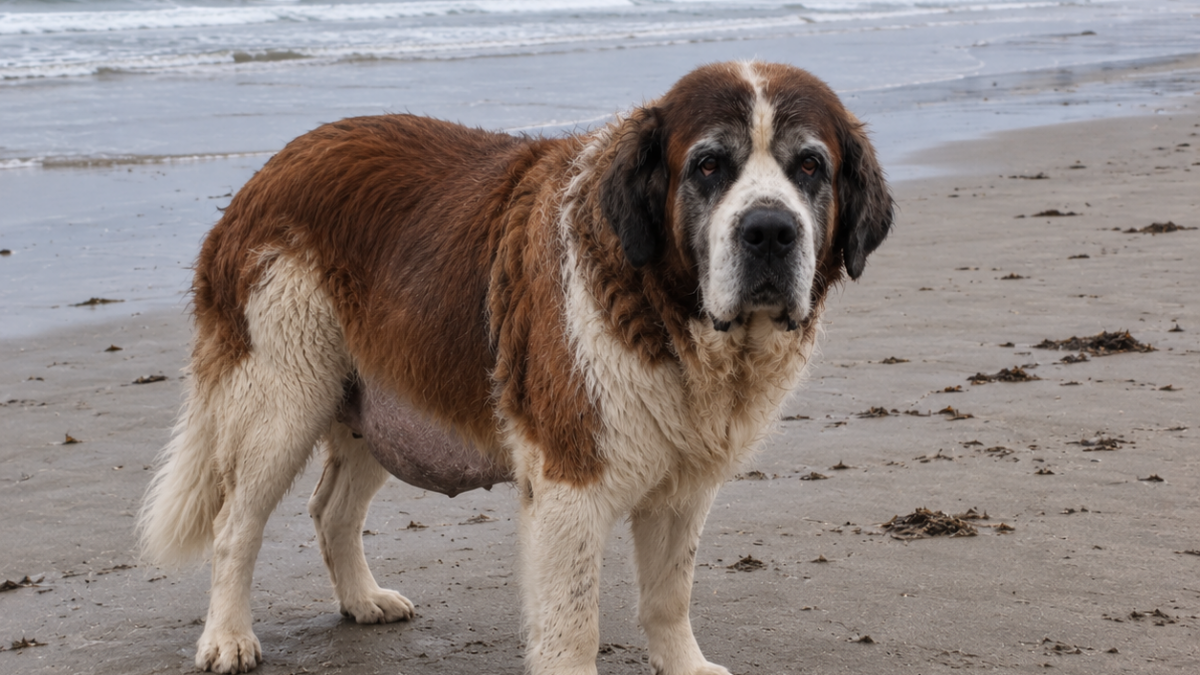
PART 2
One careful step at a time.
Then he pressed his head against my hip.
That was it.
I signed the papers.
The coordinator went through medication schedules, warning signs and emergency contacts.
She explained appetite changes.
Pain behavior.
Breathing.
Mobility.
Abdominal distress.
When to call.
When not to wait.
I listened closely.
I wrote things down even though the instructions were already printed.
At the bottom of the last page, my signature looked strangely permanent.
The coordinator gathered the papers.
“Ready?”
I looked at Murphy.
“No.”
She laughed softly.
“Good answer.”
Then we took him home.
The drive should have felt tragic.
Instead, Murphy spent most of it trying to put his nose into the front seat.
“Sir.”
His head appeared beside my shoulder.
“You are supposed to be resting.”
Murphy breathed directly into my ear.
His breath was terrible.
I rolled down the window.
“That is medically alarming.”
He panted.
I laughed.
The sound surprised me.
I had expected to cry on the way home.
Instead, this supposedly terminal dog was fogging the side window with his breath.
Halfway there, I stopped at a butcher shop.
I had already decided Murphy deserved something special on his first night.
Maybe I was being sentimental.
Maybe I was already treating every meal like a last meal.
I didn’t care.
I bought a thick steak.
Then stood there looking at it.
The butcher raised an eyebrow.
“Need anything else?”
I thought of the words comfort care.
“Give me another one.”
That evening, I grilled the steak plain.
Murphy sat in the kitchen watching.
For a dog who had supposedly spent most of his recent days sleeping, he became extremely alert when meat was involved.
“Don’t get excited.”
His tail moved.
“This is not all for you.”
Tail.
“Actually, it is, but you’re not supposed to know that.”
I cut the steak into manageable pieces.
Murphy’s eyes followed every movement of the knife.
When I put the plate down, he stared at me.
“Okay.”
The steak disappeared.
I mean that literally.
I turned around to place the knife in the sink.
When I looked back, most of the plate was empty.
“Slow down!”
Murphy swallowed.
Two pieces remained.
Then one.
Then none.
He licked the plate.
Then looked at me.
Then at the counter.
Then back at me.
“No.”
Tail wag.
“You cannot still be hungry.”
His eyes moved toward the counter again.
“The second steak is for another day.”
Murphy sat.
I stared at him.
“Are you negotiating?”
He drooled.
I started laughing.
The first night, Murphy slept on a thick orthopedic bed I’d placed beside the couch.
At least, that was the plan.
Around midnight, I woke to the sound of something shifting in the living room.
I walked out.
Murphy was standing with his front paws on the couch.
“Absolutely not.”
He looked at me.
“You have a bed.”
Murphy pushed.
His hind legs struggled.
I hurried forward because I didn’t want him slipping.
With a combination of determination and my reluctant assistance, he climbed onto the couch.
Then he turned in a slow circle.
Once.
Twice.
And collapsed across three cushions.
“Seriously?”
His eyes closed.
Within two minutes, he was snoring.
Not gentle old-dog breathing.
Snoring.
Loud, rumbling snores that seemed physically impossible.
I stood there with my hands on my hips.
“You’re dying and your first act is stealing my couch?”
No response.
He was already asleep.
I covered him with a blanket.
That became our arrangement.
I pretended the couch belonged to me.
Murphy allowed me to continue believing that.
The following morning, I woke early and went to check on him.
For one terrifying second, he was too still.
My heart jumped.
“Murphy?”
Nothing.
I moved closer.
“Murphy?”
He snored.
I exhaled.
Then his eyes opened.
“You scared me.”
Tail tap.
That was the beginning of a habit I hated.
Checking.
Was he breathing?
Had he eaten?
Was he walking differently?
Did his abdomen look larger?
Did he seem uncomfortable?
Was today the day the decline started?
Hospice changes the way you observe an animal.
Normal sleep becomes something you monitor.
Skipping half a meal becomes a potential sign.
A slow morning becomes evidence in a case your mind is constantly building.
I had promised myself I wouldn’t spend our time waiting for Murphy to die.
So I made a list.
Not officially.
I didn’t write “Murphy’s Bucket List” across a poster board or number every experience.
I just started thinking about things an old dog might enjoy if nobody cared about rules anymore.
Steak.
Done.
Couch.
Apparently done without permission.
A park.
A lake.
Ice cream.
A drive with the windows open.
Sunlight.
People telling him he was handsome.
Whatever made his tail move.
A few days later, we went to a large grassy park.
I chose a quiet time because I wasn’t sure how much walking he could manage.
Murphy stepped out of the car and immediately became interested in everything.
Not energetic in a young-dog way.
He wasn’t pulling.
Wasn’t running.
Wasn’t trying to chase birds.
He wandered.
Slowly.
Deliberately.
Every tree deserved inspection.
Every patch of grass had information in it.
He would walk fifteen or twenty feet, stop, smell something for a long time, then continue.
I let him choose the pace.
A woman walking with two children approached.
The younger child stopped.
“Mom, look at that giant dog.”
Murphy heard the voice and turned.
“Can we pet him?”
I looked down at Murphy.
His tail moved.
“I think he’d like that.”
The children came closer.
Their mother reminded them to be gentle.
One child put a hand against Murphy’s shoulder.
“He’s soft.”
The other stared at his paws.
“His feet are huge.”
Murphy stood perfectly still while they admired him.
Then he leaned his head toward the older child.
“He likes you,” I said.
The boy smiled.
“What’s his name?”
“Murphy.”
“How old?”
“Twelve.”
The child’s eyes widened.
“That’s like a hundred.”
His mother laughed.
“Not exactly.”
Murphy accepted another head scratch.
When they walked away, his tail was still moving.
“You enjoyed that.”
He looked at me.
“Celebrity.”
We continued.
A few minutes later, Murphy stopped beneath a tree and lay down.
My heart tightened.
I crouched.
“You okay?”
He panted.
His breathing was steady.
He didn’t look distressed.
Just tired.
We sat there together for fifteen minutes.
I watched people pass while Murphy watched squirrels.
Then he stood on his own.
We walked back to the car.
Slow.
But under his own power.
That evening, I expected him to sleep heavily.
He did.
For almost three hours.
Then the sound of the refrigerator opening brought him into the kitchen.
I stared.
“You were exhausted fifteen seconds ago.”
Murphy looked at the refrigerator.
“Fraud.”
Another day.
Another tail wag.
Another ordinary moment I hadn’t expected from a dying dog.
The lakeside boardwalk came next.
It was cool enough that I wasn’t worried about heat.
Murphy walked beside me while water moved beyond the railing.
He kept lifting his nose toward the breeze.
At a small ice cream stand, I bought him a plain vanilla pup cup.
The woman behind the counter leaned out.
“Is this for him?”
“Unless you think I’m ordering whipped cream in a paper cup for myself.”
She laughed.
“He’s adorable.”
Murphy’s tail moved.
“He knows.”
I held the cup.
Murphy buried half his face inside.
“Slow—”
Too late.
Vanilla ice cream covered his nose.
A streak landed over one eyebrow.
I pulled the cup away.
Murphy followed.
“Wait.”
He licked his nose.
Missed most of the ice cream.
I wiped some off.
Then he tried to eat the napkin.
“No.”
People nearby laughed.
I took pictures.
One showed Murphy with his mouth open, white cream across his muzzle.
Another caught him staring at the cup as though nothing else in the world mattered.
That night, I sat on the couch scrolling through the photos.
Murphy was asleep beside me.
I expected the images to make me sad.
I thought they would look like goodbye pictures.
Instead, something bothered me.
I enlarged the photo from the boardwalk.
Murphy looked old.
There was no pretending otherwise.
His muzzle was gray.
His body was heavy.
His posture wasn’t youthful.
But his eyes were alert.
He was looking at the cup.
At people.
At the world.
He didn’t look detached.
Didn’t look like an animal withdrawing into himself.
I opened another photo from the park.
Same thing.
Slow body.
Interested eyes.
I put the phone down.
“Murphy.”
He snored.
I looked at him.
Maybe I was seeing what I wanted to see.
That possibility mattered.
Love makes people irrational.
I knew that.
I could not decide a medical prognosis was wrong simply because Murphy enjoyed steak.
An animal can be terminal and still have good days.
That is the whole reason hospice care exists.
Still, the thought stayed.
The following week, Murphy woke before me.
I heard him moving.
Then something hit the bedroom door.
Scratch.
Pause.
Scratch.
I opened it.
Murphy stood there.
“What?”
He walked toward the kitchen.
“You’re hungry?”
He looked back.
I followed.
Murphy sat beside his bowl.
His appetite had not decreased.
If anything, it had become more demanding.
I fed him.
Then watched him eat every bite.
Afterward, he pushed the bowl across the floor with his nose.
“You’re done.”
Push.
“No.”
Push.
“Murphy.”
Tail wag.
I laughed.
But once again, the thought returned.
This didn’t fit the ending I had prepared for.
The next evening, I opened his medical file.
I had read the summary.
This time, I read everything.
Every line.
Imaging notes.
Blood work.
Observations.
The suspected relationship between the mass and surrounding organs.
I searched terms I didn’t understand.
That was a mistake.
Within twenty minutes, I had convinced myself Murphy had six different cancers and two diseases he almost certainly did not have.
I closed the laptop.
Then opened it again.
I found a specialty veterinary hospital within driving distance.
Their website listed advanced abdominal imaging and surgical consultation.
I called the next morning.
The receptionist asked what I needed.
“I have a twelve-year-old Saint Bernard mix with a large abdominal mass.”
“Has he had imaging?”
“Yes, but it’s limited.”
“Do you have records?”
“Yes.”
She asked questions.
Then gave me the consultation and imaging estimate.
I stopped writing.
“I’m sorry, how much?”
She repeated it.
I stared at the number.
It was far more than I had planned to spend when I volunteered for comfort care.
There was no reimbursement.
No magical fund.
No guarantee the specialist would tell me anything different.
I could spend that money only to hear:
Yes, he’s dying.
Enjoy the remaining time.
I looked across the room.
Murphy was lying on the couch.
His head was upside down against a pillow.
One ear folded awkwardly.
“Can I call you back?”
“Of course.”
I ended the call.
Then I sat there.
Murphy opened one eye.
“You are extremely expensive.”
Eye closed.
I called a friend.
When I explained, she listened quietly.
Then asked, “What would the specialist change?”
“I don’t know.”
“If the shelter vet believes it’s terminal—”
“They believe it might be.”
“Okay.”
“I just want better imaging.”
“How much?”
I told her.
She whistled.
“That’s a lot.”
“I know.”
“You took him home for hospice.”
“I know.”
“Maybe this is the part where you accept what hospice means.”
The words irritated me even though they weren’t cruel.
She was trying to protect me.
And probably my bank account.
“I have accepted it.”
“Have you?”
I looked at Murphy.
“I don’t know.”
She softened.
“I’m not telling you not to do it.”
“I know.”
“I just don’t want you spending everything because you feel guilty.”
“Guilty about what?”
“Not saving him.”
That hit exactly where I didn’t want it to.
I became quiet.
She continued.
“You promised him comfort. You’re giving him that. You don’t have to turn dying into a failure.”
“I know.”
And I did.
Intellectually.
Emotionally, something still wouldn’t settle.
After we hung up, I walked to the couch.
Murphy lifted his head.
I sat beside him.
“Are you dying?”
His tail moved.
“Helpful.”
He put his head in my lap.
I scratched behind his ears.
“I wish you could answer one question.”
His eyes closed.
“Are you tired because you’re twelve, or tired because you’re dying?”
Nothing.
“Do you hurt because you’re old, or because that thing is pressing on you?”
His breathing slowed.
“What if everyone is right?”
I looked down at the enormous curve of his abdomen.
“What if I’m making this about me?”
Murphy snored.
I sat there a long time.
Then I noticed something.
His front paw twitched.
Then another.
His lips moved slightly.
Dreaming.
Even asleep, Murphy seemed busy living somewhere.
The next morning, I called the specialty hospital.
“I want the appointment.”
The receptionist asked for my card.
I gave her the number before I could change my mind.
The appointment was a week away.
During those seven days, I questioned myself constantly.
Every time Murphy looked tired, I thought:
This is stupid.
Every time he perked up, I thought:
No. This is right.
The night before the appointment, I barely slept.
Murphy slept on the couch.
I woke around two and found him on his back, one hind leg partly in the air.
“You have no anxiety at all, do you?”
Snore.
At the specialty hospital, the surgeon reviewed Murphy’s existing records before examining him.
He was calm and methodical.
That helped.
He ran his hands over Murphy’s abdomen.
Murphy stood patiently.
“How’s his appetite?”
“Excellent.”
“Weight loss?”
“Some, but it’s hard to judge because of the mass.”
“Vomiting?”
“Rarely.”
“Bowel movements?”
“Mostly normal.”
“Energy?”
“Low compared to a young dog, but honestly better than I expected.”
The surgeon nodded.
“We’ll image him.”
Murphy was taken to the back.
I sat in the waiting room.
A television played silently in one corner.
Someone nearby held a cat carrier.
A woman across from me was crying quietly into a tissue.
I looked away to give her privacy.
That room reminded me that every person there had brought in an animal because something had gone wrong.
Everyone was waiting for a sentence.
Good or bad.
Potentially life-changing.
When the surgeon finally returned, he asked me to come into a consultation room.
Murphy was still in recovery from sedation.
The scans were already on the monitor.
The surgeon sat.
I sat.
He clicked through images.
Then stopped.
“This is not what I expected to see.”
My stomach dropped.
“Worse?”
“No.”
I leaned forward.
He enlarged one image.
“The mass is enormous.”
I stared at the screen.
Even to me, it was obvious.
It occupied a terrifying amount of space.
“How has he been living with that?”
“Gradual growth. His body has adapted around it.”
I felt sick.
“What did you mean when you said it wasn’t what you expected?”
He moved the cursor.
“The original concern was that the mass might be broadly invasive.”
“Into the organs.”
“Right.”
“And?”
“I’m seeing planes here that suggest it may be more separable than expected.”
I stared at him.
“Separable?”
“Potentially surgically removable.”
The room went silent.
I had spent weeks preparing for someone to tell me Murphy could not be saved.
I had not prepared for someone to tell me he might be.
“Are you saying you can operate?”
“I’m saying surgery is an option worth discussing.”
My hands suddenly felt cold.
“What kind of option?”
“A serious one.”
He turned toward me fully.
“Murphy is twelve. He has cardiac changes that increase anesthetic risk. This mass is very large. We could encounter bleeding. We could find involvement that the imaging doesn’t fully show. We could begin surgery and discover we cannot safely remove it.”
“Could he die?”
“Yes.”
There was no hesitation.
I appreciated that.
Hated it.
Needed it.
“And if he survives?”
“Recovery could still be difficult.”
“How difficult?”
“Several days hospitalized. Pain management. Possible transfusion. Restricted activity. Appetite issues. Infection risk. Cardiac complications. There are no guarantees.”
I stared at Murphy’s scan.
“What about cancer?”
“We won’t know definitively until pathology.”
“So you could remove it, he could survive, and it could still be cancer.”
“Yes.”
“Could it have spread?”
“Depending on what it is, yes. We don’t currently see obvious widespread metastatic disease, which is encouraging, but that isn’t a guarantee either.”
I rubbed my forehead.
“And if we don’t operate?”
“The mass is already placing significant physical burden on him. Even if benign, something that size can cause problems simply because of the space it occupies.”
“Meaning?”
“Compression. Reduced mobility. Pain. Interference with normal organ function. Potential bleeding depending on origin.”
“So there’s risk either way.”
“Yes.”
I looked at him.
“If he were your dog?”
The surgeon paused.
I immediately regretted asking.
“That isn’t fair.”
He smiled slightly.
“No, but everyone asks.”
“What would you do?”
“I would first decide what outcome I was trying to protect.”
“His quality of life.”
“Good. Then ask whether his current quality of life is acceptable and whether surgery offers a reasonable chance to improve it.”
“Does it?”
“I believe there is a reasonable chance.”
“Not a good chance?”
“A reasonable one.”
He was careful with language.
I trusted him more because of it.
I looked back at the scan.
“Can I take some time?”
“Absolutely.”
Murphy came home that afternoon slightly groggy from sedation.
He ate dinner.
Then went to sleep.
I stayed awake.
That first night, I sat at the kitchen table with the estimate in front of me.
The cost was enormous.
I could pay it, but not comfortably.
It would mean using money I had reserved for other things.
There was no guarantee Murphy would live long enough to justify any of it.
I hated myself for even thinking in those terms.
But pretending money didn’t matter would have been dishonest.
The harder question, though, wasn’t financial.
It was moral.
Was I about to put an elderly dog through a dangerous operation because I couldn’t handle losing him?
The next day, a friend came over.
Murphy greeted her.
Slowly.
Tail wagging.
She sat on the floor and rubbed his chest.
“He seems happy.”
“He is.”
“That makes the decision harder.”
“I know.”
She looked at me.
“What does the surgeon think?”
I explained.
“And you?”
“I don’t know.”
“What are you afraid of?”
“All of it.”
“Specifically.”
I sat down.
“That he’ll die in surgery.”
She nodded.
“That he’ll survive and suffer.”
Another nod.
“That the mass is cancer and I’ve bought him three terrible weeks instead of three decent ones.”
“Okay.”
“And I’m afraid if I don’t do it, I’ll spend the rest of his life wondering if I let him die from something fixable.”
Murphy lowered himself onto the rug.
My friend watched him.
“What does he do when you take him outside?”
“Walks.”
“Does he want to?”
“Yes.”
“Does he eat?”
“Like a criminal.”
She laughed.
“Does he enjoy things?”
“Yes.”
“Then maybe he isn’t asking you to protect the life he has now. Maybe he’s showing you that there’s enough life there to fight for.”
I looked at her.
“That sounds nice.”
“It’s not advice.”
“Good.”
“I’m just telling you what I see.”
That night, Murphy climbed onto the couch.
It took effort.
His front legs made it first.
His back legs hesitated.
The weight of his abdomen pulled.
I got up.
“Wait.”
I supported him slightly.
He made it onto the cushions.
Then collapsed beside me.
His breathing was heavier than it should have been after such a small effort.
I put my hand over the side of his abdomen.
The mass filled space that should have belonged to him.
I whispered, “This thing is stealing your body.”
Murphy’s eyes closed.
That sentence stayed with me.
Maybe surgery wasn’t about buying time.
Maybe it was about removing something that had already been taking his life piece by piece.
The next morning, Murphy woke before me.
His huge face appeared beside the bed.
I opened my eyes.
“What?”
He breathed onto me.
I turned away.
“Your breath could qualify as a weapon.”
Tail wag.
“You want breakfast?”
He immediately walked toward the door.
I sat up.
There it was again.
Expectation.
Not a dog withdrawing.
A dog asking what came next.
I called the specialist.
“Schedule it.”
The receptionist confirmed the date.
When I hung up, I sat very still.
Murphy came over.
“You’re having surgery.”
He looked at me.
“Very expensive surgery.”
Tail wag.
“You could at least look concerned.”
He nudged my hand.
I scratched his head.
“Okay.”
The days before surgery felt unreal.
I kept thinking I needed to make them special.
Then I realized that would turn them into a pre-funeral.
I didn’t want that.
So we did normal things.
Walks.
Couch.
Meals.
We went to the park once more.
Murphy received attention from strangers.
A man with an older Labrador stopped.
“How old?”
“Twelve.”
“Mine’s eleven.”
The dogs sniffed each other.
For several seconds, two senior animals stood nose-to-nose.
Then Murphy lost interest and sniffed a tree.
The man laughed.
“Conversation over.”
“That’s Murphy.”
Later, I bought him another steak.
“Pre-surgery protein,” I told him.
That was medically meaningless.
Murphy didn’t care.
The night before surgery, food had to stop at the instructed time.
Murphy considered this betrayal.
He stood where his bowl should have been.
“No.”
He stared at me.
“You’re fasting.”
Stare.
“I also hate this.”
He walked to the refrigerator.
“No.”
He sat.
“You’re not negotiating.”
Tail wag.
I finally went to bed because being awake near a hungry Saint Bernard was emotionally exhausting.
Around midnight, I went to check on him.
Murphy was asleep on the couch.
I sat beside him.
My hand moved slowly over his head.
“You come back tomorrow.”
His eye opened.
“That’s the deal.”
Tail tap.
“I mean it.”
He closed his eye.
I whispered, “I’m not ready.”
The truth escaped before I could stop it.
I wasn’t ready.
Not after a few weeks.
Not after eight months.
Probably not after eight years.
I pressed my forehead against his.
“Come back.”
Morning arrived anyway.
The hospital was quiet when we checked in.
Murphy accepted affection from the receptionist.
A technician came out.
“Ready, big guy?”
Murphy wagged.
I hated how trusting he was.
She explained what would happen first.
IV catheter.
Preoperative blood work confirmation.
Monitoring.
Anesthesia.
Surgery.
Recovery.
The surgeon came out too.
“Any questions?”
I had hundreds.
I asked the same five I’d already asked.
“What if you open him and it’s worse?”
“We make the safest decision for him.”
“If you can’t remove it?”
“We won’t take unreasonable risks just to say we tried.”
“If he becomes unstable?”
“We respond. If there is a decision requiring your input, we call.”
“His heart?”
“Continuously monitored.”
“Pain?”
“Managed aggressively.”
The surgeon waited.
“Anything else?”
I looked at Murphy.
“Bring him back.”
The surgeon’s expression softened.
“That’s the plan.”
The technician took the leash.
Murphy walked several feet.
Then turned.
I crouched.
He came back.
I wrapped my arms around his neck carefully.
“You’re supposed to go.”
He licked my cheek.
My eyes burned.
“I have another steak.”
Tail wag.
“So you have to come home.”
The technician smiled.
“We’ll tell him that’s medically necessary.”
I handed her the leash.
Murphy walked away.
The doors closed.
I stood there.
Then I went to the parking lot and sat in my car.
I had planned to leave.
I couldn’t.
The first hour wasn’t too bad.
I answered emails.
Pretended to read.
Checked the phone approximately every thirty seconds.
The second hour was worse.
The third was unbearable.
At some point, the rational part of my brain stopped being useful.
Every minute became evidence something had gone wrong.
Why is it taking this long?
Did they find bleeding?
Is his heart failing?
Did they stop?
Should I have never done this?
I walked around the parking lot.
Returned to the car.
Bought coffee.
Forgot to drink it.
Opened Murphy’s photos.
That was a mistake too.
The shelter photo came first.
Gray face.
Tired eyes.
Large abdomen.
Then steak.
Couch.
Park.
Ice cream on his nose.
I stared at the boardwalk photo.
“You were happy.”
The thought scared me.
He had been happy before surgery.
What if that should have been enough?
I had taken a happy old dog and put him on an operating table because I wanted more.
My phone remained silent.
I called the hospital once.
The receptionist was kind.
“He is still in surgery. We don’t have an update yet.”
Still in surgery.
Good?
Bad?
I thanked her.
Hour four.
Then five.
I stopped looking at the clock.
At some point, I whispered aloud in the empty car:
“Please.”
That was all.
No bargaining.
No promises.
Just please.
Then the phone rang.
The surgeon’s name appeared.
Everything inside me stopped.
I answered so quickly I nearly dropped the phone.
“Hello?”
“Hi, it’s Dr.—”
“How is he?”
A brief pause.
“He’s awake.”
I closed my eyes.
My forehead dropped against the steering wheel.
Air left my chest in a sound that was half laugh, half sob.
“He’s awake?”
“Yes.”
“Really awake?”
“He’s in recovery. Still groggy, obviously, but breathing on his own and responding.”
I covered my mouth.
The surgeon continued.
“We were able to remove the mass.”
“All of it?”
“The main mass, yes.”
“How bad was it?”
“Very large. Larger in person than even the imaging suggested.”
“Was it attached to everything?”
“Not the way we feared.”
My eyes opened.
“What does that mean?”
“There were significant adhesions and technical challenges, but it was removable.”
“Bleeding?”
“Controlled.”
“Heart?”
“He tolerated anesthesia better than I expected.”
I almost laughed.
“That sounds like him.”
“The next twenty-four to forty-eight hours still matter.”
“I know.”
“We need to watch for postoperative bleeding, cardiac changes, pain, appetite, GI function.”
“Can I see him?”
“Not immediately. Let him stabilize. We’ll update you.”
I nodded even though he couldn’t see me.
“Okay.”
Then I remembered.
“Cancer?”
“We’ve sent tissue to pathology.”
“So we don’t know.”
“Not yet.”
I didn’t care in that moment.
Murphy was alive.
The rest could wait.
I drove home.
The house felt wrong.
Murphy’s bed was empty.
His water bowl sat in the kitchen.
The couch looked too neat.
I found one of his hairs stuck to a pillow.
I sat down.
For the first time since bringing him home, I understood exactly how much space he’d occupied.
Not physically.
Emotionally.
The house had arranged itself around his presence.
Where he slept.
Where he stood for food.
Where his nails clicked on the floor.
Where his snoring came from.
Without him, everything sounded incorrect.
The hospital called that evening.
Stable.
Then later.
Still stable.
The next morning, he had eaten a small amount.
I laughed when the technician told me.
“He’s eating?”
“A little.”
“That’s my dog.”
She paused.
“Your dog?”
The words caught me.
“Yes.”
I hadn’t planned to keep Murphy in any official long-term sense because “long-term” had never been part of the expectation.
But sometime between the shelter and the operating room, that distinction had disappeared.
He was my dog.
The second day, I visited.
The sight of him hurt.
His abdomen was shaved.
The incision looked enormous.
He was lying on thick bedding with monitoring equipment nearby.
He seemed smaller without the mass.
Fragile.
I stopped in the doorway.
“Murphy?”
His eyes opened.
His head lifted slightly.
Then:
Thump.
His tail touched the bedding.
Thump.
Twice.
Exactly like the shelter.
My knees almost gave out.
I crouched beside him.
“Hey.”
Murphy leaned his head toward my hand.
“You did it.”
His eyes closed again.
I scratched behind his ear.
“You came back.”
A technician stood nearby.
“He’s doing really well.”
“He looks terrible.”
She laughed softly.
“He had major surgery. He’s allowed.”
“Has he been good?”
“He has been extremely polite.”
“That is not the dog I know.”
Murphy’s tail tapped again.
I stayed as long as they allowed.
I didn’t need him awake.
Didn’t need interaction.
Just proximity.
My hand rested against his head while he slept.
For the first time, I understood comfort care in another way.
Comfort wasn’t only what you offered when there was nothing left to do.
Sometimes comfort was simply staying beside someone while they fought.
Three days after surgery, Murphy came home.
Discharge instructions covered several pages.
Medication.
Incision monitoring.
Restricted movement.
No stairs if possible.
No jumping.
No rough activity.
Watch appetite.
Watch breathing.
Watch stool.
Watch urination.
Watch temperature.
Watch for swelling.
Watch for discharge.
Watch for collapse.
By the time the technician finished, I wanted to wrap Murphy in bubble wrap.
He walked slowly to the car.
When we reached home, he stood at the door.
I opened it.
Murphy stepped inside.
Then stopped.
He smelled the floor.
Looked toward the living room.
And walked toward the couch.
“No.”
He stopped.
I had blocked access.
Murphy looked at the barrier.
Then at me.
“No couch.”
He looked again.
“You have stitches.”
Stare.
“I bought you a better bed.”
Murphy remained standing.
“Don’t do this.”
He sat in front of the couch.
“You are emotionally manipulating me.”
No movement.
I guided him toward the orthopedic bed.
He lowered himself dramatically.
Then sighed.
“You will survive.”
The irony hit me.
He already had.
Recovery was not cinematic.
No swelling music.
No instant transformation.
It was exhausting.
Murphy slept most of the first week.
Sometimes medication made him groggy.
Sometimes he didn’t want food.
That terrified me.
The first morning he refused breakfast, my heart started pounding.
“Murphy.”
He sniffed the bowl.
Turned away.
I immediately called the hospital.
The technician asked questions.
Vomiting?
No.
Water?
Some.
Pain?
Hard to tell.
Temperature?
Normal.
Incision?
Looks okay.
They discussed medication timing and nausea.
Told me what to watch.
I sat beside Murphy.
“If you don’t eat, I will personally lose my mind.”
He closed his eyes.
At lunch, I offered a small amount of approved food.
Nothing.
By dinner, he ate three bites.
I nearly cried.
“Good.”
Another bite.
“Good boy.”
He finished about half.
I sent a message to my friend:
HE ATE.
She replied:
I assume we’re celebrating half a bowl now.
Yes.
We were.
That was recovery.
Celebrating bowel movements.
Medication taken without argument.
An incision that looked slightly less angry.
A dog standing without assistance.
Five extra steps down the hallway.
A full meal.
Murphy slowly improved.
Then came the pathology call.
I was standing in the kitchen.
Murphy was sleeping nearby.
The specialist’s number appeared.
My hand froze around the phone.
For a second, I didn’t answer.
Surgery had succeeded.
I had allowed myself to enjoy that.
But pathology could rewrite everything.
Cancer.
Aggressive.
Metastatic potential.
Months.
Weeks.
Chemotherapy.
Another countdown.
The phone kept ringing.
I answered.
“Hello?”
“I have Murphy’s pathology results.”
My fingers tightened around the edge of the counter.
“Okay.”
The surgeon paused only briefly.
“The mass is benign.”
I didn’t understand the words.
“What?”
“It’s not malignant.”
“Not cancer?”
“Correct.”
I sat down so quickly the chair scraped the floor.
Murphy raised his head.
“You’re sure?”
“Yes.”
“Completely?”
“The pathology does not indicate malignancy.”
I covered my face.
A strange laugh escaped.
The surgeon continued explaining the specific findings.
I heard fragments.
Benign tissue.
Large.
Chronic.
Compression.
Risk because of size.
Not harmless simply because it wasn’t cancer.
But my brain kept returning to one phrase.
Not cancer.
Murphy wasn’t dying of the disease we’d feared.
The mass had been dangerous.
It had been hurting him.
It could have killed him eventually through sheer size and physical effect.
But it wasn’t the death sentence everyone had imagined.
When the call ended, I remained in the chair.
Murphy watched me.
I looked at him.
“You’re not dying.”
His tail moved.
“You understand?”
Another wag.
I slid down to the floor.
Murphy stood carefully and came toward me.
I wrapped my arms around his neck.
“You ridiculous old man.”
He licked my ear.
“They told me weeks.”
Tail wag.
“I bought you steak because I thought it was your last month.”
Wag.
“I let you steal my couch.”
Bigger wag.
“You absolutely exploited this situation.”
Murphy pressed his head into my chest.
I laughed until I cried.
Not cancer.
The words did not make him young.
They did not make him immortal.
He was still twelve.
Still had a heart that required monitoring.
Still had senior joints.
Still had a surgical recovery ahead.
But suddenly, death was no longer standing in the doorway.
For the first time, I allowed myself to imagine seasons.
Winter.
Spring.
Maybe another summer.
I had been living day to day because the future felt dangerous.
Now the future simply felt unknown.
Unknown was a gift.
Murphy’s recovery continued slowly.
The first change I noticed was appetite.
He had always loved food.
Now he seemed capable of eating the entire kitchen.
One morning, he finished breakfast.
Then followed me to the refrigerator.
“You ate.”
Stare.
“You know that.”
He sat.
“No.”
Tail.
“No.”
He lifted one paw.
I stared.
“You don’t even know shake.”
The paw remained up.
“Manipulation.”
I gave him a small treat.
He swallowed it.
Then sat again.
“We’re done.”
His tail moved.
“Absolutely not.”
He eventually walked away.
Victory.
Mine, technically.
Though I suspected Murphy considered the snack sufficient compensation.
The second change was movement.
Before surgery, he walked like every step required negotiation with his own body.
After several weeks, the heaviness lessened.
He still moved slowly.
But the pause before standing became shorter.
The distance he could walk before resting increased.
One afternoon, he stood at the front door after our usual short walk.
“What?”
He looked toward the sidewalk.
“We’re done.”
Murphy didn’t move.
“Home.”
He looked outside.
“You want more?”
Tail wag.
I laughed.
“You have spent weeks convincing everyone you’re fragile.”
He stepped forward.
We walked another half block.
Not far.
But it mattered.
At his follow-up, the surgeon examined the incision.
“Looks good.”
“How good?”
“Normal recovery.”
“Can he walk more?”
“Gradually.”
“Couch?”
The surgeon looked at me.
“Has he been trying?”
“Constantly.”
“Limit jumping a little longer.”
I looked at Murphy.
“You heard him.”
Murphy sniffed the surgeon’s pocket.
The surgeon gave him a treat.
“Do not undermine me.”
The surgeon laughed.
“You’re the one who brought a Saint Bernard to a specialist and expected obedience.”
Fair.
Eventually, the couch barrier came down.
Murphy noticed immediately.
I removed it in the morning.
He watched.
Then walked over.
Front paws up.
Push.
Hind legs.
Pause.
He climbed onto the couch.
Turned twice.
Collapsed across three cushions.
I stood there.
“Welcome back.”
Murphy sighed.
Within minutes, he was snoring.
I took a picture.
Then compared it to the photo from his first week.
Same couch.
Same gray face.
But something was different.
His body no longer looked pulled downward.
His abdomen was dramatically changed.
His posture looked easier.
Comfortable.
That word had once meant preparing him for death.
Now it meant something else.
Living without the burden.
About a month after surgery, we returned to the park.
I kept the walk short.
Murphy had other plans.
He visited the same trees.
Smelled everything.
A family passed.
One child stopped.
“It’s the giant dog!”
I realized they had seen us before.
Murphy stood proudly.
The child ran over with permission.
“Murphy!”
His tail wagged.
“You remember his name?”
“Yes!”
The child rubbed his head.
“He looks different.”
I smiled.
“He had surgery.”
“Is he okay?”
“He’s doing really well.”
The mother looked at me.
“Wasn’t he very sick?”
“Very.”
“And now?”
I looked at Murphy.
“Now we see.”
That became my answer for a while.
Now we see.
I wasn’t ready to replace one certainty with another.
The shelter prognosis had taught me something about certainty.
We rarely have as much as we think.
At home, Murphy’s coat started changing.
Maybe better nutrition.
Maybe reduced stress.
Maybe his body no longer spending so much energy carrying the mass.
Whatever the cause, his fur looked fuller.
Healthier.
The dullness faded.
His eyes changed more.
That was harder to describe.
Before surgery, Murphy noticed things.
After surgery, he sought them.
He followed me into rooms more often.
He stood near the window.
He showed interest in dogs outside.
And one afternoon, he discovered toys.
I had bought several when he first came home.
He had ignored every one.
They sat in a basket.
A rope.
Two balls.
A squeaky duck.
A stuffed elephant.
One afternoon, I heard something dragging across the floor.
I walked into the living room.
Murphy had his head inside the toy basket.
“What are you doing?”
He pulled out the rope.
Dropped it.
Sniffed the duck.
Ignored it.
Then picked up the elephant.
It was ridiculous.
Gray.
Soft.
Floppy ears.
Long trunk.
Murphy carried it away.
I laughed.
“That?”
He took it to the couch.
The elephant stayed.
That evening, he slept with it.
The next morning, he carried it into the kitchen.
“Are you bringing emotional support to breakfast?”
Murphy dropped it beside his bowl.
Over the next week, the elephant became part of his routine.
He carried it from room to room.
Sometimes I found it abandoned in the hallway.
Sometimes beside the couch.
Once in the bathroom.
I tried to pick it up while cleaning.
Murphy appeared.
“You left it.”
He took it from my hand.
“Possessive.”
He carried it back to bed.
That toy became one of the clearest signs that something inside Murphy had changed.
The old dog in the shelter had accepted affection.
The recovering dog had preferences.
The healthier dog had possessions.
His world was expanding beyond food and rest.
We went back to the boardwalk.
When Murphy saw the ice cream stand, he changed pace.
Not dramatically.
But enough.
“No.”
He continued.
“You remember.”
Tail wag.
“You definitely remember.”
I bought the pup cup.
The woman working that day was different.
She leaned over the counter.
“Oh my God, look at him.”
Murphy looked up.
“He’d like you to continue.”
“How old?”
“Twelve.”
“He looks amazing.”
I smiled.
“You should have seen him a few months ago.”
Murphy ate the ice cream.
Again, most of it ended up on his nose.
Again, some reached his eyebrow.
Apparently surgery could remove a massive abdominal growth but not improve basic ice cream technique.
I took a photo.
That evening, I looked at it.
Something felt strange.
Then I realized what.
I wasn’t wondering whether it would be one of his last pictures.
It was simply a picture.
Murphy eating ice cream.
That normality felt enormous.
We revisited the butcher shop too.
The butcher recognized me first.
“Two steaks?”
I laughed.
“You remember?”
“I remember the dog.”
Murphy stood beside me.
The butcher leaned over.
“Hey, big man.”
Tail wag.
“How’s the sick guy?”
“He’s not terminal.”
The butcher straightened.
“What?”
I gave him the short version.
Mass.
Specialist.
Surgery.
Benign.
The butcher stared at Murphy.
“No kidding.”
“No kidding.”
He disappeared into the back.
Returned with a small piece of plain cooked meat from something he was preparing for samples.
“Celebration.”
I pointed at Murphy.
“Do not create expectations.”
The treat disappeared.
Murphy stared.
The butcher laughed.
“Looks like expectations already exist.”
We bought one steak.
Murphy was disappointed by my fiscal responsibility.
Months passed.
The medical appointments became less frequent.
My anxiety did not disappear as quickly.
If Murphy slept too deeply, I still checked his breathing.
If he seemed slow one morning, I mentally jumped back to the worst possibility.
One afternoon, he didn’t greet me when I came home.
That had become his new habit.
Usually I heard movement before I finished unlocking the door.
Then Murphy appeared carrying the stuffed elephant.
That day:
Nothing.
I opened the door.
“Murphy?”
Silence.
My heart accelerated.
I dropped my bag.
“Murphy?”
I checked the living room.
Empty.
Kitchen.
Empty.
Bedroom—
Movement.
Murphy slowly emerged from beside the bed.
Elephant in mouth.
He had been asleep.
I put one hand over my chest.
“You cannot do that.”
He walked toward me.
“I just lost several years.”
Tail wag.
He presented the elephant.
I took it.
Then gave it back.
My fear was ridiculous.
Understandable.
Persistent.
I learned not to feel ashamed of it.
Fear doesn’t vanish because the test result is good.
Sometimes fear becomes a habit.
So does love.
The difference is which one you feed.
Murphy made that easy.
He had little interest in my complicated thoughts.
He had priorities.
Breakfast.
Morning walk.
Nap.
Possible snack.
Move from bed to couch.
Nap.
Inspect kitchen.
Afternoon walk.
Elephant.
Dinner.
Couch.
Snore.
Existential crisis was not on his schedule.
One evening, I sat beside him while he slept.
His paws began moving.
Tiny running motions.
I smiled.
“Where are you going?”
Murphy’s nose twitched.
His legs moved again.
Maybe chasing squirrels.
Maybe steak.
Probably steak.
I remembered the coordinator telling me to protect my heart.
I had failed spectacularly.
There was no emotional distance left.
Murphy wasn’t a temporary responsibility.
He wasn’t a hospice project.
He wasn’t a story about charity.
He was my dog.
That meant the future scared me in a new way.
Because someday, even without cancer, I would lose him.
Twelve-year-old Saint Bernard mixes do not become twenty-year-old Saint Bernard mixes through optimism.
I knew that.
But the surgery taught me not to grieve him before he was gone.
That sounds simple.
It isn’t.
Anticipatory grief can steal months from both of you.
I had been doing it without realizing.
Every meal had been a last-meal candidate.
Every photo potentially the final good photo.
Every slow morning evidence of the approaching end.
After surgery, Murphy forced me to stop rehearsing loss.
He was too busy being inconvenient.
Around six months, he did something I never expected.
He played.
I was sitting on the floor sorting things.
The elephant was nearby.
I picked it up by the trunk.
Murphy looked at me.
I moved it slightly.
His eyes followed.
I moved it again.
He stood.
“Seriously?”
I dragged the elephant gently across the rug.
Murphy stepped toward it.
Then lowered his front end.
Not much.
But unmistakably.
A play bow.
I laughed.
“You’re kidding.”
I moved the elephant.
Murphy grabbed the trunk.
I pulled lightly.
He pulled back.
“Murphy!”
The tug-of-war lasted maybe twenty seconds.
Maybe thirty.
Then he won.
Mostly because I let go.
He walked away carrying the elephant.
I sat there laughing.
A friend who had been visiting stared.
“Was he just playing?”
“Yes.”
“He doesn’t play.”
“He does now.”
Murphy lay down with the toy.
The moment was small.
Yet I thought about it for days.
Pain shrinks an animal’s world.
So does chronic discomfort.
We often interpret that shrinking as age.
He’s old.
He sleeps more.
He’s slower.
He’s not interested anymore.
Sometimes those things are age.
Sometimes something else is sitting on top of the animal they used to be.
In Murphy’s case, literally.
The mass had weighed him down.
After it was gone, he did not become young.
He became more Murphy.
At seven months, we visited the specialist again.
Murphy carried the elephant into the hospital.
I had not planned that.
He grabbed it before we left the house and refused to drop it.
So we arrived with a giant senior dog carrying a stuffed toy.
The receptionist laughed.
“Who’s your friend?”
Murphy walked past her.
“His emotional-support elephant.”
The surgeon entered the examination room and stopped.
“That’s new.”
“He has a hobby now.”
Murphy dropped the elephant and sniffed the surgeon’s pockets.
“He also has a treat addiction.”
The surgeon produced one.
“Traitor.”
Murphy swallowed.
The examination went well.
Heart.
Weight.
Abdomen.
Mobility.
No obvious concerning recurrence.
The surgeon sat back.
“He’s doing extremely well.”
The words still had power over me.
“How extremely?”
He laughed.
“You know I’m not going to tell you he’ll live forever.”
“I can ask.”
“You can.”
Murphy sat between us.
“He’s twelve,” the surgeon said.
“I know.”
“He has cardiac changes.”
“I know.”
“He’ll continue aging.”
“I know.”
“But right now?”
I waited.
“Right now, I’m happy with him.”
I looked down at Murphy.
“Me too.”
On the drive home, I realized how much my definition of success had changed.
At the beginning, success meant:
Give him a comfortable death.
Then:
Get him through surgery.
Then:
Get him home.
Then:
Get him eating.
Then:
Get the pathology result.
Then:
Get through recovery.
Now success meant something absurdly ordinary.
Another normal week.
That was enough.
Eight months after adoption, Murphy had a ritual.
Every afternoon when I came home, he greeted me with the elephant.
I heard the lock turn.
Inside:
Nails.
Slow footsteps.
Then Murphy.
Elephant hanging from his mouth.
I would say:
“There he is.”
Tail wag.
Sometimes he pushed the toy against my hand.
Sometimes he simply carried it beside me.
I never figured out why.
Maybe returning home had become exciting enough that he needed something in his mouth.
Maybe the elephant was his version of bringing a gift.
Maybe he wanted to show me his favorite thing every day because dogs are uncomplicated geniuses.
Whatever the reason, I began measuring afternoons by those floppy gray ears appearing in the hallway.
One morning, Murphy woke me early.
He stood beside the bed.
Elephant in his mouth.
I opened one eye.
“No.”
Tail wag.
“It’s six.”
Wag.
“This is disrespectful.”
Murphy dropped the elephant onto the bed.
It landed against my arm.
“You want a walk?”
Wag.
I sat up.
“You were supposed to have weeks.”
Murphy picked up the elephant.
The sentence hung in the room.
Weeks.
I thought about the original estimate.
About the shelter.
About the file.
About the fear.
Eight months.
Not forever.
But eight months was a lifetime compared with weeks.
We went outside.
The morning air was cool.
Murphy walked beside me.
Slow.
Steady.
He stopped at a mailbox.
Sniffed.
Moved on.
Stopped at grass.
Sniffed longer.
I didn’t rush.
Before Murphy, I walked to reach places.
Murphy walked to read the world.
Every scent mattered.
Every tree had history.
Every patch of sidewalk apparently contained news.
At the usual turning point, I started home.
Murphy stopped.
He looked ahead.
“No.”
He stood.
“Home.”
He took a step forward.
“You want another block?”
Tail wag.
I laughed.
“Fine.”
We walked another block.
Then another half.
Nothing dramatic happened.
No miraculous sprint.
No symbolic sunrise.
Just an old dog choosing to keep going.
That was enough.
When we returned home, Murphy drank water.
Then headed to the couch.
He climbed up.
Circled.
Lay down.
I placed the elephant near him.
He rested his head across it.
Within minutes:
Snoring.
I stood there looking at him.
The gray muzzle hadn’t changed.
He still had arthritis.
Still moved carefully.
Still needed regular checkups.
He was not cured of being old.
And that distinction mattered.
Sometimes a rescue story becomes dishonest when the happy ending pretends vulnerability disappeared.
Murphy remained vulnerable.
So did I.
Someday, the phone call would be different.
Someday, his appetite might truly fade.
Someday, a morning walk might become too much.
Someday, the decision I had expected during our first month would still arrive.
But not today.
Today Murphy slept on the couch he had stolen.
That was enough.
That afternoon, I worked at my desk.
Murphy lay beside me.
Every so often, he snored.
Then silence.
Snore.
Silence.
His paw twitched.
I looked down.
The elephant was tucked beneath his head.
I thought about the first time I’d seen him through kennel glass.
The file had told me what to expect.
Old.
Sick.
Mass.
Weeks.
Comfort Care.
The file wasn’t cruel.
The shelter wasn’t careless.
The veterinarian hadn’t failed him.
They had acted on the information available.
That became one of the most important lessons Murphy gave me.
Uncertainty is not incompetence.
A prognosis is not a prophecy.
Medicine is built on probabilities.
Sometimes the likely outcome happens.
Sometimes the unlikely one does.
If advanced imaging had shown invasive cancer, I would have brought Murphy home and continued our bucket list.
If the surgeon had said the mass could not be removed, I would have accepted it.
If surgery had offered only suffering with almost no chance of benefit, I would have said no.
The miracle, if there was one, wasn’t that I refused to believe the experts.
It was that we had the opportunity to ask one more question.
And that the answer happened to be different.
Around three, I stood.
“Coffee.”
Murphy opened one eye.
“No food.”
Eye closed.
I walked to the kitchen.
Behind me, a tail tapped the floor.
Thump.
I stopped.
Thump.
Exactly twice.
I smiled.
The sound took me back immediately.
The kennel.
The blanket.
The old dog lifting his head.
Thump.
Thump.
Back then, I had interpreted it as a tiny farewell gesture from a dying dog.
Now I understood it differently.
That had been hello.
The story wasn’t ending.
It was beginning.
Months continued.
Murphy became a neighborhood presence.
People recognized him on walks.
“Murphy!”
His tail moved.
One woman always carried dog biscuits.
Murphy learned which house was hers and began slowing down before we reached it.
“You are embarrassing.”
He ignored me.
The woman opened her door one afternoon.
“I saw him through the window.”
Murphy sat.
I pointed.
“See what you’ve created?”
“One biscuit.”
Murphy received one.
Then remained seated.
“No.”
The woman laughed.
“He thinks there are two.”
“He always thinks there are two.”
She gave him another.
“Betrayal.”
Murphy adored her.
He began sleeping more as winter approached.
That worried me at first.
Then I remembered he had always slept a lot.
He was twelve.
Maybe thirteen soon, depending on the uncertainty around his history.
Not every nap was a crisis.
I learned to let him sleep.
That was growth for me.
One rainy afternoon, Murphy refused his walk.
He stood at the open door.
Looked outside.
Rain.
Looked at me.
“Come on.”
No movement.
“You wanted extra distance yesterday.”
Rain fell.
Murphy turned around.
I laughed.
“Terminal illness? Fine. Major surgery? Fine. Rain? Absolutely not.”
We stayed inside.
He carried the elephant onto the couch.
I made coffee.
That day became one of my favorite memories.
Nothing happened.
The world did not need Murphy to prove he was alive.
He was allowed to be lazy.
That was what ordinary life gave us.
Permission to stop turning every day into evidence.
At some point, I found the original comfort-care paperwork in a drawer.
I had been looking for something else.
There it was.
Comfort Care.
My signature.
The prognosis.
I sat at the table.
Murphy was asleep nearby.
I read it again.
The document was not wrong for what had been known.
Still, seeing it felt surreal.
There was a section describing the goals of care.
Comfort.
Minimize stress.
Monitor quality of life.
Avoid unnecessary interventions.
I smiled at that line.
Had the surgery been unnecessary?
No.
But at the time of the paperwork, nobody knew that.
Life is full of decisions that only become obvious afterward.
We tell stories backward and make them sound inevitable.
Murphy’s was not.
I could have chosen not to seek another opinion.
The specialist could have found worse disease.
The mass could have been malignant.
Murphy could have died under anesthesia.
Recovery could have failed.
Any of those would have produced a different ending.
I did not want to turn survival into proof that I had been wise.
Mostly, I had been scared.
Then lucky.
And persistent enough to ask.
Murphy woke.
He stood.
Walked toward me.
His head rested briefly on my knee.
I put the paperwork down.
“You’re technically still listed as comfort care.”
Murphy looked at me.
“Don’t tell the bureaucracy.”
Tail wag.
I scratched his head.
“Though honestly, the couch is pretty comfortable.”
Eventually, his adoption became permanent in every sense that mattered.
There wasn’t some dramatic ceremony.
No cake.
No banner.
The paperwork changed.
That was all.
But I remember signing his name into my life without the word hospice attached.
Murphy.
Mine.
I came home afterward.
He greeted me with the elephant.
I held up the papers.
“You live here.”
Murphy walked past me.
“Enthusiasm appreciated.”
He went to the kitchen.
I laughed.
Maybe dogs understand belonging better than humans.
Murphy hadn’t needed a form.
The couch had already made the decision.
One weekend, friends came over.
They hadn’t seen him since before surgery.
One stopped in the doorway.
“That’s Murphy?”
Murphy walked over.
“Yeah.”
“He looks… smaller.”
I laughed.
“He is.”
“No, I mean healthier.”
“I know.”
Murphy leaned against her leg.
She rubbed his neck.
“I can’t believe they thought he had weeks.”
“Neither can I.”
Then I corrected myself.
“Actually, I can.”
She looked at me.
“The mass was huge. He looked sick. They weren’t being dramatic.”
“But they were wrong.”
“About the outcome.”
Murphy moved toward the snack table.
I intercepted him.
“You have had enough miracles to believe you can steal cheese.”
He disagreed.
We took more pictures.
None were labeled final days.
No one whispered around him.
No one treated him like glass.
He was simply an old dog at a house gathering, strategically positioning himself beneath people holding food.
That normality still felt radical.
Later, after everyone left, Murphy slept beside me.
I found myself thinking about the phrase “make every day count.”
I had believed that meant filling his time with experiences.
Steak.
Park.
Lake.
Ice cream.
Adventure.
But Murphy showed me something different.
Making days count did not require making them impressive.
Sometimes it meant letting him sleep until noon.
Letting him smell one bush for five minutes.
Laughing because he had carried the elephant into the bathroom.
Watching television with his head on my foot.
Giving medication.
Cleaning up drool.
Buying another orthopedic bed he would ignore in favor of the couch.
Those days counted too.
Maybe more.
Because life is mostly ordinary.
The best gift wasn’t a bucket list.
It was enough time for the bucket list to become unnecessary.
A few weeks later, Murphy had another checkup.
The waiting room was busy.
A family sat with a young puppy.
The puppy kept staring at Murphy.
Eventually, it approached.
Murphy sniffed.
The puppy bounced backward.
Then forward.
Murphy remained dignified.
The puppy barked.
Murphy looked at me.
“Don’t ask me.”
The puppy play-bowed.
Murphy’s tail moved.
Then he lowered his front end slightly.
My mouth opened.
“Murphy.”
The puppy bounced.
Murphy shifted.
For maybe ten seconds, the old dog played.
Nothing athletic.
A tiny shuffle.
Tail wag.
Head movement.
But the puppy understood.
They interacted.
Then Murphy sat.
Done.
The puppy’s owner smiled.
“He’s sweet.”
“He is.”
“How old?”
“Twelve.”
She looked surprised.
“He seems happy.”
I looked at Murphy.
“Yes.”
That word carried eight months of history.
Happy.
Not saved from aging.
Not protected from every future illness.
Happy.
At the examination, the veterinarian was pleased.
No new alarming changes.
Continue monitoring.
Maintain healthy weight.
Manage joints.
Cardiac rechecks as recommended.
Normal senior care.
Normal.
I loved that word now.
On the drive home, Murphy sat in the back seat.
At a red light, I looked in the mirror.
His head was turned toward the window.
Gray muzzle.
Wind moving the fur around his ears.
I thought about the drive home from the shelter.
Same dog.
Different future.
At home, Murphy immediately found the elephant.
He carried it to my office.
Dropped it beside my chair.
Then lay down.
I worked.
He slept.
Around sunset, light came through the window and fell across his face.
For a moment, the white around his muzzle glowed.
He looked ancient.
Peaceful.
Alive.
I took a picture.
Murphy opened one eye at the camera sound.
“Sorry.”
Eye closed.
I saved the picture.
Not because I thought I might need it after he was gone.
I saved it because it was beautiful.
That distinction mattered.
A little later, I cooked dinner.
Murphy appeared.
“Yours is already in your bowl.”
He watched.
“Human food.”
Watch.
“Not yours.”
Watch.
“You had steak yesterday.”
Tail.
“This is how obesity happens.”
Murphy sat.
I laughed.
“No.”
He remained.
I finally gave him a piece of plain vegetable.
He took it.
Chewed.
Then looked offended.
“That’s what you get.”
He walked away.
I nearly fell over laughing.
His disappointment was deeply personal.
I followed him into the living room.
He had returned to the couch.
The elephant rested beside him.
I sat on the floor.
Murphy put one paw near my leg.
I thought about how close I had come to never knowing this version of him.
The toy-carrying version.
The rain-refusing version.
The manipulative snack negotiator.
The old dog who still tried to play with puppies.
The couch thief.
The celebrity.
The patient who shocked the surgeon.
The friend who taught me that preparing for death can sometimes become a way of missing life.
I reached up and scratched his chest.
“You know what the worst part is?”
Murphy opened an eye.
“I was told to protect my heart.”
Tail tap.
“I didn’t.”
His eye closed.
“Not even a little.”
Another tap.
Maybe that was the point.
If I had protected my heart, Murphy’s remaining days would have been safer for me.
Not better for him.
Love does not become less painful by withholding half of it.
It only becomes smaller.
Murphy deserved the full thing.
Even when I thought we had weeks.
Especially then.
Eight months turned into more.
I stopped marking the time because numbers had become less important.
The original prognosis gradually lost its power.
Not because it had been foolish.
Because Murphy had outlived its purpose.
One morning, I woke to find the elephant on the bed.
No Murphy.
I sat up.
“Murphy?”
He was standing at the door.
“Did you bring this to me?”
Tail wag.
“What am I supposed to do with it?”
He walked down the hallway.
I carried the elephant after him.
“Is this some kind of delivery service?”
He stopped beside the front door.
Walk.
Of course.
We went outside.
The neighborhood was quiet.
Murphy chose the longer route.
I let him.
Halfway through, we reached the grassy area where he liked to stop.
He stood still.
Wind moved through the trees.
Murphy lifted his nose.
For a long moment, he simply smelled the air.
I watched him.
No diagnosis.
No prognosis.
No bucket list.
No surgery.
No medical file.
Just Murphy.
I tried to imagine what he experienced.
Probably scents I couldn’t detect.
Dogs that had passed hours earlier.
Food.
Water.
People.
The entire invisible world carried in the air.
Then Murphy looked at me.
“Ready?”
He took a step.
We continued.
Back home, he ate breakfast.
Every bite.
Then searched the kitchen for more.
I laughed.
“Some things never change.”
He carried the elephant to my desk.
Lay down.
Snored.
And that is how most of Murphy’s best days looked.
Nothing extraordinary.
Which was extraordinary.
Because I had adopted him expecting an ending.
Instead, I got mornings.
Thousands of small sounds.
Nails on the floor.
Water lapping from a bowl.
A tail against furniture.
Snoring.
The squeak of a toy.
The refrigerator door triggering sudden alertness.
The front door opening and an elephant appearing.
I had taken him home to make death gentler.
Murphy made life louder.
I had believed I was giving him time.
In reality, he changed the way I understood it.
Time isn’t valuable only when there is little left.
And ordinary days do not become precious only when you know they’re numbered.
Every day is numbered.
We just usually don’t know the number.
Murphy’s first doctors gave us an estimate.
Then his body gave us another answer.
One evening, I found myself holding the original comfort-care paperwork again.
I placed it on the coffee table.
Murphy was beside me.
The elephant lay under his chin.
“Two words.”
He looked at me.
“That’s how this started.”
Comfort Care.
I folded the papers.
Put them away.
Not because I resented them.
Because Murphy no longer needed them to explain who he was.
His life had outgrown the label.
He wasn’t a prognosis.
He wasn’t a miraculous medical case.
He wasn’t proof that every terminal diagnosis is wrong.
He was an old dog who happened to get one more chance.
A chance I was grateful we found.
The next morning, Murphy woke before me.
Again.
I heard the elephant hit the side of the bed.
I opened my eyes.
“You have to stop doing that.”
Tail wag.
“You’re twelve.”
Wag.
“Maybe thirteen.”
Wag.
“Senior dogs sleep late.”
No concern.
I sat up.
Murphy picked up the elephant.
“Walk?”
He turned toward the door.
I laughed.
“Fine.”
Outside, the sun was just beginning to rise.
Murphy stepped onto the sidewalk.
Slow.
Steady.
Interested.
Alive.
And I followed him.
Not toward an ending.
Not toward a miracle.
Just around the block.
Another morning.
Another walk.
Another ordinary day neither of us had been promised.
When we came home, Murphy drank water and stretched across the couch.
The elephant rested beneath one paw.
His eyes closed.
Minutes later, the familiar snore began.
I sat at my desk.
At some point, his paw started twitching.
Dreaming again.
Maybe he was running.
Maybe chasing squirrels.
Maybe heading toward a butcher shop where steak never ran out.
I smiled.
The shelter coordinator had warned me:
“You’re probably going to lose him.”
She had been right.
I will.
Someday.
That was never the surprising part.
The surprising part was how much life existed between the prediction and the loss.
Murphy wasn’t standing at the edge of death when I met him.
He was standing beneath a burden no one fully understood.
A massive growth occupied his body.
A grim prognosis occupied everyone else’s imagination.
Once the mass was removed, Murphy was free to show us what had been hidden underneath.
Hunger.
Curiosity.
Stubbornness.
Affection.
Playfulness.
The right to be ordinary.
I signed up to give an old dog a peaceful goodbye.
Instead, Murphy took my couch, emptied my wallet, demanded steak, covered his face in ice cream, carried a stuffed elephant through my house, terrified me through major surgery, taught me more about uncertainty than any medical chart ever could, and gave me something I had been too afraid to expect.
A beginning.
That afternoon, I heard him stirring beside my desk.
Murphy stood.
Picked up the elephant.
Walked toward the door.
Then stopped and looked back at me.
I knew that look.
“You already had a walk.”
Tail wag.
“You’re impossible.”
He waited.
I closed the laptop.
“Fine.”
Murphy turned toward the hallway.
I followed.
Because after everything we’d been through, if a twelve-year-old dog who had once been given weeks asked for another walk, I had learned not to argue with him.
Outside, he chose the longer route.
:::








