PART 2: The Shelter Had Scheduled Ranger for Friday—Then I Found the One Page Everyone Had Missed
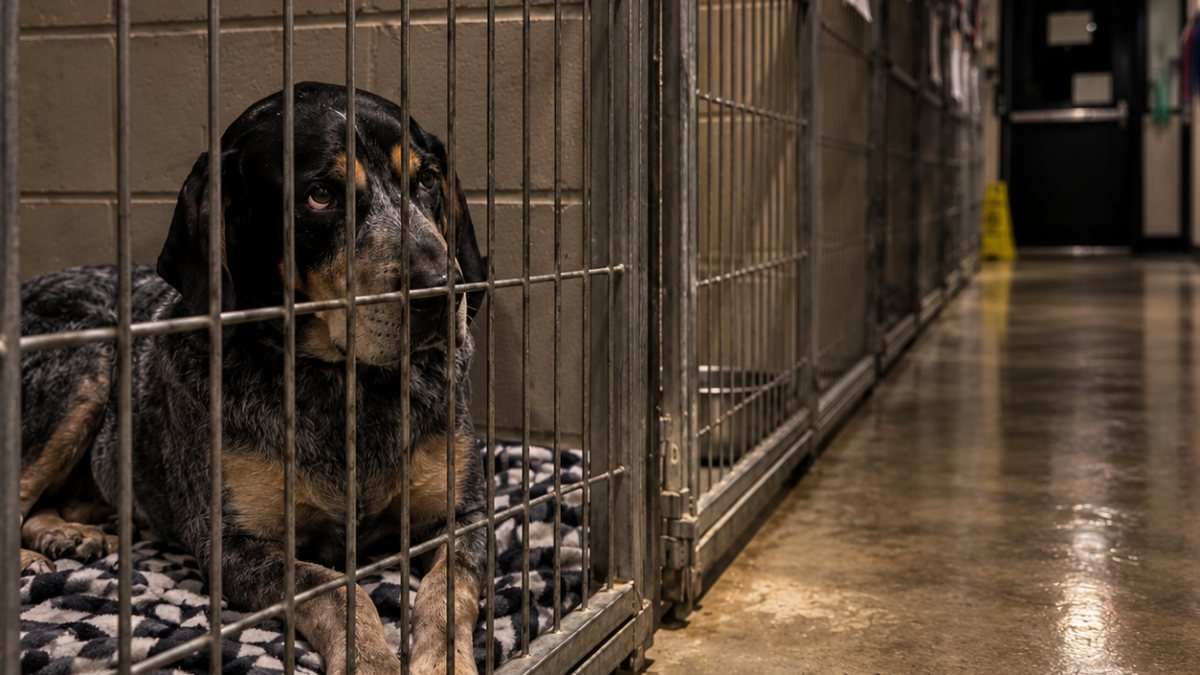
By Thursday night, Ranger had less than fifteen hours left before a shelter appointment nobody on staff wanted to talk about, and the reason typed into his file was so ordinary it made me sick: **behavioral decline, poor adoption prospects**. He had never bitten anyone, never lunged at a visitor, never even growled at the dogs barking inches away from his kennel—he simply lay facing the gate and released the same low, broken howl every few minutes, as if he were calling for someone who had forgotten where to find him. I had spent years evaluating abandoned dogs and thought I knew the difference between fear, aggression, shutdown, and illness, but that night I found one overlooked line in Ranger’s intake record that made me realize we had been asking the wrong question about him from the day he arrived.
I work intake and behavioral evaluations for a rescue shelter in rural Missouri.
You learn to compartmentalize quickly in this job.
If you carried every surrender home emotionally, you wouldn’t last a month.
I had processed dogs tied to fences overnight, puppies found beside dumpsters, and senior pets surrendered after their owners moved into nursing facilities.
Some arrive terrified.
Some angry.
Some seem almost relieved.
Ranger was different.
He came in during the first week of April, brought by a county animal-control officer who found him on a property outside town.
Six-year-old Bluetick Coonhound.
Male.
Thin but medically stable.
No chip registered to a current contact.
Long ears.
Graying muzzle.
Dark ticking across his coat.
And eyes I still have trouble describing.
Not frightened.
Not vacant.
Waiting.
That was the word.
He always seemed to be waiting.
The first morning, I opened his kennel and clipped on a leash.
“Come on, buddy.”
Ranger looked past me.
Not at me.
Past me.
Toward the hallway.
I stepped sideways.
Nothing.
I offered chicken.
He smelled it and turned away.
Most hounds would sell your car for chicken.
Ranger didn’t care.
Eventually he stood because I applied the slightest leash pressure.
He walked outside.
Relieved himself.
Then immediately turned toward the shelter entrance.
Not the field.
Not the grass.
The door.
As though whoever he expected might be waiting inside.
That night the howling started.
One low note.
Long.
Then silence.
Five minutes later, another.
Within days everyone recognized it.
Visitors stopped.
Children asked why he sounded sad.
Other dogs barked around him, but Ranger rarely reacted.
He just lay on his blanket facing the kennel door.
Weeks passed.
He lost weight.
Not dangerously at first.
Enough to notice.
His adoption photos got almost no response.
One family met him and left after ten minutes.
“He doesn’t seem interested in us,” the father said.
Another visitor told me, “I want a dog with more personality.”
I wanted to defend him.
Instead I said, “He’s still adjusting.”
By week four, that answer sounded hollow even to me.
The shelter filled.
Puppy season arrived early.
Every kennel mattered.
Then Thursday afternoon, I saw the note.
**Friday, 9:00 a.m.**
I closed the file.
Opened it again.
Still there.
Our director, Susan, found me staring at the screen.
“I’m sorry.”
“He isn’t dangerous.”
“I know.”
“He’s not medically suffering.”
“I know.”
“Then give me more time.”
“We already did.”
“How much?”
“Claire—”
“How much time did we give a dog who does nothing except lie there and cry?”
Susan rubbed both hands over her face.
“We cannot save dogs by pretending space isn’t finite.”
I hated her for saying it.
Mostly because she was right.
After closing, I stayed.
The shelter became quiet.
Then Ranger howled.
I opened his file again.
Medical notes.
Intake photographs.
Behavior sheets.
Animal-control report.
I read every page.
Then I reached a supplemental incident form buried near the back.
Ranger had not come from that property alone.
A second dog had been recovered the same day.
Female hound.
Approximately seven years old.
Name: Daisy.
Status:
**DECEASED PRIOR TO INTAKE.**
I sat completely still.
Then I kept reading.
And by the time I reached the final paragraph, Ranger’s howling no longer sounded like a behavioral problem at all.
PART 2
The report was only half a page.
That was what bothered me most.
Half a page explaining the collapse of an entire life.
The property belonged to an elderly man named Walter Henderson.
Seventy-nine.
Widowed.
Lived alone on a small acreage outside Marston County.
According to neighbors, Walter had owned hounds most of his adult life.
Not a commercial breeder.
Not a backyard operation.
He hunted when he was younger, then stopped as his knees worsened.
Ranger and Daisy were his last two dogs.
Ranger had been with Walter almost six years.
Daisy longer.
The neighbor interviewed by animal control said the dogs did everything together.
Slept on the enclosed porch.
Ate side by side.
Followed Walter around the property.
Rode in his old pickup.
Then Walter had suffered a stroke inside the house.
Fatal.
Nobody found him immediately.
A neighbor noticed newspapers collecting.
Then saw Ranger near the road.
By the time help arrived, Walter had been dead for almost two days.
The dogs had apparently gotten out through a damaged section of fence.
Daisy was struck by a vehicle less than half a mile from the property.
A driver stopped.
Animal control responded.
She was still alive when they found her.
Barely.
She died during transport.
Ranger was found later that afternoon near Walter’s porch.
Alone.
The report stated that he resisted loading into the truck until an officer brought out Daisy’s blanket.
Then he climbed inside.
I read that line three times.
I looked toward the kennel wing.
Ranger howled.
One long note.
Then silence.
I stood so quickly the chair rolled backward.
Susan had already left.
Our night attendant, Miguel, was cleaning bowls.
“You okay?”
“No.”
“That sounds promising.”
“Where’s Ranger’s intake property?”
Miguel frowned.
“Storage. Why?”
“Come with me.”
Every animal arriving through county intake had whatever belongings accompanied them placed into a labeled bin.
Usually leashes.
Collars.
Medication.
Sometimes nothing.
Ranger’s bin sat on the third shelf.
Inside was an old leather collar.
A frayed blue leash.
A stainless bowl.
A plastic bag containing veterinary receipts.
And a faded green blanket.
I touched it.
Dog hair still clung to one side.
Different color from Ranger’s.
Lighter.
Daisy.
Miguel looked over my shoulder.
“What is that?”
“His whole life.”
“Claire?”
I told him.
Walter.
Daisy.
Two days alone.
The accident.
Miguel swore quietly.
Then:
“Does Susan know?”
“I don’t think anybody connected it.”
“How?”
“Because Daisy never entered shelter inventory alive. She’s in the animal-control supplement, not his behavioral summary.”
Miguel stared toward the door.
“So everyone thinks he’s just shutting down.”
“He is shutting down.”
“But not for no reason.”
“No.”
I carried the blanket to Ranger’s kennel.
The moment I stepped into the hallway, his head came up.
That alone was unusual.
Normally he barely reacted until someone reached his gate.
I stopped ten feet away.
Ranger stood.
His nose lifted.
He smelled the air.
Then the sound that came out of him was different.
Sharp.
High.
Almost a yelp.
He rushed the kennel door.
Miguel froze.
“Oh, God.”
I knelt.
“Easy.”
Ranger shoved his nose through the bars.
Not toward me.
Toward the blanket.
I held it closer.
He smelled it once.
Then again.
His legs gave out.
He folded onto the floor.
Not collapsed medically.
He just sank.
I opened the kennel and carried the blanket inside.
Ranger crawled onto it.
He buried his muzzle in the fabric.
Then he started whining.
Not the shelter howl.
Small sounds.
Repeated.
He pawed at the blanket.
Smelled every inch.
Then curled around it.
I sat beside him.
Miguel stood outside.
Neither of us spoke.
For nearly an hour, Ranger stayed with his nose pressed into Daisy’s blanket.
That was the first night his howling stopped.
At 6:15 the next morning, I was waiting outside Susan’s office.
She arrived carrying coffee.
“You look terrible.”
“Cancel Ranger’s nine o’clock.”
She stopped.
“Claire.”
“Read this.”
I handed her copies of the supplemental report.
Susan read.
Her face changed.
But not enough.
That frustrated me.
“He lost both of them within forty-eight hours.”
“I see that.”
“He isn’t behaviorally declining because he’s unadoptable. He’s grieving.”
“I agree it may explain the behavior.”
“May?”
Susan looked at me.
“Don’t do that.”
“Do what?”
“Turn an explanation into a guarantee.”
I hated how calm she was.
She continued.
“Grief may explain why he’s withdrawn. It does not magically give us kennel space.”
“So we’re still doing it?”
“I didn’t say that.”
My shoulders dropped slightly.
Susan sat.
“How much time are you asking for?”
I had not thought that far.
“A week.”
“What happens in a week?”
“I work with him.”
“You’ve been working with him for a month.”
“Not correctly.”
Susan set down her coffee.
“And if nothing changes?”
I looked toward the hallway.
“Then we reassess.”
“That is what everyone says when they don’t want to answer.”
“Give me seven days.”
Susan leaned back.
“One kennel. Seven days. You document everything.”
“Yes.”
“Food intake.”
“Yes.”
“Interaction.”
“Yes.”
“Outside behavior.”
“Yes.”
“And Claire?”
“What?”
“You cannot make his grief disappear because you finally named it.”
“I know.”
I didn’t.
Not really.
Part of me believed identifying the cause would solve the problem.
That now I understood him, Ranger would suddenly stand up, eat, wag, charm adopters, and reward me for paying attention.
Grief does not work that way.
That morning, I sat inside his kennel with Daisy’s blanket.
Ranger did not acknowledge me.
I read aloud.
Not because I believed literature healed dogs.
Because silence seemed wrong.
The only book in my bag was a paperback crime novel.
So I read Ranger a chapter about a detective in Chicago investigating insurance fraud.
He slept.
That counted as something.
At lunch, I brought boiled chicken.
He refused.
I placed it on the blanket.
He ate one piece after I left.
I documented it.
**12:42 p.m. — consumed one small piece chicken after evaluator exited kennel.**
It looked pathetic.
Still, I wrote it down.
The next day, two pieces.
On Sunday, I sat outside rather than inside.
Ranger stood once.
Walked to the bars.
Smelled my hand.
Then returned to the blanket.
Monday, he ate half his breakfast.
Miguel nearly celebrated.
“Half?”
“Half.”
“That’s huge.”
“Don’t scare him.”
Ranger looked at us.
Miguel whispered:
“Huge.”
Tuesday afternoon, I took him outside.
Usually he walked directly back toward the building.
This time I sat under a maple tree.
Ranger stood beside me.
Wind moved through his ears.
I said:
“I don’t know what Walter talked about.”
Ranger looked toward the parking lot.
“Probably not insurance fraud.”
Nothing.
“I’m not much of an outdoors person.”
He smelled the ground.
“Walter probably was.”
Ranger walked three steps.
Then four.
I stayed where I was.
He returned.
Stood near me.
Then, very slowly, sat.
Not touching.
Close.
I looked straight ahead.
“Okay.”
We stayed twenty minutes.
Back inside, Ranger ate almost all his dinner.
Wednesday morning, Susan appeared beside my desk.
“You’re smiling.”
“No.”
“You are.”
“He finished breakfast.”
Susan looked toward his kennel.
“Good.”
“Can I have another week?”
She laughed once.
“Let’s survive Friday first.”
The original deadline passed.
Nobody mentioned it.
Ranger’s progress remained painfully slow.
He still howled.
But less.
Instead of every few minutes, sometimes an hour passed.
He began watching people differently.
Not waiting for one specific person every second.
Looking.
Evaluating.
When I entered, his ears sometimes lifted.
On day nine, he took a treat directly from my hand.
I felt ridiculous about how much that mattered.
A one-inch cube of chicken.
That was all.
Ranger smelled it.
Looked at me.
Took it carefully.
I froze.
He chewed.
I offered another.
He took that too.
Miguel saw through the kennel window.
He threw both fists into the air.
I glared at him.
Ranger looked toward the motion.
Then back at me.
I laughed.
“Sorry. We’re idiots.”
His tail moved.
Once.
A small sweep against the floor.
I stopped breathing.
“Did you see that?”
Miguel whispered:
“Yes.”
Ranger’s tail stopped.
I sat very still.
Then it moved again.
One tap.
That was it.
Two tail movements.
I wrote them into his record.
Susan later read the entry.
“You documented a tail wag?”
“Yes.”
“Twice?”
“Important data.”
She smiled.
“Clearly.”
The adoption team took new photographs.
Not the sad intake portrait.
This time Ranger stood outside under the maple tree.
Long ears.
Blue ticking.
Gray muzzle.
His expression remained serious.
We wrote his biography differently.
Not:
**Quiet hound seeking patient home.**
Instead:
**Ranger recently lost the only family he knew, including the dog who had spent nearly his entire life beside him. He is learning that new people can be safe, but he needs time, gentleness, and someone willing to let trust happen at his pace.**
Applications did not flood in.
He was six.
A hound.
Not house-tested in our care because shelter behavior tells you little about a home.
Likely vocal.
Needed patience.
Younger dogs always got more attention.
But people began stopping.
A retired teacher met him.
Ranger accepted a treat.
Then walked away.
She chose a spaniel.
A couple drove forty miles.
Their existing dog overwhelmed Ranger during introduction.
Bad match.
A farmer wanted an outdoor hound.
Absolutely not.
Ranger had spent enough time losing things outside.
Weeks passed.
Susan stopped asking me for a timeline.
I knew that could not last forever.
Shelters survive on capacity.
Compassion without logistics becomes collapse.
Then kennel cough moved through one wing.
Three isolation spaces disappeared.
Two emergency seizures brought in eleven dogs from a neglect case.
Every run filled.
Susan called an emergency staff meeting.
I knew before she said Ranger’s name.
“We need to reassess long-stay dogs.”
My stomach tightened.
There were five on the list.
Ranger was one.
“He’s improving,” I said.
Susan nodded.
“He is.”
“Then why is he on the list?”
“Because improvement and placement are not the same.”
“He has interest.”
“No qualified application.”
“Give him time.”
“Claire.”
I looked around the room.
Some staff agreed with me.
Others looked exhausted.
That mattered.
One technician, Jenna, finally spoke.
“We have dogs housed in temporary crates.”
“I know.”
“We have two kennels with double occupancy.”
“I know.”
“Then what do we do?”
Nobody answered.
Hope is expensive.
I understood that phrase now.
Hope requires food.
Medication.
Labor.
Kennel space.
A place another animal could use.
I hated every part of that arithmetic.
Ranger had become personal to me.
That made my judgment less objective.
I knew it.
I also knew that if I stopped fighting because objectivity felt cleaner, he could die.
Susan said:
“Three days.”
My head snapped up.
“What?”
“Three days. If you can arrange foster placement or a serious adoption prospect, good.”
“And if not?”
Her face tightened.
“We revisit.”
That evening I sat beside Ranger.
He rested on Daisy’s blanket.
I had washed it once by then.
It barely carried her scent anymore.
He still preferred it.
“I’m failing you.”
Ranger opened one eye.
“Useful contribution.”
He closed it.
I leaned against the concrete wall.
“I have two dogs at home.”
He didn’t care.
“One of them hates hounds.”
Still nothing.
“My landlord—”
I stopped.
I owned my house.
I was making excuses to a dog.
Could I foster Ranger?
I thought about it seriously for the first time.
My two dogs, June and Archie, were stable adults.
June tolerant.
Archie selective.
Ranger might fit.
Or it might create stress for everyone.
I called our trainer.
Then Susan.
Then I took Ranger through controlled introductions.
June ignored him.
Good.
Archie stiffened.
Ranger froze.
Bad.
We tried parallel walking.
Better.
Another session.
Manageable.
But inside the meet-and-greet room, Archie growled when Ranger approached my chair.
Ranger retreated immediately.
He began howling fifteen minutes later.
I knew.
My house was not the right home.
That felt like betrayal.
I sat in my car afterward and cried.
Not because Ranger had failed.
Because I could not personally solve the problem.
Rescue work teaches an ugly lesson.
Wanting to save an animal does not automatically make you the right person to keep them.
The next day I called every foster contact I knew.
Full.
Traveling.
Cats.
No fence.
Senior dog.
Medical foster already.
One woman agreed to meet Ranger.
Then canceled after reading that he howled.
Susan extended until Monday.
No official reason.
Just did.
Then Wednesday afternoon came.
Clear sky.
Hotter than expected.
I was cleaning enrichment toys when the front desk called.
“Claire?”
“What?”
“Guy wants to see the long-stay dogs.”
“We have several.”
“He said oldest first.”
That was unusual.
Most visitors said puppies first.
Or small dogs.
Or “anything that doesn’t shed.”
I walked toward reception.
The man was maybe sixty-eight.
Tall.
Lean.
Weathered face.
Gray hair beneath a faded Cardinals cap.
Work boots.
Plaid shirt.
Hands that looked like they had spent forty years repairing things.
He stood studying the adoption board.
“Hi. I’m Claire.”
“Frank.”
“You’re looking for a dog?”
“I’m looking.”
I smiled.
Shelter translation:
Potentially.
“What kind?”
“Don’t know.”
“Size?”
“Doesn’t matter much.”
“Age?”
“Older.”
“How old?”
He shrugged.
“Old enough nobody else is fighting me for him.”
I liked him immediately.
I still did my job.
“Other pets?”
“No.”
“Kids?”
“Grandkids visit. Eight and twelve.”
“House?”
“Own it.”
“Fence?”
“Four-foot farm fence.”
“For some dogs that won’t be enough.”
“I can fix it.”
“Work schedule?”
“Retired.”
“What did you do?”
“Power line maintenance.”
That explained the hands.
“Dog experience?”
Frank nodded.
“Had dogs most of my life.”
“When was the last?”
His face changed.
“January.”
“What happened?”
“Old age.”
I made a note.
“Breed?”
“Redbone mix.”
Hound.
I looked up.
Frank noticed.
“What?”
“I may have someone.”
He followed me down the kennel hallway.
Young dogs barked.
Frank barely looked.
A Labrador jumped at the gate.
He smiled but kept walking.
Then Ranger howled.
Frank stopped.
He didn’t ask what it was.
He listened.
One long note.
The same note I had heard for weeks.
Frank looked toward the end kennel.
“That’s him?”
“How do you know?”
“Sounds like a hound.”
We reached Ranger.
He was lying on the blanket.
Frank stood several feet away.
Ranger lifted his head.
Something changed.
Not dramatic.
He didn’t run to the gate.
Didn’t wag wildly.
He stood.
That alone mattered.
Frank looked at me.
“What happened to him?”
Not:
Is he friendly?
Does he bark?
Is he housebroken?
What happened to him?
I opened the kennel information folder.
Then closed it.
“You want the short version?”
“No.”
So I told him.
Walter Henderson.
Fatal stroke.
Two days.
Daisy.
Road.
Animal control.
The shelter.
The howling.
The missed note.
The deadline.
My extra time.
The slow improvement.
Everything.
Frank never interrupted.
When I finished, Ranger stood at the kennel gate.
Frank’s eyes were wet.
He cleared his throat.
“My wife died in December.”
I lowered the folder.
“I’m sorry.”
“Forty-three years.”
His voice changed on the number.
Forty-three.
Longer than I had been alive.
Frank looked at Ranger.
“Her name was Marlene.”
He gave a small laugh.
“She talked constantly.”
That surprised me.
He continued.
“Radio in the kitchen. Phone calls. Singing badly.”
His eyes stayed on Ranger.
“House sounds wrong now.”
I understood.
Or tried to.
Frank stepped closer.
Ranger did not retreat.
“My daughter keeps telling me to get another dog.”
“Another?”
“Copper died three weeks after Marlene.”
I stared at him.
His wife.
Then his dog.
Within three weeks.
Frank nodded toward Ranger.
“I know what it looks like when somebody is waiting for a voice they’re not gonna hear again.”
My throat tightened.
Ranger moved.
One step.
Then another.
He placed his nose between the bars.
Frank slowly held out his hand.
No baby talk.
No reaching over the head.
Just fingers.
Ranger smelled them.
Then pushed his muzzle forward.
Frank scratched behind one long ear.
Ranger’s eyes closed.
I turned away under the excuse of checking paperwork.
I needed a second.
When I looked back, Ranger was leaning his entire head against the bars.
Frank had one hand cupped beneath his jaw.
Neither moved.
“Want to meet him outside the kennel?” I asked.
Frank swallowed.
“Yeah.”
We used the quiet yard.
Ranger walked beside me.
Frank sat on a bench.
I handed him chicken.
“Don’t call him.”
Frank nodded.
Ranger explored the fence line.
Smelled grass.
Looked toward the building.
Frank waited.
Five minutes.
Ten.
Then Ranger approached.
Stopped four feet away.
Frank tossed a treat.
Ranger ate it.
Another closer.
Eventually Ranger stood beside his boots.
Frank did not touch him.
That impressed me more than if he had hugged him.
People want animals to prove connection quickly.
Frank let Ranger decide.
Finally Ranger lowered his head.
Rested his chin on Frank’s knee.
Frank looked at me.
His face broke.
I looked away again.
“Take your time.”
He whispered:
“Hey, buddy.”
Ranger closed his eyes.
After twenty minutes, Frank asked:
“What’s wrong with him medically?”
“Nothing major. Mild dental disease. Weight improving.”
“How’s he with people?”
“Gentle. Withdrawn. Sensitive.”
“Dogs?”
“Generally neutral. Slow introductions.”
“Cats?”
“Unknown.”
“House-trained?”
“Unknown.”
“Car?”
“Quiet.”
“How loud is the howl at home?”
I smiled.
“We don’t know.”
Frank nodded.
“Probably find out.”
I stared.
“You’re thinking adoption?”
He looked at me like I had asked whether rain was wet.
“Yes.”
“We usually recommend more than one visit for a dog like Ranger.”
“Fine.”
“You don’t have to decide today.”
“I know.”
“Grief can make people make quick decisions.”
Frank’s expression hardened slightly.
“So can loneliness.”
“Yes.”
“They’re not the same.”
“No.”
He looked at Ranger.
“I’m not trying to replace my wife.”
“I know.”
“Or Copper.”
“I know.”
Frank rubbed one thumb gently behind Ranger’s ear.
“I just don’t see why both of us need to sit in separate houses waiting for dead people.”
That sentence stayed with me.
We scheduled a home check.
Frank came back the next morning anyway.
And the next.
Ranger started recognizing his truck.
By the third visit, he stood when Frank entered the lobby.
Tail.
Two slow movements.
Frank smiled.
“There it is.”
I asked:
“You saw that?”
“I’m old, not blind.”
On the fourth visit, Ranger walked toward Frank without waiting for treats.
Frank crouched.
Ranger pressed his chest against him.
The adoption team stopped pretending this was undecided.
Still, we did everything properly.
Veterinary reference.
Good.
Home ownership.
Verified.
Fence.
Frank repaired two weak sections before we even requested it.
His daughter, Laura, agreed to be emergency contact.
Her children had experience with dogs.
Frank had a plan for travel.
A local veterinary clinic ten minutes away.
He owned a truck with a back seat Ranger could safely ride in.
He also had something harder to put on an application.
Patience.
The adoption paperwork took eighteen minutes.
I know because I checked.
After weeks of fighting for time, eighteen minutes looked ridiculous.
Frank signed.
Ranger sat beside him.
Susan handed over the folder.
“Congratulations.”
Frank looked at me.
“That it?”
“That’s it.”
He stood.
Ranger stood.
I walked them outside.
Then Ranger stopped.
Turned back.
I don’t know what I wanted.
Maybe some dramatic goodbye.
A look.
A tail wag.
Proof that I mattered.
Instead, Ranger smelled the grass.
Frank opened the truck.
Ranger hesitated.
Frank waited.
Then Ranger climbed in.
He settled on the back seat.
Frank closed the door.
Before getting into the driver’s seat, he came over to me.
“Thank you.”
I shook my head.
“You did the important part.”
“No.”
His voice was firm.
“You listened long enough to figure out what was wrong.”
I didn’t know how to answer.
Frank drove away.
I returned to Ranger’s kennel.
Empty.
The blanket remained.
Daisy’s blanket.
I held it.
Then called Frank.
He answered from the road.
“Everything okay?”
“You forgot something.”
“What?”
“His blanket.”
Silence.
Then:
“I’ll turn around.”
He did.
I gave him Daisy’s blanket.
Ranger smelled it through the open window.
Then lay down across it.
Frank looked at me.
“Now we’ve got everything.”
That first week, I expected problems.
Instead, I received almost nothing.
No call.
No email.
No crisis.
I became nervous.
On day six, I called Frank.
He answered:
“You people always this nosy?”
“Yes.”
“Ranger’s fine.”
“Eating?”
“Too much.”
“Sleeping?”
“Porch mostly.”
“Howling?”
Pause.
“Yeah.”
My heart dropped.
“How often?”
“Every night around nine.”
“Long?”
“Few minutes.”
“Any triggers?”
“Sun goes down.”
I wrote notes.
“Is it worsening?”
“No.”
“Restless?”
“Not really.”
“Frank, if it becomes—”
“Claire.”
“What?”
“He’s allowed to miss them.”
I stopped.
“He’s eating. Walking. Sleeping. Follows me to the shed. Stole half a biscuit yesterday.”
“That’s progress.”
“He howls.”
Frank paused.
“So what?”
I looked at Ranger’s old empty kennel.
Nothing had ever been wrong with the howl itself.
We were the ones who had decided sadness was a behavior to eliminate.
Frank continued.
“I talk to Marlene every morning.”
I sat down.
“You do?”
“Coffee.”
“What do you say?”
“Depends.”
His voice softened.
“Maybe Ranger and I are both weird.”
“No.”
“Good. Call next week and interfere again.”
I laughed.
Six weeks later, an envelope arrived.
No return label beyond Frank’s name.
Inside was a photograph.
Ranger asleep on a covered porch swing.
His head rested across Frank’s boots.
A chewed tennis ball beside him.
Daisy’s green blanket folded beneath his body.
Ranger looked heavier.
Healthier.
But that wasn’t what got me.
His face.
No waiting.
Eyes closed.
Body loose.
Sleep.
On the back, Frank had written:
**He still howls sometimes.**
**He misses them.**
**So do I.**
**But now neither of us has to do it alone.**
I put the photograph in my locker.
It stayed there.
Months later, Frank brought Ranger to the shelter.
At first I panicked.
My job trains you to assume the worst when adopters reappear with a dog.
I met them in the lobby.
“What happened?”
Frank frowned.
“What?”
“Why are you here?”
“Visit.”
I looked at Ranger.
He had gained nearly nine pounds.
His coat shone.
He wore a blue collar.
Tail wagging.
“Could have led with that.”
Frank laughed.
Ranger saw me.
For a second, nothing.
Then recognition.
He came forward.
I crouched.
He pushed his long head against my chest.
I hugged him.
“Hey.”
Tail.
Real tail.
Not two taps.
Full movement.
Frank watched.
“He remembers.”
“I hoped.”
Ranger smelled my pockets.
“He also remembers chicken.”
Frank handed me a bag.
Inside were homemade cookies.
“My daughter baked those.”
“For staff?”
“That’s what I told her.”
I opened the container.
Frank immediately took one.
“Thief.”
“I drove them here.”
Ranger moved toward the kennel wing.
Then stopped.
His body stiffened.
The sound of barking filled the hallway.
His ears lowered.
He looked back at Frank.
Frank crouched.
“Don’t have to.”
Ranger turned away from the kennels.
Walked toward the front door.
Frank looked at me.
“Guess he’s done with this place.”
“Good.”
Before leaving, Frank said:
“I changed his name.”
My stomach sank.
“You did?”
“Kidding.”
I stared.
He laughed.
“Your face.”
“You are a terrible person.”
“Ranger suits him.”
Then he became serious.
“I did stop calling the other bedroom Marlene’s room.”
I wasn’t sure why he was telling me.
“What do you call it?”
“Guest room.”
“How does that feel?”
“Bad.”
Then:
“Better.”
Ranger leaned against him.
Frank touched his head.
“Moving something doesn’t erase who used to be there.”
No.
It doesn’t.
The next year, Ranger became part of our shelter’s grief-support outreach program almost accidentally.
Not therapy work.
Nothing formal.
Frank simply started volunteering once a month.
He brought Ranger.
Not into the kennels.
Outside.
They sat beneath the maple tree.
Families surrendering senior dogs sometimes stopped.
Volunteers on bad days sat with them.
Frank rarely gave advice.
Ranger did even less.
That worked.
One afternoon, I came outside after we had euthanized a fifteen-year-old dog whose cancer had progressed beyond treatment.
I was angry.
Not at anyone.
At biology.
At owners who live longer than pets.
At pets who outlive owners.
At the entire arrangement.
Frank was on the bench.
Ranger beside him.
“You look pleasant.”
“Not today.”
“Sit.”
“I have work.”
“Five minutes.”
I sat.
Ranger moved closer.
Put his head on my leg.
I scratched his ear.
“No chicken.”
He sighed.
Frank asked:
“Bad one?”
“Yes.”
He didn’t ask details.
After a while I said:
“Sometimes I think we label pain too quickly.”
Frank looked toward the field.
“How?”
“Behavioral decline. Depression. Failure to thrive.”
“Those things real?”
“Yes.”
“But?”
I thought about Ranger.
“But sometimes we treat sadness like evidence the animal is broken.”
Frank nodded.
“Marlene’s sister told me six months after she died that I should be moving on.”
“What did you say?”
“Asked her where.”
I laughed.
Frank smiled.
“She meant well.”
“Most people do.”
“That’s the dangerous part.”
Ranger lifted his head.
A siren sounded far away.
He listened.
Then rested again.
Frank said:
“Sad doesn’t always mean stuck.”
I wrote that down later.
Not in Ranger’s chart.
For myself.
The second year after adoption, Frank had hip surgery.
His daughter called me.
Not because anything was wrong with Ranger.
Because she needed help arranging temporary care.
Frank refused boarding.
“Over my dead body.”
Laura said, “You will literally be in a hospital.”
“Ranger stays home.”
So we organized visits.
Laura’s son stayed overnight.
I stopped by twice.
Ranger searched for Frank the first day.
Howled that night.
Then settled.
The difference from shelter days was enormous.
He knew Frank would return.
How do I know?
I don’t.
I only know what his body did.
He ate.
Slept.
Went outside.
Waited by the window.
When Frank came home three days later using a walker, Ranger nearly knocked him over.
Laura shouted:
“Ranger!”
Frank laughed.
The dog froze.
Then approached slowly.
Smelled the walker.
Looked suspicious.
Frank sat.
Ranger pressed his head against his chest.
Frank cried.
He denied it later.
I saw him.
“Dust.”
“Inside?”
“Old house.”
Ranger adjusted to the walker in one day.
For six weeks, he matched Frank’s pace.
No pulling.
No rushing.
They walked to the mailbox and back.
Then farther.
Recovery companions.
Frank told me:
“He thinks physical therapy is both of us.”
Maybe it was.
That winter, Daisy’s blanket finally began falling apart.
Frank called.
“What do I do?”
“With what?”
“The green blanket.”
“What happened?”
“Ranger sleeps on it.”
“That seems normal.”
“It’s shredding.”
I pictured it.
Old fabric.
Years.
Washing.
Time.
“You can replace it.”
Silence.
Frank said:
“Feels wrong.”
I understood.
“You don’t have to throw it away.”
“What then?”
“Cut a piece. Keep it. Put another blanket on his bed.”
Frank grunted.
“That sounds suspiciously sentimental.”
“You called me about a blanket.”
“Fair.”
He cut a square from one corner.
Laura sewed it into the underside of Ranger’s new bed cover.
Not visible.
Still there.
I liked that.
Memory didn’t need to sit on top forever.
Sometimes it could be stitched underneath what came next.
Ranger turned eight.
Then nine.
Hounds age slowly until suddenly they don’t.
His muzzle whitened.
Hearing softened.
Arthritis appeared in his hips.
Frank complained about the medication cost while paying for every prescription without hesitation.
“You realize your dog has better insurance planning than you.”
“Ranger doesn’t need dental.”
“He does.”
“Damn.”
Ranger still howled.
Less.
Mostly at dusk.
Frank began joining him.
Not actually howling.
At least that was his claim.
Laura sent me a video proving otherwise.
Ranger lifted his muzzle from the porch.
Long note.
Frank, sitting in a rocker, produced the worst imitation of a coonhound I had ever heard.
Ranger stopped.
Looked at him.
Then walked away.
I called immediately.
“That was abusive.”
Frank said:
“He’s a critic.”
“Correct.”
The video became famous among staff.
Frank threatened legal action.
Nobody cared.
Three years after adoption, Susan retired.
At her farewell dinner, someone mentioned Ranger.
Susan looked at me.
“You were unbearable.”
“I was right.”
“You were unbearable and right.”
“Best combination.”
She smiled.
“Do you remember the morning you asked for a week?”
“Yes.”
“I was going to say no.”
I stopped.
“What changed?”
“Daisy’s blanket.”
I stared.
“You saw him?”
“On the kennel camera.”
Susan looked down at her glass.
“He curled around it.”
She paused.
“I realized we had treated the symptom like the dog’s identity.”
That was exactly it.
Behavior matters.
It keeps shelters safe.
It helps match animals appropriately.
But behavior without context is incomplete.
A dog frozen in a kennel might be fearful.
Sick.
Overstimulated.
Shut down.
Grieving.
All can look similar through bars.
Susan said:
“You know what still scares me?”
“What?”
“What if you hadn’t stayed late?”
I had thought about it.
Many times.
“I don’t know.”
“We would have…”
She stopped.
No need.
Friday, 9:00 a.m.
The appointment that never happened.
Ranger had not become valuable because I found a tragic backstory.
He had always been valuable.
The backstory merely forced us to interpret him more accurately.
That distinction mattered.
At ten, Ranger developed kidney disease.
Early.
Manageable.
Frank changed food.
Added medication.
Complained.
Ranger ignored him.
Their daily walks shortened.
The property Frank owned backed onto twenty acres of woods.
They used to walk the whole outer trail.
Then half.
Then to the pond.
Then only around the yard.
Frank adjusted.
No dramatic grief.
Not yet.
Just adaptation.
One autumn afternoon, I visited.
Ranger was asleep on the porch swing.
Same as the photograph.
Frank sat beside him.
“You know he’s older than Walter was supposed to have him.”
“What?”
Frank explained.
“When I adopted him, I kept thinking about how Ranger should’ve still been with Walter.”
I understood.
“Now?”
“Now he’s lived four extra years.”
He looked at the sleeping dog.
“With me.”
Not extra life, exactly.
Just life after loss.
Frank said:
“Funny thing.”
“What?”
“I thought I was taking him home because I understood him.”
He smiled.
“Turns out he understood me faster.”
Ranger opened one eye.
Frank scratched his ear.
“Lazy freeloader.”
Tail tap.
At eleven, Ranger’s kidneys worsened.
Still manageable.
Then a heart murmur.
Then cataracts.
He remained himself.
A slower version.
Frank built a ramp onto the porch.
Laura installed nonslip runners through the kitchen.
Grandchildren stopped roughhousing near Ranger’s bed.
His world narrowed.
But unlike the shelter, he did not face the door waiting for someone.
He slept wherever Frank was.
Kitchen.
Porch.
Living room.
One evening Frank called me.
“Ranger fell.”
I stood immediately.
“Is he hurt?”
“No. Got up.”
“Vet?”
“Tomorrow.”
“What happened?”
“Back legs.”
The exam showed worsening arthritis and mild neurologic weakness.
No emergency.
Yet.
We started discussing quality of life.
Frank hated the phrase.
“So I count good days?”
“It helps.”
“He still eats.”
“Good.”
“Still howls.”
“Good.”
“Still steals socks.”
“Excellent.”
Frank laughed.
“You’re useless.”
“Professionally certified.”
The next spring, Ranger stopped howling.
You would think quiet would be good.
It terrified Frank.
He called immediately.
“He didn’t do it last night.”
“One night?”
“Claire.”
I heard the fear.
“Okay. Vet.”
Bloodwork showed his kidney disease had advanced.
Medication adjusted.
Appetite support.
Fluids.
Ranger improved somewhat.
The howl returned once.
Frank called me while it was happening.
“Listen.”
He held the phone out.
Faint through the speaker:
A long hound note.
I laughed.
“Beautiful.”
“Sounds terrible.”
“Always did.”
“True.”
That was Ranger’s last real howl.
Two months later, Frank woke and found him unable to stand.
Laura called the veterinary clinic.
Then me.
I drove out.
No professional reason.
Ranger had been adopted for almost six years.
He was not shelter property.
I went because Frank asked.
Ranger lay on the porch.
Green blanket beneath him.
Or what remained of it, incorporated into the newer cover.
His face was almost entirely white.
Long ears.
Same eyes.
But no waiting.
Frank sat beside him.
When I approached, Ranger lifted his head slightly.
Tail.
Once.
Maybe twice.
I crouched.
“Hey, buddy.”
He smelled my hand.
I had brought chicken.
Habit.
He took one tiny piece.
Frank laughed.
“Still knows you.”
“No. Knows poultry.”
The veterinarian arrived at the house.
Dr. Lewis.
She examined Ranger.
Frank asked:
“Can you get him back up?”
Dr. Lewis was honest.
“Maybe temporarily with hospitalization.”
“How temporarily?”
“Days. Possibly a little longer.”
“Comfort?”
“Uncertain.”
Frank looked at Ranger.
Then at me.
I looked away.
Not my decision.
He had made hard decisions before.
Marlene’s medical care.
Copper.
His own surgery.
Still, this one hurt differently.
Frank said:
“I made him a promise.”
Dr. Lewis waited.
“No more cages.”
That settled it.
We moved Ranger inside.
Frank chose the living room.
His recliner.
Ranger’s bed beside it.
Laura arrived.
Her children were adults by then.
They came too.
Nobody crowded him.
We told stories.
Ranger stealing ham.
Ranger howling during church bells.
Ranger refusing to walk in snow unless Frank cleared a path.
The time he chased a raccoon onto the shed roof and then had no plan.
I told the story of the first tail wag.
Frank said:
“You really wrote that in his chart?”
“Official medical-adjacent documentation.”
“Ridiculous.”
Ranger slept through most of it.
Then woke.
Looked around.
Found Frank.
His body relaxed.
That was enough to break me.
Dr. Lewis gave the sedative.
Ranger’s breathing slowed.
Frank sat on the floor.
At seventy-something, getting down was difficult.
He did it anyway.
Ranger rested his head across Frank’s boot.
Just like the photograph.
Frank rubbed behind his ear.
“You miss ’em?”
Ranger’s eyes half closed.
“I do too.”
Nobody spoke.
Frank continued:
“Maybe you can stop calling now.”
His voice broke.
“You found somebody.”
Ranger exhaled.
Frank pressed one hand against his neck.
“Me too.”
Dr. Lewis waited for the nod.
Frank gave it.
Ranger died quietly.
No howl.
No concrete kennel.
No strange hallway.
No waiting for Walter.
No searching for Daisy.
His head remained across Frank’s boot.
For a long time, Frank didn’t move.
Then he said:
“House is gonna sound wrong again.”
I sat beside him.
“Yes.”
I didn’t lie.
“But you’ll know what the sound means.”
He looked at me.
“What?”
“That somebody was there.”
Frank cried.
So did I.
Ranger was cremated.
Frank scattered some of the ashes on Walter Henderson’s old property after receiving permission from the new owners.
He had found the address in Ranger’s records years earlier.
Not at the house.
Near the edge of the woods.
Somewhere Ranger and Daisy had probably walked.
He scattered another small amount near Marlene’s grave.
The rest stayed at home.
Beside Copper’s collar.
And a photograph of Marlene laughing in a kitchen.
I asked whether combining all those memories made him sad.
Frank looked offended.
“Everything makes me sad.”
Then he smiled.
“Doesn’t mean I don’t want it.”
That was Frank.
Six months after Ranger died, he returned to the shelter.
I saw him in reception.
My stomach tightened.
Not because I feared bad news.
Because I knew.
“Looking?”
“Maybe.”
“Older?”
“Obviously.”
“Hound?”
“Absolutely not.”
Ten minutes later, he was sitting with a nine-year-old beagle named Millie.
She had been surrendered after her owner moved into memory care.
Millie climbed onto Frank’s foot.
He looked at me.
“No.”
I said nothing.
“I know your face.”
“What face?”
“That face.”
“I have one face.”
“Liar.”
Millie leaned against his leg.
Frank sighed.
“I’m not taking her today.”
“Of course not.”
He adopted her the next morning.
His daughter texted me:
**YOU ARE ALL ENABLERS.**
I replied:
**CORRECT.**
Years after Ranger first arrived, the shelter renovated the kennel wing.
Concrete sealed.
Better acoustic panels.
Improved enrichment spaces.
New record system.
That mattered more than it sounds.
The new intake form added a section:
**Known bonded animals / recent household losses / major social disruption.**
That field existed partly because of Ranger.
Not named after him.
No memorial plaque.
Just a better question.
Sometimes the most meaningful changes are boring.
A box on a form.
A line staff members are required to ask.
Did this dog lose another animal?
Did the owner die?
Was the animal displaced suddenly?
Is the behavior new since the loss?
Information that could prevent sadness from being mistaken for hopelessness.
I trained new staff.
Every class, I showed two videos.
Ranger during week one.
Lying on the blanket.
Howl.
Silence.
Then Ranger six weeks after adoption.
Frank’s porch.
Tail moving.
Tennis ball.
Same dog.
I asked trainees:
“What changed?”
People answered:
Environment.
Attachment.
Time.
Routine.
Grief.
All true.
Then I told them:
“Don’t diagnose a story from a behavior.”
That became my rule.
Not every quiet dog is grieving.
Not every howl means loss.
Not every withdrawn animal needs the same intervention.
But behavior belongs to context.
Ignore the context and you may punish the symptom.
My photograph of Ranger stayed in my locker for years.
Porch swing.
Boots.
Tennis ball.
The note on the back.
**He still howls sometimes.**
**He misses them.**
**So do I.**
**But now neither of us has to do it alone.**
Eventually the paper curled at the corners.
The ink faded slightly.
I laminated it.
Miguel laughed.
“You laminated grief.”
“Shut up.”
Susan, long retired, visited once.
She saw the photograph.
“Still have it?”
“Yes.”
“Of course.”
We stood there.
Then she said:
“I still think about Friday at nine.”
“Me too.”
“Does that ever stop?”
“No.”
Maybe it shouldn’t.
Not guilt.
Attention.
A reminder that schedules can become momentum.
A decision typed into a file can start feeling inevitable.
Sometimes it is necessary.
Sometimes it deserves one more look.
One more page.
One more question.
Not endless delay.
Not denial.
Just care.
Years later, on my own final week before leaving shelter work, I cleaned my locker.
Old pens.
Treat bags.
Spare leash.
Photographs.
Thank-you cards.
Ranger’s picture.
I sat on the bench.
The shelter sounded different after renovations.
Quieter.
Still dogs.
Still need.
Still heartbreak.
A young employee named Sophie walked in.
She had been working there six months.
“What’s that?”
I handed her the photograph.
She read the note.
“Ranger?”
“You know him?”
“From training.”
I smiled.
He had become a case study.
“How long ago?”
“Long time.”
She looked at the image.
“Was he really scheduled?”
“Yes.”
“And you figured out he was grieving?”
“We figured out we’d missed the reason.”
She studied the photograph.
“Then Frank saved him.”
I shook my head.
“Careful.”
She looked at me.
“Why?”
“People love one-person rescue stories.”
“They’re cleaner.”
“Yes.”
I pointed at the photo.
“Walter loved him first.”
She nodded.
“Daisy kept him company almost six years.”
Nod.
“Neighbors noticed something was wrong.”
“Animal control brought him in.”
“Yes.”
“You found the report.”
“Yes.”
“Susan gave him time.”
“Yes.”
“Staff worked with him.”
“Yes.”
“Frank adopted him.”
“Yes.”
Sophie smiled.
“So everybody?”
“Closer.”
Ranger’s life had not turned because one person performed one perfect act.
It turned because enough people made slightly better decisions in sequence.
That was most rescue work.
Less dramatic.
More accurate.
I took the photograph home.
It now sits on a shelf in my study.
Not because Ranger was the saddest dog I ever met.
He wasn’t.
Not because Frank was the best adopter.
Impossible to rank.
It stays there because Ranger changed the way I interpret silence.
Before him, I saw a dog lying in a kennel and asked:
**What’s wrong with him?**
After Ranger, I learned to ask something else first.
**What happened to him?**
Those questions sound similar.
They are not.
One turns the animal into the problem.
The other leaves room for a story.
Sometimes the answer is still complicated.
Sometimes there is no Walter.
No Daisy.
No obvious explanation.
Sometimes a dog truly has severe behavioral needs.
Sometimes shelters make heartbreaking decisions even after understanding everything correctly.
Ranger did not make rescue simple.
He made me more careful.
That was enough.
A few months after retirement, Frank called.
Older voice.
Still sharp.
“Millie died.”
I closed my eyes.
“I’m sorry.”
“Fourteen.”
“That’s good for a beagle.”
“Doesn’t feel good.”
“No.”
Silence.
Then:
“I’m not getting another dog.”
I smiled.
“Okay.”
“I mean it.”
“Sure.”
“Claire.”
“I said okay.”
Three weeks later, Laura sent me a photograph.
Frank.
On his porch.
A ten-year-old hound mix lying across his boots.
I called.
He answered:
“Don’t.”
I laughed.
“You said no more dogs.”
“I changed my mind.”
“Name?”
“Walter.”
I went quiet.
Frank said:
“Too much?”
“No.”
Maybe for some people.
Not for him.
“Where’d he come from?”
“Shelter north of here.”
“History?”
“Owner died.”
Of course.
I leaned back in my chair.
“Frank?”
“What?”
“You have a type.”
“Apparently.”
In the photograph, Walter the dog looked peaceful.
Frank looked older.
The porch looked the same.
Different dog.
Different grief.
Same willingness to share space with it.
Years earlier, Ranger had arrived at our shelter howling for a world that no longer existed.
We almost mistook his grief for the end of his story.
It wasn’t.
The howl never needed to disappear completely.
Ranger never needed to forget Walter.
Never needed to forget Daisy.
Frank never needed to stop loving Marlene.
The goal was never forgetting.
The goal was learning that memory and new attachment could occupy the same body.
That a dog could miss one family and trust another.
That a man could still speak to his dead wife over morning coffee and laugh because a hound stole his biscuit.
That sadness could remain without becoming the only thing in the room.
The last time I visited Frank before he moved closer to Laura, I sat with him on the same covered porch.
Walter the hound slept nearby.
We talked about Ranger.
Frank pointed toward an old scuff mark on the porch boards.
“He used to lie there.”
I looked.
“How can you tell?”
“I can’t.”
He laughed.
“Probably made it up.”
We sat quietly.
Then, far in the distance, a hound called.
Not Walter.
Some neighbor’s dog.
One long note carried across the fields.
Frank stopped talking.
So did I.
The sound faded.
Years ago, that same kind of howl echoing through a concrete shelter had sounded unbearable.
Hopeless.
Like a dog asking a question nobody could answer.
Now it sounded different.
Not happy.
Not sad.
Just a voice traveling through open air.
Walter lifted his head.
Frank smiled.
“Go ahead.”
Walter gave one deep howl back.
Frank laughed.
I did too.
Then the porch became quiet again.
Not empty.
Quiet.
There is a difference.
There is a difference.
I understood that more clearly the longer I knew Frank.
Walter—the ten-year-old hound mix he swore he was not going to adopt—turned out to be quieter than Ranger had ever been.
He didn’t howl.
He didn’t pace.
He didn’t cry at night.
He simply waited beside doors.
The first time I visited Frank after Walter came home, I noticed it almost immediately.
Frank walked into the kitchen.
Walter followed.
Frank stepped into the laundry room.
Walter stopped at the doorway and sat.
When Frank came back out, Walter stood and followed again.
Same thing with the bathroom.
Same thing with the garage.
He never let Frank get completely out of sight.
“How long has he been doing that?” I asked.
“Since I brought him home.”
“Any separation anxiety?”
Frank shrugged.
“Depends what you call anxiety.”
“What happens when you leave?”
“He lies by the front door.”
“Cries?”
“No.”
“Destroys anything?”
“No.”
“Paces?”
“Not according to Laura’s camera.”
I looked down.
Walter had positioned himself beneath Frank’s chair.
Not touching him.
Close enough that one paw rested against Frank’s boot.
“Does he eat when you’re gone?”
“Eventually.”
“Eventually?”
Frank sighed.
“There it is.”
“What?”
“Shelter employee interrogation voice.”
“Former shelter employee.”
“Worse. Now you have unlimited time.”
I ignored him.
“What happened to Walter’s owner?”
Frank’s expression changed.
“Cancer.”
“Long illness?”
“About a year from what they told me.”
“Was Walter with him until the end?”
Frank nodded.
“Man died at home with hospice.”
That explained some things.
Walter had not experienced the sudden rupture Ranger had.
No stroke.
No two days alone.
No Daisy.
No road accident.
Instead, Walter had apparently spent months watching the person who formed the center of his world become weaker.
Then one day that person stopped being there.
Different grief.
Same absence.
Frank scratched Walter’s head.
“Shelter said he waited beside the hospital bed after they removed it.”
“How long?”
“His owner’s daughter kept him two weeks.”
“What happened?”
“Apartment didn’t allow dogs.”
“So surrender.”
“Yeah.”
Walter looked up when Frank shifted.
Immediately alert.
Frank saw me notice.
“He thinks I’m disappearing.”
“Maybe.”
“How do I tell him I’m not?”
“You don’t.”
Frank frowned.
“That’s encouraging.”
“You show him.”
“How?”
“Come back.”
Simple.
Not easy.
Leave.
Return.
Leave again.
Return again.
Breakfast appears tomorrow.
Walk happens tomorrow.
The chair still contains the same old man tomorrow.
Grief had taught me that animals rarely trust promises.
They trust patterns.
Frank understood patterns.
For nearly forty-four years, according to him, Marlene had put coffee on at 5:45 every morning whether she needed to be awake or not.
“Even Sundays?”
“Especially Sundays.”
“Why?”
“She believed sleeping past seven was a character defect.”
Walter eventually learned Frank’s patterns.
The dog stopped following him to the bathroom after about six weeks.
Frank called me specifically to report it.
“He stayed in the living room.”
“Congratulations?”
“I was offended.”
“You wanted independence.”
“I didn’t expect rejection.”
Walter also started eating while Frank was gone.
Then sleeping.
Then, one afternoon, Laura checked the camera and found Walter stretched across the couch with all four feet in the air.
She sent the picture to both of us.
Frank called me.
“He’s getting too comfortable.”
“That is the goal.”
“He’s on Marlene’s couch.”
“Was.”
Frank went quiet.
Then laughed.
“Fair.”
That couch had mattered.
After Marlene died, Frank had left her side untouched.
The blanket she used remained folded over one arm.
A paperback novel sat beneath the side table.
Reading glasses beside it.
He had never told me that before.
Walter climbed onto that cushion three months after adoption.
At first, Frank almost made him get down.
Instead, he stood there.
Looking at the dog.
Looking at the blanket.
Then he picked up Marlene’s blanket.
Folded it carefully.
Put it into a cedar chest.
Walter stayed.
Frank told me later:
“Whole room looked different.”
“Bad different?”
“For about ten minutes.”
“And then?”
“I sat beside him.”
That was grief becoming livable.
Not disappearing.
Making room.
The following spring, Frank sold his acreage.
That surprised me more than anything.
He had lived there for almost thirty years.
Marlene’s garden was there.
Copper was buried there.
Ranger’s old porch swing was there.
I thought he’d die before leaving.
Laura disagreed.
“My dad is becoming unsafe out there.”
She called me privately.
“Falls?”
“Not yet.”
“Driving?”
“He shouldn’t be driving after dark.”
“Does he agree?”
She laughed.
“What do you think?”
Frank’s hip had never fully recovered.
Stairs hurt.
The acreage required maintenance.
Snow removal.
Fence repair.
Long distances to doctors.
Laura lived ninety minutes away and had started making the trip twice a week.
Frank pretended not to notice.
Then one morning, he slipped on ice near the mailbox.
He wasn’t badly injured.
Bruised shoulder.
Cut hand.
Nothing broken.
But he stayed on the ground almost fifteen minutes because he could not get himself upright.
Walter remained beside him.
Wouldn’t leave.
A neighbor eventually saw them.
That changed the conversation.
Laura wanted Frank to move closer.
Frank refused.
Then agreed to “consider it.”
In Frank language, that meant six more months of arguing.
I drove out one afternoon during the final stage of the battle.
Boxes were stacked in the living room.
“You surrendered?”
“I made a strategic retreat.”
“Same thing.”
“No.”
Walter slept among the boxes.
“Where are you going?”
“Small place near Laura.”
“House?”
“Single-story.”
“Yard?”
“Fenced.”
“Walter approved?”
“He has no financial stake.”
Walter opened one eye.
Frank pointed.
“See? Freeloader.”
I walked onto the porch.
Ranger’s swing remained.
Weathered now.
One chain slightly rusted.
Frank joined me.
“You taking this?”
“No.”
I looked at him.
“Really?”
“New people want it.”
“You’re leaving the porch swing?”
He sat.
Slowly.
“Yes.”
Ranger had slept there for years.
The photograph in my study had been taken on that swing.
Head across Frank’s boots.
Green blanket beneath him.
It had become inseparable from my memory of Ranger.
“You okay with that?”
“No.”
Frank smiled.
“But I’m doing it.”
I sat beside him.
He looked toward the fields.
“Marlene used to sit right here.”
I hadn’t known.
“Ranger too.”
“I know.”
“Copper.”
“Everybody.”
Walter wandered out.
Lay at Frank’s feet.
Frank looked down.
“Can’t haul the whole house with me.”
“No.”
“Could try.”
“Laura would kill you.”
“She’s already trying.”
We sat there almost an hour.
Frank told me where Ranger used to sleep during thunderstorms.
Where Marlene planted tomatoes.
Where Copper once chased a skunk beneath the shed and regretted every decision leading to it.
Then he stood.
Touched the back of the swing.
And walked inside.
He didn’t make a ceremony of leaving it.
That felt right.
Memories do not need every object that witnessed them.
Frank’s new house was small.
Two bedrooms.
One bathroom.
Tiny kitchen.
Covered back patio.
Walter loved it immediately.
Frank complained about everything.
“No workshop.”
“You’re eighty.”
“So?”
“Your tools belong in retirement too.”
“Communist.”
Laura lived six minutes away.
Her grandchildren visited.
Frank joined a senior breakfast group twice a week and spent the first month insisting he hated it.
By the third month, he complained when it was canceled.
Walter became popular with the neighbors.
An older woman named Gloria brought him biscuits.
Frank accused her of bribery.
Gloria ignored him.
A retired mail carrier walked Walter on mornings when Frank’s hip was bad.
A boy two houses down came over to throw tennis balls.
Walter rarely returned them.
Apparently hounds considered retrieval beneath them.
For the first time since I had known Frank, his support system was visible.
Not distant.
Not theoretical.
People within walking distance.
That mattered more as time passed.
Frank’s health declined gradually.
Nothing dramatic.
Blood pressure.
Then diabetes.
Hearing aids he refused to wear correctly.
A minor heart procedure.
Every few months Laura called me.
Not because I had any medical expertise.
Because I had somehow become one of the people who understood how Frank communicated fear.
Usually by becoming irritated with everyone.
After one hospital stay, Laura said:
“He’s impossible.”
“How impossible?”
“He discharged himself two hours after they cleared him and refused the wheelchair.”
“That sounds normal.”
“He said wheelchairs are for sick people.”
“He was in a cardiology unit.”
“I told him that.”
Walter adjusted to each medical interruption.
The first hospitalization lasted three days.
He waited by the front window.
The second time, he slept in Frank’s bedroom.
The third time, he stayed with Laura without refusing food.
Return had become part of his understanding.
Frank left.
Frank came back.
Until eventually, one day, he didn’t.
It happened six years after Walter came home.
Frank was eighty-four.
He had been slowing for months.
Still sharp.
Still sarcastic.
Still capable of insulting my driving from the passenger seat.
Then he developed pneumonia.
Hospitalized.
Improved.
Declined.
Improved again.
Laura called me on a Thursday.
“Dad wants to go home.”
I knew what she meant.
Hospice.
I drove down Saturday.
Frank was in a hospital bed positioned near the living-room window.
Walter lay beside it.
The dog was sixteen.
Old beyond what anyone expected.
Clouded eyes.
Thin hips.
White face.
Two old men finishing their lives in the same room.
Frank looked at me.
“You got old.”
“Good to see you too.”
“Your hair.”
“You don’t own a mirror?”
Laura laughed from the kitchen.
Frank ignored her.
I sat.
Walter lifted his head.
Smelled my hand.
Tail moved.
“Still remembers chicken,” I said.
Frank smiled.
“Same as Ranger.”
That name hung gently between us.
Ranger.
Marlene.
Copper.
Millie.
All the absences living in that room without making it empty.
Frank looked toward Walter.
“Laura’s taking him.”
“I assumed.”
“She agreed years ago.”
“Good.”
“He’ll hate it.”
“For a while.”
“Yeah.”
Frank closed his eyes.
Tired.
Then:
“Remember what you told me?”
“That narrows nothing.”
“When Walter followed me everywhere.”
I thought.
“Come back.”
“Yes.”
Frank opened his eyes.
“What happens when you can’t?”
I didn’t answer quickly.
There are moments when people ask questions they do not expect solved.
They only need someone not to run from them.
I looked at Walter.
Then Frank.
“Someone else comes.”
Frank nodded.
That was enough.
He died four days later.
Laura called early in the morning.
Walter had been beside the bed.
Not frantic.
Not howling.
Just there.
After the funeral, Walter went to Laura’s house.
He searched for Frank.
Of course he did.
Room to room.
Door to door.
He sat beside Laura’s husband when he wore Frank’s old Cardinals cap.
That detail nearly destroyed her.
But Walter did not stop eating.
Did not shut down.
Did not disappear into himself.
He knew how to survive a person leaving.
Not because grief hurt less.
Because his life had taught him something Ranger had not yet learned when we first met him.
Loss does not always mean the end of belonging.
Walter slept beside Laura’s bed after two weeks.
Started following her grandchildren into the yard.
Accepted biscuits from Gloria when she visited.
He lived seven more months.
Then his old body failed.
Laura called me after.
“I think Dad would’ve liked how it happened.”
“How?”
“Outside.”
She cried quietly.
“He was lying under the maple tree.”
Walter stopped eating that morning.
By afternoon, he couldn’t stand.
Their veterinarian came to the house.
Laura carried one of Frank’s old shirts outside.
Placed it beneath Walter’s head.
He smelled it.
Relaxed.
Then died with Laura’s hand against his chest.
Another dog losing another person.
Another person losing another dog.
And somehow, by then, I no longer saw those endings as proof that attachment was dangerous.
That had been a private fear of mine for years.
If love causes grief, why keep choosing it?
Shelter work gives you endless evidence for avoiding attachment.
Animals die.
People die.
Families split.
Housing changes.
Bodies fail.
Everything you love eventually becomes vulnerable to loss.
Ranger taught me the opposite lesson.
Grief was not proof that love had been a mistake.
Grief proved something had mattered enough to leave a shape after it was gone.
A year after Frank’s death, Laura invited me to help clean out the last boxes from his house.
Most had been dealt with.
Tools distributed.
Clothes donated.
Papers sorted.
One plastic storage bin remained in the garage.
Label:
DOG STUFF
Inside were collars.
Copper’s tag.
Millie’s tag.
Walter’s leash.
A tennis ball so old the rubber had gone almost gray.
Then I found Ranger’s collar.
Blue.
Worn soft.
His shelter identification tag still attached behind Frank’s newer tag.
I turned it over.
His old shelter number remained barely readable.
A number.
That was who he had been to the system when I first opened his file late at night.
Kennel.
Intake date.
Behavioral decline.
Poor adoption prospects.
Friday, 9:00 a.m.
I held the collar longer than I meant to.
Laura watched.
“You want it?”
“No.”
“You sure?”
“Yes.”
“It feels like yours.”
I shook my head.
“No.”
Ranger had been mine only briefly.
Frank had given him the life beyond the kennel.
Laura picked up the collar.
“I thought about putting everything in Dad’s casket.”
“I’m glad you didn’t.”
“Why?”
“Because memories shouldn’t all get buried.”
She smiled sadly.
We decided to make something.
Nothing elaborate.
No giant memorial.
Laura mounted four collars inside a simple shadow box.
Copper.
Ranger.
Millie.
Walter.
Below them, she placed a small photograph of Frank and Marlene on their porch before illness changed anything.
No quote.
No dates.
Just a family.
That box still hangs in Laura’s hallway.
Years later, Sophie—the young shelter employee I had trained before retirement—called me.
“Can I ask you something?”
“Depends.”
“We have a dog.”
“That sounds like a shelter problem.”
“Very funny.”
She explained.
Nine-year-old shepherd mix.
Owner entered hospice.
Dog surrendered by family.
Refused food.
Growled when staff tried to remove a sweater carrying the owner’s scent.
Had become increasingly withdrawn.
Not aggressive beyond defensive warnings.
Shelter was worried.
“What do you think?”
I almost laughed.
Not because it was funny.
Because once, I would have answered immediately.
Grief.
Obviously grief.
Ranger had taught me to be more careful than that.
“What’s medical say?”
“Clear so far.”
“Pain assessment?”
“Done.”
“History?”
“Stable home nine years.”
“Any other animals?”
“No.”
“Recent routine?”
“Owner was hospitalized for two months before surrender.”
“Have you spoken to family?”
“Not yet.”
“Do that.”
Sophie went quiet.
“You think it’s grief?”
“I think you have a dog behaving differently after losing everything familiar.”
“That’s grief.”
“Maybe.”
She sighed.
“You’re annoying.”
“Professional legacy.”
The family eventually brought in a pillowcase from the owner’s bed.
The shepherd slept on it.
Started eating.
Two weeks later, she went into foster care with the owner’s sister.
That dog did not become Ranger.
Good.
Ranger’s lesson was never that every sad dog had the same story.
It was that stories matter.
Ask.
Look deeper.
Do not let the first label become the final explanation.
The shelter eventually created a small staff resource guide for animals experiencing major household disruption.
Nothing sentimental.
Signs to monitor.
Medical differentials.
Environmental changes.
Scent items.
Routine.
Foster options.
When to consult behavior professionals.
When humane euthanasia could still be appropriate despite grief being part of the picture.
Real rescue requires that last sentence too.
Understanding suffering does not always mean you can fix it.
Sometimes the kindest decision remains painful.
Ranger did not give us permission to believe every case has a miracle waiting.
He gave us permission to slow down enough to distinguish hopelessness from mourning.
That difference saved him.
Sophie sent me the finished guide.
At the bottom of the final page was a small line:
Case reference: Ranger H., Bluetick Coonhound.
I stared at it.
Not his full story.
Not Frank.
Not Daisy.
Just a professional reference.
Exactly the kind of boring institutional change I had come to value.
Ranger became a reason someone might ask one more question.
That was enough.
I kept his photograph in my study until the sun began fading it even through the laminate.
Eventually I scanned it.
Stored the original inside a drawer.
For the first time in decades, Ranger’s picture was no longer visible every day.
I worried that would feel wrong.
It didn’t.
Memory didn’t vanish because the photograph moved.
Frank had taught me that with Marlene’s couch.
Marlene’s room.
The porch swing.
Objects help.
Then sometimes their job is finished.
One autumn evening, I drove past the old shelter.
I had not been inside for almost a year.
The maple tree was still there.
The one where Ranger first sat beside me instead of heading directly toward the building.
I pulled into the parking lot.
No reason.
Old habit.
The building looked smaller than I remembered.
A volunteer walked a young dog through the yard.
New faces at reception.
Different cars.
Different animals.
I stood near the fence.
Then I heard it.
A howl.
Deep.
Long.
From somewhere inside.
My entire body reacted before my mind did.
Ranger.
Impossible.
I knew that.
Still, for half a second, I was back at the intake desk late at night.
File open.
Friday appointment scheduled.
Behavioral decline.
Poor adoption prospects.
Then another howl came.
Different dog.
Of course.
A young employee appeared outside.
“You okay?”
I smiled.
“Yes.”
“Looking for someone?”
“No.”
That answer surprised me.
Years earlier, Ranger had spent weeks looking for someone.
Walter.
Daisy.
A familiar truck.
A familiar voice.
Frank arrived carrying the same kind of absence and somehow gave Ranger permission to stop waiting at the kennel door.
Then Ranger gave Frank something in return.
Not replacement.
Not cure.
Company.
That word seemed small.
It wasn’t.
Company meant hearing another creature breathe in the house.
Someone requiring breakfast.
Someone waiting by the door.
Someone beside you when dusk made old memories louder.
Someone whose grief did not frighten you because you recognized its shape.
The employee started back inside.
I asked:
“Who’s howling?”
She smiled.
“Coonhound mix.”
“Of course.”
“Just came in yesterday.”
“Owner surrender?”
“Family emergency.”
I nodded.
“Good luck.”
She laughed.
“With the howling?”
“With the story.”
She looked confused.
That was fine.
She would learn her own version.
I walked back toward my car.
Another long note followed me across the lot.
This time I didn’t hear hopelessness.
I heard information.
A dog saying something.
Maybe fear.
Maybe confusion.
Maybe simple hound genetics.
Someone inside would have to figure out which.
That was the work.
Before driving away, I sat behind the wheel and looked at the shelter doors.
I thought about Ranger on Frank’s porch.
Frank beside Marlene’s memory.
Walter sleeping under another old man’s chair.
Laura carrying forward what Frank could no longer carry.
Sophie asking better questions.
A line on a shelter form.
A photograph moved from a locker to a study to a drawer.
None of it looked like rescue the way people imagine rescue.
No dramatic moment.
No one person carrying a dog from danger.
Mostly people staying curious long enough not to mistake pain for failure.
I started the car.
The hound inside called again.
One long note.
Then silence.
I smiled.
The silence after Ranger’s howl used to terrify me because it sounded like giving up.
Now I knew silence could mean something else.
Listening.
Waiting.
Resting.
Remembering.
Or simply the pause before another voice answered.
I drove home.
Behind me, somewhere inside the shelter, the hound howled once more.
And this time, before the sound faded completely, another dog answered from farther down the kennel row.
Not alone.
That was enough.
[END OF STORY]








