PART 2: The HOA Board Bragged Their Insurance Made Them Untouchable—Then the Carrier Saw What They’d Done
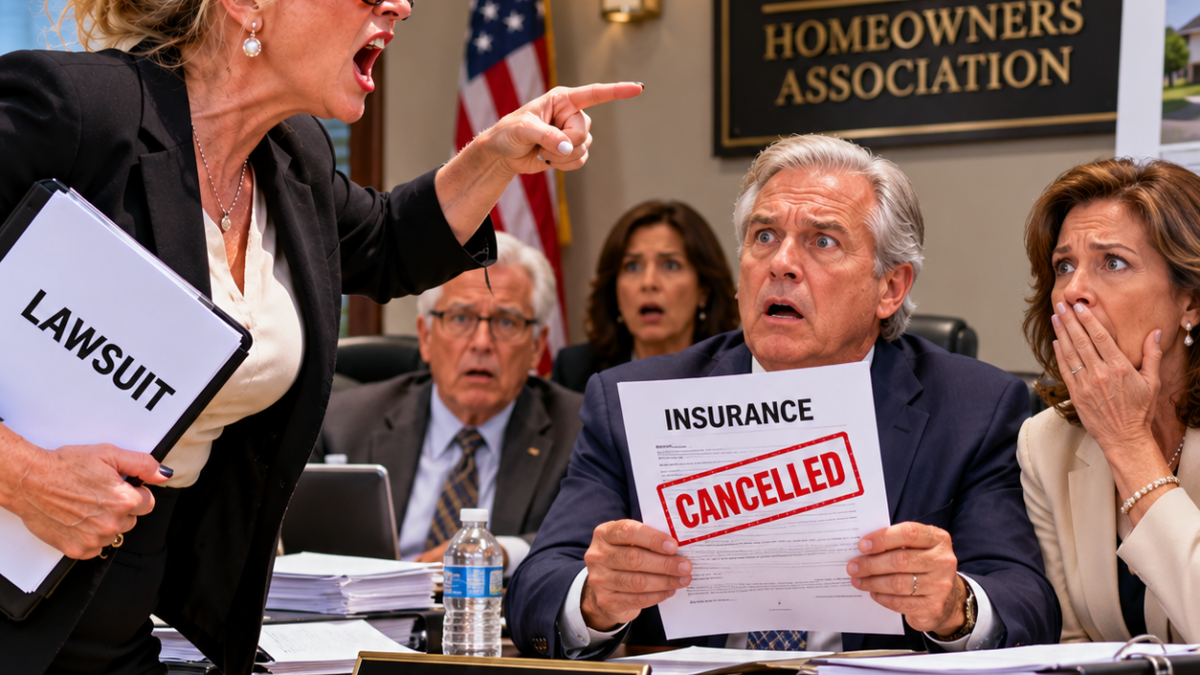
PART 2
$10,482.63.
I read it once.
Then again.
The contractor’s actual demolition charge was bad enough, but the HOA had stacked additional items beneath it.
Administrative processing.
Compliance supervision.
Site coordination.
Violation enforcement fee.
Document preparation.
There was even a $350 line item called “post-remediation inspection,” although nobody from the board had returned to inspect anything.
Attached to the invoice was a letter signed by Karen.
Payment is due within thirty days. Failure to satisfy the balance may result in the recording of a lien against the property and further collection remedies available to the Association.
I placed the letter on my kitchen table.
For about ten seconds, I stopped being strategic.
I wanted to tear it in half.
I wanted to walk to Karen’s house, drop the pile of broken bluestone in her driveway one piece at a time, and ask how much she thought her precious property values were worth now.
Instead, I walked outside.
The slope behind my house looked wounded.
The excavator had destroyed more than the top six inches that had supposedly violated the rule.
Almost the entire wall was gone.
The contractor had ripped through drainage fabric, crushed several lengths of perforated pipe, torn up sod, and left deep tracks across the yard.
Rain was forecast for the weekend.
Without the wall and drainage system, the soil could wash downhill.
That meant the HOA’s “remediation” had created the exact structural problem my wall had been built to prevent.
I called three retaining-wall contractors.
All three said the same thing.
Rebuilding correctly would cost far more than Karen’s demolition contractor had charged.
One estimate came in at $27,000.
Another at almost $31,000.
The third contractor stood in my backyard, stared at the wreckage, and shook his head.
“Who did this?”
“The HOA.”
“They tore out a functioning engineered wall?”
“Yes.”
“Why?”
“Six inches.”
He looked at me.
“Six inches of what?”
“Height.”
He turned back toward the demolished slope.
“They could’ve modified five feet of wall.”
“I know.”
He pointed at the crushed drain line.
“They destroyed everything.”
“I know.”
He removed his cap.
“Man, I’m sorry.”
That simple sentence almost broke through the discipline I had been holding onto.
Because until then, everyone had treated the situation like procedure.
Violation.
Authority.
Covenant.
Civil matter.
Invoice.
A stranger standing in my ruined yard was the first person who looked at it and saw what I saw.
Something had been destroyed unnecessarily.
I thanked him and asked for a written estimate.
Then I went back inside.
On my computer, I created a folder.
OPERATION DISMANTLE
It sounded ridiculous.
It also helped.
Inside, I created subfolders.
WALL APPROVAL
VIOLATION LETTERS
DEMOLITION VIDEO
POLICE RESPONSE
CONTRACTOR
BYLAWS
BOARD MINUTES
FINANCIAL AUTHORITY
DAMAGES
Then I scanned the original architectural approval.
That document mattered.
Months before construction, I had submitted drawings to the architectural control committee showing the retaining wall’s footprint, material, drainage plan, and relationship to the natural grade.
The approval had come back with one box checked:
APPROVED.
No modifications.
No conditions.
No warning that every inch of the wall had to remain below exactly four feet regardless of grade variation.
The problem came only after construction, when Karen measured one short section at four feet six inches because the ground dipped there.
I had admitted that immediately.
I had also offered to correct the visual discrepancy with grading and shrubs.
She refused.
At the time, I had thought she was simply rigid.
Watching the demolition video again changed that interpretation.
She had enjoyed it.
That mattered.
Not necessarily legally.
But strategically.
She wasn’t trying to solve a six-inch problem.
She had wanted a demonstration.
She wanted every person in Northwood Pines to see what happened when someone challenged the architectural control committee.
I printed Article Eleven, Section Four of the bylaws.
Any non-budgeted expenditure or contractual obligation exceeding $5,000 requires approval by majority vote of the Board at a properly noticed meeting, with the action reflected in the official minutes.
The demolition had cost more than ten thousand dollars.
Somewhere, there had to be a vote.
Or there didn’t.
I submitted a formal records request.
No accusations.
No threats.
I asked for certified copies of minutes covering the month before the demolition, all resolutions authorizing corrective work at my property, and the vote approving the contractor expenditure.
Certified mail.
Return receipt.
Then I waited.
Three days later, a new HOA letter appeared.
For one stupid second, I thought it might contain the records.
Instead:
NOTICE OF VIOLATION: UNSIGHTLY PROPERTY CONDITION
I laughed.
Actually laughed.
The HOA had fined me $500 because my backyard contained broken stone, exposed soil, and equipment tracks.
Damage created by their contractor.
I walked outside, placed the notice on a surviving piece of bluestone, and took photographs.
Wide angle.
Close-up.
Date stamp.
Then I wrote another dispute letter.
My neighbor across the street, Tom Reynolds, wandered over while I was photographing.
He was a quiet man who generally communicated through nods.
“What happened back here?”
“HOA demolished the wall.”
“I saw the machine.”
“They just fined me for the mess.”
Tom looked at the letter.
Then at the yard.
Then back at the letter.
“You’re kidding.”
“No.”
He actually laughed.
“That’s insane.”
“I’m beginning to think sanity isn’t part of the enforcement process.”
Tom handed the letter back.
“You going to fight?”
“Yes.”
He glanced toward Karen’s street.
“Good.”
That was the first hint that I might not be as alone as I thought.
The HOA answered my records request on the last day allowed.
A thin envelope.
Inside were two pages of minutes.
Most of the relevant section was blacked out.
The explanation said the redactions concerned privileged legal advice and anticipated litigation.
I read that phrase twice.
Anticipated litigation.
At the time of that meeting, I had not sued anyone.
I had not even threatened suit.
I had been asking for a reasonable adjustment to six inches of retaining wall.
Why was the board discussing litigation before demolition?
And why was the actual vote hidden?
I wrote another request asking them to identify the legal basis for withholding the authorization itself.
They did not answer.
So I changed tactics.
I started walking.
Not covertly.
I simply took an hour each evening and walked through Northwood Pines.
The development contained 289 homes spread across a series of curving streets with ornamental trees and carefully maintained common areas.
Karen loved those streets.
I saw her frequently.
Always walking a small dog.
Always looking.
Trash cans.
Mailboxes.
Lawns.
Vehicles.
She seemed physically incapable of passing a house without inspecting it.
Whenever we crossed paths, she smiled.
“Evening, Mr. Davis.”
“Karen.”
“How’s the yard?”
“Documented.”
Her smile tightened.
Then we continued in opposite directions.
One evening, I passed Mrs. Gable’s house.
She was in her seventies, widowed, and known around the neighborhood for a front garden filled with flowers and ceramic figures.
Except the ceramic figures were gone.
I remembered seeing them when I bought my house.
Gnomes with shovels.
Gnomes carrying lanterns.
One reading a tiny book.
My daughter used to laugh at them when she visited.
Now the flower beds looked strangely empty.
Mrs. Gable was pulling weeds.
I stopped at the edge of the sidewalk.
“Mrs. Gable?”
She looked up.
“John Davis.”
“Yes, ma’am.”
“I heard about your wall.”
“Apparently everybody did.”
She straightened slowly.
“That was terrible.”
“Thank you.”
I nodded toward the flower beds.
“Where’d your little people go?”
She looked confused.
“The gnomes.”
Her expression changed.
“Oh.”
She glanced toward the street.
That tiny movement told me more than her answer.
“The association decided I had too many.”
“How many is too many?”
“Apparently twelve.”
“What’s allowed?”
She gave me a tired smile.
“Depends how Karen feels.”
I waited.
Mrs. Gable lowered her voice.
“They fined me.”
“How much?”
“First fifty. Then two hundred. Then two hundred every week.”
“For garden gnomes?”
“Excessive exterior ornamentation.”
“Did you appeal?”
“I tried.”
“What happened?”
“She told me if I kept making trouble, they would start inspecting everything else.”
Her hand twisted around the gardening glove she was holding.
“The crack in my driveway. My shutters. The paint around the garage.”
I felt something change inside me.
Until that moment, Operation Dismantle had been personal.
My wall.
My money.
My property.
Karen had destroyed something I built.
Mrs. Gable turned the problem into something else.
Fear.
“They threatened foreclosure?” I asked.
Her eyes lowered.
“She said fines can become liens.”
“Do you still have the letters?”
She hesitated.
“Yes.”
“May I see them?”
“Why?”
“Because I’m trying to understand how they operate.”
She studied me.
Then opened her front door.
“Come in.”
The letters were stored in a shoebox beneath a small table.
There were eleven.
The language sounded familiar because much of it was identical to mine.
Formal violation.
Failure to cure.
Escalating fine.
Potential lien.
Possible legal action.
Mrs. Gable had paid almost eight hundred dollars before finally removing the gnomes.
One letter contained a handwritten note:
Continued resistance will result in closer inspection of the property for additional violations.
I photographed it with her permission.
“That sounds like retaliation,” I said.
Mrs. Gable sat across from me.
“Can she take my house?”
“Not because of garden gnomes tomorrow morning.”
“That isn’t what I asked.”
I stopped.
She was genuinely afraid.
“I don’t know every detail of your account,” I said. “But I do know you shouldn’t make decisions because one person scared you.”
Her eyes filled.
“I’m too old for a legal battle.”
“You shouldn’t need one.”
I closed the shoebox.
“I’m speaking with someone about my case. May I show these letters to a lawyer?”
She nodded.
“But don’t let Karen know they came from me.”
“I won’t without your permission.”
When I left her house, the fight had changed.
Two days later, Mark Jensen stopped me near the mailboxes.
“You’re Davis?”
“That depends who’s asking.”
He smiled.
“Mark Jensen. Desert Fawn.”
I stared at him.
He laughed.
“My house.”
Then I remembered.
A tan house three streets over had been repainted twice in one year.
“What happened?”
He told me.
Mark and his wife Sarah had selected Desert Fawn directly from the HOA’s approved palette.
Professional painter.
Receipts.
Paint codes.
Everything documented.
After the job was done, Karen claimed the actual color looked more like Golden Wheat, which was not approved.
Mark showed her the invoice.
The paint can.
The contractor’s paperwork.
She responded that the painter must have mixed it incorrectly.
“Did she test it?”
“No.”
“Manufacturer?”
“No.”
“Independent inspection?”
“No.”
“She just looked at it?”
“Held up a sample card.”
“What did you do?”
Mark laughed without humor.
“We repainted.”
“How much?”
“Seven thousand dollars.”
My jaw tightened.
“We couldn’t keep paying fines while fighting her,” he continued. “Sarah was pregnant. I work sixty hours a week. At some point you pay just to make the stress stop.”
That sentence sounded exactly like the system I was beginning to see.
Karen did not have to be legally right.
She had to make disagreement more expensive than surrender.
Mark had every email.
Every receipt.
Every violation letter.
He gave me copies.
Then came the Patel family.
Their teenage son had left a portable basketball hoop at the curb until 10:15 p.m.
The rule said 10:00.
Karen photographed it.
$150 fine.
Two weeks later, 10:05.
Another photograph.
Another fine.
The third letter threatened removal and disposal of the hoop.
Dr. Patel worked long hospital shifts.
He paid rather than fight.
“Looking back, I’m embarrassed,” he told me.
“Why?”
“I’m a physician. I argue with insurance companies for patients every week. But at home, I just wanted peace.”
“You bought peace.”
“For a while.”
That phrase stayed with me.
Karen was selling people temporary peace from her own enforcement machine.
The more homeowners talked, the clearer the pattern became.
Tiny violations.
No meaningful conversation.
Escalation.
Threats.
Money.
Fear.
And selective mercy.
Karen’s close friends seemed to receive warnings where others received fines.
One board member’s son left a trailer visible for weeks.
Nothing happened.
A homeowner Karen disliked received a notice within twenty-four hours for a trash bin partly visible behind a fence.
I didn’t accuse anyone yet.
Patterns needed evidence.
So I gathered it.
The next monthly HOA meeting became my first public test.
I registered for the three-minute homeowner comment period.
Topic:
Financial Procedures and Recordkeeping
Karen probably expected me to scream about my wall.
I never mentioned it.
When my name was called, I walked to the microphone carrying one folder.
“John Davis, 112 Oakwood Lane.”
Karen leaned back.
I looked at Arthur, the treasurer.
“Article Seven requires quarterly financial summaries to be available to members. Can you tell us the association’s legal expenditures for the most recent quarter?”
Arthur began flipping through papers.
“I don’t have that broken out.”
“Is it included in the written report?”
“I’d have to check.”
Karen interrupted.
“Mr. Davis, this is a homeowner comment period, not an interrogation.”
“I’m asking about member financial information.”
“Submit your request in writing.”
“I already have.”
She frowned.
I continued.
“Second question. Have any nonbudgeted contracts exceeding five thousand dollars been authorized within the last sixty days?”
Arthur froze.
His eyes went to Karen.
That told the room more than any answer.
“I’d need to review—”
Karen cut him off.
“Your time is almost finished.”
I turned toward the secretary.
“The minutes I requested from the executive session were heavily redacted on the basis of anticipated litigation. Can the board explain what litigation was anticipated before any legal claim had been filed by the homeowner involved?”
Silence.
Karen’s face darkened.
“We acted on advice of counsel.”
“I understand.”
I stepped away from the microphone.
“Thank you.”
That was it.
Three questions.
No accusations.
No raised voice.
No mention of bulldozers.
The effect was immediate.
After the meeting, a man I barely knew touched my shoulder.
“What contract was over five thousand?”
“Ask the board.”
“What were they hiding?”
“Ask the board.”
“Was this about your wall?”
I smiled.
“Now you’re asking the right questions.”
My phone started ringing the next morning.
More homeowners.
More letters.
More stories.
Within two weeks, my evidence had grown beyond anything I could reasonably handle alone.
That was when I called Ben Carter.
Ben was a semi-retired attorney who had spent most of his career handling property disputes and association litigation.
His office looked exactly like an attorney’s office from twenty years earlier.
Dark wood.
Books.
Paper.
No giant glass walls.
No espresso machine.
He spent nearly ninety minutes reviewing my material.
The demolition video.
The architectural approval.
The invoices.
The redacted minutes.
Mrs. Gable’s threats.
Mark’s repainting receipts.
The basketball-hoop letters.
Finally, he removed his glasses.
“How attached are you to this wall?”
I stared at him.
“It’s already gone.”
“I mean emotionally.”
“Very.”
“Good. Because if all you want is your wall rebuilt, I can send a demand letter and probably negotiate.”
“That isn’t all I want.”
He nodded.
“I assumed not.”
“What do you see?”
“A board that may have serious governance problems.”
“May?”
“I don’t speak in absolutes before discovery.”
I liked him.
He tapped the demolition invoice.
“This expenditure is important.”
“Over five thousand.”
“Yes.”
“And no visible recorded vote.”
“Potentially important.”
“The redacted minutes?”
“Also interesting.”
“Karen’s threats?”
“Very interesting.”
He moved Mrs. Gable’s letters aside.
“But the broader pattern concerns me more than your individual dispute.”
“Selective enforcement?”
“Possibly.”
“Harassment?”
“Potentially.”
“Breach of fiduciary duty?”
“That’s where I’d focus.”
He leaned back.
“You have an organization with money, enforcement authority, contractual obligations, and directors who owe duties to the membership. If they’re using those powers for personal vendettas or disregarding their own procedures, that is a much more serious problem than a six-inch wall variance.”
I nodded.
“So we sue?”
“Not yet.”
“Why?”
“Because first we give them the chance to be reasonable.”
I laughed.
“You’ve met Karen?”
“No.”
“You’re optimistic.”
“No.”
He smiled.
“I’m building evidence.”
Ben drafted a demand letter.
It was twenty-one pages with attachments.
My wall.
Mrs. Gable.
Mark and Sarah Jensen.
The Patel basketball hoop.
Financial authorization issues.
Records-access questions.
Selective-enforcement examples.
The demand required:
Rescission of disputed fines.
Full accounting of the demolition contract.
Reimbursement for rebuilding my wall and restoring the property.
Reimbursement for Mark’s unnecessary repainting.
Review of other challenged fines.
Production of records.
And board-level corrective action.
The letter also notified the directors that continued misconduct after receiving detailed notice could affect available defenses and insurance coverage.
That last part did not seem important at first.
It became everything.
The board called an emergency meeting after receiving the letter.
I was not invited.
Arthur called me afterward.
His voice was barely above a whisper.
“John.”
“Arthur?”
“I probably shouldn’t be calling you.”
“Then don’t.”
“No. I need to.”
I sat down.
“What happened?”
“She laughed at the letter.”
“Karen?”
“Yes.”
“What did the board say?”
“Two of them are nervous.”
“And you?”
“I’m calling you.”
Fair point.
Arthur continued.
“I asked if we should bring in independent counsel.”
“What did Karen say?”
“She said the association already has counsel.”
“Anything else?”
He hesitated.
“Arthur.”
“She said you’re bluffing.”
“Okay.”
“She said Ben is trying to scare us.”
“Probably true.”
Then Arthur became quiet.
“What?”
“She said insurance makes the board untouchable.”
I stopped writing.
“Exact words?”
“Pretty close.”
“What exactly did she say?”
Arthur exhaled.
“She held up the demand letter and said, ‘This is why we pay for the best liability policy. Let them sue us. We’re untouchable. Insurance will pay the lawyers, insurance will pay any judgment, and it won’t cost this board a dime.’”
I wrote it down.
“Who heard that?”
“All of us.”
“Was it in open session?”
“No. Executive session.”
“Anything in the minutes?”
“Karen controls what gets written.”
That answer bothered me.
“Arthur, why are you still on this board?”
Silence.
Finally:
“I thought I could keep things reasonable.”
“Has that worked?”
“No.”
“Then decide what you’re willing to own.”
I hung up.
The next morning, Ben called.
“I have an idea.”
“Insurance.”
Silence.
Then he laughed.
“Arthur talked?”
“Yes.”
“Good.”
“What are you thinking?”
“We give the carrier information.”
“Is that normal?”
“We have a potential claim against its insured. We can put the insurer on notice.”
“And tell them Karen thinks they’ll pay for intentional destruction?”
“We don’t tell them what to think. We show them what happened.”
He asked me for the original demolition video.
I sent it.
Ben prepared a short letter addressed to the carrier’s claims department.
Professional.
Almost friendly.
He identified the policyholder.
Explained that he represented homeowners asserting claims involving property damage, alleged breaches of duty, selective enforcement, and potentially intentional conduct.
Attached the demand letter.
Then referenced the demolition video.
The key paragraph was simple:
Because the documented conduct includes allegations that certain acts were intentional, knowing, retaliatory, or malicious, we are providing notice so the carrier may determine the extent, if any, of coverage available under its policy.
No threat.
No accusation against the insurer.
Just information.
We sent it.
Karen kept acting like nothing had changed.
She issued another notice demanding my $10,482.63 payment.
Then threatened a lien.
I disputed it.
She fined me again for my yard.
I documented that.
Three weeks passed.
Then Arthur called.
This time he did not whisper.
He sounded terrified.
“The insurance company sent a letter.”
“What kind?”
“Reservation of rights.”
I knew the phrase.
Not the details.
“Send it to Ben.”
“I already did.”
Ben called twenty minutes later.
His first words were:
“She isn’t untouchable.”
I sat at my kitchen table.
“What exactly happened?”
“The carrier has not necessarily abandoned the association wholesale. But it is reserving the right to deny coverage for certain claims and conduct.”
“What does that mean in English?”
“It means Karen told them insurance would automatically write every check.”
“And?”
“Insurance has now told them that’s not how insurance works.”
He summarized the letter.
The carrier was investigating.
It cited exclusions involving intentional, fraudulent, criminal, malicious, or knowingly wrongful conduct.
Defense and indemnity depended on policy language and facts.
Certain board members could potentially face uncovered exposure if the conduct proved intentional or outside insured duties.
Most importantly, the carrier refused to give them the blanket assurance Karen had promised.
The board’s financial shield had a crack running through it.
Later, after more evidence emerged and actual litigation commenced, the carrier took an even harder position on the intentional-conduct claims.
It would not fund a personal war simply because Karen had conducted it from an HOA office.
Arthur described the emergency meeting.
“People were panicking.”
“Karen?”
“She kept saying the letter was boilerplate.”
“Maybe parts of it were.”
“That’s what the lawyer said.”
“The lawyer?”
“We finally had coverage counsel explain it.”
“What did counsel say?”
Arthur gave a nervous laugh.
“He told Karen to stop using the word untouchable.”
I almost smiled.
“What else?”
“That directors can have personal exposure. That not every act is covered. That the policy is not permission to ignore the bylaws. And that if we knowingly keep doing things after being warned, we could make our position worse.”
That should have been the moment Karen backed down.
She didn’t.
Instead, she decided the neighborhood should pay.
Two days later, every homeowner received a notice.
SPECIAL LITIGATION ASSESSMENT: $1,500
Due in fifteen days.
Karen described it as necessary to defend the association against aggressive legal attacks brought by “disgruntled residents.”
I stood at my mailbox reading the notice.
Then looked up and down the street.
Doors were opening.
People were reading.
One man three houses away shouted something I cannot repeat.
Another homeowner walked directly across the street to a neighbor.
Phones came out.
Within twenty minutes, the neighborhood group online became unusable.
People who had ignored my wall suddenly cared deeply about HOA governance.
A retiree wrote:
I live on Social Security. Where am I supposed to get $1,500 in fifteen days?
Another:
Why are we paying because the board tore down somebody’s wall?
Another:
Who authorized the lawsuit?
Another:
SHOW US THE INSURANCE LETTER.
Mrs. Gable called me.
“John?”
“Yes?”
“I got a bill.”
“I know.”
“Fifteen hundred dollars.”
“I know.”
“I’m not paying for that woman to fight you.”
My jaw tightened.
“Don’t make any payment decision based on what I say. We’re challenging the assessment.”
“I’m tired of being scared.”
There was strength in her voice I had not heard before.
“I want my gnomes back.”
That made me laugh.
“Then this might be your week.”
By evening, Ben had reviewed the special assessment.
“It may be authorized if they followed the proper procedure.”
“Did they?”
“We’re finding out.”
“What should we do?”
“Use the membership rules.”
The bylaws allowed homeowners holding at least ten percent of voting interests to demand a special membership meeting.
We drafted a petition.
The sole purpose:
A no-confidence vote and removal proceedings against the sitting board.
I expected it to take a week.
We crossed the minimum signature requirement before lunch.
By evening, we had three times what we needed.
People came to my house.
Not secretly anymore.
Mark arrived with Sarah.
Dr. Patel came directly from the hospital still wearing scrubs beneath his jacket.
Tom from across the street signed.
Mrs. Gable walked over holding a folder of violation notices.
“I brought ammunition,” she said.
“They’re signatures, not bullets.”
“At my age, same thing.”
The petition was served.
The special meeting was scheduled.
Karen posted her own letter on the community bulletin board.
She accused a “small faction of hostile homeowners” of attempting to destabilize the association.
That phrase became a neighborhood joke.
There were more than two hundred signatures.
Some faction.
Ben advised me not to celebrate.
“This can still become ugly.”
“It already is.”
“Uglier.”
“How?”
“People losing power are unpredictable.”
He was right.
Three nights before the meeting, somebody left a photocopy of my military discharge papers taped to my mailbox.
Nothing confidential beyond what could be found publicly.
But the message was obvious.
We know things about you.
I photographed it.
Called Ben.
Then took it down.
My daughter, Emily, called that evening.
She lived about an hour away.
“Dad, Mom told me what’s happening.”
“My ex-wife told you?”
“She saw it online.”
Wonderful.
“Are you okay?”
“I’m fine.”
“You always say that.”
“I usually am.”
“Do you need me there?”
“For what?”
“The meeting.”
“No.”
“I’m coming.”
“Emily—”
“You spent my entire childhood telling me not to leave people alone when things get bad.”
“That was different.”
“Why?”
I had no answer.
She arrived Tuesday evening.
The clubhouse parking lot was already full.
Cars lined both sides of the street.
People stood outside.
I had never seen more than forty residents attend a meeting.
That night, almost everyone seemed to be there.
Karen sat at the front table.
Arthur beside her.
The secretary on the other side.
The remaining directors looked sick.
Karen did not.
At least not initially.
She wore a navy blazer and held the gavel with both hands.
“Come to order.”
The room quieted slowly.
Karen began with a prepared statement.
She said Northwood Pines was under attack.
She talked about property values.
Rules.
Order.
Responsibility.
She called the petition reckless.
Then she mentioned me.
“Mr. Davis has refused from the beginning to accept that membership in a planned community carries obligations.”
Emily’s hand tightened around mine.
“Dad.”
“I’m fine.”
Karen continued.
“He built a structure that violated our architectural standards. The association lawfully corrected the violation. Instead of accepting responsibility, he recruited other dissatisfied homeowners and threatened expensive litigation that now places every family in this community at financial risk.”
Someone shouted:
“You charged us fifteen hundred dollars!”
Karen struck the gavel.
“That assessment exists because of Mr. Davis’s legal threats.”
Another voice:
“You destroyed his wall!”
More shouting.
The gavel came down again.
“Order!”
Then someone yelled:
“Let John talk!”
Others joined.
Karen’s face tightened.
According to the meeting rules, petitioner representatives were entitled to address the membership.
So I stood.
I had planned a long speech.
Then I looked at Mrs. Gable.
Mark.
Dr. Patel.
Arthur.
My daughter.
The stack of violation letters people had brought.
I folded the speech in half.
“My name is John Davis.”
The room settled.
“I’m not going to spend much time talking about my wall.”
Karen laughed quietly.
I continued.
“My wall can be rebuilt.”
I looked toward Mrs. Gable.
“But trust is harder.”
I held up one of her violation letters.
“This was sent to a seventy-four-year-old widow because she had too many garden gnomes.”
Somebody chuckled.
Mrs. Gable did not.
I held up Mark’s receipt.
“This family spent seven thousand dollars repainting a house for the second time because the board president decided an approved color looked wrong.”
Another paper.
“This father was fined because his son left a basketball hoop outside fifteen minutes late.”
Then the assessment.
“And every household here has now been ordered to pay fifteen hundred dollars to finance the consequences of decisions most of you never voted for.”
I turned toward the board.
“Karen told the directors that insurance made them untouchable.”
Murmurs spread.
“She said the carrier would pay the lawyers, pay any judgment, and that their decisions would not cost them personally.”
Karen shot to her feet.
“That was a privileged board discussion!”
I looked at her.
“I didn’t say who told me.”
Arthur stared at the table.
Karen realized too late what she had just confirmed.
The room erupted.
Ben, standing at the back, gave me the smallest nod.
I continued.
“The insurer has now issued a reservation of rights and has refused to promise coverage for intentional or malicious conduct.”
A man in the center stood.
“So that’s why we’re paying fifteen hundred?”
Karen shouted, “Sit down!”
He didn’t.
“So you screwed this up and now we pay?”
“You are funding the defense of your association!”
“Against something you caused!”
The room became chaotic.
Then Arthur stood.
He did it slowly.
His knees appeared unsteady.
Karen looked at him.
“Sit down.”
Arthur remained standing.
“Karen.”
“Arthur, sit down.”
“No.”
One word.
Barely audible.
It silenced half the room.
Arthur reached beneath the table and removed a folder.
My heart started beating harder.
Karen saw it.
“What is that?”
“The minutes.”
Her face changed.
“Arthur.”
“The unredacted minutes.”
She stood completely still.
The secretary whispered, “You can’t disclose executive-session material.”
Arthur looked toward Ben.
Then toward the homeowners.
“I’ve already given them to independent counsel.”
Karen’s chair scraped backward.
“You traitor.”
Arthur flinched.
Then kept going.
“The board never properly approved the demolition contract at a properly noticed meeting.”
The room went silent.
Karen stared at him.
“That is false.”
“No.”
“You voted.”
“You told us it had to happen.”
“You voted.”
“After you had already hired the contractor.”
Karen’s face flushed dark red.
Arthur opened the folder.
“The minutes were changed afterward.”
The silence became almost physical.
Ben stepped forward.
“Arthur, be careful what you say publicly.”
Arthur nodded.
“I know.”
Then he looked at the members.
“I was afraid.”
His voice cracked.
“I let things happen because I was afraid of becoming the next person Karen targeted.”
Karen slammed the gavel down.
“This meeting is over.”
“No,” someone said.
Then someone else.
“No.”
The sound spread.
“No.”
“No.”
“No.”
Ben raised his voice.
“The membership petition remains valid. Follow your bylaws. Conduct the vote.”
Volunteers distributed paper ballots.
Karen stood at the table.
“I am the president.”
Nobody answered.
“I said I am the president!”
Mrs. Gable spoke from the second row.
“Not for much longer, dear.”
I almost laughed.
Karen heard her.
For a moment, the two women looked at each other.
Then Karen sat.
The ballots were collected.
Counting took eleven minutes.
They felt like an hour.
My daughter squeezed my arm.
“You okay?”
“No.”
She smiled.
“Good.”
“What?”
“You finally admitted it.”
The interim election monitor returned to the microphone.
“Total valid ballots cast: two hundred eighty-nine.”
No one moved.
“Votes supporting removal of the current board: two hundred eighty-four.”
A sound went through the room.
Not quite applause yet.
“Votes opposing removal: five.”
Then came the sentence.
“The motion passes.”
The room erupted.
People stood.
Some clapped.
Some hugged.
Mrs. Gable began crying.
Mark wrapped both arms around his wife.
Dr. Patel simply closed his eyes.
I looked at Karen.
She sat motionless.
For months, I had imagined what victory would feel like.
I expected satisfaction.
Instead, I felt tired.
Karen slowly rose.
Her chair tipped backward.
Nobody laughed.
She grabbed her purse.
Then looked directly at me.
“You ruined this community.”
I shook my head.
“No.”
Her jaw trembled.
“You poisoned them against us.”
“Karen, you billed every family fifteen hundred dollars because your insurer wouldn’t give you the blank check you promised.”
“They don’t understand what I’ve done for this place.”
“Maybe not.”
“You don’t either.”
She stepped closer.
“I spent ten years keeping standards here. Do you know what this neighborhood looked like before I took over?”
“No.”
“Boats in driveways. Dead lawns. People painting doors whatever color they wanted. Nobody cared.”
I believed her.
That was the complicated part.
I believed Karen had probably started with good intentions.
“Then somewhere along the way,” I said, “you stopped protecting the neighborhood and started needing to control it.”
Her eyes hardened.
“That’s easy for you to say.”
“You tore down my wall to teach me a lesson.”
“It violated the rules.”
“Six inches.”
“A violation is a violation.”
“No.”
I stepped closer.
“A six-inch problem required a six-inch solution.”
Her mouth opened.
I pointed toward the table.
“You wanted a public example.”
She said nothing.
“That’s why we’re here.”
Karen looked around.
Neighbors she had once greeted confidently were avoiding her eyes.
Others stared openly.
She walked out without another word.
The entire board had been removed.
But that did not fix Northwood Pines.
It only stopped the bleeding.
The bylaws required an interim board.
Nominations started immediately.
A retired accountant named Linda Chavez agreed to serve.
A construction-company owner named Paul Mercer joined.
Dr. Patel reluctantly accepted nomination.
Two more residents stepped forward.
Then somebody shouted:
“John Davis!”
Others joined.
I shook my head.
“No.”
The room laughed.
Mrs. Gable called:
“Why not?”
“Because I’ve had enough HOA for one lifetime.”
“You started this!”
“Exactly.”
Linda walked over.
“You don’t have to be president.”
“I don’t want to be anything.”
“Adviser.”
“No vote.”
“No elected office.”
I considered it.
Six months.
Help review procedures.
Help unwind the legal mess.
Then leave.
“Six months.”
Linda held out her hand.
“Six.”
I shook it.
The new board’s first resolution rescinded the $1,500 special assessment.
The second suspended collection of disputed Karen-era fines pending review.
The third authorized independent legal counsel.
The fourth requested a forensic review of the board’s recent financial and contracting decisions.
Then came the hardest question.
What to do about the civil claims.
Ben met with the new board.
There was no shouting.
No threats.
Linda started the meeting by saying:
“We’re not here to protect the old board. We’re here to protect the homeowners.”
That sentence changed everything.
We negotiated.
The HOA agreed my wall had been demolished under a defective process.
They accepted responsibility for reconstruction.
Not just stacking stones back where they were.
Full restoration.
Drainage.
Sod.
Landscaping.
Engineering.
The works.
Mark and Sarah Jensen received reimbursement for their unnecessary second paint job.
Mrs. Gable received refunded fines.
The Patels received theirs.
Other questionable enforcement cases went through independent review.
Some fines remained when the underlying violations were genuine.
That mattered to me.
Justice wasn’t wiping out every rule simply because Karen had abused some of them.
Rules were not the enemy.
Unaccountable power was.
Then the financial review produced something uglier.
The special litigation assessment had been adopted through procedures the new board’s counsel considered highly questionable.
There were discrepancies in meeting records.
Contract authorization dates did not line up.
The demolition paperwork appeared to have been finalized before the vote Karen later claimed supported it.
Arthur had preserved copies of earlier versions of minutes.
Those copies differed from what homeowners received.
Ben looked at me across his conference table.
“This is no longer just your lawsuit.”
“What happens?”
“The board decides whether to refer the records.”
“To police?”
“Possibly law enforcement or the appropriate prosecutor, depending on what counsel concludes.”
I sat back.
“I don’t want revenge charges.”
“This isn’t your decision.”
“I know.”
“But listen to me.”
Ben leaned forward.
“If someone falsified association records or misused association money, reporting that is not revenge.”
The new board voted unanimously to cooperate with any investigation.
Two weeks later, I was standing in my backyard with a mason named Luis Ortega when an unmarked sedan stopped near Karen’s house.
A second vehicle arrived.
Two investigators walked to her front door.
Luis followed my gaze.
“That her?”
“Yes.”
“The wall lady?”
“Yes.”
He whistled.
“You want to watch?”
“No.”
“Really?”
I looked at the pallets of bluestone.
“No.”
I turned back toward the rebuild.
“I’ve watched enough.”
The local news reported later that Karen had been charged in connection with actions during her time as HOA president, including allegations tied to property destruction, financial misuse, and association records.
I watched thirty seconds.
Then turned off the television.
My daughter called.
“You saw?”
“Yes.”
“How do you feel?”
“I don’t know.”
“You’re allowed to be happy.”
“I’m not.”
“Sad?”
“No.”
“What, then?”
I looked toward the backyard.
“Finished.”
But we weren’t finished.
Not quite.
The rebuilding took five weeks.
This time, I did not do it alone.
That bothered me initially.
The first wall had been mine.
Every stone placed by my hands.
Every line measured.
Every drain checked.
Having a crew rebuild it felt like surrendering something personal.
Luis noticed.
“You hate watching other people work on it.”
“I don’t hate it.”
“You inspect every stone.”
“I’m an engineer.”
“You inspect my lunch breaks.”
“I’m retired. I have time.”
He laughed.
On the third day, he handed me a stone.
“You put this one.”
“What?”
“Your wall.”
“Our contract says—”
“John.”
He pointed toward the foundation.
“Put one.”
So I did.
Then another.
Soon I was working beside the crew.
Not controlling them.
Helping.
Luis knew stone better than I did.
I knew the drainage design.
Together, we improved it.
The new wall followed the same curve.
Same Pennsylvania bluestone.
Same proportions.
But at the northern dip, where Karen had measured six inches too much height, Luis stepped back.
“What do you want here?”
I looked at the grade.
The new board had already approved the plan.
We could legally rebuild to the necessary height.
I smiled.
“Four feet six.”
Luis grinned.
“That’s what the drawing says.”
“That’s what the drawing says.”
Mrs. Gable visited almost daily.
On the final week, she arrived carrying something wrapped in a towel.
“What’s that?”
“Decoration.”
She unwrapped one of her old gnomes.
Red hat.
White beard.
Tiny shovel.
“You’re not putting that on my wall.”
“Why?”
“Because it’s hideous.”
She looked offended.
“That is exactly the kind of aesthetic tyranny we just fought against.”
Luis turned away so I wouldn’t see him laughing.
I pointed toward her house.
“Your property. Your gnome.”
She hugged it.
“Coward.”
Her garden changed the next weekend.
Every gnome returned.
All twelve.
Then three new ones appeared.
A ceramic flamingo.
Two ducks.
And a small gargoyle beside the walkway.
I asked about it.
“Security.”
“Against what?”
“Tyrants.”
I laughed for the first time in weeks.
The legal case moved more slowly than neighborhood gossip.
Karen’s attorney fought some allegations.
Negotiations dragged.
Depositions occurred.
Documents changed hands.
Eventually, facing documentary evidence, testimony from former board members, financial exposure, and a criminal case she did not want to take to trial, Karen accepted resolutions in both the civil and criminal matters.
She was ordered to pay significant restitution.
She received probation rather than incarceration under the final plea disposition.
The civil settlement required repayment tied to losses attributed to her conduct.
And she was permanently barred from serving again in any position within Northwood Pines.
I did not attend the criminal hearing.
Ben did.
When he called afterward, he said:
“It’s over.”
“For real?”
“As real as legal matters get.”
“What did she say?”
“Not much.”
“Did she mention me?”
“No.”
I was relieved.
I had spent too much time in Karen’s story already.
I wanted mine back.
The reconstructed wall was completed on a Friday afternoon.
Luis placed the final capstone.
Then he handed me the level.
“You do it.”
I set it across the stone.
Perfect.
Luis folded his arms.
“Well?”
“Half a bubble.”
He stared at me.
I smiled.
“Perfect.”
He shook his head.
“Combat engineers.”
I ran my palm over the stone.
The new wall looked almost exactly like the old one.
But I knew every place where it differed.
A better drainage outlet.
Deeper reinforcement.
Improved grading.
A slightly cleaner curve.
It was stronger.
The first wall had been built because I needed something permanent after twenty years of temporary places.
Deployments.
Bases.
Barracks.
Airfields.
Dust.
Orders.
Then I came home and built stone because stone stayed where you put it.
Karen had taught me permanence was more complicated than that.
Anything could be torn down.
A wall.
Trust.
Community.
Confidence.
The real question was whether people would rebuild.
That evening, my daughter came over.
We sat on the patio.
She looked at the wall.
“Looks the same.”
I laughed.
“That is an offensive thing to say after what this cost.”
“You know what I mean.”
“Yes.”
“Is it better?”
“Structurally?”
“Emotionally.”
I thought about that.
“Yes.”
“Why?”
“Because I didn’t build this one alone.”
She smiled.
“I thought you hated people helping.”
“I do.”
“That sounds healthier.”
The civil settlement included additional damages beyond reconstruction.
I could have kept the money.
Part of me wanted to.
I had earned every dollar through months of stress and legal work I never asked for.
Instead, after discussing it with Emily and Ben, I used a portion to establish a neighborhood improvement fund.
Small grants.
Community landscaping.
Accessibility repairs for older homeowners.
Playground improvements.
Nothing dramatic.
The first approved project was a handrail for Mrs. Gable’s front steps.
She complained.
“I’m not that old.”
“You nearly fell last winter.”
“I slipped.”
“Gravity does not distinguish.”
“You’re becoming controlling.”
I stared at her.
She smiled.
“Too soon?”
“Always.”
The HOA itself changed slowly.
We rewrote the worst sections of the rules.
Not to eliminate standards.
To eliminate ambiguity wherever possible.
Fines required documented notice.
Appeals went before more than one person.
Emergency expenditures had strict limits.
Large contracts required recorded votes.
Executive sessions were narrowly defined.
Financial reports had to be published regularly.
Board members with conflicts of interest had to disclose them.
No president could independently authorize physical entry onto an owner’s lot for “remediation” except in true emergencies permitted by governing law and documents.
Ben reviewed that clause.
Then looked at me.
“Personal?”
“Extremely.”
The new rules passed overwhelmingly.
Monthly meetings became boring.
I loved that.
Instead of arguments about threats and liens, people debated pool hours.
Tree replacement.
Snow removal.
Parking.
Someone spent twenty minutes discussing whether the clubhouse coffee budget should increase by eighty dollars.
I sat in the back smiling.
Linda noticed.
“What?”
“Nothing.”
“You’re enjoying this.”
“I am.”
“Why?”
“Nobody has mentioned demolition.”
She laughed.
Six months after joining as adviser, I resigned exactly as promised.
Linda tried to stop me.
“You’re good at this.”
“That is not sufficient reason to remain.”
“We could nominate you.”
“No.”
“Vice president?”
“No.”
“Treasurer?”
“I’d rather rebuild the wall again.”
She stared.
“That’s dramatic.”
“It’s accurate.”
Mrs. Gable supported me.
“Let the man escape.”
So I did.
The first Saturday after my advisory term ended, I woke up with nothing on my calendar.
No board packet.
No attorney call.
No records review.
No meeting.
I went into my workshop.
The smell of sawdust, machine oil, and old wood hit me.
I stood there for a long time.
My tools were exactly where I had left them almost a year earlier.
A half-finished walnut side table sat beneath a canvas sheet.
I pulled the sheet away.
Dust.
I ran my hand across the wood.
Then started working.
Three hours disappeared.
No conflict.
No strategy.
No evidence.
Just measurement.
Cut.
Fit.
Sand.
Build.
That was when I realized the fight had ended inside me too.
A few weeks later, Arthur walked past while I was trimming hedges.
He had resigned after the board removal and cooperated fully with investigators.
For months afterward, he avoided everyone.
That morning, he stopped.
“The wall looks good.”
“Thanks.”
“Better than the old one.”
“Careful.”
He smiled weakly.
Then his face became serious.
“I owe you an apology.”
“You testified.”
“That isn’t the same.”
I put the hedge trimmer down.
Arthur looked at the sidewalk.
“I knew Karen was crossing lines before your wall.”
“How long?”
“Years.”
That answer hurt more than I expected.
“Why didn’t you say anything?”
“I told myself I was moderating her.”
“Were you?”
“No.”
He rubbed his hands together.
“She was relentless. If I questioned a fine, she’d accuse me of undermining enforcement. If I questioned spending, she’d say I didn’t understand leadership.”
“And you stayed.”
“I thought leaving would make it worse.”
“That’s what people tell themselves.”
Arthur nodded.
“I voted for things I didn’t agree with because I wanted the meeting to end.”
I understood that more than I wanted to.
Most bad systems aren’t maintained entirely by bad people.
They’re maintained by tired people.
Busy people.
Afraid people.
People who decide one uncomfortable vote is not worth the argument.
“Why did you finally bring the minutes?” I asked.
Arthur looked toward my backyard.
“The assessment.”
“Fifteen hundred?”
He nodded.
“My daughter had just had a baby. She called me furious because she and her husband couldn’t afford it.”
He laughed bitterly.
“I realized I had spent years telling myself Karen’s behavior was somebody else’s problem. Then my own kid got a bill.”
“That did it?”
“No.”
He met my eyes.
“Your wall did.”
I waited.
“When I watched her standing there while they demolished it, I knew it was wrong.”
“You were there?”
“Across the street.”
“I didn’t see you.”
“I stayed inside.”
He swallowed.
“That bothered me every day.”
I picked up the hedge trimmer, then set it down again.
“You did the right thing eventually.”
“Eventually.”
“That matters.”
He nodded.
“Thank you.”
Then walked away.
I watched him disappear around the corner.
I didn’t forgive every decision he made.
But I didn’t need to keep punishing him either.
Northwood Pines gradually became ordinary again.
Beautifully ordinary.
The neighborhood social page returned to lost dogs and plumber recommendations.
Kids left bicycles in driveways.
The Patel basketball hoop occasionally stayed out past ten.
Nobody measured the minutes.
Mark and Sarah eventually repainted their front door dark blue.
I asked whether the color was approved.
Mark grinned.
“It is now.”
Mrs. Gable’s garden became famous.
People walking through the neighborhood stopped to photograph the gnomes.
One December, someone placed a tiny Santa hat on the gargoyle.
Mrs. Gable left it there until February.
No citation.
The new board planted trees along the green belt.
Repaired the tennis courts.
Set aside a transparent reserve fund.
Published monthly expenses online.
The system was not perfect.
Nothing involving people ever is.
We still had arguments.
One annual meeting became heated over short-term rentals.
Another over parking.
But people could disagree without fearing retaliation.
That difference changed the entire neighborhood.
Karen sold her house eventually.
I heard about it from Tom.
“Sign went up.”
I walked past later that evening.
The property looked perfect.
Of course it did.
Trimmed shrubs.
Clean driveway.
Precisely edged beds.
I expected satisfaction.
Instead, I felt something close to sadness.
Karen had spent years trying to make Northwood Pines conform to an image in her mind.
In the end, she lost her place in it.
I never learned whether she moved because of the legal costs, embarrassment, or simply because remaining there had become impossible.
Maybe all three.
The new owners were a couple with two young daughters.
Within a month, a bright purple bicycle lay beside their driveway.
A plastic playhouse appeared in the backyard.
One Saturday, they planted sunflowers along the side fence.
Tall ones.
Messy ones.
The kind that lean wherever they want.
I walked by while the father was working.
He waved.
“You’re John, right?”
“Yes.”
“I heard you know something about retaining walls.”
I laughed.
“A little.”
“We’re thinking of adding one.”
I stopped.
“How tall?”
He grinned.
“Don’t worry. Four feet.”
I stared at him.
He started laughing.
“Sorry. Linda told us the story.”
“Everybody knows?”
“Apparently we bought into local history.”
I shook my head.
“Come by sometime. I’ll look at the slope.”
“Appreciate it.”
As I walked home, I realized I no longer hated hearing people joke about the wall.
For a long time, it felt too personal.
Then it became a story.
That was another form of healing.
The seasons changed.
Rain darkened the bluestone.
Moss began forming in tiny seams.
Plants softened the edges.
The wall stopped looking new.
That pleased me.
The first one had needed six months to become part of the landscape.
The second took about a year.
Then one autumn afternoon, my daughter visited with my granddaughter, Lucy.
Lucy was six.
She climbed onto the patio chair and stared at the wall.
“Grandpa?”
“Yeah?”
“Mom says somebody stole your wall.”
Emily laughed.
“I said destroyed.”
Lucy frowned.
“Why?”
I considered giving her the simple answer.
Because somebody was mean.
Because people fought.
Because rules became more important than common sense.
Instead, I walked her into the yard.
“See this?”
I touched the stone.
“A long time ago, I built a wall here.”
“By yourself?”
“Mostly.”
“Why?”
“To hold the hill.”
She inspected the slope.
“Did it work?”
“Very well.”
“Then why did somebody break it?”
“They thought part of it broke a rule.”
Lucy looked offended.
“The wall broke a rule?”
“Apparently.”
“What rule?”
“It was a little too tall in one place.”
She stretched on her toes.
“How little?”
I held my hands six inches apart.
“This much.”
She stared.
“That’s stupid.”
Emily covered her mouth.
“Lucy.”
“What? It is.”
I laughed.
“Yes. It was.”
She touched the stone again.
“So you built another?”
“Lots of people helped.”
“Why?”
“Because by then it wasn’t only my wall.”
She seemed to think about that.
Then ran toward the patio because Emily had brought cookies.
I remained outside.
By then the criminal case was long resolved.
The civil paperwork was boxed in my office.
Karen’s name rarely came up.
The old HOA board existed only in archived minutes.
But the wall remained.
Not as a monument to defeating Karen.
I did not want her to own that much meaning.
It reminded me of something else.
Construction had always been about load.
Every structure carries weight.
You calculate forces.
Pressure.
Drainage.
Movement.
You design for stress because stress is inevitable.
Communities are not that different.
Northwood Pines had looked stable before my wall was destroyed.
Trim lawns.
Fresh paint.
Clean sidewalks.
But underneath, pressure had been building.
Fear.
Resentment.
Apathy.
Small humiliations nobody wanted to discuss.
Karen mistook silence for structural strength.
She thought nobody complained because everybody agreed.
Really, people were absorbing load.
Then she added the $1,500 assessment.
That was the failure point.
Not because fifteen hundred dollars was magically different from a hundred-dollar fine.
Because suddenly the pressure was distributed across everyone at once.
They could finally see the same crack.
What happened afterward was not one heroic homeowner defeating an evil board.
It was hundreds of ordinary people deciding that they had tolerated enough.
Mrs. Gable brought letters.
Mark brought receipts.
Dr. Patel spoke up.
Arthur produced records.
Homeowners signed a petition.
Ben understood the policy.
The insurer read the evidence and decided it would not blindly absorb the consequences.
Each part mattered.
Remove one, and the outcome might have been different.
Years later, people still occasionally asked which moment felt best.
Karen being removed?
No.
The insurer backing away?
Important, but no.
The assessment being rescinded?
Close.
The wall being rebuilt?
Maybe.
But the moment I remember most happened much later.
A summer storm came through Northwood Pines.
Hard rain.
The kind that turns gutters into waterfalls.
I stood at my kitchen window.
Same window where I had watched the excavator destroy the first wall.
Rain hammered the yard.
Water raced down the slope.
Then it reached the rebuilt retaining wall.
The drainage system caught it.
Controlled it.
Redirected it.
The wall did exactly what it was designed to do.
No drama.
No noise.
No audience.
Just stone holding against pressure.
My daughter was visiting.
She came beside me.
“You’re smiling at a wall.”
“I’m an engineer.”
“That doesn’t make it normal.”
“It’s working.”
“It’s a wall.”
“Exactly.”
We stood there watching the storm.
Water disappeared through the drains.
The slope held.
Not one stone moved.
I placed my hand against the window.
The first wall had been my attempt to build peace after twenty years spent around conflict.
The second taught me something the first never could.
Peace is not fragile because conflict exists.
Peace is fragile when nobody is willing to maintain the structures that protect it.
Rules.
Transparency.
Accountability.
Courage.
The willingness to say no when somebody with a title insists that authority means immunity.
Karen once stood in my yard while an excavator destroyed six months of my work because she believed the board was untouchable.
For a while, it almost looked like she was right.
The police called it civil.
The HOA sent the bill to me.
The board hid behind procedure.
Karen hid behind insurance.
Then the insurer saw the video.
The homeowners saw the assessment.
Arthur opened the minutes.
And one by one, every shield Karen believed would protect her disappeared.
Not because I was stronger than the HOA.
Because eventually the truth reached people who had something to lose by ignoring it.
After the storm passed, I went outside.
Everything smelled like wet earth.
Rainwater still dripped from the trees.
I walked to the wall.
The bluestone had turned almost black with moisture.
Each stone sat exactly where it belonged.
Lucy had left a small plastic dinosaur on the top course during her last visit.
Technically, I supposed, it was an exterior ornament.
I looked at it.
Then toward Mrs. Gable’s house, where a small army of ceramic gnomes guarded the flower beds.
I smiled.
The dinosaur stayed.
That evening I sat on my patio as the sky cleared over Northwood Pines.
Somewhere down the street, a basketball bounced.
A child shouted.
A lawn mower started.
Mrs. Gable was talking to a neighbor over her fence.
The ordinary sounds of a place where people were no longer afraid of one another.
I ran my hand across the nearest capstone.
Solid.
Level.
Permanent enough.
And for the first time since the excavator appeared over my fence, I realized I was no longer thinking about whether anyone could tear it down.
I was simply enjoying the view.
[END OF STORY]








