PART 2: Someone Covered a Tiny Kitten in Blue Paint and Left Her Crying in the Rain—Then She Did Something We Never Expected
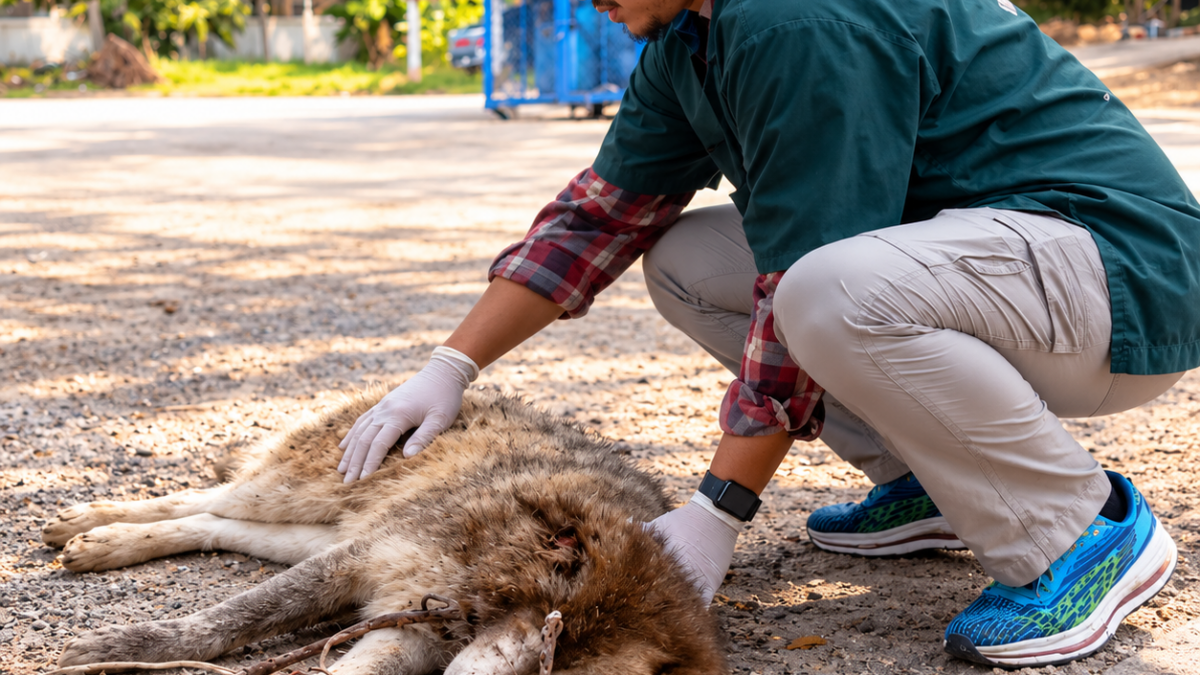
The first time I saw the kitten, she was crouched beside a storm drain in the rain, soaked to the skin and covered from ears to tail in hard blue paint that had glued her fur into stiff, painful clumps.
What made me angrier was realizing this was not an accidental spill—someone had handled her long enough to coat almost every inch of her tiny body, then left her outside as if the frightened animal under all that color were nothing more than a joke they were finished with.
I thought the hardest part would be getting the paint off without tearing her skin, but several days later Blue did something that forced me to understand just how much of her real self had been buried under what someone had done to her.
I heard her before I saw her.
It was a thin, broken cry beneath the rain.
At first I thought it was a bird trapped somewhere near the row of dumpsters behind the old apartment blocks. Then the sound came again.
A kitten.
I followed it toward the curb.
There she was.
Tiny.
Shaking.
Blue.
Not gray with a strange light on her coat.
Not stained in one place.
Blue.
Her entire back, sides, legs, and most of her head were coated in thick paint that had dried hard in some places and remained sticky in others. Only a few patches around her eyes and nose showed the fur underneath.
“Oh, God.”
My rescue partner, Elena, came up behind me and stopped.
“What is that?”
“Paint.”
The kitten tried to move away when we approached, but the hardened fur pulled against her skin. She managed only two stumbling steps before crouching again.
I knelt several feet away.
“Hey, baby.”
She looked at me.
No hiss.
No attempt to strike.
Just exhaustion.
That scared me more than aggression would have.
I held out one hand.
The kitten stared at it for several seconds.
Then she moved forward.
Slowly.
Her paws slipped on the wet pavement.
When she reached me, she pressed the side of her face into my fingers.
I felt something inside me harden.
Not toward her.
Toward whoever had done this.
Elena crouched beside us.
“Do you think it’s toxic?”
“I don’t know.”
“We need a vet.”
I wrapped the kitten loosely in a towel, careful not to press the hardened paint against her skin.
She weighed almost nothing.
At the clinic, the veterinarian took one look and said, “We’re not using solvents.”
“Can you get it off?”
“Eventually.”
“Eventually?”
“If we rush, we’ll hurt her.”
The paint had bonded to large sections of fur. Some areas could be softened and worked loose. Others would require clipping. Around the face and belly, every movement had to be painfully careful.
The first cleaning session lasted nearly an hour.
Blue never bit.
She never scratched.
Once, when a painful clump pulled at her skin, she gave a tiny cry and pushed her head into my palm.
I almost had to leave the room.
Under the paint, we began finding the kitten herself.
White fur along the chest.
Soft gray patches over the head and back.
Skinny legs.
A belly that should have been round but wasn’t.
“She’s underweight,” the veterinarian said.
“How old?”
“Maybe seven or eight weeks.”
That made the whole thing worse.
She was still a baby.
By the time we stopped for the day, we had removed only part of the blue.
Large sections remained.
Her coat looked uneven where fur had to be clipped away, and the exposed skin underneath was irritated.
I brought her home that night because the clinic wanted her kept warm and monitored.
She would not eat from a bowl.
So I mixed formula and recovery food and fed her slowly with a syringe.
Afterward, she curled into a towel beside me.
I thought she had fallen asleep.
Then I felt something touch my wrist.
One tiny paw.
She left it there.
The next morning, when I went to check on her, Blue was awake.
She was not crying. She was not hiding beneath the towel. She was standing at the edge of the small playpen, staring at the room as if she had finally decided the world might contain something besides pain.
Then she took one unsteady step toward me.
And for the first time since I had found her, she was doing something no one had seen her do yet.
PART 2
She was purring.
At first I thought the sound was coming from somewhere else.
It was too faint.
Almost buried beneath the hum of the refrigerator and the rain still tapping against the windows.
Then Blue took another step.
The vibration became stronger.
I crouched in front of the playpen.
“Are you serious?”
She reached the edge, put both front paws against the side, and looked up at me.
Purring.
After everything people had done to her.
After the cold.
The rain.
The paint.
The pulling and clipping we had been forced to do just to uncover her skin.
She still saw a person and moved closer.
I lifted her carefully.
Blue tucked herself beneath my chin.
The blue paint remaining around her shoulders made her fur stiff against my neck.
I stood there holding her for a long time.
Elena called fifteen minutes later.
“How is she?”
“She’s purring.”
Silence.
Then, “Already?”
“Apparently.”
“That kitten is ridiculous.”
“You say that like it’s bad.”
“It’s not.”
I looked down.
Blue’s eyes were closed.
“She came toward me.”
Elena became quiet again.
We had both seen animals recover physically while remaining terrified of human touch for months.
Sometimes years.
There is no schedule for trust.
Blue did not seem interested in schedules.
Her body was weak.
Her trust wasn’t.
The veterinary team had warned me not to overinterpret purring. Cats can purr when comfortable, but they can also purr during stress or pain.
I understood that.
Still, when Blue kneaded one tiny paw against my shirt and pushed her head deeper beneath my chin, I allowed myself to believe at least part of that sound belonged to comfort.
That morning she ate from the syringe again.
Four milliliters.
Pause.
Four more.
She swallowed carefully.
Then turned her face away.
“Done?”
Blue licked her nose.
“Apparently.”
I wrote the amount down because the clinic had told me to track everything.
Food.
Water.
Urination.
Stool.
Energy.
Any vomiting.
Any change in breathing.
Whether she tried grooming the paint.
That last one mattered.
We still did not know exactly what type of coating had been used on her.
The sample did not come with a label or explanation.
The veterinarian’s concern was simple: if Blue licked large amounts of residue from her coat, she could ingest substances that might irritate her mouth or digestive tract, or potentially cause more serious problems depending on the formulation.
So she wore a soft recovery collar when unsupervised.
Blue hated it.
That was the first thing I learned about her personality.
The second was that hatred made her determined.
I put the collar on.
Blue backed up.
The collar hit the side of the playpen.
She turned.
Hit the other side.
Stopped.
Looked at me.
Then sat down with an expression that somehow communicated personal betrayal.
“I didn’t invent it.”
She stared.
“The veterinarian did.”
Still staring.
“You can complain to her tomorrow.”
Blue gave a tiny meow.
There it was.
A voice.
Not the desperate crying I had heard in the rain.
An opinion.
That felt like progress.
The second cleaning session was scheduled that afternoon.
I dreaded it more than Blue seemed to.
Dr. Marinova examined her before we started.
“She maintained her temperature.”
“Good?”
“Very.”
“Weight?”
“Up a little, but don’t celebrate yet. Some of that is hydration.”
“I’ll celebrate hydration.”
She smiled.
“That’s fair.”
Blue weighed just over a pound and a half.
Far too thin for the age we estimated.
Her bloodwork was better than I expected.
Mild anemia.
Dehydration.
Low blood sugar on arrival, corrected after feeding.
No obvious kidney or liver crisis.
Fleas.
A few superficial skin abrasions.
The paint itself had done considerable damage to the coat, but the skin underneath was not burned over most of her body.
That mattered.
“We got lucky,” I said.
Dr. Marinova looked at Blue.
“She got lucky.”
I understood the distinction.
I had not found her early enough to prevent suffering.
Only early enough to stop more of it.
We placed Blue on a warm towel.
The veterinary technician, Sofia, had clippers small enough to work carefully around hardened areas without pulling.
Some paint softened with safe bathing methods.
Some did not.
Where it had soaked deeply into the fur and dried into solid plates, the only humane option was clipping.
Blue tolerated the buzzing clippers better than expected.
Until we reached her side.
The moment Sofia touched one thick patch, Blue cried out.
Everything stopped.
“Skin?”
Sofia examined underneath.
The paint had glued several hairs so tightly together that movement pulled at the skin beneath.
“We’re shaving around it,” she said.
“Will that hurt?”
“Less than trying to peel it.”
We worked in tiny sections.
Clip.
Pause.
Warm towel.
Reassure.
Another section.
At one point Blue became exhausted and simply laid her head in my hand.
I hated that.
I would have preferred anger.
A bite.
A scratch.
Something telling us she had energy to object.
“Five-minute break,” Sofia said.
Blue remained still.
I scratched the tiny clean patch behind her ear.
Her eyes closed.
Purr.
Very faint.
Sofia looked at me.
“She’s unbelievable.”
“Maybe she thinks if she cooperates we’ll stop sooner.”
“Maybe.”
We did stop.
Before every piece of paint was gone.
The goal was not to make her look normal in one afternoon.
The goal was to avoid turning rescue into another traumatic experience.
That distinction became important.
People later saw photographs of Blue during the cleaning process and asked why we did not simply shave everything off immediately.
Because she was cold.
Because she was underweight.
Because shaving large areas of a tiny kitten carries its own problems.
Because her skin was already irritated.
Because some material was close to delicate areas.
Because “get it off” sounds simple until the paint is attached to a living animal.
Recovery is often slower than people want photographs to be.
The second evening, Blue ate from a shallow dish for the first time.
Not much.
I mixed her formula with wet kitten food until it was almost liquid.
She approached.
Smelled it.
Put one paw directly into the bowl.
Then looked offended.
“You did that.”
She shook the paw.
Food landed on my floor.
“Also you.”
She licked the paw.
Then stared at the dish again.
This time she lowered her mouth.
Three laps.
Pause.
Five more.
I held my breath like an idiot.
Blue drank for almost a minute.
Then climbed out of the playpen and tried to walk away with food still on her face.
I took a photograph.
That was the first picture I loved.
Not the rain.
Not the blue body.
Not the rescue towel.
Blue with gray fur emerging around her forehead, one shaved patch along her side, wet food on her nose, and absolutely no understanding that she looked ridiculous.
I sent it to Elena.
She replied immediately.
**There she is.**
I knew exactly what she meant.
We were beginning to see the kitten under the evidence.
The next several days followed a routine.
Eat.
Sleep.
Clinic.
Clean.
Rest.
Repeat.
The paint came away in stages.
Her back first.
Then the chest.
Then the legs.
The face took the longest because we refused to rush.
Small bits remained around her ears for more than a week.
The name Blue began as a practical joke.
We needed something on the chart besides “paint kitten.”
Sofia wrote:
**BLUE — female kitten — approx. 7–8 weeks.**
I objected.
“You’re naming her after the worst thing that happened to her.”
Sofia looked at me.
“Or the thing she survived.”
I thought about it.
Blue looked up from her blanket.
“Fine.”
The name stayed.
But soon it stopped making me think about paint.
It became her.
Blue hated closed doors.
Blue slept with both front paws over her eyes.
Blue preferred food warm.
Blue attacked towel corners.
Blue liked being held for exactly as long as she decided, after which she climbed onto my shoulder and tried to relocate herself.
Blue screamed in the carrier.
Blue loved the sound of crinkled paper.
Blue feared running water.
That last one took longer to understand.
The first time I turned on the kitchen faucet while holding her, she stiffened so violently that I nearly dropped her.
I shut it off immediately.
“Okay.”
Her claws were in my shirt.
“No faucet.”
She remained frozen.
I moved into the living room.
Only then did she relax.
Had someone washed paint onto her?
Had the rain simply made water frightening?
Had she been dunked somewhere?
I did not know.
I refused to invent details just because they would make the story more dramatic.
What I knew was enough.
Running water frightened her.
So we worked around it.
No forced exposure.
No baths unless medically necessary.
Water bowl far from noisy fixtures.
Weeks later, the fear softened by itself.
Not everything needs to become a battle.
The fifth day was when Blue first played.
That was the moment I had been hinting at when I said something happened that changed how we saw her recovery.
It started with a bottle cap.
I was sitting on the kitchen floor organizing medication when the cap slipped from my hand.
It bounced once.
Rolled.
Blue’s head turned.
I froze.
Until then, she had watched objects.
She had sniffed them.
She had not played.
The cap rolled past her paws.
Blue crouched.
Not from fear.
Her rear end lifted slightly.
Her shoulders lowered.
I looked toward Elena, who had come over to help.
“Don’t move.”
“I’m not.”
Blue extended one paw.
Tap.
The cap moved.
She jumped backward.
Then forward.
Tap.
It rolled farther.
Blue chased it.
Two steps.
Three.
Slid slightly on the floor.
Recovered.
Pounced.
The movement was clumsy because she was still weak, but there was no mistaking it.
She was playing.
Elena covered her mouth.
I grabbed my phone.
The first picture blurred.
The second caught Blue mid-pounce.
Her front legs stretched forward.
One ear still stained blue.
Most of her body shaved unevenly.
White chest visible.
Gray patches emerging.
Bottle cap beneath her paw.
Eyes wide.
Alive.
That was the photograph that hit me harder than the rescue pictures ever had.
The photographs from the rain showed what somebody had done to her.
This one showed what they had failed to take away.
Curiosity.
Play.
The belief that life might still contain something worth chasing.
I sat on the floor and cried.
Elena looked at me.
“You okay?”
“No.”
Blue attacked the cap again.
Elena sat beside me.
“Good no or bad no?”
“I don’t know.”
She understood.
We watched Blue play until she tired herself out.
Less than three minutes.
Then she curled against my ankle and slept.
That night, I looked at the photograph again.
And again.
The blue paint was still visible.
The shaved areas looked terrible.
Anyone seeing the picture without context might have thought she was still sick.
But I knew what happened one second before and one second after the frame.
Movement.
Choice.
Joy.
That photograph became more important to me than any polished “after” picture that came later.
By the end of week one, Blue could eat independently.
The syringe remained nearby in case she needed supplementation, but she no longer depended on it.
Her weight increased steadily.
The anemia improved.
Flea treatment worked.
The irritated skin began healing.
The biggest medical concern shifted from immediate survival to monitoring for delayed effects from whatever substance had coated her.
Repeat bloodwork stayed reassuring.
That allowed us to breathe.
Not completely.
Rescuers are bad at completely.
But more.
Animal welfare authorities received the case.
I gave them the location.
Photos.
Time.
The paint samples.
Everything.
A nearby store had a security camera pointed partly toward the street where Blue was found.
For one afternoon, I convinced myself we were going to identify whoever had done it.
We did not.
The useful angle missed the exact area.
Another camera had not been recording.
A resident remembered teenagers near the dumpsters the previous evening but could not say whether they had a kitten.
Someone else claimed to have seen a child carrying “something blue.”
Another person insisted Blue had appeared already painted.
Stories multiplied.
Evidence did not.
I hated that.
I wanted a face.
A person.
Someone I could point toward and say, “You did this.”
Real life refused to cooperate.
Without evidence, there was no responsible way to accuse anyone.
Eventually, the investigation stalled.
That frustrated me more than I admitted.
One evening Elena found me reading the report again.
“You think something changed?”
“No.”
“Then why are you reading it?”
“I don’t know.”
“Yes, you do.”
I looked up.
Blue was asleep on the couch.
Most of the paint was gone now.
“What if they do it again?”
Elena sat across from me.
“What if who does it again?”
“Whoever did this.”
“We don’t know who.”
“That’s the problem.”
“No. That’s the limit.”
I hated the word.
She continued.
“You can’t rescue backward.”
“What does that mean?”
“It means you can’t change the night before you found her.”
I looked toward Blue.
“So we just accept it?”
“No.”
Elena shook her head.
“We document. We report. We educate. We intervene when we have evidence.”
Then she nodded toward the couch.
“And we make sure the animal in front of us gets a life.”
Blue woke at that exact moment.
She stretched.
Rolled off the cushion.
Caught herself halfway.
Looked offended.
Elena laughed.
“Very dignified life.”
That helped.
The last blue patch disappeared from behind Blue’s left ear eleven days after rescue.
Sofia clipped the final stained hairs.
Then she held Blue beneath the examination light.
White chest.
Gray saddle across her back.
Gray cap over her head.
White feet.
Pink nose.
No blue.
Sofia smiled.
“Look at you.”
I took a photograph.
Blue immediately tried to eat the corner of the towel.
Elena compared the new picture with the first.
The difference was so extreme that I almost looked away.
The kitten in the first photograph seemed smaller.
Not just because she was thinner.
Because she was compressed into herself.
Head low.
Legs tucked.
Body trying to occupy as little space as possible.
The kitten in front of us sprawled across the examination table.
Tail moving.
One paw hanging over the edge.
Completely inconvenient.
“She looks like a different cat,” Elena said.
“She isn’t.”
That mattered to me.
I did not want the blue kitten erased.
She had been Blue too.
Afraid Blue.
Hungry Blue.
Hurting Blue.
The healthy version did not replace her.
It grew out of her.
At three weeks, Blue received her first round of routine vaccinations after the veterinarian was satisfied she was strong enough.
At four weeks, she discovered windows.
That changed my mornings.
There was a tree outside my living room.
Birds used it.
Blue noticed.
The first bird landed at 6:14 one morning.
Blue made a sound I had never heard before.
A rapid chattering noise.
I sat up.
“What?”
She stared through the glass.
Another chatter.
I followed her gaze.
Sparrow.
“Oh.”
Blue crouched.
Tail twitching.
The bird remained completely unaware that it was being threatened by a kitten who had recently lost a fight with a sock.
I took another photograph.
No blue paint.
No clinic.
No rescue context.
Just a kitten watching a bird.
That picture felt more miraculous than the dramatic ones.
Normality often does.
At five weeks, we started discussing adoption.
I hated the conversation.
Not because Blue was unready.
Because I was.
Elena noticed immediately.
“You’re making that face.”
“What face?”
“The foster-failure face.”
“I don’t have a foster-failure face.”
“You absolutely do.”
“I never said I’m adopting her.”
“You named your Wi-Fi password after her.”
“That is unrelated.”
She stared at me.
I looked away.
Blue was asleep on my desk.
I had rescued animals before.
Some stayed days.
Some weeks.
A few months.
I loved many of them.
Then they went to good homes.
That is the work.
Let them go.
Make space.
Help the next one.
Blue felt different.
Maybe because she had trusted me before she had any reason to.
Maybe because I had spent nights feeding her.
Maybe because I had learned the location of every remaining blue stain.
Maybe because she slept against my ribs every night as if we had negotiated that arrangement years ago.
None of those things automatically meant my home was the best home.
So I did what I tell every foster volunteer to do.
I tried to separate what I wanted from what the animal needed.
Blue needed another cat.
That became clear.
She had too much kitten energy for a human-only household.
She attacked my hands more when she became excited.
Not aggressively.
Playfully.
But kittens learn important boundaries from other cats.
I could adopt a second cat.
Possible.
Or find a home with a suitable young companion.
We listed her.
The applications came immediately.
The photographs had circulated.
That created a problem.
People wanted the famous blue kitten.
Not necessarily Blue.
One message said:
**We follow rescue stories and would love the painted kitten for our kids.**
I deleted it.
Another applicant wanted her because “she’d be amazing on social media.”
No.
Another had never owned a cat, worked twelve-hour shifts, and wanted a single kitten because “two seems like too much work.”
No.
Then came an application from a woman named Marissa.
Thirty-four.
Veterinary receptionist.
One resident cat, a two-year-old male named Oliver.
Indoor-only home.
Screened balcony.
No small children.
References excellent.
Her application barely mentioned Blue’s rescue story.
Instead she asked:
**Does Blue show fear around running water? What kind of play does she prefer? Has she been tested with other cats? Does she eat wet and dry food? Does she tolerate nail trimming?**
I called her.
“You read the behavior notes?”
“All of them.”
“What do you know about the paint?”
“That it was removed safely, her follow-up bloodwork was good, and nobody can prove who did it.”
That last part mattered.
“You don’t think she needs some kind of trauma rehabilitation?”
Marissa paused.
“I think she needs whatever she shows us she needs.”
Good answer.
“What if she never likes water?”
“Then she doesn’t need to like water.”
Better.
“What if she hides for a week?”
“I’ll let her hide.”
“Oliver?”
“Slow introduction.”
“What if they hate each other?”
“Then you take her back.”
Direct.
Practical.
I liked her.
We arranged a meeting.
Blue liked her less.
That was useful.
People expect rescue animals to recognize perfect adopters and immediately fall into their arms.
Blue did not.
She smelled Marissa.
Walked away.
Attacked a paper ball.
Climbed onto me.
Ignored her.
Marissa laughed.
“Apparently I’ve been rejected.”
“Give her time.”
“I’m not offended.”
She sat on the floor.
Did not reach.
Blue played.
Ten minutes.
Fifteen.
At minute eighteen, Blue chased the paper ball near Marissa’s shoe.
Marissa rolled it gently.
Blue followed.
Again.
Again.
Eventually Blue climbed over her leg.
No dramatic moment.
No instant bond.
Just a kitten discovering a new person might participate in a game.
That was better.
Oliver’s scent introduction began before the home visit.
Blankets exchanged.
Blue smelled his.
Tail high.
No hissing.
Oliver reportedly smelled hers, then slept on it.
Promising.
The home trial started two weeks later.
I cried in the parking lot after handing over the carrier.
I waited until Marissa drove away.
Then Elena, who had followed in her car, rolled down her window.
“You’re crying.”
“No.”
“Don’t say rain.”
It was sunny.
“Dust.”
“Parking lot dust?”
“Very aggressive.”
She handed me tissues.
The first night, Blue hid beneath Marissa’s bed.
I stared at the update.
**She ate. Used litter box. Still hiding. All normal.**
I wanted to call.
I did not.
One hour later:
**She came out for the paper ball.**
I breathed again.
Oliver remained behind a closed door.
Day two, they smelled each other under it.
Blue hissed once.
Oliver walked away.
Day three, visual introduction through a barrier.
Oliver stared.
Blue puffed.
Then both accepted treats.
Day five, supervised room together.
Oliver approached too fast.
Blue smacked him.
I received a photo of Oliver sitting three feet away looking shocked.
Caption:
**Boundaries established.**
I laughed.
Day seven, Blue followed Oliver down the hallway.
Day nine, they slept on opposite ends of the couch.
Day twelve, Marissa sent a photograph without explanation.
I opened it.
Blue and Oliver were sleeping together.
Not simply nearby.
Together.
Blue’s face tucked under his chin.
Oliver’s front leg over her.
I stared at the screen.
That one hurt.
In a good way.
The trial ended at two weeks.
Marissa called.
“I assume you want her back.”
My stomach dropped.
“What happened?”
She started laughing.
“That was cruel. Sorry.”
“Marissa.”
“I’m adopting her.”
I sat down.
“Don’t do that.”
“I apologize.”
“No, you don’t.”
“Not really.”
I looked at Blue’s empty bed in my apartment.
“You’re sure?”
“Yes.”
“Completely?”
“Yes.”
“Because if there’s anything—”
“She’s currently hanging from my curtain.”
I heard crashing in the background.
Marissa said, “Blue!”
I smiled.
“She sounds settled.”
“She’s a criminal.”
“Excellent.”
The adoption became official the next day.
I signed the transfer.
So did Marissa.
Blue attempted to walk across the paperwork.
No respect for procedure.
I carried her one last time before they left.
She purred against my neck.
I thought I would lose control.
Instead, I whispered, “Go ruin her house.”
Blue bit the zipper on my jacket.
Then Marissa took her.
That should have been the end.
It wasn’t.
Because Blue stayed in my life.
Marissa sent updates.
Not every day.
Enough.
Blue grew.
The awkward shaved patches filled in.
Her coat became thick and soft.
Gray across the back.
White chest.
White legs.
Only photographs preserved the blue.
At six months, she became obsessed with running water.
That surprised everyone.
Marissa sent a video.
Blue was sitting in the bathroom sink staring at the faucet.
Marissa turned it on slightly.
A thin stream appeared.
Blue extended one paw.
Touched it.
Pulled back.
Touched again.
Then tried to bite the water.
I watched the video three times.
The kitten who once froze when I turned on a faucet was playing with one.
I called Marissa.
“When did that start?”
“Last week.”
“You didn’t force anything?”
“Of course not.”
“She just decided?”
“She watched Oliver drink from it.”
That detail mattered.
Blue had not conquered water because we exposed her repeatedly until fear disappeared.
She had watched another cat.
Seen safety.
Chosen curiosity.
The difference was enormous.
That became the photograph Marissa later framed.
Not the sink video.
A still image.
Blue sitting in the basin with one wet paw lifted, staring at the faucet.
No fear.
No blue paint.
Just curiosity.
When I first saw it, I had to sit down.
That was the picture that changed everything for me.
I had thought recovery would mean returning Blue to the kitten she was before the cruelty.
But we had never known that kitten.
There was no way to restore a past we could not see.
Recovery meant something else.
Blue could build new associations.
New routines.
New preferences.
A sound that once meant fear could become play.
A human hand that might once have restrained her could become somewhere to sleep.
A color that began as evidence of cruelty could become only her name.
That was more powerful than returning to “before.”
She was moving forward.
At one year, Blue attended her routine veterinary exam.
Dr. Marinova happened to be working that day.
I joined Marissa.
The moment Blue came out of the carrier, she tried to escape behind the computer monitor.
Dr. Marinova laughed.
“Definitely healthy.”
Blue had grown into a medium-sized cat with strong shoulders and an impressive ability to resist examination.
The first time we met, she had not resisted anything.
Now she objected to the thermometer.
Objected to having her ears checked.
Objected to nail trimming.
We celebrated every objection.
“Heart sounds good,” Dr. Marinova said.
“Bloodwork?”
“Normal.”
“Weight?”
“Perfect.”
Marissa looked at me.
“You hear that? Perfect.”
“Don’t encourage her.”
Blue tried to bite the stethoscope.
Dr. Marinova caught it.
“Same kitten?”
I looked at Blue.
“Apparently.”
She found the original intake picture on the computer.
We placed the two images side by side.
Day one.
One year.
The transformation looked fake.
Blue in the first image was nearly unrecognizable beneath the hardened paint.
Blue in the second sat upright with bright eyes and a thick gray-and-white coat.
Marissa touched the screen.
“Do you ever wonder what she remembers?”
“Yes.”
“What do you think?”
“I don’t know.”
That was the only honest answer.
Memory in animals is not a storybook we can open.
Blue reacted to some things early in recovery.
Water.
Restraint.
Certain sudden movements.
Those reactions changed.
What she associated consciously with the paint, I could not know.
Maybe nothing.
Maybe more than we imagined.
It was enough to respect what she showed us.
Two years later, the old apartment complex where I found Blue was renovated.
The dumpsters were removed.
The storm drain was replaced.
I drove past one afternoon after another rescue call.
I almost missed the place.
New pavement.
Painted walls.
A small grocery store where the broken fence had been.
I pulled over.
Not because Blue needed me to.
Because I did.
I walked to the curb.
Rain had started lightly.
Of course.
For several seconds, I could see the first night again.
A tiny blue shape.
Crying.
I thought the memory would make me angry.
Instead, what came to mind was the bottle-cap photograph.
Blue mid-pounce.
That surprised me.
The worst image had stopped owning the story.
I sent Marissa a message.
**How’s Blue?**
Two minutes later, a photograph arrived.
Blue lying across Oliver.
Both asleep.
Caption:
**Oppressing her brother.**
I laughed aloud beside the road.
That was enough.
Years passed.
Blue became less remarkable to everyone except the people who loved her.
That was exactly what I wanted.
She was no longer introduced as “the painted kitten.”
At Marissa’s house, she was the cat who opened cabinet doors.
The cat who stole lettuce for reasons nobody understood.
The cat who screamed when breakfast was seventeen seconds late.
The cat who hated the vacuum but attacked the broom.
The cat who groomed Oliver’s forehead and then bit his ear.
The cat who learned that the bathroom faucet produced entertainment.
The cat who slept with one paw over Marissa’s face.
Ordinary identity replaced rescue identity.
When Blue was four, Oliver became sick.
He developed a severe intestinal problem and spent three nights hospitalized.
Blue searched the apartment.
Marissa called me.
“She keeps checking his bed.”
“That makes sense.”
“She’s barely eating.”
“That matters.”
We spoke with the veterinarian.
Blue was physically fine.
Stress.
Routine disruption.
We encouraged normal structure.
Food in familiar places.
Extra play.
No dramatic changes.
Oliver came home on day four.
Weak.
Shaved patch on one front leg.
Blue approached.
Smelled him.
Hissed.
Marissa looked horrified.
“Why?”
“Clinic smell.”
Blue backed away.
Oliver went to his bed.
For ten minutes Blue watched him from across the room.
Then she approached again.
Smelled his face.
His shoulder.
The shaved leg.
Her posture changed.
She began grooming his head.
Oliver closed his eyes.
By that evening they were sleeping together.
Marissa sent me the photo.
“Remember when she didn’t know how to be safe?” she asked later.
I corrected her gently.
“She always knew how to look for safety.”
We had simply given her more places to find it.
At six, Blue developed a small lump near her shoulder.
The word lump does something to people who have rescued animals.
I drove to the clinic even though nobody asked me.
Marissa met me there.
“You know this is probably nothing.”
“I know.”
“You’re acting like it’s something.”
“I’m aware.”
Dr. Marinova examined it.
Likely benign cyst.
Needle sample confirmed.
Nothing serious.
I nearly collapsed with relief.
Marissa laughed.
“You’re worse than I am.”
“I met her when she was blue.”
“That is not a medical diagnosis.”
“It should be.”
Blue lived normally.
The years softened her.
Not personality.
Never personality.
But age.
She became heavier in movement.
More deliberate.
The wild curtain-climbing kitten disappeared.
In her place came a cat who preferred warm windows and blankets.
She still played.
Just selectively.
Bottle caps remained a favorite.
Every birthday, Marissa gave her one clean bottle cap before giving actual toys.
Blue ignored the expensive toys.
Chased the cap.
Tradition.
At eight, Oliver died.
Cancer.
Fast.
Three months from diagnosis to goodbye.
That loss changed Blue.
She waited outside the bedroom where Oliver had spent his final days.
Smelled his blanket.
Slept in his bed.
For a week, she called at night.
Not constantly.
A few short meows.
Marissa sat with her.
There was no easy solution.
Grief is not a behavior problem.
We kept Blue’s routine stable.
She continued eating.
Continued using the litter box.
Continued seeking affection.
Gradually, the searching decreased.
One evening Marissa called.
“She played with the cap.”
I knew exactly what she meant.
“Good.”
“For almost five minutes.”
“Very good.”
She became quiet.
“I miss him.”
“I know.”
“Blue does too.”
“Probably.”
We let the silence exist.
Months later, Marissa fostered a kitten.
Temporarily.
That was the plan.
The kitten was orange.
Male.
Ten weeks old.
Completely fearless.
Blue hated him for forty-eight hours.
Hissed.
Avoided.
Stared with contempt.
Then, on the third night, Marissa sent a photo.
The kitten was asleep against Blue’s belly.
Blue’s front paw rested across his back.
Caption:
**This is not adoption.**
I called.
“You understand how stupid that message is?”
“We are fostering.”
“Sure.”
The orange kitten became Theo.
Permanent.
Blue became what Oliver had once been for her.
Older.
Steadier.
The cat who modeled the house.
Theo followed her everywhere.
To the water.
To the litter box.
To the windows.
To the bathroom sink.
The first time he played with running water, Blue sat beside him.
Marissa sent another picture.
Two cats.
Four wet paws.
I saved it.
Blue was ten when Dr. Marinova retired.
We brought her to the clinic one final time.
Dr. Marinova held the original intake photograph.
She looked at Blue.
Then the photo.
Then Blue.
“I still hate this picture.”
“So do I.”
She touched the corner.
“But I’m glad we have it.”
I understood.
Evidence matters.
Not because suffering should define an animal.
Because it proves how far the life traveled afterward.
Blue sat on the table licking one paw.
Dr. Marinova smiled.
“I remember being afraid she’d ingest the paint.”
“She remembers being offended by the collar.”
“You don’t know that.”
“No.”
I smiled.
“But I do.”
The veterinarian scratched Blue beneath the chin.
Blue purred.
“Still trusting.”
“Still demanding.”
“Better.”
We took a photograph.
Dr. Marinova.
Me.
Marissa.
Blue in the middle.
Theo was not invited because Theo had the social skills of a falling bookshelf.
That photograph joined the others.
First day.
Bottle cap.
Sink.
One year.
Ten years.
A whole life assembled in rectangles.
Blue developed kidney disease at thirteen.
Early stage.
Manageable.
More water.
Diet changes.
Blood-pressure monitoring.
Marissa became obsessive.
I reminded her that anxiety was not a treatment plan.
She reminded me that I had driven across town for a benign cyst.
Fair.
Blue did well for another two years.
At fifteen, arthritis slowed her jumping.
Steps appeared beside the bed.
A low stool near the window.
A heated pad.
Theo, now an adult, continued trying to initiate wrestling matches.
Blue responded with increasingly efficient disapproval.
One slap.
Finished.
At sixteen, her kidney disease progressed.
Subcutaneous fluids.
Medication.
More frequent visits.
She tolerated it with the same strange patience she had shown as a kitten.
That hurt to see.
Sometimes during fluids she pressed her forehead into Marissa’s hand exactly as she had pressed into mine in the rain.
A circle I did not enjoy.
But now the circumstances were different.
No stranger restraining her for cruelty.
No hardened paint.
No abandonment.
Hands were touching her because she was loved.
Context changes everything.
The final decline came during winter.
Blue stopped climbing to the bathroom sink.
Then stopped using the window stool.
Then one morning, refused breakfast.
Marissa called.
I heard it in her voice.
We went to the clinic.
Kidney values were high.
Fluids helped temporarily.
Anti-nausea medication helped.
She ate for several more days.
Then stopped again.
The veterinarian was gentle.
“There are more things we can try.”
Marissa asked the only question that mattered.
“Will they make her feel better, or just make her numbers better?”
The veterinarian became quiet.
“Probably a little of both. But not for long.”
We took Blue home.
That evening she slept beside Theo.
He groomed her head.
Blue tolerated it.
At some point she lifted one paw and rested it over his shoulder.
Marissa took a photograph.
Not because we wanted a final photograph.
Because the scene was beautiful.
The next morning Blue moved to the bathroom.
Slowly.
She stood below the sink.
Marissa looked at me.
“You think?”
I lifted Blue carefully and placed her inside.
She sat.
The faucet was off.
Marissa turned it barely enough to create a thin stream.
Blue watched.
Her eyes were cloudy with age.
Her body thin.
But one paw lifted.
Touched the water.
Pulled back.
Then touched it again.
I laughed and cried at the same time.
Sixteen years old.
A cat once terrified by running water.
Still curious.
Still Blue.
The veterinarian came to the house the following afternoon.
We chose the couch.
Blue’s favorite blanket.
Theo nearby.
Marissa held her.
I sat beside them.
Before the sedative, Blue ate a tiny amount of tuna.
Not much.
Enough.
The veterinarian placed the catheter.
Blue did not fight.
Marissa whispered, “Good girl.”
Blue purred.
Faint.
Steady.
I closed my eyes.
That sound took me back sixteen years.
The playpen.
The blue paint.
A tiny kitten walking toward me.
The sedative relaxed her.
Blue’s head became heavy in Marissa’s hand.
Theo approached.
Smelled her.
Then sat nearby.
No one rushed.
When the final medication was ready, Marissa looked at me.
“I hate this.”
“I know.”
“She trusted us.”
“Yes.”
“What if I’m betraying that?”
“You’re not.”
“How do you know?”
I looked at Blue.
Because trust had never meant making her endure everything.
It meant being there when she needed help.
The first time, helping meant removing paint.
Feeding.
Warmth.
Treatment.
Years of safety.
Now help meant not asking an exhausted body for one more painful day simply because we were not ready to lose her.
I put my hand beneath Blue’s chin.
“You’re okay.”
The veterinarian gave the medication.
Blue took several slow breaths.
The purr faded.
Her heart stopped.
Marissa bent over her.
Theo moved closer.
I kept my hand where it was.
Sixteen years earlier, I had found a kitten beneath rainwater and blue paint who could barely stand.
Now the fur under my fingers was soft.
White and gray.
No blue.
No hardened clumps.
No pain.
Only the cat she had become.
Afterward, Marissa made a small box of photographs.
She asked me to help choose.
The rescue photo went in.
So did the first clean photograph.
The bottle-cap picture.
The faucet.
Oliver.
Theo.
The final sink photo.
When we finished, there was one image left on the table.
The bottle-cap photograph.
Blue mid-pounce.
One ear still blue.
Fur shaved unevenly.
Body thin.
Eyes completely alive.
Marissa picked it up.
“This one.”
“What about it?”
“If I only keep one out, this one.”
“Not the beautiful after picture?”
“This is the after picture.”
I understood.
Because “after” had not begun when every trace of paint disappeared.
It had begun the first moment Blue chose something beyond survival.
A moving bottle cap.
A game.
Curiosity.
That photograph remained on Marissa’s bookshelf.
Years later, when people asked about the strange blue stain still visible near the kitten’s ear, she told them the story.
Briefly.
Not to make Blue famous.
Not to make cruelty entertaining.
Just enough.
“She was found covered in paint.”
Then she would point to the bottle cap.
“And five days later, she decided she had better things to do.”
That was Blue.
Her story began with someone treating her like an object.
But it did not remain there.
The cruelty was an event.
Not an identity.
The paint was something put onto her.
Not something she carried forever.
When I think of Blue now, I almost never see the kitten crying in the rain.
I see the bottle cap sliding across my kitchen floor.
I see her body lower.
One paw reach.
That first uncertain tap.
Then the sudden pounce.
I see the kitten hidden beneath all that hardened blue finally making a choice that had nothing to do with fear, hunger, or pain.
Play.
Such a small thing.
But that was the moment I knew the person who hurt her had already lost.
They had covered her body.
They had frightened her.
They had left her cold and crying.
But they had not managed to convince her that the world held nothing worth reaching for.
Five days later, Blue reached anyway.
I thought Marley’s story had ended there.
For a while, I even wanted it to.
There was something clean about remembering him that way: an old dog wandering through a fenced yard, choosing between sunlight and water, no rope controlling the distance he could travel.
But rescue rarely leaves you with clean endings.
Months after Marley died, Rebecca called me late on a Sunday afternoon.
“I found something.”
Her voice sounded different enough that I stopped what I was doing.
“What?”
“We’re cleaning out the garage.”
“Okay.”
“There’s a box from his first year.”
I sat down.
“What kind of box?”
“Vet receipts. Old collars. Medication bottles I apparently thought I needed to keep forever.”
“That sounds normal.”
“There’s also a notebook.”
I didn’t remember a notebook.
“What notebook?”
“The one Lucas kept.”
That surprised me.
“Lucas kept a notebook about Marley?”
“Apparently.”
There was a pause.
“He was thirteen when we adopted him. I forgot he did this.”
“What’s in it?”
Rebecca laughed softly.
“You should probably see it.”
Two days later, she brought the notebook to the rescue.
It was small.
Blue cover.
Corners bent.
Someone had written MARLEY across the front in black marker.
The first page was dated the evening of the adoption.
Day forty-seven.
Lucas’s handwriting was larger and messier then.
Marley is home.
Below that:
He drank from the pool. Dad says he cannot drink pool water. Marley disagrees.
I laughed.
Rebecca smiled.
“Keep reading.”
The next page:
He slept by my bed but woke up three times. At 2:14 he barked because the ice machine dropped ice.
Then:
He followed me to the bathroom. Mom says this is love. Dad says this is no boundaries.
Further down:
Today he let me clean near his ear without moving away.
I stopped.
That line looked different from the others.
No joke.
No exclamation point.
Just a thirteen-year-old noticing something small.
Rebecca pointed.
“Turn the page.”
Week 2
Marley went into the pool by himself.
He stole toast.
He doesn’t like the vacuum.
He waits outside my room when I do homework.
Then:
Sometimes I think he checks if we are still here.
I looked at Rebecca.
“He noticed.”
“I know.”
There were pages of it.
Not every day.
Sometimes gaps of a week.
Then a month.
Marley gained three pounds.
Marley destroyed a flip-flop.
Marley learned “down.”
Marley ignored “down.”
Marley met a neighbor’s dog.
Marley slept through a thunderstorm.
Then one entry nearly a year after adoption:
I forgot he was rescued today.
That stopped me.
I read it again.
Underneath, Lucas had written:
Not really forgot. I know. But I was mad because he stole my sandwich and Mom said remember what he’s been through and I said being abandoned doesn’t make stealing turkey okay. Then we laughed.
Rebecca wiped one eye.
“That’s my favorite.”
Mine too.
Because there it was.
The thing we wanted for every rescued animal.
Not permanent reverence.
Not a family walking on emotional eggshells forever because the dog once suffered.
Normal expectations.
Normal irritation.
A stolen sandwich becoming a stolen sandwich instead of another symptom of tragedy.
I kept reading.
When Lucas was fifteen:
Marley doesn’t wait by the door when we leave anymore. He just goes to the couch.
Sixteen:
Marley fell asleep while I was practicing guitar even though Dad says no living thing could sleep through it.
Seventeen:
He still waits for the bus even though I drive now.
Then the entry from the night before Lucas left for college.
The handwriting had changed.
Smaller.
More controlled.
I’m scared he’ll think I left him.
Below it:
Mom says dogs understand routines better than we think and that Marley knows this is his house now.
Then one final line:
I hope she’s right.
I closed the notebook.
Rebecca stared at the table.
“She was right,” I said.
“I know.”
“Eventually.”
“He carried Lucas’s shoe around for two weeks.”
“That was dramatic.”
“He learned from us.”
I smiled.
“That is also possible.”
Rebecca left the notebook with me for several days.
I read parts of it again.
Not because Marley needed a better ending.
Because the notebook contained the years between the rescue photographs.
Exactly the part people rarely see.
There was one entry from the first anniversary of his rescue.
Lucas had written:
Mom showed me the old picture again. I don’t like looking at it.
Then:
He doesn’t look like Marley in that picture. He looks like a dog who doesn’t know us yet.
That sentence stayed with me.
Not:
He doesn’t look like the same dog.
He doesn’t know us yet.
Lucas understood something before I did.
Physical transformation gets attention because it is visible.
But belonging is the larger transformation.
The first photograph wasn’t only a sick Marley.
It was Marley before Lucas.
Before Rebecca.
Before Daniel.
Before the pool.
Before a bedroom door he could sleep outside.
Before anybody knew his favorite place to be scratched.
Before people knew he preferred chicken to beef.
Before someone recognized the expression he made when he wanted to go outside.
His body healed in weeks.
Being known took years.
That was the real distance between the photographs.
After Rebecca took the notebook home, I started paying more attention to long-term adopters.
Not just the first happy update.
The boring ones.
The dog who still sleeps on the couch four years later.
The dog who hates rain.
The dog whose arthritis medication changed.
The dog who learned to steal food from a toddler.
Those updates were evidence of permanence.
We eventually created a simple anniversary form.
Nothing formal.
No obligation.
Once a year, adopters could send one photograph and answer three questions:
What does your dog love now?
What makes them ridiculous?
What changed this year?
I expected people to ignore it.
They didn’t.
One woman wrote:
My dog loves sleeping under clean laundry, hates delivery vans, and finally stopped barking at ceiling fans.
Another:
She learned how to open the pantry. This is not progress.
Another:
He turned eleven and now needs a ramp. He pretends not to need it when guests visit.
Those stories mattered.
They reminded us rescue was not a moment.
It was maintenance.
Marley’s family became part of that tradition even after he was gone.
On what would have been his fifteenth birthday, Lucas emailed one photograph.
A young dog at the university shelter where he volunteered.
Not adopted.
Not transformed.
Just sitting beside Lucas.
The dog’s head rested against his leg.
The message said:
He reminds me of Marley only because he needs time. Not because they look alike.
That distinction made me smile.
People often search for replacement animals that resemble the one they lost.
Same breed.
Same color.
Same eyes.
Lucas had learned to recognize need instead of appearance.
A few months later, that dog was adopted by someone else.
Lucas didn’t take him home.
That mattered too.
Not every animal you help becomes yours.
Marley had never taught possession.
He had taught attention.
Years passed.
Daniel eventually replaced the old pool.
He called me before the renovation.
“I have a stupid question.”
“Those are my specialty.”
“The contractor wants to remove the shallow entry.”
“The part Marley used?”
Silence.
“Yes.”
“And?”
“I know it’s ridiculous.”
“No.”
“It’s a pool.”
“Yes.”
“But I keep thinking he stood there.”
I waited.
“What do you want?”
“To keep the shallow step.”
“Then keep it.”
“It costs more.”
“You’re calling a rescue worker for financial advice?”
He laughed.
“Point taken.”
They kept it.
Not as a monument.
Future dogs could use it.
Children could sit there.
It was useful.
I liked that better than preserving something purely as memory.
The places Marley loved continued serving life.
Rebecca adopted another dog eventually.
Not right away.
Almost two years later.
Her name was Penny.
Small.
Brown.
Completely healthy.
Three years old.
Surrendered because her owner had become ill.
Nothing about her story resembled Marley’s.
Rebecca called me before bringing her home.
“I feel guilty.”
“Why?”
“Because she’s easy.”
I understood immediately.
“Easy compared with Marley?”
“Yes.”
“She’s house trained.”
“Yes.”
“No medical emergency.”
“No.”
“No trauma around tethering?”
“None we know of.”
“And that makes you guilty?”
“It feels like I’m choosing something simple.”
I thought about it.
“You already proved you can care for a complicated dog.”
“That’s not what I mean.”
“I know.”
I softened my voice.
“You don’t owe suffering loyalty.”
She went quiet.
Then laughed.
“That sounds like something Rachel would say.”
“I’m becoming unbearable.”
Penny moved in.
She did not like water.
At all.
The first time Daniel invited her near the pool, she looked offended and went inside.
Rebecca sent me a photo.
Marley would revoke her dog license.
Penny preferred blankets.
Chasing lizards.
Sleeping under tables.
She barked at squirrels.
Marley had ignored squirrels completely.
Again, no replacement.
Just another life.
The blue collar stayed in a drawer for years.
Then Lucas asked for it.
Rebecca gave it to him.
He had moved into his first apartment after college.
No dog yet.
The collar sat on a shelf with the old notebook.
When he eventually adopted his own dog, he didn’t use Marley’s collar.
He bought a new one.
I asked why.
“Because that was his.”
Simple.
I respected that.
Marley’s belongings did not need to be recycled into meaning.
Some things could simply remain his.
The knotted piece of rope stayed with me.
For years I considered whether keeping it was unhealthy.
Then it became less emotional.
Just an object.
One day a volunteer named Sophie found the box while reorganizing supply records.
“What’s this?”
She held up the sealed bag.
“Marley.”
She knew the name from old photographs.
“The tree dog?”
“Yes.”
She stared at the knot.
“This held him there?”
“Yes.”
“For how long?”
“We don’t know.”
She put it down.
“Why keep it?”
I gave the answer I had eventually settled on.
“Because sometimes evidence needs to survive longer than anger.”
She looked confused.
So I explained.
The rope reminded me that abandonment was an action.
Not an abstract tragedy.
Someone tied a knot.
Someone walked away.
That mattered.
But the rope was small.
The box beside it held years of later photographs.
That mattered more.
I showed Sophie the pool image.
Then the adoption photo.
Then old Marley in sunlight.
“Which one do you think is the story?”
She smiled.
“All of them?”
“Exactly.”
Rescue work can flatten animals into categories.
Abandoned.
Abused.
Neglected.
Injured.
Those words describe circumstances.
They don’t describe personalities.
Marley was abandoned.
He was also impatient.
Affectionate.
Water-obsessed.
Manipulative around chicken.
Suspicious of vacuum cleaners.
Deeply attached to Lucas.
Able to distinguish the sound of the refrigerator from every other appliance in the house.
All of those details eventually mattered more to the people who loved him.
I began telling new volunteers something simple:
“Learn the dog after the diagnosis.”
A dog can enter as “fractured leg.”
But eventually learn whether he likes tennis balls.
Another enters as “mange case.”
Find out whether she likes blankets.
A dog comes in as “abandonment.”
Learn which person makes his tail move fastest.
Medical history matters.
Behavior history matters.
But identity grows beyond intake notes.
Marley taught me that as much as any dog.
Several years after his death, I unexpectedly saw the man who had first found him.
He recognized me at a hardware store.
“Marley lady?”
I laughed.
“That’s apparently my legal name.”
He smiled.
“How’d he end up?”
I realized he didn’t know Marley had died.
“He lived a long time.”
“Still with that family?”
“Until the end.”
The man nodded slowly.
“Good.”
I showed him the latest photo I still kept on my phone.
Old Marley beside the pool.
His expression changed.
“He got old.”
“He did.”
“That’s good.”
People rarely call aging good when it happens to us.
For rescue dogs, old age can feel like proof.
They reached something once uncertain.
The man asked:
“Did you ever figure out who left him?”
“No.”
“That bother you?”
“It used to.”
“And now?”
I thought.
“Less.”
“Why?”
“Because Marley didn’t spend his life waiting for an answer.”
Neither should I.
There are cases where legal accountability matters enormously.
Where evidence can protect other animals.
Where identifying the person responsible is necessary.
We had reported Marley’s case.
Authorities investigated what they could.
There simply wasn’t enough.
At some point, accepting that uncertainty stopped feeling like giving up.
It became refusing to let an unknown person remain the most important human in Marley’s story.
Rebecca.
Daniel.
Lucas.
Sarah.
Rachel.
Mia.
The caller.
Those people had names.
They stayed.
The person who tied the rope could remain unknown.
Marley’s life was not waiting for them to become known.
That realization changed something in me.
I had spent years mentally returning to the tree asking:
Who?
Why?
How could someone?
Marley had spent zero years doing that, as far as I could tell.
Once healthy, he cared about dinner.
Water.
Lucas.
The pool.
A shoe.
Tomorrow’s walk.
Dogs can carry fear from the past.
But they do not build moral courtrooms inside their heads the way humans do.
Sometimes that is their advantage.
The final time Rebecca brought Marley’s notebook to the rescue was during our tenth anniversary event.
We had displayed old photographs from memorable cases.
Marley’s was included.
Not the tree photo.
The water one.
A child asked:
“Why is this dog here?”
I said, “He was one of our rescues.”
“What happened to him?”
I almost began with the tree.
Then stopped.
“He got adopted by a boy named Lucas.”
The child looked disappointed.
“That’s it?”
I smiled.
“That’s the important part.”
Rebecca heard me.
Later she said:
“You’ve changed the way you tell it.”
“I know.”
“Why?”
“Because I used to think the rescue was the day we found him.”
“And now?”
“It was the forty-seven days after.”
She shook her head.
“No.”
I looked at her.
“The years after.”
She was right.
Again.
The rope got cut in seconds.
Surgery took hours.
Recovery took weeks.
Belonging took the rest of his life.
That was the full rescue.
Not removing him from danger.
Keeping him safe after the emergency stopped being interesting.
I thought about how much work families do that rescuers never see.
Rebecca cleaning medication from a resistant dog’s ear.
Daniel checking a fence latch.
Lucas sitting beside Marley when he refused stairs.
Everybody adjusting around old-age heart medication.
Nobody taking pictures.
No applause.
That is where rescue becomes home.
One afternoon, I drove out to visit Rebecca and Daniel.
Penny was there.
She barked when I arrived.
Then hid behind Daniel.
“Very brave.”
“She’s selective.”
Marley’s pool remained.
Shallow step included.
I walked toward it.
Penny stayed ten feet away.
“You really hate water?”
She stared.
Daniel laughed.
“Completely.”
We sat on the patio.
Rebecca brought coffee.
For a while nobody said Marley’s name.
Then I noticed something beside the pool.
One old plastic ball.
Faded.
Bite marks along one side.
“Was that his?”
Daniel looked.
“Oh.”
Rebecca smiled.
“We thought we lost that years ago.”
Daniel picked it up.
Marley had apparently pushed it beneath a storage bench.
It had remained there through weather and renovation.
Rebecca held it.
For a second I expected tears.
Instead she laughed.
“He hated that ball.”
“What?”
“He never played with it.”
“Then why keep it?”
“We didn’t.”
That made all three of us laugh.
Not every old object is meaningful.
Sometimes a ball is just garbage someone forgot to throw away.
Daniel tossed it into the trash.
I loved that too.
Memory does not require turning every object into a relic.
Marley had already left enough.
Scars on people’s habits.
A shallow pool step.
A notebook.
A teenager who became the kind of man who sits beside frightened shelter dogs.
A family that checks fence latches twice.
A rescue team that asks whether fixed tethering has a history before assuming a dog is “difficult.”
Those things carried him better than any faded toy.
Before I left, Rebecca showed me the blue collar.
Still in its drawer.
“You want to see something?”
She turned the tag over.
The engraving was worn.
MARLEY
Then their phone number.
She rubbed the metal with her thumb.
“When we first put this on him, I kept checking it.”
“Checking what?”
“That our number was right.”
“Why?”
“I had this irrational fear he’d disappear.”
I smiled.
“Rescue anxiety.”
“Maybe.”
“Did he ever?”
“No.”
“Not even with the open gate?”
“No.”
She looked toward the yard.
“He always came back.”
That sentence carried more weight than it should have.
Marley had once been deliberately left somewhere.
Then spent the rest of his life becoming a dog who returned.
To the house.
To Lucas.
To the pool.
To the people calling him.
The opposite of abandonment is not simply rescue.
It is return.
People leave and return.
Dogs wander and return.
Meals return.
Morning returns.
Safety repeats itself.
That was what rebuilt Marley.
Not one extraordinary act.
Repeated ordinary reliability.
I drove away as evening settled over the road.
I passed the turn that would eventually lead toward the old tree.
For a moment I considered taking it.
I didn’t.
There was nothing there I needed anymore.
The tree was only where Marley’s rescue began.
Not where his life was.
His life had been in that yard behind me.
In a boy’s notebook.
In a pool.
On a couch.
In a thousand breakfasts.
In the way a family eventually forgot to think of him as abandoned.
That last part may be the greatest success any rescued animal can have.
Not to have the past erased.
To become too fully present for the past to remain the first thing anyone sees.
I still remember Marley as he was beneath the tree.
I probably always will.
His head swollen.
Body too weak to stand.
Matted coat hiding the shape of him.
Rope pulled toward the trunk.
One tiny movement of the tail.
But that image no longer arrives alone.
Immediately behind it comes another.
Marley seventeen days later, standing in sunlight.
Then water splashing around his paws.
Then Lucas crouched beside him on adoption day.
Then the pool.
Then the gray muzzle.
Then the open patio door.
The memories line up differently now.
The worst moment first only because it happened first.
Not because it mattered most.
Marley’s life continued long enough to change the order of importance.
The rope became a footnote.
The scar became hidden fur.
The rescue photograph became something Lucas disliked looking at because it didn’t feel like the dog he knew.
And eventually, somewhere along the way, Marley stopped being the dog we saved from a tree.
He became Rebecca and Daniel’s dog.
Lucas’s dog.
The dog who loved water.
The dog who waited by the window.
The dog who stole bread.
The old dog who needed help getting into the car.
The dog who grew old.
That was the ending I had missed when I first thought cutting the rope was freedom.
Freedom was not simply having nothing tied around his neck.
It was having enough years afterward that the rope stopped being the most interesting thing about him.
[END OF STORY]








