PART 2: She Waited Two Days in the Rain for the Person Who Abandoned Her—50 Days Later, Mushka Was Unrecognizable
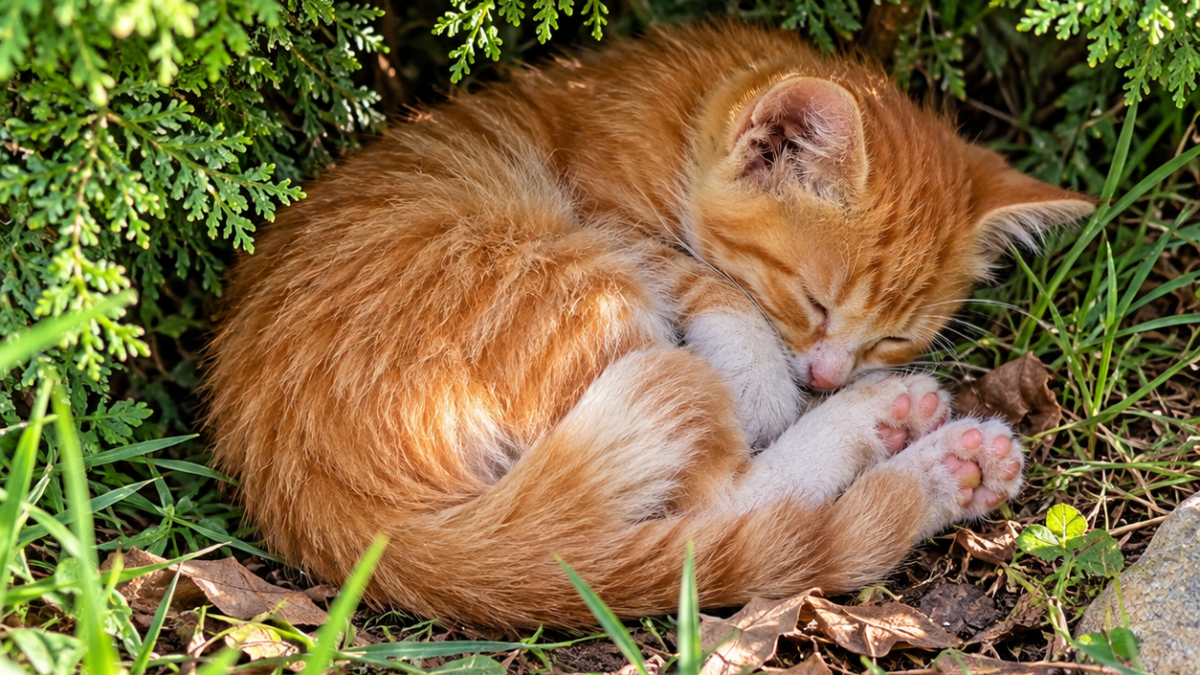
Mushka covered her face and cried in the bushes, her body soaked by the rain. She had been abandoned, but for two days, she stayed there waiting for the person who had left her behind.
Some people tossed her a piece of bread and walked away. Through storms and rain, she lay on the cold, wet grass, growing weaker while no one stopped to take her somewhere safe.
By the time a woman called rescuers, Mushka barely reacted to their arrival. She looked at the person approaching her, then lay back down.
A rescuer wrapped her in a thick towel and carried her to the car. Mushka didn’t resist. She stayed quiet in their arms, too exhausted to respond to much of anything.
At the hospital, vets discovered she had piroplasmosis, a disease that damages red blood cells. She had a high fever, severe anemia, and so many ticks that removing them took an hour.
She wouldn’t stand, though X-rays showed no broken bones. She had barely eaten for days, yet even the food placed in front of her drew little interest.
The veterinary team began urgent treatment. Her carers kept offering small amounts of food, sitting beside her and patiently trying to earn her trust.
Slowly, her fever eased and her blood counts improved. But feeling safe around people took longer, and Mushka still pulled away from affection.
There were small signs of progress. A little more food, a walk beside her carer, a growing interest in the world around her.
But I don’t want to give away what Mushka looks like after 50 days of care. I want you to see the dog who once lay soaked in the bushes running across the grass in the sunshine, her eyes bright and her tail finally wagging as she learns what it feels like to be loved.
Mushka’s transformation is waiting for you in the comments.
PART 2
I was the person holding the towel around Mushka that first day.
Even now, I can still remember exactly how cold her body felt through the wet fur.
The towel was thick, but the rain had soaked her so completely that I could feel the chill coming off her.
She did not struggle when I lifted her.
That scared me more than struggling would have.
A frightened dog usually gives you something.
A tense muscle.
A low growl.
A desperate attempt to escape.
A warning look.
Mushka gave me almost nothing.
She simply allowed herself to be carried.
Her head rested against my arm as though she no longer had the energy to hold it up.
“Come on,” I whispered. “You don’t have to stay here anymore.”
Her eyes opened briefly.
For one second, they met mine.
Then she closed them again.
The woman who had called us stood nearby beneath an umbrella.
“I’ve seen her here since yesterday,” she said.
“Only yesterday?”
“No. Someone else said she was here the day before too.”
I looked toward the bushes.
A flattened patch of wet grass showed exactly where Mushka had been lying.
Beside it was part of a piece of bread that had turned soft from the rain.
“She hasn’t left?”
The woman shook her head.
“She moves a little, then comes back to that spot.”
I felt something tighten in my chest.
Dogs do not understand abandonment the way we describe it.
They do not know words like betrayal.
They do not understand excuses.
They do not know that someone may have made a deliberate decision never to return.
They understand something simpler.
Someone was here.
Now they are gone.
Maybe they will come back.
So Mushka had waited.
Through one night.
Then another.
Through rain.
Through cold.
Through hunger.
She had remained close to the place where somebody had left her because some part of her still believed the person might return.
I looked at the road.
Cars passed.
People had passed too.
Some had seen her.
Someone had thrown her bread.
Then they had gone.
I could not stop wondering how many times Mushka had lifted her head when she heard footsteps.
How many times she had looked toward a car.
How many times hope had risen for a second before disappearing again.
I carried her toward our vehicle.
“She’s freezing,” I said.
My partner opened the door.
We placed Mushka carefully inside and wrapped another towel over her.
I expected the enclosed space to frighten her.
Instead, she curled into herself.
The heater came on.
Warm air filled the car.
Mushka’s eyes remained half closed.
I sat beside her.
For the first several minutes, I did not touch her.
I just watched.
Her breathing was fast.
Not frantic.
Weak.
Every now and then she trembled.
“Do you know where you’re going?” I asked softly.
Of course she didn’t.
“You’re going somewhere dry.”
One ear moved.
“That’s the first promise.”
I looked out at the rain.
“You’re never lying in those bushes again.”
I had no idea then how many promises I would make to Mushka over the next fifty days.
Or how hard she would make us work before she believed any of them.
At the veterinary hospital, the staff took her immediately.
Her temperature was the first warning.
The veterinarian frowned as he looked at the number.
“That’s high.”
“How high?”
He told me.
My stomach dropped.
Then he checked her gums.
They were pale.
Almost grayish.
That was the second warning.
Blood was drawn.
Mushka barely reacted to the needle.
Again, that frightened me.
A dog who feels well enough to protest is a dog with energy.
Mushka had none to spare.
While we waited for the laboratory results, a technician began checking her coat.
“Ticks,” she said.
I moved closer.
There were several around Mushka’s ears.
Then we found more.
Around her neck.
Between patches of fur.
Near her legs.
Beneath her body.
Every time the technician thought she had found the worst area, another cluster appeared.
“How many?” I asked.
She shook her head.
“I stopped counting.”
For nearly an hour, they removed them.
Mushka lay there.
I stayed close but not too close.
Whenever I reached toward her, a subtle tension passed through her shoulders.
It was not aggression.
It was expectation.
She expected touch to mean something she did not want.
So I lowered my hand.
“It’s okay,” I told her. “You don’t owe me anything.”
She looked away.
The veterinarian returned with the blood results.
His expression changed before he spoke.
“She has piroplasmosis.”
I had heard of tick-borne diseases, but I did not fully understand what that diagnosis meant.
He explained carefully.
The infection was damaging her red blood cells.
Her anemia was severe.
The fever was part of the body’s fight against the disease.
Her weakness was not simply hunger or exposure.
She was seriously ill.
“How dangerous is it?”
He did not answer immediately.
That hesitation told me enough.
“It can be very dangerous, especially when the anemia is this advanced.”
I looked at Mushka.
“What do we do?”
“We treat aggressively and monitor her.”
“Can she recover?”
“Yes.”
Then he added the sentence I didn’t want.
“But I can’t promise anything yet.”
We had also been worried that she could not stand.
So X-rays were taken.
I waited for those results with my arms crossed tightly over my chest.
Maybe she had been hit.
Maybe her hips were broken.
Maybe something else had happened before she was abandoned.
The veterinarian came back.
“No fractures.”
Relief rushed through me.
Then confusion.
“Then why won’t she get up?”
“She’s extremely weak. Fever, anemia, dehydration, lack of food. Her body has very little reserve.”
He glanced toward Mushka.
“She may simply not have the strength.”
I crouched near her kennel.
Mushka’s nose was turned toward the wall.
“Did you hear that?”
No response.
“No broken bones.”
Her ear moved slightly.
“That means you have something to work with.”
I was trying to convince myself as much as her.
Treatment began that day.
Medication to address the infection.
Fluids.
Supportive care.
Monitoring.
Nutritional support.
Frequent temperature checks.
Repeated bloodwork.
Every number mattered.
Every small change mattered.
That first evening, we offered her food.
Mushka sniffed it.
Then turned away.
We tried another food.
Nothing.
Something warmer.
Nothing.
Something softer.
Still nothing.
“You haven’t eaten properly in days,” I told her.
Mushka lowered her head.
I sat down a few feet away.
“You don’t have to like me.”
No reaction.
“You don’t even have to trust me.”
Her eyes moved toward me.
“But you do have to eat.”
I pushed the bowl a little closer.
Then I backed away.
Five minutes passed.
Nothing.
Ten.
Finally, Mushka lifted her head.
She sniffed again.
One lick.
Then she stopped.
I could have cheered.
Instead, I stayed quiet.
Another lick.
Then a tiny bite.
That was all she ate.
But after two days of rain, illness, and almost no food, a tiny bite felt enormous.
The next morning, I arrived early.
Mushka was awake.
She looked at me.
Not happily.
Not fearfully either.
Just watching.
“Good morning.”
She lowered her head.
I checked with the staff.
“How was she overnight?”
“Stable.”
That word became precious.
Stable.
Not better.
Not recovered.
Stable.
“She ate a little.”
“How much?”
They showed me.
Not enough.
But more than yesterday.
I sat beside the kennel.
Mushka’s eyes stayed on me.
“You’re making me count spoonfuls.”
She blinked.
“I hope you understand how ridiculous that is.”
One ear shifted.
I smiled.
“That was almost a reaction.”
That day her fever remained high.
We watched the blood values.
The anemia worried everyone.
The veterinarian explained that even if Mushka looked slightly more alert, her body was still under enormous strain.
“Don’t let one better moment convince you she’s out of danger.”
I understood.
But hope is difficult to control once it appears.
That afternoon, Mushka lifted her head when I entered.
It was the first time I was sure she recognized me.
I froze.
“Mushka?”
Her eyes followed me.
I crouched.
“That’s new.”
I took one step closer.
Her body tightened.
So I stopped.
“Okay.”
I sat down right there.
She watched.
I did nothing.
Five minutes passed.
Then ten.
Eventually her head rested again.
But this time she did not turn away.
That was how trust started with Mushka.
Not with a cuddle.
Not with a tail wag.
With ten minutes during which nothing bad happened.
For the next several days, we repeated that lesson.
I entered.
Sat.
Spoke softly.
Brought food.
Left.
Returned.
Mushka began learning something she had apparently forgotten.
People could come back.
It sounds simple until you think about what abandonment teaches an animal.
A person can be there one moment and disappear the next.
A familiar voice does not guarantee safety.
A hand that once fed you may one day push you out of a car or leave you beside a road.
Trust had become dangerous for Mushka.
So we stopped asking for it.
We simply became predictable.
Breakfast came.
Medication came.
Clean water came.
Dry bedding came.
A person entered.
A person left.
Then that same person came back.
Again.
And again.
Every day.
I learned not to reach for Mushka whenever emotion told me to.
That was surprisingly difficult.
When she looked sad, I wanted to hug her.
When she trembled, I wanted to hold her.
When she ate, I wanted to praise her.
But Mushka did not need my need to comfort her.
She needed control.
So I waited until she invited contact.
The first invitation was so small I almost missed it.
I was sitting on the floor with a piece of food in my palm.
Normally Mushka would stretch her neck as far as possible, grab it, and retreat.
That day she took the food.
Then remained there.
Her nose was inches from my hand.
I did not move.
She sniffed my fingers.
Once.
Then again.
My heart was pounding so hard I was afraid she could hear it.
“Hi,” I whispered.
Mushka stepped back.
I felt disappointed.
Then she came forward again.
Her nose touched my knuckles.
For perhaps one second.
Then she retreated.
I stayed where I was.
That was enough.
The next day she did it again.
And the next.
By then, her fever was beginning to respond more consistently.
Her blood values were improving, although they remained far from normal.
She also began eating more.
Small meals became half meals.
Half meals became nearly full ones.
With food came strength.
With strength came movement.
One morning, I entered and found Mushka standing.
Actually standing.
Her legs trembled beneath her.
She was thin enough that every line of her body showed through the coat.
But she was up.
I stopped in the doorway.
Someone beside me whispered, “Don’t scare her.”
I nodded.
Mushka took one step.
Then another.
Her legs looked uncertain.
She stopped.
I held my breath.
A third step.
Then she lowered herself back onto the blanket.
Only three steps.
I cried anyway.
Not where she could see me.
I turned my face away.
Three steps had become the biggest thing in my entire morning.
Later, we tried a very short walk.
The leash made Mushka freeze.
Her body went rigid.
I wondered whether she associated it with her abandonment.
Maybe somebody had walked her somewhere before leaving.
Maybe the leash itself held no meaning.
We would never know.
I lowered it.
“We don’t have to.”
Mushka looked toward the open door.
Cool air moved into the room.
Her nose lifted.
A smell had reached her.
Curiosity.
It was the first time I had seen anything compete with fear.
She stepped forward.
One step.
Then another.
We moved outside.
The sky was clear.
That mattered to me more than it mattered to her.
I looked at the grass.
Dry.
Warm.
Sunlit.
Mushka looked at it too.
She lowered her nose.
Sniffed.
Then stood very still.
For a moment, I wondered what she was remembering.
Grass had been where she suffered.
Grass had held her body while rain soaked her.
Grass had been the place where she waited.
Now grass was simply something beneath her paws.
She took a few steps.
Stopped.
Looked behind her.
I was still there.
“I’m here.”
Mushka turned forward.
Another step.
Then another.
We walked perhaps twenty yards.
It felt like miles.
Back inside, she slept for hours.
That night, the veterinarian told me her fever had fallen again.
“Good direction.”
“Good enough?”
He smiled.
“You’re impatient.”
“Yes.”
“She didn’t become this sick overnight.”
I knew.
“She won’t recover overnight either.”
I hated that answer.
But he was right.
So we learned the rhythm of recovery.
One good day.
One quieter day.
A stronger appetite.
Then a meal she barely touched.
Several confident steps.
Then an afternoon when she wanted only to sleep.
Improved blood results.
Then numbers that did not move as quickly as we hoped.
Every time something slowed, fear returned.
But every time, Mushka reminded us that progress could be small without being absent.
Around the tenth day, I was sitting beside her while she ate.
Mushka stopped.
Looked at me.
Then returned to her food.
She had never eaten that calmly with me so close.
I moved my hand slightly.
No reaction.
I rested it on the floor.
Mushka finished.
Then approached.
Her nose touched my fingers.
I waited.
Slowly, I moved one finger toward her cheek.
The moment I touched her, her body stiffened.
I stopped immediately.
Mushka looked at me.
My finger remained still.
Then something happened.
She moved her face forward.
Into my hand.
Barely.
But she did it.
I brushed one finger along her cheek.
Mushka stayed.
“Good girl.”
Her eyes softened.
I stopped before she had to pull away.
That was important.
I wanted Mushka to learn that she could end contact before fear forced her to.
Over the following days, she began accepting brief touches.
One second.
Three seconds.
A hand beneath the chin.
A scratch behind the ear.
Never too much.
Then she would walk away.
We let her.
There are few things more powerful than watching an animal discover that “no” will be respected.
Mushka learned that walking away did not make us chase her.
Refusing touch did not make us angry.
Being afraid did not bring punishment.
That freedom changed her.
Her posture began changing before her behavior did.
Her head stayed higher.
Her shoulders were less curved.
Her tail, though still mostly low, no longer seemed permanently tucked close to her body.
Her eyes followed movement around the room.
Curiosity was returning.
The first time she watched a bird through the window, I sat beside her.
The bird hopped along the ground outside.
Mushka’s ears moved forward.
She leaned slightly.
I smiled.
“That’s called having better things to worry about.”
She ignored me.
The bird flew away.
Mushka continued staring at the place where it had been.
That moment might sound meaningless.
It wasn’t.
A seriously ill animal does not waste much energy on birds.
A terrified animal often cannot.
Mushka had enough space in her mind for curiosity.
That meant survival was no longer consuming every part of her.
Around day fourteen, we had our first setback.
Mushka refused breakfast.
Immediately, my old fear returned.
“Why isn’t she eating?”
The staff checked her.
Temperature slightly elevated again.
Not as high as before.
But enough to make me nervous.
The veterinarian repeated bloodwork.
We waited.
Mushka lay on her blanket.
I sat nearby.
My mind raced.
Had the infection worsened?
Had treatment stopped working?
Had we celebrated too early?
I hated myself for having imagined her recovered.
The veterinarian returned.
“Her bloodwork is still moving in the right direction.”
“Then why isn’t she eating?”
“Recovery is not linear. She may feel tired today. We’ll monitor her.”
I looked toward Mushka.
One difficult morning had frightened me more than it frightened her.
That afternoon, she ate half a meal.
By evening, almost a full one.
The next morning, her temperature was better.
I learned something that week.
I could not treat every backward step as a collapse.
Mushka deserved better than living inside my panic.
From then on, I tried to look at patterns instead of moments.
Was she stronger than a week ago?
Yes.
Eating more overall?
Yes.
Walking farther?
Yes.
Blood improving?
Yes.
Trust increasing?
Slowly, yes.
Then we were moving forward.
Even if today felt harder than yesterday.
By the third week, Mushka could walk outside for longer.
One afternoon, she stopped beneath a tree.
The sun reached the ground through the leaves in moving patches.
Mushka stood in one of them.
I watched warmth fall across her coat.
She closed her eyes.
Just for a second.
Something about that nearly destroyed me.
The first time I had seen her outdoors, she had been soaked.
Shivering.
Her face partly hidden.
Now she was standing in sunlight by choice.
Not waiting.
Not abandoned.
Simply feeling warm.
“You like that?”
Mushka opened her eyes.
Her tail moved once.
I stared.
“Did you just wag?”
Nothing.
“Mushka.”
Her tail moved again.
A tiny sweep.
I laughed.
Someone walking beside us turned around.
“What?”
“Her tail.”
Mushka looked between us.
It moved again.
I crouched, forgetting all my careful restraint.
Then caught myself and stopped.
Mushka came to me instead.
She sniffed my hand.
Tail still moving.
That was the first unmistakable wag.
I will remember it for the rest of my life.
We celebrate dramatic things.
Running.
Jumping.
Surviving surgery.
But when you have watched an abandoned dog carry her tail like sadness for weeks, one wag can feel like sunrise.
From that day forward, the tail became a kind of diary.
Food produced a wag.
The leash eventually produced one.
Certain carers produced one.
Then I did.
The first morning Mushka saw me and began wagging before I had spoken, I stopped in the doorway.
“No.”
The tail moved harder.
“You cannot do that.”
Mushka approached.
“I am not crying this early.”
She came close enough to touch my knee.
I crouched.
Mushka placed her nose against my shoulder.
I wrapped one arm loosely around her.
She stayed.
Then leaned.
Her weight settled against me.
That was different from the day I carried her.
On rescue day, she had rested against my body because she lacked strength.
Now she leaned because she chose closeness.
I put my face against her wet nose.
“You finally believe me a little, don’t you?”
Mushka’s tail tapped the floor.
A little.
That was enough.
Physical recovery also became more visible.
Her gums regained healthier color.
Her coat looked cleaner and fuller.
The empty spaces around her ribs slowly softened as she gained weight.
She started finishing meals.
Then looking for more.
I laughed the first time she licked the bowl and stared at me.
“Really?”
Mushka stared.
“You wouldn’t touch food three weeks ago.”
Still staring.
“You expect seconds?”
Her tail moved.
“That is emotional manipulation.”
She won.
Not every time.
But often enough.
Around day twenty-three, Mushka discovered play.
It began accidentally.
A soft object rolled across the floor.
She watched it.
The object stopped.
Mushka approached.
Sniffed.
Nothing.
I rolled it again.
She followed with her eyes.
Another carer said, “She’s interested.”
“I know.”
I rolled it gently.
Mushka touched it with her paw.
We both froze.
Mushka looked at us.
I realized our reaction might frighten her.
So I pretended nothing had happened.
I rolled it again.
She touched it.
It moved.
Mushka followed.
Another paw.
Then something extraordinary happened.
Her front legs bent.
Her rear lifted.
For one second, she made a clumsy little play bow.
Then jumped forward.
I covered my mouth.
Mushka attacked the toy.
There was no elegance.
No long game.
But there was joy.
Pure, unnecessary joy.
Play is unnecessary for survival.
That is why it matters.
When an animal begins playing after severe illness and fear, it means her world has become safe enough for energy to be spent on something pointless.
Something fun.
Mushka played for perhaps thirty seconds.
Then stopped.
That was all.
But the next day she did it again.
A little longer.
Then longer still.
Her personality began emerging rapidly.
She was stubborn.
We learned that immediately.
Sometimes she simply refused to walk where we wanted.
“Mushka, this way.”
Nothing.
I pulled gently on the leash.
She planted all four paws.
“Really?”
Mushka stared at me.
A bird moved in another direction.
She walked toward it.
I laughed.
“So the legs work perfectly when you decide.”
That stubbornness delighted me.
Weak dogs do not waste energy negotiating.
Mushka was getting strong enough to have preferences.
She also discovered comfort.
Soft blankets.
Sunny spots.
Certain people.
One particular corner where she could see the doorway.
At first I worried about that last preference.
Was she still watching for abandonment?
Maybe.
But over time, she stopped lifting her head every time someone moved.
She started sleeping more deeply.
That mattered.
Traumatized animals can rest without truly relaxing.
Mushka had done that in the beginning.
Body down.
Mind awake.
Now sometimes I walked past and she did not move at all.
Her breathing stayed slow.
One paw twitched in a dream.
I would stand there watching.
“You know you’re safe.”
I wanted to believe that was what deep sleep meant.
At the end of the third week, rain came.
Heavy rain.
The first real storm since Mushka’s rescue.
I heard it strike the roof.
Then I looked at her.
Her entire body had changed.
Ears back.
Head low.
Shoulders tight.
The tail disappeared beneath her.
“Mushka.”
No response.
Thunder sounded farther away.
She dropped closer to the floor.
My heart broke.
There are memories stored in the body long after the immediate danger disappears.
Mushka could not tell us what rain meant to her.
But her body did.
I wanted to gather her into my arms.
Instead, I sat several feet away.
The rain became louder.
“It’s outside,” I said quietly.
Mushka’s eyes moved toward me.
“You’re inside.”
I put a treat on the floor between us.
She ignored it.
Another sound from the storm.
Mushka flinched.
I stayed.
Five minutes.
Ten.
Fifteen.
Eventually, her breathing slowed.
She lifted her head.
I pushed the treat closer.
She sniffed.
Ate it.
Then stood.
I did not move.
Mushka walked toward me.
One step.
Another.
Then lay down near my foot.
Not touching.
Just close.
I placed my hand on the floor.
Mushka sniffed.
Then rested her chin beside it.
The storm continued.
Nothing happened.
No one left.
No cold grass.
No soaked fur.
No waiting.
Only rain against a roof.
Eventually, Mushka fell asleep.
I sat there almost an hour.
I would have stayed all night.
That storm became one of the most important moments in her recovery.
We could not erase the rain that had hurt her.
We could give rain a new ending.
By day twenty-eight, Mushka was visibly stronger.
Her walks had become longer.
Sometimes she moved ahead of us.
Sometimes she stopped to investigate every smell.
One afternoon, she pulled slightly toward a patch of grass.
I followed.
Mushka sniffed intensely.
Then suddenly trotted three steps.
I stared.
She stopped.
Looked back.
“Mushka?”
She trotted again.
Four steps.
Her body moved more naturally now.
Her legs, once too weak to hold her, carried her with growing confidence.
I laughed.
“You know what you just did?”
Mushka had no interest in discussing it.
She sniffed a tree.
“You almost ran.”
The next week, she actually did.
It happened on a clear morning.
We were in a safe open area.
Mushka was off the short lead only where appropriate and controlled.
She stood looking across the grass.
Something caught her attention.
Maybe movement.
Maybe simply excitement.
She accelerated.
Walk.
Trot.
Then run.
Five strides.
Six.
Seven.
“Mushka!”
She stopped.
Turned.
Her mouth open slightly.
Eyes bright.
Tail raised.
For one second, she looked shocked by her own body.
Then she ran again.
This time farther.
I started laughing so hard I could barely call her name.
Another carer beside me was crying.
“Look at her.”
“I see her.”
“Look at her.”
I was.
And yet part of me was seeing another dog too.
The Mushka from day one.
Wet.
Weak.
Face hidden.
Too tired to stand.
The contrast hurt in the most beautiful possible way.
Mushka ran in a wide curve.
Then came back toward us.
She slowed several feet away.
Her tail wagged hard.
I crouched.
She came straight into me.
For the first time, I wrapped both arms around her without hesitation.
Mushka stayed.
I buried my face in her fur.
“Look at you.”
She pulled back.
Then ran away again.
I laughed through tears.
“Fine. Go.”
That became one of my favorite things about her recovery.
Mushka did not want to spend much time reflecting on it.
Humans wanted to stand around crying about how far she had come.
Mushka wanted to smell grass.
There was life to live.
By day thirty, her bloodwork showed significant improvement.
The veterinarian compared the new numbers with those from her admission.
The difference was dramatic.
“Her anemia is much better.”
“How much better?”
He showed me.
I studied numbers I barely understood.
“So she’s safe?”
“Safer.”
I looked at him.
“You love cautious words.”
“I love accurate words.”
Fair.
“The treatment is working. She’s recovering well.”
I exhaled.
That was enough.
Mushka stood beside me, trying to investigate the examination room.
The veterinarian smiled.
“This is the same dog who wouldn’t stand?”
“Apparently not.”
Mushka tried to nose open a cabinet.
I pulled her back.
“You’re embarrassing me.”
She wagged.
The veterinarian laughed.
I realized then that her medical appointments no longer felt like vigils.
The first visit had been filled with fear.
Now Mushka was impatient.
Restless.
Curious.
Annoyed.
All wonderful symptoms of being alive.
Around day thirty-three, she surprised me again.
A volunteer she did not know entered quietly.
Mushka watched her.
I expected caution.
The volunteer sat on the floor without reaching.
Mushka approached.
Sniffed.
Then pushed her head under the woman’s hand.
The volunteer looked at me.
“Can I?”
I smiled.
“She already answered.”
The woman scratched Mushka gently.
The tail started.
Something in my chest loosened.
Mushka’s trust had expanded.
At first, safety was one person.
Then a few.
Now she was learning that kindness could exist beyond the small circle that rescued her.
That frightened me a little too.
Because trusting again makes you vulnerable.
But you cannot protect an animal from every future disappointment by teaching them never to trust.
The goal was not to make Mushka suspicious forever.
The goal was to give her enough safe experiences that fear was no longer the default.
She was getting there.
By day thirty-five, Mushka had gained enough strength that she sometimes tested limits.
She found something she was not supposed to chew.
“Mushka.”
She froze.
I walked closer.
“What is that?”
She grabbed it and moved away.
I stared.
“Oh, so now we run?”
Her tail wagged.
“You could barely stand a month ago.”
She moved farther.
“And this is how you repay me?”
I started laughing.
Eventually I traded the forbidden object for a toy.
Mushka accepted.
Then looked proud of herself.
I realized I preferred this kind of problem.
A healthy dog getting into trouble was infinitely better than a sick dog too weak to care about anything.
We began seeing more and more of who Mushka might always have been beneath the illness and fear.
Playful.
Independent.
Affectionate on her own terms.
Food-motivated.
Curious.
Sensitive to loud sounds.
Very intelligent.
And absolutely capable of manipulating people with her eyes.
She learned quickly who carried treats.
She learned which door led outside.
She learned the sound of the leash.
One morning, I picked it up.
Mushka’s entire body changed.
Tail wagging.
Ears forward.
She hurried toward me.
“Seriously?”
More wagging.
“You hated this leash.”
Mushka pushed her nose against it.
I attached it.
“Fine. Let’s go.”
Outside, she walked ahead.
The sunlight was warm.
I thought about the day we had carried her through rain.
I had promised her a dry place.
I never imagined that one day she would be the one dragging us toward the outdoors.
By day thirty-eight, another storm arrived.
I watched Mushka carefully.
Rain started.
Her ears moved.
She lifted her head.
But she did not flatten herself.
That alone was progress.
Thunder sounded.
Mushka stood.
Looked toward the window.
Then looked at me.
I sat down.
“You remember?”
She walked toward me.
No shaking.
No hiding.
Just caution.
She lay beside my feet.
I put my hand on her back.
This time, instead of staying stiff beneath it, Mushka relaxed.
Her head lowered.
Rain struck the glass.
Her eyes closed.
Twenty minutes later, she was asleep.
I stared at her.
The same weather.
A different world.
There is a kind of revenge in that.
Not the revenge people usually imagine.
Nobody had to suffer for Mushka to win.
The rain itself had lost its power.
The person who abandoned her had turned a storm into something terrifying.
Safety had turned it back into weather.
That was enough.
Around day forty, we returned to the veterinary hospital.
Mushka walked through the door on her own.
I remembered carrying her inside the first time.
The veterinarian remembered too.
“Well, that’s different.”
Mushka sniffed his shoe.
“She has become opinionated.”
“Good.”
The examination went well.
Temperature normal.
Weight increased.
Gums pinker.
Body condition improving.
Then came the blood test.
I always became nervous during those waits.
No matter how good Mushka looked, I still remembered the first results.
The veterinarian returned.
“Much better.”
I smiled.
“Can you say that again?”
“Much better.”
“How close to normal?”
He explained the remaining values.
There was still recovery ahead.
But the immediate crisis was behind us.
“She responded very well.”
I looked down.
Mushka was trying to leave.
“She would like you to know the appointment is finished.”
He laughed.
On the drive home, Mushka stayed upright.
The first ride had been different.
Wrapped in towels.
Silent.
Eyes barely open.
Now she watched the world through the window.
Trees.
Cars.
People.
Everything moved past.
Mushka followed it with her eyes.
At one point she looked toward me.
“What?”
Tail wag.
“You want to know where we’re going?”
She looked back outside.
“Home.”
That word stopped me.
Home.
At what point had the place where we cared for her become home?
I did not know.
Maybe home begins before you consciously name it.
Maybe it starts when food appears predictably.
When you recognize footsteps.
When you choose a particular bed.
When you sleep deeply.
When somebody leaves for an hour and you expect them back.
Mushka had all of that now.
I smiled.
“Yes. We’re going home.”
Day forty-two brought one of the funniest signs of recovery.
Mushka refused to come inside after a walk.
“Mushka.”
She stared at me.
“Inside.”
She looked toward the grass.
“No.”
She stepped away.
I stared.
“You waited in wet bushes for two days, and now you’re refusing a warm room?”
Tail wag.
“Mushka.”
She trotted a few feet.
Another carer started laughing.
“This is your fault. You made outside fun.”
Eventually, treats solved the disagreement.
As Mushka walked inside, I shook my head.
“You have become impossible.”
I meant it as the highest compliment.
Every demand was proof she expected a future.
Sick animals live in the moment because survival consumes them.
Mushka now wanted another walk later.
Another meal.
Another game.
She expected things.
Expectation itself was healing.
Day forty-five was the first time she rolled happily in the grass.
We had taken her outside after breakfast.
Mushka walked into a sunny patch.
Then dropped onto one shoulder.
I panicked for half a second.
“Mushka?”
Then she rolled.
Back.
Side.
Back again.
Her paws kicked at the air.
I started laughing.
“Oh.”
She rubbed her face in the grass.
Another carer smiled.
“She’s having fun.”
Mushka jumped up.
Shook herself.
Then ran in a small circle.
Sunlight caught her coat.
Her tail stayed high.
I thought about the flattened grass in the bushes where we had found her.
Grass had once been something beneath a body waiting to die.
Now Mushka rolled through it because it felt good.
Sometimes recovery rewrites ordinary things.
Grass.
Rain.
Cars.
Hands.
Doors.
Leashes.
Each had once carried uncertainty.
Now each was becoming part of normal life.
Around that time, someone asked whether we had found the person who abandoned her.
“No.”
“Would you want to?”
I did not answer immediately.
There had been nights when I imagined meeting them.
I imagined asking questions.
Did you know she was sick?
Did you see the ticks?
Did you know she had a fever?
Did you know she might die?
Did you watch her stay in those bushes?
Did you understand that she would wait for you?
Part of me wanted an explanation.
Another part knew no explanation could change what Mushka endured.
Anger is easy.
It gives pain somewhere to go.
But Mushka did not need my anger.
She needed my attention on her future.
So I stopped imagining confrontations.
If someone abandoned Mushka because she was sick, then the strongest answer was not shouting at them.
It was watching her become healthy.
If they believed she was unwanted, the answer was surrounding her with people who wanted her.
If they thought her life was disposable, the answer was giving that life every chance to expand.
Mushka’s revenge would be ordinary happiness.
Meals.
Sleep.
Play.
Walks.
Sunshine.
Affection.
Nothing dramatic.
Everything important.
By day forty-seven, Mushka began running toward people she knew.
That changed me more than I expected.
I would enter.
Her head would lift.
Then she would come.
No hesitation.
No cautious sniff from a distance.
She came because she knew me.
Because she expected something good.
Sometimes affection.
Sometimes food.
Probably food more often than I wanted to admit.
But she came.
One morning she reached me and pressed both front paws against my leg for attention.
I laughed.
“Excuse me?”
Tail wag.
“You think you can demand things now?”
Mushka pushed her head beneath my hand.
“Apparently you can.”
I scratched behind her ears.
She leaned so heavily that I nearly lost balance.
I remembered how carefully I had avoided touching her in the beginning.
Now Mushka was offended if I stopped.
That was perhaps the most visible measure of emotional recovery.
Not that fear vanished.
It did not.
She remained cautious about some noises.
Some movements.
Some unfamiliar situations.
But fear was no longer her entire personality.
It had become one emotion among many.
Curiosity could defeat it.
Hunger could defeat it.
Play could defeat it.
Trust could defeat it.
And sometimes joy simply ran faster.
Then came day fifty.
I woke up thinking about the number.
Fifty days.
It sounded both long and impossibly short.
Fifty days earlier, Mushka had been in those bushes.
Sometimes I still couldn’t believe that.
I found one of the early photographs.
There she was.
Wet fur.
Body curled inward.
Eyes dull.
Head lowered.
I stared at it for several seconds.
Then looked across the room.
Mushka was waiting at the door because she knew it was time to go outside.
“Come here.”
She looked at me.
“Mushka.”
She approached.
I held the photograph near her.
“This is you.”
She sniffed the phone.
“You don’t recognize yourself, do you?”
Mushka pushed her nose against my hand.
I laughed.
“No. Of course not.”
She did not need to recognize that dog.
She had already outgrown her.
We went outside.
The morning was bright.
Grass dry.
Sky clear.
Mushka stepped forward.
Then began trotting.
Her tail wagged.
I followed.
She accelerated.
And suddenly she was running.
Not five steps.
Not a cautious burst.
Running.
Across the grass.
Her body stretched into every stride.
Her ears moved.
Her eyes were bright.
She turned in a wide circle.
I stopped walking.
For a second, I could not breathe.
There are moments when the distance between past and present becomes visible.
This was one.
Fifty days.
Bushes.
Rain.
Bread tossed by strangers.
Fever.
Ticks.
Pale gums.
Severe anemia.
A dog too weak to stand.
A dog who pulled away from affection.
And now this.
Mushka ran.
She turned toward me.
“Mushka!”
Her pace increased.
She came straight back.
At the last second she slowed and crashed gently into my legs.
I dropped to my knees.
Mushka’s tail hammered against me.
I put both hands around her face.
“Look at you.”
She licked my chin.
I laughed.
That was new too.
“You waited two days for somebody who never came back.”
Her tail kept moving.
I pressed my forehead against hers.
“You never have to do that again.”
Mushka pushed closer.
“Nobody is leaving you in those bushes.”
She could not understand the sentence.
But perhaps she understood the promise behind my voice.
I wrapped my arms around her.
Mushka stayed for several seconds.
Then she pulled away.
The field was waiting.
Of course it was.
She ran again.
I watched.
I had imagined this ending many times during those first nights.
But I had always pictured it as something dramatic.
A perfect transformation.
A moment where every trace of what happened disappeared.
Real life was better.
Mushka still carried pieces of her past.
She was cautious during storms.
Sometimes a sudden movement made her step back.
Her body still needed time to rebuild completely.
Follow-up care mattered.
But none of those things canceled what we were seeing.
She had become alive in a way she had not been on rescue day.
Not merely medically alive.
Interested.
Engaged.
Joyful.
That difference is difficult to explain unless you have seen it.
Survival says, “I am still here.”
Living says, “What happens next?”
Mushka wanted what happened next.
Another smell.
Another walk.
Another meal.
Another person she trusted.
Another game.
Another patch of sunlight.
Her future had become interesting.
That afternoon, I sat on the grass.
Mushka was exploring nearby.
She moved farther than usual.
Then stopped.
Looked back.
For one second, an old image flashed into my mind.
Mushka waiting for somebody who left.
But this was different.
I had not left.
I was right there.
She saw me.
Then continued exploring.
That was trust.
Not following someone desperately because you are afraid they might disappear.
Knowing you can move away because they will still be there when you turn around.
Later, Mushka returned voluntarily and sat beside me.
I scratched her neck.
“You know you don’t have to watch me constantly anymore.”
She leaned against my leg.
“You figured that out.”
The sun was beginning to lower.
We sat quietly.
I thought about the woman who made the phone call.
What if she hadn’t?
What if she had assumed somebody else would?
What if Mushka had spent another night there?
With piroplasmosis, severe anemia, fever, hunger, cold, and ticks draining what little strength remained, another day could have changed everything.
People sometimes underestimate the importance of one phone call.
One stop.
One decision.
Nobody had to solve Mushka’s entire problem alone.
Someone only had to begin.
The woman called.
We came.
The veterinarian diagnosed.
The staff treated.
Carers fed.
People sat quietly.
Hands learned to wait.
Day after day, a network of small actions built a second life.
That is what rescue really looks like.
Not one hero.
A chain of people who refuse to let suffering remain somebody else’s responsibility.
Mushka benefited from every link.
That evening, rain began.
Not a storm.
Just steady rain.
Mushka was inside.
I heard the first drops strike the roof.
She lifted her head.
I watched.
Her ears moved.
Then she looked at me.
I smiled.
“You’re okay.”
Mushka stood.
Walked over.
Lay beside my chair.
I rested one hand against her side.
Within minutes, she fell asleep.
The rain continued.
I thought about those first two nights.
Perhaps Mushka had stayed awake then.
Perhaps she had slept from exhaustion.
Perhaps every engine had made her hope.
We could never know.
But now there was one thing I knew completely.
When she woke up, we would still be there.
That is how you defeat abandonment.
Not with one grand promise.
With presence.
Morning after morning.
Night after night.
Until the animal stops checking whether you disappeared.
Until deep sleep becomes possible.
Until a door closing does not mean forever.
Until rain is just rain.
Over the next days, even after the symbolic fifty-day mark, Mushka kept changing.
Recovery did not stop because we had reached a number.
Her stamina improved.
Her confidence grew.
She began greeting more people.
She learned routines so quickly that sometimes she anticipated us.
Before breakfast, she waited near the right place.
Before walks, she watched the leash.
When someone she liked approached, her tail started before they reached her.
One day, I arrived later than usual.
Mushka saw me.
Her whole body seemed to express complaint.
“Oh, don’t start.”
She came closer.
“I know.”
Tail wag.
“I’m late.”
She pushed against my leg.
“I came back.”
That sentence slipped out.
I stopped.
Mushka looked up.
“I came back.”
How many times did she need to experience that before the old lesson disappeared?
Maybe it never disappeared completely.
Maybe trust is not forgetting that someone once left.
Maybe it is knowing someone else stayed.
I crouched.
Mushka immediately pressed her forehead beneath my chin.
“I’ll keep coming back.”
There was no need to promise forever in a way no human can guarantee.
Only tomorrow.
Then tomorrow again.
That is how security is built.
One repeatable day at a time.
Weeks later, Mushka saw another dog at a safe distance.
She watched carefully.
No panic.
Just interest.
Her body stayed loose.
The other dog moved.
Mushka’s tail lifted.
She wanted to investigate.
I smiled.
Her world was expanding again.
First, survival had reduced everything.
The bushes.
The rain.
Her own body.
Then recovery widened the circle.
A hospital room.
A carer.
A hallway.
Outside grass.
A few people.
A larger yard.
New smells.
New faces.
Possibilities.
Trauma shrinks life.
Safety gives it back.
That became the real story of Mushka.
Not simply a dog recovering from piroplasmosis.
A dog recovering space.
Space to move.
Space to trust.
Space to play.
Space to choose.
Space to expect tomorrow.
One afternoon, I watched her lie in the sunshine.
Completely relaxed.
On her side.
Eyes closed.
Her coat moved slightly in the breeze.
I sat several feet away.
For once, I did not call her name.
Did not take a picture.
Did not turn the moment into proof of anything.
I simply watched.
Mushka had become ordinary.
And I mean that as the highest compliment.
Ordinary dogs lie in the sun.
Ordinary dogs complain about dinner.
Ordinary dogs pull toward interesting smells.
Ordinary dogs get muddy.
Ordinary dogs refuse to come inside.
Ordinary dogs steal the best sleeping spot.
Mushka deserved ordinary.
She had already experienced enough extraordinary suffering.
The people who knew her first story sometimes wanted dramatic updates.
“Is she completely recovered?”
“Does she trust everyone now?”
“Is she ever scared?”
Real recovery does not fit cleanly into those questions.
Mushka had recovered enormously.
But healing does not mean becoming an animal who never remembers danger.
She still had boundaries.
She still had cautious moments.
Sometimes unfamiliar situations required patience.
We gave it.
The goal was never to create a dog who trusted blindly.
The goal was to create a dog who felt secure enough to decide.
And she did.
One day, an unfamiliar person reached too quickly toward her.
Mushka stepped back.
The person looked embarrassed.
“I’m sorry.”
I smiled.
“Just give her a second.”
They lowered their hand.
Waited.
Mushka watched.
Then approached on her own.
Sniffed.
Tail moved once.
The person smiled.
“She came back.”
“Yes.”
That was Mushka.
She had learned that stepping away did not end the possibility of connection.
She could set a boundary.
Then reconsider.
That was emotional health too.
Perhaps the greatest injustice of abandonment is that the abandoned animal often carries the consequences while the person walks away.
Mushka’s fear remained with her.
The rain frightened her.
Hands made her cautious.
People made her uncertain.
The person who left may never have thought about any of that again.
For a while, that truth made me furious.
Then I realized we had something more powerful than fairness.
We had influence.
We could not change what somebody did.
We could change what happened next.
That became our form of justice.
Every good day after the abandonment belonged to Mushka.
Not to the person who left her.
The past had taken two days in those bushes.
We would give her years beyond them.
Years of dry beds.
Years of meals.
Years of people who returned.
Years where rain happened outside.
Years where grass meant running.
Let two terrible days try to compete with that.
They would lose.
One evening, I imagined what Mushka might say if dogs could tell their own stories.
I doubted she would spend much time describing the person who abandoned her.
Animals are often kinder to themselves than humans.
They do not build monuments to their betrayers.
Mushka would probably describe smells.
The cold.
The rain.
The hunger.
Then the towel.
Warmth.
Food.
Hands.
Grass.
Sunlight.
She would describe what mattered in the present.
Maybe that was why she healed.
She did not need an apology to continue.
She needed safety.
An apology would have been for humans.
Safety was for Mushka.
As her strength returned completely, she began running farther.
Watching her never became ordinary to me.
Each time, part of me saw the weak dog beneath the bushes.
Mushka would accelerate.
Her paws struck the ground.
Her tail lifted.
Sometimes she turned sharply and raced back.
I would laugh.
“You know you were supposed to be the quiet one.”
Mushka came toward me.
“You fooled everyone.”
Tail wag.
She bumped my hand.
“Yes, yes.”
I scratched her.
There was another moment I loved.
A sunny afternoon after light rain.
The ground was damp.
Mushka stepped into the grass.
For a second, I wondered if the wetness would bother her.
She sniffed.
Then ran.
Mud splashed her paws.
She didn’t care.
I started laughing.
“Now you like wet grass?”
Mushka rolled in it.
“Unbelievable.”
That moment felt symbolic.
Wet grass had once held her suffering.
Now she could make it dirty for fun.
Maybe animals do not think in symbols.
Humans do.
And I needed that one.
Soon after, someone brought a thick clean towel after Mushka got muddy.
We wrapped it around her.
I froze for a second.
The image looked familiar.
The same kind of towel.
A completely different dog.
On day one, the towel had been necessary because she was soaked and weak.
Now she fought playfully against it because she wanted to return outside.
“Hold still.”
Mushka twisted.
“You are the reason you’re wet.”
She tried to grab the towel.
I laughed.
Fifty days earlier, she had not resisted anything.
Now she resisted being dried because she had better plans.
That was recovery.
Mushka eventually settled.
I rubbed her coat.
She pushed her head beneath my arm.
For one quiet second, I remembered holding her on rescue day.
Then Mushka grabbed the edge of the towel.
Memory over.
I laughed.
“Give me that.”
She pulled.
A tug game began.
I let her win.
Of course.
There are victories humans should surrender gladly.
Late that evening, Mushka slept curled in a dry bed.
I looked at her paws.
Mud still remained between two toes despite my efforts.
I smiled.
It may have been the most beautiful dirt I had ever seen.
Proof of running.
Proof of playing.
Proof of a dog whose body had enough strength to get dirty.
The next morning, she demanded breakfast.
The routine continued.
That was the true ending.
Not a final dramatic event.
A routine.
Because routines are what abandoned animals lose.
And predictable routines are what help rebuild them.
Mushka learned when breakfast came.
She learned when walks happened.
She learned who arrived first.
She learned who stayed late.
She learned which hands gave treats.
Which voice called her name.
Which doorway led home.
Predictability became safety.
Safety became confidence.
Confidence became personality.
Personality became joy.
People sometimes call transformations like Mushka’s miracles.
I understand the word.
Seeing before and after can feel miraculous.
But I hesitate to use it without explaining what the miracle actually contains.
Mushka’s transformation was built from medicine.
Blood tests.
Tick removal.
Food.
Fluids.
Clean bedding.
Temperature checks.
Patience.
Sitting on floors.
Giving distance.
Tiny pieces of food.
Respecting fear.
Repeating routines.
Walking twenty yards.
Then thirty.
Then more.
Waiting through storms.
Celebrating tail movements nobody else would notice.
That is what the miracle looked like up close.
Work.
Consistency.
Science.
Compassion.
Time.
Mushka did the rest.
Her body fought.
Her appetite returned.
Her blood recovered.
Her legs regained strength.
Her mind began risking trust.
No one person could take credit for that.
Especially not me.
I was simply lucky enough to witness it closely.
And sometimes witnessing recovery changes you too.
Before Mushka, I thought rescue meant removing someone from danger.
After Mushka, I understood that removal is only the beginning.
You can carry a dog out of the bushes in one minute.
It may take months to convince her the bushes are truly behind her.
Physical distance is easy.
Emotional distance takes repetition.
Mushka taught me to stop asking, “Why isn’t she over it?”
The better question was, “What does she need today?”
Today she might need food.
Tomorrow space.
Another day a walk.
Another day medication.
Another day simply somebody sitting nearby while rain falls.
Healing became less about pushing forward and more about creating conditions where forward movement became possible.
That changed everything.
One afternoon, Mushka rested her head in my lap.
She had never done that before.
No treat.
No coaxing.
She simply approached, circled once, and lowered her head across my legs.
I froze.
Mushka sighed.
I placed one hand gently along her neck.
Her eyes closed.
I did not move for almost half an hour.
My leg went numb.
I did not care.
That was trust in its purest form.
Not standing near someone.
Sleeping on them.
You do not sleep deeply on a person you believe may abandon you.
I stared down at her.
“You have no idea what you’re doing to me.”
One ear moved.
“Nothing. Go back to sleep.”
She did.
I looked out the window.
No rain that day.
Only sunshine.
But I knew another storm would come eventually.
Storms always do.
Weather.
Illness.
Fear.
Life.
The goal was never to protect Mushka from every difficult moment.
It was to make sure difficult moments no longer meant she was alone.
That is what she had been missing in those bushes.
Not simply shelter.
Someone staying.
Several weeks after her recovery had become obvious, rain came late at night.
Mushka was sleeping.
Thunder rolled.
She lifted her head.
I watched.
She stood.
Walked across the room.
Then came directly to me.
No panic.
No freezing.
She leaned against my leg.
I touched her shoulder.
“I know.”
Rain struck harder.
Mushka stayed.
Then she lay down.
I continued working quietly while she slept beside me.
I realized I no longer needed to spend the storm convincing her she was safe.
She had come to the safe place herself.
That was perhaps the greatest milestone of all.
She knew where safety was.
And she believed it would still be there.
If I could have shown that moment to the person who abandoned her, I would not have shouted.
I would not have argued.
I would simply have pointed at Mushka sleeping.
Look.
This is what you nearly took away.
Not merely a heartbeat.
A future.
A personality.
A dog capable of trusting.
A dog capable of loving people after people failed her.
That is the tragedy of abandonment.
You are not leaving behind a problem.
You are leaving behind all the days that animal could have lived.
Fortunately for Mushka, someone else picked those days up.
We carried them forward.
One at a time.
Eventually, people stopped asking whether Mushka would survive.
They started asking what came next.
That felt like crossing a line.
Survival had become assumed.
Her future had become the subject.
A home.
Routine.
Long-term care.
Companionship.
What kind of environment would make her happiest?
What kind of people would understand her?
Those were beautiful questions.
On day one, our question had been much smaller.
Can we keep her alive?
Now we were asking what kind of life she deserved.
The answer was easy.
A good one.
A quiet one when she needed it.
An adventurous one when she wanted it.
A life where affection was offered, not forced.
Where rain had a roof above it.
Where meals arrived reliably.
Where nobody drove her somewhere and disappeared.
Where her history was respected but did not imprison her.
Mushka had already done the hardest part.
She survived long enough to reach the people who would ask those questions.
One morning, she stood at the edge of an open grassy area.
Sunlight across her back.
I called her.
“Mushka.”
She turned.
Tail lifted.
Then ran toward me.
I think about that image often.
Not because running is the most important thing a dog can do.
Because it was the opposite of waiting.
In those bushes, Mushka had stayed still for someone who chose not to return.
Now she moved toward someone who had.
That is the image I want to remember.
Not the soaked dog covering her face.
The running one.
The dog who understood that when she reached us, hands would open.
The dog who no longer had to conserve every ounce of strength.
The dog who had enough strength to waste some on joy.
Mushka reached me.
I crouched.
She pushed into my chest.
Her tail moved so hard her entire back half wiggled.
I laughed.
“You’re ridiculous.”
She licked my face.
“Absolutely ridiculous.”
I held her.
Mushka stayed.
Then suddenly she pulled away and ran again.
I remained kneeling in the grass.
I watched her.
She did not look back immediately.
That made me happy.
She did not need to keep checking.
She trusted we would still be there.
Eventually, she turned.
Saw me.
Then continued exploring.
That was freedom.
Not needing constant reassurance.
Knowing without asking.
I stood and followed at an easy distance.
No hurry.
No fear.
Mushka sniffed along the ground.
The field was bright.
I remembered the bread lying wet beside the bushes.
The image still hurt.
Someone had offered enough kindness to keep her waiting but not enough to change her fate.
I do not say that to condemn everyone who passed.
People have limitations.
People fear approaching unknown dogs.
People may not know what to do.
But Mushka taught me that when you cannot solve a situation yourself, you can still call someone who can.
The woman who contacted rescuers may never fully understand what her call created.
She did not administer treatment.
Did not interpret bloodwork.
Did not remove every tick.
But she noticed.
And she acted.
Sometimes that is the difference.
Mushka received fifty days because somebody decided her suffering deserved more than a glance.
Then fifty became more.
And more.
That is how lives continue.
Someone interrupts the ending that seemed inevitable.
The bushes looked like an ending.
They were not.
The hospital could have been an ending.
It was not.
Severe anemia could have been an ending.
It was not.
Fear could have become her permanent state.
It did not.
Mushka kept reaching another chapter.
One day, much later, I brought out one of the original towels.
Not the exact towel from the rescue, but the same kind.
Mushka immediately tried to play with it.
I laughed.
“You know, this used to be serious.”
She grabbed the corner.
“Mushka.”
Pull.
“You were wrapped in one of these.”
Pull.
“You were sick.”
She pulled harder.
I let go.
Mushka stumbled backward triumphantly with the towel.
I stood there laughing.
That might be the best description of recovery.
Something that once represented survival becomes a toy.
The meaning changes because the life around it changes.
Mushka shook the towel.
Then dropped it.
I picked it up.
She grabbed again.
We played until she became tired.
Later, she fell asleep on the same towel.
I stared at her.
Life can be unexpectedly kind in the second draft.
Perhaps that is what rescue provides.
Not erasure.
Revision.
The first chapters remain.
Abandonment happened.
Rain happened.
Disease happened.
Fear happened.
But none of those chapters get to dictate the last page.
Mushka’s later chapters were filled with different things.
Warmth.
Food.
Medicine.
Grass.
Sun.
Play.
Hands.
Sleep.
Trust.
People who came back.
When I think about her story now, I do not ask why someone abandoned her.
I probably never will know.
Instead, I ask what Mushka did with the life that remained.
She lived it.
Completely.
That answer satisfies me more than any confrontation could.
If revenge exists in Mushka’s story, it is this:
Someone left her as though she had no future.
She built one anyway.
Someone left her sick.
She became strong.
Someone left her frightened.
She learned trust.
Someone left her waiting.
She learned to run.
There is no revenge more complete than becoming proof that someone’s worst decision about your value was wrong.
Mushka did that every day.
There was no need to find the person responsible and make them watch.
The truth existed whether they saw it or not.
Mushka mattered.
The bushes had never been where she belonged.
One evening, the sky turned orange over the grass.
Mushka stood several yards away.
Her coat looked almost golden in the light.
She sniffed something.
Then looked up.
Our eyes met.
I held out one hand.
No command.
No food.
Mushka came.
Not because she had to.
Because she wanted to.
She stopped in front of me.
I scratched beneath her chin.
Her eyes closed.
I said the sentence I had wanted her to understand since the first day.
“You don’t have to wait anymore.”
The tail moved.
“You’re already with your people.”
Mushka leaned against me.
That was enough.
The next morning, she woke hungry.
Demanded breakfast.
Later she wanted outside.
Then attention.
Then a nap.
Nothing dramatic happened.
And that was perfect.
A satisfying ending is not always a spectacular one.
Sometimes it is an ordinary morning that would have been impossible fifty days earlier.
A dry bed.
A full bowl.
A healthy dog stretching after sleep.
A tail wag when someone enters.
A door opening to sunshine.
Mushka received all of it.
And every ordinary day became another answer to the person who left her.
You were wrong.
She was worth saving.
Worth treating.
Worth waiting beside.
Worth earning trust from.
Worth every sleepless night.
Every blood test.
Every medication.
Every towel.
Every quiet minute sitting on the floor.
Every step.
Every tear.
Everything.
Mushka stood outside one final time that afternoon.
I opened the door.
She looked back at me.
For a moment, she waited.
Not out of fear.
Permission.
“Go.”
She ran.
Across the grass.
Sunlight on her coat.
Tail high.
Eyes bright.
The same dog who had once covered her face in the bushes now seemed to want the whole world in front of her.
I followed more slowly.
There was no need to catch her.
No need to carry her.
No need to wrap her in a towel.
She was strong enough to choose her own direction.
Mushka turned.
Then ran back.
She reached me and pushed her head beneath my hand.
I laughed.
“Changed your mind?”
Tail wag.
I scratched behind her ears.
She stood there for several seconds.
Then looked toward the field.
“Go ahead.”
Mushka ran once more.
I watched until she slowed into the distance.
Fifty days earlier, I had carried her away from a place where she had waited for somebody who abandoned her.
Now she could run wherever she wanted and return whenever she chose.
That was not merely recovery.
That was freedom.
And after everything Mushka had endured, freedom was exactly the ending she deserved.
The rain had stopped.
The fever was gone.
The blood in her body was strong again.
The ticks were only a memory.
The bushes were behind her.
And the person who left her no longer had any power over how her story ended.
Mushka did.
She chose sunlight.
She chose grass.
She chose play.
She chose the people who stayed.
And most importantly, she chose to trust life again.
That was her victory.
That was her revenge.
That was her second chance.
And this time, when Mushka looked back, somebody was there.
We always were.
And we stayed.








