PART 2: Seven Newborn Puppies Were Crying Beside Their Unconscious Mother—Then We Learned Who Had Left Her There
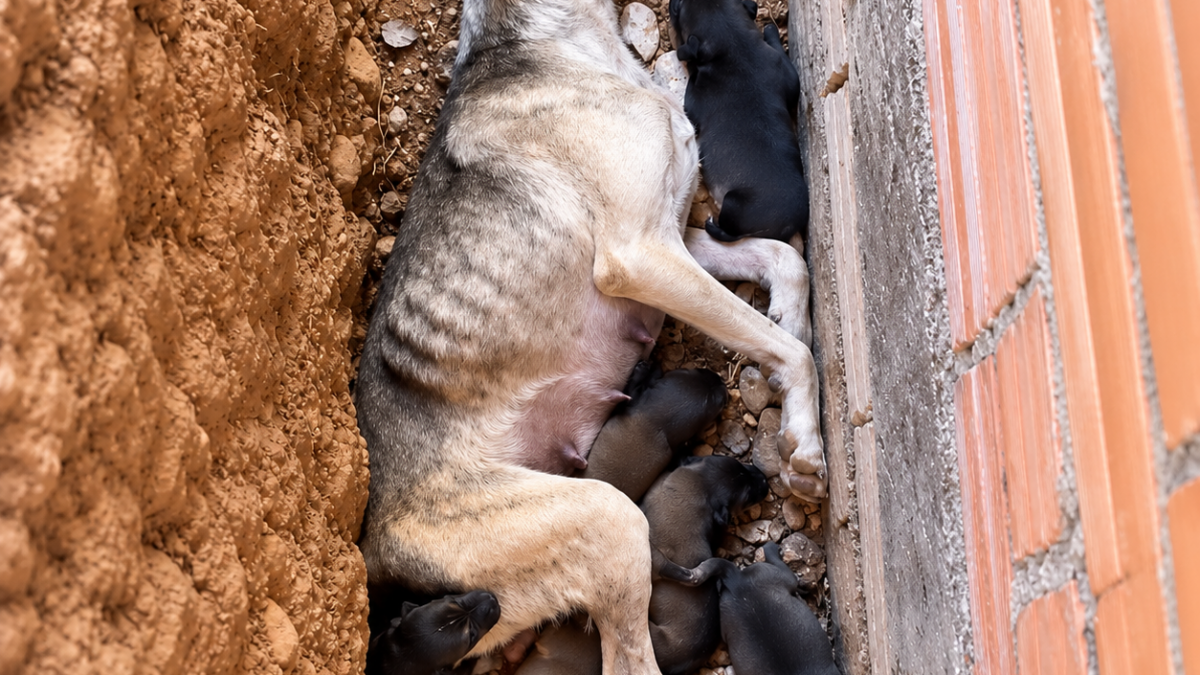
PART 2
The first night taught us how close Isadora was to the edge.
Every time her breathing changed, somebody looked up.
Every time one of the puppies stopped making noise, somebody counted.
One.
Two.
Three.
Four.
Five.
Six.
Seven.
Then again.
Nobody trusted silence.
Not yet.
The smallest puppy wore a yellow identification band around one tiny leg. We eventually named him Igor, but during those first hours he was simply Yellow.
He was weaker than the others.
His suckling reflex came and went.
When he lost his place against Isadora’s belly, he sometimes lacked the strength to crawl back.
Melissa watched him constantly.
“Yellow’s cold again.”
I reached in with warmed hands and lifted him.
Isadora’s head came up instantly.
Her eyes locked on mine.
“I’m bringing him back.”
She trembled.
I held the puppy near her face.
She smelled him.
Then she licked the top of his head once.
Even that seemed to cost her energy.
The veterinarian, Dr. Hannah Reed, entered quietly.
“How’s she breathing?”
“Still fast.”
Hannah listened to Isadora’s chest.
The dog stiffened but did not resist.
“She’s working too hard.”
“Pneumonia?”
“Possibly. Could be aspiration, infection, fluid, or another pulmonary process. I want imaging once she’s stable enough.”
“What about the discharge?”
“Still concerned about postpartum uterine infection.”
“And the blood?”
“Her anemia is significant.”
Every answer added another problem.
I leaned against the wall.
“How is she nursing seven puppies?”
Hannah looked at Isadora for a long time.
“She shouldn’t be able to.”
That sentence stayed with me.
Isadora’s body had no sensible reason to still function as a mother.
She had almost no reserves.
Her immune system was under pressure.
Her blood values were poor.
She was struggling to breathe.
Yet every time the puppies cried, she shifted herself toward them.
Instinct kept asking her for more after life had already taken too much.
We supplemented the puppies carefully.
Not because we wanted to separate them from her.
Because feeding seven babies was draining a mother who might not survive if every demand remained hers alone.
Melissa prepared formula.
I held Igor.
The tiny bottle looked absurdly large next to his face.
“Come on.”
Nothing.
I touched a drop to his mouth.
He swallowed.
Again.
Another swallow.
“That’s it.”
When he finally took several mouthfuls, I felt relief disproportionate to the amount.
Rescue recalibrates your definition of success.
A normal person celebrates graduations, promotions, weddings.
We celebrated three milliliters of formula.
At two in the morning, I found Melissa asleep in a chair with one hand resting against the outside of Isadora’s kennel.
I nudged her.
“Go home.”
Her eyes opened.
“You first.”
“I’m serious.”
“So am I.”
Neither of us left.
At sunrise, Isadora was still alive.
That was enough for day one.
The second day brought imaging.
Her lungs showed serious inflammation.
Hannah used the word “concerning” three times.
I hated that word.
“She may need supplemental oxygen intermittently.”
“For how long?”
“We don’t know.”
“And Ehrlichiosis?”
The blood testing had identified infection consistent with Ehrlichia, a tick-borne disease that can contribute to anemia, weakness, fever, bleeding abnormalities, and systemic illness.
We started appropriate treatment under veterinary guidance.
I watched Hannah prepare the medications.
“How many things are we treating now?”
She counted mentally.
“The Ehrlichiosis. Severe nutritional depletion. Anemia. Pulmonary disease. Possible uterine infection. Dehydration. And we’re monitoring for complications from lactation and postpartum stress.”
I stared at Isadora.
“She had seven puppies alone.”
“Yes.”
“Outside.”
“Apparently.”
“With this happening.”
Hannah nodded.
“How?”
“I can explain physiology, Laura. Not miracles.”
That was probably the closest a veterinarian would ever come to admitting one.
By the third day, Isadora finally ate voluntarily.
It happened just after noon.
For forty-eight hours, food had been offered in different forms.
Soft food.
Warm food.
High-value food.
She would smell it.
Sometimes lick once.
Then turn away.
We had supported her nutrition carefully because she could not be allowed to deteriorate further.
Then Melissa placed a small bowl of warmed chicken-based recovery food inside.
“Just smell it.”
Isadora lifted her head.
She sniffed.
I watched from across the room.
One bite.
Melissa froze.
Isadora chewed.
Swallowed.
Then took another.
“Oh my God.”
I raised a finger.
“Don’t scare her.”
Melissa whispered, “She’s eating.”
“I see.”
“Laura, she’s eating.”
“I see.”
By the fourth bite, both of us were crying silently.
Isadora paused.
Looked at us.
Probably wondered why the strange humans were emotionally unstable.
Then continued eating.
She finished nearly half the portion.
Hannah came in.
Melissa pointed at the bowl.
“She ate.”
Hannah smiled.
“That’s good.”
“Good? That’s all?”
“Very good.”
“That’s better.”
We added the amount to her chart.
Everything went onto paper.
Food consumed.
Respiratory rate.
Temperature.
Weight.
Medication.
Nursing behavior.
Puppy weights.
Seven puppies meant seven separate charts.
Pink band.
Blue band.
Yellow.
Green.
Purple.
Orange.
Red.
At first, the bands were the only reliable way to tell them apart.
They looked like tiny variations of the same animal.
But personalities were already beginning to appear.
Pink screamed if she was moved two inches.
Blue somehow slept through everything.
Orange fought the bottle as if insulted by technology.
Yellow—Igor—remained fragile.
The first week became a constant negotiation between Isadora’s need to recover and her refusal to stop mothering.
After nursing, she would pant.
Her entire body shook.
Sometimes she lay flat for twenty minutes before she could raise her head again.
I started limiting how long all seven could nurse together.
Isadora hated that.
The first time we removed three puppies for supplemental feeding, she tried to stand.
Her back legs trembled.
“Stay down.”
She pushed anyway.
“Isadora.”
She took one step.
Nearly fell.
Melissa brought the puppies closer so she could see them.
“They’re right here.”
Isadora stopped.
The puppies squeaked inside their warm box.
Her breathing slowed.
“She thinks we’re taking them,” Melissa whispered.
“Maybe someone has before.”
We did not know that then.
But her fear around people was impossible to miss.
If one person entered, she watched.
Two people, she stiffened.
Three people gathered nearby, and her body began shaking.
Not because she was cold.
Not because she was weak.
Fear.
Automatic.
Deep.
She never attacked.
That confused us.
A mother with seven newborn puppies had every biological reason to defend them.
Yet when we weighed them, she simply watched, trembling.
When Hannah examined her abdomen, Isadora looked away.
When technicians changed bedding, she pressed herself flat.
It was as though she had learned resistance did not help.
I hated that interpretation.
Still, I could not stop thinking it.
One afternoon I sat alone with her.
No gloves.
No instruments.
No puppy scale.
Just me.
I stayed six feet away.
“You don’t like crowds.”
Her eyes followed me.
“Neither do I.”
No response.
“I’m lying. I like people sometimes.”
Her ear moved.
“That was almost a reaction.”
I put a piece of chicken on the floor between us.
Then I looked away.
Minutes passed.
When I looked back, the chicken was gone.
I placed another piece.
This time she ate while I watched.
Trust sometimes starts as permission to witness hunger.
By day seven, Isadora was still critically weak but more stable.
Her breathing remained our greatest concern.
The lung condition required continued treatment and monitoring.
Her anemia had not corrected quickly.
Ehrlichiosis does not disappear because medication begins.
Healing takes time.
Igor frightened us twice that week.
Once his weight dropped.
Once he became lethargic enough that Hannah kept him separately warmed and supplemented for several hours.
I sat with his tiny body in my hands.
“You are not allowed to be the tragedy in this story.”
He squeaked.
“That’s right. Complain.”
He eventually strengthened.
All seven did.
Slowly.
Their bodies filled out.
Their cries became less desperate.
Then came one of the first truly ridiculous signs of progress.
A tail wag.
Orange did it.
Melissa was feeding him.
His tail moved twice.
She gasped.
“Laura.”
“What?”
“He wagged.”
“Maybe reflex.”
“He wagged.”
“Okay.”
“He likes me.”
“He likes formula.”
She looked offended.
Orange wagged again.
Soon the others followed.
One tiny tail.
Then another.
The kennel that had first sounded like a room full of desperate crying began sounding like puppies.
Squeaks.
Grunts.
Tiny growls during feeding competition.
The occasional offended bark that barely qualified as sound.
Life was becoming noisy for better reasons.
Meanwhile, we started asking questions.
Where had Isadora come from?
She was not feral.
That was obvious.
A truly unsocialized dog behaves differently.
Isadora understood bowls.
Doors.
Human routines.
She knew what a leash was even if it frightened her.
She had lived with people.
Someone had owned her.
We posted a carefully worded notice.
Found female dog with seven newborn puppies.
Proof of ownership required.
No location disclosed publicly.
No photographs showing exact surroundings.
We checked microchip databases.
Nothing.
We asked nearby residents.
At first, nobody knew her.
Then an elderly woman named Mrs. Alvarez called.
“I think I’ve seen that dog.”
I drove to her house.
She lived only four streets from where Isadora had been found.
She looked at the photograph.
“That’s Bella.”
“Bella?”
“That’s what the man used to call her.”
“What man?”
She pointed toward a row of houses.
“Mr. Mercer. White house with the chain-link fence.”
My chest tightened.
“How long ago?”
“Oh, she was there for months.”
“Recently?”
Mrs. Alvarez thought.
“I stopped seeing her maybe two months ago.”
“Was she pregnant?”
“I think so.”
“Are you sure?”
“She got very big.”
“Did you ever see puppies?”
“No.”
I wrote everything down.
“What was she like?”
Mrs. Alvarez looked at the photo again.
“Quiet.”
“Friendly?”
“She’d come to the fence if I had food.”
“Afraid?”
The woman hesitated.
“If he was home, she stayed away.”
That answer changed the temperature in the room.
“Mr. Mercer?”
“Yes.”
“What do you mean?”
“I don’t know.”
She became cautious.
“I don’t want trouble.”
“I understand.”
“No, you don’t. People say things and then everyone knows who said them.”
“We don’t need you to accuse anyone of something you didn’t see.”
She looked relieved.
“What did you see?”
Mrs. Alvarez folded her hands.
“I saw the dog outside a lot.”
“How often?”
“Most days.”
“Shelter?”
“A plastic house.”
“Food?”
“Sometimes.”
“And when she became pregnant?”
“I remember thinking he should bring her inside.”
“Did he?”
“Not that I saw.”
“Then she disappeared.”
“Yes.”
I showed her another photograph.
Isadora in the clinic with the puppies.
Mrs. Alvarez covered her mouth.
“Oh.”
“They were found close to here.”
Her eyes filled.
“He said she ran away.”
“When?”
“Around the time she disappeared.”
“Did he search?”
“Not that I saw.”
That afternoon, I called Animal Control Officer James Nolan, who had already been notified because of the abandonment concerns.
“I have a possible owner.”
“What do you have?”
I told him.
“Name?”
“Mercer. A few houses away.”
“I’ll run the address.”
“Can I go knock?”
“No.”
“I was asking as a courtesy.”
“That was not a request. Do not go knocking.”
“James—”
“Laura.”
I exhaled.
“I hate procedure.”
“And procedure loves preventing rescuers from ruining investigations.”
“I wouldn’t ruin it.”
“You’d tell him exactly what evidence we have.”
“I would ask questions.”
“With your face.”
“What’s wrong with my face?”
“It announces guilt before charges exist.”
He was not completely wrong.
So I waited.
That evening, Isadora ate an entire meal.
I sat beside her kennel.
“You may have been Bella.”
Her ears moved.
“Do you remember that?”
Nothing.
“Isadora fits you better.”
We had chosen the name on day two.
It meant little to her.
Names are for humans until dogs learn that a sound predicts kindness.
By day ten, she responded when I said it.
Not enthusiastically.
But her eyes came toward me.
“Isadora.”
Look.
Chicken.
“Isadora.”
Look.
Soft praise.
“Isadora.”
Look.
No punishment.
Names can be rebuilt too.
Officer Nolan called the next morning.
“The address checks out.”
“And?”
“Dog license registered to Evan Mercer. Female mixed breed. Brown and white. Approximately three years old.”
“Name Bella?”
“Yes.”
My grip tightened on the phone.
“So he abandoned her.”
“Slow down.”
“He told the neighbor she ran away.”
“We haven’t interviewed him yet.”
“She was found within walking distance.”
“That matters.”
“Pregnant.”
“Likely.”
“Seven newborns.”
“Yes.”
“Starving.”
“I’ve seen the veterinary records.”
“So?”
“So let me work.”
The interview happened that afternoon.
I did not attend.
Good.
Because Nolan called me afterward, and even hearing the account over the phone made me furious.
“He admits owning her.”
“What did he say happened?”
“Says he couldn’t manage the pregnancy.”
“So he abandoned her.”
“He says he ‘let her go.’”
I closed my eyes.
“Let her go where?”
“Near the vacant lots.”
“While pregnant?”
“Yes.”
“How pregnant?”
“He claims he didn’t know how close she was.”
“Did he seek surrender help?”
“No.”
“Shelter?”
“No.”
“Rescue?”
“No.”
“Veterinarian?”
“No.”
“Food?”
“He says he left some out initially.”
“Initially.”
“That’s his statement.”
“Why?”
“He says he could not afford a litter.”
The anger in me became very calm.
Sometimes that is worse.
“He lived four houses from where she almost died.”
“I know.”
“He could have called anyone.”
“I know.”
“Her lungs are compromised.”
“I know.”
“Her bloodwork was a disaster.”
“I know, Laura.”
“He left a pregnant dog outside because puppies were inconvenient.”
Nolan let the silence sit.
Then he said, “Now I need you to do something important.”
“What?”
“Keep your volunteers from posting his name.”
“I haven’t told them.”
“Good.”
“He needs consequences.”
“I agree consequences may be appropriate. That will depend on evidence, local statutes, and prosecutors.”
“He admitted it.”
“He admitted releasing her.”
“Pregnant.”
“Yes.”
“Without care.”
“Yes.”
“Then do something.”
“We are.”
That answer never feels fast enough when you have an animal gasping for air in front of you.
But I had learned enough by then to understand that anger and evidence move at different speeds.
The puppies did not care.
Their entire legal philosophy involved milk.
By day twelve, they were beginning to crawl with purpose.
Igor remained smaller.
Pink was becoming dominant.
Blue slept through sibling chaos.
Green discovered that human fingers could be sucked on even when no bottle was attached.
Orange remained dramatic.
Red somehow always ended up underneath everybody else.
Purple had the loudest voice.
We started using temporary names.
Igor stayed Igor.
The others became Lola, Nina, Daisy, Max, Theo, and Milo.
Four girls.
Three boys.
Seven lives that had begun in a crack between structures were becoming individuals.
Isadora watched every change.
Her maternal dedication never relaxed.
Even as she ate better, she stayed thin because nursing demanded so much.
We continued supplementing the puppies.
One evening, I caught her watching Melissa bottle-feed Igor.
No trembling.
No stiff body.
Just watching.
Melissa looked at me.
“She trusts me.”
“Don’t say it too loudly.”
Isadora rested her head.
That was trust too.
Not affection.
Not yet.
The absence of fear.
On day fourteen, Isadora walked voluntarily from her kennel to the small outdoor recovery yard.
I nearly followed too closely.
Hannah stopped me.
“Give her space.”
We opened the door.
Isadora stood at the threshold.
Sunlight reached her face.
She froze.
Behind her, the puppies slept in a heated pen.
She looked back.
Then outside.
One paw crossed.
Then another.
Her legs remained thin.
Her ribs visible.
But she walked.
Five steps.
Ten.
She reached a patch of grass.
Stopped.
Smelled it.
For a moment, I saw the dog she might have been before hunger.
Before pregnancy.
Before abandonment.
She closed her eyes in the sunlight.
Hannah whispered, “Don’t ruin it.”
“I’m not moving.”
“You’re crying.”
“I can cry silently.”
Isadora stood there for perhaps two minutes.
Then turned.
Walked back inside.
Straight to the puppies.
Motherhood before herself.
Always.
Day seventeen became discharge day.
Not home.
We did not yet know what home would mean for Isadora.
But she and the puppies were stable enough to leave hospitalization and move to our rescue’s foster wing.
Hannah completed the final exam.
Lungs improved.
Anemia recovering.
Ehrlichiosis treatment continuing.
Weight still low but moving in the right direction.
Discharge instructions filled several pages.
“Call if she stops eating.”
“Yes.”
“Call if breathing worsens.”
“Yes.”
“Monitor discharge.”
“Yes.”
“Continue—”
“Hannah.”
“What?”
“I have the list.”
“You have a history of improvising.”
“I improve systems.”
“You ignore sleep.”
“Unrelated.”
She handed me the folder.
Then crouched beside Isadora.
“Good girl.”
Isadora smelled her hand.
Then licked one finger.
Hannah froze.
I smiled.
“Well.”
Hannah’s eyes filled.
“Don’t.”
“You’re crying.”
“Allergies.”
“Of course.”
We loaded the puppies first.
Seven tiny carriers would have been absurd, so they traveled together in a secure warmed transport crate.
They were no longer constantly crying.
Instead, they crawled over one another.
Isadora entered her crate slowly.
No forcing.
I crouched outside.
“Come on.”
She looked at me.
Then at the puppies.
Then stepped in.
That choice meant more to me than carrying her would have.
She could walk away from a place now.
She did not need to be lifted because her body had failed.
The foster room was warm.
Thick blankets.
A private corner.
Food.
Water.
A low barrier so Isadora could step away from the puppies if she wanted while still seeing them.
At first, she did not use that privilege.
She stayed with them.
Always.
But over the following week, something important happened.
She began leaving them voluntarily for a few minutes.
First to eat.
Then to lie in the sunlight outside the pen.
Then to walk around the room.
Her body was learning it could belong to her again.
The puppies began eating softened solid food.
Messily.
Spectacularly.
The first meal looked less like feeding and more like agricultural disaster.
Daisy stepped into the bowl.
Theo put his face directly into it.
Max climbed over Igor.
Nina stole from Milo.
Orange—who had become Lola—screamed because another puppy touched her foot.
Melissa stood watching.
“Do we intervene?”
“No.”
“Why?”
“Science.”
“This is not science.”
“It’s social development.”
“It’s chaos.”
“Same field.”
Isadora watched from her bed.
For the first time, I saw something that looked almost like amusement in her face.
Maybe I imagined it.
I didn’t care.
As the puppies grew, the case against Evan Mercer moved forward.
Animal control photographed the location where Isadora had reportedly been released.
Neighbors provided statements.
One person remembered seeing her heavily pregnant near Mercer’s gate.
Another remembered hearing him complain that “one dog was turning into eight.”
That phrase made my blood boil.
One dog turning into eight.
As if reproduction were an unexpected administrative inconvenience.
As if Isadora had impregnated herself.
The investigation also documented that Mercer had not contacted a shelter, rescue, low-cost clinic, veterinary office, or municipal service seeking help before releasing her.
That mattered.
His defense would later center on money.
He could not afford puppies.
I understood financial desperation.
Rescue sees it constantly.
People lose jobs.
Housing changes.
Medical emergencies happen.
Food costs rise.
Veterinary bills become impossible.
Poverty is not cruelty.
But there is a difference between asking for help because you cannot provide care and abandoning a pregnant dog in an area where survival is uncertain.
That difference became central.
Officer Nolan visited the rescue one afternoon.
He stood outside Isadora’s room.
She saw the uniform and retreated.
That reaction made him stop.
“She always do that?”
“With groups and unfamiliar men more than women.”
He crouched outside the doorway.
Did not enter.
“Hey, girl.”
Isadora watched him.
“What do you know about her before this?”
“Not enough.”
“Neighbor said she stayed outside most of the time.”
“Any documented abuse?”
“No.”
“So don’t assume.”
“I know.”
I did know.
Fear tells you something happened.
It does not always tell you exactly what.
Maybe Mercer hit her.
Maybe he yelled.
Maybe someone else did.
Maybe she had poor socialization.
Maybe fear developed after abandonment.
We could not prove what we did not know.
That discipline matters.
Brutal stories attract embellishment.
Real suffering needs no invention.
Nolan showed me the paperwork.
“Prosecutor accepted charges related to abandonment and failure to provide adequate care.”
My eyes lifted.
“Charges.”
“Yes.”
“Arrest?”
“He’ll be summoned through the local process.”
“That’s it?”
“For now.”
“He doesn’t get to own her again.”
“Ownership is disputed in court now, but given the surrender-related circumstances and the cruelty case, he’s not getting her handed back tomorrow.”
“Not tomorrow?”
“Laura.”
“I want permanent.”
“That’s for the court.”
I hated courts already and had not entered one.
Nolan continued.
“He may try to argue he thought someone would find her.”
“He released her near abandoned buildings.”
“I know.”
“He never checked.”
“I know.”
“She gave birth alone.”
“I know.”
“She nearly died.”
“I have the medical report.”
I looked through the glass.
Isadora was nursing Igor.
“What if she hadn’t been found?”
Nolan followed my gaze.
“That’s why there’s a case.”
That settled me more than anything else he had said.
Meanwhile, life accelerated for the puppies.
Eyes fully open.
Then wobbling walks.
Then wrestling.
Then teeth.
Tiny, unforgiving teeth.
By six weeks, the foster room sounded like a daycare run by wolves.
Lola believed she should win every game.
Theo was adventurous.
Max loved sleeping on shoes.
Milo figured out how to climb barriers earlier than anyone else.
Daisy followed humans.
Nina followed Isadora.
Igor remained smaller but stubborn.
He had survived being the puppy we checked every ten minutes.
Now he became the puppy who stole everyone’s toys.
“Compensating,” Melissa said.
“For?”
“Being underestimated.”
“Or he’s rude.”
Both could be true.
Isadora’s weight improved slowly.
Her coat gained shine.
The hollow spaces along her hips filled.
Her gums became healthier.
Her breathing normalized.
Ehrlichiosis treatment continued under veterinary supervision.
At follow-up visits, her blood values improved.
The first time Hannah said, “Her anemia is substantially better,” I forced myself not to cry.
Then cried anyway.
Isadora also began approaching me.
Not when I called.
That was too direct.
But if I sat with my back turned, sometimes she came close.
One evening, I sat on the floor answering messages.
Something touched my elbow.
I looked.
Isadora.
She froze.
I looked away again.
“Your secret is safe.”
Her nose touched my sleeve.
Then she walked around me.
Smelled my hair.
I stayed completely still.
Finally she sat beside me.
Not touching.
Just beside.
I continued typing for fifteen minutes with one hand because I was afraid any movement might end it.
Melissa opened the door.
Saw us.
I held one finger to my lips.
She smiled and backed out.
Five minutes later, Isadora lowered herself onto the floor.
Her shoulder touched my leg.
That was the first voluntary physical contact she gave me.
Not for food.
Not because I handled a puppy.
Not because she was too weak to escape.
Choice.
I wanted to wrap my arms around her.
I didn’t.
Trust is not permission for greed.
I let her decide when it became more.
Over the next weeks, it did.
A hand on her shoulder.
Then behind her ears.
Then eventually, one morning, she placed her head on my knee.
I stared down.
“You realize this is extremely inconvenient.”
Her eyes closed.
I sat there until my leg hurt.
That was becoming a pattern in my life.
As the puppies approached adoptable age, we started application reviews.
Seven puppies generated overwhelming interest.
Newborn survival stories always do.
People fall in love with photographs.
We had to make sure they were ready for the actual dog after the story stopped being emotionally fresh.
We rejected applicants who wanted “the most famous one.”
There was no famous one.
We rejected people planning to keep puppies outside permanently.
We rejected a family who said veterinary care should only be necessary “if something looks really bad.”
I almost laughed.
Then remembered Isadora.
No.
Early care matters.
The first adoption match was Daisy.
A nurse named Stephanie and her husband had an older Labrador mix and wanted a younger companion.
They asked about vaccine schedule.
Training.
Nutrition.
Spay timing.
Future medical needs.
Everything right.
Daisy left in the arms of a woman who cried harder than I did.
Almost.
Then Theo.
Then Nina.
Then Max.
Each departure changed the room.
Isadora noticed.
The first time, she searched after Daisy left.
That hurt.
I sat with her.
“She’s safe.”
Isadora checked the pen.
Then the door.
Then me.
I showed her nothing because dogs do not understand phone photographs as explanations in the way we hope.
So we simply let her adjust.
The remaining puppies filled the space.
Then another left.
And another.
Each time Isadora searched less.
Nature was already moving her toward weaning.
Her body knew what motherhood eventually requires.
Release.
By the time only Igor, Milo, and Lola remained, Isadora spent more time away from the puppies than with them.
She began playing.
That discovery shocked us.
One volunteer rolled a tennis ball across the yard.
Isadora watched it.
Then ran after it.
Not far.
Just ten feet.
She grabbed it.
Looked back.
Everyone froze.
I whispered, “Do it again.”
The volunteer rolled another ball.
Isadora dropped the first and chased the second.
Suddenly she was not a starving mother.
Not evidence.
Not a cruelty case.
A dog.
A young dog.
Maybe three years old.
She had spent so much of our relationship being defined by motherhood that I had forgotten she was barely past puppyhood herself.
She ran again.
Her ears bounced.
Her tail lifted.
Melissa laughed.
“There she is.”
Yes.
There she was.
The court hearing happened shortly after.
I attended with Officer Nolan and Hannah.
Evan Mercer arrived with an attorney.
He looked ordinary.
That is always the unsettling part.
You want someone who left a pregnant dog to survive alone to look visibly cruel.
Most people do not.
He wore jeans.
A clean shirt.
Work boots.
He looked like a man you might ask to hold a door.
The prosecutor presented the veterinary records first.
Isadora’s admission weight.
Anemia.
Malnutrition.
Respiratory distress.
Ehrlichiosis.
Possible postpartum infection.
The puppies’ vulnerability.
Photographs of the narrow gap.
Mercer’s attorney did not dispute that Isadora had been his dog.
The question was responsibility.
“Mr. Mercer could no longer safely maintain the animal.”
The prosecutor responded, “Then he had options.”
“He lacked financial resources.”
“Financial hardship does not explain releasing a heavily pregnant dog without arranging care.”
The attorney argued he believed dogs “survive outside all the time.”
Hannah’s jaw tightened beside me.
The prosecutor called her.
She testified carefully.
No emotion.
No exaggeration.
That made her devastating.
“Doctor, what was Isadora’s condition when admitted?”
“Critical.”
“Could she adequately care for seven newborn puppies?”
“Not without severe cost to her own already compromised body.”
“Was she receiving adequate nutrition before intake?”
“Her clinical condition was consistent with prolonged inadequate nutrition.”
“Could she have died?”
“Yes.”
“The puppies?”
“Yes.”
“Was this simply a healthy outdoor dog giving birth naturally?”
“No.”
The defense attorney stood.
“Doctor, you cannot state exactly when she became anemic.”
“No.”
“You cannot state my client intentionally caused Ehrlichiosis.”
“No.”
“Ehrlichiosis comes from tick transmission.”
“Yes.”
“So some of her illness occurred independently of my client’s actions.”
“Some pathology had infectious causes.”
The attorney nodded.
“Thank you.”
Hannah waited.
Then the prosecutor asked one follow-up.
“Would appropriate veterinary care, food, shelter, and monitoring have materially changed the risks associated with those conditions?”
“Yes.”
“How?”
“Earlier diagnosis and treatment. Better nutritional reserve. Protection during pregnancy and birth. Monitoring for complications. Reduced exposure.”
The room went quiet.
Financial hardship explains why someone may need help.
It does not transform abandonment into treatment.
Mrs. Alvarez testified too.
She hated every second.
I could see it.
The prosecutor asked about seeing Isadora pregnant.
The outdoor conditions.
Mercer’s comment that the dog had run away.
His failure to search publicly.
She answered what she knew and nothing more.
The defense asked, “You didn’t see Mr. Mercer physically carry the dog to the vacant area.”
“No.”
“So you cannot know whether she left his property on her own.”
“No.”
Then came Mercer’s own earlier statement to animal control.
He had admitted releasing her because he could not care for a litter.
The attorney tried to frame “release” as letting a dog leave voluntarily rather than dumping her.
Officer Nolan’s notes were clear.
Mercer told him he put Isadora outside the immediate residential area because he hoped “someone else would take her.”
That sentence changed the hearing.
Someone else.
No specific person.
No arranged rescue.
No shelter intake.
No handoff.
Just someone else.
The judge asked Mercer directly, “Who did you believe would take responsibility?”
Mercer looked down.
“I thought people fed dogs around there.”
“Which people?”
“I don’t know.”
“Did you ask anyone?”
“No.”
“Did you notify any organization?”
“No.”
“Did you return to check?”
Silence.
“No.”
I felt something inside me settle.
Not satisfaction.
Clarity.
The abandonment had not been an emergency handoff.
It had been wishful thinking with Isadora’s life paying the price.
The hearing did not end with dramatic shouting.
Reality rarely does.
Mercer eventually accepted responsibility under the applicable cruelty and abandonment provisions rather than continue contesting the strongest evidence.
The court imposed fines, restitution toward a portion of Isadora’s documented veterinary treatment, probationary requirements, and a multi-year restriction on possessing or acquiring dogs without approval under local animal-control conditions.
He was also required to complete an animal-care education program.
Some people thought the sentence was too light.
I understood them.
Part of me wanted something harsher.
Then Officer Nolan said something outside the courthouse.
“Don’t measure justice only by how much he suffers.”
I looked at him.
“Easy for you.”
“No, it isn’t.”
He pointed toward the paperwork.
“Measure part of it by whether he can do this again tomorrow.”
That changed my perspective.
For years, Mercer would not simply be able to replace Isadora with another dog and repeat the same choice without scrutiny.
There was a record.
There were conditions.
There was restitution.
And most importantly, Isadora was legally clear of him.
She would never be returned.
That was the sentence I needed.
Never returned.
Outside the courthouse, Mercer approached me.
His attorney stayed several yards away.
Officer Nolan remained close.
Mercer looked uncomfortable.
“Are the puppies okay?”
The question caught me off guard.
“Yes.”
“All of them?”
“Yes.”
“And Bella?”
“Her name is Isadora now.”
He looked down.
“Is she okay?”
“She almost died.”
“I know.”
“No. You know because someone else found her.”
His face tightened.
“I couldn’t take care of eight dogs.”
“She wasn’t eight dogs when you abandoned her.”
He said nothing.
“She was one pregnant dog who needed help.”
“I didn’t have money.”
“You had a phone.”
His eyes lifted.
“You could have called.”
“I thought shelters kill dogs.”
“You didn’t ask.”
Silence.
“I thought somebody would find her.”
“Seven newborn puppies almost died because your plan was ‘somebody.’”
He looked away.
For months, I had imagined this conversation.
I thought I would enjoy it.
I did not.
He did not look like a monster.
He looked like a man forced to face the consequence of choosing avoidance over responsibility.
Sometimes that is harder to hate.
“I’m sorry,” he said.
I studied him.
“Be useful with that.”
He frowned.
“What?”
“Next time someone tells you they can’t afford an animal, tell them what happens when they wait.”
His expression changed.
“Do the class. Pay what the court ordered. Don’t get another dog while you’re prohibited. And if you ever own one again, ask for help before the animal is dying.”
I walked away before he answered.
That was enough.
Back at the rescue, Isadora was chasing a tennis ball.
She cared nothing about court.
Good.
The person who abandoned her did not deserve to remain the center of her life.
Lola found a family next.
That left Igor and Milo with Isadora.
The rescue room became strangely quiet with only two puppies.
Igor had grown stronger, but his early fragility made us cautious.
Milo was confident and healthy.
Applications existed for both, but we refused to rush.
Isadora also needed a home.
That was harder.
Adult dogs—especially fearful ones with medical history—do not receive the same flood of applications as puppies.
People wanted the babies.
Fewer asked about the mother who kept them alive.
That always bothered me.
Isadora had done the hardest part.
She deserved someone willing to do the harder adoption.
Her profile was simple.
Three-year-old mixed-breed female.
Gentle.
Initially fearful with unfamiliar people.
Needs patient home.
No history of aggression in rescue.
Recovering well medically.
Loves tennis balls.
Excellent mother.
I deleted “excellent mother” before posting.
She had earned an identity beyond reproduction.
Instead I wrote:
Once she trusts you, Isadora’s whole face changes. She does not need someone to rescue her again. She needs someone patient enough to let her discover she is already safe.
Applications came slowly.
One couple wanted a guard dog.
No.
One family had six young children and constant visitors.
Probably not the environment for a dog who trembled in crowds.
One woman loved her story but worked twelve-hour shifts.
Another lived in an apartment with breed restrictions that might cause future instability.
Then came Margaret Sloan.
Sixty-one.
Retired elementary school teacher.
Widowed.
One quiet house.
Large fenced yard.
No current pets after losing her senior dog the previous year.
Her application contained one sentence that made me stop.
I don’t need her to love me quickly. I have time.
I called.
“Why Isadora?”
Margaret’s answer came slowly.
“Because everyone is going to want those puppies.”
“Yes.”
“And mothers get forgotten.”
I said nothing.
She continued.
“I spent thirty-two years teaching children who sometimes needed a semester before they spoke in class. I can sit quietly.”
I smiled.
“When can you visit?”
The first meeting was almost boring.
Exactly right.
Margaret sat outside.
Isadora watched from twenty feet away.
Margaret read a book.
Actually read.
Not pretend-reading while staring over the page.
Isadora sniffed the grass.
Ignored her.
Ten minutes.
Twenty.
Thirty.
I almost interrupted.
Then Isadora moved closer.
Margaret turned one page.
Five feet.
Three.
Isadora smelled the bench.
Margaret still did not reach.
Finally, Isadora sat near her shoe.
Margaret closed the book gently.
“Hello.”
Isadora looked up.
Margaret placed one hand on the bench beside her.
No reaching.
No bribing.
Isadora smelled the fingers.
Then stepped away.
Margaret reopened the book.
I loved her immediately.
Second visit, Isadora approached faster.
Third visit, she accepted a scratch beneath the chin.
Fourth visit, she brought Margaret a tennis ball.
That was the contract.
I watched Margaret throw it.
Isadora ran.
Brought it halfway back.
Dropped it.
Margaret laughed.
“We can work on the return portion.”
The adoption trial began a week later.
Isadora left before Igor and Milo.
That worried me.
Would removing her while two puppies remained be difficult?
By then the puppies were fully weaned and old enough for separation.
Behaviorally, they were ready.
Medically, they were ready.
Emotionally, humans are never ready.
Isadora entered Margaret’s car after a moment of hesitation.
I touched her shoulder.
“You get to be nobody’s mother for a while.”
She looked at me.
“Just Isadora.”
Margaret smiled.
“That’s enough.”
The first update arrived two hours later.
Isadora under the kitchen table.
Not eating.
Watching.
Normal.
Second update.
She drank water.
Third.
She ate half dinner after Margaret left the room.
Fourth.
She slept in the hallway outside Margaret’s bedroom.
Day three, she accepted food from Margaret’s hand.
Day five, she followed Margaret into the yard.
Day seven, tennis ball.
Day nine, couch.
Margaret called me.
“I have lost my couch.”
“You signed the adoption agreement.”
“There was no couch-transfer clause.”
“Implied.”
“She snores.”
“Evidence of comfort.”
“She takes up more room than physically possible.”
“Advanced recovery.”
Margaret laughed.
The trial became permanent.
Isadora had a home.
Not as a mother.
Not as a medical case.
Not as Bella.
Isadora.
Milo was adopted next by a young couple with another friendly dog.
That left Igor.
The smallest.
The one we thought might not survive the first week.
He stayed with us longer than expected.
Applications came.
Some fell through.
One family moved.
Another changed their mind about puppy energy.
I did not mind.
Igor had waited through worse things.
Now he was waiting with food, toys, people, and no danger.
His story no longer involved urgency.
That itself was victory.
At four months old, Igor had become a sturdy, ridiculous puppy who had no memory of being Yellow Band.
He loved mud.
He barked at his reflection.
He fell asleep with his legs in impossible positions.
One afternoon a firefighter named Ben came to the rescue with his wife, Rachel, and their twelve-year-old daughter, Emma.
They had lost their family dog six months earlier.
They were not looking for a specific puppy.
Igor looked at them.
Then stole Ben’s glove.
Ben laughed.
“Well.”
Igor ran.
Ben chased him.
Bad strategy.
The puppy considered theft rewarded.
Emma sat on the grass laughing.
Rachel asked about his history.
I told them.
Newborn.
Weak.
Smallest of seven.
Supplemental feeding.
Mother critically ill.
Now healthy.
Ben held the glove while Igor pulled the other side.
“So he’s a fighter.”
“No.”
Ben looked at me.
“No?”
“He was a newborn. We were the fighters. His mother was the fighter. He just kept eating.”
Emma smiled.
“I like that better.”
They adopted him two weeks later.
The last puppy left.
I walked into the empty room afterward.
Seven colored bands sat in a small envelope on my desk.
We had saved them.
I don’t know why.
Rescuers keep strange things.
Old collars.
First photographs.
Hospital wristbands.
Broken tags.
Tiny evidence that something once almost ended differently.
Melissa found me.
“You okay?”
“Yes.”
“That sounded fake.”
“It’s quiet.”
“Good quiet.”
“I know.”
We cleaned the room.
New bedding.
Disinfected floors.
Bowls stacked.
By evening, another dog needed the space.
That is rescue.
The ending of one story is usually interrupted by the beginning of another.
Months passed.
Updates arrived.
Daisy learned to swim.
Theo destroyed a couch cushion.
Nina slept with a child every night.
Max became enormous.
Milo followed his canine brother everywhere.
Lola developed an obsession with sprinklers.
Igor stole socks from the firefighter’s entire household.
Each photograph proved something simple.
They did not remember the narrow gap.
That is one mercy of being born so young.
Their bodies carried the beginning.
Their minds did not.
They grew up expecting meals.
Warmth.
Names.
Veterinarians.
Vaccines.
Hands that meant play.
Isadora’s recovery took longer emotionally.
Physically, she became beautiful.
Healthy weight.
Normal breathing.
Improved bloodwork.
Ehrlichiosis appropriately managed and followed.
Her coat became thick and glossy.
But fear does not always disappear at the same speed as anemia.
Margaret respected that.
The first time a repairman came into the house, Isadora hid in the bedroom.
Margaret did not drag her out.
The second visitor, same.
Months later, Isadora stayed in the hallway.
Eventually she learned that strangers could enter and leave without touching her.
Male visitors remained harder.
Margaret warned everyone.
“No staring. No reaching.”
Some people listened.
Those who did not were not invited back quickly.
I liked Margaret’s priorities.
One afternoon she called.
“You need to see this.”
“What?”
“Come over.”
“Emergency?”
“No.”
“Then send a video.”
“No.”
I drove thirty minutes because apparently retirement had made her manipulative.
When I arrived, Margaret opened the backyard gate.
Isadora was there.
Beside her stood a man.
Tall.
Gray beard.
Margaret’s brother.
Isadora was leaning against his leg.
I stopped.
“How long did that take?”
“Three months.”
The man smiled.
“I ignored her professionally.”
“You’re talented.”
“She finally decided I wasn’t worth fearing.”
He reached slowly.
Isadora lifted her head into his hand.
My eyes burned.
Margaret saw.
“No crying.”
“I’m not.”
“You people always say that.”
“She used to tremble when men entered a room.”
“I know.”
Isadora walked toward me.
She placed a tennis ball at my feet.
“Apparently the emotional moment is over.”
I threw it.
She ran.
That became my favorite memory of her.
Not the hospital.
Not motherhood.
Running across Margaret’s yard because she wanted a ball.
Two years after the rescue, we organized a reunion.
Not all seven puppies could come.
Families had moved.
Schedules conflicted.
But five arrived.
Isadora came with Margaret.
I wondered how she would react.
Would she recognize them?
Would they recognize her?
Dogs do not perform family reunions according to human expectations.
Daisy smelled Isadora.
Isadora smelled Daisy.
Max barrelled in and caused chaos.
Igor arrived last.
Now almost fifty pounds.
Ben opened the car door.
Igor jumped out.
He saw Isadora.
Stopped.
Something about that pause broke my heart.
He approached slowly.
Isadora smelled his face.
Then his ears.
Igor’s tail moved.
She licked his muzzle once.
Maybe recognition.
Maybe normal canine greeting.
It didn’t matter.
Within minutes everyone was running.
Isadora chased them.
The mother who once could barely raise her head ran across a field with adult dogs who had once fit against her belly.
Margaret stood beside me.
“You’re crying again.”
“Wind.”
“There is no wind.”
“You and Melissa are both difficult.”
Igor ran past carrying a stick.
Max chased him.
Daisy rolled in something disgusting.
Theo stole a water bowl.
Family reunion complete.
We took a photograph.
Isadora in the center.
Five grown puppies around her.
Nobody stayed still.
The picture was imperfect.
One dog looking away.
One blurred.
Isadora half blinking.
I loved it.
Perfect pictures belong to advertisements.
Real families move.
Around that time, I received an unexpected letter.
Evan Mercer.
I almost threw it away.
Instead, I read.
He had completed the court-ordered education program.
He wrote that the classes forced him to think differently about surrender and abandonment.
He said he had believed letting Isadora loose was better than taking her to a shelter because he assumed surrender meant certain death.
He admitted he never verified that belief.
He admitted he had panicked when he realized she was pregnant.
He said he had been ashamed to ask for help.
Then came one line:
I understand now that being ashamed was not a reason to make her pay for my problem.
I read it twice.
There was no request for forgiveness.
Good.
No demand for photographs.
No excuses beyond explanation.
At the end, he said he had volunteered hours at a food-distribution program connected to the required animal-care course and had learned how many resources he could have used if he had asked.
I did not answer immediately.
I showed Officer Nolan.
He read it.
“What do you think?”
“Could be sincere.”
“Could be performative.”
“Yes.”
“How do you know?”
“You don’t.”
I folded it.
“Does it matter?”
Nolan considered.
“If his behavior changes, yes.”
Months later, the low-cost clinic coordinator mentioned that Mercer had donated bags of dog food.
Not publicly.
No social-media photograph.
No announcement.
Just food.
Then again.
And again.
I never became his friend.
I never forgot what Isadora endured.
But I stopped needing him to remain a villain forever.
Accountability should leave room for someone to stop doing harm.
Otherwise we are only documenting failure.
Years passed.
The puppies became adult dogs.
Then middle-aged.
Their families changed.
Children grew.
People moved.
One marriage ended.
Another began.
One family had a baby and sent us a photograph of Theo sleeping beside the crib—not inside, safely on his own bed nearby.
Daisy became a therapy dog after training.
Max developed arthritis earlier than the others.
Lola hated thunderstorms.
Nina became obsessed with camping.
Milo learned to open refrigerator doors.
Igor remained a thief.
Ben sent a Christmas photograph one year.
Igor sat beside the fireplace wearing a red bandana.
Behind him were seven wrapped presents.
Caption:
He assumes all seven are his.
I replied:
Given his history, let him believe it.
Isadora aged beautifully.
Margaret sent birthday photographs even though we did not know her exact birth date.
They chose the anniversary of her adoption.
Every year, tennis ball.
Chicken.
New blanket.
At age eight, white appeared around her muzzle.
At nine, she slowed slightly.
At ten, arthritis began.
Margaret called.
“She’s old.”
“She’s ten.”
“That’s old enough for me to complain.”
“You’re sixty-eight.”
“Watch yourself.”
Isadora still feared crowds.
Some things never fully changed.
But she no longer trembled when two people entered.
She tolerated the veterinarian.
She loved Margaret’s brother.
She accepted three neighbors.
Her world was small.
But it was hers.
People sometimes think healing must mean becoming fearless.
No.
Healing can mean knowing exactly where you are afraid and having the freedom to avoid it.
Isadora did not owe the world extroversion.
She had a safe house.
A woman who understood her.
A yard.
Tennis balls.
Routine.
That was enough.
At eleven, Isadora developed a heart murmur.
Nothing immediately catastrophic.
Medication eventually.
Monitoring.
More veterinary visits.
Margaret became obsessive.
She called over every cough.
Every skipped meal.
Every long nap.
One afternoon she apologized.
“I’m becoming one of those owners.”
“What owners?”
“The annoying ones.”
I laughed.
“Do you know what Isadora’s previous owner did when care became complicated?”
Silence.
“Call as often as you need.”
She did.
That contrast mattered.
Once, Isadora’s needs had been considered too much.
Now every small change mattered to someone.
That is what belonging looks like.
Eventually, age overtook her.
Not suddenly.
No dramatic collapse.
Her hips weakened.
Heart disease progressed.
Walks shortened.
Tennis-ball sessions became one throw.
Then sometimes no throw.
She still carried the ball in her mouth.
Margaret sent me a photograph.
Isadora lying in the grass.
Ball between her paws.
Gray face.
I stared for a long time.
The first photographs of her showed motherhood draining the last strength from her body.
This photograph showed an old dog tired for an ordinary reason.
Age.
I have learned to celebrate old dogs.
Wrinkles are evidence.
Gray fur is proof.
Slower steps mean time happened.
Isadora got time.
The seven puppies she nearly died protecting had grown up before she grew old.
That alone made every gray hair beautiful.
One spring morning, Margaret called before seven.
“Laura.”
I knew.
You learn voices.
“What happened?”
“She can’t get comfortable.”
“Breathing?”
“Not terrible. But she didn’t eat.”
“Vet?”
“Coming at nine.”
“I’ll come.”
I reached the house before Hannah.
Yes, the same Dr. Hannah Reed.
Older now.
Still terrible at accepting emotional exaggeration.
Isadora lay near the back door.
Margaret sat beside her.
The tennis ball rested against one paw.
I knelt.
“Hey.”
Isadora opened her eyes.
Her tail tapped once.
I touched her shoulder.
No trembling.
No fear.
She had known my hand for years.
Margaret looked wrecked.
“I promised her I wouldn’t wait until she was frightened.”
I nodded.
“That’s a good promise.”
“What if today is too early?”
The cruelest question.
“What if tomorrow is too late?”
She covered her face.
Hannah arrived.
Examined Isadora.
Listened to her heart.
Watched her breathing.
Checked gums.
Mobility.
Comfort.
Then she sat on the floor with us.
“She’s very tired.”
Margaret cried.
“Can we fix anything?”
“We can adjust medication. We might buy some time.”
“Good time?”
Hannah did not answer immediately.
That was the answer.
Margaret stroked Isadora’s face.
“I don’t want her to struggle for me.”
I thought about the narrow gap.
Isadora struggling for seven puppies.
Panting after feeding.
Body empty.
Still giving.
She had spent enough of her life enduring because someone else needed her.
Now Margaret could make sure she did not endure for us.
We chose that afternoon.
The sun was warm.
We carried a blanket into the yard, though Isadora could still walk the short distance with support.
Margaret’s brother came.
I came.
Hannah.
No crowd.
That mattered.
Isadora hated crowds.
We kept her world small even at the end.
Margaret gave her chicken.
Isadora ate two pieces.
Refused the third.
“Unprecedented,” I whispered.
Margaret laughed through tears.
The first medication relaxed her.
Her head became heavy against Margaret’s leg.
I stroked her back.
I thought of seven puppies crying.
The dark gap.
The first time her eyes opened and found us.
The first meal.
The first walk into sunlight.
The first tennis ball.
The courthouse.
The adoption.
The reunion.
Gray fur.
A whole life.
Margaret bent close.
“You never have to be scared again.”
Isadora’s breathing slowed.
Hannah waited.
Margaret nodded.
The final medication went in.
One breath.
Another.
Then stillness.
Nobody spoke.
A bird landed on the fence.
Somewhere down the street, a lawn mower started.
The world did what it always does when a life ends.
Kept moving.
Margaret pressed her face into Isadora’s neck.
“She saved seven babies.”
“Yes.”
“And nobody saved her until almost too late.”
I looked at Isadora.
“We did.”
Margaret shook her head.
“She saved herself too.”
She was right.
Rescuers love heroic language.
We rescued.
We saved.
But animals participate in survival.
Isadora ate.
Nursed.
Breathed.
Trusted.
Walked.
Recovered.
Ran.
Lived.
We gave her opportunities.
She used them.
The puppies’ families were notified.
One by one, messages came.
Photographs.
Adult dogs who had no idea their mother was gone.
Daisy on a couch.
Theo asleep.
Nina hiking.
Max beside his family.
Lola under a blanket.
Milo stealing food.
Igor holding a sock.
Seven lives.
That was Isadora’s legacy.
Not only survival.
Multiplication.
The dog abandoned because one person could not face the responsibility of puppies created seven families filled with love.
And she got one of her own.
Margaret planted a tree in the backyard.
Beneath it, she placed a small stone.
ISADORA
SHE KEPT SEVEN HEARTS BEATING
UNTIL WE COULD HELP CARRY THEM
I cried when I read it.
Then objected.
“Too sentimental.”
Margaret stared.
“You cried before finishing.”
“Unrelated.”
She smiled.
We sat beneath the young tree.
No dog between us.
That absence never becomes easy.
A year after Isadora died, we organized another reunion.
Six of the seven puppies attended.
Now seniors themselves.
Igor was one of them.
Gray around his eyes.
Still stealing.
Ben was older.
Emma, who had been twelve at adoption, was now an adult.
She brought her fiancé.
Igor stole his glove within five minutes.
Some behaviors survive everything.
We placed the dogs together for a photograph.
I held an old picture of Isadora.
Not the sick one.
The one with the tennis ball.
Emma looked at it.
“She was beautiful.”
“Yes.”
“Did Igor look like her?”
I studied him.
“His eyes.”
She smiled.
Igor leaned into her.
“He has a good life.”
“I know.”
“Because of her.”
“Yes.”
“And you.”
I shook my head.
“Because a lot of people chose not to walk past.”
That is how I think of the entire story now.
One person abandoned responsibility.
Dozens picked it up.
The person who called about crying.
The rescuers crawling into the gap.
Hannah treating Isadora.
Technicians feeding puppies at two in the morning.
Melissa counting colored bands.
Mrs. Alvarez speaking despite fear of neighborhood conflict.
Officer Nolan documenting evidence.
The prosecutor.
The judge.
Adopters.
Margaret.
Every family who showed up afterward.
Cruelty and neglect often look powerful because one careless decision can cause enormous suffering.
But care can multiply too.
One phone call becomes eight saved lives.
Eight lives become eight families.
One court case becomes better awareness.
One abandoned mother becomes a reason future owners learn to ask for help early.
Years after the case, our rescue created a pregnancy-support program.
If someone had an unspayed pregnant dog and could not manage the litter, they could contact us before birth.
No judgment.
No automatic public shaming.
We would discuss foster options, low-cost veterinary care, surrender if necessary, nutrition, whelping risks, and spay planning afterward.
The program was not named after Isadora publicly.
Inside the rescue, we called it the Isadora Protocol.
The first year, eleven pregnant dogs received help before giving birth outside.
Eleven.
Some remained with their families after support.
Some were surrendered safely.
None were simply released to “let someone else find them.”
That was the revenge I eventually cared about.
Not Evan Mercer’s fine.
Not probation.
Not restrictions.
Those mattered.
But punishment is limited to one person.
Prevention reaches people you will never meet.
One winter, Officer Nolan called me.
“You’ll like this.”
“What?”
“Mercer reported a stray pregnant dog.”
I went quiet.
“Evan Mercer?”
“Yes.”
“He called Animal Control?”
“Found her near his workplace.”
“What did he do?”
“Contained her with food and water. Called us. Waited until we arrived.”
I sat down.
“Is she okay?”
“Fine. Moderate body condition. Maybe two weeks from delivery.”
“Did he touch her?”
“Only to secure the gate.”
“What happens now?”
“Rescue partner has her.”
I laughed once.
Not because it was funny.
Because life sometimes gives you full circles you would never write because they seem too convenient.
Nolan said, “You still want revenge?”
I looked at the photograph of Isadora on my desk.
“No.”
“What do you want?”
“This.”
The man who once released a pregnant dog had become the person who called before another pregnant dog could become Isadora.
That did not erase what happened.
Nothing erases suffering retroactively.
But it proved accountability can produce something besides resentment.
Change.
Maybe incomplete.
Maybe late.
Still real.
When people tell Isadora’s story now, they usually start with the gap.
Seven puppies crying.
Mother barely conscious.
That is understandable.
It is the most dramatic image.
But for me, the story starts earlier and ends much later.
It starts with a choice nobody saw.
A man panicking.
A pregnant dog becoming inconvenient.
A decision to release instead of ask.
Then another invisible choice.
Someone hears crying.
Stops.
Looks.
Calls.
One choice creates suffering.
Another interrupts it.
That pattern repeats across rescue every day.
People ask what they should do if they see an animal in trouble.
The answer is rarely glamorous.
Document safely.
Contact appropriate local services or rescue organizations.
Do not put yourself in danger.
Do not assume somebody else already called.
Do not wait for an animal to collapse before deciding the problem is serious.
Ask.
Early.
That last word could have changed everything for Isadora.
Early.
Before birth.
Before anemia became severe.
Before her lungs struggled.
Before seven newborn puppies cried from hunger inside a gap nobody was supposed to notice.
We cannot give her that version of life.
But we can give it to another dog.
That is why her story matters after the ending.
Sometimes I still visit Margaret.
The tree above Isadora’s stone is larger now.
Shade covers the spot where she used to chase the tennis ball.
Margaret adopted another dog eventually.
Not quickly.
Two years later.
His name is Henry.
Older.
Missing one eye.
Afraid of thunderstorms.
The first time I visited after she adopted him, Henry barked at me for ten straight minutes.
Margaret smiled.
“I’m specializing.”
“In difficult dogs?”
“In dogs who need time.”
“That sounds familiar.”
She looked toward Isadora’s tree.
“I had a good teacher.”
Henry eventually stopped barking.
Not that day.
Progress has standards.
We sat outside.
Margaret asked about the puppies.
“Still alive?”
“Most of them. They’re old now.”
“Igor?”
“Still stealing.”
“Good.”
She laughed.
Then she asked, “Do you ever think she knew?”
“Knew what?”
“That the puppies were safe.”
I looked at the tree.
“I think she knew while they were with her.”
“No. After adoption.”
“I don’t know.”
Margaret nodded.
“Me neither.”
We want dogs to understand the endings we create for them.
Maybe they don’t need to.
Isadora did not need a family tree.
She did not need annual updates.
She needed her babies safe while they depended on her.
Then she needed permission to become herself.
We gave her that.
Perhaps enough.
Years after the rescue, Igor died.
He was the last of the seven to remain in regular contact with us.
Ben called.
“He’s tired.”
“How old now?”
“Almost thirteen.”
Thirteen.
The puppy who once could barely maintain body heat lived thirteen years.
Emma was there.
Adult now.
She had children of her own.
Igor had slept beneath their cribs the way old dogs sometimes appoint themselves guardians.
The family arranged an at-home goodbye.
They sent one final photograph afterward.
Igor asleep on his favorite blanket.
Gray face.
Peaceful.
I printed it.
Then placed it beside his newborn photograph.
Yellow band.
Tiny body.
Eyes closed.
One life.
Two ends.
Thirteen years between.
That is rescue measured properly.
Not in views.
Not in dramatic captions.
Years.
Meals.
Vaccines.
Walks.
Vet bills.
Birthdays.
Furniture damage.
Gray hair.
The ordinary accumulation of being alive.
After Igor died, I opened the envelope containing those seven colored identification bands.
The elastic had become brittle.
Colors faded.
Yellow was still recognizable.
I held it.
For the first time in years, I heard the original cries in my memory.
Desperate.
Hungry.
Constant.
I remembered Isadora lying beside them.
Barely conscious.
Still curled protectively.
I thought about how small the space was.
How easy to miss.
That is what frightens me most now.
Not only that she was abandoned.
That eight lives can be suffering ten feet from ordinary life and remain unseen.
A car passes.
Someone walks a dog.
A child rides a bicycle.
Inside a dark gap, a mother runs out of strength.
The distance between tragedy and rescue can be one person looking closer.
That is why I never call these stories miracles alone.
“Miracle” can make survival sound passive.
Isadora’s survival was built from choices.
Her choice to keep nursing.
The caller’s choice to report.
Our choice to go immediately.
Hannah’s clinical decisions.
Melissa’s sleepless nights.
Mrs. Alvarez’s choice to speak.
Margaret’s choice to wait rather than demand affection.
Seven families choosing to adopt responsibly.
Mercer eventually choosing not to repeat his mistake.
A miracle may have helped.
But people still had to move.
When I think about revenge now, I almost laugh at what I wanted in the beginning.
I wanted Mercer humiliated.
I wanted him to feel what Isadora felt.
Hunger.
Fear.
Abandonment.
Anger makes symmetry feel like justice.
But Isadora taught me something better.
The answer to abandonment is not more abandonment.
It is responsibility.
The answer to fear is not fear.
It is safety repeated until the body believes it.
The answer to neglect is not cruelty aimed in the opposite direction.
It is care so consistent that the original neglect stops defining the future.
That became Isadora’s revenge.
Her former owner thought one dog becoming eight was a problem too large to face.
Those eight lives became the reason an entire community created better support for pregnant dogs.
He left her hoping “someone” would take responsibility.
Eventually, hundreds of people knew her name.
He walked away because he thought he could not manage the consequences.
The consequences grew into seven happy dogs, one beloved mother, new rescue protocols, educational programs, and another pregnant stray who was helped before suffering.
His worst decision lost control of the ending.
That is satisfaction enough for me.
The photograph I keep on my desk is not Isadora sick.
It is not the narrow gap.
It is not the courthouse.
It was taken about three years after adoption.
Margaret is sitting on the porch.
Isadora is beside her.
A tennis ball rests between her paws.
Her coat is thick.
Her body strong.
She is looking away from the camera toward something beyond the yard.
You cannot see fear in her.
You cannot see motherhood.
You cannot see anemia.
You cannot see abandonment.
She looks ordinary.
That is why I love it.
Ordinary was the thing she almost lost.
A normal life.
A normal afternoon.
A normal person waiting beside her.
A normal ball.
No emergency.
No seven puppies demanding the last of her body.
No oxygen.
No bloodwork.
No one asking whether she would survive the night.
Just a dog on a porch.
When new volunteers hear her story, they sometimes say, “She was so brave.”
Yes.
But I always add something.
“She shouldn’t have needed to be.”
We glorify resilience because it helps us survive looking at suffering.
But the goal of rescue is not to create brave animals.
It is to create lives where bravery becomes unnecessary.
Isadora spent the beginning of her story fighting.
She spent the rest learning she did not have to.
That is the ending.
Seven puppies once cried from hunger beside a mother whose body was shutting down.
Years later, those puppies had families calling veterinarians over minor limps, buying birthday treats, complaining about stolen socks, replacing destroyed toys, and grieving only when age finally took them.
Their mother slept on a couch.
Chased tennis balls.
Selected her own small circle of trusted people.
Grew gray.
Died in a yard with people who made sure fear never returned.
The man who abandoned her faced consequences and eventually became the person who called authorities when another pregnant dog needed help.
Nothing about that erases the beginning.
But the beginning no longer owns the story.
Isadora’s body once formed a wall around seven helpless puppies in a place barely wide enough for them all.
She protected them until she had almost nothing left.
Then other people arrived.
And for the rest of her life, she finally got something she had spent those first terrible days giving everyone else.
Protection.
That is how I remember her.
Not barely conscious.
Not trembling.
Not abandoned.
Safe.
And after everything she endured, safe was the ending she deserved most.