PART 2: I Thought the Gray Lump Beside the Highway Was Trash—Then It Lifted Its Head
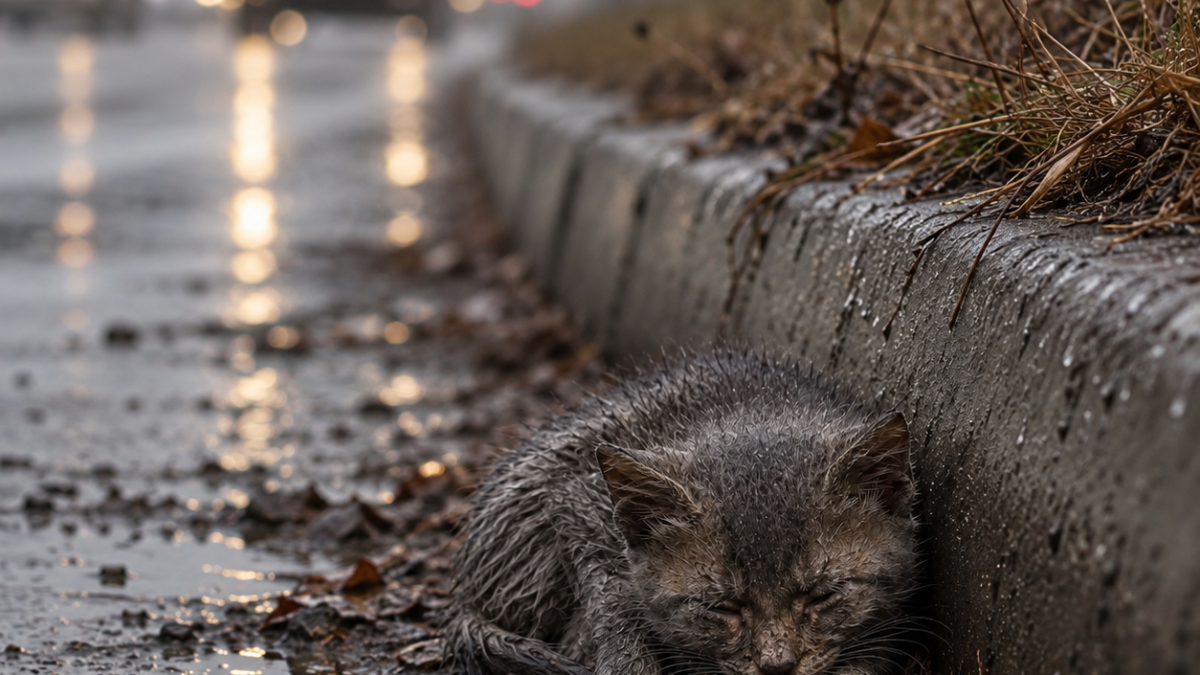
PART 2
For a few seconds, all I could hear was the soft electronic beeping from the monitoring equipment and the kitten’s faint, congested breathing.
I had spent the entire drive to the clinic imagining him as a stray.
Born outside.
Lost somewhere.
Maybe separated from his mother.
The collar mark changed that.
The microchip changed it more.
“So call them,” I said.
Dr. Hayes looked at me.
“We will.”
There was something in her tone I didn’t like.
“What?”
“Nothing yet.”
“Then why did you say it like that?”
“Because sometimes microchips solve the mystery immediately.”
“And sometimes?”
“They create another one.”
A technician named Erin entered with a tablet.
“I’ve got the registration.”
Dr. Hayes turned.
“Current?”
“Maybe.”
That word again.
Erin read from the screen.
“Male domestic shorthair. Gray tabby. Approximately nine weeks.”
“That’s him,” I said.
“Registered five days ago.”
I frowned.
“Five days?”
Erin nodded.
The room suddenly felt colder.
Dr. Hayes asked, “Owner?”
“Melissa Grant.”
“Address?”
Erin gave it.
I recognized the neighborhood.
Twenty minutes in the opposite direction from where I had found him.
“Phone?”
Erin tapped the screen.
“I’m calling.”
She stepped out.
The kitten moved beneath the blanket.
His good eye opened.
I put one finger near his nose.
He smelled it.
Then his head sank back down.
“What are his chances?” I asked.
Dr. Hayes didn’t answer immediately.
“His temperature is coming up.”
“That’s good.”
“Yes.”
“Dehydration?”
“We’re treating it.”
“Will he make it?”
She looked directly at me.
“I think he has a reasonable chance.”
Reasonable.
Not good.
Not excellent.
But better than what I had feared beside the road.
“I’ll pay.”
Dr. Hayes raised an eyebrow.
“We haven’t even discussed cost.”
“I know.”
“You may not be responsible.”
“I found him.”
“That doesn’t make you financially responsible.”
“It makes me responsible enough.”
She studied me for half a second.
Then nodded.
“All right.”
Erin returned.
“No answer.”
“Leave a message.”
“Already did.”
I looked toward the door.
“What happens if she doesn’t call?”
“We continue emergency stabilization,” Dr. Hayes said. “Then tomorrow we contact animal control.”
“And if she does?”
“If she proves ownership, we talk to her.”
I looked at the tiny body on the table.
“What kind of person chips a kitten and then lets him end up beside a highway five days later?”
Dr. Hayes didn’t take the bait.
“We don’t know that she did.”
“He didn’t walk twenty miles.”
“No.”
“He wasn’t born there.”
“No.”
“Then somebody put him there.”
“Maybe.”
I hated her caution.
Later I understood it.
At the time, I wanted someone to blame almost as badly as I wanted the kitten to live.
Dr. Hayes let me stay while they treated him.
His temperature slowly climbed.
They cleaned the eye.
Started antibiotics.
Gave fluids.
Tested him for feline leukemia and FIV.
Both negative.
His lungs sounded congested but not severely compromised.
The biggest concern was his weakness.
“When did he last eat?” I asked.
“No way to know.”
They offered a tiny amount of food once his temperature improved.
He smelled it.
Turned away.
That worried everyone.
Dr. Hayes mixed a different recovery food.
Nothing.
Erin warmed it slightly.
Still nothing.
“Is that bad?” I asked.
“It isn’t what I want,” Dr. Hayes said.
The kitten tried to curl into himself.
I watched him for another minute.
Then I said, “Can I try?”
Dr. Hayes looked surprised.
“Try what?”
“Feeding him.”
“He may not respond differently to you.”
“I know.”
She handed me the dish.
“Small amount.”
I sat beside the kennel.
“Hey.”
The kitten’s ear twitched.
“You made me leave my van on the side of the highway.”
Nothing.
“I’m probably going to get a ticket.”
One eye opened.
“That’s right. You owe me.”
I put a tiny bit of food on my finger and held it close.
His nose moved.
He licked once.
Then stopped.
“Good.”
Another lick.
I didn’t move.
A third.
After a minute, he took several bites from the dish.
Erin smiled from across the room.
“Well.”
“What?”
“He likes you.”
“He likes food.”
“Same result.”
The kitten ate maybe a tablespoon.
Then fell asleep.
It felt like a victory.
At almost midnight, I finally went home.
I gave the clinic my number.
Twice.
“Call me if anything changes.”
“We will.”
“Even if it’s late.”
“We’re an emergency clinic, Victor. Late is normal.”
“Right.”
I walked out to my van.
The passenger seat was still damp from the kitten.
Mud stained the old shop towel.
I sat behind the wheel without starting the engine.
My house was twenty minutes away.
No wife waiting.
No kids.
My daughter lived three states over with her husband and two children. My divorce had been final almost twelve years.
Home was quiet.
I usually liked it that way.
That night, I hated it.
I started the van and drove back toward Route 16.
Not intentionally at first.
My normal route simply passed the place where I had found him.
I slowed.
The shoulder looked empty.
Wet grass.
Concrete curb.
Headlights streaking past.
That was all.
I pulled over again.
For a minute I just sat there.
Then I got out with my flashlight.
I wanted to know if there was anything else.
A box.
A blanket.
Another kitten.
Something.
Traffic made searching unpleasant.
I walked the ditch carefully.
Thirty feet from where I had found him, something white was caught beneath wet weeds.
A towel.
Cheap.
Thin.
Dirty.
I picked it up.
There was cat hair on it.
Gray.
My chest tightened.
Then I saw the cardboard.
A broken carrier box lay farther down the ditch.
Not a pet carrier.
One of those cardboard transport boxes veterinarians and shelters sometimes use.
The top had torn open.
I shined my flashlight inside.
Dry food.
Only a few pieces.
And a printed sticker.
Most of it had smeared from the rain.
One line was readable.
GREENFIELD ANIMAL CLINIC.
I stared at it.
The emergency clinic I had just left.
I called immediately.
Erin answered.
“I found something.”
“What?”
“A cardboard animal box near the highway. It has your clinic’s name on it.”
Silence.
“Victor, don’t throw it away.”
“I wasn’t planning to.”
“Can you see a patient label?”
“Part of one.”
“Name?”
“Too wet.”
“Bring it tomorrow.”
I looked down the road.
“Did the kitten come from your clinic?”
“I don’t know.”
“But the chip was registered five days ago.”
Another pause.
“I know.”
Something was wrong.
I could hear it in her voice.
“You recognize him, don’t you?”
“Victor…”
“You do.”
“I’m not allowed to discuss another client’s records.”
That was answer enough.
I drove home with the cardboard box in the back of my van.
I barely slept.
At six-thirty the next morning, the clinic called.
I answered before the second ring.
“Victor?”
Dr. Hayes.
“How is he?”
“Better.”
I sat upright.
“How much better?”
“Temperature normal. He ate again overnight. Still weak, but I’m encouraged.”
I closed my eyes.
“Good.”
“There’s more.”
“What?”
“The registered owner called.”
My eyes opened.
“And?”
“She says the kitten was stolen.”
I sat very still.
“What?”
“Her name is Melissa Grant.”
“I know.”
“She says someone took the kitten from her home yesterday afternoon.”
“That doesn’t make sense.”
“I know.”
“I found him before six.”
“She claims he disappeared around four.”
“So someone stole him, drove twenty miles, left him beside a highway, and somehow used a box from your clinic?”
Dr. Hayes was quiet.
“You found the box?”
“Yes.”
“Bring it.”
“I’m coming now.”
Melissa Grant was already at the clinic when I arrived.
I recognized her because she was standing at the front desk crying.
She looked maybe thirty.
Blond hair tied back.
Sweatshirt.
No coat even though the morning was cold.
“That’s him?” she asked the moment she saw me.
I stopped.
“You’re Victor?”
“Yes.”
She came toward me.
“Thank you.”
Before I could react, she hugged me.
I stood stiffly.
“I thought he was dead.”
She stepped back, wiping her face.
“What happened?”
“That’s what I was hoping you could tell me.”
Her expression changed.
Only slightly.
But I saw it.
I placed the wet cardboard carrier on the counter.
“This was near where I found him.”
Melissa stared at it.
The color left her face.
“That isn’t mine.”
“You recognize it?”
“No.”
Too fast.
Dr. Hayes came through the door.
“Melissa.”
The woman turned.
“Can I see him?”
“Soon.”
“He’s mine.”
“I know what the chip says.”
Melissa’s voice sharpened.
“Then why can’t I take him?”
“Because he’s still receiving care.”
“I’ll pay.”
“That isn’t the only issue.”
Melissa looked at me.
Then at the cardboard carrier.
“What issue?”
Dr. Hayes remained calm.
“You told us he was stolen from your home.”
“He was.”
“Did you file a police report?”
“I was going to.”
“When?”
“This morning.”
“Did you contact us yesterday?”
Melissa’s mouth tightened.
“No.”
“Did you contact the shelter?”
“No.”
“Post him missing?”
“I was looking myself.”
I watched her.
Something felt wrong.
Maybe I was prejudging her.
Maybe she was overwhelmed.
Maybe fear made people act strangely.
Still.
The kitten had been half-dead beside a highway.
Someone had answers.
Melissa asked again, “Can I see him?”
Dr. Hayes allowed it.
We followed her into the treatment area.
The kitten was awake.
His swollen eye looked slightly better.
The moment Melissa approached, he flattened himself.
His ears went back.
I noticed.
So did Dr. Hayes.
Melissa didn’t.
“Smokey!”
So that was his name.
She reached toward the kennel.
The kitten hissed.
It was the first hiss I had heard from him.
Melissa froze.
“He’s scared.”
Dr. Hayes said nothing.
“It’s okay, baby.”
Melissa opened the kennel door.
The kitten moved backward until his body touched the wall.
“Don’t corner him,” Dr. Hayes said.
“I’m his owner.”
“He’s frightened.”
Melissa withdrew her hand.
Then the kitten saw me.
I had been standing several feet behind her.
His ears shifted forward.
He made a tiny rasping meow.
Melissa turned.
I wished he hadn’t done that.
Not because I didn’t want him to respond to me.
Because I saw what it did to her face.
She looked embarrassed.
Then angry.
“That doesn’t mean anything.”
“No one said it did,” I replied.
Melissa faced Dr. Hayes.
“I want to take my cat home.”
Dr. Hayes folded her arms.
“Animal control has been notified.”
Melissa stared at her.
“Why?”
“Because an owned kitten was found severely ill beside a highway under circumstances that aren’t clear.”
“I told you. He was stolen.”
“Then animal control will document that.”
Melissa grabbed her phone.
“This is insane.”
Maybe it was.
But she left without the kitten.
Forty minutes later, an animal-control officer named Karen Willis arrived.
She photographed the cardboard carrier.
Took my statement.
Photographed the location where I found him using the pictures I had taken that morning.
Then she asked Dr. Hayes for records.
I stayed out of that conversation.
Eventually Karen came into the waiting room.
“You said you found him around 5:40?”
“Approximately.”
“Anyone stopped nearby?”
“Not while I was there.”
“Dashcam?”
“My van doesn’t have one.”
“Businesses near the road?”
“Gas station about half a mile east. Furniture warehouse west.”
She wrote both down.
Then looked at the cardboard carrier.
“You say it has this clinic’s name?”
“Yes.”
Karen examined the sticker.
“You know what this probably means?”
“He was here before.”
“Probably.”
I looked toward the treatment room.
“Can you tell me?”
“No.”
I laughed without humor.
“Everybody knows something except me.”
Karen closed her notebook.
“Sometimes that’s how an investigation starts.”
I went to work late.
Couldn’t concentrate.
At lunch, I called the clinic.
“Smokey?”
“Doing better,” Erin said.
I hated the name.
Not because it was bad.
Because it belonged to the story before me.
“What’s he doing?”
“Sleeping.”
“Eating?”
“Yes.”
“Eye?”
“Improving.”
“Melissa?”
“Victor.”
“Right. Privacy.”
“Yes.”
After work, I visited.
I had no legal reason to.
No ownership.
No official status.
Dr. Hayes still let me sit beside him.
“You know this is how people accidentally get cats,” she said.
“I’m not getting a cat.”
“Of course not.”
“I work ten-hour shifts.”
“Mm-hmm.”
“I’m away from home.”
“Tragic.”
“I’ve never owned a cat.”
“That is a solvable condition.”
I glared at her.
She smiled.
Smokey ate while I sat nearby.
Then he climbed awkwardly into my lap.
I froze.
“Is this normal?”
Dr. Hayes laughed.
“It’s a kitten.”
“So?”
“Pet him.”
“Where?”
She stared at me.
“You seriously don’t know?”
“I had dogs growing up.”
“Head. Cheeks. Back. Avoid squeezing the injured leg.”
I touched the top of his head.
He purred.
Very quietly.
My chest did something uncomfortable.
“Don’t.”
Dr. Hayes smiled.
“Don’t what?”
“Whatever face you’re making.”
“I’m not making a face.”
“You are.”
Smokey tucked his head beneath my hand.
I stayed for an hour.
The next morning, Karen called.
“We got video.”
I stood in the maintenance shop holding my phone.
“From where?”
“The gas station.”
My heart sped up.
“And?”
“A vehicle pulled onto the shoulder near where you found the kitten.”
“What vehicle?”
“Silver crossover.”
“Plate?”
“Partial.”
“Who?”
“We’re working on it.”
“How long did it stop?”
“Forty-seven seconds.”
I swallowed.
“Did someone get out?”
“Yes.”
I gripped the phone.
“With a box?”
“Yes.”
There it was.
No missing kitten escaping a house.
No random thief.
Someone had driven him there.
Set him down.
And left.
“Can you see the person?”
“Not clearly enough from the gas station camera.”
“What about the plate?”
“We have enough to narrow.”
I thought of Melissa crying at the clinic.
“Hers?”
“I’m not answering that yet.”
That meant something too.
Two hours later, Karen called again.
“Can you come to the animal-control office after work?”
“Did you find them?”
“I want to show you something.”
I arrived at five-thirty.
Karen turned a monitor toward me.
The footage was grainy.
Distant.
Rain streaked the image.
Still, I saw the crossover stop.
Driver’s door opened.
A person got out.
Small figure.
Hood up.
Carried a cardboard box.
Set it near the ditch.
Opened the top.
Then returned to the vehicle.
The kitten did not immediately come out.
The person walked back.
Tipped the box.
Smokey fell onto the wet grass.
My hands clenched.
The person picked up the empty box and threw it farther into the ditch.
Then drove away.
I stared at the screen.
“Play it again.”
Karen did.
The second viewing was worse.
Because now I knew what was coming.
The kitten landed awkwardly.
Tried to stand.
Collapsed.
“Who is that?”
Karen paused the image.
“We identified the vehicle.”
She slid a printed registration across the desk.
The owner was not Melissa Grant.
It belonged to a man named Jason Grant.
Same address.
“Her husband?”
“Brother.”
I looked up.
“Melissa’s brother?”
“Yes.”
“Did he steal Smokey?”
Karen’s expression told me to wait.
“He says no.”
“What does he say?”
“He says Melissa asked him to get rid of the kitten.”
The room went silent.
I thought about her crying.
Her hug.
Her claim that Smokey had been stolen.
“No.”
“Victor—”
“She came to the clinic acting like she’d been searching for him.”
“I know.”
“She lied.”
“Yes.”
“Why?”
“That’s what we’re sorting out.”
“Has she admitted it?”
“No.”
Of course not.
Jason had.
At least partly.
According to Karen, Melissa had adopted the kitten from a small rescue less than a week earlier.
She had wanted a kitten for her six-year-old daughter.
Then Smokey developed respiratory symptoms.
He stopped eating normally.
His eye became infected.
Melissa brought him to Greenfield Animal Clinic.
Not the emergency side.
The daytime practice in the same building.
That explained the cardboard carrier.
Dr. Hayes had not personally treated him, but another veterinarian had.
He prescribed medication.
Recommended follow-up in forty-eight hours if Smokey wasn’t eating.
The estimated cost was modest.
That wasn’t the problem.
The problem was Melissa’s landlord.
Pets were prohibited.
Her landlord had discovered the kitten.
Threatened a lease violation.
Melissa panicked.
Jason told investigators she called him the next afternoon and said:
“Take him somewhere.”
Jason asked where.
She allegedly replied:
“I don’t care. I can’t have him here when the landlord comes back.”
Jason put Smokey in the clinic’s cardboard carrier.
Drove around.
Then chose Route 16.
Karen looked disgusted even while recounting it.
“He says he expected somebody to find him.”
“Beside a highway?”
“That’s what he says.”
“In the rain?”
“Yes.”
“Then why dump him out of the box?”
Karen didn’t answer.
Because there wasn’t a good answer.
“What about Melissa?”
“She says Jason misunderstood.”
I laughed bitterly.
“Convenient.”
“She admits asking him to remove the kitten temporarily.”
“Temporarily?”
“That’s her statement.”
“Then why claim he was stolen?”
“She says she panicked when the clinic began asking questions.”
I pushed away from the desk.
The anger came fast.
Too fast.
For two days, I had imagined some mysterious person hurting that kitten.
Now the truth was painfully ordinary.
Housing problem.
Sick animal.
Inconvenience.
One bad decision handed to another person.
Then another.
Until a tiny kitten ended up beside traffic.
“What happens?”
“Charges are being reviewed.”
“Animal cruelty?”
“Abandonment. Neglect. Possibly additional violations depending on veterinary findings.”
“Can Melissa get him back?”
Karen looked at me.
“No.”
I exhaled.
That mattered more than I expected.
“Who does?”
“Legally, the rescue may still have rights under its adoption contract.”
“Rescue?”
“The group she adopted him from.”
I had forgotten about them.
Karen continued.
“They’ve been contacted.”
“Do they want him?”
“They want him safe.”
“That isn’t what I asked.”
“I know.”
I left with more questions.
At the clinic, Smokey looked stronger.
He stood when I entered.
Actually stood.
No trembling.
He walked toward the kennel door.
His bad eye opened halfway now.
“There you are,” I said.
He meowed.
Dr. Hayes came beside me.
“You heard?”
“Yes.”
“How much?”
“Enough.”
She nodded.
I watched Smokey.
“I was ready to hate whoever did it.”
“And now?”
“Still pretty close.”
“Fair.”
“I don’t understand.”
“You don’t have to.”
“I do.”
Dr. Hayes looked at me.
“Why?”
“Because people don’t just wake up and decide to leave kittens beside highways.”
“Sometimes they do.”
“That’s worse.”
“Yes.”
Smokey climbed into my lap.
I stroked his back.
“Melissa had a six-year-old daughter.”
“I know.”
“How’s the kid?”
Dr. Hayes looked surprised.
“I don’t know.”
Neither did Karen.
That part bothered me.
A few days later, I found out.
A woman from the rescue called me.
Her name was Denise Parker.
She ran a foster-based group called Second Chance Cats.
“Victor?”
“Yes.”
“I understand you’re the man who found Ollie.”
I frowned.
“Who?”
“The kitten.”
“He’s Smokey.”
“He was Ollie before Melissa adopted him.”
I looked at the kitten sleeping on my couch—temporarily, because the clinic had discharged him to a rescue foster arrangement that somehow involved my house.
“Ollie?”
“Yes.”
“How many names does one cat need?”
Denise laughed.
“Depends how dramatic his life is.”
Apparently, very.
She explained that Ollie had been born in a foster home.
His mother was a stray taken in while pregnant.
He and four siblings had all survived.
He had been healthy when Melissa adopted him.
The respiratory infection likely developed afterward.
“Did Melissa tell you about the landlord?”
“No.”
“Did you ask whether she could have pets?”
“Yes.”
“What did she say?”
“That they were allowed.”
I closed my eyes.
Another lie.
“Why didn’t she just return him?”
“Our contract requires exactly that.”
“She knew?”
“She signed it.”
“Would you have taken him?”
“Immediately.”
That was the part that made me angriest.
There had been a door.
An easy one.
Call the rescue.
Say I made a mistake.
Take him back.
Embarrassing?
Probably.
Inconvenient?
Sure.
But alive.
Safe.
Warm.
Instead, people had chosen the highway.
Denise asked, “How attached are you?”
I looked down.
Ollie-Smoke-whatever-his-name-was had fallen asleep with his chin on my wrist.
“Not.”
She laughed.
“I’ve been doing rescue seventeen years.”
“So?”
“I know that tone.”
“What tone?”
“The man who’s already bought a litter box but still says he’s fostering.”
I looked toward the laundry room.
There was indeed a litter box.
“That proves nothing.”
“Food bowls?”
“Clinic gave me one.”
“Toys?”
“One.”
“Victor.”
“Three.”
“Cat tree?”
“No.”
“Good.”
I didn’t mention the one in my online shopping cart.
Denise became quiet.
“There is one complication.”
I felt my stomach tighten.
“What?”
“Melissa’s daughter.”
“What about her?”
“She wants to see him.”
I sat up.
“No.”
“I understand.”
“He was abandoned because of her mother.”
“I know.”
“Why would I put him back around—”
“I’m not asking you to return him.”
“Then what?”
Denise sighed.
“The little girl thinks Ollie ran away.”
I stopped.
“How do you know?”
“Melissa called me.”
“Melissa?”
“She’s asking if we can arrange one supervised goodbye.”
I stood.
“No.”
Ollie woke and looked offended.
I lowered my voice.
“Absolutely not.”
“You have every right to say no.”
“Then why are you asking?”
“Because the child didn’t abandon him.”
I said nothing.
“She’s six, Victor.”
“I know.”
“She picked him from the litter.”
I rubbed my forehead.
“That doesn’t mean seeing him is good for the kitten.”
“No. And that comes first.”
“Exactly.”
“But if he’s comfortable and you’re willing, it might be good for her.”
“I’m not responsible for making Melissa’s kid feel better.”
“No.”
Denise paused.
“But you asked how she was.”
I hated her for remembering that.
For two days, I said no.
Then I thought about the little girl.
Not Melissa.
Not Jason.
A six-year-old who had gone to school with a kitten in the house and come home without one.
What had they told her?
Did she call his name?
Check under the bed?
Blame herself?
I called Denise.
“One visit.”
“Okay.”
“Supervised.”
“Absolutely.”
“Melissa doesn’t touch him unless he approaches.”
“I agree.”
“If he gets scared, it ends.”
“Yes.”
“And the little girl knows he isn’t coming home.”
Denise went quiet.
“I’ll make sure.”
The visit happened at the rescue’s adoption room.
Neutral territory.
I brought Ollie in his carrier.
By then I had started calling him Ollie.
Smokey felt like a name built on a lie.
Ollie had been his first name.
It felt right.
Melissa arrived with her daughter, Sophie.
The moment I saw the child, my anger became more complicated.
She was tiny.
Pink jacket.
Two braids.
Holding a stuffed cat.
Melissa looked terrible.
Not physically.
Guilty.
There is a difference.
She started toward me.
“I—”
I held up my hand.
“Not here.”
Her mouth closed.
Sophie saw the carrier.
“Ollie?”
The kitten’s ears moved.
She knelt.
“Ollie!”
His head appeared.
Sophie began crying immediately.
Not screaming.
Just tears pouring down her face.
“I thought you died.”
That sentence hit me harder than anything Melissa could have said.
I put the carrier on the floor and opened it.
Ollie stepped out slowly.
Looked around.
Then saw Sophie.
He walked to her.
She didn’t grab him.
Good girl.
She held out one hand.
Ollie smelled her fingers.
Then rubbed his cheek against them.
Sophie sobbed.
“I’m sorry.”
Melissa covered her mouth.
I looked away.
The child stroked Ollie’s head.
“He slept on my pillow.”
No one answered.
“He liked my blanket.”
Ollie climbed partly into her lap.
Sophie looked up at her mother.
“Can he come home now?”
Melissa broke.
She turned away.
Denise knelt beside Sophie.
“No, sweetheart.”
“Why?”
“Because Ollie needs a home where he’s allowed to stay forever.”
Sophie looked confused.
“He can stay with me.”
Melissa cried harder.
I felt no satisfaction.
None.
This was not justice.
This was fallout.
Adults make choices.
Children stand in the debris.
Sophie looked at me.
“Is he your cat?”
I swallowed.
“Not officially.”
“Do you like him?”
I glanced at Ollie.
He had begun chewing one of my jacket strings.
“Sometimes.”
Sophie almost smiled.
“He does that.”
“I noticed.”
She hugged the stuffed cat.
“Will you keep him?”
The room became very quiet.
I had not made that decision.
At least I had been pretending I hadn’t.
I looked at Denise.
She raised both eyebrows.
Traitor.
I looked at Sophie again.
“If the rescue thinks I’m good enough.”
Sophie nodded seriously.
“You are.”
“How do you know?”
“Ollie likes you.”
That was apparently enough evidence for everyone except me.
Melissa finally spoke.
“Victor.”
I looked at her.
“I know you don’t want to hear this.”
“You’re right.”
“I’m sorry.”
I said nothing.
“I didn’t tell Jason to leave him by the highway.”
“But you told him to get rid of the kitten.”
Her eyes dropped.
“Yes.”
“You lied to the rescue about your lease.”
“Yes.”
“You lied to the clinic about him being stolen.”
“Yes.”
“Why?”
Her voice shook.
“I was scared.”
I almost laughed.
Then I stopped myself.
Fear is not an excuse.
But it is an explanation.
“My landlord told me we’d get evicted,” she said. “I had nowhere else. Sophie’s father doesn’t help. My savings were gone. I panicked.”
“You could have called Denise.”
“I know.”
“You could have called the clinic.”
“I know.”
“You could have taken him to a shelter.”
“I know.”
Her face crumpled.
“I know all of that now.”
“No.”
My voice sharpened.
“You knew then.”
She looked at me.
“That’s the part you have to live with.”
Silence.
Melissa nodded.
“Yes.”
I didn’t forgive her.
Not that day.
Maybe forgiveness wasn’t mine to give.
But I believed her regret.
Those are not the same thing.
The legal case moved slowly.
Jason pleaded guilty to animal abandonment.
He received probation, a fine, community service, and a restriction on animal ownership for a period of time.
Melissa faced charges related to neglect and making false statements during the investigation, though the exact outcome was less dramatic. She accepted responsibility through a plea arrangement, paid fines, completed an animal-care course, and surrendered any claim to Ollie permanently.
Second Chance Cats placed her on its do-not-adopt list.
So did several partner rescues.
Some people online wanted harsher consequences.
I understood.
I had found Ollie near moving traffic.
I had watched the video.
I knew exactly how close he came to dying.
But no court could undo that night.
The only part I controlled was what came afterward.
Three weeks after I found him, Denise came to my house for the official adoption inspection.
She walked through the living room.
Kitchen.
Laundry room.
Checked windows.
Asked about plants.
Asked about cords.
Then stopped.
A six-foot cat tree stood beside the front window.
She looked at me.
I folded my arms.
“It was on sale.”
“Of course.”
“Ollie likes height.”
“You’re fostering.”
“Currently.”
She smiled.
Ollie was asleep on the top platform.
“Terrible foster setup.”
“I’m learning.”
“Victor.”
“What?”
“You’re adopting him.”
“I know.”
The words surprised me.
Not because I had made the decision.
Because saying it aloud felt so easy.
“I’m adopting him.”
Denise opened her folder.
“Good.”
That was it.
No dramatic music.
No ceremony.
I signed papers.
Paid the adoption fee.
Updated his microchip.
Owner: Victor Hale.
I stared at the screen.
“Owner.”
Denise looked at me.
“You okay?”
“Yeah.”
“Looks painful.”
“Shut up.”
She laughed.
Ollie received his final kitten vaccines a few weeks later.
His eye healed completely.
No permanent damage.
His respiratory infection disappeared.
The trembling paw became strong.
He gained weight.
Then more weight.
Then enough weight that Dr. Hayes looked at me during one checkup and said:
“Careful.”
“He’s growing.”
“He’s getting chunky.”
“He almost starved.”
“That was six months ago.”
“He deserves food.”
“He deserves appropriate food.”
Ollie stared at both of us from the table.
I scratched his head.
“She’s mean.”
Dr. Hayes sighed.
“This is how cats get fat.”
“He’s not fat.”
Ollie sat down.
His belly spread slightly.
I looked away.
“Maybe a little.”
Life reorganized around him faster than I expected.
I learned litter brands.
Cat-food labels.
Why lilies were dangerous.
Why string toys should not be left unattended.
Why cats apparently needed to inspect every closed cabinet.
I bought a water fountain because he preferred moving water.
Then a second water fountain because the first made a humming noise he disliked.
I complained constantly.
Everyone ignored me.
My daughter came to visit with her children.
“Dad,” she said, staring at Ollie asleep across my chest, “you said you hated cats.”
“I never said hate.”
“You said they were sneaky.”
“They are.”
“You said dogs make more sense.”
“They do.”
Ollie stretched one paw across my face.
My grandson laughed.
“You love him.”
“No.”
Ollie purred.
My daughter took a picture.
“Evidence.”
I made her delete it.
She sent it to herself first.
Sophie’s story did not disappear either.
I thought about her often.
Months after the adoption, Denise contacted me.
“She sent something.”
“What?”
“A letter.”
“She’s six.”
“Her teacher helped.”
The envelope contained a drawing.
A gray kitten with enormous green eyes—wrong eye color, but I wasn’t going to criticize the artist.
Beside him stood a stick figure with gray hair.
Apparently me.
Above us were the words:
**Thank you for stopping your car. Please tell Ollie I love him.**
I sat at my kitchen table for a long time.
Then I put the drawing on the refrigerator.
I sent a photograph of Ollie back through Denise.
Nothing public.
Nothing that required contact with Melissa.
Just Ollie asleep on the cat tree.
Sophie sent another drawing at Christmas.
Then one on his first birthday.
That became our arrangement.
Once or twice a year, a picture traveled through Denise.
No promises.
No confusion over ownership.
Just proof that he was okay.
Melissa never contacted me directly again.
Years later, Denise told me she had moved into pet-friendly housing.
She did not adopt another animal.
At least not for a long time.
I respected that.
Sometimes not getting another pet is the most responsible decision a person can make.
Jason disappeared from our lives entirely.
I saw his name once in an old court record online and closed the page.
He had become irrelevant.
Ollie had not.
At two years old, he developed a fascination with my work boots.
Every evening, he slept on them.
Not beside them.
On them.
At three, he learned how to open the hall closet.
At four, he figured out that if he knocked my keys off the counter, I would chase them.
At five, he began waiting at the front window around the time my van usually pulled into the driveway.
My neighbor Mrs. Collins noticed.
“That cat knows your schedule better than you do.”
“He knows dinner schedule.”
“No.”
She pointed through the glass.
“He’s there fifteen minutes before you get home.”
I pretended not to care.
I cared.
The white van grew older.
So did I.
Ollie stayed absurdly energetic.
He chased insects.
Attacked shadows.
Ran through the hallway at three in the morning for reasons known only to him.
Then, around age seven, he slowed slightly.
Not enough to worry me.
Enough that I noticed.
I also noticed a small lump near his shoulder.
My stomach dropped.
Dr. Hayes sampled it.
Benign cyst.
I bought him expensive salmon afterward.
Dr. Hayes found out.
“You reward him for having a cyst?”
“He had a difficult morning.”
“He slept through most of it.”
“Emotionally difficult.”
She stared at me.
“You have become exactly the kind of cat owner you used to mock.”
“I never mocked cat owners.”
“Victor.”
“Not seriously.”
At eight, Ollie met Sophie again.
That happened unexpectedly.
Second Chance Cats held a fundraiser at a community center.
Denise convinced me to bring Ollie for an hour because his rescue story had helped them raise donations over the years.
I almost refused.
Then she promised no media.
No strangers handling him.
Quiet room available.
Fine.
Ollie wore a harness.
He hated it.
“I know.”
He glared.
“We’re doing charity.”
More glaring.
Halfway through the event, I saw a teenage girl across the room staring at him.
She looked familiar.
Not visually.
Something in her expression.
Then Denise walked over beside her.
“Victor.”
I knew.
“Sophie?”
The girl smiled nervously.
“Hi.”
She was fourteen.
Tall.
Dark hair.
No pink jacket.
No stuffed cat.
But when she said Ollie’s name, his ears moved exactly as they had years earlier.
“Ollie?”
He looked toward her.
Sophie held out her hand.
He smelled it.
Then rubbed his cheek against her fingers.
Her eyes filled.
“He remembers me.”
I didn’t know whether that was biologically true.
Maybe he remembered her scent.
Maybe her voice.
Maybe he was simply friendly.
I didn’t correct her.
“Maybe.”
She stroked his back.
“He got huge.”
“He heard that.”
She laughed.
For several minutes, she sat with him.
Then she looked at me.
“My mom told me the truth.”
I nodded.
“When?”
“Couple years ago.”
“How do you feel?”
Sophie shrugged in that way teenagers do when a question is too large.
“Angry.”
Fair.
“She says she’s sorry.”
“I believe she probably is.”
“That doesn’t fix it.”
“No.”
Sophie looked at Ollie.
“But you stopped.”
I frowned.
“What?”
“Everybody else drove past.”
I thought of Route 16.
Cars.
Rain.
Wet leaves.
The tiny gray shape nobody noticed.
“I almost did too.”
“But you didn’t.”
Ollie climbed onto my lap.
Sophie smiled.
“He really loves you.”
“I feed him.”
“He always liked people.”
“Not everyone.”
She became quiet.
Then she asked, “Do you ever think about what would’ve happened if you didn’t see him?”
“Yes.”
The answer came too quickly.
She noticed.
“So do I.”
I didn’t know what to say.
Eventually, I told her the truth.
“I try not to.”
She nodded.
“Me too.”
Before she left, Sophie asked if she could take a picture with Ollie.
I said yes.
I took it.
She knelt beside him.
Ollie looked directly at the camera.
Sophie smiled.
Afterward she hugged me.
That surprised me more than anything.
“Thank you.”
I put one hand awkwardly on her shoulder.
“You already thanked me.”
“I was six.”
“Still counts.”
She laughed.
Years continued.
The kitten beside the highway became an old cat.
The change happened so slowly that I noticed it only in photographs.
Gray around his muzzle, which was ridiculous because he was already gray.
Less muscle along his back.
More sleep.
Fewer midnight sprints.
He still waited at the window.
Always.
At twelve, kidney values began creeping upward.
Early chronic kidney disease.
Dr. Hayes explained diets.
Fluids.
Monitoring.
I listened carefully.
Ollie rejected the first prescription food.
And the second.
Accepted the third only if warmed.
“Of course,” I muttered.
He looked satisfied.
At thirteen, I learned to give subcutaneous fluids.
The first attempt ended with Ollie escaping and dragging the line through the kitchen while I shouted things I’m glad my grandchildren did not hear.
My daughter laughed when I told her.
“You’re losing fights to a senior cat.”
“He cheats.”
“How?”
“He has claws.”
“You knew that.”
“Different when they’re pointed at you.”
Eventually we developed a routine.
Fluids.
Treat.
Insult each other.
Nap.
At fourteen, his kidneys worsened.
Not suddenly.
Gradually.
Good months.
Bad weeks.
Medication.
Diet changes.
More tests.
Ollie became thinner.
I hated that most.
It reminded me too much of the first night.
Dr. Hayes noticed.
“You’re seeing the highway again.”
I looked at her.
She had been Ollie’s vet almost his entire life.
“What?”
“You look at him when he loses weight and you’re back at the highway.”
I said nothing.
“He isn’t that kitten anymore, Victor.”
“I know.”
“He’s fourteen.”
“I know.”
“He has had fourteen years.”
“I know.”
“You saved him once. You don’t have to defeat aging.”
That irritated me.
Because it was true.
“I can try.”
“Yes.”
She smiled sadly.
“And we will.”
We did.
Another year.
Ollie turned fifteen.
Sophie came to visit on his birthday.
She was in college by then.
Studying veterinary technology.
I accused Denise of influencing her.
Sophie denied it.
“I decided after Ollie.”
That shut me up.
She sat on my living-room floor with him.
He moved slowly toward her.
She scratched his cheeks.
“Hey, old man.”
Ollie purred.
She looked at me.
“He really made it.”
“Yes.”
“You ever think about that?”
“Every day.”
I wasn’t exaggerating.
Not every day consciously.
But every evening when I saw him safe inside instead of wet beside traffic, some part of me remembered.
The end came the following winter.
A cold January morning.
No rain.
No highway.
No emergency.
Just Ollie refusing breakfast.
Then dinner.
The next morning he vomited.
I called Dr. Hayes.
Bloodwork was bad.
Kidney failure had progressed.
We hospitalized him for fluids.
He improved slightly.
Came home.
For ten days, I convinced myself that slight improvement meant recovery.
It didn’t.
Ollie stopped going upstairs.
Then stopped jumping onto the couch.
I placed steps beside it.
Then he stopped using those too.
I lifted him.
Every time.
One evening, he sat at the front window.
Snow was falling.
My white van, newer now but still a van, sat in the driveway.
Ollie watched it.
I sat beside him.
“You know, this whole mess started because of that stupid vehicle.”
His ear moved.
“Not that one. The old one.”
I scratched his head.
“If I’d had a nicer car, maybe I wouldn’t have been driving so slow.”
Ollie leaned against me.
“That’s nonsense.”
He purred.
Weak.
But there.
I called Sophie.
“Can you come tomorrow?”
There was silence.
“Is it time?”
“I think so.”
She came that night instead.
My daughter came too.
Dr. Hayes agreed to come to the house the next morning.
Ollie spent his last night on my bed.
He had not done that in months.
I lifted him up.
He curled beside my chest.
Around three in the morning, I woke to his paw touching my hand.
I didn’t go back to sleep.
I just stayed there.
Remembering.
The curb.
The mud.
His trembling body under my jacket.
The first tablespoon of food.
The cardboard carrier.
Sophie at six years old crying into his fur.
The adoption papers.
Fifteen years of waiting at the window.
In the morning, Dr. Hayes arrived quietly.
Sophie sat on the floor.
My daughter stood behind me.
Ollie lay on his favorite blanket.
Dr. Hayes examined him.
Then looked at me.
“You sure?”
“No.”
She nodded.
That was the correct answer.
Nobody is sure in the way people want to be.
You become sure only that continuing has become more about your fear than their comfort.
I placed one hand beneath Ollie’s chin.
He opened his eyes.
The same eyes I had seen beside Route 16.
Older.
Cloudier.
Still him.
“You did okay,” I whispered.
His tail moved once.
Sophie started crying.
I scratched his cheek.
“You scared the hell out of me that first night.”
Dr. Hayes gave the sedative.
Ollie relaxed.
His breathing slowed.
“You were supposed to be trash.”
My voice broke.
“Just a gray bag beside the road.”
Sophie reached over and rested her hand on his back.
“But you moved.”
Ollie’s eyes closed.
“And I stopped.”
That was the entire story when you stripped everything else away.
He moved.
I stopped.
Fifteen years happened in between.
Dr. Hayes gave the final medication when I nodded.
Ollie died with his head resting in my palm.
The house became unbearable afterward.
Too quiet.
No litter scratching.
No water fountain humming.
No cat standing directly behind my feet trying to kill me while I cooked.
For weeks, I came home and looked automatically toward the window.
Nothing.
The first snow melted.
Spring arrived.
I eventually donated his unopened food.
Washed the bowls.
Put away the carrier.
The cat tree remained.
I couldn’t move it.
Sophie graduated two years later.
Veterinary technician.
She sent me a picture from her first day in scrubs.
On her badge reel was a tiny photograph.
Ollie.
Young.
Healthy.
Sitting in my front window.
I called her.
“You’re carrying that picture at work?”
“Yes.”
“Why?”
“Because he’s why I’m there.”
I sat down.
There are things a person is not prepared to hear.
That was one.
“You would’ve found something else.”
“Maybe.”
“But you don’t know.”
“No.”
She smiled through the phone.
“Neither do you.”
Fair.
A month later, Sophie visited.
We walked near Route 16.
The road had been widened.
New guardrail.
Better drainage.
The old muddy shoulder where I found Ollie barely existed.
Cars still flew past.
We stood safely behind the barrier.
“Here?” she asked.
“About here.”
She looked at the traffic.
“So close.”
“Yeah.”
“How did you even see him?”
I thought about it.
Headlights.
Wet road.
A gray shape.
Movement.
“I don’t know.”
That answer bothered me for years.
Eventually I accepted it.
I didn’t need fate.
Didn’t need some grand explanation.
I was there.
He moved.
I looked.
That was enough.
Sophie crouched and touched the grass.
“My mom still talks about him.”
I looked at her.
“How is she?”
“Better.”
I waited.
“She went to therapy for a while.”
“Good.”
“She still feels guilty.”
“She should feel something.”
Sophie nodded.
“But not forever?”
That was harder.
I watched traffic.
“I don’t know.”
“Have you forgiven her?”
I thought carefully.
“I don’t think about it that way anymore.”
“What way?”
“Like I’m holding something she needs me to release.”
Sophie listened.
“What she did was wrong. What your uncle did was wrong. Nothing changes that.”
“I know.”
“But Ollie’s life got bigger than the worst thing that happened to him.”
Sophie looked toward the road.
I surprised myself with that sentence.
Maybe I had been trying to understand it for fifteen years.
Ollie spent less than one hour beside that highway.
Maybe a few.
I never knew exactly.
Yet that terrible hour threatened to become the headline of his whole life.
It wasn’t.
His life was fifteen years.
Warm beds.
Food.
Vet visits.
Children.
Window watching.
Sophie.
Me.
That mattered more.
On the way back to my house, Sophie asked if I would ever adopt another cat.
“No.”
She laughed.
“You sound exactly like Denise said you used to.”
“I’m seventy now.”
“So?”
“I’m too old for kittens.”
“Senior cat?”
“No.”
“Adult?”
“No.”
“Bonded pair?”
“Sophie.”
“What?”
“No cats.”
Three months later, she called.
“I need a favor.”
“No.”
“I haven’t asked.”
“Still no.”
“We have a twelve-year-old tabby at the clinic.”
“No.”
“Owner died.”
“No.”
“He hates the shelter.”
“Sophie.”
“He likes men.”
“That sounds discriminatory.”
“He’s declawed.”
I paused.
Old cat.
No owner.
Scared.
She heard the hesitation.
“I can bring him Saturday.”
“I said no.”
“Saturday at ten?”
“No.”
She brought him at ten.
His name was Henry.
Large brown tabby.
Yellow eyes.
Looked at me like I owed him money.
“I’m not keeping him.”
Sophie placed the carrier on the floor.
“Foster.”
“How long?”
“A week.”
“I know this trick.”
Henry came out.
Smelled the room.
Walked directly to Ollie’s old cat tree.
Climbed to the second platform.
Curled up.
I stared at him.
“That’s rude.”
Sophie smiled.
“What?”
“He didn’t ask.”
“He’s a cat.”
Henry stayed.
Of course he did.
Not because he replaced Ollie.
Nothing could.
He was older.
Quieter.
Grumpier.
He didn’t wait at the window.
He preferred my recliner.
He hated my daughter.
Loved my grandson.
Life did not repeat.
That was the point.
One evening, while looking for old tax papers, I found the shop towel I had used to wrap Ollie the night I found him.
I had washed it years ago.
Then somehow stored it in a box.
Plain gray cloth.
Frayed edge.
I sat at the kitchen table holding it.
Henry jumped onto the chair beside me.
He smelled the towel.
Then lay down.
I laughed.
“You don’t know what that is.”
Henry closed his eyes.
I kept the towel.
Not as a shrine.
Not as proof.
Just one old thing from a night that almost disappeared into traffic noise.
Sometimes people told me I saved Ollie.
They were right in the simplest sense.
If I hadn’t stopped, he probably would have died.
But fifteen years with him made the sentence feel incomplete.
The kitten beside the highway entered my life at a time when I had reduced everything to routine.
Work.
Drive.
Eat.
Sleep.
Repeat.
I thought quiet meant contentment.
Then something tiny moved beside a curb and suddenly I was arguing with veterinarians, buying cat furniture, learning medication schedules, sitting awake during kidney treatments, receiving drawings from a child I never expected to know, and discovering that a house can be both more inconvenient and more alive at the same time.
Years after Ollie died, I still slowed slightly when I drove Route 16.
Not dangerously.
Just enough to look.
Wet nights especially.
Shoulder.
Ditch.
Guardrail.
People sometimes honked.
Let them.
One autumn evening, rain had just stopped.
Traffic was heavy.
Leaves blew across the road.
For half a second, something gray near the shoulder caught my eye.
My heart jumped.
I slowed.
It was a plastic bag.
Just trash.
I laughed at myself.
Then I drove home.
Henry was waiting in my recliner, which technically made it his recliner now.
I opened the door.
He looked up.
“You wouldn’t believe what I almost rescued.”
He yawned.
I hung my coat.
On the refrigerator, yellowed with age, Sophie’s childhood drawing still hung beneath a magnet.
A gray kitten.
A gray-haired man.
The words were written crookedly across the top:
**THANK YOU FOR STOPPING YOUR CAR.**
I looked at it for a moment.
Then Henry meowed from the living room because dinner was apparently late.
I smiled.
“I’m coming.”
And I walked toward the sound.
[END OF STORY]








