PART 2: I Refused to Join the HOA After Buying My House—Then Karen Threatened to Evict Me From the Home I Owned Outright
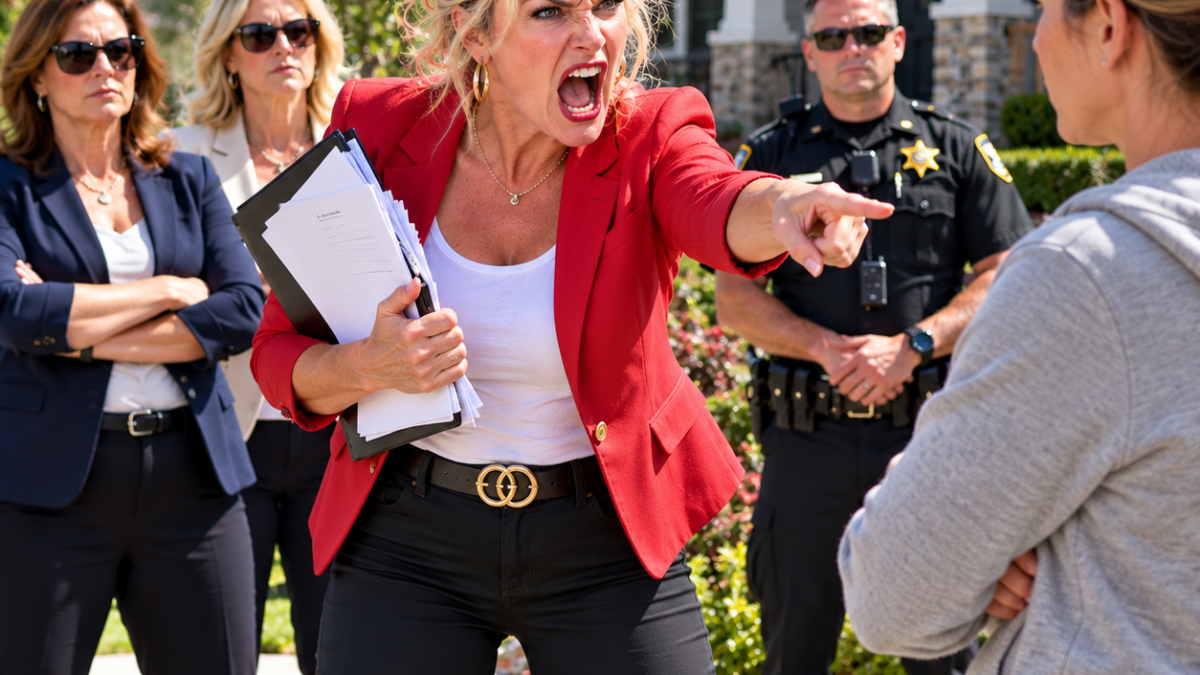
PART 2:
Craig Morris.
Maple Ridge HOA board member.
Cheryl’s favorite shadow.
I had seen him twice since moving in, always somewhere behind her, usually carrying a folder or nodding while she talked. He was a compact man in his forties with thinning hair, a round face, and a peculiar stiff-legged walk I had noticed the first afternoon when he came by pretending to inspect the curb.
Now I watched that same walk retreat down my street at 2:14 in the morning.
I replayed the footage once.
Then again.
The second time I stopped it exactly as he moved under the streetlight.
Craig’s face wasn’t perfect, but it was enough.
His jacket was distinctive too—dark blue with a reflective stripe over the left sleeve.
I saved the video in three places.
Then I sat on the edge of my bed staring at the broken mailbox through the bedroom window.
Until that moment, part of me had treated Cheryl like an aggressive nuisance.
Annoying.
Entitled.
Maybe a little unstable.
But vandalizing my property at two in the morning was something else.
That required planning.
It meant somebody had decided I shouldn’t merely be pressured.
I should be punished.
At eight that morning, I called the police.
Detective Luis Ramirez arrived a little after nine. He was in his early fifties, broad through the shoulders, gray showing around his temples, and calm in a way that made me think very little surprised him anymore.
He crouched beside the snapped post.
“Nothing else damaged?”
“No.”
“Anyone threaten you?”
“Depends how seriously you take an HOA vice president saying she’ll have me evicted from a house she doesn’t control.”
He looked up.
“That sounds like there’s a story.”
I showed him the notices first.
Then Cheryl’s letter.
Then the video.
He watched without speaking.
When Craig turned toward the camera, Ramirez froze the frame.
“You know this guy?”
“Craig Morris. HOA board.”
“You sure?”
“Very.”
He replayed it.
“Any reason he’d personally have a problem with you?”
“I’ve lived here less than two weeks.”
Ramirez leaned back in the chair.
“So the answer is probably the HOA.”
“That’s my guess.”
He wrote something in his notebook.
“I’m going to talk to him.”
“Do you think Cheryl sent him?”
“I think guessing before interviews is how cases get sloppy.”
Fair enough.
He closed the laptop.
“Keep your cameras running.”
“Planning to.”
“And don’t confront him.”
“I’m not stupid.”
Ramirez gave me a look.
“Everybody who says that eventually does something stupid.”
Craig was questioned that afternoon.
He denied everything.
Of course he did.
Ramirez called me afterward.
“He says he was home.”
“His face says otherwise.”
“We’re working on that.”
“Did Cheryl come up?”
“He says the HOA has nothing to do with your mailbox.”
“What did he say about the fines?”
“He says enforcement matters aren’t his responsibility.”
I laughed.
“Convenient.”
“Walter, let me handle the criminal part.”
“I am.”
“Good. Keep doing that.”
The next day, Cheryl parked her Lexus sideways across the end of my driveway.
I noticed because I was working from home and saw the car through my office window.
She stood on the sidewalk talking loudly on her phone.
So loudly that I could hear pieces through the glass.
“I don’t care what the police say.”
Pause.
“He is a threat to this community.”
Another pause.
“He’s filming residents without permission.”
I walked onto the porch.
Cheryl continued.
“If the lien doesn’t scare him, find another angle. Code enforcement. Zoning. Something.”
I leaned against the porch column.
She turned.
Saw me.
Her face didn’t change.
“Oh,” she said into the phone. “He’s outside now.”
I gave her a small wave.
“How’s Craig doing?”
Her mouth closed.
She ended the call.
“You think this is funny?”
“No.”
“You’re creating hostility.”
“You’re blocking my driveway.”
She looked at her Lexus, then back at me.
“Temporary parking.”
“Move it.”
“You can ask politely.”
“Move your car, Cheryl.”
Her eyes narrowed.
“Your cameras are illegal.”
“No, they aren’t.”
“You’re recording people without consent.”
“They cover my property and public-facing areas.”
“That’s surveillance.”
“That’s security.”
“You think a lawyer makes you an expert?”
“No. The lawyer makes the lawyer an expert.”
She took one step toward me.
“People are tired of you.”
“I’ve barely met anybody.”
“Exactly.”
I stared at her.
“Move the car.”
She finally did.
The following morning, I found a text from a neighbor two houses over.
**Did you see Cheryl’s Lexus?**
I looked outside.
Her car was parked in front of her house.
A long white scratch ran from the rear quarter panel to the front door.
By ten, a patrol vehicle stopped at my place.
Officer Kramer climbed out looking embarrassed.
“Mr. Zayn.”
“Officer.”
“I need to ask about a vandalism complaint.”
“Cheryl?”
He nodded.
“She says you keyed her Lexus.”
I almost admired the speed.
“Did she tell you I have cameras?”
“She mentioned them.”
“Come in.”
We pulled up the previous night.
10:00 p.m.
Midnight.
2:00 a.m.
4:00.
My driveway never moved.
My front door stayed closed.
My truck stayed where it was.
No one left my house.
Kramer watched several timestamps.
“This covers your entrances?”
“All of them except one side window, and unless you think I crawled out carrying a ladder, there’s no way I left without appearing somewhere.”
He sighed.
“I believe you.”
“What happens now?”
“I’ll document the evidence.”
“And the false accusation?”
“If we determine she knowingly filed a false report, that gets referred.”
He stood.
“Do yourself a favor.”
“What?”
“Don’t talk to her.”
“That’s becoming my favorite hobby.”
Two days later, I came home from work and saw red paint before I even pulled into the driveway.
One word had been spray-painted across my garage door.
**TRASH**
I stopped the truck halfway up the drive.
For several seconds I just sat there with my hands on the steering wheel.
Not scared.
Not even shocked anymore.
Just tired.
That was the part nobody tells you about harassment.
The big incidents make good stories.
The exhaustion doesn’t.
You wake up wondering what will be damaged.
You check cameras before coffee.
You examine your tires before driving.
You notice cars parked too long.
You stop leaving packages outside.
A home is supposed to be the place where vigilance ends.
Cheryl was trying to make sure mine never did.
I went inside and pulled the camera footage.
11:47 a.m.
A woman approached from the side sidewalk.
Baseball cap.
Sunglasses.
Oversized jacket.
She looked at the street.
Then sprayed the garage.
As she turned, the camera caught her profile.
Linda Spencer.
Another HOA board member.
The same woman I had watched measure a neighbor’s lawn with a ruler three days earlier.
I called Ramirez.
He watched the clip.
Then rubbed both hands over his face.
“These people are exhausting.”
“You should live here.”
“No.”
He replayed the footage.
“This is coordinated now.”
“You think?”
“Craig damages your mailbox. Linda paints the garage. Cheryl files complaints and threatens enforcement.”
“Exactly.”
“I’m taking this to the DA.”
Dean called that evening.
It was time to stop playing defense.
“We file.”
“For what?”
“Harassment. Property damage. Defamation where appropriate. Attempted fraudulent enforcement. Injunctive relief.”
“Can we stop them from contacting me?”
“We can ask the court to restrict unlawful enforcement attempts and harassment.”
“Do it.”
“There’s another part.”
“What?”
“Discovery.”
I smiled.
“You want their emails.”
“I want everything.”
The lawsuit was filed Monday.
By Wednesday, Maple Ridge’s attorney responded with the predictable language.
Misunderstanding.
Neighborhood standards.
Good-faith enforcement.
Routine governance.
Cheryl claimed the board had never authorized property damage.
Craig and Linda were described as individuals acting independently.
Nobody mentioned why three unrelated board members had simultaneously developed an obsession with one non-HOA house.
Then the emails leaked.
I still don’t know exactly who released them.
Dean never told me.
I never asked.
But I had my suspicions.
There was an older couple on the board, Nancy and Robert Lowell, who had always looked uncomfortable whenever Cheryl spoke at public meetings. Robert had once walked past my place while I was repairing the mailbox and quietly said, “Not all of us agree with this.”
That was all.
A week after our lawsuit, Dean called at 7:20 in the morning.
“Check your email.”
“What happened?”
“Internal Maple Ridge communications.”
I opened the attachment.
Dozens.
Then hundreds.
Board emails.
Private group messages.
Draft notices.
Strategy discussions.
One thread had the subject:
**ROGUE ELEMENT — ZAYN PROPERTY**
Cheryl had written:
**If Walter refuses voluntary membership, we need to create enough pressure that compliance becomes preferable.**
Craig replied:
**We can build the violation history whether he recognizes it or not.**
Linda wrote:
**Photos will help. Residents are already noticing his attitude.**
Another message from Cheryl:
**Strategic enforcement. Noise. Waste. Vehicles. Exterior appearance. Keep documenting.**
Then one that made me stop breathing for a second.
Craig:
**If we can get him cited for something criminal, people will beg us to intervene.**
Cheryl:
**Do not put that in writing again.**
I stared at the screen.
Dean was still on the phone.
“You see it?”
“Yes.”
“Keep going.”
I scrolled.
Another thread discussed “finding unauthorized materials.”
Linda asked what that meant.
Cheryl wrote:
**Something code enforcement or police cannot ignore. He needs to understand isolation has consequences.**
My hand tightened around the mouse.
“They were talking about planting something.”
“That’s how I read it.”
“Could be drugs.”
“Could be hazardous materials. Could be anything.”
I leaned back.
The room suddenly felt smaller.
Dean continued.
“The DA has these.”
“Already?”
“Yes.”
“And Ramirez?”
“Yes.”
“Good.”
“There’s more.”
“There’s always more.”
“Someone sent the same material to a local blogger.”
By lunch, the story was public.
**HOA GONE WILD: INTERNAL EMAILS REVEAL CAMPAIGN AGAINST NONMEMBER HOMEOWNER**
That headline spread across the county.
By evening, news vans were parked outside Maple Ridge.
For the first time since moving in, neighbors who had avoided me started walking over.
One woman brought apple pie.
“I always hated Cheryl.”
I laughed.
“Apparently today is confession day.”
Another neighbor apologized for taking pictures of my yard.
“She told us your property was under legal review.”
“Did she tell you why?”
“No.”
A man across the street admitted Cheryl had fined him four hundred dollars because his shed door was “too reflective.”
Another had paid six hundred because his son’s basketball hoop supposedly obstructed neighborhood symmetry.
Everyone had a story.
The next HOA meeting was packed.
I almost didn’t go.
Dean advised me to stay away from unnecessary confrontation.
Then Harold Becker called.
Harold lived at the end of the street.
Retired county judge.
Seventy-two years old.
Quiet.
The sort of man whose silence made loud people nervous.
“You should attend,” he said.
“Why?”
“Because they need to look at the person they tried to turn into a villain.”
So I went.
People filled the community center.
Standing room only.
Cheryl sat at the front with a gavel.
Craig’s seat was empty.
Linda’s too.
She struck the table.
“This meeting will come to order.”
Nobody quieted.
“You cost us thousands in legal fees!” somebody shouted.
Cheryl struck the gavel again.
“Order!”
“You lied about liens!”
“You filed false complaints!”
“You tried to frame him!”
That one triggered applause.
Cheryl stood.
“Mr. Zayn has deliberately destabilized this community since the moment he arrived.”
I remained near the back.
Someone yelled, “He didn’t even join!”
“That’s exactly the issue,” Cheryl shot back. “Community membership cannot function when individuals exploit technical loopholes while receiving collective benefits.”
Harold slowly stood.
The room quieted almost immediately.
“Technical loophole?”
Cheryl’s expression changed.
“Judge Becker—”
“Retired Judge Becker.”
“Harold, please.”
“He owns a property that is not covenant-bound.”
“The neighborhood has changed since those documents were created.”
“The deed has not.”
“He benefits from association improvements.”
“Then stop giving him benefits he didn’t request.”
Laughter rippled through the room.
Cheryl’s face reddened.
Harold continued.
“The only toxic element here is leadership that has confused authority with ownership.”
Silence.
Then he raised one hand.
“I move to suspend the current board pending investigation and establish an interim committee.”
Someone seconded.
The vote wasn’t close.
Cheryl stared at the raised hands.
For the first time, the room she had controlled stopped belonging to her.
She set down the gavel.
Her fingers shook.
Then she looked directly at me.
“This is what you wanted.”
I shook my head.
“I wanted you to leave me alone.”
“You destroyed this association.”
“No.”
Harold answered for me.
“You did.”
Cheryl walked out.
That night Ramirez called.
“Charges are moving.”
“Against?”
“Cheryl. Craig. Linda.”
“What charges?”
“Conspiracy-related counts, false reporting, vandalism, fraud theories depending on what the DA approves.”
I sat on the back porch.
“So it’s over?”
Ramirez was quiet.
Then he said, “I wouldn’t say that yet.”
He was right.
Three weeks later, I was repairing a drip line behind my vegetable garden when a city inspector appeared at the side gate.
Reflective vest.
Clipboard.
Deeply annoyed.
“Walter Zayn?”
“Yes.”
“Complaint about an illegal fence extension onto municipal greenbelt.”
I looked around.
“I don’t have a fence.”
He checked the paper.
“Address is correct.”
“Come look.”
We walked the property.
No fence.
No recent construction.
Nothing remotely resembling the complaint.
He took photographs.
“Someone filed this under your address.”
“Anonymous?”
“System says citizen submission.”
“Anything else?”
He hesitated.
“This is the third city complaint attached to your parcel this month.”
I stopped.
“Third?”
“Sinkhole hazard.”
“I don’t have a sinkhole.”
“Pesticide misuse.”
“I haven’t used pesticides.”
“And this one.”
He looked embarrassed.
“There may be others in departments I can’t see.”
I called Dean.
By that evening, he had spoken with someone at city hall.
The answer was worse.
There were six complaints.
Illegal fence.
Sinkholes.
Pesticides.
Unlicensed daycare in my basement.
Improper stormwater diversion.
Unsafe retaining wall.
I had no daycare.
No retaining wall.
No sinkhole.
No fence.
Dean sat across my kitchen table with the complaint summaries.
“Same source.”
“How do you know?”
“IP logs.”
“Who?”
“Still being traced.”
“What are they trying to accomplish?”
He slid one page toward me.
“City enforcement works in layers. Repeated substantiated violations can trigger higher-level review.”
“But none of these are real.”
“They don’t need all of them.”
I looked at him.
“What do you mean?”
“Someone is creating volume.”
“For what?”
“If enough departments open files, even false ones, it creates the appearance of a chronic nuisance property.”
“And?”
“Depending on the allegations, they could seek hearings, emergency remediation, code actions.”
I stared at the papers.
“You’re saying they’re trying to manufacture a condemnation record.”
Dean nodded.
“Or something close enough to scare you into selling.”
The room went silent.
My house.
Not HOA membership.
Not lawn height.
Not community harmony.
My house.
Someone wanted the property itself.
That night I installed two more cameras.
Rear alley.
Back garden.
I felt ridiculous.
Then, three nights later, they paid for themselves.
3:06 a.m.
Motion alert.
A hooded figure approached the back property line carrying a large plastic container.
He leaned over the low barrier beside my garden and sprayed a chemical line across the raised beds.
Industrial weed killer.
The camera caught his vehicle too.
Gray Honda.
License plate clear.
Ramirez called the next morning.
“We have him.”
“Who?”
“Evan Patterson.”
The name meant nothing.
“Cheryl’s nephew.”
Of course.
“He lives two towns over. Prior trespassing misdemeanor.”
“What did he say?”
“We haven’t interviewed him yet.”
“Can you arrest him?”
“We’re working with the DA.”
Two days later, Evan was in custody.
He lasted less than an hour in questioning.
Cheryl had paid him two hundred dollars.
“Mess up the garden.”
That was the phrase he used.
Keep the pressure on.
Make me feel unwelcome.
He claimed he didn’t know anything about the condemnation plan.
Maybe he didn’t.
But investigators searched Cheryl’s former home.
Her computer changed everything.
Spreadsheets tracked my supposed violations.
Dates.
Departments.
Complaint numbers.
Names of inspectors.
One column was labeled:
**USEFUL**
Another:
**NOT USEFUL**
One inspector had a note:
**Responds quickly if public-safety language used.**
Another:
**Needs photographs.**
Then came the folder that made Ramirez drive to my house personally.
He set his laptop on my dining table.
“Sit.”
“Why?”
“Just sit.”
I did.
He opened a document.
**ZAYN PROPERTY — ACQUISITION PATH**
I read the title.
Then looked at him.
“What the hell is this?”
“Keep reading.”
The file outlined a long-term plan.
Create HOA violation history.
Generate municipal complaints.
Establish neighborhood nuisance narrative.
Pressure owner to join association or sell.
If resistance continues, pursue litigation and code review.
Then one final line:
**PROPERTY ESSENTIAL TO CONSOLIDATED DEVELOPMENT FOOTPRINT.**
I felt the air leave my lungs.
“What development?”
Ramirez opened another file.
A preliminary map.
My cul-de-sac.
The houses surrounding it.
And over the top, a proposed mid-rise condominium complex.
Parking garage.
Retail frontage.
Landscaped courtyard.
My house sat directly in the middle.
Without my lot, the plan couldn’t connect the two development sections.
I looked at Ramirez.
“She never cared whether I joined.”
“She cared because membership would’ve given her leverage.”
“She wanted my land.”
“Yes.”
“Who’s the developer?”
“Maple Ridge Development Group.”
“Connected to the HOA?”
“We’re finding out.”
The answer arrived through Harold Becker.
He pulled into my driveway a week later in an old Buick and carried a manila envelope.
“You need to see this.”
We sat on the porch.
Inside were real-estate contracts.
Assessor reports.
Legal memos.
A preliminary agreement between Maple Ridge HOA leadership and Maple Ridge Development Group.
Signed two years earlier.
Before I bought my house.
The plan was exactly what Ramirez found.
Acquire control of the entire cul-de-sac.
Seek rezoning.
Build condominiums.
“You were the last holdout,” Harold said.
“I wasn’t even here two years ago.”
“The previous owner refused too.”
That stopped me.
“What?”
Harold pulled out another letter.
The man who sold me the house, Arthur Greene, had received repeated HOA membership demands.
He ignored them.
Then he listed the property.
Cheryl assumed whoever bought it could be pressured.
“Why didn’t Arthur tell me?”
“Maybe he thought it ended when he sold.”
I read the agreement again.
At the bottom was the law firm that handled development negotiations.
**CALDWELL & LORNE**
“Why does that name sound familiar?”
“Raymond Lorne.”
“Who?”
“Cheryl’s cousin.”
I sat back.
Harold continued.
“The HOA had a twenty-thousand-dollar infrastructure reserve.”
“Had?”
“Cheryl drained most of it.”
“For what?”
“Legal retainers. Consultants. Planning fees.”
“For the condo project?”
“Looks like it.”
“So residents funded a private land grab.”
Harold nodded.
The garden behind us moved in the wind, half of it still scarred from the weed killer.
I thought about every fine Cheryl had threatened.
Every complaint.
Every broken piece of property.
All because my house was the final piece of a developer’s puzzle.
The DA expanded the case.
Then investigators found something even worse.
A city planning official named Dennis Hackett had been receiving money through a consulting company.
Cash deposits.
Offshore account.
Development documents bearing his approval.
Ramirez called.
“He was supposed to fast-track the rezoning once your parcel was controlled.”
“Controlled how?”
“Membership, sale, code action. They apparently didn’t care which.”
“Was eminent domain really possible?”
“Not the way Cheryl described it internally. But she was trying to create enough municipal pressure that you’d think seizure was inevitable.”
“So fear.”
“Exactly.”
That made more sense.
She didn’t need the city to legally take my house.
She needed me to believe it could.
Most scams work that way.
Make the victim afraid enough that they stop checking what’s true.
The community meeting the next Tuesday was packed.
Reporters lined the back wall.
A representative from the mayor’s office attended.
Harold stood beside a projector.
When I entered, every head turned.
I sat near the back.
He began.
“Transparency starts tonight.”
For an hour, he showed everything.
The secret development agreement.
Reserve fund withdrawals.
Consulting payments.
Email chains.
Rezoning drafts.
Then one email from Cheryl appeared on screen.
The subject:
**FINAL DOMINO**
She wrote:
**Once Zayn is either covenant-bound or removed, parcel assembly is complete. Raymond believes the city can move within ninety days.**
Nobody spoke.
Harold let the silence sit.
Then another email.
**Do not allow the neighborhood to sympathize with him. He has to be framed as anti-community before we escalate.**
Someone behind me whispered, “Jesus.”
A woman in the front stood.
“What happens to our dues?”
“Frozen pending audit.”
“And the HOA?”
“New election next month.”
A contractor named Thomas stood.
“What about Walter?”
Every face turned toward me.
I didn’t stand.
“I don’t want anything.”
Thomas frowned.
“You’re the reason we found this.”
“I want to live here.”
I looked around the room.
“No fake fines. No flags. No people measuring lawns for sport. Just neighbors.”
For a second nothing happened.
Then one person clapped.
Another.
Then dozens.
It wasn’t wild applause.
It was something better.
Relief.
After the meeting, Thomas stopped me in the parking lot.
“We’re rebuilding the community garden.”
“What garden?”
“Cheryl had it bulldozed last year for that gazebo nobody uses.”
He smiled.
“My crew’s donating labor.”
“Why tell me?”
“You have vegetables.”
I laughed.
“What’s left of them.”
“Plant whatever you want.”
I shook his hand.
“Count me in.”
Meanwhile, Cheryl disappeared.
Her attorney claimed he didn’t know where she was.
Police went to her house.
Gone.
Her Lexus was found near a regional airport.
Travel records showed she had boarded a flight two days before the warrant.
Fake name.
She made it one week.
U.S. Marshals located her at a rental house outside Reno.
She was using her maiden name and forged identification.
The footage of her return in cuffs played on every local station.
I watched ten seconds.
Then turned it off.
By then, I was too tired to enjoy spectacle.
The trial came months later.
By that point, the case was no longer about me.
Samantha Reed testified first.
She lived three blocks away.
Cheryl had forced her to repaint her house three shades lighter.
“Was your original paint prohibited?” the prosecutor asked.
“No.”
“Then why did you repaint?”
“Because I was told the HOA would begin foreclosure proceedings over unpaid fines.”
“How much were the fines?”
“Eventually almost nine thousand.”
The prosecutor showed the jury the real color guidelines.
Samantha’s original shade was approved.
“Did you know that?”
“No.”
“Why not?”
“Cheryl told me the rules had changed.”
“Had they?”
“No.”
Henry Wallace testified next.
He had paid nearly six thousand dollars in questionable penalties.
“Why?”
“I didn’t have money for a lawyer.”
“Did you agree with the fines?”
“No.”
“Why pay?”
He looked toward the jury.
“Because sometimes paying six thousand feels cheaper than waking up every day afraid they’re going to take your house.”
I understood that.
The prosecution showed Craig’s mailbox footage.
Linda spray-painting my garage.
Evan killing my garden.
The false police report.
The city complaints.
The internal emails.
Then the development plan.
Raymond Lorne testified under subpoena.
He tried to distance himself.
Claimed the agreement was preliminary.
Claimed Cheryl overstated the HOA’s ability to deliver the properties.
Claimed he believed all acquisitions would be voluntary.
Then prosecutors showed him an email.
**Raymond: pressure is working on the remaining owners. Once Zayn bends, we have full control.**
Cheryl replied:
**He will. Everyone does eventually.**
That line changed the atmosphere in the courtroom.
Everyone does eventually.
Not community governance.
Not standards.
Submission.
Dennis Hackett’s bank records followed.
Payments tied to development timelines.
Messages promising quick zoning review.
A calendar event labeled:
**MAPLE CLOSEOUT**
Then my turn.
The defense attorney came at me aggressively.
“You disliked Ms. Patterson from the moment you met.”
“I didn’t know her.”
“You mocked her.”
“I told her I wasn’t joining.”
“You laughed when she discussed eviction.”
“Because she couldn’t evict me.”
“You installed extensive surveillance.”
“After board members began targeting my property.”
“You sued the association.”
“After board members damaged my property.”
“Your actions caused public humiliation.”
“Her emails caused public humiliation.”
He paused.
“Mr. Zayn, isn’t it possible this entire conflict could have been avoided if you had simply joined the HOA like every other homeowner?”
I looked at him.
“No.”
“Why?”
“Because then Cheryl would have gotten exactly what she wanted.”
He leaned against the lectern.
“Which was?”
“My signature.”
Silence.
“Once I signed, she could argue my property was bound by association restrictions. That would give her another tool to pressure me toward a sale.”
“You learned that later.”
“Yes.”
“So at the time, you simply refused because you disliked HOAs.”
“I refused because I didn’t want to join.”
“Exactly.”
“Yes.”
He smiled as though he had scored something.
Then I added, “That’s the part your question keeps skipping.”
He stopped.
“I didn’t need a reason she approved of.”
The judge glanced toward the jury.
The attorney moved on.
The most damaging testimony came from inside Maple Ridge.
Nancy Lowell.
My guess about the email leak had been right.
She had copied the messages.
On the stand, Cheryl’s lawyer asked why.
Nancy answered quietly.
“Because I watched the board turn into something I didn’t recognize.”
“You violated confidentiality.”
“Yes.”
“You betrayed fellow board members.”
“Yes.”
“Why?”
Nancy looked at Cheryl.
“Because loyalty isn’t supposed to require helping people hurt someone.”
The courtroom went still.
The prosecutor later asked about the night my mailbox was destroyed.
Nancy had attended a board meeting earlier that evening.
“What was discussed?”
“Walter.”
“What specifically?”
“Cheryl was furious the lien threat didn’t work.”
“Did she direct Craig to damage anything?”
“Not in explicit words.”
“What did she say?”
Nancy swallowed.
“She said, ‘Maybe something needs to happen that makes him understand this neighborhood can be uncomfortable for people who refuse to cooperate.’”
Craig had been sitting beside her.
Then Cheryl looked at him and said:
“You know what I mean.”
That was enough to connect intent.
The jury heard every recording.
Every email.
Every payment.
Every lie.
Cheryl testified in her own defense.
That surprised everyone.
She wore a navy suit.
Hair pinned perfectly.
Voice controlled.
She told the jury Maple Ridge had been declining.
Property values threatened.
Infrastructure aging.
Residents demanding more services while resisting higher dues.
The development deal, she claimed, was designed to secure Maple Ridge’s financial future.
“I believed consolidation would strengthen the neighborhood.”
The prosecutor stood.
“Even if owners refused?”
“I believed reasonable people would recognize the benefits.”
“Mr. Zayn didn’t.”
“No.”
“What did you call him?”
She looked uncomfortable.
“I don’t remember.”
The prosecutor displayed the email.
**ROGUE ELEMENT.**
Another.
**FINAL DOMINO.**
Another.
**He will bend.**
Another.
**Everyone does eventually.**
Cheryl looked at the screen.
The prosecutor waited.
“You remember now?”
“Yes.”
“Did you authorize Craig Morris to damage Mr. Zayn’s mailbox?”
“No.”
“Did you tell him something needed to happen?”
“I was speaking emotionally.”
“Did you authorize Linda Spencer to paint his garage?”
“No.”
“Did you ever discipline her?”
“I didn’t know she did it.”
An email appeared.
Linda:
**Garage message delivered. Maybe he’ll understand.**
Cheryl:
**Good. No more photos in chat.**
The courtroom became completely silent.
Cheryl’s attorney closed his eyes.
The prosecutor looked at her.
“You didn’t know?”
Cheryl swallowed.
“I didn’t know what she meant.”
Another message.
Cheryl:
**Make sure paint comes off eventually. We need pressure, not a felony.**
That was the moment her defense broke.
Not loudly.
No dramatic confession.
Just Cheryl sitting under courtroom lights while her own words dismantled every explanation she had spent months constructing.
The prosecutor continued.
“Did you file a police report accusing Mr. Zayn of damaging your Lexus?”
“Yes.”
“Was it true?”
“I believed it was.”
“Even though the damage was arranged?”
Her head snapped up.
The prosecution introduced testimony from a body-shop employee.
Cheryl had asked him how easily superficial key scratches could be repaired two days before the report.
Then investigators recovered a message to Evan.
**Make it look convincing but don’t hit metal too deep.**
She stared at the screen.
No answer.
The jury deliberated five hours.
Guilty.
Conspiracy.
Fraud-related counts.
False reporting.
Coordinated property damage.
Cyber harassment.
Misuse of municipal complaint systems.
Additional financial offenses tied to HOA funds and the development scheme.
Some charges against other defendants were separated.
Others ended in plea deals.
But Cheryl’s verdict was enough.
The judge sentenced her to prison, ordered restitution, and barred her from holding fiduciary positions in homeowners associations after release.
The details of the sentence mattered less to me than the judge’s final statement.
“Community authority exists because residents trust those exercising it. You converted that trust into leverage for private gain.”
Cheryl stared ahead.
“You did not protect property values. You treated people’s homes as pieces on a board.”
I looked down.
That was exactly it.
After court, Dean found me outside.
Cold air hit my face.
For the first time in months, there were no reporters immediately between me and the street.
Dean put one hand on my shoulder.
“You okay?”
“Ask me next week.”
“You won.”
I looked back at the courthouse.
“I got to keep a house I already owned.”
He smiled faintly.
“When you put it like that, litigation sounds depressing.”
“It is.”
Harold rebuilt Maple Ridge’s governing documents from scratch.
Not because he believed the HOA needed more power.
Because he understood vague authority was what had created the problem.
Fines were capped.
Every enforcement action required review.
Financial records had to be published.
Board terms were limited.
Vendor conflicts had to be disclosed.
Emergency spending required multiple signatures.
Homeowners received clear appeal rights.
And one provision was written in language nobody could misunderstand:
**No property outside the recorded Maple Ridge covenants shall be subjected to association enforcement without the voluntary, legally documented consent of the property owner.**
Harold showed it to me.
“You like that?”
“I especially like the part where it describes how property law already works.”
He smiled.
“Sometimes people need reminders.”
They created an independent ombudsman position too.
A rotating resident who couldn’t be on the board.
I nominated Samantha.
She accepted.
The community garden was rebuilt on the patch Cheryl had converted into a useless decorative gazebo area.
Thomas and his crew removed the cracked pavers for free.
Children painted planter boxes.
Samantha organized seed exchanges.
I planted tomatoes, peppers, squash, herbs, and cucumbers.
At my own house, I rebuilt the damaged garden.
The first few weeks, parts of the soil still wouldn’t grow anything where Evan had sprayed chemicals.
I dug it out.
Replaced it.
Started over.
Something about that felt more satisfying than I expected.
You can poison soil.
You can also repair it.
The mailbox got replaced too.
Steel post.
Concrete footing.
Harold stopped by while I installed it.
“You expecting artillery?”
“Craig taught me to value structural integrity.”
He laughed.
“Craig pleaded.”
“I heard.”
“Community service, restitution, probation after the property charges.”
“Good.”
“Linda too.”
“Good.”
“You don’t sound happy.”
I tightened a bolt.
“I’m tired of being happy when people get punished.”
Harold nodded.
“Fair.”
“What I want is boring.”
“Boring?”
“Mail that stays in the box.”
He looked down the quiet street.
“Boring is underrated.”
The county investigation into Maple Ridge Development Group lasted almost another year.
Raymond Lorne had his law license suspended pending disciplinary proceedings connected to undisclosed conflicts and questionable representations.
Dennis Hackett resigned from city planning before formal proceedings removed him.
He later faced charges over bribery and official misconduct.
The developer abandoned the condominium project.
Without my parcel, the layout never worked.
Without Cheryl’s HOA machinery, the land assembly couldn’t be completed.
And once residents saw the proposal, most were furious anyway.
One evening Harold brought me the original architectural rendering.
Six-story buildings.
Parking deck.
Retail entrance.
The place where my garden stood was drawn as a loading access lane.
My living room was somewhere underneath a parking structure.
I studied it.
“You want this?”
“No.”
I handed it back.
“Burn it if you want.”
Harold shook his head.
“Records matter.”
He was right.
So we donated copies to the official HOA archive.
Not as a monument.
As evidence.
A reminder of what secrecy had almost cost everyone.
Six months later, the civil case settled.
Restitution from Cheryl and associated defendants would never cover every dollar residents lost.
People rarely get everything back.
Henry recovered part of his fines.
Samantha received compensation related to repainting costs and unlawful penalties.
I received reimbursement for damaged property, legal costs, and part of the losses associated with the harassment.
Dean called it a strong outcome.
I called it paperwork.
The money went toward restoring the house, garden, and security system.
I kept the cameras.
At first I still checked them constantly.
Every alert.
Every car.
Every shadow.
Then one Saturday morning I realized my phone had received three motion notifications overnight.
I hadn’t looked at any.
That felt like progress.
Neighbors changed too.
When I first moved in, people watched Cheryl before speaking.
They checked whether she was nearby.
They whispered criticism.
Afterward, people became louder.
Not rude.
Just less afraid.
At meetings, residents asked questions.
Real questions.
Why did landscaping cost that much?
Who owned the maintenance company?
Why did reserve spending increase?
Could they see the bids?
Harold loved it.
“Annoying residents are healthy residents,” he told me.
“I thought judges hated annoying people.”
“Only lawyers.”
Dean objected when I repeated that.
Maple Ridge also stopped feeling divided between HOA people and me.
Technically, I still wasn’t a member.
I never became one.
I paid my own expenses.
Maintained my own lot.
Followed city law like everybody else.
The new board respected that.
Nobody sent me newsletters unless Samantha thought I’d enjoy something.
Nobody measured my grass.
Nobody asked me to display a flag.
The first Fourth of July after the trial, Harold joked that I could finally put out an American flag without receiving a violation for using the wrong one.
I told him I’d rather display a pirate flag.
He said that was exactly why I couldn’t be trusted.
That summer, my garden exploded.
Tomatoes larger than baseballs.
More squash than any one person should legally possess.
Peppers hot enough to make Dean accuse me of attempted murder.
Every Saturday morning, I put a cardboard box near the sidewalk.
**TAKE WHAT YOU NEED**
Neighbors stopped.
Older residents.
Parents.
Kids.
Sometimes people left things in return.
Bread.
Eggs.
Jam.
Once somebody left a bottle of bourbon with a note:
**For surviving Maple Ridge.**
I kept that.
One afternoon, a boy about ten came with his mother.
He picked up a cucumber almost as long as his forearm.
His eyes widened.
“You grew this?”
“Every bit.”
He turned it over.
“Can I take it?”
“That’s why it’s there.”
His mother smiled.
“Say thank you.”
“Thank you.”
They walked away.
Halfway down the sidewalk, she looked back and gave me a quiet nod.
I returned to the garden.
Sun warm on my shoulders.
Dirt under my fingernails.
For the first time since moving in, my house felt like what I’d bought.
Not a battlefield.
Home.
I thought that was the end.
Then Harold arrived one afternoon carrying another envelope.
He had that expression again.
The one that meant paperwork had disappointed him.
“What now?”
He sat on the porch.
“We finished the forensic audit.”
“I thought that was done.”
“The main audit.”
“And this?”
“Reserve accounts.”
I poured coffee.
He opened the folder.
For years, Maple Ridge had maintained an emergency infrastructure reserve.
Road drainage.
Storm damage.
Shared landscaping failures.
About twenty thousand dollars should have been there when Cheryl’s board collapsed.
There was less than three thousand.
“Where did it go?”
“Consulting.”
“What consulting?”
“Mostly fake.”
The money had been transferred through small invoices to firms connected to the development project.
Survey review.
Rezoning strategy.
Resident outreach.
Environmental planning.
Several companies existed only on paper.
Dean later confirmed the payments were being added to the financial case.
One invoice caught my attention.
**NEIGHBORHOOD TRANSITION FEASIBILITY — $4,800**
“What does that mean?”
Harold sighed.
“Apparently figuring out how to force everyone to sell.”
“They made residents pay for the plan to replace their own houses.”
“Essentially.”
I leaned back.
“That might be the most insulting part.”
“Not quite.”
He turned the page.
A memo.
Cheryl’s handwriting at the bottom.
**Once Zayn falls, others will follow. Holdout psychology is contagious in both directions.**
I read it twice.
Holdout psychology.
That was how she thought about us.
Not neighbors.
Not homeowners.
Variables.
If one person refused, others might realize they could too.
That was why I had scared her from the beginning.
Not because I was difficult.
Because no was contagious.
I looked at Harold.
“She needed everyone believing resistance was impossible.”
“Yes.”
“And I ruined the illusion.”
He smiled.
“You and three cameras.”
The audit led to more restitution claims.
More disciplinary proceedings.
More uncomfortable public meetings.
But it also did something important.
The new board adopted a rule requiring every resident to receive an annual plain-language financial summary.
Not sixty pages of accounting.
One page.
Money in.
Money out.
Who got paid.
Why.
When Samantha presented the first version, residents applauded.
She looked horrified.
“Please don’t clap for basic accounting.”
Harold leaned toward me.
“I like her.”
“You should. I nominated her.”
“Your one useful contribution.”
The city created an oversight committee for neighborhood associations.
Harold became one of its founding members.
He called me after the appointment.
“You know this is partially your fault.”
“What is?”
“I’m retired.”
“Apparently not.”
“You caused this.”
“I bought a house.”
“Same thing, apparently.”
The oversight committee didn’t control HOAs.
It reviewed complaints about financial fraud, unlawful liens, governance failures, and conflicts with city systems.
That mattered.
Before Cheryl, a homeowner receiving a threatening notice had to figure out where to turn.
Afterward, there was at least a door to knock on.
Not every complaint was valid.
Some were ridiculous.
Harold told me one resident accused an HOA of violating constitutional rights because it asked him not to park a boat across three visitor spaces.
But some complaints exposed real problems early.
Before they became Maple Ridge.
One evening Dean stopped by.
He rarely visited unless money was involved, so I was suspicious.
“Why are you here?”
“I brought beer.”
“That makes me more suspicious.”
We sat on the porch.
He looked toward the garden.
“You ever regret buying this place?”
I thought about it.
“The first six months?”
“Yes.”
“Now?”
“No.”
“Even knowing what happened?”
“I know what didn’t happen.”
“What?”
“I didn’t leave.”
He nodded.
“That mattered.”
For a while we listened to kids playing basketball down the street.
Then Dean said, “Arthur Greene called me.”
“The previous owner?”
“Yes.”
“What did he want?”
“To apologize.”
“For what?”
“Not warning you.”
I sat up.
Arthur had moved to Florida.
We had spoken only during closing.
Quiet man.
Widower.
He’d lived in my house for thirty years.
“He knew Cheryl wanted the property?”
“Some.”
“How much?”
“She pressured him to join the HOA. He refused. Then came complaints.”
“The same as me?”
“Early versions.”
“Why didn’t he tell me?”
“He was ashamed.”
That answer bothered me.
“Ashamed of what?”
“Selling.”
I looked at Dean.
“He thought he was abandoning the neighborhood.”
“He sold me a house.”
“I know.”
Dean took a drink.
“Harassment changes how people think.”
That night, Arthur called.
His voice sounded older than I remembered.
“Walter.”
“Arthur.”
“I owe you an apology.”
“You don’t owe me anything.”
“Yes, I do.”
He told me Cheryl had approached him two years before the sale.
Offered to buy.
He refused.
Then came landscaping notices despite his house not being in the HOA.
Trash complaints.
Parking complaints.
Anonymous code reports.
Nothing as severe as what happened to me.
Enough to wear him down.
“My wife died in that house,” he said. “After that, every letter felt heavier than it should have.”
I didn’t interrupt.
“I finally decided I’d had enough.”
“So you listed it.”
“Yes.”
“Did Cheryl know?”
“Immediately.”
“Did she try to buy it?”
“A company did.”
“Development Group?”
“I know that now.”
“You refused?”
“Their offer was low.”
“So you sold to me.”
He laughed softly.
“You were the only buyer who didn’t ask whether the HOA had a pool.”
That sounded like me.
“I should’ve warned you.”
“Would I have bought it?”
“Maybe not.”
“I probably still would have.”
“Why?”
“Because I liked the garden.”
Arthur was quiet.
Then laughed.
His guilt seemed to loosen.
“I heard what you did with it.”
“The garden?”
“All of it.”
“I mostly installed cameras and annoyed people.”
“You stayed.”
That word again.
Stayed.
Maybe that was the thing Cheryl could never understand.
She believed everybody had a price.
Money.
Fear.
Convenience.
Reputation.
Enough pressure and people would move.
Everyone bends eventually.
Except sometimes they don’t.
Arthur mailed me something the following week.
An old brass key.
The original front-door key from when he and his wife bought the house.
A note:
**It belonged there longer than I did. Keep it.**
I hung it on a hook in the kitchen.
Didn’t open anything.
Didn’t need to.
It reminded me the house had existed before Cheryl and would exist after her.
Months passed.
Then a year.
The neighborhood settled.
Harold eventually stepped down from interim leadership after helping elect a permanent board.
Lorna Mitchell became president.
Accountant by profession.
Terrifyingly organized.
Her first act was to eliminate the gavel.
“Adults can have meetings without pretending we’re Congress,” she said.
I almost joined the HOA just for that.
Almost.
She respected my nonmember status.
The first time she visited, she stood at the sidewalk.
“Permission to come onto your property?”
I laughed.
“You don’t have to ask.”
“Yes, I do.”
“Fair.”
She walked up.
“I wanted to introduce myself.”
“I know who you are.”
“I’m also here because a maple branch on association-maintained common space may fall toward your driveway.”
“Thank you.”
“We’re trimming it Wednesday.”
“Appreciate the warning.”
She hesitated.
“This is what normal HOA interaction is supposed to look like.”
“I’ve heard rumors.”
She smiled.
“No fines.”
“I’m disappointed.”
“Give me time.”
She never did.
The independent ombudsman role rotated annually.
Samantha served first.
Then Henry.
Then Nancy Lowell.
That mattered too.
Nancy had spent months feeling guilty about being on Cheryl’s board.
People whispered that she should have acted sooner.
Some were right.
She believed them.
One evening she came by while I was watering tomatoes.
“You think people trust me?”
“Some do.”
“Some don’t.”
“Also true.”
“I should have spoken earlier.”
“Yes.”
She looked at me, surprised by the answer.
“You’re not going to tell me it wasn’t my fault?”
“You didn’t vandalize my house.”
“No.”
“You didn’t create the development deal.”
“No.”
“But you sat in meetings while things got ugly.”
She looked down.
“Yes.”
“So learn from it.”
She was quiet.
“That’s it?”
“What else do you want?”
“Forgiveness?”
I shut off the hose.
“That’s not a board resolution, Nancy.”
She laughed despite herself.
“You don’t vote on it.”
“So?”
“You do better.”
She nodded.
The next year, as ombudsman, Nancy challenged a proposed fine increase.
Forced the board to justify it publicly.
They dropped it.
That was better than an apology.
Craig moved out after his case ended.
Linda did too.
Evan went back to his town after completing his sentence requirements.
I never heard from him again.
Cheryl remained incarcerated.
For a while, local media checked in whenever there was a court filing.
Appeals.
Restitution.
Asset recovery.
Eventually even reporters lost interest.
Good.
I didn’t want her to remain the most famous person Maple Ridge had ever produced.
That’s another kind of power.
The community deserved to become boring again.
One fall morning, I was repairing the rain barrel system beside the garage when Harold stopped by.
He was carrying a newspaper.
“Don’t tell me.”
“You’re famous again.”
“Why?”
“County adopted new anti-fraud procedures for association lien filings.”
I wiped my hands.
“What changed?”
“HOAs must provide recorded covenant authority when filing certain property claims.”
“That seems obvious.”
Harold folded the paper.
“You’d be amazed how much progress is just making obvious things mandatory.”
“True.”
He looked at the steel mailbox.
“Still standing.”
“Best investment I made.”
“Not the cameras?”
“Second best.”
That mailbox became something of a neighborhood joke.
At Christmas, someone tied a red bow around it.
No note.
I checked footage.
Harold.
I sent him the clip.
He denied everything.
Retired judges, apparently, are comfortable lying about bows.
The next spring, Maple Ridge held a neighborhood cleanup.
I wasn’t obligated.
I went anyway.
That’s the difference between community and control.
One is voluntary.
Thomas and I repaired planter boxes.
Kids picked up trash.
Samantha organized tools.
Lorna brought coffee.
Nobody handed me a rulebook.
Nobody checked whether I had paid dues.
Nobody acted like helping gave them ownership of my house.
At lunch, Henry sat beside me.
“You ever think you’ll join?”
“No.”
He laughed.
“You answer fast.”
“I’ve had practice.”
“Does it bother you that we’re still an HOA?”
“No.”
That surprised him.
“Really?”
“Bad people can run businesses. Doesn’t mean businesses are automatically bad. Bad people can run churches, charities, governments, clubs, families.”
“And HOAs.”
“Definitely HOAs.”
“So what matters?”
“Whether the structure lets people challenge power before power becomes personal.”
Henry nodded.
“That sounds like something Harold would say.”
“Don’t insult me.”
He laughed.
Years later, I still had moments when the old tension returned.
A certified letter in the mailbox.
A strange car slowing near the house.
Someone taking a picture.
My body would react before my brain caught up.
Then I’d open the letter.
Tax notice.
The car would turn into a driveway.
The photo would be a teenager photographing flowers.
Fear leaves slowly.
But it leaves.
Arthur visited once.
He was back in town for a funeral and asked whether he could stop by.
I said yes.
He stood at the curb for a long time.
“The place looks good.”
“Garden’s bigger.”
“My wife wanted raised beds.”
“You should’ve built them.”
“I was lazy.”
“Fair.”
He walked through the house.
Touched the old kitchen counter.
Stopped beneath the brass key.
“You kept it.”
“Of course.”
He smiled.
Outside, he looked toward the vegetable garden.
“Cheryl hated vegetables.”
“That explains a lot.”
Arthur laughed.
Then became serious.
“You made it yours.”
“I think so.”
“No.”
He looked at me.
“You made it a home again.”
That stayed with me.
Because ownership is paper.
Home is repetition.
Coffee in the same chair.
Knowing which floorboard creaks.
Recognizing the sound of rain against your bedroom window.
Planting things because you expect to be there when they grow.
Cheryl’s entire strategy depended on turning home back into property.
An asset.
A parcel.
A domino.
Something that could be acquired once enough pressure made living there unpleasant.
So maybe the most complete answer to what she did wasn’t her conviction.
It was staying long enough to plant something.
The cucumber boy came back each summer.
His name was Noah.
The second year, he wanted tomatoes.
Third year, peppers.
I warned him.
“These are hot.”
“How hot?”
“Bad idea hot.”
He took one anyway.
Bit it before his mother could stop him.
His face turned red.
Eyes watered.
He refused to spit it out because ten-year-old pride had become twelve-year-old pride.
His mother glared at me while trying not to laugh.
“I warned him.”
“You grew it.”
“Not legally liable for vegetables.”
She shook her head.
Noah returned the next week.
Asked for another.
That kid worried me.
One Saturday morning, I put out the produce box.
Someone had added another handwritten sign beneath mine.
**NO HOA APPROVAL REQUIRED**
I laughed so hard I had to sit down.
Never found out who did it.
Didn’t check the cameras.
That was how I knew I was finally done.
Years earlier, I would have pulled footage immediately.
Zoomed in.
Identified the person.
Saved a copy.
Now I simply left the sign there.
Kids thought it was funny even though half didn’t understand why.
Parents did.
Maple Ridge remembered.
Not with anger.
With humor.
That’s a better kind of memory.
Harold died several years later.
Peacefully.
His family held a memorial at the community center.
Standing room only.
Former judges.
Lawyers.
Neighbors.
Kids he’d yelled at for driving too fast.
Lorna spoke.
Then Samantha.
Then, unexpectedly, Harold’s daughter asked me.
I hadn’t prepared anything.
I stood at the front.
Looked at the empty chair where Harold used to sit during meetings.
“I met Harold because an HOA tried to take authority it didn’t have.”
A few people smiled.
“He helped because he understood something simple.”
I paused.
“Rules are supposed to restrain power before they restrain people.”
The room became quiet.
“He could’ve stayed retired.”
Laughter.
“He complained constantly that we ruined that.”
More laughter.
“But when Maple Ridge needed somebody who knew the difference between leadership and control, he stood up.”
I looked toward his family.
“I got to keep my home partly because people like Harold decided silence was no longer comfortable.”
That was all.
Afterward, his daughter handed me a folder.
“He wanted you to have this.”
Inside was a copy of the very first interim board resolution.
The one suspending Cheryl’s leadership.
At the bottom Harold had written:
**For Walter. Proof that sometimes the meeting is worth attending.**
I framed it.
Not prominently.
It hangs in my office beside the old brass house key.
Eventually I paid off the last of the mortgage structure associated with the original purchase financing—though the house had effectively been mine from the beginning in every way that mattered to Cheryl’s fake eviction threats.
Dean sent me a short message:
**Congratulations. Now even the bank can’t pretend to own it.**
I replied:
**Should I join the HOA?**
He called immediately.
“Don’t joke about that.”
Some trauma belongs to lawyers too.
Maple Ridge changed physically over the years.
Trees got taller.
Children grew up.
Some original residents moved.
New families arrived who barely knew Cheryl’s name.
Lorna kept the old investigation documents archived.
Not advertised.
Available.
Anyone joining the board received a governance packet.
The first page contained one sentence:
**Authority over someone’s home must never depend on whether they are too tired, frightened, uninformed, or poor to challenge you.**
Samantha wrote it.
Good sentence.
I wished nobody had needed to learn it the hard way.
The development group eventually dissolved.
Its land options expired.
The condominium renderings became meaningless.
My cul-de-sac remained exactly what it had been.
Single-family houses.
Trees.
Driveways.
One absurdly sturdy mailbox.
The garden flourished.
If Cheryl had succeeded, my tomatoes would be parking spaces now.
That thought amused me more as years passed.
Not because condos are evil.
Because she believed her vision of profit automatically mattered more than the people already living there.
Had a developer approached openly, offered fair prices, and accepted no when people refused?
Fine.
That’s negotiation.
What Cheryl built was something else.
Manufactured consent.
Create pressure.
Create fear.
Make staying painful.
Then call the eventual sale voluntary.
That was the part that angered me longest.
Not that she wanted my property.
That she wanted to make me hate living there enough to surrender it.
My revenge was refusing to hate it.
One autumn afternoon, a young couple toured the house next door.
I was trimming basil.
The real-estate agent pointed toward me.
I heard her say, “That’s Walter. He has the garden.”
Apparently I had become a landmark.
The couple walked over.
“Are you in the HOA?”
The man asked.
“No.”
His eyes widened.
“You can do that?”
“For my parcel.”
“How?”
“Read your title documents before buying.”
The agent laughed nervously.
I wasn’t joking.
They bought the house.
Joined the HOA because their property was covenant-bound.
Nice people.
Never had a problem.
At their first meeting, they voted against a landscaping increase.
Nothing happened.
No retaliation.
No mysterious complaints.
No one spray-painted their garage.
They came home.
Made dinner.
Life continued.
That ordinary moment might have been the biggest victory of all.
Disagreement stopped being dangerous.
Long after Cheryl disappeared from daily conversation, a letter arrived from the state corrections system.
It wasn’t from her.
It was a notice related to restitution status.
I read it.
Filed it.
No emotional reaction.
That surprised me.
Years earlier, anything containing her name would have tightened my shoulders.
Now she was paperwork.
Exactly what she had tried to turn me into.
A parcel.
A line item.
A holdout.
Instead, she became a file.
I became the man watering tomatoes.
I preferred my outcome.
On the tenth anniversary of buying the house, Dean stopped by with bourbon.
“Ten years.”
“You remembered?”
“Your closing caused me more unpaid emotional labor than any transaction in my career.”
“I paid every invoice.”
“Not enough.”
We sat on the back porch.
The garden was thick and green.
He looked around.
“You know what I remember?”
“What?”
“You sitting in my office with that first two-thousand-dollar HOA lien threat.”
“I remember.”
“You were angry.”
“I was confused.”
“You said, ‘Can they really do this?’”
I smiled.
“Yeah.”
Dean poured another small glass.
“And I said no.”
“Eventually.”
“I said it immediately.”
“You took three pages to say it.”
“Lawyer.”
We laughed.
Then he became serious.
“You know how close some people come to signing things just because the letter looks official?”
“I do now.”
“If you’d signed Cheryl’s welcome packet that first night, the case would’ve been much harder.”
That gave me chills even after ten years.
One signature.
That’s all she wanted.
Not friendship.
Not participation.
Jurisdiction.
“You ever think about that?”
“Sometimes.”
“What stopped you?”
I looked toward the brass key hanging inside the kitchen.
“I asked before closing.”
“Your best decision.”
“No.”
“What was?”
“Not opening the door the third time she knocked.”
Dean laughed.
The sun went down.
Streetlights came on.
Across the road, kids played basketball.
One shot hit the rim and bounced into my yard.
A boy ran over.
“Sorry, Mr. Zayn!”
“Get it.”
He did.
No violation.
No clipboard.
No fine.
Just a basketball in the grass.
Boring.
Perfect.
That night, after Dean left, I walked to the front sidewalk.
The produce box was empty except for one zucchini nobody wanted.
Understandable.
The handwritten **NO HOA APPROVAL REQUIRED** sign had faded years earlier.
I had replaced it twice.
Not because it was necessary.
Because it still made me smile.
I checked the mailbox.
Bills.
A postcard.
Nothing threatening.
Then I looked down the street toward the community center.
Lights glowed in the windows.
Meeting night.
I wasn’t attending.
Didn’t need to.
That might have bothered Harold.
I could almost hear him telling me participation mattered.
He was right.
But so was I.
Freedom sometimes means showing up.
Sometimes it means being allowed to stay home.
I chose home.
I walked back through the yard.
Passed the garage Cheryl once had painted red with the word TRASH.
Passed the garden her nephew tried to kill.
Passed the driveway she blocked with her Lexus.
Passed the front door where she stood holding a membership agreement and threatening eviction.
Every place had returned to ordinary.
Paint repaired.
Plants growing.
Concrete clean.
No visible scar.
But I remembered.
Not because I wanted to stay angry.
Because remembering kept the lesson precise.
Cheryl didn’t lose because I was stronger.
At first, I wasn’t.
She had a board.
Lawyers.
Neighbors afraid to challenge her.
Contacts in city government.
A developer with money.
She had confidence, systems, paperwork, and people willing to do ugly things for her.
I had a deed.
A lawyer.
A few cameras.
And one word.
No.
That was enough to begin.
Other people did the rest.
Ramirez followed evidence.
Dean pushed discovery.
Nancy leaked the truth.
Harold challenged leadership.
Samantha testified.
Henry spoke.
Thomas rebuilt.
Lorna made transparency ordinary.
Arthur finally told me what happened before I arrived.
Even Evan, in his own pathetic way, helped unravel the scheme when he admitted Cheryl paid him.
Cheryl believed one resistant homeowner was dangerous because resistance spreads.
She was right.
Just not in the way she expected.
I refused to sign.
Then Nancy refused to stay silent.
Harold refused to accept Cheryl’s explanation.
Residents refused to keep paying questionable fines.
Investigators refused to treat the damage as neighborhood drama.
The jury refused to believe her excuses.
One refusal after another.
Until the system she had built around everyone else’s surrender collapsed under the weight of people saying no.
I stopped beside the garden.
Picked the last tomato of the evening.
Warm from the day’s sun.
A little cracked near the top.
Not something Cheryl would’ve approved of for aesthetic standards.
I washed it under the outdoor faucet.
Took a bite.
Sweet.
Messy.
Mine.
From down the street came laughter.
A dog barked.
Someone rolled a trash bin to the curb several hours earlier than Maple Ridge’s old rules had once allowed.
Nobody appeared with a clipboard.
I smiled.
Then I went inside, locked the door, and left the cameras alone.
The house was quiet.
The brass key Arthur had given me hung beside the kitchen.
Harold’s resolution rested in its frame.
Outside, tomatoes bent under their own weight.
The steel mailbox stood exactly where I planted it.
And after everything Cheryl had threatened to take from me, the ending turned out to be much simpler than revenge.
I never joined her HOA.
I never signed away control.
I never moved.
I just stayed long enough for the lies to collapse around the people who told them.
And when they finally did, the home Cheryl once promised to have me evicted from was still standing exactly where it had always been.
So was I.
[END OF STORY]








