PART 2: I Inherited My Uncle’s Mountain Resort—Then Found the HOA Had Been Renting My Cabins for Five Years
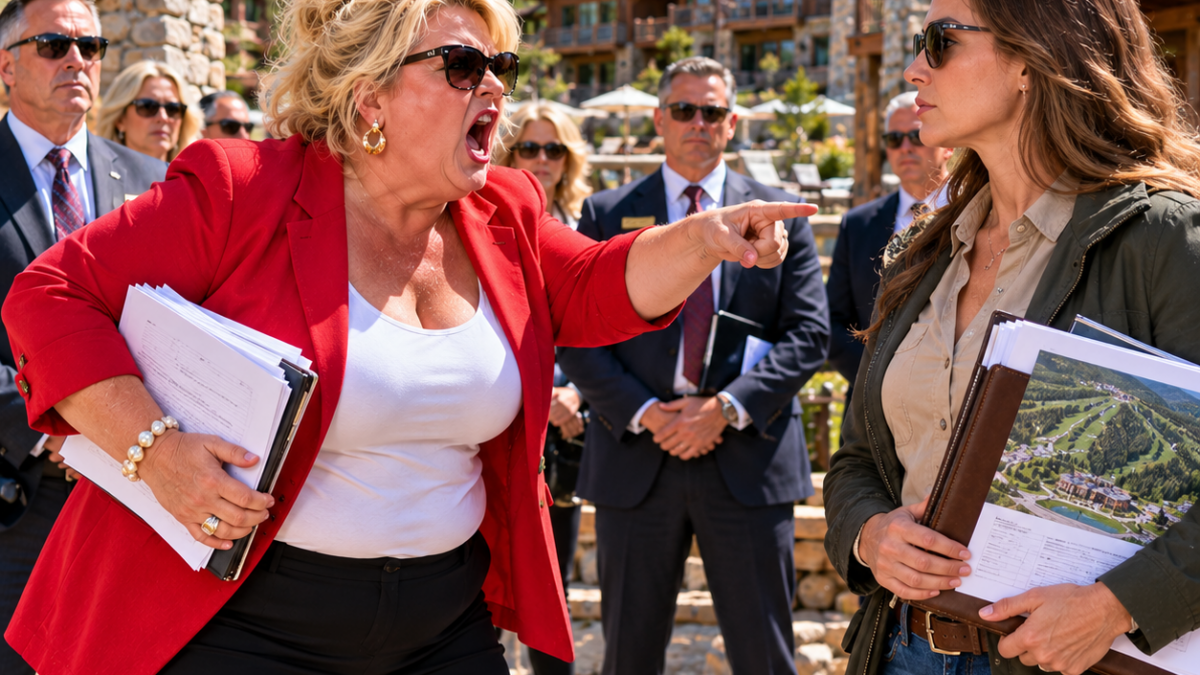
PART 2
I tapped the tax summary.
“What’s this?”
Karen’s expression went flat.
“I don’t handle accounting.”
“You just told me the HOA runs the resort.”
“Operationally.”
“Who handles the money?”
“Our treasurer.”
“Name?”
“Walter Dean.”
“Where is he?”
“I don’t know his schedule.”
I turned the ledger around.
“Rental entries total more than three hundred thousand.”
She crossed her arms.
“So?”
“This summary reports considerably less.”
“Expenses.”
“This isn’t an expense sheet. It says reported rental revenue.”
“You don’t understand HOA bookkeeping.”
That irritated me more than it should have.
I’d spent twenty years as a commercial contractor.
I wasn’t an accountant, but I’d negotiated enough six-figure construction agreements to know the difference between gross receipts and expenses.
“Then explain it.”
“I don’t have to explain anything to someone who showed up yesterday.”
“Actually, Karen, you may have to explain quite a lot.”
She reached toward the ledger again.
I pulled it under my arm.
“You cannot remove association records.”
“These are resort booking records.”
“They were created by Pine Ridge.”
“On my property.”
“Under our management.”
“Without a contract.”
“You don’t know that.”
That sentence stopped me.
“What contract?”
She looked at the door.
“I’m done with this conversation.”
“No, you’re not.”
She spun around.
“You don’t get to order me around.”
“No. But I can ask you to leave.”
Her face reddened.
“This office is part of the community-management zone.”
“It is part of Parcel 7-B under Drew Gallagher’s deed.”
“You think a piece of paper changes five years of operations?”
“Yes.”
That was the entire point of deeds.
She stared at me.
Then gave me a tight smile.
“You’re going to regret coming up here acting like everyone owes you something.”
“I don’t want everyone to owe me something.”
I held up the ledger.
“I want whoever collected my resort income to account for it.”
She left.
Not dramatically.
No slammed door.
That would have been easier.
She walked out slowly, like she was still calculating.
I watched her cross the parking lot, climb into a silver SUV, and call someone before she’d even closed the driver’s door.
I photographed the ledger.
Every page.
Then I drove straight to the sheriff’s office.
Sheriff Rick Mallory knew who I was before I introduced myself.
“Gallagher nephew.”
“That obvious?”
“Your uncle coached half this county in Little League.”
That sounded like Drew.
I put the probate documents and ledger on his desk.
Mallory didn’t jump to conclusions.
I respected that immediately.
“You inherited title?”
“Yes.”
“Effective date?”
“Last week, but the estate’s ownership never transferred to the HOA.”
“Executor?”
“Court-appointed administrator during probate.”
“Did the administrator authorize operations?”
“Not that I know of.”
“Know isn’t enough.”
He read the documents.
“Any management agreement?”
“Karen says the board voted.”
“That isn’t an agreement.”
“I know.”
“Rental business license?”
“I’m checking.”
“Taxes?”
“That is why I’m here.”
He looked at the mismatched totals.
“How much discrepancy?”
“Roughly ninety thousand based on what I’ve seen.”
“That doesn’t necessarily mean theft.”
“I know.”
“Could be expenses, cash-versus-accrual accounting, timing differences.”
“I know.”
“You keep saying that.”
“Because I’m trying not to sound like the guy who walked in demanding arrests.”
Mallory nodded.
“Good.”
He called Deputy Elena Cruz into the office.
She was early forties, short dark hair, direct manner.
Mallory slid the ledger across.
“Start with authority. Did Pine Ridge HOA have any legal right to operate the resort?”
Elena looked at me.
“You have estate documents?”
I gave her copies.
“I’m also going to county zoning.”
“Good.”
Mallory pointed at me.
“Do not empty the resort tonight.”
“I own it.”
“You also have paying guests who may have booked in good faith.”
That landed.
Families.
Children.
People who thought they’d rented legal cabins.
“Then what?”
“We stop new bookings until authority is clarified. Existing guests can be handled safely.”
“Fair.”
He leaned back.
“You want criminal charges?”
“I want the truth first.”
“Better answer.”
The zoning office was across the parking lot.
Theo Marks, a clerk with nervous eyes and three pens clipped to his shirt, pulled the resort file.
“Pine Ridge?”
“Yes.”
He disappeared into records storage.
Returned ten minutes later.
“You’re going to want to see this.”
Conditional-use permit.
Issued 2019.
Applicant:
PINE RIDGE COMMUNITY TRUST.
Property owner:
PINE RIDGE HOA.
I pointed.
“Neither of those is true.”
Theo’s face tightened.
“Community Trust isn’t a registered ownership entity in our parcel system.”
“Who signed?”
“Karen Whitmore.”
“Approval?”
He turned the page.
There was a staff stamp.
No board-of-supervisors resolution.
No hearing reference.
No property-owner authorization.
Theo removed his glasses.
“This may have been processed as an administrative continuation because the resort already existed.”
“Based on false ownership information.”
“Yes.”
“Who approved it?”
He hesitated.
“Former zoning administrator.”
“Name?”
“Martin Pell.”
“Still employed?”
“No.”
“When did he leave?”
“2021.”
I photographed the permit and asked for a certified copy.
Then I drove back up the mountain.
Deputy Cruz arrived fifteen minutes after me.
Two teenagers were standing outside Cabin Four with backpacks.
Their parents were still in the car.
Elena approached them calmly.
“Folks, there is an ownership issue involving the property. Nobody’s in trouble. We need to pause new check-ins until we confirm your reservation can legally be honored.”
The mother looked at me.
“We prepaid.”
“I’ll make sure you are refunded if we can’t accommodate you.”
Karen came out of the lodge.
“What are you doing?”
Elena turned.
“Ms. Whitmore?”
“Yes.”
“I need documentation showing Pine Ridge HOA’s authority to operate commercial rentals here.”
Karen folded her arms.
“We’ve managed the resort for five years.”
“That isn’t documentation.”
“We stepped in after Drew died.”
“Who authorized it?”
“The board.”
Elena didn’t blink.
“Board vote doesn’t create ownership.”
Karen looked at me.
“You went to the sheriff.”
“I told you I would.”
“No, you said you wanted records.”
“And you left.”
Elena handed her written notice.
“All new commercial bookings are suspended pending verification. Preserve financial records, booking records, contracts, tax filings, and communications related to resort operations.”
Karen read it.
“This is outrageous.”
“It’s temporary.”
“We have guests arriving all weekend.”
“Then provide authority quickly.”
Karen’s fingers tightened around the paper.
“We saved this place.”
I believed that she believed part of that.
The roofs did look maintained.
The parking lot was plowed.
The cabins weren’t rotting.
Maybe the HOA really had spent money.
That didn’t answer who gave them the right to collect it.
That night, I stayed in Drew’s old room above the lodge office.
The place smelled like cedar and coffee.
His green flannel coat was still hanging behind the door.
That hit harder than I expected.
Five years of probate had turned grief into paperwork.
Forms.
Deadlines.
Lawyers.
By the time I inherited Pine Ridge, I’d almost forgotten I was inheriting Drew’s life, not merely real estate.
I found his old coffee mug in the cabinet.
MOUNTAINS DON’T CARE WHO’S LATE.
Typical Drew.
I sat at his desk and powered on the ancient computer.
It actually started.
There were folders.
Taxes.
Payroll.
Maintenance.
Cabin inventory.
Then one called:
HOA.
Inside:
HOA AGREEMENT.doc
I opened it.
Blank.
No signatures.
No terms.
Nothing.
The file creation date was three months after Drew died.
Modified twice.
I copied the hard drive to an external backup.
Next morning, I called Leanne Reyes.
Everyone called her Lee.
She’d handled construction disputes for me in Denver and had eventually specialized in real estate litigation.
We met at a diner near the mountain pass.
She arrived wearing hiking boots and opened her laptop before coffee.
“Explain everything from the beginning.”
I did.
She read the deed.
Probate order.
Permit.
Ledger photos.
“Interesting.”
“That sounds expensive.”
“It usually is.”
“Do they have any defensible management theory?”
“Maybe necessity.”
“Meaning?”
“Property owner dies. Probate stalls. Resort deteriorates. Community association says it stepped in to prevent hazard or preserve shared infrastructure.”
“Does that let them rent cabins?”
“Not automatically.”
“Collect money?”
“Maybe if they had a valid agency relationship or emergency authority.”
“Do they?”
“You haven’t shown me one.”
“They have a board vote.”
She looked at me.
“I can vote to manage your truck.”
“Point taken.”
She examined the revenue discrepancy.
“Don’t accuse them publicly of stealing ninety thousand.”
“I haven’t.”
“Good.”
“We sue?”
“We first demand accounting and possession.”
“I already demanded.”
“Legally.”
She smiled.
Then she drafted letters.
Notice of ownership.
Demand for records.
Demand for keys.
Preservation notice.
Accounting request.
Petition to void permits based on misrepresentation.
And a civil complaint seeking restitution for unauthorized rental income subject to documented legitimate expenses.
That last part mattered.
“If they actually spent money preserving the property,” Lee said, “a judge may credit reasonable expenses.”
“They still didn’t have authority.”
“Authority and unjust enrichment are separate questions.”
“You lawyers ruin simple anger.”
“That is why you hire us.”
Subpoenas went to the HOA board after the case was filed.
Karen called an emergency meeting.
A paper notice appeared on the lodge.
PINE RIDGE HOA EMERGENCY SESSION
RESORT FUTURE AT STAKE
ATTENDANCE REQUESTED
I nearly tore it down.
Then stopped.
Evidence.
I photographed it and left it.
At seven, the community center was packed.
Karen stood behind a podium.
Four board members at the long table.
Walter Dean, treasurer.
Megan Price, secretary.
Ron Halpern, vice president.
And Tom Avery, maintenance director.
Karen spoke into the microphone.
“Due to recent interference by a party claiming sudden ownership—”
I walked in.
People turned.
Karen stopped.
“Carson.”
“Keep going.”
“This is an association meeting.”
“My property is the subject.”
She tightened her jaw.
“We are discussing continuity.”
An older man raised his hand.
“Karen, is it true the HOA doesn’t own the resort?”
“We have operational authority.”
“That wasn’t the question.”
Another resident:
“Who authorized rentals?”
Karen lifted a hand.
“The board acted after Drew’s death to prevent deterioration.”
I stepped into the aisle.
“Show the agreement.”
She looked at me.
“What?”
“The management agreement.”
“We have board resolutions.”
“Not the same thing.”
I walked to the front and placed the certified conditional-use permit on the table.
“This permit lists Pine Ridge HOA as property owner.”
Megan picked it up.
Her face changed.
“I never saw this.”
Karen snapped, “It was administrative.”
Walter leaned closer.
“It says Community Trust.”
“So?”
“What trust?”
Karen ignored him.
I turned to the crowd.
“I don’t know yet whether every dollar was misused. I do know the resort generated more than three hundred thousand in recorded rental income and the HOA has not produced any contract authorizing it to operate the property.”
Murmurs.
Karen gripped the podium.
“We spent that money maintaining a community asset.”
“It wasn’t a community asset.”
“We kept your uncle’s resort alive while his family fought over probate.”
That hurt because it was partly true.
I hated that.
My cousins had fought.
I had delayed involvement longer than I should have.
Karen saw my hesitation.
She pushed.
“Where were you, Carson?”
The room quieted.
“You want to storm in after five years and call us thieves?”
I didn’t answer immediately.
Because she deserved an answer.
“I was working.”
“Exactly.”
“I was also paying lawyers to untangle Drew’s estate.”
“From Denver.”
“Yes.”
“You weren’t up here fixing pipes.”
“No.”
“We were.”
“Then produce the receipts.”
“I will.”
“Good.”
“And when we prove Pine Ridge spent more preserving this place than it earned?”
“Then I’ll pay legitimate expenses.”
That surprised her.
It surprised the room.
“What?”
“I don’t want money that was honestly spent on my property.”
Karen stared.
“But anything else gets returned.”
Walter shifted in his chair.
Karen noticed.
“So this is about money.”
“No.”
I pointed at the permit.
“This is about somebody signing documents claiming ownership they didn’t have.”
A man at the back stood.
“My dues went up three years in a row.”
Another voice:
“Mine too.”
Someone else:
“Where did the rental money go?”
Karen stepped away from the microphone.
“We’ll answer through counsel.”
That told me more than another speech would have.
Outside, Lee called.
“The county suspended the permit.”
“Already?”
“Pending hearing. False ownership representation is enough.”
“And the lawsuit?”
“Discovery begins.”
She paused.
“DA’s office wants copies.”
“Why?”
“Because the permit may involve false statements in a government filing.”
I looked up at the mountain.
For the first time, I understood the fight had two parts.
The money.
And the documents used to make the money look legitimate.
Karen came out ten minutes later.
Her board had scattered.
She walked toward my truck.
“You think you’ve won.”
“No.”
“You embarrassed people who saved that resort.”
“I asked for records.”
“You accused us in front of everyone.”
“I said I don’t know where the money went.”
“Same thing.”
“No, Karen. It isn’t.”
She stepped closer.
“You’re not from here anymore.”
“I grew up here every summer.”
“You left.”
“Yes.”
“You think a deed makes you responsible for this mountain?”
“No.”
“Then what does?”
I thought of Drew’s flannel coat.
“Showing up.”
She gave me a bitter smile.
“Five years late.”
Then she walked away.
That sentence followed me home.
Five years late.
She was wrong about authority.
But not entirely wrong about me.
I had avoided Pine Ridge after Drew died.
Part grief.
Part family conflict.
Part cowardice.
Every time probate counsel sent another email, I treated the resort like a legal file.
Karen had stepped into that vacuum.
Maybe she had begun with good intentions.
That possibility complicated everything.
The next morning, Lee sent me something that removed some of my sympathy.
Bank records.
The HOA had established a revolving line of credit through an entity called:
PINE RIDGE COMMUNITY FUND LLC.
Problem:
No active LLC by that name existed in state records.
The loan application used resort rental income as collateral.
I called Lee.
“How do you borrow against revenue from property you don’t own?”
“You represent that you control it.”
“Who signed?”
“Karen.”
“Walter?”
“On one form.”
“What was the money used for?”
“Still tracing.”
“How much?”
“Initial line fifty thousand. Expanded later.”
“Collateral?”
“Future bookings and association assessments.”
I sat down.
“So they borrowed against my resort and homeowners’ dues.”
“Potentially.”
“Did the bank verify ownership?”
“Apparently not adequately.”
“Why?”
“Small regional lender. Relationship banking.”
“Meaning?”
“Somebody trusted somebody.”
That phrase would repeat throughout the case.
Somebody trusted somebody.
I drove to the resort.
Cabin Ten had a keypad lock Drew never installed.
Cabin Nine too.
Several interior furnishings had been replaced.
The lodge kitchen had new appliances.
Some improvements were legitimate.
The HOA clearly spent money.
But whose money?
And how much?
Deputy Cruz met me outside.
“Sheriff wants you at the station.”
“Now?”
“Yes.”
“What happened?”
She didn’t answer until we were in the SUV.
“We got security footage from an old camera archive.”
“From where?”
“Lodge.”
“Who preserved it?”
“Maintenance system backed up to cloud account.”
At the station, Mallory played video.
Timestamp:
One month earlier.
Karen’s SUV pulled behind the lodge at 11:17 p.m.
She entered with a key.
Forty-two minutes later, she came out carrying a cash box and a document case.
I recognized the case immediately.
“That’s Drew’s.”
“What?”
“Fireproof file carrier.”
“Contents?”
“Original tax records. Loan correspondence. Some estate material.”
“You reported it missing?”
“To Lee yesterday.”
Mallory paused the video.
“Karen told investigators she removed documents for safekeeping during the ownership dispute.”
“Before I arrived.”
“Yes.”
“Why would she suddenly need to keep them safe after five years?”
“Excellent question.”
He handed me a warrant inventory request.
“We’re seeking judicial authorization for certain financial records and identified property. Not because she annoyed you. Because the court has evidence supporting probable cause on specific items.”
“I understand.”
By sunset, investigators executed a search warrant on Karen’s residence and HOA records storage.
The missing fireproof case was recovered from a locked closet.
Cash box too.
The cash box was empty.
Laptop.
External drives.
Bank statements.
A handwritten notebook.
Lee called me that night.
“They found a second ledger.”
I sat on Drew’s porch.
Snow beginning to fall lightly.
“How second?”
“Private accounting spreadsheet.”
“Difference?”
“Side payments.”
“To whom?”
“Karen personally appears to have received transfers.”
“How much?”
“Preliminary total close to ninety-eight thousand over four years.”
That number matched the discrepancy I’d first seen almost exactly.
My hand tightened around the phone.
“Personal account?”
“Credit union in Utah.”
“Why Utah?”
“Don’t know.”
“Taxed?”
“Investigators will determine.”
“Other board members?”
“Some reimbursements, but nothing comparable yet.”
I looked toward the cabins.
Dark now because bookings were suspended.
“I wanted an accounting.”
“You’re getting one.”
“This isn’t what I expected.”
“What did you expect?”
“Some inflated snowplow invoices. Karen paying herself a management fee.”
“Still may be part of it.”
“Lee.”
“Yeah?”
“Why keep the resort open if you’re stealing from it?”
She was quiet.
“Because functioning businesses hide theft better than dead ones.”
That night, I barely slept.
At six, Sheriff Mallory arrived with coffee.
We sat by the outdoor fire pit.
He handed me a folder.
“DA is considering charges.”
“Which?”
“Don’t treat this as final. Possible theft by deception, fraudulent records, tax offenses, wire-related charges depending on transfers.”
“Federal?”
“Could become.”
“Because Utah?”
“Interstate transactions aren’t automatically a federal case, Carson.”
“I know.”
“State grant is more interesting.”
“What state grant?”
He looked at me.
“You didn’t know?”
“No.”
Pine Ridge HOA had received a $42,000 community revitalization grant two years earlier.
Purpose:
LOW-INCOME OUTDOOR ACCESS AND RURAL TOURISM PRESERVATION.
Project site:
Pine Ridge Mountain Resort.
Authorized applicant:
Pine Ridge Community Fund.
Ownership authority represented:
Community custodianship.
My stomach tightened.
“Where is the money?”
“That’s one reason investigators are here.”
“You think Karen took it?”
“I think accountants are tracing it.”
He watched the cabins.
“Your uncle liked her once.”
I turned.
“What?”
“Karen used to run the library.”
“I remember.”
“She organized fundraisers for search and rescue. Trail cleanup. School coats.”
“That doesn’t sound like the woman I’ve met.”
“People aren’t one thing.”
“When did she change?”
Mallory rubbed his hands together against the cold.
“After Drew died, maybe.”
“Why?”
“Power filled the empty space.”
That sounded too simple.
But maybe simple things become dangerous when repeated.
Karen had been the person who stepped up.
Then the person everyone called.
Then the person signing forms.
Then approving rentals.
Then controlling money.
Authority had grown around action.
Nobody stopped to ask where the original permission was.
I did something that afternoon that angered Lee.
I visited Karen’s attorney.
Not privately.
Through counsel.
Lee came.
Karen came too.
Neutral conference room.
Her lawyer, Michael Trent, began.
“My client is prepared to discuss an orderly transfer of resort operations.”
Lee said, “Operations have already transferred.”
Trent ignored that.
“Pine Ridge HOA expended substantial funds preserving the property.”
“We’re willing to credit legitimate expenses,” Lee replied.
Karen looked at me.
“You said that publicly.”
“I meant it.”
“You think I’m a thief.”
“I think ninety-eight thousand went into your account.”
Her attorney touched her arm.
She ignored him.
“I was paid.”
“For what?”
“Management.”
“Contract?”
“The board approved compensation.”
“When?”
“Multiple times.”
“Minutes?”
“Records exist.”
Lee leaned forward.
“Produce them.”
Karen looked at her.
“You’re enjoying this.”
“No.”
“I know attorneys like you.”
Lee smiled slightly.
“You don’t.”
I asked Karen, “Why didn’t you contact the estate?”
“We did.”
“Who?”
“The probate administrator.”
“When?”
“2019.”
“What response?”
“No response.”
Lee opened a folder.
“Actually, the administrator responded.”
Karen went still.
Lee slid over a certified letter.
Dated March 2019.
To Pine Ridge HOA.
The administrator wrote:
The estate does not authorize commercial rental operation of Pine Ridge Mountain Resort. Limited emergency access for preservation may be permitted through written request and documented expense submission.
Karen read it.
Her lawyer read it.
I stared.
“You knew.”
Karen’s face hardened.
“The estate wasn’t paying bills.”
“That letter said request reimbursement.”
“We needed revenue.”
“It said don’t rent.”
“The place would’ve died.”
“So you ignored the owner.”
“The owner was dead.”
The room froze.
Even her lawyer closed his eyes for half a second.
I spoke slowly.
“Drew was dead. His estate was not ownerless.”
“You weren’t here.”
“No.”
“You keep avoiding that.”
“I’m not avoiding it.”
I leaned forward.
“I should have come sooner. I should’ve forced the family to resolve probate faster. I should’ve checked on the property.”
That took some of the fight out of her face.
“But my absence didn’t give you ownership.”
She looked away.
“No.”
It was the first time she’d admitted it.
Then she said:
“We kept people employed.”
That was also true.
Housekeepers.
Maintenance workers.
Snow crews.
Local vendors.
The resort had supported people.
I asked, “How much did you pay yourself?”
She didn’t answer.
“Karen?”
Her attorney stepped in.
“My client won’t discuss financial allegations outside formal discovery.”
Meeting over.
The court appointed a temporary financial custodian for resort-related accounts while the case proceeded.
Not me.
That annoyed me until Lee explained why.
“You’re suing for money. Neutral administration protects everyone.”
“What about reopening?”
“Not yet.”
“Winter starts in six weeks.”
“Then move fast.”
I called a public town hall.
No HOA board control.
Community center.
Open meeting.
I put a resort blueprint on the wall.
People packed the room.
I told them:
“I intend to reopen Pine Ridge.”
Someone asked, “Under the HOA?”
“No.”
Another:
“Private?”
“Yes, but community-connected.”
“What does that mean?”
“It means I own it. I’m responsible for it. But I want local hiring, transparent operations, public trail access where legally appropriate, and honest books.”
A man with the county emblem on his jacket raised his hand.
“You need permits.”
“Applications filed.”
“You need health inspections.”
“Scheduled.”
“Fire inspection.”
“Scheduled.”
He smiled.
“Just checking.”
A woman near the back asked, “Will locals still be able to use the lower trail?”
“Yes.”
Karen had put RESORT GUESTS ONLY signs there.
Drew never had.
“I’ll remove the signs.”
That got the first applause.
Not huge.
Just enough.
Afterward, people told Drew stories.
He let high-school kids learn maintenance work.
Gave free rooms to volunteer firefighters during wildfire season.
Let families snowshoe the trails without paying.
I had inherited a business.
They remembered a man.
That distinction mattered.
Lee pulled me aside.
“One more thing.”
“What?”
“Unsigned deed transfer.”
“Where?”
“Recovered from the fireproof case.”
She handed me a copy.
Three months after Drew died.
Grantor:
Estate of Drew Gallagher.
Grantee:
Pine Ridge Community Trust.
Signatures blank.
Notary seal printed.
“Fake?”
“Seal is fraudulent.”
“Why create an unsigned deed?”
“Drafting.”
“For what?”
“Maybe intention to fabricate later.”
“Did they?”
“No evidence of completed recorded transfer.”
“Karen?”
“Metadata ties file to HOA office computer.”
My stomach sank.
This was no longer only money.
Somebody had prepared a path to ownership.
Whether Karen intended to complete it would become a prosecutor’s question.
Federal investigators became interested because state grant money and interstate bank transfers crossed jurisdictions.
But the case stayed grounded in evidence.
No instant RICO spectacle.
No dramatic raid of every board member.
Accountants worked.
Subpoenas went out.
Bank records arrived.
The winter started.
Cabins remained mostly dark.
That hurt financially.
It also hurt emotionally.
I walked them at night.
Cabin One.
Two.
Three.
Each had a history.
Drew had named some originally.
Aspen.
Fox Hollow.
Timberline.
Karen’s operation reduced them to numbers.
I decided that when we reopened, the names would come back.
The first snow covered the mountain in November.
A state auditor used Cabin Seven as a temporary document room because the lodge office was too crowded.
I walked in one afternoon.
He was surrounded by boxes.
“Find anything?”
“Lots.”
“Useful?”
“Define useful.”
“Something that explains where the money went.”
He handed me a chart.
Three accounts.
Pine Ridge HOA operating fund.
Pine Ridge Community Fund.
An unregistered consulting entity.
Money moved between them.
Some ended up in legitimate maintenance spending.
Roof repair.
Septic work.
Insurance.
Snow removal.
Some ended up in Karen’s account.
Some paid contractors with poor documentation.
One account in Nevada appeared to exist only as a routing destination.
“Shell company?”
“Possibly.”
“Owner?”
“Still tracing.”
“Why route money?”
“Could be concealment. Could be accounting stupidity. We don’t assume.”
I respected that.
Then the sheriff called.
“Come down.”
At his office, Mallory handed me a padded envelope.
“Anonymous delivery.”
Inside:
Flash drive.
Typed note.
CHECK CABIN 9 — FEBRUARY, THREE YEARS AGO.
I looked at him.
“What is this?”
“We don’t know.”
He plugged the drive into an isolated evidence computer.
Video.
Grainy security footage.
Timestamp.
A man in ski clothes entered the lodge late at night.
Red jacket.
Dark beard.
Duffel bag.
No visible check-in transaction.
An employee—face off camera—led him down the hallway.
Mallory paused.
“No reservation record.”
“Maybe cash.”
“Could be.”
“Why anonymous tip?”
“That is what worries me.”
Cabin Nine had a fire two nights later.
Small electrical fire.
Repair invoice existed.
Contractor didn’t.
No valid business registration.
No itemization.
Just:
DAMAGE CONTAINED. NO STRUCTURAL CONCERNS.
“Could be unrelated.”
“Yes.”
“You think it is?”
“I think somebody wants us to ask.”
That thread became the strangest part of the entire case.
Investigators identified the man after weeks of work.
Alan Riley.
Former compliance officer for a regional land-development company.
He had been cooperating in a federal civil-fraud investigation involving public-land contracting and procurement irregularities.
Not a cinematic “witness protection black site.”
Something more plausible and, to me, more disturbing.
Riley had been placed temporarily in confidential lodging under arrangements made through a private security contractor connected to his legal team.
Pine Ridge had been selected because it was remote.
The booking bypassed normal systems for confidentiality.
Someone within the HOA knew.
Then records disappeared.
Riley had later resurfaced safely, but he withdrew from cooperation after receiving threats and the federal case collapsed for lack of testimony.
The mystery wasn’t murder.
It was obstruction.
Why had the HOA hidden his stay?
Why had the fire records been falsified?
Federal agent Daniel Keene met Lee and me at the lodge.
He laid out what they knew.
“Riley stayed in Cabin Nine for three nights.”
“Then?”
“Left.”
“Voluntarily?”
“Yes.”
“Then what are we investigating?”
“Someone photographed him here.”
I looked at him.
“How do you know?”
“Recovered digital files.”
“From Karen?”
“Related system.”
He continued.
“Those images were transmitted to a security contractor later tied to the company Riley was cooperating against.”
Lee said, “So somebody sold his location.”
Keene nodded.
“That is one theory.”
“Karen?”
“We are not making that statement yet.”
“Money?”
“Payments from a resort-linked account went to a private contractor around the same time.”
I felt sick.
Drew’s resort had been used for something that could have gotten a man hurt.
Keene continued.
“The cabin fire appears to have been a minor electrical event. The falsified repair record may have been used to erase contractor access and occupancy information rather than conceal violence.”
That distinction mattered.
“Riley is alive?”
“Yes.”
“Safe?”
“Yes.”
“And willing to testify?”
“Now, possibly.”
Weeks later, Riley did cooperate.
Not publicly at first.
His testimony and digital evidence supported charges against a third-party fixer named Grant Mercer, who had arranged confidential lodging and then sold Riley’s location to people connected to the investigation target.
Karen’s role was narrower but serious.
According to documents later filed in court, she had accepted payment to keep the booking off standard resort records.
Then she allowed certain security contractors access to guest information.
She claimed she didn’t know who Riley was.
Prosecutors believed she knew enough to understand secrecy mattered.
That expanded her exposure.
When Lee told me, I sat alone in Drew’s office.
His mug on the desk.
His flannel coat behind the door.
I felt ashamed.
Not for Karen.
For the resort.
As if buildings could inherit guilt from what people did inside them.
Lee saw it.
“Don’t.”
“What?”
“Turn Pine Ridge into Karen.”
“I didn’t.”
“You are.”
“This place was used to expose someone.”
“This place didn’t do it.”
“Someone sat at Drew’s desk and approved it.”
“Drew wasn’t there.”
“I know.”
“Then don’t give thieves ownership over memory too.”
That helped.
Karen eventually agreed to cooperate.
Not instantly.
Not because “prison got real” in some melodramatic way.
Her attorney negotiated for months.
She admitted the HOA lacked legal authority to rent Pine Ridge.
Admitted she signed ownership representations she knew were false.
Admitted receiving personal compensation not properly disclosed.
Admitted involvement in concealing the Riley booking from standard records.
She identified Grant Mercer.
Produced passwords.
Explained hidden accounts.
Other board members were treated according to evidence.
Walter had signed financial documents carelessly, but investigators found no significant personal benefit.
He cooperated.
Megan had objected internally and preserved emails.
She was not charged.
Ron had received preferential contracts for his brother’s snow-removal company and faced civil penalties plus restitution.
Tom’s conduct was mainly negligence.
The board wasn’t one criminal hive.
That mattered.
Karen had concentrated power partly because the others let her.
But not every weakness was a felony.
The county invalidated the fraudulent resort permits.
Legitimate new permits were issued after inspection.
The state grant had to be repaid through recovered HOA assets and Karen’s restitution obligations.
The resort’s civil accounting took almost a year.
Total gross rent collected over five years exceeded three hundred thousand.
Legitimate documented operating expenses were substantial.
Roofs.
Insurance.
Utilities.
Maintenance.
Housekeeping.
Snow removal.
Septic repair.
Taxes.
After those credits, unauthorized management charges and diverted funds still left a significant balance owed to the estate and then to me as successor owner.
With interest and settlement terms, the recovery was enough to rebuild.
Not enough to make me rich.
Enough to make Pine Ridge honest again.
That was better.
I renamed the cabins.
Cabin One became Juniper.
Two became Elk Run.
Three became Aspen House.
Nine took longer.
I couldn’t decide what to do with Nine after learning about Riley.
Tear it down?
Renovate?
Leave it?
I eventually contacted him through federal counsel.
He surprised me by agreeing to speak.
Phone only.
“Mr. Riley?”
“Alan.”
“I’m Carson Gallagher.”
“I know.”
“I own Pine Ridge now.”
“I heard.”
I hesitated.
“I’m renovating Cabin Nine.”
Silence.
“I was wondering whether you’d prefer we change the name or remove it from rentals.”
He laughed softly.
“Why would I care?”
“I don’t know.”
“You think the cabin did something?”
Lee had asked me almost the same question.
“No.”
“Then fix it.”
“That’s it?”
“Carson, I spent years letting what happened control where I slept, where I parked, who knew my phone number.”
His voice became quieter.
“Don’t turn a cabin into a monument to fear.”
I leaned back.
“What should I call it?”
“I don’t care.”
“Helpful.”
He laughed.
Then said:
“Pine something. Drew’s place had pines.”
“Pine Nine?”
“That’s terrible.”
“Agreed.”
We named it Riley Cabin only after he approved a small plaque explaining that the space honored whistleblowers and people who tell difficult truths.
No details.
No sensational story.
He attended the reopening privately months later.
He stood outside the cabin for a long time.
“You rebuilt the deck.”
“It needed it.”
“Fireplace?”
“New flue.”
He nodded.
“Good.”
That was closure.
Not a press conference.
A man looking at a cabin and realizing it no longer belonged to the worst memory he had there.
The resort reopened June first.
I considered changing the name completely.
Lee suggested Gallagher Pines.
I resisted.
“Sounds like a retirement community.”
“Your branding instincts are terrible.”
“The original name was Drew’s.”
“Then keep part of it.”
We settled on:
GALLAGHER PINE RIDGE.
Drew’s surname.
His old sign restored underneath.
FOUNDED BY DREW GALLAGHER.
I didn’t turn the resort into a cooperative owner structure because that would have complicated title and liability.
Instead, I created a local advisory council and employee profit-sharing plan.
That was more realistic and, frankly, easier to manage.
Quarterly public summaries.
Independent bookkeeping.
External annual review.
Local hiring preference.
Public trail easements preserved.
Transparent cabin rates.
No HOA control.
Pine Ridge HOA itself survived, but under a new board and narrower understanding of its authority.
That surprised some people.
They expected me to destroy it.
I didn’t want to.
The association still maintained neighborhood roads and common snow services.
Its homeowners still needed collective administration.
What they didn’t need was a board operating somebody else’s resort.
Walter attended the first new HOA election.
He didn’t run.
Karen obviously couldn’t.
Megan did.
She won.
First thing she did was publish budgets online.
Second thing:
She created a policy requiring outside legal review before the HOA claimed authority over any property.
I sent her a bottle of wine.
Card:
GOOD POLICY.
She mailed back:
EXPENSIVE LESSON.
Fair.
Karen’s sentencing happened fourteen months after I first arrived.
I attended.
Not every hearing.
That one.
She wore navy.
Hair shorter.
No clipboard.
Prosecutors detailed diverted money.
False ownership filings.
Grant misrepresentations.
Concealed payments.
Guest-record misconduct.
Her attorney described what she had done right in the early years.
Preserving the resort.
Keeping local workers employed.
Fixing burst pipes.
Preventing cabins from collapsing.
Both stories were true.
The judge said something I remembered.
“You began by doing work nobody else was doing. At some point, you decided doing the work entitled you to own the authority.”
Karen looked down.
That was exactly it.
She received prison time shorter than the maximum people online demanded but serious enough to reflect the financial crimes and obstruction conduct.
Restitution.
Financial penalties.
Restrictions on future fiduciary positions.
Grant Mercer faced separate federal prosecution.
The out-of-state account money was partially recovered.
Some never was.
Justice is rarely a perfect ledger.
Afterward, I stood outside the courthouse.
Lee joined me.
“You all right?”
“Yes.”
“You don’t look victorious.”
“I don’t feel victorious.”
“You recovered the resort.”
“I recovered paperwork.”
She shook her head.
“You restored a business.”
“Other people helped.”
“Still.”
I looked toward the mountains.
“Five years.”
“What?”
“They rented it for five years.”
“Yes.”
“I keep thinking about Drew.”
“What about him?”
“If he’d known.”
“He’d be furious.”
“You knew him?”
“No.”
“I did.”
“What would he say?”
I smiled.
“He’d ask whether the roof still leaked.”
Lee laughed.
He would have.
The final civil settlement arrived that fall.
Net recovery after legitimate maintenance credits, insurance adjustments, legal expenses and restitution allocations was substantial.
I used most of it on Pine Ridge.
Trail restoration.
Fire suppression system.
Cabin plumbing.
Staff housing.
New booking software.
Independent accountant.
And one thing nobody expected.
Scholarship fund.
Drew had loved kids.
Not in a sentimental brochure way.
He believed teenagers should work early enough to discover which jobs they never wanted again.
We created the Drew Gallagher Mountain Hospitality Scholarship for local students studying environmental science, hospitality management, forestry, trades or emergency services.
First recipient was Theo Marks’s daughter.
Theo cried.
Pretended he didn’t.
The winter after reopening was our strongest in a decade.
Snow came early.
Bookings filled.
But I capped occupancy below what Karen’s operation had pushed.
“Leaving money on table,” my new manager, Grace, said.
“Good.”
“Owners don’t usually say that.”
“This owner likes septic systems functioning.”
She laughed.
We reopened trails free to locals.
Charged parking only on peak weekends to cover plowing.
The community stopped seeing the resort as something stolen by the HOA and started seeing it as Drew’s place again.
That was the part I cared about.
One evening, Walter came up.
He stood awkwardly in the lodge.
“Can we talk?”
“Sure.”
He sat near the fireplace.
“I owe you an apology.”
“For what specifically?”
“That’s a long list.”
“Pick one.”
He rubbed his hands.
“I signed Karen’s first management resolution.”
“I know.”
“I thought we were saving the resort.”
“I believe you.”
“We had pipes freezing. A roof leak. Insurance threatening cancellation.”
“Why didn’t you contact the estate administrator?”
“Karen said she had.”
“She did.”
Walter looked surprised.
“What?”
“She was told rentals weren’t authorized.”
His face drained.
“I never saw that letter.”
“I believe you.”
“Then she lied to us.”
“Yes.”
He stared at the fire.
“I signed things anyway.”
“Yes.”
“I keep wanting that to be different.”
I understood.
Guilt looks for technical exits.
Sometimes there aren’t any.
“You didn’t steal ninety-eight thousand dollars.”
“No.”
“But you signed documents without reading enough.”
“Yes.”
“So don’t do that again.”
He laughed once.
“That’s it?”
“What do you want me to say?”
“I don’t know.”
“You want forgiveness?”
“Maybe.”
“I’m not Drew.”
He looked at me.
“But I don’t need you ruined.”
That seemed to matter.
Walter later volunteered with the trail crew.
Never handled money.
His choice.
A year after reopening, I finally cleaned out Drew’s office properly.
Not evidence.
Not probate.
Personal things.
Photos.
Old ski passes.
A pocketknife.
Letters.
Behind the desk, I found a ledger older than Karen’s.
Drew’s handwriting.
Cabin income.
Maintenance.
Repairs.
Then little notes.
Cabin Four — Wilson anniversary, charged half because furnace noisy.
Cabin Two — firefighters during wildfire, no charge.
Lodge — kids’ ski club cocoa, $23.17, probably too much sugar.
I sat at the desk reading.
He ran Pine Ridge as a business.
But never only a business.
At the back was a note.
If Carson ever gets this place, tell him not to turn it into condos.
I laughed so hard Grace came upstairs.
“What?”
I showed her.
“He knew?”
“Apparently.”
“Were you planning condos?”
“No.”
“Good.”
She left.
I read the line again.
Then found another underneath.
Also make him fix the south deck. He always says he’ll do it later.
I looked out the window.
The south deck needed work.
“Damn it, Drew.”
I fixed it.
The anonymous Cabin Nine flash drive was eventually traced.
Megan had sent it.
That surprised me.
She admitted it after the federal case concluded.
We were standing outside the HOA office.
“Why anonymous?”
“I was scared.”
“You were on the board.”
“Exactly.”
“What did you know?”
“Karen told us the booking was special security business.”
“And?”
“I saw a man photographing Riley.”
“Why didn’t you report it?”
“She said he was federal security.”
“Was he?”
“No.”
“When did you realize?”
“Months later.”
She looked ashamed.
“I kept the camera backup because something felt wrong.”
“Then waited three years.”
“Yes.”
“Why send it after my case began?”
“Because you were already pulling the wall down.”
I didn’t love the answer.
But I understood it.
“You should have done it earlier.”
“I know.”
She nodded.
“That’s why I’m telling you now.”
No dramatic absolution.
She had failed.
Then tried to fix part of it.
Human beings are usually both.
Pine Ridge stabilized.
The HOA stabilized.
The lawsuits ended.
The press lost interest.
That was relief.
For months, journalists had loved phrases like:
STOLEN MOUNTAIN RESORT.
HOA RENT SCANDAL.
SECRET LEDGER.
One headline claimed I had “seized” my own resort.
Lee framed that one.
I made her take it down.
Two years later, families came who knew nothing about the scandal.
They saw cabins.
Snow.
Fireplaces.
Hiking trails.
Exactly as it should be.
A little boy asked me once:
“Do you own the mountain?”
“No.”
“My dad said you do.”
“I own some land on it.”
“What’s the difference?”
“The mountain doesn’t listen to me.”
He considered.
“Does it listen to anyone?”
“No.”
He nodded like that made sense.
Kids understand property better than HOA boards sometimes.
On the third anniversary of reopening, we held a small memorial dinner for Drew.
Not because of the scandal.
Because he’d founded Pine Ridge forty years earlier.
Photos covered the lodge wall.
Drew repairing a lift motor.
Drew dressed as Santa badly.
Drew holding a trout.
Drew standing beside me when I was sixteen, both of us covered in roofing tar.
I hadn’t seen that photo in years.
Grace found it in an old storage box.
“You were skinny.”
“I was sixteen.”
“You had terrible hair.”
“That was fashionable.”
“No.”
I stared at the picture.
That was when grief finally caught up.
Not at probate.
Not when I found his coat.
Not during court.
Standing beside a photograph of myself before life became complicated.
I went outside.
Snow falling.
Lee followed.
“You okay?”
“No.”
“Good.”
I looked at her.
“What?”
“You’ve been okay for three years.”
“I’ve been busy.”
“Same thing.”
I wiped my face with my sleeve.
“He should’ve been here.”
“Yes.”
“I wasted five years.”
“You didn’t kill him.”
“No.”
“You didn’t create probate.”
“No.”
“You didn’t authorize Karen.”
“No.”
“You did avoid the mountain.”
I nodded.
“Yeah.”
She didn’t excuse it.
That’s why I trusted her.
Then she said:
“You came back.”
Simple.
Enough.
Karen wrote once after sentencing.
Not asking forgiveness.
The letter was mostly practical.
She gave information about a foundation drainage repair near Cabin Six that had never been properly entered in maintenance records.
At the end:
I know you think I destroyed Drew’s legacy. Maybe I did. But when we first opened those cabins after he died, the pipes were freezing and nobody from the estate answered. I told myself keeping the place alive justified whatever came next. After a while, I couldn’t tell the difference between saving Pine Ridge and owning it.
I folded the letter.
That was the most honest thing she ever said.
I didn’t reply.
I didn’t need to.
Years later, Pine Ridge changed names again.
Not legally.
People simply started calling it Drew’s.
“Meeting at Drew’s.”
“Wedding at Drew’s.”
“Trail starts behind Drew’s.”
I never encouraged it.
Couldn’t stop it.
Didn’t want to.
The scholarship grew.
Local businesses donated.
The resort made a profit.
Not enormous.
Steady.
Honest.
Every quarter, Grace gave me reports.
I actually read them.
Walter would have laughed.
The first page always showed:
Gross bookings.
Operating expenses.
Taxes.
Payroll.
Maintenance reserve.
No mystery accounts.
No community fund.
No “executive wellness.”
Lee once looked at it.
“Boring.”
“Beautiful, isn’t it?”
“Very.”
Sheriff Mallory retired.
Elena Cruz became sheriff.
At her swearing-in reception, she cornered me.
“You still planning to report every accounting discrepancy as tax fraud?”
“Only ninety-thousand-dollar ones.”
“Progress.”
Theo became zoning director.
The first time I applied for an addition permit, he made me correct a drainage diagram.
“You’re kidding.”
“No.”
“I exposed the fake permit system.”
“And?”
“You’re making me redraw a culvert?”
“Law applies to you too.”
I smiled.
“Good.”
That’s how it should work.
I redrew it.
Cabin Nine remained the quietest.
Riley visited twice more.
The second time he brought his adult daughter.
He showed her the pine tree we’d planted.
She touched the small plaque.
“I thought Dad hated this place.”
Riley looked at the cabin.
“I hated what happened.”
“Different?”
“Yes.”
That distinction defined Pine Ridge for me.
A place can hold bad things without becoming a bad place.
People can fail without every part of their life becoming failure.
Communities can let power concentrate, then rebuild themselves.
I had arrived wanting every cent back.
I got most of what the law said I was owed.
But money wasn’t the part I thought about years later.
I thought about the first afternoon.
Parking lot full.
Drew’s faded sign.
Karen telling me I couldn’t park in the board space.
Three hundred twelve thousand written in a ledger.
Ninety-thousand-dollar gap.
At the time, I believed the story was simple.
Someone stole from me.
It wasn’t.
Some people genuinely saved the resort.
Then crossed lines.
Some people followed orders because questioning authority was inconvenient.
Some profited.
Some were afraid.
Some tried to correct things late.
One woman convinced herself responsibility had become ownership.
And I had stayed away long enough to make that confusion possible.
None of that excused fraud.
But understanding isn’t the same as excusing.
It just makes the ending more honest.
One October morning, almost exactly ten years after Drew died, I drove up the same gravel road.
Parking lot full.
Tuesday afternoon.
For a second, the sight brought me straight back.
Then I saw the difference.
A group of local high-school students were unloading backpacks for an environmental-science program.
Grace stood near the lodge checking a clipboard.
Not an HOA clipboard.
A normal one.
She waved.
“You’re late.”
“Mountain doesn’t care.”
She rolled her eyes.
I parked beside Drew’s old sign.
Not in a reserved board space.
There weren’t any.
Inside the lodge, coffee smelled fresh.
A family checked into Aspen House.
Every payment went through the resort system.
Every tax collected correctly.
Every dollar visible.
I walked into Drew’s office.
His mug still sat on the shelf.
His green flannel coat was gone now.
I had donated it to the county historical display with some of his photographs.
For years, I thought leaving it there kept him close.
Eventually I realized memories don’t need closets.
I opened the old leather account book.
At the back, beneath his warning about condos, I’d added one line of my own.
Five years of rent stolen.
Five years getting the place back.
Worth it.
Then I crossed out “stolen.”
Too simple.
I wrote:
Five years of rent taken without permission.
Five years learning what ownership actually requires.
Better.
Outside, children laughed near the fire pit.
The first flakes of the season began falling through the pines.
I stepped onto the porch with coffee.
Pine Ridge stretched below me.
Cabins lit.
Trails open.
Mountain quiet.
Karen once told me the HOA had kept the resort from collapsing.
In the beginning, that may even have been true.
But preserving something doesn’t give you permission to possess it.
And inheriting something doesn’t automatically mean you’ve earned it either.
That part took me longer.
Drew gave me the land.
The courts gave me restitution.
The records gave me the truth.
But the years afterward—the repairs, the staff, the open books, the families returning, Riley standing outside Cabin Nine without fear—that was the part that finally made Pine Ridge feel like mine.
Not because I had won it.
Because I had learned to take care of it.
I finished my coffee as snow settled on the railing.
Then I heard Grace behind me.
“Carson?”
“Yeah?”
“Pipe leaking in Juniper.”
I smiled.
Of course it was.
I set down the mug.
“Let’s fix it.”
And for the first time since I’d inherited the mountain, that felt like exactly where I belonged.
[END OF STORY]








