PART 2: I Inherited My Aunt’s Old House—Then the HOA President Blocked My Driveway and Started Billing Me for Rules That Never Applied
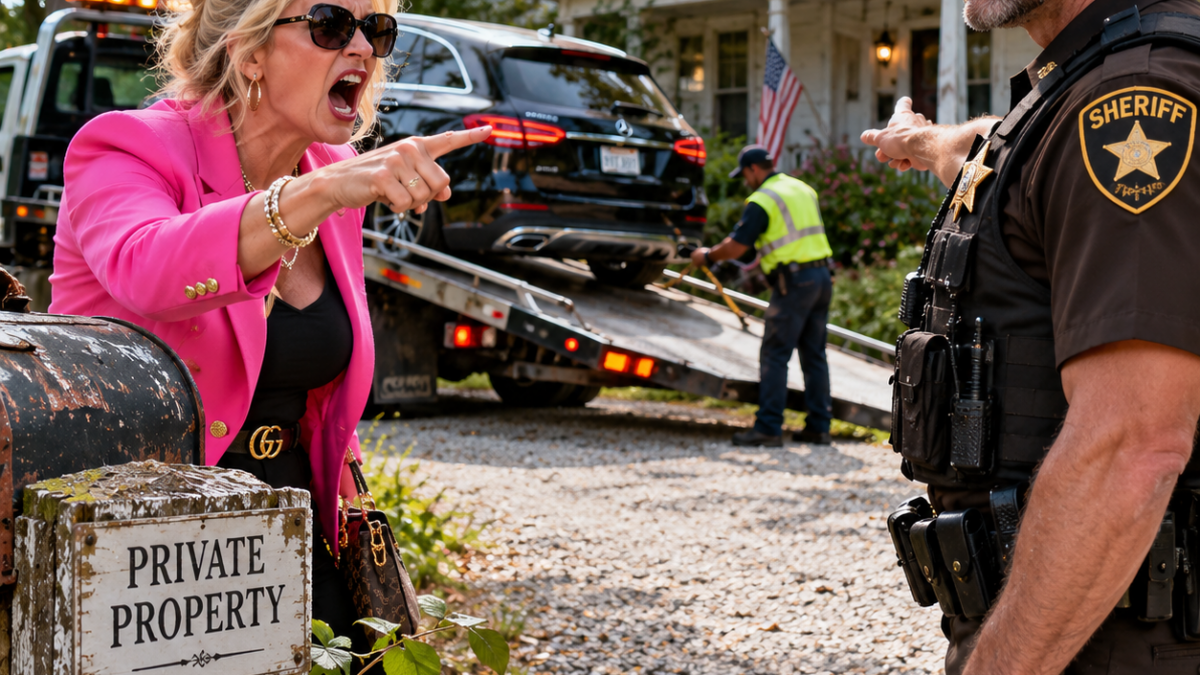
PART 2
The letter was dated June 18, 2015.
A local property attorney named Samuel Pritchard had written it after Louise apparently asked him to review the status of the house.
The language was dry.
Professional.
Unemotional.
Which made it more powerful.
According to the deed and recorded subdivision documents, Louise’s property predated Maplewood Estates by decades and had never been annexed into the association.
No declaration bound it.
No recorded covenant placed it under HOA control.
No voluntary membership agreement existed.
Pritchard’s conclusion was blunt:
The Maplewood Estates Homeowners Association has no contractual authority to levy assessments, impose architectural restrictions, issue fines, or place liens against the Whitmore parcel.
I read it twice.
Then a third time.
Louise had known.
That was the part that hurt.
She had paid the fines anyway.
Not because she believed Brenda was right.
Because fighting Brenda had apparently cost more emotionally than surrendering a few hundred dollars at a time.
I pulled out my phone and began sorting the contents of the box by year.
2008.
2009.
2010.
The older notices were mild.
“Courtesy reminders.”
Then Brenda became HOA president.
The language hardened.
“Mandatory compliance.”
“Final warning.”
“Administrative penalty.”
“Legal enforcement may follow.”
Louise’s canceled checks started getting larger.
$75.
$125.
$200.
$350.
One notice fined her because the porch railing was white instead of the association-approved beige.
The house had been built in 1952.
The porch railing had been white before Maplewood Estates existed.
I sat alone in Louise’s kitchen and felt anger moving up my chest.
Not the explosive kind.
Something colder.
More useful.
I looked through the kitchen window.
Brenda’s white Escalade was still blocking the driveway.
She stood in her own kitchen laughing into a phone.
I looked back at the attorney letter.
“How long did you let them do this to you, Lou?”
The house gave me nothing back.
I spent the rest of the afternoon inventorying every document.
There were fourteen years of notices in the box.
Some months had none.
Others had three or four.
Louise kept almost everything.
She even stapled payment confirmations to the notices.
By my preliminary count, she had paid more than eleven thousand dollars.
I stopped counting when I reached $11,420 because I needed air.
Outside, Brenda’s Escalade had finally moved.
No apology.
No note.
Just gone.
I walked down the driveway and looked at the empty space where it had been.
A small act.
Blocking somebody’s driveway.
Nothing compared with thousands of dollars.
But small acts matter.
They establish expectations.
You inconvenience someone.
They tolerate it.
You demand money.
They pay.
You claim authority.
Nobody asks you to prove it.
Eventually, your behavior feels normal because everybody around you has adjusted to it.
I had seen that pattern before.
Not in HOAs specifically.
In domestic abuse cases.
Financial exploitation.
Workplace harassment.
Small-town corruption.
People rarely begin by committing the biggest act.
They test resistance.
Brenda had tested me before I even entered the house.
She probably thought I had failed.
The next morning, I found an envelope in the mailbox.
MAPLEWOOD ESTATES HOA
OFFICE OF COMPLIANCE
Inside:
VIOLATION NOTICE.
Unregistered vehicle parked on property.
My truck.
Fine: $200.
Payment due within fourteen days.
Failure to pay could result in “additional enforcement, including lien action where authorized by law.”
That last phrase interested me.
Where authorized by law.
Someone writing these notices knew there were limits.
I photographed the notice.
Then I opened Louise’s document box again and found three older notices using nearly identical language.
I drove into town and bought coffee.
For an hour, I sat inside my truck reading county property information on my phone.
Then I drove back to Maplewood and walked next door.
Brenda answered on the second knock.
Same clipboard.
Different cardigan.
“Mr. Cole.”
I held up the notice.
“You fined me two hundred dollars because my truck is parked in my driveway.”
“Yes.”
“My property isn’t part of your HOA.”
“Your property is physically located within our community.”
“That’s not the same thing.”
“You benefit from our streets, our maintenance standards, and surrounding property values.”
“The street is county-maintained.”
That caught her.
Only briefly.
Then she said, “That’s not the point.”
“What is?”
“The point is that Maplewood has rules.”
“I’m sure it does.”
“And residents follow them.”
“I’m not one of your residents.”
“You live here.”
“I’m not one of your members.”
She crossed her arms.
“Louise followed our rules.”
“No.”
I held up Pritchard’s letter.
“She paid demands because she was tired of fighting you.”
Brenda’s expression shifted.
Recognition.
Not confusion.
She knew the letter.
“I don’t care what some lawyer wrote eight years ago.”
That was the first important mistake she made in front of me.
Not “I never saw that.”
Not “That opinion was wrong.”
She said she didn’t care.
“You’ve seen this before?”
“I remember Louise waving around documents.”
“And you continued billing her.”
“She chose to comply.”
“She chose to pay demands you knew you had no authority to issue?”
Her smile disappeared.
“Be careful with your accusations.”
“I’m asking questions.”
“I’ve run Maplewood Estates for twelve years.”
“Congratulations.”
“I know the board. I know county officials. I know everyone who matters around here.”
She stepped closer.
“I can make living in this neighborhood extremely unpleasant.”
I didn’t move.
“I’m sure you can try.”
She laughed.
“Your aunt tried being difficult once.”
“Difficult?”
“She sent that lawyer letter.”
“What happened?”
“Nothing.”
Brenda leaned against the doorframe.
“She got the notices anyway.”
“And paid?”
“Eventually.”
She smiled again.
“That’s what people do when they realize fighting costs more than compliance.”
There it was.
Not ignorance.
Strategy.
Louise had legal protection.
Brenda knew.
The notices kept coming because Brenda believed exhaustion could substitute for authority.
I folded the violation notice.
“I won’t be paying this.”
“We’ll see.”
“Stop sending fraudulent demands.”
Her eyes hardened.
“People always say they’re going to fight.”
She began closing the door.
“They never do.”
The door shut.
I stood there another few seconds.
Then walked back to Louise’s house.
I could have told her.
I could have reached into my jacket, produced my credentials, and watched her entire posture change.
But I wasn’t sheriff of this county.
My office was next door in Benton County.
And more importantly, being sheriff did not make me immune from bad neighbors.
If I used my position to win a private property dispute, Brenda would gain something far more useful than authority.
She would gain a victim narrative.
So I kept the badge out of it.
For now.
That afternoon I bought three security cameras.
One covered the driveway.
One covered the garage.
One covered the front walk and property line.
Motion detection.
Night vision.
Automatic cloud backup.
I also installed a simple NO TRESPASSING sign near the side driveway.
Not dramatic.
Just clear.
Then I created a folder on my laptop.
MAPLEWOOD DOCUMENTATION.
I scanned the deed.
Pritchard letter.
Violation notices.
Canceled checks.
My $200 fine.
Then I started a timeline.
The work felt familiar.
That was both comforting and dangerous.
I had spent twenty years in law enforcement.
Eight as elected sheriff of Benton County.
My brain naturally converted chaos into chronology.
Date.
Time.
Person.
Action.
Evidence.
But this was personal.
Personal cases make even experienced people stupid.
You think your experience protects you from emotion.
Sometimes experience only makes you more confident while emotion quietly takes over.
I reminded myself of that.
No shortcuts.
No using department databases for personal purposes.
No calling deputies to intimidate Brenda.
No official resources.
I was Marcus Cole, property owner.
Nothing more unless she created a legitimate law-enforcement issue.
Three days later, I noticed neighbors avoiding me.
A woman walking a golden retriever crossed the street when I approached.
A man washing his car turned his back as I drove past.
Nobody waved.
The silence felt organized.
Then Tom Braddock appeared at the end of my driveway.
He was seventy-eight.
White beard.
Flannel shirt.
Walked with a cane he seemed to resent.
“You Louise’s nephew?”
“Yes.”
“You drink coffee?”
“Yes.”
“Good. Mine tastes terrible. Come over.”
Tom lived near the far end of Maple Drive.
His porch held more wind chimes than any reasonable person should own.
His kitchen smelled like instant coffee and pipe tobacco.
He handed me a mug.
I took one sip.
“You weren’t kidding.”
“About?”
“The coffee.”
“Louise complained too.”
Hearing her name loosened something in my chest.
Tom sat.
“Louise was my friend.”
“I know.”
“She talked about you.”
“Hopefully selectively.”
“She said you became law enforcement.”
I looked at him.
“Did she say what I do?”
“No. Sheriff or police chief or something.”
“Sheriff.”
“Figures.”
He took a drink.
“I knew you stood like trouble.”
I smiled.
Then he became serious.
“Brenda is telling everybody you aren’t really Louise’s nephew.”
“What?”
He pulled out his phone.
Maplewood community group.
Brenda’s profile.
COMMUNITY ALERT:
The individual currently occupying the Whitmore property claims to be an heir, but the association has not received verified ownership documentation. Residents should exercise caution until his status is confirmed.
Forty-three reactions.
Twenty-seven comments.
Somebody wrote:
Should police check him out?
Another:
Louise never mentioned a nephew.
A third:
Maybe he’s trying to steal the property.
I handed the phone back.
“Louise had pictures of me everywhere.”
“Facts don’t travel as fast as Brenda.”
“Why does everyone believe her?”
Tom shrugged.
“Twelve years of being the loudest person in the room.”
He stared into his coffee.
“She did worse to Louise than you know.”
“Tell me.”
“Every month, something.”
He counted on his fingers.
“Paint. Fence. Flowers. Porch light. Christmas wreath. Mailbox. Her old station wagon.”
“I found notices.”
“Did you find what she paid?”
“More than eleven thousand so far.”
Tom’s face tightened.
“Probably closer to twelve.”
“Why didn’t anyone stop it?”
“You think nobody tried?”
He pointed his cane toward me.
“Two families challenged Brenda. Both moved.”
“Why?”
“Legal bills. Social pressure. Inspections. Fines.”
“What about Louise?”
“She didn’t want war.”
That sounded exactly like her.
Tom leaned forward.
“Your aunt knew she was exempt.”
“I found the lawyer letter.”
“She showed it to Brenda at a board meeting.”
“When?”
“2015.”
“What happened?”
“Brenda laughed.”
My jaw tightened.
“She told everybody Louise was confused about property law.”
“And the board?”
“Went along.”
“Did you?”
Tom looked away.
That was answer enough.
“Sometimes,” he said, “cowardice looks a lot like staying out of somebody else’s business.”
I let that sit.
Then he said, “I’m trying to do better now.”
“Why tell me?”
“Because Brenda drove Louise into paying money she never owed.”
He met my eyes.
“And because she’s done it to other people.”
“How many?”
“Three I know of.”
“Properties outside the HOA?”
“One definitely. Two I’m not sure.”
“What happened?”
“Two sold. One spent so much on attorneys he refinanced, then sold anyway.”
“And Brenda?”
“Still here.”
Tom drank the last of his coffee.
“You planning something?”
“I’m documenting.”
“That sounds like sheriff talk.”
“It’s homeowner talk.”
He smiled.
“Whatever you call it, be ready.”
“For?”
“She’ll escalate.”
I nodded.
“I’m counting on it.”
The following morning, I drove to the Madison County Clerk’s Office.
The aunt’s house was in Madison County.
My office was Benton County.
Neighboring jurisdictions.
Close enough that I knew people.
Far enough that I intended to keep those relationships out of the dispute.
The clerk behind the counter had gray hair in a tight bun and reading glasses hanging from a chain.
“Help you?”
“I need the recorded deed, subdivision plat, and any declarations affecting this parcel.”
I gave Louise’s address.
She recognized it immediately.
“Whitmore house?”
“Yes.”
“Louise passed?”
“Three weeks ago.”
“I’m sorry. Sweet lady.”
“Thank you.”
She pulled the records.
Original deed:
1952.
Maplewood Estates subdivision plat:
1997.
HOA declaration:
1998.
Louise’s parcel sat outside the platted subdivision boundary.
Separate parcel identification.
Separate legal description.
No recorded annexation.
No declaration incorporating it later.
I asked for certified copies.
Then I went to the assessor.
Same answer.
Separate parcel.
Then the recorder.
No HOA lien.
Ever.
That was significant.
Fifteen years of supposed violations.
Thousands in payments.
Repeated threats of liens.
But Brenda had never actually filed one.
Why?
Because filing a lien requires placing the claim into a public process where someone else can challenge it.
A demand letter can bluff.
A recorded lien leaves a trail.
Back at Louise’s kitchen table, I spread everything out.
Deed.
Plat.
Declaration.
Tax record.
Pritchard’s letter.
Violation notices.
Canceled checks.
There was no ambiguity left.
I called the HOA management company.
That almost became my first serious mistake.
A receptionist answered.
“Maplewood Estates Homeowners Association management. How may I help?”
“I need the CC&Rs for a property.”
I gave Louise’s address.
Keyboard clicks.
Pause.
“Sir?”
“Yes.”
“I don’t see that address.”
“Try Whitmore.”
More typing.
“No.”
“You’re saying it isn’t in Maplewood Estates?”
“Not according to the association database.”
For one second, satisfaction overrode discipline.
I almost said, Exactly.
Instead, I caught myself.
If I revealed what I already knew, the receptionist might mention the call to Brenda.
She might warn her.
Brenda might suddenly become careful.
“Maybe I have the wrong association,” I said.
“Would you like me to check the neighboring subdivision?”
“No, thank you.”
I hung up.
Then sat in silence.
Twenty years of interviews.
Interrogations.
Warrants.
Trial testimony.
And I had almost tipped my hand to a receptionist because I was angry about my aunt.
Personal cases.
Dangerous.
That night I reviewed nine days of camera footage.
Brenda’s Escalade appeared constantly.
Sometimes blocking a quarter of the driveway.
Sometimes half.
Sometimes the entire entrance.
She would move it.
Then return.
I logged every incident.
DATE.
TIME.
DURATION.
LOCATION.
I also caught her photographing my truck from the public sidewalk.
Legal.
Annoying.
Useful context.
Then came night ten.
I woke at 6:47 a.m. to an engine idling.
I looked through the bedroom curtain.
My truck sat in the driveway.
Directly behind it, inches from the rear bumper, was a black Ford F-250.
It wasn’t on the road.
It was on my property.
Blocking me in.
I opened the camera app.
3:17 a.m.
The Ford rolled into my driveway with its headlights off.
Stopped.
A man got out.
Baseball cap.
He walked toward Brenda’s house.
I saved the clip.
Downloaded it.
Uploaded backup.
Then went outside.
Brenda was already standing at the sidewalk.
Three men beside her.
One I recognized from the community page.
Kevin Myers.
He had commented under Brenda’s post:
Someone should call police before this guy steals Louise’s place.
“Good morning,” Brenda said.
I pointed to the F-250.
“Whose truck?”
Kevin raised a hand.
“Mine.”
“Move it.”
Brenda checked her clipboard.
“Not yet.”
I looked at her.
“Excuse me?”
“We’re conducting a community vehicle compliance action.”
I almost admired the phrase.
It made trespassing sound official.
She continued.
“Your red truck is not registered with Maplewood Estates.”
“My property is not part of Maplewood Estates.”
“We disagree.”
“The county records don’t.”
Kevin stepped forward.
“Brenda says you’re subject to HOA rules.”
I looked at him.
“Kevin, your truck entered private property at 3:17 this morning without permission.”
His face changed.
“You have cameras?”
“Yes.”
Brenda cut in.
“That’s irrelevant.”
“No.”
I pointed to Kevin’s truck.
“That is trespassing.”
She laughed.
“We’ve contacted a tow company.”
“For what?”
“Your truck.”
I stared at her.
“My vehicle is legally parked on my driveway.”
“You have thirty minutes to move it to a compliant location.”
“There is no compliant location because there is no HOA authority.”
She checked her watch.
“Twenty-nine minutes.”
I could have ended it.
Badge.
Credentials.
Phone call.
One sentence:
I’m Sheriff Marcus Cole of Benton County.
Kevin would probably move.
The others would disappear.
Brenda would adjust.
And that was exactly why I didn’t.
I stood on my porch and waited.
Fifteen minutes later, a tow truck turned onto Maple Drive.
MARTINEZ TOWING.
White cab.
Yellow flatbed.
The driver stepped down.
Mid-thirties.
Work jacket.
He took one look at the crowd.
“Who called?”
Brenda raised her hand.
“I did.”
“What are we towing?”
“The red pickup.”
Martinez looked at my truck.
Then at the driveway.
Then at the house.
Then the NO TRESPASSING sign.
“Who owns the property?”
“I represent the HOA.”
“That’s not what I asked.”
Brenda’s smile tightened.
“The homeowner is noncompliant.”
Martinez pointed at my truck.
“Ma’am, that truck is on private residential property.”
“I’m HOA president. I authorize removal.”
“No.”
Her face changed.
“No?”
“HOA president doesn’t mean you own his driveway.”
“He’s violating community parking restrictions.”
“Then call law enforcement or get whatever civil order applies. I’m not taking a vehicle out of somebody’s driveway because a neighbor with a clipboard told me to.”
I liked Martinez instantly.
He turned toward me.
“Sir, you own this house?”
“Yes.”
He looked at my face.
Paused.
Then squinted.
“Wait.”
I said nothing.
“You’re Cole.”
Brenda looked between us.
Martinez stepped closer.
“Sheriff Cole?”
Silence landed across the driveway.
Kevin’s face changed first.
Then the other two men.
Brenda took longer.
“You’re…”
Martinez grinned.
“Benton County Sheriff Marcus Cole.”
I sighed.
So much for keeping the secret.
Martinez pointed at me.
“You handled that stolen-car recovery at my cousin’s repair shop last year.”
“I remember.”
“You were decent about the whole thing.”
Behind him, Brenda’s clipboard slowly lowered.
“You’re a sheriff?”
“Benton County.”
“Why didn’t you say anything?”
“It wasn’t relevant.”
Her face went pale.
I watched the calculation happen.
Every violation.
Every threat.
Her Facebook accusation.
Kevin’s truck entering my driveway at 3:17 a.m.
The illegal tow attempt.
All recorded.
All done while she thought she was dealing with an ordinary heir.
Martinez cleared his throat.
“So I assume no tow?”
“Not my truck.”
I pointed behind it.
“But Kevin’s vehicle has been parked on my property without permission since three seventeen this morning.”
Kevin stepped forward.
“Wait.”
I held up a hand.
“You have five minutes to move it yourself.”
“I was following HOA instructions.”
“That doesn’t give you permission to enter private property.”
Brenda said, “Marcus—”
“Mr. Cole is fine.”
Kevin was already reaching for his keys.
He got into the F-250 and reversed so quickly the tires chirped.
The other men disappeared almost immediately.
Martinez shook his head.
“Anything else?”
“No.”
He looked toward Brenda.
Then back at me.
“Interesting neighborhood.”
“You have no idea.”
After he left, Brenda and I stood across the driveway.
Her confidence returned in pieces.
“You intentionally concealed your position.”
“I didn’t conceal anything.”
“You knew this would happen.”
“No.”
“You’re trying to intimidate me.”
“I haven’t used my office once.”
“You’re standing there letting everyone think—”
“I’m standing on my aunt’s property asking you to stop harassing me.”
She gripped the clipboard harder.
“This isn’t over.”
“I know.”
“Maplewood has attorneys.”
“Talk to them.”
She stared.
I added, “I strongly recommend it.”
Brenda went home.
Her Escalade disappeared from its usual spot.
Three days passed.
No notices.
No social-media posts.
No driveway games.
Tom called.
“She’s quiet.”
“Too quiet?”
“Definitely.”
“What are people saying?”
“That you tricked her.”
“How?”
“By not announcing you were sheriff.”
I laughed.
Tom didn’t.
“She’s telling people you abused your office.”
“I haven’t used it.”
“Facts.”
He sighed.
“Again, slower than Brenda.”
On the fourteenth morning after I arrived at Louise’s house, Brenda made her final move.
I was eating breakfast when voices gathered outside.
Fifteen.
Maybe twenty residents.
Brenda stood at the center.
Clipboard.
Cream jacket.
White Escalade.
Parked directly across my driveway.
Again.
This time it was deliberate theater.
She wanted an audience.
I stepped onto the porch.
Conversation stopped.
“Mr. Cole,” Brenda called.
Then she smiled.
“Or should I say Sheriff Cole?”
I walked down the steps.
“What do you need?”
“These residents are here because Maplewood has voted to pursue enforcement regarding this property.”
“Maplewood voted?”
“The board has authorized legal action.”
“Show me the vote.”
Her expression changed slightly.
“That documentation is available through proper channels.”
“Of course.”
She raised a paper.
“Outstanding violations now total fourteen thousand six hundred dollars.”
I heard murmurs behind her.
“Paint.”
She began listing.
“Fence height. Landscaping. Vehicle registration. Maintenance. Administrative penalties.”
“Going back how far?”
“Fifteen years.”
That was the moment something inside me went still.
Louise had already paid more than twelve thousand.
Now Brenda was claiming another fourteen thousand six hundred.
Not because she believed it was valid.
Because she wanted to prove that discovering who I was hadn’t weakened her.
She needed the neighborhood to see her win.
I walked to the edge of my driveway.
“Mrs. Holloway, I’m going to explain this one final time.”
She crossed her arms.
“My aunt’s property was deeded in 1952.”
Nobody spoke.
“Maplewood Estates was platted in 1997.”
A man near the back looked toward Brenda.
“The HOA declaration was recorded in 1998.”
Brenda said, “Age of property doesn’t automatically—”
“Correct.”
That surprised her.
I continued.
“Age alone does not exempt a property from later recorded covenants.”
A few faces shifted.
“But this parcel was never annexed.”
I held up certified copies.
“It is outside the recorded subdivision boundary.”
Another document.
“Separate parcel.”
Another.
“No recorded covenant.”
Another.
“No HOA lien.”
Then I held up the 2015 lawyer letter.
“And your own records confirm you knew Louise had challenged your authority years ago.”
Brenda’s face tightened.
“Those documents can be disputed.”
“I also called your management company.”
That landed harder.
“Their system doesn’t list this address as a member property.”
A woman behind Brenda asked, “Is that true?”
Brenda turned.
“This is more complicated than he’s presenting.”
I looked at the group.
“My aunt paid more than twelve thousand dollars in HOA demands over fifteen years.”
Murmurs.
“Brenda continued sending them after receiving a lawyer’s written notice that this property was not subject to the association.”
“Lie,” Brenda said.
I looked at her.
“You told me yourself Louise showed you the letter.”
Her mouth closed.
I continued.
“I have the violation history.”
I pointed to the driveway.
“I have fourteen days of camera footage showing Brenda repeatedly blocking access.”
Then toward the street.
“I have footage showing Kevin’s truck entering my property at three seventeen in the morning.”
Kevin wasn’t there.
Smart man.
“I have screenshots of a community post suggesting I forged my inheritance without evidence.”
Brenda shouted, “I said ownership was unverified.”
“You told residents I might not be Louise’s family.”
“I had a duty to warn people.”
“About what?”
She had no answer.
Tom emerged from the crowd.
“You knew Marcus was her nephew.”
Brenda turned.
Tom continued.
“Louise talked about him for forty years.”
“Tom, stay out of this.”
“No.”
That one word changed the mood.
Tom stepped forward.
“You told people Louise was confused when she challenged your fines.”
Brenda’s face went white.
“You pressured her until she paid.”
“That is not true.”
“I watched it.”
“Tom—”
“Twelve years, Brenda.”
His voice shook.
Not fear.
Anger.
“Twelve years I kept my mouth shut because I didn’t want you doing the same thing to me.”
The crowd became very quiet.
Brenda looked at me.
“You planned this.”
“No.”
“You brought him here.”
“I walked here myself,” Tom said.
Brenda ignored him.
She looked at my badge, though it wasn’t visible.
“Sheriff Cole, you’re using your position to threaten civilians outside your jurisdiction.”
“You’re right about one thing.”
She almost smiled.
“This is outside my jurisdiction.”
The smile disappeared.
“So I’m not arresting anybody.”
I pulled out my phone.
“I’m calling the agency that does have jurisdiction.”
I called the Madison County Sheriff’s Office.
Not 911.
A direct non-emergency number.
I asked for a deputy regarding a blocked private driveway, documented trespass, and an ongoing harassment dispute.
I did not call the sheriff personally.
I did not use rank.
I gave my name.
Address.
Facts.
Then waited.
The crowd began dissolving.
Fast.
People who had arrived standing shoulder to shoulder with Brenda suddenly remembered errands.
Within eight minutes, fewer than six remained.
Brenda stood beside her Escalade.
Alone in a way she had never seemed before.
Deputy Janet Reyes arrived in twelve minutes.
I knew her professionally, but not well.
We had crossed paths during a joint search two years earlier.
She stepped out.
“Sheriff Cole.”
“Deputy.”
Then she looked at Brenda.
“Ma’am, I understand there’s a vehicle access dispute.”
Brenda started immediately.
“This man is attempting to undermine the lawful authority of our homeowners association through intimidation and misuse of office.”
Janet listened.
Didn’t interrupt.
Brenda continued for almost four minutes.
Community standards.
Delinquent violations.
Questionable inheritance.
Hostile conduct.
My position as sheriff.
When she finished, Janet looked at me.
“Your side?”
I handed her certified county documents.
Then my phone.
Camera footage organized by date.
Screenshots.
The violation notice.
Janet spent several minutes reviewing.
Then she looked toward the Escalade.
“How long has your vehicle been blocking this driveway today?”
Brenda said, “I parked temporarily.”
I pulled up footage.
7:58 a.m.
Janet nodded.
She looked at Brenda.
“Move the vehicle.”
“We’re conducting HOA business.”
“Move the vehicle.”
“You don’t understand.”
“I understand it is blocking access to private property.”
Brenda’s face flushed.
“This is harassment.”
Janet’s voice stayed calm.
“Ma’am, I’m giving you a lawful instruction regarding a traffic and access issue. Move the vehicle.”
Brenda pulled out her keys.
She was rattled.
That mattered.
People who build identity around control often handle loss of control badly.
She climbed into the Escalade.
Started it.
Reversed too fast.
The rear bumper clipped Louise’s old mailbox post.
Plastic cracked.
Brenda jerked the wheel.
The Escalade jumped partly onto my lawn.
Janet raised both hands.
“Stop!”
Brenda slammed the brake.
The vehicle sat crooked.
One wheel on the grass.
Mailbox leaning.
Fresh tire tracks through Louise’s flowerbed.
Janet walked toward the driver’s window.
“Turn the engine off.”
Brenda rolled down the window.
“It was an accident.”
“I know.”
“I’ll pay for the mailbox.”
“Turn the engine off.”
Brenda did.
Janet looked around the Escalade.
Then at the damaged post.
Then at me.
“Do you want a report?”
“Yes.”
Brenda began crying.
Real tears.
Not theatrical.
“I said I’ll pay.”
Janet nodded.
“That can be documented.”
She asked for license, registration, insurance.
Brenda’s hands shook while searching her purse.
Then Janet discovered another problem.
The Escalade’s registration was expired.
Not dramatically.
A few months.
Normally, depending on circumstances, that might have ended with a citation or warning.
But the vehicle was blocking a driveway, had just damaged private property, and Brenda was too upset to safely maneuver it away after already driving onto the lawn.
Janet made the decision.
“I’m having it removed.”
Brenda stared.
“What?”
“For now.”
“You can’t tow my car.”
Janet looked at the mailbox.
Then the lawn.
Then the vehicle sitting across the drive.
“I can arrange removal from the obstruction while this is documented.”
“I’ll drive it home.”
“You just struck fixed property and crossed onto the lawn after being directed to move carefully.”
“I was nervous because he’s intimidating me.”
Janet did not respond to the accusation.
She called dispatch.
Twenty minutes later, the tow truck turned onto Maple Drive.
Same yellow flatbed.
Martinez.
When he saw the Escalade, he stopped beside me.
“No.”
I almost smiled.
“Yes.”
“Same lady?”
“Yes.”
He shook his head.
“I’m not saying anything.”
“Good.”
He walked toward Janet.
They handled the tow.
Not me.
That distinction mattered.
I stood inside my own driveway while Martinez secured the Escalade.
Brenda sat on the curb holding her face in both hands.
Two weeks earlier, she had parked that same vehicle across my entrance and told me she would move it when she was ready.
Now she watched it climb onto a flatbed because of consequences she created herself.
I didn’t feel triumphant.
Mostly, I felt tired.
Martinez passed me on his way back to the cab.
He said quietly, “This neighborhood is insane.”
“That might be the first legally accurate assessment anybody has made.”
He laughed.
The Escalade disappeared around the corner.
Then Janet turned to me.
“Sheriff.”
“Yes?”
“From this point forward, let our office handle anything that becomes criminal.”
“Absolutely.”
“I mean it.”
“So do I.”
“You’ve got documentation?”
“A lot.”
“Send copies through normal reporting channels.”
“I will.”
She looked toward Brenda’s house.
Then back at me.
“You might also want civil counsel.”
“Already planned.”
“Good.”
That afternoon, I called attorney Samuel Pritchard.
The man who had written Louise’s letter in 2015.
He was still practicing.
Older now.
Voice rougher.
When I gave Louise’s name, he became quiet.
“I remember her.”
“I found your letter.”
Another pause.
“She kept it?”
“Yes.”
“I hoped she would.”
“You told the HOA they had no authority.”
“I did.”
“Did Brenda respond?”
“She did.”
My attention sharpened.
“What did she say?”
“I’d have to check the file.”
“Do you still have it?”
“Possibly archived.”
“Can you look?”
He called two hours later.
“I found it.”
“What?”
“A certified-mail receipt.”
My grip tightened around the phone.
“And a response from Brenda Holloway.”
There it was.
Written proof.
Not just my conversation.
Not Tom’s memory.
Brenda herself had responded to Pritchard’s letter.
I drove to his office the next morning.
The response was dated July 2015.
Brenda wrote:
Although the Whitmore parcel may not be formally subject to recorded Maplewood covenants, its location within the larger neighborhood creates a community interest in voluntary adherence to Maplewood standards.
Voluntary.
I read the word aloud.
Pritchard nodded.
“Exactly.”
“She knew.”
“Yes.”
“Then continued sending notices marked mandatory.”
“Apparently.”
“Louise paid.”
“I know.”
“Why didn’t you stop it?”
He sighed.
“Because Louise asked me not to escalate.”
That hurt more than I expected.
“She came back?”
“Twice.”
“Why?”
“Brenda kept sending letters.”
“And?”
“I offered to send another demand. Louise told me she didn’t want court.”
Pritchard leaned back.
“She said she had to live beside those people.”
I looked down at Brenda’s old response.
Voluntary.
Fifteen years of “mandatory” fines based on a relationship Brenda had admitted was voluntary.
That document changed everything.
I submitted it to Janet.
Her office opened an investigation into the pattern.
Not because I was sheriff.
Because documentary evidence now suggested Brenda knowingly demanded money under a claim of authority she had previously acknowledged did not formally exist.
Investigators interviewed Tom.
Then Pritchard.
Then the HOA management company.
Then former board members.
Louise’s canceled checks became evidence.
The total was higher than my count.
$12,180.
Twelve thousand one hundred eighty dollars.
Not a fortune.
Enough to matter.
Medication.
Home repairs.
Property taxes.
Groceries.
Peace.
Other residents came forward once word spread.
One former homeowner still had letters.
Another had emails where Brenda threatened legal action over matters later discovered to be outside HOA authority.
Not every allegation became criminal.
Some were simply bullying.
Some were legitimate HOA enforcement against actual members.
That distinction mattered.
Janet’s investigators were careful.
The case could not become:
Brenda was unpleasant, therefore everything she did was illegal.
They narrowed it to provable acts.
Knowingly demanding payment from Louise’s nonmember parcel.
Harassment.
Misrepresentation.
Trespass-related conduct.
The defamatory community posts remained mostly a civil issue because criminal defamation wasn’t the path prosecutors pursued.
My attorney sent a preservation letter to Maplewood.
That caused panic.
The board held an emergency meeting.
Tom attended.
He called me afterward.
“Twelve to zero.”
“For what?”
“They removed her as president.”
“That fast?”
“They’re terrified.”
“Of me?”
“Of lawsuits.”
That sounded more believable.
“What did Brenda say?”
“She wasn’t there.”
“Really?”
“Gary came.”
Her husband.
I had seen him twice.
Quiet man.
Always leaving for work early.
Tom continued.
“He didn’t defend her.”
“What did he do?”
“Sat in the back until the vote. Then left.”
A week later, Gary knocked on my door.
I almost didn’t answer.
He stood on the porch holding an envelope.
“I won’t stay.”
“What is it?”
“Copies of records.”
I looked at him.
“What records?”
“Brenda’s.”
“Why are you giving them to me?”
His face looked exhausted.
“Because I should’ve done it years ago.”
I didn’t touch the envelope.
“If this relates to the investigation, give it directly to Madison County.”
“I already made copies for them.”
That was better.
“What’s inside?”
“Spreadsheets.”
“Of?”
“Fines.”
He swallowed.
“People she considered problems.”
I said nothing.
Gary continued.
“Louise’s name is there.”
“How long did you know?”
“I knew Brenda was obsessed with compliance.”
“That isn’t what I asked.”
His shoulders lowered.
“Years.”
“And that Louise wasn’t in the HOA?”
“Yes.”
The answer hurt even though I expected it.
“You watched your wife take money from her.”
“I told myself Louise paid voluntarily.”
“Did you believe that?”
Gary looked toward the street.
“No.”
“Why didn’t you stop her?”
“Have you ever lived with someone who needs to win every day?”
I almost laughed at the absurdity.
Instead, I said, “That doesn’t excuse you.”
“I know.”
He handed me the envelope.
“I’m not asking for forgiveness.”
“Good.”
Then he left.
I forwarded everything through my attorney to investigators without reviewing more than necessary.
The spreadsheets helped establish intent.
Louise appeared under a category called “legacy holdouts.”
Notes included:
NONMEMBER CLAIM.
CONTINUE COURTESY BILLING.
LIKELY TO PAY.
One entry after Pritchard’s letter said:
DO NOT LIEN—COLLECTION ONLY.
That sentence explained why no lien had ever been recorded.
Brenda knew a lien would expose the lack of legal foundation.
So she threatened one repeatedly without filing.
Pressure without scrutiny.
A perfect little system.
Charges came several weeks later.
Not the dramatic felony case some neighbors expected.
Reality is usually less cinematic.
The district attorney approved misdemeanor counts tied to harassment, deceptive collection conduct, and trespass-related incidents under the evidence available.
The most substantial financial disputes also remained subject to civil restitution proceedings.
Brenda appeared at arraignment with an attorney in a charcoal suit.
I didn’t attend.
I stayed at Louise’s house repairing a porch board.
Tom called anyway.
“She pleaded not guilty.”
“Expected.”
“Her attorney says it’s an HOA misunderstanding.”
“Expected.”
“Judge ordered no contact with you.”
“Good.”
“No posts about you.”
“Better.”
“And she has to stay away from the property.”
I looked across at Brenda’s house.
Curtains closed.
“That will be interesting.”
It held.
No notes.
No cars.
No clipboard.
For the first time since I arrived, Maple Drive became quiet.
Three months later, Brenda accepted a plea agreement.
No contest to harassment and one fraud-related misdemeanor count based on the documented payment demands.
Another trespass-related allegation was dismissed as part of the deal.
Two years probation.
$2,000 in fines.
Two hundred hours community service.
Restitution remained contested.
Louise had paid $12,180.
The eventual restitution order required Brenda to pay $6,000 personally, while the HOA’s insurer and association negotiated separate reimbursement for additional documented amounts.
It wasn’t perfect.
Perfect would have been Louise keeping every dollar.
Perfect would have been Brenda stopping in 2015.
Perfect would have been me visiting more often and noticing.
Courts don’t create perfect.
They create remedies.
Sometimes incomplete ones.
The HOA formally refunded additional payments to Louise’s estate after its own counsel reviewed the old records.
By the time everything was resolved, most of the documented loss had been returned through a combination of Brenda’s restitution and association reimbursement.
I deposited the money into the estate account.
Then stared at the balance.
Money returned to a dead woman.
That is a strange kind of justice.
I eventually used part of it to repair the house.
The rest went into a small scholarship fund at the community college where Louise had taken night classes in her twenties.
I named it for her.
Not for the HOA case.
Just:
THE LOUISE WHITMORE FUND.
For students returning to school later in life.
She would have liked that better.
The Holloway house went up for sale six weeks after Brenda’s plea.
A moving truck came on Wednesday.
I was buying groceries.
By the time I returned, curtains were gone.
Driveway empty.
No white Escalade.
No clipboard appearing next door.
The For Sale sign stood in the yard.
Tom walked down that evening.
“Well.”
“Well what?”
“She’s gone.”
“Looks that way.”
“You happy?”
I considered it.
“Not really.”
“You wanted her gone.”
“I wanted her to stop.”
“Same result.”
“No.”
Tom looked at me.
I pointed at Louise’s house.
“She could’ve stayed next door forever if she had just stopped.”
Tom thought about that.
“Fair.”
Three weeks later, the house sold.
Sarah and Mike Patterson moved in with their two-year-old daughter, Emma.
They brought wine.
I brought over one of Louise’s old folding tables because they had nowhere to put pizza boxes.
Sarah asked, “Anything we should know about the neighborhood?”
Mike looked embarrassed.
“She means because the realtor mentioned some HOA drama.”
I smiled.
“Read everything before signing anything.”
They laughed.
I didn’t.
Then I did.
“Seriously?”
“Seriously.”
Sarah nodded.
“We already got the documents.”
“Good.”
“Anything else?”
“Tom’s coffee is terrible.”
From the sidewalk, Tom shouted, “I heard that.”
The neighborhood changed faster than people admit communities can.
Residents who had defended Brenda suddenly claimed they had always questioned her.
People who liked her post accusing me of dubious ownership began waving enthusiastically.
Kevin saw me at the grocery store and turned down another aisle.
I didn’t chase apologies.
I didn’t need them.
But their behavior taught me something about Louise’s final years.
Silence can be expensive.
Not only the victim’s silence.
Everyone else’s too.
Tom’s.
Gary’s.
Board members.
Neighbors.
People who privately thought Brenda went too far but publicly decided that challenging her was inconvenient.
No single one created fifteen years of harassment.
Together, their quiet made room for it.
One month after Brenda left, I found a pale-blue envelope in my mailbox.
No return address.
Inside was a single page.
I’m sorry.
No signature.
I recognized the stationery.
Brenda used the same pale-blue paper for handwritten compliance notes.
I stood in the driveway reading the words.
Two words.
Nothing more.
I could have thrown it away.
Instead, I carried it inside.
Opened Louise’s file box.
Placed the apology on top.
Then closed the lid.
It did not erase anything.
But it belonged with the record.
Winter came.
I stayed.
Originally, I planned to settle the estate and sell.
My life was in Benton County.
My office.
My staff.
My routines.
But every time I considered listing Louise’s place, something stopped me.
Not the fight.
The memories.
I repaired the porch.
Repainted it the same white Louise always used.
Replaced roof shingles.
Straightened the back fence.
Left the lavender near the kitchen window untouched.
Tom began coming over Sunday mornings.
Always with coffee.
Always terrible.
I bought a coffee maker specifically so I wouldn’t have to drink his.
He considered this an insult.
One Sunday he told me about Maple Drive before the subdivision.
“Fields,” he said.
“Corn mostly.”
“Louise ever farm?”
“Garden counted as farming if you asked her.”
He pointed toward the backyard.
“She grew tomatoes big enough to qualify as weapons.”
I remembered.
When I was twelve, Louise sent me home with a paper bag full of them.
My mother complained the entire car smelled like tomato vines.
Tom continued.
“Your grandfather helped build this porch.”
“I didn’t know that.”
“Your mother used to run across what’s now three different backyards.”
“What happened to the other old houses?”
“One demolished.”
“And the third?”
“Behind the Wilson place. Renovated beyond recognition.”
He smiled.
“Louise was the holdout.”
That word.
Holdout.
Brenda’s spreadsheet had called her a legacy holdout.
But sitting there with Tom, the word felt different.
Not obstruction.
Continuity.
Louise’s house had survived not because it matched Maplewood.
Because it didn’t.
Sarah and Mike became good neighbors.
Emma became a regular visitor.
She loved Louise’s bird feeder.
The first time she wandered toward my garden, Sarah sprinted after her.
“I’m so sorry.”
“It’s fine.”
“She has no concept of property lines.”
“She’s two.”
“She thinks every yard belongs to her.”
I looked toward Brenda’s former house.
“That can become a problem if nobody corrects it.”
Sarah didn’t understand the reference.
Probably better.
Emma sat on my porch and pointed at butterflies.
Louise would have loved her.
That spring, I planted tomatoes.
I had no idea what I was doing.
Tom claimed expertise.
Half died.
He blamed soil.
I blamed Tom.
Emma ate the first ripe one like an apple and covered her shirt in juice.
Sarah apologized.
Again.
I told her to stop.
That evening, I was looking for garden twine in Louise’s bedroom when I opened the bottom drawer of her nightstand.
Behind old glasses and prescription receipts was a leather notebook.
Her journal.
Most entries were ordinary.
Call dentist.
Tom returned casserole dish.
Buy birdseed.
Marcus birthday Tuesday.
That one stopped me.
She had remembered every year.
Then I found Brenda.
May 14.
Another notice about the fence.
I know Samuel says they cannot enforce it.
I paid anyway.
I don’t want another argument.
July 3.
Brenda says my porch makes the street look neglected.
I told her the porch was here before her house.
Probably shouldn’t have.
October 19.
Tom thinks I should stop paying.
He may be right.
I’m tired.
Then an entry written only four months before Louise died.
Sometimes I wonder if I should have fought harder.
Marcus would have.
He has never been afraid of standing up when something is wrong.
But fighting takes energy, and I don’t have much left.
I only want quiet now.
I hope whoever has this house after me has more strength than I do.
I closed the journal.
Sat on the edge of her bed.
And cried.
Not because Louise had expected me to become sheriff and save the neighborhood.
She didn’t write that.
She simply hoped the next person had energy she no longer possessed.
That difference mattered.
For months, I had been telling myself I finished a fight Louise couldn’t.
The journal showed me something subtler.
Louise had made a choice.
Maybe not the choice I would have made.
But hers.
She chose peace, even when the price was unfair.
I could be angry at Brenda for exploiting that.
I couldn’t be angry at Louise for being tired.
The next Sunday, I showed Tom the entry.
He read it twice.
Then looked away.
“I should’ve done more.”
“So should I.”
“You weren’t here.”
“That’s exactly the problem.”
Tom handed back the journal.
“She didn’t blame you.”
“That doesn’t mean I don’t.”
“Careful.”
“About?”
“Turning regret into another form of ego.”
I stared at him.
“That’s annoyingly wise.”
“I’m almost eighty.”
“Doesn’t explain the coffee.”
He laughed.
Then became serious.
“Marcus, Louise loved you. That’s the whole story.”
“No.”
“It’s the part worth keeping.”
I thought about that for a long time.
Being sheriff trains you to search for causation.
Who did what.
Who failed.
Who knew.
Who could have prevented harm.
Useful professionally.
Dangerous personally.
Sometimes grief is not a case to solve.
Louise died.
I missed years I couldn’t recover.
Brenda made those years harder.
I held her accountable as far as evidence and law allowed.
Everything after that had to become life again.
The following summer, Maplewood held its first neighborhood picnic under the new board.
I wasn’t technically an HOA member.
They invited me anyway.
Tom insisted.
“You need to show up.”
“Why?”
“Free food.”
“That is the first persuasive argument you’ve made.”
The new president was a middle-school principal named Diane Mercer.
She opened the picnic with a two-minute speech.
No clipboard.
No gavel.
“Maplewood’s new policy is simple,” she said. “If we claim you owe money, we show you why.”
People laughed.
Then applauded.
She continued.
“And if your property isn’t in the HOA, we leave you alone.”
Everyone looked at me.
I raised my hamburger.
“Strong policy.”
More laughter.
It felt strange being able to joke about it.
Then Kevin approached.
He looked like he wanted to be anywhere else.
“Marcus.”
“Kevin.”
“I owe you an apology.”
I waited.
“The truck thing.”
“That was a bad idea.”
“Brenda said you were trying to steal Louise’s property.”
“You believed her.”
“I did.”
“You parked behind me at three in the morning.”
He looked down.
“Yeah.”
“Why?”
“I wanted to help.”
“With what?”
He didn’t answer.
I let the silence work.
Finally, he said, “I liked being on her side.”
That was unexpectedly honest.
“Why?”
“She made people feel important when they helped her.”
There it was.
Not stupidity.
Belonging.
Brenda gave ordinary neighbors a role in enforcement.
Clipboard deputies.
Rule defenders.
People like Kevin got proximity to authority without accountability.
He said, “I’m sorry.”
“Don’t do it again.”
“I won’t.”
That was enough.
Not friendship.
Not forgiveness ceremony.
Just a boundary.
A year after Louise died, I received the last restitution payment connected to Brenda’s case.
I deposited it.
Then closed the estate account.
That should have felt final.
Instead, finality came two weeks later.
I was replacing a warped board near the porch steps when Emma wandered over carrying a plastic watering can.
She was three by then.
“What are you doing?”
“Fixing this.”
“Why?”
“It’s broken.”
“Why?”
“Because it’s old.”
She considered.
“Are you old?”
“Yes.”
“Are you broken?”
I laughed.
“Depends who you ask.”
She poured water onto the porch.
“Emma.”
“For flowers.”
“There aren’t flowers there.”
She shrugged.
Three-year-old logic.
Sarah ran over.
“I’m sorry.”
“You’re still apologizing.”
“She watered your porch.”
“Louise would’ve thought it was funny.”
Sarah stopped.
“You talk about her a lot.”
“I guess.”
“She sounds nice.”
“She was.”
Emma pointed toward Louise’s wind chime.
“Pretty.”
The breeze moved through it.
Soft metal notes.
For one second, the house felt exactly like childhood.
That evening I opened Louise’s journal.
Not the Brenda pages.
Earlier ones.
Stories about my mother.
Recipes.
Complaints about rabbits eating lettuce.
One entry from the summer I was twelve:
Marcus is staying again.
He tries very hard to act like he doesn’t care that his parents are fighting.
Children think adults cannot see sadness when they hide it badly.
I’m glad he’s here.
This house needs young footsteps.
I sat in the kitchen for a long time.
Then looked outside.
Emma was chasing bubbles in the next yard.
Young footsteps.
Maybe houses remember purpose better than people do.
I stopped thinking of the place as something I had inherited.
Inheritance sounds like transfer.
Like ownership moving on paper.
The house had done something for me long before it became mine.
Louise gave me somewhere safe when my parents’ marriage collapsed.
Now the place was doing that again in a different way.
Giving me somewhere outside the uniform.
Outside campaigns.
Outside crime scenes and personnel meetings and budgets.
Somewhere I could be Marcus instead of Sheriff Cole.
That mattered more as I got older.
My deputies noticed.
Shawn Mercer, my chief deputy, walked into my office one Monday.
“You’ve become suspiciously calm.”
“I garden now.”
He stared.
“I’m serious.”
“So am I.”
“You?”
“Tomatoes.”
“Are they evidence?”
“Only of incompetence.”
He laughed.
“You keeping the house?”
“Yes.”
“Thought you might sell.”
“So did I.”
He sat.
“You know people talk about the tow story.”
“I know.”
“Version I heard says you personally arrested an HOA president and seized her Cadillac.”
“Completely false.”
“Good story though.”
“No.”
“They say you signed the tow order.”
“Also false.”
“You should correct them.”
“I do.”
“And?”
“They prefer the story.”
That bothered me.
Because the real story mattered more.
I hadn’t won because I was sheriff.
In fact, my badge complicated the situation.
It forced me to be more careful.
Local deputies handled local enforcement.
Janet ordered the vehicle removed.
The district attorney made charging decisions.
My job was documenting what happened to my aunt.
People preferred the badge reveal because it made justice look simple.
Powerful man reveals authority.
Bully collapses.
But Louise had possessed the same deed I did.
The same property rights.
The same lawyer letter.
What she lacked at the end of her life was energy.
That was the uncomfortable truth.
Rights exist on paper.
Using them requires time.
Money.
Knowledge.
Persistence.
Sometimes health.
Brenda’s real weapon was not the HOA.
It was exhaustion.
That realization changed some things in my own office.
We began referring elderly financial-abuse complainants more aggressively to victim advocates.
Not because of Louise alone.
But because her case showed me how easy it is for officials to say:
It’s civil.
Hire a lawyer.
Keep records.
All technically reasonable.
Not always practically useful to a seventy-eight-year-old living alone.
A deputy once asked me, “Sheriff, are we supposed to solve HOA arguments now?”
“No.”
“Then what changed?”
“Nothing about jurisdiction.”
I looked at him.
“Only how long we listen before deciding what someone is trying to tell us.”
That distinction mattered.
Tom grew slower over the next two years.
Still walked to my house Sundays.
Still brought awful coffee.
One morning he didn’t come.
At ten, I walked down to his place.
He was sitting on the porch.
“You okay?”
“Fine.”
“You’re late.”
“I’m seventy-nine. I’m allowed.”
He held up his cane.
“My knee.”
I sat.
For once, I drank his coffee without complaining.
He looked toward Maple Drive.
“Quiet now.”
“Mostly.”
“Brenda was loud.”
“Yes.”
“Louise quieter.”
“Yes.”
“Funny who lasts.”
I looked at him.
“What does that mean?”
He shrugged.
“Brenda ran this street for twelve years.”
He pointed toward Louise’s house.
“Whose porch are people sitting on now?”
I followed his gaze.
Sarah stood talking with Diane.
Emma was drawing chalk butterflies on the sidewalk.
Mike was helping repair Louise’s old garden fence.
The house remained.
Not because it had defeated Brenda.
Because it had outlived the conflict.
Tom said, “People mistake control for permanence.”
That line stayed with me.
Brenda eventually finished probation.
I knew because official records were public.
I did not contact her.
She did not contact me.
The unsigned apology remained in Louise’s box.
I sometimes wondered whether Brenda truly wrote it.
Gary could have.
A neighbor could have.
Maybe even someone from the board.
I never proved it.
Eventually, I decided it didn’t matter.
The apology was not evidence.
It was closure.
Closure does not require chain of custody.
Three years after I inherited the house, I repainted the exterior.
Not beige.
Louise’s old pale blue.
Exactly the color Brenda had fined her for maintaining.
Diane from the HOA walked over while contractors were finishing.
“That color is not in the Maplewood palette.”
I stared at her.
She kept a straight face for two seconds.
Then laughed.
“I’m kidding.”
“You have five seconds to leave.”
“Sheriff abuse.”
“Four.”
She walked away laughing.
Tom sat on my porch.
“Louise would like it.”
“I hope.”
“She’d complain you paid too much.”
“That too.”
When the painters removed the old shutters, we found writing on the back of one.
LOUISE W. 1978
Below it:
NEVER BEIGE.
I laughed until my sides hurt.
The universe occasionally has timing.
I kept that shutter.
Mounted it inside the garage.
Not as evidence.
As family history.
One Sunday in May, I found Louise’s old apple-pie recipe folded inside a cookbook.
Half the measurements were vague.
“Enough cinnamon.”
“Some lemon.”
“Bake until right.”
I called my mother.
She hadn’t been to Louise’s house since the funeral.
“Do you know this recipe?”
“Of course.”
“How much is enough cinnamon?”
“You’ll know.”
“That’s not a measurement.”
“Louise never measured.”
“I’m beginning to understand why you two argued.”
My mother laughed.
Then became quiet.
“You staying there this weekend?”
“Yes.”
“I could come by.”
That surprised me.
“Please.”
She arrived Saturday.
Walked through the front door and stopped.
The house hit her harder than it hit me.
She touched the back of Louise’s armchair.
Then the mantel.
Then the kitchen counter.
“You kept the wind chimes.”
“Yes.”
“She loved those stupid things.”
“I like them.”
“You always had questionable taste.”
We made the pie.
Badly.
Too much cinnamon.
Crust uneven.
Emma came over and ate two slices.
Declared it perfect.
My mother cried.
Not dramatically.
Just quiet tears while washing dishes.
“I should’ve visited more.”
I dried a plate.
“Me too.”
“Louise never complained.”
“That doesn’t make us innocent.”
My mother looked at me.
“No.”
Then she handed me another plate.
“But maybe guilt isn’t the only thing we’re allowed to keep.”
Tom’s line in different words.
Family has a way of teaching the same lesson repeatedly until you finally hear it.
That evening, my mother found Louise’s journal.
She read the page about me at twelve.
Then closed it.
“She saved both of us, you know.”
“I know.”
“We never told her.”
“She knew.”
That was the first time I believed it.
The following fall, I chose not to run for another term as sheriff.
That decision had nothing directly to do with Brenda.
Or maybe it had everything indirectly to do with Louise.
Twenty years in law enforcement had taught me that work expands to fill whatever life you give it.
There is always another crisis.
Another election.
Another case.
Another person needing you.
I had spent too long treating personal time like something I would earn later.
Louise’s empty chair changed that arithmetic.
On my last day, Shawn asked, “What are you going to do?”
“Repair a fifty-year-old shed.”
“You retired to become maintenance staff?”
“Apparently.”
“You’ll be bored in two months.”
“I’m looking forward to finding out.”
I moved into Louise’s house full-time.
Not Aunt Louise’s house anymore.
Mine.
Though some mornings I still called it hers.
Tom and I rebuilt part of the back fence.
Mike helped.
Emma, now six, handed us nails we did not request.
Sarah brought sandwiches.
At one point Emma asked why the old fence was taller than the HOA rules.
Diane happened to be walking by.
She shouted, “Don’t start.”
Everyone laughed.
That laugh mattered.
Years earlier, HOA rules had made Louise anxious.
Now they were something neighbors could joke about because the person enforcing them no longer used fear.
Rules were discussed.
Appealed.
Changed.
Sometimes ignored until somebody remembered.
Normal governance.
Imperfect.
Visible.
Boring.
Exactly what it should be.
The final piece of the Brenda chapter ended on a cold November morning.
I was cleaning Louise’s closet when I found the original cardboard MAPLEWOOD box again.
I hadn’t opened it in more than a year.
I carried it to the kitchen.
Inside:
Violation notices.
Canceled checks.
Pritchard’s letter.
Copies of the county records.
My first $200 notice.
The community-post screenshot.
Restitution documents.
The unsigned apology.
I considered throwing everything away.
Then I thought about Louise.
She kept papers because some part of her knew proof mattered.
Even when she was too tired to use it.
I removed the originals worth preserving.
Scanned anything missing.
Then reduced fifteen years of harassment to one archival binder.
The rest went into a shred bin.
Page after page.
PAINT VIOLATION.
FENCE VIOLATION.
MAILBOX VIOLATION.
HOLIDAY DECORATION VIOLATION.
Documents that once made Louise worry now became strips of paper.
Tom arrived halfway through.
“What are you doing?”
“Cleaning.”
He lifted a shredded strip.
“Is this symbolic?”
“No.”
“Looks symbolic.”
“The closet is full.”
“Sure.”
He sat.
I fed another notice into the shredder.
Then another.
Finally, the last.
The machine stopped.
The kitchen became quiet.
I looked at the empty box.
Fifteen years reduced to one binder and a pile of confetti.
Tom asked, “Feel better?”
I considered.
“A little.”
“Good enough.”
We carried the empty cardboard box outside.
I almost threw it away.
Then noticed Louise’s handwriting on the lid.
MAPLEWOOD.
I crossed it out with a marker.
Underneath, I wrote:
GARDEN TOOLS.
Tom laughed.
“Now that’s symbolic.”
“Shut up.”
The box went into the shed.
Spring returned.
Tomatoes went into the garden.
Wind chimes rang by the kitchen window.
Emma rode her bicycle up and down Maple Drive.
The new owners next door painted their front door red.
Diane’s board approved it.
Nobody died.
Nobody lost property value.
The world kept moving.
One evening, I found Louise’s journal on the kitchen table where I had left it after showing my mother.
I opened to the final entry about the house.
I hope whoever gets this house after me has more strength than I did.
For a long time, I had read that as Louise calling herself weak.
That night, I read it differently.
Louise wasn’t weak.
She had simply spent her strength elsewhere.
She survived divorce in the family.
Helped raise me for one summer when I needed stability.
Took care of my grandmother.
Worked thirty-four years.
Maintained an old house alone.
Grew tomatoes.
Remembered birthdays.
Comforted neighbors.
Strength is not one bank account.
You can run low.
That doesn’t erase everything you already spent it on.
I closed the journal.
Walked to the porch.
Tom’s wind chimes sounded faintly from down the street.
Emma waved from her bicycle.
I waved back.
The pale-blue house stood behind me.
The driveway was empty.
Completely open.
No white Escalade.
No tow truck.
No crowd.
No clipboard.
Just the same strip of pavement Brenda once used to show me who she believed had control.
I thought about that first morning.
Her car across the entrance.
Me standing in the road with Louise’s keys in my hand.
She thought possession of space meant possession of authority.
I had spent a career learning that real authority works the opposite way.
It comes with limits.
Procedure.
Accountability.
And the obligation to know when it does not belong to you.
I never personally towed Brenda’s Escalade.
Janet made that call.
I never arrested Brenda.
Madison County handled the case.
I never used my badge to force Maplewood to leave me alone.
The documents did that.
The cameras helped.
Tom spoke.
Pritchard kept his records.
Gary finally produced Brenda’s spreadsheets.
The management company told the truth.
And Brenda supplied the rest herself.
That was better than a badge.
Because it meant Louise had been right all along.
She had rights even when nobody important was standing beside her.
What she lacked was not legitimacy.
Only energy.
I rested my hands on the porch railing my grandfather had helped build.
Behind me, Louise’s wind chimes moved in the evening air.
Soft.
Familiar.
I looked at the house.
“I kept it, Lou.”
The words felt less dramatic now than the first time I said them.
Maybe that was good.
Home shouldn’t feel dramatic.
Home should feel ordinary.
Safe enough to be boring.
Emma’s father called her inside.
She turned on her bicycle and shouted, “Bye, Mr. Marcus!”
“Good night.”
Tom’s porch light came on.
The sky over Maple Drive faded from orange to blue.
I stayed outside until the first stars appeared.
Then I went inside.
No violation notice waited on the table.
No camera alert buzzed on my phone.
No neighbor was testing how much pressure I could take.
There was apple pie in the refrigerator.
A half-finished grocery list beside Louise’s old recipe book.
Mud from the garden on my boots.
Normal things.
The kind Louise had wanted all along.
I locked the front door.
Not because I was afraid of Brenda.
Because people lock doors at night.
Then I turned off the porch light.
For the first time since I inherited the place, I didn’t think of it as a house I had saved from the HOA.
I thought of it as home.
And that was enough.
[END OF STORY]








