PART 2: I Inherited 1,000 Acres—Then Learned an Entire HOA Had Been Built on My Family’s Stolen Land
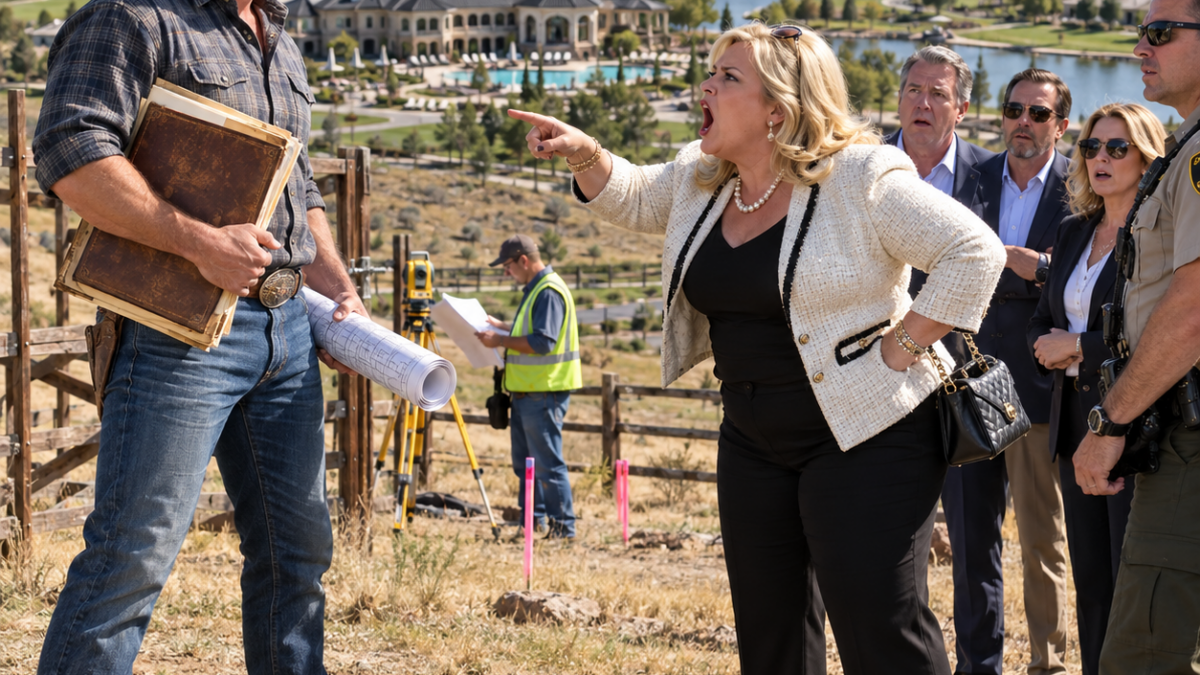
PART 2
I did not argue with him at the gate.
That surprised Victor.
I could see it.
He had prepared for anger.
Prepared for grief.
Prepared for a grandson shouting about family land while uniformed security watched from ten feet away.
Instead, I unfolded the damaged deed copy as carefully as I could, placed it on the passenger seat, and looked at him.
“You’re Victor Stanton?”
“You already know that.”
“President of the HOA?”
“For eighteen years.”
“Anything else?”
His face changed almost imperceptibly.
“What does that mean?”
“Nothing yet.”
I picked up the business card he had pressed against me.
RICHARD KELLER
KELLER, MOSS & FENWICK
Counsel for Desert Crown Estates HOA
Victor mistook my silence for hesitation.
“If you intend to waste money challenging this community, contact Richard.”
“I will.”
He started toward his Mercedes.
Then turned.
“One more thing.”
I waited.
“People who create trouble here usually discover trouble travels both directions.”
There it was.
Vague enough to deny later.
Specific enough to understand now.
“What kind of trouble?”
His smile returned.
“Legal fees. Reputation. Credit. Property disputes. Life gets complicated.”
“For people who ask questions?”
“For people who refuse to accept answers.”
I nodded.
“Good to know.”
That confused him more than anger would have.
He climbed into his Mercedes.
The gate opened for him.
Closed behind him.
And I sat in my rental car looking at 180 homes built on land that—if Evelyn was right—had never legally left my family.
I should have felt powerful.
I didn’t.
I felt sick.
Because those homes contained families.
Mortgages.
Children.
Retirees.
People who had likely bought in good faith.
If fraud had happened in 1989, most residents were not responsible for it.
Victor wanted me angry enough to see everyone behind that gate as an enemy.
That would have made his defense easier.
Greedy outsider attacks homeowners.
Grandson tries to steal homes.
Forensic accountant exploits technicality.
I had seen that strategy before in corporate cases.
If the facts are bad, redefine the conflict.
So before driving away, I took out my phone and photographed the entrance.
Gate.
Sign.
Guardhouse.
Victor’s Mercedes.
Then I emailed the pictures to myself.
DESERT CROWN — SITE VISIT 1
That night I went to Grandpa’s trailer.
It sat several miles away on the remaining section of desert nobody had developed.
The place smelled exactly as I remembered from childhood.
Coffee.
Dust.
Old wood.
Machine oil.
Grandpa kept everything.
Receipts from 1978.
Manuals for appliances he no longer owned.
Photographs with names written carefully on the back.
In the bedroom closet, beneath folded blankets, I found a leather notebook.
No label.
Inside:
Dates.
Dollar amounts.
Names.
Initials.
Parcel numbers.
Assessment amounts.
Arrows.
Questions.
G. HUTCHINS — SURVEY?
COUNTY MARCH FILING AGAIN
STANTON CONST.
MARSH?
WHERE IS RESERVE?
The notes meant almost nothing at first.
But I recognized the structure.
Grandpa had not been journaling.
He had been investigating.
Poorly organized.
Without subpoena power.
Without access to corporate databases.
But investigating.
I sat on the edge of his bed until after midnight, reading thirty years of one man refusing to accept that an entire development could simply appear on his land and somehow become legitimate because enough time passed.
One entry from 2009 hit me harder than the others.
Maybe Christopher will understand numbers someday. Don’t involve him unless necessary. Let boy have his life.
I read it twice.
Then closed the notebook.
Grandpa had protected me from this.
Maybe that was why he rarely discussed the subdivision.
I remembered asking once, when I was seventeen, why houses stood on land he claimed used to belong to him.
He said:
“Some fights swallow everything around them.”
Then changed the subject.
At the time I thought he was bitter.
Now I wondered if he had been trying not to make his fight mine.
Too late.
Three days later, I met Diane Ortega.
Evelyn found her.
Real-estate litigator.
Developer disputes.
Title fraud.
HOA litigation.
Her office looked less polished than Victor’s neighborhood and more dangerous.
Files stacked everywhere.
Court decisions framed on the wall.
A whiteboard covered in parcel numbers.
She read Grandpa’s deed.
County map.
Evelyn’s preliminary title work.
Then leaned back.
“This is either one of the largest clerical disasters I’ve seen…”
“Or?”
“Fraud.”
“What do you think?”
“I don’t think yet.”
Good answer.
She tapped the deed.
“A deed tells us Walter owned it in 1952.”
Then the Desert Crown plat.
“This tells us somebody claimed a different title history in 1989.”
She placed her palms on the desk.
“Our job is everything between.”
That began the forensic title examination.
Slow.
Bureaucratic.
Frustrating.
Which meant useful.
Fraud thrives on people becoming impatient with boring documents.
We requested:
Original 1952 survey.
Tax histories.
Recorded liens.
Transfers.
Easements.
Probate documents.
Subdivision filing.
Development approvals.
HOA incorporation records.
CC&Rs.
Planning minutes.
Historical assessor maps.
County auction records.
Corporate filings.
Some arrived digitally.
Others required archive pulls.
A few were stored off-site.
Eight days later, Diane called.
“Come in.”
Two maps waited on her conference table.
Original parcel.
1989 subdivision plat.
She placed a transparent overlay between them.
My stomach tightened.
The boundary had moved.
Not a surveying discrepancy.
Not a few feet.
Hundreds of yards in places.
“Who signed this?”
I pointed to the 1989 survey.
“Gerald Hutchins.”
Diane had already researched him.
Licensed surveyor at the time.
License revoked in 1994.
Reason:
Falsified boundary reports connected with two unrelated developments.
I looked at her.
“You’re kidding.”
“No.”
“So the man who created Desert Crown’s boundary map was later caught falsifying boundaries somewhere else.”
“Yes.”
“Did Grandpa know?”
“Your notebook mentions his name.”
I opened the leather book.
Survey marker moved. Reported. No response. G. Hutchins involved?
Grandpa had seen pieces.
Next came the supposed county auction.
Crown Development’s filing claimed it acquired unowned desert acreage through an auction.
Diane requested every auction record in the relevant years.
Nothing.
No parcel.
No transaction.
No transfer to Crown Development.
No government ownership preceding it.
“You can’t buy something from the county if the county never owned it,” I said.
“Correct.”
“So somebody invented an acquisition.”
“That’s what it looks like.”
“Who signed?”
We followed signatures.
Corporate records eventually produced Crown Development Group’s founders.
Raymond Stanton.
And his son.
Victor Stanton.
I stared at the filing.
Same Victor.
HOA president.
Mercedes.
Crushed deed.
Go back to Chicago.
He had not inherited merely the presidency.
His family had developed the subdivision.
His father had been part of the original land transaction that apparently never happened.
Diane watched me.
“Do not contact him.”
“I wasn’t planning to.”
“Good.”
“He already offered me his lawyer.”
“Even better.”
“Why?”
“Because now every communication goes through counsel.”
I smiled.
“You really do enjoy this.”
“I enjoy people putting bad decisions in writing.”
So did I.
I started with Grandpa’s notebook.
The random names became coordinates.
The numbers became recurring assessments.
Dates lined up with filings.
Then something else appeared.
March.
Again and again.
Survey amendment.
Subdivision-related filing.
Supplemental CC&R.
Administrative change.
March.
March.
March.
Every year wasn’t relevant.
But an unusual percentage of questionable historical filings clustered around the county planning office’s budget cycle.
I called a retired county clerk whose name appeared on one archival routing slip.
She remembered those years.
“March was hell.”
“Why?”
“Budget submissions. Staffing. Year-end project reports. Half the office worked overtime.”
“Could documents receive less review?”
She laughed.
“Everything received less review.”
I wrote it down.
The fraud, if fraud it was, had not merely used false documents.
It may have exploited overwhelmed systems.
Grandpa had seen individual events.
My job taught me to see patterns between events.
The more I worked, the more personal it became.
That worried me.
Good investigations require emotional distance.
Every time I opened Grandpa’s notebook, distance disappeared.
So Diane enforced discipline.
“Source?”
she would ask.
“Notebook.”
“Not enough.”
“County record confirms.”
“Then cite county.”
Or:
“Victor controls the shell company.”
“Can you prove it?”
“Not yet.”
“Then you don’t say it.”
Or:
“Everybody knows.”
“I don’t bill for everybody knows.”
She was infuriating.
Exactly what I needed.
The court records became our next path.
Seven significant homeowner disputes involving Desert Crown in fifteen years.
Different plaintiffs.
Different allegations.
Same outcome:
Residents lost.
Settled quietly.
Dropped cases.
Arbitration.
Procedural defeat.
One case simply died.
It belonged to Helen Nakamura.
I knocked on her door on a Wednesday afternoon.
She opened it wearing gardening gloves.
Seventy-something.
Small frame.
Sharp eyes.
“Mrs. Nakamura?”
“Yes?”
“My name is Christopher Howard.”
No reaction.
“Walter Howard was my grandfather.”
Her face changed.
“Walter’s grandson?”
“Yes.”
She took a breath.
“He said someone might come someday.”
That nearly broke me.
“What did he say?”
“That if he couldn’t finish it, maybe family would.”
She let me inside.
Tea.
Chipped cups.
Photographs of her husband everywhere.
Koji.
Forty-four years married.
Pancreatic cancer.
He loved chrysanthemums.
After he died, Helen planted them near the front walk.
The HOA fined her.
Unauthorized landscaping.
Initial violation.
Daily penalties.
Legal fees.
By the time the dispute escalated:
$15,000.
“For flowers?”
I asked.
“For not removing them fast enough.”
She showed me the old notices.
Then a lien warning.
“My home was paid off.”
Her hands shook.
“Forty years of work. Suddenly I’m reading a letter saying they can foreclose because I planted my husband’s flowers.”
“You sued.”
“Yes.”
“Then withdrew.”
She nodded.
“Why?”
She handed me a twelve-page letter from Sentinel Property Management.
Counterclaims.
Attorney fees.
Foreclosure implications.
Defamation warning.
Every possible consequence inflated until surrender looked like survival.
“I was seventy.”
Helen’s voice became small.
“I had just buried my husband.”
She looked at me.
“I couldn’t bury my home too.”
I thought of Victor telling me Grandpa was confused.
I asked:
“Did Walter help you?”
Her eyes filled.
“He tried.”
“How?”
“He came over with papers.”
“Of course he did.”
“He told me the land itself might not belong to the HOA.”
“Did you believe him?”
“No.”
Honest.
“Why not?”
“Because everyone said he was crazy.”
That hurt more than if she had lied.
Helen reached across the table.
“I was wrong.”
“You were afraid.”
“So was he.”
I looked at the chrysanthemums through her window.
Still there.
Smaller garden.
But alive.
I asked if she would help us request HOA records.
She hesitated.
Then:
“Yes.”
Derek Manning came next.
Former Marine.
Two Afghanistan tours.
IED.
Wheelchair.
He had installed a ramp.
HOA demanded removal because he missed architectural approval.
Derek cited disability accommodation protections.
The HOA litigated.
Eighteen months.
He lost on procedure.
A filing deadline.
Three days.
“They never had to prove the ramp hurt anything.”
he told me.
“They only had to outlast me.”
But during discovery, his lawyer got financial summaries.
Stanton Construction appeared repeatedly.
Huge contracts.
Roads.
Pool systems.
Drainage.
Clubhouse.
I asked:
“Victor Stanton owns this?”
Derek nodded.
“Everybody knows.”
“And the board approves it?”
“Victor votes.”
“Conflict disclosure?”
“Sometimes there’s boilerplate.”
“Competitive bidding?”
He laughed.
“Good one.”
Sophia Reyes nearly lost her home over $2,400 in unpaid dues during the pandemic.
Four-month furlough.
Single mother.
Hospital administrator.
She borrowed money from her sister to stop foreclosure.
But Sophia understood budgets.
She noticed administrative costs rising while services declined.
Fewer landscaping crews.
Less pool maintenance.
Higher fees.
“Numbers were moving in opposite directions.”
she said.
“What did you do?”
“Asked questions.”
“And?”
“They audited me.”
“Meaning?”
“Suddenly every payment I’d ever made was ‘under review.’”
I knew that tactic.
Turn the questioner into the subject.
Over the next week I interviewed more residents.
Widows.
Veterans.
Parents.
Retirees.
People with money.
People without.
Different disputes.
Same architecture.
Pressure.
Fees.
Threats.
Delay.
Isolation.
Grandpa had tried building a coalition in 2012.
Helen told me why it failed.
The Henderson family had challenged a lien.
HOA foreclosed.
House later bought at auction by an entity connected to the development network.
Flipped.
Profit.
After that, Grandpa couldn’t get five signatures.
Fear had defeated facts.
That night I finally understood his failure.
Grandpa had spent decades proving he was right.
But being right wasn’t enough.
He needed people willing to stand beside him while he was right.
That became my strategy.
First, though, I needed numbers.
Helen submitted a lawful financial-record request through Diane.
The HOA delayed.
Then produced one box.
Five years.
Budgets.
Invoices.
Expense statements.
Reconciliations.
Beautifully organized.
Too beautiful.
Most novice fraud investigators look for chaos.
Professionals also look for artificial perfection.
I started with vendors.
Stanton Construction.
Five-year payments:
Approximately $1.2 million.
Road resurfacing billed:
$340,000.
I called three Phoenix-area contractors using the same specifications.
Comparable estimates:
Around $115,000.
Pool equipment:
Billed $52,000.
Comparable replacement:
Closer to $18,000.
Drainage project:
$127,000.
Comparable:
Around $40,000.
Not exact proof.
Market rates vary.
But the pattern demanded explanation.
Then I visited the work.
The “resurfaced” roads had cracking inconsistent with the invoiced scope.
The pool machinery looked older than paperwork suggested.
Drainage improvements were difficult to locate at all.
Either Desert Crown received astonishingly bad work.
Or residents were paying for more than they received.
Then:
Southwest Infrastructure Partners.
Three invoices.
$89,000.
Consulting.
No business registry record.
Disconnected phone.
No credible address.
Ghost vendor.
I called Diane.
“Found one.”
“One what?”
“A company that doesn’t exist.”
“Don’t say doesn’t exist.”
“Why?”
“Say we cannot verify its legal existence.”
“You ruin everything.”
“That is why you pay me.”
Next came raw bank records.
The HOA resisted.
Diane fought.
Eventually statements arrived.
That was when the accounting picture changed from suspicious to ugly.
Official summaries omitted payments appearing in the bank.
Three checks to Stanton Construction.
Total:
$147,000.
No corresponding invoice package.
Then periodic transfers.
$5,000.
$7,500.
$8,000.
Destination labeled:
DCE ADMINISTRATIVE RESERVE.
Over five years:
About $320,000.
But that “reserve” was not held in the HOA’s normal banking structure.
It flowed toward an entity called Desert Crown Enterprises LLC.
Nevada registration.
Opaque ownership.
No obvious operating purpose.
Registered agent:
Las Vegas law firm specializing in entity formation.
I found Grandpa’s note:
ADMIN RESERVE? WHERE?
He had seen the smoke.
I finally had a path toward the fire.
Desert Crown Enterprises had been formed in 2008.
Same year Raymond Stanton died.
Same year Victor consolidated more control over the HOA and development interests.
Coincidence is not evidence.
So I kept going.
Original Nevada formation documents.
Notary acknowledgment.
Witness line.
Name:
Gerald Hutchins.
The surveyor.
The man who signed the questionable 1989 boundary.
The man who later lost his surveying license for falsification.
Still connected nineteen years later.
I sat in my hotel room at 2:14 a.m. staring at his signature.
That was the moment I stopped believing Desert Crown’s problems were separate episodes.
Land.
Survey.
Construction.
Shell company.
Assessments.
They formed a network.
Then Leonard Marsh.
HOA treasurer since 2012.
His insurance agency held the association’s liability contract.
Another financial conflict.
Another person whose income depended on the existing structure remaining unchallenged.
I called Diane.
“I have enough.”
“For what?”
“To burn the whole thing down.”
Silence.
Then:
“No.”
I rubbed my forehead.
“Diane—”
“We are not burning anything.”
“You know what I mean.”
“I know exactly what you mean, and that’s why I’m correcting you.”
I sat back.
“What do you suggest?”
“We decide what outcome you actually want.”
“Truth.”
“That is not an outcome.”
“Victor removed.”
“Better.”
“Money recovered.”
“Better.”
“Residents protected.”
“Better.”
“My land recognized.”
“Better.”
“And people who committed crimes prosecuted.”
“That part is not your decision.”
I hated how reasonable she was.
“There’s an annual meeting in three weeks.”
“I know.”
“I want to present there.”
She was quiet.
“That creates risk.”
“So does waiting.”
“Public accusations can create defamation exposure.”
“I’ll show documents.”
“Good.”
“I won’t speculate.”
“Better.”
“And we file first.”
Now she smiled.
“Exactly.”
Quiet-title action.
Civil fraud allegations based on documented evidence.
Preservation notices.
Criminal referral packet.
We built everything before the annual meeting so Victor could not erase the problem by walking out of the room.
Professor Harold Jenkins, retired ASU law professor, reviewed our strategy.
He listened.
Read.
Then said:
“You’re going to make one mistake if I let you.”
“What?”
“You’re going to lead with your grandfather.”
“That’s the point.”
“No.”
I bristled.
He continued.
“You care about Walter.”
“Yes.”
“Residents care about their homes.”
“So?”
“So Victor will say you are an outsider threatening them over an old family grievance.”
“I own the land.”
“Which frightens them.”
That stopped me.
Jenkins tapped the spreadsheet.
“Lead here.”
“The money.”
“Their money.”
He leaned closer.
“You need the room angry at Victor before they understand you could theoretically destabilize their titles.”
That sounded manipulative.
I said so.
“It’s sequencing.”
he replied.
“If facts are true, order matters.”
He was right.
I rebuilt the presentation.
Slide one:
Ten-year fines and special assessments.
Approximately $2 million beyond normal dues.
Slide two:
Stanton Construction contracts.
Slide three:
Market comparisons.
Slide four:
Photographs.
Slide five:
Ghost vendor.
Slide six:
Shell-company transfers.
Only after that:
Land.
1952 deed.
False auction claim.
Falsified boundary.
Grandpa’s letters.
Jenkins also warned me about meeting procedure.
Homeowner comments scheduled last.
Victor could delay.
Adjourn.
Manufacture a disruption.
So Diane found the process available to request agenda consideration and create a written record if denied.
We submitted a formal written request more than seventy-two hours before the meeting.
Presentation regarding financial irregularities and title concerns.
Copied relevant state oversight contacts.
Victor denied it.
In writing.
That was fine.
Denial became evidence of obstruction.
Then I delivered a one-page letter to every home.
Not accusations.
Not sensational claims.
Just:
Significant documented information concerning Desert Crown Estates financial management, vendor relationships, and land title will be presented at the annual meeting. Residents are encouraged to attend and review the evidence personally.
Some people took the letter silently.
One man tore it in half.
A woman asked:
“Are you trying to take our houses?”
“No.”
“Then why are you here?”
“Because people lied to you about where your money and your land came from.”
She closed her door.
Retaliation began almost immediately.
Sentinel Property Management warned residents about fraudulent claims.
Leonard Marsh described me as a “known litigant.”
Victor’s attorney threatened defamation action.
Helen’s old lien suddenly faced “compliance review.”
Derek’s pending architectural request was denied.
Sophia’s account was audited.
The message was obvious.
Help Christopher.
Develop problems.
I documented each one.
Then the white sedan appeared.
First night:
Hotel lot.
Second:
Across from Diane’s office.
Third:
Behind me on the highway.
I changed lanes.
It changed.
I exited.
It exited.
I photographed the plate at a light.
Corporate fleet.
Private security company.
I filed a police report.
Diane said:
“Do not confront them.”
“I know.”
“They want you angry.”
“I know.”
“Good.”
The settlement offer arrived Friday.
Three million dollars.
NDA.
Dismiss claims.
Transfer no additional evidence publicly.
Resolve title dispute privately.
Walk away.
I stared at the number.
$3,000,000.
I was not wealthy.
Comfortable, yes.
But three million changes lives.
Pays for homes.
Retirement.
Freedom.
Diane asked:
“What do you want me to tell them?”
I didn’t answer immediately.
Grandpa’s trailer was quiet that night.
I opened the leather notebook.
His handwriting.
Three decades.
He probably would have taken the money at some point.
Maybe not for himself.
Maybe because thirty-five years of fighting makes peace expensive enough to buy.
Then I found another note.
Helen afraid. Derek fighting. People think alone. Need everyone together or Stanton wins again.
That settled it.
I called Diane.
“No.”
“Certain?”
“Yes.”
“They may increase.”
“Still no.”
“They’re buying silence.”
“Yes.”
“And you’re refusing five lifetimes of legal fees.”
“Yes.”
She sighed.
“I hate principled clients.”
“Bill me.”
Monday night.
11:47 p.m.
Victor called directly.
I answered.
“Christopher.”
“Victor.”
“I’m tired of this.”
“So am I.”
“Five million.”
I stood still.
“What?”
“Five million dollars.”
“That’s different from Friday.”
“Circumstances changed.”
“What changed?”
“You’re creating instability.”
“No. I’m revealing it.”
He exhaled.
“Take the money.”
“And?”
“Nondisclosure. Litigation disappears. You recognize existing property arrangements. Everyone moves on.”
“Why would you pay five million for a baseless claim?”
Silence.
Then:
“Because litigation is expensive.”
“So is prison.”
His voice sharpened.
“Be careful.”
“Victor, Arizona permits recording under circumstances that apply here. This call is being preserved.”
Long silence.
“You think that scares me?”
“No.”
“Then why tell me?”
“Because tomorrow I want you focused on the truth.”
I hung up.
The annual meeting started Tuesday.
By 6:15, half the room was full.
By 6:45, standing room was disappearing.
Helen sat near the back.
Derek positioned his wheelchair beside the center aisle.
Sophia stood with her sister.
Professor Jenkins had a legal pad.
Diane sat near the front.
Victor entered at 6:45.
Navy blazer.
Perfect hair.
Confident.
Leonard Marsh followed.
Three other directors.
They took their positions.
Behind them:
ANNUAL MEETING — BUILDING COMMUNITY TOGETHER
The irony almost made me laugh.
Victor called the meeting at 7:05.
Before routine business:
“Recent disturbances.”
That meant me.
He reassured residents that an outsider was spreading baseless allegations.
Attorneys handling it.
Community secure.
No cause for alarm.
I stood.
“Point of order.”
Two hundred heads turned.
Victor saw me.
His jaw tightened.
I referenced our formal agenda request.
Asked that the denial and written submission be acknowledged on the record.
Victor tried to move on.
Derek spoke.
“If we’re voting on budgets, we should hear financial concerns before voting.”
A resident objected.
Frank Bellamy.
Longtime Victor supporter.
“This is ridiculous. Why are we letting some outsider hijack the meeting?”
Several people agreed.
I expected that.
Derek didn’t move.
“I paid dues here twelve years.”
he said.
“I want answers.”
Someone behind him:
“Let the guy speak.”
Another:
“Ten minutes.”
Victor realized denying me could become worse than letting me talk.
“Fine.”
He said.
“Ten minutes.”
I walked to the projector.
Connected the laptop.
Looked at the room.
Not Victor.
The residents.
“My name is Christopher Howard.”
I clicked.
A graph appeared.
“Over the last ten years, Desert Crown homeowners have paid approximately two million dollars in fines and special assessments beyond normal dues.”
People shifted.
“I’m not starting tonight with my property claim.”
Victor’s eyes narrowed.
“I’m starting with your money.”
Next slide.
Stanton Construction.
Invoices.
$340,000 road project.
Market comparison approximately $115,000.
$52,000 pool equipment.
Comparable figure much lower.
$127,000 drainage work.
Comparable bids around a fraction of that.
Leonard Marsh interrupted.
“These are simplistic comparisons.”
“I expected that.”
Next slide.
Scope-of-work comparisons.
Like-for-like specifications.
Three contractors.
Detailed assumptions.
“I’m not asking you to trust me.”
I said.
“I’m asking you to verify this tomorrow.”
Frank Bellamy leaned forward.
Victor checked his watch.
Next:
Photos.
Cracked roads.
Aging pool equipment.
Drainage areas inconsistent with billed improvements.
People murmured.
Next:
Southwest Infrastructure Partners.
$89,000.
“No verifiable business registration found.”
Leonard objected again.
“Vendors can use trade names.”
“Correct.”
I clicked.
“No alternate legal entity identified. Phone disconnected. Listed address invalid for the claimed operation.”
The room got louder.
Victor raised his microphone.
“Your time is almost finished.”
“Let him finish!”
Someone shouted.
Derek:
“Let him finish.”
More voices.
Victor looked toward the board.
Nobody wanted to be the person who ended the presentation now.
I continued.
Desert Crown Enterprises LLC.
Nevada.
$320,000 in transfers.
Anonymous structure.
Registered agent.
Formation year.
Gerald Hutchins as witness.
I displayed Hutchins’s surveying history.
License loss.
Boundary problems.
Frank Bellamy stood.
“Who authorized these transfers?”
I looked toward Leonard.
“That’s a question for your board.”
Leonard grabbed the microphone.
“These were legitimate reserve-management activities.”
“Then show the reserve.”
I said.
“Where is the money?”
He stopped.
“Which bank?”
Silence.
“What investment account?”
Nothing.
“What reserve statement was distributed to homeowners?”
Leonard’s fingers tightened around the microphone.
Victor stood.
“This is irresponsible.”
I clicked again.
Grandpa’s deed filled the screen.
Walter Howard.
1,000 acres.
The room changed.
Even people who knew rumors weren’t prepared to see the document full-screen.
“This parcel was never legally transferred to Crown Development.”
Victor pointed at me.
“That is disputed.”
“Then show the deed.”
He stopped.
“Crown Development’s 1989 paperwork claims the land came through a county auction.”
I clicked.
Auction search.
“No auction occurred.”
Murmurs became voices.
“The county never owned the land.”
Next:
Original survey versus 1989 plat.
Boundary shift.
Surveyor:
Gerald Hutchins.
Same man tied decades later to the Nevada entity receiving HOA money.
Victor was sweating.
“This is a conspiracy theory.”
I looked at him.
“No.”
Then clicked to a scanned corporate filing.
“Crown Development Group was founded by Raymond Stanton and Victor Stanton.”
The room erupted.
Some residents turned toward Victor.
Others toward me.
A woman shouted:
“You developed this?”
Victor grabbed his microphone.
“My father developed Desert Crown with all required approvals.”
“Then produce the recorded purchase deed.”
Diane watched silently.
Victor’s mouth opened.
Closed.
I continued.
“My grandfather objected beginning in 1990.”
Letters appeared.
Fourth request.
Unauthorized construction.
HOA attorney dismissal.
Another letter.
Another.
Another.
“Twenty-five years.”
I said.
“He told people the land was his.”
Victor snapped:
“He was confused.”
The room became quiet.
I looked at Victor.
“He was confused for twenty-five years?”
“He was obsessed.”
“Last night you offered me five million dollars.”
Absolute silence.
Victor’s face changed.
“You are mischaracterizing settlement discussions.”
“I preserved the call.”
Frank Bellamy turned.
“You offered him five million?”
Victor’s confidence cracked.
“Settlement is not admission.”
“Correct.”
I said.
“But residents can decide why you considered five million dollars a reasonable cost to silence a baseless claim.”
Then something inside Victor finally broke.
Maybe thirty-five years of secrets.
Maybe two hundred residents staring.
Maybe knowing regulators had documents.
Maybe Grandpa’s deed behind him ten feet high.
He slammed his hand onto the board table.
“Your grandfather was a senile old fool!”
Gasps.
“He sat in that trailer while we built something out of nothing!”
I didn’t move.
Victor swept his arm toward the room.
“Look around!”
His voice cracked.
“Your homes have value because of us!”
Not:
Because of you.
Because of us.
Then:
“My father created this community!”
I said quietly:
“On whose land?”
Victor froze.
Everyone heard it.
He looked at the screen.
Then at me.
Then the room.
His own words had trapped him harder than mine ever could.
Margaret Chen, a twenty-year resident, stood.
“I move to suspend the board pending independent audit and legal review.”
“Second.”
Derek.
“Third.”
Another resident.
Victor shouted about procedure.
Nobody cared.
A vote began.
Hands rose.
Not unanimously.
But overwhelmingly.
Leonard Marsh looked like he might vomit.
Two directors moved their chairs physically away from Victor.
That image stayed with me.
Thirty-five years of power.
And suddenly nobody wanted to sit near him.
Victor found my eyes.
I expected hatred.
What I saw was calculation.
Still calculating.
Even now.
I walked toward him.
Diane caught my sleeve.
“Don’t.”
She was right.
I stopped.
This was no longer my confrontation.
It belonged to the community.
The next morning, state authorities opened formal reviews.
Investigators requested documents.
Then federal interest followed the money.
Wire transfers.
Interstate shell structures.
Potential fraud.
Money movement.
Victor was arrested later after investigators assembled sufficient grounds.
Leonard Marsh was questioned.
Search warrants followed.
Records seized.
The machine did not explode in one cinematic afternoon.
Real investigations rarely do.
They grind.
Boxes.
Forensic images.
Bank subpoenas.
Interviews.
Motions.
Delays.
The annual meeting was the emotional climax.
Legally, it was the beginning.
Our quiet-title lawsuit moved first.
That terrified homeowners more than the criminal case.
Understandably.
One hundred eighty families had bought houses in good faith.
Mortgages.
Retirement.
Children.
They wanted one answer:
“Are you taking our homes?”
At the first community meeting after Victor’s suspension, I stood before them.
“No.”
Some didn’t believe me.
I continued.
“I’m asking the court to determine legal ownership of the underlying land.”
Frank Bellamy crossed his arms.
“And when you win?”
“If I win.”
“Don’t play games.”
Fair.
I looked at Diane.
Then back at the residents.
“My proposal is a ninety-nine-year ground lease to current homeowners.”
The room went quiet.
“At what price?”
Someone asked.
“One dollar per year.”
People stared.
Frank actually laughed.
“You expect us to believe that?”
“I don’t need you to believe it. Diane has draft terms.”
She distributed copies.
Transferable with home sales.
Nominal annual rent.
Protection for existing residents.
Mechanism to clean title.
No attempt to evict innocent families.
A woman near the front began crying.
Her husband held her shoulder.
Derek looked at me.
“Why?”
That question mattered.
“Because you didn’t steal Grandpa’s land.”
I said.
“Most of you bought from people who told you title was clean.”
I looked toward the clubhouse.
“The people who committed fraud should pay for fraud.”
Then:
“Not the families they used as cover.”
Grandpa would have done the same.
I knew that.
Even though part of me wanted something harsher.
Revenge is easier when you stop seeing bystanders.
Grandpa never stopped.
He had called the homeowners “neighbors” even while their houses stood on his land.
I finally understood why.
The legal case took fourteen months.
Not the clean march toward justice people imagine after dramatic meetings.
Five months in, Victor’s lawyers attacked Helen’s records request.
They argued she acted as my agent.
Some records were temporarily suppressed from one portion of the proceeding.
For six weeks, our case felt suddenly unstable.
I barely slept.
Diane kept reminding me:
“Evidence doesn’t disappear because one path closes.”
Sophia organized homeowners.
Eleven separate record requests.
Independent.
Different dates.
Different residents.
The HOA’s obligation existed to them regardless of me.
When access issues were corrected and additional documents entered through proper channels, the case strengthened again.
That period humbled me.
I had started thinking evidence made victory inevitable.
It doesn’t.
Procedure matters.
Chain of custody matters.
Standing matters.
Timing matters.
Victor had survived decades because he understood those technicalities.
We had to understand them better.
The quiet-title judgment came on a Monday morning.
Judge Elena Marquez read from a written ruling.
No dramatic speech.
No gasp.
Just law.
The 1,000-acre parcel had not been legally transferred out of Walter Howard’s ownership through the alleged 1989 transaction.
The purported county-auction narrative lacked support.
Subsequent development did not magically create the missing conveyance.
Title rested with Grandpa’s estate and therefore, under the estate documents, with me.
I closed my eyes.
Diane touched my arm.
“You okay?”
I thought about Grandpa.
His trailer.
His letters.
The line:
Maybe Christopher will understand numbers someday.
“Yeah.”
I whispered.
But I wasn’t.
Not yet.
Ownership created responsibility.
Every resident received the lease proposal.
Most signed.
One dollar.
Ninety-nine years.
Seventeen families chose to sell instead.
Some said they could never feel secure knowing my estate retained underlying rights.
I understood.
Their departures hurt the community.
Vacant homes.
Budget gaps.
Resale uncertainty.
People blamed me.
Bill Thornton organized residents who believed exposing the title issue had damaged property values unnecessarily.
At one meeting, he confronted me.
“You could have left it alone.”
“Victor stole from you.”
“Maybe.”
“He built on stolen land.”
“Thirty-five years ago.”
“So time legalizes fraud?”
“No.”
Bill’s face reddened.
“But my home lost forty thousand in appraised value during this mess.”
I had no clever answer.
“That’s real.”
I said.
“It is.”
“I’m sorry.”
“You caused it.”
“Victor caused the underlying problem.”
“You exposed it.”
That distinction was legally correct.
Emotionally incomplete.
Bill continued.
“My wife wanted to retire next year.”
I looked at him.
“I understand why you’re angry.”
“No, you don’t.”
Maybe I didn’t.
Justice creates casualties even when you try to avoid them.
That became one of the hardest lessons.
The criminal and financial cases moved simultaneously.
Forensic investigators validated much of what we had found.
Inflated related-party contracts.
Unreported conflicts.
False or unsupported vendor invoices.
Shell-company transfers.
Manipulated development records.
The $89,000 ghost vendor trail became complicated.
Some money could be traced.
Some disappeared.
The DCE reserve account provided another path.
Victor’s defense was sophisticated.
He argued management discretion.
Legacy paperwork.
Development-era confusion.
Market-based contract pricing.
Bad bookkeeping rather than fraud.
For some transactions, that explanation created doubt.
For others, it did not.
The corporate links were too strong.
Signatures too repetitive.
Money too patterned.
Gerald Hutchins was identified as an important historical witness.
But age and health complicated prosecution.
He died before every question could be answered.
That bothered me.
I wanted the entire origin story.
Who first proposed falsifying the acquisition?
Raymond Stanton?
Hutchins?
Someone in county planning?
How many people knowingly participated in 1989?
We never learned all of it.
Perfect truth is almost as rare as perfect justice.
Victor eventually accepted a plea agreement.
Twelve years in federal prison.
Asset forfeiture.
Permanent prohibition from fiduciary roles.
Leonard Marsh cooperated.
Four years.
Restitution.
His cooperation helped reconstruct payment approvals and identify additional conflicts.
Some homeowners hated that he received less time.
Derek said:
“I’d rather get the truth than satisfy my anger.”
That became our unofficial principle.
The financial recovery exceeded $1.4 million.
Residents harmed by improper liens and abusive fines received portions through settlements and restitution frameworks.
Helen’s $15,000 chrysanthemum penalties were erased.
Her lien disappeared.
The day she received confirmation, she called me crying.
“I keep rereading it.”
“Believe it.”
“I’ve been scared of that paper for years.”
“Burn it.”
She laughed.
“No.”
“Why not?”
“I’m framing it.”
“What?”
“The release.”
“Oh.”
Then:
“And I’m planting more flowers.”
Derek became HOA president.
That surprised him more than anybody.
“You hate HOAs.”
I reminded him.
“Correct.”
“So naturally you became president.”
“Temporary insanity.”
Helen became treasurer.
Sophia chaired financial oversight.
Their first reforms were obvious.
Competitive bidding.
Conflict disclosures.
No director voting on contracts involving family businesses.
Monthly financial statements accessible to residents.
Independent annual audit.
Lien escalation requiring multiple reviews.
Accommodation process redesigned so nobody in a wheelchair could ever again be threatened with removal of necessary access because of a technical filing date.
Meetings became longer.
More argumentative.
More democratic.
Derek called me one night.
“I think Victor had one thing right.”
“What?”
“Dictatorship is efficient.”
I laughed.
“What happened?”
“Four-hour landscaping debate.”
“That’s democracy.”
“It’s punishment.”
“Enjoy.”
“Come become vice president.”
“Absolutely not.”
Governing proved difficult.
Residents who had united against Victor disagreed about almost everything afterward.
Landscaping vendor.
Pool hours.
Golf-course expense.
Reserve levels.
Security staffing.
One committee chair resigned after six months.
Another lasted three.
People became exhausted.
That worried Helen.
She called.
“Are we failing?”
“No.”
“Feels like it.”
“People are arguing in public.”
“That’s not reassuring.”
“It should be.”
“Why?”
“Because they used to be afraid to disagree.”
Silence.
Then:
“I hate when you make sense.”
“Talk to Diane. She hates it too.”
The entrance sign eventually changed.
Not immediately.
The community voted.
Arguments lasted months.
Some residents wanted to erase Desert Crown entirely.
Others said changing the name punished families who had built lives there.
The compromise:
HOWARD COMMUNITY
ESTABLISHED 1989
RESTORED 2024
The first time I saw it, I stopped the car.
Not because my name was there.
Because Grandpa’s finally was in a place where people had once treated it like a nuisance.
I hated that he never saw it.
Six months after Victor’s sentencing, I drove to the cemetery.
Early morning.
Arizona still cool.
Grandpa’s headstone:
WALTER JAMES HOWARD
1931–2023
I brought two things.
Yellow chrysanthemum.
Certified copy of the quiet-title judgment.
I put the flower on the stone.
Helen had taught me why chrysanthemums mattered.
Then placed the judgment beside it.
“It’s official.”
My voice sounded stupid in the open desert.
“Every acre.”
Wind moved through dry grass.
“I thought this was about proving you were right.”
I sat beside the grave.
“I was wrong.”
No answer, obviously.
“You already knew you were right.”
I looked at his name.
“You wanted them to stop hurting people.”
That was harder to say.
Because when I started, part of me absolutely wanted revenge.
Victor at the gate had humiliated Grandpa after his death.
Called him confused.
Crumpled his deed.
Threatened me.
I wanted Victor afraid.
I wanted him ruined.
And he was.
But somewhere between Helen’s flowers, Derek’s ramp, Sophia’s near-foreclosure, and two hundred residents at the meeting, revenge became smaller than the problem.
I touched the headstone.
“You were trying to build a coalition.”
Then laughed quietly.
“Turns out you were terrible at it.”
That felt like something I could say to Grandpa.
I drove back toward Howard Community.
At the entrance, yellow chrysanthemums lined the median.
Helen knelt in the dirt.
Gardening gloves.
Same woman who once nearly lost her home over flowers.
I lowered my window.
“Trying to get fined again?”
She looked up.
“Let them try.”
I laughed.
She stood slowly.
“My knees hate you.”
“Why me?”
“If you hadn’t done all this, I wouldn’t have volunteered for landscaping.”
“That logic is terrible.”
“Still blaming you.”
The flowers moved in the desert breeze.
“Grandpa would like these.”
I said.
Helen smiled.
“He did.”
“You showed him?”
“He visited before he got too weak.”
I turned toward her.
“When?”
“Years ago.”
“What did he say?”
“That chrysanthemums survive better than people think.”
That was Grandpa.
I looked toward the houses.
Children on bicycles.
Workers near the clubhouse.
Derek arguing with a contractor.
Sophia walking toward him carrying a binder thick enough to kill someone.
The community was imperfect.
Still divided.
Still carrying financial scars.
Still arguing about what the Howard name meant.
But no longer silent.
I returned briefly to Chicago.
My apartment felt smaller.
My old office felt stranger.
I resumed forensic work.
Corporate theft.
Procurement fraud.
Revenue recognition.
Things I understood.
Then Derek called.
“Got a weird one.”
“I’m working.”
“So?”
“So stop calling.”
“Woman in Nevada.”
“What about her?”
“HOA.”
“No.”
“Inflated maintenance contracts.”
“No.”
“Board president’s brother owns vendor.”
“Definitely no.”
“Residents who complain get liens.”
I closed my eyes.
“Derek.”
“She heard about Desert Crown.”
“Howard Community.”
“Nobody outside Arizona calls it that yet.”
“What does she want?”
“Someone who can look at records.”
“That’s not my problem.”
“Exactly what your grandfather said before making it everybody’s problem.”
“That is manipulative.”
“Yes.”
I didn’t answer.
For three days I tried not to think about the Nevada woman.
Then I opened the email Derek forwarded.
Her name was Rachel Pierce.
She had attached spreadsheets.
Not good spreadsheets.
But earnest.
Vendor payments.
Assessment increases.
Names.
Questions.
At the bottom she wrote:
I don’t know if this is fraud. I only know every time I ask why our dues keep rising, they tell me I’m the problem.
I stared at that sentence.
Helen.
Derek.
Sophia.
Grandpa.
Same architecture.
Different desert.
I called Diane.
“No.”
she said immediately.
“I haven’t asked anything.”
“You’re going to.”
“How do you know?”
“Because I know you.”
“I need a referral.”
“No.”
“Diane.”
“You have a job.”
“So do you.”
“I also have boundaries.”
“You billed me $220,000 teaching me about boundaries.”
“And apparently none of it worked.”
Eventually, she gave me three names.
That became my second HOA fraud review.
Then a third.
I never formally abandoned forensic accounting.
I expanded it.
HOA boards.
Condo associations.
Private communities.
Small governments.
Any organization where ordinary people assumed nobody could steal enough money to justify professional scrutiny.
They were often wrong.
Not every ugly budget contained fraud.
That mattered.
Sometimes dues were high because roofs really cost money.
Sometimes unpopular boards were honest.
Sometimes angry residents misunderstood reserves.
My first rule became:
Suspicion is not evidence.
Second:
Bad governance is not automatically criminal.
Third:
If someone tells you “everyone knows,” verify it.
Grandpa taught me the fourth:
Never investigate alone if the people affected are willing to stand together.
Years later, I returned to Howard Community for Helen’s eightieth birthday.
Derek had organized a surprise party at the clubhouse.
Same clubhouse where Victor once conducted meetings behind carefully controlled agendas.
Now folding tables filled the room.
Kids.
Neighbors.
Food.
Helen entered and immediately knew it was a surprise because everyone was terrible at pretending.
She pointed at Derek.
“You did this.”
“No evidence.”
“You’re a bad liar.”
“Christopher taught me forensic techniques.”
“Christopher taught you spreadsheets.”
“Same thing.”
She hugged me.
The chrysanthemums outside had multiplied.
No fines.
No violation letters.
No liens.
That made me absurdly happy.
After cake, I stepped outside.
The desert evening glowed orange.
A man I didn’t recognize approached.
“Christopher Howard?”
“Yes.”
“Bill Thornton.”
I remembered.
One of the residents who believed I had harmed the community.
We had not spoken in years.
“Bill.”
He looked uncomfortable.
“My wife retired.”
“I’m glad.”
“We almost left.”
“I remember.”
“House value recovered.”
“That’s good.”
He nodded toward the clubhouse.
“I still think you could’ve handled some things differently.”
“I probably could have.”
He seemed surprised.
“You do?”
“Yes.”
“I expected an argument.”
“I spent enough years arguing.”
He looked at the flowers.
“But Victor was stealing.”
“Yes.”
“And the land really was yours.”
“Yes.”
“And the leases stayed at a dollar.”
“Yes.”
Bill shoved his hands in his pockets.
“I was wrong about one thing.”
“What?”
“I thought you wanted the community destroyed.”
I looked through the window at Helen laughing with Sophia.
“So did Victor.”
Bill nodded.
Then walked away.
That conversation mattered to me almost as much as the court judgment.
Not because Bill apologized.
He barely did.
Because it confirmed something I had struggled with:
You can do the right thing and still hurt people.
The answer isn’t pretending the hurt doesn’t count.
The answer is taking responsibility for what comes after.
I inherited one thousand acres.
At first I thought inheritance meant ownership.
Then I learned it meant obligation.
The easiest revenge would have been economic.
Rent.
Evictions.
Development.
Sell the underlying land to an investment fund and let lawyers sort out 180 households.
I could have become extraordinarily wealthy.
Some advisers suggested exactly that.
One offered preliminary valuation numbers that made the five-million-dollar settlement Victor proposed look small.
I declined.
Not because money is evil.
Because Grandpa’s fight was never about extracting maximum value.
It was about refusing to let theft become truth simply because enough years passed.
Once truth was restored, I had to decide what kind of owner I wanted to be.
The answer came from the way Grandpa lived.
Cheap trailer.
Old boots.
Twenty-five years of letters.
He could be stubborn.
Difficult.
Sometimes lonely by his own making.
But he never tried to punish families for being deceived by Victor.
His anger stayed aimed at the people making decisions.
I tried to honor that.
The ninety-nine-year leases eventually became part of a larger title-cleanup arrangement.
Residents gained stability.
Future transactions had clear disclosure.
The HOA paid nominal ground rent.
My estate retained underlying rights with strong protections against future exploitation.
Every closing attorney could now understand the structure.
No ghosts.
No invented auction.
No missing deed.
No “everybody knows.”
Paper.
Clear.
Recorded.
Boring.
I love boring paperwork.
Victor hated it.
That may be why I won.
A few years after his sentencing, I received a letter from federal prison.
His name on the return address.
I nearly threw it away.
Diane told me:
“Read it before deciding.”
So I did.
Victor wrote three pages.
No apology at first.
Mostly justification.
His father built Desert Crown.
County officials knew.
Everyone benefited.
Grandpa waited too long.
Residents gained wealth.
The original land was “underutilized.”
Classic rationalization.
Then near the end:
You think your grandfather was a victim. My father believed Walter Howard was an obstacle to progress. I believed him. Maybe that belief made it easier not to ask questions I should have asked.
I read that twice.
Not confession.
But crack.
Then:
When you showed the deed at the annual meeting, I knew before anyone else in that room that it was real. I had seen a copy in my father’s files when I was twenty-six.
I stood up.
Walked around the room.
Read it again.
Victor knew.
Not merely inherited confusion.
Not merely relied on old paperwork.
He had seen Grandpa’s deed.
I sent the letter to Diane.
Then appropriate authorities.
The criminal matter was largely resolved, but the admission strengthened remaining civil questions.
More importantly, it answered something Grandpa never could.
Victor had known.
Years earlier.
At the gate, when he saw the deed in my hand, that flicker had been recognition.
Not surprise.
Fear.
I went to the cemetery again.
No judgment this time.
Just the letter photocopy.
I didn’t leave it.
Couldn’t.
Instead I told Grandpa:
“He saw it.”
Wind.
“He knew.”
My throat tightened.
“You weren’t crazy.”
That sentence broke something open in me.
Because I had never consciously believed Grandpa was crazy.
But when I was younger, I had believed he was obsessive.
Embarrassing sometimes.
The old man ranting about developers stealing his land.
I had nodded.
Changed subjects.
Returned to Chicago.
Built my career.
He kept writing letters nobody answered.
I sat beside the grave.
“I’m sorry I didn’t believe you enough to ask.”
That was the apology I owed.
Not for failing to solve it earlier.
I didn’t know.
For failing to be curious.
Grandpa protected me from the fight.
But I had also been relieved to let him.
Families do that.
We assign eccentricity to pain we don’t want to understand.
Then time runs out.
I stayed until the desert heat became uncomfortable.
Before leaving, I said:
“They know now.”
The same thing I had told him after the judgment.
But this time it meant something else.
Not county recorder.
Not court.
Me.
I knew.
That was enough.
Howard Community kept evolving.
Eventually residents debated removing my family name from the entrance.
I supported it.
Derek called me insane.
“It’s your land.”
“It’s their community.”
“So?”
“So call it something they choose.”
After months of discussion, they settled on:
DESERT CROWN COMMUNITY
ON HISTORIC HOWARD LAND
Some people were shocked I agreed.
Names do not equal truth.
Records do.
Grandpa did not need a subdivision named after him.
He needed nobody to erase him.
The historical marker near the clubhouse told the full story.
Walter Howard acquired and maintained title.
Development occurred through fraudulent records.
Residents later restored governance and legal status.
Not heroic.
Not sentimental.
True.
Helen requested one addition.
Small plaque beneath:
TRUTH DOESN’T EXPIRE BECAUSE PEOPLE STOP LISTENING.
I asked if Grandpa said it.
“No.”
“Then why put it there?”
“He should have.”
Fair.
Sophia eventually became HOA president after Derek burned out.
Her first year was rough.
Reserve shortfall.
Pool leak.
Insurance increase.
Residents furious about dues.
She called me.
“Everyone hates me.”
“Congratulations.”
“I’m serious.”
“So am I.”
“Victor kept dues artificially stable some years by hiding things.”
“Yes.”
“Now I’m raising them honestly and they think I’m corrupt.”
“Show the numbers.”
“They don’t read them.”
“Show them anyway.”
“Why?”
“Because transparency isn’t valuable only when people appreciate it.”
She was quiet.
“You sound like your grandfather.”
“That is increasingly concerning.”
Sophia held a budget workshop.
Twenty residents attended.
Then fifty.
They argued.
Ultimately approved necessary increases.
Nobody liked it.
That was healthy.
Honest governance sometimes tells people things they don’t want to hear.
Victor’s crime was not merely charging money.
It was hiding where it went.
I learned to stop treating low fees as proof of good leadership and high fees as proof of corruption.
Evidence.
Always evidence.
Helen’s garden grew.
Yellow chrysanthemums along the entrance.
White near her porch.
One year the architectural committee proposed standardized planting restrictions.
Helen appeared at the meeting carrying the original $15,000 violation letter.
She placed it on the table.
“Try me.”
Proposal died.
Derek called it legislative history.
I called it terrorism by gardening.
Helen called both of us idiots.
Life became wonderfully ordinary.
That may be the happiest part of the ending.
No dramatic arrest every week.
No secret envelopes.
No white sedan.
No midnight calls from Victor.
Just residents complaining about sprinklers.
Pool chemicals.
Dogs.
Parking.
Ordinary problems belong to ordinary communities.
Grandpa spent thirty-five years living beside a place that looked normal while carrying a lie at its foundation.
Now it looked messy while standing on truth.
I prefer messy.
On the tenth anniversary of the annual meeting, the community asked me to speak.
I refused.
They asked again.
I refused again.
Helen threatened to tell everyone about my high-school haircut.
I agreed.
The clubhouse was full.
Not two hundred.
Maybe eighty.
Many residents from the original confrontation had moved.
New families knew the story mostly through documents.
I stood near the same projector.
Same room.
No Victor.
No Leonard.
No lawyers.
I opened with the old photograph of Grandpa.
Trailer behind him.
Sunburned face.
Work shirt.
People expected a dramatic speech.
I said:
“My grandfather was terrible at organizing paperwork.”
Helen laughed first.
Then others.
“He kept thirty years of evidence in boxes, notebooks, envelopes, and one storage unit that should have been condemned.”
More laughter.
“But he understood one thing better than I did.”
I looked around.
“He understood that ownership isn’t the same as community.”
I told them the deed mattered.
The fraud mattered.
The money mattered.
But if I had used that deed to punish innocent homeowners, the story would have ended differently.
“If you remember anything from what happened here, don’t remember that one accountant exposed an HOA.”
I said.
“Remember that one hundred eighty households finally compared notes.”
Derek nodded.
“Helen requested records.”
“Sophia organized people.”
“Derek shared discovery.”
“Residents voted.”
“Lawyers filed.”
“Investigators investigated.”
“Judges ruled.”
“The system worked eventually because enough people stopped allowing themselves to be isolated.”
Then I put Victor’s original five-million-dollar offer on screen.
Gasps from newer residents.
“I could have taken this.”
Helen called from the front:
“You’d be richer.”
“Much.”
“Still can’t garden.”
“Correct.”
I continued.
“The price wasn’t five million dollars.”
“The price was silence.”
I clicked next.
Grandpa’s handwritten note.
Need everyone together or Stanton wins again.
“That was the real inheritance.”
Not the acreage.
Not the eventual settlement value.
Not even the forensic evidence.
A lesson:
A fact known by one frightened person is easy to bury.
The same fact shared among people willing to stand together becomes much harder.
After the speech, a teenage boy approached.
His parents had moved in two years earlier.
“So you own all this?”
“Technically the underlying land is held through the estate structure.”
He stared.
“That means yes?”
“Sort of.”
“Could you kick everybody out?”
“No.”
“But if you wanted?”
“Still no, given the leases.”
He seemed disappointed.
“So the nuclear bomb isn’t real?”
I laughed.
“What?”
“My dad calls the deed the legal nuclear bomb.”
Of course he did.
“The deed was leverage.”
“That’s less cool.”
“Most law is less cool.”
“What was the bomb then?”
I looked around the clubhouse.
“Records.”
He made a face.
“Seriously?”
“Seriously.”
“That’s boring.”
“Exactly.”
Then he asked:
“Would you do it again?”
That question followed me home.
Would I?
Knowing the cost?
$220,000 in legal bills and lost income.
Months in hotels.
Residents losing temporary value.
Families leaving.
Grandpa’s pain becoming public.
Victor imprisoned.
Community divided.
My career redirected.
Would I?
I thought about Helen.
No lien.
Flowers.
Derek’s ramp.
Sophia’s home.
Grandpa’s name restored in county records.
Victor’s letter admitting he knew.
“Yes.”
But differently.
More resident outreach sooner.
More attention to families afraid of title instability.
More mental-health support around the upheaval.
Maybe different media strategy.
Maybe less confidence that one meeting could fix decades.
Justice teaches humility if you let it.
The title people repeat—I inherited 1,000 acres they built their HOA on—makes it sound like the land was the extraordinary part.
It wasn’t.
Land is land.
The extraordinary part was how long a lie survived because everyone who could see one piece assumed somebody else had the full picture.
County workers saw unusual filings.
Grandpa saw survey markers.
Residents saw abusive fines.
Derek saw financial records.
Sophia saw administrative inflation.
Helen saw intimidation.
The surveyor knew boundaries.
Victor knew the deed.
Everybody held a fragment.
Nobody assembled the mosaic.
Until we did.
That is how large fraud often survives.
Not because every participant is evil.
Because information is separated.
Responsibility is diluted.
And the few people who understand enough benefit from keeping everyone else apart.
My job as a forensic accountant had always been to combine fragments.
Bank statement.
Invoice.
Email.
Contract.
Timeline.
This time the fragments belonged to a community.
Grandpa left me the first box.
The residents supplied the rest.
Victor called the deed meaningless.
He was right about one thing without realizing it.
A deed sitting alone in a lockbox can be powerless.
So can a complaint.
A spreadsheet.
A widow’s fear.
A veteran’s lawsuit.
A single mother’s suspicion.
But put them together?
Then people pay attention.
Then lawyers listen.
Then investigators ask different questions.
Then a boardroom becomes a courtroom.
Then the man behind the gate discovers permanence works both ways.
Thirty-five years after Grandpa first wrote that construction was happening on his property, the county record finally said what he had always known.
The land was his.
But by then, that sentence was no longer the ending.
The ending was Helen kneeling in dirt beside yellow chrysanthemums nobody could fine her for planting.
It was Derek rolling up his own permanent ramp without requesting permission from people who had once treated his wheelchair as an architectural inconvenience.
It was Sophia presenting a boring quarterly budget and having residents argue openly instead of whispering.
It was Frank Bellamy, once Victor’s defender, chairing an ethics committee because he said he never wanted to be fooled by confidence again.
It was Bill Thornton admitting he still disagreed with me but no longer believed I wanted to destroy his home.
It was families buying houses with title documents that actually matched reality.
And it was Grandpa’s deed back where it belonged.
Not crumpled in Victor Stanton’s fist.
Not dismissed as the fantasy of a confused old man.
Recorded.
Certified.
Recognized.
True.
Victor once told me Desert Crown had existed too long for my paperwork to matter.
He believed thirty-five years transformed theft into ownership.
Grandpa believed something different.
So do I now.
Time can complicate truth.
It can bury it.
It can make correcting it expensive.
It can surround a lie with innocent lives until exposing the lie becomes morally difficult.
But time does not make the original lie true.
When Victor crumpled my deed at the gate, he believed he was showing me how little power a piece of paper had against an entire community.
What he didn’t understand was that the paper was never the dangerous part.
The dangerous part was what happened when somebody finally read everything attached to it.
The fake auction.
The altered boundaries.
The surveyor.
The shell company.
The inflated contracts.
The ghost vendors.
The liens.
The fear.
The five-million-dollar offer.
The thirty-five years of letters from a man everybody had chosen not to hear.
That was the legal nuclear bomb.
I didn’t detonate it against 180 families.
I aimed the evidence at the people who had built their power on the assumption that nobody would ever connect the pieces.
And when the dust settled, the houses were still standing.
The families still had homes.
The flowers were still growing.
The guilty men were gone.
The books were open.
And the land finally remembered the name everyone had tried to erase.
Walter Howard.








