PART 2: I Inherited 1,000 Acres—Then I Learned an Entire HOA Had Built 400 Homes on My Family’s Stolen Land
PART 2
The resolution meeting was scheduled for the following Tuesday at six-thirty in the evening.
I arrived ten minutes early.
That was my first mistake.
Not because being early hurt me legally, but because it gave me enough time to understand exactly what Diane Crawford had arranged.
Through the glass doors of the Meadowbrook Community Center, I could see rows of folding chairs filling the main hall.
Not ten chairs.
Not twenty.
Hundreds.
Residents were streaming inside from every direction.
Older couples.
Young parents.
Teenagers.
Men still wearing work boots.
Women carrying toddlers.
People were whispering before I even walked through the door.
A television-sized projection screen stood behind a long table at the front.
Across it glowed the Meadowbrook Estates logo.
I looked at the email on my phone.
**Resolution Meeting.**
I almost laughed.
This wasn’t a resolution meeting.
It was a trial where Diane had already selected the jury.
I stepped inside.
Conversations died one by one.
Faces turned toward me.
I felt the hostility before anyone said a word.
A man near the door whispered something to his wife.
She shook her head while looking directly at me.
Another resident crossed his arms.
A woman pulled her young son a little closer as I walked past.
That was when I understood how Diane intended to win.
She didn’t need better documents.
She needed four hundred families terrified that I was coming to take their homes.
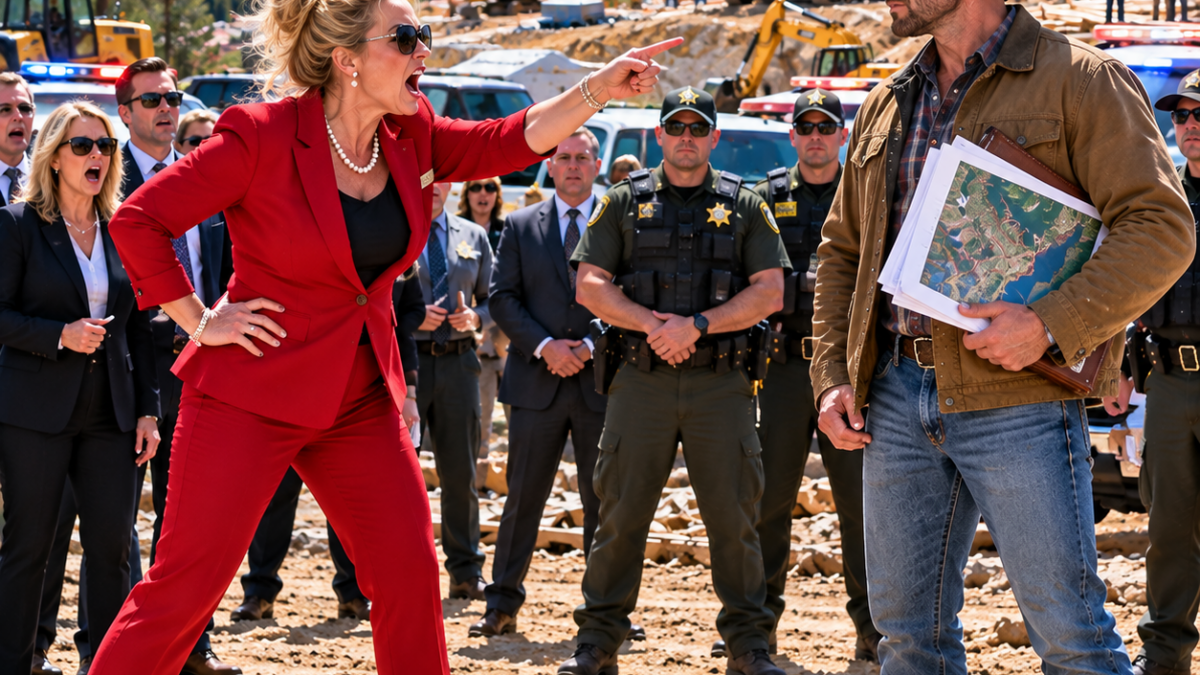
At the front of the room, Diane stood.
Same perfect posture.
Same calm smile.
“Mr. Gray. Thank you for coming.”
She said it loudly enough for everyone to hear.
“I wouldn’t miss it.”
Her smile flickered.
Two men sat beside her.
Diane introduced the first as Roger Stanton, vice president of the HOA.
Roger was around sixty, heavyset, expensive watch, expensive suit, the kind of man who looked comfortable letting other people deliver bad news.
The second man was Neil Bridges.
“Association counsel,” Diane said.
Neil stood and shook my hand.
He was younger than I expected, probably mid-forties, with a narrow face and an expression that revealed nothing.
His grip was firm.
His voice was softer than Diane’s.
“Hopefully we can put this matter behind everyone tonight.”
Everyone.
Not me.
Not them.
Everyone.
That word told me exactly how the evening would go.
I sat in the single chair positioned opposite their table.
Two hundred residents faced my back.
Diane opened the meeting.
“First, I want to acknowledge that Mr. Gray recently suffered the loss of his grandmother.”
Her tone became solemn.
“I’m sure all of us understand how emotional inheritance matters can become.”
I almost turned around to see whether anyone actually believed that.
Diane continued.
“Unfortunately, grief can sometimes lead to confusion regarding old property records.”
There it was.
Before a single document appeared, she had explained me to the room.
Grieving.
Confused.
Emotional.
Neil opened the first binder.
“Mr. Gray, Meadowbrook Estates was established through proper legal channels approximately sixteen years ago pursuant to a community development agreement authorized by the Gray Family Trust.”
He turned pages quickly.
Development agreements.
Planning approvals.
Tax statements.
Engineering reports.
Subdivision maps.
Incorporation documents.
HOA bylaws.
Fifteen years of meeting minutes.
It was an avalanche of paperwork.
Not because every page mattered.
Because the weight of the stack did.
Neil understood theater just as well as Diane did.
One thousand pages looked more truthful than one deed.
I let him talk.
When he finished, he pushed a bound summary toward me.
“As you can see, the community has operated openly and continuously for more than fifteen years.”
I looked at the residents.
A young couple in the second row held hands.
Behind them sat an elderly man wearing a veterans’ cap.
Near the aisle, a mother bounced a sleeping baby against her shoulder.
These people weren’t conspirators.
They weren’t land thieves.
They had bought houses.
Signed mortgages.
Paid taxes.
Repaired roofs.
Planted trees.
Raised children.
That was what made Diane’s strategy so effective.
She had wrapped whatever happened sixteen years ago inside four hundred innocent lives.
Roger finally spoke.
“Mr. Gray, nobody here wants conflict.”
He slid a sheet of paper across the table.
“We’re prepared to make a generous goodwill payment to resolve your concerns.”
I read the number.
$75,000.
For a thousand acres.
For land beneath four hundred homes.
For roads.
The clubhouse.
The pool.
Parks.
Commercially, the property was worth millions.
But the money wasn’t what bothered me.
The release was.
By signing, I would acknowledge that the Gray Family Trust existed.
I would state that the development had been legally authorized.
I would surrender every current and future claim against the HOA, its board, the developers, the county, and anyone associated with Meadowbrook Estates.
They weren’t buying my land.
They were buying my silence.
I put the paper down.
“The Gray Family Trust never existed.”
The room stirred.
For the first time that evening, Diane’s smile tightened.
Neil leaned back.
Roger looked toward Diane.
I continued.
“My grandmother never formed a trust. Her attorney confirmed that. The county has no trust instrument. Probate records contain no trust. Her will transferred the property directly.”
Neil pulled another document from his binder.
“We anticipated that question.”
Of course they had.
He held up a cream-colored page bearing an embossed seal.
“This certification was executed by Richard Daws, attorney for the original development group. Mr. Daws confirmed the Gray Family Trust’s authority to enter the development agreement.”
I took the paper.
It looked official.
Letterhead.
Seal.
Legal language.
Signature.
Date.
Everything.
I photographed it with my phone.
Diane watched me.
“What are you doing?”
“Keeping a copy.”
“The document is privileged.”
Neil immediately corrected her.
“No, it isn’t.”
Diane glanced at him.
A small mistake.
But I noticed it.
I handed the document back.
Then I stood.
Roger frowned.
“We haven’t finished.”
“I have.”
Diane’s voice followed me.
“That offer won’t remain open indefinitely.”
I turned at the door.
Two hundred people watched.
“Neither will the truth.”
That was dramatic.
I regretted saying it almost immediately.
Grandma would have rolled her eyes.
She hated speeches.
But Diane’s expression changed just enough to tell me I had hit something.
That night, I sat in my hotel room and searched Richard Daws.
The first result that mattered was an obituary.
He had been dead for eleven years.
The second result mattered more.
State bar disciplinary history.
Three years before his death, Richard Daws’s license had been suspended.
Reason:
Document fraud.
I stared at the screen.
The founding authority for Meadowbrook Estates rested on a certification signed by an attorney later disciplined for fraudulent documents.
Maybe that was coincidence.
I had learned never to build conclusions from coincidence.
But it was a place to start.
Three days later, the HOA sent me a trespass warning.
I read it twice.
According to Meadowbrook’s “Community Standards Division,” I had entered private property without authorization by failing to register properly with the guard station.
I had been invited there.
In writing.
I saved the email invitation.
Photographed the envelope.
Scanned the letter.
Logged the date.
Five days later, Neil Bridges sent a second warning.
Harassment.
Intimidation.
Disruption.
No specific event.
No quoted threat.
No named victim.
Just words.
A week later, those words became a court filing.
Temporary restraining order.
The HOA alleged that I had engaged in “a pattern of threatening conduct toward residents” and sought an order preventing me from entering Meadowbrook Estates.
My own thousand acres.
Attached were statements from three residents.
One described me as “aggressive.”
Another claimed I had “raised my voice and threatened to take people’s houses.”
The third said my presence made her fear for her children.
None of that had happened.
But I finally saw the pattern.
Diane was creating documents faster than I could challenge them.
First warning.
Second warning.
Resident statements.
Court petition.
Then each new document cited the previous one as evidence.
It was the same architecture as the fake trust.
Paper validating paper.
A closed loop.
I stopped answering them directly.
Instead, I began documenting everything.
Hotel receipts.
Phone records.
Security footage requests.
Emails.
Meeting invitations.
Every envelope.
Every timestamp.
Every conversation I could lawfully memorialize.
Then I started researching attorneys outside the county.
I found Helen Roberts two counties away.
Her specialty was title litigation, developer fraud, and disputes involving governmental approvals.
Her website didn’t mention HOAs.
Her court record did.
She had beaten several.
I called her office.
The receptionist asked for a summary.
“I inherited a thousand acres,” I said, “and discovered approximately four hundred houses built on it under authority of a family trust that never existed.”
Silence.
“One moment.”
Helen called me back forty minutes later.
No small talk.
“Tell me about the trust.”
I told her everything.
When I finished, she asked:
“Do you still have the trespass letters?”
“Yes.”
“The meeting invitation?”
“Yes.”
“The settlement offer?”
“Yes.”
“The certification?”
“Photograph.”
“The original is with the HOA.”
“Good enough to begin.”
I emailed everything.
That evening she called again.
“Mr. Gray, I need you to listen carefully.”
“I’m listening.”
“If these records are authentic, this is bigger than an HOA dispute.”
“How much bigger?”
“Potential systematic fraud.”
My stomach tightened.
Helen continued.
“They’re trying to establish you as the aggressor before the title issue is litigated. The restraining-order petition is strategic.”
“To keep me off the property?”
“That too. But mostly to create a judicial record portraying you as unstable.”
“So what do we do?”
“We stop reacting.”
That sounded familiar.
Grandma used to say the person forcing the pace was usually the person afraid of what happened if everybody slowed down.
Helen asked for forty-eight hours.
The next evening, she sent me an email containing one sentence:
**I found the original survey review. Call me.**
I did.
Helen sounded different.
More serious.
“The archived development application included a surveyor’s report.”
“What did it say?”
“That the proposed subdivision boundaries conflicted with recorded ownership.”
I stood up.
“My grandmother’s property?”
“Almost certainly.”
“Why wasn’t development stopped?”
“That’s what I intend to find out.”
The surveyor’s name was Henry Caldwell.
Seventy-three years old.
Retired.
Still alive.
More importantly, he remembered Meadowbrook.
Helen and I drove ninety miles to his house the following Saturday.
Henry answered the door wearing jeans, suspenders, and a faded university sweatshirt.
The moment Helen said Meadowbrook Estates, his expression changed.
“Come inside.”
We sat at his kitchen table.
He didn’t need much prompting.
“I surveyed that site sixteen years ago.”
“Anything unusual?” Helen asked.
Henry laughed without humor.
“The entire damn thing was unusual.”
He told us the developer had submitted coordinates describing approximately one thousand acres.
When Henry compared those coordinates against county records, the development footprint overlapped land belonging to the Gray family.
My grandmother.
“I wrote it clearly,” he said. “No development should proceed without proof of conveyance or owner authorization.”
“You submitted that report?”
“I filed it with planning.”
“Do you remember who received it?”
“Not the individual. Department intake.”
“What happened next?”
“Nothing.”
He looked toward me.
“I drove past three months later and saw grading equipment.”
I felt my jaw tighten.
“You called the county?”
“Twice.”
“What did they say?”
“That the application contained no unresolved boundary issues.”
Helen leaned forward.
“Do you still have copies?”
Henry stared at her.
“Ma’am, I kept every field book I ever carried.”
He took us into his garage.
Thirty minutes later, the truth was spread across his kitchen table.
Original survey.
Coordinates.
Field notes.
Certified report.
Correspondence.
His conclusion was unmistakable:
**DEVELOPMENT FOOTPRINT CONFLICTS WITH RECORDED GRAY PROPERTY. OWNERSHIP MUST BE RESOLVED PRIOR TO APPROVAL.**
Someone had received that warning.
Then somebody removed it.
My grandmother never knew.
Four hundred families never knew.
Banks issuing mortgages never knew.
Title companies apparently never knew.
Or had never looked deeply enough.
The community was not built because of an innocent clerical mistake.
Someone had seen the problem before the first foundation was poured.
And they proceeded anyway.
Driving back, Helen barely spoke.
About halfway home she finally said:
“We need independent title review.”
“Why?”
“Because if county records were manipulated once, we do not rely on county interpretation.”
She hired Walter Puit.
Walter had spent thirty years managing land records.
His entire job was finding things designed not to be found.
He traced my grandmother’s title backward.
Then forward.
Every deed.
Every tax payment.
Every lien.
Every filing.
While Walter worked, Helen attacked the restraining order.
She didn’t merely oppose it.
She demanded discovery.
Original trust records.
Original development agreement.
Correspondence with county officials.
Internal HOA communications.
All founding title documents.
That changed the temperature immediately.
Three days later, my face appeared on the front page of the local newspaper.
**INHERITANCE DISPUTE THREATENS MEADOWBROOK FAMILIES**
The photograph showed me leaving the HOA meeting.
The article quoted Diane heavily.
She described me as a distant heir who had suddenly emerged with questionable claims against a stable community.
She mentioned the restraining order.
She mentioned residents feeling unsafe.
She did not mention the nonexistent trust.
She did not mention Henry’s survey.
She did not mention my grandmother’s unbroken deed.
By sunset, the article was everywhere.
Social media groups.
Neighborhood pages.
Regional forums.
Someone created a page called **Protect Meadowbrook Families**.
My photograph became its banner.
People I had never met called me greedy.
A scammer.
A land thief.
One post said I preyed on elderly landowners.
That lie was shared hundreds of times.
The irony almost made me sick.
My grandmother was the elderly landowner whose property had been taken.
But facts move slowly when outrage gets a head start.
At the restraining-order hearing, about twenty residents waited outside the courthouse holding signs.
**SAVE OUR HOMES.**
**STOP THE LAND GRAB.**
A woman looked at me and shouted:
“How do you sleep at night?”
I wanted to answer.
Helen put one hand against my arm.
“Keep walking.”
Inside, Diane sat in the front row wearing a dark blue suit.
She looked heartbroken.
Community leader under siege.
That was the role.
Neil called three residents.
Each testified that I had frightened them.
Helen cross-examined the first.
“What exactly did Mr. Gray say that frightened you?”
“He said he owned the land.”
“Anything else?”
“He said the trust wasn’t real.”
“Did he threaten you?”
“Not directly.”
“Indirectly?”
“He said things would change.”
I leaned toward Helen.
“I never said that.”
She whispered:
“I know.”
Second witness.
Same problem.
Feelings.
Rumors.
No threats.
Third witness contradicted the first two about where I had been sitting during the meeting.
The judge denied the order.
Insufficient evidence.
Outside, somebody threw a paper cup.
It hit my shoulder.
I turned.
Helen grabbed my sleeve.
“No.”
“It was a cup.”
“Today.”
I looked at her.
“Tomorrow it might be something else. Don’t give them a scene.”
We kept walking.
Three days later, the smear campaign cost me my biggest client.
I worked independently in technology consulting.
One company represented almost forty percent of my annual income.
Their email was short.
They had “reputational concerns.”
Attached was the newspaper article.
Seventeen thousand dollars in pending work disappeared.
That night, I sat in my hotel room eating crackers from the vending machine.
My bank account suddenly looked smaller.
Legal bills looked larger.
The fight felt endless.
For the first time, I considered taking the $75,000.
Not because it was fair.
Because I was tired.
That is the part people rarely understand about battles like this.
Corrupt systems do not always defeat you by proving you wrong.
Sometimes they simply make being right too expensive.
Too lonely.
Too exhausting.
I opened my phone.
Grandma’s photograph was still my lock screen.
She was sitting on the old farmhouse porch, squinting at the camera because she hated having her picture taken.
I could almost hear her.
“So you’re quitting because people are being mean?”
She would have said it exactly that way.
Then she would have handed me a glass of iced tea and called me dramatic.
I called Helen the next morning.
“I’m staying in.”
She was silent.
Then:
“Good.”
“You sound like you expected me to quit.”
“I expected you to consider it.”
“What changed overnight?”
“Walter finished the title search.”
I stopped walking.
“And?”
“Your grandmother’s title is perfect.”
“Perfect?”
“Unbroken since 1963. No sale. No transfer. No easement granting development authority. No trust conveyance. No encumbrance supporting Meadowbrook’s claim.”
I closed my eyes.
Helen continued.
“Every single document the HOA relies on traces back to the same trust certification.”
“Richard Daws.”
“Yes.”
“So we have them.”
“We have more.”
Her voice became colder.
“Three weeks ago, the HOA quietly filed a quiet-title action.”
I didn’t immediately understand.
“What does that mean?”
“They’re asking a court to declare them the rightful owners based on adverse possession and long-term community use.”
“They stole the land and now they’re arguing they’ve stolen it long enough to keep it?”
“In simplified terms, yes.”
“Can they?”
“Not if fraud is proven.”
“When do we respond?”
“Nineteen days.”
I sat down on the edge of the hotel bed.
Nineteen days.
Then everything clicked.
The newspaper.
The protests.
The lost client.
The restraining-order petition.
The online harassment.
They weren’t random attacks.
They were pressure.
Diane didn’t need me legally defeated.
She needed me exhausted enough to walk away while a deadline expired.
“She’s running out the clock.”
“Yes.”
“And if I quit—”
“They become much harder to dislodge.”
I looked across the room at boxes of documents.
The anger came back.
But this time it was clean.
Focused.
“Tell me what you need.”
Helen scheduled an emergency meeting.
When I reached her office, Walter was already there.
The conference table disappeared beneath binders.
On a whiteboard, Helen had drawn a timeline.
1963.
Grandmother purchases land.
Sixteen years earlier.
Development application.
Henry Caldwell’s warning.
Gray Family Trust certification.
Permit approval.
Construction begins.
Then fifteen years of HOA operations.
At the center, Helen had written:
**GRAY FAMILY TRUST**
Across it she had drawn an X.
Walter began.
“There is no trust.”
“I know.”
“No. I mean there is no trace that such an entity ever existed anywhere.”
He slid a report toward me.
“No filing. No tax identification. No trust instrument. No bank reference. No county record. No estate reference. Nothing.”
Helen opened her laptop.
“We also had Richard Daws’s alleged signature examined.”
A paragraph appeared on-screen.
The forensic document examiner concluded the signature was simulated.
Traced or carefully copied.
Not authentic.
I felt the room become very still.
“The certification itself is forged?” I asked.
Helen nodded.
“According to the examiner, yes.”
Someone had invented a family trust.
Invented its authority.
Then forged an attorney’s signature certifying that authority.
And four hundred houses had risen on top of it.
Walter wasn’t finished.
He had identified the county official who approved the subdivision despite Henry’s report.
Alan Torres.
Deputy commissioner at the time.
Six months after approval, Torres bought a vacation property in cash.
No mortgage.
Helen raised one hand.
“That is suspicious. It is not yet proof of bribery.”
“Understood.”
“But it is something investigators may care about.”
I looked at the whiteboard.
My grandmother had spent sixty years paying taxes on land occupied by people who believed someone else owned it.
Four hundred families had mortgages resting on fiction.
My professional reputation had been attacked.
The HOA was now asking a judge to reward sixteen years of fraud.
I had spent weeks trying to avoid escalation.
I was done avoiding it.
“File everything.”
Helen watched me.
“Everything?”
“Title report. Forgery analysis. Henry’s survey. Their quiet-title filing. Every document.”
“Once filed, this becomes public.”
“That’s the point.”
Helen nodded.
She picked up the phone.
Within seventy-two hours, Judge Eleanor Marsh scheduled an expedited evidentiary hearing.
Thursday.
Ten in the morning.
When I arrived, the courthouse hallway was filled with Meadowbrook residents.
Most looked angry.
Some looked frightened.
A few avoided my eyes.
Word had circulated that my attorney had uncovered “new documents,” but Diane continued assuring residents that nothing threatened the HOA’s legal position.
I passed her near the courtroom door.
She leaned toward me.
“You can still settle.”
“For seventy-five thousand?”
“That offer is gone.”
I smiled slightly.
“So is mine.”
Her eyes narrowed.
“You think taking homes away from children makes you righteous?”
That one hit.
She knew it would.
I looked through the courtroom doors at families filling the benches.
“I haven’t taken anything from anyone.”
“You’re trying.”
“No, Diane.”
I lowered my voice.
“I’m trying to find out who did.”
For once, she had no answer.
Judge Marsh entered at ten exactly.
Helen had warned me about her.
No speeches.
No theatrics.
Documents.
Law.
Facts.
Helen stood.
“My client inherited approximately one thousand acres from his grandmother. The Gray family has held continuous legal title since 1963.”
She placed Walter’s report into evidence.
“No deed transferring the property exists.”
Second exhibit.
“No sale contract exists.”
Third.
“No trust document exists.”
Fourth.
“The entity allegedly authorizing development—the Gray Family Trust—cannot be found in any state or county record because there is no evidence it ever existed.”
I watched Diane.
Her back remained straight.
Neil Bridges took notes.
Helen displayed the certification.
“This document is the foundation of Meadowbrook Estates’ claim.”
Next slide.
Forensic findings.
“The signature attributed to attorney Richard Daws is not authentic.”
Whispers exploded behind us.
Judge Marsh looked over her glasses.
“Quiet.”
Helen submitted Henry Caldwell’s survey.
“This report was prepared before construction. It warned the county that the proposed development substantially overlapped property belonging to the Gray family.”
Henry took the stand.
He told the court how he filed it.
How construction proceeded.
How the county later claimed there was no boundary issue.
“How certain are you that this is the report you submitted?” Helen asked.
“One hundred percent.”
“Why?”
Henry opened his field book.
“Because these are my original measurements.”
Neil objected.
Overruled.
Henry continued.
“I warned them not to proceed.”
“Did anybody contact the Gray family?”
“Not that I know of.”
“Did anybody ask you to revise your conclusion?”
“No.”
“Did anyone tell you the ownership problem had been resolved?”
“No.”
Helen sat.
Neil rose.
For almost thirty minutes, he argued good faith.
Sixteen years of continuous occupancy.
Four hundred homeowners.
Millions invested.
Taxes paid.
Community improvements.
Schools.
Utilities.
Reliance interests.
He described my case as an attempt to exploit “technical defects in historical documentation.”
Helen whispered:
“He said technical defects.”
I nodded.
The forged signature sat on the screen behind him.
Judge Marsh eventually interrupted.
“Mr. Bridges.”
“Yes, Your Honor.”
“Does your client possess a deed from the Gray family?”
“No, Your Honor, but—”
“A purchase agreement?”
“The trust authorization—”
“Not what I asked.”
Neil paused.
“No.”
“Recorded consent from the Gray family?”
“No.”
“A valid trust instrument?”
“The certification—”
“Counselor.”
The judge leaned forward.
“Does the trust instrument itself exist?”
Silence.
“No, Your Honor.”
Something shifted in the gallery.
I could feel it.
People weren’t looking at me anymore.
They were looking at Diane.
Neil continued.
“The community nevertheless relied in good faith—”
Diane stood.
Neil turned sharply.
“Diane.”
She ignored him.
“Your Honor, may I explain?”
Judge Marsh frowned.
“You are not testifying.”
“The trust was authorized.”
“Mrs. Crawford, sit down.”
“We were told it was authorized.”
Neil stood.
“Diane, please.”
But fifteen years of confidence had trained Diane to believe she could control rooms.
Even courtrooms.
“The attorney handled everything,” she said. “We had the certification. We relied on it.”
Helen slowly stood.
Neil closed his eyes.
Judge Marsh looked at Diane.
“You relied on a certification without possessing the trust document?”
Diane realized the trap too late.
“That’s not what I meant.”
“Sit down.”
“But—”
“Now.”
Diane sat.
Helen said:
“Your Honor, Mrs. Crawford has just confirmed the HOA’s entire ownership position depended on an unverified certification that forensic analysis now identifies as forged.”
Neil objected.
Judge Marsh barely looked at him.
“Overruled.”
Then she removed her glasses.
“I have heard enough for today.”
The room went completely still.
“The HOA’s request for quiet title is denied.”
Someone behind me gasped.
Judge Marsh continued.
“The evidence presented raises substantial questions regarding fraudulent documentation, suppression of material survey findings, and improper governmental approvals.”
Diane stopped moving.
“I am ordering an independent review of all founding title documents associated with Meadowbrook Estates.”
The judge looked toward Neil.
“I am also referring the trust certification and related filings to the district attorney for investigation.”
Gavel.
Done.
Nobody cheered.
That surprised me.
I had imagined victory making noise.
Instead, four hundred families sat in silence realizing that the ground beneath the homes they had spent years paying for might legally belong to the man they had been calling a thief.
A woman three rows behind Diane started crying.
Her husband stared at the floor.
An elderly resident removed his glasses and rubbed his face.
A young man whispered:
“What happens to us?”
That sentence took all the satisfaction out of me.
Helen touched my arm.
“We should leave.”
I didn’t move.
I looked at Diane.
She looked terrified.
For weeks, I had wanted that.
Now I barely cared.
Because Diane might deserve fear.
Those families didn’t.
Outside, reporters crowded around.
“Mr. Gray, are you going to evict residents?”
“Do you plan to seize the homes?”
“How much is the property worth?”
“Will you seek demolition?”
Helen stepped between us.
“No statements.”
We reached the car.
I shut the door.
Then I asked her:
“Can I really take everything?”
She didn’t answer immediately.
“Legally?”
“Yes.”
“All four hundred houses?”
“If your ownership is confirmed and the development instruments are void, structures attached to the real property create an extraordinarily complicated set of claims, but your leverage would be enormous.”
“What happens to the residents?”
“They sue developers. Title insurers. Lenders. The HOA. Potentially the county.”
“And while that happens?”
She looked at me.
“They could lose their homes.”
I stared through the windshield.
That wasn’t what I wanted.
But I also wasn’t ready to forgive anyone.
The criminal investigation moved with shocking speed.
Once prosecutors subpoenaed old county files, people started talking.
Employees who had been silent for sixteen years suddenly remembered things.
Former staff produced emails.
A retired clerk remembered being ordered to remove Henry Caldwell’s report from a review packet.
Alan Torres was subpoenaed.
Investigators examined his finances.
The vacation property had been purchased using money routed through a consulting company connected to one of Meadowbrook’s original developers.
Torres eventually admitted receiving “consulting compensation.”
Prosecutors called it bribery.
Roger Stanton turned on Diane almost immediately.
I learned that from Helen.
“He’s cooperating,” she said.
“Against Diane?”
“Against everyone.”
“What did he say?”
“That the board knew years ago there were problems with the trust paperwork.”
I felt sick.
“They knew?”
“Some did.”
“How long?”
“According to Stanton, questions surfaced about nine years ago.”
“And they kept collecting dues?”
“Yes.”
“Kept selling houses?”
“The HOA doesn’t sell the houses, but they continued representing the development as legally secure.”
Neil Bridges claimed he had relied on clients.
Then investigators found emails proving he had received a copy of Henry’s buried survey years earlier during another internal title review.
His defense changed.
Diane’s changed more often.
First, she blamed the original developer.
Then Richard Daws.
Then county officials.
Then Roger.
Eventually prosecutors charged her with multiple fraud-related offenses, conspiracy, and theft by deception.
Roger accepted a plea agreement.
Torres cooperated.
Neil faced professional discipline and criminal exposure.
Diane refused to admit responsibility until prosecutors showed her the email trail.
Then she started negotiating.
A few days after the charges became public, I returned to Meadowbrook for the first time without protesters waiting.
The guard at the gate recognized me.
He looked embarrassed.
“Mr. Gray.”
“Morning.”
He raised the barrier.
Then hesitated.
“I’m sorry.”
“For what?”
He rubbed the back of his neck.
“I believed what they said.”
“You weren’t the only one.”
He nodded.
I drove through.
Meadowbrook looked exactly the same.
That was the strangest part.
Lawns still needed mowing.
Children still waited for school buses.
A man washed his truck.
Someone had Halloween decorations on a porch.
A woman pushed a stroller.
The legal foundation beneath the neighborhood had collapsed.
Real life continued anyway.
Near the community center, people noticed my truck.
Some stared.
A few walked away.
One man approached.
I recognized him from the courthouse protest.
He had held a **STOP THE LAND GRAB** sign.
“My name’s Eric.”
I nodded.
“I remember you.”
He looked embarrassed.
“My wife and I bought here twelve years ago.”
“I understand.”
“Our daughter learned to ride a bike on that street.”
He pointed.
“We’ve got twenty-three years left on our mortgage.”
I didn’t know what to say.
Eric swallowed.
“Are you going to take the house?”
The question was direct.
Terrified.
Human.
“I don’t know yet.”
His face fell.
“I’m trying to figure out what’s fair.”
“What’s fair?”
His voice sharpened.
“We paid for it.”
“I know.”
“We didn’t steal anything.”
“I know.”
“Then why should we pay again?”
That hit harder.
Because he was right.
And so was I.
My grandmother had paid taxes for sixty years.
Her land had been used without permission.
Eric had paid a bank for a house sold to him as legitimate.
Two innocent people had claims created by guilty people.
There was no solution that restored everything.
I drove to the edge of the development.
Some of Grandma’s old fence posts still survived where the subdivision ended against undeveloped acreage.
I parked beside one.
The wood was gray and cracked.
Rusty wire disappeared into weeds.
I remembered helping her repair that fence when I was fourteen.
I complained the entire afternoon.
She finally handed me pliers and said:
“If you spend half as much energy fixing the fence as you do complaining about it, we’ll be finished before dark.”
That was Grandma.
Practical.
Fair.
Unimpressed by drama.
I sat there almost an hour.
Then I called Helen.
“We need another plan.”
“For what?”
“The residents.”
She was silent.
“What are you thinking?”
“I don’t know yet.”
I looked toward the houses.
“But I’m not throwing four hundred families into the street.”
Helen exhaled.
“That will disappoint a lot of people who think revenge makes good television.”
“I don’t care.”
“Good.”
Over the next several weeks, we built a settlement framework.
First, ownership.
The court formally confirmed my title to the entire thousand acres.
That ruling was unequivocal.
The Gray family had never sold.
The Gray Family Trust was fictitious.
The founding certification was fraudulent.
Meadowbrook’s original development authority was invalid.
Legally, the ground belonged to me.
According to an appraisal commissioned during litigation, improvements across the development represented tens of millions of dollars in value.
For about twenty-four hours, newspapers described me as one of the strangest accidental land barons in the state.
Then the questions began.
Would I evict everyone?
Charge enormous ground rents?
Sell to a developer?
Demolish houses?
My answer remained:
“No decision yet.”
Behind the scenes, Helen, Walter, tax specialists, title experts, and housing attorneys built something different.
Residents would not be treated as trespassers.
Anyone who had purchased in good faith could stay.
We created individualized agreements based on their circumstances.
For some properties, title insurers would contribute substantial payments toward legitimizing ownership.
For others, settlements with banks and developers reduced the amount necessary to acquire clean title.
Residents who still faced a gap were offered long-term financing directly through a holding entity I controlled.
Low fixed interest.
No predatory balloon payment.
No surprise HOA assessment.
Retired residents on fixed incomes could choose long-term leases with purchase rights transferable to their children.
Nobody would be removed merely because criminals had sold them property they did not own.
The common areas created another question.
Pool.
Park.
Playground.
Community center.
Walking trails.
I could have sold them.
Instead, I placed most under a permanent community-use easement.
A new residents’ association was created.
Not Diane’s HOA.
Something different.
Open meetings.
Published finances.
Term limits.
Independent audits.
Resident voting.
No private executive sessions involving property disputes without recorded minutes.
No board officer serving more than two consecutive terms.
One homeowner jokingly called it “the HOA designed by someone who hates HOAs.”
I told her:
“Pretty much.”
The hardest meeting happened six weeks after the court ruling.
The same community hall.
Same rows of chairs.
But this time Diane wasn’t at the front.
I was.
Almost four hundred people attended.
I could feel their anxiety.
Helen stood beside me.
I walked to the microphone.
“I know many of you believe I came here to take your homes.”
Silence.
“Some of you protested against me.”
A few people looked down.
“Some wrote things about me online that were false.”
More people looked down.
“One of you threw a cup.”
A nervous laugh passed through the room.
I smiled slightly.
“I still don’t know who did that.”
Nobody confessed.
Good.
I continued.
“But you were lied to.”
I looked around.
“So was my grandmother.”
No one moved.
“The court has confirmed that the land belongs to me. That is not negotiable.”
A few faces tightened.
“But neither is this.”
I paused.
“If you bought your home in good faith, paid for it honestly, and had nothing to do with the fraud, I will not evict you.”
For a second, nobody reacted.
Maybe they hadn’t understood.
Then someone gasped.
A woman started crying.
A man in the front row whispered:
“Thank God.”
I raised a hand.
“There will be paperwork. There will be settlements. Title companies and lenders are involved. Some cases will take longer than others.”
I looked toward Eric.
“But nobody innocent is losing a home because Diane Crawford and the people who helped her committed fraud.”
The room changed.
Not into celebration.
Into release.
Like hundreds of people had been holding their breath for months.
The woman who had shouted “How do you sleep at night?” outside court was sitting near the aisle.
Afterward, she approached me.
Her face was red.
“I owe you an apology.”
“You don’t have to—”
“Yes.”
She looked at me.
“I said things about you without knowing anything.”
I nodded.
“I was scared.”
“I know.”
“They told us you wanted to bulldoze our houses.”
“I know.”
“I believed them.”
I waited.
She wiped her eyes.
“My husband died two years ago. That house is almost everything I have.”
“What’s your name?”
“Marilyn.”
“Marilyn, nobody is bulldozing your house.”
She covered her mouth.
Then she hugged me.
I stood there awkwardly for a second before hugging her back.
That moment did something to me.
Until then, the residents had been a category.
Victims.
Homeowners.
Four hundred families.
But Marilyn wasn’t four hundred families.
She was one widow.
One house.
One life.
That mattered.
Diane Crawford’s sentencing happened three months later.
I attended.
Not because I wanted to watch her suffer.
I wanted to hear whether she would finally admit what she had done.
She entered the courtroom without the gray blazer.
No HOA badge.
No clipboard.
No supporters surrounding her.
Just a defendant beside her attorney.
The prosecutor described a scheme that had begun before Diane became HOA president but continued under her leadership.
Evidence showed she had learned of title irregularities years earlier.
Instead of informing residents, she helped suppress them.
She approved legal strategies designed to preserve the HOA’s authority.
She authorized the effort to discredit me.
She approved the $75,000 settlement offer.
She supported the restraining-order petition.
And she knew about the quiet-title action intended to run out the clock before I could expose the fraudulent trust.
The judge asked whether Diane wanted to speak.
She stood.
For the first time since I met her, she looked uncertain.
“I believed I was protecting the community.”
The prosecutor looked down.
The judge did not.
Diane continued.
“When I became president, Meadowbrook already existed. Hundreds of people depended on the association. I was told there were old paperwork issues.”
“Paperwork issues?” the judge asked.
Diane swallowed.
“Yes.”
“Did those issues include the possibility that the association did not own the land?”
Her lawyer whispered something.
Diane answered anyway.
“Yes.”
A murmur moved through the courtroom.
The judge leaned forward.
“And instead of informing four hundred homeowners?”
Diane looked at the floor.
“I thought it could be resolved.”
“By filing a restraining order against the legal heir?”
No answer.
“By publicly portraying him as dangerous?”
Diane’s voice became smaller.
“I was trying to prevent panic.”
“By quietly attempting to acquire title through adverse possession?”
Silence.
The judge stared at her.
“You were not protecting those homeowners.”
Diane began crying.
The judge continued.
“You were protecting yourself from having to explain what you knew.”
That was the sentence I had been waiting months to hear.
Not guilty.
Not fraud.
That one.
Because it stripped away every excuse.
Diane had used four hundred families as a shield.
Then called it leadership.
She accepted a plea arrangement that included prison time, restitution, probation after release, and a permanent prohibition from serving in HOA governance or similar fiduciary positions.
Roger had already accepted his own sentence.
Alan Torres pleaded guilty to corruption-related charges.
Neil Bridges lost his license while his criminal case proceeded.
The original developers became targets of civil recovery actions from insurers, banks, residents, and my estate.
The empire did collapse.
Just not the way Diane had warned everyone.
Families didn’t lose everything.
The people who built the fraud did.
Diane lost her position.
Her reputation.
Her influence.
Much of her personal wealth went toward restitution and legal expenses.
Roger sold his vacation property.
Torres forfeited assets tied to the bribe.
Neil’s law practice disappeared.
The developer companies faced judgments that consumed what remained of them.
But Meadowbrook remained.
Kids still rode bicycles.
The pool opened that summer.
Someone repainted the community center.
The large stone entrance sign was changed.
It no longer said:
**A COVENANT-PROTECTED COMMUNITY.**
Residents voted on the replacement.
When I drove through months later, the new sign simply read:
**MEADOWBROOK — EST. 2010.**
No threat.
No warning.
No promise that paperwork could manufacture legitimacy.
I liked it better.
One afternoon, Helen called me into her office to sign the final community easement documents.
It was almost anticlimactic.
Months of court hearings.
Reporters.
Fraud investigations.
Protests.
And the last step came down to signatures at a quiet conference table.
I signed the final page.
Helen notarized it.
Then she closed the file.
“That’s it.”
“That’s it?”
“That’s it.”
I leaned back.
She studied me.
“You know, legally, you could have made considerably more money.”
“I know.”
“You could have forced market purchases on every lot.”
“I know.”
“You could have sold the entire position to an investment company and walked away extremely wealthy.”
“I know.”
She smiled.
“You’re annoying.”
“So I’ve been told.”
Helen became serious.
“You also could have taken everything.”
I looked down at the pen in my hand.
“Grandma would’ve hated that.”
“You’re certain?”
I laughed.
“She once made me return six dollars to a grocery store because the cashier gave her too much change.”
Helen smiled.
“Fair enough.”
“She would have fought Diane until the last breath.”
“I believe that.”
“But she wouldn’t have punished Marilyn because Diane lied.”
Helen nodded slowly.
“That distinction is rarer than it should be.”
A year passed.
Then another.
The lawsuits faded from headlines.
Meadowbrook’s new board became boring.
That was the highest compliment I could give it.
Meetings were livestreamed.
Budgets were posted.
Residents argued about pool hours, landscaping contracts, trash collection, and whether holiday decorations could stay up past January fifteenth.
Normal HOA nonsense.
Nobody forged a trust.
Progress.
I restored the undeveloped part of Grandma’s acreage.
There were about one hundred and eighty acres along the western boundary where construction had never reached.
Her farmhouse still stood there.
Barely.
The roof leaked.
Porch sagged.
Kitchen wiring belonged in a museum.
But the oak tree where she hung a tire swing still stood.
I started spending weekends there.
At first, I told myself I was maintaining the property.
Then I realized I was going because it was the only place where the entire story became quiet.
One Saturday, Eric came by.
The man who had once held the **STOP THE LAND GRAB** sign.
He brought a six-pack of soda and a toolbox.
“I heard your porch railing is trying to kill people.”
“Who told you?”
“Half the neighborhood.”
“That’s disturbing.”
He laughed.
We replaced boards all afternoon.
Near sunset, we sat on the porch steps.
Eric looked toward Meadowbrook’s roofs in the distance.
“You know what’s weird?”
“What?”
“I hated you.”
“I noticed.”
“I mean really hated you.”
“Your sign had impressive lettering.”
“My wife made it.”
“She has talent.”
He laughed.
Then became serious.
“We thought you were coming to erase our lives.”
“I know.”
“And all along, those people had already gambled with them.”
I nodded.
Eric looked at the old fence.
“Why didn’t your grandmother notice construction?”
“She got sick.”
That was the truth I had avoided thinking about.
During the first years of Meadowbrook development, Grandma’s mobility had declined.
The development began on the far eastern portion of the thousand acres.
Access from her farmhouse came from the western road.
Trees and terrain blocked much of the view.
By the time houses multiplied, family visits became shorter because Grandma increasingly stayed with relatives or in rehabilitation facilities after falls.
She knew developers were pressuring the county around her land.
She apparently never understood how far they had gone.
Or maybe she did.
Maybe she simply lacked the strength to fight.
That thought hurt.
Eric stared at the ground.
“She deserved better.”
“Yes.”
“So did we.”
“Yes.”
For a while, neither of us spoke.
That was the strange legacy Diane left behind.
The landowner and the homeowners had been manipulated into believing we were enemies.
But the actual thieves needed us fighting.
As long as I hated the residents, I wouldn’t focus on the people who forged the documents.
As long as residents feared me, they wouldn’t question the HOA.
Fear was the fence.
Truth took it down.
The last financial settlement arrived almost three years after I first drove into Meadowbrook.
It came from the title insurers and developer liability pool.
The amount was substantial.
More money than Grandma had ever seen.
More money than I had expected.
After legal fees, taxes, restoration costs, and community title arrangements, I still had enough to make one decision Grandma would have understood immediately.
I created the Evelyn Gray Land and Community Trust.
A real trust.
That irony wasn’t lost on me.
The legal documents were genuine.
Publicly recorded.
Audited.
Its purpose was simple.
Preserve the remaining undeveloped acreage.
Protect waterways and forest.
Maintain community parkland.
Provide grants for elderly Meadowbrook residents who struggled with housing payments created by the title restructuring.
The first time I saw the name typed across the actual trust instrument, I laughed.
Helen looked at me.
“What?”
“For sixteen years they hid behind a fake Gray Family Trust.”
“And?”
“So I made a real one.”
Helen smiled.
“Your grandmother would appreciate that.”
“She’d complain about the attorney fees.”
“Also likely.”
We recorded the trust properly.
Every page.
Every signature.
Every disclosure.
Nothing hidden.
The original forged certification eventually ended up in an evidence archive.
I asked Helen whether I could see it one last time before the criminal case closed.
She arranged it.
The page looked smaller than I remembered.
One sheet.
Cream-colored paper.
Fancy letterhead.
Fake signature.
That was it.
Four hundred houses.
Fifteen years of HOA dues.
Roads.
Pool.
Mortgages.
Lawsuits.
A corruption investigation.
Years of people believing one another.
Years of people hating one another.
All built on one fraudulent page.
I stared at it.
Helen stood beside me.
“Expected something more dramatic?”
“Yes.”
“That’s paperwork for you.”
I thought of Grandma.
Land doesn’t grow back.
But sometimes truth does.
Slowly.
Through copies people forgot to destroy.
Through retired surveyors who kept field notes.
Through title experts who trace every transaction.
Through judges who ask one simple question:
**Where is the deed?**
On the third anniversary of the ruling, Meadowbrook held a neighborhood picnic.
I almost didn’t go.
Then Marilyn called.
“You’re coming.”
“That sounded less like an invitation.”
“It is.”
“Which part?”
“The coming part.”
I laughed.
So I went.
The community pool was crowded.
Children ran across grass.
Someone grilled hamburgers.
Eric was arguing with another board member about parking rules.
I told him it was comforting to see democracy functioning at its most ridiculous level.
He told me to go away.
Near the community center, residents had installed a small plaque.
I stopped when I saw it.
It didn’t mention me.
Good.
It didn’t mention Diane.
Better.
It said:
**This community belongs to the people who live honestly within it. Its future depends on transparency, fairness, and stewardship.**
Below that was the date the new association had been established.
Marilyn appeared beside me.
“You like it?”
“Who wrote it?”
“Committee.”
“That explains why it sounds responsible.”
She elbowed me.
Children raced past us.
One boy nearly crashed his bicycle into a folding table.
His father yelled his name.
Marilyn watched them.
“We thought all of this was going away.”
“So did I for a while.”
“You really could’ve taken everything?”
I looked across Meadowbrook.
“Legally, I had options.”
“That isn’t what I asked.”
I nodded.
“Yes.”
“And you didn’t.”
“No.”
“Why?”
I looked toward the western tree line.
Beyond it, somewhere out of sight, stood Grandma’s farmhouse.
“Because the people who stole the land spent sixteen years treating human beings like pieces on a board.”
Marilyn waited.
“I wasn’t going to prove I was different by doing the same thing.”
That evening, after the picnic ended, I drove back to the farmhouse.
The porch was repaired now.
Roof new.
Windows restored.
Grandma’s rocking chair still sat near the door.
I had found it in the barn under a tarp.
I sat there as the sun dropped behind the western field.
Far away, Meadowbrook’s streetlights began glowing one by one.
I could see the tops of houses through the trees.
Those houses used to make me angry.
The first time I saw them, each roof looked like evidence that someone had stolen from my family.
Now I saw something different.
Lives.
People.
Mistakes repaired imperfectly.
Justice distributed carefully instead of blindly.
I pulled an old envelope from my pocket.
Months earlier, while cleaning Grandma’s bedroom, I had found it inside her Bible.
My name was written on the front.
The letter was short.
She must have written it when she knew her health was failing.
**Daniel,**
**I hope the land never becomes a burden to you. If keeping it makes you cruel, sell it. If losing it makes you bitter, let it go. Property matters because people work for it, protect it, and build lives on it. But people still matter more.**
I stopped reading.
Even after three years, that line got me.
I continued.
**You will meet people who confuse having power with having permission. Do not become one of them.**
I looked toward Meadowbrook.
Diane had believed leadership gave her permission.
Torres believed public office gave him permission.
The developers believed money gave them permission.
Neil believed paperwork gave him permission.
At one point, the court gave me power over four hundred families.
Grandma’s letter reminded me power wasn’t permission either.
At the bottom she had written:
**Take care of what is yours. Be fair with what belongs to others. Know the difference.**
I folded the letter.
The evening wind moved through the field.
A porch board creaked beneath my boot.
Somewhere in Meadowbrook, a dog barked.
A lawn mower shut off.
I sat there until the sky went dark.
People sometimes ask what the best part was.
Was it when Judge Marsh denied the HOA’s quiet-title claim?
Was it seeing Diane charged?
Watching Neil lose his license?
Hearing Torres admit the bribery?
Knowing the developers lost millions?
Those moments mattered.
But none of them were the best part.
The best moment happened years later.
A family moved out of Meadowbrook.
Normal reasons.
New job.
Different state.
They sold their house through the ordinary process.
The title company completed its search.
No red flags.
No disputed ownership.
No forged trusts.
No emergency attorney calls.
The transaction closed on a Friday afternoon.
Eric sent me a text.
**First completely clean resale under the new title system. Thought you’d want to know.**
I read it twice.
Then I smiled.
That was victory.
Not somebody losing everything.
Not a mansion being demolished.
Not handcuffs.
Not humiliation.
A boring real estate closing.
A young family sold a home they legitimately owned to another family who legitimately bought it.
No lies.
No stolen land.
No hidden survey.
No fake attorney.
Just signatures that belonged to the people whose names were written beneath them.
Grandma would have understood.
Years earlier, I had driven into Meadowbrook believing I had inherited a thousand acres.
Technically, I had.
But inheritance turned out to be more complicated than property.
I inherited Grandma’s fight.
Her patience.
Her responsibility.
And eventually, her choice.
I could have made four hundred families pay for what a handful of powerful people did.
The law gave me enough leverage to destroy the neighborhood that had been built on stolen land.
For a while, part of me wanted to.
That part of me wanted Diane to watch everything collapse.
Wanted the people who insulted me to understand what it felt like to lose control.
Wanted revenge to look as dramatic as the harm had felt.
But Grandma had spent sixty years protecting those thousand acres.
I finally understood that protecting something does not always mean keeping every inch for yourself.
Sometimes it means making sure the people who stole are held accountable without becoming cruel to the people they deceived.
Diane lost the empire she built on fraudulent paperwork.
Roger lost his position and his money.
Torres lost his reputation and freedom.
Neil lost the career he used to help bury the truth.
The developers lost fortunes defending what they had never legally owned.
They did lose everything that mattered to the lie.
But the innocent families kept their homes.
Children kept their bedrooms.
Retirees kept their porches.
Marilyn kept the house where she had spent her last years with her husband.
Eric kept the driveway where his daughter learned to ride her bicycle.
And I kept Grandma’s farmhouse, the remaining open land, and something worth considerably more than the satisfaction of revenge.
I kept the ability to walk onto that porch at sunset without wondering whether winning had turned me into the same kind of person I had spent years fighting.
The first time I entered the HOA office, Diane Crawford smiled and told me:
“You have no rights here whatsoever.”
She was wrong.
I had rights.
The deed proved that.
The court confirmed it.
But Grandma taught me one last lesson Diane never understood.
Having the right to take everything does not mean you should.
The law gave me the land.
The truth gave me justice.
But mercy was the one thing nobody could order me to give.
That part was my choice.
And in the end, that choice became the only inheritance that mattered more than the thousand acres themselves.
[END OF FULL STORY]








