PART 2: I Found Chelsea Starving in a Cage—Then She Did Something No One Expected
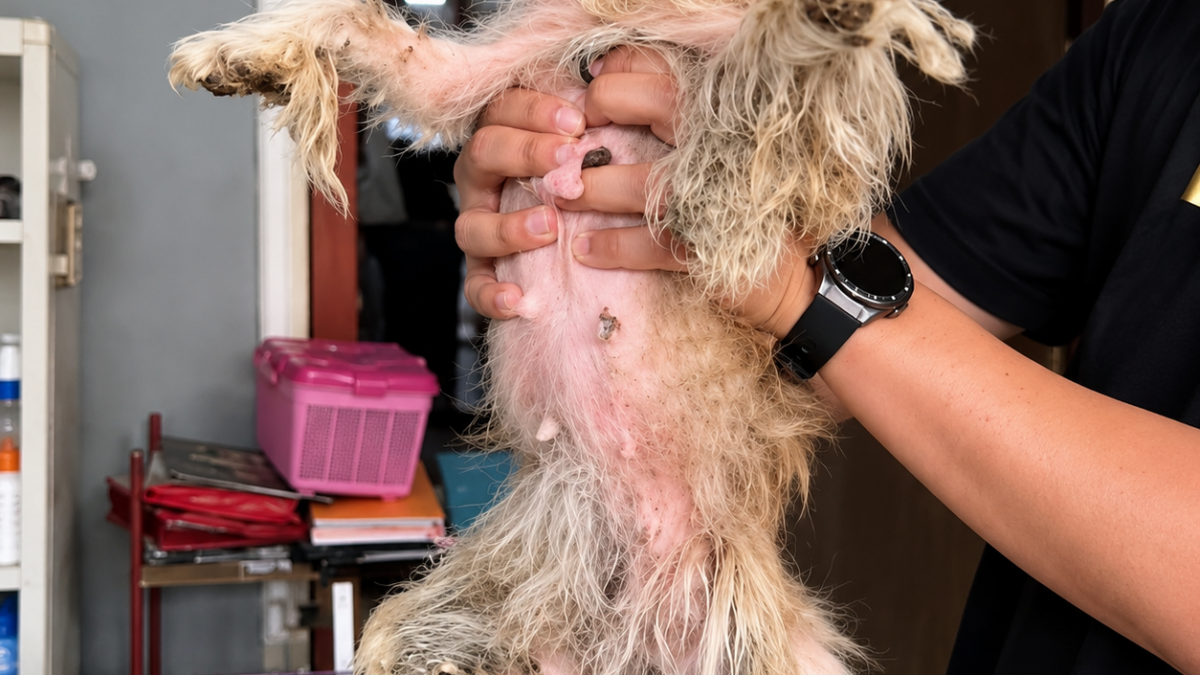
PART 2
I hated that sentence.
Not because Megan was being cruel.
Because she wasn’t.
She was stating the part of rescue work nobody likes talking about.
Getting an animal out of immediate danger is only step one.
After that comes everything else.
Medical care.
Recovery.
Behavioral assessment.
Fostering.
Adoption.
Money.
Space.
Time.
And luck.
Chelsea had survived long enough to get through the first door.
That did not guarantee another one would open.
I looked down at her.
She was asleep on the blanket with one shaved leg stretched across my shoe.
“How long can she stay here?”
“At the clinic?”
“Yes.”
“Maybe a week. Ten days if Nina can make it work.”
“And after that?”
Megan rubbed her forehead.
“We’ll figure it out.”
I knew what that phrase usually meant.
Nobody had figured it out yet.
Dr. Foster returned with Chelsea’s initial results.
“No parvo. No distemper concerns. Heartworm test negative.”
That was the good news.
The rest was harder.
Malnutrition.
Anemia.
Skin infection.
Fleas.
Possible intestinal parasites.
Dehydration.
Muscle wasting.
Several pressure sores.
One ear infection.
And dental damage that suggested Chelsea had spent a long time chewing or rubbing against metal.
I stared at Nina.
“Metal?”
“Possibly cage bars.”
My stomach tightened.
“Because she was hungry?”
“Could be stress. Confinement. Attempts to get out.”
Nobody spoke for several seconds.
Chelsea slept through the conversation.
Her body had apparently decided safety meant unconsciousness.
Nina continued.
“The biggest issue right now is feeding.”
“She’s starving.”
“Yes.”
“So we feed her.”
“Carefully.”
I knew enough to understand why.
Severely malnourished animals can develop dangerous electrolyte shifts if food is reintroduced too aggressively.
“How often?”
“Small meals throughout the day.”
“How small?”
“For now, smaller than your heart wants them to be.”
I looked at Chelsea’s ribs.
“That’s going to be difficult.”
“It always is.”
Chelsea woke when she heard a food container open in the next room.
Her head shot up.
Nina pointed.
“That reaction is why.”
Over the next few hours, we learned how deeply hunger had settled into her behavior.
Chelsea searched constantly.
Under chairs.
Inside empty bowls.
Around the trash can.
She licked crumbs from the floor.
When a technician named Kayla carried another dog’s food past the treatment area, Chelsea followed until her legs gave out.
She didn’t growl around food.
Didn’t guard.
She simply acted as if every calorie might be the last one she ever saw.
The first evening, I stayed until closing.
Megan finally said, “Go home.”
“I’m fine.”
“You’ve been here nine hours.”
“So has Chelsea.”
“She lives here temporarily.”
“Exactly.”
Megan crossed her arms.
“You know you can’t personally sit beside every animal all night.”
“I know.”
“Do you?”
I looked down.
Chelsea was curled beneath a fleece blanket.
“No.”
Megan smiled tiredly.
“I’ll text you if anything changes.”
I left.
Then came back twenty minutes later because I had forgotten my keys.
They were in my pocket.
Megan said nothing.
Neither did I.
The next morning, Chelsea was standing when I arrived.
That alone felt miraculous.
She recognized me.
At least I think she did.
The moment I entered, her tail started moving.
“Hey, little girl.”
She walked toward me.
Not quickly.
Her hind legs were too weak.
But deliberately.
She pressed her face against my shin.
I crouched.
“Good morning.”
Chelsea licked my chin.
Kayla walked by.
“She was waiting at the kennel door when she heard your voice.”
“That means she associates me with food.”
“Maybe.”
“Definitely.”
Kayla smiled.
“Whatever helps you sleep.”
Chelsea’s first week became a series of tiny measurements.
Four ounces gained.
Then six.
One less episode of diarrhea.
Skin less inflamed.
An ear improving.
A wound drying.
Each change sounded insignificant on paper.
Together, they were a life moving in the right direction.
She also became ridiculous.
The more energy returned, the more her personality appeared.
Chelsea discovered squeaky toys on day three.
Her first reaction was fear.
The toy squeaked.
She jumped backward.
Then stared at it.
Kayla squeezed it again.
Chelsea tilted her head.
Another squeak.
Chelsea lunged.
Within two minutes, she had decided the toy was either prey or the greatest invention in human history.
She carried it through the clinic.
Dropped it.
Pounced.
Wagged.
Nearly fell.
Recovered.
Repeated everything.
Nina walked in.
“What happened to keeping the patient calm?”
Kayla pointed at me.
“Rachel did it.”
“I absolutely did not.”
Chelsea squeaked the toy.
Nina sighed.
“Criminal behavior.”
Watching Chelsea play was almost harder than seeing her starve.
A starving dog made sense of suffering.
A playful dog made the injustice personal.
Someone had looked at that little animal—with her ridiculous bounce, gentle mouth, and desperate need for affection—and still allowed her to deteriorate.
I struggled with that.
I asked Megan what they knew about the property.
“Not much we can share yet.”
“Criminal case?”
“Possibly.”
“How many animals?”
“Chelsea wasn’t the only one.”
That stopped me.
“How many?”
“Rachel.”
“How many?”
“Seven were removed.”
I stared at her.
“Dogs?”
“Mostly.”
“Conditions like hers?”
“Different levels.”
“Who owned them?”
“Animal control is investigating.”
I hated not knowing.
But this was not my investigation.
Chelsea needed me focused on what I could actually change.
So I tried.
On day four, I helped bathe her.
Her skin was too sensitive for a normal bath, so we used medicated solution and warm water carefully.
Chelsea hated the tub.
Not violently.
She simply became very still.
Too still.
I recognized the shutdown by then.
“Stop.”
Kayla turned off the water.
Chelsea stood trembling.
I wrapped her in a towel.
“You’re okay.”
Her eyes fixed somewhere beyond me.
I sat on the floor.
We waited.
Five minutes.
Ten.
Eventually, Chelsea smelled the towel.
Then my sleeve.
Her body softened.
She licked my thumb.
We finished the bath later using wet cloths instead.
That moment changed how I saw her behavior.
Chelsea was friendly.
But friendliness did not mean trauma-free.
A dog can wag and still be terrified.
A dog can lick your hand because she loves you or because appeasement has kept her safe before.
A dog can tolerate something without being comfortable.
I began watching more carefully.
When Chelsea wanted contact, she leaned in.
When she had enough, she turned her head away.
When loud voices happened in the hallway, she froze.
When someone moved quickly over her, she crouched.
When food appeared, she became frantic.
Her body told us things her history couldn’t.
Nina said, “Recovery isn’t just getting weight on her.”
“I know.”
“You say that now.”
“What does that mean?”
“It means in two weeks, when she looks better, everyone will forget she’s still recovering.”
I remembered that sentence.
Because Nina was right.
By day seven, Chelsea looked dramatically improved.
Not healthy.
But alive.
Her eyes were brighter.
She had gained more than a pound.
The shaved areas made her look strange, but clean.
Her sores were healing.
She played in short bursts.
She greeted almost everyone.
Visitors saw a cheerful little dog.
They did not see the dog who checked food bowls every fifteen minutes.
Or the way she startled when a cage door slammed.
Or how she woke from sleep and searched the room before relaxing.
Those things took longer.
I visited every day.
Sometimes before work.
Usually after.
My own dogs noticed immediately.
Yes, dogs.
Three of them.
That was part of the problem.
At home I already had Milo, an elderly mixed breed with arthritis.
Penny, a beagle who believed all food belonged to her.
And Lou, a small terrier who considered himself head of national security.
My house was not empty.
My schedule was not light.
I helped rescue animals because I could transport, raise money, and occasionally foster.
But I had promised myself that three permanent dogs were my limit.
A reasonable limit.
A firm limit.
Then Chelsea happened.
On the eighth day, Megan called while I was at work.
“Nina says she can be discharged tomorrow.”
“That’s good.”
“It is.”
Silence.
I knew.
“What?”
“We don’t have placement.”
I closed my eyes.
“What about the foster list?”
“Full.”
“The applications?”
“Nothing suitable yet.”
“Shelter?”
“Technically possible.”
“No.”
“I know.”
“She can’t go from a clinic into a kennel.”
“Rachel.”
“She shuts down in cages.”
“I know.”
“She’s tiny.”
“I know.”
“What are you doing?”
“Calling everyone.”
I looked at my desk.
Then at the clock.
Then at nothing.
“How temporary?”
Megan did not answer.
That was answer enough.
I said, “Bring her to my house tomorrow.”
“Are you sure?”
“Temporary.”
“Of course.”
“Seriously.”
“Yes.”
“I have three dogs.”
“I know.”
“I work.”
“I know.”
“This is not an adoption.”
“Rachel.”
“What?”
“I said yes.”
Chelsea arrived the next afternoon.
I prepared a separate room.
Baby gate.
Bed.
Food.
Water.
Blankets.
Crate left open.
No forced interaction with my dogs.
She walked inside.
Smelled everything.
Then sat in the middle of the room.
I waited.
She looked at me.
Tail wag.
That was it.
No drama.
She had moved again.
My other dogs reacted exactly as expected.
Penny wanted to know whether Chelsea had food.
Lou barked because national security had been breached.
Milo sniffed through the gate and went back to sleep.
Chelsea watched all three.
No barking.
No growling.
Just curiosity.
We introduced them slowly.
Milo first.
He entered.
Smelled Chelsea.
Chelsea crouched.
Milo smelled her face.
Then walked away.
Chelsea followed.
Milo looked annoyed.
I laughed.
“Congratulations. You have a shadow.”
Within a day, Chelsea had decided Milo was safe.
Penny took longer because Penny’s obsession with food made me nervous around Chelsea’s starvation history.
Meals happened separately.
Always.
Lou was the biggest challenge.
Not because Chelsea had problems.
Lou did.
He barked.
Postured.
Followed her around like a suspicious landlord.
Chelsea responded by play-bowing.
Lou looked personally offended.
After three days, they were chasing each other through the hallway.
That was when my house became chaos.
Chelsea discovered carpet.
She rolled on it.
Then rolled again.
And again.
As if soft flooring was a luxury product.
She discovered the couch.
I found her standing in front of it one morning staring upward.
“You can jump.”
She looked at me.
“Probably.”
Nothing.
I lifted her.
She immediately curled into the corner cushion.
Ten minutes later, Penny joined her.
Then Lou.
Milo remained on his orthopedic bed because he had standards.
Chelsea slept.
Deeply.
Not clinic sleep.
Not exhausted shutdown.
The kind where her legs stretched out and her mouth opened slightly.
I took a picture.
Then another.
Megan texted:
**She looks comfortable.**
I replied:
**TEMPORARY.**
Megan sent back:
**I didn’t say anything.**
Food remained the hardest issue.
Chelsea ate like the bowl was going to disappear.
We used slow feeders.
Small meals.
Predictable times.
At first, she followed me every time I entered the kitchen.
If I opened the refrigerator, she appeared.
If I touched a bag, she appeared.
If I dropped anything, she moved like lightning.
Once, I dropped a lettuce leaf.
Chelsea swallowed it before realizing she didn’t like lettuce.
Her expression afterward made me laugh so hard I had to lean against the counter.
“You did that to yourself.”
Chelsea stared at me accusingly.
Predictability helped.
Breakfast always came.
Lunch always came.
Dinner always came.
Nothing vanished because she ate too slowly.
No one took Penny’s food and no one took hers.
Weeks passed.
Chelsea started leaving crumbs.
The first time it happened, I stared at the bowl.
Three pieces.
Tiny.
Ordinary.
To me, they were enormous.
“Chelsea?”
She looked up from a toy.
“You left food.”
She wagged.
I almost cried.
A dog who believes food will return can afford to walk away.
That was healing.
Adoption applications began arriving.
Some were good.
Some were not.
One family wanted a “small hypoallergenic dog.”
Chelsea was neither reliably hypoallergenic nor ready for children grabbing at her.
Another applicant worked twelve-hour shifts and wanted a dog “independent enough to be alone.”
Not Chelsea.
One couple seemed promising.
Quiet home.
No young children.
Experienced dog owners.
They came to meet her.
Chelsea greeted the woman happily.
Then the man moved too quickly toward her.
Chelsea flattened.
He immediately stopped.
“Sorry.”
Good reaction.
We tried again.
By the end, Chelsea accepted treats from both.
I should have been excited.
Instead, I spent the entire night finding flaws.
Their fence had one loose panel.
Their vacation plans sounded frequent.
Their previous dog had been overweight.
Megan finally called me.
“You know what you’re doing?”
“Evaluating.”
“You rejected them because their dead Labrador was twelve pounds overweight six years ago.”
“It shows judgment.”
“It shows Labrador ownership.”
“Still.”
“Rachel.”
“What?”
“You’re attached.”
“Obviously. Foster parents get attached.”
“This is different.”
“No.”
“Okay.”
I hated when she said okay like that.
The couple ultimately adopted another dog.
I told myself I was relieved because Chelsea had more healing to do.
Maybe that was partly true.
At the six-week mark, her bloodwork improved.
She gained enough weight that Nina reduced the frequency of monitoring.
Her skin cleared.
Fur returned in soft uneven patches.
She looked ridiculous.
Beautifully ridiculous.
Chelsea also became braver.
The vacuum no longer sent her under furniture.
Door slams still bothered her but recovery came faster.
She learned stairs.
The first time she climbed the staircase, she looked back after every step.
At the top, she sprinted into my bedroom and bounced on the bed.
“You understand this is not your room.”
Tail.
“Already crowded.”
Bounce.
“Chelsea.”
She rolled onto her back.
Negotiations ended.
My dogs changed around her too.
Milo became strangely protective.
If Lou played too roughly, Milo stood up and inserted himself between them.
Penny taught Chelsea criminal behavior.
Specifically kitchen surveillance.
The two of them learned exactly where I stored treats.
One morning, I found a cabinet open.
Penny looked guilty.
Chelsea looked delighted.
“No.”
Neither moved.
“Which one of you?”
Penny walked away.
Chelsea wagged.
“Terrible witness.”
Lou became her wrestling partner.
They tore through the hallway every evening around seven.
Why seven?
No idea.
Dogs schedule chaos without consulting anyone.
Chelsea’s most unexpected friendship was Milo.
He was twelve.
Slow.
Uninterested in nonsense.
Chelsea adored him.
She slept beside his bed.
Followed him into the yard.
Licked his ears.
Milo tolerated everything with the weary patience of a grandfather.
One evening, I found them asleep with Chelsea’s head across his back.
I sent Megan the picture.
She replied:
**Temporary.**
I did not answer.
The legal case surrounding the property eventually moved forward.
Megan shared what she legally could.
The animals had belonged to a woman who had become overwhelmed after losing her job and then her housing stability.
The situation deteriorated over months.
That explanation complicated my anger.
It didn’t excuse neglect.
Chelsea still starved.
Animals still suffered.
But the person responsible was not some cartoon villain laughing while dogs went hungry.
She had failed catastrophically.
There were charges.
Some animals were surrendered permanently.
Restrictions were placed on future ownership.
The case ended without the dramatic punishment people online demanded.
I had mixed feelings.
Then I looked at Chelsea.
Punishment did not feed her.
Accountability mattered.
Prevention mattered.
But Chelsea’s future mattered more to me than imagining someone else suffering.
By month three, Megan found what she called “the perfect adopter.”
I refused to discuss it over text.
She called.
“Woman in her fifties. Works from home.”
“Other pets?”
“One calm senior dog.”
“Children?”
“Adult son visits.”
“Fenced yard?”
“Yes.”
“Travel?”
“Rarely.”
“Experience?”
“Two rescues.”
“References?”
“Excellent.”
I couldn’t find an immediate flaw.
I hated that.
“When?”
“Saturday.”
“For a meet.”
“Yes.”
Chelsea was asleep with Milo.
I stared at her.
“Fine.”
Saturday arrived.
The woman’s name was Diane.
I liked her immediately, which made everything worse.
She sat on the floor.
Ignored Chelsea at first.
Let her approach.
Chelsea sniffed.
Retreated.
Returned.
Diane offered a treat.
Chelsea took it.
Milo walked over.
Diane greeted him too.
Good.
Lou barked.
Diane ignored him.
Excellent.
Penny searched her purse for snacks.
Diane laughed.
Disaster.
After an hour, Chelsea curled near Diane’s leg.
Megan looked at me.
I looked away.
When they left, Diane said, “No pressure. I know she’s still recovering.”
I nodded.
“She likes you.”
“I like her.”
That night I couldn’t sleep.
Chelsea was on her bed near mine.
At three in the morning, she woke.
Walked over.
Put both paws against the side of my bed.
I lifted her.
She curled against my stomach.
I stared into the dark.
“This isn’t fair.”
Chelsea sighed.
I thought about the cage.
Her ribs.
The desperate eating.
The first tiny tail wag.
The slow bath.
The shaved skin.
The couch.
Milo.
The three crumbs left in a bowl.
Diane could give her a good home.
I knew that.
Maybe an excellent one.
That was the problem.
I could not tell myself Chelsea had nowhere else to go.
If I kept her, it would not be rescue necessity.
It would be choice.
Mine.
And choices come with consequences.
Four dogs.
More veterinary costs.
Travel complications.
Work.
Time.
Attention divided among animals who already depended on me.
I did not want to become the person who said yes emotionally and failed practically.
So I made lists.
Expenses.
Schedules.
Emergency plans.
Pet sitter availability.
Space.
Exercise.
Medical care.
I called my veterinarian.
“Nina.”
“Uh-oh.”
“What?”
“You only use my name like that when you’re about to ask me to approve something you already decided.”
“I haven’t decided.”
“Chelsea?”
Silence.
Nina laughed.
“I knew it.”
“Can I reasonably handle four dogs?”
“That depends.”
“On?”
“Money.”
“Fine.”
“Time.”
“Manageable.”
“Space.”
“Not ideal but adequate.”
“Compatibility.”
“They’re doing well.”
“Long-term commitment.”
I looked at Chelsea sleeping beside Milo.
“That’s the question.”
Nina’s voice softened.
“Don’t keep her because you feel sorry for her.”
“I know.”
“Don’t keep her because she had a bad past.”
“I know.”
“Don’t keep her because you think no one else could love her.”
“I know.”
“Then why are you thinking about it?”
I answered before I could edit myself.
“Because when I imagine this house without her, it feels like someone is missing.”
Silence.
Then Nina said, “There’s your question.”
The next morning, Megan called.
“Diane wants to proceed.”
I closed my eyes.
Chelsea was in the yard chasing Lou.
Milo watched.
Penny searched for something edible.
“Can I call you back?”
“You okay?”
“Yes.”
I wasn’t.
I sat on the porch.
Chelsea saw me.
She abandoned Lou immediately.
Ran over.
Jumped awkwardly onto the step.
Pressed her body against my leg.
She was no longer skin and bones.
I could feel muscle now.
Warmth.
Life.
Her fur had grown back enough to cover most of the damaged skin.
Her eyes looked different.
Not empty.
Alert.
Mischievous.
Safe.
I put my hand beneath her chin.
“You know you have a very nice lady who wants you.”
Chelsea licked my wrist.
“Big yard.”
Tail.
“Quiet house.”
More tail.
“Probably fewer lunatics.”
Lou barked from the yard.
Chelsea looked toward him.
Then back at me.
I laughed.
“That was the wrong argument.”
I called Megan.
She answered immediately.
“Rachel?”
“She’s not going.”
Silence.
Then:
“Okay.”
“That’s it?”
“What do you want me to say?”
“I don’t know.”
“Congratulations?”
I started crying.
Megan’s voice softened.
“You’re keeping her.”
“Yes.”
“You’re sure?”
“No.”
She laughed.
“Good.”
“How is that good?”
“People who understand responsibility are rarely one hundred percent sure.”
I wiped my face.
“I’m terrified I’ll take on too much.”
“Then keep checking yourself.”
“I have three dogs already.”
“Now four.”
“You’re not helpful.”
“I’m extremely helpful.”
“What do I tell Diane?”
“I’ll call her.”
“She’s going to be disappointed.”
“Yes.”
“I feel terrible.”
“She’ll survive.”
“What if she thinks I wasted her time?”
Megan paused.
“She applied to rescue a dog. Chelsea already got rescued. We have twenty more dogs she can meet.”
That was true.
Diane ultimately adopted a small senior spaniel mix named Rosie two weeks later.
Megan sent me the photo.
Diane on her couch.
Rosie sleeping in her lap.
Happy ending.
Just not Chelsea’s.
Chelsea’s adoption became official the following Tuesday.
The paperwork was boring.
Name.
Address.
Veterinary reference.
Microchip transfer.
Adoption fee.
Signature.
Nothing cinematic.
I signed.
Megan stamped the form.
“That’s it.”
“That’s it?”
“You expected confetti?”
“Maybe.”
She handed me Chelsea’s medical folder.
“Congratulations.”
Chelsea was under the desk chewing a toy.
I looked down.
“Do you understand any of this?”
Squeak.
Apparently not.
At home, I opened the front door.
My three dogs met us.
Milo slowly.
Penny loudly.
Lou as though Chelsea had been gone for three years instead of forty-five minutes.
Chelsea ran inside.
She tore through the living room.
Around the kitchen.
Back into the hallway.
Then jumped onto the couch.
Penny joined.
Lou joined.
Milo remained sensible.
I stood in the doorway holding the adoption folder.
A real home.
A real family.
No ceremony.
Just belonging.
Months passed.
Chelsea changed.
The frantic eating faded.
Not completely.
Food remained serious business.
But meals became meals instead of emergencies.
She stopped checking the kitchen trash.
Stopped searching every corner after dinner.
Stopped waking whenever I walked near the pantry.
One morning, she ate half her breakfast.
Then walked away.
I panicked.
“Chelsea?”
She ignored me.
“Nina?”
I called the clinic.
“What’s wrong?”
“She didn’t finish breakfast.”
“Is she vomiting?”
“No.”
“Diarrhea?”
“No.”
“Energy?”
“She’s wrestling Lou.”
I looked into the living room.
Chelsea tackled him.
Nina sighed.
“Rachel.”
“What?”
“She may simply be full.”
I stared at the bowl.
Full.
Such an ordinary word.
“Right.”
I hung up.
Then cried over half a cup of uneaten dog food.
Healing makes you ridiculous.
Chelsea grew fur.
Beautiful soft cream-colored fur with darker patches around her ears.
Some areas never came back perfectly.
There were scars.
Thin spots.
One small patch on her side stayed almost bare.
I loved that patch.
Not because it represented suffering.
Because eventually Chelsea stopped noticing it.
That was what I wanted.
I wanted her past to become unimportant to her.
Maybe not forgotten.
Animals don’t tell us how memory works.
But irrelevant.
No longer controlling the day.
Her biggest breakthrough happened with the crate.
I never locked her in one after adoption.
We kept a large crate in the laundry room because Penny occasionally slept there voluntarily.
Door always open.
Chelsea avoided it.
For months.
Then one afternoon I couldn’t find her.
I checked the yard.
Bedroom.
Couch.
Kitchen.
“Chelsea?”
Nothing.
Panic rose too fast.
Then I looked into the laundry room.
Chelsea was asleep inside the open crate.
On her back.
Legs in the air.
Door wide open.
I stood there.
She woke.
Looked at me.
Yawned.
Then went back to sleep.
I sat on the floor outside the crate.
Not crying.
Absolutely not.
Maybe a little.
That cage was not the cage she had been trapped in.
Still, the image mattered.
A dog who once had confinement forced on her had voluntarily chosen an enclosed space because she knew the door would stay open.
Choice had changed the meaning of it.
Years passed.
Milo died first.
He was fourteen.
His arthritis worsened.
Then kidney disease.
Chelsea stayed beside him during his final months.
She stopped wrestling near his bed.
Walked slower around him.
Slept close.
On his final morning, Nina came to the house.
Milo died peacefully with my hands around him.
Chelsea stood several feet away.
Afterward, she approached.
Smelled him.
Then lay beside his empty bed.
She stayed there for hours.
That night, Chelsea slept in the hallway where Milo used to rest.
Grief changed her too.
For weeks, she looked for him.
Then gradually stopped.
Penny aged.
Lou remained insane.
Chelsea became the middle dog.
The stable one.
That would have sounded impossible during the first week.
A rescue later asked me to foster a terrified young puppy overnight.
“One night,” Megan promised.
I laughed.
“You’ve used that line before.”
“Seriously.”
The puppy arrived shaking.
Hid beneath a chair.
Wouldn’t eat.
Chelsea saw him.
She did not approach directly.
She lay down several feet away.
The puppy watched her.
Chelsea yawned.
Relaxed.
Eventually the puppy crawled toward her.
By morning, he was sleeping against Chelsea’s side.
Megan arrived.
“You know what she’s doing?”
“Being warm?”
“Showing him he’s safe.”
I looked at Chelsea.
Once the frightened animal.
Now the example.
“That’s annoying.”
“What?”
“I’m going to cry.”
Megan smiled.
“Already happening.”
Chelsea helped foster nine dogs over the next several years.
Not because I became a full-time foster again.
I had learned limits.
One at a time.
Short placements.
Careful matches.
Chelsea was brilliant with frightened dogs.
Never overwhelming.
She gave space.
She played when invited.
Walked away when not.
Animals understood her in ways I never could.
The rescue began joking that Chelsea was our “intake counselor.”
I hated the title.
Chelsea did not care.
She worked for chicken.
Her old story occasionally resurfaced online.
Before and after photographs.
The first picture always bothered me.
Emaciated.
Filthy fur.
Defeated eyes.
Then newer Chelsea.
Healthy.
Running.
Sleeping on the couch.
People wrote things like:
**WHAT A TRANSFORMATION.**
They were right.
But photographs missed the best parts.
A healthy body was visible.
Trust wasn’t.
You couldn’t photograph the first time she left food behind because she knew another meal was coming.
Or the first voluntary nap inside an open crate.
Or the way she stopped flinching when I reached over her.
Or the day a foster puppy climbed against her and Chelsea became still so he could sleep.
Those were the transformations I remembered.
At age eight or nine—our estimate—Chelsea developed a heart murmur.
Mild.
We monitored.
At ten, arthritis appeared.
Medication helped.
At eleven, she started slowing.
Not dramatically.
The wild hallway runs became shorter.
She still played with Lou, but he learned to tone things down.
Penny had died the year before.
Cancer.
The house felt different.
Smaller pack.
Older.
Chelsea began sleeping in my bedroom.
Not every night.
But most.
She had a bed.
Naturally, she preferred mine.
I woke one morning with her stretched sideways and my legs hanging off the mattress.
“This arrangement is unacceptable.”
Chelsea snored.
“I adopted you. I own the bed.”
More snoring.
Ownership was clearly disputed.
At twelve, she developed kidney disease.
Early.
We adjusted food.
Monitored bloodwork.
She responded well.
Still played.
Still loved walks.
Especially long slow ones where she could smell everything.
Chelsea had been denied so much of the world early in life that I never rushed those walks.
If she wanted to spend two minutes investigating one mailbox, fine.
A tree?
Fine.
Grass?
Apparently fascinating.
People saw an old dog walking slowly.
I saw a dog who had once known mostly a cage choosing exactly how long she wanted to stand under open sky.
That mattered.
At thirteen, one of her old skin scars developed a small mass nearby.
Biopsy.
Benign.
I aged ten years waiting for the result.
Nina had retired by then, but she called.
“Megan told me.”
“Benign.”
“I heard.”
“I thought it was cancer.”
“Of course you did.”
“She’s getting old.”
“So are you.”
“Rude.”
“Accurate.”
I looked at Chelsea sleeping beside me.
“Nina?”
“Yes?”
“Do you remember the first day?”
“Very well.”
“Did you think she’d live this long?”
Silence.
“No.”
Honesty.
“I wasn’t sure she’d live through the first week.”
I swallowed.
“She did.”
“She did more than that.”
Chelsea’s final year was slow.
Good months.
Then bad weeks.
Kidney values worsened.
Heart medication.
Arthritis treatment.
Appetite stimulants.
More vet visits.
I became the person staring at every bowl.
Not because Chelsea was starving now.
Because when she didn’t eat, old memories returned.
I would set food down.
Chelsea sniffed.
Sometimes ate.
Sometimes walked away.
The first time that had symbolized healing.
Now it meant something else.
That hurt.
We tried warm food.
Chicken.
Rice.
Prescription diets.
Anything safe.
Some days she ate beautifully.
Others barely.
Megan visited one evening.
Chelsea was curled on the couch.
Older.
Thin again.
Not the skeletal body from the cage.
But thinner.
Megan sat beside her.
“Hey, Chelse.”
Tail.
Chelsea rested her head on Megan’s leg.
Megan looked at me.
“You okay?”
“No.”
“Good answer.”
“She’s losing weight.”
“I see.”
“I hate it.”
“I know.”
“I feel like we’re going backward.”
Megan shook her head.
“No.”
“Look at her.”
“I am.”
“She’s thin.”
“Yes.”
“She’s weak.”
“She’s old.”
“That looks the same sometimes.”
“It isn’t.”
I sat across from them.
Megan stroked Chelsea’s head.
“The first time she was thin because somebody failed her.”
I looked away.
“This time she’s thin because her body is finishing a long life.”
My eyes filled.
Megan continued.
“You’re not back in that room.”
It took me weeks to believe her.
Chelsea was not starving in a cage.
She was aging on a couch.
Her water bowl was full.
Food offered whenever she wanted.
Medication.
Blankets.
People.
Dogs.
Choice.
Love does not prevent aging.
Sometimes love is simply making sure aging happens somewhere safe.
One morning Chelsea refused food entirely.
Then water.
By afternoon, she could barely stand.
I called our veterinarian.
Dr. Emily Chen came to the house.
She examined Chelsea.
Her kidney disease had progressed sharply.
We could hospitalize.
IV fluids.
Maybe buy time.
“How much?”
Emily hesitated.
“Could be days. Could be a few weeks if she responds.”
“Comfortable?”
“Possibly after stabilization.”
“Possibly.”
“Yes.”
I looked at Chelsea.
She was lying beside the couch.
Her breathing slow.
Lou sat nearby.
He had become old too.
He watched without moving.
I asked, “What would you do?”
Emily sat beside me.
“I would think about what Chelsea has been telling you this week.”
I knew.
Less food.
Less walking.
Less interest in play.
More sleeping.
Difficulty standing.
The world shrinking.
I hated the answer.
“I’m not ready.”
Emily nodded.
“She doesn’t need you to be ready.”
That broke me.
Because Chelsea had spent the beginning of her life waiting for humans to notice what she needed.
I could not make her spend the end waiting for me to accept it.
I called Megan.
Then Nina.
Nina came.
Retirement had not changed her ability to look at me and know exactly what I was pretending.
She sat beside Chelsea.
Chelsea smelled her.
Tail moved weakly.
Nina laughed through tears.
“You remember me?”
Chelsea licked her finger.
“Of course you do.”
Megan brought the first squeaky toy Chelsea had loved.
Not the exact one.
That one had disappeared years ago.
Same type.
Chelsea heard the squeak.
Her ears moved.
For half a second, I saw young Chelsea.
Shaved.
Skinny.
Bouncing awkwardly in the clinic.
I laughed.
“There she is.”
Chelsea opened her eyes.
Megan placed the toy beside her.
Lou lay down on the other side.
We spent the afternoon telling stories.
Not about the cage.
Not mostly.
About Chelsea stealing lettuce and regretting it.
Chelsea teaching frightened puppies.
Chelsea sleeping in the open crate.
Chelsea taking up an entire queen bed despite weighing less than thirty pounds.
Chelsea following Milo everywhere.
Chelsea eating half a sandwich off my plate while I answered the phone.
Ordinary memories.
That was deliberate.
The cage had already taken enough space in her story.
Near sunset, I carried Chelsea into the backyard.
She was light.
Too light.
But my arms remembered another version.
The first week.
Fragile body.
Shaved fur.
Fear.
This time, Chelsea relaxed against me.
No uncertainty.
I put her on a blanket in the grass.
She lifted her nose.
Wind moved across her face.
Lou lay beside her.
I sat on the other side.
The sky turned orange.
Chelsea smelled the air.
For ten minutes, nobody spoke.
Then she rested her chin against my leg.
“Good?”
Her tail moved once.
It reminded me of the first wag.
That tiny movement after she stepped out of the cage.
I stroked her ear.
“You really made this difficult.”
Megan smiled through tears.
Chelsea closed her eyes.
I continued.
“You were supposed to recover.”
Tail.
“Get adopted.”
Tail again.
“Go live somewhere else.”
Nothing.
“You never listened.”
Nina said quietly, “Good girl.”
Dr. Chen returned after sunset.
We moved inside.
Chelsea lay on her favorite blanket.
Not in a cage.
No metal.
No dirty fur.
No empty bowl.
Her family around her.
I thought about the first day.
Her desperate eating.
The way nobody spoke while she buried her face in the food.
The defeated eyes.
Then I looked at her now.
Old.
Tired.
But peaceful.
Dr. Chen asked, “Ready?”
“No.”
She waited.
I bent over Chelsea.
Her eyes opened.
I put my forehead against hers.
“You don’t have to wait for someone to choose you anymore.”
My voice broke.
“I chose you a long time ago.”
Chelsea licked my nose.
Weakly.
One last ridiculous gift.
The sedative went in.
Her body relaxed.
Lou moved closer.
Megan put one hand over her mouth.
Nina cried openly.
I kept my hand beneath Chelsea’s cheek.
I wanted the last thing she felt to be contact she had chosen.
No cage floor.
No tangled fur pulling at skin.
No hunger.
Just a hand.
Home.
Her breathing slowed.
I whispered, “You’re safe.”
The words felt familiar.
We had spent years proving them.
Dr. Chen gave the final medication.
Chelsea exhaled softly.
Then she was still.
For several minutes, nobody moved.
Lou smelled her.
Lay beside her.
Then rested his head on the blanket.
I cried harder at that than anything else.
Afterward, the house changed.
Bowls reduced.
One bed empty.
No little body following me into the kitchen.
No Chelsea checking every grocery bag despite twelve years of evidence that food was not scarce.
For weeks, I still stepped around the place where she usually slept.
Habit survives longer than presence.
I kept her collar.
Her tag.
A small clipping of fur.
And one photograph.
Not the dramatic before-and-after photo everyone loved.
Not the skeletal dog in the cage.
Not even the glossy recovery picture.
The photograph I chose showed Chelsea asleep inside the open crate.
On her back.
Legs up.
Door wide open.
That was the whole story to me.
Months later, Megan called.
“I have someone I want you to meet.”
“No.”
“You always say that.”
“I mean it.”
“Small dog.”
“No.”
“Terrified.”
“Megan.”
“Found in an overcrowded house.”
I closed my eyes.
“No.”
“Okay.”
She hung up.
That should have been suspicious.
The next morning, she appeared at my door.
Holding a carrier.
“You’re a terrible person.”
“Yes.”
Inside was a tiny black-and-white dog.
Huge eyes.
Trembling.
She pressed herself against the back.
I crouched.
Did not reach inside.
Did not force.
Just sat.
The little dog stared at me.
Behind her, on a shelf in the living room, Chelsea’s photograph faced the room.
Open crate.
Sleeping dog.
Door wide.
Megan sat beside me.
“Temporary foster.”
I laughed.
“Absolutely not.”
The dog’s nose moved toward my hand.
One inch.
Then another.
I stayed still.
After several minutes, she touched my finger.
Tiny.
Uncertain.
Hopeful.
I looked toward Chelsea’s photograph.
“You did this.”
Megan smiled.
“She did a lot.”
The little dog stepped forward.
I opened my palm.
No pressure.
No grabbing.
She smelled me.
Then, very carefully, placed one paw over my hand.
That was all.
But I knew enough by then not to call small things small.
Chelsea had taught me that.
Healing began with meals no longer disappearing.
With cages becoming optional.
With tails moving once.
With frightened animals discovering that hands could stay gentle.
With one choice becoming another.
And another.
Years earlier, I had looked at Chelsea and wondered how anyone could let such a gentle little dog become so broken.
By the end of her life, that was no longer the question I carried.
What stayed with me was something quieter.
How much life had still been waiting inside her.
The cage had made her look defeated.
Starvation had made her look almost gone.
But neither had reached the deepest part of her.
The part that still wanted to play.
Still wanted to trust.
Still wanted to love people who had given her almost no reason to.
That part survived.
And once Chelsea finally had safety, food, time, and a home, it grew until it became the largest thing about her.
Not the neglect.
Not the ribs.
Not the filthy fur.
Chelsea.
The dog running through the hallway with Lou.
The dog sleeping beside Milo.
The dog leaving food because she finally knew there would be more.
The dog walking into an open crate because a door no longer meant prison.
The dog teaching frightened fosters that the house was safe.
The dog growing old surrounded by the family she had built.
That was Chelsea.
One evening, long after she was gone, I stood in the kitchen preparing dinner for Lou and the new foster.
The little black-and-white dog had started following me from room to room.
I dropped a piece of carrot.
She rushed forward.
Stopped.
Looked at me.
For a second, something about the movement reminded me of Chelsea.
I smiled.
“It’s yours.”
She ate it.
Immediately regretted it.
I laughed so suddenly Lou lifted his head.
“Sorry.”
The foster looked confused.
“Old story.”
That night, she slept near Chelsea’s old open crate.
Not inside.
Not yet.
That was fine.
There was no deadline.
Before going to bed, I stopped beside Chelsea’s photograph.
The room was quiet.
The crate in the picture remained open.
It always would.
I touched the edge of the frame.
The first time I met Chelsea, she stepped out of a cage because someone finally opened the door.
By the time she left me, she hadn’t needed a door opened for years.
She already knew she belonged on the other side.
[END OF STORY]








