PART 2: I Found a Young Dog Dying on Scorching Asphalt—Then Her Red Collar Led Us Somewhere No One Expected
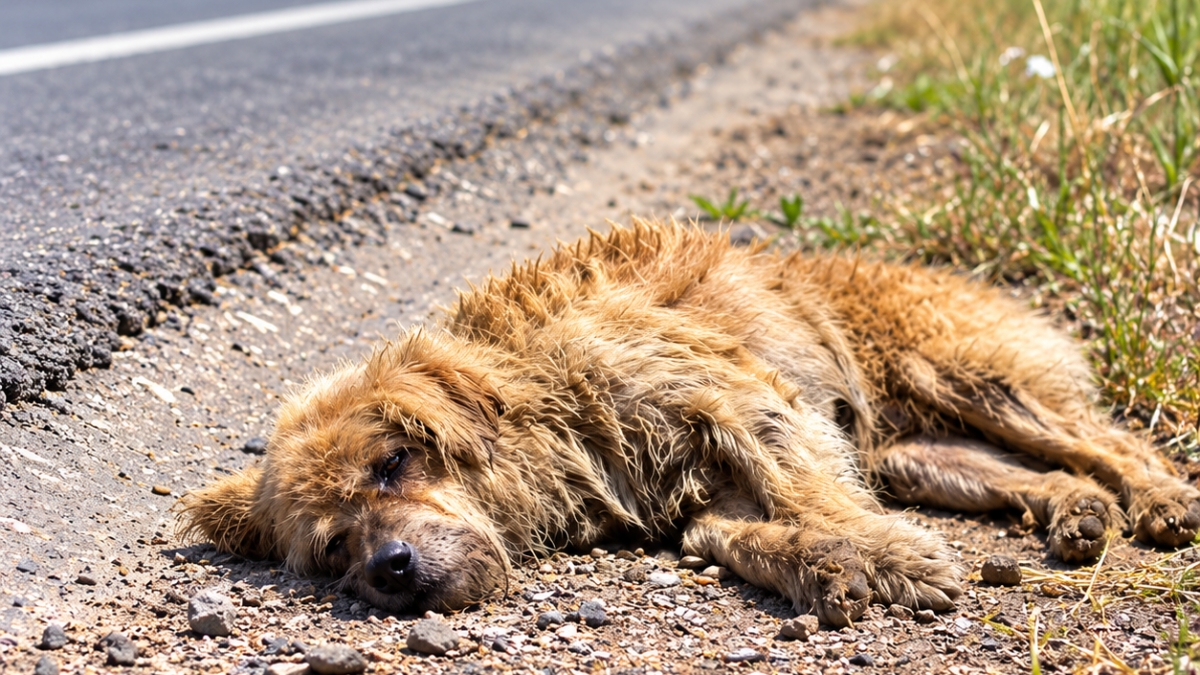
PART 2
For several seconds, I forgot how to speak.
Rachel leaned around my shoulder.
“No.”
Emily looked between us.
“You know him?”
I knew him.
Not well.
But enough.
His name was Mark Dalton.
Six months earlier, Mark had stood inside our rescue center shaking my hand while everyone congratulated him for adopting one of our dogs.
The dog on the screen.
The dog now lying unconscious in the emergency room.
Her name wasn’t on the roadside report because we’d found no tag.
But I knew it now.
“Ruby.”
Rachel’s voice cracked.
I stared at the photograph.
Ruby had been eight months old when we adopted her out.
She’d come to us after animal control found her and three siblings living beneath an abandoned mobile home. She had been shy at first, but not difficult. Within weeks, she followed volunteers around the yard carrying a tennis ball.
I remembered her.
Of course I remembered her.
She had one strange habit.
Whenever she got excited, she didn’t wag her tail normally. She gave one hard thump against whatever was behind her.
Just once.
Exactly what she’d done on the highway.
Rachel covered her mouth.
“Oh my God.”
Emily’s expression changed.
“You placed her with this man?”
“Yes.”
“When?”
“January.”
It was July.
I grabbed my phone.
Our rescue used digital adoption records.
Mark’s application came up immediately.
Home ownership confirmed.
Fenced yard.
Veterinary reference.
No prior animal-cruelty history.
Employment listed as operations manager for a landscaping company.
Everything had checked out.
There were even follow-up photographs from February.
Ruby lying on a couch.
Ruby standing in a backyard.
Ruby wearing that same red collar.
The tag was visible in one photo.
Heart-shaped.
Silver.
Her name and Mark’s phone number.
Now it was gone.
Rachel whispered, “Why would he remove it?”
I didn’t answer.
Emily did.
“Maybe because whoever left her didn’t want her identified quickly.”
The room went silent.
I looked at her.
“You think she was dumped.”
“I think her injuries don’t match a simple story yet.”
“What does that mean?”
Emily folded her arms.
“The leg fracture is several days old.”
“And the wound?”
“Likely similar age.”
“Could she have been hit by a car?”
“Yes.”
“Then crawled to the shoulder?”
“Possibly.”
“But?”
“She has abrasions on her abdomen that look more consistent with being dragged than sliding across pavement during impact.”
Rachel’s face went pale.
I asked, “Dragged by what?”
“I don’t know.”
“Could someone have moved her?”
“Yes.”
“After she was already injured?”
“Yes.”
I looked back at Mark’s smiling face on the screen.
I remembered the adoption day.
He had knelt beside Ruby.
Let her sniff his hand.
Spoken softly.
“I’ve been looking for a dog like her.”
We had believed him.
I had believed him.
I felt physically sick.
“I’m calling him.”
Emily stepped between me and the desk.
“No.”
“He adopted her from us.”
“And you’re angry.”
“Of course I’m angry.”
“Exactly.”
Rachel touched my shoulder.
“Denis.”
I shook her off.
“He signed a contract requiring him to return her to us if he couldn’t keep her.”
“I know.”
“He had our number.”
“I know.”
“He could’ve called.”
“I know.”
Emily spoke quietly.
“And if somebody intentionally abandoned her, you don’t want to warn them before animal control documents everything.”
That stopped me.
I hated it.
But she was right.
I called our director instead.
Susan Hale answered immediately.
When I told her, she went silent.
Then:
“Don’t contact Mark.”
“Everybody keeps saying that.”
“Because you want to.”
“Yes.”
“Which is exactly why you shouldn’t.”
“I sat across from him during the adoption.”
“I know.”
“I told him she trusted slowly.”
“I know.”
“I handed him the leash.”
Susan’s voice softened.
“Denis, you didn’t do this.”
I looked through the window toward the trauma room.
Ruby lay beneath a cooling blanket.
“That doesn’t feel true.”
“It is.”
I didn’t believe her.
Not yet.
Animal Control Officer Melissa Grant arrived forty minutes later.
We had worked with Melissa for years.
She was practical, unsentimental, and almost impossible to impress.
She looked at Ruby’s photographs.
Then at the adoption records.
Then at the medical notes.
“Call the registered owner,” she said.
I looked at Susan.
Susan shook her head.
Melissa noticed.
“Not you.”
She dialed from her office phone.
Mark answered on the fourth ring.
Melissa put the call on speaker after identifying herself.
“Mr. Dalton, I’m calling regarding a dog registered to you. Rust-colored female mixed breed named Ruby.”
A pause.
Then Mark said:
“Ruby’s missing.”
Every person in the room looked at each other.
Melissa remained calm.
“When did she go missing?”
“About a week ago.”
“Did you report her?”
“No.”
“Why not?”
Another pause.
“I’ve been looking myself.”
“Did you contact the rescue where you adopted her?”
“No.”
“Any shelters?”
“No.”
“Animal control?”
“No.”
Mark’s voice became defensive.
“I work sixty hours a week. I’ve been driving around every night.”
Melissa wrote something down.
“Where was Ruby last seen?”
“My backyard.”
“Was the gate open?”
“Yeah.”
“How?”
“I don’t know.”
“Broken lock?”
“No.”
“Damaged fence?”
“No.”
“So an unsecured gate?”
“I guess.”
“Mr. Dalton, Ruby has been found.”
He sounded relieved.
At least, he performed relief well.
“Thank God. Where?”
“She’s receiving emergency veterinary care.”
Silence.
“What happened?”
“We’re determining that.”
“Is she okay?”
“No.”
That answer landed heavily.
Melissa continued.
“She has a fractured rear leg, a significant wound along her side, dehydration, severe weight loss, and evidence of prolonged distress.”
Another pause.
Then Mark said:
“She must’ve been hit.”
“Possibly.”
“I told you, she got out.”
“Can you come to the clinic?”
“Now?”
“Yes.”
“I’m at work.”
“Where?”
“Dalton Landscape Supply.”
“That’s fifteen minutes away.”
“I can’t just leave.”
Melissa’s face changed slightly.
Not enough for Mark to hear.
“Your missing dog has been found critically injured.”
“I understand.”
“Then come identify her.”
He sighed.
That sound made me want to reach through the phone.
“All right. Give me twenty minutes.”
He arrived in thirty-four.
Black pickup.
Company logo on the door.
Clean polo shirt.
Work boots.
Sunglasses.
He walked into the clinic carrying his phone like he’d been interrupted during lunch.
Then he saw me.
He stopped.
“Denis.”
“Mark.”
Susan stepped slightly between us.
Good decision.
Mark looked toward the treatment area.
“Where is she?”
Melissa answered.
“Before you see her, I need to ask a few questions.”
He frowned.
“I thought you said I needed to identify her.”
“I do.”
“Then let me.”
“Where was Ruby between July fifth and today?”
“My house.”
“Until when?”
“Last Saturday.”
It was Thursday.
Emily had estimated the fracture at four to five days old.
Melissa asked:
“What time Saturday?”
“Morning.”
“Who last saw her?”
“I did.”
“Anyone else live with you?”
“My girlfriend.”
“Name?”
“Lauren Pike.”
“Was she home?”
“Yes.”
“Did she see Ruby?”
“Probably.”
“Probably?”
Mark’s jaw tightened.
“I don’t know. Ask her.”
Melissa did.
Not immediately.
First she took Mark to see Ruby.
I watched through the window.
Mark entered.
Ruby was awake.
Barely.
Melissa stood behind him.
Emily remained near the IV pump.
Mark approached the kennel.
“Ruby.”
Her remaining strength disappeared into her body.
She flattened herself against the bedding.
Not a wag.
Not a whine.
A full-body tremor.
Mark reached toward her.
Ruby tried to push backward.
Emily stepped in.
“Don’t.”
Mark looked offended.
“She’s my dog.”
“She is critically injured and clearly distressed.”
“She always gets nervous at clinics.”
I stared at him.
Ruby had loved our veterinarian during adoption screening.
Maybe that had changed.
Maybe everything had.
Mark looked at me.
“You know how she is.”
I didn’t answer.
Because I did know how she was.
And that wasn’t it.
Melissa saw it too.
She escorted Mark to another room.
When the door closed, I went to Ruby.
She was still shaking.
“Hey.”
Her eyes moved toward me.
“I’m here.”
Slowly, carefully, I rested my hand several inches from her muzzle.
She sniffed.
Then the one hard tail thump came again.
I turned away before anyone saw my face.
The next twenty-four hours gave us more questions than answers.
Lauren Pike, Mark’s girlfriend, told Melissa that Ruby hadn’t disappeared Saturday.
She said Wednesday.
Three days earlier.
Mark said Lauren was confused.
Lauren said she hadn’t been home much because she and Mark were “having problems.”
Then she changed her story.
She said maybe Saturday was right.
Melissa wrote every contradiction down.
Ruby underwent surgery that evening.
The fractured leg required a plate.
The wound had necrotic tissue that needed removal.
Her body temperature had stabilized, but her kidneys were stressed from dehydration.
Emily warned us that the first forty-eight hours remained dangerous.
I stayed anyway.
At 1:10 in the morning, Ruby woke.
I was sitting beside the kennel with my back against the wall.
Her eyes opened.
I whispered:
“Hey, kid.”
The tail moved once.
“You remember me?”
Another tiny thump.
I laughed quietly.
Then cried.
I’m not embarrassed to say it.
I had handed her leash to Mark six months earlier.
That fact replayed in my head over and over.
I remembered telling him:
“She doesn’t need somebody perfect. She needs somebody patient.”
He’d smiled.
“I’ve got plenty of patience.”
I wanted to punch that memory out of myself.
At three in the morning, Susan brought coffee.
“You need sleep.”
“No.”
“That wasn’t a suggestion.”
“I’m staying.”
She sat beside me.
For a while, neither of us spoke.
Then I asked:
“Did we miss something?”
Susan knew exactly what I meant.
“In his application?”
“Yes.”
“We ran everything.”
“Maybe not enough.”
“Denis.”
“People lie.”
“Yes.”
“So maybe our process is useless.”
“No.”
“A dog almost died.”
“That doesn’t make every decision before it negligent.”
“It was my home visit.”
“I know.”
“I met him.”
“I know.”
“I liked him.”
Susan looked at Ruby.
“That may be why this is hurting you so much.”
I didn’t answer.
She continued.
“You want there to have been a sign.”
“There should’ve been.”
“Why?”
“So I could blame myself for missing it instead of accepting that sometimes people pretend well.”
That hit harder than I expected.
Susan stood.
“Go home for two hours.”
“No.”
“I’ll sit with her.”
I looked at Ruby.
Then at Susan.
“Call if anything changes.”
“Obviously.”
I went home.
I did not sleep.
At 6:23 a.m., Melissa called.
“We found something.”
I sat upright.
“What?”
“Ruby wasn’t first found yesterday.”
“What do you mean?”
“The woman who called your rescue wasn’t the first person to see her.”
My stomach tightened.
“Who was?”
“A road-maintenance worker reported a dog at that location three days earlier.”
I stood.
“Three days?”
“He assumed she was dead.”
“Did he call anyone?”
“County dispatch.”
“And?”
“The call was logged as road debris.”
I stopped moving.
“A dog was logged as debris?”
“Dispatcher misunderstood the report.”
“Are you kidding me?”
“No.”
“What happened?”
“A crew was supposed to check. They were rerouted to a traffic accident.”
“So nobody came.”
“No.”
I looked out my kitchen window.
The sun was already bright.
Three days.
Ruby had been lying beside that highway while hundreds, maybe thousands, of vehicles passed.
“Melissa.”
“Yeah?”
“How does a dog with a broken leg get there?”
“That’s what we’re trying to answer.”
“What else did you find?”
“There’s a gas station four miles west.”
“And?”
“Camera covers part of the highway.”
My heart started beating faster.
“Do you have footage?”
“They keep seven days.”
“Melissa.”
“We’re pulling it.”
At nine that morning, I returned to the clinic.
Ruby was stable.
Emily called that good news.
I called it permission to breathe.
By noon, Ruby ate a spoonful of soft food.
By two, she drank from a bowl without help.
The moment she saw water, she pushed her nose against the rim, exactly as she’d done beside the road.
Then she looked at me.
No tail thump.
She was too tired.
Still, it felt like victory.
At four, Melissa walked into the clinic.
She had a laptop.
I knew immediately.
“You found something.”
“Maybe.”
She placed the laptop on the counter.
Susan came over.
Rachel joined us.
Melissa opened a file.
Black-and-white security footage.
Timestamp:
**Sunday, 2:18 a.m.**
A pickup drove east.
Black.
Logo on the side.
Even in grainy footage, I recognized it.
Dalton Landscape Supply.
Nobody spoke.
Melissa advanced three minutes.
Another camera angle caught the truck entering an access road near where we’d found Ruby.
There were no houses there.
No businesses.
Just an old agricultural turnout.
At 2:31 a.m., the truck returned to the highway.
Heading west.
I looked at Melissa.
“That’s his truck.”
“Company has four.”
“Who had them?”
“We’re determining that.”
“License plate?”
“Unreadable.”
“Driver?”
“Can’t see.”
I clenched my jaw.
“Mark said Ruby disappeared Saturday morning.”
“Yes.”
“This is early Sunday.”
“Yes.”
“Her fracture could have happened then.”
“Yes.”
“So arrest him.”
“No.”
My anger snapped.
“What more do you need?”
“Proof.”
“You have his company truck.”
“I have a truck belonging to a company with four similar vehicles.”
“You have his dog found four miles away.”
“Yes.”
“You have contradictory stories.”
“Yes.”
“And you’re doing nothing?”
Melissa closed the laptop.
“I’m building something that doesn’t fall apart when an attorney touches it.”
I stared at her.
She didn’t blink.
Eventually, I looked away.
“Fine.”
“Denis.”
“What?”
“Anger is useful until it starts making decisions.”
I hated that sentence.
Mostly because it was true.
That evening, Mark posted online.
A photograph of Ruby from February.
**PLEASE PRAY FOR MY GIRL. SHE ESCAPED LAST WEEK AND WAS FOUND BADLY INJURED. I’M DEVASTATED.**
The post spread quickly.
People commented:
**Poor baby.**
**You’re such a good dog dad.**
**Hope whoever hit her gets caught.**
I nearly threw my phone across the room.
Susan stopped me.
“Don’t respond.”
“He’s lying.”
“Don’t respond.”
“He’s making himself the victim.”
“Let him.”
“Why?”
“Because every specific lie is another thing investigators can compare to evidence.”
So I watched Mark collect sympathy.
And I said nothing.
Two days later, Ruby’s condition improved enough that Emily let us move her from intensive care.
She couldn’t bear weight on the repaired leg.
She needed wound care twice daily.
Her ribs showed through her coat.
But when I entered, she raised her head.
Thump.
One tail strike.
“That’s getting old,” I told her.
Another thump.
I smiled.
Mark called the clinic demanding to take her home.
Emily refused.
“She is not medically ready for discharge.”
He threatened legal action.
Then his attorney called.
That changed the atmosphere.
Ownership matters.
Even when an owner is suspected of neglect or abandonment, a veterinary clinic can’t simply decide to keep someone else’s animal forever.
Melissa moved faster.
Animal control placed Ruby under protective hold pending investigation.
Mark exploded.
He came to the clinic.
I was there.
Bad timing.
Or good timing, depending on how you look at it.
He slammed papers on the reception desk.
“You can’t steal my dog.”
Melissa stood near the doorway.
“Nobody is stealing anything.”
“I own her.”
“She is under lawful protective hold.”
“For what?”
“Pending investigation into neglect and abandonment.”
Mark laughed.
“Abandonment? She escaped.”
“Your statement says Saturday.”
“Yes.”
“Your girlfriend originally said Wednesday.”
“She was mistaken.”
“Then she said Saturday after speaking with you.”
Mark’s eyes flicked toward me.
“This is him.”
Melissa looked at him.
“What?”
“He’s been against me since I got here.”
I almost laughed.
“I approved your adoption.”
“That doesn’t mean you didn’t change your mind.”
“You think I planted Ruby beside a highway?”
His face hardened.
“I didn’t say that.”
“Then what exactly are you accusing me of?”
Susan touched my arm.
“Denis.”
Mark pointed at me.
“You rescue people love drama. You see abuse everywhere.”
My hands curled.
Melissa stepped between us.
“Mark.”
He turned toward her.
“Get your hands off my dog.”
“Ruby is staying here.”
“I’ll have your job.”
Melissa smiled without warmth.
“Get in line.”
Mark stormed out.
Five minutes later, my phone buzzed.
Unknown number.
**You don’t know what you’re getting involved in.**
I stared at it.
Susan saw my face.
“What?”
I showed her.
“Save it.”
“Obviously.”
Another message arrived.
**Stay away from my family.**
I typed:
**Who is this?**
Susan grabbed the phone.
“No.”
“He threatened me.”
“Exactly.”
We gave the messages to Melissa.
The number was prepaid.
No immediate identification.
But from that point forward, I stopped sleeping normally.
Every truck slowing near my house made me look through the blinds.
Every unknown call tightened my stomach.
I installed cameras.
Susan told me I could stay at her place.
I refused.
Then someone punctured two tires on the rescue van.
No camera caught it.
No proof connected it to Mark.
Still, the timing was impossible to ignore.
Rachel wanted to go public.
Susan refused.
“We’re not turning Ruby into content while there’s an investigation.”
“We need pressure.”
“We need evidence.”
“They’re threatening us.”
“Then document it.”
I sided with Susan.
Not because I was calm.
Because Mark wanted us emotional.
He wanted mistakes.
I wasn’t giving him one.
The case cracked because of Lauren.
Three weeks after Ruby was found, Lauren walked into the animal-control office carrying a plastic grocery bag.
Inside was a broken silver heart-shaped dog tag.
**RUBY**
Underneath:
Mark’s phone number.
Melissa called me later.
“You sitting?”
“No.”
“Sit.”
“I hate when people say that.”
“Do it anyway.”
I sat.
“Lauren brought Ruby’s tag.”
I stopped breathing.
“Where was it?”
“Mark’s garage.”
“When did she find it?”
“Yesterday.”
“How?”
“She’s moving out.”
I understood immediately.
“She’s leaving him.”
“Yes.”
“Why now?”
Melissa paused.
“Because she says what happened to Ruby wasn’t an accident.”
My hand tightened around the phone.
“What did she say?”
“Enough for a search warrant.”
That was all Melissa would tell me.
At first.
The warrant was executed the next morning.
Police and animal control searched Mark’s house, garage, work vehicles, and company office.
They found more than the dog tag.
In one company truck, investigators found reddish fur embedded in the rear floor mat.
Not suspicious by itself.
Ruby had ridden in Mark’s vehicles before.
But beneath a heavy rubber liner in the truck bed, they found dried blood.
Lab analysis later confirmed it was canine.
Consistent with Ruby.
Still not enough to tell the whole story.
Then they found a length of rope stained with the same blood.
Emily reviewed photographs.
The rope diameter matched bruising around Ruby’s abdomen.
I had never noticed those bruises.
They’d been hidden under dirty fur and overshadowed by worse injuries.
But she had them.
Someone had tied or dragged her.
Lauren gave a full statement.
The story was uglier than I expected.
Ruby had not escaped.
Five days before we found her, Mark came home angry because Ruby had torn open a bag of landscaping fertilizer stored in the garage.
She didn’t ingest enough to poison herself.
She made a mess.
Mark kicked her.
Hard.
Lauren screamed at him.
Ruby ran.
Mark chased her into the yard.
According to Lauren, he grabbed her collar and dragged her toward the garage.
Ruby panicked.
She bit him.
Not badly.
One puncture on his hand.
That was when he lost control.
He kicked her again.
Ruby’s rear leg broke.
Lauren heard the sound.
She begged him to stop.
Mark told her:
“If that dog bites me again, I’ll kill her.”
For two days, Ruby lay in the garage.
No veterinarian.
No medication.
Lauren secretly gave her water.
She said she wanted to call police.
Mark threatened her.
Not physically.
Financially.
The house was his.
Her car was in his name.
She worked for his company.
She was afraid.
On Saturday night, Ruby began crying.
Mark couldn’t stand the sound.
He loaded her into the company truck.
Lauren asked where he was taking her.
He said:
“Somewhere she won’t be my problem.”
The gas-station footage showed the truck thirty minutes later.
Lauren stayed home.
She didn’t know where he’d left Ruby.
When Mark returned, the red collar was in the passenger-side footwell.
He removed the tag and threw it onto a workbench.
Then he told Lauren:
“If anyone asks, gate was open.”
That was the story.
Simple.
Stupid.
Cruel.
Human.
When Melissa finished telling me, I sat in silence.
I wanted a dramatic motive.
Some complicated explanation.
There wasn’t one.
Ruby had made a mess.
Then she bit the person hurting her.
And a man who couldn’t tolerate losing control decided her life was disposable.
Mark was arrested that afternoon.
The charges included felony animal cruelty, abandonment, intimidation related to the investigation, and additional offenses connected to false statements and evidence.
I expected relief.
Instead, I felt sick.
Because arresting Mark didn’t erase the image of Ruby lying in a garage with a broken leg for two days.
It didn’t erase Lauren giving her water secretly.
It didn’t erase the highway.
Nothing could.
The public reaction flipped almost overnight.
Mark deleted his “pray for my girl” post.
Too late.
Screenshots remained.
Local news compared his words with court filings.
His customers began leaving.
Dalton Landscape Supply removed him from daily operations pending trial.
His business partner issued a statement distancing the company.
Mark’s attorney claimed Lauren was lying because of a bitter breakup.
Then came the next setback.
Lauren had no recording of the assault.
No video from the garage.
No independent witness.
The defense planned to argue that Ruby had been hit by a vehicle after escaping and that Lauren invented everything after deciding to leave Mark.
For the first time in weeks, I wondered whether he might actually walk away.
Melissa didn’t promise anything.
Neither did the prosecutor.
Cases aren’t stories.
They don’t always reward the right person.
Evidence matters more than outrage.
So we waited.
And while everyone else fought over what had happened to Ruby, Ruby herself started learning how to live again.
She came home with me under foster authorization six weeks after we found her.
I hadn’t planned that.
Susan assigned her to me because Ruby already trusted me.
“Temporary,” I said.
Susan laughed.
“Why does everyone laugh when I say that?”
“Experience.”
My house wasn’t designed for an injured dog.
I bought rugs so she wouldn’t slip.
Built a ramp beside the back steps.
Moved furniture.
Put her bed beside mine.
The first night, Ruby refused to sleep.
Every time I turned off the light, she cried.
Not loudly.
One soft whine.
Then another.
I turned the lamp back on.
Silence.
Lights off.
Whine.
Lights on.
Silence.
At two in the morning, I gave up.
“Fine.”
I left the lamp burning.
Ruby slept.
For three weeks, so did I.
She hated garages.
The first time I opened mine, Ruby backed away so hard she almost fell.
I closed it immediately.
She hated rope.
A simple leash loop on the floor made her freeze.
She hated raised voices.
She hated black pickup trucks.
She loved watermelon.
I have no explanation for that one.
The veterinarian approved tiny pieces as treats.
Ruby would do anything for watermelon.
Except enter the garage.
That took months.
Recovery didn’t look dramatic.
It looked boring.
Five steps.
Rest.
Seven steps.
Rest.
Physical therapy.
Medication.
Wound cleaning.
More therapy.
A setback when the repaired leg swelled.
Another X-ray.
Another week of restrictions.
Then ten steps.
Then twenty.
The first time Ruby walked the length of my backyard without sitting down, Rachel cried harder than I did.
“She looks terrible,” I told her.
Ruby’s fur was growing back unevenly around the wound.
“She looks perfect.”
“She looks like a badly assembled fox.”
Rachel hugged her.
Ruby gave the one tail thump.
By October, she could jog.
Not run.
Jog.
Her repaired leg would probably never move exactly like the others.
Emily warned me arthritis might come early.
I didn’t care.
Ruby was alive.
That was enough.
Then Mark’s attorney made his move.
He petitioned for Ruby’s return.
I thought it was a joke.
It wasn’t.
Mark still claimed ownership.
The criminal case had not been resolved.
His attorney argued the protective hold was temporary and that another family member could legally care for the dog.
When I heard, I drove straight to Melissa’s office.
“You’re not giving her back.”
“Sit down.”
“No.”
“Denis.”
“He broke her leg.”
“Allegedly.”
“Don’t say that to me.”
“I have to say it exactly that way until there’s a conviction.”
“He dumped her.”
“Allegedly.”
I slapped both hands on her desk.
“She shakes when she sees his truck.”
Melissa waited.
I knew what she was doing.
Letting me run out of anger.
It took a while.
Finally she said:
“We are opposing the petition.”
I stepped back.
“Oh.”
“You could have asked.”
“I was busy yelling.”
“I noticed.”
The court kept Ruby in protective custody.
Mark lost that round.
He retaliated.
Not illegally.
Strategically.
His attorney attacked our rescue.
He demanded adoption records.
Inspection records.
Financial statements.
Internal emails.
The implication was obvious:
Maybe we had failed.
Maybe Ruby should never have been adopted.
Maybe we had an agenda.
Maybe we were using Mark’s case to raise money.
We had accepted donations for Ruby’s medical costs.
All properly documented.
Still, optics matter.
Mark’s attorney knew that.
He found one mistake.
During Ruby’s adoption, a volunteer had incorrectly recorded one follow-up phone call as “completed” when it had actually gone to voicemail.
Small.
Embarrassing.
Not related to the abuse.
But the defense used it.
“If the rescue falsified one record,” Mark’s supporters said online, “what else did they falsify?”
I felt responsible all over again.
Susan didn’t.
“We correct it.”
“They’re destroying our credibility.”
“No. They’re testing it.”
“What if people believe them?”
“Some will.”
“What do we do?”
“Tell the truth faster than they lie.”
So we published corrected records.
Not case evidence.
Our process.
We admitted the documentation error.
Reviewed every adoption follow-up from the previous year.
Changed procedure so unanswered calls couldn’t be marked complete.
It felt humiliating.
It turned out to be one of the best decisions we made.
Mark’s attorney expected defensiveness.
Instead, transparency made the rescue stronger.
Donations stabilized.
Three former adopters volunteered to testify about our follow-up process.
The county inspector confirmed we had no significant violations.
The attack backfired.
Then Mark made a mistake his attorney could not fix.
He called Lauren.
A protective order prohibited contact.
He used his brother’s phone.
Lauren recorded it.
At first, Mark sounded calm.
“I’m not calling to fight.”
Lauren said nothing.
“I just need you to think about what you’re doing.”
Silence.
“You know I didn’t mean for any of this to happen.”
Still nothing.
“You know Ruby bit me.”
Lauren finally answered.
“After you kicked her.”
Mark’s voice hardened.
“Don’t do this.”
“Do what?”
“Rewrite everything.”
“You broke her leg.”
“You don’t know that.”
“I watched you.”
“You watched a dog attack me.”
“She was trying to get away.”
“You’re going to ruin my life over a dog?”
That sentence became important later.
Lauren remained calm.
“You left her beside the highway.”
Mark exhaled sharply.
Then:
“She was supposed to be dead.”
Silence.
Even on the recording, you can hear the moment he realizes what he said.
Lauren’s voice shook.
“What?”
Mark tried to recover.
“I mean she looked dead.”
“You just said she was supposed to be.”
“No.”
“Yes, you did.”
“You’re twisting my words.”
“Where did you leave her?”
“Lauren.”
“Where?”
He hung up.
The recording reached investigators within an hour.
Mark was charged with violating the protective order.
His bail conditions were tightened.
His attorney reportedly told him not to call anyone ever again.
For the first time, I believed the case might hold.
Trial began almost eleven months after Ruby was found.
By then she had gained eleven pounds.
Her coat had grown back.
The wound left a long pale scar beneath the fur.
Her leg remained slightly stiff.
She slept beside my bed every night.
Not in it.
Ruby had rules.
She liked her space.
The prosecutor called me on the first day.
I described finding her.
The heat.
The twisted leg.
The missing tag.
The water.
The tail thump.
The defense attorney was named Randall Price.
He was good.
Polite.
Controlled.
Never raised his voice.
“Mr. Carter, you care deeply about dogs.”
“Yes.”
“Would you say you sometimes become emotionally invested?”
“Yes.”
“In Ruby?”
“Very.”
“You were involved in approving my client’s adoption?”
“Yes.”
“So if Mr. Dalton harmed Ruby, that might feel like a personal failure.”
I knew where he was going.
“Yes.”
“You might be motivated to prove that someone else was responsible.”
“No.”
He raised an eyebrow.
“You just admitted feeling responsible.”
“I said it felt personal. That doesn’t give me the ability to manufacture gas-station footage.”
A few jurors smiled.
Price didn’t.
“You disliked my client almost immediately after Ruby was found.”
“I disliked the idea that someone left her there.”
“You suspected him before investigators finished their work.”
“Yes.”
“So your judgment was biased.”
“My feelings were.”
“What’s the difference?”
“I wasn’t collecting forensic evidence.”
He paused.
“Did you want revenge?”
The courtroom went quiet.
I thought about the roadside.
Mark’s messages.
My tires.
Ruby crying when the lights went out.
“Yes.”
Price looked satisfied.
“At one point, absolutely.”
“And now?”
“Now I want the record to say what happened.”
“That’s convenient.”
“No.”
I looked at Mark.
“Convenient would’ve been punching him the day he came to the clinic.”
The judge looked sharply at me.
Price said:
“But you didn’t.”
“No.”
“Why?”
“Because then the story becomes about me.”
I turned toward the jury.
“It isn’t.”
The prosecutor called Emily.
She explained Ruby’s injuries.
The age of the fracture.
The bruising.
The rope pattern.
The dehydration.
The likely progression of pain.
Price tried to suggest Ruby could have suffered those injuries after escaping.
“Could a vehicle fracture a dog’s leg?”
“Yes.”
“Could asphalt cause abrasions?”
“Yes.”
“Could dehydration occur after several days outdoors?”
“Yes.”
“So nothing proves my client caused those injuries.”
Emily looked at him.
“Not medically by itself.”
Price smiled.
Then the prosecutor asked:
“Doctor, if Ruby had been hit by a vehicle near where she was found, would you expect blood inside the bed of Mr. Dalton’s truck?”
Price objected.
Overruled.
Emily answered:
“No.”
Lauren testified the next day.
That was the heart of the case.
She looked terrified.
Mark didn’t look at her.
Not at first.
She described the garage.
The fertilizer bag.
The kick.
Ruby biting him.
The sound of the leg breaking.
Two days of suffering.
The truck.
The missing collar tag.
Price attacked carefully.
“You were financially dependent on Mr. Dalton.”
“Yes.”
“You were angry when the relationship ended.”
“Yes.”
“You moved out after investigators became involved.”
“Yes.”
“You knew criminal charges could make separating from him easier.”
Lauren swallowed.
“I suppose.”
“So you benefited from accusing him.”
She looked at him.
“I lost my home, my job, most of my belongings, and several friends.”
Price paused.
Lauren continued.
“If that’s benefiting, I wouldn’t recommend it.”
Then Price produced text messages.
Lauren had written months earlier:
**Sometimes I wish Mark would just disappear.**
Another:
**I hate him.**
Another:
**If I could ruin him, I would.**
I felt my stomach drop.
The prosecutor had known about them.
Still, hearing them aloud hurt.
Price asked:
“You wanted to ruin my client.”
Lauren’s eyes filled.
“Yes.”
“So you had motive to lie.”
“No.”
“Those are your words.”
“They are.”
“What changed?”
Lauren looked toward Mark.
Then at the jury.
“I stopped wanting revenge when Ruby nearly died.”
Price frowned.
“Why?”
“Because he kept telling me my anger made me crazy.”
She took a breath.
“So I decided not to ask anyone to believe my feelings.”
She pointed toward the evidence table.
“I asked them to believe the blood in his truck.”
Price moved on.
Then came the gas-station footage.
The company vehicle.
The timestamp.
The turnout.
The return.
A forensic analyst testified that GPS telematics from the company’s fleet system had been recovered.
Mark had forgotten that part.
The truck’s onboard system placed it at the highway turnout for nine minutes.
His employee ID had been used to unlock the vehicle after hours.
Price suggested someone else knew Mark’s code.
Possible.
Then prosecutors introduced building-camera footage from Dalton Landscape Supply.
Mark entering the truck alone.
2:02 a.m.
Truck leaving.
No passenger visible.
Mark returning forty minutes later.
Still alone.
That closed another door.
The rope DNA evidence followed.
Then the blood.
Then the tag.
Then Lauren’s recording.
When the prosecutor played the line—
**She was supposed to be dead.**
Nobody moved.
Mark closed his eyes.
Price spent almost an hour trying to reinterpret the sentence.
Mark had supposedly meant Ruby appeared dead when he found her after an accident.
But that created another problem.
If he believed she’d been struck and was dead, why hadn’t he called anyone?
Why remove the tag?
Why abandon the body?
Why tell everyone she escaped?
Every explanation required another lie.
By the time Mark testified, the lies had become a maze.
His attorney advised against it.
We learned that later.
Mark insisted.
He wanted control back.
On the stand, he claimed Lauren exaggerated the argument.
He admitted kicking “toward” Ruby but not striking her.
He admitted transporting Ruby in the truck but said he had discovered her injured near his property.
He claimed he thought she was dead.
Then he panicked.
“Why panic?” the prosecutor asked.
“Because she bit me earlier.”
“You were afraid people would blame you?”
“Yes.”
“So you removed her tag?”
“Yes.”
There was a stir in the courtroom.
Price’s shoulders dropped slightly.
The prosecutor asked:
“You took an injured dog you believed was dead, removed identification linking her to you, drove her several miles, and left her beside a highway?”
Mark realized too late how bad the admission sounded.
“I wasn’t thinking clearly.”
“Was Ruby breathing?”
“I don’t know.”
“You didn’t check?”
“I thought she was dead.”
“Was she warm?”
“I don’t remember.”
“Did she move?”
“No.”
“Did she make a sound?”
“No.”
The prosecutor walked toward the jury.
“Mr. Dalton, she was alive for at least three days after you left her.”
Mark stared forward.
“That’s what they say.”
“No. That’s what the medical evidence shows.”
She picked up the photograph of Ruby from the roadside.
Twenty-eight pounds.
Sunken eyes.
Twisted leg.
Old red collar.
She placed it on the screen.
Mark looked away.
The prosecutor said:
“You told Lauren she was supposed to be dead.”
“I misspoke.”
“You told police she escaped.”
“I panicked.”
“You told the public she escaped.”
“I was embarrassed.”
“You removed her tag.”
“I told you.”
“You denied driving to the turnout.”
“I forgot.”
“You threatened witnesses.”
“No.”
“You called Lauren despite a court order.”
“I needed to explain.”
The prosecutor stopped.
“Is there any part of this case where you told the truth before evidence forced you to?”
Price objected.
Sustained.
But the question had already landed.
The jury deliberated for eight hours.
I spent most of it outside with Susan, Rachel, Melissa, and Lauren.
Lauren paced.
I sat.
Then paced.
Then sat again.
At one point, Rachel handed me a vending-machine sandwich.
I stared at it.
“What is this?”
“Food.”
“This isn’t food.”
“You haven’t eaten.”
“I’d rather not start with this.”
Nobody laughed.
At 6:42 p.m., we were called back.
The jury entered.
Mark stood.
I watched the foreperson instead of him.
Guilty.
Felony animal cruelty.
Guilty.
Abandonment.
Guilty.
Witness intimidation.
Guilty.
Violation of protective order.
A lesser charge resulted in acquittal.
I didn’t care.
Lauren covered her mouth.
Susan squeezed my shoulder.
Mark stared at the table.
No outburst.
No final speech.
Just a man finally unable to create a new version of events.
Outside the courthouse, reporters waited.
I walked past.
Lauren stopped once.
A reporter asked:
“Do you feel justice was done?”
Lauren looked exhausted.
“Yes.”
“Do you forgive Mr. Dalton?”
She shook her head.
“That isn’t part of today’s verdict.”
Then she walked away.
I respected that answer.
Sentencing came six weeks later.
Mark received prison time, followed by supervised release.
He was prohibited from owning or having custody of animals for years after release.
He was ordered to pay restitution for Ruby’s medical treatment and investigative expenses.
His business partner bought out his share of Dalton Landscape Supply at a steep discount after customers and contracts evaporated.
Mark later sold his house to cover legal bills and civil judgments.
Some people called that revenge.
It wasn’t mine.
I didn’t destroy his business.
I didn’t take his house.
I didn’t make Lauren testify.
I didn’t create the evidence.
Mark built his consequences one decision at a time.
My part had been simpler.
I stopped the van.
I carried water.
I didn’t leave Ruby beside the road.
That was enough.
But Ruby’s story wasn’t finished.
The court permanently transferred custody away from Mark after the conviction.
Susan called me.
“Congratulations.”
“For what?”
“Ruby is legally available for adoption.”
I looked at Ruby.
She was asleep upside down beside my couch.
One leg in the air.
Scar visible.
“Okay.”
Susan waited.
“What?”
“You need to complete an application.”
“You’re joking.”
“Policy.”
“I’ve volunteered there seven years.”
“Policy.”
“I fostered her for almost a year.”
“Policy.”
“You know my house.”
“Policy.”
“You’re enjoying this.”
“A little.”
So I filled out the application.
Twenty-two questions.
Fence height.
Veterinary reference.
Work schedule.
Emergency plan.
I wrote under “Why do you want to adopt this dog?”:
**Because she already owns my living room.**
Susan rejected the answer.
“Take this seriously.”
I added:
**And because she deserves never to wonder again whether she’s being left behind.**
Susan stopped smiling.
“Better.”
The adoption was approved.
We held no ceremony.
No balloons.
No social media campaign.
I signed papers at Susan’s desk.
Ruby sat beside me.
Susan clipped a new tag onto the old red collar.
We had repaired it rather than replace it.
The new tag said:
**RUBY CARTER**
Underneath:
My phone number.
I knelt.
“You know what this means?”
Ruby licked my chin.
“Terrible judgment.”
Thump.
One tail strike against the floor.
I laughed.
The rescue changed its adoption policies afterward.
Not because our old system had caused Mark to become cruel.
It hadn’t.
But Ruby exposed weaknesses.
Follow-up calls became mandatory and documented.
High-risk warning signs triggered home rechecks.
Adopters received easier anonymous surrender options.
Contracts were rewritten to emphasize that returning an animal would never result in public shaming.
We wanted no one to believe abandonment was easier than asking for help.
Lauren eventually found work with a veterinary supply company.
She moved into a small apartment.
For months, she couldn’t talk about Ruby without crying.
Then one afternoon she asked if she could visit.
I hesitated.
Not because I blamed her.
Because Ruby remembered.
I didn’t know how she’d react.
Lauren arrived carrying nothing.
No treats.
No toys.
She had asked beforehand what to bring.
I said:
“Just yourself.”
Ruby saw her from the hallway.
She froze.
Lauren stopped immediately.
“Hey, girl.”
Ruby’s ears moved.
She took one step back.
Lauren sat on the floor.
“I’m sorry.”
Ruby didn’t move.
Lauren didn’t reach.
Five minutes passed.
Then ten.
Finally Ruby approached.
Slowly.
She sniffed Lauren’s hand.
Lauren started crying.
“I should’ve gotten you out sooner.”
Ruby sniffed again.
Then walked away.
Lauren laughed through tears.
“Fair.”
Later Ruby returned carrying her tennis ball.
She dropped it several feet from Lauren.
Lauren looked at me.
“What do I do?”
“Throw it.”
She did.
Ruby limped after it.
Not fast.
But happy.
That became the beginning of something.
Lauren visited every few weeks.
Ruby never loved her the way she loved me.
That’s okay.
Animals don’t exist to resolve human guilt.
But Ruby stopped fearing her.
Lauren stopped needing forgiveness from a dog who had already spent enough of her life carrying human mistakes.
Two years after the rescue, the county asked me to speak at an animal-welfare training event.
I refused.
Susan volunteered me anyway.
“You’re terrible.”
“I know.”
I stood in front of twenty-three animal-control officers, shelter workers, volunteers, and veterinary technicians with a photograph of Ruby on the screen.
Not the roadside photo.
The new one.
Ruby standing in my backyard.
Healthy.
Red collar.
One slightly crooked back leg.
I told them the part that mattered most.
Not Mark.
Not the trial.
The road.
“How many cars passed her?” someone asked.
“We’ll never know.”
“Hundreds?”
“Probably.”
“Why didn’t anyone stop?”
I looked at the photograph.
“Most people probably didn’t see her.”
“And the ones who did?”
I thought about the caller whose trembling voice had reached our rescue.
“One person did.”
That was enough.
Years passed.
Ruby’s injured leg developed arthritis earlier than Emily predicted.
We managed it.
Medication.
Swimming therapy.
Shorter walks.
More rugs.
Fewer stairs.
She remained obsessed with watermelon.
She eventually tolerated garages.
Not loved.
Tolerated.
The first time she walked into mine voluntarily, I nearly celebrated.
I was changing a wiper blade.
Ruby stood at the threshold.
I pretended not to notice.
She sniffed.
One paw inside.
Then another.
She walked to me.
Sat.
Thump.
Her tail hit the concrete.
I kept working because making a big deal out of bravery can sometimes make it scary again.
Afterward, I gave her watermelon.
Obviously.
When Ruby was seven, I drove the highway where we’d found her.
Not intentionally.
Construction sent me on a detour.
I realized where I was only when I saw the old agricultural turnout.
Ruby was in the passenger seat.
Older.
Gray beginning around the muzzle.
She looked out the window.
I slowed.
For years, I’d imagined stopping there with her.
A symbolic return.
Maybe some grand moment where she’d understand she’d survived.
Instead, I kept driving.
Ruby yawned.
That felt better.
The road didn’t deserve a ceremony.
It was just a road.
Her life was somewhere else.
At home, she had a bed beside the fireplace.
A basket of toys.
A red collar with her name.
People who would answer if she cried.
That was the ending the highway couldn’t give her.
Eight years after I first found Ruby, Susan retired from the rescue.
At her farewell dinner, she handed me an envelope.
“What is this?”
“Open it.”
Inside was a photograph.
Adoption day.
The first one.
Mark kneeling beside Ruby.
I stared at it.
“Why would you give me this?”
“Back.”
I turned it over.
There was another photo taped behind it.
Me kneeling beside Ruby the day I adopted her.
Same red collar.
Same dog.
But everything else different.
In the first picture, Ruby’s body leaned subtly away from Mark.
I had never noticed.
In the second, her shoulder pressed against my chest.
Susan said:
“You spent years blaming yourself for the first photo.”
I said nothing.
“Keep both.”
“Why?”
“So you remember you don’t get to control what people become after they leave your office.”
She pointed to the second picture.
“But you do get to decide what you do when they come back broken.”
I swallowed.
“That’s annoyingly wise.”
“Retirement.”
“Does it happen automatically?”
“Apparently.”
Ruby lived to fourteen.
Longer than any of us expected after what she’d endured.
Her final year was slower.
Arthritis.
Kidney disease.
More veterinary visits.
Emily had moved to another clinic by then, but she still saw Ruby personally.
One November morning, Ruby refused breakfast.
That was serious.
This was a dog who once tried to steal an entire watermelon from my kitchen counter.
We went to the clinic.
Bloodwork.
Ultrasound.
Bad news.
Cancer.
Advanced.
I sat on the floor beside Ruby while Emily explained options.
Chemo might buy time.
Maybe months.
Maybe less.
Surgery wasn’t realistic.
I asked:
“Will she hurt?”
“Eventually.”
“Is she hurting now?”
“Some.”
I rubbed Ruby’s ear.
She leaned into me.
“What would you do?”
Emily hated that question.
Veterinarians always do.
She answered anyway.
“I’d choose comfort.”
So did I.
Ruby got twelve good weeks.
Watermelon whenever she wanted.
Short walks.
Sunlight on the porch.
Lauren visited.
Rachel visited.
Susan visited.
Melissa came once in uniform because she was nearby.
Ruby barked at her hat.
Melissa removed it.
“Still bossy.”
Thump.
One tail hit against the floor.
On Ruby’s last morning, snow had fallen overnight.
She had always loved snow.
I carried her outside wrapped in a blanket.
We sat on the porch.
She couldn’t stand long anymore.
I placed my hand beside her muzzle.
Exactly where I’d put it on the highway years earlier.
Ruby lifted her head.
Slowly.
Pressed her nose against my wrist.
Same place.
Same gesture.
Then her tail moved.
One time.
Thump.
I laughed and cried at once.
“You’ve really got one trick.”
Ruby closed her eyes.
We went to the clinic that afternoon.
I stayed with her.
Of course I did.
The last thing she knew was my hand beneath her head.
No hot road.
No trucks.
No thirst.
No fear.
Just familiar voices.
A red collar.
And somebody who didn’t leave.
I kept that collar.
It hangs beside the back door now.
Sometimes new volunteers ask about it.
I tell them about Ruby.
Not the courtroom version.
Not the headlines.
The actual story.
A young dog lay beside a highway so still that hundreds of people mistook her for something already lost.
One woman noticed her blink.
A phone call was made.
A van arrived.
A bowl of water touched the asphalt.
And when I knelt beside her, Ruby used the last strength she had to drag herself toward my hand.
At the time, I thought she was asking me to save her.
Years later, I understood it differently.
She was testing one last possibility.
Whether a human hand could mean something other than pain.
I was lucky enough to be there when she tried.
And I made sure she never had to ask that question again.
[END OF STORY]








