PART 2: I Found a Dying Dog Tied Inside a Sack Beneath an Old Oak—Then I Learned Who Had Left Her There
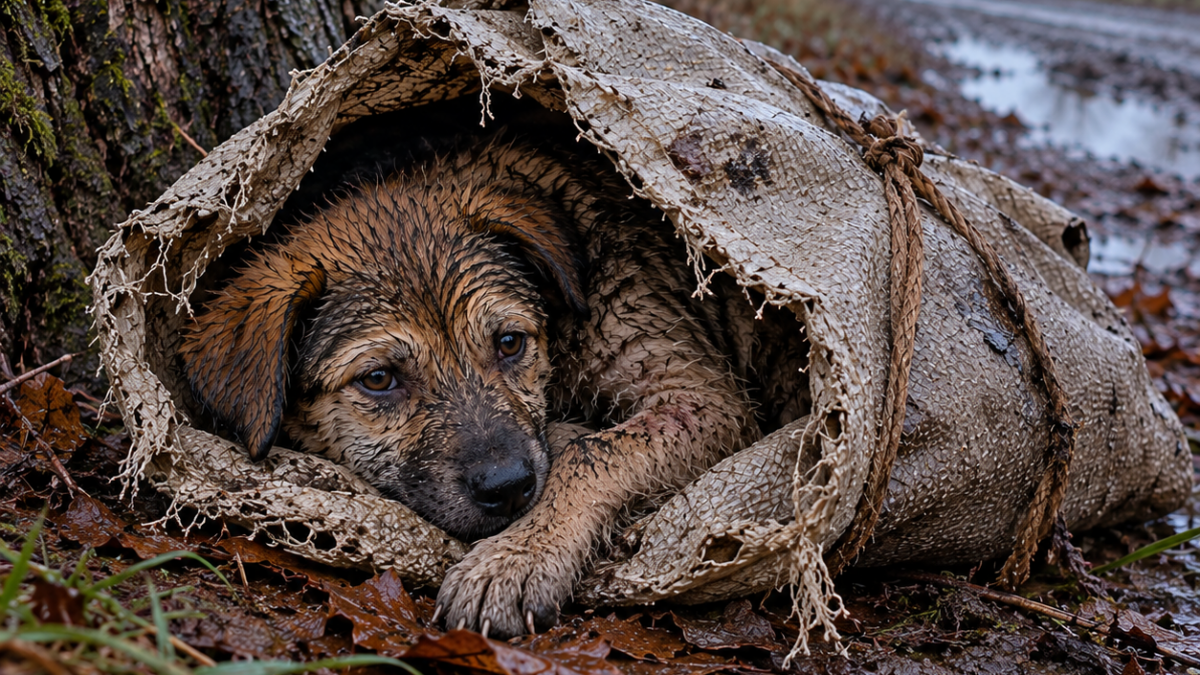
PART 2
Victor Lupu lived less than four miles from us.
Calling him a friend would have been a lie, but in a village our size, people rarely needed to be friends to know one another’s business.
Victor was fifty-three, broad-shouldered, loud, and always seemed to be either buying something, selling something, or complaining that somebody else was trying to cheat him. He owned a small farm on the western side of the valley where he kept sheep, chickens, rabbits, and whatever animals he thought might turn a profit that year.
We had spoken dozens of times over the years.
Sometimes at the feed store.
Sometimes outside the market.
Sometimes during village meetings.
We were civil.
Nothing more.
Dr. Popa dialed the number listed beside the microchip registration.
While he waited for someone to answer, Elena moved closer to me.
“What are you thinking?” she whispered.
“I don’t know yet.”
That was not true.
I was thinking about the rope.
The tied sack.
The road that hardly anyone used.
And the fact that Victor knew that road better than most people in the village because one of his grazing fields lay less than a mile away.
Dr. Popa suddenly straightened.
“Mr. Lupu?”
His tone became formal.
“My name is Dr. Radu Popa. I’m calling from the veterinary clinic in Valea Mare.”
A pause.
“Yes. It concerns a dog registered to you.”
Another pause.
“A female mixed breed. Approximately six years old.”
The voice on the other end grew louder.
I could not understand the words, but I heard irritation.
Dr. Popa’s expression hardened.
“No, she is not fine.”
He listened again.
“She was found this morning near the old eastern farm road.”
Silence.
Then the voice erupted through the receiver.
Dr. Popa’s eyebrows lifted.
“Inside a sack.”
Another pause.
“No. I’m not accusing you of anything. I am asking when you last saw the dog.”
He picked up a pen.
“Four months ago?”
He wrote something down.
“You’re saying she escaped?”
More talking.
“I understand.”
His jaw tightened slightly.
“Yes. Someone may contact you.”
He ended the call.
Elena spoke first.
“What did he say?”
Dr. Popa set the phone down.
“He says the dog ran away four months ago.”
I looked through the treatment room window.
The dog had not moved.
One assistant was cleaning around her neck while another monitored the fluids running into her front leg.
“She didn’t put herself in that sack,” I said.
“No.”
“And she didn’t tie the rope.”
“No.”
Dr. Popa sat.
“I’m documenting everything. Her weight. The collar injury. Dehydration. Infection. Blood results. Photographs.”
“Why?”
“Because of the circumstances in which she was found.”
He looked directly at me.
“I’m also notifying animal protection and the police.”
Elena exhaled.
“Good.”
I should have felt relieved.
Instead, I looked again at the dog.
“What happens to her?”
“For now? We try to keep her alive.”
That brought me back to what mattered.
Dr. Popa explained that starving animals could not simply be given unlimited food.
I had imagined the opposite.
In my mind, you rescued a starving dog by filling a bowl and letting her eat.
He shook his head.
“Too much food too quickly can cause dangerous electrolyte shifts. Her heart, liver, and kidneys are already under stress.”
“So you feed her slowly?”
“Very slowly.”
“How slowly?”
“Small measured amounts. Several times a day.”
“And the neck?”
“That worries me.”
He showed us the wound more closely.
The collar had rubbed through the skin in several places.
Some tissue had died.
There were pockets of infection underneath.
“She may need surgery.”
“When?”
“When she’s strong enough.”
“You mean not now?”
“I don’t think she would tolerate anesthesia safely today.”
Those words stayed with me.
Not strong enough to survive the thing that might save her.
Before we left, one of the assistants asked if we wanted to know her registered name.
I hesitated.
Elena answered.
“Yes.”
The assistant looked at the screen.
“Bella.”
I repeated it.
“Bella.”
Inside the treatment room, the dog’s ear twitched.
Maybe coincidence.
Maybe not.
On the drive home, neither Elena nor I spoke for several minutes.
Finally she said, “Do you believe Victor?”
“No.”
“You answered quickly.”
“I saw the sack.”
“He might be telling the truth about her running away.”
“Maybe.”
“But?”
I gripped the steering wheel.
“But a dog can run away. A dog cannot tie itself inside a bag.”
That afternoon, I could not settle.
I tried repairing a hinge on the shed.
Stopped halfway.
Tried reading the newspaper.
Read the same paragraph four times.
Finally Elena put a bowl of soup in front of me.
“Eat.”
“I’m not hungry.”
“You haven’t eaten since breakfast.”
“Neither has Bella.”
Elena stared at me.
“That is exactly why you should eat.”
I looked at the soup.
Then at her.
“When I opened that sack, she wagged her tail.”
Elena sat across from me.
“You told me.”
“Once.”
“I know.”
“She had nothing left, Elena. And she still did it.”
My wife looked toward the window.
Rain had started again.
“She thought you might help.”
“I don’t know what she thought.”
“She knew enough to move her tail.”
I pushed the soup away.
“What kind of person does that?”
Elena did not answer.
At nine that night, my phone rang.
Dr. Popa.
The instant I saw his name, I stood.
“Doctor?”
“She’s still alive.”
Those four words were both relief and terror.
“What happened?”
“Her blood pressure dropped significantly about an hour ago. We stabilized her.”
I sat down.
Elena leaned close.
“Is she in pain?”
“We’re managing it.”
“Do you think she’ll make it through the night?”
A pause.
“I think she has a chance.”
It was not the answer I wanted.
It was the only honest one.
I asked one more question.
“Does she know where she is?”
Dr. Popa was silent briefly.
Then he said, “I think she knows nobody is hurting her tonight.”
After we hung up, Elena and I went to bed.
Neither of us slept much.
At six thirty the next morning, we were already dressed.
By seven fifteen, we were standing outside the clinic.
Dr. Popa let us in before official hours.
Bella was awake.
She looked even smaller beneath the clinic lights.
Her head rested on folded towels.
A fluid line ran into her front leg.
I crouched beside the kennel.
“Hello, Bella.”
Her eyes moved toward me.
I slipped two fingers through the bars.
“Remember me?”
She sniffed.
Her nose barely touched my skin.
Then her tail moved.
Twice.
Elena turned away quickly.
Dr. Popa noticed.
“She remembers you.”
I looked back at him.
“How is she?”
“Still fragile. But her temperature is better.”
“Did she eat?”
“A little.”
“How much?”
“Enough for now.”
I stayed beside the kennel almost twenty minutes.
Bella watched me.
Sometimes her eyes closed.
Whenever I moved, they opened again.
Fear did not allow her to rest completely.
At about eight, a man entered the clinic and introduced himself as Inspector Sorin Pavel.
He worked with the local police unit and often coordinated animal-cruelty cases with regional animal protection officers.
He was not what I expected.
No dramatic entrance.
No aggressive questions.
He wore a dark jacket, carried a small notebook, and looked like a man who had spent most of his adult life listening to people lie.
He asked me to describe everything from the beginning.
I did.
The road.
The oak.
The sound.
The sack.
The rope.
The knife.
“How exactly was the sack positioned?” he asked.
“Against the eastern side of the roots.”
“Opening facing?”
“Toward the road.”
“Any tire tracks?”
“There were tracks.”
“What kind?”
“I don’t know.”
“Recent?”
“The ground was muddy. They looked recent.”
He wrote that down.
“Did you touch the sack other than opening it?”
“I carried the dog out.”
“You carried the sack?”
“No.”
“Where is it now?”
“At my house.”
His head came up.
“You kept it?”
“Elena put it in a plastic tub.”
“Good.”
He looked at me more carefully.
“And the rope?”
“Same place.”
“Your knife?”
“In my pocket.”
“Don’t clean it.”
I almost smiled.
“It’s been in my pocket for twenty years. I doubt cleanliness is a concern.”
He did not smile back.
“Keep it anyway.”
He then asked about Victor.
“How well do you know him?”
“Not well.”
“Any arguments?”
“No.”
“Debts?”
“No.”
“Family conflict?”
“No.”
“Any reason you would accuse him falsely?”
I felt anger rise.
“I haven’t accused him.”
“Good.”
His tone remained calm.
“Keep it that way.”
“What does that mean?”
“It means evidence first.”
I folded my arms.
“The dog was registered to him.”
“Yes.”
“He claims she ran away.”
“Yes.”
“She was tied in a sack.”
“Yes.”
“And that means nothing?”
“It means someone committed an offense.”
He closed the notebook.
“It does not yet tell me who tied the rope.”
I disliked him for saying it.
Later, I respected him for it.
That afternoon he came to our house.
Elena brought out the plastic tub.
The feed sack was dirty, stained, and printed with a faded agricultural logo.
Inspector Pavel photographed everything.
He examined the rope.
He turned the sack over.
There was a distributor’s name on the back.
“Victor buys from them,” I said.
“So do you.”
I looked at him.
He pointed toward my shed.
Three identical sacks were stacked beside the wall.
I shut my mouth.
“Exactly,” he said.
Evidence first.
Before leaving, he looked at me.
“One more thing.”
“What?”
“Do not confront Victor.”
“I wasn’t planning to.”
He studied my face.
“Your face says otherwise.”
“My face has looked like this for sixty-eight years.”
That finally earned a small smile.
“Still. Don’t.”
The next three days became a routine built around Bella.
Morning clinic visit.
Home.
Phone call at noon.
Another call in the evening.
Every improvement felt enormous.
She ate two spoonfuls.
She lifted her head.
She drank without assistance.
She stood for three seconds.
Then five.
Then ten.
On the fourth morning, Dr. Popa called us into his office.
“I think she’s stable enough for surgery.”
My stomach tightened.
“Today?”
“Yes.”
“What happens?”
“We remove dead tissue around the neck, clean the deeper infection, and close what can safely be closed.”
“Risk?”
“Yes.”
“How much?”
He did not give me a percentage.
I appreciated that.
“She is stronger than she was four days ago. But she is still weak.”
Elena asked, “What if you don’t operate?”
“The infection can spread.”
There was no real choice.
They took Bella into surgery just before noon.
Elena and I waited.
Two hours can last a very long time when you have nothing to do except imagine everything going wrong.
I drank coffee I did not want.
Elena folded and unfolded a tissue.
At one point she said, “We have only known this dog four days.”
I looked at her.
“I know.”
“This is ridiculous.”
“I know.”
“I feel like she’s ours.”
I did not answer.
I felt the same.
Finally the treatment-room door opened.
Dr. Popa stepped out.
His surgical cap was still on.
“She made it.”
Elena closed her eyes.
I leaned back in the chair.
For several seconds, I could not speak.
“How did it go?”
“Better than I expected.”
He explained that the infection had spread beneath damaged tissue but had not reached deeper structures.
They cleaned the wound, removed necrotic tissue, and placed drains.
“She’ll need continued antibiotics.”
“But she survived.”
“Yes.”
I shook his hand.
“Thank you.”
He squeezed once.
“Thank her. She fought.”
The relief lasted less than an hour.
Inspector Pavel called.
“I need you at the station.”
“Why?”
“A witness came forward.”
My pulse changed.
“Who?”
“I’ll explain when you arrive.”
Petru Marian was a shepherd from two villages over.
He moved livestock through the old roads regularly.
I knew him by sight and had spoken to him perhaps ten times in twenty years.
Inspector Pavel opened a folder.
“Petru says he saw a white van near the oak road the night before you found Bella.”
I leaned forward.
“Victor’s?”
“He believes so.”
“That’s it?”
“That is significant.”
“You sound like it isn’t.”
“I sound like somebody who will have to explain it to a prosecutor.”
He continued.
“Petru recognized the cracked rear window.”
Victor’s van did have a cracked rear window.
Everyone who had ever driven behind him knew it.
“What time?”
“Approximately ten thirty.”
“Did he see Bella?”
“No.”
My excitement dropped.
“Did he see Victor?”
“He says he saw the driver, but visibility was poor.”
“Then how useful is this?”
“Potentially very useful.”
He turned a page.
“More important, Victor changed his story today.”
I sat still.
“How?”
“First he said Bella disappeared four months ago.”
“Yes.”
“Today he says six weeks.”
“That’s a large mistake.”
“He claims he remembered incorrectly.”
Elena, sitting beside me, said, “You don’t forget four months versus six weeks.”
Inspector Pavel did not respond.
Instead he pushed another paper toward us.
“His wife says Bella was still on their property ten days ago.”
I stared at him.
“What did Victor say?”
“That his wife is confused.”
“Is she?”
“No.”
He closed the folder.
“This case is becoming more serious.”
I thought of Bella on the operating table.
“It was serious when I opened the sack.”
He looked at me.
“Yes.”
This time he did not correct me.
The following afternoon, Dr. Popa allowed us to sit beside Bella while she recovered.
She was groggy.
A wide bandage wrapped her neck.
I put my hand flat on the kennel floor.
After several minutes, Bella slowly extended one paw.
It stopped short.
I moved my fingers toward her.
Her paw rested on them.
I stayed like that until my back hurt.
On the sixth day, she stood without assistance.
On the seventh, she walked six steps.
On the ninth, Dr. Popa called.
“She can leave the clinic soon.”
Elena smiled.
Then frowned.
“Where does she go?”
That became the next problem.
Legally, Bella still belonged to someone.
Because of the investigation, she could not simply be handed to us.
Inspector Pavel arranged temporary protective custody through the local animal welfare office.
When he explained foster options, Elena interrupted.
“With us.”
He looked at her.
“You’re volunteering?”
“Yes.”
I turned.
“You told me we were never getting another dog.”
She gave me a look.
“That was before somebody left one in a sack.”
“I’m just pointing out—”
“Nicolae.”
“All right.”
Inspector Pavel almost smiled.
Two days later, Bella came home.
The first thing she did was refuse to enter the house.
I stood inside the doorway with the leash loose in my hand.
She planted her feet on the porch.
Her body lowered.
Her breathing quickened.
“Come on, girl.”
Nothing.
I tried stepping backward.
Bella pulled away.
Then I saw where she was looking.
Not at me.
At the dark doorway.
An enclosed space.
I remembered the sack.
I felt like an idiot.
I sat on the floor.
Elena joined me.
We waited.
Five minutes.
Ten.
Fifteen.
Bella stood trembling.
Finally she stretched her head forward.
One paw crossed the threshold.
Then another.
Her back legs remained outside.
Elena whispered, “Good girl.”
Bella flinched.
My wife immediately stopped talking.
Another minute passed.
Then Bella stepped inside.
We made no celebration.
No sudden movement.
She sniffed the floor.
The wall.
My shoe.
Then she stood in the hallway and looked back toward the open door.
I left it open for almost an hour.
That first week taught us how much fear could fit inside one animal.
Bella was afraid of ropes.
Chains.
Raised voices.
Garbage bags.
Brooms.
Men in heavy boots.
Doors shutting suddenly.
Hands reaching over her head.
If I removed my belt at the end of the day, she crawled beneath the table.
If Elena shook open a plastic bag, Bella pressed herself against the wall.
Once I carried an empty feed sack from the shed into the kitchen because I intended to use it for potatoes.
Bella saw it.
Her entire body froze.
Then her legs buckled.
She urinated on the floor and crawled backward beneath a chair.
I dropped the sack instantly.
“Bella.”
Her eyes were huge.
I started toward her.
Elena grabbed my sleeve.
“Don’t.”
“She’s terrified.”
“That’s why.”
I understood.
We sat on the floor several feet away.
Bella trembled.
Ten minutes passed.
Twenty.
I talked quietly.
Not to command her.
Just to give her the sound of my voice.
“I’m sorry, girl. I should’ve known.”
Elena rested her hand on my shoulder.
“You couldn’t know everything.”
“I should have.”
Eventually Bella crawled forward.
Slowly.
Her belly almost touching the floor.
She sniffed my knee.
Then rested her chin against it.
I did not move.
The next morning, I took every empty feed sack out of the shed.
Elena watched from the porch.
“What are you doing?”
“Getting rid of them.”
“All of them?”
“Yes.”
“You use those.”
“Not anymore.”
“You look ridiculous.”
I was dragging six sacks at once.
“I don’t care.”
Bella stood beside her.
Her tail moved.
Elena smiled.
“She’s turning you soft.”
“I am not soft.”
Bella walked down the steps and leaned against my leg.
Elena raised an eyebrow.
“Obviously.”
Two weeks after Bella came home, Victor appeared at our gate.
I was repairing a loose fence board.
Bella lay in the sun near the porch.
She saw his van before I did.
Her reaction was immediate.
She stood.
Her tail disappeared between her legs.
Her body dropped low.
Then she backed toward the house.
I turned.
Victor was getting out of the van.
Every word Inspector Pavel had said returned to me.
Do not confront him.
Victor walked to the gate.
“Nicolae.”
I put down the hammer.
“What do you want?”
“My dog.”
Behind me, Bella disappeared through the open door.
“She’s not leaving.”
“She belongs to me.”
“She is under protective custody.”
“That’s temporary.”
“Then talk to the authorities.”
His face reddened.
“I’m talking to you.”
“That’s your mistake.”
He pushed the gate.
I held it.
“Move.”
“No.”
Victor stared at me.
“You think because you found her, you own her?”
“No.”
“Then get out of my way.”
Elena stepped onto the porch.
Her phone was already in her hand.
“Victor, leave.”
He looked past me.
“You stay out of this.”
She raised the phone.
“I’m calling Inspector Pavel.”
Victor turned back to me.
“You’ve turned this into something it isn’t.”
I opened the gate just enough to step outside.
Then I closed it behind me.
“What is it, then?”
“She got sick.”
“And?”
“I couldn’t afford to keep dealing with it.”
Something inside me tightened.
“So you tied her in a sack?”
“I didn’t say that.”
“No.”
I moved closer.
“But you knew exactly what I was talking about.”
“Everybody knows what happened.”
“How?”
“The whole village is talking.”
He had an answer for everything.
I hated that.
“You said she ran away.”
“She did.”
“Four months ago?”
“Yes.”
“Police say now you’re saying six weeks.”
His jaw tightened.
“You don’t know what I told police.”
“Your wife says Bella was at your farm ten days before I found her.”
His eyes changed.
That was the first time I saw real fear.
“Stay out of my marriage.”
“I didn’t bring your marriage into this.”
“You people think you know everything.”
“No.”
I pointed toward my house.
“I know what that dog does when she sees you.”
“She’s always been nervous.”
“Why?”
He looked away.
One second.
Maybe less.
But I saw it.
“You don’t know what happened,” he said.
“Then tell me.”
His mouth opened.
Closed.
For a moment I thought he might.
Instead he said, “Give me my dog.”
“No.”
“If this goes badly for you—”
“What?”
He stopped.
Inspector Pavel had told me threats matter.
Maybe Victor remembered the same thing.
He stepped back.
“Just stay out of my life.”
Then he returned to his van.
Elena had recorded everything.
Inspector Pavel arrived twenty-five minutes later.
He watched the video.
“Did he touch you?”
“No.”
“Threaten you directly?”
“Almost.”
“Almost does not count.”
“He tried to enter.”
“He pushed the gate once?”
“Yes.”
He nodded.
“We’ll document it.”
“That’s all?”
He looked at me.
“What do you want me to do, arrest him for touching your gate?”
“No.”
“Good.”
He put the phone down.
“Because I have something more important.”
Elena sat.
“What?”
“We inspected Victor’s property this morning.”
I forgot about the gate.
“What did you find?”
“Another dog.”
Elena’s face changed.
“Alive?”
“Yes.”
“What condition?”
Inspector Pavel sighed.
“Underweight. Chained behind a shed. No water when officers arrived.”
I closed my eyes.
“Did you take him?”
“Yes.”
“What else?”
“Old collars. Medication. Veterinary papers. Several kennels.”
“Bella’s?”
“Possibly.”
He studied us.
“I suspect Victor came here because he knew pressure was increasing.”
“Can you prove he abandoned Bella?”
“Not yet.”
That answer haunted me.
Not yet.
Three days later, Bella stopped eating.
Breakfast was normal.
At lunch, she sniffed her bowl and walked away.
By evening, she had vomited twice.
I touched her ears.
She felt hot.
We drove straight to the clinic.
Dr. Popa examined the surgical site.
“It looks clean externally.”
“But?”
“But her temperature is elevated.”
Bloodwork showed her white-cell count climbing.
He ordered imaging.
An hour later, he returned.
“There’s a deeper pocket of infection under the tissue.”
Elena gripped my arm.
“Another surgery?”
“A smaller procedure.”
“But she was improving.”
“She is improving.”
“You just said—”
Dr. Popa raised a hand.
“Recovery isn’t a straight line.”
I hated that sentence.
It meant hope did not protect you from setbacks.
Bella stayed overnight.
At three in the morning, I woke sitting upright in bed.
Elena was awake beside me.
Neither of us spoke for a while.
Finally she said, “We already love her.”
I looked toward the bedroom door.
“Yes.”
“We weren’t supposed to.”
“No.”
“That didn’t work.”
“No.”
The second procedure went well.
Dr. Popa drained the infection and placed a small tube to help the wound heal from inside.
Bella came home two days later wearing a protective cone.
She hated it.
She hit doorways.
Chair legs.
My knees.
Elena’s ankles.
Once she walked directly into a basket of firewood and stood there looking personally offended.
That week she barked for the first time.
A delivery driver approached the gate.
Bella stood in the hallway.
One sharp bark.
Then another.
Elena looked at me.
“Did you hear that?”
“I’m standing beside you.”
“She sounds like a dog.”
I knew what she meant.
Until then Bella had spent most of her life in our house trying not to be noticed.
Fear had taught her silence.
That bark meant something.
I am here.
I exist.
The investigation continued.
Petru Marian gave a formal statement.
He had been moving sheep along a field crossing around ten thirty the night before I found Bella.
A white van came too fast around the bend.
Petru waved for it to slow.
The driver did not.
He recognized the cracked rear window.
He also remembered something else.
“There was noise from the back,” Inspector Pavel told me.
“What kind?”
“Scratching.”
My stomach tightened.
“Did Petru see what was inside?”
“No.”
“Could have been anything.”
“Yes.”
“Feed?”
“Yes.”
“An animal?”
“Yes.”
“Bella?”
“Possibly.”
He always made me say possibilities out loud until I understood why evidence had to fit together.
Victor claimed he had been transporting feed.
That explained the sack.
It did not explain the dog.
Then, one afternoon, the case changed.
A woman came to our house.
Alina Lupu.
Victor’s wife.
She stood outside the gate wearing a gray coat.
She looked exhausted.
“Is Bella here?”
I did not answer immediately.
“Why?”
“I need to see her.”
“Why?”
Her eyes filled.
“Because I need to know she survived.”
Something in her face made me open the gate.
Bella was asleep in the kitchen.
When Alina entered, Bella woke instantly.
Her head rose.
For several seconds, neither moved.
Then Bella stood.
Her tail remained low.
She took one step backward.
Alina covered her mouth.
“Oh, Bella.”
She crouched.
Bella backed away again.
Alina stopped.
“I’m sorry.”
Elena appeared behind me.
The room felt too small.
“Sit,” I said.
Alina shook her head.
“I don’t deserve to.”
“Sit anyway.”
She did.
Her hands trembled.
“I should have stopped him.”
No one spoke.
I pulled out the chair opposite her.
“Stopped what?”
She looked at Bella.
“Victor bought her when she was young.”
“For what?”
“Breeding.”
My jaw tightened.
“He thought he could sell puppies.”
“How many litters?”
“Three.”
Elena whispered, “She’s only six.”
Alina nodded.
“The last pregnancy was difficult. After that she lost weight.”
“Did you take her to a vet?”
“Once.”
“What did they say?”
“She needed treatment. Better food. Follow-up appointments.”
“And?”
Alina looked down.
“Victor said it cost too much.”
Bella had moved behind my chair.
I felt her nose against my hand.
I let my fingers rest lightly on her head.
“What about the collar?”
“She was chained outside.”
“For how long?”
“Most of the time.”
“Did you see the wound?”
“Yes.”
“And you left the collar on?”
“I told Victor.”
“That isn’t what I asked.”
Alina’s eyes filled.
“No.”
Her voice cracked.
“I didn’t remove it.”
Anger rose in me.
“Why?”
“Because the last time I interfered, he—”
She stopped.
Elena leaned forward.
“He what?”
Alina looked toward the window.
“He dragged Bella back outside and told me if I touched his animals again, I could leave too.”
I felt no sympathy yet.
Not enough.
“You could have called someone.”
“I know.”
“You could have taken her.”
“I tried.”
That stopped me.
“When?”
“Last year.”
She explained that she had taken Bella to her sister’s house one afternoon while Victor was away.
Victor found out.
He drove there.
Brought Bella back.
Then he told Alina something she never forgot.
If you take her again, I’ll put her somewhere nobody finds her.
My anger changed shape.
“When was that?”
“Almost a year ago.”
Elena whispered, “Did you tell Inspector Pavel?”
“Not yet.”
“Why are you telling us?”
Alina looked at Bella.
“Because of the night she disappeared.”
The room went silent.
I leaned forward.
“What happened?”
“Victor came into the kitchen after dinner.”
Her hands began shaking harder.
“He asked where the old feed sacks were.”
I felt cold.
“What did you say?”
“I asked why.”
“And?”
“He said, ‘I’m taking care of the dog.’”
Elena covered her mouth.
“Did you see him put Bella in one?”
“No.”
“Did you see him leave?”
“Yes.”
“With Bella?”
Alina nodded.
“I saw him carrying a sack.”
Her voice dropped.
“It was moving.”
I could hear the refrigerator humming.
Nothing else.
“Why didn’t you stop him?”
The question came out harder than I intended.
Alina flinched.
“I was afraid.”
“Of Victor?”
“Yes.”
“You knew what he might do.”
“Yes.”
“You knew Bella was inside.”
“I thought…”
“What?”
“I thought maybe he was taking her somewhere.”
“Where?”
“I don’t know.”
“You knew.”
She started crying.
“I didn’t want to know.”
That answer made me angrier than a lie would have.
I stood.
“You didn’t want to know.”
“Nicolae,” Elena warned softly.
“No. She needs to hear this.”
Alina looked at me through tears.
“You saw the sack moving.”
“Yes.”
“And you let him leave.”
“Yes.”
“Bella almost died.”
“I know.”
“You don’t get to hide behind not wanting to know.”
“I know.”
She did not defend herself.
That stopped me.
She whispered, “I know exactly what I did.”
Bella slowly emerged from behind my chair.
She looked at Alina.
Alina did not reach for her.
“I came because I’m going to tell the police everything.”
I sat again.
“Why now?”
“Because when Victor found out they took the other dog, he said somebody was trying to destroy him.”
Her face tightened.
“He wasn’t sorry about Bella.”
“What did he say?”
Alina looked directly at me.
“He said she should have died before anyone found her.”
Elena gasped.
I felt something in my chest go very still.
“Tell Inspector Pavel.”
“I will.”
“No.”
I picked up my phone.
“You tell him today.”
Alina nodded.
Inspector Pavel came to our house within an hour.
Alina repeated everything.
This time, slowly.
Precisely.
He asked questions.
Dates.
Times.
Exact words.
What Victor wore.
Which sack.
Which door he used.
Whether she heard the van.
Whether she saw rope.
She did not invent what she had not seen.
That mattered.
When she finished, Inspector Pavel said, “Would you sign a formal statement?”
She looked toward Bella.
“Yes.”
The next morning, Victor was brought in for another interview.
He was released later that day, but the case had changed.
Now there was a witness connecting him directly to Bella’s disappearance.
Then came another piece.
A text message.
Victor had sent it to a friend the morning after Bella vanished.
The friend wrote:
Finally get rid of that sick dog?
Victor replied:
Done. Left her where nobody goes.
Inspector Pavel showed me a printed copy.
I read the words several times.
Four words at the end.
Where nobody goes.
The old road.
The oak.
The tied sack.
“Is that enough?” I asked.
“It’s strong.”
“Strong?”
“Yes.”
“What more do you need?”
“We want a case that survives denial.”
I hated legal language.
I understood its purpose.
Victor changed his story again.
He admitted taking Bella from the property.
He claimed she was dying.
He said he could not afford euthanasia.
He said he drove her to the oak intending to leave her somewhere quiet.
He insisted the sack was open.
Inspector Pavel asked about the rope.
Victor denied tying it.
Then investigators found another message.
A friend had written:
Bet that dog crawls back.
Victor had replied:
Not getting out of that bag.
When Inspector Pavel read that aloud, I felt sick.
There it was.
No misunderstanding.
No bad memory.
No frightened wife misinterpreting what she saw.
Not getting out.
Bella’s survival had been something Victor tried to prevent.
Temporary custody became permanent before the criminal case was resolved.
Victor surrendered any ownership claim after his lawyer apparently explained that demanding Bella back would not help his defense.
The animal welfare coordinator called.
“Would you like to adopt her formally?”
I looked across the room.
Bella was asleep with her head on Elena’s feet.
“No.”
Silence.
“You don’t?”
“No.”
Another pause.
“Mr. Marin, I thought—”
“Elena already submitted the paperwork, didn’t she?”
Behind me, my wife froze.
The coordinator laughed.
“She did yesterday.”
I turned.
Elena looked innocent.
“You could have told me.”
“You would have pretended to consider it.”
“I would not.”
“You spent three days deciding whether to buy a new kettle.”
“That kettle was expensive.”
“It was twenty euros.”
Bella lifted her head.
Elena crouched.
“What do you think, Bella?”
The dog wagged her tail.
My wife smiled.
“Two against one.”
Bella officially became ours on a Thursday morning.
Her paperwork still listed her name as Bella.
We kept it.
She had already lost enough.
I did not want to take her name too.
Recovery was slow.
By winter, her ribs no longer showed.
Her coat changed from dull, dirty brown to a warm golden color with darker fur along her back.
The scar around her neck remained.
Dr. Popa recommended a harness instead of a collar.
The first time I brought one home, Bella stared at it from across the room.
I placed it on the floor.
She sniffed it.
Walked away.
Returned.
Sniffed again.
I did not touch it for two days.
On the third day, she allowed me to rest it across her back.
The moment I moved the strap beneath her chest, she stiffened.
I stopped.
“Too much?”
Her eyes met mine.
I removed it.
The next day we tried again.
After a week, she wore it.
After two weeks, she brought it to me in her mouth when she wanted to walk.
That became our way.
No force.
No rushing.
No punishing fear.
If Bella was afraid, we waited.
Sometimes recovery meant gaining five pounds.
Sometimes it meant crossing a doorway without trembling.
Sometimes it meant hearing a plastic bag and not hiding.
Sometimes it meant sleeping deeply enough that a dropped spoon did not wake her.
The first snow arrived in early December.
I opened the back door.
Bella stepped outside.
She sniffed the snow.
Then jumped straight upward.
All four feet left the ground.
She landed.
Stared at the snow like it had betrayed her.
Then jumped again.
Elena laughed so hard she grabbed the doorframe.
Bella ran.
Around the yard.
Past the garden.
Around the apple tree where our old dog Argo was buried.
Back toward me.
Then away again.
I stood in the doorway and felt tears on my face.
Elena noticed.
She said nothing.
She simply slipped her hand into mine.
The criminal case moved slowly.
Months passed.
Statements.
Reports.
Hearings.
Delays.
Victor hired a lawyer.
He told anyone willing to listen that I had stolen his dog and ruined his marriage.
Alina moved out.
That surprised the village more than the criminal case.
She rented a small apartment in town and found work at a bakery.
Some people blamed her.
Others blamed Victor.
Most people did what villagers always do.
They talked.
One afternoon, a man stopped me outside the market.
“You know Victor had money problems.”
I stared at him.
“So?”
“I’m just saying desperate people make mistakes.”
“Mistakes?”
“He probably panicked.”
I thought about Bella trapped inside the sack.
“Panicking is forgetting to pay a bill.”
The man shifted.
“Nicolae—”
“Tying a starving dog inside a bag is a decision.”
He did not argue again.
The hardest moment came when Alina considered withdrawing her statement.
Inspector Pavel called.
“She’s frightened.”
“Of Victor?”
“Of everything.”
“She already left him.”
“That doesn’t erase twenty-four years.”
“What happens if she withdraws?”
“The other evidence remains.”
“But?”
“Her testimony matters.”
I paced the kitchen after we hung up.
Elena watched.
“Go see her.”
“She doesn’t want to see me.”
“You don’t know that.”
“She knows I judged her.”
“You did.”
“So did you.”
“Yes.”
Elena folded a dish towel.
“But she came here before she went to the police.”
That was true.
The next morning, I drove to the bakery.
Alina was carrying trays from the back room.
When she saw me, she stiffened.
“Nicolae.”
“Five minutes.”
She glanced at the manager.
He nodded toward the door.
We stepped outside.
Cold wind moved down the street.
Alina folded her arms.
“Inspector Pavel sent you?”
“No.”
“Then why are you here?”
“Because I heard you’re thinking about changing your statement.”
Her eyes dropped.
“I don’t know if I can do this.”
“Why?”
She laughed bitterly.
“You know why.”
“No. Tell me.”
“People say I’m destroying Victor.”
“He did that himself.”
“He’s still my husband.”
“You left him.”
“That doesn’t erase half my life.”
She looked at me.
“You get to go home to Bella. I get to go home and wonder whether I wasted twenty-four years.”
I had no answer to that.
She continued.
“If he gets convicted, everyone will say it’s because of me.”
“No.”
“Yes.”
“No. They’ll say it’s because you told the truth.”
“That’s easy for you.”
“It isn’t.”
She looked away.
“You were angry with me.”
“I still am.”
That surprised her.
“You are?”
“Yes.”
Her eyes filled.
“You could have helped Bella earlier.”
“I know.”
“You should have.”
“I know.”
I did not soften it.
She deserved truth too.
“But being late does not make doing the right thing worthless.”
She wiped her cheek.
“I’m scared.”
“I believe you.”
“What if Victor hates me forever?”
“He might.”
“What if people blame me?”
“Some will.”
“What if I lose everything?”
I thought about the sack.
“Then decide what you can live with losing.”
She looked at me.
I took out my phone.
A photograph showed Bella asleep upside down on our couch, paws in the air.
I handed it to her.
Alina laughed through tears.
“She was never allowed on furniture.”
“She is now.”
“She always tried.”
“She snores.”
“I know.”
Another photo showed Bella running through snow.
Alina stared at it.
For a long time.
“She looks different.”
“She is.”
“No.”
Alina touched the screen.
“I mean her eyes.”
I knew exactly what she meant.
She no longer looked as if every movement might bring pain.
“She’s happy,” I said.
Alina handed back the phone.
Then she nodded.
“I’ll testify.”
The hearing took place in spring.
By then Bella had been with us almost eight months.
The courthouse was smaller than I expected.
No dramatic chandeliers.
No television-style shouting.
Just wooden benches, fluorescent lights, stacks of files, nervous people, and officials who had heard too many stories like ours.
Victor sat with his attorney.
He looked older.
Alina sat across the room.
Her hands were clasped tightly.
Dr. Popa was there.
So was Petru.
Inspector Pavel sat behind the prosecutor.
I testified first.
I described the road.
The oak.
The noise.
The sack.
The rope.
Bella’s condition.
Victor’s attorney approached.
“You did not see my client place the dog there.”
“No.”
“You did not see him tie the rope.”
“No.”
“You did not see him harm the dog.”
“No.”
“So you cannot personally testify that he abandoned her.”
“I can testify to what I found.”
“Yes or no?”
“No.”
He nodded.
“You dislike my client.”
“Now I do.”
The judge looked at me.
“Answer directly, Mr. Marin.”
“Yes.”
“You are angry with him.”
“Yes.”
“So your perception may be influenced by anger.”
I looked at Victor.
Then at the lawyer.
“My anger started after I opened the sack.”
Silence.
The attorney changed direction.
Dr. Popa testified next.
He was clinical.
Precise.
Bella had suffered prolonged malnutrition.
Dehydration.
Anemia.
Muscle wasting.
Untreated infection.
A chronic collar injury.
The defense tried to suggest that a stray dog could develop those problems after running away.
Dr. Popa agreed that some could happen outdoors.
Then he explained timelines.
“The wound showed chronic irritation before the final infection.”
“How long?”
“Long enough that it was not consistent with a single recent incident.”
The attorney asked, “Can you prove Mr. Lupu caused it?”
“No.”
The lawyer smiled slightly.
Dr. Popa continued.
“I can prove the person responsible for the dog’s care failed her long before she was found.”
The smile disappeared.
Petru testified about the van.
Then Alina was called.
Victor looked at her for the first time.
She described Bella’s life on the chain.
The pregnancies.
The wound.
The missed veterinary follow-ups.
The threat.
Then the night Victor asked for a feed sack.
Her voice shook.
She stopped twice.
Each time the judge gave her time.
Finally she said, “I saw him carrying the sack to the van.”
The prosecutor asked, “How did you know Bella was inside?”
Alina closed her eyes.
“Because it moved.”
Victor looked down.
The defense attacked her marriage.
Asked whether she was angry.
Asked whether she wanted financial advantage in separation.
Asked whether she blamed Victor for personal problems unrelated to Bella.
Alina did not argue.
“Yes, our marriage was bad.”
“Yes, I was angry.”
“Yes, I left him.”
Then she added, “None of that changes what I saw.”
The prosecutor introduced the text messages.
Done. Left her where nobody goes.
Then:
Not getting out of that bag.
Victor’s attorney argued context.
Claimed frustration.
Claimed dark humor.
Claimed Victor believed Bella was near death anyway.
Then Inspector Pavel testified about the changing timelines.
Four months.
Six weeks.
Ten days.
Gone.
Still there.
Ran away.
Taken away.
Open sack.
No rope.
Every version had changed only after evidence contradicted the previous one.
The judge asked Victor a question directly.
“Was the sack tied when you left the animal?”
Victor hesitated.
One second.
Two.
Three.
“No.”
The prosecutor produced photographs of the rope.
Then another statement from Victor’s friend.
The friend had told police Victor joked the following morning that Bella “wouldn’t get out even if she woke up.”
Victor’s attorney stood.
The judge raised a hand.
The room became completely silent.
Victor turned toward Alina.
“You told them everything.”
His lawyer whispered something.
Victor ignored him.
“You ruined me.”
Alina looked at him.
For a moment, I thought she might collapse.
Then she said quietly, “No.”
Her voice steadied.
“You did.”
No applause.
No dramatic gasps.
Nothing.
That silence was more powerful than any shouting could have been.
The ruling came later.
Victor was convicted under animal-cruelty provisions.
He received a suspended custodial sentence, supervision, financial penalties, and restrictions on keeping animals.
He was ordered to reimburse part of Bella’s veterinary costs and part of the expenses connected with the second dog removed from his property.
Some people said the punishment was too light.
Others said it was too harsh.
I stopped caring what everyone thought.
A court had put the truth on record.
Outside, Victor approached me.
Inspector Pavel remained nearby.
“So,” Victor said, “you happy?”
“No.”
“You got what you wanted.”
“What do you think I wanted?”
“To humiliate me.”
I shook my head.
“I wanted Bella to live.”
“You think you’re better than me.”
“No.”
“You had money. I didn’t.”
“Then ask for help.”
“You don’t understand what it’s like when everything costs money.”
“Maybe not.”
I stepped closer.
“But I understand rope.”
His face hardened.
“I understand a sack.”
He looked away.
“And I understand leaving something alive because you expect death to finish the job for you.”
His shoulders dropped slightly.
“I thought she was dying.”
“That’s the difference between us.”
He looked back.
“When I heard her under that tree, I thought she might be dying too.”
I paused.
“I still opened the bag.”
Victor said nothing.
Then he walked away.
That was the last real conversation we ever had.
Life after the case became quieter.
Bella learned ordinary things.
How to sit beside the kitchen table without expecting punishment.
How to sleep on the couch.
How to steal one of my slippers every evening and carry it to her bed.
How to bark at delivery drivers.
How to chase falling leaves.
How to hate baths.
How to love roasted chicken.
How to wait beside the pantry whenever Elena cooked.
She also discovered the river.
The first time we took her there, she stepped into the shallow water cautiously.
A frog jumped.
Bella jumped farther.
Straight into deeper water.
For two seconds she paddled in complete panic.
Then she realized she could swim.
She came out looking furious.
Elena laughed.
Bella shook water over both of us.
I said, “That was deliberate.”
Elena wiped her face.
“She learned revenge from you.”
“I am not vengeful.”
Bella shook again.
“Tell her that.”
Dr. Popa saw Bella every few months.
The first year, I called him too often.
One afternoon, Bella sneezed three times.
I called.
“Is she eating?” he asked.
“Yes.”
“Drinking?”
“Yes.”
“Playing?”
“Yes.”
“Breathing normally?”
“Yes.”
“Nicolae.”
“What?”
“Dogs sneeze.”
“I know.”
“You called me because a dog sneezed.”
“She sneezed three times.”
He sighed.
“Call me when she sneezes forty.”
Bella sneezed in the background.
Dr. Popa heard it.
“Thirty-nine to go.”
Elena nearly fell off her chair laughing.
By summer, Bella’s bloodwork was normal.
Her weight was healthy.
The neck scar remained visible beneath thinner fur.
I used to hate looking at it.
Eventually I stopped seeing only what had been done to her.
The scar became part of her.
Not beautiful.
Not symbolic.
Just real.
Like everything else.
Alina visited twice that year.
The first time, Bella kept her distance.
The second time, she allowed Alina to touch her shoulder.
Alina cried.
“I don’t deserve this.”
I stood near the doorway.
“Bella decides that.”
She nodded.
Bella sniffed her hand.
Then walked away.
That was enough.
Alina rebuilt her life slowly.
She divorced Victor.
Kept her bakery job.
Moved into a slightly larger apartment.
Eventually she adopted an elderly cat from a shelter.
When she told Elena, my wife smiled.
“Why an old one?”
Alina answered, “Because everyone wanted the kittens.”
I liked that answer.
Victor sold part of his property.
I heard he moved farther out of the district.
He was not allowed to keep animals for a period set by the court.
People occasionally told me things about him.
I stopped asking.
Bella had taught me something I did not expect.
You can spend so much time hating the person who caused suffering that you forget the living being in front of you still needs a life.
Bella did not wake each morning thinking about Victor.
She thought about breakfast.
Walks.
Sunlight on the kitchen floor.
My slipper.
Elena’s roast chicken.
The neighbor’s cat she had been trying unsuccessfully to befriend for months.
So I tried to learn from her.
Not forgiveness.
I never called it that.
Just direction.
Forward.
Almost exactly one year after I found her, I decided to walk the old farm road again.
I had avoided it.
At first for Bella.
Later, I realized I was avoiding it for myself.
Elena came with us.
The morning was warm.
Bella wore her harness.
Her coat shone in the sunlight.
We walked slowly.
When the old oak appeared around the bend, my chest tightened.
Bella stopped.
The leash went slack.
Elena looked at me.
“We can turn around.”
I watched Bella.
She stared at the tree.
Her ears lowered slightly.
For several seconds, nobody moved.
Then Bella stepped forward.
One pace.
Another.
I followed.
When we reached the oak, she sniffed the ground.
The roots.
The grass.
The place where the sack had been was covered now.
No rope.
No mud.
No evidence.
Bella’s tail lowered.
I crouched.
“It’s all right.”
She leaned against my leg.
I wondered whether dogs remember places the way people do.
Maybe she remembered the smell.
The tree.
The road.
The fear.
Maybe she remembered nothing.
I will never know.
She stepped away from me.
Walked toward the roots.
Turned twice.
Then lay down.
Elena stopped beside me.
Bella stretched her front legs into the sunlight.
Closed her eyes.
I sat beside her.
A year earlier, I had knelt in almost the same place with a knife in my shaking hand, opening a filthy sack while a dying dog watched me as if she had already accepted that no one was coming.
Now she slept with one paw resting across my boot.
Wind moved through the oak leaves.
Birds called somewhere in the field.
Cars passed far away on the main road.
Nothing dramatic happened.
That was the point.
The place where someone had expected Bella to die had become nothing more than a quiet patch of shade.
After several minutes, Elena touched my shoulder.
“Ready?”
I looked at Bella.
“Bella.”
Her eyes opened.
“Home?”
She stood immediately.
Her tail rose.
We started toward the road.
Halfway there, Bella trotted ahead until the leash reached its full length.
Then she stopped and looked back at us.
Impatient.
Waiting.
I laughed.
“All right, girl. We’re coming.”
Elena slipped her arm through mine.
Bella waited until we reached her.
Then she turned toward home.
And this time, when she walked away from that old oak tree, she did not look back.
[END OF STORY]








