PART 2: I Caught Our HOA President Picking the Lock to My Root Cellar at 2:23 A.M.—She Had No Idea Two Cameras Were Waiting Inside
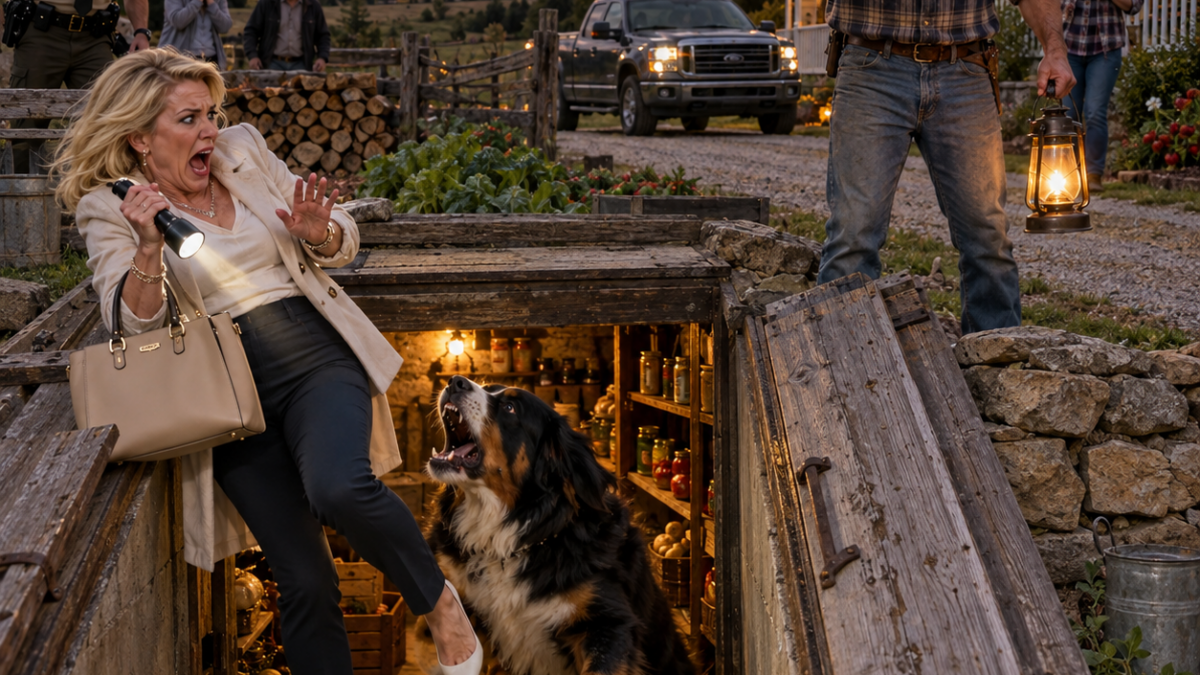
PART 2
The dispatcher answered on the second ring.
“911. What is the address of your emergency?”
I kept my eyes on the security feed.
“1847 Maple Drive, Maplewood Estates. I have a burglary in progress in a detached structure behind my residence.”
“Are you inside the home?”
“Yes.”
“Are you safe?”
“Yes.”
“Can you see the intruder?”
“Live camera.”
“Do you know who it is?”
I watched Pamela step deeper into the cellar, sweeping her flashlight across the shelves.
“Yes.”
There was a slight pause.
“Who?”
“Pamela Torres.”
“Relationship to you?”
“She’s the president of my homeowners association.”
Another pause.
Not long.
But enough for me to imagine the dispatcher wondering whether she had heard correctly.
“Did you give her permission to enter?”
“No.”
“Did she force entry?”
“She picked the lock. I have the entire thing on video.”
“Do not confront her.”
“I’m not going outside.”
“Officers are being dispatched.”
“How long?”
“Approximately ten minutes. Stay on the line if the situation changes.”
I thanked her and put the phone on speaker.
Then I watched.
Pamela had imagined something dramatic.
You could see it in the way she searched.
She pulled the first file box from a shelf and opened it immediately.
Lease agreements.
She photographed them.
Next box.
Insurance documents.
Photographed.
Third.
Maintenance invoices.
She flipped through everything with increasing frustration.
There were no bags of cash.
No forged leases.
No hidden contraband.
No incriminating double books.
Just documentation.
The kind that had defeated nearly every accusation she had thrown at me for eighteen months.
Pamela moved toward my wine rack.
She shone the flashlight behind the bottles.
Nothing.
Then toward the old workbench.
Nothing.
She opened a metal cabinet.
Tools.
Extension cords.
Replacement plumbing parts.
Nothing.
Watching someone commit a felony while becoming increasingly disappointed by your filing system produces a strange emotional response.
Part of me was furious.
Part of me was almost embarrassed for her.
But the strongest feeling was relief.
Not because she had broken in.
Because the question was finally answered.
For months, Pamela had operated in the gray space between harassment and plausible deniability.
A violation notice could be called an administrative disagreement.
A rumor could be called concern.
A nighttime walk near my property could be called coincidence.
A demand to inspect could be framed as safety.
But a lockpick at 2:23 in the morning wasn’t ambiguous.
Crossing the threshold wasn’t ambiguous.
Photographing private documents wasn’t ambiguous.
She had made the choice Dennis predicted she would eventually make.
And every second was being recorded.
At 2:34, Pamela finally noticed the visible camera.
Her flashlight stopped.
She stared directly into the lens.
I leaned closer to the monitor.
Even in night vision, I could see the exact moment recognition hit her.
Her mouth opened slightly.
Then her expression changed.
Shock became anger.
Anger became calculation.
She looked toward the door.
Then back toward the camera.
For one second, I thought she would run.
Instead, Pamela grabbed a wooden crate.
Dragged it beneath the camera.
Stepped onto it.
Reached upward.
And ripped the camera from the wall.
The feed disappeared.
Black screen.
I whispered:
“There it is.”
The dispatcher heard me.
“Sir?”
“She just destroyed one of the cameras.”
“One?”
“I have another.”
Pamela had no idea.
The hidden camera behind the file boxes continued recording.
She climbed down from the crate.
The broken camera dropped onto the concrete floor.
Pamela actually kicked it once.
Then she resumed searching.
Harder now.
Faster.
Documents flew onto the floor.
Box lids dropped.
She pulled folders apart.
Her original purpose had been investigation.
Now she was panicking.
She knew she had been recorded.
She wanted something inside that cellar badly enough to believe finding evidence against me might somehow justify what she had just done.
That is one of the most dangerous things about self-righteous people.
They rarely think they are committing crimes.
They think they are correcting yours.
At 2:39, Pamela opened the box containing tax returns.
She flipped through the first few pages.
Then photographed several.
I felt my anger rise.
Those weren’t HOA records.
They weren’t tenant documents.
They weren’t public.
They were mine.
At 2:41, red and blue light flickered across the inside cellar wall.
Pamela stopped.
She turned toward the door.
The lights flashed again.
She dropped the tax folder.
For several seconds, she stood perfectly still.
Then she moved.
Fast.
She shoved her phone into her jacket.
Grabbed the bag.
Started toward the exit.
Police headlights swept across the yard.
A voice outside:
“Police! Stop! Show me your hands!”
I stayed inside until I was instructed otherwise.
Pamela emerged from the cellar.
I could see her from my kitchen window.
Dark clothes dusty from the floor.
Bag over one shoulder.
Hands rising slowly.
Even thirty feet away, her anger was unmistakable.
“Ma’am,” the officer shouted, “put the bag down.”
Pamela did not.
Instead she pointed toward my house.
“This is HOA business.”
The officer repeated:
“Put the bag down.”
“You don’t understand. I have emergency inspection authority.”
“Bag. Down.”
Pamela lowered it.
Slowly.
I received instructions from the dispatcher to step outside with empty hands.
I did.
Two officers were in the yard.
The senior one later introduced himself as Sergeant James Rodriguez.
I stopped near my back steps.
“That’s the homeowner,” Pamela shouted.
As though that fact helped her.
Rodriguez glanced at me.
“You called?”
“Yes.”
“Stay there.”
Pamela immediately began talking.
“He has been obstructing lawful HOA inspections for months. We have documented safety concerns involving this structure. I have authorization under Article Twelve—”
Rodriguez raised one hand.
“Ma’am, stop.”
“But—”
“Stop talking for a moment.”
Pamela actually looked offended.
Rodriguez turned toward me.
“Sir, did you give her permission to enter this structure?”
“No.”
“Did you give the HOA permission?”
“No.”
“Did anyone have a warrant or municipal inspection order?”
“No.”
Pamela interrupted.
“Article Twelve Point Seven—”
Rodriguez looked back at her.
“Is not a police warrant.”
“It gives emergency access authority.”
“Does it allow you to pick locks?”
She hesitated.
That hesitation said more than the answer would have.
I spoke.
“Article Twelve Point Seven only applies when an emergency has been verified by a municipal authority. Fire department, building inspector, code enforcement. I responded to her demand in writing three days ago.”
Rodriguez nodded.
“Copies?”
“Yes.”
“Video?”
“Two cameras.”
Pamela’s face changed.
She looked toward the cellar.
“You only had one.”
That sentence almost convicted her by itself.
Rodriguez caught it.
“So you knew about a camera?”
Pamela realized her mistake.
“I saw one after I entered.”
I held up my phone.
“She destroyed the visible camera at 2:34.”
Rodriguez looked at his partner.
“Secure the structure.”
Then to Pamela:
“Ma’am, I need you to step away from that bag.”
Pamela’s voice sharpened.
“I am the HOA president.”
Rodriguez did not react.
“I heard you.”
“You need to understand the context.”
“I’m trying to.”
“I’ve served this community for six years.”
“That does not answer why you were inside a locked structure at two-thirty in the morning.”
“He has been hiding records.”
“My records,” I said.
Pamela pointed at me.
“Rental documentation. Tax documents. Evidence of unlawful business activity.”
Rodriguez looked at me.
“You running a business here illegally?”
“No.”
“Rental properties?”
“Two legal long-term rentals elsewhere in the subdivision. Licensed and compliant.”
Dennis had appeared at the edge of his yard now.
Susan Miller stood on her porch.
Lights were coming on in house after house.
Pamela saw the audience.
Her voice grew louder.
“Everyone knows what he’s been doing.”
Susan called from across the property line.
“No, Pamela. Everyone knows what you’ve been saying.”
That landed.
Pamela turned.
“Susan, stay out of this.”
Susan folded her arms.
“I’ve stayed out of enough.”
Rodriguez looked between them.
His partner emerged from the cellar.
“Sergeant.”
“What?”
“Broken camera on the floor. Lock shows manipulation. Paperwork scattered everywhere.”
Pamela shook her head.
“I was preserving evidence.”
“Of what?” Rodriguez asked.
“Tax fraud.”
“Are you IRS?”
“No.”
“Police?”
“No.”
“Building department?”
“No.”
“Attorney with a warrant?”
“No.”
“Then you were not preserving evidence.”
His tone hardened.
“You were searching private property.”
Pamela looked at Ralph Castillo, who had just arrived wearing pajama pants and a jacket.
“Ralph.”
He stopped.
“Tell him.”
Ralph looked miserable.
“Tell him what?”
“The board authorized the inspection.”
“We authorized sending a letter.”
“You voted—”
“We did not authorize breaking in.”
Pamela stared at him.
“Don’t do this.”
Ralph lowered his voice.
“I told you not to do this.”
“You knew Zachary was hiding something.”
“I said I didn’t understand why you were obsessed with the cellar.”
“Because he’s a landlord!”
Ralph actually flinched.
Everyone heard it.
There it was.
Not safety.
Not structural integrity.
Not an emergency.
Landlord.
That had always been the real offense.
Rodriguez’s partner picked up Pamela’s bag.
“Ma’am, we’re going to inventory this.”
“You cannot search my personal belongings.”
Rodriguez answered calmly.
“You’re being detained in connection with a reported burglary. The bag was carried from the structure. We will handle it according to procedure.”
The partner opened it carefully.
Flashlight.
Phone.
Folders.
Printed copies of landlord regulations.
Tax articles.
And a lockpick kit.
Dennis muttered from the sidewalk:
“That’s difficult to explain.”
Then the officer found the notebook.
Small.
Black cover.
He opened it.
The first page contained my name.
**ZACHARY ADAMS.**
Underneath were dates.
Times.
Vehicle movements.
Tenant routines.
Cellar visits.
My morning departure times.
My usual return from work.
When the Martinez family left for church.
When my other tenant’s car was gone.
The officer flipped another page.
Then another.
Rodriguez stepped closer.
“What is that?”
The partner handed him the notebook.
Rodriguez read silently.
His expression changed.
Not dramatically.
Professionally.
Which somehow felt worse.
He looked at Pamela.
“How long have you been documenting Mr. Adams’s movements?”
“That’s HOA compliance monitoring.”
“His tenants’ work schedules?”
“Community safety.”
“His nighttime habits?”
“Due diligence.”
“His cellar visits?”
“Evidence gathering.”
Rodriguez closed the notebook.
“This is far beyond an HOA inspection.”
Pamela finally seemed afraid.
“What are you saying?”
“I’m saying we have a pattern of surveillance, a forced entry, property damage, unauthorized photography, and documents indicating long-term monitoring.”
He turned toward me.
“Do you want to pursue charges?”
“Yes.”
Pamela stared at me.
“You can’t be serious.”
I met her eyes.
“You picked the lock to my property at two twenty-three in the morning.”
“You forced me to.”
“No.”
For eighteen months I had wanted to say a hundred things to her.
Cruel things.
Triumphant things.
Now that I finally had the opportunity, only one sentence mattered.
“You did this to yourself.”
Her face twisted.
“You think everyone is going to believe you?”
Rodriguez’s partner lifted my phone.
“Camera footage is clear.”
I added:
“And cloud-backed.”
Pamela stopped speaking.
The handcuffs went on.
She looked down at them as if the metal itself had betrayed her.
As police began walking her toward the patrol car, neighbors moved closer to their property lines.
Not cheering.
Watching.
Pamela had spent months building a narrative in which I was the threat hiding behind locked doors.
Now she was the one leaving in cuffs after being recorded breaking through one.
Before the officer placed her in the cruiser, she twisted toward me.
“This isn’t over!”
I said nothing.
The door closed.
It was over in one sense.
In another, it had just started.
Police remained for nearly two hours.
They photographed the lock.
The cellar.
The broken camera.
The boxes Pamela had opened.
The tax records.
Her bag.
The notebook.
I exported both camera feeds while an officer watched.
One video showed entry.
The second preserved everything after she destroyed the first.
Dennis stood beside me once police finished.
“You know what the hidden camera did?”
“Saved the footage.”
“No.”
He shook his head.
“It killed her best defense.”
“What defense?”
“That she panicked when she discovered surveillance and left.”
“She didn’t.”
“Exactly.”
The hidden feed showed Pamela discovering the camera, destroying it, then continuing the search.
Not an accident.
Not confusion.
Not someone who suddenly realized she lacked authority.
She knew.
And continued anyway.
Susan joined us.
“I’ll testify.”
“About tonight?”
“About all of it.”
“The dog fine?”
“That.”
She looked toward the road where the police car had disappeared.
“And everything after.”
Ralph stood alone near the curb.
I walked toward him.
“You okay?”
He laughed bitterly.
“Am I okay?”
“You look like you’re about to be sick.”
“I spent three years as vice president under her.”
“You didn’t break into my cellar.”
“No.”
“But I backed her.”
“Sometimes.”
“I told myself I could control the worst parts.”
I waited.
Ralph looked toward my house.
“I couldn’t.”
“That doesn’t make you responsible for everything she did.”
“No.”
He looked at me.
“But pretending I didn’t see the pattern made it easier for her.”
That was honest.
More honest than most people would have been at three in the morning wearing pajama pants in front of their neighbors.
“Then fix the part you can.”
“How?”
“The HOA has a meeting.”
“Saturday.”
“Start there.”
He nodded.
By sunrise, I was exhausted.
I stepped into the cellar after police released the scene.
The door lock was damaged.
One camera hung by exposed wire.
Documents covered the floor.
Pamela had opened twelve boxes.
Photographed forty-seven pages according to later examination of her phone.
She had touched my tax records.
Insurance policies.
Tenant files.
The invasion felt different once the police left.
During the incident, everything was evidence.
Now it was personal again.
I picked up the folder containing the Martinez family lease.
Their emergency contacts.
Their child’s name.
Private information Pamela had no legitimate reason to see.
I sat on the concrete step.
For eighteen months, I had told myself this was a dispute over HOA authority.
Standing there among the scattered documents, I finally accepted that it had become something more.
Pamela didn’t merely want compliance.
She wanted access.
Information.
Control.
And if the rules couldn’t give it to her, she would create rules.
If invented rules failed, she would create suspicion.
If suspicion failed, she would create pressure.
And when pressure failed, she picked the lock.
That progression mattered.
Four days later, Pamela was released under conditions that prohibited contact with me, my rental properties, and my tenants.
The neighborhood discussion boards exploded.
Dennis sent screenshots.
Some residents were shocked.
Some vindicated.
Several still defended her.
**There has to be more to the story.**
**Pamela would never do this without a reason.**
**Zachary probably set her up.**
That one amused Dennis.
“You apparently hypnotized her into buying lockpicks.”
I wasn’t amused.
The human mind has an impressive ability to preserve loyalty after evidence becomes inconvenient.
But the balance had shifted.
More residents began asking questions.
Not only about the break-in.
About money.
Why had the HOA collected $2,500 from every homeowner for gate upgrades?
Why did the gates still malfunction?
Why had Pamela refused my financial-record requests?
Why did some residents receive fines for conduct others were allowed?
Why had no one seen independent audits?
The emergency HOA meeting on Saturday was standing room only.
Nearly sixty residents packed into a room intended for forty.
Pamela’s chair at the front sat empty.
For six years, she had occupied it.
Now Ralph sat there.
He looked uncomfortable.
Good.
Leadership should occasionally feel uncomfortable.
It reminds people that the chair is borrowed.
He opened the meeting.
“I think we need to begin by acknowledging that the events of this week have damaged trust in this board.”
Susan raised her hand.
“Damaged?”
Ralph nodded.
“Destroyed may be more accurate.”
That earned a few uneasy laughs.
He continued.
“I will not discuss pending criminal proceedings beyond public information.”
Then he looked around.
“But the board needs to hear from residents about governance concerns.”
Susan stood first.
She described the dog fine.
Five hundred dollars.
No verified complaint.
No evidence.
When she appealed, Pamela began telling neighbors Susan was unstable.
Susan fought the fine for eight months.
Won.
But the neighborhood had already changed around her.
“I stopped sitting on my front porch,” Susan said.
The room went quiet.
“Why?” someone asked.
“Because people looked at me like I was dangerous.”
Her voice trembled.
“I had lived here fourteen years.”
Another resident stood.
Basketball hoop.
Three hundred dollar fine.
Rule never found.
Another.
Denied wheelchair ramp.
Another.
Christmas lights.
Another.
Parking.
Another.
A twelve-year-old child’s chalk drawings on the sidewalk.
Fifty-dollar “community appearance correction fee.”
One story became ten.
Ten became twenty.
The pattern formed in public.
That was Pamela’s greatest weakness.
She had isolated everyone.
Each person thought their fight was individual.
Once they compared experiences, the system became visible.
Ralph finally spoke.
“I should have challenged her earlier.”
Someone in the back said:
“Yes.”
Ralph nodded.
“I agree.”
That surprised the room.
He continued.
“I told myself staying on the board allowed me to limit her.”
He looked at me.
“I was wrong.”
I said nothing.
This wasn’t my confession to interrupt.
Then came the financial report.
Barbara Hughes stood.
Retired accountant.
She had spent two days reviewing the records Pamela had withheld for years.
Her conclusion was cautious.
Which made it more frightening.
“I cannot tell you yet that money was stolen.”
People shifted.
“But I can tell you approximately forty-seven thousand dollars in expenditures currently lack adequate supporting documentation.”
Murmurs.
“Categories include legal reserves, administrative consulting, property enforcement, and special projects.”
She clicked to another page.
“The gate upgrade was paid to a company controlled by Mrs. Torres’s brother-in-law.”
The room erupted.
Ralph raised his hand.
“Let her finish.”
Barbara continued.
“No competitive bids.”
Someone shouted:
“How much did we pay?”
Barbara gave the number.
People began calculating.
Two thousand five hundred dollars per household.
Multiply by the neighborhood.
The total exceeded what visible work appeared to justify.
Barbara held up her hands.
“I am not accusing anyone of embezzlement today.”
Dennis spoke from the second row.
“But you recommend a forensic audit?”
“Yes.”
“And independent counsel?”
“Yes.”
“And referral to law enforcement if discrepancies are confirmed?”
“Yes.”
The vote to remove Pamela from all HOA authority pending legal proceedings was nearly unanimous.
Ralph became interim president.
I did not celebrate.
A different person in the same chair would not fix anything unless the structure changed.
After the meeting, residents approached me.
One by one.
Apologies.
“I believed her.”
“I avoided your tenants.”
“I thought you were hiding something.”
“I should’ve asked.”
I accepted most of them.
Not because I had forgotten.
Because resentment is expensive.
I had other things to rebuild.
The Martinez family was the apology I cared about most.
Mrs. Martinez called Sunday.
“My husband wants to move.”
My chest tightened.
“Because of Pamela?”
“Our daughter heard neighbors talking.”
“I’m sorry.”
“You protected us.”
“I tried.”
“We know.”
“Then why leave?”
“Because she knows our schedule. Our church. When my husband works.”
I understood.
The notebook.
Pamela’s surveillance hadn’t violated only me.
I drove over.
Sat with them at their kitchen table.
Mr. Martinez had the notebook entry copied from the police report.
Their lives reduced to observations.
**Unit 24 leaves Sunday 8:45. Returns 11:35.**
**Husband night shift Thursday.**
**Wife home alone.**
Seeing it made me sick.
“I’ll release you from the lease without penalty if you want.”
Mrs. Martinez looked surprised.
“We have eighteen months left.”
“I don’t care.”
“We can’t afford another deposit right now.”
I thought.
“What if I refund the last month’s rent and security now?”
Mr. Martinez stared.
“Why?”
“Because none of this was your fault.”
They didn’t leave.
Not immediately.
Instead, we installed cameras.
Changed exterior locks.
I paid for a privacy consultation.
Over the next several months their fear eased.
Eventually they renewed for another two years.
That mattered more to me than Pamela’s plea deal.
The district attorney’s office contacted me four months after the break-in.
Pamela would plead guilty to criminal trespass, criminal mischief, and privacy-related offenses stemming from the unlawful entry and surveillance conduct.
Her criminal consequences were measured.
Probation.
Fine.
Restitution for the camera and lock.
Community service.
Anger-management requirements.
A multi-year no-contact order.
She did not go to prison.
Some neighbors complained.
Susan didn’t.
“Jail isn’t the only consequence.”
She was right.
The civil and financial investigation hurt Pamela more deeply.
The forensic audit completed its work.
Final unsupported or misappropriated funds:
$38,500.
Less than the preliminary estimate.
Still significant.
Money had flowed through vague expense categories.
Some payments had gone to related parties.
Some HOA funds paid costs with no legitimate community purpose.
The board referred the findings.
Rather than litigate every issue through multiple proceedings, Pamela agreed to a settlement.
Full repayment over thirty-six months.
Permanent prohibition against holding HOA office under the terms negotiated in the civil settlement.
Sale of her Maplewood home.
Departure within sixty days.
The woman who had spent six years treating Maplewood as her personal jurisdiction had to leave it.
I happened to be outside when the moving truck arrived.
I had no intention of watching.
But my mailbox had terrible timing.
Pamela stood near the truck holding a box.
No blazer.
No clipboard.
No audience.
She looked smaller.
Not physically.
Socially.
The title was gone.
People no longer moved aside when she walked.
She saw me.
We looked at each other.
For two seconds.
Maybe three.
I expected anger.
Instead, she looked tired.
Then she got into her car.
No words.
No final threat.
No apology.
She drove away.
That was the last time I saw Pamela Torres.
The neighborhood did not magically become healthy after she left.
Communities don’t heal because one antagonist disappears.
People bring habits with them.
Fear.
Silence.
Convenience.
The desire to let somebody else read the rules.
Ralph ran for permanent president.
His platform was boring.
Transparency.
Limited authority.
Published records.
Appeal procedures.
People loved it.
He won with seventy-eight percent.
Dennis joined the bylaw committee.
So did Susan.
Barbara became finance chair only after insisting the position have less unilateral authority than before.
“I don’t want anyone trusting me that much,” she said.
That sentence should probably be printed above every treasury office in America.
The rewritten bylaws were clear.
Long-term rentals protected.
Private interior spaces outside HOA inspection authority without consent or proper external legal process.
Emergency concerns referred to fire, police, building officials, or other competent public authorities.
Quarterly finances published.
Annual independent audit.
Conflict-of-interest disclosure.
Formal complaint and appeal procedures.
No invented rules.
No retroactive violations.
No board member could unilaterally create monetary penalties.
Pamela’s favorite vague clauses disappeared.
The root cellar remained.
I replaced the lock.
Installed a better exterior camera.
Kept the hidden interior backup.
Not because I expected another break-in.
Because redundancy had earned my respect.
A few weeks after the new board took office, Ralph came by.
Daylight.
He stood on the sidewalk instead of walking onto my property.
That detail didn’t escape me.
“Can I come over?”
“Yes.”
He stopped near the cellar.
“Is that it?”
“That’s it.”
“The famous nightmare cellar.”
I laughed.
“What did Pamela think was down there?”
“Apparently every crime committed since 1943.”
“Can I see it?”
I looked at him.
His face changed.
“No pressure.”
I opened the door.
“Come on.”
Ralph stepped inside.
Wine.
File boxes.
Tools.
Maintenance logs.
He stood silently.
“That’s all?”
“That’s all.”
“You’re kidding.”
“No.”
He opened his hands.
“She destroyed her entire life over this?”
I leaned against the shelf.
“No.”
“What do you mean?”
“She destroyed it over the idea that I could tell her no.”
Ralph stopped.
That was the real answer.
The cellar had only been the stage.
My privacy was the offense.
Pamela could tolerate disagreement if she eventually won.
What she couldn’t tolerate was a boundary she could not cross.
The locked door became symbolic.
Every time she passed my property, it reminded her that there was a place inside “her” neighborhood where her authority meant nothing.
People obsessed with control don’t experience limits as normal.
They experience them as insults.
Ralph looked at the files.
“I wish I’d understood that sooner.”
“You understood enough to warn me.”
“Too late.”
“Maybe.”
I poured two glasses of wine.
He took one.
We stood inside the room Pamela had turned into a neighborhood legend.
Ralph raised the glass.
“To nothing illegal.”
“High standard.”
We drank.
The two rental properties remained rented.
The Martinez family stayed.
The other property eventually went to a young couple with a toddler.
They had no idea about Pamela.
I liked that.
Not every new resident needs to inherit old fear.
Dennis and I became friends.
At first we talked almost entirely about law.
Then football.
Marriage.
Retirement.
Property taxes.
The kinds of conversations men have when nothing urgent is trying to destroy their week.
Susan brought cookies at Christmas.
The first time, she stood at the door holding a tin.
“I’m not joining your secret cellar crime syndicate.”
“Membership is full.”
“Good.”
She handed me the tin.
Then her smile disappeared.
“Thank you.”
“For what?”
“For making me stop being afraid of her.”
I shook my head.
“You did that yourself.”
“No.”
Her eyes became wet.
“I was waiting for someone else to go first.”
That stayed with me.
People often imagine bullies maintain control because everyone supports them.
Most of the time, they maintain control because everyone who disagrees assumes they are alone.
Pamela’s power collapsed the moment isolation did.
Susan spoke.
Then Ralph.
Then Barbara.
Then dozens of residents.
My cameras proved one crime.
Their voices exposed the system.
Six months after Pamela left, the HOA held a neighborhood picnic.
I nearly skipped it.
Then Dennis appeared at my door.
“No.”
“No what?”
“You’re going.”
“I didn’t say I wasn’t.”
“You were thinking it.”
“I hate that you’re a lawyer.”
“You hired one as a neighbor.”
At the picnic, the community park was full.
Children.
Dogs.
Music.
Nobody discussing grass height.
Progress.
The Martinez family came.
Their daughter ran to a bounce house.
Susan brought too much food.
Barbara cornered Ralph over missing receipts from the picnic supply budget.
I watched him produce them immediately.
“See?” Dennis said.
“What?”
“Accountability.”
“That looks more like terror.”
“Healthy terror.”
Near sunset, Ralph tapped a microphone.
I groaned.
“If he thanks me publicly, I’m leaving.”
Dennis grabbed my sleeve.
Ralph spoke.
“Six months ago, this association was controlled by one person.”
People quieted.
“We blamed Pamela for everything afterward.”
Fair.
“But that was too easy.”
A few residents looked uncomfortable.
Ralph continued.
“She had power because we gave it to her.”
There it was.
“We stopped reading documents.”
Barbara nodded.
“We stopped asking questions.”
Susan folded her arms.
“We watched other residents become targets and told ourselves it was none of our business.”
Silence.
“We will not make that mistake again.”
No applause at first.
Then one person.
Another.
Soon everyone.
I didn’t clap.
Not because I disagreed.
Because I was thinking about the first midnight video.
Pamela at the cellar.
Flashlight moving over the lock.
I had believed she was the entire problem.
She wasn’t.
She was the product of a community that had become too comfortable with delegated responsibility.
The legal case ended.
The money was repaid over time.
The camera cost reimbursed.
My damaged lock replaced.
Pamela fulfilled her probation conditions.
Life moved forward.
But I kept the notebook.
Not Pamela’s.
Mine.
The one where I had logged every visit.
11:47.
2:30.
1:15.
Dates.
Durations.
Details.
At first, it was evidence.
Years later, it became a reminder.
People rarely jump directly from reasonable disagreement to picking a lock at 2:23 in the morning.
There are steps.
Words.
Rationalizations.
Small overreaches that go unchallenged.
Rules invented.
Rules misquoted.
Rumors.
Silence.
Pressure.
More silence.
Then one day the person who has crossed twenty minor boundaries decides the twenty-first isn’t really a boundary at all.
That is why the small things mattered.
The false grass fine wasn’t about $150.
The fake parking rule wasn’t about cars.
The forced inspection wasn’t about safety.
They were rehearsals.
Each was Pamela testing whether “no” still meant no.
When I kept answering yes—to the law, to the bylaws, to documentation—but no to her personally, she began treating my resistance as evidence of wrongdoing.
That is a dangerous psychological equation.
**If you resist me, you must be guilty.**
Once someone believes that, almost anything can become justified.
The break-in.
The surveillance.
The notebook.
The destroyed camera.
Pamela didn’t enter my cellar believing she was a burglar.
She entered believing she was finally proving herself right.
That was the nightmare waiting for her.
Not a trap.
Not a weapon.
Not something hidden underground.
Reality.
The cellar contained exactly what I said it contained.
Records.
Wine.
Tools.
And cameras documenting a woman discovering that her suspicions did not become law simply because she held them strongly.
Years later, people still joked about “Zach’s secret cellar.”
At one block party, a new homeowner asked:
“So what was really inside?”
I looked around dramatically.
“Can’t tell you.”
His eyes widened.
Dennis nearly choked on his drink.
Susan slapped my arm.
“Stop.”
I laughed.
“Paperwork.”
The new homeowner looked disappointed.
“That’s it?”
“And wine.”
“Seriously?”
“Seriously.”
He shook his head.
“Why did she break in?”
Susan answered before I could.
“Because Zach told her she couldn’t.”
The new homeowner frowned.
“That’s insane.”
Susan shrugged.
“Only from the outside.”
Exactly.
From inside a long pattern of escalating control, it probably felt inevitable.
That was what made it frightening.
The next HOA president after Ralph lasted one term.
Then another took over.
Normal elections.
Normal disagreements.
Budgets passed.
Some failed.
People complained.
One year residents argued for forty-five minutes about whether basketball hoops could stay at the curb overnight.
I enjoyed every second.
Not the basketball discussion.
The fact that people could argue without fear.
Nobody left the meeting worried that a fine would appear because they disagreed.
Nobody whispered outside.
Nobody needed Susan to warn them.
Nobody needed Dennis to interpret imaginary rules.
Healthy governance is often annoying.
That is a feature.
Power becomes dangerous when everything becomes too easy for the person at the top.
I eventually sold one rental property.
Not because of the HOA.
The market was good.
The tenants wanted to buy.
We worked out a fair price.
The Martinez family bought the second property several years later.
Mrs. Martinez cried at closing.
“So we’re the landlords now?”
“No.”
She laughed.
“Owners.”
“Much better.”
“What about the HOA?”
“You’ll survive.”
“You think?”
“I have a cellar if things get rough.”
She stared.
Then laughed so loudly the title officer asked whether everything was all right.
Everything was.
For the first time in a long time.
I kept my grandparents’ house.
Couldn’t sell it.
Not yet.
Too many memories.
The cellar remained part of that.
Somewhere along the way, it stopped feeling like the place Pamela violated.
It became my grandfather’s cellar again.
I repaired the old shelving.
Restored one section for actual preserves just because it felt appropriate.
Dennis brought jars of pickles one summer.
“You’ve become your grandfather.”
“He had better hair.”
“Debatable.”
I placed Pamela’s destroyed camera on the workbench.
Not as a trophy.
A reminder.
The casing was cracked.
Lens gone.
Wires exposed.
I kept thinking about the moment she saw it.
That camera represented accountability.
Her first instinct was to destroy it.
That tells you almost everything about someone.
The hidden camera represented something else.
Redundancy.
Never let one point of failure become the only thing protecting truth.
Arthur Reed in the Willow Creek story had an FBI badge.
I didn’t.
I had documentation.
A lawyer neighbor.
Security footage.
Tenants willing to speak.
A retired widow willing to testify.
An uncomfortable vice president who eventually found courage.
An accountant willing to trace money.
Police officers who treated the situation professionally.
A district attorney who charged what the evidence supported.
Less cinematic.
Just as powerful.
Maybe more.
One night, years after Pamela left, my phone buzzed at 11:51.
**MOTION — ROOT CELLAR.**
I froze.
Old adrenaline returned instantly.
I opened the feed.
A raccoon stood on the cellar roof.
I started laughing.
Hard.
Hard enough that tears came.
The raccoon looked into the camera with the confidence of someone who definitely believed HOA bylaws did not apply to him.
I saved the clip.
Sent it to Dennis.
**Potential violation. Unauthorized roof occupancy.**
He replied:
**Fine him $150.**
Susan responded in the group chat:
**Only if his grass is too tall.**
We spent fifteen minutes making jokes.
That, more than any court order, proved the story was over.
The cellar alert no longer meant Pamela.
Darkness no longer meant surveillance.
A noise at the fence no longer meant escalation.
Fear had finally surrendered the property back to ordinary life.
On the anniversary of my grandparents buying the house, I carried a bottle of wine underground.
I sat on the same overturned crate where I had sat after the case ended.
No special reason.
Just felt right.
The shelves held records.
Wine.
Some canned vegetables.
Tools.
The repaired security system.
I poured a glass.
Looked toward the door.
Boundaries.
I had thought about that word for years.
Pamela believed boundaries were obstacles.
Things preventing her from doing what she believed was necessary.
I had learned the opposite.
Boundaries are instructions.
They tell us where our authority stops.
Where another person’s privacy begins.
Where concern becomes intrusion.
Where leadership becomes control.
Where curiosity becomes surveillance.
Where enforcement becomes harassment.
Where a clipboard stops mattering and the law begins.
A good community does not erase boundaries.
It respects them.
That was the real lesson Maplewood learned.
Not **never trust an HOA president**.
Too simple.
Not **cameras solve everything**.
They don’t.
Not even **always fight back**.
Sometimes fighting the wrong way makes things worse.
The lesson was smaller.
Ask what gives someone authority.
Read the actual document.
Preserve the actual evidence.
Don’t confuse confidence with legitimacy.
And when someone tells you that resisting their power proves you have something to hide, pay attention.
That is usually when they are telling you more about themselves than you.
Pamela had spent eighteen months trying to find the nightmare inside my cellar.
Tax fraud.
Illegal renting.
Cash.
Something that could justify her obsession.
In the end, the only nightmare down there was waiting for her.
Two camera lenses.
A cloud backup.
A stack of perfectly legal paperwork.
And the consequences of being wrong.
I finished my wine.
Turned off the light.
Closed the cellar door.
The new lock clicked.
Solid.
Ordinary.
Mine.
I walked toward the house.
Lights glowed in neighborhood windows.
A dog barked.
Somebody laughed on a porch.
The Martinez family’s old house now had a swing set in the backyard.
Susan’s dogs barked once from behind her fence.
Nobody fined her.
Dennis waved from his driveway.
Nothing dramatic happened.
No flashing lights.
No confrontation.
No HOA president hiding along my fence.
Exactly as it should be.
Pamela Torres had once believed my locked door was proof of guilt.
Now, whenever I lock it, I remember something far simpler.
Privacy doesn’t require a defense.
A boundary doesn’t need permission.
And sometimes the person most desperate to expose your secrets is only one bad decision away from exposing their own.
Pamela entered my root cellar hoping to destroy me.
She found paperwork.
She destroyed a camera.
She photographed records.
She tried to turn obsession into authority.
Instead, she left in handcuffs, lost the position she had spent six years weaponizing, repaid the money she could not properly account for, and moved out of the community she once controlled.
I remained.
So did my tenants.
So did the cellar.
The wine aged.
The paperwork stayed organized.
The hidden camera kept watching raccoons.
And Maplewood finally learned that belonging to a community does not mean surrendering the right to close your own door.
That was the nightmare waiting for Pamela underground.
Not something I had hidden.
Something she had spent years refusing to understand.
**The word no.**
[END OF FULL STORY]








