PART 2: I Came Home From Deployment to Find My Workshop Demolished—Then the HOA’s Own Records Made Them Pay to Rebuild It
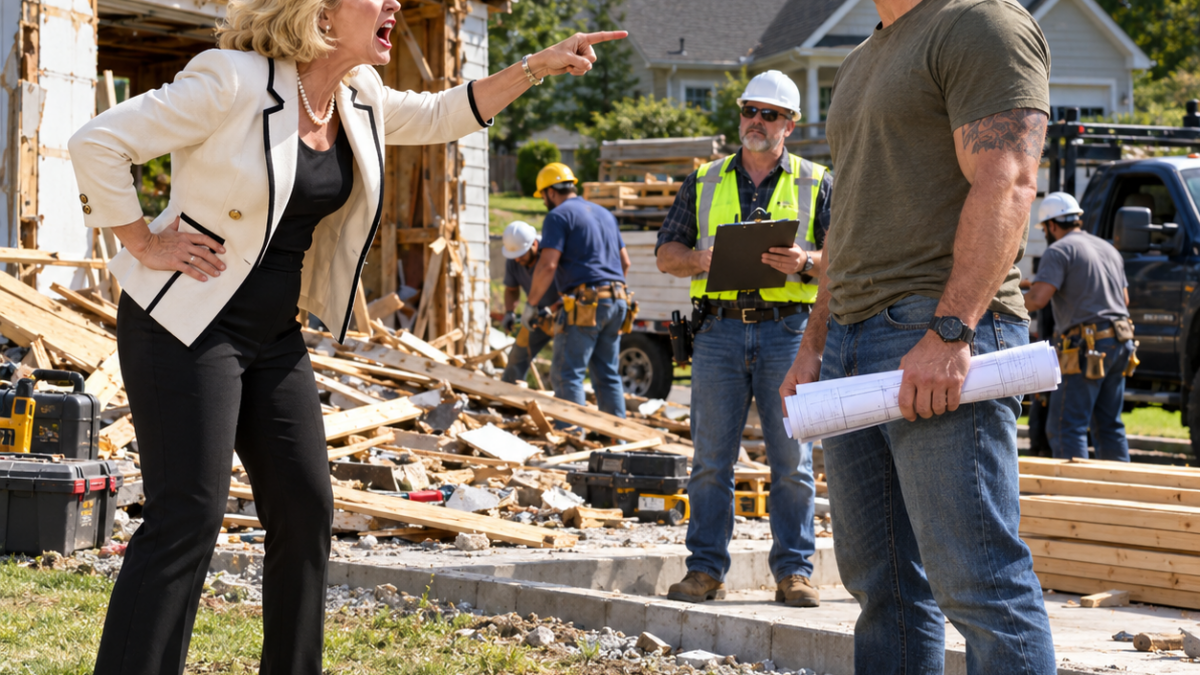
PART 2
By then I had slept three hours.
Maybe four.
She walked the slab.
Photographed tire marks.
Measured disturbance around the foundation.
Then sat at my kitchen table with the original HOA approval.
“This is signed.”
“Yes.”
“By the architectural committee.”
“Yes.”
“Recorded in meeting minutes?”
“Should be.”
“And city permit?”
I handed it over.
“Final inspection?”
Another page.
She exhaled.
“Well.”
“What?”
“This was legal when built.”
“I told you.”
“I believe clients after I see paper.”
“Comforting.”
“It should be.”
She flipped through the HOA rules.
“When were these updated?”
“I don’t know.”
“The violation probably came under newer design standards.”
“Can they retroactively ban it?”
“Not automatically. And even if they can regulate an existing structure under some provision, regulation is not permission to enter private property and bulldoze it without following required legal procedures.”
“So we’re suing.”
“Yes.”
“How fast?”
“First, preservation letters.”
“To who?”
“HOA. Board. Management company. Contractor. Any insurer we identify.”
“Then?”
“Demand every notice they supposedly sent you, meeting minutes, vote records, legal advice, vendor bids, demolition authorization, photographs, contents inventory, invoices.”
I leaned back.
“You think there are bids?”
“I hope so.”
“Why?”
“Because if there aren’t, that tells me something.”
By Wednesday, I had another reason to be angry.
The HOA uploaded meeting minutes after Amanda’s records demand.
Buried halfway through was a motion:
REMOVE NONCOMPLIANT AUXILIARY STRUCTURE — LOT 18.
That was my property.
Proposed by Harriet.
Seconded by Ronald Bell.
Approved unanimously by Harriet, Ron, and treasurer Marsha Kellerman.
No discussion about whether I was deployed.
No legal opinion.
No court order.
No city demolition authorization.
No inventory.
Then I saw the contractor.
Silver Pines Property Services.
I didn’t recognize it.
Amanda did what lawyers do.
She searched corporate records.
The company had been formed three months before my workshop came down.
Registered manager:
Evan Thompson.
Harriet’s nephew.
I stared at the screen.
“You’re kidding.”
Amanda shook her head.
“Same address listed on an older permit application.”
“How much did they get?”
“Demolition invoice is $9,850.”
“Convenient.”
“Why?”
I pointed at the HOA procurement rules.
Major vendor contracts above ten thousand dollars required multiple bids and member disclosure.
Amanda read it.
Then looked at me.
“Very convenient.”
“Can we prove that was intentional?”
“Not yet.”
“It’s fifty dollars under.”
“I noticed.”
I stood and walked toward the window.
“Her nephew destroys my building and gets paid out of HOA money.”
“We know his company was paid.”
“Same thing.”
“No.”
I turned.
“Amanda.”
She stayed calm.
“We know the company is tied to her nephew. We know the invoice. We don’t yet know whether Harriet personally directed the amount, whether there were additional payments, or whether the board received legal advice.”
“You’re ruining a perfectly good conspiracy.”
“That’s why you hired me.”
She was right.
I hated it.
Friday morning I sat across from Detective Carla Nguyen at the sheriff’s substation.
Amanda had suggested filing a criminal property-damage report because the demolition occurred without my permission and involved entry onto private land.
Carla read quietly.
No dramatic reaction.
She had the kind of face that didn’t give anything away until she was ready.
“There was no court order?”
“No.”
“No sheriff’s writ?”
“No.”
“No city condemnation?”
“No.”
She tapped the Silver Pines invoice.
“Contents?”
“Missing.”
“Any idea value?”
“Tools alone, maybe thirty-five to forty thousand. Some specialized equipment more. Personal items harder.”
“You’ll need inventory.”
“I started one.”
“Serial numbers?”
“For some.”
“Receipts?”
“Many.”
“Good.”
She marked another line.
“Contractor paid through HOA discretionary maintenance fund.”
“Yes.”
“That fund normally covers common-property maintenance?”
“That is what bylaws say.”
“You see this?”
She pointed at invoice amount.
“Nine thousand eight hundred fifty.”
“Procurement threshold is ten.”
She sat back.
“That may be nothing.”
“It isn’t.”
“Probably not.”
Then she pointed at Silver Pines registration.
“Relative?”
“Nephew.”
“That’s more interesting.”
She closed the folder.
“I’ll open a report. Criminal mischief or property-damage statutes may apply depending on facts and intent. Potential financial misconduct is separate. The DA decides charges.”
“I want my workshop rebuilt.”
“That is mostly civil.”
“I know.”
“Do you?”
“Yes.”
She smiled faintly.
“Good.”
Before I left, she said:
“One more thing.”
“What?”
“Do not threaten anybody.”
“I haven’t.”
“Keep it that way.”
“I’ve spent most of my adult life learning not to threaten idiots.”
“That skill will be useful.”
When I returned home, an HOA notice hung from my front door.
GRASS HEIGHT VIOLATION.
One and a half inches over approved standard.
I stood there holding the paper.
Then I started laughing.
Actual, uncontrollable laughter.
Maybe from exhaustion.
Maybe anger.
Maybe because after bulldozing a permitted building worth tens of thousands of dollars, somebody in Harriet’s organization still believed the urgent community threat was my lawn.
I photographed the notice.
Sent it to Amanda.
Her response came immediately.
DO NOT DESTROY IT.
I’d already torn the bottom corner.
I texted:
TOO LATE.
She replied:
YOU ARE A TERRIBLE CLIENT.
That night I installed cameras.
Street.
Side gate.
Backyard.
Not because I expected another bulldozer.
Because home didn’t feel like home yet.
That bothered me more than I wanted to admit.
During deployment, I’d thought about returning here on bad days.
My bed.
Coffee on the porch.
Workshop light glowing at night.
The ordinary things become enormous when you’re far away.
Then I came home and discovered somebody had entered that sanctuary while I was gone.
Even after I locked every door, I kept checking windows.
At 2:40 a.m. I found myself standing on the empty slab.
Moonlight reflected off concrete.
I could still picture where everything had been.
Table saw near east wall.
Workbench.
Tool cabinet.
The small radio I kept permanently tuned to classic rock.
My father’s hammer.
I crouched beside one anchor bolt.
For ten months I’d told younger guys overseas that coming home wasn’t complicated.
You land.
You hug whoever’s waiting.
You eat something terrible and wonderful.
You sleep.
Life resumes.
Standing there, I understood how stupid that sounded.
Sometimes you return and discover home kept moving without you.
Sometimes it was changed by people who never earned the right.
I stayed out there until almost four.
Sunday afternoon Lewis Parker knocked.
Retired high-school history teacher.
Two houses down.
Casserole in one hand.
Three-inch binder in the other.
“I brought lasagna and evidence.”
“That’s either neighborly or threatening.”
“Both.”
He set the binder on my table.
Inside were letters from residents going back almost two years.
Warnings.
Fines.
Photos.
Emails.
A woman had been cited because her mailbox flag was “nonstandard crimson.”
A family got repeated violation notices over children’s bicycles.
Another homeowner was threatened with legal fees for leaving a basketball hoop near the curb overnight.
Most were ordinary HOA arguments.
Annoying.
Maybe enforceable.
Maybe not.
Then Lewis showed me vendor records.
Silver Pines.
Pool security fence.
Landscaping repairs.
Emergency lighting.
Three contracts.
No competing bids.
“How’d you get these?”
“Quarterly reports.”
“This company existed only three months.”
He nodded.
“That is weird, isn’t it?”
“Very.”
“He did pool fence last summer under another business name. I think Silver Pines replaced it.”
“Harriet’s nephew?”
“Same guy.”
“Did residents know?”
“No.”
“Board conflict disclosures?”
Lewis laughed.
“That would require disclosure.”
I called Amanda.
By Tuesday, she filed civil claims against the HOA and the relevant parties for property damage, unauthorized entry, conversion or loss of personal property, and alleged fiduciary violations related to association funds.
She also filed a complaint with the state office that handled common-interest-community consumer complaints.
Then Ron Bell came to my house.
He looked terrible.
Shirt untucked.
Aftershave strong enough to qualify as chemical warfare.
“Mr. Lorman.”
“Mason.”
“Right.”
He shifted his weight.
“I wanted to clear the air.”
“That phrase has never preceded anything useful.”
He gave a nervous laugh.
“We didn’t mean for this to get out of hand.”
“You voted to demolish a building.”
“We thought it wasn’t compliant.”
“It was permitted.”
“Harriet said the permits were outdated.”
“Did you read them?”
“No.”
“Did you ask city building department?”
“No.”
“Did you ask an attorney?”
“She said Gregory looked at it.”
“Gregory who?”
“HOA counsel.”
“Full name.”
He hesitated.
“Gregory Moss.”
That name was not in any meeting minutes.
“Did he attend the vote?”
“No.”
“Written opinion?”
“I don’t know.”
I folded my arms.
“So you voted to send a contractor onto private property and destroy a permitted building because Harriet told you some lawyer had probably looked at it.”
Ron rubbed his forehead.
“When you say it like that—”
“How would you say it?”
He didn’t answer.
Then:
“Could you drop the lawsuit if we rebuild?”
“No.”
His face fell.
“I mean, if you’re made whole.”
“My tools are gone.”
“We can replace them.”
“My father’s hammer?”
He looked at me.
“What?”
“The contractor threw out or removed everything inside.”
“I didn’t know.”
“That is becoming the board motto.”
Ron looked toward the empty slab.
“What do you want?”
“Workshop rebuilt correctly. Tools replaced. Personal property accounted for. My legal costs addressed. And Harriet out.”
“You want her to resign?”
“I want her nowhere near an HOA checkbook.”
“Mason—”
“She hired her nephew.”
“I didn’t know that either.”
I stared at him.
“That isn’t helping you.”
He left ten minutes later.
That evening Carla called.
“We received initial bank records.”
I sat down.
“What?”
“Payments to Silver Pines and related vendor accounts.”
“How much?”
“More than seventy thousand in six months.”
“For what?”
“Several entries labeled emergency repairs or discretionary maintenance.”
“Receipts?”
“Some incomplete.”
“Harriet?”
“We’re tracing approvals.”
“Her nephew owns it.”
“We know.”
“Can you charge them?”
“Mason.”
“I know. Prosecutor.”
“Good. But yes, the pattern is concerning enough we’re referring financial issues for broader review.”
I looked outside at the slab.
“All because she hated my workshop.”
“Maybe.”
“What does that mean?”
“Don’t assume your workshop started this.”
That stopped me.
“What started it?”
“We don’t know yet.”
The Saturday HOA meeting answered part of it.
Amanda came with me.
Lewis too.
About twenty residents arrived early.
Some angry.
Some curious.
Some simply tired.
Harriet sat at the front beside Ron and Marsha.
Her face changed when she saw Amanda.
“This is a board working session.”
Amanda placed a copy of the association’s governing documents and applicable meeting requirements on the table.
“You’re discussing association expenditures and pending litigation. Residents have statutory and governing-document rights to attend the portions required to be open.”
Harriet’s expression hardened.
“This is intimidation.”
“No,” Amanda said. “This is attendance.”
I almost smiled.
Then Amanda placed subpoenas and preservation notices with counsel.
Not theatrically.
No slamming.
But the room still went silent.
Lewis stood and held up a photograph of my empty slab.
“You did this while he was deployed.”
Harriet snapped, “Mr. Parker, the structure violated current standards.”
“Then fine him.”
“We did.”
“Take him to court.”
“We followed enforcement authority.”
“Did you have a court order?”
Harriet looked at Amanda.
Amanda didn’t rescue her.
“No.”
Lewis continued.
“Did you have city demolition authority?”
“No.”
“Then why did you think you could destroy somebody’s building?”
Harriet slammed her hand on the table.
“Because homeowners cannot ignore rules simply because they’re absent.”
That sentence hung there.
A woman named Marcy Delgado spoke from the second row.
“He wasn’t on vacation.”
Harriet turned.
“That does not change property obligations.”
Marcy’s husband had served in Afghanistan.
She stood.
“No. But maybe it changes whether you bulldoze somebody’s property because he didn’t answer his email.”
Applause started.
Amanda raised a hand.
“Let’s keep this focused.”
She presented a timeline.
My deployment dates.
Notice dates.
No proof of personal service.
My existing permit.
Original HOA approval.
Board demolition vote.
Silver Pines contract.
Corporate ownership.
Procurement threshold.
Then Carla’s investigation was mentioned only as an active referral, not proof of guilt.
Marsha stared at the payment sheet.
“I didn’t know Evan owned Silver Pines.”
Harriet looked at her.
“Yes, you did.”
“No.”
“You signed the checks.”
“You said it was an emergency vendor.”
“You signed.”
Marsha’s face went white.
Ron leaned away from both of them.
The board wasn’t collapsing because of me.
It was collapsing because members had finally started comparing what Harriet told each of them.
Residents came forward.
Pool fence contract.
Landscaping.
Security cameras.
Repeated emergency spending just below approval thresholds.
Harriet kept trying to restore order.
Nobody listened.
Marcy moved for a member petition demanding a recall process under the bylaws.
Lewis seconded.
Signatures started before meeting ended.
Harriet stared at me.
“This is what you wanted.”
“No.”
“You brought a lawyer.”
“You brought a bulldozer.”
That ended our conversation.
The next evening, a representative from Silver Pines called.
“We’re prepared to rebuild your workshop.”
“Who authorized this?”
“Our counsel.”
“Why?”
“We want to resolve property issues.”
“You mean reduce damages.”
Silence.
I looked at the slab through my back window.
“Submit everything to Amanda.”
“We can start immediately.”
“No.”
“We have original measurements.”
“That scares me.”
“What do you want?”
“Plans matching the permitted structure. Building department review. My approval. Independent inspection.”
“That will take time.”
“You had enough time to destroy it.”
He exhaled.
“We’re trying to make this right.”
“No.”
I surprised myself.
“No?”
“You’re trying to make liability smaller. Making it right is separate.”
Another silence.
“Send the proposal to my lawyer.”
I hung up.
Then stood outside on the slab.
For the first time since I came home, I could imagine walls there again.
Not memory.
Future.
That mattered.
The reconstruction agreement took a week.
Silver Pines tried to include a release clause.
Amanda crossed it out so aggressively the red ink nearly tore the page.
Their lawyer objected.
She told him settlement of reconstruction did not equal waiver of my pending claims unless negotiated separately.
They surrendered.
Building Inspector James Rourke visited before framing.
Tall.
Quiet.
He measured foundation.
Reviewed original plans.
“Slab survived.”
“Yes.”
“Anchor locations partly damaged.”
“Can repair?”
“Yes.”
He looked through replacement drawings.
“Roof pitch needs to match original permit. Electrical will require current-code updates.”
“Fine.”
“Actually better.”
“Good.”
He looked toward the street.
“I’ve seen this HOA name before.”
My stomach tightened.
“How?”
“Three structure complaints.”
“Unauthorized demolitions?”
“Not that far.”
“What then?”
“Residents claiming the board forced alterations without proper permits.”
“Can you tell me who?”
“No.”
“Fair.”
He closed his clipboard.
“Your case got attention downtown.”
“Wonderful.”
“Could be useful.”
I didn’t know then how useful.
The frame went up the following week.
Fresh lumber.
Same footprint.
I checked every measurement.
Amanda told me not to interfere with construction workers.
So I didn’t.
I simply photographed everything.
Twice.
Neighbors started watching too.
Lewis would wander over holding coffee.
Marcy watered the same three shrubs for forty-five minutes because she wanted to see the crew.
Kids slowed their bikes.
The workshop became public theater.
I hated that.
And secretly appreciated that I wasn’t alone.
Then Carla called.
“We searched an HOA storage unit under warrant.”
I leaned against a new wall stud.
“What’d you find?”
“Two sets of ledgers.”
My stomach dropped.
“How bad?”
“Official books show one set of vendor expenditures. Handwritten records show different allocations.”
“Silver Pines?”
“Yes.”
“How much?”
“Preliminary review suggests approximately ninety-four thousand dollars routed through related or questionable vendors over three years.”
“Harriet?”
“Don’t jump.”
“You’re killing me.”
“We also found resident lists.”
“What kind?”
“Names grouped by enforcement history.”
“That normal?”
“Could be.”
“And?”
“Several names correspond to people who voted against Harriet or publicly challenged her.”
I thought about grass notice waiting on my door one day after police report.
“My name?”
“Circled twice.”
I said nothing.
Carla continued.
“We’re examining whether enforcement was selectively used in retaliation.”
“So workshop wasn’t random.”
“Maybe not.”
“What was beside my name?”
She paused.
“I can’t share every investigative detail.”
“Carla.”
“One note referenced ‘extended absence’ and ‘opportunity to resolve structure.’”
My hand tightened around phone.
Opportunity.
My deployment wasn’t inconvenience.
It may have been an opportunity.
The thought turned my stomach.
That night I went through every email I’d received overseas.
Buried among hundreds of unread civilian messages were HOA notices.
First:
ARCHITECTURAL REVIEW UPDATE.
Second:
NONCOMPLIANT AUXILIARY STRUCTURE.
Third:
FINAL ENFORCEMENT WARNING.
Then a message from Harriet personally.
Mr. Lorman,
Given your extended absence and failure to respond, the board will exercise available remedies to resolve the unauthorized structure.
Extended absence.
Resolve.
I forwarded it to Amanda.
She called immediately.
“This is useful.”
“She knew.”
“Knew you were gone?”
“Yes.”
“Obviously.”
“She used it.”
“We may argue that.”
“No, read wording.”
“I did.”
“Tell me I’m wrong.”
Amanda stayed quiet.
“Mason, don’t turn every ugly fact into criminal intent before evidence supports it.”
“She saw an empty house.”
“Yes.”
“She knew I couldn’t show up.”
“Yes.”
“She hired her nephew.”
“Yes.”
“She destroyed my building.”
“Yes.”
I sat on the new slab.
The crew had left.
The frame rose around me like ribs.
Amanda’s voice softened.
“You’re allowed to be angry.”
“I am tired of being told what I’m allowed.”
“I know.”
“No, you don’t.”
Silence.
That was unfair.
I knew it immediately.
She had done nothing except help.
I rubbed my face.
“Sorry.”
“I know.”
“I came home and I don’t feel home.”
That was the first time I’d said it out loud.
Amanda didn’t answer for several seconds.
Then:
“The building can be replaced.”
“I know.”
“The tools mostly can.”
“I know.”
“But the violation of knowing someone entered your space while you couldn’t protect it—that takes longer.”
I stared through unfinished wall toward my house.
“You sound like a therapist.”
“I charge more.”
I laughed despite myself.
Needed that.
Ron returned three days later.
This time he brought an envelope.
Original board transcripts.
Unedited.
He handed them over without entering.
“Why?”
“Because Harriet told us to redact portions before residents got copies.”
“Which portions?”
“Discussions about contractor selection.”
“Your vote?”
“Some weren’t votes.”
I looked at him.
“What?”
“She’d say unanimous in minutes even when we hadn’t formally voted.”
“You signed.”
“Yes.”
“Why?”
He looked exhausted.
“Because she always had an explanation.”
“That isn’t an answer.”
“No.”
He swallowed.
“The real answer is I was lazy.”
That honesty surprised me.
“She did work. She read everything. She talked to lawyers. She showed up. The rest of us let her make decisions.”
“Until decisions became mine.”
“Yes.”
I flipped pages.
One meeting transcript included Harriet:
Mason is deployed through late summer. If we handle the structure now, we avoid another prolonged appeal.
Marsha:
Shouldn’t we wait until he returns?
Harriet:
We’ve waited enough.
Ron:
What about permits?
Harriet:
Evan says demolition is straightforward.
Marsha:
Evan isn’t counsel.
Harriet:
Gregory said enforcement is within board authority.
No written legal opinion followed.
I looked at Ron.
“You knew I was deployed.”
“Yes.”
“You knew Marsha wanted to wait.”
“Yes.”
“And you signed unanimous vote.”
His eyes dropped.
“Yes.”
“Why are you helping now?”
“Because Carla told me signing something you didn’t understand isn’t a defense.”
“She’s right.”
“I know.”
“And because lawsuit names you?”
“Yes.”
At least honest.
I told him:
“Get your own lawyer.”
“I have one.”
“Then listen.”
He nodded.
“You want me to testify?”
“I want you to tell truth.”
“Even if it hurts me.”
“Especially.”
He left.
The workshop roof went on Friday.
Same pitch.
Same dimensions.
Electrical rough-in passed inspection.
A new oak bench arrived.
I had insisted on white oak like original.
Silver Pines wanted cheaper laminated surface.
Amanda pointed to rebuild contract.
They installed oak.
Then Harriet came to my door.
No pink cardigan.
No clipboard.
Wrinkled blouse.
Hair unstyled.
She looked as though she hadn’t slept.
“I need to talk.”
“Through counsel.”
“Please.”
I stayed inside threshold.
Cameras recorded porch.
She knew.
“They charged me.”
“Carla said referral was pending.”
“They served notice of hearing. State investigation too.”
“I see.”
“My employer terminated me.”
I said nothing.
“They found out about the accounts.”
“What accounts?”
She looked at me.
“You know.”
“I know investigators are reviewing money.”
She folded her arms around herself.
“I came to ask if you’ll drop the civil suit.”
“No.”
“You don’t even know settlement amount.”
“No.”
“I can’t afford this.”
I felt something sharp rise.
Then controlled it.
“Harriet, when I came home there was a concrete slab behind my house.”
“I know.”
“My tools were gone.”
“I know.”
“My father’s hammer was gone.”
Her face shifted.
“I didn’t know about that.”
“That’s the problem.”
“We thought the building was empty.”
“You assumed.”
“The contractor was supposed to store salvage.”
“They didn’t.”
“I can help recover—”
“Where?”
She stopped.
“Where are my things?”
“I don’t know.”
“Who ordered demolition?”
“The board.”
“No.”
I stepped outside and closed door behind me.
“Who pushed it?”
She looked toward camera.
“Don’t do this.”
“Who hired Silver Pines?”
“The HOA.”
“Who chose them?”
No answer.
“Who knew Evan owned it?”
Her eyes filled—not tears yet, but fear.
“It wasn’t secret.”
“It wasn’t disclosed.”
“We used vendors we trusted.”
“Your nephew.”
“He’d done work for us.”
“Under another company.”
She looked away.
“You came here for sympathy?”
“No.”
“What then?”
“I need this to stop.”
“So did I.”
She flinched.
“I was overseas when your letters arrived. You knew that.”
“It didn’t change the violation.”
“You destroyed a man’s property while you knew he couldn’t physically appear to challenge you.”
“You had email.”
I laughed once.
There she was.
Not remorse.
Not yet.
Defense.
“I was in a combat zone, Harriet.”
“I didn’t know details.”
“You knew enough to write ‘extended absence.’”
She closed her eyes.
“I made a mistake.”
“No.”
I lowered my voice.
“You made a series of decisions.”
Her face tightened.
“You think you’re better than me because you served?”
That sentence surprised both of us.
I waited.
She regretted it immediately.
“I didn’t mean—”
“Go home.”
“Mason—”
“Go.”
“I can fix—”
“Your lawyer can call Amanda.”
I stepped inside.
Before closing the door, I said:
“You don’t get to ask me to make consequences disappear because you’re finally experiencing them.”
Then I shut it.
My hands shook afterward.
Not fear.
Anger.
Maybe both.
I stood with my back against door until breathing slowed.
I didn’t feel triumphant.
I felt tired.
Two weeks later, workshop passed final inspection.
Inspector Rourke handed me certificate.
“Congratulations.”
I looked around.
New walls.
New wiring.
New windows.
Same footprint.
Almost same layout.
It smelled like fresh wood instead of oil, sawdust, and years.
“It doesn’t feel like mine.”
“It will.”
“Engineering opinion?”
“Building inspector opinion.”
I ran my hand along oak bench.
The surface was too smooth.
No dents.
No glue stains.
No burn mark from the time Lewis knocked over soldering iron.
New.
Friends helped fill it.
Guys from my unit shipped tools.
A lathe arrived in a crate with a note:
STOP CRYING AND BUILD SOMETHING.
I laughed for five minutes.
Lewis gave me hand planes.
Marcy found a used drill press.
My brother mailed one thing that made me sit down.
Dad’s second framing hammer.
He’d kept it in his garage after Dad died.
Note:
Not the same one. Close enough until you make new memories.
I held it for a long time.
Then hung it above bench.
Not replacement.
Continuation.
The recall petition gathered eighty-three signatures.
Enough.
A special election removed remaining old leadership.
Marcy Delgado became president.
Lewis became treasurer, despite complaining he was retired.
First board resolution:
All meetings recorded.
All votes published.
Vendor conflicts disclosed.
No related-party contract without multiple bids and independent review.
Monthly budget summaries online.
Residents actually applauded financial transparency.
That should tell you how bad things had become.
Harriet was indicted locally on counts tied to alleged financial misconduct and property-related actions after the DA completed review.
Ron cooperated.
Marsha cooperated.
Neither escaped responsibility completely.
They had signed checks and minutes.
But evidence distinguished between negligence, cooperation, and personal enrichment.
That mattered.
Carla called after one hearing.
“Your workshop case opened door, but financial case is larger.”
“How much?”
“Still calculating.”
“Harriet personally?”
“Some funds traced to accounts or benefits tied to her and related vendors. Prosecutors will present.”
“Jail?”
“Possible.”
“You always say possible.”
“Because I’m not judge.”
“Annoying.”
“Accurate.”
Then the white sedan came.
I was organizing the new tool chest when two men stepped out.
Dark suits.
One approached workshop.
Badge.
“Mr. Lorman?”
“Yes.”
“Special Agent Daniel DeWitt. Federal investigators are reviewing a referral involving grant funds associated with your HOA.”
I stared.
“Federal?”
“May we talk?”
Amanda had taught me enough.
“Can my attorney join by phone?”
“Absolutely.”
That helped.
We called her.
DeWitt explained.
Brookfield Estates had applied for community-development grant funds through a nonprofit entity created two years earlier.
Applications represented the neighborhood as qualifying under certain low-income-area criteria.
Investigators believed census and demographic information had been altered or misrepresented.
Federal money entered nonprofit-controlled accounts.
Some was later transferred to vendors overlapping with HOA contractors.
“How much?”
“Approximately one hundred thirty thousand under review.”
“Harriet?”
“She’s listed as nonprofit president.”
I leaned against steel bench.
My workshop suddenly felt small inside a much larger story.
“This has nothing to do with my building.”
“Not directly.”
“Then why are you here?”
“Your civil discovery produced records referencing the nonprofit and vendor network.”
Amanda spoke through phone.
“What do you need from my client?”
“Authentication of documents he received through lawful civil production, timeline testimony, and possibly copies of communications.”
I opened filing cabinet.
Ron had given me unredacted transcripts.
One email chain stood out.
Harriet to a city planning clerk.
She requested a zoning notice be reissued with an earlier effective date that would make my workshop appear noncompliant before my deployment.
The clerk refused.
I gave DeWitt a copy.
He read.
Then again.
“This was already provided to local investigators?”
“Yes.”
“Amanda?”
“Yes,” she said through phone. “Produced through discovery.”
DeWitt nodded.
“This may be relevant to intent and attempts to influence governmental records, but I’m not going to characterize charges here.”
That was a much more realistic sentence than television.
Federal investigation lasted months.
Not overnight.
Subpoenas.
Bank records.
Grant files.
Interviews.
The nonprofit had legitimate paperwork.
That made case harder.
Some grant-funded improvements actually existed.
Playground repairs.
Lighting.
Drainage work.
But prosecutors alleged significant misrepresentations in applications and diversions of funds through vendors.
Harriet’s nephew’s company appeared again.
So did another company tied to a friend.
Not every dollar was stolen.
Enough was questioned.
Meanwhile, Brookfield changed.
The tension faded slowly.
Children rode bikes without worrying somebody photographed them for violations.
People still followed rules.
Trash cans.
Parking.
Common areas.
But enforcement became predictable.
A man painted his front door dark blue without asking.
Nobody died.
Someone installed a basketball hoop.
Marcy asked whether it blocked sidewalk.
It didn’t.
End of investigation.
Lewis called it “radical freedom.”
I called it “normal.”
The city council invited me to a public hearing on HOA governance.
I declined first.
Amanda pushed.
“Go.”
“I hate podiums.”
“You’ve stood in worse places.”
“Not with microphones.”
“Mason, they are reviewing local registration, permit coordination, and transparency requirements. Your experience is relevant.”
So I went.
I didn’t give a political speech.
I described facts.
I had a permitted workshop.
HOA sent notices while I was deployed.
Board voted.
Related-party contractor demolished structure without judicial authorization.
Documents later showed questionable financial practices.
My recommendation was simple:
Require private associations to disclose contractor conflicts.
Require city confirmation before any HOA attempts demolition or structural alteration involving private property.
Encourage clear notice procedures when owners are deployed, hospitalized, or otherwise absent.
Make financial records accessible.
One council member asked:
“Are you saying HOAs shouldn’t enforce rules?”
“No.”
“Then what?”
“Enforcement has boundaries.”
“Would you support city approval of HOA elections?”
“I don’t think the city needs to run private association elections.”
That part of the source story had always sounded too broad even to me.
“What would help?”
“Transparency and limits.”
The council eventually adopted narrower reforms.
HOAs registered with city had to provide current leadership contacts.
Demolition permits required verified property-owner authorization or court authority.
Conflict-of-interest disclosures for certain contracted work.
Financial-record availability strengthened through local compliance mechanisms where city-managed community grants were involved.
State lawmakers later discussed broader issues.
I stayed out of most of it.
I wanted my workshop.
Not a career in governance.
Lewis disagreed.
“You should run for city council.”
“I just rebuilt my shop.”
“Exactly.”
“That makes no sense.”
“You’re good at arguing.”
“So is every man at hardware store.”
He raised his water bottle.
“Fair.”
The best thing happened by accident.
One Saturday, a teenager named Marcus stood outside workshop while I repaired a lawnmower.
“You fix engines?”
“Some.”
“My uncle’s mower won’t start.”
“Bring it.”
He did.
Next week another kid came.
Then two.
I started Saturday sessions.
Tool safety.
Basic woodworking.
Small-engine repair.
Nothing formal.
No motivational speeches.
Mostly:
Don’t put your hand there.
Wear eye protection.
Measure twice.
Stop touching that.
Marcus had once been cited by Harriet’s board because his basketball hoop was too close to sidewalk.
Now he was learning carburetors at the bench Harriet had caused to be rebuilt.
That felt better than any newspaper headline.
The press still came.
LOCAL VETERAN’S WORKSHOP DEMOLITION EXPOSES HOA FINANCIAL SCANDAL.
I hated it.
I wasn’t trying to be “the veteran” in every headline.
Deployment mattered because Harriet knew I was absent.
That was relevant.
But I didn’t want service turned into costume for story.
When one reporter asked:
“How did combat prepare you to take on the HOA?”
I stared at him.
“It didn’t.”
He looked disappointed.
“This was paperwork.”
“What about discipline?”
“Lots of civilians can read bank statements.”
Interview ended quickly.
Good.
Federal case resolved the following summer.
Harriet eventually pleaded guilty to multiple charges tied to wire fraud and misuse or misrepresentation involving federal funds, along with state-related conduct resolved through coordinated proceedings.
Not every allegation became conviction.
That matters.
Plea agreements narrowed counts.
Restitution was substantial.
Her sentence was measured in years, not decades.
Some assets were liquidated according to court orders and settlement arrangements.
She was barred from holding certain fiduciary positions during supervised release and under civil agreements.
Her nephew faced consequences tied to vendor practices and financial transactions.
Ron testified.
Marsha cooperated.
They avoided the kind of prison exposure Harriet faced, but both agreed to restrictions on future board financial roles and civil restitution arrangements where applicable.
Carla Nguyen was promoted later.
I made her a cedar desk plaque.
It said:
VERIFY FIRST.
She called.
“You’re very funny.”
“I know.”
“This is crooked.”
“It is handmade.”
“Intentionally?”
“No.”
“Then appropriate.”
We laughed.
Amanda received nothing handmade.
She charged enough.
The final civil settlement came almost two years after I returned.
The rebuilt workshop had already stood longer than the legal fight.
We recovered:
Reconstruction expenses.
Replacement tool costs based on documented values.
Compensation for certain lost personal property.
Legal fees where allowed.
Additional damages tied to unauthorized demolition and related conduct.
Some money came from insurer.
Some from association.
Some from responsible parties under settlement.
The HOA itself didn’t collapse.
I didn’t want it to.
Ordinary homeowners shouldn’t lose common services because leaders misbehaved.
Brookfield still needed private-road maintenance.
Pool insurance.
Landscaping.
Storm drains.
The new board existed.
Just with fewer fantasies of sovereignty.
One afternoon Marcy came over.
“We need your signature.”
“For what?”
“Reimbursement agreement final release.”
I read every page.
She smiled.
“You’ve changed.”
“I always read.”
“No, you used to pretend you didn’t care.”
Maybe.
I signed.
She looked around workshop.
“Better than old one?”
I hesitated.
“Structurally.”
“Emotionally?”
“No.”
She nodded.
“Fair.”
Then she noticed Dad’s hammer.
“Is that the one?”
“No.”
I had told her about the missing original.
“My brother had another.”
“Does it help?”
“Yes.”
That surprised me when I said it.
New things can carry old meaning if you let them.
The workshop acquired scars.
Marcus dropped a wrench on the oak bench.
I burned a small mark near vise.
Lewis spilled coffee on a cabinet.
A veteran buddy drilled the wrong hole into a jig and blamed my measurements.
The building stopped smelling new.
That was when it became mine.
One evening, almost three years after I returned, I found a package outside the door.
No return address.
Inside:
Old framing hammer.
My father’s.
Rust on head.
Handle scratched.
But unmistakable.
There was a note.
Found in Silver Pines storage during liquidation. Thought this might belong to you.
No signature.
I sat on workshop stool.
For a long time, I didn’t touch anything.
Then I picked it up.
The handle fit my hand exactly as I remembered.
I’d accepted it was gone.
Grieved something stupid and irreplaceable.
Now it was back.
I called my brother.
“You sitting down?”
“What happened?”
“They found Dad’s hammer.”
Silence.
Then:
“No.”
“Yes.”
“You sure?”
I sent photo.
He didn’t answer for thirty seconds.
“Damn.”
“Yeah.”
“What are you going to do with mine?”
“Keep both.”
“Thief.”
“Family property.”
He laughed.
Then his voice cracked.
That night I hung both hammers over bench.
Side by side.
Old and second.
Not because one replaced another.
Because for two years the second had carried me while first was gone.
I wouldn’t demote it now.
Saturday classes grew.
We added formal waivers.
Insurance.
Safety curriculum.
Amanda insisted.
“Children plus power tools equals paperwork.”
I hated when she was right.
We partnered with a local veterans organization and high school trade program.
Workshop became busy.
Too busy some days.
Exactly opposite of what Harriet’s board wanted when they called it noncompliant.
She’d demolished a private structure thinking she was removing a problem.
Instead the replacement became one of the most useful places in neighborhood.
That was the only revenge I still cared about.
Not prison.
Not headlines.
Usefulness.
At first annual community barbecue after lawsuits ended, Lewis set up smoker outside workshop.
Kids ran through yards.
Someone played music.
No mandatory HOA holiday theme.
No clipboard.
Marcy arrived carrying a folder.
I pointed.
“If that’s a violation, go home.”
“Budget.”
“Worse.”
She laughed.
Then handed me a single page.
“Association finished restitution reserve payments.”
I read.
Balanced.
No unexplained vendor transfers.
“Lewis sign this?”
“He’s treasurer.”
“Poor man.”
“He loves spreadsheets.”
“He lies.”
Lewis shouted from grill:
“I heard that.”
For once, neighborhood felt like place, not jurisdiction.
Years later, people moved in who didn’t know Harriet.
That was good.
One new couple asked why workshop looked newer than house.
I said:
“HOA renovation.”
They laughed.
I didn’t explain.
Not every scar needs introduction.
Marcus graduated.
Became diesel mechanic.
He came by one afternoon wearing work uniform.
“Got something.”
He handed me small wooden box.
He had built it.
Not perfect.
Corners slightly uneven.
Inside engraved:
FOR THE PLACE THEY COULDN’T TAKE.
I looked at him.
“You got sentimental.”
“Don’t tell anyone.”
I put Dad’s spare nails in it.
Years passed.
Amanda retired.
Carla moved to state-level fraud unit.
Lewis finally stopped being treasurer.
Marcy served two terms then stepped down voluntarily.
That alone proved Brookfield had changed.
Power ended without police.
Beautiful.
I deployed once more.
Shorter.
Before leaving, I stood inside workshop.
The thought of going away tightened something in my chest.
Not combat.
Home.
I had cameras.
Insurance.
Documents scanned to cloud.
Amanda’s successor had power-of-attorney contact for property emergencies.
Marcy had my deployment contact protocol.
No unresolved notices would sit on a door.
I hated that I needed those precautions.
But precautions are different from fear.
Before departure, Lewis walked over.
“Want me to watch shop?”
“I have cameras.”
“Those don’t drink coffee.”
“Neither should you near my tools.”
He smiled.
“Go.”
“I’ll be back.”
“Building too.”
I looked at him.
“You promise?”
“No.”
That was the right answer.
Nobody could promise.
But this time systems existed.
Authority boundaries.
Contact.
Records.
People.
When I returned six months later, workshop stood exactly where I left it.
Lewis had placed a sign on door:
VIOLATION NOTICE
OWNER ABANDONED US FOR SIX MONTHS
PENALTY: ONE CASE OF BEER
I laughed until my bag fell from hand.
He came out of his house.
“Pay up.”
“Appeal.”
“Denied.”
“Board?”
“Unanimous.”
“That sounds familiar.”
He froze.
Then both of us laughed harder.
That was when I knew story had finally lost its teeth.
We could joke.
The first time Harriet told me the board voted unanimously, I wanted to break something.
Years later, Lewis could say same words and I heard only a friend.
That’s healing sometimes.
Not forgetting.
Meaning changing.
I never saw Harriet again after sentencing.
She wrote once.
Through counsel initially, then a personal letter after restrictions allowed.
I left it unopened for weeks.
Finally read.
Mason,
I know an apology cannot restore what I destroyed. I told myself your workshop was a rules problem. Then I told myself your absence made enforcement necessary. The truth is I knew you couldn’t stand in front of me and argue, and that made the decision easier.
I stopped there.
That sentence was enough.
But I continued.
I had convinced myself that being president meant I was responsible for fixing every violation, every complaint, every person who challenged me. I used that responsibility to justify control, and then used control to justify things I knew should have required more authority than I had.
I am sorry about your workshop.
I am sorry about your father’s tools.
I am sorry I treated your deployment like an opportunity.
There it was.
Opportunity.
Carla had hinted.
Records had implied.
Harriet finally said it.
I folded the letter.
I didn’t feel rage.
Didn’t feel forgiveness either.
Mostly sadness.
For the time.
For neighborhood.
For what ordinary ego can become when people stop saying no.
I replied months later.
One line:
The workshop is rebuilt. I hope you rebuild your life differently.
Nothing more.
No friendship.
No absolution.
Enough.
I stayed in the house.
Workshop stayed behind it.
Weekend classes continued until my knees started arguing with concrete floor.
Then Marcus took over many.
He laughed when I called him instructor.
“I’m not teaching.”
“You’re yelling at sixteen-year-olds about safety glasses.”
“That is teaching?”
“Yes.”
“Damn.”
I understood my father’s satisfaction then.
Watching someone younger become better.
The slab Harriet left remained original foundation beneath new walls.
I considered replacing it during renovation years later.
Didn’t.
Not sentimental.
Concrete was good.
Inspector said no reason.
But I liked knowing something survived first destruction.
Not everything had been erased.
Anchor bolts repaired.
Walls new.
Roof new.
Tools mostly new.
But the foundation stayed.
Too easy as metaphor.
Lewis would have mocked me.
Still true.
On tenth anniversary of my return, community held barbecue.
Not for me.
Annual event.
Workshop doors open.
Kids sanding benches.
Someone fixing bicycle.
Smoker going.
Lewis older, walking cane, still criticizing everything.
He handed me water.
“You ever regret suing?”
“No.”
“Regret not punching someone?”
“Yes.”
He laughed until coughed.
“Worth prison?”
“No.”
“Growth.”
“Barely.”
We watched Marcus show a kid how to use drill press.
Lewis said:
“Harriet would’ve fined this.”
“For noise?”
“Commercial activity.”
“Safety glasses color.”
“Unauthorized youth.”
I smiled.
Then he asked:
“What was hardest part?”
I expected to say lawsuit.
Seeing slab.
Hammer.
Deployment.
Instead:
“Coming home.”
He looked at me.
“Not overseas?”
“No.”
“Why?”
“Because I had spent ten months imagining home as something frozen in place waiting for me.”
I looked around.
“It wasn’t.”
Lewis nodded.
“Never is.”
“That took me a while.”
We stood quietly.
A saw started.
Kids laughed.
Sawdust drifted out open doors.
The workshop was louder than old one had ever been.
Better in some ways.
Different in others.
My father would have hated how organized my tools became.
He believed toolboxes should reveal character through chaos.
I kept his hammer above bench.
Both of them.
One retrieved.
One substitute that became permanent.
One afternoon, a boy asked:
“Why two hammers?”
I said:
“Long story.”
He shrugged.
“Okay.”
Perfect.
Not every generation needs full story.
They just need what came from it.
Clear rules.
Open books.
Proper authority.
A workshop where they can learn.
I eventually sold house to a younger veteran named Chris and his wife.
Before closing, he asked:
“Workshop included?”
“Yes.”
“HOA okay with it?”
I laughed.
“What?”
“Read these.”
I handed him binder.
Permits.
Approvals.
Settlement-related documents.
Current covenants.
“Keep copies.”
“Why?”
“Because paperwork is cheaper before trouble.”
He flipped through.
“You built this?”
“Second version.”
“What happened first?”
“HOA demolished it.”
His eyes widened.
“No way.”
“Yes.”
“While you were deployed?”
“Yep.”
He stared at building.
“What did you do?”
“Got lawyer.”
“That is it?”
“And detective.”
“Then?”
“Long story.”
He looked disappointed.
People want revenge to be explosive.
Sometimes it is certified mail.
Preservation notices.
Bank records.
Subpoenas.
Inspection reports.
Testimony.
Waiting.
Then a contractor rebuilding exactly what they destroyed because evidence left them nowhere else to go.
That’s slower.
Less cinematic.
Far more satisfying when it’s your actual life.
At closing, Chris signed.
I signed.
No drama.
Outside title office, he said:
“Don’t worry. I’ll take care of shop.”
I surprised myself.
“I know.”
I drove back one final time before moving.
Workshop empty of my personal tools.
Except Dad’s hammers.
I hadn’t decided.
Take them.
Obviously.
Still felt strange removing.
They had hung there for years.
I lifted first one.
Then second.
Two pale outlines on wall.
I stood there.
The room echoed.
No saw.
No kids.
No radio.
Just empty building.
For one moment it looked like day I came home again.
Not slab.
But absence.
I closed my eyes.
Heard Harriet:
Oh, that old thing?
I opened them.
No.
Not gone.
Transferred.
Different.
I packed hammers.
Locked door.
Chris would open it tomorrow.
Build his own things.
Make his own dents in bench.
The workshop no longer needed to remain monument to what happened to me.
It could just be workshop.
That was what I wanted from beginning.
On way out, Lewis waited at curb.
Older.
Cane.
“Leaving?”
“Yes.”
“You owe beer.”
“For?”
“Moving violation.”
I laughed.
“Take care of yourself.”
“You too.”
He pointed toward workshop.
“Funny.”
“What?”
“They tore it down because they thought you weren’t there to stop them.”
I looked back.
“Yeah.”
“Now you’re leaving it on purpose.”
That hit harder than expected.
“Difference,” he said, “is choice.”
Exactly.
I drove away.
No anger.
No need to turn around again.
The HOA had demolished my workshop while I was serving overseas.
For a while, that felt like the entire story.
It wasn’t.
The real story was what happened afterward.
A lawyer read the permits.
A detective followed money.
Neighbors opened drawers full of old letters and realized they weren’t alone.
Board members finally admitted what they’d signed.
A contractor was forced to rebuild what it had destroyed.
A community learned that rules without limits become weapons.
And I learned that rebuilding wasn’t about making everything exactly as it was before.
The new workshop never became the old one.
It couldn’t.
Dad’s first hammer came back scratched.
The replacement stayed beside it.
The oak bench collected different dents.
Kids I never expected entered those doors and learned how to build.
People who barely spoke before started showing up for meetings.
The HOA survived, but the culture that allowed Harriet to rule through fear did not.
Years after the lawsuits ended, nobody remembered the exact grass-height limit.
Nobody cared what shade of red a mailbox flag was supposed to be.
But they remembered that board votes were written down.
Vendor relationships disclosed.
Money accounted for.
Private property required actual legal authority before anyone touched it.
And somewhere behind a house I’d once owned, the workshop still stood on the same concrete slab.
The last photograph Chris sent me came one winter evening.
Doors open.
Lights glowing.
His daughter stood at the workbench wearing safety glasses, holding a small wooden birdhouse.
In the background, above the bench, he’d hung a sign.
Not something I left.
His own.
BUILD IT RIGHT.
I looked at the photo for a long time.
Then I set my father’s hammer on the workbench in my new garage.
Not as evidence.
Not as a symbol.
Just a tool.
I picked up a piece of cedar.
Measured it twice.
And started building again.








