PART 2: I Bought the Private Lake Behind Their Subdivision—Then the HOA Tried to Claim It as a Public Amenity
PART 2
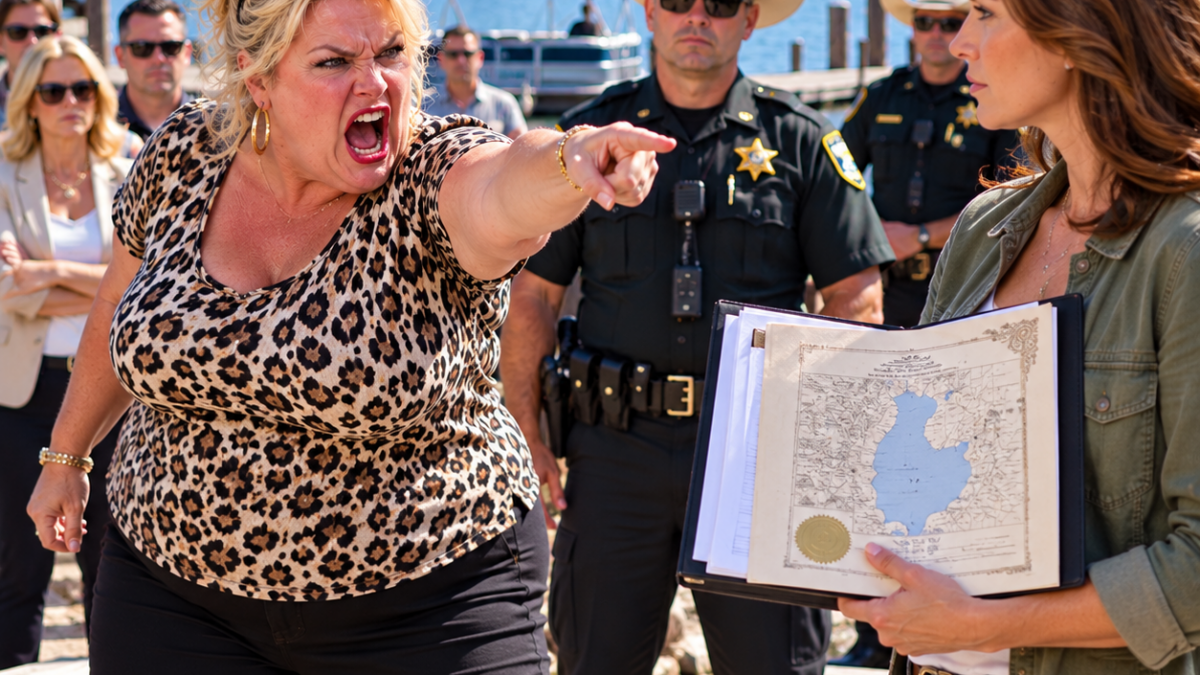
Marvin turned the page toward me.
The original subdivision development plan was yellowed around the edges but perfectly readable.
Willow Ridge stopped before the lake.
Not at the water.
Not at the dock.
Not at some ambiguous shoreline.
Fifteen feet of privately owned land separated the subdivision boundary from mine.
I leaned closer.
“Any easement?”
“No.”
“Footpath?”
“No.”
“Utility right?”
“No.”
“Boat access?”
“No.”
He flipped through the infrastructure filings.
“Nothing.”
I sat back.
“So how have they been using it?”
Marvin shrugged.
“Probably because nobody stopped them.”
That answer bothered me.
Possession by habit.
Authority by repetition.
If enough people walked through the same gate long enough, they began to think permission had become ownership.
“Can you print this?”
“I can certify it.”
“Better.”
He raised an eyebrow.
“You expecting litigation?”
“I already have HOA signs appearing on my gate.”
“That’s a yes.”
I left with certified copies of the original plat, development filings, and recorded ownership boundaries.
I called my attorney from the parking lot.
Laura Mendel had represented me at closing.
She was one of those attorneys who never sounded excited, even when something was clearly going wrong.
“I have the original Willow Ridge plat.”
“And?”
“No lake.”
“I know.”
“No easement.”
“I know.”
“Subdivision ends fifteen feet short.”
“I know that too.”
“Then why are they behaving like they own it?”
“That,” Laura said, “is the part we need to document.”
I told her about the cameras.
“Keep recording.”
“Should I send a cease-and-desist now?”
“Soon.”
“Why not now?”
“Because one stupid sign could be called a misunderstanding.”
“And repeated trespassing?”
“Harder.”
I smiled.
“You sound like you want them to keep making mistakes.”
“I want a record nobody can explain away.”
The HOA obliged faster than I expected.
Three days later, I came home from work and saw orange plastic fencing stretched across the northern edge of my property.
Two men in matching polo shirts were pounding stakes into the ground.
Folding tables sat nearby.
A stack of plastic chairs.
A hand-painted sign leaned against a tree.
**HOA EVENT AREA — TEMPORARILY CLOSED FOR IMPROVEMENTS**
I parked.
Got out.
Started recording before I said a word.
“Who sent you?”
One man kept working.
“HOA.”
“Who at the HOA?”
“Cheryl.”
The other man finally looked at me.
“Some neighborhood event this weekend.”
“You know this is private property?”
He hesitated.
“She said it was common ground.”
“It isn’t.”
I held the phone where both faces were visible.
“My name is Adrien Zeller. I own the lake and this shoreline. I am directly telling you that neither of you has permission to be here.”
The first man set down his hammer.
“We’re just contractors.”
“I understand. That’s why I’m giving you five minutes to pack up before I call the sheriff.”
The second man looked toward the subdivision.
“Man, we already got paid.”
“Take it up with Cheryl.”
“She said the HOA owns access.”
“She lied.”
That did it.
They started loading.
I filmed the orange fencing.
The sign.
The stakes.
Vehicle plates.
Tire tracks.
Then I called the sheriff anyway and filed a trespass report.
I wasn’t interested in getting two workers arrested.
I wanted the incident documented.
That night, I emailed everything to Laura.
Her response came twenty minutes later.
**Good. Don’t engage Cheryl alone if she returns.**
The certified HOA letter arrived three days after that.
Official envelope.
Willow Ridge logo.
Five board signatures.
I opened it at my kitchen table.
**NOTICE OF VIOLATION**
My alleged offense:
**Obstruction of community access to designated recreational area.**
Fine:
$200 per day.
Effective immediately.
Additional legal and enforcement costs could be assessed for continued noncompliance.
I read it twice.
Then called Laura.
“I got a fine.”
“You’re not in the HOA.”
“I know.”
“For your lake?”
“Yes.”
She sighed.
“Send it.”
I scanned it.
Five minutes later, my phone rang.
“This is better than I expected.”
“Better?”
“They created a financial demand under claimed authority they don’t possess.”
“Fraud?”
“Potentially.”
“Extortion?”
“Potentially.”
“Felony?”
“Depends on the statute and prosecutor.”
“So what now?”
“Now we stop being polite.”
Laura drafted a formal cease-and-desist.
She cited the deed.
The subdivision plat.
The absence of easements.
Trespassing footage.
The false sign.
The fabricated fine.
She also filed complaints with the county prosecutor and the state consumer-protection office.
Every piece of evidence went with it.
Five days later, Deputy Ryan Reiner pulled into my driveway.
He was younger than I expected, maybe late thirties, with a notebook already open when he stepped out.
“Adrien Zeller?”
“Yes.”
“Sheriff’s department.”
“I figured.”
He smiled slightly.
“Mind if we talk?”
We sat at the end of the dock.
I gave him the timeline.
Purchase.
Cheryl’s first visit.
Deed.
Sign.
Trespassing.
Event setup.
Violation notice.
He flipped through the copies.
“She says this is a misunderstanding.”
“She sent me a two-hundred-dollar-a-day fine.”
“I’m aware.”
“She misunderstand the number too?”
That got a laugh.
“You’d be surprised how often HOAs overstep.”
“Do they usually fabricate jurisdiction?”
“Not usually this cleanly.”
He tapped the letter.
“Five signatures.”
“Whole board.”
“Which means we interview five people.”
“Good.”
He closed the folder.
“You ever grant verbal permission for community use?”
“No.”
“Previous owner?”
“Not according to closing documents.”
“We’ll verify.”
“I already did.”
“We verify anyway.”
Fair enough.
The criminal review began quietly.
I thought maybe that would scare Cheryl into retreat.
Instead, I decided to do something she clearly hadn’t expected.
I invited Willow Ridge residents to my lake.
Temporarily.
Voluntarily.
On my terms.
I printed simple invitations.
**LAKE BARBECUE — SATURDAY, 3 P.M.**
**Courtesy access granted by property owner for event only.**
I delivered them to every house backing toward the water.
Laura laughed when I told her.
“You’re making a point.”
“Several.”
“Be careful.”
“I will.”
About thirty people came.
Families.
Kids.
Retirees.
People carrying coolers, folding chairs, fishing poles.
I cooked burgers.
Someone brought ribs.
A woman brought three pies.
Nobody behaved badly.
That surprised me less than what they told me.
A retired firefighter named Don Foster stood beside the grill.
“We were told this lake was part of Willow Ridge.”
“By Cheryl?”
“By the board.”
“When you bought?”
“Twenty-two years ago.”
I handed him a county map.
“Look.”
He studied it.
Then frowned.
“This line?”
“Subdivision.”
“And lake?”
“Mine.”
“So we never had rights?”
“Not that I can find.”
Don looked toward the water.
“They charged us a lake maintenance assessment three years ago.”
I stopped turning burgers.
“How much?”
“Hundred and fifty per house.”
“For what?”
“Shoreline stabilization.”
I looked at him.
“No one stabilized anything.”
He stared back.
That was the first crack.
Then Felicia Owens, a nurse who lived near the walking trail, heard us.
“They fined me last summer.”
“For what?”
“Unauthorized guests fishing.”
“Where?”
She pointed toward my shoreline.
“My nephews.”
“How much?”
“Three hundred.”
“You paid?”
“I didn’t want trouble.”
I wiped my hands.
“Ask for it back.”
“Can I?”
“Ask them to show you the covenant giving them authority.”
Her expression changed.
Not excitement.
Anger.
Quiet anger.
Within an hour, people were comparing stories.
Lake fees.
Event assessments.
Fishing restrictions.
Paddleboard permits.
Guest fines.
The HOA had been charging residents for managing something it did not own.
I didn’t tell anybody how to vote.
Didn’t suggest revolt.
I simply laid copies of the county plat on a table.
“Take one.”
By sunset, Don was talking about a recall petition.
Felicia wanted five years of financial statements.
A man named Jeff wanted proof every lake-related fine was legitimate.
I stood at the edge of the dock watching the conversation spread.
Laura had warned me not to provoke a political fight inside their HOA.
I didn’t.
I just gave them facts.
The next morning, Cheryl arrived.
She parked on the public street.
Smart.
Then marched toward my gate.
I pointed at the camera.
“Recording.”
She stopped.
Her face shifted into a strained smile.
“We need to talk.”
“Go ahead.”
“There has been some confusion.”
“You called it misunderstanding last week.”
“The board may have relied on historical assumptions.”
“You mean false ones.”
“We never intended to claim legal ownership.”
“You sent a sign saying public access mandated.”
“Overzealous wording.”
“You fined me two hundred dollars per day.”
She looked away.
“Again, wording.”
“Fraudulent wording.”
Her smile disappeared.
“Adrien, we’re trying to resolve this amicably.”
“You had that option when I handed you the deed.”
“Residents have expectations.”
“That’s between you and the residents.”
“You encouraged them to turn against the board.”
“I invited them to a barbecue.”
“You distributed documents.”
“Public records.”
She stepped closer.
“You’re making this more difficult than necessary.”
I laughed.
“You keep saying things backward.”
Her jaw tightened.
“What do you want?”
“For you to stay off my land.”
“That’s it?”
“For now.”
Her eyes narrowed.
“You’re going to regret turning an entire neighborhood against you.”
“They don’t seem against me.”
That landed.
She left.
Deputy Reiner called later.
“District attorney is reviewing.”
“Criminal charges?”
“Possible.”
“What about civil?”
“Your lawyer already filed.”
Laura had moved.
Trespass.
Defamation.
Attempted extortion.
Interference with property rights.
We also requested a declaratory judgment confirming the lake’s private ownership and lack of Willow Ridge access rights.
Process server delivered the lawsuit at Cheryl’s house.
Someone filmed it.
By evening, half the subdivision had seen the video.
Three board members resigned within days.
The remaining two tried to distance themselves.
Mark Langley, the clipboard man from Cheryl’s first visit, contacted Reiner.
Then contacted Laura.
Then asked for whistleblower protection from civil liability where possible.
That told us he had something.
The recall petition reached the required signatures in forty-eight hours.
Still, I didn’t celebrate.
People like Cheryl don’t stop when they lose authority.
They stop when they run out of options.
And she still had options.
Laura’s paralegal found the next one.
“I’ve got something strange,” Laura said one afternoon.
“What?”
“Environmental partnership dues.”
“Meaning?”
“Quarterly HOA expenditures.”
“How much?”
“Roughly forty thousand over three years.”
“For environmental work?”
“Supposedly.”
“On the lake?”
“Possibly.”
“Who got paid?”
“Company with a P.O. box.”
“Real company?”
“Barely.”
“Owner?”
“Cheryl’s cousin.”
I sat down.
“Of course.”
Laura continued.
“No meaningful online presence. No employees. No state contracts.”
“Shell?”
“Looks like.”
I took the file to Reiner.
He read three pages.
Then called a detective into the room.
“Copy this.”
He looked at me.
“We’ve already interviewed Mark.”
“What did he say?”
“Cheryl has been trying to classify your lake as an HOA natural asset for years.”
I stared.
“Years?”
“Previous owner refused a joint-use agreement.”
“When?”
“Last year.”
“So she knew.”
“Yes.”
“She knew the lake wasn’t theirs before I bought it.”
“Yes.”
That was the point when misunderstanding died.
The previous owner had been asked.
He said no.
Cheryl waited for the sale.
Then came to me two days after closing.
She wasn’t confused.
She thought I was easier.
“What else did Mark give you?”
“Internal memos.”
One read:
**New ownership presents opportunity to normalize community access before boundaries become disputed.**
Another:
**Physical signage and programmed events will strengthen established-use argument.**
I stared at the words.
Established use.
That explained the tables.
The orange fence.
The signs.
She wasn’t merely being bossy.
She was creating evidence.
If enough HOA events happened on my shore, if enough signs called it common land, if enough residents treated it like an amenity, she hoped eventually the story would become harder to unwind.
Not legally stronger, perhaps.
But expensive.
Confusing.
Enough to pressure me into signing access.
Reiner leaned back.
“That’s why the case is moving.”
“How fast?”
“Fast enough.”
One week later, deputies executed warrants at Cheryl’s house and the HOA clubhouse.
Boxes came out.
Computers.
Financial records.
Bank statements.
Residents watched from porches.
Cheryl was arrested on allegations involving fraud, falsified records, and misappropriation of association funds.
I watched from my dock.
Coffee in hand.
No smile.
I thought I would feel victorious.
Instead, I felt tired.
Two days later, a note appeared beneath my gate.
No signature.
Same handwriting as the violation letter.
**YOU’LL REGRET THIS. ENJOY YOUR LAKE WHILE IT LASTS.**
I didn’t throw it away.
I put it in a plastic sleeve.
Called Reiner.
He took it.
“She’s under release conditions right now,” he said.
“You think she wrote it?”
“We’ll compare.”
“You sound unsurprised.”
“Two former board members received similar notes.”
That chilled me more than the words.
Cheryl wasn’t only angry at me.
She was attacking anyone who stopped cooperating.
Meanwhile, Willow Ridge held its election.
Don ran.
Felicia ran.
Neither promised miracles.
They promised records.
Their flyer had the original plat printed on the back.
At the bottom:
**WE LIVE HERE. WE DESERVE BETTER.**
Turnout shattered previous HOA records.
Cheryl’s remaining allies lost badly.
The new board immediately froze discretionary spending.
Ordered a five-year audit.
Published every available invoice.
And sent me a formal letter recognizing that the lake was private property.
I thought maybe that would end it.
Then I flew my drone.
I had started using it twice a week to inspect shoreline erosion.
One evening, I noticed something near the northern tree line.
A gap.
I zoomed in.
Trees down.
Gravel.
Straight line from Willow Ridge’s walking trail to my water.
I drove out with a flashlight.
Twenty feet inside my boundary, somebody had bulldozed mature oaks.
Fresh gravel formed a rough path.
Landscaping bricks lay under a tarp.
Wheelbarrow.
Stakes.
Someone had started building a patio.
I stood there in the dark, flashlight shaking slightly in my hand.
This was different.
Signs can come down.
Fines can be voided.
Trees don’t grow back because a court says sorry.
The next morning, Laura filed for an emergency injunction.
Reiner opened another property-damage case.
Don and Felicia confirmed the new board authorized nothing.
They called every legitimate HOA contractor.
None had done the work.
Then the sheriff searched the old landscaping storage shed.
Inside were equipment-rental invoices.
Different name.
Same P.O. box connected to Cheryl’s cousin.
A rented compact loader.
Saw.
Gravel delivery.
Dates matched the clearing.
Cheryl had been trying to establish physical access.
Paths.
Patio.
Infrastructure.
The more permanent the footprint looked, the stronger the narrative that the lake had “always” been integrated into Willow Ridge.
Dana Price, a special investigator who joined later, explained it best.
“They weren’t trying to win on law.”
“What were they trying to win on?”
“Exhaustion.”
I looked at her.
“Build enough. Spend enough. Create enough confusion. Then offer you a compromise.”
“Access agreement.”
“Exactly.”
My anger changed after the trees.
Until then, the lake dispute felt almost absurd.
An HOA Karen.
Fake sign.
Stupid fines.
Now I stood beside oak stumps older than Willow Ridge itself.
I hired a surveyor.
Restaked the entire boundary.
Installed fencing where needed.
Documented every damaged tree.
The new HOA board did something important.
Felicia came to my house carrying a notarized letter signed by every board member.
It stated that Willow Ridge:
Recognized my sole ownership of the lake property.
Disclaimed any legal right to public or association access.
Disavowed all prior signage, fines, or assertions of jurisdiction.
Agreed not to contest ownership in future proceedings.
I read it slowly.
“You didn’t have to do this.”
“Yes, we did.”
“Why?”
“Because people need to know the board changed.”
I framed it.
Not because I needed validation.
Because I wanted a permanent record.
Cheryl initially negotiated a plea arrangement covering part of the first case.
Probation.
Restitution.
Lifetime ban from serving on an HOA board.
But the deeper audit wasn’t finished.
Two months later, Felicia called.
“Come to the office.”
“What happened?”
“I found something.”
The new board office looked nothing like Cheryl’s old operation.
No decorative furniture.
No private executive room.
Folding chairs.
Bankers boxes.
Cheap coffee.
Felicia put a file on the table.
Label:
**AUXILIARY PROJECTS**
Inside were contractor logs.
Grant applications.
Inspection reports.
One payment caught her attention.
**SOIL REMEDIATION — NORTH SHORE**
Date:
One year before I bought the lake.
Parcel number:
Mine.
I looked at her.
“They were billing projects against this parcel before I owned it?”
“Yes.”
“Previous owner approve?”
“No.”
“Who signed?”
She pushed the application forward.
There was a signature.
Name belonged to a man connected to the old property records.
Felicia had already checked county records.
“He was dead.”
I looked up.
“What?”
“Two years before this application.”
My chair scraped backward.
The HOA had used a dead man’s signature.
State conservation grant.
Nearly thirty thousand dollars.
Submitted through something called the Willow Ridge Environmental Committee.
No registered entity under that name.
No actual remediation done.
No valid owner authorization.
Laura’s face darkened when she read it.
“This isn’t neighborhood fraud anymore.”
“What is it?”
“Public grant fraud.”
“State money?”
“Yes.”
“Forged signature?”
“Yes.”
“Dead person?”
“Yes.”
She pulled out her phone.
“I’m calling the Department of Natural Resources.”
Within a week, state investigators joined.
Forensic handwriting analysts confirmed forgery.
The notary stamp on the uploaded form belonged to an office that had closed years earlier.
Financial subpoenas expanded to seven years.
The new board cooperated completely.
The environmental partnership dues were traced through multiple accounts.
Shell entities.
Fake trusts.
Cash withdrawals.
One name appeared repeatedly.
**J. Winters**
No homeowner.
No board member.
No contractor license.
No obvious person.
That brought in the attorney general’s office.
Special Investigator Dana Price met me at the boathouse.
Three hours.
Every document from the beginning.
Deed.
Plat.
Sign.
Trespass footage.
Event setup.
Fine.
Bank records.
Tree clearing.
Grant files.
She closed the binder.
“They built a paper HOA inside the real HOA.”
“What does that mean?”
“Some legitimate governance happened.”
“Roads. Landscaping. Dues.”
“Yes.”
“And underneath?”
“Fake vendors. Fake environmental programs. Shell accounts. Fraudulent grants.”
“Why my lake?”
She turned toward the water.
“Assets.”
“What?”
“More land means larger budgets. More environmental projects. More grant eligibility. More fees.”
“So they wanted the lake for money.”
“And leverage.”
She pointed toward the northern shoreline.
“Those paths and signs weren’t random.”
“Established use.”
“Exactly.”
“It wouldn’t work.”
“Probably not in court.”
“Then why?”
“Because litigation costs money.”
She looked at me.
“They expected you to fold before anyone tested it.”
That sentence stayed with me.
They didn’t need to own the lake.
They only needed me to get tired of proving that I did.
A grand jury returned indictments.
Cheryl faced additional felony charges involving wire fraud and falsified state records.
Two former board members were charged with conspiracy and embezzlement.
Her cousin was arrested in New Mexico.
He cooperated within forty-eight hours.
Bank records showed the scheme clearly.
Residents paid “environmental partnership dues.”
Money moved through shell companies.
Fake shoreline projects justified grant applications.
Some cash returned to conspirators.
The lake was supposed to become the centerpiece.
Public-looking access.
HOA signage.
Maintained trail.
Events.
Then eventually a joint-use structure nobody could easily challenge.
Willow Ridge residents were furious.
Not at me anymore.
At themselves too.
Some felt embarrassed.
Don stopped that at one meeting.
“You were lied to.”
A man shouted, “We let it happen.”
Don answered, “Then don’t let it happen again.”
Residents faced a choice.
Rebuild the HOA under court supervision.
Or dissolve it.
The vote was overwhelming.
Dissolve.
The clubhouse was sold.
Common areas were transferred into a city maintenance-sharing arrangement where possible.
Road obligations were restructured.
No HOA president.
No private fine schedule.
No lake permits.
Willow Ridge became a neighborhood.
Just a neighborhood.
That sounded simple.
It wasn’t.
There were legal meetings.
Property documents.
Maintenance agreements.
Insurance questions.
Months of boring work.
But nobody missed the fines.
The state offered victim compensation related to the fraud case.
I declined.
Laura thought I was being stubborn.
“You suffered property damage.”
“I have civil remedies for trees.”
“This is separate.”
“I don’t want money from a compensation fund if other people need it more.”
“What do you want?”
“A public record.”
“You already have judgments.”
“I want the state to say what happened.”
She understood.
The attorney general’s office held a modest press conference outside the courthouse.
No dramatic banners.
Dana at a podium.
Residents behind her.
“This investigation demonstrated that fraudulent governance does not become legitimate merely because it is wrapped in community rules.”
She explained the grant fraud.
Shell companies.
Forged records.
Misappropriation.
Then she thanked residents and witnesses.
I received a framed recognition certificate for documentation and cooperation.
I cared little about the frame.
The wording mattered.
Because Cheryl had spent months trying to turn fiction into reality through repetition.
Now the official record carried the truth.
I went home.
Put the certificate in my office.
Beside the board’s disavowal letter.
Then I built a small boathouse.
Nothing elaborate.
Space for canoe storage.
Tools.
One chair beside a window facing west.
I drank coffee there most mornings.
No HOA events.
No unauthorized kayaks.
No plastic fences.
Eventually, something unexpected happened.
Residents asked permission.
The first was Don.
“My grandson’s coming Saturday.”
“Okay.”
“He wants to fish.”
“Bring him.”
Don looked surprised.
“That simple?”
“That simple.”
Then Felicia asked if her nephews could come.
“Yes.”
Another family asked to paddleboard.
“Yes.”
Not everyone.
Not every day.
I wanted the lake quiet.
But I discovered I didn’t actually hate sharing it.
I hated having it taken.
There’s a difference.
Permission changed everything.
People called first.
They packed out trash.
Respected hours.
No one installed signs.
No one charged fees.
The lake stayed private.
But it stopped feeling hostile.
That mattered.
Then the old files revealed one last piece.
J. Winters.
Dana called me.
“We found him.”
“Who?”
“Not a him.”
I paused.
“Who?”
“Janet Winters.”
“Board?”
“Former bookkeeper.”
“She in the state?”
“Arizona.”
“Part of the fraud?”
“Yes.”
Janet had created several accounts.
Used prepaid phones.
Processed shell-company withdrawals.
Her statements tied the operation directly to Cheryl and her cousin.
But she also gave investigators the motive behind the lake obsession.
Years earlier, Willow Ridge’s regular finances had been declining.
Major road repairs.
Drainage costs.
Reserve shortfall.
Cheryl feared increasing dues would cost her political support.
Her cousin proposed an alternative.
Create outside “environmental revenue.”
Grants.
Partnership fees.
Amenities.
The lake was ideal.
Visually connected to the subdivision.
Residents already used it informally.
If Cheryl could formalize that use, she could justify larger conservation budgets.
Then rental events.
Seasonal access permits.
Potential pavilion development.
The plan grew.
One fraudulent grant became another.
One fake vendor became three.
One lie required ten.
By the time I bought the lake, Cheryl wasn’t improvising.
She had years invested.
My deed threatened everything.
That explained her expression the first day.
“This can’t be right.”
Maybe part of her truly believed that.
Not because the deed was wrong.
Because accepting it would collapse the world she had built.
I thought about that for days.
Greed was part of it.
Control too.
But fear mattered.
Cheryl knew if residents discovered the lake was never theirs, they might ask why they had paid lake fees.
Then ask about grants.
Then ask about contractors.
Then bank accounts.
My deed wasn’t just ownership.
It was a loose thread.
She tried desperately to stop me from pulling it.
In court, Janet testified.
Cheryl’s cousin testified as part of his deal.
Mark testified.
Former residents testified.
Financial analysts walked through money transfers.
Dana explained the fake environmental committee.
I testified about the first confrontation.
The prosecutor handed me the deed.
“Did you show this to Ms. Maddox?”
“Yes.”
“When?”
“Two days after closing.”
“What was her response?”
“She said it had to be wrong.”
“Was it?”
“No.”
“Did she later place signage on your gate?”
“Yes.”
“Did she later issue a fine?”
“Yes.”
“Did she authorize events?”
“Evidence showed the board did.”
“Did you ever consent?”
“No.”
The prosecutor showed the internal memo.
**New ownership presents opportunity to normalize community access before boundaries become disputed.**
“When did you first see this?”
“During the investigation.”
“What does it mean to you now?”
Her attorney objected.
Speculation.
Sustained.
Fair.
The jury didn’t need my interpretation.
The documents spoke.
Cheryl’s defense tried to separate legitimate HOA decisions from criminal acts.
Some of that argument was valid.
Not every Willow Ridge expenditure was corrupt.
Not every board member knew everything.
Not every mistake was criminal.
That distinction mattered.
The prosecution focused on specific transactions.
Specific forged documents.
Specific communications.
Specific knowledge.
That made the case stronger.
Cheryl eventually entered a broader plea agreement rather than take every new charge through trial.
The final consequences were more serious than the original probation arrangement.
Felony convictions.
Restitution.
Restrictions on future fiduciary roles.
Additional penalties tied to public funds.
Her cousin received a reduced sentence for cooperation.
Two former board members took separate deals.
Janet did too.
The criminal chapter ended slowly.
No cheering outside the courthouse.
No theatrical final confrontation.
Just paperwork becoming final.
Sentences entered.
Restitution orders.
Accounts closed.
People going home.
That felt appropriate.
Because Willow Ridge still had to live with what happened.
The first year without an HOA was messy.
Some residents missed centralized landscaping.
Others argued over road maintenance.
One man refused to pay his share of a voluntary drainage repair until the city threatened action over runoff.
People learned that removing bad authority doesn’t remove responsibility.
Don helped coordinate a road committee.
Felicia handled communication.
Neither wanted titles.
Good.
They published spending anyway.
Voluntarily.
Receipts online.
No secrets.
I attended occasionally.
Not because I had to.
Because they invited me.
At one meeting, Don joked, “Adrien, we have an opening.”
“No.”
“We didn’t even say for what.”
“No.”
Laughter.
I guarded my independence carefully.
But I also stopped pretending independence meant isolation.
The lake taught me that.
One summer, Felicia organized a neighborhood picnic.
She called first.
“Can we use the east lawn?”
“How many?”
“Maybe forty.”
“No permanent signs.”
“Agreed.”
“No plastic fencing.”
She laughed.
“Definitely.”
“Trash gets hauled out.”
“Yes.”
“Then okay.”
Families came.
Kids swam.
Someone brought kayaks.
Don grilled.
I sat near the dock.
For a moment, I watched the scene Cheryl had claimed as her right.
People laughing.
Boats on water.
Picnic tables.
Exactly the kind of gathering she once said proved community ownership.
The difference was one word.
Permission.
Nothing about the gathering threatened me because nobody pretended my yes was unnecessary.
That realization softened something in me.
I extended limited courtesy access afterward.
Residents could request fishing or paddling during certain hours.
No fees.
No guarantee.
No easement.
Written permission revocable.
Laura drafted a simple form because attorneys cannot allow anything to remain simple.
She insisted.
“This protects everyone.”
“Four pages?”
“Three and a half.”
“You’re sick.”
“Sign.”
I did.
Over time, asking became normal.
People respected it.
Children who had grown up believing the lake automatically belonged to them learned a different lesson.
Not exclusion.
Consent.
One boy named Caleb asked me why they had to call.
“Because it’s private land.”
“But my dad says people used to come whenever.”
“They did.”
“So what changed?”
“People learned who owned it.”
He considered that.
“Is that why you let us fish?”
“Because you asked.”
He nodded as if that made perfect sense.
Maybe it should have from the beginning.
I restored the damaged northern tree line.
Oaks would take decades.
I planted younger native trees.
Sycamore near the lower wet area.
White oak farther upslope.
A forester helped stabilize the disturbed soil.
The gravel path was removed except for a narrow foot route I chose to keep.
Not for Willow Ridge.
For me.
Eventually, I allowed permitted access along it too.
The half-built patio was dismantled.
I reused some of the bricks beside the boathouse.
I thought I would hate seeing them.
Instead, I liked reclaiming them.
Cheryl intended them to establish control.
Now they formed a simple fire ring I built myself.
Meaning can change.
Years passed.
The case became local history.
New families moved into Willow Ridge who had never met Cheryl.
They heard fragments.
Crazy HOA president.
Private lake.
Fake fines.
Fraud.
Some version always grew more dramatic.
One new resident asked me if Cheryl had tried to have me arrested for swimming.
“No.”
“Did she bulldoze your house?”
“No.”
“Did the FBI raid the lake?”
“No.”
He looked disappointed.
“The real story is enough.”
He didn’t believe me until Don handed him the old newspaper clippings.
The clubhouse site eventually became a small public park after the city acquired it.
No boardroom.
No executive office.
Playground.
Benches.
A community bulletin board.
One section displayed historical documents from Willow Ridge.
They asked to include a copy of the original subdivision plat.
I agreed.
Not my deed.
The plat.
The simple map that would have prevented half the disaster if anybody bothered looking at it.
A little red line marked the original boundary.
Lake outside.
That was enough.
Felicia stayed a friend.
Don too.
Laura remained annoyingly pleased about how the case turned out.
“You know,” she said over lunch one day, “your first instinct was to install cameras.”
“Yes.”
“My first instinct was litigation.”
“That’s why I pay you.”
“You should have called me before installing the cameras.”
“Why?”
“Because clients enjoy ruining evidence.”
“I didn’t.”
“No.”
“So?”
“I like being right preemptively.”
Some things never change.
Deputy Reiner eventually became sergeant.
At a community event, he introduced me to a new deputy as “the lake guy.”
I hated that.
“I’m a person.”
“Lake guy.”
“Your department has no respect.”
“Private-property respect, though.”
Fair.
Dana returned to the AG’s office and moved to another fraud unit.
Before leaving, she gave me copies of the final case summary.
Hundreds of pages.
I stored them in a fireproof cabinet.
Not because I expected another fight.
Because memory gets sloppy.
Documents don’t.
That was the entire lesson.
People remembered the lake as public because everyone said it was.
Cheryl exploited collective memory.
The deed contradicted it.
So did the plat.
Paper wasn’t glamorous.
Paper won.
One autumn afternoon, the previous owner contacted me.
His name was Samuel Price.
He had sold me the lake through an estate trust.
Older man.
Moved to Tennessee.
He had heard about the investigation.
“I should’ve warned you,” he said.
“About Cheryl?”
“Yes.”
“She approached you?”
“Twice.”
“For joint access?”
“First.”
“And second?”
“She wanted to buy a permanent easement.”
“How much?”
“Not enough.”
“Why didn’t you take it?”
Samuel laughed.
“My father bought that lake in 1968 because he didn’t want a subdivision controlling it.”
That surprised me.
“Willow Ridge didn’t exist then.”
“Exactly.”
He grew quiet.
“When developers built the subdivision, they asked my father to sell shoreline access.”
“He refused?”
“Every time.”
“So residents still started using it.”
“Yes.”
“Why didn’t you stop them?”
He sighed.
“My father got old. I lived out of state. We tolerated fishing.”
“And the HOA converted tolerance into ownership.”
“That seems to be what happened.”
I leaned back.
“You knew they were charging fees?”
“No.”
“Grant applications?”
“Absolutely not.”
He paused.
“Adrien?”
“Yeah?”
“I’m sorry.”
“For what?”
“Leaving you the fight.”
“You sold me property.”
“I knew the boundary was contentious.”
“That would’ve been nice to mention.”
“I know.”
For the first time, I felt anger toward him.
Not enormous.
Enough.
He had known Cheryl was pressuring.
He hadn’t told me.
Maybe he feared losing the sale.
Maybe he thought my title insurance handled it.
Either way, his silence mattered.
I told him that.
“You should have told me.”
“I know.”
“If I had known, I still might’ve bought.”
“I hoped so.”
“That’s not the point.”
“No.”
He accepted it.
We ended the call politely.
I didn’t feel better.
But later, he sent a box.
Inside were old photographs.
The lake in the 1970s.
His father standing beside a wooden dock.
No Willow Ridge.
No houses.
Just forest.
One photograph showed a hand-painted sign:
**PRIVATE LAKE — ASK BEFORE FISHING**
I laughed.
Apparently we had come full circle.
I framed that photograph in the boathouse.
Not the court certificate.
Not my deed.
The old sign.
Ask before fishing.
The entire conflict reduced to four words.
Willow Ridge had ignored them for decades.
Eventually, the state restitution process returned money to residents who had paid fraudulent lake-related fees.
Not every dollar.
Records were incomplete.
Some claims were too old.
Still, Felicia recovered her three hundred dollars.
She brought the check to my dock.
“Look.”
“Congratulations.”
“I’m framing it.”
“Why?”
“Because this is the most expensive three hundred dollars anyone ever gave back.”
Don recovered several assessments too.
He donated part to the volunteer fire department.
Others used refunds for ordinary things.
Bills.
Groceries.
Home repairs.
That felt right.
Money returned to life.
Not monuments.
The final damaged section of northern shoreline stabilized after three years.
Young oaks took root.
One died.
I replaced it.
Another got stripped by deer.
Replaced that too.
Trees required patience no court could order.
Whenever I planted one, I thought about Cheryl’s bulldozer path.
The law handled people quickly compared to forests.
I couldn’t undo what had been cut.
Only plant.
That became the quiet part of the ending.
Every spring, I checked the saplings.
Every fall, measured growth.
Years later, the tallest was over fifteen feet.
Still nowhere near the mature oak it replaced.
But alive.
Growing.
Enough.
One evening, Don and I sat in the boathouse.
He looked across the water.
“You know, when you first put up cameras, half the neighborhood thought you were an asshole.”
“Only half?”
“Maybe seventy percent.”
“Better.”
“We thought you bought the lake just to lock everybody out.”
“I nearly did.”
“Why didn’t you?”
I thought.
“Because I realized most residents were lied to too.”
Don nodded.
“Cheryl made us enemies before we met.”
That was true.
She needed me to look selfish.
She needed residents to look entitled.
Conflict protected her.
If both sides hated each other, neither asked who had been collecting the money.
The barbecue broke that.
That might have been the smartest thing I did.
Not the cameras.
Not the lawsuit.
Burgers.
Get people together.
Show the map.
Let them talk.
Corruption hates ordinary conversation.
That thought made me smile.
“What?” Don asked.
“Nothing.”
“You have that annoying face.”
“What face?”
“Like you’re thinking something philosophical.”
“Go fish.”
He did.
At sunset, Felicia’s nephews arrived after texting first.
They waved from the bank.
“Okay?”
I raised my hand.
Permission.
Simple.
Years later, Willow Ridge residents decided to create a voluntary neighborhood association for social events and shared concerns.
Not an HOA.
No deed authority.
No fines.
No compulsory dues.
They called it Willow Ridge Neighbors.
Don asked whether the name gave me flashbacks.
“Only mild.”
Their charter included one sentence suggested by Felicia:
**Participation does not create property rights over any privately owned land or amenity.**
They showed it to me.
“Subtle.”
“We learned.”
They held summer movie nights.
Cleanup days.
Emergency storm contact lists.
Nobody needed coercive authority to be neighbors.
That became another lesson.
Community and control are not synonyms.
Cheryl had treated them like they were.
She believed community meant the board decided.
The new group believed community meant people volunteered.
One lasted.
The other collapsed.
I stayed outside both.
Mostly.
I still grilled at picnics.
Contradictions make life tolerable.
A decade after buying the lake, I replaced the original dock.
Boards had softened.
Posts shifted.
I did most work myself.
Don helped until his knees complained.
Caleb, the boy who once asked why he needed permission to fish, was nineteen by then.
He came over during college break.
“You need help?”
“Can you use an impact driver?”
He looked offended.
“I’m nineteen.”
“That wasn’t an answer.”
“Yes.”
We rebuilt two sections.
At lunch, he sat on the edge.
“You know, I barely remember Cheryl.”
“Good.”
“My parents talk about her.”
“Less good.”
“She really tried to take this?”
“Control it.”
“Why?”
“Money. Pride. Fear.”
He skipped a stone.
“Seems stupid.”
“It was.”
He looked around.
“You ever think about selling?”
“No.”
“What if someone offers a lot?”
“No.”
“Everybody has a price.”
I laughed.
“That’s exactly the kind of thinking that started the problem.”
He grinned.
“Fair.”
When the dock was finished, we added a bench at the end.
I put a small steel plaque on the post.
Not the dramatic phrase I once considered.
No speech about truth or power.
Just:
**PLEASE ASK BEFORE ENTERING.**
Caleb read it.
“That’s it?”
“That’s it.”
“After everything?”
“Everything was because nobody did.”
He nodded.
“Fair.”
That plaque remains.
Most people ask.
Some don’t.
Occasionally a kayaker drifts in from a connecting creek and doesn’t know.
I wave.
Explain.
Usually they apologize.
Nobody gets screamed at.
Nobody receives a two-hundred-dollar fine.
Amazing what conversation can do.
Cheryl eventually disappeared from local conversation.
I heard she moved after completing the main terms of her sentence and restitution.
I never contacted her.
She never contacted me.
That suited me.
For years, I had imagined some final confrontation.
Her returning to the gate.
Me holding the deed.
Some perfect line.
It never happened.
Real endings rarely arrange themselves that neatly.
Her relevance simply faded.
That was better.
Because the lake outlasted her.
The neighborhood outlasted her.
The facts outlasted her.
One summer, a reporter doing a retrospective called.
“Do you think Cheryl believed the lake was public?”
“At first?”
“Yes.”
“Maybe emotionally.”
“What does that mean?”
“She believed years of use gave the HOA some moral claim.”
“Legal?”
“She had documents showing otherwise.”
“So she knew.”
“She knew enough.”
“Why keep going?”
“Because admitting the truth exposed everything else.”
The reporter paused.
“The fraud.”
“Exactly.”
“Do you think she would have stopped if you agreed to access?”
I thought.
“No.”
“Why?”
“Because the lake wasn’t the end goal.”
“What was?”
“Control over the story.”
That answer surprised me.
But it felt right.
Cheryl needed residents to believe the HOA provided the lake.
That justified dues.
Fees.
Grants.
Her leadership.
My ownership threatened the story she sold them.
So she attacked ownership rather than admit the story was false.
People do that more often than we like to think.
Not just HOAs.
Families.
Businesses.
Governments.
Individuals.
Once identity gets tied to a lie, evidence feels personal.
I learned to be suspicious whenever someone treats proof like an insult.
My deed wasn’t insulting Cheryl.
It was paper.
Her reaction gave it meaning.
One spring morning, I opened the boathouse and found an envelope on the chair.
For half a second, old instincts returned.
Anonymous note.
Threat.
I checked outside.
Then opened it.
Inside was a thank-you card.
From Willow Ridge Neighbors.
Don was retiring from organizing events.
Felicia had stepped back too.
New younger residents were taking over.
The card had dozens of signatures.
One line:
**Thanks for teaching us that asking is better than assuming.**
I sat down.
Read it again.
That meant more than the state certificate.
Not because I taught anybody intentionally.
Because we all learned the hard way.
I hung the card beside Samuel’s old photograph.
Private lake.
Ask before fishing.
History repeating, but better.
That evening, families gathered near the east lawn.
They had asked.
I said yes.
Kids jumped from the dock.
Someone played music quietly.
Don burned burgers.
Felicia complained.
Normal.
I walked to the far end of the dock and looked back.
There was a time I would have seen trespassers.
Now I saw neighbors.
Not because ownership disappeared.
Because it was finally respected.
That distinction mattered.
A person who respects your no makes their yes worth giving.
When darkness came, people packed everything.
Trash gone.
Chairs gone.
Boats loaded.
Don walked over.
“Good night, lake tyrant.”
“Get off my property.”
He laughed.
“See you Saturday.”
“Unfortunately.”
Silence returned.
The lake surface flattened.
Bass popped near the reeds.
Cicadas hummed.
I sat on the bench.
My deed was locked in a fireproof cabinet at home.
I no longer carried a copy in my truck.
That may have been the clearest sign the fight was over.
For years, I kept it close.
Proof.
Armor.
Now I didn’t need armor.
Willow Ridge knew.
County knew.
State knew.
Recorded documents knew.
More importantly, I knew I wouldn’t have to argue every morning.
Ownership had returned to being boring.
Exactly what ownership should be.
Years after Cheryl tried to put that first fake sign on my gate, the lake remains private.
No public-access mandate.
No HOA jurisdiction.
No permanent community easement.
But on most summer weekends, someone from Willow Ridge calls.
“Mind if we fish?”
Sometimes I say yes.
Sometimes I say no.
Nobody threatens me either way.
That freedom was what I was protecting from the beginning.
Not water.
Choice.
Cheryl thought control meant being able to say yes for everybody else.
I learned ownership mostly means having the right to say no—and the freedom to say yes when you want to.
The last time I walked the northern shoreline before winter, I stopped beside the young oaks.
Leaves brown.
Branches bare.
The largest tree stood near the spot where bulldozer tracks once cut through my property.
I put my hand on the trunk.
Rough bark.
Solid.
Growing.
Behind me, Willow Ridge was quiet.
No clubhouse.
No president.
No fines.
Just porch lights.
Dogs barking.
Families making dinner.
Ahead, the lake reflected the cold evening sky.
I remembered Cheryl standing there on day two.
“This is a shared amenity.”
I remembered handing her the deed.
“This can’t be right.”
It had been right all along.
The paper never changed.
Only the number of people willing to read it did.
I walked back toward the dock.
Past the boathouse.
Past the bench.
Past the steel plaque.
**PLEASE ASK BEFORE ENTERING.**
The words were plain.
No threat.
No penalty.
No logo.
Nothing like Cheryl’s laminated sign.
Maybe that was the most satisfying revenge of all.
She had tried to control the lake with lies, fines, forged records, and manufactured authority.
I kept it with one deed, a camera, patience, and enough stubbornness to keep asking people to prove what they claimed.
And after everything was over, I didn’t need to lock the world out.
I only needed the world to knock first.
I only needed the world to knock first.
That became the quiet rule around the lake.
Nobody voted on it. Nobody printed it in a handbook. There were no annual dues attached to it and no committee deciding what color the sign should be. People simply learned that if they wanted to fish, launch a kayak, sit along the eastern bank, or bring their grandchildren down for an afternoon, they called me first.
Most of the time, I said yes.
The strange thing was that once people understood I could say no, they treated every yes differently.
They stopped leaving trash near the shoreline. They stopped dragging picnic tables wherever they wanted. They stopped assuming the dock was available just because it was empty. Parents reminded their kids not to wander onto the north bank without asking. Even teenagers, who apparently consider property boundaries a philosophical suggestion, started texting before coming down.
Permission did what years of HOA rules never managed to do.
It created respect.
One Saturday morning, Don called while I was repairing a hinge on the boathouse door.
“My granddaughter wants to learn how to fish.”
“How old?”
“Eight.”
“Can she sit still?”
“No.”
“Then she’s perfect for fishing.”
He laughed.
“We okay to come down?”
“East bank. After ten.”
“We’ll bring coffee.”
“Now you’re negotiating.”
They arrived with two rods, a plastic tackle box covered in stickers, and a little girl named Emma who wore a pink life jacket even though we weren’t getting into a boat.
She stared across the water.
“This is your whole lake?”
“It is.”
“All of it?”
“As far as I know.”
She looked at Don.
“That’s a lot of water.”
He nodded seriously.
“Mr. Zeller keeps it in jars during winter.”
Her eyes widened.
I pointed at him.
“Never trust retired firefighters.”
For two hours she caught nothing.
Then finally a bluegill barely larger than her hand took the bait.
She screamed so loudly every bird within fifty yards left the state.
Don laughed until he had tears in his eyes.
Emma held the fish up like she had defeated a monster.
“Can I keep it?”
“You can.”
She looked at it.
Then at the water.
“No.”
She lowered it carefully.
The fish disappeared beneath the surface.
Emma watched the ripples.
“Do you let everybody fish here?”
“No.”
“Why’d you let us?”
“Your grandpa asked.”
She thought about that.
“So asking works?”
“Sometimes.”
That answer seemed to satisfy her.
I watched her walk back toward Willow Ridge beside Don, the fishing rod bouncing against her shoulder.
Years earlier, Cheryl had acted as if asking permission was humiliation.
As if recognition of ownership somehow diminished the community.
Emma understood it at eight years old.
Ask.
Maybe yes.
Maybe no.
Either way, the world keeps turning.
By then, the restoration work along the northern shore had become one of the last visible reminders of the fight.
The bulldozed strip had bothered me more than the fake fines ever did.
Money can be returned.
Signs can be removed.
Court records can correct lies.
A sixty-year-old oak doesn’t come back because somebody signs a restitution agreement.
So I became obsessive about the trees.
The forestry consultant helped me choose native species suited to the soil and drainage. We planted white oak, river birch near the lower ground, sycamore where the soil stayed wet, and a handful of red maples farther from the water.
The first summer was brutal.
Heat.
Dry wind.
Deer.
One morning I found a young oak stripped halfway around its trunk.
I stood there staring at it.
“You have got to be kidding me.”
Don happened to be walking past the public trail on the other side of the boundary.
“What happened?”
“Deer.”
He looked at the sapling.
“Nature vandalized your property?”
“Apparently.”
“You calling the sheriff?”
“Thinking about it.”
He leaned against the fence.
“Better get a good description.”
“Brown. Four legs. Arrogant.”
“Sounds like Cheryl.”
I laughed harder than I expected.
That mattered too.
For a long time, every reminder of the dispute tightened something inside me.
Then jokes started replacing anger.
That was when I knew the place was healing.
Not forgetting.
Healing.
The second year, the trees survived.
The third year, they started looking like they belonged there.
The gravel path Cheryl’s people tried to establish was mostly gone by then. I kept one narrow walking trail because it made sense for maintaining the shoreline, but I shifted it away from Willow Ridge’s old access point.
I chose where it went.
That mattered.
Sometimes reclaiming something isn’t about restoring it exactly as it was.
Sometimes it means deciding for yourself what stays.
The half-finished patio bricks became the fire ring beside the boathouse.
For months I couldn’t decide whether using them felt wrong.
Laura told me I was overthinking it.
“They’re bricks, Adrien.”
“They were part of the encroachment.”
“They are rectangular pieces of fired clay.”
“Lawyers have no imagination.”
“We have billing rates instead.”
Eventually I used them.
The first fire I built inside that ring burned late into the evening.
Felicia came over with Don and a few neighbors after asking first.
We sat in folding chairs.
Nobody talked about lawsuits for almost an hour.
That might have been a record.
Then Felicia pointed at the bricks.
“These those?”
“Yep.”
“The patio?”
“What would’ve been the patio.”
She smiled.
“Nice.”
“You’re not going to say anything symbolic?”
“No.”
“Thank you.”
Don lifted his beer.
“I will.”
“Don’t.”
He ignored me.
“They came to build a path into your lake, and now you burn fire inside their bricks.”
Felicia groaned.
“That was awful.”
“I’m retired. I have time to make speeches.”
I looked around the fire.
For once, the history felt small compared with the people sitting there.
Maybe that was the healthiest thing that could happen to it.
The case became background.
Not identity.
Not every conversation needed Cheryl.
Not every neighborhood decision needed to be measured against what happened before.
The lake began collecting new memories.
Emma’s first fish.
Felicia’s nephews tipping a canoe because neither wanted to admit they didn’t know how to paddle.
Don dropping his phone into the shallows and insisting it was waterproof right until it stopped working.
A summer storm that came across the water so quickly six of us had to run into the boathouse carrying chairs over our heads.
Normal things.
I had missed normal.
Then one afternoon, Laura called.
“I need you to come by.”
“Is this legal?”
“Usually why I call.”
“I’m trying to have a peaceful life.”
“I’ve seen no evidence of that.”
“What happened?”
“Final restitution order.”
I went.
Her office hadn’t changed.
Same heavy desk.
Same stacks of paper that made me suspect attorneys reproduced documents at night.
She slid a folder over.
The state had completed the major restitution process tied to the environmental grant fraud and misappropriated HOA funds.
Residents who could document improper assessments would receive additional reimbursement.
The Department of Natural Resources had recovered part of the fraudulent grant money from seized assets.
Several former board members were formally barred from future management roles involving community funds.
Cheryl’s remaining restitution obligations had been finalized.
I turned pages slowly.
“That’s it?”
“For the financial case, mostly.”
“Mostly?”
“There are administrative loose ends. There are always administrative loose ends.”
“But the big part?”
“Closed.”
I sat back.
I had spent years waiting for official words.
Investigation opened.
Charges filed.
Audit ordered.
Indictment returned.
Restitution pending.
Every phrase pointed toward some future resolution.
Now the word was closed.
I expected a feeling.
Relief.
Victory.
Something.
Instead, I asked, “What happens to these files?”
Laura looked at me.
“Which?”
“All of it.”
“Court records remain.”
“State records?”
“Archived according to retention requirements.”
“And the original grant fraud documents?”
“Same.”
I nodded.
That mattered more than I expected.
“What are you thinking?”
“That someday Cheryl will be dead. I’ll be dead. Don will probably live forever out of spite.”
Laura smiled.
“Likely.”
“But the record stays.”
“Yes.”
I closed the folder.
“Good.”
She studied me.
“You know, when this started, you wanted everybody arrested.”
“I was angry.”
“You wanted signs.”
“I wanted them off my land.”
“You wanted cameras.”
“Still have cameras.”
“You threatened to build a six-foot fence.”
“I almost did.”
“But now?”
I looked out her office window.
“Now I want it boring.”
Laura nodded.
“That’s what property lawyers dream of.”
“Boring clients?”
“Extremely.”
I left the office carrying one final certified copy of the restitution order.
I could have framed it.
Didn’t.
I put it in the fireproof cabinet with the deed, the plat, the old fake violation letter, the new board’s formal disavowal, and the photograph Samuel had mailed me.
Samuel’s photograph became my favorite piece of the entire archive.
His father beside the old dock.
Trees behind him.
No Willow Ridge.
No houses.
No manicured walking trail.
Just a wooden sign:
PRIVATE LAKE — ASK BEFORE FISHING
The photograph was faded.
The principle wasn’t.
Samuel and I spoke a few more times after our difficult conversation.
The second call was easier.
He admitted something I had suspected.
“I worried you’d back out of the sale if I told you how aggressive Cheryl had become.”
“I might have asked for a price reduction.”
He laughed softly.
“Exactly.”
“That’s not helping your case.”
“I know.”
I sat in the boathouse looking at the old photograph.
“You should’ve told me.”
“Yes.”
“You put me in a bad position.”
“Yes.”
“I need you to stop agreeing. It’s irritating.”
He laughed again.
Then he became quiet.
“My father would’ve liked you.”
“You don’t know me.”
“He liked stubborn people.”
“That sounds less flattering.”
“He was one.”
I looked across the lake.
“What would he think about residents fishing here again?”
Samuel didn’t answer immediately.
“My father wasn’t against people.”
“Just ownership claims.”
“Exactly.”
“He probably would’ve done what you’re doing.”
“Permission?”
“Yes.”
That made me feel better.
Not absolved.
Just connected.
A property can pass through several owners without losing its memory.
Samuel’s father protected the lake from the first subdivision developer.
Samuel protected it imperfectly.
I bought it.
Then fought the same argument in a different form.
Someday someone else would own it.
That thought eventually worried me more than Cheryl.
Not because I planned to sell.
Because nobody owns anything forever.
So I went back to Laura.
She sighed when she saw me.
“You again.”
“I need documents.”
“You finally accepting your destiny?”
“What destiny?”
“Becoming an HOA president.”
“I would rather become a mime.”
“What documents?”
“I want the lake protected after me.”
Her expression changed.
We spent months putting together a conservation-oriented ownership structure.
Nothing dramatic.
No magical legal shield.
Just careful planning.
Restrictions on certain forms of commercial development.
Clear boundary descriptions.
Explicit statements that informal courtesy access did not create permanent public rights.
Environmental protections along the shoreline.
Requirements for future owners to acknowledge existing conservation obligations.
Laura made me review every page.
“Why does this need fifty pages?”
“Because four words didn’t work.”
“Which four?”
“Ask before entering.”
Fair.
The most important clause to me was simple in spirit.
Permission remained permission.
Temporary access remained temporary access.
No pattern of neighborly use could silently turn into ownership through assumption.
I didn’t want a future Adrian fighting another Cheryl twenty years after I was gone.
When everything was recorded, I walked to the north shore and stood beside the largest new oak.
Its trunk was thick enough now that I couldn’t wrap one hand around it.
The sapling damaged by deer had survived too.
Crooked.
Scarred.
Alive.
I ran my fingers over the rough place where bark had grown back.
That felt more meaningful than the courthouse certificate.
Trees don’t care who wins.
They respond to what happens next.
Water too.
The lake had watched the subdivision arrive.
Watched families grow.
Watched the HOA invent authority.
Watched Cheryl try to turn repeated trespass into a claim.
Then watched all of us argue until documents finally caught up with reality.
Through all of it, the water kept moving.
Wind.
Rain.
Fish.
Ice some winters.
Algae blooms in hot summers.
My dispute had felt enormous because I was inside it.
The lake barely noticed.
That perspective helped.
Willow Ridge Neighbors eventually asked if they could organize an annual cleanup along the public trail nearest my property.
“Public trail only?”
Felicia said, “Unless you allow shoreline volunteers.”
“How many?”
“Maybe fifteen.”
“Supervised?”
She gave me a look.
“They’re adults.”
“That wasn’t the question.”
“Yes.”
I agreed.
The first cleanup lasted three hours.
People hauled out old cans, fishing line, plastic wrappers, and one rusted folding chair nobody could explain.
Then Emma—older now, maybe twelve—found the remains of one of Cheryl’s original laminated HOA access signs buried under leaves near the fence.
“Mr. Zeller!”
I walked over.
She held up half of it.
The Willow Ridge logo was faded.
Only part of the wording remained.
PUBLIC ACCESS MAND—
Don came up behind us.
“Well, look at that.”
Emma frowned.
“What is it?”
“Ancient history,” I said.
She wiped dirt from the plastic.
“Was this Cheryl’s?”
“Yep.”
“What do we do with it?”
Don grinned.
“Burn it.”
“No.”
Felicia said, “Recycle it.”
Emma looked at me.
I took the broken sign.
For years I had kept evidence of everything.
Signs.
Letters.
Photos.
Documents.
Part of me wanted to save this too.
Then I realized I didn’t need it.
The case was over.
Official records existed.
Truth didn’t depend on me hoarding every artifact forever.
I dropped it in the recycling bag.
Emma shrugged and kept cleaning.
That moment stayed with me.
Sometimes letting go requires proof that you no longer need proof.
A few years later, Don’s health started declining.
Nothing sudden.
Heart trouble.
Bad knees.
The accumulated bill of age and forty years of running toward burning buildings.
He stopped fishing as often.
One warm October afternoon, he called.
“Lake open?”
“For you?”
“Yeah.”
“Always.”
He arrived without gear.
Just a thermos.
We sat at the end of the dock.
Emma was in high school by then.
Felicia had become a grandmother.
Willow Ridge looked almost the same from the water.
Houses through trees.
Back porches.
Fences.
The physical place hadn’t changed much.
The atmosphere had.
Don poured coffee.
“You know what Cheryl used to say?”
“That could be a long list.”
“She used to call this the jewel of Willow Ridge.”
I smiled.
“She mentioned something similar.”
“I believed her.”
“Most did.”
“I thought our dues paid for this.”
“They paid for something.”
“Apparently Cheryl’s cousin.”
We both laughed.
Then he looked across the water.
“Funny thing.”
“What?”
“When you first shut us out, I hated you.”
“I know.”
“You knew?”
“You weren’t subtle.”
“I called you Lake Hitler.”
I turned.
“You did what?”
“Privately.”
“I’m glad your health is failing.”
He laughed so hard he started coughing.
When he recovered, he wiped his eyes.
“Then you invited us to that barbecue.”
“And suddenly I was less evil?”
“You showed the map.”
“That was it?”
“No.”
He looked at me.
“You let us ask questions without treating us like idiots.”
I didn’t know what to say.
Don continued.
“Cheryl never did.”
We sat quietly.
Then he said, “If you’d put up a huge fence and told us all to go to hell, you would’ve been within your rights.”
“Probably.”
“But Willow Ridge would’ve stayed angry.”
“Probably.”
“And we never would’ve looked at the books.”
That was true.
The barbecue had been an impulse.
I wanted residents to hear my side.
I hadn’t planned to expose financial fraud.
Sometimes the most important move is simply getting people in the same place without the person controlling the story.
Don finished his coffee.
“Good lake.”
“Thanks.”
“You make it?”
“Every morning.”
He smiled.
That was the last time we sat there alone.
Don died the following spring.
His funeral filled the volunteer fire hall.
Emma spoke.
Felicia spoke.
I did not.
I didn’t trust myself.
Afterward, Emma found me beside my truck.
“Grandpa wanted me to give you something.”
She handed me his old fishing lure.
Red and white.
Scratched.
“He said he caught his biggest bass here with this.”
“I remember.”
“He wanted it at the lake.”
So I hung it inside the boathouse.
Beside Samuel’s photograph.
Not a legal document.
Not evidence.
Memory.
That collection eventually told the lake’s story better than my file cabinet.
Old photograph.
Fishing lure.
Thank-you card.
A child’s drawing of a bluegill.
Small things.
The fight became one chapter.
Not the whole book.
The final transformation happened without me noticing.
One Saturday, I drove home from town and saw three Willow Ridge teenagers near the gate.
Years earlier, I would have immediately checked cameras.
Instead, I slowed the truck.
One of them raised a hand.
“Mr. Zeller!”
“What?”
“Can we go down to the east bank?”
“Fishing?”
“Yeah.”
“Parents know?”
A girl held up her phone.
“My mom texted you.”
I checked.
Felicia’s daughter.
Permission requested ten minutes earlier.
I laughed.
“Go ahead.”
“Thanks!”
They ran toward the trail.
I parked.
Went inside.
Made coffee.
And forgot they were there.
That was when I realized how completely things had changed.
Trust is not the absence of boundaries.
It is what becomes possible after boundaries are respected long enough.
At sunset, I walked down.
The teenagers were gone.
No trash.
No damage.
Just three sets of footprints near the bank.
The steel plaque beside the dock caught the last light.
PLEASE ASK BEFORE ENTERING.
I ran my thumb across the letters.
No logo.
No threat.
No fine.
No claim of authority.
Just a request.
Across the water, porch lights appeared one by one in Willow Ridge.
Somewhere a dog barked.
Someone was grilling.
A child shouted.
Ordinary neighborhood sounds.
I remembered the first morning Cheryl attached her sign to my gate.
PUBLIC ACCESS MANDATED.
The difference between her sign and mine was the difference between everything that happened before and everything that came after.
Her sign said my consent didn’t matter.
Mine said it did.
That was all I had ever wanted.
Years later, when people asked what I gained from the entire fight, they expected me to say the lake.
But I already owned the lake.
They expected me to say money.
I didn’t.
They expected me to say satisfaction from seeing Cheryl punished.
That faded faster than I imagined.
What I gained was quieter.
I could sit at the end of the dock without wondering who was trying to rewrite my boundary.
I could hear laughter from Willow Ridge without assuming people were coming to challenge me.
I could let neighbors fish without worrying that kindness would be turned into ownership.
I could leave my deed locked away.
I could stop checking cameras.
I could plant trees knowing someone wasn’t coming behind me with a bulldozer and a fake map.
I could enjoy what I bought.
That was enough.
One evening near the end of summer, I carried a cup of black coffee down to the dock and sat beneath a sky turning orange over the western trees.
A bass broke the surface.
Ripples spread.
The new oaks along the northern edge moved gently in the wind.
From the public trail, I heard footsteps.
A young couple appeared near the gate.
They stopped when they saw the sign.
The man looked toward me.
“Sir?”
“Yeah?”
“Is it okay if we walk down to the water for a few minutes?”
I didn’t know them.
Probably new to Willow Ridge.
I considered it.
Then nodded.
“Stay on the east path.”
“Thank you.”
They walked down quietly.
Sat near the bank.
Watched the sunset.
Twenty minutes later, they left.
No argument.
No assumption.
No clipboard.
I smiled into my coffee.
Once, Cheryl had stood almost exactly where they stood and told me I couldn’t simply cut off public access.
Years later, access still existed.
But not because she had forced it.
Because I chose it.
The lake belonged to me.
The welcome belonged to me too.
And after everything we had gone through, that distinction felt more peaceful than any locked gate ever could.
[END OF STORY]








