PART 2: HOA’s Fake Cops Came to Drag Away My 78-Year-Old Grandpa—They Froze When I Showed My FBI Badge
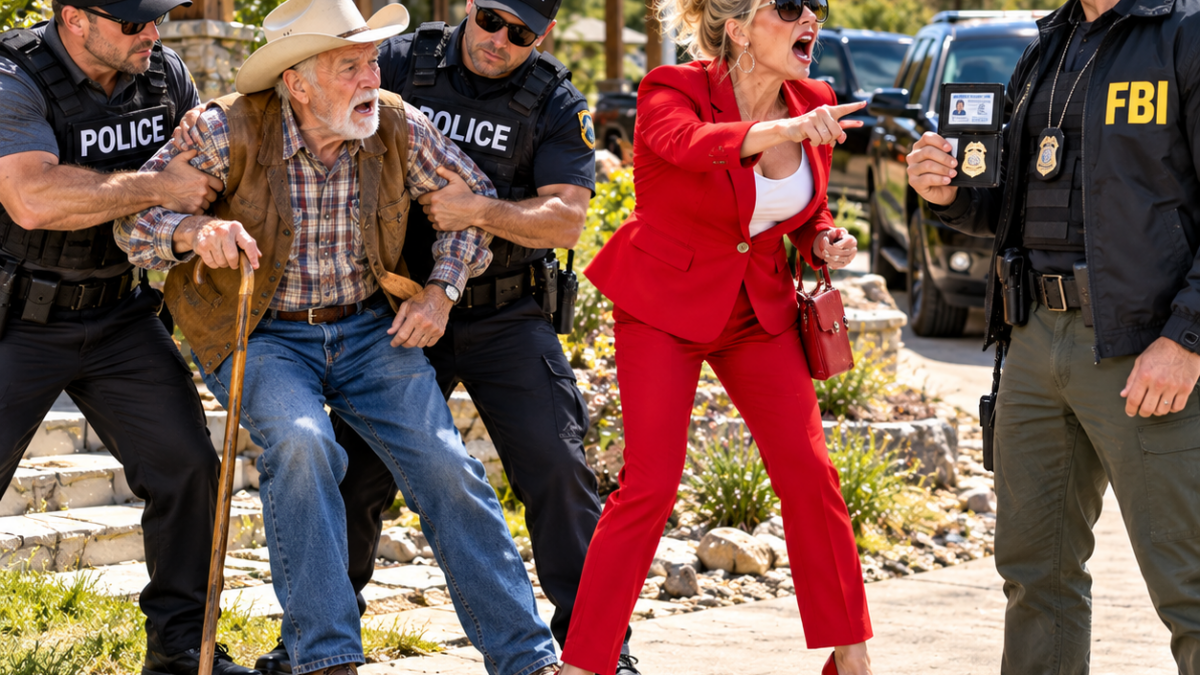
PART 2
I didn’t sleep much that night.
Grandpa tried.
He went to bed around midnight after insisting three separate times that I didn’t need to stay up on his account.
That was Harold Meyers.
A man could threaten to drag him from his own home, and Grandpa would still worry about whether I was getting enough sleep.
I stayed at his kitchen table with my laptop open until almost three in the morning.
The paper the men had left sat beside me beneath the yellow light over the stove.
The longer I looked at it, the worse it became.
At first glance, it had been designed to create exactly the impression criminals wanted: official enough to frighten, vague enough to avoid scrutiny.
At the top was a generic shield logo.
Under it:
**COMMUNITY COMPLIANCE DIVISION**
There was no legal agency by that name.
The alleged violation was “failure to maintain approved landscaping standards.”
I almost laughed when I read it.
Grandpa’s landscaping consisted of pale gravel, three mature desert plants, two barrel cacti, and a line of drought-resistant shrubs maintained by the same company used by half the block.
There was no lawn.
No hedge.
No dying tree.
Nothing remotely unusual.
The document referenced “Section 14.3,” but it didn’t identify which governing document supposedly contained that section.
It ordered Grandpa to report to a “compliance processing center” within forty-eight hours.
No address was listed.
No phone number.
No email.
No hearing procedure.
No signature from an identifiable official.
It was paperwork designed for one purpose.
Fear.
And fear works best when the person holding the paper believes everyone else understands something he does not.
That was the psychology behind so many fraud cases I had investigated.
A criminal doesn’t always need to convince you he is powerful.
Sometimes he only needs to make you doubt whether you understand your own situation.
I photographed every page.
Then I opened a blank document and started building a timeline.
10:02 a.m. — first visit.
Approximately fifteen minutes.
Three men.
Dark uniforms.
Unmarked badges.
Black SUV.
4:06 p.m. — second visit.
More aggressive.
Questions about family.
Questions about whether Grandpa lived alone.
Demand that he accompany them.
Grandpa mentions granddaughter visiting.
Men leave.
I stopped typing.
The question about whether he lived alone bothered me more than anything else.
HOA officers don’t need to know whether your children live nearby to issue a landscaping notice.
Police serving legitimate process don’t need to know whether your granddaughter plans to visit.
But criminals deciding how vulnerable you are?
They care very much.
I got up and walked through the house.
Grandpa’s home wasn’t large.
Two bedrooms.
A den.
Kitchen opening into a living room.
Sliding doors facing a small covered patio.
He had family photos everywhere.
My grandmother on their wedding day.
My mother as a child.
Me at twelve holding a science-fair trophy Grandpa had helped me build.
A photograph of the two of us outside FBI headquarters after I graduated from the academy.
I picked up that frame.
Grandpa and I were both smiling.
He looked impossibly proud.
Anyone entering the house would know he wasn’t entirely alone in the world.
But those men hadn’t entered yet.
They only knew what public records and observation told them.
Elderly.
Widowed.
Property owner.
Retired.
Potentially isolated.
That word kept returning.
Target.
By three in the morning, I had found four public complaints that sounded similar.
Nothing that formed a complete case.
But enough to tell me my instinct wasn’t paranoia.
I finally closed the laptop.
Before turning off the kitchen light, I looked at the fake compliance notice one more time.
Whoever had created it had done this before.
I was certain of that.
What I didn’t know was how many people had paid before anyone bothered to connect them.
The next morning, I woke to coffee.
Grandpa was at the kitchen counter wearing khaki shorts and an old Boeing polo shirt, as if our biggest problem was deciding what to make for breakfast.
“You sleep?” he asked.
“A little.”
“That means no.”
“You?”
He poured coffee into my mug.
“I’m seventy-eight. Nobody sleeps at seventy-eight. You just lie down and renegotiate with your bladder every few hours.”
I laughed despite myself.
He smiled.
There he was.
My grandfather.
The voice on the phone the day before had sounded smaller.
That scared me more than the men.
Grandpa had always been one of the fixed points in my life.
My parents had divorced when I was young. Grandma and Grandpa became the stable place.
Summer vacations.
Science projects.
College applications.
When I told him I wanted to join the FBI, he asked me one question.
“Do you want the badge, or do you want the work?”
“The work.”
“Good. The badge gets heavy if you only wanted the shine.”
I had remembered that sentence every year since.
Now three strangers had come to his door wearing cheap versions of that shine.
“Grandpa,” I said, sitting across from him. “I need you to walk me through yesterday again. From the beginning. Don’t summarize. Every detail.”
He set down his coffee.
The first visit had been almost casual.
Three men.
The one who spoke most had a faded circular tattoo on his left forearm.
Boots worn at the toes.
New belt.
He avoided direct eye contact.
A second man barely spoke.
The third remained close to the SUV.
During the second visit, the tone changed.
The tattooed man stepped closer to the threshold.
Another man positioned himself slightly to one side, blocking Grandpa’s view of the street.
Then the questions started.
Did he live alone?
Did he have children nearby?
Who checked on him?
Did he travel often?
Did he have anyone authorized to handle “property matters”?
I stopped him.
“Property matters?”
“That’s what he called it.”
“Exactly?”
“As close as I remember.”
“What did you say?”
“I told them my granddaughter was visiting.”
“Why?”
“Because by then I was scared.”
He looked down at his mug.
That simple admission hurt.
Grandpa had never enjoyed admitting fear.
Not because he believed men shouldn’t be afraid.
Because he had always believed fear should be useful.
You acknowledge it.
You analyze it.
You act anyway.
Seeing him ashamed of feeling frightened made something cold settle in my chest.
“You did exactly the right thing.”
“I almost opened the door.”
“But you didn’t.”
“They looked official.”
“That’s the point.”
He shook his head.
“I should’ve known.”
“No.”
He looked at me.
“You should not have to perform a forensic examination of every badge that appears at your front door.”
“But—”
“Grandpa.”
I leaned forward.
“Their crime depends on people blaming themselves afterward. That’s how victims stay quiet. You are not giving them that.”
He stared at me for a few seconds.
Then nodded.
“All right.”
“Good.”
I picked up my notebook.
“Now tell me everything about the SUV.”
By nine, I had enough to start knocking on doors.
Grandpa gave me one name first.
Ruth Navarro.
Seventy-four.
Widowed.
Three houses away.
“She said something strange happened a few weeks ago,” he told me.
“What kind of strange?”
“She got quiet when I asked.”
That was enough.
Ruth opened her door with the chain still fastened.
She was small, silver-haired, and cautious.
“Mrs. Navarro?”
“Yes?”
“I’m Megan. Harold Meyers’s granddaughter.”
Recognition softened her face slightly.
“Is Harold okay?”
“He is. Can I ask you about some men who may have visited you recently?”
Every bit of softness vanished.
She looked past me toward the street.
Then back.
“What men?”
“Dark uniforms. Black SUV. Claimed to be HOA enforcement.”
Her hand tightened around the edge of the door.
I didn’t need another answer.
“I’m not here to embarrass you,” I said quietly. “I’m trying to understand what happened to my grandfather.”
The chain came off.
“Come inside.”
Her living room was immaculate.
Family photographs covered a bookshelf.
Graduations.
Christmases.
A wedding in Chicago.
Two grandchildren in soccer uniforms.
All far away.
That mattered too.
Ruth brought iced tea neither of us drank.
Then she told me.
Three weeks earlier, the men had appeared at her door.
Same general description.
Same invented enforcement language.
They claimed she owed $2,000 in “accelerated compliance fees.”
“For what?”
Ruth’s eyes dropped.
“They said my side gate wasn’t approved.”
“Was it?”
“It’s been there nine years.”
“What happened when you asked for paperwork?”
“They showed me something.”
“Do you still have it?”
She rose slowly and returned with a folder.
Inside was a notice remarkably similar to Grandpa’s.
Different violation.
Same generic shield.
Same meaningless authority.
Same vague reference to immediate legal consequences.
“They said if I didn’t pay that day, they could put a lien on my house.”
“How did they want payment?”
“Cash or wire.”
“No check?”
“They said checks delayed processing.”
I looked up.
“And you paid cash.”
She nodded.
Two thousand dollars.
“What receipt did they give you?”
She removed a small piece of paper.
Handwritten amount.
Illegible signature.
Nothing else.
No business name.
No license number.
No tax ID.
No contact information.
Nothing.
“Did you call police?”
“The next day.”
“What happened?”
“The man on the non-emergency line said it sounded like an HOA issue.”
“Did you explain they wore uniforms?”
“I tried.”
Ruth’s voice dropped.
“He told me to contact the association first.”
“Did you?”
“The number on the website went to voicemail.”
“No one called back?”
She shook her head.
“Why didn’t you tell anyone afterward?”
Her eyes filled.
“I felt stupid.”
That word made me angry.
Not at her.
At them.
Ruth Navarro had spent her life raising children, paying a mortgage, burying a husband, managing a home, building a retirement.
Three criminals showed up wearing costume authority, exploited every assumption decent people make about institutions, and somehow she had been left feeling stupid.
“You were manipulated.”
She wiped under one eye.
“I gave strangers two thousand dollars.”
“They designed the situation so you would.”
“I should have called my son.”
“Maybe.”
She looked surprised by the answer.
I continued.
“But they deliberately made you believe waiting would make things worse. That’s how pressure fraud works. They remove time because time gives people a chance to think.”
Ruth swallowed.
“What are you going to do?”
“I’m going to find out how many others there are.”
Her face tightened.
“Be careful.”
“I will.”
“No.”
She reached across the table and touched my wrist.
“Really be careful.”
I listened.
“Those men weren’t just collecting money.”
“What do you mean?”
“The second one asked where my bedroom was.”
My entire body went still.
“Why?”
“He said they needed to know whether any unauthorized improvements had been made inside.”
“Did you let them in?”
“No.”
“Did they return?”
“Once.”
“When?”
“Two nights later.”
“At the door?”
She shook her head.
“I saw their vehicle across the street.”
The case changed again.
By eleven, I had spoken to the legitimate management organization responsible for the broader community.
The woman on the phone was named Linda.
I kept my introduction simple.
“My grandfather lives in Sun City. I’m trying to verify whether your organization uses uniformed HOA enforcement personnel who transport residents to off-site compliance centers.”
Her response was immediate.
“No.”
“Private contractors?”
“No.”
“Security company?”
“No.”
“Anyone authorized to detain a resident?”
“Absolutely not.”
I wrote as she spoke.
“How are violations normally handled?”
“Written notices sent through our office. Homeowners have a response period and hearing rights depending on the issue.”
“Do you demand cash payment at the door?”
“No.”
“Wire transfers?”
“No.”
“Have residents reported people claiming otherwise?”
Silence.
Then Linda said, “We’ve had calls.”
“How many?”
“I don’t have the number in front of me.”
“More than one?”
“Yes.”
“Did you investigate?”
“We thought there might be confusion with a neighborhood sub-association.”
“There isn’t.”
Another silence.
“No,” she said quietly. “There isn’t.”
I thanked her.
When I returned to Grandpa’s house, he was sitting on the porch.
I joined him.
“You found something.”
“How do you know?”
“You get your mother’s face when you’re angry.”
“What face?”
“The one where you look completely calm while mentally setting a building on fire.”
“I don’t do that.”
“You absolutely do.”
I almost answered.
Then a black SUV turned onto the street.
Grandpa stopped smiling.
The vehicle slowed.
Pulled into his driveway.
Two men got out.
The driver had a faded circular tattoo on his left forearm.
I stood.
Grandpa started to rise.
“Stay inside.”
“Megan—”
“Please.”
He looked at my face.
Then stepped through the door.
The men approached.
Tattoo stopped at the walkway.
He looked at me.
Then toward the house.
“Can I help you?” I asked.
“We’re here to speak with Mr. Meyers.”
“About?”
“Official HOA business.”
“The HOA doesn’t have enforcement officers.”
His expression barely changed.
“I don’t know who told you that.”
“The people who actually run it.”
His eyes narrowed.
The younger man beside him shifted.
Tattoo smiled.
It was practiced.
No warmth.
“Ma’am, Mr. Meyers has an unresolved compliance matter. He’s been instructed to accompany us.”
“Under what legal authority?”
“That’s between Mr. Meyers and the association.”
“Show me identification.”
He touched the badge on his chest.
“I am showing it.”
“Badge number.”
No answer.
“Agency.”
“Community Compliance.”
“That isn’t a law-enforcement agency.”
His smile disappeared.
“You’re interfering with an official process.”
I took out my phone.
Turned the camera toward them.
“I’m recording.”
The younger man looked immediately at Tattoo.
Interesting.
I continued.
“You are standing on private property. If you have legitimate documentation establishing authority to detain Harold Meyers, show it. Otherwise, leave.”
Tattoo’s jaw tightened.
“You’re making a mistake.”
“Then it should be very easy for you to prove.”
He stared at me.
For a second, I thought he might escalate.
Then he backed away.
“We’ll return with legal counsel.”
“Good. Bring real identification too.”
They turned.
I kept recording.
License plate.
Rear bumper.
Driver.
Passenger.
The SUV reversed into the street.
Grandpa opened the door before they had disappeared.
“Who are they?”
“I don’t know yet.”
I looked down at the plate number.
“But they just gave me somewhere to start.”
The vehicle was registered to Community Safety Solutions LLC.
Scottsdale.
Eighteen months old.
No meaningful business footprint.
No public-facing office.
No employee list.
Mailing address tied to a commercial mailbox service.
I had spent seven years investigating companies like that.
Shell structures don’t prove criminal conduct.
But legitimate firms usually want customers to be able to find them.
Fraud operations want enough existence to receive money and not enough existence to receive questions.
Community Safety Solutions was built to sound reassuring.
That didn’t mean it was.
By noon, I was no longer willing to treat the matter only as a family emergency.
I called the FBI’s Phoenix office.
An agent named Carlos Rodriguez returned my call.
I knew his reputation.
Fifteen years in financial crime.
Several elder-fraud cases.
I gave him the facts.
He didn’t interrupt.
At the end, he asked one question.
“How many confirmed victims?”
“Two.”
“That’s thin.”
“I know.”
“How many suspected?”
“More.”
“Any interstate transfer?”
“Not yet.”
“Impersonation of federal officers?”
“Not federal. They use vague enforcement language.”
“Violence?”
“Threats. No assault that I’ve confirmed.”
He paused.
Then asked, “Why does your gut say this is organized?”
I looked through Grandpa’s window toward Ruth’s house.
“Because they select people.”
“What do you mean?”
“They knew my grandfather was widowed. Asked whether he lived alone. Asked about family. Ruth had the same pattern. And their LLC exists solely to create institutional cover.”
Rodriguez exhaled.
“Send me what you have.”
“I want local law enforcement involved too.”
“Good.”
“And Carlos?”
“Yeah?”
“If I’m wrong, tell me.”
“You want me to talk you out of it?”
“I want somebody who isn’t related to the victim to look at the facts.”
He was silent for half a beat.
“That’s why you’re good at this.”
“No. That’s why I’m nervous.”
“Send the file.”
I went door to door.
By lunchtime the next day, I had eleven interviews.
Four victims.
Mr. Patterson was eighty-two.
Former accountant.
Widower.
The fake officers accused him of unauthorized roof work and threatened to place a lien on his house.
He paid $3,500.
“What did you think would happen if you refused?” I asked.
“They said I could lose the property.”
“Immediately?”
“That’s what they implied.”
“Did you believe them?”
He looked at me with tired eyes.
“My wife died there.”
I stopped writing.
Mr. Patterson continued.
“That house is the last place where her voice still sounds real to me. So when three men stand on my porch and say they can take it, yes, Agent Meyers. I believed them.”
I closed my notebook.
“I’m sorry.”
“For what?”
“For the fact that anyone used that against you.”
Mrs. Dominguez was seventy-nine.
Her story was worse.
The fake officers had driven her to an office she couldn’t later identify.
They gave her documents.
Told her they were needed to prevent HOA foreclosure.
She signed.
Weeks later, her daughter discovered one document granted broad financial authority to an unknown third party.
A power of attorney.
Fraudulent in purpose, deceptively obtained.
Mrs. Dominguez sat with both hands clenched in her lap.
“I asked to call my daughter.”
“What did they say?”
“That doing so would delay processing.”
“Did they physically prevent you?”
“No.”
“Did you feel free to leave?”
Her eyes met mine.
“No.”
The Williams couple refused to pay.
Both were in their early eighties.
Their punishment was persistence.
Three visits.
Each more aggressive.
The third included a threat that “next steps would no longer be voluntary.”
Afterward, Mr. Williams installed cameras.
He gave me a USB drive.
The footage was clear enough to show Tattoo at the front door.
Same walk.
Same uniform.
Same black SUV.
Now I had multiple victims.
Repeated representations.
Repeated payment demands.
Repeated target characteristics.
And video.
Rodriguez called at 4:30.
His voice was different.
“You were right.”
My grip tightened on the phone.
“What did you find?”
“Community Safety Solutions is registered to Victor Harmon.”
“Who is he?”
“Fifty-two. Former real-estate developer. Civil fraud history. Settlements. No current convictions.”
“What about financial activity?”
“Interesting.”
“How interesting?”
“More than four hundred thousand dollars in incoming wire transfers over eighteen months.”
“From?”
“Predominantly individuals over seventy.”
I closed my eyes.
“How much exactly?”
“Enough that I’m opening a preliminary file.”
“Good.”
“Megan.”
“Yeah?”
“This isn’t three guys freelancing.”
“I know.”
“This looks like an enterprise.”
I looked toward Grandpa.
He was watering a cactus because he needed something normal to do.
“They picked the wrong old man.”
Rodriguez was quiet.
Then said, “Don’t make it personal.”
“Too late.”
“That’s not what I mean.”
I knew.
An investigation can begin personally.
It cannot be conducted recklessly.
“I’ll stay inside the lines.”
“You’d better.”
The next morning I met Detective Pamela Adams from the Maricopa County Sheriff’s Office.
She chose a coffee shop near the station.
Early forties.
No wasted words.
I placed copies of the complaints, interviews, LLC documents, photographs and video stills on the table.
Pamela read for almost twenty minutes.
Finally she said, “We’ve had these calls.”
“How many?”
“Scattered. Not enough for anyone to see a pattern.”
“They were coded as civil disputes.”
“Yes.”
“You agree this isn’t civil.”
“Now?”
She tapped the Williams footage.
“No.”
She looked at me.
“What do you need?”
“Local eyes. Immediate-response capacity. If they return to the victims, I don’t want everyone waiting for a federal financial case to mature.”
“You expecting escalation?”
“They came to Grandpa twice yesterday and again when I was there.”
“Did they know who you were?”
“Not yet.”
Pamela raised an eyebrow.
“You didn’t identify yourself?”
“I wanted to see what they claimed when they thought I was just family.”
“What did they claim?”
“Authority they don’t have.”
She nodded.
“Smart.”
“I’m not sure they’ll think so.”
That evening, I found out.
I was sitting on Grandpa’s porch at sunset.
The desert light had gone gold.
He was inside watching an old war movie.
Another SUV appeared.
Different vehicle.
Same tattooed man.
This time he brought two others.
One was large.
Broad shoulders.
Close-cropped hair.
The way he carried himself suggested he either knew how to fight or wanted people to believe he did.
They spread slightly as they came up the walkway.
Not random.
Positioning.
Tattoo stopped at the bottom step.
“We tried being polite.”
I stayed seated.
“Did you?”
“Mr. Meyers has obligations.”
“What obligations?”
“That’s between us and him.”
“You’ve said that before.”
“He’s going to resolve them tonight.”
I stood.
Slowly.
“What does that mean?”
“It means step aside.”
The large man moved half a step.
That was enough.
I reached into my pocket.
Pulled out my credential case.
Opened it.
Gold badge.
Photo identification.
Federal Bureau of Investigation.
Their entire posture changed.
Not dramatically.
People imagine criminals collapsing like actors when someone shows a badge.
Reality is smaller.
A blink.
A shoulder lowering.
A foot shifting backward.
A sudden calculation behind the eyes.
Tattoo stared at the credentials.
Then at me.
“My name is Megan Meyers. Special Agent, Federal Bureau of Investigation.”
Nobody spoke.
“You are not police officers.”
The large man’s jaw moved.
“You have no authority to detain Harold Meyers.”
Tattoo’s face had gone flat.
“You’re misunderstanding the situation.”
“No.”
I stepped down one stair.
“I understand it very well.”
The younger man behind him looked toward the SUV.
I continued.
“You have repeatedly represented yourselves as enforcement personnel. You have attempted to compel elderly residents to pay money under threat. You have demanded my grandfather accompany you without legal authority.”
Tattoo recovered enough to speak.
“We work for a private compliance contractor.”
“Show me the contract.”
He said nothing.
“Show me the authorization.”
Nothing.
“Show me the legal authority to take my grandfather anywhere.”
Nothing.
I closed the credential case.
“You don’t have any.”
“This is civil.”
I almost smiled.
“That word has protected you for a while, hasn’t it?”
His eyes changed.
Very slightly.
But I saw it.
I had hit something.
“You show up in costumes. You threaten seniors with liens. You demand cash and wire transfers. Then when somebody complains, you hide behind the phrase ‘HOA dispute.’”
The large man shifted backward.
Tattoo said, “We’re leaving.”
“Yes.”
He pointed at me.
“This isn’t over.”
I didn’t raise my voice.
“No. It isn’t.”
They walked away.
The SUV disappeared.
Grandpa opened the door.
“How bad?”
“Bad.”
“How bad?”
I looked at him.
“They know I’m FBI now.”
“That sounds good.”
“It means they may run.”
Grandpa nodded.
“And?”
“Or escalate.”
He absorbed that.
“Which do you think?”
“I don’t know.”
He looked toward the empty street.
“I do.”
“What?”
“They’re scared.”
I studied him.
“How can you tell?”
“Because I spent forty years in rooms full of engineers pretending deadlines didn’t terrify them.”
That made me laugh.
Then Grandpa’s expression changed.
“Megan.”
“Yeah?”
“Don’t underestimate scared men.”
I didn’t.
I called Pamela.
“They know.”
“How?”
“I identified myself.”
“Response?”
“Retreat.”
“Threats?”
“‘This isn’t over.’”
Pamela swore softly.
“I’ll increase patrol presence.”
“I’m installing cameras.”
“Good.”
“Carlos needs to move faster.”
“Federal cases don’t move because we ask nicely.”
“I know.”
“Then protect Harold.”
That became my priority.
The next forty-eight hours were quiet.
Too quiet.
No SUV.
No knocking.
No phone calls.
I added motion cameras to the front, rear and driveway.
Window sensors.
Door sensors.
Cloud backup.
Grandpa followed me around pretending the whole thing was an interesting engineering project.
“What’s the sensor range?”
“Twenty-five feet.”
“Infrared?”
“Yes.”
“False alarms from animals?”
“Probably.”
“Bad design.”
“You’re welcome to file a complaint.”
“I might.”
Then he stopped smiling.
“I hate this.”
I lowered the screwdriver.
“What?”
“Having cameras.”
“You’ll forget they’re there.”
“That isn’t what I mean.”
He sat at the kitchen table.
“I hate knowing why they’re there.”
I understood.
A security system can make a house safer.
It can also remind you, every time a light blinks, that somebody forced you to need it.
“I’m sorry.”
“You didn’t do it.”
“I brought this into the open.”
“No.”
He looked at me sharply.
“They brought it to the door.”
I nodded.
But guilt doesn’t always respond to logic.
On the third night, I stayed at a motel twenty minutes away.
That decision later haunted me.
I wanted the men to believe the federal agent had left.
Pamela had an unmarked unit circling the area.
Grandpa had 911 programmed into his phone.
The security system was active.
At 2:14 a.m., my phone rang.
Grandpa.
I answered immediately.
“What happened?”
His voice was a whisper.
“Someone’s at the back door.”
I was already out of bed.
“Where are you?”
“Bedroom.”
“Lock the door.”
“I did.”
“Call 911 on your other phone.”
“I only have—”
“Hang up and call 911. I’m coming.”
“Megan—”
“Call.”
I grabbed my weapon, credentials, keys.
Called Pamela while running for the car.
“Attempted entry at Harold’s. Back door. 2:14.”
“I’m dispatching.”
“I’m twenty minutes out.”
“Do not enter alone if they’re still there.”
I didn’t answer.
“Megan.”
“I heard you.”
“That is not the same thing.”
“Pamela—”
“Your grandfather needs you alive.”
That landed.
“I’ll wait for deputies.”
I drove through empty streets with my heart pounding hard enough to hurt.
Every red light felt personal.
Every second stretched.
By the time I turned onto Grandpa’s street, a sheriff’s cruiser was already there.
Lights flashing.
No siren.
I parked.
Ran.
The back door frame had pry marks.
The lock was damaged.
The door held.
Grandpa stood inside wrapped in a robe.
His hands were shaking.
I went straight to him.
“You okay?”
“I’m fine.”
“Are you hurt?”
“No.”
“Did you see them?”
“No.”
I hugged him.
He resisted for half a second.
Then held on.
That told me how scared he had been.
Pamela arrived fifteen minutes later.
We reviewed the camera footage.
Two figures.
Dark clothes.
Masks.
One carrying a pry tool.
The second figure walked with a slight irregularity on the left.
A hitch.
I played it again.
Pamela leaned closer.
“You recognize that?”
“Tattoo.”
“You sure?”
“No.”
“Good answer.”
I hated that it was the correct answer.
“But I’ve watched him walk three times.”
“You can tell me similarity. Not identity.”
“I know.”
We catalogued the footage.
The incident became attempted burglary locally.
But none of us believed televisions were the objective.
“They came after I identified myself,” I said.
Pamela nodded.
“They’re cleaning up.”
“Or trying.”
Grandpa was sitting at the kitchen table.
He heard us.
“So what now?”
I turned.
“You leave.”
His face changed immediately.
“No.”
“Grandpa.”
“This is my home.”
“I know.”
“I’m not being chased out.”
“This isn’t permanent.”
“You don’t know that.”
“No. I know I would rather have you angry at me in Tucson than brave in a hospital.”
Silence.
Grandpa looked away.
I hated every second of it.
He had already lost Grandma.
Moved states.
Started over.
Now strangers were making him leave the home he had chosen.
“It’ll feel like they won,” he said.
“No.”
“They make me run, Megan.”
“You’re not running.”
“What would you call it?”
“Surviving long enough to watch them lose.”
He looked back at me.
That was the sentence that convinced him.
Grandpa’s old friend Frank Dawson lived in Tucson.
Retired Air Force colonel.
Guest house.
Serious security system.
Serious attitude.
When I explained the situation, Frank said, “Bring him.”
No questions.
I drove Grandpa myself.
For two hours, neither of us talked much.
He watched the desert pass outside.
At Frank’s house, I carried his bag inside.
Grandpa stopped me before I left.
“Promise me something.”
“What?”
“Finish it.”
My throat tightened.
“I will.”
“No.”
He put his hand on my shoulder.
“Don’t promise because you love me. Promise because you can.”
I thought about everything we had.
Victims.
Money transfers.
Shell company.
Video.
Pattern.
Pamela.
Rodriguez.
“Then yes.”
I held his gaze.
“I can.”
He nodded.
“Finish it.”
I returned to Sun City alone.
That night, Grandpa’s house looked different.
Dark.
Empty.
The family photographs still on the walls.
His mug beside the sink.
His newspaper folded on the counter.
But no Grandpa.
I stood in his living room and felt anger come over me so intensely that I had to sit down.
Not useful anger.
The other kind.
The kind that wants immediate consequences.
I pictured Tattoo on the porch.
Victor Harmon behind some desk.
Unknown men selecting names from lists.
My grandfather sleeping in someone else’s guest room because predators had decided old people were easy.
I wanted arrests that night.
But Rodriguez’s voice came through the phone.
“If we grab Tattoo now, we get a field crew.”
“He tried to enter Grandpa’s house.”
“I know.”
“They threatened to take him.”
“I know.”
“Carlos, I have enough to—”
“To arrest some of them.”
“Yes.”
“And the man moving the money?”
I said nothing.
“The target lists?”
Nothing.
“The insiders?”
Nothing.
“The property transfers we think may exist?”
I closed my eyes.
“No.”
“If this is what it looks like, you arrest one crew and the network burns every record by sunrise.”
“So we wait?”
“We build.”
“My grandfather is displaced.”
“And alive.”
That hurt because it was true.
I breathed slowly.
“What do you need?”
“More connection to Harmon.”
“I can give you Tattoo.”
“Not enough.”
“What if they return?”
“Pamela watches the house.”
“That isn’t what I asked.”
Carlos was quiet.
“If they return and commit a prosecutable offense, we take them.”
I looked around the dark living room.
“Then maybe we give them the opportunity.”
He understood immediately.
“Megan.”
“They think Grandpa is back.”
“No.”
“They don’t know where he went.”
“This is your family home.”
“It’s a crime scene waiting for criminals.”
“You cannot freelance a hostage operation.”
“I’m not.”
“You’re thinking about it.”
“I’m thinking about controlled surveillance.”
“With yourself inside.”
I smiled without humor.
“You know me too well.”
“Yes. That’s why I’m saying no.”
We compromised.
Pamela arranged covert local surveillance.
I stayed in the house.
Federal coordination was documented.
Backup remained close.
No improvisation.
No hero fantasy.
No lone-agent nonsense.
That mattered.
Because the next time they came, there were four.
3:22 a.m.
The camera alert woke me before the sound.
Four heat signatures crossing the backyard.
Dark clothing.
Covered faces.
One crowbar.
One carrying zip ties.
My breathing slowed.
Training took over.
I called Pamela.
No conversation.
Open line.
She knew.
I moved behind the kitchen island.
Weapon ready.
Not pointed toward the door until the threat became clear.
The first strike against the back door shook the frame.
Second.
Wood cracked.
Third.
The door splintered inward.
The first man came through.
I saw his hands.
Crowbar.
“FBI! DO NOT MOVE!”
He froze.
The second man collided with him.
For a second both were tangled.
“DROP IT! HANDS!”
The crowbar hit the tile.
The second man’s hands came up.
“ON THE GROUND!”
They dropped.
A third figure appeared behind them.
Saw me.
Turned.
Ran.
Outside, shouting exploded.
“SHERIFF’S OFFICE! GET DOWN!”
Pamela.
The fourth man never crossed the threshold.
The entire arrest lasted minutes.
It felt like an hour.
When deputies pulled the first suspect upright, his mask had slipped.
Tattoo.
The man Grandpa knew as “Miller.”
He looked at me.
No smile.
No fake authority.
No badge.
No threat.
Just handcuffs.
For the first time since this began, he looked ordinary.
Smaller than I remembered.
That is another thing fear does.
It enlarges people.
Truth restores scale.
Pamela walked in.
“You good?”
“Yes.”
“You hit?”
“No.”
She looked at the broken door.
“Harold is going to hate this.”
“He already hated the cameras.”
“Then he’s going to have material.”
The second suspect was younger.
Shaking uncontrollably.
The two outside were caught within a block.
Their vehicle sat nearby.
Inside were gloves.
Additional zip ties.
Documents.
Prepaid phones.
And in the glove compartment, Pamela found a folded sheet.
Fifteen names.
Fifteen addresses.
All seniors.
All over seventy-five.
Grandpa’s name was near the top.
Crossed out in red.
I stared at it.
Pamela touched my arm.
“Megan.”
I couldn’t look away.
Crossed out.
“What does that mean?”
“We don’t know.”
“It means completed.”
“Maybe.”
“Or removal.”
“We don’t know.”
I photographed it.
Then stepped away.
The remaining names were not crossed out.
Fourteen more people.
Fourteen future doors.
Fourteen people who might have paid.
Signed.
Gone with strangers.
Lost homes.
We had stopped the crew.
But the list proved the crew was never the point.
The machine was.
Tattoo’s real name was Derek Finch.
Thirty-eight.
Petty fraud history.
Dismissed assault allegation.
No meaningful assets.
No reason to believe he designed any of this.
His attorney understood the situation faster than he did.
Attempted unlawful entry.
Conspiracy.
Potential kidnapping-related charges depending on the evidence.
Fraud.
Impersonation.
A mountain of exposure.
Finch cooperated.
Pamela led the interview.
I watched through glass.
At first, Finch tried the classic strategy.
Minimize.
“We were only going there to talk.”
At 3:22 a.m.?
With masks?
Crowbar?
Zip ties?
His story collapsed.
Then he tried distance.
“I didn’t make the lists.”
Who did?
“I don’t know.”
Who paid you?
“A company.”
Which company?
“Community Safety.”
Who runs it?
“I don’t know.”
Pamela placed Victor Harmon’s photograph in front of him.
Finch looked away.
That was the beginning.
Within two hours, he was talking.
Harmon ran it.
Not directly.
Never directly.
He provided target data.
Scripts.
Uniform concepts.
Collection instructions.
The field teams did the intimidation.
Payments were routed through front companies.
Anything that might later look criminal was separated from Harmon by layers.
“Why seniors?” Pamela asked.
Finch stared at the table.
“Because they pay.”
I felt my hands curl.
Pamela continued.
“How were they chosen?”
“No family close.”
“How did you know?”
“Lists.”
“What lists?”
“Property.”
“What else?”
“Obituaries.”
My stomach turned.
They cross-referenced homeowners with death notices.
Widowed residents.
Property values.
Ages.
Family proximity.
They weren’t stumbling upon vulnerable people.
They were manufacturing vulnerability profiles.
“What age?” Pamela asked.
“Usually seventy-five plus.”
“Property value?”
“Over three hundred.”
“Living situation?”
“Alone or old spouse.”
“Family?”
“Prefer none local.”
“Why?”
Finch finally looked up.
“Less trouble.”
Behind the glass, Rodriguez whispered, “There’s your enterprise.”
The financial records expanded quickly after that.
$470,000 through Community Safety Solutions.
Then other accounts.
Then property transfers.
Three homes linked through suspicious powers of attorney and shell companies.
Combined value exceeding $1.2 million.
Mrs. Dominguez had almost become number four.
I sat at a Phoenix field-office desk with two analysts as the map expanded.
Arizona.
Nevada.
New Mexico.
California.
Different local company names.
Same payment structure.
Same target profile.
Same methods.
Fake HOA enforcement.
Urgent fines.
Threats of liens.
Pressure to sign.
Escalation when resisted.
Five front companies connected to a parent entity called Senior Living Solutions LLC.
One analyst looked at me.
“You’re going to hate the name.”
I read it.
Senior Living Solutions.
I almost laughed.
“Of course.”
The fraud industry loves reassuring names.
Community.
Security.
Solutions.
Protection.
Words designed to borrow trust.
By the third day, confirmed victims reached eighty-seven.
Then one hundred thirty.
Then one hundred ninety.
Finally, 214.
Estimated losses exceeded twelve million dollars.
I stared at the number.
Twelve million.
But money was the cleanest measurement.
It didn’t show fear.
It didn’t show seniors sleeping with chairs pushed against doors.
It didn’t show adult children discovering that their mother had signed away authority over her accounts.
It didn’t show people believing an invented violation could cost them the house where their spouse had died.
Numbers flatten suffering.
That’s useful in court.
Dangerous everywhere else.
Victor Harmon appeared at the center of nearly every path.
Former real-estate developer.
Fifty-two.
Previous civil fraud suits.
One criminal case that had collapsed.
He learned.
Not morality.
Technique.
He created separation.
Never visited victims.
Rarely touched direct collections.
Used intermediaries.
Used shell companies.
Used employees with criminal histories but limited knowledge.
Kept each person informed only enough to perform his role.
Classic insulation.
But Finch gave us his name.
The money gave us structure.
And one more connection gave us betrayal.
Richard Oaks.
Sixty-one.
HOA board member.
Three terms.
Access to homeowner records.
He also held a consulting contract with Desert Community Advisers.
Fifteen thousand dollars a year.
Modest.
Quarterly.
Easy to overlook.
Desert Community Advisers linked back to Harmon.
Oaks had been selling resident information.
Ages.
Contact data.
Property details.
Household structure.
The information that turned neighbors into targets.
I stared at his photograph.
A smiling man in a polo shirt standing beside a community-event banner.
He looked exactly like what he was supposed to be.
Helpful.
Responsible.
Familiar.
That made him more dangerous than Finch.
Finch wore a fake badge.
Oaks had a real position of trust.
I called Grandpa.
He was at Frank’s house.
“How are you?”
“Frank is trying to poison me with decaf.”
“It’s after eight.”
“I survived Boeing. I can survive caffeine.”
I smiled.
“We found the inside source.”
“Inside what?”
“The HOA.”
Silence.
“A board member?”
“Yes.”
“Who?”
“Richard Oaks.”
Grandpa knew the name.
“Richard?”
“You know him?”
“He handed me the welcome packet when I moved in.”
I closed my eyes.
Of course he did.
Grandpa’s voice changed.
“He knew Grandma had died.”
“I’m sorry.”
“He asked about you.”
“When?”
“Last year. Community picnic.”
“What did he ask?”
“Where you lived.”
My jaw tightened.
“Did you tell him Denver?”
“I think so.”
That answered something.
Maybe Grandpa wasn’t targeted randomly.
Maybe they knew family was out of state.
Maybe the very man entrusted with community information had marked him safe to exploit.
“Grandpa.”
“Yeah?”
“We’re going to charge him.”
“Good.”
No hesitation.
Then his voice softened.
“Megan.”
“Yeah?”
“Don’t let being angry make you careless.”
I leaned back.
“You and Carlos are running some conspiracy.”
“Carlos sounds intelligent.”
“You haven’t met him.”
“I don’t need to.”
Grandpa paused.
“Your grandmother would be proud.”
I looked down.
“I haven’t done anything yet.”
“You came.”
That sentence broke something open.
I stared at the desk.
Grandpa continued.
“When I called, you came.”
“I’m your granddaughter.”
“Exactly.”
My eyes burned.
“Get some sleep, Grandpa.”
“You too.”
“Promise.”
“You first.”
We hung up.
The federal case grew faster than any of us expected.
A task force formed.
Agents from multiple field offices.
Financial analysts.
Local partners.
Prosecutors.
The operation received a code name:
**Operation Golden Shield.**
I hated code names.
They made messy human suffering sound cinematic.
But the work required organization.
We mapped corporate entities.
Victim clusters.
Wire routes.
Real-estate transfers.
Communication patterns.
Finch’s encrypted messages.
Oaks’s payments.
Harmon’s financial movements.
Then another thread appeared.
Political contributions.
Harmon had donated tens of thousands of dollars to an Arizona state senator who supported legislation expanding HOA access to private compliance contractors.
The timing looked ugly.
But ugly isn’t evidence.
The public-corruption unit took the thread.
We kept our focus where proof was strongest.
Harmon.
Oaks.
Finch.
Eight others tied to collections, document fraud and financial transfers.
The grand jury returned eleven indictments.
Sealed.
Coordinated arrests planned across four states.
For the first time, the end looked visible.
Then Victor Harmon disappeared.
Twenty-four hours before the takedown.
Surveillance followed him to a Scottsdale coffee shop.
His vehicle remained.
He didn’t.
No phone.
No cards.
No obvious travel.
Somebody had warned him.
The room at the Phoenix office went silent when we heard.
Every investigator knows that particular anger.
Not failure exactly.
Violation.
You do everything carefully.
Restrict information.
Coordinate.
Plan.
Then one leak gives the target hours.
Sometimes minutes are enough.
We audited access.
Emails.
Coordination lists.
One thread led to a sheriff’s-office employee whose family connection touched one of Harmon’s property companies.
No dramatic conspiracy.
Just one weak seam.
That’s all systems need.
Harmon ran.
I wanted to hit something.
Instead, I sat down and asked the only useful question.
“What does a fugitive need?”
Rodriguez answered.
“Money.”
“Exactly.”
Accounts were already being frozen.
Credit cards monitored.
Border alerts issued.
Known properties watched.
Harmon had spent years separating himself from his network.
Now that same separation worked against him.
He had fewer people he could trust.
Four hours later, financial monitoring flagged an attempted transfer.
$2.3 million.
Brokerage account.
Offshore destination.
Initiated from Arizona.
Sedona.
We traced the connection to a vacation property tied to Harmon’s ex-wife.
A house excluded from his obvious disclosures.
Prepared escape location.
Rodriguez looked at me.
“He planned for this.”
“Not well enough.”
The transfer was blocked.
Now we had location.
The drive north felt endless.
Phoenix gave way to desert.
Then red rock.
Sedona appeared almost absurdly beautiful.
The kind of landscape people save money their whole lives to visit.
Somewhere among those cliffs, Victor Harmon was trying to escape with money stolen from retirees who had trusted the wrong badge.
A federal tactical team established the perimeter.
I participated under command structure.
No personal heroics.
No charging in first because Grandpa was a victim.
That line mattered.
We approached near sunset.
The house sat back from a private road.
Juniper.
Stone.
Large windows.
Expensive quiet.
Harmon had built his business on fear, then hidden somewhere peaceful.
The breach happened fast.
Commands.
Movement.
Entry.
Harmon was in the master bedroom over a laptop.
Trying to delete data.
Agents pulled him away.
Secured his hands.
Cuffed him.
When I entered, he looked up.
I had imagined that face many times.
Expected arrogance.
Maybe rage.
Maybe smugness.
Instead, I saw a tired fifty-two-year-old man staring at the end of a system he had spent years designing.
I stepped closer.
“Victor Harmon.”
He watched me.
“Special Agent Megan Meyers.”
Something shifted.
He recognized the name.
That surprised me.
“Harold Meyers,” I said.
His eyes changed again.
There.
He knew.
My grandfather had existed to him as data.
A target.
Age seventy-eight.
Widower.
Property value.
No local family.
Now the data had a granddaughter standing in front of him with federal credentials.
“You built lists of people like him.”
Harmon said nothing.
“You sent men to their homes.”
His attorney would later complain about unnecessary statements made during arrest processing.
Fine.
I wasn’t interrogating.
I wasn’t asking a question.
“You threatened people who trusted institutions.”
Harmon finally spoke.
“You think this ends anything?”
I held his gaze.
“For you?”
I glanced at the cuffs.
“It ends quite a lot.”
His mouth tightened.
“You have no idea how many people do what I do.”
“That isn’t the defense you think it is.”
The forensic team seized the laptop.
Harmon had not finished deleting data.
Records remained.
Financial ledgers.
Victim lists.
Messages.
Payment schedules.
Communications with Oaks.
Internal instructions.
A corporation can hide ownership.
An encrypted messenger can hide content for a while.
But criminals still need to communicate.
Still need to pay.
Still need to coordinate.
Every convenience creates evidence somewhere.
By midnight, all eleven primary targets were in custody.
Oaks was arrested at dinner.
Pamela led the local team.
Neighbors watched from driveways while the man they had elected was placed in handcuffs.
I didn’t attend.
I thought I wanted to.
Then I didn’t.
Seeing him frightened wouldn’t restore anyone.
The accountability was enough.
Two days later, federal officials held a press conference.
Eleven arrests.
214 confirmed victims.
Losses exceeding twelve million dollars.
Multiple states.
Fraud.
Conspiracy.
Elder exploitation.
Organized criminal conduct.
I stood near the back.
Cameras clicked.
Reporters shouted questions.
Grandpa’s name was not used publicly.
Good.
He deserved to be a man again.
Not “Victim Number Something.”
The following week, residents gathered in Sun City.
Not an FBI event.
A community meeting.
Helen Marsh, the interim HOA president after Oaks was removed, asked me to speak.
“Not as an agent,” she said.
“What does that mean?”
“As Harold’s granddaughter.”
That was harder.
I had testified in federal court.
Presented investigations to prosecutors.
Briefed supervisors.
Speaking professionally was easy.
Speaking personally meant admitting what the case had done to us.
The room was packed.
Ruth sat near the front.
Mr. Patterson.
Mrs. Dominguez.
The Williamses.
Dozens of people I had interviewed.
Others I had never met but whose names I had seen in evidence files.
I stood at the podium.
For a moment, nobody moved.
“I’m not going to talk to you tonight about Victor Harmon.”
Several people looked surprised.
“You already know what he did.”
I looked at Ruth.
“You know the uniforms.”
Mr. Patterson.
“You know the threats.”
Mrs. Dominguez.
“You know the documents.”
The Williamses.
“You know the fear.”
I took a breath.
“I want to talk about what happened afterward.”
The room stayed silent.
“Almost every victim I interviewed said some version of the same sentence.”
I paused.
“‘I should have known.’”
Ruth’s eyes dropped.
“That sentence belongs to the criminals.”
People looked at me.
“They designed a system to exploit trust. They used words like compliance, safety, association and enforcement because those words carry legitimacy. They used urgency because urgency blocks reflection. They selected people who were less likely to have family nearby because isolation reduces verification.”
I leaned toward the microphone.
“You were not targeted because you were foolish.”
Mrs. Dominguez began crying.
“You were targeted because somebody studied what decent people usually do when a person wearing authority appears at the door.”
Mr. Patterson wiped his eyes.
“Most of you spent your lives obeying legitimate rules, paying bills, trusting institutions, believing paperwork means something. They weaponized that.”
I looked across the room.
“So from now on, verify.”
I held up one finger.
“Ask for identification.”
Another.
“Call the organization directly using a number you find independently.”
Another.
“Do not pay cash because someone says a deadline exists.”
Another.
“Do not sign property or financial documents under pressure.”
Another.
“And if someone refuses to let you verify who they are, call law enforcement.”
I stopped.
“Most important: tell your neighbors.”
That changed the room.
“Fraud survives isolation.”
I looked toward Ruth.
“The moment Ruth thought it had happened only to her, they gained protection.”
Toward Mr. Patterson.
“When Mr. Patterson believed his embarrassment should remain private, they gained protection.”
Toward Grandpa’s empty chair beside Frank, because he had returned to attend.
“When my grandfather thought the men at his door might somehow have legitimate authority, they gained protection.”
Grandpa watched me.
“But the moment people compared stories, the pattern became visible.”
I stepped away from the podium.
“No one here needs to be ashamed.”
For a few seconds, silence.
Then Ruth stood.
“I paid them.”
Her voice trembled.
The room turned.
“Two thousand dollars.”
She swallowed.
“I haven’t told my daughter.”
A woman behind her said, “Tell her.”
Ruth laughed through tears.
“I will.”
Mr. Patterson stood next.
“Thirty-five hundred.”
Then Mrs. Dominguez.
Then another.
Stories came out.
Different amounts.
Different threats.
Same machinery.
The community meeting lasted almost three hours.
People cried.
People got angry.
People apologized to each other for not noticing.
But something else happened too.
Numbers became names again.
Victims became neighbors again.
That mattered.
Richard Oaks cooperated three days after his arrest.
His story was painfully ordinary.
Debt.
Failed business.
Creditors.
Victor Harmon offered him consulting money.
At first, Oaks claimed he only provided demographic information already “basically public.”
Then more detail.
Then lists.
Then access.
Then data about widowed homeowners.
Then family contacts.
Then property information.
He kept telling himself each step was small.
He would stop after paying one debt.
Then another.
Then another.
That is how corruption often grows.
Not one grand decision.
A staircase of excuses.
During his cooperation session, the prosecutor asked him something I later read in the transcript.
“When did you realize people were being harmed?”
Oaks said, “I don’t know.”
The prosecutor pushed.
“You learned people were paying thousands.”
“Yes.”
“You learned false documents were being used.”
“Yes.”
“You learned properties were being transferred.”
“Yes.”
“So when did you realize?”
Oaks finally said, “I tried not to think about it.”
That sentence angered me more than a denial would have.
Not thinking is a decision.
Especially when your job is to protect the people you refuse to think about.
Grandpa returned home in November.
I drove him from Tucson.
When we turned onto his street, he went quiet.
“What?”
“Nothing.”
“You haven’t said anything for ten minutes.”
“I’m looking.”
“At?”
“My house.”
The repaired back door had been repainted.
Security cameras remained.
Everything looked normal.
Grandpa sat in the driveway after I parked.
“You ready?”
“No.”
I waited.
Then he opened the door.
“But I’m going in.”
That was Grandpa.
We carried his bags inside.
He stood in the kitchen.
Touched the counter.
Opened the refrigerator.
Looked at the coffee maker.
Ordinary rituals.
Reclaiming territory.
I watched him walk to the back door.
He inspected the new frame.
“Cheap work.”
I laughed.
“The contractor has excellent reviews.”
“He used too much filler.”
“You’ve been home four minutes.”
“Engineering standards don’t disappear because criminals attack you.”
There he was again.
That night, I stayed.
At 2:14 a.m.—the exact time of the earlier attempted entry—I woke automatically.
Listened.
Nothing.
No pry bar.
No whisper.
No footsteps.
Just air conditioning.
I went to the kitchen for water.
Grandpa was already there.
“You too?”
“Old bladder.”
“You’re holding a baseball bat.”
He looked down at it.
“Coincidence.”
I smiled.
We sat.
For a while, neither of us spoke.
Then Grandpa said, “I hate that I’m afraid.”
I looked at him.
“Still?”
“Yes.”
“Of what?”
“Doors.”
The answer hurt.
He stared toward the back of the house.
“Every sound.”
I wanted to tell him it would disappear.
But I didn’t know that.
“I think fear heals differently from cuts.”
Grandpa looked at me.
“Agent wisdom?”
“No. Guess.”
He nodded.
“Reasonable guess.”
Then he said, “What do you do?”
“With fear?”
“Yes.”
“Same thing you taught me.”
“What did I teach you?”
“Use it.”
He smiled faintly.
“Smart girl.”
Grandpa began speaking at senior centers a few months later.
It started small.
Ruth asked whether he would come with her to a neighborhood safety workshop.
He agreed.
Then someone invited him somewhere else.
Then another.
Soon Harold Meyers, retired aerospace engineer and reluctant victim, had a little presentation.
He called it:
**Ask One More Question.**
I attended the first time.
He stood before thirty seniors with a clicker in his hand.
“No one likes feeling suspicious,” he told them. “Especially when we were raised to respect uniforms.”
He clicked.
A slide showed the fake notice.
“But respect doesn’t mean surrendering judgment.”
Next slide.
Generic badge.
“If someone claims authority, ask for identification.”
Next.
Telephone.
“Call independently.”
Next.
A red stop sign.
“If they rush you, slow down.”
I sat in the back with tears in my eyes.
Grandpa spotted me.
“Also,” he told the audience, “if you have an FBI granddaughter, calling her can be useful.”
Everyone laughed.
I shook my head.
Afterward, an eighty-one-year-old woman came to him.
“My husband handles all our finances.”
Grandpa nodded.
“He has dementia now.”
Her voice broke.
“I don’t know what I’m doing.”
Grandpa took her hand.
“You’re doing the first thing.”
“What?”
“Asking.”
That was when I realized the criminals had failed in one more way.
They had targeted Grandpa because they believed age made him vulnerable.
Instead, they turned him into someone other seniors listened to.
The sentencings came over months.
Finch first.
Twelve years.
Attempted kidnapping-related conduct.
Impersonation.
Conspiracy.
Fraud.
He stood in court wearing jail clothes, not a costume badge.
I thought about the first video.
The controlled stride.
The intimidation.
The flashlight tapping against his thigh.
All performance.
Power borrowed from fear.
Now nothing remained to borrow.
Richard Oaks received seven years after cooperation.
Some residents thought it was too little.
Others thought his testimony justified it.
I didn’t spend much time deciding.
Sentencing belonged to the court.
What mattered to me was the judge’s statement.
“You were entrusted with information because your neighbors believed you served them. You converted that trust into inventory.”
Inventory.
That word was perfect.
Harmon had seen people as inventory.
Oaks supplied the warehouse.
Victor Harmon’s case took longest.
His attorneys attacked everything.
Search warrants.
Witness credibility.
Financial interpretations.
Finch’s motives.
Corporate structure.
Jurisdiction.
They did what defense lawyers are supposed to do.
We answered with evidence.
Emails.
Transfers.
Victim testimony.
Corporate filings.
Property records.
Encrypted messages.
Internal lists.
Harmon’s seized computer.
The jury convicted him.
Every major count.
At sentencing, several victims spoke.
Ruth did.
Her hands trembled.
But her voice didn’t.
“You took two thousand dollars from me,” she said. “That isn’t what I came here to talk about.”
Harmon watched.
“You made me afraid to answer my door.”
She paused.
“I am seventy-five years old. I don’t know how many years I have left. You had no right to make any of them smaller.”
I had to look down.
Mr. Patterson spoke about his home.
Mrs. Dominguez spoke about signing documents she did not understand.
Then Grandpa walked forward.
I hadn’t known what he planned to say.
He adjusted the microphone.
“My name is Harold Meyers.”
Harmon looked at him.
“I believe you know the name.”
A small movement in the courtroom.
Grandpa continued.
“I was seventy-eight when your men came to my house.”
His voice remained calm.
“They wore badges because you understood something important.”
He looked directly at Harmon.
“Most people want to trust.”
Harmon didn’t react.
“You saw trust as weakness.”
Grandpa paused.
“That was your mistake.”
I felt tears gathering.
“Trust is not weakness. Trust is the agreement that lets strangers live near each other without turning every doorway into a battlefield.”
The courtroom was silent.
“You damaged that.”
He looked toward the victims.
“For hundreds of us.”
Then back to Harmon.
“But you did not destroy it.”
Grandpa stepped away.
That was all.
No screaming.
No revenge speech.
No wish for suffering.
Just judgment.
The court sentenced Victor Harmon to twenty-two years in federal prison and ordered millions in restitution and forfeiture.
His hands trembled when the sentence was pronounced.
That was the only visible reaction.
The empire that had taken years to build came apart in months.
Assets were seized.
Properties frozen.
Fraudulent transfers reversed where possible.
Millions recovered for victim compensation.
Not enough.
Never enough.
Money cannot reimburse fear.
And not every consequence can be repaired.
One victim had died after months of unbearable stress surrounding her property dispute.
I never met her.
Her name appeared in the file.
Her family spoke at sentencing.
That part never became satisfying.
Justice has limits.
Anyone who tells you otherwise has probably only watched it on television.
A conviction can stop future harm.
It can acknowledge wrong.
It can take power from someone who abused it.
But it cannot return every lost night.
It cannot erase humiliation.
It cannot bring back people who didn’t survive the pressure.
We learned to accept accountability without pretending it was restoration.
The political thread involving Senator Mark Devlin went to a separate public-corruption investigation.
His proposed bill expanding HOA enforcement authority died before passage.
State officials introduced stronger guidance around third-party enforcement, credential verification and transparency.
Sun City changed its own procedures.
Board access to sensitive resident information became more restricted.
Data requests were logged.
Contractor authority had to be documented.
Residents received clearer anti-fraud notices.
No board member could simply hand over homeowner lists without review.
People sometimes mock policy.
They call it paperwork.
But paperwork is often where safety lives after trust fails.
Grandpa’s neighborhood changed too.
Ruth stopped keeping her curtains closed all day.
Mr. Patterson joined a neighborhood watch group.
Mrs. Dominguez’s property rights were restored after months of legal work.
The Williamses kept their cameras but stopped checking them every twenty minutes.
Grandpa still checked his back-door lock twice before bed.
Then once.
Then sometimes not at all.
Six months after sentencing, I visited on a Sunday.
Ruth was at Grandpa’s table.
That was new.
I looked between them.
Grandpa frowned.
“What?”
“Nothing.”
“Megan.”
“I said nothing.”
Ruth smiled.
“He thinks you’re interrogating us.”
“I am a trained professional.”
Grandpa pointed at me.
“See?”
They had made Grandma’s old pot-roast recipe.
Not exactly Grandma’s.
Grandpa used too much pepper.
Ruth said too little.
They argued.
I laughed harder than the disagreement deserved.
Because Grandpa’s kitchen was full again.
That mattered.
After dinner, Ruth went home.
Grandpa and I sat on the porch.
The Arizona evening was warm.
A golf cart rolled by.
Someone waved.
Grandpa waved back.
“Do you miss Grandma?” I asked.
He looked at me like I had asked whether the sun existed.
“Every day.”
“Does it get easier?”
“No.”
I waited.
“It gets larger.”
“What does?”
“Your life around the missing part.”
I looked toward the street.
“That sounds painful.”
“It is.”
He shrugged.
“Doesn’t mean it isn’t good.”
We sat quietly.
Then Grandpa said, “You know what bothered me most?”
“About the case?”
“Yes.”
“What?”
“The first day.”
I waited.
“When those men knocked, I thought maybe I had forgotten something.”
My chest tightened.
“Forgot what?”
“A rule. A letter. Some notice.”
He looked down.
“I thought maybe I was getting old.”
I didn’t speak.
“That scared me more than them.”
He tapped his fingers against the chair.
“They used that.”
“How?”
“Old people already wonder whether we missed something. A name. A date. A bill. They made uncertainty part of the weapon.”
I had never thought about it that way.
Grandpa continued.
“When you arrived and said the paper was fake, I felt relieved.”
“Good.”
“And embarrassed.”
“Grandpa—”
“I know.”
He raised a hand.
“I know now. But that’s why I talk at those senior centers.”
He looked at me.
“I want people to know that confusion doesn’t mean consent.”
That sentence stayed with me.
Confusion doesn’t mean consent.
Fear doesn’t mean consent.
Age doesn’t mean consent.
Trust doesn’t mean consent.
And authority—real or fake—does not erase a person’s right to ask questions.
A few weeks later, my supervisor called.
“Got something.”
“What?”
“Florida.”
My shoulders sank.
“Same network?”
“No. Different people.”
“Method?”
“Fake compliance staff. Retirement communities. Fraudulent fines.”
I closed my eyes.
Of course.
Fraud doesn’t disappear because one organization collapses.
Successful methods spread.
Criminals copy.
“Need help?”
“We’d like your consultation.”
“Send it.”
He laughed.
“Thought you’d say that.”
That evening, I called Grandpa.
“There’s another one.”
“Another what?”
“Possible HOA fraud ring.”
“Where?”
“Florida.”
He sighed.
“Those poor people.”
“I may consult.”
“You should.”
“I just finished yours.”
“No.”
I smiled.
“What?”
“You finished Victor Harmon.”
I looked out my Denver apartment window.
“What’s the difference?”
Grandpa’s answer came immediately.
“The work isn’t about one man.”
I remembered the question he asked me when I joined the FBI.
Do you want the badge, or do you want the work?
“The work,” I said.
“What?”
“Nothing.”
He laughed.
“I know exactly what you mean.”
Spring came.
Then summer.
The case moved into training materials.
Warnings went to agencies.
Articles appeared about elder-targeted HOA fraud.
Victims received restitution payments.
Grandpa’s presentations grew.
He refused to call himself an advocate.
“I’m an engineer.”
“You’ve been retired for years.”
“Still counts.”
One senior center printed flyers with his photograph.
He complained for two weeks.
“They made my head too big.”
“It’s a normal headshot.”
“Looks like I’m running for mayor.”
“You’d win.”
“I’d rather be arrested.”
“Wrong family for that joke.”
He laughed.
The final time I visited that spring, Grandpa walked me to my rental car.
No fear in the doorway.
No looking over his shoulder.
No checking the street for dark SUVs.
He hugged me.
“You did well, Megan.”
“We did.”
“No.”
I leaned back.
“Yes.”
He shook his head.
“Agents.”
“Grandfathers.”
He smiled.
“Your grandmother would have loved seeing you flash that badge at those idiots.”
“Grandma would’ve hit one of them with a frying pan.”
“That too.”
We laughed.
Then his face softened.
“Promise me something.”
“You have a lot of promises.”
“I’m old. I’m allowed.”
“What?”
“When you tell this story…”
I waited.
“Don’t make me sound helpless.”
I looked at him.
“You weren’t.”
“I was scared.”
“Those aren’t the same thing.”
He nodded.
“Exactly.”
I hugged him again.
Driving toward the airport, I thought about the first phone call.
Grandpa’s voice shaking.
Three men at the door.
Fake badges.
Fake authority.
Real fear.
If I told the story badly, it would become a simple revenge fantasy.
Fake cops threaten old man.
FBI granddaughter appears.
Bad men panic.
Arrests.
Justice.
But that wasn’t what really happened.
They didn’t lose because my badge was shinier than theirs.
They lost because Ruth kept the receipt.
Because the Williamses installed a camera.
Because Grandpa remembered a tattoo.
Because Mrs. Dominguez admitted what she had signed.
Because Mr. Patterson spoke despite embarrassment.
Because Pamela connected reports other people had categorized separately.
Because Rodriguez followed the money.
Because Finch eventually talked.
Because analysts mapped accounts.
Because prosecutors built charges.
Because hundreds of people stopped believing their private shame should remain private.
My federal credentials frightened the men on Grandpa’s porch.
But the badge didn’t destroy the organization.
Evidence did.
Neighbors did.
Records did.
People did.
That distinction matters.
Authority can stop someone temporarily.
Truth can expose the structure that allowed him to exist.
Months later, I was sitting at my desk in Denver when an envelope arrived through internal mail.
No return name I recognized.
Inside was a photograph.
Grandpa stood at the front of a senior center holding a microphone.
Behind him was a banner:
**ASK ONE MORE QUESTION — ELDER FRAUD AWARENESS NIGHT**
On the back, someone had written:
**Your grandfather convinced my mother not to wire $8,000 to a scammer last week. Thank you for sending him home.**
I stared at the note for a long time.
Then I called Grandpa.
“You’re famous.”
“I’m eating lunch.”
“I got a photograph.”
“Oh no.”
“You saved somebody eight thousand dollars.”
“Technically she saved herself.”
“Where have I heard that?”
“From an intelligent older gentleman.”
“Debatable.”
He laughed.
Then I said, “I’m proud of you.”
Silence.
Grandpa cleared his throat.
“Well.”
“Don’t get emotional.”
“I’m not.”
“You are.”
“Bad connection.”
“Grandpa.”
“Goodbye, Megan.”
He hung up.
I laughed at my desk until Rodriguez, visiting Denver for another matter, walked past.
“What?”
“Nothing.”
He saw the photograph.
“Harold?”
“Yep.”
“He looks good.”
“He is.”
Carlos leaned against the doorway.
“You ever think about how close this came to staying invisible?”
“All the time.”
“One local report categorized differently…”
“Another victim too embarrassed…”
“One old man doesn’t call his granddaughter…”
I looked at him.
“It would’ve continued.”
“Probably.”
“How many?”
“No way to know.”
That is the unsettling truth about prevention.
You can count victims.
You rarely count people who never became victims.
Fifteen names were on the list found in the vehicle the night Finch was arrested.
Fourteen had not yet been crossed out.
We notified every one.
Some had already received suspicious calls.
Others knew nothing.
One woman cried when agents told her she had been selected.
“Why me?” she asked.
There wasn’t a compassionate answer.
Because she was seventy-six.
Because her husband had died.
Because her home was valuable.
Because her daughter lived in Oregon.
Because criminals had reduced her life to variables.
But those fourteen people never went through what Grandpa did.
No men at the door.
No fake detention.
No midnight entry attempt.
No forced signatures.
Their names remained only names.
That is a kind of victory too.
Quiet.
Invisible.
The most important outcomes often are.
I kept Grandpa’s fake compliance notice.
Not the original.
Evidence procedures handled that.
I kept a copy.
It lives in a folder at home.
Sometimes I open it before teaching newer agents about financial crime.
Not because the document is sophisticated.
It isn’t.
That’s exactly the lesson.
Fraud doesn’t need to be perfect.
It needs to arrive at the right moment with enough authority to interrupt someone’s confidence.
The shield logo was generic.
The fonts didn’t match.
The enforcement division didn’t exist.
The violation made no sense.
And yet Ruth paid.
Patterson paid.
Dominguez signed.
Not because they were unintelligent.
Because the criminals understood human behavior better than most people understand fraud.
They knew a uniform makes people hesitate before challenging.
They knew older homeowners fear liens.
They knew widows worry about losing homes.
They knew urgency prevents phone calls.
They knew shame prevents reporting.
They knew bureaucracy creates confusion.
And they knew everyone assumes somebody else would have stopped something truly illegal.
That last assumption protected them longest.
Surely the HOA knows.
Surely police know.
Surely banks know.
Surely somebody checked.
Sometimes nobody has.
Sometimes the first person who checks becomes the beginning of the end.
For us, that person happened to be a seventy-eight-year-old retired engineer who refused to open his door.
That’s how I tell the story now.
Not that I saved Grandpa.
That Grandpa bought enough time for the truth to catch up.
When the men told him he had to leave with them, he asked for a warrant.
When they refused badge numbers, he noticed.
When they asked whether he lived alone, he lied just enough to protect himself.
When fear told him not to bother anyone, he called me.
That call mattered.
Years later, people may remember Operation Golden Shield.
The raids.
The arrests.
The twelve-million-dollar loss estimate.
Victor Harmon’s sentence.
But I remember my phone vibrating across a conference table.
I remember stepping into a hallway.
I remember Grandpa saying:
“Megan, there are police here.”
And I remember the moment I realized they weren’t police.
If I had dismissed him—
If I had told him to call the HOA tomorrow—
If I had assumed the uniform meant legitimacy—
I don’t know what would have happened.
That possibility still wakes me sometimes.
But then I remember something else.
The last visit I made before taking the Florida consultation.
Grandpa and I sat on his porch at sunset.
Ruth brought lemonade.
A neighborhood kid was helping Mr. Patterson move a planter.
Mrs. Dominguez drove past and waved.
Normal life.
The kind criminals had tried to shrink.
Grandpa leaned back.
“You know what your grandmother would say?”
“What?”
“Enough about criminals. Eat something.”
“That sounds like her.”
“She’d also say you work too much.”
“She told you that.”
“She told everybody that.”
We watched the sunset.
Then Grandpa pointed toward the driveway.
“You remember where they stood?”
“Yes.”
“Right there.”
I followed his finger.
Tattoo had stood at the bottom of those steps.
Large man behind him.
Confidence.
Threat.
Fake authority.
“You showed them your badge there,” Grandpa said.
“I did.”
“They looked terrified.”
“They looked surprised.”
“Terrified.”
“Fine.”
Grandpa smiled.
“I wish I’d taken a picture.”
“You were inside.”
“Bad planning.”
I laughed.
Then he became serious.
“I’m glad you came.”
My throat tightened.
“Always.”
“No.”
He looked at me.
“You won’t always be able to.”
I didn’t like the sentence.
“Grandpa—”
“Listen.”
I did.
“That’s why you teach people what to do when family isn’t close.”
He nodded toward Ruth’s house.
“That’s why I talk.”
I understood.
Safety couldn’t depend on everyone having a federal agent in the family.
That was never the lesson.
The lesson was to build communities where one frightened person doesn’t stand alone behind a locked door.
Where neighbors compare notes.
Where organizations verify authority.
Where reports connect.
Where elderly people are believed.
Where asking a question is seen as prudence, not defiance.
Grandpa looked toward the road.
“They thought old meant alone.”
I said nothing.
“They were wrong.”
That may have been the most satisfying revenge of all.
Not seeing Finch in cuffs.
Not seeing Harmon sentenced.
Not watching Oaks lose his position.
The real revenge was that the exact people the organization treated as isolated targets became the network that destroyed it.
Ruth’s receipt.
Patterson’s bank records.
Dominguez’s documents.
The Williamses’ video.
Grandpa’s memory.
Neighbors talking.
Victims comparing.
Investigators connecting.
One thread tied to another until Harmon’s carefully insulated empire became a rope around itself.
He believed separation protected him.
Instead, connection defeated him.
One Sunday evening, months after everything ended, Grandpa called me.
No emergency.
No trembling voice.
“What are you doing?”
“Paperwork.”
“On Sunday?”
“Crime doesn’t respect weekends.”
“Neither does bureaucracy.”
“Fair.”
“You eat?”
“Yes.”
“What?”
I looked at the empty takeout container.
“Food.”
“That means garbage.”
“Why are you calling?”
He paused dramatically.
“I need help with an HOA violation.”
I stood up so fast my chair rolled backward.
“What happened?”
Grandpa burst out laughing.
I closed my eyes.
“I hate you.”
“Language, federal agent.”
“What violation?”
“My cactus is apparently too close to the walkway.”
“Is that real?”
“Very.”
“Did they send a legitimate notice?”
“Yes.”
“Does it identify the rule?”
“Yes.”
“Appeal process?”
“Yes.”
“Actual HOA?”
“Yes.”
“Then what do you need me for?”
“I wanted to hear how fast you’d panic.”
“You are a terrible person.”
“Genetic.”
I started laughing.
He laughed too.
Then I said, “Are you going to move the cactus?”
“No.”
“Of course not.”
“I measured it.”
I groaned.
“Grandpa.”
“The standard says eighteen inches. It is nineteen and one-quarter.”
“You’ve already built a case.”
“I raised you.”
“No. You definitely raised me.”
He fought the violation properly.
Submitted measurements.
Photographs.
Won.
No fake uniforms.
No midnight threats.
No federal task force.
Just an elderly engineer arguing about a cactus.
I had never been so happy to hear about an HOA dispute in my life.
Because normal conflict was a privilege again.
Legitimate rules.
Legitimate process.
An appeal.
A resolution.
No fear.
That was what we had been fighting for.
Not a world without disagreements.
A world where disagreement did not become predation.
A year after the first call, I visited on the anniversary without telling Grandpa why.
We ate dinner.
Ruth joined us.
Frank drove up from Tucson.
Later, I stepped outside alone.
Same porch.
Same desert night.
I looked at the bottom of the steps.
For a second, I could still see them.
Three men coming toward the house like ownership belonged to whoever acted most certain.
I could still hear Tattoo.
*Mr. Meyers has obligations.*
I could still feel the credential case in my hand.
But the memory no longer frightened me.
It had changed.
Memories do that when you survive them long enough.
They stop being doors you are trapped behind.
They become windows.
You can look through without having to go back.
Grandpa opened the door.
“You hiding?”
“Thinking.”
“Dangerous habit.”
He came beside me.
We stood together.
“You remember this date?” I asked.
“Yes.”
Of course he did.
“You okay?”
He considered the question.
Then nodded.
“Yeah.”
Not perfect.
Not erased.
Okay.
That was enough.
Grandpa looked at the driveway.
“I was really scared.”
“I know.”
“I thought they might come through the door.”
“I know.”
“I thought I might never sleep here again.”
I swallowed.
“But you did.”
“Yes.”
He looked at me.
“And they didn’t know who they were messing with.”
I raised an eyebrow.
“You?”
He smiled.
“Obviously.”
I laughed.
He nudged my shoulder.
“You thought I meant you?”
“I am the federal agent.”
“Technicality.”
We stood in the warm Arizona night, laughing in the same place where fear had once lived.
That is the ending I choose to remember.
Not the raid.
Not the courtroom.
Not the sentence.
My seventy-eight-year-old grandfather on his own porch, making jokes again.
The fake cops had come to his house believing an old widower would be easy to frighten, easy to isolate and easy to erase beneath official-looking paperwork.
Instead, they found a man who locked the door.
A neighbor who kept her receipt.
A community that finally compared stories.
Local detectives willing to look again.
Federal agents willing to follow the money.
And eventually a courtroom that saw the entire machine.
They thought Grandpa was alone.
They thought old age made him defenseless.
They thought a fake badge could create real authority.
They thought shame would keep every victim quiet.
They were wrong about all of it.
And if there is one thing I carried with me into every elder-fraud case afterward, it is this:
Predators rarely begin by asking whether someone is strong.
They ask whether someone is isolated.
So the most powerful thing we can do is refuse to let people face fear alone.
Grandpa didn’t need me to become helpless before I could protect him.
He only needed someone to believe what he was seeing.
Ruth didn’t need to be rescued from her mistake.
She needed somebody to tell her that being deceived did not make her foolish.
Mr. Patterson didn’t need pity.
He needed his evidence connected to someone else’s.
Mrs. Dominguez didn’t need shame.
She needed lawyers, investigators and neighbors who would help undo what had been done.
The Williamses didn’t need to become heroes.
They needed to preserve one piece of video.
Hundreds of small acts built the case.
And hundreds of ordinary people became stronger the moment they realized they were not the only one.
Victor Harmon built his business around isolation.
That was why the entire thing collapsed once we connected the victims.
In the end, the fake badges meant nothing.
The uniforms meant nothing.
The threats meant nothing.
The shell companies meant nothing.
The millions meant nothing.
Because authority stolen through fear lasts only as long as no one forces it into the light.
Grandpa was the first light.
I just followed where it led.
And every time I hear someone say an older person should have known better, I think about Harold Meyers.
Seventy-eight years old.
Retired engineer.
Widower.
Grandfather.
Victim.
Survivor.
Advocate.
The man criminals marked as vulnerable because they saw his age and stopped looking.
They never saw the forty years of discipline behind his eyes.
They never saw the neighbors who cared about him.
They never saw the granddaughter three states away.
They never saw the investigators who would turn one license plate into a four-state conspiracy case.
They never saw the victims who would eventually stand together in court.
They saw an old man behind a door.
And that mistake cost them everything.
The last time Grandpa walked me to my car, he gave me the same advice he had given me when I first joined the Bureau.
“Remember why you do it.”
I smiled.
“The work.”
“The work.”
He hugged me.
Then stepped back.
“Drive safe.”
“I will.”
“And call when you land.”
“I always do.”
“You don’t.”
“Most of the time.”
“Megan.”
“I’ll call.”
I got into the car.
He stood in the driveway while I backed out.
No fake officers.
No black SUV.
No clipboard waiting.
Just Grandpa.
Home.
Exactly where he belonged.
As I turned onto the main road, my phone connected to the car.
A message from my supervisor appeared on the screen.
**New elder-fraud lead. Texas. Similar intimidation model. Call when available.**
I looked in the rearview mirror.
Grandpa was still standing in the driveway, smaller now in the distance.
I thought about the first call.
The fear.
The badge.
The arrests.
The hundreds of names.
Then I tapped the hands-free button.
“Call supervisor.”
The line rang.
He answered.
“Meyers?”
“I saw your message.”
“You’re off duty.”
“I know.”
“You just left your grandfather’s.”
“I know.”
A pause.
“So?”
I smiled.
“Send me the file.”
Because the men who came for Grandpa had been wrong about one final thing.
They believed vulnerable people were easy to find.
What they never understood was that so were predators—once someone finally started looking.








