PART 2: HOA Sold My Backyard for $1 While I Was Deployed—So I Put Their Entire Subdivision Under Court Control
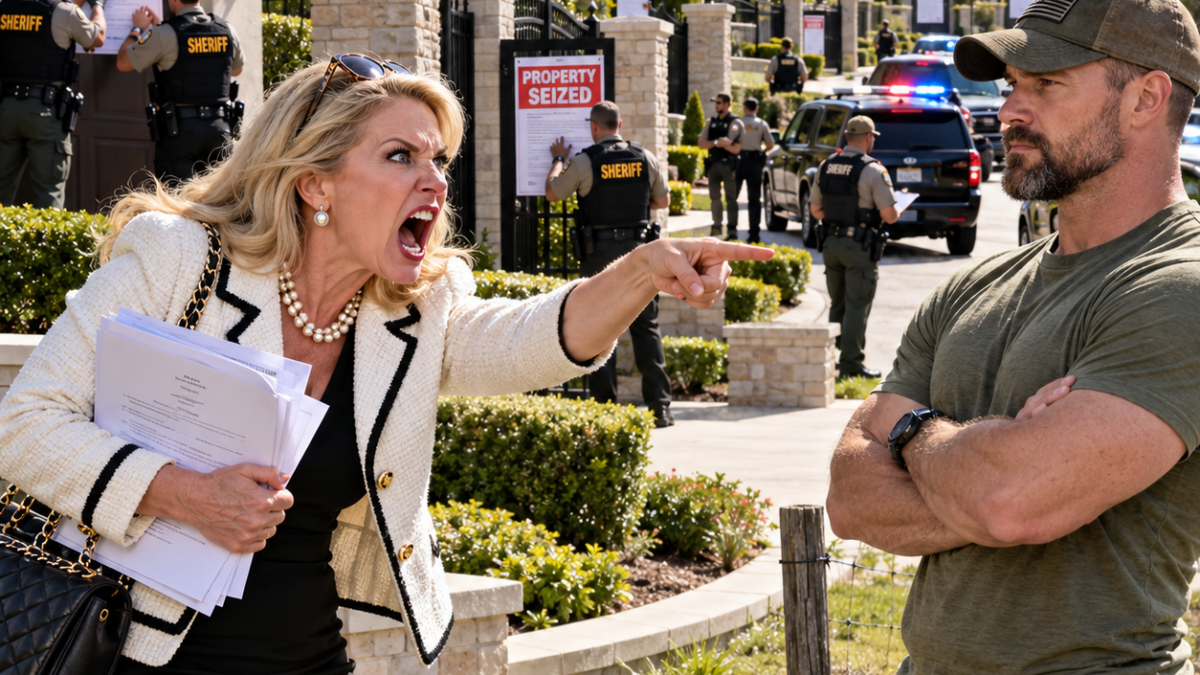
I came home from nine months overseas expecting to unlock my back door, grill a steak on the deck I had built with my own hands, and finally feel like the war was behind me—only to discover that my fence had been moved forty feet toward my house, a community garden was being built on my land, and the HOA had filed paperwork claiming I had sold them the property for exactly one dollar.
The woman responsible looked me in the eye, told me I should not have “left for so long,” and smiled as if stealing a deployed soldier’s backyard was nothing more than neighborhood housekeeping, but she had no idea that the forged signature buried in her paperwork was about to put every account, every property transfer, and ultimately the entire subdivision she ruled under the eyes of a judge.
Nine months is a long time to think about home.
When you’re deployed, home becomes less of a place and more of a collection of little things you replay in your head when sleep won’t come. The squeak in the third step of the back deck. The smell of cedar after rain. The way the afternoon sun hit the fence behind my house. The old grill I kept promising myself I would replace but never did because it still worked if you kicked the right leg before lighting it.
By the time my plane touched down at Fort Hamilton, I was exhausted in a way sleep alone couldn’t fix.
I had sand in the seams of my boots, a duffel bag over one shoulder, and one thought running through my mind.
Home.
Not a hotel.
Not a barracks.
Not another cot under fluorescent lights.
My house.
My deck.
My yard.
My silence.
A buddy offered me a ride, but I rented a truck instead because I wanted the final drive alone.
I wanted that moment when the subdivision sign came into view.
I wanted to turn onto East Ridge Drive, see the familiar houses, pull into my own driveway, and know that for the first time in months nobody was going to knock on my door with orders.
The East Ridge Heights sign appeared just after four in the afternoon.
The neighborhood looked exactly the same at first.
Trimmed lawns.
Identical black mailboxes.
American flags hanging from porches.
Kids’ bikes lying on driveways.
Someone grilling three streets over.
I remember rolling down the window because the smell of charcoal hit me, and for the first time that whole day I smiled.
Then I turned onto my street.
My smile disappeared.
I slowed the truck.
At first, I thought I’d taken the wrong turn.
There was bright orange construction mesh behind my house.
Plastic fencing.
Raised wooden planter boxes.
A laminated sign.
People had dug up half the rear lot.
I stopped in the middle of the street.
Then I backed up slightly.
Lot 43.
My house.
My driveway.
My roof.
There was no mistake.
I parked crooked, didn’t even bother shutting the truck door properly, and walked around the side of the house.
My backyard was gone.
Not all of it.
That almost would have been easier to understand.
Someone had moved my rear fence roughly forty feet toward the house.
The line that used to run behind my cedar planter boxes now cut directly through what had once been open lawn.
Beyond the new fence sat six raised garden beds, several tomato cages, a gravel path, and two decorative benches.
At the far end stood a green sign.
**EAST RIDGE HEIGHTS COMMUNITY GARDEN**
**A NEIGHBORHOOD BEAUTIFICATION INITIATIVE**
Underneath was a smaller brass-colored plaque.
**PROJECT APPROVED BY HOA PRESIDENT AMANDA LANGFORD**
For several seconds, I simply stared.
The strange thing was, I wasn’t immediately angry.
My brain was still trying to make the scene make sense.
Had there been storm damage while I was gone?
Had somebody confused the property line?
Had the county changed something?
Then I noticed my old fence posts.
They had not been removed carefully.
They had been cut near the base.
Two of them were still visible beside a pile of disturbed dirt.
That was when anger arrived.
Not explosive anger.
Something colder.
I heard a woman’s voice behind me.
“Oh, Henry. You’re back.”
I turned.
Amanda Langford was walking down the sidewalk toward me.
She wore a pink cardigan despite the heat, white pants, and oversized sunglasses pushed into her bleach-blonde hair.
If you’d met her once, you’d remember her voice.
Sharp.
Confident.
The kind of voice that made everything sound like a correction.
Amanda had become president of the East Ridge Heights HOA about three years earlier.
We had never liked each other, but until that day, our interactions had mostly been limited to arguments about parking notices, landscaping letters, and whether my flagpole was three inches taller than some committee preferred.
She stopped at the edge of my driveway.
“You’ve got some nerve,” I said.
Her eyebrows lifted.
“Excuse me?”
I pointed toward my backyard.
“Want to explain why my land is now a community garden?”
Amanda glanced toward the construction as if I’d asked about someone else’s flower bed.
“Well, technically, that parcel was always a gray area.”
“No, it wasn’t.”
“The board reviewed the historical survey records.”
“So?”
“The rear strip was determined to be improperly assigned to your lot. Since it wasn’t actively being used, the association approved its conversion for community use.”
I stared at her.
“You cut down my fence.”
“It was relocated.”
“You dug up my yard.”
“We improved an unused portion.”
“You built on my property.”
She sighed.
“Henry, you’ve been gone almost a year. We couldn’t leave a dead space in the middle of an evolving neighborhood.”
I felt my jaw tighten.
“I was deployed.”
“I know.”
There was no hesitation.
No embarrassment.
She knew exactly where I’d been.
“You knew I was overseas.”
“Of course. The board was informed.”
“And you decided that meant my property was available?”
Amanda made a small dismissive motion with one hand.
“Again, you’re assuming the parcel was legally yours.”
“I have a deed.”
“Records can contain errors.”
“My closing survey doesn’t.”
“The board corrected the issue.”
“You don’t correct county property records by voting in a clubhouse.”
Amanda’s lips pressed together.
“The transfer has already been recorded.”
That stopped me.
“What transfer?”
She looked almost pleased that I didn’t know.
“The HOA acquired the disputed portion.”
“From who?”
“From the recorded owner.”
“I am the recorded owner.”
“Well, apparently the matter was resolved during your absence.”
I stepped closer.
“Say that again.”
She didn’t move.
“The parcel was transferred.”
“To the HOA?”
“Yes.”
“For how much?”
Her expression changed.
Just slightly.
That was the first moment I realized there was more to this than an HOA land dispute.
“That’s public information,” she said.
“Then tell me.”
“I’m not your clerk.”
“Amanda.”
She turned away.
“I’m sure everything can be discussed properly once you’ve settled back in.”
I followed her two steps.
“You don’t get to walk away after telling me you sold my property.”
She turned sharply.
“Nobody sold your property.”
“You just said the HOA acquired it.”
“The disputed section.”
“My land.”
“Henry, maybe this wouldn’t feel so shocking if you’d stayed engaged with the community.”
For a second, I thought I’d heard her wrong.
“What?”
“You disappear for nine months, leave your lot unattended, and come back acting surprised that decisions were made.”
I stared at her.
“I was serving overseas.”
“And the neighborhood continued functioning.”
Then she smiled.
Not a warm smile.
Not even a smug one.
It was worse.
A bureaucratic smile.
The kind someone gives when they believe paperwork has already beaten you.
“Use it or lose it,” she said.
That’s when the anger finally reached my hands.
I curled them into fists so she wouldn’t see them shake.
“Get off my property.”
Amanda blinked.
“What?”
“You’re standing in my driveway.”
“I am the HOA president.”
“And you’re trespassing.”
Her face tightened.
“You need to be very careful how you speak to me.”
“No. You need to be very careful what you forged.”
That got her attention.
Only for half a second.
But I saw it.
Her eyes changed.
I hadn’t actually known anything had been forged yet.
I had guessed.
Her reaction told me the guess had landed close enough to make her uncomfortable.
I picked up my duffel bag.
“Enjoy your garden while it’s standing.”
Amanda folded her arms.
“Threatening community property would be a serious mistake.”
I looked back at her.
“I’m not threatening anything.”
I nodded toward the road.
“I’m going to the county records office.”
For the first time, she stopped smiling.
PART 2
I was still wearing my uniform when I walked into the county property records office twenty-five minutes later.
A clerk behind the counter glanced up, noticed the uniform, and gave me the tired smile government employees give when they know somebody is about to bring them a problem at 4:40 p.m.
“I need the current recorded documents for lot forty-three in East Ridge Heights.”
She typed.
“Owner name?”
“Henry Carter.”
More typing.
Then she stopped.
She looked at the screen.
Then at me.
“Did you recently modify your parcel?”
“No.”
“Transfer part of it?”
“No.”
“Submit a survey correction?”
“No.”
Her expression changed.
She leaned closer to the monitor.
“That is strange.”
My stomach tightened.
“What?”
“There was a boundary correction filed seven months ago.”
“By who?”
She clicked through several pages.
“East Ridge Heights Homeowners Association.”
“They can’t change my boundary.”
“Not by themselves.”
“What does the filing say?”
She printed the first document.
I read it standing at the counter.
**BOUNDARY CORRECTION REQUEST**
It claimed my original rear survey contained a measurement error.
It said I had agreed that approximately twenty percent of the lot belonged to the association’s common development area.
At the bottom appeared my name.
Henry Carter.
And beside it was a signature.
I stared at it.
It looked vaguely like mine if you’d shown somebody my signature through frosted glass and then asked them to reproduce it with the wrong hand.
“That isn’t my signature.”
The clerk looked at me.
“You’re certain?”
“I’ve signed my name thousands of times.”
She printed another page.
“This one’s more serious.”
It was an affidavit.
According to the document, I had voluntarily agreed to transfer the disputed portion of land to the HOA for neighborhood beautification.
The stated purchase price was:
**\$1.00 AND OTHER VALUABLE CONSIDERATION**
I read it once.
Then again.
“One dollar.”
The clerk didn’t say anything.
“They sold my property to themselves for one dollar.”
“It appears the document represents that you authorized the transfer.”
“I was overseas.”
She looked back at the filing date.
“This was recorded two weeks after your deployment began.”
I felt something inside me go very still.
“Who notarized it?”
She turned the page.
“Deanna K. Rudd.”
“Can you verify her commission?”
The clerk typed.
Then frowned.
“I don’t see an active notary under that name in this state.”
“Print everything.”
“Everything?”
“Survey corrections, affidavits, transfer forms, board filings, every document linked to the parcel since I left.”
She started printing.
The machine ran for several minutes.
By the time she handed me the stack, the office was technically closed.
I thanked her and walked outside.
The sun was low.
My truck sat alone in the parking lot.
I put the documents on the hood.
Twenty percent of my lot.
One dollar.
Forged signature.
False notary.
HOA approval.
Amanda had not made a mistake.
She had built a paper trail.
The only problem was that the paper trail was fraudulent.
And somewhere between the records office and my driveway, my anger changed into something much more useful.
Planning.
—
Curtis Monroe answered on the fourth ring.
“Tell me you’re calling because you’re back in the country.”
“I am.”
“Good. Beer?”
“Later.”
A pause.
“What happened?”
Curtis had known me long enough to hear it.
“Someone sold part of my land while I was deployed.”
Another pause.
“What?”
“The HOA.”
“You’re joking.”
“For one dollar.”
Silence.
Then:
“Send me everything.”
Curtis and I had met years earlier.
He had represented me during a contractor dispute and later helped me review the purchase documents on the house.
He wasn’t the kind of lawyer who yelled in court.
He didn’t need to.
Curtis had a habit of becoming calmer as everyone else became more nervous.
I scanned the documents at home that night.
He called less than an hour later.
“Henry.”
“Yeah?”
“Do not contact Amanda.”
“I already talked to her.”
“Do not contact her again.”
“I wasn’t planning to.”
“Do not threaten the HOA. Do not touch the garden. Do not remove the fencing.”
“That’s my yard.”
“And right now the cleanest thing you can do is let them keep committing documented mistakes.”
I leaned against the kitchen counter.
“You think we have them?”
“I think somebody filed a forged deed-related instrument involving real estate while you were on active deployment.”
“Meaning?”
“Meaning this is no longer about tomatoes.”
He turned a page on his end.
“The notary bothers me.”
“County says she isn’t licensed here.”
“I’m checking.”
A minute later, I heard keyboard clicks.
“Deanna Rudd.”
More typing.
“Found her.”
“And?”
“She lives in Tampa.”
“Florida?”
“Yes.”
“Any connection to Amanda?”
“Give me five minutes.”
It took him two.
He called back.
“Niece.”
I closed my eyes.
“Of course.”
“She appears to have held a Florida notary commission at one point, but that doesn’t magically authorize whatever happened here. We need certified records.”
“What are we filing?”
“First, suit to quiet title and void the transfer. Emergency injunction to stop construction. Preservation order for documents.”
“Anything else?”
“Yes.”
His voice hardened slightly.
“We ask the court to open the HOA’s records if the evidence supports it.”
“How far can this go?”
“That depends on what they did.”
I looked through the window toward the garden.
Amanda’s green sign was visible above the new fence.
“And if this wasn’t the first time?”
Curtis was silent for a second.
“Then Amanda Langford may have just given us a reason to look at the whole subdivision.”
—
I installed security cameras the next morning.
Front.
Back.
Side yard.
Driveway.
I wasn’t expecting violence.
I was expecting stupidity.
People who think they’ve already won tend to become careless.
For three days, nothing happened.
Amanda drove past twice in her golf cart.
The second time, she slowed enough to look directly at the camera above my garage.
I waved.
She didn’t.
Meanwhile, Curtis moved fast.
He obtained certified copies of my original survey, deed, deployment orders, title documents, and tax records.
Then he compared them to the HOA filings.
By Friday evening, he was sitting at my kitchen table with three folders.
“Ready?”
“Go.”
“Forgery is obvious.”
He opened the first folder.
“Your signatures don’t match known exemplars.”
Second folder.
“The transfer was executed after your deployment began.”
Third.
“The supposed notarization raises multiple problems.”
I leaned back.
“So we file.”
“We already did.”
I looked at him.
“When?”
“This morning.”
“What exactly?”
“Complaint seeking cancellation of the fraudulent instruments, restoration of your boundary, damages, injunctive relief, attorney fees, and an accounting of any HOA funds used in the transaction.”
I smiled.
Curtis didn’t.
“Don’t celebrate.”
“Why?”
“Because I found something else.”
He pulled out a state HOA filing.
“Amanda’s board reported the garden project as a community acquisition funded through beautification reserves.”
“So?”
“They spent almost forty thousand dollars.”
“On six planter boxes?”
“Apparently.”
I looked toward the backyard.
“You’re kidding.”
“No.”
“Where did the money go?”
“That’s what I want to know.”
He tapped the page.
“And here’s the interesting part. The contractor listed for the landscaping work is Ridge Development Services.”
“Never heard of it.”
“Neither had I.”
He slid a business registration across the table.
The registered address belonged to a mailbox service in Oregon.
The owner shared Amanda’s mother’s maiden name.
I looked up.
“Family?”
“Cousin.”
I laughed once.
Curtis still didn’t.
“Henry.”
“What?”
“This might be bigger than your yard.”
—
The preliminary hearing happened twelve days after I came home.
That morning, I woke before sunrise.
For nine months overseas, I’d been trained to prepare for difficult days by controlling what I could.
Boots.
Documents.
Timing.
Routes.
Court wasn’t combat.
But nerves are nerves.
I arrived wearing a dark suit instead of a uniform.
Curtis was waiting in the courthouse parking lot.
He looked terrible.
“You sleep?”
“No.”
“Good sign?”
“Never.”
He handed me a thick binder.
“Judge wants clean exhibits.”
We walked toward the courthouse.
Halfway inside, Curtis stopped.
“Look at Exhibit G.”
I opened the binder.
**AFFIDAVIT OF VOLUNTARY LAND REALLOCATION**
According to the document, I had transferred twenty percent of my parcel to the HOA for community enhancements.
My forged signature sat at the bottom.
Below it:
**Notarized by Deanna K. Rudd**
Curtis said, “Filed two weeks after your deployment started.”
“I’ve seen the transfer.”
“Not this version.”
I looked more closely.
There was a seal.
“What’s different?”
“This one claims the affidavit was signed in person.”
I stopped walking.
“In person where?”
“East Ridge Heights.”
“I was six thousand miles away.”
“Exactly.”
My anger returned.
Curtis touched my arm.
“Don’t bring that into the courtroom.”
“What do I bring?”
“Facts.”
We entered.
Amanda was already there.
She had color-coded folders lined up in front of her.
Paul Davis, the HOA vice president, sat beside her wearing a blue polo tucked into jeans.
They had no attorney.
That surprised Curtis.
He leaned toward me.
“They’re either very confident or very stupid.”
“Both.”
Judge Robert Walsh entered a minute later.
He was tall, gray-haired, and moved with a stiffness that suggested old injuries.
I’d heard from Curtis that he’d served in the Marines years earlier.
I didn’t care.
I didn’t need sympathy.
I needed someone to read the paperwork.
The clerk called the case.
Judge Walsh looked down.
“Mr. Carter, you are the legal owner of lot forty-three?”
“Yes, Your Honor.”
“You allege that the East Ridge Heights Homeowners Association caused a portion of your parcel to be transferred without your consent?”
“Yes.”
Curtis stood.
“Your Honor, we allege more than an unauthorized transfer.”
The judge looked at him.
“Go ahead.”
“We have evidence supporting forged signatures, false survey representations, a defective notarization, and a purported one-dollar transfer of my client’s land executed while he was overseas on active military deployment.”
Amanda rolled her eyes.
Judge Walsh saw it.
“Ms. Langford, do you have counsel?”
“No, Your Honor. This is a simple misunderstanding.”
“Real estate fraud is rarely improved by calling it simple.”
Amanda stiffened.
“The HOA corrected a historical surveying issue.”
The judge looked toward Curtis.
“Response?”
Curtis handed the clerk a certified copy of my original survey.
“This survey matches the county’s pre-HOA parcel map, Your Honor.”
Another document.
“Tax records reflect continuous assessment to Mr. Carter for the entire parcel.”
Another.
“His deed includes the disputed land.”
Then Exhibit G.
“And the association’s affidavit claims Mr. Carter personally appeared locally to execute the transfer at a time when military records place him overseas.”
Judge Walsh looked at Amanda.
“Ms. Langford?”
She stood.
“Our understanding was that paperwork had been handled through authorized channels.”
“Whose authorization?”
“The board’s.”
“The board cannot authorize another person to sign a landowner’s name.”
Amanda’s face tightened.
“It was an administrative correction.”
“Who signed Mr. Carter’s name?”
Silence.
“Ms. Langford?”
“I don’t know.”
Paul leaned toward her.
The judge looked at him.
“If you’re not licensed counsel, Mr. Davis, don’t coach testimony.”
Paul leaned back.
Curtis continued.
“We’re asking for a temporary injunction barring additional construction or alteration of the disputed parcel.”
“Granted pending further review.”
Amanda turned sharply.
Curtis wasn’t finished.
“We also move for preservation and production of all association records related to the transfer, including financial accounts, contractor agreements, board communications, meeting minutes, surveys, and vendor payments.”
Amanda stood.
“Your Honor, that is wildly overbroad.”
Judge Walsh looked at the one-dollar transfer again.
“Someone used this association to acquire private property based on a signature the owner denies making.”
He looked up.
“I don’t consider an examination of the related records unreasonable.”
Amanda’s face changed.
That was the first moment she looked genuinely afraid.
The judge ordered production.
He also froze further development connected to my parcel.
As we left the courtroom, Amanda caught up to me in the hallway.
“You planned this.”
I stopped.
“Planned what?”
“This attack.”
“You sold my property.”
“You don’t understand what you’ve started.”
Curtis stepped between us.
“Ms. Langford, communicate through counsel.”
“I don’t need counsel.”
Curtis looked at her.
“You will.”
We walked away.
Outside, Curtis checked his phone.
Then stopped.
“What?”
He looked at me.
“Three homeowners emailed my office this morning.”
“About me?”
“About Amanda.”
“What did they say?”
“One owns a vacation property here. Claims six feet of his side yard disappeared after a ‘utility correction.’ Another is an elderly widow whose rear easement was reassigned for a walking path.”
My stomach tightened.
“And the third?”
Curtis looked back toward the courthouse doors.
“Reservist.”
I went still.
“He was away for training when the HOA modified his boundary.”
I looked at Curtis.
“This isn’t just me.”
“No.”
“How many?”
“I don’t know.”
“Find out.”
“I intend to.”
—
That evening, I walked the edge of my stolen backyard.
The garden had been shut down under the injunction.
Plastic fencing moved slightly in the wind.
The little tomato plants had begun to wilt.
I felt almost sorry for them.
The plants hadn’t forged anything.
Then I noticed fresh mulch.
A new pile had been dumped beside the unfinished second section.
A white stake stood in the middle.
I walked closer.
The laminated tag read:
**GARDEN EXPANSION — PHASE II**
**APPROVED MAY 3**
The court order had been entered May 1.
I photographed the stake.
Then the mulch.
Then tire tracks.
I sent everything to Curtis.
He called immediately.
“Don’t touch it.”
“I haven’t.”
“They violated the injunction.”
“Looks that way.”
“I’m filing contempt first thing tomorrow.”
The judge ordered a site inspection.
A county inspector arrived by noon.
He walked the property with my original survey and court documents.
When he reached the fresh mulch, he shook his head.
“This went in after the order?”
“Yes.”
“You have proof?”
“Time-stamped camera footage.”
He stared toward the subdivision entrance.
“That’s bold.”
“That’s one word.”
The inspector measured the line.
Then measured it again.
Finally, he placed temporary orange stakes showing my legal boundary.
The difference was almost exactly what I’d estimated.
Forty feet.
He looked at the garden.
“This entire rear section sits on your parcel.”
“I know.”
“Somebody knew too.”
That afternoon, Curtis called.
“The state attorney’s office wants to speak with us.”
“What did they find?”
“Five additional property transfers with similar defects.”
I closed my eyes.
“Five.”
“So far.”
“All HOA?”
“Yes.”
“Same board?”
“Mostly.”
“Same notary?”
“Two involve Deanna Rudd. Others involve notaries we can’t verify.”
I walked to the window.
Amanda’s house sat three blocks away.
“What happens now?”
“Now this stops being a neighborhood dispute.”
—
Mary Ellen Price called two days later.
She had been HOA treasurer for six years.
I knew her by sight.
Soft-spoken.
Gray hair.
Always carried paper folders instead of using a tablet at meetings.
She asked to meet at Curtis’s office.
When she arrived, she held a blue binder against her chest.
Her hands trembled.
Curtis offered coffee.
She declined.
“I should have said something sooner.”
Nobody answered.
She looked at me.
“Amanda knew your land wasn’t abandoned.”
“I figured.”
“She knew exactly where you were.”
That landed differently.
“How?”
“You submitted deployment contact information to the board so emergency notices could go to your sister.”
I had forgotten about that.
Mary Ellen lowered her eyes.
“Amanda brought your property up two weeks after you left.”
“What did she say?”
“That your rear acreage was underutilized.”
“Underutilized?”
“She wanted to connect the community garden to the walking path.”
“And you told her no?”
“I told her she needed your permission.”
“What happened?”
“She said the board could correct the boundary administratively.”
Curtis leaned forward.
“Did you approve any payment for the land transfer?”
Mary Ellen opened the binder.
“That’s part of why I’m here.”
Inside were copies of internal emails.
Amanda to Paul.
Amanda to Mary Ellen.
Amanda to committee members.
One message read:
**Fast-track Carter parcel reassignment before owner returns. No need for full resident notice. Treat as survey correction.**
Another:
**Beautification funds can absorb acquisition expense. Keep documentation minimal.**
Curtis read silently.
Then another email.
**Offer board stipends where necessary. We cannot allow obstruction from owners who are rarely present.**
I looked up.
“Stipends?”
Mary Ellen nodded.
“She offered small payments from the beautification account.”
“For what?”
“To people who signed off quickly.”
“Hush money.”
She flinched.
“I didn’t take any.”
“Why didn’t you report it?”
Mary Ellen’s eyes filled.
“My husband is a contractor.”
Curtis waited.
“Amanda told me his permit renewals could become difficult if I made the board look unstable.”
“That was within her control?”
“She knew people.”
Mary Ellen wiped her eyes.
“His license renewal was delayed three times.”
I stopped being angry with her.
Fear does ugly things to people.
It makes good people quiet.
Curtis asked, “Do you have the complete financial records?”
“Not complete.”
She slid a flash drive across the desk.
“But I saved what I could.”
That flash drive changed everything.
—
The audit began with the garden account.
Forty thousand dollars approved.
Less than half of that could be connected to actual materials or labor.
Payments went to Ridge Development Services.
Ridge Development sent part of the money to another company.
Then another.
The chain ended at a small business associated with Amanda’s cousin.
That alone was bad.
Then auditors opened the pool renovation file.
Ninety thousand dollars collected.
No renovation.
Lighting fund.
Thirty-four thousand.
Minimal work.
Security upgrade.
Fifty-two thousand.
Incomplete documentation.
Land correction fees.
Payments to unknown vendors.
Curtis spread a chart across my kitchen table.
“She’s moving money through companies.”
“How much?”
“We don’t know yet.”
“What about the land transfers?”
“Same pattern.”
He pointed to five highlighted parcels.
“Small slivers. Easy to miss. Owners who travel. Elderly owners. One absentee landlord.”
“And military.”
“Yes.”
I looked at the map.
My lot wasn’t random.
It was part of a method.
Target people who wouldn’t notice quickly.
Create paperwork.
Call it correction.
Move the line.
Spend community money.
Send money through friendly vendors.
Repeat.
“What can the court do?”
Curtis sat back.
“We’re asking for receivership.”
“Meaning?”
“The HOA loses operational control. Court appoints an independent administrator.”
“Can Judge Walsh do that?”
“If the evidence shows current management threatens association assets or residents’ interests, yes.”
“When?”
“Soon.”
It happened four days later.
The judge reviewed the financial irregularities, forged transfer evidence, additional homeowner complaints, and alleged violation of the injunction.
He placed East Ridge Heights HOA into temporary receivership pending investigation.
Amanda and her board lost authority overnight.
No access to accounts.
No new fines.
No property actions.
No contracts without receiver approval.
For years, Amanda had signed letters beginning with:
**BY AUTHORITY OF THE BOARD**
Now she had none.
—
The first community meeting under the court-appointed administrator packed the recreation center.
People stood along the walls.
Some held old violation letters.
Others held receipts.
Mary Ellen sat in front with her blue binder.
Amanda arrived ten minutes late.
She still walked like she owned the room.
That lasted until the administrator began speaking.
“The court has determined that the transfer involving Mr. Carter’s parcel is invalid based on the evidence presently before it.”
A murmur rolled through the room.
“Steps are underway to restore the legal boundary and remove association improvements from the property.”
I kept my eyes forward.
The administrator continued.
“Additionally, the preliminary audit has identified serious concerns involving prior property transfers, vendor contracts, special assessments, and board expenditures.”
Amanda stood.
“This is outrageous.”
The administrator looked at her.
“Ms. Langford, please sit.”
“You are destroying years of neighborhood progress.”
A voice from the back called out.
“Progress doesn’t usually come with forged signatures.”
Laughter broke out.
Amanda spun around.
“Who said that?”
Old Frank Talbot raised his hand.
“I did.”
He had lived in East Ridge Heights since the first houses went up.
Amanda pointed at him.
“You benefited from every improvement this board made.”
Frank shrugged.
“Never needed you to steal Henry’s yard for tomatoes.”
More laughter.
The administrator tapped the microphone.
“Please.”
Amanda remained standing.
“These accusations are politically motivated.”
I finally looked at her.
“Political?”
She turned.
“You’ve manipulated everyone because you’re angry about a garden.”
I stood slowly.
“No.”
The room quieted.
“I’m angry because you signed my name while I was overseas.”
Amanda’s face went pale.
“I did no such thing.”
“Then you should be very interested in helping investigators identify who did.”
She opened her mouth.
Nothing came out.
The administrator resumed.
“All development projects authorized under the former board are suspended pending review.”
Garden.
Lighting upgrade.
Pool renovation.
Security contracts.
Special assessments.
Everything.
Amanda stormed out.
Her heels struck the tile so sharply they sounded like a countdown.
Outside, Curtis leaned against my truck.
“The district attorney is preparing charges.”
“What kind?”
“Forgery. Fraud. Misuse of HOA funds. Potential conspiracy.”
“Racketeering?”
“If they prove an ongoing enterprise involving shell companies and multiple related offenses, it’s possible.”
I looked back at the recreation center.
“What happens to the HOA?”
“Special governance proceedings. Maybe a new board eventually. Maybe restructuring.”
Then he smiled slightly.
“And because your case exposed the land problems, the court just ordered that no parcel reassignment anywhere in East Ridge Heights can proceed without independent legal review during receivership.”
I looked at him.
“So she tried to take forty feet of my yard.”
“And lost control over every property decision in the subdivision.”
For the first time since coming home, I smiled.
Not because Amanda had lost.
Because nobody else was going to wake up one morning and discover their boundary moved while they were gone.
—
The next morning, an unmarked white SUV stopped in front of Amanda’s house.
Two investigators walked to her porch.
Five minutes later, Amanda came out carrying a handbag.
She was talking fast.
One investigator opened the rear door.
She got in.
Curtis called an hour later.
“Search warrant.”
“What are they taking?”
“Electronics. Financial records. HOA files.”
“Arrest?”
“Not yet.”
He paused.
“They’re looking at grand larceny theories now.”
I watched a work crew dismantle the garden fencing behind my house.
One trellis snapped as they lifted it.
Another worker removed the green HOA sign.
Amanda’s name disappeared into the back of a truck.
“They found another shell company,” Curtis continued.
“So?”
“This one was used in a similar property scheme in another county two years ago.”
I stopped watching the crew.
“Same people?”
“Some overlapping signatures.”
“Same fake notary?”
“Yes.”
My stomach tightened.
“How long has she been doing this?”
“That’s what everyone wants to know.”
Then Curtis said something I wasn’t expecting.
“Federal investigators are interested.”
“Why?”
“Interstate wires. Banking activity. Fake tax IDs.”
I exhaled.
“So now what?”
“Now you let them work.”
That afternoon, county surveyors replaced my original rear boundary markers.
Bright orange stakes.
One at each corner.
I walked the restored line slowly.
Forty feet doesn’t sound like much when you say it.
Forty feet is nothing on a map.
But when somebody moves a fence forty feet toward your house, it feels enormous.
It is where you throw a ball with your dog.
Where your kids would play if you had them.
Where you plant trees.
Where you sit when you want nobody talking to you.
Land isn’t emotional because dirt has feelings.
Land is emotional because life happens on it.
Near the rear corner, I noticed a patch of ground that looked wrong.
Rectangular.
Freshly disturbed, but older than the garden work.
I got a shovel.
About eight inches down, the blade hit wood.
I knelt.
There was a small box.
Not locked.
Inside were notebooks.
Printed emails.
Handwritten lists.
At first I assumed they were construction documents.
Then I opened the first notebook.
My name appeared halfway down a page.
**CARTER — LOT 43**
Underneath:
**Military. Gone minimum 9-12 months.**
Next line:
**Rear strip prime target. Low immediate detection risk.**
I stopped breathing for a second.
Then another line.
**Estimated owner challenge probability: high upon return. Prepare development justification.**
I closed the notebook.
Opened it again.
It didn’t change.
There were other names.
Mrs. Evelyn Ross.
Vacation property.
Widowed.
Rarely checks survey.
Mark Ellis.
Travels internationally.
Side strip suitable for path.
Every entry had notes.
Property size.
Owner behavior.
Likely resistance.
Possible pressure points.
One page included numbers.
Amounts paid.
Amounts “allocated.”
Names of board members.
I put everything back exactly as I found it.
Photographed the box in place.
Then called Curtis.
“Don’t move anything else,” he said.
“I already opened it.”
“That’s fine. Stop now.”
He arrived with an investigator.
The box was collected as evidence.
At Curtis’s office, once chain-of-custody issues were handled, we were shown copies.
Curtis turned page after page.
“She kept a ledger.”
“She buried it in my yard.”
“Probably thought nobody would dig there until the garden was finished.”
He reached my entry.
His face hardened.
“Military gone minimum one year.”
I nodded.
“Prime target.”
Curtis looked at me.
“This isn’t negligence.”
“No.”
“This is selection.”
I stared at the page.
She had not simply taken advantage of my absence.
She had chosen me because of it.
—
Paul Davis cracked first.
The former vice president hired an attorney, then negotiated cooperation.
He provided passwords.
Email accounts.
Meeting notes.
The location of a private server.
According to investigators, Amanda had maintained communications outside the HOA’s normal systems.
That server opened another door.
And behind it was something darker than land fraud.
East Ridge Heights had collected extensive information from residents through security initiatives and emergency forms.
Names.
Phone numbers.
Birth dates.
Vehicle information.
Access details.
In some cases, garage entry codes provided during a neighborhood security upgrade.
Amanda had authorized the sale or transfer of portions of that data to outside marketing businesses.
At least one contractor had previously been associated with data misuse complaints.
The land theft that brought me into the fight suddenly looked like one branch on a much uglier tree.
Federal agents seized Amanda’s desktop computer.
Three tablets.
Several phones.
A safe.
According to court filings that later became public, investigators recovered prepaid debit cards and records linked to shell businesses.
By the end of the week, the charges were expanding.
Wire fraud.
Mail fraud.
Identity-related offenses.
Money laundering.
Conspiracy.
Unauthorized use and transfer of resident information.
And underlying state property crimes.
Mary Ellen gave another statement.
That’s when I learned how bad the intimidation had been.
Amanda had cornered her in the clubhouse months before I returned.
“Keep the books tight,” Amanda had told her, “or your husband’s permit situation could become complicated.”
Mary Ellen’s husband, Tom, ran a small contracting business.
His renewal had been delayed three times.
Maybe Amanda had caused it.
Maybe she’d simply taken credit for someone else’s bureaucracy.
Either way, Mary Ellen believed her.
That’s how power like Amanda’s works.
Half of it is real.
The other half is people being afraid to find out which half.
—
The next court-supervised community meeting was moved to the civic hall.
Plainclothes officers stood near the exits.
A stenographer recorded everything.
The room was full before the meeting began.
Curtis stood beside the receiver.
I sat with Mary Ellen and several homeowners whose land had been altered.
The receiver began.
“The existing East Ridge Heights HOA structure will be dissolved pursuant to the court-approved transition plan.”
The room went silent.
Not reformed.
Not temporarily suspended.
Dissolved.
“Essential common services will transfer to interim management while residents establish a lawful replacement structure.”
A woman raised her hand.
“What about our dues?”
“Pending assessments issued under the prior board are suspended.”
Another question.
“What about illegal fines?”
“Claims are being reviewed for restitution.”
Someone asked about cameras installed without proper approval.
Another asked about liens.
Another about a pool assessment.
Another about landscaping payments.
The questions came so quickly the receiver had to ask people to line up.
For two hours, residents told stories.
Some were small.
That’s what made them painful.
A \$75 fine that caused someone to skip groceries.
A widow threatened with a lien over grass height.
A young couple charged hundreds for an exterior application the board never reviewed.
An older man fined repeatedly because he didn’t finish repainting his shutters fast enough after his wife died.
None of those people had thought they were part of something bigger.
They thought they were simply unlucky.
Then the records came out.
The same language.
The same pressure.
The same vendors.
The same board.
Outside, I found Paul Davis near the parking lot.
He looked older than he had a month earlier.
He wouldn’t meet my eyes.
“I didn’t know it went this deep.”
I crossed my arms.
“You knew enough to sign documents.”
“She said they were corrections.”
“You signed off on my property.”
“She told us the county wanted clean records.”
“You didn’t wonder why the owner wasn’t there?”
Paul swallowed.
“She said you’d agreed before deployment.”
“And you believed that?”
“No.”
At least he answered honestly.
“Then why?”
He stared at the pavement.
“She threatened people.”
“People?”
“Board members. Vendors. Anyone who resisted.”
“What did she threaten you with?”
“My credit. My business.”
He finally looked at me.
“She always had something.”
I thought about the notebook.
Owner challenge probability.
Pressure points.
People weren’t neighbors to Amanda.
They were files.
Weaknesses.
Leverage.
“You still had a choice,” I said.
“I know.”
Paul nodded once and walked away.
I watched him go.
That was the hardest thing about the scandal.
Amanda was the center of it.
But she couldn’t have done everything alone.
People had helped because they were scared.
Because they benefited.
Because they didn’t want trouble.
Because it was easier to sign than confront.
And every time someone chose the easier thing, Amanda became stronger.
—
The federal indictment was unsealed two weeks later.
Amanda was denied release after prosecutors presented evidence suggesting she might flee.
A passport had been recovered under another name.
Investigators also found travel planning associated with the Cayman Islands.
Curtis called me after the hearing.
“You sitting down?”
“No.”
“Sit.”
I sat on my deck.
The deck was still mine.
That fact mattered.
“They traced offshore transfers.”
“How much?”
“More than three hundred thousand dollars so far.”
“From where?”
“HOA escrow and project funds through a Delaware holding company.”
“The pool money?”
“Part of it.”
“Garden?”
“Some.”
“Fines?”
“Yes.”
I looked toward the empty section where workers had removed Amanda’s garden.
“So everybody paid.”
“Pretty much.”
“For years.”
“Yes.”
“And she moved it offshore.”
“That’s what prosecutors allege.”
I leaned back.
“What’s she facing?”
“Serious federal time if convicted across the major counts.”
“Plea?”
“Her attorneys have approached prosecutors.”
“And?”
“No meaningful deal yet.”
I didn’t feel happy.
That surprised me.
A month earlier, I would have thought hearing that Amanda might spend decades in prison would feel satisfying.
Instead, I kept thinking about Mary Ellen sitting in Curtis’s office shaking.
About the widow whose side yard vanished.
About the reservist whose boundary shifted during training.
About people being afraid in houses they owned.
Justice felt necessary.
But it didn’t feel joyful.
—
The town formed a task force to help residents transition from the dissolved HOA structure.
They asked me to join.
I said no.
Then they asked again.
I still said no.
Curtis came to my house the next evening.
“You should do it.”
“I have spent enough time in meetings.”
“This isn’t for Amanda.”
“I know.”
“Then why no?”
“Because I came home wanting my yard back.”
“You have your yard back.”
“Exactly.”
He looked toward the boundary stakes.
“Do you?”
I knew what he meant.
My deed was restored.
My fence line was being rebuilt.
But after everything I’d learned, walking away completely felt wrong.
I joined.
Not as president.
Never.
I told them if anyone nominated me for president of anything, I was moving.
The task force rebuilt the neighborhood governance structure from the ground up.
No closed-door financial decisions.
Direct elections.
Term limits.
Public financial reports.
Conflict-of-interest disclosures.
No land boundary action without owner notice, independent review, and recorded consent.
Clear appeal rights.
No arbitrary fine escalations.
Major expenditures required resident approval.
Some people wanted to eliminate every rule.
That sounded good for about ten minutes.
Then someone asked who would maintain shared drainage.
Someone else asked about the entrance road landscaping.
Another person brought up insurance.
Freedom is easy to praise in theory.
Community still requires responsibility.
So we kept what was necessary.
We removed what existed only to control people.
The replacement organization was voluntary wherever possible and sharply limited where shared obligations required structure.
Mary Ellen eventually agreed to help rebuild the accounting system.
At first, she refused.
“I failed before.”
“No,” I told her. “You got scared.”
“Same result.”
“Then don’t let fear make the next decision.”
She looked at me for a long time.
Then accepted.
Her first financial report was thirty-two pages.
Every dollar accounted for.
Walter joked that it was the first HOA document in history capable of curing insomnia and corruption at the same time.
Mary Ellen laughed harder than I’d ever heard her laugh.
—
My backyard took most of the summer to restore.
The garden beds were removed.
Gravel hauled away.
Fence rebuilt.
Topsoil replaced.
Grass reseeded.
I rebuilt the cedar planter boxes myself.
One afternoon, I found an elderly neighbor named Gene standing outside his house scraping paint from a shutter.
Amanda had fined him repeatedly for “incomplete exterior presentation.”
His wife had died the previous winter.
He had stopped halfway through painting because grief had a way of making small projects feel impossible.
“Need help?” I asked.
He shook his head.
“Nope.”
I looked at the half-painted shutter.
“Looks like you do.”
He smiled.
“Maybe. But I want to finish this one myself.”
“Why?”
“Because now I can.”
That hit me.
For years, Amanda had turned ordinary choices into permissions.
Paint.
Fences.
Flowers.
Travel.
Silence.
Gene dipped his brush.
“Feels different when nobody’s timing you.”
I nodded.
“Take all year.”
“I might.”
A few houses down, a young family had just moved in.
Their welcome packet was two pages.
Trash pickup.
Emergency contacts.
Community hall schedule.
No threats.
No seventeen-page architectural manual.
No warning about decorative planters.
The mother laughed when I asked if she’d received any grass-height rules.
“Nope.”
“Good.”
“Should I be worried?”
“Only if your grass learns to forge deeds.”
She stared at me.
Then laughed when she realized I was joking.
Mostly.
—
Curtis arrived one afternoon with coffee and a manila envelope.
“Full indictment.”
“How full?”
“Fifty-two pages.”
I took it.
Amanda Langford.
Three former board members.
Multiple corporate entities.
Financial charges.
Property offenses.
Tax issues.
Conspiracy allegations.
The document read less like a criminal complaint and more like a blueprint for how greed grows when nobody checks it.
One paragraph stopped me.
**Victim Impact — Henry Carter, Lot 43**
Curtis watched me.
“They want you to speak at sentencing if there are convictions.”
I closed the file.
“I will.”
“You don’t have to decide now.”
“I already did.”
The case took months.
Motions.
Hearings.
Evidence disputes.
Cooperating witnesses.
Financial experts.
Nothing moved as quickly as television makes court cases look.
Amanda’s attorneys attacked the reliability of cooperating board members.
They argued some transactions had legitimate purposes.
They challenged parts of the government’s data analysis.
They portrayed Amanda as an aggressive administrator who had crossed technical lines while trying to improve a difficult community.
Then prosecutors showed the notebook.
My entry.
Military gone.
Prime target.
Low detection risk.
The room changed when that page appeared.
Amanda’s attorney objected to interpretation.
But no interpretation could erase the handwriting.
Other property entries matched real transfers.
Payment notes matched accounts.
Pressure-point notes matched witness testimony.
The notebook did not stand alone.
That was what buried her.
It connected everything.
Intent.
Selection.
Method.
Money.
—
The sentencing hearing happened on a cold Friday morning in federal court.
I arrived early.
Curtis sat beside me.
Amanda entered wearing a gray suit.
No jewelry.
Her hair looked thinner.
She didn’t look like the woman who had walked toward me in a pink cardigan and told me “use it or lose it.”
For a moment, I almost felt nothing.
Then I remembered my first afternoon home.
My cut fence.
The green garden sign.
One dollar.
The judge reviewed the convictions.
Wire fraud.
Mail fraud.
Conspiracy.
Money laundering.
Identity-related offenses.
Financial theft.
Other counts tied to the larger scheme.
Amanda’s lawyer asked for leniency.
He spoke about age.
Community involvement.
Lack of a previous serious criminal record.
Her family.
Her health.
Then the prosecutor spoke.
He described targeted homeowners.
Forged records.
Offshore money.
Misused private data.
The effort to exploit people who were absent, elderly, grieving, financially vulnerable, or simply afraid.
Then my name was called.
I walked to the lectern.
My prepared statement sat in my hand.
I had rewritten it six times.
When I looked at Amanda, I stopped reading.
“I came home from deployment expecting to find my house where I left it.”
The courtroom was completely still.
“I expected repairs. Weeds. Maybe a broken fence board.”
I looked down briefly.
“What I found was a community garden sitting where my backyard used to be.”
A few people shifted behind me.
“My fence had been moved. My property records had been altered. My name had been signed to documents I had never seen.”
Amanda stared at the table.
“And the thing I remember most isn’t the garden.”
I paused.
“It was being told that maybe I shouldn’t have left for so long.”
Amanda finally looked up.
“I didn’t go on vacation.”
My voice stayed calm.
“I was serving my country.”
I let that sit.
“But this case is not really about me serving overseas.”
I turned slightly toward the residents behind me.
“It’s about what happens when somebody learns that authority can be abused one small step at a time.”
“A fake fine.”
“A quiet threat.”
“A favor for a relative.”
“A signature nobody checks.”
“A boundary moved six feet.”
“Then forty.”
“Money shifted from one account to another.”
“People kept quiet because each thing looked too small to fight alone.”
I looked at Mary Ellen.
“She didn’t steal only land.”
Then Gene.
“Or money.”
Then the widow whose property had been altered.
“She stole people’s confidence that their home was really theirs.”
I looked back at Amanda.
“You made neighbors suspicious of each other.”
“You made people afraid of letters in their mailbox.”
“You treated absence like opportunity.”
“And you wrote it down.”
Amanda looked away.
“I spent nine months overseas thinking about coming home.”
My throat tightened.
“I never thought I’d come back and have to prove that home still belonged to me.”
I took a breath.
“But we did prove it.”
“Not with threats.”
“Not with violence.”
“Not by doing to you what you did to us.”
“With records.”
“Witnesses.”
“Courts.”
“Truth.”
I folded the statement.
“That’s all.”
I sat down.
Curtis didn’t say anything.
He simply put his hand on my shoulder for one second.
The judge spoke for nearly twenty minutes.
He described a prolonged scheme.
Abuse of trust.
Targeting vulnerable residents.
Financial crimes.
Property fraud.
Systematic concealment.
Then he imposed a lengthy federal prison sentence totaling twenty-four years.
Amanda flinched.
Only once.
No dramatic screaming.
No speech.
No final insult.
A deputy touched her arm.
She stood.
Before turning away, she looked at me.
For the first time since I’d known her, there was no authority in her face.
No HOA title.
No board.
No clipboard.
Just Amanda.
Then she was led through a side door.
Outside, reporters waited.
Curtis spoke to them.
I didn’t.
There was nothing I wanted from a camera.
My yard was already waiting for me.
—
Restitution began months later.
Illegal fines.
Improper fees.
Misappropriated funds.
Not everyone recovered everything.
Money disappears more easily than trust.
But checks went out.
The widow got compensation connected to her property claim.
The reservist’s boundary was restored.
Gene received refunds for several improper penalties.
Mary Ellen’s husband finally had the licensing threats investigated separately and his records cleared where appropriate.
Amanda’s house was sold.
The proceeds helped satisfy judgments and restitution obligations.
A young couple bought it.
They had a newborn.
They painted the front door navy blue.
Installed a porch swing.
Nobody mentioned Amanda.
That felt right.
The subdivision did not need to turn her house into a monument.
The garden behind mine disappeared completely.
Except I kept one thing.
A small metal plaque.
I installed it low near the restored fence.
You couldn’t see it from the road.
It wasn’t for visitors.
It wasn’t a victory sign.
It simply read:
**THIS LAND WAS TAKEN WITHOUT CONSENT.**
**IT WAS RETURNED.**
I considered adding more.
Something angry.
Something about HOAs.
Something about fighting back.
Instead, I left it there.
The facts were enough.
—
By fall, East Ridge Heights looked almost exactly as it had before.
That was the strange part.
Same roofs.
Same streets.
Same trees.
Same houses.
But it felt different.
People stood in driveways talking.
Kids left bikes in yards.
Gene’s shutters were finally finished.
One was slightly lighter blue than the other.
Nobody fined him.
Mary Ellen published financial statements online every quarter.
Most residents probably never read them.
That was okay.
They could.
The community hall replaced the old HOA rec center sign.
Meetings became shorter.
Attendance became voluntary.
Sometimes hardly anyone came.
I considered that a success.
Healthy communities shouldn’t require constant emergency governance.
One evening, Curtis called while I stood on my restored deck.
“Restitution batch went out today.”
“How many?”
“Most remaining homeowners with approved claims.”
“Good.”
“You get yours?”
“I didn’t check.”
“You should.”
“I will.”
He was quiet.
“Henry?”
“Yeah?”
“You know it’s over, right?”
I looked across the yard.
The fence stood exactly where it had before deployment.
My cedar planter boxes lined the rear edge.
The grass hadn’t completely filled in yet.
A few bare patches remained where the garden path had been.
“I know.”
“You don’t sound convinced.”
I rested both hands on the deck railing.
“I think I got used to waiting for the next thing.”
“That happens.”
“How long until it stops?”
Curtis laughed softly.
“Wrong lawyer.”
We talked another minute.
Then I hung up.
The sun was dropping.
Someone nearby started a grill.
Charcoal.
Exactly the smell I’d noticed the afternoon I came home.
I closed my eyes.
Nine months overseas.
One-dollar deed.
Forged signature.
Garden.
Courtroom.
Receiver.
Indictment.
Sentencing.
All of it felt impossibly far away.
A knock sounded at the front door.
I walked through the house.
Outside stood a young man I recognized from two streets over.
He held an envelope.
“Sorry to bother you.”
“What’s up?”
“My wife and I just bought the corner house.”
“Congratulations.”
“Thanks.”
He looked embarrassed.
“I heard you helped write the new neighborhood rules.”
“Helped.”
He held up the envelope.
“We got our welcome packet.”
I waited.
“It’s two pages.”
“Sounds about right.”
He smiled.
“My mother lives in an HOA in Florida. Her packet was one hundred and eighty pages.”
“I’d move.”
He laughed.
Then became serious.
“I just wanted to say thanks.”
“You don’t need to.”
“We know what happened here.”
I looked past him.
His wife stood near their driveway holding a toddler.
A golden retriever was attacking a sprinkler.
“What happened here shouldn’t be the first thing you think about when you move in.”
“Still.”
He offered his hand.
I shook it.
After he left, I returned to the deck.
The sky had turned orange over the rear fence.
For nine months, whenever I pictured home, I had imagined this exact view.
The deck.
The yard.
The sunset.
I had never imagined how much work it would take to see it again.
I sat down.
No uniform.
No legal folders.
No camera footage.
No certified surveys.
Just me.
A steak on the grill.
And forty feet of ordinary grass that nobody else had the right to take.
A few minutes later, I noticed something small near the new fence.
A tomato plant.
One of the community garden plants must have dropped seeds before the beds were removed.
Somehow, one had survived.
A thin vine climbed through the grass.
Three tiny tomatoes hung from it.
I laughed.
For a second, I considered pulling it out.
Then I left it.
The plant hadn’t stolen anything.
Amanda had.
The next morning, I put a small wooden stake beside it so I wouldn’t accidentally mow it down.
By late summer, it had produced more tomatoes than I could eat.
I gave some to Gene.
Some to Mary Ellen.
Some to the young couple in Amanda’s old house.
Nobody called them community property.
Nobody held a vote.
Nobody filed paperwork.
They were just tomatoes.
And maybe that was why I liked them.
One evening near the end of the season, I stood by the fence with one of those tomatoes in my hand and looked down at the little metal plaque.
**THIS LAND WAS TAKEN WITHOUT CONSENT.**
**IT WAS RETURNED.**
For months, I’d thought the story ended with Amanda being sentenced.
Then I thought it ended when my deed was corrected.
Or when the HOA was dissolved.
Or when the fence came back.
But standing there, I finally understood that none of those moments was the real ending.
The real ending was that the neighborhood no longer revolved around Amanda at all.
Nobody whispered her name at meetings.
Nobody checked whether she would approve.
Kids who had barely known what happened were growing up on the same streets.
New families moved in without inheriting the fear.
Gene painted when he felt like painting.
Mary Ellen slept at night.
Curtis stopped receiving emergency calls from me.
And I could leave town without wondering whether someone would move my property line before I came back.
The subdivision hadn’t become perfect.
People still argued.
Dogs still barked.
Someone always parked too close to the corner.
One resident hated the new trash schedule.
Another complained that meetings were too informal.
That was fine.
Normal problems were a luxury after years of manufactured ones.
I picked the tomato.
Walked back toward my deck.
And before going inside, I looked once more across the land Amanda had sold to herself for one dollar while I was gone.
She had believed my absence meant weakness.
She had believed a forged signature was stronger than a deed.
She had believed an HOA title gave her ownership over people who were too busy, too old, too far away, or too frightened to fight her.
She had believed nobody would ever open the books.
Instead, the first piece of land she took from the wrong person opened every account, exposed every fake company, brought every hidden transfer into court, stripped her board of power, put the subdivision under court supervision, dissolved the organization she controlled, and ultimately sent her into a courtroom where the only signature that mattered belonged to a federal judge.
I didn’t seize anybody’s home.
I didn’t want their houses.
I never did.
What the court seized was the power Amanda had abused—the accounts, the decisions, the machinery she had used to treat an entire neighborhood like her private property.
And once that power was gone, the houses stayed where they belonged.
With the people who had paid for them.
My land stayed where it belonged too.
With me.
I carried the tomato into the kitchen, sliced it over a plate, and ate dinner with the back door open.
The evening breeze came across my restored yard.
Somewhere down the street, a child laughed.
A lawn mower shut off.
A dog barked once.
Then nothing.
No golf cart.
No HOA notice.
No phone call from a lawyer.
No one telling me what part of my home I was allowed to keep.
Just quiet.
The kind of quiet I had been dreaming about for nine months.
And this time, when I looked through the back door, every inch of the land beyond it was still mine.








