PART 2: HOA President Tried to Annex My 150-Year-Old Family Ranch—Then Her Own Records Exposed What She Was Really Doing
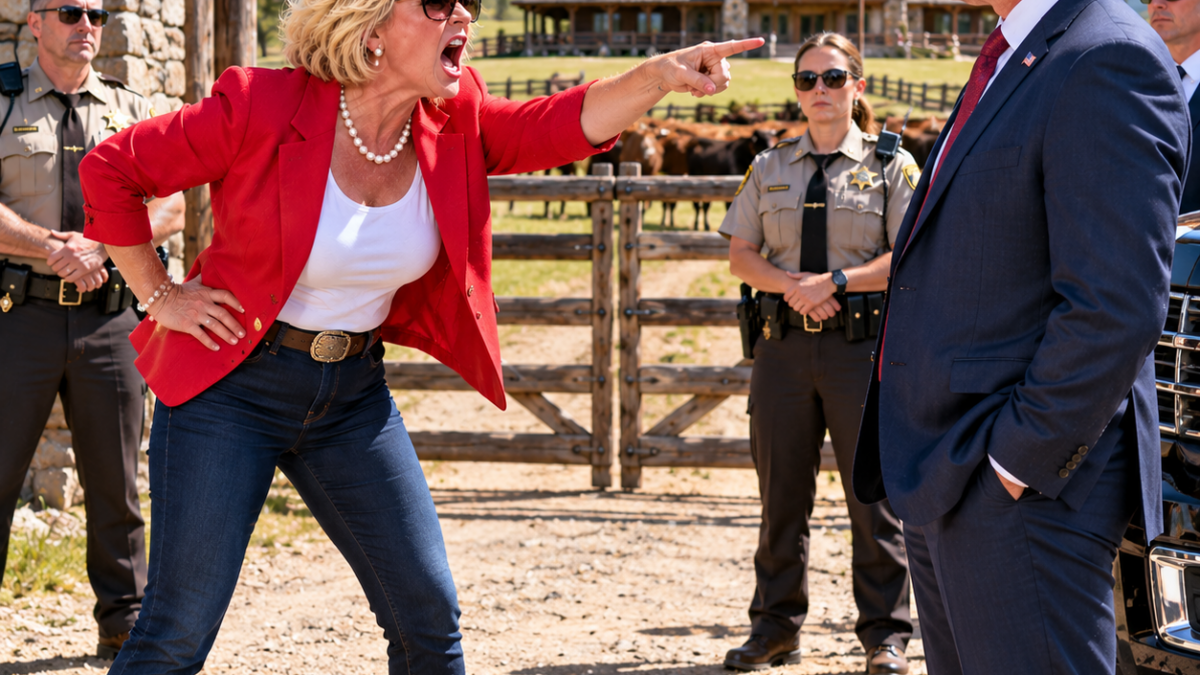
PART 2
I stood on the porch holding the photographs while the coffee in my other hand went cold.
There were eight.
One showed me unloading feed.
Another caught me repairing a hinge on the south barn.
One had been taken through a gap in the cottonwoods from the ridge.
A long lens.
Good glass.
Not a phone.
The last photograph was the one that bothered me most.
I was standing at my kitchen window.
Inside the house.
Whoever took it had been positioned high enough on the eastern ridge to see through the glass.
I checked the porch camera first.
Nothing.
Gate camera.
Nothing.
South fence.
Nothing.
The person had approached through the blind angle between two old equipment sheds, the one spot I hadn’t bothered covering because nobody had reason to walk there.
I called my chief of staff.
Nathan Cole answered on the second ring.
“You’re supposed to be off.”
“I am.”
“That has never stopped you from creating work.”
“I’ve got a problem at the ranch.”
He sighed.
“Political?”
“I hope not.”
I photographed the envelope and sent everything.
Nathan stopped joking.
“Who took those?”
“Don’t know.”
“Any threats?”
“No note.”
“Security detail?”
“I told them to stay down the road.”
“You are the governor.”
“And I’m on private family land.”
“That doesn’t make bullets respectful.”
“I’m not saying this is a threat.”
“I’m saying I don’t care.”
He paused.
“What happened yesterday?”
I told him about Angela.
There was silence.
Then Nathan asked, “She tried to annex your ranch?”
“Apparently through the power of voting and confidence.”
“You’re kidding.”
“No.”
“And you told her who you are?”
“She already knew after I said it.”
Nathan exhaled.
“Trevor.”
“What?”
“You cannot personally direct state enforcement in a dispute involving your property.”
“I know.”
“Do you?”
“I was attorney general before governor, Nathan.”
“You were a county prosecutor before attorney general. You are also angry right now.”
That was fair.
“I’ll treat it as a private property matter.”
“You’ll recuse if anything reaches a state agency.”
“Yes.”
“And let local law enforcement handle immediate trespass.”
“Yes.”
“Good.”
“You done?”
“No. Your protection detail is moving closer.”
“Nathan.”
“That part isn’t negotiable.”
He hung up.
I called Deputy Luis Ramirez next.
Ramirez had done eight years in Army signals before becoming a city cybercrime investigator in Dallas, then moved back home and joined the county sheriff’s office because, as he once told me, he wanted “crime with fewer passwords.”
He pulled into the ranch just after sunrise.
I handed him the photographs.
He studied each one carefully.
“These aren’t phone shots.”
“That’s what I thought.”
“Telephoto.”
“Professional?”
“At least somebody with decent equipment.”
He held one under the porch light.
“Look here.”
A faint shadow.
Part of a fence post.
“That is the east ridge.”
“Yes.”
“Private land.”
“Mine.”
“Any public trail?”
“No.”
He nodded.
“Then whoever took these crossed your property.”
“Can you prove where they stood from the photo?”
“With survey points and line of sight? Maybe.”
I showed him the camera blind spot.
Ramirez walked it.
Boots barely making noise on the packed soil.
“Somebody noticed your cameras.”
“Exactly.”
He looked toward the road.
“Tell me about the HOA president.”
I did.
When I finished, he said, “Could be related.”
“Could be somebody fascinated by gubernatorial gardening.”
“You don’t garden.”
“Exactly.”
He put the photos into evidence sleeves.
“I’ll start an incident file.”
“No arrests without evidence.”
He looked at me.
“I know how my job works, Governor.”
“Trevor.”
“When you stop telling me how to do it.”
Fair.
By noon, I had replaced the blind spot with two overlapping cameras and a motion sensor under the gravel near the secondary gate.
Not because I wanted a fortress.
Because somebody had made privacy part of the dispute.
That afternoon, a white SUV rolled down the road.
Angela.
Again.
This time she had company.
Two men in tan polos and khaki pants.
One carried a measuring wheel.
The other a hard plastic drone case.
I met them before they crossed the first cattle guard.
Angela held up her clipboard.
“We’re conducting an environmental and topographic inspection.”
“No, you’re not.”
She didn’t slow.
“Article Sixteen of our revised charter authorizes review of community-adjacent environmental zones.”
“Community-adjacent isn’t a legal property category.”
“It is under Oak Hollow policy.”
“Oak Hollow policy does not apply here.”
One of the men started opening the drone case.
I pointed toward him.
“Close it.”
He hesitated.
Angela said, “Proceed.”
The man stopped looking at her and started looking at me.
Smart.
I said, “You’re standing on private land after the owner told you to leave.”
Angela rolled her eyes.
“Don’t be theatrical.”
I pointed at the fence camera.
“Everything is recording.”
The measuring-wheel guy stopped.
Drone guy closed the case.
Angela’s mouth tightened.
“We have every right to inspect potential environmental impacts.”
“Who hired these men?”
“Oak Hollow.”
“Company?”
“That isn’t your concern.”
“It becomes my concern when they’re trespassing.”
Drone guy muttered, “Angela, maybe we should go.”
She turned.
“We have authorization.”
“From your board,” I said. “Not from me. Not from the county. Not from any court.”
She looked at me.
“You think being governor scares people.”
“No.”
I stepped closer.
“Knowing the law should.”
The men left first.
Angela stayed.
She stared across the pasture toward the ridge.
The look on her face wasn’t embarrassment.
It was possession.
Like the ranch offended her merely by remaining outside her reach.
“You don’t belong here,” she said quietly.
That caught me off guard.
“My family has been here since 1873.”
“Exactly.”
I frowned.
“What does that mean?”
“You own hundreds of acres beside a growing residential community and refuse to cooperate with regional planning.”
“Regional planning isn’t your HOA.”
“This area is changing.”
“Then change your area.”
“You could make this easy.”
“For whom?”
She didn’t answer.
Then she turned and walked away.
Ramirez arrived an hour later.
He watched the camera footage.
“Good audio.”
“Useful?”
“Very.”
“What about the contractors?”
“We’ll identify them.”
“Can we charge?”
“For today’s entry? We can document trespass warnings. Depending on exact lines and conduct, yes, but prosecutors may want more than brief entry where they left after warning.”
“Fine.”
“You sound disappointed.”
“I want this stopped.”
“Then stop thinking one arrest solves it.”
Again, fair.
That evening I drove into town.
Not to the governor’s office.
The county records office.
Darla McKenzie had worked there since before half the current subdivisions existed.
She wore thick glasses and kept file folders stacked in patterns that looked chaotic until you asked for something and she produced it in twelve seconds.
Her coffee mug read:
I CAN’T FIX STUPID, BUT I CAN FILE IT.
She looked over the top of her glasses when I approached.
“Well.”
“Good evening, Darla.”
“I saw the news.”
“What news?”
“Somebody saw the governor arguing with Angela Faircroft.”
“That became news?”
“Small county.”
I sat.
“Tell me about Oak Hollow boundary expansion.”
Darla stopped smiling.
“What happened?”
“She claims they annexed surrounding properties.”
“They can’t.”
“I know.”
“She knows too.”
“That interests me.”
Darla pulled open a drawer.
“Angela has been lobbying the planning board for years.”
“For what?”
“Designation changes.”
“What kind?”
“Community-adjacent development corridors.”
I laughed.
“So she invented the phrase.”
“Pretty much.”
“Any success?”
“Some.”
She handed me a file.
Oak Hollow requests.
Quarter after quarter.
Some rejected.
Some tabled.
Some approved in modified forms.
“Why would the county approve any HOA boundary request?”
“They weren’t formally expanding the HOA.”
“What then?”
“Reclassifying nearby parcels for planned-growth coordination.”
I read.
“That still doesn’t put them under Oak Hollow.”
“No.”
“But Angela can make it sound like it does.”
“Exactly.”
I kept reading.
Then I noticed grant references.
Oak Hollow Beautification Partnership.
Payments to county projects.
“What’s this?”
Darla leaned closer.
“Community grants.”
“From HOA funds?”
“Apparently.”
“To county-controlled projects?”
“Yes.”
“Before zoning votes?”
Her expression changed.
“That is why you need someone other than me looking at this.”
“Darla.”
“I keep records.”
“Do you think votes were bought?”
“I think I have grandchildren and a pension.”
That was an answer.
I asked for certified copies.
She made them.
Before I left, she caught my sleeve.
“Trevor.”
“What?”
“Angela isn’t just some woman who likes measuring lawns.”
“I know.”
“She thinks long-term.”
“How long?”
Darla looked toward the file.
“Long enough that your ranch has appeared in planning notes for almost four years.”
I stopped.
“My uncle was alive four years ago.”
“Yes.”
“Did she approach him?”
“You’d need his files.”
I drove home in the dark thinking about Uncle Henry.
He’d never mentioned Oak Hollow beyond calling it “that subdivision by the south creek.”
Henry wasn’t secretive.
But he hated paperwork enough to use tax envelopes as coasters.
If Angela had contacted him, the evidence might still be somewhere.
I searched his office until nearly midnight.
The room still smelled faintly of pipe tobacco even though he’d quit years earlier.
Desk drawers.
Cabinets.
Old ranch ledgers.
Veterinary bills.
Equipment receipts.
Then I found a folder marked:
OAK HOLLOW — IGNORE.
I laughed despite myself.
Inside were letters.
Purchase offers.
Three of them.
First offer: fair market value for the eastern eighty acres.
Second: twenty percent above.
Third: almost fifty percent above appraisal.
All from LLCs I’d never heard of.
But one letter had a handwritten note from Uncle Henry:
Same people. Angela’s outfit. Told them hell no.
I sat down.
Same people.
How had he known?
There was one more paper.
A cease-and-desist letter.
Oak Hollow accused him of livestock runoff affecting a “community environmental corridor.”
Henry had written across it in red pencil:
MY COWS HAVE MORE JURISDICTION THAN THESE PEOPLE.
I laughed.
Then I turned the page.
A business card fell out.
Angela Faircroft.
On the back, in Henry’s handwriting:
Wants east pasture for road access.
That changed everything.
This wasn’t about beautification.
They wanted land.
The next morning, I sent copies to my private attorney, Susan Bell, a property lawyer I’d known since before politics.
Then I called Nathan.
“I’m recusing from anything state-level touching Oak Hollow.”
“You found something.”
“Yes.”
“What?”
“Possible land-acquisition scheme.”
“Do not call the attorney general.”
“I know.”
“Do not call agency heads.”
“I know.”
“Do not investigate using your staff.”
“I know.”
“I’m repeating because you sound excited.”
“I’m angry.”
“Worse.”
Susan came to the ranch that afternoon.
She read Henry’s folder.
“This makes the board’s conduct look less spontaneous.”
“That’s diplomatic.”
“I’m a lawyer.”
“Can we stop them?”
“From entering your ranch? We can seek injunctive relief.”
“And their annexation theory?”
“Your title is clear.”
“What about the county reclassification requests?”
“We challenge any that affect your parcel.”
“What about Henry’s note?”
“Useful lead. Not proof.”
“I hate your profession.”
“I charge extra for that.”
The ethics complaint arrived the same day.
Angela had filed with the state commission alleging I’d used my position to threaten an HOA president during a private dispute.
I read it twice.
Most of it was nonsense.
But politically, it was clever.
If I fought too aggressively, she could say I abused office.
If I did nothing, she kept pushing.
Nathan called.
“We’ll cooperate fully.”
“I know.”
“Do not call the ethics commission.”
“I wasn’t going to.”
“They already have the camera footage showing the actual conversation?”
“Yes.”
“Good.”
He paused.
“Trevor, she’s trying to make your office a leash.”
“I know.”
“Don’t pull against it.”
“What do you suggest?”
“Be a homeowner.”
That was harder than it sounded.
As governor, I could call almost anybody in state government.
As Trevor Jennings, landowner, I had to file requests.
Wait.
Pay fees.
Stand in line.
That was exactly what I did.
The ethics commission dismissed the complaint after reviewing the full video and finding no evidence I’d threatened Angela with official action.
The written decision noted that I’d explicitly distinguished personal property rights from public office.
Angela called the dismissal political favoritism.
Of course she did.
Then Evelyn Greaves called.
I didn’t know her.
Her voice sounded exhausted.
“Governor Jennings?”
“Yes.”
“My name is Evelyn Greaves.”
“What can I do for you?”
“I used to own land by Oak Hollow.”
Used to.
Something in the phrase tightened my chest.
“What happened?”
“They took it.”
“Who?”
“The HOA.”
I sat down.
“An HOA can’t simply take private land.”
“I know that now.”
Her voice cracked.
“They told me the county condemned my house.”
“Was it condemned?”
“I thought it was.”
“Did you see a county order?”
“They gave me paperwork.”
“Do you still have it?”
“Yes.”
“Would you meet my attorney?”
“I want to meet you.”
“Why?”
“Because you’re the first person they’re afraid of.”
I didn’t like that answer.
But I agreed to meet at the courthouse in a public conference room with Susan present.
Evelyn arrived early.
Sixties.
Denim jacket.
Silver hair pulled back.
She carried a battered leather folder.
Inside were photographs.
Her farmhouse before.
Red door.
Ivy climbing the porch.
After.
Rubble.
The condemnation notice was on Oak Hollow letterhead.
No county seal.
No case number.
Signed by:
Martin Clay
Regional Compliance Director.
Susan searched.
No licensed county officer by that name.
No Oak Hollow employee filing under that name.
No contractor registration.
Evelyn looked at me.
“They told me if I didn’t leave, deputies would remove me.”
“Did deputies come?”
“No.”
“Who did?”
“Men in tan shirts.”
My mind went to Angela’s drone contractors.
“What company?”
“I don’t know.”
“Did they have logos?”
She closed her eyes.
“Gray mountain symbol.”
Susan looked at me.
“Same contractors?”
“Possibly.”
Evelyn continued.
“I sold because they said demolition costs would become my debt if I fought.”
“How much did they pay?”
She gave the number.
Less than half the prior assessed value.
“Buyer?”
An LLC.
Susan wrote it down.
“Who owns it?”
“I don’t know.”
We would.
Ramirez started pulling transfers.
Not as my investigator.
As part of the growing local fraud inquiry triggered by trespass and Evelyn’s complaint.
Seventeen Oak Hollow-related acquisitions in two years.
Nine connected to “condemnation” or distressed enforcement.
Several had no county inspection records supporting the stated health or safety basis.
Demolition companies?
Shell entities.
One Nevada registration.
One Arizona.
No local licensing history matching the work.
Ramirez called.
“You need to hear this from prosecutors, but you’re right about one thing.”
“What?”
“This is bigger than your ranch.”
He sent evidence through proper channels.
Because I was governor, the state attorney general’s office assigned a special independent team and documented my recusal before taking any action.
That protected the case.
And me.
I hated sitting outside the room while other people investigated what was happening in my own backyard.
But restraint became part of the strategy.
Angela expected me to misuse power.
I gave her nothing.
Then James Lorne appeared at the ranch.
Former county planner.
He arrived after nine at night, wearing a sport coat that didn’t match the gravel road.
His hands shook.
“I need to talk.”
“Come inside.”
He refused.
“Porch.”
Fine.
He handed me an envelope.
“I served on the planning advisory board.”
“I know your name.”
“Then you know they removed me.”
“Conflict of interest.”
He laughed bitterly.
“I have no conflict.”
“What happened?”
“Angela wanted boundary classifications approved.”
“Community-adjacent?”
His eyes sharpened.
“You’ve seen those.”
“Yes.”
“I opposed them.”
“Why?”
“Because they were nonsense dressed up as planning language.”
He sat.
“She offered grants to county projects.”
“Legal?”
“Sometimes.”
“Sometimes?”
“Timing mattered.”
He gave me emails.
Budget requests.
Meeting notes.
One file was labeled:
BEAUTIFICATION PHASE IV.
Inside was a requisition for private security services.
Company:
Frontier Property Solutions.
The gray mountain logo.
Evelyn’s men.
Angela’s drone crew.
I stared at the page.
“She hired private enforcement.”
James nodded.
“They called them compliance contractors.”
“For what authority?”
“Whatever they wanted.”
He listed families who had been pressured.
Some sold.
Some paid.
Some moved.
One filed bankruptcy.
Another abandoned a legal challenge after spending twelve thousand dollars.
“Why are you telling me now?”
James looked out across the pasture.
“Because I watched what they did to Evelyn.”
“Why didn’t you help her?”
His jaw tightened.
“I was scared.”
That answer hurt more than an excuse would have.
He looked at me.
“I had a pension. Wife with cancer. Angela made it clear she’d accuse me of corruption if I challenged her.”
“Were you corrupt?”
“No.”
“Then why worry?”
“Because allegations are cheaper than innocence.”
I knew that too well.
We gave everything to the independent task force.
Two days later, Evelyn called.
“They’re watching me.”
“Who?”
“Black SUV. Same one twice.”
“Did you report it?”
“Yes.”
“Where are you?”
“My sister’s.”
I contacted Ramirez, not state troopers myself.
Law enforcement arranged protection after confirming surveillance concerns.
Evelyn stayed at my ranch temporarily after prosecutors approved it and security assessed the risks.
The first night she arrived, she stood in the guest room doorway.
“Does this lock?”
“Yes.”
“From inside?”
“Yes.”
She nodded.
That was all.
Later I found her sitting in the kitchen at two in the morning drinking water.
“Can’t sleep?”
She shook her head.
“I haven’t slept properly since they tore down my house.”
I sat across from her.
“Why didn’t you fight?”
She looked at me sharply.
Then I regretted the question.
“I don’t mean—”
“I know.”
She stared into the glass.
“My husband died the year before. Medical bills. I had twenty-three hundred dollars in savings.”
She laughed without humor.
“They sent a lawyer letter. Then another. Every one said I could be liable for more costs.”
She looked at me.
“You know what twenty thousand dollars sounds like when you have twenty-three hundred?”
I didn’t answer.
“It sounds like law.”
That line stayed with me for years.
The task force needed stronger evidence tying Frontier Property Solutions to specific unlawful acts.
They did not create entrapment.
They did not ask me to lure anyone into a crime.
Instead, investigators enhanced surveillance around existing evidence sites and monitored activity after receiving lawful authorization.
Two nights later, motion sensors on my eastern fence triggered.
Two men crossed onto the ranch after midnight.
One carried a crowbar.
The other a drone equipment bag.
They approached a locked utility trailer holding ranch tools and survey equipment.
Before they could force entry, deputies moved in.
Both men were arrested for trespass and attempted burglary-related offenses supported by what officers observed.
One had prior fraud convictions.
The other had worked for an Arizona property-reclamation business that had been shut down after illegal eviction allegations.
Neither was a random trespasser.
Payroll records connected both to Frontier.
Bank records connected Frontier to a Nevada shell company.
That shell company received money from Oak Hollow.
The morning news showed the arrests.
Angela issued a statement.
ROGUE CONTRACTORS ACTED WITHOUT ASSOCIATION AUTHORIZATION.
Then investigators found the invoices.
Signed approval.
Angela Faircroft.
The warrants followed.
Her home.
Oak Hollow office.
Frontier’s records.
Computers.
Bank accounts.
The laptop seized from Angela’s house broke the case.
Photographs of targeted parcels.
Maps.
Spreadsheets.
One file:
RECLAIM TARGETS — Q3.
Evelyn’s property was listed.
So were twelve others.
Mine appeared under:
JENNINGS RANCH — ACCESS CORRIDOR / HIGH RESISTANCE.
I stared at the copy Susan showed me.
“High resistance.”
“You should put that on a hat.”
“I hate you.”
Another column:
PROJECTED ACQUISITION STRATEGY.
My ranch:
ZONING PRESSURE / ENVIRONMENTAL / ACCESS CHALLENGE.
The east pasture wasn’t merely desirable.
It connected Oak Hollow to a proposed development tract beyond my property.
A road through my ranch would turn disconnected parcels into one valuable corridor.
Uncle Henry had figured it out before me.
Wants east pasture for road access.
He’d written it years earlier.
Angela wasn’t obsessed with aesthetics.
She was assembling land.
The HOA board began collapsing immediately.
Vice president Howard Pike resigned after records showed he’d bought two distressed properties through an LLC partly owned by his brother.
The treasurer hired a criminal attorney.
Two directors claimed Angela had hidden information from them.
Some of that was probably true.
Some was self-preservation.
Angela was arrested.
Not at my ranch.
Not in some cinematic showdown.
At her attorney’s office after arranging surrender.
Charges included conspiracy, fraud-related offenses, unlawful surveillance allegations, and conduct tied to the property scheme.
Federal investigators became involved after interstate shell companies and financial transfers surfaced.
I learned most of it through victim briefings and public filings.
That’s how it should have been.
I held one press conference.
Not as prosecutor.
Not directing an investigation.
As governor addressing public concern after formal charges became public.
I stood on the courthouse steps.
Evelyn stood in the crowd.
So did James.
I said:
“This investigation is independent of my office. I recused because my family property is involved. The allegations now before the courts concern conduct affecting many residents, not only me.”
A reporter shouted:
“Governor, is this about HOA abuse?”
“It is about alleged crimes committed by individuals who happened to use an HOA as one vehicle.”
“Do you want Oak Hollow abolished?”
“That decision belongs to its members and the courts where applicable.”
“Are you angry?”
“Yes.”
That got quiet.
“I inherited a ranch my family has held for a century and a half. People entered it without permission and tried to create authority they did not possess. But anger is exactly why independent process matters.”
No cheering line.
No threats.
Facts.
The zoning board reversed unsupported classifications after legal review.
Oak Hollow’s expansion petitions were withdrawn or invalidated where they lacked proper basis.
Properties acquired through suspected fraud were frozen pending litigation.
The HOA itself entered court supervision.
Evelyn’s parcel became one of the first reviewed for restoration.
She stood on my porch when Susan called.
“Evelyn.”
She looked at me.
“What?”
“They froze the resale.”
Her hand went to her mouth.
“The property?”
“Yes.”
“The house is gone.”
“I know.”
“But the land?”
“Still there.”
She sat down.
For several minutes she cried quietly.
Not because everything was fixed.
It wasn’t.
Her farmhouse was rubble.
Her red door gone.
Her ivy dead.
But the soil was still hers to fight for.
People began coming to the ranch.
Not protesters.
Victims.
Curtis Hale, former county appraiser.
He’d questioned undervalued properties acquired by shell entities and had been reassigned.
A mother named Denise brought recordings showing Oak Hollow contractors threatening utility shutoffs over disputed dues.
Her teenage son had broken his arm trying to access a shutoff valve during a water interruption.
An elderly couple showed letters threatening fines over native vegetation.
A veteran showed repeated lien notices containing amounts that changed without explanation.
Not every complaint proved criminal.
Some people simply disliked HOA rules.
Investigators separated those.
Important.
Being mistreated does not make every allegation true.
But enough were supported.
The pattern became undeniable.
The most damaging evidence came from Angela herself.
She had recorded meetings.
Dozens.
Maybe to protect herself.
Maybe because control made her suspicious of everyone.
Audio files captured discussions that official minutes never reflected.
One recording:
Angela: “Push the next three lots into enforcement.”
Unknown male: “County might ask questions.”
Angela: “Then tag health hazards.”
Male: “And after acquisition?”
Angela: “Transfer to the holding company.”
Male: “Return?”
Angela: “You get your development margin. I get control of the corridor.”
The man was eventually identified as Derek Voss, an out-of-state developer whose companies had transferred nearly two million dollars into entities tied to Oak Hollow acquisitions.
He wasn’t an HOA member.
He didn’t care about fence height.
He wanted land.
Angela wanted money and authority.
Their interests matched.
Derek was arrested after federal charges were filed.
The entire scheme finally made sense.
Oak Hollow bought or pressured properties around its perimeter.
Some through legitimate purchases.
Some through disputed fines.
Some through allegedly falsified condemnations and coercive tactics.
Once enough contiguous land was assembled, Voss planned a large development.
Angela expected a financial interest and expanded political control over the area.
My ranch blocked the most efficient access.
Uncle Henry had refused.
Then died.
Angela assumed I would be easier.
She mistook public office for vulnerability.
In one narrow sense, she was right.
I couldn’t use state power for revenge.
But she overlooked something more basic.
My deed didn’t require gubernatorial authority.
It required a court willing to read it.
The criminal trial took months to reach.
By then, Evelyn had become one of the strongest witnesses.
The first time I met her, she could barely say Angela’s name without looking toward the door.
On the witness stand, she sat straight.
The prosecutor asked:
“What did Oak Hollow tell you about your property?”
“That the county had condemned it.”
“Was that true?”
“No.”
“When did you learn that?”
“After they had already demolished my home.”
“What did you believe would happen if you refused?”
“They said I could be removed and charged for demolition.”
“Why did you sign?”
Evelyn looked toward the jury.
“Because I was broke and alone.”
No dramatics.
No tears.
Just truth.
James testified about planning pressure.
Curtis about suspicious valuations.
Denise about utility threats.
Frontier contractors testified under agreements.
County employees described unusual zoning requests.
Then the recordings played.
Angela sat beside her attorney.
Still.
Until one recording mentioned my ranch.
Her voice:
“Jennings will make noise, but he won’t use the office.”
Voss:
“Why not?”
Angela:
“Because he’s too careful. He’ll treat it like a private dispute.”
Voss laughed.
“So he can’t fight back.”
Angela:
“Not quickly.”
I felt something twist in my chest.
She had understood my ethics better than I expected.
What she didn’t understand was patience.
Voss asked:
“And if he sues?”
Angela answered:
“Then drown him in process.”
The courtroom became completely silent.
Susan, sitting beside me, whispered:
“There.”
One sentence.
That was the heart of it.
Not annexation.
Not beauty.
Exhaustion.
Drown him in process.
Evelyn had been drowned in process.
So had others.
Lawyer letters.
Fake authority.
Fines.
Inspections.
Condemnation notices.
Every document increased fear.
Every delay made surrender cheaper.
My office didn’t save me from that strategy.
Resources did.
Lawyers.
Time.
Evidence.
The ability to say no.
That realization changed the reforms I later supported.
I refused to write a law aimed at Angela.
Instead, after the case developed and independent committees held hearings, the legislature considered broader HOA protections.
Annual financial disclosure.
Audit requirements above defined thresholds.
Clear limits on annexation and covenant expansion.
Written owner consent before private property could be added to association jurisdiction.
Stronger notice requirements for liens.
Independent appeal procedures.
Limits on fines.
Penalties for falsifying governmental authority.
Conflict-of-interest disclosures for vendors.
Some HOA organizations objected.
Not all criticism was wrong.
Rural communities worried state rules would burden small volunteer associations.
We adjusted thresholds.
Condo associations raised issues different from detached-home communities.
We addressed them separately.
Good legislation is boring.
It should be.
The final package passed with strong bipartisan support.
I signed it in the capital.
No giant banner.
No mention of Angela.
Evelyn attended.
Afterward she said:
“I thought you’d name it after yourself.”
“Absolutely not.”
“You politicians love names.”
“Not that much.”
She smiled.
Her property was eventually returned through court proceedings tied to the fraudulent transfer.
The farmhouse couldn’t be returned.
She chose not to rebuild it.
Instead, she sold the land at fair market value to a young couple who promised to preserve the old oak tree near the former porch.
“Does that hurt?” I asked.
“Yes.”
“Then why sell?”
“Because I don’t want to spend the rest of my life proving I belong somewhere people hurt me.”
I understood.
Justice does not require staying.
James received formal acknowledgment clearing the false conflict accusation used to remove him from the planning board.
He declined reinstatement.
Curtis got his personnel record corrected.
Denise and her son received compensation through civil settlements.
The boy’s arm healed.
Frontier Property Solutions dissolved.
Multiple shell-company assets were frozen and later used in restitution proceedings.
Derek Voss faced federal prosecution.
Angela’s trial lasted longer than anyone predicted.
The jury did not convict on every theory prosecutors initially discussed.
That’s normal.
Some counts were dismissed.
Some narrowed.
On the major fraud and conspiracy charges that survived, the evidence was overwhelming.
Guilty.
Angela stood motionless when the verdicts were read.
I expected satisfaction.
Instead, I felt tired.
Years of damage compressed into one word.
Guilty.
It mattered.
But it did not rebuild Evelyn’s home.
Didn’t return lost sleep.
Didn’t remove fear from families she’d pressured.
Sentencing came later.
Restitution.
Prison.
Financial penalties.
Lifetime prohibitions against serving in certain fiduciary community-governance roles.
Voss received his own sentence after conviction in the larger financial scheme.
Several former board members entered plea agreements.
Others were not charged after investigators concluded they’d been negligent or passive but lacked evidence of criminal participation.
That distinction angered some residents.
I supported it.
Cowardice and incompetence are not automatically felonies.
The law has to stay narrower than rage.
Oak Hollow homeowners ultimately voted to dissolve the old association structure and replace essential shared-property management with a smaller entity under court-approved transition rules.
Roads still needed maintenance.
The community well still needed administration.
Common land still existed.
But the old board was gone.
So was the mythology that an HOA president could redefine property lines because she owned a clipboard.
Months after the trial, I hosted a cookout at the ranch.
Nothing official.
No podium.
No state seal.
Hank from the feed store brought brisket.
Darla brought potato salad and complained that nobody returned county files in proper order.
Ramirez showed up late.
Evelyn brought pie.
James brought beer.
Children ran around the pasture fence while cattle watched them with suspicion.
Near sunset, Curtis handed me a wooden sign.
He’d carved it himself.
THIS LAND STANDS FREE.
I laughed.
“That is a little dramatic.”
“So was the HOA.”
Fair.
I hung it on the porch beam.
Later, after everyone left, I walked the fence line alone.
No SUVs.
No contractors.
No measuring wheels.
No drones.
Just grass moving under the night wind.
I stopped near the east pasture.
The same place Angela wanted.
Uncle Henry’s access corridor.
The land looked ordinary.
That was the beauty of it.
She had seen acreage.
Leverage.
Development access.
Money.
Henry had seen cattle pasture.
I saw family.
Neither required a spreadsheet.
The ranch had survived wars, droughts, bank failures, bad winters, and generations of Jennings men convinced they knew more about cattle than the cattle themselves.
Oak Hollow had been a brief chapter.
Still, I changed something.
Not the boundary.
That stayed exactly where it had always been.
I changed how I treated the ranch.
Before inheriting it, I thought of the place as Henry’s.
Even after the estate closed, I moved through the rooms carefully, like a guest who hadn’t earned the right to rearrange furniture.
I left his boots beside the mudroom door for months.
His coat hung behind the kitchen.
Coffee mug stayed on the same shelf.
Evelyn noticed once.
“You going to drink from that?”
“Henry’s.”
“I know.”
“So?”
“So he’s not using it.”
I glared.
She smiled.
Eventually I used the mug.
Small thing.
But ownership isn’t only a deed.
It’s allowing yourself to live where somebody else lived before you.
The following spring I repaired the barn roof Angela had once called a violation.
Not because she was right.
Because the roof actually leaked.
Ramirez drove past while I was on the ladder.
He rolled down his window.
“HOA approval?”
I threw a glove at him.
He laughed and kept driving.
Darla came by with certified copies of the original 1873 survey.
“For framing.”
“I already have the originals.”
“These aren’t for evidence.”
“Then why?”
She looked toward the porch sign.
“Because sometimes paper deserves a peaceful retirement.”
I framed one.
Hung it in the ranch office.
The eastern boundary line was faint but clear.
Almost exactly where the fence runs today.
Oak Hollow’s old entrance sat miles away.
One afternoon a young reporter came out to interview me for a retrospective.
I almost refused.
Then she asked a question I hadn’t heard before.
“When did you realize being governor wouldn’t solve the problem?”
I thought.
“The first day.”
She looked surprised.
“Really?”
“Yes.”
“Why?”
“Because governor isn’t a property right.”
I pointed toward the survey.
“That was.”
“But surely your office helped.”
“It gave me resources and public visibility. It also limited what I could ethically do.”
“Did that frustrate you?”
“Constantly.”
“Did Angela exploit it?”
“Yes.”
“Do you resent that?”
I considered.
“No.”
“Why?”
“Because the limits worked.”
She frowned.
“She nearly took your land.”
“And I didn’t order police to arrest her. I didn’t order investigators to target her. Independent people gathered evidence, prosecutors charged cases, judges issued warrants, juries decided guilt.”
I looked toward the pasture.
“If the system only protects me because I’m governor, then it didn’t protect me.”
That was the line she used.
I wished she hadn’t.
It sounded too polished.
The truth was messier.
Money mattered.
Lawyers mattered.
Cameras mattered.
Luck mattered.
Evelyn had less of all four.
That is why her story stayed with me more than mine.
Years later, she still visited.
She moved into a small house in town near her sister.
No HOA.
One-story.
Blue door.
Not red.
One Sunday we sat on the porch drinking coffee.
“You miss the farmhouse?” I asked.
“Yes.”
“Every day?”
“No.”
She looked at me.
“That surprised me too.”
“What do you miss most?”
“The sound the porch made when rain hit the tin roof.”
I smiled.
“Henry’s barn does that.”
“I know.”
She had spent enough time at the ranch to know.
We sat quietly.
Then she said:
“You know what I don’t miss?”
“What?”
“Being afraid of the mailbox.”
That hurt.
A mailbox.
That was what Angela had turned into a threat.
Every envelope could be another notice.
Another fine.
Another deadline.
Power doesn’t always arrive with guns.
Sometimes it arrives in a windowed envelope with bold letters.
That became the principle I cared about most.
Authority must be recognizable.
Appealable.
Limited.
Documented.
People should not have to guess whether a letter can cost them their home.
The reforms weren’t perfect.
No law is.
Bad people learn new tactics.
Good boards sometimes make mistakes.
Some homeowners abuse appeals.
Some associations need stronger enforcement against genuine safety hazards.
The work continued.
But the line moved in the right direction.
I eventually finished Uncle Henry’s office.
New shelves.
Better lights.
Kept his old desk.
Inside the bottom drawer, I left the OAK HOLLOW — IGNORE folder.
Not because I planned to ignore anything.
Because his handwriting made me laugh.
One day my niece Sarah found it.
She was twenty.
Studying agricultural economics.
“What’s this?”
“Your great-uncle’s legal strategy.”
She read the label.
“He ignored them?”
“Mostly.”
“Worked?”
“For him.”
She opened the purchase offers.
“Whoa.”
“Language.”
“You’re governor.”
“Exactly why I can recognize bad language.”
She held up Angela’s old business card.
“This is her?”
“Yes.”
Sarah looked toward the east pasture.
“They wanted all that?”
“Enough of it.”
“Would you ever sell?”
I looked out the window.
“No.”
“Never?”
“Never is a dangerous word.”
“So maybe?”
“If the family no longer wants it someday, that’s your generation’s decision.”
She looked horrified.
“Don’t make that my problem.”
I laughed.
“That is exactly how inheritance works.”
The ranch would outlive me.
That was the point.
Not because the Jennings name deserved permanent control.
Land doesn’t care about names.
But because each generation gets a temporary responsibility.
Protect it.
Use it.
Then let somebody else decide.
Angela had treated property like pieces on a board.
I came to see it more like a promise.
One winter morning, long after the case ended, I woke before dawn.
Snow had covered the gravel.
The porch sign Curtis made had frost along the letters.
THIS LAND STANDS FREE.
I walked to the barn.
Cattle breathed clouds into the cold air.
One of the old barn cats followed me, complaining the entire way.
I fed them.
Checked a water line.
Fixed a latch.
Nothing important.
On the way back, I saw tire tracks near the gate.
For one second, my body reacted before my mind did.
Heart faster.
Shoulders tight.
Old memory.
Then I recognized the vehicle.
County snowplow.
I laughed at myself.
Fear leaves slowly.
Even after danger doesn’t.
Back at the porch, I brushed snow off the wooden sign.
The original security camera was still mounted above it.
I considered taking it down.
Then decided not to.
Not because I expected trouble.
Because cameras are useful on a working ranch.
Coyotes.
Deliveries.
Teenage nieces sneaking out to ride horses without telling anyone.
Normal reasons.
I liked normal reasons.
I stepped inside.
Coffee was brewing.
Henry’s mug sat beside the machine.
I filled it.
Then walked to the office.
The framed 1873 survey caught the morning light.
Oak Hollow’s old imaginary expansion wasn’t on it.
Neither were Angela’s corridors.
Her beautification zones.
Her invented jurisdiction.
Her pressure maps.
Those things had seemed powerful because people repeated them.
The real line sat quietly on paper for more than a century.
It never needed to shout.
I ran my finger along it.
One boundary.
Recorded.
Clear.
Outside the window, the ranch stretched toward the ridge.
Same fence.
Same barn.
Same creek.
Same land Angela once told me I didn’t own.
I looked at Uncle Henry’s red-pencil note on the old HOA letter:
MY COWS HAVE MORE JURISDICTION THAN THESE PEOPLE.
I laughed into my coffee.
He had been right.
And the best part wasn’t that I was governor.
The best part was that eventually, that didn’t matter at all.
The deed did.
The witnesses did.
The records did.
The people who finally decided they were done being frightened did.
I walked outside and closed the door behind me.
Wind moved across the pasture.
The cattle lifted their heads, then went back to grazing.
Nothing had changed.
Which, after everything we had fought for, was exactly the way I wanted it.
By the following spring, I had convinced myself the Oak Hollow nightmare was finally behind us.
That was usually when something new arrived.
It came in a brown cardboard records box delivered to my office at the capitol with no warning and no dramatic note. The label simply read:
JENNINGS RANCH / OAK HOLLOW — ARCHIVED COUNTY MATERIALS.
Nathan carried it into my office and set it on the corner of my desk.
“What now?”
“I don’t know.”
“You have that look.”
“What look?”
“The one that usually costs the staff a weekend.”
I cut the tape.
Inside were county planning files dating back almost twelve years.
Meeting minutes.
Survey overlays.
Grant applications.
Handwritten notes.
Copies of correspondence between developers, county planning consultants, and Oak Hollow representatives from long before Angela became president.
Nathan leaned against the desk.
“I thought the case was done.”
“The criminal case mostly is.”
“Then why are we opening old boxes?”
“Because somebody sent this for a reason.”
The first hour produced nothing important.
Old drainage studies.
Road widening requests.
An abandoned community-center expansion.
Then I found a map.
Not recent.
Eleven years old.
Oak Hollow was smaller then.
My ranch sat to the west exactly where it always had.
But someone had drawn a proposed road in red pencil across the eastern pasture.
It connected Oak Hollow to three undeveloped tracts beyond my land.
At the bottom was a handwritten notation:
PREFERRED EMERGENCY ACCESS / FUTURE DEVELOPMENT CONNECTOR.
I stared at it.
Nathan saw my expression.
“What?”
I turned the map toward him.
“That road crosses my ranch.”
“Was it ever approved?”
“No.”
“You sure?”
“I would know.”
“Would Henry?”
That stopped me.
Uncle Henry had still owned the ranch eleven years earlier.
I kept looking through the box.
Ten minutes later, I found his name.
HENRY JENNINGS — LANDOWNER OBJECTION.
Attached was a letter written in his blunt, impatient style.
To Whom It May Concern:
I have not agreed to a road, easement, access corridor, public connector, community access lane, beautification strip, walking trail, environmental buffer, or any other creative name somebody wants to invent for taking part of my pasture.
The answer is no.
If anybody needs clarification, they can come ask me in person.
Henry Jennings.
Nathan laughed.
“He really was your uncle.”
“He was nicer.”
“That’s terrifying.”
Another paper followed.
A planning consultant’s internal memo.
Landowner unwilling. Recommend long-term acquisition strategy rather than condemnation due political sensitivity of century-family ownership.
I read it twice.
Political sensitivity.
Not legal impossibility.
Not lack of authority.
Political sensitivity.
I felt the old anger coming back, but this time it wasn’t directed at Angela.
This scheme was older than her presidency.
Maybe older than her involvement entirely.
“Nathan.”
“Yeah?”
“Get Susan.”
He hesitated.
“Private attorney Susan?”
“Yes.”
“Not attorney general?”
“Absolutely not.”
“Good answer.”
Susan Bell arrived at the capitol late that afternoon.
She read the old documents in silence.
“This changes context,” she said.
“How?”
“Angela didn’t invent the desire for your eastern pasture.”
“I figured that out.”
“She inherited it.”
“Meaning?”
Susan pointed to a consulting-company logo at the bottom of one report.
Horizon Civic Development.
“You recognize them?”
“No.”
“You should.”
“Why?”
“They later worked with Derek Voss.”
I leaned back.
“The developer.”
“Yes.”
“How later?”
“Corporate merger. Horizon’s principals became part of one of Voss’s development groups.”
I stared at the map again.
“So the corridor existed as a development goal more than a decade before Angela’s scheme.”
“Possibly.”
“And Henry blocked it.”
“Yes.”
“And after he died—”
“They may have believed the new owner would reconsider.”
“Except the new owner was governor.”
Susan gave me a dry look.
“That probably complicated their risk spreadsheet.”
I almost smiled.
Then something else occurred to me.
“What if Angela wasn’t the top of it?”
Susan didn’t answer immediately.
“That is a question for investigators.”
“The trial painted her as the center.”
“The evidence showed she was central to the crimes charged.”
“Not necessarily to the original plan.”
“Correct.”
I looked through the box again.
A name appeared repeatedly.
Marcus Vale.
Consultant.
Horizon Civic Development.
Regional Growth Advisory Council.
Never elected.
Never a county employee.
But present.
Meeting after meeting.
He had written memos.
Attended closed planning sessions.
Coordinated grant applications.
His name even appeared beside Oak Hollow infrastructure studies.
“Who is Marcus Vale?”
Susan pulled out her phone.
“Let’s find out legally.”
We didn’t need long.
Marcus Vale was seventy-two and supposedly retired.
He had spent thirty years moving between private development consulting, county advisory boards, regional planning commissions, and nonprofit growth councils.
Never enough power to become famous.
Always enough access to shape decisions.
His name appeared in old news articles.
Industrial parks.
Housing expansions.
Water districts.
Transportation corridors.
Nathan read over my shoulder.
“This guy looks boring.”
“Exactly.”
“That’s suspicious?”
“No. Effective people often look boring.”
A week later, Susan received permission through the existing civil discovery process to review archived materials connected to certain condemned parcels and development entities.
Marcus Vale’s name appeared again.
Then again.
Then again.
Not on criminal directives.
Never telling anyone to forge a condemnation.
Never approving surveillance.
Never ordering intimidation.
Instead, he sat one layer above.
Strategy.
Land assembly.
Infrastructure.
Feasibility.
Access.
He didn’t tell Angela how to pressure homeowners.
He told development groups which parcels needed to be acquired.
That distinction mattered.
Maybe he had committed no crime.
Maybe he’d simply designed the board on which Angela decided to cheat.
I had learned enough by then not to confuse suspicion with proof.
Still, I wanted answers.
Susan contacted him through counsel.
To my surprise, he agreed to meet.
No lawyers.
I insisted on one.
He arrived at the ranch on a cold April morning in a dark sedan driven by a man young enough to be his grandson.
Marcus was tall despite his age.
Silver hair.
Long gray coat.
Walking stick he seemed annoyed to need.
He looked toward the barn, then toward the eastern pasture.
“It’s beautiful.”
“That line usually comes before somebody offers to buy it.”
He smiled.
“I’ve already learned that doesn’t work.”
Susan sat with us on the porch.
Marcus accepted coffee.
Black.
For several minutes, nobody spoke.
Then I placed the eleven-year-old corridor map on the table.
“You drew this?”
He adjusted his glasses.
“No.”
“You approved it?”
“Recommended it.”
“For whom?”
“A regional development consortium.”
“Voss?”
“Predecessor entity.”
“Why my ranch?”
“The geography is obvious.”
“That doesn’t answer the question.”
“It does if you’re a planner.”
He tapped the map.
“Oak Hollow was always constrained by one problem. One entrance road. Difficult emergency access. Limited utility expansion. Your eastern pasture sits between existing residential infrastructure and buildable land beyond the ridge.”
“So you wanted a road.”
“Yes.”
“Henry said no.”
“Yes.”
“Then this memo recommends long-term acquisition.”
Marcus nodded.
“Correct.”
“Did long-term acquisition mean harass him until he surrendered?”
“No.”
“Did it mean fabricate HOA authority after he died?”
“No.”
“Fake condemnation notices?”
“No.”
“Private enforcement contractors?”
“No.”
His answers were calm.
I believed that he believed them.
“Then where does Angela enter?”
Marcus looked toward the pasture.
“She was useful.”
Susan’s pen stopped.
“Useful how?”
“She was ambitious.”
“That isn’t illegal.”
“No.”
“She believed Oak Hollow should grow.”
“Yes.”
“Did you encourage that?”
“I encouraged planning.”
I leaned forward.
“Marcus, people lost homes.”
His expression tightened.
“I know.”
“Did you know then?”
“No.”
“When did you know?”
“Too late.”
“How late?”
He stared into his coffee.
“After Evelyn Greaves.”
I felt anger rise.
“You knew about Evelyn before my case?”
“Yes.”
“And did nothing?”
“I withdrew from active consulting.”
“That isn’t doing something.”
“No.”
The honesty threw me.
Marcus looked older suddenly.
“I told myself Angela had become reckless and that separating myself from her would limit liability.”
“Liability.”
“Yes.”
“Not harm.”
“No.”
He swallowed.
“I was a coward.”
Susan asked, “Did you ever receive money from acquisitions connected to fraudulent enforcement?”
“No.”
“Equity?”
“No.”
“Consulting fees?”
“From development entities, yes.”
“Were those fees contingent on acquiring the Jennings corridor?”
“Partially on project milestones.”
I stared at him.
“So financially, you benefited if they got my land.”
“Yes.”
“And when Henry refused?”
“We waited.”
“And when Angela started pressure tactics?”
“I should have stopped participating.”
“But you didn’t.”
“No.”
He reached into his coat and removed a folded envelope.
Susan immediately said, “What is that?”
“Copies of correspondence.”
“Originals?”
“Preserved with my attorney.”
“Why bring them?”
“Because there is one thing the state didn’t find.”
He handed the envelope to Susan, not me.
Good instinct.
She opened it.
Emails.
Marcus to Angela.
Three years before Evelyn lost her home.
M.V.:
Acquisition cannot involve coercive enforcement. If owners refuse, project should adjust around holdouts.
Angela:
That makes assembly impossible.
M.V.:
Then assembly may be impossible.
Another.
Angela:
You don’t understand these people. They’ll say no forever unless there are consequences.
Marcus:
Legal consequences for actual violations are one thing. Manufactured pressure is not.
Another.
Angela:
You want clean hands and complete acreage. Pick one.
Marcus never replied.
I looked at him.
“Why didn’t prosecutors have these?”
“They had some.”
“These?”
“No.”
“Why?”
“My counsel considered them outside subpoena scope.”
Susan’s eyes hardened.
“Convenient.”
“Yes.”
“Why release them now?”
Marcus looked at me.
“Because I watched the trial and realized every person in that courtroom had a version of the same excuse.”
“What excuse?”
“I wasn’t the one doing the worst thing.”
Nobody spoke.
He continued.
“Angela wasn’t the first person to want your land. She was simply the first willing to destroy people to get it.”
That line stayed with me.
Marcus’s documents reopened limited questions in the larger civil and financial investigation, though they did not produce some dramatic new arrest.
That was important.
Not every ugly decision is criminal.
Marcus had operated inside legal gray zones.
Profited from development planning.
Ignored warning signs.
Protected himself.
Morally disappointing.
Legally different.
Evelyn hated that distinction.
When I told her, she slammed her coffee cup onto the porch table.
“So he walks away?”
“He may face civil exposure.”
“Civil.”
“Yes.”
“My house is gone.”
“I know.”
“He knew Angela was threatening people.”
“He knew enough that he should have acted.”
“Then why isn’t that a crime?”
“Because being a coward isn’t automatically illegal.”
“It should be.”
“I know.”
She stood and walked toward the railing.
For a while, she stared at the pasture.
Then she said, “Sometimes I hate how much you sound like a lawyer.”
“I used to be one.”
“You still are.”
Fair.
Months later, Marcus agreed to testify in several restitution proceedings.
His testimony helped establish that certain acquisitions had not been necessary for public safety or legitimate planning.
That mattered.
Evelyn’s case benefited.
So did two others.
One afternoon she called me.
“They approved the settlement.”
“How much?”
She told me.
Enough to rebuild if she wanted.
Enough to buy somewhere else.
Enough that she wouldn’t spend retirement wondering whether losing her home had also destroyed her financial future.
“You okay?”
“No.”
Honest.
“What will you do?”
“I don’t know.”
“That is allowed.”
She laughed softly.
“You always say that.”
“Because you’re always trying to decide your entire life before dinner.”
Eventually she bought the small blue house near her sister.
Not the ranch.
Not her old farm.
A place with flower boxes and a covered porch.
I helped her move one Saturday.
No cameras.
No press.
Ramirez brought his truck.
Susan carried boxes and complained everyone owned too many books.
At the end of the day, Evelyn stood in the empty living room.
“This feels strange.”
“Bad?”
“New.”
“That isn’t the same thing.”
“No.”
She walked to the front door.
Opened it.
Closed it.
Opened it again.
“What are you doing?”
“Checking the lock.”
“You already checked.”
“I know.”
She looked embarrassed.
I didn’t say anything.
Trauma teaches the body habits before the mind catches up.
She finally locked the door once and left it alone.
Six months after Marcus came to the ranch, I received another inheritance-related surprise.
Not money.
A letter from Henry.
Technically, from his attorney.
It had been sealed with instructions to give it to me only if I became involved in any dispute concerning development rights on the ranch.
Henry had expected trouble.
Of course he had.
I opened it alone in the ranch office.
Trevor,
If you’re reading this, somebody is trying to turn the east pasture into something stupid.
My advice is don’t get sentimental just because the place is old.
Land is for living on, not worshiping.
But don’t let anybody bully you into selling either.
If you sell someday, sell because you chose to.
Not because somebody made keeping it unbearable.
That is the trick people use when they can’t legally take something. They make owning it hurt.
Also, the north well pump sticks in winter. Hit the housing with a wrench.
—Henry
I sat there laughing and crying at the same time.
They make owning it hurt.
Henry had understood the entire strategy years before I did.
Not Angela specifically.
The method.
Pressure until ownership becomes pain.
Fines.
Letters.
Surveillance.
Administrative problems.
Fear.
Evelyn’s words returned.
You know what twenty thousand dollars sounds like when you have twenty-three hundred?
It sounds like law.
That was when I decided the ranch should do more than survive.
I had nearly seven hundred acres.
Most working pasture.
Some creek bottom.
Some timber.
One unused section near the old north road.
For years Henry had talked about creating a small agricultural education program there.
Never did.
I called Sarah, my niece.
“You still studying agricultural economics?”
“No, I secretly became a ballet dancer.”
“Smart mouth is genetic.”
“What do you want?”
“Come to the ranch Saturday.”
“Why?”
“Project.”
That weekend, we walked the north field.
I told her the idea.
A small nonprofit training program for local teenagers.
Livestock basics.
Equipment safety.
Water conservation.
Land records.
Property rights.
She stopped.
“Property rights?”
“Apparently important.”
“You’re turning the ranch into a civics lesson?”
“Partly.”
She smiled.
“Henry would hate the phrase.”
“He’d love the free labor.”
That was true.
We started small.
Ten students.
One summer.
Cassidy—who had nothing to do with this ranch story but somehow heard about anything involving free work—donated lumber through a friend.
Ramirez taught basic emergency response.
Darla did a records workshop that terrified the teenagers with property-tax forms.
Susan explained deeds and easements.
Evelyn came once.
She didn’t talk about losing her house.
She talked about reading notices.
“Never assume official-looking means official,” she told them. “Read the name at the top. Read who issued it. Ask where the authority comes from.”
One sixteen-year-old boy asked, “What if they get mad?”
Evelyn smiled.
“People who depend on you being scared always get mad when you ask questions.”
I wrote that down.
The program became annual.
Not huge.
Didn’t need to be.
Twenty kids the second year.
Thirty the third.
One of them, a girl named Mariah, later studied surveying.
Another became a county code inspector.
The boy who asked Evelyn about people getting mad became a welder and still sent me sarcastic Christmas cards.
The ranch changed.
Not physically much.
Same barn.
Same fences.
Same cattle.
But it stopped feeling like something I was merely defending.
It became useful.
That’s different.
Angela eventually sent me a letter from prison.
I almost didn’t open it.
Susan told me it was screened and harmless.
Inside were three pages.
No excuses at first.
Then some.
She blamed ambition.
Derek.
The board culture.
The constant pressure to keep property values rising.
Her own fear of becoming irrelevant.
Then one paragraph stood out.
I hated your ranch before I ever met you.
Not because it was ugly.
Because it proved I wasn’t in control.
Every map of Oak Hollow had a blank beside it, and that blank bothered me more than I understood.
When Henry refused us, I told myself he was selfish.
When you inherited it, I told myself history shouldn’t block progress.
Eventually I stopped seeing the ranch as somebody’s home.
It became an obstacle.
I read that paragraph several times.
Then folded the letter.
Nathan later asked if I’d respond.
“No.”
“Why?”
“I don’t know what I’d say.”
“Forgive her?”
“That isn’t a sentence you mail.”
“Tell her you don’t?”
“Also not useful.”
So I did nothing.
Sometimes closure isn’t communication.
Years passed.
I won reelection.
Then eventually left office because every governor discovers that constitutions are better at retirement planning than politicians are.
My last day at the capitol felt strangely ordinary.
Boxes.
Handshakes.
Staff crying.
Nathan pretending not to.
He handed me a folder.
“What is this?”
“Your schedule.”
“I don’t have a schedule.”
“That is the point.”
Inside was one page.
MONDAY:
Go home.
I laughed.
Then I did.
No motorcade.
No official residence.
No security detail following forever.
Just my truck.
When I turned onto the ranch road, Sarah had tied a cheap cardboard sign to the gate.
WELCOME HOME, FORMER GOVERNOR.
Underneath:
STILL NEEDS PERMISSION TO ENTER.
I called her.
“You’re fired.”
“I don’t work for you.”
“Exactly why you’re fired.”
I drove in.
The porch sign was still there.
THIS LAND STANDS FREE.
Weathered now.
Letters darker than the surrounding wood.
I considered replacing it.
Didn’t.
Old things earn their scars.
That evening Evelyn came over.
So did Ramirez.
Darla.
Susan.
Nathan drove all the way out from the capital with his wife.
No political donors.
No reporters.
No speeches.
We grilled steaks.
Sarah burned corn.
Darla insulted everyone.
At sunset I walked away from the noise and stopped by the eastern fence.
The corridor.
The road that never happened.
Beyond the pasture, Oak Hollow still existed in a smaller, restructured form.
Homes.
Families.
People who had nothing to do with Angela.
Kids who barely remembered the scandal.
Some of them used the county trail system.
Some bought beef from my ranch.
One family sent their daughter to the summer program.
That felt important.
The border had stopped being a battlefield.
It was just a fence again.
Nathan found me there.
“You all right?”
“Yeah.”
“Thinking about office?”
“No.”
“Liar.”
“Maybe five percent.”
He leaned against the fence.
“What are you going to do now?”
“I have cattle.”
“You have ranch hands.”
“I have fences.”
“You have ranch hands.”
“I have a leaking barn roof.”
“You fixed that.”
“It’s a barn. It’ll leak again.”
Nathan laughed.
Then he looked across the pasture.
“You ever think about how close you came to losing this?”
“Yes.”
“Scare you?”
“Sometimes.”
He nodded.
“Would you have fought as hard if you weren’t governor?”
That question sat between us.
“I don’t know.”
“Really?”
“I had money. Lawyers. Contacts. Confidence. Those things matter.”
“Title too.”
“Title made some things harder.”
“But people listened.”
“Yes.”
I looked toward the house.
“That is why Evelyn matters more than I do.”
Nathan waited.
“She fought when nobody had a reason to listen.”
He nodded.
We stood there until the dinner crowd started yelling for us.
Before going back, I touched the top rail of the old fence.
Not original.
Replaced many times.
But still following the same line Henry followed.
The same line his father followed.
The same line Angela couldn’t legally move.
That was what I finally understood.
Inheritance isn’t keeping every board and nail exactly as your ancestors left them.
It’s protecting the right to choose what changes.
Henry chose cattle.
I chose the education program.
Sarah might choose something else.
Someday there might be fewer cows.
More conservation land.
Maybe part of the ranch becomes public trail.
Maybe none of it does.
The point is whoever owns it gets to decide through lawful means.
Not the loudest clipboard.
Not the richest developer.
Not a county consultant hiding behind planning language.
Not even a governor.
Especially not a governor.
That winter, the north well pump froze.
I called Sarah.
“Come help.”
“Why?”
“Family tradition.”
She arrived wearing new boots that cost far too much for actual ranch work.
We opened the pump housing.
The motor hummed but wouldn’t turn.
I remembered Henry’s letter.
Hit the housing with a wrench.
Sarah watched me.
“That is your repair strategy?”
“It is documented.”
“By whom?”
“Previous owner.”
“Licensed engineer?”
“Old rancher.”
“That is worse.”
I tapped the housing with a wrench.
The pump coughed.
Then started.
Water moved through the line.
Sarah stared.
“I hate that that worked.”
“Respect tradition.”
She shook her head.
We walked back toward the house through fresh snow.
At the porch, she stopped beneath Curtis’s sign.
“This land stands free.”
“Dramatic, isn’t it?”
“A little.”
“You want me to take it down?”
“No.”
She brushed snow from the letters.
“Leave it.”
So I did.
And late that night, after everyone had gone home, I sat alone in Henry’s old office with a mug of coffee and the original 1873 survey spread across the desk.
No red development corridor.
No Oak Hollow expansion.
No reclaim targets.
Just boundaries.
Creek.
Pasture.
Road.
Names of people long dead.
Outside, the ranch was silent except for wind moving against the windows.
For years I had thought the most important moment in the entire fight was telling Angela who I was.
Governor Trevor Jennings.
I was wrong.
That was never the reason I won.
The title made a good story.
The deed made the difference.
The witnesses made the difference.
Evelyn keeping her battered folder made the difference.
James saving emails made the difference.
Curtis remembering suspicious valuations made the difference.
Ramirez treating every complaint like evidence instead of gossip made the difference.
Susan refusing to confuse anger with law made the difference.
And even Marcus, late and ashamed, finally telling the truth made a difference.
Angela had built power by making people feel isolated.
One homeowner.
One letter.
One frightened family.
One exhausted retiree.
The whole structure fell apart when those people started putting their evidence on the same table.
I folded the old survey carefully.
Placed it back in the drawer.
Then I noticed Henry’s folder beside it.
OAK HOLLOW — IGNORE.
I smiled.
I took out a marker.
Crossed out IGNORE.
Underneath, I wrote:
READ EVERYTHING.
Then I closed the drawer.
Outside, dawn was beginning to lighten the eastern pasture.
The same pasture Angela once wanted for a road.
The same pasture Henry refused to sell.
The same pasture I had nearly turned into nothing but a symbol.
Cattle moved slowly through the frost.
A barn cat sat on the porch rail watching them like it owned the place.
I stepped outside with my coffee.
No cameras alerted.
No SUV approached.
No drone buzzed over the ridge.
No stranger carried a clipboard toward my door.
Just morning.
I looked at the fence.
Then the barn.
Then the long grass silver with frost.
One hundred fifty years of family ownership sounded impressive when politicians or reporters said it.
Standing there, it felt simpler.
Somebody had cared for this place before me.
I got my turn.
Someday somebody else would get theirs.
And for now, the ranch was still here.
Not because I was governor.
Because when somebody tried to make owning it hurt badly enough that surrender looked easier, enough people finally refused to surrender.
I took another drink of coffee.
Behind me, the old wooden porch sign shifted slightly in the wind.
THIS LAND STANDS FREE.
This time, I didn’t think it sounded dramatic at all.
[END OF STORY]








