PART 2: HOA President Thought She Could Burn Me Out of My Own Home—Then She Learned Exactly Who She’d Targeted
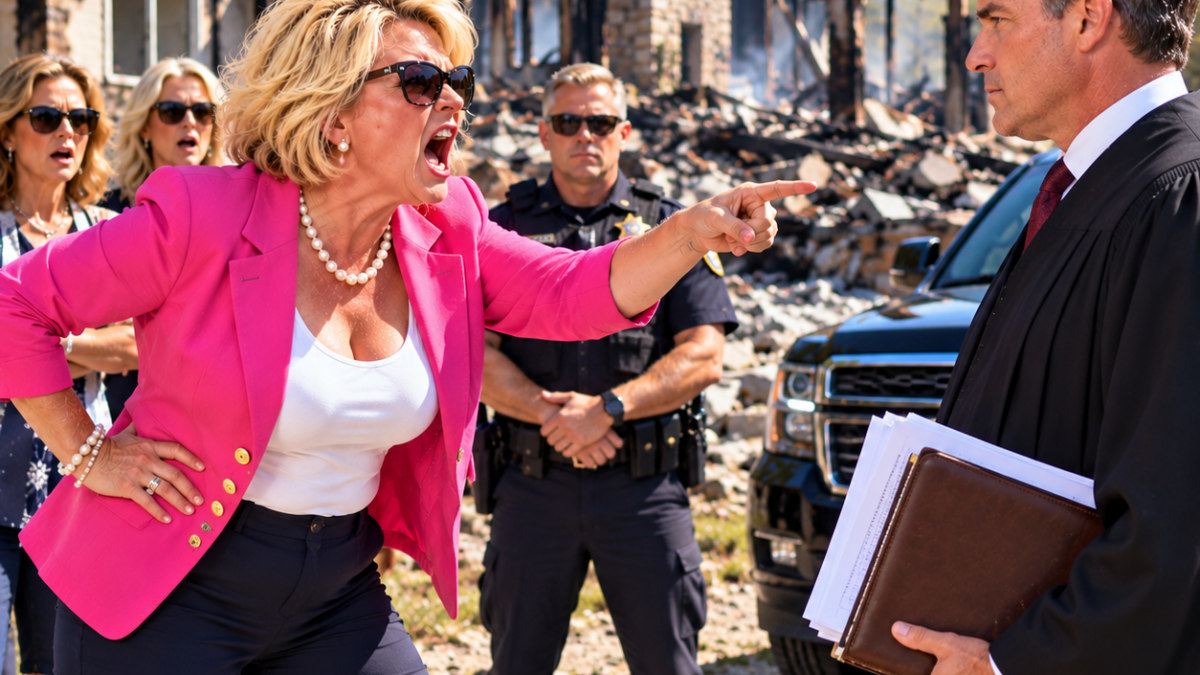
PART 2
Not because I’d threatened her.
Because he understood what anger looked like.
Nancy said, “If you’d signed the covenant like everybody else, perhaps we wouldn’t have needed to take action.”
Everything around me went quiet.
Not literally.
Radios still crackled.
Water still hissed over hot timber.
Somewhere a diesel engine idled.
But all I heard was one phrase.
Needed to take action.
I said, very carefully, “What action?”
Nancy blinked.
“I meant community action.”
“You said ‘we wouldn’t have needed to take action.’”
“I was referring to enforcement.”
“What enforcement?”
Her eyes moved toward the house.
Then back.
“Not this.”
“Then what?”
She gave a brittle laugh.
“Marcus, don’t be ridiculous.”
The fire chief approached before I could answer.
He was a broad-shouldered man named Collins who I’d met once at a neighborhood safety meeting.
“Mr. Weller?”
“Yes.”
“Could I speak with you?”
I looked at Nancy.
“So could she.”
Collins glanced toward her.
His expression changed slightly.
“Let’s talk over here.”
We moved toward the driveway.
He kept his voice low.
“We found something at the rear of the property.”
“What?”
“Possible accelerant pattern.”
My stomach tightened.
“Electrical?”
“We don’t know yet.”
“You said accelerant.”
“We found burn characteristics inconsistent with an accidental interior origin. One of my investigators also located what may be remnants of an ignition device near the back porch.”
I turned toward Nancy.
She was already walking away.
“Chief.”
“I know.”
“Don’t let anyone leave until you get names.”
“We’re documenting witnesses.”
“Police?”
“Already notified.”
I took out my phone.
Then stopped.
For years, my profession had taught me that the first minutes after shock are when people make terrible decisions.
They accuse.
They destroy evidence.
They say too much.
They use their authority because they’re angry.
I wasn’t going to do that.
I was a United States district judge.
That mattered far less at that moment than Nancy would later pretend it did.
It did not give me power to investigate my own fire.
It did not give me authority over local police.
It did not permit me to order federal agents around because my house was gone.
What it gave me was experience.
Experience knowing that evidence mattered more than fury.
I called my chief deputy clerk first.
“It’s Marcus.”
“Judge?”
“My house burned.”
Silence.
“Oh my God.”
“I won’t be in Monday.”
“Of course.”
“Also contact the chief judge. Tell him I may become a witness in a criminal investigation and that I want anything potentially connected to me screened for reassignment.”
“Understood.”
Then I called an attorney I trusted.
Not a prosecutor.
My own attorney.
Daniel Price.
He answered.
“What happened?”
“My house is gone.”
“What?”
“Fire. Possibly arson.”
“Where are you?”
“Outside.”
“Police there?”
“Coming.”
“Don’t talk to reporters.”
“There aren’t any.”
“There will be.”
I looked toward Nancy’s SUV as she drove away.
“Daniel.”
“Yes?”
“I think the HOA may be involved.”
He paused.
“Think or know?”
“Think.”
“Good. Keep using that word.”
I closed my eyes.
Even then, he was lawyering me.
I needed it.
The police arrived fifteen minutes later.
Then the county fire investigator.
Then a state fire marshal investigator because the local team requested additional expertise.
Nobody arrived because I was a judge.
They arrived because an occupied residential property had burned and the fire scene showed indicators of possible arson.
I made my statement.
I described Nancy’s comment exactly.
No embellishment.
No conclusion.
The investigator, Carla Mendes, repeated it back.
“She said, ‘Maybe if you’d signed the covenant like everyone else, we wouldn’t have needed to take action.’”
“Yes.”
“Then corrected herself?”
“Yes.”
“Any prior threats?”
“Letters.”
“Explicit threats of violence?”
“No.”
“Property threats?”
“Fines. Liens they had no authority to impose. Claims they’d ‘resolve’ noncompliance.”
“Do you have copies?”
“Off-site backups.”
That sentence probably saved the investigation months.
Every HOA letter Nancy ever sent me had been scanned to cloud storage.
My deed.
Title report.
Emails.
My own replies.
Meeting notices.
Everything.
Being a federal judge hadn’t made me paranoid.
Litigation had.
By midnight, I was sitting in Daniel’s guest room across town wearing borrowed sweatpants and staring at my phone.
Photographs of the fire were already online.
Neighbors had posted them.
One caption said:
WELLER HOUSE TOTAL LOSS. TERRIBLE.
Another:
HOA DISPUTE HOUSE BURNS—COINCIDENCE?
I stopped looking.
At 1:30 a.m., Carla called.
“We have probable arson indicators.”
I sat up.
“What kind?”
“Accelerant residue from multiple locations near the back deck and kitchen entry. We recovered portions of a delayed ignition setup.”
“Any suspect?”
“Not yet.”
“Vehicle cameras?”
“We’re canvassing.”
“Carla.”
“Yes?”
“You know what I do.”
“I do.”
“I don’t want this investigation handled differently because of it.”
“I wasn’t planning to ask your permission.”
That was exactly the answer I wanted.
“Good.”
“Also, stop calling me. I’ll call you.”
I almost laughed.
“Yes, ma’am.”
The next morning, Daniel brought coffee into the guest room.
“You look terrible.”
“My house burned.”
“Fair.”
He sat.
“What do you want to do about the HOA?”
“Nothing.”
He looked surprised.
“Nothing?”
“Not yet.”
“Good.”
“I want records preserved.”
“That is not nothing.”
“Legal nothing.”
He understood.
We sent preservation notices through counsel.
No accusation.
No lawsuit yet.
Preserve emails.
Board minutes.
Surveillance footage.
Vendor records.
Internal communications relating to my address or membership status.
Nancy responded through the HOA’s lawyer by noon.
The letter accused me of attempting to intimidate a volunteer community organization using my public office.
Daniel handed it to me without comment.
I read it twice.
Then put it down.
“She’ll make this about me being a judge.”
“Yes.”
“She’s going to say I’m retaliating.”
“Yes.”
“Am I?”
Daniel looked at me.
“You tell me.”
I stared through his kitchen window.
“No.”
“Then act like it.”
That became my rule.
No calls to prosecutors.
No favors.
No special requests.
No public statements about guilt.
No discussion of the case with colleagues beyond what recusal and security required.
If federal jurisdiction emerged later, federal prosecutors would make that decision without me.
I would be a victim.
A witness.
Nothing more.
That was harder than it sounds.
By afternoon, investigators found the first break.
A private security camera on Maple Drive had captured a black SUV exiting the rear access road of Sycamore Grove at 3:14 a.m.
The estimated ignition time was between 3:10 and 3:25.
The plate wasn’t fully readable in the first clip.
A second camera caught the same SUV six blocks away.
Better angle.
Registered owner:
Nancy McAllister.
Carla called me.
“Do not contact her.”
“I won’t.”
“I’m serious.”
“So am I.”
“Her attorney says she was home asleep.”
“Then maybe someone borrowed her car.”
“That’s what we investigate.”
Good.
Evidence first.
Investigators obtained additional video through warrants and consent.
Nancy’s SUV entered Sycamore Grove at 2:38 a.m.
Exited at 3:14.
Her house was inside the neighborhood.
That wasn’t enough by itself.
Then they found a service-station camera showing Dennis Halpern, HOA treasurer, purchasing two plastic fuel containers three days before the fire.
Still not proof of arson.
Then a hardware-store receipt connected to items consistent with components of the recovered ignition device.
Purchased on Dennis’s personal credit card.
Then came the search warrants.
I learned about them after they happened.
As it should have been.
Nancy’s home.
Dennis’s home.
HOA office.
A storage unit associated with the association.
Teresa Knox, the HOA communications secretary, was also interviewed and later became a subject.
Three days after the fire, Carla sat across from me in Daniel’s living room.
“We found a ledger.”
“What kind?”
“Handwritten enforcement notes.”
“On me?”
“Yes.”
She hesitated.
“Marcus, I need you to understand that some of this may become public.”
“I assumed.”
She opened a copy.
Names.
Addresses.
Initials.
Codes.
FJ.
NC.
T1.
T2.
T3.
My name:
MARCUS WELLER — T3.
Beside it:
REFUSES MEMBERSHIP.
TITLE CLAIM.
LEGAL THREATS.
REMOVE OBSTACLE.
I stared.
“What does T3 mean?”
“We don’t know conclusively.”
“Someone does.”
“Yes.”
“Who wrote it?”
“Appears to be Dennis’s handwriting.”
I sat back.
“Remove obstacle.”
Carla said, “Don’t interpret yet.”
“Hard not to.”
“I know.”
She turned page.
Other names.
Some had FJ.
Some NC.
One entry:
PRESSURE THROUGH FINES.
Another:
PROPERTY VALUE REVIEW.
Another:
FENCE/ACCESS.
The HOA had been tracking people.
Not just members.
Nonmembers.
Residents who challenged dues increases.
People who refused architectural demands.
People they described as “non-cooperative.”
My house fire had started as a local arson investigation.
Now financial investigators wanted the HOA’s books.
Then the state attorney general’s consumer protection office became interested because several homeowners reported potentially fraudulent fines and property interference.
Still no federal case.
Not yet.
Nancy was arrested on state charges first.
Conspiracy-related allegations.
Arson-related counts subject to the prosecutor’s evidence.
Dennis too.
Teresa was arrested later on charges tied to records and alleged coordination.
The local prosecutor held a press conference.
I did not attend.
I watched from Daniel’s kitchen.
Nancy walked into court wearing navy.
No clipboard.
Her lawyer argued there was no direct evidence she personally lit anything.
True at that stage.
The state argued her SUV, communications, and coordination evidence supported probable cause and conditions of release.
The judge imposed bond conditions and prohibited contact with me or certain witnesses.
No theatrical refusal.
No dramatic life sentence.
The case was only beginning.
Then investigators found the emails.
The first one was four months old.
Nancy to Dennis:
Weller is still refusing execution of covenant. Need a permanent solution before spring appraisal cycle.
Dennis:
Legal says title exemption probably holds.
Nancy:
Then legal isn’t helping.
Another:
Teresa:
We cannot assess him if he isn’t legally a member.
Nancy:
Then make living outside the structure more expensive than joining.
Another:
Dennis:
He’s a federal judge. Bad target.
Nancy:
He’s a homeowner first.
That line made my chest tighten.
Not because she knew my job.
Because she knew exactly who I was and still believed the association’s desire for control outweighed the law.
Then came the email that changed the scope.
Dennis:
We can move funds through Neighborhood Security Initiative. Same as Mercer place.
Nancy:
Do it. No direct board minute.
“Mercer place?” I asked Carla.
She nodded.
“Elderly couple who moved two years ago.”
“What happened?”
“Garage partially collapsed during renovation.”
“Accident?”
“Originally.”
“And now?”
“Being reviewed.”
Other residents came forward.
Vandalized irrigation systems.
Anonymous threats.
Mailbox tampering.
False code complaints.
One man’s flower beds destroyed with bleach.
A family whose pet became sick after consuming something left near their fence—though investigators could not immediately prove HOA involvement.
A pattern did not mean every bad thing had the same source.
Carla emphasized that.
So did prosecutors.
That restraint made the proven incidents more credible.
A former board secretary named Grace London contacted investigators.
She wanted immunity consideration before talking.
Her attorney negotiated.
Then she gave a statement.
According to later testimony, the board had maintained an informal list of “problem properties.”
T1 meant increased inspections and fines.
T2 meant financial pressure, contractor complaints, code reports.
T3 was rare.
“Removal strategy.”
Not murder.
Not necessarily arson.
A category for forcing someone to sell, join, or leave through escalating pressure.
My property was T3.
So were two others.
One family had moved.
Another had finally joined the HOA voluntarily after repeated disputes.
I had refused.
Grace gave investigators an audio recording from a private board strategy session.
Nancy’s voice:
“If we can’t control them, we make the property impossible to enjoy.”
Dennis:
Marcus won’t fold.
Nancy:
Everybody folds when the cost gets high enough.
Teresa:
What if he sues?
Nancy:
Then make sure nothing traces directly to the association.
There was a pause.
Then another voice:
“Burn it down if we have to.”
Investigators enhanced the recording.
Speaker identification became contested.
Nancy’s attorneys would later argue context and attribution.
But the phrase existed.
Combined with the fire, the ledger, the vehicle, the purchases, and the financial records, the case grew.
Federal involvement began for a reason that had nothing to do with my robe.
Money.
The HOA had created a nonprofit called Sycamore Community Renewal Foundation.
It applied for federal community-development funds through programs administered with local partners.
Grant applications contained demographic representations investigators alleged were knowingly false.
Some funds moved interstate through banking systems.
Some were paid to shell vendors.
One vendor had billed for security improvements tied to properties on the T-level list.
That gave federal prosecutors their own jurisdictional path.
My burned house became one part of a much larger investigation.
I learned federal agents had joined when Special Agent Aaron Thorne called through my attorney.
Not because I demanded it.
Not because I had authority to demand it.
“Judge Weller, I’m assigned to the grant and financial-fraud component. We’d like to interview you regarding records you’ve received from the HOA.”
“Daniel will be present.”
“Of course.”
“And anything involving my pending cases goes through the chief judge.”
“We’ve already coordinated appropriate conflict procedures.”
That mattered.
My own court had to stay far away.
I requested reassignment of any matter touching Sycamore Grove, the defendants, related entities, or investigators.
The chief judge approved.
For months, I became simply Marcus Weller in those cases.
Victim.
Witness.
Homeowner whose house was gone.
That was enough.
Insurance paid temporary living costs.
The structure was a total loss.
My insurer’s investigator worked separately from law enforcement.
Then came the inventory.
That almost broke me.
Couch.
Replaceable.
Television.
Replaceable.
Clothes.
Replaceable.
Kitchen equipment.
Replaceable.
Books.
Some replaceable.
Some not.
My mother’s handwritten recipe cards.
Gone.
My father’s watch.
Gone.
A box of letters from my younger brother before he died.
Gone.
Photographs from before everything became digital.
Gone.
The oak dining table my parents bought when they married.
Gone.
Insurance forms asked:
Estimated value.
How do you assign value to a letter?
Daniel sat beside me one night while I filled the spreadsheet.
“Put replacement value where you can.”
“And where I can’t?”
“List irreplaceable personal property.”
“That pays nothing.”
“No.”
I pushed the laptop away.
“Then why list it?”
“Because loss isn’t only what insurance reimburses.”
I looked at him.
“I hate lawyers.”
“You are one.”
“Formerly.”
“Judge is still lawyer with better parking.”
For the first time in days, I laughed.
Three weeks after the fire, I went back to the property.
The city had released the structure after evidence processing.
I hired my own licensed demolition contractor.
Not because I wanted to erase the scene.
Because I couldn’t keep staring at it.
They removed charred framing.
Sorted debris.
Preserved anything the investigators hadn’t already collected.
Then we found the watch.
My father’s.
Metal case blackened.
Crystal shattered.
Band partly melted.
But the movement and engraving remained.
M.W. FROM DAD — KEEP YOUR WORD.
I sat on the curb holding it in gloved hands.
A firefighter had missed it.
Investigators had no evidentiary need for it.
It had been buried under what used to be my bedroom wall.
I cried there.
Not when the house burned.
Not during arrest.
Over a watch that no longer worked.
Because grief chooses its own doorway.
The rebuild plans came later.
I didn’t want the same house.
That surprised everyone.
Daniel said, “Insurance will fund like-kind reconstruction.”
“I don’t want like-kind.”
“Why?”
I looked at the old blueprint.
“Because I don’t want to walk into a replica and spend twenty years comparing it to what burned.”
We designed a modest craftsman-style house.
Wider porch.
Smaller second floor.
Fire-resistant exterior materials.
Sprinkler system.
Solar panels.
A study in the back.
No unnecessary ornamental fencing.
The irony of rebuilding under a neighborhood once obsessed with appearance wasn’t lost on me.
Then the HOA sent an architectural-review notice.
I thought Daniel had printed a joke.
He hadn’t.
Interim board.
Same association.
Requesting plans.
I called him.
“Are they insane?”
“Read the footer.”
The notice contained a disclaimer:
REVIEW REQUEST APPLIES ONLY TO PROPERTIES LEGALLY SUBJECT TO THE DECLARATION.
Mine wasn’t.
I wrote:
NOT A MEMBER. NO REVIEW AUTHORITY.
Then I mailed it certified.
Some habits survive fire.
The criminal discovery continued.
Financial records showed more than eight hundred thousand dollars in questionable expenditures over six years.
Not all stolen.
Some legitimate.
Some poorly documented.
Some tied to vendors connected to board members.
Some transferred through the nonprofit.
The federal grant component involved roughly one hundred thirty thousand dollars under direct scrutiny.
The broader figure made better headlines.
Prosecutors used narrower numbers.
That distinction mattered.
The press discovered I was a federal judge long before I wanted them to.
Headline:
FEDERAL JUDGE’S HOME DESTROYED IN ALLEGED HOA ARSON PLOT.
Then national outlets.
Cameras outside Daniel’s house.
Calls to chambers.
One commentator suggested federal authorities had descended on an HOA because “one powerful judge got angry.”
That infuriated me more than Nancy’s lawyers.
Because I’d spent months doing everything possible to prevent exactly that appearance.
My court issued a short administrative statement:
Judge Weller has recused from any matter related to the ongoing investigations and is participating solely as a private victim and witness.
I gave no interviews.
Nancy’s defense team did.
They claimed selective prosecution.
Political pressure.
Institutional overreach.
One attorney said:
“If Mr. Weller were a plumber, this never becomes a federal case.”
The U.S. Attorney’s Office answered in a filing, not a press conference.
Federal grant fraud.
Interstate financial transactions.
Shell entities.
Independent witnesses.
Evidence predating discovery of my judicial position by some investigators.
The paper mattered more than television.
Again.
Sycamore Grove homeowners began petitioning to remove the old board and place the association under temporary independent management.
Not dissolve it instantly.
Road maintenance.
Common landscaping.
Retention ponds.
A small pool.
Insurance.
Those functions still existed.
A court-appointed receiver eventually handled finances during litigation.
The association’s enforcement authority was suspended pending review.
Residents held meetings without Nancy.
They were chaotic at first.
Years of fear don’t create healthy democracy overnight.
People shouted.
Accused one another.
Demanded every person who had ever agreed with Nancy resign from neighborhood life.
Grace attended one meeting under attorney advice and nearly got screamed out of the room.
I stood at the back.
A man pointed at her.
“She knew!”
Grace looked pale.
“She did,” I said.
Everyone turned.
“She also recorded them.”
“She waited years.”
“Yes.”
“So we’re supposed to forgive her?”
“I didn’t say that.”
The room quieted.
I continued.
“If you make telling the truth late the same as never telling it, the next person stays silent.”
Grace looked at me.
I hadn’t planned to defend her.
Maybe I wasn’t.
I was defending usefulness of truth.
That meeting changed tone.
Not completely.
But enough.
The trial came almost eighteen months after the fire.
Not “The United States versus the HOA” exactly.
Associations aren’t automatically criminal enterprises because officers commit crimes.
The indictment named individuals and entities on specific counts.
Nancy McAllister.
Dennis Halpern.
Teresa Knox.
The nonprofit.
Two vendor entities.
Other defendants through related cases.
Racketeering charges were narrower than the original headlines suggested and required proof of enterprise and pattern.
The prosecution had work to do.
So did the defense.
I did not sit behind prosecutors every day.
I testified when subpoenaed.
Before that, the chief judge formally adjusted my docket to avoid scheduling conflicts and conflicts of interest.
I walked into the federal courthouse through a side entrance I’d used hundreds of times.
But that morning felt different.
I wasn’t wearing a robe.
I was wearing the same charcoal suit I’d worn the day my house burned.
Not intentionally at first.
Then I realized.
I almost changed.
Didn’t.
Daniel saw me.
“Symbolic?”
“Laundry.”
“Liar.”
“Mostly laundry.”
Assistant U.S. Attorney Lena Corwin met me in a witness room.
“You know the rules.”
“I do.”
“Answer what you’re asked.”
“Yes.”
“Don’t teach.”
“I never do.”
She stared.
“Marcus.”
“Fine.”
“Do not sound like a judge.”
“That one may be harder.”
“Be a homeowner.”
I nodded.
That was what I was.
When I entered courtroom, I didn’t look at Nancy immediately.
Then I did.
She looked older.
Hair shorter.
No polished suburban-president armor.
Dennis wouldn’t raise his eyes.
Teresa kept writing notes.
The jury watched me.
The judge on the case—someone from another district assigned to avoid conflicts—gave standard instructions.
No special treatment because of my profession.
I took the oath.
Lena began.
“Please state your name.”
“Marcus Weller.”
“Occupation?”
“United States district judge.”
“Are you here today in that capacity?”
“No.”
“In what capacity?”
“As the owner of the property that burned and as a fact witness.”
She walked through the history.
My deed.
The HOA.
My refusal to join.
Letters.
The fire.
Nancy’s statement.
I repeated it exactly.
“Maybe if you’d signed the covenant like everyone else, we wouldn’t have needed to take action.”
Lena asked:
“Did you understand that statement at the time?”
“I understood it as implying the HOA had taken some action against me. I did not know what action she meant.”
“Did you accuse Ms. McAllister of arson?”
“No.”
“Why not?”
“I had no evidence at that moment.”
Lena displayed the ledger.
“What is this?”
“I first saw a copy during the investigation.”
“Your name?”
“Yes.”
“Classification?”
“T3.”
“Did you know what that meant when you first saw it?”
“No.”
She later introduced testimony from Grace explaining categories.
Then audio.
Emails.
Vendor records.
Security footage.
Fuel purchase.
Ignition components.
My role was small compared with the evidence.
That was right.
Defense counsel approached.
Expensive cufflinks.
Measured voice.
“Judge Weller, you are a powerful man.”
“That’s not a factual question.”
A few people smiled.
The judge looked at me.
I corrected myself.
“I’m sorry. Please rephrase.”
Defense counsel did.
“Your position gives you substantial institutional influence, correct?”
“My position gives me authority in cases lawfully assigned to me. Not over this investigation.”
“You contacted your chief judge immediately.”
“Yes.”
“You contacted counsel.”
“Yes.”
“Federal investigators became involved.”
“Later, based on matters I did not control.”
“You expect this jury to believe your status had no effect?”
Lena objected.
Sustained.
He changed approach.
“You knew federal prosecutors.”
“I know many lawyers professionally.”
“Agents?”
“Some.”
“Officials?”
“Yes.”
“And you never called one?”
“Not to investigate my fire.”
“Never asked for federal involvement?”
“No.”
“Never used your office to obtain records?”
“No.”
“Never signed an order connected to this matter?”
“No.”
“Never directed law enforcement?”
“No.”
He paused.
Then:
“You filed civil litigation seeking punitive damages.”
“Through private counsel.”
“You wanted to make an example of the HOA.”
I looked at him.
“No.”
“Didn’t you say you wanted this on the record?”
“Yes.”
“Why?”
“Because someone entered my property, burned my home, and evidence later showed years of coercive conduct. A record matters.”
“So you wanted consequences.”
“Yes.”
He smiled slightly.
“Thank you.”
He thought he’d found something.
I added nothing.
Consequences weren’t bias.
They were the point of law when wrongdoing was proven.
The strongest testimony came from Grace.
Her hands shook.
She described board meetings.
The list.
Selective fines.
Fake complaints.
Pressure.
Dennis saying:
“We need to make an example.”
Nancy responding:
“Let’s see how long they last.”
She admitted her own role.
“I took minutes.”
“Did you alter them?”
“Yes.”
“At whose direction?”
“Ms. McAllister’s sometimes. Mr. Halpern’s sometimes.”
“Why?”
“I was afraid they’d turn the board on me.”
“Did they?”
“When I objected, I became T1.”
The jury looked up.
Grace continued.
“I realized the list wasn’t just homeowners. It was us too.”
That explained the entire system.
Control doesn’t stop at enemies.
Eventually it needs loyalty tests.
The defense attacked her immunity arrangement.
Fairly.
She had reason to cooperate.
But recordings supported parts of her account.
So did financial records.
Then came the private board audio.
Nancy’s voice was clear.
“If we can’t control them, we’ll drive them out.”
Another voice:
“Marcus won’t sell.”
Nancy:
“He doesn’t have to sell today.”
Dennis:
“You keep escalating and somebody gets hurt.”
Nancy:
“Then maybe they learn.”
Defense argued no direct arson instruction.
Then prosecutors played a later clip.
“Burn it down if we have to.”
This time forensic audio expert testified the speaker was highly likely Nancy, though defense challenged methodology.
Context came from surrounding discussion.
Property removal.
Pressure.
“Making examples.”
No single sentence convicted her.
The mosaic did.
The jury deliberated six days.
Longer than people online expected.
That was reassuring.
Guilt shouldn’t be instant because story feels obvious.
They returned mixed verdicts.
Nancy guilty on the most serious conspiracy and arson-related counts supported by evidence, plus federal fraud counts.
Not guilty on one narrower count prosecutors had included.
Dennis guilty on multiple conspiracy, financial-fraud, and arson-related counts.
Teresa convicted on fraud and conspiracy counts but acquitted on one charge tying her directly to ignition planning.
Reality was messier than headline.
Good.
Sentencing happened months later.
Nancy received a substantial federal sentence.
Not the theatrical “22 years because judge’s house.”
A guideline-based sentence reflecting arson conspiracy, fraud, obstruction-related conduct, loss amounts, role in the offense, and other proven factors.
Dennis received less but still years.
Teresa less again based on role and convictions.
Other participants took plea agreements.
Some board members were never charged.
Being passive, foolish, cowardly, or negligent isn’t automatically a federal crime.
That’s another distinction outrage ignores.
My civil case settled after criminal convictions clarified liability.
Insurance.
HOA assets.
Individual defendants.
Vendor entities.
The settlement covered rebuilding beyond my homeowners insurance, uninsured losses, legal costs where available, and compensation for proven damages.
The money mattered.
Not because I needed revenge.
Because loss has accounting.
And accountability without restitution is incomplete.
The old Sycamore Grove HOA could not continue in its prior form.
Residents voted, under receiver supervision and legal advice, to dissolve the enforcement-heavy association and replace it with a limited property-maintenance entity responsible only for genuinely shared assets.
Retention pond.
Private lane section.
Pool.
Common landscaping.
No control over individual homes unless explicitly established by recorded covenants.
My property remained outside.
Exactly where it had always been.
The old HOA office, a converted model home, eventually became a neighborhood library and meeting room after the city acquired it through a lawful arrangement.
The residents wanted to name it after me.
I said no.
They did anyway.
Weller Civic House.
I hated it.
Daniel loved it.
“You finally got your own building.”
“I had one.”
“Too soon?”
“Eighteen months too late.”
He laughed.
I eventually laughed too.
The planning-department scandal surfaced after the criminal trial.
A city compliance officer named Joel Simmons contacted my attorney.
He had found archived records.
Years earlier, Sycamore Grove representatives had convinced planning staff to mark several nonmember properties as “transitional compliance parcels.”
That category didn’t legally exist.
Mine included.
It had been used to delay or complicate permits—including a solar application I’d filed years earlier.
At the time, I assumed bureaucracy.
Now records showed informal communications with HOA board members.
The state ethics commission investigated.
Two former planning officials eventually faced administrative and criminal scrutiny for unrelated but overlapping conduct.
Not half the city government.
Not a vast conspiracy.
A smaller, uglier truth.
A few people stopped asking whether they had authority because the HOA was influential, organized, and persistent.
That is how bad systems often grow.
Not with one grand plot.
With repeated shortcuts nobody challenges.
One recovered note from 2012 read:
Expedite variance concern per informal agreement with SGHOA.
No formal basis.
No public process.
My lot number beside it.
I held the copy for a long time.
Nancy hadn’t merely hated me personally.
The organization had spent years trying to transform voluntary membership into practical inevitability.
Join, or encounter friction.
Permits.
Complaints.
Valuations.
Social pressure.
Then eventually, under Nancy, worse.
The city responded with reforms narrower than television wanted.
No sweeping declaration that all HOAs were evil.
Registration requirements for associations dealing with city grant programs.
Conflict disclosures.
Clear prohibition on private entities representing themselves as municipal authority.
Improved public-record tracing for planning decisions.
Stronger complaint channels.
Audits for grant recipients.
The state bar formed a working group on private-community governance and conflicts of interest.
They asked me to chair.
I declined.
Then accepted vice-chair after Daniel accused me of cowardice.
“I have a docket.”
“You also have opinions.”
“Everyone has opinions.”
“Yours come with footnotes.”
I hated him.
The new house took nine months.
The first day I walked through after final inspection, it smelled like paint, cedar, and clean drywall.
Nothing like the old house.
That was the point.
The study faced the backyard.
Wide windows.
Solar panels on the south roof.
A deep green front door.
The porch wider than before.
Across the street, a young couple named Ben and Alicia had bought one of the houses whose previous owners moved during the scandal.
They brought over pie.
Of course they did.
Neighborhood reconciliation apparently requires pie.
Their toddler dragged a watering can across my lawn.
Their dog barked at a contractor.
Alicia looked embarrassed.
“Sorry.”
“I like dogs.”
Ben glanced at the new house.
“We heard what happened.”
“Everybody has.”
“We almost didn’t buy here.”
“Why did you?”
“The old HOA is gone.”
“Good reason.”
He looked at me.
“Most people would’ve moved.”
I thought about that.
Maybe.
For months, people had told me staying was courageous.
Sometimes it felt more like stubbornness.
But leaving would have given Nancy exactly what the T3 strategy was designed to produce.
Removal.
I wasn’t staying to prove something anymore.
I stayed because the street still had oak trees.
Because my commute was reasonable.
Because the grocery store knew my name.
Because the backyard had light in the afternoon.
Because a crime committed against your home should not automatically transfer ownership of your future to the person who committed it.
That first night in the rebuilt house, I couldn’t sleep.
No surprise.
At 2:47 a.m., I walked downstairs.
Every smoke detector light felt too bright.
I checked the back door.
Then the kitchen.
Then the porch.
Then the detector panel.
Then I caught myself.
I stood in the dark.
This was what Nancy had left behind that no insurance line item captured.
Hypervigilance.
The knowledge that home can be entered by intention even when you’re not there.
I made coffee at three in the morning.
Sat on porch.
No fire.
No SUV.
No clipboard.
Just crickets.
Healing is boring.
That’s one reason people don’t tell it properly.
The dramatic part is flame.
The harder part is sleeping through the night again.
It took months.
Therapy helped.
I am a federal judge and I went to therapy after an arson attack.
There is no contradiction in that sentence.
For a while, every unexpected car woke me.
Every chemical smell tightened my chest.
The first time a neighbor lit a backyard fire pit, I walked outside before realizing what I was doing.
Ben saw me.
“Everything okay?”
“Yeah.”
He looked toward smoke.
Then understood.
“I can put it out.”
“No.”
“You sure?”
“Yes.”
I stayed outside.
Watched fire.
Small.
Contained.
Ordinary.
Eventually my body believed what my mind knew.
Not every flame was coming for me.
Weller Civic House opened the following spring.
I refused ribbon-cutting speech.
They tricked me.
A child handed me scissors.
I surrendered.
Inside were bookshelves, public computers, a meeting room, and copies of the new neighborhood maintenance charter.
No secret minutes.
No mandatory attendance.
No aesthetic committee.
On one wall, residents wanted to display photographs from the scandal.
I objected.
“Don’t turn this into a museum of Nancy.”
Grace agreed.
That surprised me.
“She’s had enough space in our lives.”
Exactly.
Instead, they created a small archive cabinet.
Court records.
Public reports.
Governance documents.
Historical materials.
Available if someone wanted them.
Not dominating the room.
The rest of wall held children’s art.
Better.
At the first town hall, I sat in the back.
A plumber argued with a retired accountant about pool costs.
A teacher asked for better lighting near bus stop.
Ben proposed community garden.
Someone complained about dog waste.
Normal.
At the end they asked me to speak.
I stood reluctantly.
People waited.
I had spent a career speaking in courtrooms.
This felt harder.
“I don’t have much to say.”
Lewis? Wrong neighborhood. No Lewis here.
Ben laughed.
“That’s a first for a judge.”
Fair.
I continued.
“For years this neighborhood confused order with control.”
Quiet.
“We still need rules. We still need agreements. Shared property does not maintain itself. But authority should always have a source and a limit.”
I looked around.
“If somebody tells you they have the power to do something that affects your home, ask where that power comes from.”
No applause yet.
Good.
“If the answer is ‘because we voted,’ ask whether they had the right to vote on it.”
Someone laughed.
“If the answer is ‘because it’s always been this way,’ ask to see the document.”
More smiles.
“And if the answer is ‘trust us’—”
Ben said, “Call a lawyer?”
I smiled.
“Maybe start with reading.”
That got applause.
I stepped down.
No grand speech.
No declaration that no organization would ever control the street again.
That would have been another form of arrogance.
Communities need structures.
The lesson wasn’t abolish authority.
It was bind authority to law.
The final piece of evidence returned to me almost three years after the fire.
A maintenance worker named Howard approached me after a meeting at Weller Civic House.
I remembered him vaguely.
Years earlier, Nancy’s board had fined him for a basketball hoop attached to his garage.
He held a plastic evidence sleeve.
“Investigators released this.”
“What is it?”
“Something I found in my mailbox before your fire.”
Inside was an unsigned typed letter.
JUDGE OR NOT, FALL IN LINE.
YOUR HOUSE ISN’T AS PERMANENT AS YOU THINK.
FIRE CLEANS BETTER THAN COURTS.
I stared.
“Why didn’t you open it?”
“I thought it was HOA junk. I had a pile.”
“You gave this to police?”
“After the fire.”
“Why are you giving it to me?”
“They said I could keep it.”
“I don’t want it.”
He nodded.
“Me neither.”
We both laughed awkwardly.
I took it anyway.
Not home.
To the public archive.
Context.
Evidence.
History.
Then I went back to living.
That was the part Nancy never understood.
Control works only while other people organize their lives around it.
For years, Sycamore Grove organized itself around avoiding her anger.
After she was gone, people had to relearn ordinary disagreement.
Sometimes poorly.
Ben and another neighbor nearly stopped speaking over a fence replacement.
Alicia got furious because somebody parked in front of her driveway.
Two residents fought over whether the library room could be used for a yoga class.
Nobody set anything on fire.
Progress.
I returned fully to the bench.
The first difficult sentencing hearing after my own case affected me more than I expected.
Different crime.
Different defendant.
Arson wasn’t involved.
But a victim spoke about feeling unsafe in her home after a burglary.
Her words hit differently.
I recused from nothing simply because I had been victimized.
Judges are human.
We carry lives with us.
The job is not to have no experiences.
It’s to recognize when experience prevents impartiality.
After court, I sat alone in chambers for a long time.
Then wrote in notebook:
HOME IS NOT PROPERTY VALUE.
I don’t know why.
Maybe because Nancy always talked about property values.
She believed the neighborhood existed to protect resale value.
Appearance.
Uniformity.
Control.
But a home is where people allow themselves to be unguarded.
Burning one isn’t merely destroying walls.
It’s attacking that permission.
That was why the recovery took years.
Not because rebuilding was slow.
Because safety is not installed with drywall.
Five years after the fire, the deep green front door needed repainting.
I considered changing color.
Then laughed.
Nancy would have hated the possibility.
I painted it red.
Not as rebellion.
Because Alicia had leftover exterior paint.
That is how ordinary life defeats tyranny.
Not by making every breakfast symbolic.
By eventually forgetting to be symbolic.
The neighborhood garden went in across from Civic House.
Children planted tomatoes.
Ben built raised beds badly.
I fixed two without telling him.
He noticed.
“You’re a federal judge, not a carpenter.”
“My father was.”
“That doesn’t transfer genetically.”
“Neither does common sense.”
We argued for ten minutes.
Good day.
Grace eventually moved.
Before leaving, she came to my porch.
“I owe you an apology.”
“You testified.”
“That’s not the same.”
“No.”
She looked toward rebuilt house.
“I sat in meetings where they talked about you like you weren’t a person.”
I waited.
“At first it was funny. Nancy hated that you wouldn’t join. Dennis called you ‘His Honor the Holdout.’”
I almost smiled.
“That is objectively decent.”
Grace laughed.
Then stopped.
“We normalized it.”
“Yes.”
“We talked about pressure like it was policy.”
“Yes.”
“When somebody suggested damaging your landscaping, I didn’t object.”
“Did you do it?”
“No.”
“Still.”
“I know.”
She wiped at her eyes.
“I keep thinking if one of us had stood up earlier—”
“Maybe.”
“That isn’t comforting.”
“I’m not going to lie to comfort you.”
She nodded.
“Fair.”
I said, “You eventually did.”
“Late.”
“Yes.”
“You’ll never forgive me.”
I thought.
“I don’t know.”
That was honest.
“I don’t spend much time deciding anymore.”
She seemed relieved.
Maybe forgiveness isn’t always gift.
Sometimes irrelevance is.
Nancy wrote too.
From prison.
I almost returned it unopened.
Daniel said, “You don’t have to read.”
“I know.”
That made me read.
Marcus,
I have spent a great deal of time telling myself that what happened was larger than me, that Dennis bought materials, that other people participated, that the board had become something none of us controlled.
All of that is true and none of it is enough.
I used the HOA because I liked what it made me feel like.
Necessary.
Important.
Obeyed.
When you refused to join, I told myself your refusal threatened the neighborhood.
Eventually I hated you because you proved my authority had a boundary.
I read that sentence again.
She continued.
I did not light the fire with my own hands.
But I helped create the plan that made it happen, and I knew exactly what “removal” meant when I approved it.
I cannot return your house.
I am sorry.
Nancy
No excuse about standards.
No property values.
No “you provoked us.”
I folded the letter.
Put it in drawer.
Months later I replied.
One sentence.
The new house is peaceful. I hope someday you understand why that matters.
I never heard from her again.
Ten years after the fire, I retired from the bench.
Not because of the case.
Age.
Enough.
My colleagues held a ceremony.
Speeches.
Portrait.
Too much food.
One clerk mentioned the Sycamore case in passing.
I wished she hadn’t.
I wanted career remembered for thousands of cases, not one crime committed against me.
But people remember narrative.
Fire is narrative.
Steady work isn’t.
After retirement, Weller Civic House invited me to teach a once-a-month “Know Your Documents” workshop.
I said absolutely not.
Then did it anyway.
Deeds.
Covenants.
Easements.
Assessment notices.
City versus HOA authority.
How to verify filings.
When to call counsel.
Mostly boring.
Always full.
One attendee brought thirty-year-old restrictions and discovered her property was not subject to half the rules she’d assumed.
Another learned his HOA actually did have authority he thought it lacked.
That pleased me too.
Rights aren’t only weapons against organizations.
They also tell you when an organization is right.
I taught that.
People were disappointed.
Everyone wants documents to confirm them.
Law often doesn’t.
The old Sycamore HOA scandal faded.
New residents heard fragments.
Some exaggerated.
A teenager once asked:
“Is it true the HOA burned a judge’s mansion because he wouldn’t pay twenty dollars?”
“No.”
“How much?”
“Not relevant.”
“Was it a mansion?”
“No.”
“Did FBI helicopters arrest everyone?”
“Absolutely not.”
“Did you sentence them yourself?”
I stared at him.
“Do they teach civics at your school?”
He shrugged.
I signed him up for document class.
Cruel but necessary.
The rebuilt home aged.
Deck needed staining.
Roof eventually needed repair.
Trees grew.
The burned maple survived on one side for eleven more years before arborist said it was unsafe.
I hated cutting it down.
Ben stood with me while crew removed it.
“Want wood?”
“Yes.”
We saved several sections.
I had them milled.
A local carpenter built a desk.
Not grand.
Simple oak.
On underside, I had one line burned into wood:
KEEP YOUR WORD.
Same words from my father’s watch.
That watch, by the way, never worked properly again.
A watchmaker restored movement once.
Then it stopped.
I stopped repairing it.
Time wasn’t why I kept it.
When I moved the desk into study, the room finally felt finished.
Years after the house itself.
That is how rebuilding works.
Structural first.
Meaning later.
One spring morning, I stepped onto porch with coffee.
A piano played through an open window across the street.
Somebody grilled too early.
Children argued about bicycles.
No matching mailbox rules.
No inspection clipboard.
No coded list.
The limited maintenance association still collected money for the pool and shared lane.
Its annual report came by email.
I read it.
Old habit.
Budget balanced.
Vendor conflicts disclosed.
Minutes boring.
Beautiful.
Alicia walked past with dog.
“Morning, Judge.”
“Retired.”
“You’ll always be Judge.”
“Threat?”
“Community standard.”
I laughed.
Then noticed something.
I hadn’t thought about the fire that morning until she called me Judge.
That was progress.
For years, every normal scene was measured against flames.
Now fire was history unless summoned.
I sat.
Sun warmed porch.
The house around me was not the one Nancy destroyed.
It was not a replacement either.
It was its own place.
That distinction took a decade.
There are things justice can do.
Identify responsibility.
Punish proven crimes.
Return money.
Create records.
Remove corrupt authority.
There are things it cannot do.
Recreate letters.
Give back the exact smell of an old hallway.
Restore a childhood photograph.
Return years spent sleeping lightly.
Those parts belong to time, people, and whatever strength you can build without pretending nothing happened.
When Nancy burned my house, she believed destruction would force a decision.
Join.
Leave.
Submit.
Instead, the fire exposed the entire mechanism she’d built around fear.
But that wasn’t why I stayed.
I stayed because eventually I stopped letting her be the reason for anything.
Not my door color.
Not my garden.
Not my career.
Not my peace.
One evening, Ben brought over a box.
“Found this in Civic House archive cleanup.”
Inside was Nancy’s old HOA clipboard.
I stared.
“Burn it?”
He grinned.
“Too soon?”
“Very.”
“What do we do?”
I took it.
Walked to study.
Placed it in bottom drawer beside her letter.
Not displayed.
Not destroyed.
Just filed.
That’s where old power belongs.
In records.
Not in people’s heads.
The next morning I walked to mailbox.
No violation notice.
No threat.
Just electricity bill, charity request, and a postcard from my niece.
Ordinary paper.
I smiled.
Then I looked back at the house.
Deep red door.
Wide porch.
Solar panels catching morning light.
Oak desk behind study window.
Maple stump near side yard.
Home.
Not because nobody could ever hurt it again.
Law cannot promise that.
Life cannot promise that.
It was home because I had stopped standing guard over the memory of what was lost and started living inside what remained.
For years, people told the story as though the twist was that Nancy didn’t know she had burned down a federal judge’s house.
That wasn’t the truth.
She knew exactly what I did.
She simply believed her little system of control mattered more than the boundary of my rights.
The real twist was much less dramatic.
The law did not save me because I was a judge.
It worked because investigators collected evidence, witnesses finally spoke, records survived, prosecutors proved their case, jurors took their time, and courts imposed consequences according to law.
Exactly the same machinery that should protect a teacher.
A mechanic.
A retiree.
A single mother.
Anyone.
That mattered more to me than the headline ever did.
I finished my coffee.
Across the street, Ben’s dog barked at a delivery truck.
Nobody wrote him up.
Somewhere nearby, the piano started again.
Badly.
Nobody fined that either.
I went inside, sat at the desk made from the burned maple, opened the morning paper, and listened to my neighborhood make all the ordinary noise Nancy had once tried so hard to control.
For the first time in years, none of it sounded like defiance.
It just sounded like home.








