PART 2: HOA President Ordered a Crew to Cut Power to My House—Then She Learned I Owned the Utility Feeding Her Entire Neighborhood
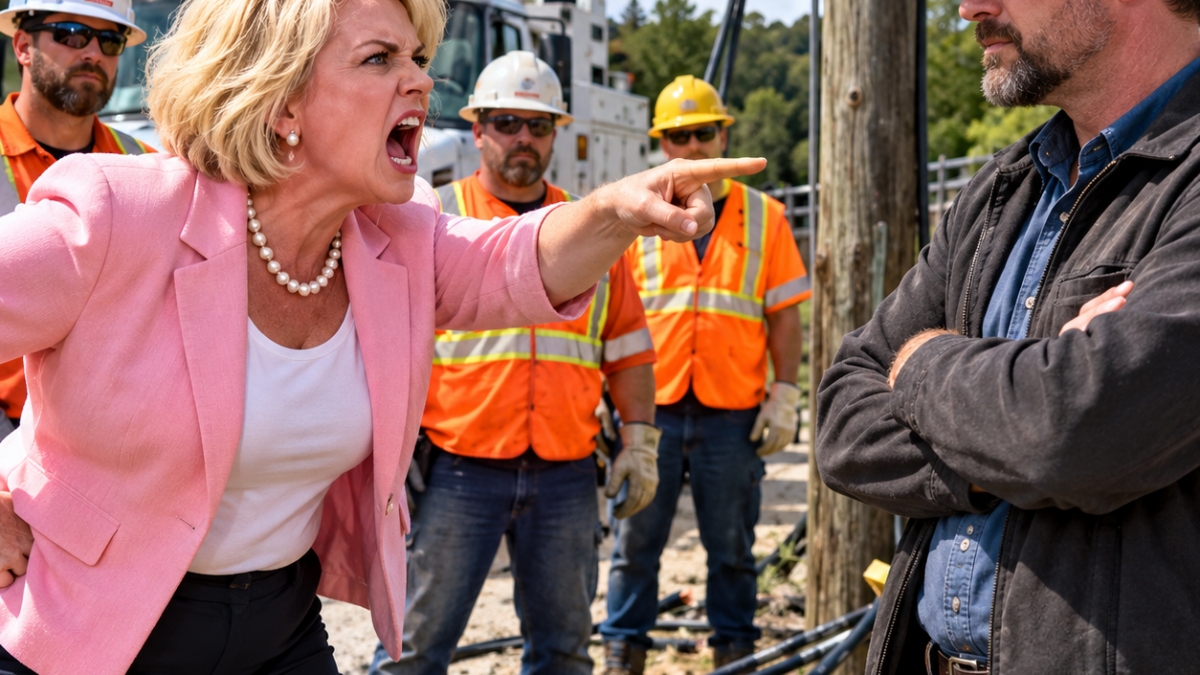
PART 2
A letter from our compliance department confirming it was residential energy equipment.
Sandra replied with one sentence.
Rules apply to everyone. No exceptions.
I stared at the email for probably thirty seconds.
Then I forwarded it to our general counsel with the subject line:
You may enjoy this.
Grace Halloway called five minutes later.
Grace had been our compliance counsel for years.
She had a voice that stayed calm in ways that made other people nervous.
“You moved into an HOA for entertainment, didn’t you?”
“I didn’t choose it for this.”
“You sent them the permits?”
“Yes.”
“Inspection?”
“Yes.”
“Equipment spec?”
“Yes.”
“Covenants?”
“I’ve read them.”
“Anything prohibiting it?”
“No.”
She sighed.
“Then dispute it formally and stop engaging.”
I did.
Sandra rejected the appeal.
The fines began.
Fifty dollars per day.
Then one hundred.
Then two hundred.
I paid under protest.
Not because I accepted them.
Because I wanted a clean paper trail.
Claire hated that.
“You’re rewarding her.”
“No. I’m documenting damages.”
“You could stop this with one phone call.”
“I know.”
“Then why aren’t you?”
I didn’t have a good answer.
At first, maybe pride.
Maybe curiosity.
Maybe I genuinely wanted to know whether Sandra enforced rules because she cared about compliance or because she enjoyed power.
I got my answer.
At the next board meeting, she proposed raising the fine.
Linda Marsh, the treasurer, objected.
I wasn’t there, but I later heard the recording.
Linda said, “We have his permit documents. Why aren’t we having counsel review those before escalating?”
Sandra answered, “Because this isn’t about county permits.”
Linda said, “Then what is it about?”
Sandra paused.
And then she said the sentence that explained almost everything that followed.
“He thinks the rules don’t apply to him. We need to make an example.”
An example.
Not correct a violation.
Not protect property values.
Not enforce a covenant.
Make an example.
The board increased the penalty.
My daily fine eventually reached six hundred dollars.
I kept paying it under written protest.
That made Sandra even angrier.
Most enforcement works because people get tired.
They either comply or panic.
I did neither.
Every invoice was paid exactly on time.
Every payment included the same notation:
Paid under protest. Liability disputed in full.
Grace thought it was hilarious.
Sandra did not.
She wanted the fines to hurt.
Instead, I treated them like evidence.
Then she changed tactics.
I didn’t know about Bobby Finch at first.
Bobby was a local general contractor who did repair work for Ridgeline.
Fence sections.
Drainage grates.
Clubhouse maintenance.
Snow-damaged mail kiosks.
He wasn’t an electrician.
He wasn’t a utility contractor.
He had no business excavating an energized distribution easement.
Sandra approached him after a board meeting.
According to Bobby’s later statement, she told him a homeowner had installed an unauthorized private electrical service line through association-controlled land.
She wanted it disconnected.
Bobby asked if the utility had approved.
Sandra told him it was not utility-owned.
He asked whether a permit was needed.
She handed him what she called an association authorization.
It was basically a letter on HOA stationery.
Bobby should have known better.
He admitted that later.
But Sandra had used him before.
She spoke like someone who had already cleared everything.
And confidence can be dangerous when the person listening assumes it comes from knowledge.
Linda questioned the plan.
She would later tell me Sandra seemed almost excited about it.
“Why are we touching electrical infrastructure?” Linda asked her.
“Because it’s an unauthorized encroachment.”
“Shouldn’t the power company handle it?”
“The power company has nothing to do with it.”
“Are you sure?”
Sandra’s answer became famous in Ridgeline after the board recording circulated.
“It’s my association. I decide what crosses lines here.”
My association.
That was Sandra in three words.
Claire noticed the trucks before I did.
Two mornings in a row, Bobby’s pickup sat near our mailbox.
She mentioned it over breakfast.
“Your HOA girlfriend is planning something.”
I looked at her.
“Please never call her that again.”
Claire smiled into her coffee.
“Then tell me why that contractor keeps staring at the transformer.”
“What contractor?”
“The blue truck.”
I went to the front window.
The truck was gone.
I should have called.
I should have looked into it.
Instead, I assumed drainage work.
That assumption almost became the worst mistake I’d made since entering the utility business.
Thursday evening, Sandra called an emergency board session.
No proper homeowner notice.
No open discussion.
The agenda referred vaguely to “unauthorized utility remediation.”
Linda voted no.
The others followed Sandra.
Three to one.
The next morning, Bobby arrived with two workers.
They set cones.
Opened the easement.
Started digging.
I was on a video call at our operations center when Claire texted me.
There was no message at first.
Just a picture.
Transformer cabinet.
Excavation.
Bobby.
Sandra.
I enlarged the image.
Then I saw the equipment number.
RS-417.
I knew it.
Not because I memorized every transformer in our system.
Because we’d upgraded that block the previous summer.
RS-417 fed about forty houses.
My house was one of them.
So was Sandra’s.
The call on my computer kept going.
Our operations director, Mark, was talking about winter load forecasting.
I interrupted him.
“Mark.”
He stopped.
“You okay?”
“I need you to pull Ridgeline Estates, transformer RS-417.”
Keys clicked.
“What happened?”
“Possible unauthorized excavation.”
A pause.
Then his voice changed.
“That’s active.”
“I know.”
“Fourteen-point-four primary nearby.”
“I know.”
“Who’s excavating?”
“HOA contractor.”
Silence.
Then:
“You’re kidding.”
“No.”
“Want me to dispatch?”
“Not yet. I’m two minutes away.”
“Derek—”
“I’ll call.”
“Do not let them touch anything.”
“That is the plan.”
I ended the call.
Claire sent another photo.
The trench was deeper.
That was when I drove faster.
Not recklessly.
But faster.
When I arrived, I saw the exposed conduit.
My entire body went cold.
People think those of us who work around power become less afraid of electricity.
The opposite is true.
We know exactly what it can do.
We know how quickly one mistake becomes permanent.
Electricity gives almost no warning.
You don’t get to negotiate after contact.
You don’t get a second attempt.
So when I saw Bobby standing in that trench with metal cutters while Sandra watched, I wasn’t thinking about HOA fines.
I was imagining an arc flash.
A burn.
A death.
A neighborhood outage.
One man going home to tell somebody’s wife what had happened.
That’s why my first words weren’t directed at Sandra.
“Stop digging.”
Now, standing there with the whole street beginning to watch, I could see Bobby making the calculation.
Sandra was getting angry because he hesitated.
I was getting scared because I knew what he was near.
Those are very different emotions.
“Put them down,” I told him again.
Bobby lowered the cutters.
Sandra snapped, “I am paying you to complete a job.”
He climbed out.
“I need a utility locate.”
“You have the association plans.”
“Those aren’t utility locates.”
“They show the line.”
“They show a line.”
I almost respected him for that.
Sandra did not.
She stepped toward him.
“You assured me this could be done.”
“Based on what you told me.”
“I told you exactly what it was.”
“No. You told me it was private low-voltage service.”
Her eyes flashed toward me.
I said, “You told him that?”
She ignored me.
Bobby wiped dirt from his gloves.
“I am not cutting anything until the utility confirms.”
Sandra’s face went red.
“You’re already here.”
“So?”
“I authorized the expense.”
“That’s not my biggest concern anymore.”
Across the street, one of our neighbors, Mr. Hanley, had his phone out.
Another neighbor stood beside him.
Then Linda Marsh arrived.
She must have heard about the work.
She parked badly, left her driver door open, and hurried toward us.
The moment she saw the trench, she stopped.
“Oh my God.”
Sandra turned.
“Linda, this is board-authorized work.”
“I know what the vote said. I did not think you meant digging into the actual transformer easement.”
“I told you exactly what we were removing.”
“No, Sandra. You said an illegal homeowner line.”
“It is.”
Linda looked at me.
“Is it?”
“No.”
Sandra shouted, “Do not ask him!”
Everyone went silent.
She realized how that sounded.
Too late.
Linda said slowly, “Why shouldn’t I ask the homeowner whose service you’re cutting?”
“Because he has lied from the beginning.”
I laughed once.
That made her furious.
“You think this is funny?”
“No.”
I stepped toward the transformer.
“I think you’ve confused not obeying you with lying to you.”
Sandra pointed at the equipment.
“This all started because you installed prohibited commercial machinery.”
“It isn’t commercial.”
“The board decided it was.”
“You’re still saying that after permits, inspections, engineering documents and manufacturer classifications?”
“The HOA is not required to accept your interpretation.”
“My interpretation?”
I could feel something finally breaking through my patience.
“Electrical classification is not a matter of HOA opinion.”
“You’re not the authority.”
That almost stopped me.
Claire made a sound beside me.
Not quite a laugh.
Sandra saw it.
“Something funny?”
Claire shook her head.
“No.”
Sandra glared.
Claire added, “Just incredible timing.”
I looked at Sandra.
“You want the authority?”
She folded her arms.
“Finally.”
I pointed at the transformer identification plate.
“Read it.”
She didn’t.
“Read the plate.”
“I know what a transformer is.”
“Apparently not.”
Her jaw tightened.
“Derek—”
“Read the owner marking.”
Bobby had already turned toward it.
He brushed dirt from the metal identification strip.
Cascade Summit Power.
Sandra looked at it.
Then at me.
“So?”
I almost admired the commitment.
I said, “So that transformer belongs to Cascade Summit Power.”
“I don’t care.”
“The conduit belongs to Cascade Summit.”
“This easement belongs to the HOA.”
“No. The surface parcel is subject to a recorded utility easement.”
“We control the common areas.”
“Subject to the easement.”
“I’ve had enough of your word games.”
“They aren’t word games. They’re property rights.”
She turned to Bobby.
“Cut the service.”
He stared at her.
“No.”
The word came out quietly.
Sandra blinked.
“What?”
“I’m not cutting it.”
“I am instructing you—”
“I’m done.”
Something in her face snapped.
Maybe months of frustration.
Maybe humiliation.
Maybe the fact that people were watching her lose control.
She reached toward him.
Bobby stepped back.
Sandra grabbed the bolt cutters.
Linda said, “Sandra, stop.”
Sandra didn’t even look at her.
“If none of you have the nerve to enforce a simple board decision, I’ll do it myself.”
My heart rate jumped.
She moved toward the trench.
I stepped between her and the exposed conduit.
“Put those down.”
“Move.”
“No.”
“This is common property.”
“No.”
“You’re interfering with authorized HOA work.”
“You’re holding metal cutters over an energized distribution trench.”
“Then disconnect your illegal equipment and we wouldn’t be here.”
I looked straight at her.
“Listen carefully.”
Maybe something in my voice finally reached Bobby because he moved farther away.
I continued.
“I don’t just live on this line.”
Sandra stared.
“I own the company that operates it.”
Silence.
A bird chirped somewhere behind the houses.
I could hear the engine of Bobby’s truck idling.
Sandra’s expression shifted.
Just slightly.
Then she smiled again.
It was thinner now.
“Of course you do.”
I didn’t answer.
She laughed.
“That’s your strategy now?”
“No.”
“You own the power company?”
“Yes.”
“Cascade Summit?”
“Yes.”
She looked at the transformer.
Then at me.
Then she actually laughed harder.
“You expect everyone to believe that?”
I pulled out my phone.
“Believe whatever you want.”
I called Mark.
He answered immediately.
“Status?”
“I’m on scene.”
“And?”
“Conduit exposed. No contact yet.”
“You want emergency dispatch?”
“Yes.”
Sandra’s laugh faded.
I continued.
“Send safety, field operations and utility security. Live excavation, unauthorized. Transformer RS-417.”
Mark said, “Already staging them.”
“Good.”
Sandra stepped closer.
“Who are you calling?”
“My operations director.”
“You are unbelievable.”
I put the phone away.
She lifted the bolt cutters.
“Move.”
I didn’t.
“Sandra, there are two possible outcomes if you swing those into the wrong thing.”
“Oh, spare me.”
“You could black out part of the block.”
She rolled her eyes.
“Or you could die.”
That stopped her for half a heartbeat.
Not enough.
She said, “You’re trying to scare me.”
“Yes.”
The honesty surprised her.
“Because you should be scared.”
I pointed down.
“Depending on exactly what they’ve uncovered, there is distribution voltage in this easement that can kill you before anyone here understands what happened.”
Her grip shifted.
I could see uncertainty now.
Then she looked around.
Phones.
Neighbors.
Linda.
Bobby.
Me.
And pride made the decision fear should have made for her.
She stepped toward the trench.
“I’m done being threatened.”
She raised the cutters.
I moved.
Fast.
I caught her wrist before she could lower them.
She screamed.
“Get your hands off me!”
“Drop them.”
“You assaulted me!”
“Drop the cutters.”
“I’ll have you arrested!”
“Drop them.”
She tried to pull away.
The tool swung sideways.
I grabbed the handle with my other hand and forced it down toward the dirt away from the trench.
Claire shouted, “Sandra, let go!”
Bobby stepped forward.
“Ma’am!”
The cutters slipped.
They hit the ground with a dull metallic thud.
Nobody moved.
Sandra stared at me.
Her face had gone white.
I released her wrist immediately and stepped back.
“You ever touch live utility infrastructure with hand tools again, don’t worry about the HOA.”
My voice was shaking now.
Not from anger.
Adrenaline.
“You worry about surviving.”
She looked down at the cutters.
Then at the open trench.
For the first time, she seemed to understand that the danger had been real.
Linda covered her mouth.
“Oh my God.”
Bobby whispered, “Jesus.”
I turned to his crew.
“Nobody goes back in that hole.”
Nobody argued.
Then the first Cascade Summit truck turned onto Ridgeline Drive.
White utility body.
Blue mountain logo.
Amber lights.
Another followed.
Then a third.
They stopped around the work zone.
Our safety supervisor, Eric Vaughn, stepped out of the first truck.
He saw me.
Then the trench.
Then the cutters.
His face hardened instantly.
“Everybody back.”
Sandra watched the logos.
Her breathing changed.
Eric shouted to his team.
“Secure the area. No entry until we confirm exposure.”
Utility workers moved cones farther back.
One opened the cabinet.
Another began checking location markings.
Eric walked to me.
“What happened?”
“Unauthorized excavation. Contractor stopped before contact.”
He looked at Bobby.
“You dig this?”
Bobby nodded.
“Yes.”
“Utility locate?”
“No.”
Eric’s expression turned ugly.
“Permit?”
Bobby looked toward Sandra.
“No utility permit.”
Eric closed his eyes for a second.
Then he looked at Sandra.
“You ordered this?”
She straightened.
“I am the HOA president.”
Eric stared at her.
It was almost funny.
Almost.
“I didn’t ask what club you’re in.”
Mr. Hanley coughed to cover a laugh.
Sandra’s face flushed.
“I authorized removal of an illegal connection.”
Eric looked at me.
I shook my head.
He looked back at her.
“There is no homeowner-owned service line in this trench.”
“You haven’t inspected it.”
“I don’t need to inspect the deed to know our own equipment.”
“This line goes to his house.”
“So does every lawful service connection.”
Sandra’s eyes narrowed.
“You work for him.”
Eric glanced at me.
“Yes.”
“And he’s your boss.”
“Technically.”
“So you’re biased.”
Eric stared at her for several seconds.
“Ma’am, electricity is not biased.”
That line spread through the neighborhood by dinner.
A patrol car arrived several minutes later.
Deputy Alan Cortez stepped out.
Sandra seemed relieved.
That told me she still thought this was a homeowner dispute.
She walked directly toward him.
“Officer, I want him charged.”
Cortez looked at her.
“For?”
“He grabbed me.”
I said, “She was attempting to cut energized utility infrastructure.”
Cortez looked at the trench.
Then at the cutters.
Then at Sandra.
His expression shifted.
“You were going to cut that?”
“It is an illegal line.”
Eric said, “It is not.”
Sandra pointed.
“He works for him.”
Cortez looked at me.
“You own Cascade Summit?”
“Yes.”
He frowned.
“You’re Derek Samborn?”
“Yes.”
He looked at the transformer.
Then back at me.
“Well.”
Sandra’s face changed.
Small moment.
Huge impact.
Cortez knew the name.
Most people outside utility circles didn’t.
He did.
“Wait,” Sandra said.
Nobody answered.
She looked at me.
“You actually—”
“Yes.”
Her eyes moved to the Cascade Summit trucks.
To the logos.
To the transformer.
Back to me.
Claire crossed her arms.
Sandra whispered, “Why didn’t you say anything?”
There are questions that are so absurd you need a second before answering.
I gave myself that second.
“Because ownership of the power company shouldn’t be required for you to respect permits.”
She looked away.
Cortez stepped toward the trench.
“Was the line contacted?”
Eric answered.
“Not cut. Outer area exposed. We need to inspect before saying whether there’s damage.”
“Dangerous?”
“Yes.”
“How dangerous?”
Eric gave him the professional answer.
“Potentially lethal.”
Cortez looked at Sandra.
“Ma’am, did the contractor tell you he wanted utility confirmation before cutting?”
Bobby said, “Yes.”
Sandra turned.
“Bobby.”
He didn’t look at her.
Cortez asked, “And what did you say?”
Bobby swallowed.
“She told me to cut it anyway.”
Sandra snapped, “I told you the association had authority.”
“You grabbed the cutters.”
“You refused to finish the job.”
“Because he said it was high voltage.”
“You didn’t know that.”
“No, ma’am. That’s the problem.”
Linda spoke from behind us.
“I warned her.”
Sandra turned.
“Linda, do not.”
Linda looked at Cortez.
“I told her the HOA should not touch utility infrastructure.”
“Before today?”
“Yes.”
“How long before?”
“The night of the vote.”
Sandra shouted, “That is not what you said!”
Linda shook her head.
“I said exactly that.”
“You said you were uncomfortable.”
“Yes. Because I thought it might be illegal.”
“You voted against it because you’re weak.”
The crowd reacted.
A low murmur.
Linda’s face changed.
Not angry.
Finished.
She took out her phone.
“The meeting was recorded.”
Sandra stopped.
Linda looked at Cortez.
“I can send you the audio.”
He nodded.
“Please do.”
Sandra turned toward me.
“This is your fault.”
That genuinely surprised me.
“My fault?”
“You refused to comply.”
“With a violation that didn’t exist.”
“You could have told us who you were.”
“So?”
“This would never have happened.”
The answer came from Grace Halloway.
She had arrived without me seeing.
Dark suit.
Flat shoes.
Leather folder.
She walked past the utility trucks toward us.
“No, Ms. Pierce. It never should have happened regardless of who he was.”
Sandra stared.
Grace stopped beside me.
“Grace Halloway. Counsel for Cascade Summit Power.”
Sandra’s shoulders sagged just slightly.
Grace turned to Cortez.
“I have digital copies of the recorded easement and infrastructure ownership records. Originals can be provided.”
“Thank you.”
She opened her folder anyway.
Grace believed in paper.
Always.
She laid a copy of the utility easement on the hood of the patrol car.
“This was recorded before Ridgeline Estates was incorporated.”
Another page.
“Transformer ownership.”
Another.
“Underground distribution rights.”
Another.
“Inspection record showing Mr. Samborn’s residential equipment is code compliant.”
Sandra said, “That doesn’t address the HOA rules.”
Grace looked at her.
“Yes, it does.”
“No, it doesn’t.”
Grace’s expression didn’t change.
“The equipment you fined him for is residential, permitted, code-compliant and installed within the structure. Your own covenants do not prohibit it.”
Sandra folded her arms.
“The board interpreted them differently.”
“That may explain your fines.”
Grace pointed toward the trench.
“It does not authorize excavation into utility-owned infrastructure.”
“We own the common land.”
“You own the land subject to Cascade Summit’s easement.”
“We can remove unauthorized encroachments.”
“This is not an encroachment.”
“He modified the service.”
“No.”
“He installed electrical equipment.”
“Yes.”
“Then it’s connected to that line.”
Grace blinked once.
“Every toaster in your kitchen is connected to the electric system. That does not give your HOA authority to excavate the distribution network because you dislike the toaster.”
Somebody laughed.
Sandra looked around.
“This isn’t funny.”
Nobody answered.
Grace continued.
“More importantly, once the contractor expressed uncertainty and Mr. Samborn warned you the exposed system was energized utility property, you ordered the cut to proceed anyway.”
“I thought he was lying.”
“That does not help you.”
Cortez asked, “Did she actually try to cut it?”
I answered.
“She lifted the cutters toward the trench. I stopped her before contact.”
Phones appeared again.
Neighbors had video.
Three different angles.
Maybe four.
One of the younger workers spoke up.
“I have it too.”
Sandra stared at him.
“You were recording?”
He looked embarrassed.
“When she grabbed the cutters, yes.”
Cortez asked everyone to preserve their videos.
Then he separated us.
That was the moment the neighborhood finally stopped being a neighborhood dispute and became a scene.
Utility personnel photographed the excavation.
Measured depth.
Documented tool marks.
Checked conduit integrity.
Cortez took statements.
Bobby handed over the HOA authorization.
Linda forwarded the board recording.
Grace called our insurer.
Claire brought me water.
My hands were still shaking.
She noticed.
“You okay?”
“Yeah.”
“No, you’re not.”
“I will be.”
She looked toward Sandra.
“You knew she was difficult.”
“Difficult is a mailbox letter.”
“She almost killed herself.”
“I know.”
“And maybe Bobby.”
“I know.”
“And maybe knocked out forty houses.”
“I know.”
Claire lowered her voice.
“Why did you let this go so long?”
That hurt because it was the question I’d already asked myself.
“I thought she’d hit a legal wall.”
Claire looked at me.
“She thinks she is the wall.”
I couldn’t argue.
An hour after the excavation stopped, Eric came over.
“Good news.”
“Conduit intact?”
“Primary jacket appears untouched. They exposed farther laterally than vertically. Another few inches and I would’ve had a much worse morning.”
“How close?”
He gave me a look.
Close enough.
I didn’t ask again.
“We’re going to stabilize and rebury. May need a short controlled outage later for inspection.”
“Do it.”
“You want security on site?”
“Yes.”
He glanced toward Sandra.
Cortez was speaking to another deputy who had arrived.
“What happens to her?”
“Not my decision.”
Eric looked at the cutters.
“Should be somebody’s.”
It was.
After interviewing witnesses and reviewing the available video, deputies informed Sandra she was being detained in connection with the unauthorized tampering and endangerment investigation.
The exact charging process took longer than neighbors later claimed.
Nobody dramatically slapped handcuffs on her the second she read the transformer logo.
Real life takes paperwork.
Statements.
Probable cause.
Consultation.
Evidence.
But that afternoon, she left Ridgeline in the back of a patrol car.
And that image changed the HOA forever.
Before she was placed inside, Sandra looked at me.
No smile now.
“You did this.”
I walked closer, stopping several feet away.
“No.”
Her eyes were wet with rage.
“You could’ve ended this months ago.”
“I tried.”
“You hid who you were.”
“I sent you permits.”
“You knew I wouldn’t—”
She stopped herself.
Wouldn’t what?
Believe me?
Read them?
Care?
I said quietly, “You never needed to know who I was. You only needed to know where your authority ended.”
The deputy guided her into the car.
The door shut.
I stood there watching the vehicle leave.
I expected satisfaction.
Instead, I felt sick.
Because an hour earlier, Sandra Pierce had been one bad decision away from putting metal cutters into energized infrastructure.
The reason nobody died wasn’t that the system worked perfectly.
It was that people hesitated.
Bobby hesitated.
I arrived.
The workers stopped.
That was too close.
Way too close.
That evening, Ridgeline lost power.
For twelve minutes.
Controlled shutdown.
Our crews isolated part of the block so they could inspect the disturbed infrastructure safely.
Claire and I sat on the porch while the street went dark.
The irony wasn’t lost on either of us.
She said, “Sandra finally got your power cut.”
I laughed.
I couldn’t help it.
“Technically we cut everybody’s.”
“Including hers?”
“Yes.”
“That’s almost poetic.”
“Don’t say that at the board meeting.”
“I am absolutely saying that at the board meeting.”
The power came back on.
Porch lights flickered across the street.
One after another.
Sandra’s house lit up too.
Even with her in custody, Cascade Summit kept her service running.
Because utility service isn’t supposed to be personal.
That mattered to me.
More than I expected.
The next week was chaos.
News spread.
Not national news.
Nothing that dramatic.
But county-level gossip moves faster than any broadcast.
By Monday morning, people I hadn’t spoken to in years were texting me.
IS THAT YOUR HOA?
DID SOMEONE REALLY TRY TO CUT A 14KV LINE?
YOU LIVE WITH THESE PEOPLE?
I stopped responding.
The HOA’s attorney contacted Grace.
Then their insurance carrier contacted Grace.
Then a different law firm contacted Grace on behalf of several board members.
The basic problem was simple.
Sandra had acted under claimed HOA authority.
The board had approved removal of an “unauthorized utility line.”
But the authorization was legally meaningless and based on mischaracterized facts.
Their insurer had serious concerns about whether such intentional and unauthorized conduct was covered.
Cascade Summit submitted a formal claim for excavation damage, emergency response, inspection cost, safety remediation and associated expenses.
Not because I wanted to punish every resident.
Because the utility had to treat unauthorized interference consistently.
If we ignored it because I happened to live there, we would be doing exactly what Sandra accused me of doing from the beginning.
Making exceptions.
Grace explained that to me in my office.
“You understand some neighbors will blame you.”
“I know.”
“You could ask the company to waive parts of the claim.”
“No.”
“Good.”
I looked at her.
“You wanted me to say no?”
“I wanted you to decide without being sentimental.”
“People live there.”
“People also live near every other transformer we protect.”
She was right.
“Still feels ugly.”
“Consequences usually do.”
The board scheduled an emergency meeting.
The clubhouse filled before sunset.
Claire and I arrived early but sat in the back.
I didn’t want a show.
We got one anyway.
Linda Marsh sat at the front.
Sandra’s seat was empty.
Two of the board members who had voted with her looked like they hadn’t slept.
The fourth director stared at the table.
The HOA attorney stood beside them.
Linda called the meeting to order.
The room erupted immediately.
“Did she really try to cut a power line?”
“How much is this costing us?”
“Why did the board approve excavation?”
“Who’s paying for the damage?”
“Are our dues going up?”
Linda banged the gavel.
“Please.”
Somebody yelled, “Where’s Sandra?”
Linda paused.
Then she read a statement.
Sandra had submitted a resignation from her board position.
The room exploded again.
Linda waited.
Then she said:
“The board will also conduct an emergency removal vote to ensure the resignation cannot be rescinded during the transition.”
One hand went up.
Then another.
Then another.
Linda’s.
Unanimous.
No applause.
Just murmuring.
Linda continued.
“Next, all fines assessed against the Samborn property concerning the residential energy equipment are hereby void.”
One of the former Sandra allies shifted uncomfortably.
Linda looked at him.
“All of them.”
He nodded.
The vote passed unanimously.
I leaned toward Claire.
“That’s a lot of money they owe back.”
She whispered, “Frame the refund check.”
“Tempting.”
Then Linda did something I didn’t expect.
She looked toward me.
“Derek, would you come forward?”
I stayed seated.
Grace, beside me, whispered, “Go.”
I walked to the front.
Linda stood.
“I owe you an apology.”
“You voted against it.”
“Not enough.”
“That matters.”
“It doesn’t erase the rest.”
She turned toward the room.
“I knew Sandra’s enforcement had become personal. I challenged some decisions. But I stayed on the board. I watched fines increase when our own documents did not clearly support them. When she proposed removing the line, I voted no, but I did not independently contact the utility.”
She looked at me again.
“I should have.”
The room was silent.
That apology changed my opinion of Linda.
Not because it cleared her.
Because she didn’t try to clear herself.
“I appreciate that,” I said.
A man near the aisle raised his hand.
“Can I ask something?”
Linda nodded.
He looked at me.
“Is it true you own Cascade Summit?”
“Yes.”
A murmur moved through the room.
He asked, “Why didn’t anybody know?”
“Because I didn’t think it was relevant to being your neighbor.”
“Wouldn’t this have stopped if you’d told Sandra?”
There it was.
I looked around the room.
I knew the answer mattered.
“Probably.”
People shifted.
“But that’s exactly why I didn’t.”
He frowned.
I continued.
“If the only reason your board respects a utility permit is because the homeowner happens to own the utility, you don’t have a rules problem. You have an authority problem.”
Nobody spoke.
“I sent the board inspection records. Permit information. Equipment specifications. I disputed every fine in writing. Any other homeowner should have received the same legal respect.”
Linda nodded.
I said, “I should not need a company title to make the law count.”
That was the end of my speech.
I sat down.
After the meeting, Bobby Finch waited outside.
I almost walked past him.
“Mr. Samborn.”
I stopped.
He looked exhausted.
“I owe you something.”
“You don’t owe me an apology before the investigation is finished.”
“I do.”
I waited.
“I should’ve called the utility before digging.”
“Yes.”
He looked down.
“I’ve been doing contractor work twenty years. I knew better.”
“Yes.”
“I trusted the board authorization.”
“You trusted Sandra.”
He nodded.
“She sounded certain.”
“That isn’t the same as being right.”
“I know that now.”
I softened a little.
“You stopped.”
“Late.”
“But you stopped.”
His eyes moved toward Claire.
“If you hadn’t gotten there…”
“Don’t do that to yourself.”
“I almost cut it.”
“No. You hesitated.”
“She grabbed the cutters because I wouldn’t.”
“Exactly.”
He looked at me.
“You’re not pressing charges?”
“That isn’t entirely my decision.”
“I know.”
“But I’ve told investigators exactly what happened.”
He nodded.
“Thank you.”
“Don’t thank me yet.”
Months followed.
Investigations are slow.
Rumors are fast.
According to one rumor, Sandra had tried to blow up the neighborhood.
She hadn’t.
According to another, I had secretly shut off her house for revenge.
I hadn’t.
Someone claimed I raised Ridgeline’s electric rates the next day.
Impossible.
Somebody online said Bobby spent three weeks in jail.
He didn’t.
Reality was dramatic enough without help.
Sandra ultimately accepted a plea arrangement on reduced charges connected to the unlawful interference and reckless conduct.
She received financial penalties, probationary conditions and restrictions that prevented her from returning to the kind of association leadership position she had abused.
The exact criminal consequences mattered less to me than what happened inside Ridgeline.
The HOA had to rebuild.
Really rebuild.
Not paint the clubhouse.
Governance.
Linda became interim president because nobody else wanted the job.
Then she agreed to run properly.
Her first proposal was not landscaping.
Not mailbox paint.
Not holiday-light enforcement.
It was legal review.
Every enforcement category was examined.
Every open violation.
Every pending fine.
Every board policy that claimed authority beyond the covenants.
The results embarrassed everyone.
Some fines were valid.
Many were.
People had parked RVs where they weren’t allowed.
Built unapproved structures.
Ignored architectural rules they had knowingly accepted.
But other cases were weak.
Sandra had stretched vague language to enforce personal preferences.
A family had been fined because their basketball hoop was supposedly “commercial-style.”
An older widower had been cited repeatedly for a small antenna that was protected by communications regulations.
Someone had received six letters because their rain barrels were visible from a side angle.
Most of those disputes had nothing to do with electricity.
But they all came from the same instinct.
If Sandra disliked something, she went searching for language that could be made to sound like a prohibition.
Linda shut that down.
The board hired outside counsel to draft a simple authority matrix.
What the HOA controlled.
What it didn’t.
What required county involvement.
What involved public utilities.
What homeowners could appeal.
What board members had to disclose.
It was boring.
Wonderful.
Boring is underrated.
Six months earlier, a clipboard had been enough to scare people.
Now every board packet had citations.
The first time I attended a meeting under Linda, somebody complained about a fiber-optic contractor working near the entrance.
Linda said, “That corridor is under a telecommunications easement. We don’t control their access.”
I almost applauded.
Instead I looked at Claire.
She whispered, “Growth.”
Our relationship with the neighborhood changed too.
There was no hiding who I was anymore.
That part annoyed me at first.
For several weeks, people knocked on my door with utility questions.
“Can you look at my bill?”
“Do you know why my kitchen lights flicker?”
“Are rates going up?”
“My garage outlet makes a buzzing noise.”
I finally printed a card.
For service issues, please call Cascade Summit customer support.
Claire taped one to the front window as a joke.
I left it there.
But most neighbors didn’t treat me differently for long.
That was what I’d wanted from the beginning.
Mr. Hanley still borrowed my ladder.
The Peterson kids still cut across our driveway on bikes.
Linda sometimes brought board documents over, but usually because she wanted Claire’s opinion, not mine.
Claire enjoyed that far too much.
One afternoon, months after the case ended, Sandra’s house went up for sale.
I found out because Claire showed me the listing.
“Mountain views,” she read. “Quiet community. Professionally managed HOA.”
I laughed.
“Technically true now.”
“You think she’ll move?”
“She already has.”
Sandra had been staying with family outside the county.
The sale closed several weeks later.
I did not celebrate.
That surprised Claire.
“You wanted her gone.”
“I wanted her to stop.”
“Same result.”
“Different thing.”
She looked at me.
“You feel sorry for her?”
I thought about it.
“No.”
“Good.”
“But I don’t need her life destroyed forever.”
Claire nodded.
That was one of the strangest lessons from the whole mess.
People assume revenge feels best when the other person loses everything.
It doesn’t.
At least not to me.
The most satisfying part wasn’t Sandra being arrested.
It wasn’t the resignation.
It wasn’t watching the board erase my fines.
It wasn’t the fact that everyone finally learned what I did for a living.
It was walking into my garage one ordinary Saturday morning and seeing the same equipment still mounted exactly where it had always been.
Legal.
Quiet.
Untouched.
No notices taped to the door.
No threats.
No clipboard.
That was enough.
Almost.
There was one final issue.
The fines.
I had paid thousands under protest.
The HOA owed the money back.
Linda wanted to issue a check.
Grace recommended formal settlement language.
The board’s counsel agreed.
I didn’t need the money.
That wasn’t the point.
I told Linda I wanted every dollar refunded.
She nodded.
“I expected that.”
“And I want interest calculated where appropriate.”
She raised an eyebrow.
“Also expected.”
“And I want the letter to say the violations were unsupported.”
She smiled.
“There he is.”
“Who?”
“The power guy.”
I laughed.
“I thought I was just Derek.”
“You were until you said interest.”
The refund arrived two weeks later.
Claire was disappointed that I didn’t frame the check.
I deposited it.
Then I used the money for something Sandra never would’ve predicted.
At the edge of Ridgeline, near the entrance, there was an old picnic area the HOA had neglected for years.
Broken benches.
Dead lighting.
A pavilion outlet that hadn’t worked since before we moved in.
I donated the refunded money anonymously to restore it.
Linda knew.
Claire knew.
Grace knew because lawyers somehow know everything.
Nobody else did.
Until Bobby accidentally told somebody.
Then everybody knew.
I was irritated for about ten minutes.
After that, I gave up.
The new picnic area reopened in spring.
Cascade Summit donated two safe public EV charging points near the clubhouse.
Permitted.
Reviewed.
Approved.
This time the architectural application was eight pages long.
Linda handed it to me personally.
“You are not getting special treatment.”
I looked at the paperwork.
“This is revenge.”
“Rules apply to everyone.”
I stared at her.
She stared back.
Then we both started laughing.
That phrase used to make my jaw tighten.
Now it sounded different.
Because rules really should apply to everyone.
Including homeowners.
Including board presidents.
Including utility owners.
Including me.
A year after the trench incident, we had the first major winter storm since moving in.
Heavy snow.
Wet wind.
Trees down across the county.
I spent thirty-six hours rotating between our operations center and field crews.
Ridgeline lost power at 2:14 in the morning when a tree outside the subdivision took down a feeder.
Not Sandra’s fault.
Not the HOA.
Just weather.
Claire called me.
“You know everybody’s going to think this is personal.”
“I hate you.”
She laughed.
“How long?”
“Two hours, maybe three.”
“You telling Linda?”
“Operations already sent alerts.”
“Look at you. Treating us like normal customers.”
“Dream achieved.”
We restored Ridgeline in two hours and eleven minutes.
The next morning, I drove through the neighborhood checking damage.
Bobby Finch was helping clear a fallen branch near the clubhouse.
He saw me.
“Power guy.”
“Contractor.”
He grinned.
We had become friendly in the awkward way two people sometimes do after nearly sharing a disaster.
He’d taken additional utility-safety training after the incident.
Not because we required it.
Because he wanted to.
“I don’t go near a transformer now without calling first,” he told me.
“Good policy.”
“I don’t go near a cable-TV box without calling.”
“Maybe excessive.”
“I’m traumatized.”
“You’ll survive.”
He leaned on his shovel.
“You ever think about what would’ve happened?”
“Every once in a while.”
“I do.”
I looked at him.
“Then use it.”
“For what?”
“To be the guy who stops next time.”
He thought about that.
Then nodded.
That was how I came to understand the whole story.
At first, I thought it was about Sandra.
Then I thought it was about the HOA.
Then property rights.
Then electricity.
It wasn’t.
It was about stopping.
Knowing when to stop.
Sandra’s first mistake wasn’t misunderstanding my equipment.
People misunderstand things every day.
Her first real mistake was refusing to stop when presented with better information.
The permit said she was wrong.
She kept going.
The inspection said she was wrong.
She kept going.
The covenants didn’t support her.
She kept going.
Linda warned her.
She kept going.
Bobby hesitated.
She kept going.
I told her the line was utility-owned.
She kept going.
I told her it was energized.
She kept going.
The transformer had the company’s name stamped on it.
She kept going.
And finally she had a pair of cutters in her hands because backing down had become more painful to her than being wrong.
That is what power does to certain people.
Not electrical power.
The other kind.
The kind that comes with a title.
President.
Chair.
Director.
Manager.
Owner.
Even my title.
Especially my title.
Real authority requires you to know where it ends.
That was something Sandra never understood.
I think about the moment she asked me why I hadn’t told her who I was.
As if that were the injustice.
As if she had been tricked because I let her treat me like an ordinary homeowner.
She was right about one thing.
I had hidden my position.
But I hadn’t hidden the permits.
I hadn’t hidden the code.
I hadn’t hidden the truth.
I just refused to put my status above it.
A few months after the storm, Claire and I were walking home from dinner with neighbors when we passed the transformer.
RS-417.
The trench had long since disappeared under repaired landscaping.
You’d never know anything happened there.
Claire stopped.
“What?”
She pointed.
A small warning plaque had been added to the cabinet.
AUTHORIZED UTILITY PERSONNEL ONLY.
I laughed.
“That’s always been implied.”
“Apparently Ridgeline needed clarification.”
She took my arm.
We kept walking.
Every house on the street was lit.
Kitchen windows.
Porch lights.
Bedrooms upstairs.
Televisions glowing behind curtains.
Forty homes.
Forty families.
All pulling electricity through infrastructure most of them never thought about.
Exactly the way it should be.
Reliable power is invisible.
So is good governance, most days.
You only notice either one when something fails.
Ridgeline had experienced both failures.
Then fixed them.
That mattered.
The HOA still sends letters.
People still complain.
Last summer, I received a notice because our garbage cans were visible twenty minutes too early.
I checked the camera.
They were.
Claire laughed for five solid minutes.
“Rules apply to everyone.”
“Don’t.”
“Should I call Cascade Summit?”
“I’m divorcing you.”
She kissed my cheek.
“You’ll need board approval.”
I paid no fine because it was just a warning.
And I moved the cans.
Because that rule actually existed.
That’s the difference.
Not every HOA enforcement is tyranny.
Not every homeowner is right.
Not every disagreement requires lawyers.
Sometimes your garbage can is simply out too early.
Sometimes your grass really is too tall.
Sometimes your contractor really does need approval.
But sometimes a person becomes so convinced that a title makes them right that they stop distinguishing between enforcement and revenge.
Sandra crossed that line long before she reached for the cutters.
The trench only made it visible.
Years from now, most Ridgeline residents probably won’t remember the fine amounts.
They may forget the exact date.
New families will move in.
Old board members will leave.
Someone else will repaint the clubhouse.
Transformer RS-417 will eventually be replaced.
But I suspect one story will survive.
The day the HOA president ordered a crew to cut one homeowner’s power.
The day the contractor stopped.
The day three utility trucks came around the corner.
The day Sandra looked at a company logo stamped on the transformer and finally understood who owned the line she’d been threatening.
People tell it like the punch line is that I owned the power company.
It isn’t.
The ownership made the story dramatic.
But it wasn’t what made me right.
I would’ve been right if I’d been a teacher.
A mechanic.
A retiree.
A cashier.
A young couple who had saved for ten years to buy their first house.
A widow living alone.
Anyone.
The permits were valid no matter whose name was on them.
The infrastructure belonged to the utility no matter who lived at my address.
Sandra had no authority to order it cut.
That is the part worth remembering.
One evening, not long ago, Linda came by while I was working in the garage.
She stood at the door looking at the backup equipment that had started everything.
“So that’s it?”
I looked over.
“What?”
“The infamous illegal power plant.”
I smiled.
“Careful. It might attack.”
She stepped closer.
“I never actually saw it.”
“Most people didn’t.”
She studied the unit.
“This was worth all that?”
“No.”
“That’s what I mean.”
I shut the panel I was checking.
“It was never about this.”
Linda nodded.
“I know.”
She leaned against the workbench.
“I still think about the vote.”
“Don’t.”
“I should.”
“You learned.”
“Doesn’t undo it.”
“No.”
She looked toward the driveway.
“I trusted her too much.”
“That happens.”
“She was confident.”
“That definitely happens.”
Linda smiled faintly.
“People liked that about her at first.”
“Certainty is comforting.”
“Until it’s wrong.”
“Exactly.”
She looked back at the equipment.
“Do you know what scares me most?”
“What?”
“If you hadn’t owned Cascade Summit, I think some people would’ve believed her longer.”
I didn’t answer.
Because I had thought the same thing.
A utility truck carrying my company name arrived and suddenly everyone listened.
But the permit had existed months earlier.
The inspection had existed.
The easement had existed.
Nothing factual changed that morning.
Only the perceived status of the person saying it.
That bothered me.
Still does.
“I hope not,” I said.
Linda looked at me.
“So do I.”
Before she left, she paused at the driveway.
“The board adopted a new enforcement rule today.”
“What kind?”
“Any dispute involving code, utilities, safety or property rights gets outside verification before escalation.”
“Good.”
“And no fine can increase solely because an owner appeals.”
“Very good.”
“And emergency contractor authorization requires two signatures.”
I smiled.
“Look at you.”
“Don’t sound proud.”
“I am.”
She pointed at me.
“No special treatment.”
“I would never.”
She laughed and left.
I stood in the garage after she drove away.
The charging station hummed quietly.
The backup unit’s status light glowed green.
The same equipment Sandra had photographed as if she’d discovered a criminal operation.
Nothing about it looked powerful.
That is another thing people misunderstand.
Power rarely looks like power.
The most dangerous electrical line on our street is buried underground.
The strongest legal right may exist in one paragraph of an easement nobody reads.
The most important person in a crisis might be the contractor who says, “I don’t think we should do this.”
And the weakest person in the room can be the one shouting orders because everyone has finally stopped obeying them.
Sandra had wanted to make an example out of me.
In a way, she succeeded.
Just not the way she intended.
Ridgeline learned that a board vote cannot rewrite electrical safety.
A clipboard cannot override an easement.
Confidence is not jurisdiction.
And “HOA president” is not a license to control every cable, pipe, road, meter and person inside a neighborhood boundary.
I learned something too.
I learned that silence can become a kind of arrogance.
I had been so determined not to use my title that I underestimated the risk.
Claire was right.
I could have stopped the dispute earlier.
Not because Sandra deserved special information.
Because once I realized she was escalating beyond fines, the safety equation changed.
I don’t regret refusing to play the status card over a stupid violation letter.
I do regret assuming she would recognize the legal boundary before reaching a dangerous one.
People ask me sometimes what I would’ve done if Sandra had actually cut the line.
The technical answer depends on what she hit.
Maybe a service outage.
Maybe protective equipment trips.
Maybe an arc.
Maybe catastrophic injury.
I don’t like thinking beyond that.
What I know is that no HOA dispute is worth a funeral.
No fine.
No board vote.
No argument.
No person’s pride.
Nothing.
That morning could have ended very differently.
Instead, Bobby stopped.
I arrived.
The cutters fell into the dirt.
And forty houses kept their lights.
Including Sandra’s.
There was a strange justice in that.
She spent months trying to prove she controlled my power.
In the end, even after everything she did, my company continued delivering electricity to her house under the same rules as everyone else.
No retaliation.
No special treatment.
No revenge shutoff.
Just service.
Because actual power is responsibility.
Not domination.
I wish she’d understood that before she stepped into the trench.
But Ridgeline understands it now.
And every time I drive home after dark and see the neighborhood lit across the mountain, I remember that morning.
I remember Sandra with the cutters.
Bobby backing away.
Linda standing frozen near the curb.
Claire beside me.
The company trucks coming around the bend.
And that tiny identification plate on the transformer.
CASCADE SUMMIT POWER.
Three words Sandra could have read before digging.
Three words that turned her victory smile into silence.
She thought she was cutting power to one stubborn homeowner.
Instead, she had exposed the difference between authority and control in front of the entire neighborhood.
She lost the board.
She lost her position.
She faced criminal consequences.
The fines disappeared.
The policies changed.
And the crew she hired ended up becoming some of the strongest witnesses against the decision she’d forced on them.
As for me, I got exactly what I’d wanted when Claire and I first moved into Ridgeline.
A quiet house.
Mountain views.
A decent street.
Neighbors who know me mostly as Derek.
Yes, everybody knows what I do now.
That part couldn’t be undone.
But they also know I won’t use it against them.
When the power goes out, I don’t move Ridgeline to the front of the restoration queue.
When rates change, we follow the same process.
When my own meter needs inspection, the technician files the same report.
Rules apply to everyone.
Sandra once said that to me as a threat.
Now I believe it more than she ever did.
Because rules mean nothing if the person enforcing them thinks they are above them.
And power means nothing if you don’t understand the line you are never allowed to cross.








