PART 2: HOA President Demanded My Wife’s $15,000 Diamond Ring—When We Refused, She Tried to Fine Us Out of Our Own Home
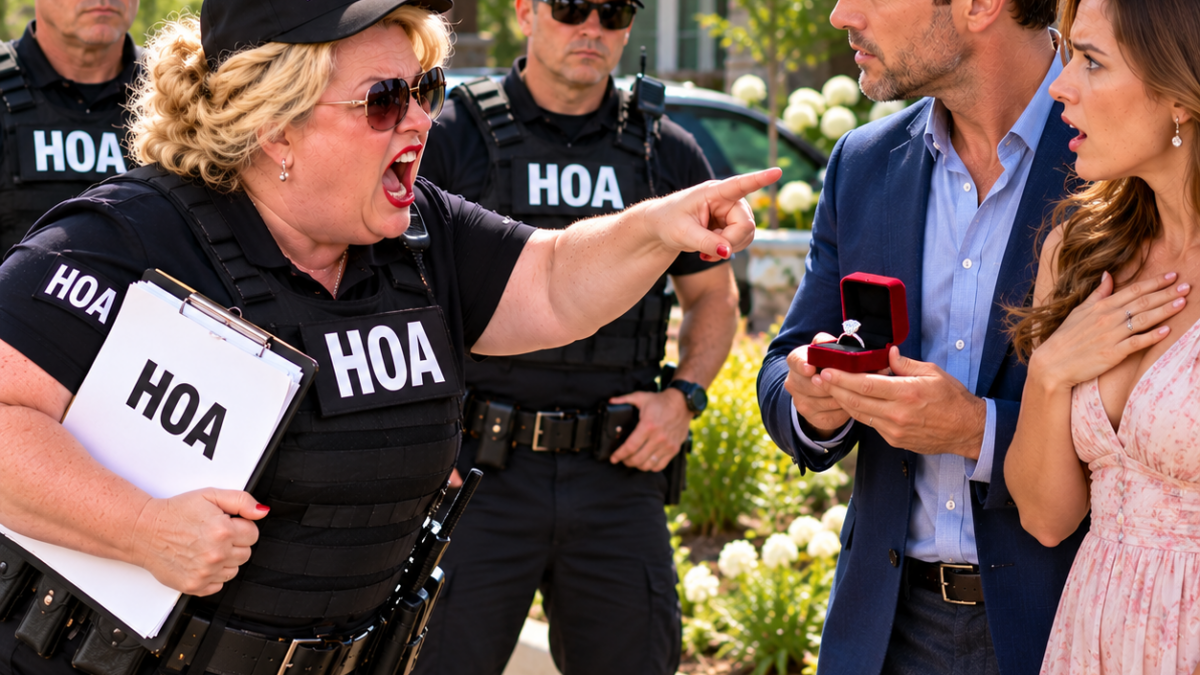
The first time Victoria Evans saw the $15,000 diamond ring I bought my wife for our tenth anniversary, she took Hannah’s hand beneath the lights of our neighborhood fall festival, examined the stone as though it were merchandise she had already decided to own, and calmly told my wife that a schoolteacher had no business wearing something so expensive.
When Hannah refused to give it up, Victoria smiled and told us that she had run Meadowbrook Heights for six years and that people eventually learned it was easier to cooperate with her than keep saying no.
What frightened me wasn’t the request itself.
It was the confidence behind it.
I had the unmistakable feeling that Victoria had done something like this before.
And my wife’s diamond had just given her a reason to do it again.
I had spent three months looking for that ring.
Hannah never asked for it.
That was the point.
When we got married ten years earlier, we were twenty-eight, exhausted, deeply in love, and counting almost every dollar that came into our apartment.
Our wedding had been small.
Forty-seven guests.
A borrowed sound system.
A photographer who was one of Hannah’s cousins.
The original ring was simple because simple was what we could afford.
Hannah never complained.
Not once.
She taught middle school English while I worked my way through a software company that was still small enough for everybody to know one another’s birthdays. We saved slowly. Built our credit. Replaced secondhand furniture one piece at a time. Paid off student loans. Took cheap vacations. Learned how to argue without trying to win. Learned how to forgive without keeping score.
Some years were easy.
Some weren’t.
We lost a pregnancy in our fourth year of marriage.
We rarely talked about it outside the family.
Afterward, Hannah poured herself into teaching.
I poured myself into work.
For a while we lived beside each other more than with each other.
We found our way back.
That was part of what the ring meant to me.
Not success.
Not money.
Survival.
Ten years of choosing the same person again after life had given us reasons to become tired.
When my company gave me the largest project bonus I had ever received, I decided I wanted to mark that decade with something Hannah would never buy for herself.
I visited jewelers in Dallas.
Then Austin.
Compared certificates.
Asked questions until salespeople started recognizing me.
Eventually, I found a 2.5-carat diamond with a clarity and cut that made it explode beneath light.
The stone was set in platinum.
The band echoed the shape of Hannah’s grandmother’s wedding ring.
That detail mattered more to her than the diamond.
Her grandmother had helped raise her.
When I gave Hannah the ring at our anniversary dinner, she stared at the velvet box for almost ten seconds before touching it.
“You didn’t.”
“I did.”
She opened it.
Her eyes filled immediately.
“You’re insane.”
“Probably.”
“This is too much.”
“Ten years isn’t.”
She laughed through tears.
Then slid it onto her finger.
The diamond caught the candlelight and threw tiny points of light across the ceiling.
I remember thinking how strange it was that such a small object could carry so much history.
A marriage.
A grandmother.
A hard decade.
A promise that we had made it through things nobody at the restaurant would ever know.
One week later, we wore our nicest casual clothes and walked to the Meadowbrook Heights Fall Festival.
We had moved into the neighborhood eight months earlier.
The development was one of those carefully landscaped suburban communities where every tree looked like it had been planted by someone holding a measuring tape.
The HOA organized quarterly events.
Spring cookouts.
Summer movie nights.
Fall festival.
Holiday lighting contest.
Hannah enjoyed them more than I did.
She liked people.
I liked people individually.
Crowds were another matter.
That afternoon, hay bales surrounded the clubhouse lawn. Children ran between pumpkin-painting tables and games. Somebody was grilling corn. A local bakery had donated apple cider donuts.
Hannah wore the ring.
Not to show off.
Because she loved it.
I saw her talking to Martha Delgado from the next block, holding her hand up while Martha admired the setting.
Twenty minutes later, I was discussing property taxes with a man named Eric when I noticed Hannah’s posture change.
It happened subtly.
Her shoulders tightened.
Her smile became fixed.
Someone stood close to her.
Victoria Evans.
I had met Victoria twice.
She was fifty-two, HOA president, professionally styled from hair to shoes, always dressed slightly more formally than whatever event required.
At the summer movie night she had worn pearls and heels on the grass.
At a landscaping committee meeting she carried a leather portfolio as though she were entering negotiations with a foreign government.
She had an odd ability to make people move around her.
When Victoria approached a table, someone made room.
When she suggested something, conversations shifted.
When she laughed, other people often laughed a little too quickly.
Now she was holding Hannah’s hand.
Not shaking it.
Holding it.
Turning it toward the sunlight.
I could see Hannah trying to withdraw politely.
Victoria held on another second.
“Two carats?” she asked.
“Two and a half.”
Victoria’s eyebrows rose.
“My goodness.”
Hannah gave a small laugh.
“It was our anniversary.”
Victoria tilted her wrist.
“Platinum?”
“Yes.”
“Custom?”
“Yes.”
“How much?”
Hannah hesitated.
“I don’t really—”
“Fifteen?”
Hannah looked uncomfortable.
Victoria smiled.
“I know jewelry.”
Hannah tried again to pull away.
Victoria released her.
Then looked over Hannah’s sweater, jeans, and simple shoes.
“It’s beautiful.”
“Thank you.”
“Though honestly…”
Her smile remained.
“It seems a little extravagant for a teacher.”
Hannah blinked.
“What?”
“I don’t mean that badly.”
“I’m sure.”
“Teachers generally project modesty.”
Hannah’s smile disappeared.
“I teach books, Victoria. Not jewelry.”
Victoria laughed.
Then said:
“It would suit me better.”
I was already walking toward them.
Hannah looked confused.
“I’m sorry?”
“The ring.”
Victoria’s eyes stayed on it.
“You should give it to me.”
Hannah laughed because surely she had to be joking.
Victoria didn’t.
“It was a gift from my husband.”
“I know.”
“And I’m keeping it.”
Victoria smiled.
“Think about it.”
“No.”
“People change their minds.”
“I won’t.”
Victoria patted Hannah’s shoulder.
“We’ll see.”
Then she walked away.
I reached Hannah.
“What was that?”
“I don’t know.”
“She actually asked for it?”
“She said it would look better on her.”
I looked toward Victoria, who was already greeting another group as if the conversation had never happened.
PART 2
Hannah shook her head.
“She’s weird.”
We tried to laugh it off.
That night, I couldn’t.
At 9:47, I was washing dishes when movement outside caught my eye.
Someone stood on the sidewalk in front of our house.
Not walking.
Not waiting.
Standing.
A passing car illuminated her.
Victoria.
She looked directly toward our second-floor bedroom windows.
She stayed almost a full minute.
Then turned and walked away.
Her heels clicked against the pavement.
I didn’t wake Hannah.
Maybe there was an explanation.
Maybe she had been walking.
Maybe she had stopped to look at landscaping.
Maybe I was reacting because the festival conversation had already put me on edge.
But I opened the notes app on my phone.
Victoria Evans — 9:47 p.m. Standing outside house. Looking toward upstairs windows.
I saved it.
Three days later, the doorbell rang at two in the afternoon.
I was upstairs working.
Hannah was home grading papers.
I heard her open the front door.
Then Victoria’s voice.
“Hannah! I hope I’m not interrupting.”
I stopped typing.
“No. Come in.”
“I brought cookies.”
I closed my laptop.
Victoria’s voice floated up the stairs.
Warm.
Maternal.
Friendly enough that if I had not heard the festival conversation, I might have believed the visit was innocent.
She complimented our curtains.
Asked about Hannah’s students.
Talked about the neighborhood.
Then:
“Are you wearing the ring?”
Silence.
“Yes.”
“Oh, let me see.”
I stood.
By the time I reached the stairs, Victoria was standing too close to Hannah.
Her hand extended.
Hannah had both arms folded against her chest.
The ring pressed beneath her sleeve.
Victoria noticed me.
Her hands dropped.
“Oh. Hello.”
“Afternoon.”
“I brought cookies.”
“I heard.”
She gestured toward the coffee table.
“Family recipe.”
“Thanks.”
I descended the last few steps.
“Was there something else?”
Victoria sat on our couch without being invited.
“I suppose there is.”
Hannah remained standing.
Victoria folded her hands.
“I’ve been thinking about the ring.”
Hannah sighed.
“I haven’t.”
Victoria laughed.
“That’s funny.”
No one joined her.
She continued.
“I hope you didn’t misunderstand me.”
“What did you mean?” Hannah asked.
“I simply think it may be too much for your lifestyle.”
“My lifestyle?”
“You’re a teacher.”
“Yes.”
“Parents notice these things.”
“Which things?”
“Displays of wealth.”
Hannah stared.
“I wear a wedding ring.”
“A very large wedding ring.”
“Anniversary ring.”
“Exactly.”
Victoria’s tone became patronizing.
“A young teacher should appear approachable.”
I stepped in.
“What exactly are you suggesting?”
She looked at me.
“I’d be willing to buy it.”
“No,” Hannah said immediately.
“You haven’t heard the number.”
“I don’t need to.”
“Two thousand.”
I thought I had misheard.
“For a fifteen-thousand-dollar ring?”
Victoria shrugged.
“Retail isn’t resale.”
“It’s not for sale.”
“Everything is for sale.”
Hannah’s expression hardened.
“Mine isn’t.”
Victoria turned toward her.
“Two thousand dollars could buy classroom supplies. A vacation. Something practical.”
“I’m not selling my anniversary ring.”
“You could replace it with something tasteful.”
The word landed badly.
Hannah’s eyes narrowed.
“It is tasteful.”
Victoria smiled.
“I’m only trying to help.”
“Then stop asking.”
Silence.
Victoria stood.
She smoothed her blazer.
“All right.”
Hannah opened the door.
“I’ll leave the offer open.”
“Don’t.”
“People change their minds.”
“I won’t.”
Victoria stepped outside.
Then looked back at Hannah’s hand.
“We’ll see.”
After she left, Hannah closed the door and stood there.
Then turned.
“Did she really just come into our house to insult me and offer two thousand dollars for my ring?”
“Yes.”
“I feel stupid.”
“Why?”
“Maybe I acted too excited at the festival.”
“No.”
“Maybe I showed it to too many people.”
“Hannah.”
“I was just happy.”
“You’re allowed to be happy.”
“Then why does she act like I invited this?”
“Because some people hear politeness as permission.”
Hannah sat.
That night, she removed the ring before bed.
She placed it in the jewelry box.
Closed the lid.
The next morning, she wore her old wedding band to school.
I noticed.
I hated that I noticed.
Two days later, the first HOA violation arrived.
TRASH RECEPTACLE STORAGE
Fine:
$150.
The notice claimed our bin remained visible beyond the 8:00 a.m. deadline.
I opened our security-camera archive.
At 7:15, I had rolled the bin inside the garage.
Door closed.
Forty-five minutes before the deadline.
I called the HOA office.
Brenda Collins answered.
“Meadowbrook Heights Homeowners Association.”
“I’m calling about violation 4471.”
Keyboard.
“Yes. Trash receptacle.”
“That violation is incorrect.”
“Our records say otherwise.”
“My camera shows the bin inside at 7:15.”
“It was personally observed by President Evans.”
I stopped.
“Victoria?”
“President Evans.”
“At what time?”
“I don’t have that.”
“Photograph?”
“There isn’t one attached.”
“So what evidence supports the fine?”
“The president’s observation.”
“I’d like to appeal.”
Pause.
“This violation is marked final.”
“Why?”
“Personally verified.”
“Are residents not allowed to appeal personally verified violations?”
Brenda hesitated.
“I’d need to check.”
“Please do.”
She put me on hold.
Then returned.
“You may submit written correspondence, but payment remains due.”
“Send me the appeal procedure.”
“I’ll email it.”
She never did.
I downloaded the security clip.
Saved it.
Printed the violation.
Created a folder:
VICTORIA / HOA
Three days later, Hannah received an email.
Subject:
Thinking of You
Victoria wrote that she had reconsidered her “generous offer.”
She was now willing to pay $3,000.
The final line:
This is your last opportunity at this price.
Hannah’s hands trembled slightly.
“Why won’t she leave me alone?”
I closed the laptop.
“Don’t respond.”
“She’s acting like we’re negotiating.”
“We aren’t.”
“She thinks we are.”
The next morning, violation number two appeared.
Grass height.
Maximum permitted:
Four inches.
I took a ruler outside.
Measured five locations.
3.5.
3.7.
3.8.
3.6.
3.4.
Photographed each.
Saved everything.
Saturday morning, I covered the dining table with documents.
Violation letters.
Videos.
Emails.
My notes.
Hannah stood in the doorway.
No ring.
Third day.
“What are you doing?”
“Organizing everything.”
“For what?”
“In case this gets worse.”
She folded her arms.
“What if this is making it worse?”
“What?”
“What if she sees that we’re fighting and decides to keep going?”
“We’re not doing anything wrong.”
“That doesn’t answer me.”
She was right.
I had been treating the situation like an engineering problem.
Inputs.
Evidence.
Rules.
But Hannah was living inside it.
“She was outside our house,” she said.
“I know.”
“She comes inside talking about my ring.”
“I know.”
“Now fines.”
“I know.”
“What happens next?”
I didn’t answer.
Hannah wiped her eyes.
“I hate feeling scared of someone over jewelry.”
“It isn’t about jewelry.”
“What is it about?”
I looked at her.
“Control.”
She nodded.
“That makes it worse.”
We downloaded the HOA governing documents.
Sixty-eight pages.
Dense enough to make tax forms look friendly.
We divided them.
After four hours, I found what we needed.
Section 7.3.
Every violation notice required photographic evidence.
Ours had none.
Section 7.5.
Residents had fourteen days to appeal.
Brenda had implied our first fine was final.
Section 9.2.
Fines required majority approval by the HOA board.
Victoria did not have unilateral authority.
I read the passages aloud.
Hannah leaned over me.
“So she violated the rules.”
“Yes.”
“Both times.”
“Yes.”
“How does she get away with this?”
“Most people probably never read this.”
“That can’t be everything.”
“No.”
“What else?”
“They may decide paying is easier.”
We wrote a formal appeal.
Attached footage.
Measurements.
Citations.
Requested a hearing.
That evening, I met James Holloway at the mailbox.
James was a civil attorney in his mid-forties.
Three houses down.
We had exchanged small talk before.
He asked:
“How are you settling in?”
Something in his tone told me he knew.
“You’ve heard.”
“Victoria?”
“Yes.”
James glanced toward my house.
Then his.
“Beer?”
We sat on his porch while the sun dropped.
He listened.
When I mentioned the ring, his expression changed.
“What?”
“She asked Hannah for it.”
“Directly?”
“Twice.”
“Any writing?”
“Three-thousand-dollar offer.”
“Show me.”
I did.
He read it.
Then leaned back.
“This is interesting.”
“Why?”
“She usually doesn’t put things in writing.”
“What things?”
James stared toward the street.
“Victoria has a pattern.”
He told me about the Thompsons.
Pearl necklace.
Holiday party.
Victoria admired it.
Asked to buy it.
They refused.
Then violations.
Fence.
Mailbox.
Parking.
Decorations.
Landscaping.
Eight months.
Eventually the Thompsons sold their house below market and left.
Then Mr. Keading.
Vintage Rolex from his father.
Victoria admired it.
Asked for it.
He refused.
Six months of violations.
Eventually, he handed her the watch to make the harassment stop.
I stared at James.
“You’re serious?”
“Yes.”
“Why didn’t anyone report her?”
“They did complain.”
“To police?”
“Mostly HOA attorneys. Board. Management.”
“And?”
“She kept plausible deniability.”
“You’re a lawyer.”
“I spent two years and five thousand dollars fighting her over a fence violation.”
“Was the violation real?”
“No.”
“Then sue.”
“Evidence matters.”
He took a drink.
“She never writes, ‘Give me what I want or I’ll punish you.’”
“Not yet.”
I pointed toward my phone.
James looked again at Victoria’s email.
“She may think you’re easier targets.”
“Why?”
“New residents. Younger. Hannah’s a teacher. You work from home.”
“She thinks that makes us easy?”
“Victoria thinks familiarity with the neighborhood is power.”
I looked across the street.
“She may be right.”
James shook his head.
“Not if you document.”
The next morning, he introduced me to Gloria Mendes.
Sixty-seven.
Widow.
Twenty-two years in Meadowbrook Heights.
Gloria had a filing system that would have impressed a prosecutor.
Names.
Dates.
Former residents.
Copies of notices people had given her.
She remembered families Victoria had targeted.
“She likes valuable things,” Gloria said.
“That’s a strange sentence about an HOA president.”
“It is.”
Gloria told me Victoria owned a boutique years earlier.
It failed.
Afterward, according to neighborhood gossip, her finances became strained.
“I think that’s when it got worse.”
“Can you prove that?”
“No.”
“Then we don’t use it.”
Gloria smiled.
“You really have been talking to James.”
She pulled out another folder.
“But I can prove who moved.”
Names.
Phone numbers.
The Thompsons.
Former residents.
Others.
I copied what she allowed.
Then installed three more cameras.
Driveway.
Side.
Back.
Upgraded the doorbell.
Automatic cloud upload.
Hannah watched me from the kitchen.
When I came in, she asked:
“Are we really fighting her?”
“Yes.”
“What if we lose?”
I took her hands.
“Then we’ll lose knowing we didn’t hand her our lives one piece at a time.”
“That sounds dramatic.”
“It is dramatic.”
She looked toward the jewelry box.
Then opened it.
Lifted the ring.
The diamond caught the afternoon sun.
She slid it onto her finger.
“If we’re fighting, I’m wearing it.”
Our appeal was rejected seventy-two hours later.
One paragraph.
No explanation.
Brenda said it had been reviewed.
I requested board minutes.
Two weeks later, they arrived.
No mention of our appeal.
No vote.
No discussion.
Nothing.
James reviewed them.
“They didn’t review it.”
“Then Brenda lied.”
“At minimum, the records contradict her representation.”
“That sounds nicer than lied.”
“Lawyers survive on less exciting vocabulary.”
We requested an in-person meeting.
Victoria agreed.
Hannah did not want to go.
“I don’t want to sit across from her.”
“I understand.”
“Then don’t ask me.”
“I need you as a witness.”
She looked at me.
“You think she’ll say something?”
“Yes.”
Hannah sighed.
“Fine.”
The HOA office sat behind the clubhouse.
Victoria waited behind a desk too large for the room.
Cream blazer.
Perfect posture.
Perfect smile.
I turned on the recorder in my pocket.
Victoria began by expressing “disappointment.”
“I had hoped you would choose cooperation.”
I asked:
“What does cooperation mean?”
“You’re new here.”
“That isn’t an answer.”
Victoria looked at Hannah.
“The ring has caused unnecessary attention.”
Hannah’s face changed.
“From who?”
“Residents.”
“Names?”
“I won’t violate confidences.”
“Because there aren’t any?”
Victoria ignored her.
“The community charity auction is coming.”
I already knew what was coming.
“A donation would demonstrate goodwill.”
“Which donation?” I asked.
Victoria’s eyes shifted toward the ring.
Hannah laughed once.
“No.”
Victoria leaned back.
“I didn’t ask you yet.”
“You don’t need to.”
I said:
“Are you suggesting that if Hannah donates the ring, these violations disappear?”
“I’m suggesting goodwill creates goodwill.”
“That’s not an answer.”
Victoria’s smile tightened.
“I’m offering a path toward harmony.”
“Using personal property.”
“A voluntary donation.”
“After you offered two thousand.”
“That was private.”
“Then three.”
“Also private.”
Hannah spoke.
“The ring is mine.”
Victoria looked at her.
“I know.”
“It stays mine.”
Victoria’s expression hardened slightly.
“You should think carefully.”
“I did.”
“There are many rules in these covenants.”
Hannah’s eyes narrowed.
“Is that a threat?”
“Advice.”
Victoria looked at me.
“No home is in perfect compliance.”
That sentence stayed with me.
One week later, the cameras recorded Victoria walking up our driveway at 11:23 a.m.
Both cars were gone.
Hannah at school.
Me at a medical appointment.
Victoria tried the front-door handle.
Locked.
Walked around the side.
Tried the back.
Locked.
Pressed her hands against the kitchen window.
Looked inside.
Then stood near the garage for nearly five minutes.
When a car passed, she left.
That evening, Hannah watched the video once.
Then again.
“She tried the door.”
“Yes.”
“She came because she thought we weren’t home.”
“Yes.”
“Call the police.”
I hesitated.
“Not yet.”
Her face changed.
“What?”
“I want James to—”
“She tried to enter our house.”
“I know.”
“No, you know it like evidence.”
Her voice rose.
“I know it like I’m supposed to sleep here tonight.”
That stopped me.
She continued.
“I don’t care about perfect strategy.”
“I understand.”
“Do you?”
Her eyes filled.
“I want to feel safe.”
I had made a mistake.
I had begun treating our life as a case.
Not as a marriage.
Not as a home.
A case.
I stood.
“You’re right.”
She wiped her face.
“We call James tomorrow.”
“And police.”
“Yes.”
Before we could finish the report, a new HOA envelope arrived.
Six alleged violations.
Landscaping.
Parking.
Equipment storage.
Noise.
Unauthorized modification.
Backyard planter lacking architectural approval, even though it had existed when we purchased the property.
Total fines:
More than $1,200.
Deadline:
Thirty days before lien action.
Hannah read the page.
Then placed it down.
Her eyes were wet.
But she wasn’t breaking.
“She wants me small.”
“What?”
“She wants me to stop wearing the ring.”
I sat across from her.
“She wants us worried every time the mail arrives.”
“Yes.”
Hannah looked down at her hand.
“I’m done.”
Monday morning, James reviewed the entire file.
He took almost two hours.
He removed his glasses.
“This is no longer just an HOA dispute.”
“What is it?”
“Potential coercion.”
He pointed to the office recording.
“Possible criminal implications.”
Then Victoria at the doors.
“Possible trespass.”
Then the fines.
“Governance and fiduciary issues.”
“And the lien threat?”
“If they knowingly file a false lien based on fabricated violations, that creates additional exposure.”
Hannah asked:
“Can we stop her?”
“Yes.”
Immediate.
Then James looked at me.
“But now you report.”
Two days later, we sat with Detective Amanda Reyes.
She had a calm way of listening that made silence feel deliberate.
I told the story from the festival forward.
She reviewed the emails.
Violation notices.
Videos.
Recordings.
Minutes.
Then asked:
“Other victims?”
“Yes.”
“How many?”
“At least four we know about.”
“Willing to speak?”
“Some.”
Amanda nodded.
“We’ve had prior complaints involving Meadowbrook Heights.”
My stomach tightened.
“What happened?”
“Most never became complete cases.”
“Why?”
“People withdrew. Resolved privately. Moved.”
Hannah looked at me.
Amanda continued.
“Documentation changes things.”
She opened a formal report.
The annual meeting was the following week.
I told her I wanted the community to see the evidence.
She warned me not to provoke Victoria.
“Public accountability is fine. Don’t manufacture an incident.”
“I won’t.”
“Your priority is safety.”
I looked at Hannah.
“I understand.”
Then I contacted former residents.
The Thompsons replied within two hours.
Mr. Keading answered on the first ring.
Three families sent written statements.
Mr. Keading agreed to appear.
His voice shook when he told me about the Rolex.
“My father wore it thirty years.”
“Why did you give it to her?”
“I got tired.”
He paused.
“I hate saying that.”
“Why?”
“Because it sounds weak.”
“No.”
“It was weak.”
“No.”
He grew quiet.
“She made peace more expensive than the watch.”
Silence.
Then:
“Yes.”
Friday, Victoria emailed:
FINAL NOTICE
She claimed a lien had been filed against our property.
James checked county records.
No filing.
Bluff.
Then Tommy Reed called.
HOA security.
Twenty-eight.
Nervous voice.
“I need to tell you something.”
“Okay.”
“I have video of Victoria at your house.”
“Our cameras do too.”
“Community cameras caught her from the street.”
“Why are you calling?”
“She told me to delete it.”
I looked toward Hannah.
“Did you?”
“I told her I did.”
“And?”
“I saved a copy.”
“Why?”
Tommy inhaled.
“She’s been making me watch your house.”
Hannah sat down.
“What do you mean watch?”
“Note when you leave. When you come back.”
“Why?”
“To look for violations.”
“You don’t need to know when we leave to check grass.”
“I know.”
His voice broke slightly.
“She told me to interpret rules creatively.”
I closed my eyes.
“How long?”
“With you? Weeks.”
“With others?”
Silence.
“Tommy?”
“Years.”
“Will you testify?”
No answer.
Then:
“I’ll lose my job.”
“Maybe.”
“My mom lives with me.”
“I understand.”
“I need this job.”
“You don’t owe us testimony.”
“That’s the problem.”
“What?”
“I keep telling myself that.”
Long pause.
Then:
“I’ll do it.”
The day before the meeting, Victoria texted.
Coffee.
Private resolution.
Hannah read it.
“She’s scared.”
“Maybe.”
“She knows people are talking.”
Probably.
I met Victoria at a café.
Public.
Phone recording.
She arrived exactly on time.
Tea.
Weather.
Landscaping.
Then:
“I’m willing to make everything disappear.”
“What?”
“Violations. Fines. Tension.”
“What do you want?”
“One gesture.”
“Which is?”
“The ring.”
I let silence sit.
“Donate it to the HOA charitable foundation,” she said. “We reset.”
“What does reset mean?”
“No more fines.”
“If Hannah keeps it?”
Victoria’s smile faded.
“You’re being combative.”
“I’m asking directly.”
“You need to understand how community relationships work.”
“Will the violations remain if she refuses?”
Victoria leaned forward.
“Yes.”
There it was.
I asked again.
“So my wife gives up a fifteen-thousand-dollar ring, and the violations you authorized disappear.”
“You’re oversimplifying.”
“Then explain.”
“It’s about harmony.”
“No.”
Victoria’s eyes hardened.
“I have run this neighborhood six years.”
“I know.”
“Every person who has fought me eventually learned cooperation was easier.”
I stared at her.
Then thanked her.
Picked up my phone.
Stopped recording.
Her face went pale.
“You recorded me?”
“Yes.”
“You can’t.”
“I can.”
“You manipulative—”
I stood.
“Tomorrow.”
She stared.
“What?”
“You’ll understand.”
James and Amanda reviewed the recording.
The case grew stronger.
That night Hannah found me at the dining table.
“You look exhausted.”
“I am.”
“Come to bed.”
“In a minute.”
“You said that an hour ago.”
I closed the folder.
She sat beside me.
“Do you remember when we first moved here?”
“Yes.”
“I thought Victoria was impressive.”
I looked at her.
“Really?”
“She seemed organized.”
“That’s one word.”
“She knew everybody.”
“Yes.”
“People listened.”
“Yes.”
Hannah twisted the ring.
“I thought maybe I wanted to be like that when I was older.”
“Please don’t.”
She laughed.
Then became serious.
“I keep thinking about the people before us.”
“So do I.”
“If they had all known about each other…”
“Victoria probably wouldn’t have lasted six years.”
“Exactly.”
“That’s why tomorrow matters.”
Hannah leaned her head against my shoulder.
“You know I’d give up the ring if it kept you safe.”
I looked at her.
“I know.”
“But I don’t want to.”
“You shouldn’t.”
“It’s just a thing.”
“Yes.”
“But giving it to her wouldn’t feel like giving up a thing.”
“No.”
“It would feel like giving her permission to decide what I’m allowed to own.”
I squeezed her hand.
“That’s exactly what it would mean.”
The clubhouse filled quickly.
More than eighty residents.
Victoria sat at the front.
Brenda Collins beside her.
Two board members.
Hannah on my left.
James on my right.
Mr. Keading three rows back.
Gloria near the aisle.
Tommy against the wall.
Victoria called the meeting at seven.
Routine agenda.
Budget.
Maintenance.
Committee updates.
She performed normality beautifully.
Then:
“Resident concerns.”
She looked at me.
“Mr. Gray has requested time.”
I stood.
Hannah squeezed my hand.
I carried the folder forward.
I began with the first fine.
Trash.
Then footage.
Time stamp.
Bin inside.
Second fine.
Grass.
Measurements.
Photographs.
Then bylaws.
Section 7.3.
Required photographic evidence.
Absent.
Section 9.2.
Required board vote.
Absent.
Minutes.
No review.
No vote.
No appeal discussion.
The room quieted.
Victoria interrupted.
“This is administrative.”
“We tried administrative.”
Then I played the office recording.
Victoria’s voice filled the room.
Donate the ring… goodwill tends to produce goodwill.
Silence.
Then the café.
Will the violations remain if Hannah keeps the ring?
Yes.
Somebody gasped.
Victoria stood.
“Out of context.”
I looked toward Mr. Keading.
He rose slowly.
He told them about his father’s Rolex.
Victoria seeing it.
Asking.
Violations afterward.
Months of pressure.
Finally surrendering it.
“I gave her my father’s watch.”
His voice shook.
“Because I wanted my life back.”
A woman in the rear stood.
“My mother had the pearl necklace.”
Then another.
“We got fines after refusing a donation.”
Then another.
Stories emerged.
Some residents simply listened.
Others looked toward Victoria with growing disbelief.
Tommy stepped forward.
Victoria’s eyes locked on him.
“Tommy.”
He stopped.
“Don’t.”
He looked terrified.
Then he looked at Hannah.
“I was instructed to monitor the Gray house.”
Murmurs.
“By who?”
Someone shouted.
Tommy pointed.
“Victoria.”
“That’s a lie,” she said.
Tommy continued.
“She told me to report their movements.”
“Security monitors the community.”
“She told me to interpret rules creatively.”
Victoria stood.
“Enough.”
Tommy held up a flash drive.
“She told me to delete footage of her trying their doors.”
Complete silence.
“I kept it.”
That was when the room changed.
Not when Victoria was later questioned.
Not when the board voted.
Right then.
People stopped looking toward her for permission to react.
Victoria grabbed her microphone.
“This is a coordinated attack.”
No one quieted.
“I have dedicated six years to this neighborhood!”
Someone shouted:
“So have we!”
She pointed at me.
“This man moved here looking for conflict.”
“No,” I said.
“You came to my house looking for a ring.”
Laughter.
Nervous.
Angry.
Victoria turned toward Hannah.
And said the sentence that destroyed the last of her control.
“Your wife had no business wearing something like that anyway.”
Silence.
Hannah stood.
“What does that mean?”
Victoria hesitated.
“The display was inappropriate.”
“For a teacher?”
“Yes.”
“For me?”
“I didn’t say that.”
“You did.”
Victoria’s voice rose.
“People should understand their place.”
The words hung.
Even Victoria seemed shocked by them.
Brenda looked toward the exit.
James stood.
“Under the bylaws, residents may make a motion of no confidence.”
Gloria raised her hand.
“I move for immediate removal of Victoria Evans as president.”
“Second.”
Another voice.
Then another.
Vote.
Hands rose.
Rows.
Then more.
Seventy-four.
Two opposed.
James counted twice.
“The motion carries.”
Victoria stared.
“No.”
No one responded.
“You cannot do this.”
Gloria looked at her.
“We just did.”
One of the board members beside Victoria moved his chair away.
Such a small action.
But I saw her notice.
The side door opened later.
Detective Amanda Reyes entered with two deputies.
No spectacle.
She informed Victoria that investigators needed to speak with her regarding the documented allegations.
Victoria looked around.
At us.
At Hannah.
At residents.
At the board that had just removed her.
For once, there was no threat available.
No fine.
No rule.
No title.
She walked out.
The meeting continued.
That mattered.
Residents demanded records.
Review of old fines.
Review of liens.
Review of charitable accounts.
Suspension of pending penalties.
Gloria became interim president.
Mr. Keading sat alone near the back.
I joined him.
“You okay?”
He looked at his wrist.
“I keep seeing the watch.”
“I’m sorry.”
“I gave it to her.”
“You were exhausted.”
“That doesn’t make it better.”
“No.”
He looked at me.
“You ever give somebody something just because you wanted them gone?”
“Yes.”
“What?”
“My time.”
He laughed softly.
“That’s not the same.”
“No.”
“But I understand the feeling.”
He wiped his eyes.
“My father would have called me an idiot.”
“Maybe.”
He laughed through tears.
“Thank you for not saying no.”
Three months later, Victoria accepted a plea agreement rather than continue toward a full trial.
The result disappointed some residents.
Probation.
Financial penalties.
Restitution.
Restrictions preventing her from holding HOA or nonprofit leadership roles for years.
People wanted dramatic punishment.
Reality was quieter.
Mr. Keading said:
“She kept people afraid six years and gets probation?”
James answered:
“Accountability is rarely emotionally symmetrical.”
Nobody liked that sentence.
It was true.
Brenda resigned.
Soon sold her house.
Remaining board members claimed ignorance.
The new board reviewed everything anyway.
Gloria was elected president.
James helped rewrite procedures.
Required photographic documentation.
Clear appeal rights.
Formal board votes.
Published minutes.
Term limits.
Independent review of charity accounts.
Tommy kept his job.
He came to our house one afternoon.
“I thought you’d want me gone.”
“Why?”
“I followed her instructions.”
“Yes.”
He looked down.
“I’m sorry.”
“I know.”
“I should’ve spoken sooner.”
“Yes.”
He looked surprised.
I continued.
“But you spoke when it mattered.”
“That doesn’t erase before.”
“No.”
“Then why aren’t you angry?”
“I am.”
He looked at me.
“Being angry doesn’t require destroying you.”
Tommy nodded slowly.
“Thank you.”
Recovery took longer than the public story suggested.
For months, Hannah checked the camera before opening the door.
Heels on pavement made her glance toward the window.
Sometimes she removed the ring before school.
Then put it back on angrily.
One night she stood before the mirror holding her hand toward the light.
“I hate this.”
“What?”
“That I think about her when I wear it.”
“That’ll fade.”
“How do you know?”
“I don’t.”
She smiled slightly.
“Better answer.”
She rotated the ring.
“When you gave me this, I thought it meant ten years.”
“It still does.”
“No.”
I felt something drop inside me.
Then she continued.
“Now it means more.”
“What?”
“That I get to decide what stays mine.”
I smiled.
Months later, investigators recovered Mr. Keading’s watch.
James called.
“You sitting down?”
“No.”
“Sit.”
“What?”
“They found the Rolex.”
I thought he was joking.
That evening, Mr. Keading opened the evidence-return box at his kitchen table.
The watch lay inside.
He stared.
Didn’t touch it.
Then pointed.
“My dad scratched it right there.”
Near the edge.
“Changing a tire.”
His voice broke.
Finally, he picked it up.
Put it on.
Band slightly tight.
He laughed.
“I got fat.”
All of us laughed.
That moment gave me more satisfaction than Victoria’s sentence.
Something taken under pressure had returned.
The Thompson family’s pearl necklace was never recovered.
It had apparently been sold years earlier.
But their statement helped in restitution.
They visited Meadowbrook Heights once.
Mrs. Thompson stepped into the clubhouse and stopped.
Gloria hugged her.
She looked around.
“So this is what it feels like.”
“What?”
“When nobody is afraid.”
The community established a restitution-assistance fund from recovered funds and available insurance proceeds.
Not everyone was made whole.
Nobody pretended otherwise.
Victoria’s old charity foundation was audited.
Some donations had been legitimate.
Some records were a mess.
The board dissolved it and created an independent charity committee with public accounting.
Hannah volunteered once.
Just once.
When she came home, she put a spreadsheet on the table.
“Every dollar.”
I laughed.
“You’ve become one of them.”
“Who?”
“People who enjoy documentation.”
“Take that back.”
Our next anniversary arrived.
Same restaurant.
Same table area.
Hannah wore the ring.
Candlelight caught the stone.
For a moment I remembered the night I first gave it to her.
Before Meadowbrook Heights meant anything to us.
Before Victoria.
Before cameras.
Before violation notices.
Before meetings.
Hannah watched the reflections.
“What?”
I asked.
“I was trying to remember how it felt.”
“And?”
“Different.”
“Bad?”
“No.”
She smiled.
“Stronger.”
I reached across the table.
“I’m sorry the gift became all this.”
“It didn’t.”
“She changed it.”
“No.”
Hannah squeezed my hand.
“She tried.”
That difference mattered.
Back in Meadowbrook Heights, meetings became painfully ordinary.
People argued about landscaping.
Pool repairs.
Parking.
Dog waste.
Playground equipment.
One meeting lasted nearly three hours because residents disagreed about bench colors.
James texted from across the room:
THIS IS WHAT FREEDOM LOOKS LIKE
I replied:
WE HAVE MADE A TERRIBLE MISTAKE
Gloria refused a second term.
A younger resident replaced her.
No one tried to become permanent ruler.
That was progress.
Victoria’s house sold.
A young family moved in.
Two kids.
Golden retriever.
One Saturday, the new owner knocked.
“Found something in the garage.”
Cardboard box.
Old HOA files.
Names.
Addresses.
Violation forms.
Handwritten notes.
James reviewed them.
Investigators got copies.
Some cases we knew.
Others we didn’t.
One family had moved to Colorado after repeated fines.
Another had surrendered antique silver to a fundraiser.
The records were too old for dramatic new consequences in many cases.
But they confirmed the pattern.
Hannah struggled with that.
“If we had moved here earlier…”
“No.”
“Maybe the Thompsons—”
“No.”
“Keading—”
“No.”
She looked at me.
“We stopped her.”
“Yes.”
“We could have stopped her sooner.”
“We didn’t know her.”
Logic didn’t immediately remove the guilt.
Eventually, Hannah called Mrs. Thompson.
They spoke almost an hour.
Afterward Hannah sat quietly.
“What did she say?”
“That she doesn’t blame us.”
“Good.”
“She’s glad we stayed.”
“Good.”
“And she said somebody always has to be the last person.”
“The last?”
“The last family someone like Victoria gets to target.”
That was us.
Not heroes.
Not saviors.
The last family.
James had law.
Gloria had memory.
Tommy had video.
Mr. Keading had courage.
Amanda had authority.
Former residents had stories.
I had records.
Hannah had finally decided she would not hide what was hers.
No single piece ended Victoria’s control.
Together they did.
Years later, people still asked why Victoria became obsessed with the diamond.
I stopped guessing.
Debt?
Jealousy?
Status?
Control?
Maybe all.
Maybe none.
The motive mattered less than the boundary.
Victoria wanted something.
Hannah said no.
That should have been the end.
Everything afterward was Victoria’s choice.
The fines.
Monitoring.
Trespass.
Threats.
Pressure.
Every step offered another chance to stop.
She didn’t.
Until the community stopped her.
That was the lesson I carried forward.
Not that documentation magically wins.
Not that every HOA dispute hides corruption.
Not that bad people always face consequences.
Life is not that neat.
The lesson was simpler.
A boundary means nothing if “no” becomes the beginning of negotiation.
On our fifteenth anniversary, I asked Hannah whether she wanted another piece of jewelry.
She stared.
“Absolutely not.”
I laughed.
“Nothing?”
“No.”
“Earrings?”
“No.”
“Necklace?”
“Do you want another neighborhood investigation?”
“Fair.”
She touched the ring.
“This is enough.”
We sat on the back porch.
The diamond caught the fading light.
Years earlier, Victoria had stood on the sidewalk outside this house.
Now children rode bicycles past.
Neighbors waved.
The clubhouse bulletin board announced a meeting about playground benches.
Nothing dramatic.
Perfectly ordinary.
I asked:
“What do you think Victoria actually lost?”
“The presidency?”
“No.”
“Money?”
“No.”
“Her house?”
Hannah shook her head.
“She lost the belief that everybody would eventually give her what she wanted.”
She turned the ring slowly.
“And she never got this.”
She didn’t mean the diamond.
She meant us.
Our marriage.
Our home.
Our peace.
Our right to say no.
Those were the things Victoria had actually tried to take.
And those were the things she left without.
Years after everything ended, another moment finally closed the story for me.
It happened at a neighborhood barbecue.
Nothing formal.
Just grills, folding chairs, kids running across the clubhouse lawn.
Hannah was talking with a young couple who had moved in recently.
The woman noticed the ring.
“That is beautiful.”
Hannah smiled.
“Thank you.”
“Anniversary?”
“Ten years when I got it.”
“How long have you been married now?”
“Almost sixteen.”
The woman laughed.
“He did well.”
Hannah looked across the lawn at me.
“He has his moments.”
I pretended not to hear.
Then the woman asked:
“Do you wear it every day?”
There was a time when that question would have made Hannah hesitate.
I watched.
No pause.
“Almost every day.”
“Doesn’t it make you nervous?”
Hannah looked down at the diamond.
“No.”
Simple.
One word.
No story.
No Victoria.
No memory of demands.
Just no.
I realized in that moment that Hannah had finally reclaimed the ring completely.
Not because Victoria was gone.
Because Victoria no longer appeared inside every conversation about it.
Healing had finished quietly.
Without a court order.
Without a community vote.
Without anyone noticing except me.
That night, I told Hannah what I had seen.
She laughed.
“You’re very dramatic.”
“I married an English teacher.”
“That doesn’t excuse you.”
“I thought it was meaningful.”
“It was a woman complimenting jewelry.”
“I know.”
She looked at me.
Then softened.
“You noticed I didn’t think about Victoria.”
“Yes.”
She looked down at her hand.
“Huh.”
We sat in silence.
Then she smiled.
“That’s nice.”
That was all.
Nice.
After everything, “nice” felt like victory.
Mr. Keading became close to us.
He wore his father’s watch again, even though he complained the band was too tight.
One day I offered to have it resized.
He shook his head.
“No.”
“Why?”
“If it gets uncomfortable, I remember I got fat.”
“That seems unnecessary.”
“It keeps me humble.”
He smiled.
Then became serious.
“I almost sold this house after everything.”
“Why didn’t you?”
“Spite.”
I laughed.
“Healthy spite?”
“Gloria taught me.”
He glanced toward Victoria’s former home.
“Then I realized leaving would still mean she had decided where I lived.”
That was something I understood.
The Thompsons never moved back.
They built a good life elsewhere.
Mrs. Thompson once told me that justice did not require returning to the place where you were hurt.
Sometimes leaving was not surrender.
Sometimes leaving was simply choosing peace.
That mattered too.
For months, I had quietly categorized people.
Those who stayed and fought.
Those who left.
Those who surrendered something valuable.
Those who spoke later.
It was an unfair way to view them.
People survive pressure differently.
Mr. Keading surrendered the watch.
The Thompsons moved.
Tommy complied before finally speaking.
Gloria kept notes.
James fought legally.
We documented.
None of those responses determined anyone’s character.
The responsibility belonged to the person creating the pressure.
Victoria.
Not the people adapting to it.
That realization changed how I thought about the entire experience.
I stopped telling the story as:
We fought back and won.
That was technically true.
It was also incomplete.
The real story was:
People finally learned they had not been alone.
That was what destroyed Victoria’s control.
Isolation had been her strongest tool.
The moment residents compared experiences, her pattern became visible.
One fine could be an error.
Two could be strict enforcement.
Ten unrelated homeowners describing the same sequence after refusing Victoria something she wanted?
That was different.
The HOA board later created a confidential resident-concern process.
James helped design it.
Not because every complaint meant wrongdoing.
Because recurring complaints needed to be compared.
Patterns mattered.
The first year, most reports were boring.
Parking disputes.
Tree branches.
A barking dog.
One complaint about a neighbor’s wind chimes.
Gloria called me.
“You ruined us.”
“What happened?”
“Three complaints about decorative flags.”
“Justice is ugly.”
“I miss corruption.”
“You do not.”
“No, but corruption was more interesting.”
Ordinary administration had become the community’s greatest accomplishment.
The board began publishing annual reports.
Fines issued.
Appeals granted.
Appeals denied.
Legal expenses.
Vendor contracts.
Charitable donations.
People complained the documents were too long.
James refused to shorten them.
“Transparency isn’t supposed to be entertaining.”
One resident replied:
“It could at least use charts.”
So they added charts.
That was Meadowbrook Heights after Victoria.
Not heroic.
Functional.
On the twentieth anniversary of Mr. Keading’s father’s death, he invited us over.
He had found an old photograph.
His father stood beside a 1970s pickup wearing the same Rolex.
Mr. Keading put the picture beside his wrist.
“Same scratch.”
Hannah smiled.
“You should frame them together.”
“I might.”
Then he looked at the ring.
“You ever think about selling that thing?”
Hannah stared at him.
He burst out laughing.
“I had to.”
She threw a napkin at him.
The joke would have been impossible years earlier.
Now we all laughed.
That told me something too.
Pain becomes memory when you can joke near it without the joke reopening the wound.
One afternoon, a local reporter called asking to do a “five years later” story.
I declined.
She asked Hannah.
Hannah declined too.
“Why?” I asked after.
“Because it’s over.”
“People might learn something.”
“They already can.”
She pointed toward our file cabinet.
“The court records exist. News stories exist. Meeting minutes exist.”
“So?”
“So I don’t need Victoria in our living room again.”
That answer was enough.
We had spent too much time allowing someone else’s behavior to occupy our marriage.
Closure sometimes means refusing another retelling.
I respected that.
We still kept the evidence.
Every email.
Video.
Violation.
Meeting recording.
Not because we expected trouble.
Because records mattered.
Then one day, during a closet cleanup, Hannah found the original velvet ring box.
She opened it.
Empty.
She laughed.
“What?”
“This box started everything.”
“The ring started everything.”
“No.”
She shook her head.
“Victoria started everything.”
Fair correction.
She turned the box over in her hands.
“Keep it?”
I asked.
“Of course.”
“Sentimental?”
“Evidence.”
I laughed.
“You’ve become me.”
“Never say that again.”
We kept it.
Our tenth-anniversary restaurant receipt went inside.
So did one photograph from the night I gave her the ring.
In that picture, Hannah’s eyes were red from happy tears.
Her hand was raised.
The diamond sparkling.
Neither of us knew Victoria Evans.
Neither of us knew Meadowbrook Heights politics.
Neither of us knew what the next year would bring.
I love that photograph because it proves the ring belonged to our story before Victoria ever tried to insert herself into it.
She came later.
And eventually, she left.
Years passed.
The neighborhood changed.
Children grew.
People moved.
New families arrived who had never met Victoria.
To them, the strict documentation rules were simply how the HOA worked.
They did not know why violation notices needed photographs.
Why fines required board votes.
Why charitable accounts were separately audited.
Why term limits existed.
Sometimes the best evidence that a community learned from pain is that the next generation thinks the protections are normal.
One new resident once complained:
“Why do we need all these procedures over a trash-can fine?”
Gloria, who had long since left the board, happened to be sitting nearby.
She smiled.
“Because once upon a time, we didn’t.”
He shrugged.
“That seems excessive.”
Gloria looked at me.
I looked at her.
Neither of us explained.
Not every scar needs a guided tour.
On our twentieth wedding anniversary, Hannah and I returned to the same restaurant again.
By then the ring had tiny scratches on the platinum.
Normal wear.
I had offered to have it professionally refinished.
Hannah refused.
“I like them.”
“The scratches?”
“They mean I wore it.”
That was something my original search for the “perfect stone” had never taught me.
Objects become precious through imperfection.
The pristine ring I gave her had represented ten years.
The scratched ring now represented twenty.
Somewhere in those scratches were classrooms.
Grocery stores.
Vacations.
Funerals.
Birthdays.
Neighborhood meetings.
Fear.
Recovery.
Ordinary mornings.
Hannah raised her hand toward the candle.
The diamond still threw light across the table.
“Still too flashy for a teacher?” I asked.
She smiled.
“Probably.”
“Good.”
She reached across and touched my hand.
“Worth fifteen thousand?”
“Don’t ask me that.”
“Two thousand?”
“Absolutely not.”
“Three?”
“Hannah.”
She laughed.
Then became quiet.
“You know what I remember most?”
“What?”
“Not the meeting.”
I waited.
“Not Victoria trying the doors.”
“Then what?”
“The first night after the festival.”
“When she stood outside?”
“No.”
Hannah looked down.
“When I took the ring off.”
I remembered.
“I put it in the box and felt relieved.”
She swallowed.
“That scared me more than anything.”
“Why?”
“Because she had already changed my behavior.”
I said nothing.
“That’s how control starts.”
Her voice was quiet.
“Not when someone takes something from you.”
She touched the diamond.
“When you start surrendering pieces of yourself so they might leave you alone.”
I squeezed her hand.
“You put it back on.”
“Yes.”
“When?”
“When I realized hiding it wouldn’t make her kinder.”
We sat there under candlelight, twenty years married.
That was the ending I understood now.
Not Victoria’s downfall.
Not a vote.
Not a plea agreement.
Not restitution.
The most important moment happened in our kitchen long before the public confrontation.
Hannah opened the jewelry box.
Picked up the ring.
And put it back on.
Nobody applauded.
No cameras.
No witnesses.
Just my wife deciding she would not make herself smaller to make someone else comfortable.
Everything afterward grew from that.
Documentation.
Witnesses.
Community action.
Accountability.
But the first victory was private.
A woman choosing to wear her own anniversary ring.
The waitress brought dessert.
Hannah looked at the candle.
“Make a wish.”
“We’re too old for that.”
“Twenty years of marriage means you’ve learned nothing.”
I closed my eyes.
“What did you wish for?” she asked.
“You know I can’t tell you.”
“You definitely wished for fewer HOA meetings.”
“Close.”
She smiled.
Outside, the neighborhood waited.
Our house.
Our street.
The clubhouse.
The same sidewalks Victoria once walked believing everybody’s boundaries were negotiable.
She had been wrong.
Not because Hannah and I were uniquely strong.
Not because we were smarter.
Not because we had more resources.
She was wrong because eventually isolated people found one another.
Mr. Keading.
The Thompsons.
Gloria.
James.
Tommy.
Amanda.
Hannah.
Me.
Fear works best in private.
So does manipulation.
The moment people compare stories, secrecy begins dying.
That was what Victoria never understood.
She thought every person she pressured was a separate transaction.
One watch.
One necklace.
One ring.
One family.
One fine.
One threat.
She never imagined those stories could sit in the same room.
When they finally did, six years of carefully built control disappeared in one evening.
The diamond ring still sits on Hannah’s hand.
Sometimes it is simply jewelry.
That is the best outcome.
Some mornings she puts it on without thinking.
Sometimes she forgets it on the dresser.
Sometimes she wears only the old wedding band because she is gardening or working around the house.
No fear attached.
No statement intended.
Choice.
Just choice.
And every time I see that, I remember what Hannah told me years ago after Victoria was gone.
“She never wanted the ring.”
At the time, I argued.
Of course Victoria wanted the ring.
Now I understand what Hannah meant.
Victoria wanted the surrender.
The moment Hannah handed something precious across a table because resistance had become too exhausting.
That was what Mr. Keading had given her.
Not just the Rolex.
The proof that pressure worked.
That was what the Thompsons’ departure had given her.
Proof that pressure worked.
Every manufactured violation reinforced the same lesson.
Push long enough.
People fold.
Then Hannah said no.
Victoria pushed harder.
Hannah still said no.
The fines came.
Still no.
The threats.
No.
The surveillance.
No.
The fake lien.
No.
Then Mr. Keading spoke.
The former residents spoke.
Tommy spoke.
The neighborhood voted.
And the woman who once believed she could eventually make anyone surrender discovered the one thing control can never survive:
People realizing together that they are allowed to refuse.
That was what she lost.
Not simply her presidency.
Not simply money.
Not simply reputation.
She lost the certainty that every “no” was temporary.
And that was worth far more than any diamond.





