PART 2: HOA President Claimed My 340-Acre Family Farm Was Suddenly Theirs—Then My Lawyer Read Her “Annexation” Papers
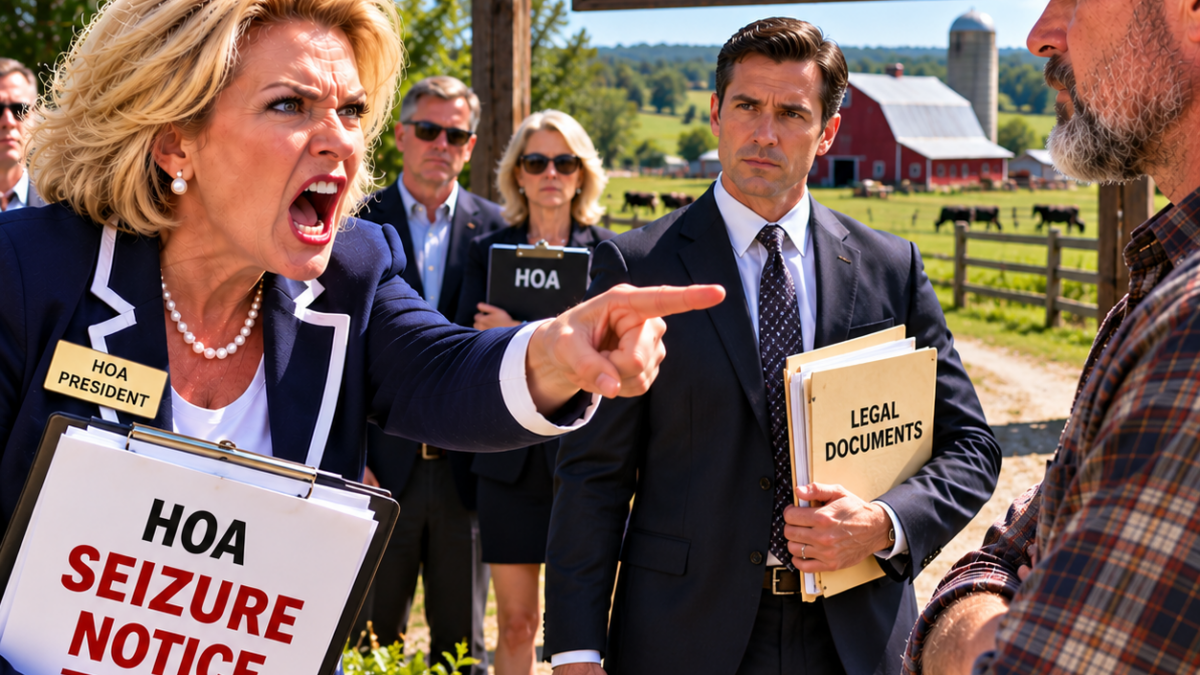
PART 2
I read the signature again.
Then a third time.
K. Maxwell, by proxy.
Maybe there was an explanation.
That was the first thing I told myself.
I had learned long ago that the fastest way to lose a dispute was to fall in love with your first interpretation of the evidence. A strange signature was not automatically fraud. Maybe Amy Parsons had signed a power of attorney. Maybe the governing documents allowed authorized proxy execution. Maybe there was a separate consent tucked into another filing.
So I did not call Karen.
I did not confront anyone.
I asked the clerk for certified copies of the entire amendment packet.
Then I requested the original Oakwood Bluffs declaration, all amendments, board-related filings available in the recorder’s office, and every recorded document referencing my parcel identification number.
The clerk was an older woman named Donna who had probably seen every flavor of land dispute people could invent.
She handed me the last stack.
“You buying something?”
“Trying not to lose something.”
She glanced at the thickness of the file.
“Usually more expensive.”
I almost smiled.
“Probably.”
I spent another hour comparing legal descriptions.
The original Oakwood Bluffs declaration covered the subdivision parcels.
Not mine.
The farm sat beyond the subdivision’s western boundary.
The original declaration contained an annexation provision, but it was nothing like Karen’s new version.
Additional property could be brought under the covenants only through a defined process.
The language required, among other things, proper association approval and the written participation of the affected property owner.
That owner was me.
I had signed nothing.
My father had signed nothing.
No Callahan had signed anything remotely resembling consent.
The new amendment had taken that narrow annexation mechanism and rewritten it into something almost unrecognizable.
It claimed the association could bring neighboring land under HOA control if a supermajority of the board determined that the adjacent property posed an “aesthetic, economic, environmental, or community welfare detriment” to Oakwood Bluffs.
No owner consent.
No negotiated agreement.
No deed from the adjacent owner submitting land to the restrictions.
Just a board decision.
The language was audacious.
What frightened me was that somebody had actually recorded it.
A recording office does not necessarily decide whether every provision in every document is legally enforceable. A document can get stamped and indexed without the government blessing every sentence inside it.
Karen seemed to be relying on homeowners not understanding that distinction.
Or maybe she didn’t understand it herself.
I packed the certified documents into my briefcase and drove home.
Sarah was at the dining table when I arrived.
I dropped the stack in front of her.
“Tell me I’m reading this wrong.”
She started with our deed.
Then the original declaration.
Then the amendments.
When she reached the proxy signature, she stopped.
Her index finger rested on the page.
“Do you have anything showing Amy gave her authority?”
“Nothing recorded.”
“That doesn’t prove none exists.”
“I know.”
Sarah looked at me.
“Good.”
“What?”
“You said that before I had to.”
“I can learn.”
“Slowly.”
She kept reading.
Ten minutes passed.
Then twenty.
Sarah had worked as a paralegal for a real-estate litigation firm before going part-time when my father’s health declined. She was not a lawyer, and she never pretended to be one, but she knew what ugly title disputes looked like.
Finally, she leaned back.
“Jack, this amendment has serious problems.”
“That was my impression.”
“Your farm is not bound by their original declaration.”
“Yes.”
“You never signed anything submitting it.”
“No.”
“The original annexation clause requires owner participation.”
“Yes.”
“And Karen’s amendment tries to erase that requirement by giving the board unilateral annexation power.”
“Exactly.”
Sarah tapped the signature block.
“Then we have whatever this is.”
“Unauthorized?”
“Maybe.”
“Forgery?”
“Don’t say that yet.”
“I didn’t.”
“You were thinking it loudly.”
She pulled out her phone.
“We need an actual attorney.”
“I know one.”
“Real estate?”
“Real estate now. JAG before that.”
She stared.
“Marcus?”
I nodded.
“Oh, no.”
“What?”
“Those two words—Marcus Thorne—have never preceded a quiet week.”
I smiled for the first time all day.
Marcus and I had met overseas when an engineering contract went sideways so badly that half the people involved wanted to blame the other half before anybody had even figured out what was wrong.
Marcus had been the JAG officer assigned to help untangle it.
He was brilliant.
Loud when he wanted to be.
Patient when it mattered.
And deeply offended by dishonest paperwork.
I called him that evening.
He answered on the fourth ring.
“Jack Callahan.”
“Marcus.”
“Please tell me this involves a bridge.”
“No.”
“Then a dam.”
“No.”
“Contractor dispute?”
“Homeowners association.”
Silence.
Then:
“You’ve fallen far.”
I laughed.
“I have three hundred forty acres that an HOA president says she annexed.”
Longer silence.
“What?”
I gave him the short version.
When I reached the new amendment, Marcus stopped joking.
“Send me the documents.”
“I will.”
“All of them.”
“Yes.”
“And Jack?”
“What?”
“Do not accuse anyone of forgery yet.”
Sarah pointed at the phone triumphantly.
“I know.”
“Sarah there?”
“Yes.”
“Tell her I remain the smarter member of our former professional relationship.”
Sarah leaned toward the speaker.
“You’re the reason he learned to use footnotes.”
Marcus laughed.
Then his voice sharpened again.
“Scan everything tonight. Deed. Plat. Their declaration. All amendments. Anything Karen gave you. And write down your conversation from memory while it’s fresh.”
“Already did.”
“Of course you did.”
I sent him almost ninety pages before midnight.
At ten the next morning, Marcus called.
“This is ugly.”
“How ugly?”
“The good kind if you are my client.”
“That sentence worries me.”
“It should worry Karen more.”
He had already pulled the state corporate filings and found Oakwood Bluffs’ registered agent and legal counsel.
“I cannot give you a final opinion until I review everything, but I can tell you this much: recording an HOA amendment does not magically bind an outside parcel that never submitted to the declaration.”
“So the farm is safe.”
“Slow down.”
I hated when lawyers did that.
“Why?”
“Because being legally right does not prevent someone from creating a practical mess. They can send fines. They can make threats. They can possibly record something that clouds title. Then you spend time and money cleaning it up.”
“So what do we do?”
“Paper first.”
Sarah silently mouthed, Told you.
Marcus continued.
“I’m drafting a preservation and cease-and-desist letter. We put the association, every director we can identify, their management company, and their counsel on notice.”
“What about the proxy signature?”
“We ask for the authority.”
“That’s it?”
“For now.”
“I was hoping for more fireworks.”
“That is why I am the lawyer.”
Sarah mouthed, Thank God.
Two days later, Marcus emailed the draft.
It was ten pages.
No insults.
No dramatic accusations.
That somehow made it more intimidating.
He identified the Callahan parcel.
Attached its deed.
Explained that it had never been subjected to the Oakwood Bluffs declaration.
Quoted their original annexation clause.
Requested production of any document bearing my signature or my predecessor’s signature consenting to annexation.
Then he addressed the third amendment.
The letter specifically requested the board resolution authorizing it, voting records, membership approval if required, the legal basis for claiming unilateral power over adjacent land, and documentation authorizing Karen Maxwell to execute any instrument on Amy Parsons’s behalf.
The final paragraph was simple.
Oakwood Bluffs was instructed to cease asserting jurisdiction over the Callahan farm pending formal clarification.
Any attempt to record a lien, interfere with title, enter the property, remove structures, or seize personal property would trigger immediate legal remedies.
Marcus sent the letter to the HOA’s registered law firm.
Copies went to Karen, the management company, and every director.
Certified mail.
Trackable electronic delivery where available.
Documentation.
Always documentation.
For six days, nothing happened.
The farm returned to normal.
Cattle needed moving.
A water trough valve failed.
Sarah canned beans.
Buster, our old black Lab mix, spent an entire afternoon asleep under the tractor because apparently retirement applied to dogs too.
I almost believed Karen’s attorney had read Marcus’s letter and told her to stop.
Then the envelopes started arriving.
First:
VIOLATION 24-1187
Unapproved agricultural equipment visible from association property.
$500.
Photograph attached.
My John Deere.
I stood in the kitchen laughing.
Sarah read the notice.
“This may actually be my favorite.”
“Why?”
“Because the tractor is parked next to a barn on a farm.”
“Reckless agricultural behavior.”
The next day:
Improper landscape maintenance.
$250.
Photograph of my hayfield.
Then:
Oversized detached accessory structure.
$1,000.
The barn.
Then the stone wall.
Then a vegetable garden.
That one made Sarah stop laughing.
“My garden?”
“Apparently.”
She read the alleged violation.
“Unapproved alteration of natural landscape.”
She slowly lowered the page.
“I want blood.”
I raised my eyebrows.
“Interesting.”
“Don’t.”
“What happened to legal restraint?”
“My tomatoes are innocent.”
We scanned everything.
Forwarded it to Marcus.
His response came within minutes.
Do not pay. Do not reply personally. Preserve every envelope.
Karen had shifted from arguing that the farm belonged to the HOA to behaving as if the question had already been resolved.
The fines crossed $5,000.
Then $10,000.
Daily penalties appeared.
Some notices referred to a lien process.
No actual lien had been recorded yet.
Marcus checked.
We did too.
Every morning, Sarah monitored county records.
Every afternoon, I logged new correspondence.
Part of me hated the passivity.
Twenty-five years in engineering had conditioned me to solve problems.
Broken culvert?
Fix it.
Bad contractor?
Correct him.
Compromised foundation?
Shore it up before debating blame.
Watching Karen manufacture fake debt while we intentionally didn’t answer felt unnatural.
I called Marcus.
“How long do we let this continue?”
“As long as it helps us more than it hurts you.”
“And when does that change?”
“When they touch title, enter the property, interfere with a transaction, or create damages that justify immediate relief.”
“They’ve threatened the barn.”
“Have they entered again?”
“No.”
“Then document.”
“I hate lawyers.”
“You loved me in Iraq.”
“I tolerated you.”
“You brought me coffee.”
“You controlled contract approvals.”
“Love has many forms.”
A week later, Karen came back.
Not alone.
She arrived in a white SUV with a man wearing khakis and a polo shirt embroidered with the name of Oakwood Bluffs’ management company.
I saw them from the barn.
They stopped at the end of the driveway.
Karen stepped out holding a packet.
I walked toward them but stopped twenty feet away.
“You’re on private property.”
Karen smiled.
“Still doing that?”
“Doing what?”
“Pretending.”
The manager looked uncomfortable.
He held out a hand.
“Mr. Callahan, I’m Richard Lane, regional manager with Crestview Community Management.”
“I know who your company is.”
“We’re here to provide formal notice of intent to pursue collection.”
“On property your association doesn’t control.”
Karen interrupted.
“That issue has been resolved.”
“By whom?”
“Our legal counsel.”
“Name him.”
Her smile faltered.
Richard cleared his throat.
“Mr. Callahan, I’m not here to debate legal conclusions. I’m here to deliver notices.”
“Then leave them at the property line.”
Karen took a step closer.
“You’re making this much harder than it needs to be.”
I looked at her.
“My great-grandfather’s barn has been standing since 1888.”
“Then it has had a good run.”
Something in me went very still.
Karen continued.
“This community has invested millions of dollars in property. Residents should not have to look at deteriorating farm structures, commercial equipment, livestock fencing, or junk vehicles.”
“It’s a working farm.”
“Exactly.”
As if those two words proved her case.
Richard quietly said:
“Karen.”
She ignored him.
“You could sell the western acreage and keep the house.”
There it was.
Not legal control.
The thing beneath it.
“You want me to sell.”
“I’m saying compromise exists.”
“To whom?”
“The developer has expressed interest historically.”
“My father refused.”
“Your father is dead.”
Everything around me seemed to stop.
Wind.
Insects.
Even Richard’s face changed.
Karen realized too late what she had said.
I took one step toward her.
Not threatening.
Enough.
“My father is dead,” I said. “And this is still his farm.”
“Jack—”
A car turned into the driveway.
Black sedan.
Out-of-state plates.
Karen glanced over.
The sedan rolled toward us and stopped.
Marcus Thorne got out wearing a navy suit despite the heat.
He was broader than I remembered, grayer at the temples, and carrying a leather file bag.
He looked at Karen.
Then Richard.
Then me.
“Jack.”
“Marcus.”
He walked over.
Karen’s confidence visibly drained.
Not dramatically.
Just enough that I saw her grip tighten around the packet.
Marcus held out his hand to Richard.
“Marcus Thorne. Counsel for Mr. Callahan.”
Richard shook it immediately.
Karen did not.
Marcus looked at the papers in her hand.
“Are those collection notices?”
Karen recovered.
“This is HOA business.”
“Yes.”
“Then it doesn’t concern you.”
Marcus smiled.
It was a terrible smile.
“I’m his lawyer.”
She glanced at Richard.
The manager looked like a man trying to teleport.
Marcus continued.
“My firm served notice of representation on your association’s counsel nine days ago. You were copied.”
Karen said nothing.
“Any reason you’re communicating directly with my client about disputed collection matters?”
“This is my association.”
Marcus looked toward the fields.
“No.”
Then back at her.
“It isn’t.”
Karen’s face hardened.
“The farm has been annexed.”
“Show me Mr. Callahan’s consent.”
“The board amended the governing documents.”
“That was not my question.”
Richard stepped in.
“Mr. Thorne, perhaps we should continue through counsel.”
Marcus nodded.
“Excellent idea.”
He turned to Karen.
“Please leave my client’s property.”
She lifted her chin.
“You can’t order me—”
Richard touched her arm.
“Karen.”
She jerked away.
Marcus remained calm.
“I’m not ordering you as an HOA director. I’m informing you on behalf of the landowner that you no longer have permission to be here.”
Karen stared at me.
Then Marcus.
The packet trembled slightly in her hand.
She shoved it toward Richard.
“Give him the notice.”
Marcus said:
“No.”
Karen blinked.
“Excuse me?”
“Send it to me.”
“I am standing right here.”
“Yes. And I’m telling you not to hand disputed collection paperwork directly to a represented party after being notified of counsel.”
Richard quietly put the packet back into his folder.
“Let’s go.”
Karen looked at me one last time.
“This isn’t finished.”
Marcus answered before I could.
“On that, we agree.”
They left.
I watched the SUV disappear.
Marcus loosened his tie.
“Your HOA president is delightful.”
“Not my HOA.”
“Good correction.”
Sarah came down from the house.
“You met her?”
Marcus looked at me.
“She told him his dead father doesn’t own the farm anymore.”
Sarah’s face went flat.
“Oh.”
Marcus glanced between us.
“Do I need to worry about either of you committing a felony?”
“No,” I said.
Sarah took longer.
“Probably not.”
We went inside.
Marcus spent the afternoon reviewing originals.
At one point, he held up Karen’s amendment.
“I want Amy Parsons.”
“The former secretary?”
“Yes.”
“I don’t know her.”
“Find her lawfully. No ambushes.”
“Why?”
“Because ‘by proxy’ matters much more if the named secretary says she never authorized it.”
Sarah searched public association records.
Amy had resigned from the board shortly before the amendment was filed.
That timing bothered all three of us.
The next piece came through an unexpected conversation.
I started walking Buster along the public road bordering Oakwood Bluffs.
Not to spy.
Mostly.
One afternoon I passed a house with a tall flagpole.
American flag above.
Marine Corps flag below.
An orange violation sticker was tied to the pole.
The homeowner was polishing the base.
“Nice flag,” I said.
He looked up.
Vietnam veteran cap.
Weathered face.
Suspicious eyes.
“HOA disagrees.”
“I’m Jack Callahan.”
Recognition.
“The farm.”
“The farm.”
He extended a hand.
“Bill Hedges.”
We talked for forty minutes.
Karen had fined him because his flagpole was two feet above an architectural guideline.
Then for the Marine flag.
Then for a ceramic garden gnome his granddaughter gave him.
The truck his son drove during a visit had triggered another notice.
Bill kept every letter.
“So why stay?” I asked.
“My wife loved the house.”
He looked toward the front window.
“She died last year.”
“I’m sorry.”
“She made me promise not to turn into an angry old man.”
He looked at the orange sticker.
“I’m failing.”
I laughed.
Then I told him what Karen was doing to my farm.
His smile disappeared.
“She says she annexed it?”
“Yes.”
“That’s insane.”
“Yes.”
“You fighting?”
“Yes.”
“How?”
“Carefully.”
Bill looked toward Karen’s street.
“Good.”
I asked about Amy.
His expression changed.
“Former secretary?”
“Yes.”
“She quit.”
“Why?”
“Karen.”
“Specific?”
“Board fight. Something about fines.”
“Do you know her?”
“My daughter does.”
“Would you ask if she is willing to speak with my attorney?”
Bill stared at me.
“What exactly are you building here?”
“A record.”
He nodded.
“I can respect that.”
Three days later, Amy Parsons called Marcus.
I wasn’t on the call.
Marcus would not let me be.
Attorney strategy, witness independence, avoid unnecessary contamination.
That evening, he called me.
“She never authorized the signature.”
I sat down.
“Nothing?”
“No written authorization.”
“Verbal?”
“She says no.”
“What did happen?”
“According to Amy, Karen presented the amendment at a board session and pushed for immediate filing. Amy objected to several provisions, including the adjacent-land clause.”
I looked at Sarah.
“What happened next?”
“They argued.”
“Then?”
“Amy resigned as secretary several days later.”
“Before filing.”
“Yes.”
“And Karen signed for her anyway.”
“That appears to be what happened.”
“Forgery?”
Marcus sighed.
“You really want that word.”
“I like precision.”
“Then be precise. We have a recorded instrument containing Karen’s signature purporting to act ‘by proxy’ for a former secretary who says she never granted that authority.”
“That’s long.”
“Legal accuracy often is.”
“Will Amy sign a statement?”
“She already agreed.”
That was the moment the dispute changed.
Before Amy, Karen could claim some procedural confusion.
After Amy, she had a much harder problem.
Marcus drafted a complaint.
Not yet filed.
Declaratory judgment that the HOA had no jurisdiction over my farm.
Injunctive relief against lien or interference.
A claim relating to any disparagement or clouding of title if they recorded invalid encumbrances.
Potential trespass and interference claims based on conduct.
Individual claims against Karen would depend on what evidence established she personally did.
Marcus was careful.
“We are not suing everyone for everything.”
“Disappointing.”
“We sue for what we can prove.”
He looked at the growing binder.
“You have enough without fantasy.”
The fines crossed $30,000.
Then Karen made the mistake Marcus had been waiting for.
A tow truck came up my driveway.
I was in the workshop.
Buster barked before I heard the engine.
When I stepped outside, a large flatbed truck was backing toward my grandfather’s Model T.
The car did not run.
Hadn’t in years.
It sat near the barn under a simple metal shelter, restored cosmetically but waiting for an engine rebuild I kept promising myself I would begin next winter.
The driver had already lowered part of his rig.
I walked over.
“Can I help you?”
“Private tow.”
“From where?”
He pointed.
“Abandoned vehicle.”
“Whose order?”
“Oakwood Bluffs.”
I laughed once.
“No.”
He looked at his paperwork.
“Address says 1515 Old County Road.”
“That’s here.”
“So—”
“This is private property and I am the owner. You do not have permission to remove that car.”
“HOA authorized it.”
“They have no authority here.”
He frowned.
“I’m just doing the job.”
“I understand. And I’m telling you the property owner has not authorized you to take that vehicle.”
He looked irritated.
“Then you need to call the association.”
“No. You need to stop.”
The driver began attaching equipment anyway.
I pulled out my phone and started recording.
“Sir, I am expressly telling you that you do not have permission to tow that vehicle from my property.”
He swore under his breath.
“You people always do this.”
“What people?”
“HOA disputes.”
That told me this wasn’t his first.
I called the sheriff’s non-emergency line first.
The dispatcher transferred me when I explained an active attempt to remove a vehicle despite owner objection.
A deputy arrived about fifteen minutes later.
By then the driver had paused rather than risk loading the car.
Good decision.
The deputy spoke with him.
Then with me.
Then examined the work order.
It carried Karen Maxwell’s name and HOA title.
The deputy looked toward Oakwood Bluffs.
“Is this property within that association?”
“No.”
I showed him the deed and parcel map Marcus had told me to keep ready.
He studied them.
Then asked the tow driver:
“Do you have authorization from this property owner?”
“No.”
“Court order?”
“No.”
“Repossession documentation?”
“No.”
“Then you need to leave.”
The driver pointed at the HOA order.
“They told me it’s common-interest property.”
The deputy looked at the farm.
Three hundred forty acres.
Cattle beyond the fence.
Barn.
Tractor.
Fields.
Then back at him.
“I’m not adjudicating an HOA title dispute in this driveway. What I can tell you is the person in possession of this private parcel is objecting to your entry and removal of his vehicle. Do not take it without lawful authority.”
That was enough.
The driver disconnected.
Before leaving, he handed the deputy a copy of the work order.
I requested an incident number.
Then sent Marcus the video.
He called five minutes later.
“Please tell me the car is still there.”
“Yes.”
“Please tell me you recorded Karen’s signed order.”
“Deputy has a copy. I photographed it.”
Marcus exhaled.
“Good.”
“You sound happy.”
“I am professionally delighted.”
“That seems unhealthy.”
“Jack, she just attempted to exercise control over physical property outside the HOA after receiving formal notice that jurisdiction is disputed.”
“Meaning?”
“Meaning our request for immediate injunctive relief just became much easier to explain.”
The lawsuit was filed two days later.
That mattered.
Before, everything existed in letters and threats.
Now there was a case number.
A judge.
Deadlines.
Discovery obligations.
Rules Karen didn’t control.
Marcus sought a temporary injunction preventing the HOA and its agents from entering my farm, towing property, removing structures, recording liens based on the disputed amendment, or otherwise enforcing association covenants against the Callahan parcel while the case proceeded.
The court granted temporary relief pending a fuller hearing.
It was not a grand declaration that I had won.
It was better.
It froze the dangerous part of the dispute.
No barn demolition.
No tow trucks.
No lien escalation.
No self-help.
Karen could send all the angry emails she wanted.
The farm stayed untouched.
Then Bill called.
“People want to meet.”
“What people?”
“People Karen has fined.”
“How many?”
“More than will fit in my kitchen.”
We settled on his living room.
The first meeting had seven homeowners.
Bill.
Luis and Elena Garcia.
Dana Brooks, an ER nurse and single mother.
Helen Morris, retired librarian.
Mark Ellis, whose basketball hoop Karen had pursued.
A younger couple named Rob and Kelly with a children’s play structure.
They brought paper.
Stacks of it.
The Garcias owed nearly $4,000 over their wooden swing set.
Dana had twice received towing warnings because Karen insisted her car violated long-term parking rules while Dana worked consecutive hospital shifts.
Helen had fines for wind chimes.
Not illegal noise measured by decibels.
“Excessively tonal exterior decoration.”
I read that phrase twice.
“That’s real?”
Helen opened a binder.
“I was a librarian for thirty-seven years. I keep records.”
I liked her immediately.
Bill told them about my farm.
Then I showed them the amendment.
Not every legal theory.
Just the basics.
“My land was never part of Oakwood Bluffs.”
Luis Garcia shook his head.
“Then why would she do this?”
“That is a good question.”
Elena looked exhausted.
“She does it because nobody stops her.”
Dana nodded.
“She told me everyone else supports her.”
Helen looked around the room.
“She told me that too.”
One by one, they realized Karen had been saying the same thing to each person.
You are the problem.
Everyone else agrees.
Nobody else complains.
Isolation.
I had seen the tactic in organizations before.
If people compare notes, control weakens.
“What do you want from us?” Dana asked.
“Nothing you aren’t comfortable giving.”
I looked around.
“My lawyer is dealing with the farm. But Karen’s claim that she acts for the community depends on the community staying silent.”
Bill nodded.
“Documentation.”
“Yes.”
“Statements.”
“If your lawyer agrees and Marcus wants them.”
“I don’t have a lawyer.”
“Then don’t sign anything you don’t understand.”
Helen smiled.
“That’s the least military thing you’ve said all evening.”
“I’ve been married a long time.”
Sarah, beside me, said:
“He is trainable.”
The evidence grew.
Emails.
Notices.
Hearing transcripts.
Fine ledgers.
Photographs.
Amy’s declaration.
Some claims turned out weaker than people believed.
Marcus rejected those.
“If Karen legitimately enforced a clear rule, we don’t call it corruption because residents dislike it.”
That disappointed a few people.
It increased everyone else’s confidence.
We weren’t building a mob.
We were building facts.
Then the first local reporter called.
Not the television investigator from the source version people later repeated.
A county newspaper reporter.
Somebody had tipped her about the lawsuit.
Marcus told me to answer only basic factual questions.
I did.
Historic farm.
Outside HOA.
Recorded amendment.
Disputed authority.
Injunction.
No inflammatory claims.
The article ran on page three.
FARM OWNER CHALLENGES HOA ANNEXATION CLAIM
Karen gave a quote.
“The association is simply protecting residents from conditions that threaten property values.”
That phrase spread through Oakwood Bluffs faster than the article itself.
Bill called me.
“She just called your farm a threat.”
“Apparently.”
“People aren’t happy.”
“Why?”
“Half the subdivision bought here because they liked the view of your fields.”
That irony was almost perfect.
Oakwood Bluffs’ marketing photographs had used my farm as background scenery.
Sunset over pasture.
Old barn.
Tree line.
Rural character.
Now the HOA president claimed the same farm harmed property values.
Marcus noticed too.
“Get the developer’s marketing materials.”
Sarah found archived brochures.
There it was.
COUNTRY LIVING WITH MODERN COMMUNITY AMENITIES
And a photograph taken across my fence.
My barn sat in the distance.
Marcus laughed when he saw it.
“They sold houses using your allegedly blighted view.”
“Can we use that?”
“I will certainly enjoy asking about it.”
The television reporter came later.
Jessica Riley from Channel 8.
Her producer contacted Marcus after the newspaper story gained traction online.
At first I said no.
I did not want a circus.
Sarah agreed.
Marcus did not push.
Then Karen posted a community bulletin accusing me of using “legal intimidation to undermine Oakwood Bluffs’ right to defend itself from encroaching agricultural blight.”
Agricultural blight.
My farm.
The place her developer had photographed to sell homes.
Then Dana’s car was tagged again.
The Garcias received a new penalty.
Bill’s flagpole fine doubled.
Karen was not retreating.
She was punishing anyone she suspected of speaking to us.
That changed my mind.
Jessica came to the farm on a Thursday.
Professional.
Skeptical.
No instant friendship.
She wanted documents.
So we gave her documents.
Deed.
Original CC&Rs.
Amendment.
Amy’s sworn statement.
Fine notices.
Court injunction.
Tow-truck incident report.
Photographs.
Brochures.
Jessica spent three hours verifying details.
She called the county recording office.
The HOA’s attorney.
Crestview management.
Amy.
Bill.
Dana.
The Garcias.
Then Karen.
Jessica asked if we could listen.
Marcus said yes as long as the call was conducted under applicable recording rules and Jessica handled it properly.
The producer placed Karen on speaker for the room after informing her the conversation was on the record.
“Ms. Maxwell, Channel 8. We are reporting on the association’s legal dispute with Jack Callahan.”
Karen’s voice came through sharp but controlled.
“Mr. Callahan is manipulating the media.”
Jessica didn’t react.
“Did Oakwood Bluffs annex his 340-acre parcel?”
“We amended our declaration to address adjacent properties negatively affecting association values.”
“Did Mr. Callahan sign a document consenting to HOA jurisdiction?”
“Our attorneys are handling legal technicalities.”
“That sounds like no.”
“It sounds like this matter is in litigation.”
Jessica moved on.
“On the filed amendment, the secretary signature line reads ‘K. Maxwell, by proxy.’ Did Amy Parsons authorize you to sign for her?”
Silence.
Then:
“Internal board procedures are confidential.”
“Amy Parsons has provided a sworn statement saying she did not.”
Another silence.
Longer.
Karen said:
“Amy was an unstable and disgruntled former director.”
Jessica’s eyebrows rose.
I wrote nothing.
No need.
“Did she authorize you?”
“I am not discussing privileged association business.”
“Did you direct a tow company to remove Mr. Callahan’s Model T from his private farm?”
“It was an abandoned vehicle and a visual nuisance.”
“Was it on HOA property?”
“It was visible from HOA property.”
“That was not my question.”
Karen’s voice rose.
“Mr. Callahan has spent months provoking this community.”
“By farming?”
“He refuses to meet standards.”
“Standards governing a property he says isn’t in your association.”
“He is a hostile neighboring landowner.”
Jessica paused.
“Your subdivision’s original marketing brochure includes a photograph of his barn beneath the words ‘country living.’ Was his farm considered harmful to property values when those homes were being sold?”
The line went dead.
Jessica looked at the phone.
“Well.”
Marcus said:
“Please tell me that was recorded.”
Jessica almost smiled.
“It was.”
The segment aired two nights later.
I hated watching myself.
Sarah loved it.
“You look furious.”
“I was calm.”
“You look like you want to strangle a fence post.”
“I was calm.”
Buster slept through the entire segment.
The story opened with aerial footage of Oakwood Bluffs.
Rows of newer houses.
Then the tree line.
Then my farm.
Three hundred forty acres unfolded beneath the drone.
Pasture.
Fields.
Creek.
Barn.
House.
The contrast made Karen’s “adjacent nuisance” language look absurd without the reporter needing to editorialize.
Jessica showed the filed amendment.
The proxy signature.
The original consent language.
The court injunction.
The tow truck video.
Then the old development brochure advertising the view.
Bill appeared.
Dana.
Elena Garcia.
Amy’s statement was quoted with her permission.
A property-law professor explained carefully that homeowners associations generally derive authority from recorded covenants binding specific property, not from a power to simply declare unrelated neighboring land subject to their rules.
That sentence mattered.
The story did not call Karen a criminal.
It did not need to.
The documents spoke loudly enough.
Within twenty-four hours, Marcus received a call from Oakwood Bluffs’ outside counsel.
Not the casual local attorney Karen had apparently consulted before.
A senior partner.
“We need to discuss resolution.”
Marcus called me afterward.
“They’re scared.”
“Of losing?”
“Of everything.”
“What does that mean?”
“The board says Karen did not fully disclose what she was doing.”
“Do you believe them?”
“No.”
He paused.
“But I believe some directors understood less than others.”
“What do they want?”
“Peace.”
“And you?”
“Terms.”
Marcus proposed a settlement framework.
First, the HOA would acknowledge that the Callahan farm was not and had never been subject to Oakwood Bluffs covenants.
Second, the board would adopt and record corrective documents clarifying that the disputed amendment created no rights over my parcel.
Third, every fine against me would be voided.
Fourth, any collection activity would cease.
Fifth, the HOA would reimburse actual legal and title-related costs.
Sixth, the board would review fines against residents that had been based on unsupported interpretations.
Seventh, the association would issue a written apology.
I asked:
“What about Karen?”
Marcus was quiet.
“That depends.”
“On?”
“What we can prove she did personally, what insurance covers, and whether the HOA is willing to separate its position from hers.”
“I want her responsible.”
“I know.”
“This was her.”
“Mostly.”
“She came to my farm.”
“Yes.”
“She signed the amendment.”
“Yes.”
“She sent the tow truck.”
“Apparently, and we have the work order.”
“She kept fining me after counsel notice.”
“Yes.”
“Then why does she get to hide behind the HOA?”
Marcus’s voice changed.
“Jack, listen to me.”
I did.
“Justice is not making every defendant hurt as much as you hurt.”
I stared out the kitchen window.
Barn visible beyond the trees.
“Then what is it?”
“Fixing the title. Protecting the farm. Compensating actual loss. Stopping future misconduct. Holding individuals liable where law and evidence support it.”
“And humiliation?”
“Not a cause of action.”
“Unfortunate.”
“Very.”
He added:
“If Karen personally committed tortious acts, the corporate structure does not automatically erase that. But I am not promising you a movie ending.”
I thought about Dad.
He would have hated all of this.
Not because he avoided conflict.
The man once chased a developer’s survey crew off a hayfield with language my mother described as “agriculturally inappropriate.”
But Dad believed in knowing exactly what you were defending.
Land.
Not pride.
I told Marcus:
“Protect the farm first.”
“Good.”
“Then deal with her.”
“Also good.”
The board scheduled an emergency membership meeting.
That was when Karen lost control.
She posted a long message to Oakwood Bluffs residents accusing me of waging a media campaign against “their way of life.”
Residents answered.
Bill posted his fines.
The Garcias posted theirs.
Dana posted towing notices.
Helen posted letters about her wind chimes.
Then Amy posted one sentence:
I did not authorize Karen Maxwell to sign any recorded amendment on my behalf.
Nothing Karen wrote after that mattered.
She deleted the discussion.
Screenshots were already everywhere.
The emergency meeting was set for the following Thursday.
Marcus planned to attend.
So did I.
Two days before it, Karen sat for a deposition.
Her own new lawyer came with her.
Not the association’s lawyer.
That separation told me a great deal.
We met in Marcus’s office.
Karen wore black.
No clipboard.
No name badge.
No pastel suit.
She looked exhausted.
When she saw me, her mouth tightened.
Marcus started gently.
Name.
Position.
Dates of service.
Board duties.
Governing documents.
Authority.
Then the amendment.
He placed a certified copy in front of her.
“Ms. Maxwell, is that your signature on the president line?”
“Yes.”
“And the notation ‘K. Maxwell, by proxy’ on the secretary line?”
She looked at her lawyer.
He told her to answer.
“Yes.”
“Did you write that?”
“Yes.”
“Did Amy Parsons sign a power of attorney authorizing you to execute recorded real-property instruments for her?”
“No.”
“Did she sign any written authorization?”
“No.”
“Did she send an email authorizing you?”
Karen hesitated.
“No.”
“Text message?”
“No.”
“Meeting minutes granting you authority to sign her name?”
“No.”
“What authorization did you have?”
“She had previously told me I could handle routine secretary functions when she was unavailable.”
Marcus paused.
“Was recording an amendment that purported to change annexation rights a routine secretary function?”
Her lawyer objected to form.
Marcus rephrased.
“Had Ms. Parsons resigned before you filed this amendment?”
“Yes.”
“Was she secretary at the time of filing?”
Karen stared at the table.
“No.”
“Why does her name appear on the secretary line?”
“Because she participated in earlier discussions.”
“Did she approve the final amendment?”
Karen did not answer immediately.
Her lawyer reminded her.
“No.”
The room became very quiet.
Marcus moved to board approval.
Minutes.
Votes.
Drafts.
Emails.
Karen had pushed the amendment aggressively.
Thomas Reed, vice president, had signed.
Other directors discussed it.
But several testified later that they understood the amendment to strengthen enforcement over association-owned buffers and nuisance conditions near subdivision boundaries.
They had not understood Karen intended to use it as authority over an outside 340-acre farm.
Whether they should have understood was another question.
The amendment itself was broad enough to alarm anyone who read it carefully.
Marcus showed Karen the original annexation language.
“Owner consent.”
“Yes.”
“Why remove it?”
“We needed flexibility.”
“To do what?”
“Protect the community.”
“From what?”
“Adjacent neglect.”
“What adjacent neglect?”
She looked at me.
“My farm?”
“Yes.”
“Had the Callahan farm deteriorated?”
“It was never maintained to our standards.”
“Did your standards govern it?”
“We believed they should.”
Marcus stopped.
Even Karen’s lawyer looked uncomfortable.
Marcus asked:
“Did you ever believe you owned Mr. Callahan’s land?”
“No.”
“Did you believe the HOA owned it?”
“No.”
“So your objective was to subject it to HOA rules without acquiring title?”
“To protect property values.”
“Did you investigate whether the farm actually reduced property values?”
“Yes.”
“Show me the study.”
She couldn’t.
“Appraisal?”
None.
“Market analysis?”
None.
“Real-estate expert?”
None.
“What evidence?”
“Resident complaints.”
“Produce them.”
Her lawyer asked for a break.
After fifteen minutes, they returned.
No complaints were produced.
Marcus moved to fines.
Tractor.
Hayfield.
Vegetable garden.
Stone wall.
Barn.
Model T.
He asked Karen to identify the exact covenant provision she relied on.
Again and again, she cited general aesthetic language.
Again and again, Marcus asked the threshold question:
“How does that covenant bind the Callahan parcel?”
Eventually Karen snapped.
“We filed the amendment.”
Marcus remained calm.
“The validity of that filing is precisely what we are discussing.”
Then came the tow truck.
He placed the signed work order in front of her.
“Did you issue this?”
“Yes.”
“Did the board vote to authorize entry onto Mr. Callahan’s farm to remove his Model T?”
Karen’s eyes moved to her lawyer.
“No.”
“Did counsel approve it?”
“I believed approval wasn’t necessary.”
“Did the management company authorize it?”
“No.”
“Did Mr. Callahan?”
“No.”
“Did you have a court order?”
“No.”
“Lien execution?”
“No.”
“Repossession right?”
“No.”
“So what gave you authority to send a tow truck onto 1515 Old County Road?”
Her jaw tightened.
“The vehicle violated community standards.”
Marcus leaned back.
“Which takes us back to the first question.”
He closed the folder.
“How did your standards bind his land?”
Karen had no answer.
Four hours after the deposition began, it ended.
I expected triumph.
Instead I felt tired.
Karen packed her bag.
Before leaving, she looked at me.
“You could have handled this privately.”
I almost laughed.
“I tried.”
“You came at me with lawyers.”
“You came to my farm with a demolition order.”
“You embarrassed an entire community.”
“No.”
She stared.
“You did that yourself.”
Her eyes hardened.
“I was protecting those people.”
“From my barn?”
“From declining standards.”
“The developer used my barn in the sales brochure.”
“That was years ago.”
“My farm didn’t move.”
Her lawyer touched her arm.
“Karen.”
She pulled away.
Then looked at me one last time.
“You’ll never understand what it takes to keep a neighborhood from falling apart.”
I thought of Bill.
Dana.
The Garcias.
Helen.
Amy.
People she had convinced were alone.
“I think I’m starting to.”
She left.
The emergency HOA meeting happened two nights later.
Oakwood Bluffs’ clubhouse overflowed.
Residents stood in the hallway.
Some watched from outside through open doors.
I sat beside Sarah.
Bill sat on my other side.
Dana and the Garcias were behind us.
Marcus stood near the wall with a legal pad.
The board table had five chairs.
Karen’s center chair was empty.
Thomas Reed, the vice president, looked physically ill.
The association’s attorney began.
No speeches.
No excuses.
He summarized the legal review.
The third amendment had material procedural defects.
The association had no valid basis to assert jurisdiction over the Callahan farm.
The board would vote to adopt corrective action.
Thomas raised the first motion.
Rescind and disavow the disputed annexation language.
Unanimous.
Second.
Acknowledge that my parcel had never been submitted to Oakwood Bluffs.
Unanimous.
Third.
Void all purported fines against the farm.
Unanimous.
Fourth.
Release any threatened collection claims.
Unanimous.
Then the attorney addressed residents.
“During our review, counsel identified multiple enforcement matters requiring reconsideration.”
Bill leaned forward.
The Garcias held hands.
The board vacated dozens of penalties unsupported by clear governing language or issued without proper process.
Not every fine.
Some legitimate violations remained.
That mattered.
This was reform, not anarchy.
Bill’s flagpole penalties disappeared.
The Garcia swing-set balance disappeared.
Dana’s towing-related penalties disappeared.
Helen’s wind-chime fines disappeared.
Applause came in waves.
Then Thomas Reed stood.
He looked at the crowd.
“I owe all of you an apology.”
Nobody moved.
“I signed the third amendment.”
He swallowed.
“I did not read it carefully enough.”
A man in the back shouted:
“That’s your job.”
Thomas nodded.
“Yes.”
No defense.
“I trusted Karen’s explanation.”
Another voice:
“That’s your job too.”
“Yes.”
He gripped the table.
“We failed.”
That word mattered more than an excuse would have.
Then came the final announcement.
Karen Maxwell had resigned from the board.
A sound moved through the room.
Part relief.
Part disbelief.
Part anger.
No theatrical roar.
At least not immediately.
Bill started clapping.
Others joined.
Then the Garcias.
Dana.
Helen.
Soon the room was on its feet.
Sarah stayed seated.
So did I.
She leaned toward me.
“You okay?”
“I think so.”
“You don’t look happy.”
“I am.”
“Then what?”
I looked toward the empty chair.
“I thought this would feel bigger.”
Sarah squeezed my hand.
“Go look at the barn tomorrow.”
After the meeting, Thomas came over.
He looked ten years older than when I first saw his signature.
“Mr. Callahan.”
“Jack.”
He held out his hand.
I shook it.
“I’m sorry.”
“I believe you.”
“I should have stopped her.”
“Yes.”
He flinched.
I didn’t soften it.
Then added:
“But you stopped now.”
He nodded.
“We’re changing the board procedures.”
“Good.”
“Independent legal review for amendments.”
“Good.”
“No director can sign on behalf of another.”
“Very good.”
He almost smiled.
“Bill Hedges is running for vice president.”
I looked at Bill.
He pretended not to hear.
“God help you.”
Thomas actually laughed.
A week later, Karen’s house went on the market.
I learned from Bill.
He came over holding his phone.
“Look.”
I didn’t.
“What?”
“For sale sign.”
“Okay.”
“That’s it?”
“What do you want me to do?”
“Fireworks.”
“No.”
“Small flag?”
“No.”
He looked disappointed.
Sarah appeared behind us.
“We have pie.”
Bill brightened.
“Victory pie?”
“Apple.”
“Good enough.”
The civil case against Karen did not vanish with her resignation.
Marcus advised us to settle if terms protected the farm, compensated actual losses, and created finality.
I agreed.
Karen’s deposition hurt her position.
So did the towing incident.
So did Amy’s statement.
So did the fine campaign after legal notice.
The association resolved its portion separately.
Its insurance carrier participated in defense and settlement decisions.
Karen retained personal counsel regarding claims directed at her own conduct.
Months of negotiation followed.
No dramatic courthouse showdown.
No judge slamming a gavel while Karen confessed.
Real litigation is slower.
Emails.
Motions.
Document requests.
Insurance letters.
Mediation.
Numbers.
Boredom interrupted by bursts of stress.
At mediation, Karen and I sat in separate rooms most of the day.
The mediator moved back and forth.
Near the end, he asked whether I would meet Karen directly.
Marcus looked at me.
“Your choice.”
Sarah sat beside me.
“Do you want to?”
“No.”
Then I reconsidered.
“Yes.”
Karen entered the conference room with her attorney.
She looked thinner.
No makeup.
No armor.
For a moment, I saw a tired woman instead of an HOA president.
That made the conversation harder.
She sat across from me.
The mediator explained that this was voluntary.
Karen spoke first.
“You destroyed my life.”
Marcus shifted.
I held up a hand.
“I’ll answer.”
I looked at Karen.
“I didn’t file that amendment.”
“You brought the press.”
“After you fined my land and sent a tow truck.”
“You turned everyone against me.”
“No.”
“You gave them permission.”
That surprised me.
“Permission?”
“To hate me.”
I thought about that.
“Maybe I gave them permission to compare notes.”
She looked away.
“Same thing.”
“No.”
Her hands tightened around each other.
“You don’t understand what that board was like before I became president.”
“Then tell me.”
For the first time, she did.
Previous boards barely enforced anything.
Dues collections were inconsistent.
Landscaping contracts lapsed.
A drainage project stalled.
Neighbors fought over parking.
Meetings became shouting matches.
Karen ran because she believed nobody else would impose order.
At first, residents loved her.
Projects got finished.
Violations were answered.
Budgets became organized.
Entrance landscaping improved.
Then people started coming directly to her.
Complaints about everything.
Trucks.
Flags.
Play equipment.
Noise.
Paint.
She became the person expected to decide.
“So I decided,” she said.
“Everything.”
“Someone had to.”
“No. The rules had to.”
She looked at me.
“Rules require people.”
“People require limits.”
Silence.
I asked:
“Why my farm?”
Her jaw tightened.
“At first? The barn.”
“Why?”
“Residents complained.”
“Names?”
She looked away.
“Some.”
“Karen.”
“One board member.”
“Who?”
She wouldn’t say.
I waited.
Finally:
“Thomas mentioned buyers asking whether the barn would ever be restored.”
That was not the same as a complaint.
“What else?”
“The developer had always said the farm would eventually become transitional acreage.”
My attention sharpened.
“What does that mean?”
“He hoped your family might sell portions someday.”
“Did he ask you to annex me?”
“No.”
“Pay you?”
“No.”
“Promise anything?”
“No.”
I believed her.
That mattered.
“So why amend the CC&Rs?”
“I thought if the farm came under standards, we could force cleanup.”
“Cleanup.”
She winced.
“I know how it sounds.”
“It was my father’s barn.”
“It looked old.”
“It is old.”
“Property values matter.”
“So does property.”
She looked tired.
“I thought once you got the first notice, you would negotiate.”
“About what?”
“Screening. Renovation. Maybe selling the strip closest to us.”
There it was.
Not a conspiracy.
Not a payoff.
Control.
She had believed pressure would create compromise.
When I refused, her authority became the issue.
“What about Amy?”
Karen’s face hardened again.
“She abandoned the board.”
“So you signed for her.”
“I had deadlines.”
“She said no.”
“She always said no.”
“That doesn’t make it yes.”
Karen looked down.
For the first time, she said:
“I know.”
Two words.
Very quiet.
They took more out of her than the deposition had.
I did not forgive her.
Not then.
Maybe not now.
But I stopped needing her to be a monster.
That helped.
The case settled that afternoon.
Terms remained confidential.
I can say this much.
My farm remained entirely outside Oakwood Bluffs.
Every invalid charge disappeared.
Any title concerns created by the dispute were corrected.
My documented legal and professional costs were resolved.
The association paid amounts through its settlement process.
Karen contributed under her separate agreement.
Marcus had initially offered his time at a deeply reduced rate because of our friendship, but the settlement included attorney-fee components.
He refused to keep all of them.
Part went to a veterans housing charity.
When he told me, I argued.
“You earned it.”
“So did the charity.”
“Marcus.”
“Jack.”
Sarah cut in.
“Let him donate it.”
Traitor.
Oakwood Bluffs elected a new board.
Dana Brooks became president.
That surprised everyone except the people who knew nurses.
She ran meetings like an emergency department.
Agenda.
Time limits.
Facts.
No nonsense.
Bill became vice president.
His first official proposal involved eliminating the flagpole rule.
Dana made him go through the full amendment process anyway.
He complained for three weeks.
“Bureaucracy.”
“You are the bureaucracy now.”
“Worst decision of my life.”
Helen joined the rules committee.
The Garcias didn’t join anything.
They simply left their swing set exactly where it was.
That felt appropriate.
Amy came back once.
Not to serve.
To attend a meeting where the board adopted a rule requiring independent verification of any document signed on behalf of another officer.
Afterward, she visited the farm.
She was younger than I expected.
Early thirties.
Quiet.
She stood beside the barn and looked up at the beams.
“This is what she wanted demolished?”
“Yes.”
Amy shook her head.
“I’m sorry.”
“You don’t owe me an apology.”
“I resigned.”
“You were bullied.”
“I still left.”
“What were you supposed to do?”
“Tell people.”
I thought about Bill’s living room.
How everyone believed they were alone.
“You’re telling them now.”
She nodded.
“Still feels late.”
“Late isn’t the same as never.”
That was something I needed to hear too.
The barn needed work.
Karen had been wrong about almost everything, but age was age.
A structural inspection after the lawsuit showed several roof sections needed reinforcement.
One sill beam had rot.
The east wall had settled slightly.
Nothing remotely justifying demolition.
But enough that ignoring it would eventually turn history into ruins.
So I restored it.
Not because the HOA demanded it.
Because my father would have wanted it maintained.
I hired a timber-frame specialist.
Helped where I could.
We lifted one corner carefully.
Replaced damaged wood with matching species.
Repaired the roof.
Preserved as much original material as possible.
During the work, one carpenter found initials carved into an interior post.
T.C. 1912
Thomas Callahan.
My grandfather’s older brother.
He died young in the influenza epidemic years later.
I had heard his name my whole childhood but never knew he had carved it there.
I ran my fingers across the letters.
Sarah stood beside me.
“Worth saving?”
I couldn’t answer immediately.
“Yeah.”
My voice broke.
“Yeah.”
That night, I dreamed about Dad.
Not dramatic.
He was in the barn holding a hammer.
I was a teenager again.
He told me I was using the wrong nail.
I argued.
He told me to stop arguing and hand him the right one.
Then I woke up laughing.
The restoration took four months.
Bill visited constantly.
He had opinions about everything.
“He’s replacing too much.”
“Bill, you’re a retired Marine, not a preservation carpenter.”
“Wood is wood.”
“No.”
“Army overcomplicates things.”
“Go home.”
He never did.
Dana brought lunch one Saturday.
The Garcias’ kids climbed the hay bales.
Helen found historical photographs at the county library showing the barn in 1921.
One became the reference for restoring the west doors.
Something strange happened.
The subdivision that Karen had tried to protect from my farm started becoming connected to it.
Not officially.
No HOA events on my property.
No common-space easement.
No annexation.
Nothing that foolish.
But neighbors came over.
They bought hay.
They helped during restoration.
Kids visited during a fall open-farm day Sarah convinced me to host.
The barn stopped being “the eyesore next door.”
It became what it had always been.
Part of the landscape.
The same thing the developer’s brochure had recognized years earlier.
Karen’s house sold.
The new owners were a young couple with a toddler.
I never told them much.
Not their burden.
They removed some of Karen’s formal shrubs and installed a small playhouse in the backyard.
Bill photographed it.
UNAPPROVED STRUCTURE, he texted.
I replied:
Go bother Dana.
Dana replied in the group chat:
Bill has been muted for 24 hours.
Best HOA president they ever had.
A year after the settlement, Oakwood Bluffs held its annual meeting.
Dana asked me to attend.
“I don’t live there.”
“I know.”
“Then no.”
“We’re recognizing people.”
“Still no.”
“Bill already ordered something.”
That made me suspicious.
Sarah made me go.
The clubhouse was full but relaxed.
Kids wandered in and out.
Nobody looked afraid of speaking.
A resident challenged the landscaping budget.
Dana thanked him and asked Frank, the new treasurer, to explain it.
No shaming.
No threats.
Just numbers.
Progress.
At the end, Bill stood.
He carried a small wrapped object.
“I hate speeches.”
“That is false,” Dana said.
“Quiet.”
People laughed.
Bill looked at me.
“A year ago, most of us didn’t know Jack Callahan.”
I shifted in my chair.
“Some of us knew there was a farm behind the western tree line. Some liked the view. Some complained about the smell during manure season.”
More laughter.
“Then our former leadership decided that if we could see something, we should control it.”
The room grew quieter.
“We learned an expensive lesson.”
He looked around.
“Property rights go both ways.”
Then he handed me the package.
Inside was a brass plaque.
Simple.
Heavy.
Engraved:
THE CALLAHAN BARN
EST. 1888
STILL STANDING
I laughed.
Actually laughed.
Deep enough that my chest hurt.
“You spent HOA money on this?”
Bill looked offended.
“Absolutely not. Marines understand procurement ethics.”
Dana said:
“He bought it himself.”
“Then thank you.”
Bill nodded.
“Thought you might know where to put it.”
I did.
The next morning, I mounted it beside the main barn door.
Not in the center.
Not like a trophy.
Low on the right post.
Where you noticed it only when you came close.
Sarah stood back.
“Crooked.”
“It is not.”
“Left side is low.”
I checked.
It was low.
“Don’t say anything.”
“I said it already.”
I adjusted it.
Better.
Years passed.
Oakwood Bluffs became ordinary.
That may be the greatest compliment I can give a homeowners association.
Dues.
Pool repairs.
Parking debates.
Holiday decorations.
People disagreeing about shrubs.
No hostile annexations.
No unauthorized tow trucks.
No invented jurisdiction.
Bill served one term as vice president and refused another.
He said democracy had cured him of public service.
Dana served three.
Amy never rejoined the board but attended annual meetings.
The Garcias’ children outgrew the swing set.
When Luis dismantled it, he called me.
“Want the lumber?”
“For what?”
“I don’t know. Barn shelf?”
I took it.
Part of one old “aesthetic violation” now holds tools in a barn the HOA once wanted demolished.
That pleases me more than it should.
Marcus visited every fall for several years.
He claimed it was to hunt.
He mostly sat on the porch, drank coffee, and criticized my legal instincts.
One afternoon we watched cattle move across the far pasture.
“You know,” he said, “you were almost disappointed this didn’t go to trial.”
“No.”
“Yes.”
“No.”
“You wanted a verdict.”
“I wanted finality.”
“Same addiction, different packaging.”
I looked at him.
“You enjoyed the deposition.”
“Immensely.”
“Hypocrite.”
“Professionally.”
Sarah brought coffee.
“He’s right, Jack.”
“Which one of us?”
“Unfortunately, both.”
Marcus looked toward the barn.
“Worth it?”
I knew what he meant.
The months.
Stress.
Lawyers.
Media.
Money.
Fear.
I thought of the first morning at county records.
K. Maxwell, by proxy.
The tow truck.
Karen’s deposition.
The mediation.
Then Dad’s initials in my memory.
“Ask me after the barn falls down.”
Marcus smiled.
“Could be another hundred years.”
“Then we’re good.”
My mother lived long enough to see the restored barn.
She was eighty-three when we brought her out.
She moved slowly by then.
Walker over gravel.
I offered to drive closer.
She refused.
“Your father walked this.”
So we walked.
When she saw the new roof, she stopped.
“You changed it.”
“Only what needed changing.”
She touched one of the old boards.
“Your father hated replacing anything.”
“I remember.”
“He’d patch a shovel handle six times rather than buy another.”
“Also remember.”
She looked at the plaque.
Still Standing.
Then she touched my face.
“You kept it.”
That broke me.
Not the lawsuit.
Not the meeting.
Not winning.
Three words from my mother.
You kept it.
I had spent the entire dispute thinking Dad’s request was about acreage.
Keep the farm whole.
But standing beside Mom, I realized “whole” had never meant refusing every change.
The barn needed new wood.
Fields changed crops.
Fences moved.
Children grew.
People died.
Keeping something whole sometimes meant adapting without surrendering what made it yours.
Karen could not understand that.
To her, preservation meant uniformity.
If something looked different, control it.
If someone resisted, pressure them.
If a rule got in the way, rewrite it.
My father understood preservation differently.
Maintain.
Repair.
Protect.
Pass on.
The farm kept teaching me that difference.
When my mother died two winters later, we held a small memorial meal in the barn.
Family.
Neighbors.
Bill.
Dana.
Marcus flew in.
Even Amy came.
On one wall, Sarah displayed photographs spanning generations.
My great-grandfather beside the original timber frame.
My grandfather as a boy.
Dad on the tractor.
Me at fifteen looking annoyed while holding a pitchfork.
Then a photograph Jessica Riley had taken during the news story.
I stood in front of the barn, arms folded.
Sarah had written beneath it:
THE YEAR WE ALMOST JOINED AN HOA.
Marcus laughed so hard he nearly dropped his plate.
“Frame that.”
“No.”
“Yes.”
Bill said:
“I’ll pay.”
“No.”
They framed it.
It hangs in my office now.
Emily—our niece who effectively grew up on the farm after my brother died young—eventually began helping manage the cattle operation.
She asked whether I planned to put the land into a conservation arrangement or family trust.
That question would have terrified my younger self.
Anything involving legal documents felt like inviting another Karen.
But I had learned better.
Good documents protect.
Bad documents threaten.
Ambiguous documents create work for Marcus.
We hired proper estate counsel.
Surveyed boundaries.
Updated succession plans.
Recorded notices where appropriate.
The Callahan farm would not depend on someone someday finding an old shoebox of deeds.
I wanted the next generation to have something stronger.
A clean record.
Clear ownership.
No gaps.
No ambiguity.
Marcus reviewed the final package.
“You’ve become responsible.”
“Don’t insult me.”
“I remember when your estate plan was ‘don’t die.’”
“Simple.”
“Legally weak.”
He signed off.
A decade after Karen first arrived in my driveway, Oakwood Bluffs expanded.
Not onto us.
On the opposite side.
The developer purchased another parcel from a willing owner.
That phrase mattered.
Willing owner.
The association followed its original annexation procedure.
Vote.
Disclosure.
Owner consent.
Recorded instrument.
Dana had retired from the board by then, but she called me afterward.
“Guess what?”
“What?”
“We annexed land.”
I went silent.
She laughed.
“Legally.”
“Good clarification.”
“Owner signed everything.”
“Excellent.”
“Independent counsel reviewed it.”
“I’m proud.”
“Bill voted against it because he says growth is a communist plot.”
“Sounds right.”
The system worked.
Not because annexation was inherently wrong.
Because consent mattered.
Procedure mattered.
Boundaries mattered.
Karen’s greatest mistake was not wanting standards.
Standards are useful.
My entire career depended on them.
Her mistake was deciding that because standards were good, her authority to impose them must be limitless.
That logic can infect any institution.
HOA.
Company.
Government office.
Military unit.
Family.
Good rules begin with limits.
One autumn afternoon, I was sitting on the porch when a pickup came up the driveway.
Bill climbed out slower than he used to.
Cane.
Still wearing the Marine cap.
“You dying?” I asked.
“Eventually.”
“Good.”
“Missed you too.”
He sat beside me.
We looked across the field.
Oakwood Bluffs houses were visible through the trees.
“Remember when Karen said she owned this?”
“She never said owned.”
“Technicality.”
“She said jurisdiction.”
“Worse word.”
He handed me an envelope.
“What is this?”
“Board records.”
“I don’t want board records.”
“Open it.”
Inside was a copy of Oakwood Bluffs’ newly revised governance policy.
At the top:
LIMITATIONS OF ASSOCIATION AUTHORITY
I read.
The association expressly acknowledged that enforcement powers applied only to property legally subject to the declaration.
No enforcement action could be initiated against adjacent nonmember property.
Any boundary-related dispute required legal review.
No director could authorize entry onto third-party property without permission or lawful process.
I looked at Bill.
“Why are you giving me this?”
“Dana wrote the first draft years ago.”
“So?”
“New board updated it.”
“Good.”
“They call it the Callahan Policy.”
“No.”
“Yes.”
“Absolutely not.”
“Already passed.”
“I hate you.”
“Semper Fi.”
He leaned back.
“Could be worse.”
“How?”
“Karen Rule.”
I considered.
“Callahan Policy is fine.”
“Thought so.”
The sun dropped.
Cattle moved toward the lower field.
Buster had been gone for years by then.
Another dog, Scout, slept near the porch steps.
Different dog.
Same job.
Sarah came outside with three glasses of iced tea.
“Bill staying for dinner?”
“Yes,” Bill said.
“I did not invite you.”
“Sarah did.”
She nodded.
“He has better manners.”
“Marine propaganda.”
We ate on the porch.
Nobody mentioned lawsuits.
Nobody mentioned annexation.
That was how I knew it had finally become history.
Later, I walked down to the barn alone.
The evening air smelled like cut hay.
I ran my hand over the brass plaque.
The metal had darkened.
THE CALLAHAN BARN
EST. 1888
STILL STANDING
Through the open door I could see the post marked T.C. 1912.
My father’s old workbench sat under the window.
Luis Garcia’s swing-set lumber held rows of hand tools.
New rafters met old timber overhead.
Nothing frozen in time.
Nothing erased either.
I thought about the woman who had once stood in my driveway and told me the clock was ticking.
She had been right about one thing.
Time was always ticking.
On barns.
On farms.
On authority.
On us.
The trick wasn’t defeating time.
It was deciding what deserved to survive it.
I closed one barn door, then the other.
The heavy iron latch dropped into place with the same deep sound I had heard since childhood.
Across the tree line, porch lights came on in Oakwood Bluffs.
Ordinary houses.
Ordinary neighbors.
No kingdom.
No invading army.
Just people living beside each other with a fence between us and clear paperwork underneath it.
Exactly the way it should have been from the beginning.
[END OF STORY]








