PART 2: HOA President Called 911 Because I Wouldn’t Give Her Free Gas—Then She Learned Who’d Be Taking the Mayor’s Oath in 10 Days
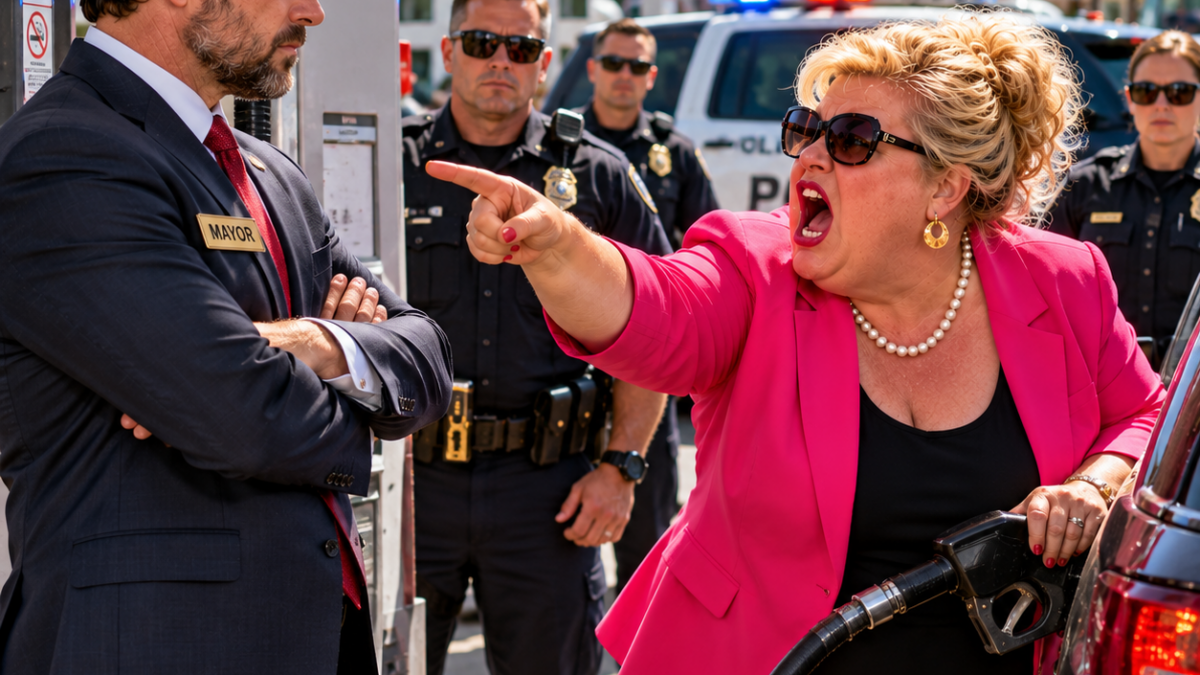
PART 2
Four days later, the first official HOA envelope arrived.
Heavy paper.
Pine tree logo.
Office of the President printed across the top as though Debbie Bailey were running a federal agency instead of an association representing 127 houses.
The letter accused me of violating Article 7.3 of the Pinewood Hills covenants.
“Conduct detrimental to community harmony.”
Fine:
$500.
Mandatory appearance at Thursday’s board meeting.
Failure to appear:
Additional $1,000 penalty.
I sat at my kitchen table and read the letter twice.
Then I pulled up the governing documents.
Forty-seven pages.
I had reviewed them before buying the house, but like most attorneys reading documents for themselves, I had skimmed the parts that looked routine.
Article 7.3 was buried midway through.
The critical phrase was:
“In the judgment of the Board.”
That was the engine.
No measurable standard.
No requirement for actual property damage.
No identified victim.
No evidentiary procedure beyond whatever the board chose to hear.
The language gave Debbie exactly what people like Debbie loved most.
Discretion.
Then I kept reading.
Article 12.7 caught my attention.
Fifteen percent of homeowners could demand an independent financial audit.
Pinewood Hills had 127 homes.
I did the math.
Nineteen signatures.
I wrote the number on a legal pad.
19.
I circled it once.
Then closed the document.
I wasn’t ready to use it.
Not yet.
My mistake, if I had one, was assuming this would remain a dispute between Debbie and me.
It didn’t.
By Wednesday, I could feel the neighborhood changing.
Mrs. Patterson at the grocery store had always smiled when I came through her checkout line.
That morning she scanned my groceries without looking up.
Two women near the cereal aisle stopped talking when I walked past.
At the coffee shop, a man I knew from the neighborhood nodded, then seemed to remember he wasn’t supposed to and looked away.
Nobody said anything directly.
They didn’t need to.
Debbie understood something lawyers learn early.
If you want to damage someone, facts are often less efficient than implication.
You don’t say:
Edward Williams threatened me.
You say:
There was an incident.
You don’t say:
He’s dangerous.
You say:
People are concerned.
You don’t prove anything.
You let listeners finish the accusation themselves.
Thursday night, thirty-two residents showed up for the HOA meeting.
Triple the usual attendance, according to Harold Jenkins, an older man sitting in the back row.
I didn’t know Harold well.
He had lived in Pinewood Hills for more than twenty years, long before Debbie became president.
He watched everything with his arms folded and an expression that gave nothing away.
Debbie sat at the center of the board table.
Two members flanked her closely.
Mark Caldwell and Susan Pike.
Both nodded whenever she spoke.
Two others sat farther away.
Linda Carver, gray-haired, retired accountant.
Peter Monroe, former insurance agent.
Neither looked comfortable.
Debbie called the meeting to order at seven.
“We have a special matter concerning community harmony.”
I almost admired her branding.
She never mentioned gasoline.
Not at first.
She spoke about mutual respect.
Neighborhood cooperation.
Shared responsibility.
Then she looked toward me.
“Mr. Williams has three minutes.”
I stood.
“My position is simple. Mrs. Bailey came to my gas station Saturday morning and demanded free premium gasoline, claiming my late father had an arrangement with her. No such arrangement existed. When I declined to provide free fuel, she called 911 and told police I had threatened her.”
The room shifted.
Someone whispered.
I continued.
“The entire interaction was recorded on the station security system, including audio. I will make that footage available to the board or any resident who wants to see it.”
Debbie raised one hand.
The murmuring stopped.
She smiled like a teacher calming a difficult classroom.
“Edward, I don’t think anyone benefits from litigating personal perceptions.”
“Video isn’t perception.”
Her jaw tightened.
Only slightly.
“This meeting is about conduct affecting the community.”
“My refusal to donate gasoline?”
“Your hostility.”
“I didn’t raise my voice.”
“That is your interpretation.”
“No. Again. Recording.”
Mark Caldwell leaned toward his microphone.
“We’re not conducting a trial.”
“Then why am I being fined?”
That landed.
Peter Monroe looked down.
Linda Carver’s mouth tightened.
Debbie answered.
“HOA enforcement is administrative, not judicial.”
“Convenient.”
“Edward.”
Her voice sharpened.
“We’re trying to move forward constructively.”
“Then review the footage.”
Silence.
For almost three seconds nobody moved.
Then Debbie said:
“The board has enough information.”
Of course it did.
She called the vote.
Mark:
Violation confirmed.
Susan:
Confirmed.
Debbie:
Confirmed.
Peter:
No.
Linda hesitated.
Her hand rose halfway.
Then dropped.
“No.”
Three to two.
Fine upheld.
Debbie wrote something on the sheet in front of her.
Then she casually added:
“There have also been concerns raised regarding the traffic, appearance, and neighborhood compatibility of Williams Gas & Go.”
I looked up.
“The station is outside Pinewood Hills.”
“I said neighborhood compatibility.”
“You have no jurisdiction over the station.”
“I didn’t say we did.”
She smiled.
That was Debbie’s talent.
Threaten without technically threatening.
Accuse without technically accusing.
She adjourned at 7:42 and immediately switched to fall festival planning.
Pumpkin decorations.
Food trucks.
Children’s games.
As if she hadn’t just fined me $500 for refusing to surrender private property.
I packed my papers.
Harold Jenkins passed behind me.
He didn’t stop.
He pressed a folded note into my hand and kept walking.
I opened it in the parking lot.
Three words.
CHECK THE FINANCES.
I sat in my car with the engine off.
That was the first moment I considered the possibility that free gasoline had never been the real issue.
The fine itself didn’t scare me.
Five hundred dollars was irritating.
The process scared me.
Debbie had created a system where accusation became evidence simply because she controlled the agenda.
And according to Harold, money might be hiding underneath it.
I went home.
Opened my laptop.
Created a spreadsheet.
Columns:
DATE.
EVENT.
PERSON.
DOCUMENT.
WITNESS.
POTENTIAL ISSUE.
SUPPORTING FILE.
The first row was the gas station incident.
The second was the 911 call.
Third:
Anonymous text.
Fourth:
HOA notice.
Fifth:
Board vote.
Sixth:
Harold’s note.
My father used to say:
“If someone wants to argue with you, let them. If they want to cheat you, keep receipts.”
Dad had no law degree.
He understood evidence anyway.
Three days later, Debbie gave me more.
Violation notice.
Article 4.2.
PROPERTY MAINTENANCE.
Four photographs of leaves scattered across my front yard after a windstorm.
Fine:
$200.
No warning.
No cure period.
Just a penalty.
I added it to the folder.
Then business at the station dropped.
Not gradually.
Thirty-one percent over seven days.
I knew because Dad taught me to track everything.
Gallons sold.
Convenience-store sales.
Average daily transactions.
Same-week comparisons.
Seasonal trends.
Customers who had filled their tanks every Tuesday drove past.
Some looked toward the pumps.
Then accelerated.
Martha Flores still came Wednesday afternoon.
Seventy-two years old.
Small sedan.
Exact change when she bought coffee even though I told her repeatedly she didn’t need exact change.
She stood by the counter lowering her voice.
“Debbie says you screamed at her.”
“I didn’t.”
“I know.”
“She says I discriminated against her.”
Martha rolled her eyes.
“She says lots of things.”
“What exactly is she telling people?”
“That you came into Pinewood Hills acting like rules don’t apply because you’re a lawyer.”
I almost laughed.
“I moved here six months ago.”
“Facts don’t slow Debbie.”
“You believe me?”
Martha looked toward the camera.
“I’ve known your family forty years.”
That mattered more than I expected.
She picked up her coffee.
Then stopped.
“Edward.”
“Yes?”
“She did this to the Chandlers.”
“Did what?”
“Made people stop speaking to them.”
“Why?”
“They challenged a landscaping assessment.”
“What happened?”
“They moved.”
“When?”
“Three years ago.”
That was the second name.
First Harold.
Now the Chandlers.
The pattern was widening.
Friday, Tommy arrived for his shift twenty minutes early.
Twenty-two years old.
Dad had hired him as a teenager to sweep floors and stock coolers.
He stood in my office doorway.
“Someone called me.”
“Customer?”
“No.”
“Who?”
“Wouldn’t say.”
He shoved his hands into his pockets.
“Offered me a job at a station two towns over.”
“Better money?”
“Said so.”
“That’s not illegal.”
“I asked how they got my personal number.”
“And?”
“They hung up.”
I stared at him.
“Do you want the job?”
“No.”
“You should at least consider better pay.”
He looked offended.
“Your dad gave me my first job.”
“My father is dead.”
“I know.”
“Loyalty doesn’t pay rent.”
“Neither does being a coward.”
That sounded like something Dad would have said.
I gave Tommy a raise that afternoon.
Not huge.
Enough that he knew I noticed.
That evening, the first one-star review appeared.
Rude owner.
Unsafe environment.
Discriminatory behavior.
No date.
No details.
Account created that day.
Screenshot.
Save.
Second review two days later.
Third after that.
Same language.
Different usernames.
Screenshot.
Save.
No response.
I knew better than to fight anonymous reviews while angry.
Harold Jenkins knocked on my front door the following Tuesday.
He carried a cardboard file box.
Old enough that one corner had split and been reinforced with duct tape.
“I should’ve brought this years ago.”
“What is it?”
“Regret.”
He set it on my kitchen table.
Inside were HOA records.
Meeting minutes.
Budgets.
Financial statements.
Vendor lists.
Harold had copied documents for years because, as he put it, “Debbie edits history.”
I started with 2020.
Clubhouse renovation:
$47,000.
I had attended a meeting inside that clubhouse.
Same stained carpet.
Same fluorescent fixtures.
Same folding tables.
Same kitchen cabinets that looked older than me.
“Forty-seven thousand for what?”
“Exactly.”
Vendor:
Bailey Property Services LLC.
I looked at Harold.
“Related?”
“Bradley Bailey.”
“Her husband.”
“Yes.”
More pages.
Landscaping.
Maintenance.
Emergency repairs.
Reserve-fund consulting.
Bailey Property Services appeared repeatedly.
Different categories.
Same family.
I added the amounts.
Over $120,000 across the records Harold had copied.
“Has anyone questioned this?”
“Linda Carver tried once.”
“The board member?”
“Yes.”
“What happened?”
“Debbie called a special session about Linda’s fence.”
I looked up.
Harold nodded.
“Now you understand.”
The fines were not merely enforcement.
They were discipline.
“How many families has she done this to?”
“At least four.”
“Names?”
He gave them to me.
Chandler.
Morris.
Keating.
Bradley.
Four households.
All questioned spending or board power.
All faced escalating violations.
All eventually sold.
“Why didn’t you speak earlier?”
Harold looked ashamed.
“Because it wasn’t me.”
That answer hurt because it was honest.
“I kept telling myself Debbie was difficult, not crooked. Then every time somebody fought her, life got worse for them.”
He rubbed both hands over his face.
“I’m seventy-one, Edward. I got comfortable being invisible.”
I didn’t lecture him.
People like Debbie depend on everyone being brave in isolation.
Most humans aren’t built that way.
“What do you want now?”
Harold looked at the file box.
“I want to stop being invisible.”
That night, after he left, my phone rang.
Cedarville City Hall.
The clerk reminded me my inauguration was scheduled for October 28 at ten in the morning.
Ten days after the gas station confrontation.
Three weeks after winning the municipal election.
It still felt strange hearing the word mayor attached to my name.
I had spent fifteen years practicing law, then stepped away after Dad’s health declined.
When he died, I took over the station more directly.
Local politics came later.
Planning-board meetings.
Small-business committee.
A fight over downtown permits.
People kept telling me to run.
Eventually I did.
The race had been close but clean.
I won.
I had not yet taken office.
Most residents knew.
Apparently Debbie either didn’t follow city politics or had never connected the “Edward Williams” on campaign signs with the man behind the counter at Gas & Go.
I did not correct her.
That mattered now.
If I used the mayor-elect title against her, every valid complaint would become political.
Debbie would say I was retaliating because she challenged me.
So when City Hall asked whether I had special requests for inauguration press materials, I said:
“Don’t include my residential address.”
They agreed.
I hung up and looked at Harold’s documents.
Then my father’s photograph.
“Dad,” I said quietly, “this is getting stupid.”
The photograph remained crooked.
No help.
Six days before inauguration, I sent three things.
First:
A formal request to the HOA for complete financial statements, meeting minutes, and vendor contracts covering the previous three years.
Second:
An Article 12.7 audit petition.
Twenty-two homeowner signatures.
Three more than required.
Harold was first.
Martha second.
Linda Carver signed privately.
Peter Monroe too.
The rest came from quiet conversations at kitchen tables and driveways.
Third:
A detailed complaint package to the North Carolina Attorney General’s Consumer Protection Division describing suspected financial irregularities and coercive HOA practices.
I did not accuse Debbie of embezzlement.
Not yet.
I wrote what the evidence showed.
Payments to related vendors.
Incomplete financial disclosure.
Selective fines.
Threats.
Possible fabricated expenditures.
Then I printed the audit petition.
Harold came with me to Debbie’s house.
She answered wearing a silk robe and holding coffee.
“What is this?”
“Formal Article 12.7 audit petition.”
Her eyes moved down the signatures.
Twenty-two names.
Her face changed.
Not much.
But I saw it.
“Sign the receipt, please.”
“I don’t have to.”
“The governing documents require acknowledgement.”
“You’re enjoying this.”
“No.”
“You think because you’re a lawyer you can intimidate people with paperwork.”
I almost smiled.
“That’s an interesting complaint coming from you.”
Harold coughed into his fist.
Debbie glared at him.
He smiled.
She signed.
Then slammed the door.
Halfway down the sidewalk, Harold whispered:
“Eight years.”
“What?”
“I’ve known her eight years.”
“And?”
“That is the first time I’ve seen her speechless.”
It didn’t last.
Nothing with Debbie lasted quietly.
That afternoon, I reviewed overnight security footage from the station.
Mostly nothing.
Raccoon near the dumpster.
Delivery truck.
Passing cars.
Then 2:17 a.m.
A man in dark clothes walked around the station perimeter.
Slow.
Deliberate.
Baseball cap low.
He paused near the side office window.
Then near the rear door.
The camera angle did not show his face clearly.
But the walk looked familiar.
Officer Bobby Pullman.
The same patrol officer who responded to Debbie’s 911 call.
I did not label him as Pullman.
That would have been speculation.
My note read:
Male individual.
Identity unconfirmed.
Possible surveillance or trespass concern.
Video preserved.
I installed two more cameras the next day.
The neighborhood rumor machine moved faster than government.
By evening, Tommy heard at the diner that I was trying to “destroy Pinewood Hills.”
That I had a vendetta.
That I wanted to bankrupt the association.
That I planned to use the mayor’s office to seize control of neighborhood governance.
The last one almost impressed me.
I wasn’t mayor yet.
And city government didn’t simply absorb private HOAs because somebody got mad.
But rumors do not require jurisdiction.
That night, I found a hand-delivered envelope in my mailbox.
No stamp.
No return address.
Typed message.
TROUBLEMAKERS DON’T LAST LONG HERE.
I photographed it where it lay.
Put it in a plastic sleeve.
Logged it.
That was when my strategy changed.
Until then, part of me still imagined Debbie could be embarrassed into stopping.
Audit petition.
Financial questions.
Exposure.
Now I understood she was frightened.
And frightened controlling people often become more dangerous because they confuse retreat with death.
The next afternoon, the white Escalade returned to Gas & Go.
Debbie parked away from the pumps.
That told me she wasn’t buying gasoline.
I tapped record on my phone before she entered.
North Carolina generally permits a participant in a conversation to record their own conversation, but I still wanted clean documentation.
She walked in wearing a completely different expression.
Soft.
Reasonable.
Almost apologetic.
“Edward, I think we started badly.”
“Do you?”
“I was frustrated.”
“About gasoline.”
“About disrespect.”
I said nothing.
She continued.
“You’re new to Pinewood Hills. I’m responsible for maintaining relationships.”
“I thought you were responsible for landscaping standards.”
She ignored that.
“I think we can resolve everything.”
“How?”
“I withdraw the pending violations.”
“Leaves?”
“All of it.”
“Community harmony too?”
“Yes.”
“What do you want?”
Her smile appeared.
There it was.
“I’d like you to withdraw the audit petition.”
“No.”
She blinked.
Then recovered.
“Hear me out.”
“I’m listening.”
“You withdraw the petition and any complaints you’ve made outside the community.”
“Meaning the attorney general?”
Her eyes sharpened.
“I don’t know what you’ve filed.”
“Then why mention outside complaints?”
A pause.
She leaned closer.
“I’m offering peace.”
“What else?”
“A community improvement contribution.”
“How much?”
“Five hundred dollars per month.”
“To the HOA?”
“Yes.”
“For what?”
“Shared needs.”
“Budget category?”
“Edward.”
She smiled thinly.
“You’re making this harder than necessary.”
“And if I pay?”
“I can make sure Pinewood Hills becomes a much friendlier place for you.”
There it was.
I kept my face neutral.
“What happens if I don’t?”
“I’m not threatening you.”
“I didn’t say you were.”
“Good.”
She picked up her purse.
“I’ll give you forty-eight hours.”
“Very generous.”
She left.
I stopped the recording.
Uploaded copies to two locations.
Sent one to my attorney, Samuel Price.
My message:
Thoughts?
His response came two hours later.
Potential evidence of coercive conduct. Do not characterize it publicly yet. Preserve original. Do not bait her into repeating anything. We need clean hands.
Clean hands.
That phrase became my anchor.
Debbie might be willing to weaponize every office, rule, rumor, and friendship around her.
I could not.
Especially with inauguration approaching.
The temptation to use the mayor’s title grew stronger every day.
I had allies.
Council members.
Reporters.
City staff.
Police leadership who would soon take my calls whether they wanted to or not.
Using those relationships to crush Debbie would feel satisfying for about fifteen minutes.
Then everything she said about me would become plausible.
So I stayed Edward Williams.
Homeowner.
Business owner.
Lawyer.
Victim of an HOA dispute.
Nothing more.
Debbie responded by escalating in public.
SPECIAL ASSESSMENT NOTICE.
$400.
My address listed first among alleged delinquent accounts.
Late penalty:
$150 per day.
I checked the covenants.
No properly documented vote authorizing that penalty structure.
Screenshot.
Save.
Then came the article.
Four days before inauguration.
I woke to seventeen missed calls.
Text from an old law partner:
CHECK THE GAZETTE.
The headline:
QUESTIONS ARISE ABOUT MAYOR-ELECT’S FITNESS FOR OFFICE.
Subheadline:
Neighbors describe pattern of hostility and conflict.
I sat on the edge of my bed reading.
Anonymous Pinewood Hills residents described me as aggressive.
Uncooperative.
Intimidating.
One source claimed I screamed at a woman asking for “community assistance.”
Another said my gas station was creating safety concerns.
Then the final line.
If Edward Williams cannot maintain peaceful relationships with his own neighbors, residents may reasonably ask whether he is prepared to lead Cedarville.
I read it three times.
The Gazette had not called me.
No request for comment.
No verification.
No names.
Only smoke.
By eight, the article had hundreds of shares.
Council members texted.
Campaign volunteers called.
People asked if I planned to respond.
I didn’t.
Not immediately.
Anything I said while angry would become the second story.
At the station, business dropped again.
Then Tommy entered my office.
“We’ve got a problem.”
“What?”
“Fuel delivery tomorrow canceled.”
“Why?”
“Logistics.”
“That’s not an answer.”
“I called back.”
“And?”
“Someone’s been calling suppliers.”
My chair scraped backward.
“Saying what?”
“That we may have licensing trouble. That municipal issues could affect the business.”
“That’s false.”
“I know.”
Three suppliers received similar calls.
No one could—or would—identify the caller clearly.
My father’s station had survived recessions.
Price spikes.
Competitors.
Road construction.
His death.
Now anonymous whispers were threatening deliveries because I refused to give a woman free gasoline.
That evening, after Tommy went home, I sat alone under fluorescent lights.
Dad’s picture tilted left.
I straightened it.
For fifteen years I had advised clients to detach.
Facts first.
Emotion later.
That night I failed.
I was angry.
Then ashamed of being angry.
Then exhausted from trying not to be.
What hurt most wasn’t Debbie.
It was watching strangers accept vague accusations because certainty takes work.
I turned off the lights.
Sat in darkness.
For the first time, I wondered whether running for mayor had been a mistake.
Public office meant everybody had permission to interpret your life.
Neighbors became sources.
Business disputes became character evidence.
Rumors became civic debate.
Dad had wanted me involved in Cedarville.
“Stop complaining from the counter,” he once told me. “Go sit in the room where decisions get made.”
I ran because of him.
Now his business was bleeding because of me.
My phone buzzed.
Attorney General’s office.
Acknowledgement received.
Review estimated within thirty business days.
Thirty days.
Inauguration was four away.
The process was moving at the speed processes move.
Debbie was moving at the speed of gossip.
Then Harold called.
“Edward.”
“What?”
“I found another invoice.”
His voice shook.
“Parking lot resurfacing. Twelve thousand dollars. 2021.”
“So?”
“The parking lot wasn’t resurfaced.”
“You sure?”
“I have photos.”
“Vendor?”
“Greenfield Paving.”
I opened my laptop.
State business search.
Nothing.
County records.
Nothing.
Address listed on invoice.
Vacant parcel outside Cedarville.
Harold emailed scans.
Invoice.
Canceled HOA check.
Meeting minutes authorizing emergency repair.
Three years of photos showing the same cracked asphalt.
I zoomed in on the check endorsement.
The deposit account wasn’t identified in the copied statement, but the routing trail appeared connected to the same financial network handling Bailey Property Services payments.
My anger became useful again.
I created a new folder.
VENDORS.
Before midnight, I found three more questionable entities in Harold’s documents.
Oak Crest Maintenance.
Carolina Reserve Consulting.
Brightway Community Services.
Minimal or nonexistent business footprints.
Overlapping mailing addresses.
No visible work matching invoices.
I called a forensic accountant I had worked with years earlier, Daniel Cho.
“I need a favor.”
“How expensive?”
“Probably expensive.”
“That sounds less like a favor.”
I sent him a summary.
He called at 7:30 the next morning.
“You have enough for questions.”
“Not conclusions?”
“No.”
“What would you need?”
“Bank records. Original invoices. Vendor ownership. Check endorsements. Tax records where available.”
“Can you tell whether it looks bad?”
“It looks worth investigating.”
Lawyers and accountants.
Always refusing to give satisfying answers.
He added:
“Edward, don’t overstate this.”
“I won’t.”
“If you call it embezzlement before records prove embezzlement, you’ll help whoever you’re accusing.”
“I know.”
“Good.”
That afternoon, Rita Santos knocked on my door.
She lived two streets over.
For six months she had barely spoken to me.
Now she stood on my porch with red eyes.
“I’m sorry.”
“For what?”
“The article.”
I opened the door wider.
“What about it?”
“One of those sources was me.”
My stomach tightened.
“Come in.”
She sat at the kitchen table.
Hands trembling.
“Debbie asked me to sign a complaint.”
“What did it say?”
“I thought it said you were creating tension.”
“You didn’t read it?”
“Not all of it.”
“That’s not a great answer.”
“I know.”
She looked down.
“She said everyone was signing.”
“Were they?”
“I don’t know.”
“What happened?”
“When I read the Gazette article, I recognized some of the wording.”
She handed me her phone.
Messages from Debbie.
Rita:
I want my statement withdrawn. I never said he threatened anybody.
Debbie:
Your signature is already part of the board record.
Rita:
Then correct it.
Debbie:
Think carefully. Residents who undermine community leadership often create compliance issues for themselves.
Rita:
Is that a threat?
Debbie:
It is advice from someone who understands how difficult neighborhood life can become when people stop cooperating.
I read it twice.
Rita started crying.
“I have two kids.”
“I know.”
“My husband works nights.”
“I know.”
“She knows everything. Cars, trash days, fence, dog.”
“Rita.”
She looked up.
“You did the right thing coming here.”
“I did the wrong thing first.”
“Both can be true.”
That seemed to surprise her.
“I don’t want my name in the newspaper.”
“It won’t come from me without permission.”
“Police?”
“If investigators need a statement, that’s different. You decide with counsel if necessary.”
She nodded.
Before leaving, she said:
“I thought you were arrogant.”
“I probably am.”
That got a small laugh.
“Debbie said you believed you were better than everyone.”
“She doesn’t know what I believe.”
“I know that now.”
After she left, I spread everything across my kitchen table.
Gas station footage.
Anonymous threat.
Fine notices.
Debbie’s recorded proposal.
Harold’s financial records.
Fake vendors.
Rita’s messages.
Gazette article.
Supplier disruptions.
Payment patterns.
Twenty-two audit signatures.
The evidence had become larger than my original complaint.
Two days before inauguration, I faced the most dangerous choice of the entire story.
Not whether to fight Debbie.
When.
I could have released everything that night.
Sent it to the Gazette.
Sent clips to every campaign supporter.
Held a press conference.
The headline would flip by morning.
HOA PRESIDENT TARGETED MAYOR-ELECT WHILE HIDING FINANCIAL IRREGULARITIES.
My reputation might recover.
Debbie’s might collapse.
It would also look exactly like a politician using an upcoming office to crush a private enemy.
Evidence does not exist outside context.
People interpret who delivers it.
If the new mayor held a press conference attacking his HOA president two days before taking office, Debbie’s lawyer would have a gift.
Political retaliation.
Personal vendetta.
Abuse of influence.
I called Samuel.
“I’m waiting.”
“Good.”
“You don’t know what I’m waiting for.”
“Inauguration.”
“How?”
“Because if you called to ask whether you should hold a press conference, I’d hang up.”
“I want to file complaints the day after.”
“As Edward Williams.”
“Yes.”
“Not Mayor Williams.”
“Yes.”
“You understand you don’t stop being mayor after you take the oath.”
“I understand.”
“Then keep government resources completely separate.”
“No city staff.”
“No police requests.”
“No city attorney.”
“No official letterhead.”
“No mayoral office.”
“Correct.”
“Private counsel.”
“Me.”
“Resident petition.”
“Yes.”
“Attorney General through normal channels.”
“Yes.”
“Good.”
I closed my eyes.
“I hate that you’re always boring.”
“That is why you pay me.”
I drafted one email.
To all 127 Pinewood Hills homes.
SPECIAL COMMUNITY MEETING.
Saturday.
7:00 p.m.
Clubhouse.
Topic:
HOA financial transparency.
Documents available for review.
I signed:
Edward Williams.
Nothing else.
No Mayor-Elect.
No Attorney.
No Gas & Go owner.
Just my name.
Debbie called four times within twenty minutes.
I let every call go to voicemail.
Bradley called from another number.
Ignored.
Then Debbie texted.
You have no authority to call an HOA meeting.
I replied:
This is a resident information meeting related to the Article 12.7 petition signed by twenty-two homeowners. You are welcome to attend.
Her response:
You are making a serious mistake.
Screenshot.
Save.
Tuesday morning, I stood on the front steps of Cedarville City Hall.
Blue sky.
Two hundred people.
Folding chairs.
Local reporters.
City employees.
People who supported me.
People who voted against me.
People who came because there wasn’t much else happening in Cedarville at ten on a Tuesday.
I wore the same suit I had worn to my wife’s funeral four years earlier.
That made the morning feel heavier than politics.
My father wasn’t there.
Neither was my wife.
Dad would have complained that the tie was too expensive.
My wife would have fixed it anyway.
The judge raised his right hand.
I raised mine.
Repeated the oath.
Support the Constitution.
Faithfully discharge duties.
Serve the people of Cedarville.
When he said:
“Congratulations, Mayor Williams.”
The applause sounded distant for a moment.
I saw Bradley Bailey near the back.
His face changed.
Not dramatically.
Just enough.
He finally understood.
I watched him take out his phone.
Then he left before the ceremony ended.
Debbie did not attend.
I assumed Bradley called her.
Maybe that was the moment she learned the man she had accused of hostility, fined for refusing free gasoline, and threatened with neighborhood retaliation had just become mayor.
I never asked.
For the next ninety minutes, I shook hands.
Smiled.
Posed for photos.
Answered questions about roads, downtown permits, drainage, small businesses, and public safety.
Nobody asked about Pinewood Hills.
I was grateful.
At noon, I walked into my new office.
There was a city seal on the wall.
Desk bigger than necessary.
A stack of briefing papers.
My assistant, Claire Benton, asked:
“Anything urgent?”
“Yes.”
She looked concerned.
“I need you to understand something.”
“What?”
“If anyone calls about Pinewood Hills, Debbie Bailey, Williams Gas & Go, or my HOA dispute, refer them to my private attorney.”
“Not the city attorney?”
“No.”
“Why?”
“Private matter.”
She nodded.
“Understood.”
“And no city staff research.”
“Got it.”
“No police favors.”
“Mayor—”
“I mean it.”
“I know.”
That was the line I needed.
The mayor’s office would not become my weapon.
Thursday, I went back to pumping gasoline.
Tommy looked at me from behind the register.
“Should I call you Mayor now?”
“No.”
“Your Honor?”
“Wrong branch.”
“Supreme Leader?”
“You’re fired.”
“You can’t fire me. I’m protected by community harmony.”
I laughed for the first time in weeks.
That mattered.
Saturday evening, eighty-three people packed the clubhouse.
Almost two-thirds of Pinewood Hills households represented.
People stood along the walls.
Harold sat in the back where he always sat.
Rita stayed near an exit.
Martha brought coffee in a thermos.
Debbie sat at the front table with Mark and Susan.
Linda and Peter sat several feet away.
Bradley occupied the chair behind Debbie.
He looked like a man preparing for impact.
At seven, Debbie grabbed the microphone.
“This gathering is not an authorized board session.”
I waited until she finished.
Then stepped forward.
“I’m not here tonight as mayor.”
That word changed the room.
A few residents had clearly not known.
Debbie’s face did not move.
Bradley’s did.
I continued.
“I’m here as an owner in Pinewood Hills and one of twenty-two residents who signed a valid request under Article 12.7 for financial review.”
Debbie interrupted.
“You are using public office to intimidate a private association.”
“No city resource was used to organize this meeting.”
“You’re the mayor.”
“Yes.”
“And everybody here knows it.”
“They also know I live here.”
Her lips tightened.
I turned toward the room.
“No city staff prepared these records. No city attorney reviewed them. No police department is here. Everything I’m showing tonight came through HOA records, homeowner documents, public business registrations, or my own private evidence.”
I clicked the first slide.
HOA PAYMENTS TO BAILEY PROPERTY SERVICES.
2019 through 2023.
$127,000.
The room went silent.
I asked:
“Can anyone identify improvements matching this spending?”
Nobody answered.
Debbie did.
“Professional maintenance isn’t always visible.”
“Fair.”
Next slide.
Clubhouse renovation.
$47,000.
Photographs before.
Photographs after.
Same carpet.
Same lights.
Same kitchen.
Bradley shifted in his chair.
Debbie said:
“Those photos do not capture infrastructure work.”
“Then vendor documentation should.”
Next slide.
Greenfield Paving.
$12,000.
Parking lot resurfacing.
Then Harold’s photographs.
2019.
2020.
2021.
2022.
Same cracks.
Same patched edge.
Same faded stripe.
A murmur spread.
Debbie said:
“Photographs can be misleading.”
“Agreed.”
I clicked again.
State business registration search.
No Greenfield Paving.
County address search.
Vacant parcel.
Someone in the third row said:
“What?”
Another:
“Where did the check go?”
I did not answer.
“I don’t know yet.”
That phrase mattered.
I would not accuse beyond proof.
Next vendor.
Oak Crest Maintenance.
No registration matching invoice details.
Next.
Brightway Community Services.
Same problem.
Next.
Carolina Reserve Consulting.
Shared mailing relationship with a Bailey-controlled entity.
Bradley stood so fast his chair scraped the floor.
“This is defamatory.”
I looked at him.
“Which document is false?”
“You’re implying criminal activity.”
“I’m showing invoices.”
“You’re manipulating the room.”
“Then identify the work.”
He pointed at me.
“You’ll hear from our attorney.”
“You should contact one.”
That made several people laugh nervously.
Bradley’s face darkened.
I continued.
“These materials have been provided to private counsel. A formal complaint is prepared for the Attorney General’s Consumer Protection Division. That filing will move through ordinary legal channels.”
Debbie stood.
“There it is.”
I stopped.
“There what is?”
“Political revenge.”
Her voice grew stronger.
“This man refused to support the community from the day he arrived. I asked his business for a simple courtesy—a few gallons of gasoline for HOA leadership—and he screamed at me, threatened me, called me entitled, and then launched a campaign to destroy this association.”
Nobody moved.
She had found her footing.
Narrative.
Always narrative.
“He is standing here as mayor humiliating private citizens because I challenged him.”
I said nothing.
That made her louder.
“He frightened me enough that I called police.”
Still nothing.
“He was hostile.”
I reached into my folder.
USB drive.
Debbie stopped.
For the first time all night, she looked afraid.
I plugged it in.
The station security video appeared.
Timestamp.
Audio.
White Escalade.
Debbie entering.
Her voice filled the clubhouse.
“Fill up my Escalade. Premium.”
Then:
“I’m not paying.”
Then:
“Community courtesy.”
Then my voice.
“The price is $4.29.”
People watched.
No shouting.
No threats.
No discrimination.
Then Debbie’s phone call.
“I need police assistance. There’s a man here being hostile and threatening me.”
A sound came from the back.
Someone actually gasped.
The video continued until Officer Pullman arrived.
My offer to show him the footage.
Debbie saying:
“That won’t be necessary.”
Then her warning.
“We have several matters concerning your property to discuss.”
Four minutes and twelve seconds.
When the screen went black, nobody spoke.
Debbie stood frozen.
Her own voice lingered in the room after the recording ended.
Harold finally said:
“Eight years.”
Everyone turned.
He stood.
“Eight years we let her tell us who the problem was.”
Debbie snapped:
“Sit down, Harold.”
He laughed.
Not loudly.
Almost sadly.
“No.”
That single word changed the room.
Rita stood next.
Her hands trembled.
“I signed a complaint against Edward.”
Debbie’s head turned.
Rita continued.
“I didn’t understand what was in it. When I tried to withdraw it, Debbie threatened me with violations.”
“That is a lie.”
Rita held up her phone.
“I have the messages.”
Linda Carver, the board member who had hesitated during my hearing, covered her mouth.
Peter Monroe leaned away from the table.
Mark Caldwell whispered something to Debbie.
She ignored him.
Someone shouted:
“Where is our money?”
Another:
“I want the bank statements.”
Another:
“Who is Greenfield Paving?”
Another:
“How many fake vendors are there?”
Bradley started toward the door.
Debbie grabbed his arm.
He pulled away.
“Bradley.”
He didn’t look at her.
“Bradley!”
He left.
That was the first crack she couldn’t repair.
Her husband walking out.
Then Mark Caldwell stood.
“I resign.”
Debbie stared at him.
“What?”
“I’m done.”
“You can’t resign in the middle of a meeting.”
“Watch me.”
He walked toward the side wall.
Susan Pike followed three minutes later.
Not with a speech.
She simply gathered her purse and moved into the audience.
Debbie remained behind the board table alone.
I should tell you I felt victorious.
I didn’t.
I felt tired.
For weeks I had imagined this moment.
The public contradiction.
The evidence.
Her supporters turning.
I thought satisfaction would arrive like electricity.
Instead, I saw a sixty-something woman standing alone in a clubhouse she had controlled for eight years, realizing that every method she used to make others feel small had finally left her with no one willing to stand beside her.
That wasn’t pity.
Not exactly.
It was perspective.
I said:
“Copies of all documents shown tonight are available through counsel for residents who have a legitimate interest. Anyone with personal records, payments, notices, or communications should preserve them.”
Debbie laughed bitterly.
“Listen to him.”
She pointed at me.
“Mayor Williams giving orders.”
“No.”
I shook my head.
“Edward Williams telling his neighbors to keep receipts.”
Then I packed my folder.
Harold passed Debbie on his way out.
He paused.
“You should’ve listened.”
Four words.
That was all.
Outside, my phone buzzed.
Samuel.
Filing prepared. Confirm Monday?
I typed:
Confirmed.
No celebration.
No press conference.
No mayoral statement.
Monday morning, Samuel submitted the complaint package through ordinary channels.
The Attorney General’s office moved faster than expected once the documentation was reviewed.
An investigator named Patricia Vance contacted Harold first.
Then Rita.
Then Linda.
Then me.
She requested banking records, contracts, board minutes, vendor documents, and accounting history.
I gave her the station footage and Debbie’s recorded proposal.
She listened without expression.
When it ended, Patricia said:
“Did she really ask for five hundred dollars a month?”
“Yes.”
“In exchange for dismissing fines and improving business relations?”
“That’s what you heard.”
She made a note.
“Did you agree?”
“No.”
“Did you provoke the offer?”
“No.”
“Any communication from your mayoral office?”
“No.”
“City staff?”
“No.”
“Police command staff?”
“No.”
“City attorney?”
“No.”
She looked up.
“Why not?”
“Because then she’d be right about one thing.”
“What?”
“That I used office against her.”
Patricia nodded once.
“Good.”
Investigations are less dramatic than people imagine.
No agents bursting through Debbie’s door the next morning.
No handcuffs at breakfast.
Records requests.
Interviews.
Account analysis.
Vendor tracing.
Weeks.
The independent HOA audit ran in parallel.
Its preliminary findings were worse than Harold’s copies suggested.
More than $140,000 from reserve and operating funds over roughly six years was tied to questionable payments, related-party vendors, undocumented services, or work auditors could not verify.
That did not mean every dollar was stolen.
The auditors said that repeatedly.
Some services existed.
Some invoices were simply poorly documented.
Some expenses were legitimate but improperly approved.
Other transactions were far harder to explain.
Shell entities.
Fabricated-looking invoices.
Payments for work nobody could locate.
Transfers involving Bailey Property Services.
The clean story Debbie had told residents for years—dues in, community services out—collapsed under actual accounting.
She resigned four days after the clubhouse meeting.
Three sentences.
Effective immediately.
No explanation.
Mark had already quit publicly.
Susan resigned formally within the week.
Linda and Peter stayed only long enough to help schedule an emergency election.
Harold refused to run.
“Absolutely not.”
“You’d win,” I told him.
“That’s why I’m not running.”
“Excellent civic philosophy.”
“I spent twenty years watching Debbie become addicted to being important. I’m going fishing.”
Fair.
The temporary board suspended all unresolved fines pending review.
My $500 “community harmony” fine disappeared.
So did the leaf fine.
The special assessment penalties were frozen.
Every enforcement file Debbie personally initiated over the previous several years was reviewed.
Some were legitimate.
That mattered.
A broken fence is still a broken fence just because the president mishandled other cases.
Others were clearly selective.
Residents received reimbursements where the board concluded fines had been improperly imposed.
The Chandlers contacted Harold after hearing what happened.
They had moved three years earlier.
Mrs. Chandler called me.
“I wish somebody had done this when we lived there.”
“So do I.”
“Debbie made us feel crazy.”
“What happened?”
“My husband challenged a landscaping contract.”
“Then?”
“Suddenly our mailbox was wrong. Our fence stain was wrong. Our trash cans were visible from one angle at eleven in the morning.”
Her voice broke.
“We spent thousands fighting seventy-five-dollar fines.”
That sentence explained Debbie better than any audit.
Small amounts.
Repeated pressure.
Exhaustion.
People often imagine corruption as stealing millions.
Sometimes power survives on fifty-dollar penalties and the knowledge that nobody wants to spend $500 hiring a lawyer to fight them.
Officer Bobby Pullman became a separate issue.
I never publicly accused him of being the figure outside the station at 2:17 a.m.
The footage was too poor.
But Samuel forwarded the clip to the police department only after investigators requested relevant evidence and after concerns surfaced about Pullman’s response to Debbie’s 911 call.
The department opened an internal review.
His body-camera footage became relevant.
So did dispatch records.
He had arrived unusually quickly because he was already nearby.
That by itself meant nothing.
But investigators also examined his communications and whether he followed department procedure when I offered objective video evidence.
I stayed out.
I made no mayoral call to the chief.
No request for punishment.
No public statement.
When a reporter asked:
“Do you believe Officer Pullman was helping Debbie Bailey?”
I answered:
“I believe the department should review the evidence and make its own determination.”
Boring answer.
Correct answer.
Pullman was placed on administrative leave during the review.
Eventually, the department found policy violations related to handling the call and undisclosed off-duty contact with people tied to the HOA dispute, though investigators could not conclusively establish that he was the man captured in every piece of nighttime footage.
He received discipline.
I did not ask what beyond what became public.
People were disappointed.
They wanted scandal.
Sometimes uncertainty is the truthful ending.
Bradley Bailey’s business suffered too.
He owned an automobile dealership outside town.
Once the HOA financial story became public, customers reacted.
Fewer sponsorships.
Fewer community appearances.
People whispered.
I did nothing to encourage a boycott.
That mattered.
One of my campaign volunteers suggested posting:
SUPPORT BUSINESSES THAT SUPPORT HONEST GOVERNMENT.
I told him:
“Don’t.”
“But everybody knows who it means.”
“That’s exactly why.”
“What Debbie did to you—”
“Doesn’t give me permission to do it back.”
He looked frustrated.
“Then what’s the point of winning?”
I stared at him.
“That question is why public officials get into trouble.”
He never suggested it again.
Gas & Go recovered slowly.
Martha kept coming every Wednesday.
Tommy kept working.
Fuel suppliers resumed regular deliveries once lawyers clarified there were no licensing or municipal issues.
Some customers returned awkwardly.
One man walked in after staying away for nearly a month.
He filled his truck.
Paid.
Then stood at the counter.
“I believed her.”
“Okay.”
“I told people not to come here.”
“Okay.”
“I was wrong.”
“Yes.”
He looked surprised.
Most people expect forgiveness to begin with making the wrong person comfortable.
“I’m sorry.”
“Thank you.”
“You mad?”
“I was.”
“Still?”
“Less.”
He nodded.
Then left.
That was enough.
The Gazette published a correction and follow-up.
Not because I threatened them.
Samuel sent a letter outlining the factual inaccuracies and the failure to request comment.
Their editor met me privately.
“We moved too fast.”
“Yes.”
“The sources sounded credible.”
“Yes.”
“Debbie had been HOA president eight years.”
“Yes.”
“That carried weight.”
“That’s the problem.”
He nodded.
The follow-up headline read:
PINEWOOD HILLS FINANCES UNDER REVIEW AFTER RESIDENTS RAISE QUESTIONS.
More careful.
Less exciting.
Better journalism.
By late November, Gas & Go’s transaction count had returned to normal.
Then exceeded it slightly.
I hated when people said they were coming “to support the mayor.”
I corrected them.
“Come because the price is fair.”
Tommy suggested a new sign.
I finally replaced Dad’s faded roadside board.
WILLIAMS GAS & GO
SERVING CEDARVILLE SINCE 1987
Underneath, smaller letters:
FAIR PRICES. NO EXCEPTIONS.
Tommy laughed when he saw it.
“That’s petty.”
“It’s branding.”
“It’s absolutely petty.”
“Clean pump four.”
“Yes, Your Honor.”
“Still wrong branch.”
December brought an emergency HOA election.
The room was crowded again.
Different energy.
Nobody sat at the front like a monarch.
Candidates answered questions.
Budgets.
Vendor conflicts.
Appeal procedures.
Financial disclosures.
One resident asked every candidate:
“Will you publish monthly expenditures online?”
All said yes.
Another:
“Will relatives of board members be allowed to receive contracts?”
Answer:
Only with disclosure, competitive bids, and recusal.
Linda Carver agreed to serve as treasurer for one year.
Peter became interim president reluctantly.
His first statement:
“If I ever start acting like Debbie, somebody throw a shoe at me.”
People laughed.
Martha raised her hand.
“What size?”
That felt like healing.
The new board commissioned a professional management company after competitive bidding.
Financial statements went online.
Meeting minutes posted within ten days.
Related-party contracts required disclosure.
Fine appeals went to a committee containing residents who were not part of the original enforcement decision.
None of that was revolutionary.
That was the point.
Good governance is usually boring.
Debbie had made HOA leadership dramatic because drama made her central.
The new board made it administrative again.
At City Hall, I kept Pinewood Hills at arm’s length.
There was one exception.
Education.
Residents from other neighborhoods began contacting me about HOA disputes.
Not because city government controlled their associations.
It didn’t.
But people didn’t know where else to start.
So we hosted a consumer-information session in partnership with county legal-aid organizations and invited state consumer-protection staff.
No Pinewood-specific presentation.
No Debbie slides.
Topics:
Read governing documents.
Understand appeal rights.
Conflict-of-interest policies.
Financial audits.
Document retention.
When to hire counsel.
When to contact state regulators.
It was the most boring event of my first six months as mayor.
It was packed.
That told me something.
People weren’t desperate for revenge stories.
They were desperate to understand systems that controlled pieces of their lives.
The Attorney General’s investigation continued.
I’m careful about how I describe what happened next because people love compressing investigations into simple endings.
Debbie did not immediately go to prison.
No federal agents dragged Bradley from his dealership.
There was no cinematic courtroom confession.
Instead, investigators built records.
The HOA pursued recovery of funds through counsel and insurance where available.
The Baileys faced civil exposure.
Some related vendors came under scrutiny.
Restitution discussions began around transactions auditors could substantiate.
The state considered what enforcement theories best matched provable conduct.
Months later, Debbie entered into a civil enforcement resolution requiring financial repayment connected to documented improper collections and restrictions against serving in association leadership roles under the settlement terms.
Other questions involving vendor transactions remained subject to separate review.
Was it as emotionally satisfying as handcuffs?
No.
Was it real?
Yes.
The HOA recovered significant money through a combination of repayment, insurance resolution, and claims against vendors.
Not every suspicious dollar came back.
Records were incomplete.
Some transactions could be explained.
Others could not be traced with enough certainty.
That frustrated Harold.
“This is why people hate lawyers.”
“I’m a lawyer.”
“Exactly.”
“You want them to demand money they can’t prove?”
“I want life to be fair.”
“That’s outside my practice area.”
He laughed.
Then became serious.
“At least she’s gone.”
Debbie and Bradley did not move immediately.
That surprised people.
They stayed in Pinewood Hills.
But everything about their place in the community changed.
No one vandalized the house.
No one blocked their driveway.
No group stood outside chanting.
I was proud of that.
They became quieter.
Less visible.
Debbie stopped attending community events.
Bradley resigned from two local committees.
When I saw her once in the grocery store, she was pushing a cart down the cereal aisle.
Our eyes met.
I nodded.
She looked away.
That was all.
I didn’t need to confront her.
I had already heard every argument she knew how to make.
Six months after the gas station incident, Harold came to see me.
No box this time.
Coffee.
He placed one cup on my desk at the station.
“Thought mayors had assistants for this.”
“This is a gas station.”
“Hard to keep track.”
He sat.
“You ever think about what would’ve happened if you just gave her the gas?”
“Yes.”
“What?”
“She’d come back.”
“Exactly.”
“Probably next month.”
“Exactly.”
“With Bradley’s truck.”
“Exactly.”
We laughed.
Then Harold said:
“I would’ve kept quiet.”
I looked at him.
“If you gave her gas that morning, I would’ve stayed quiet.”
“Maybe.”
“No. I know me.”
He looked toward Dad’s photograph.
“You saying no gave some of us permission.”
“That gives me too much credit.”
“Fine.”
He sipped coffee.
“You being difficult gave some of us permission.”
“Better.”
He smiled.
Then his face softened.
“I’m sorry I waited so long.”
“You came when it mattered.”
“People say that because it sounds nice.”
“I’m saying it because it’s true.”
He nodded.
A few months later, an email arrived from a woman named Rebecca Lane.
Lakewood Terrace.
Twenty miles south.
She had read about Pinewood Hills.
Her HOA had unexplained assessments.
Selective fines.
Financial reports residents couldn’t obtain.
She didn’t know where to start.
I read her email twice.
My first instinct was to forward it to staff.
Then I stopped.
This wasn’t a mayoral matter.
It was a person asking another person.
So I answered from my personal email.
I told her I wasn’t an HOA expert.
I explained what helped us.
Read your documents.
Identify audit provisions.
Preserve notices.
Keep screenshots.
Save envelopes.
Find allies before confronting leadership.
Do not accuse beyond what evidence supports.
Use counsel where possible.
Contact appropriate state consumer-protection authorities.
I attached a generic audit-petition template Samuel had approved for sharing.
Then I wrote the line that had taken me months to learn:
Documentation is slower than outrage, but it survives longer.
I almost deleted it.
Sounded too much like something Dad would put on a sign.
I left it.
Before hitting send, I looked up at his photograph.
Still crooked.
I had replaced the frame twice.
Changed the hook.
Leveled it.
It still tilted.
Tommy insisted the wall was crooked.
I preferred to believe Dad was refusing alignment on principle.
I straightened it.
Again.
Then pressed send.
That should have been the ending.
For a while, I thought it was.
But being mayor changed how people interpreted the story.
Whenever I attended a civic dinner, someone eventually brought up Debbie Bailey.
“You really made her call the cops over gas?”
“No.”
“She called them herself.”
“Did she seriously not know you were mayor?”
“I hadn’t been inaugurated.”
“But you were mayor-elect.”
“Yes.”
“How could she not know?”
“You’d have to ask her.”
“Did you fire that cop?”
“No.”
“Did you shut down the HOA?”
“No.”
“Did you send investigators after her?”
“No.”
People were disappointed by the real version.
They wanted power to work like a movie.
Good guy receives title.
Bad person discovers title.
Good guy uses title.
Bad person destroyed.
That isn’t the story I’m proud of.
The title gave me more power at exactly the moment I needed to use less.
That was the test.
When Debbie attacked my reputation days before inauguration, every instinct said:
Show them who you are.
Call the chief.
Call the Gazette.
Call the attorney general.
Use the podium.
Use the cameras.
Use the office.
Fight.
Instead, I had to separate roles.
Mayor.
Homeowner.
Business owner.
Lawyer.
Neighbor.
If I blurred them because it benefited me once, I could never complain when somebody else blurred authority for themselves.
That was Debbie’s original sin.
Not demanding free gasoline.
That was ridiculous.
The deeper problem was believing an HOA title entitled her to things that did not belong to her.
Fuel.
Silence.
Fear.
Money.
Loyalty.
Control.
I couldn’t answer entitlement by becoming entitled to government power.
That would simply be a more expensive version of the same mistake.
A year after inauguration, City Hall held an open house.
Dad would have hated it.
Too many speeches.
Not enough chairs.
Martha Flores came.
She brought Gas & Go coffee in a paper cup despite the city catering company providing much better coffee.
“This tastes terrible,” I told her.
“It’s yours.”
“That explains it.”
She smiled.
Harold came too.
So did Rita.
Tommy wandered around taking photos of everything and telling city employees:
“I knew him before he was important.”
Claire, my assistant, corrected him.
“He’s not important now.”
I liked her.
Near the end of the evening, a little boy stood in front of the mayoral office display.
His mother pointed toward me.
“That’s the mayor.”
The boy looked disappointed.
“He owns the gas station.”
His mother laughed.
“Yes.”
“Which one is he?”
“Both.”
He looked confused.
I understood.
Some days I still was too.
After everyone left, I sat alone at the big desk.
The city seal behind me.
Budget books stacked nearby.
Tomorrow’s agenda:
Drainage project.
Police staffing.
Downtown zoning.
Nothing involving Debbie Bailey.
That felt like victory.
Not her resignation.
Not the audit.
Not the settlement.
The fact that she no longer occupied space in every part of my life.
I drove to Gas & Go before going home.
Closed.
Dark.
I let myself inside.
Dad’s photograph hung behind the counter.
Crooked.
I straightened it.
“Still making me work,” I said.
Then I noticed something Tommy had taped beneath the frame.
A small note.
FAIR PRICES. NO EXCEPTIONS.
I laughed.
Dad would have approved.
Maybe.
Then the station door rattled behind me.
I turned.
Martha stood outside waving through the glass.
I unlocked it.
“What are you doing here?”
“You forgot your jacket at City Hall.”
She held it out.
“How did you get it?”
“Mayor’s assistant.”
“Claire gave you my coat?”
“She likes me.”
“Everybody likes you.”
“Because I pay for gas.”
“Bare minimum.”
She handed me the jacket.
Then looked around the empty station.
“You know what your father would say?”
“Probably that the cooler needs cleaning.”
“That too.”
She pointed toward the sign outside.
“He’d be proud.”
I looked at Dad’s photograph.
“I hope.”
“He would.”
Then she added:
“He’d also say you spent too much money on the new sign.”
That sounded right.
Martha left.
I locked the door again.
Before turning off the lights, I stood behind the counter where this entire mess began.
The same spot.
Debbie’s Escalade had been outside.
She had demanded premium.
I had said no.
Such a small word.
Two letters.
It cost me customers.
Sleep.
Reputation.
Legal fees.
Neighbor relationships.
It also exposed something Pinewood Hills had ignored for years.
I used to think the important part was that Debbie picked the wrong man.
The lawyer.
The business owner.
The mayor-elect.
That interpretation bothered me more as time passed.
Because it implied she might have gotten away with it if she picked someone less connected.
Someone without legal training.
Someone without cameras.
Someone without money for counsel.
Someone without twenty-two neighbors willing to sign.
Someone without a public title.
And maybe she would have.
That was why Rebecca’s email mattered.
Why the public-information session mattered.
Why Harold’s box mattered.
Why Rita’s decision to correct her statement mattered.
The strongest moment in the story wasn’t my inauguration.
It wasn’t even the clubhouse video.
It was people who had been afraid separately deciding to compare notes.
Corruption survives isolation.
Once people put documents on one table, Debbie’s power shrank quickly.
The next morning, I arrived at Gas & Go before sunrise.
Old habit.
I brewed coffee.
Opened the day’s receipts.
Straightened Dad’s photograph.
At 7:12, an SUV pulled to pump three.
White.
For half a second, my body tightened.
Then the driver stepped out.
Young woman.
Two kids in the back.
She inserted her card.
Paid.
Pumped her fuel.
Normal.
I watched through the window.
Then laughed at myself.
Trauma has stupid timing.
Tommy arrived at seven-thirty.
“You okay?”
“Fine.”
“You’re staring at pump three.”
“I’m working.”
“You’re mayor. Aren’t you supposed to stare at budgets now?”
“I contain multitudes.”
“You contain anxiety.”
“Clean the coffee machine.”
“That machine should be declared a public-health emergency.”
“You’re fired again.”
He went to clean it anyway.
Months later, the state closed one stage of the Pinewood financial review.
The final public findings were less dramatic than rumor and more serious than Debbie’s defenders predicted.
Weak controls.
Undisclosed related-party transactions.
Improper assessments.
Unsupported vendor expenses.
Misrepresentations to residents.
Financial remedies and governance restrictions followed.
The association’s revised bylaws were approved overwhelmingly.
Article 7.3 changed too.
“Conduct detrimental to community harmony” was replaced by specific standards requiring identifiable conduct, written evidence, notice, hearing rights, and appeal.
I kept the old version.
Framed?
Absolutely not.
Filed.
Evidence does not belong on walls.
The most emotional document was not a state report.
It was a handwritten note from Linda Carver.
The board member who had voted no at my first hearing.
Edward,
I should have spoken louder sooner.
I knew Debbie’s process was wrong, but I convinced myself a dissenting vote was enough.
It wasn’t.
Silence after voting became its own kind of cooperation.
I’m sorry.
Linda.
I called her.
“You voted against the fine.”
“I didn’t explain why.”
“You were outnumbered.”
“I was still on the board.”
“You helped fix it.”
“Later.”
“That still counts.”
She was quiet.
Then said:
“Harold told me you’d say that.”
“Harold talks too much.”
“He’s seventy-two. That’s his job.”
Linda later became treasurer.
Not because she wanted status.
Because she wanted every number posted.
At her first annual budget meeting, a resident complained that she had distributed thirty-eight pages of financial reports.
Linda said:
“You spent eight years complaining you couldn’t see the books. Now read them.”
Nobody argued.
That might have been my favorite Pinewood moment.
My first year as mayor ended without scandal.
Mostly.
There was a pothole controversy.
Three people threatened to vote me out because leaf pickup ran late.
One council member accused me of favoring the west side in sidewalk spending.
Normal politics.
I loved it.
Because arguments about actual government policy felt almost comforting after Debbie’s manufactured reality.
At my one-year town hall, a reporter asked:
“What lesson from the Pinewood conflict most influenced your first year?”
I thought about giving the polished answer.
Transparency.
Accountability.
Process.
Instead, I said:
“Never use authority to collect something you’d be embarrassed to ask for without the title.”
The room became quiet.
Then someone laughed.
The reporter smiled.
“Gas included?”
“Especially gas.”
That quote made the Gazette front page the next morning.
Dad would have clipped it.
Probably complained about the photograph.
Two years later, Pinewood Hills held a summer block party.
I went as a neighbor.
Not mayor.
At least that was my intention.
Martha ruined it by introducing me to somebody as:
“Our resident gas-station mayor.”
Harold corrected her:
“Cheap gas-station mayor.”
“Fair gas,” I said.
“Not cheap.”
Rita brought her children.
Linda carried budget spreadsheets in a tote bag because apparently she had become incapable of attending gatherings without accounting records.
Peter grilled burgers.
Tommy volunteered to help and spent most of the afternoon flirting with someone’s niece.
No one mentioned Debbie for nearly two hours.
Then a new resident asked:
“Who started the audit rule everyone keeps talking about?”
Harold pointed at me.
“He did.”
“No.”
I pointed at Harold.
“He saved the records.”
Rita said:
“I brought the messages.”
Linda:
“I voted against the fine.”
Martha:
“I kept buying gas.”
Tommy:
“I declined a better job.”
Peter:
“I eventually grew a spine.”
Everybody laughed.
The new resident looked confused.
“So who fixed it?”
Harold shrugged.
“All of us, late.”
That was the best answer anyone ever gave.
Debbie had made everything about one person.
Herself.
It was fitting that correcting her required the opposite.
Years after the original confrontation, I still occasionally receive emails from people dealing with HOA disputes.
I never promise outcomes.
I tell them what worked for us.
Documentation.
Patience.
Independent counsel.
Financial transparency.
Neighbors.
Precise accusations instead of dramatic ones.
And one warning:
Do not confuse being right with being automatically protected.
Systems only work when people use them.
That includes appeals.
Audits.
Complaints.
Votes.
Elections.
Public records.
Sometimes litigation.
Boring tools.
Powerful when used correctly.
The strangest consequence of the whole thing was personal.
For ten years after Dad died, Williams Gas & Go felt like something I was preserving for him.
His business.
His photograph.
His rules.
His old cash drawer in the office.
His coffee machine I refused to replace.
His ledger books.
Then Debbie walked in demanding free fuel because she claimed Dad had given it to her.
For a moment, I felt like she was trying to rewrite him.
That anger was deeper than the gasoline.
Dad could be generous.
Very.
He quietly paid for fuel when families were stranded.
He gave local teachers free coffee.
He let teenagers repay small debts by sweeping the lot.
But he chose.
That mattered.
Generosity without choice is theft wearing manners.
I think that was why I said no so quickly.
Not because premium gas was expensive.
Because she used my dead father as permission.
Years later, I finally stopped straightening the photograph every morning.
One day I noticed it was crooked and left it.
Tommy noticed.
“You okay?”
“Yes.”
“You always fix that.”
“I know.”
“Why not?”
I looked at Dad.
“Maybe he likes it.”
Tommy nodded solemnly.
“Definitely looks rebellious.”
The frame stayed crooked.
It still is.
My mayoral term eventually became less remarkable than people expected.
Roads got repaired.
A park opened.
Downtown permitting improved.
We lost a fight over a state grant.
Won another.
I gave speeches.
Signed budgets.
Attended funerals.
Cut ribbons.
Got yelled at in grocery stores.
Actual public service is mostly small decisions nobody tells stories about.
That made me appreciate it.
Toward the end of my first term, a young reporter interviewed me about whether I would run again.
“Yes.”
“Why?”
“I’m apparently slow to learn.”
She laughed.
Then asked:
“Do people still bring up the Debbie Bailey story?”
“Constantly.”
“Do you think it helped your political career?”
That question irritated me.
Not because it was unfair.
Because it was plausible.
“Yes.”
I admitted it.
“People liked that I stood up to her.”
“Did you use it in campaigning?”
“No.”
“Why not?”
“Because it happened to me as a private citizen.”
“But it reflects leadership.”
“Maybe.”
She leaned forward.
“What do you want people to understand about it?”
I thought about the viral version.
HOA Karen demands free gas.
Calls cops.
Victim is mayor.
She gets destroyed.
Easy.
Satisfying.
Incomplete.
So I said:
“The important part isn’t that she didn’t know I was mayor-elect.”
“What is?”
“That it shouldn’t matter.”
She waited.
I continued.
“If I had been an unemployed mechanic, a retired teacher, a single mother, or an eighty-year-old man, she still wouldn’t have been entitled to my property. My title made the story more dramatic. It didn’t make me more right.”
The reporter stopped writing for a second.
Then started again.
That quote never went viral.
I didn’t mind.
Some truths are less marketable.
On the anniversary of Dad’s death, I closed Gas & Go early.
Tommy complained.
“You never close.”
“Today we do.”
“Why?”
“Because I own it.”
“Debbie would hate that.”
“Get out.”
After he left, I made one cup of coffee.
Terrible.
Sat in Dad’s office.
Opened an old ledger.
1988.
Fuel prices handwritten.
Repairs.
Supplier costs.
On the final page, Dad had written:
Fair dealing keeps people coming back.
Nothing profound.
Very Dad.
I looked through the office window at the pumps.
Our new sign stood outside.
FAIR PRICES. NO EXCEPTIONS.
I laughed.
Then something tightened in my throat.
For years, I thought inheriting the station meant preserving Dad’s way of doing business exactly.
Now I understood inheritance differently.
He left me a standard.
Not instructions.
Charge fairly.
Treat people honestly.
Help when you choose to help.
Don’t let anybody confuse kindness with obligation.
I closed the ledger.
Placed it back.
Then straightened his photograph.
Just once.
The next morning it was tilted again.
I left it.
Pinewood Hills eventually became boring.
That may sound like an insult.
It isn’t.
Board meetings had budgets.
People argued about tree trimming.
Residents appealed fines.
Sometimes they won.
Sometimes they didn’t.
Financial reports were published.
Nobody was afraid of asking what a vendor did.
The new president served two years and stepped down.
No empire.
No loyalty tests.
No threatened boycotts.
No secret accounts.
Debbie’s name slowly disappeared from everyday conversation.
That was healthy.
Communities can become addicted to villains too.
If every meeting begins with “remember Debbie,” then Debbie still controls the room.
Harold said it best.
One night after a budget meeting, someone mentioned her for the tenth time.
He raised a hand.
“She’s gone.”
The room quieted.
“Learn the lesson. Stop giving her the chair.”
Nobody mentioned her again that evening.
When my second inauguration came four years later, the crowd was smaller.
Fewer reporters.
No scandal.
I wore a different suit.
My father still wasn’t there.
That absence never changes.
Martha attended.
Harold did too.
Tommy stood near the back with his wife—the niece from the block party, as it turned out.
Claire remained my assistant.
After the oath, she handed me a folder.
“What’s this?”
“First-day briefing.”
“Anything exciting?”
“Stormwater.”
“Perfect.”
She started walking away.
Then turned.
“Oh. Someone left a gift.”
A small brown envelope.
Inside:
One gas-station gift card.
Twenty dollars.
Unsigned.
On the back:
FOR COMMUNITY LEADERSHIP.
I stared at it.
Then started laughing.
Hard enough that Claire came back.
“What?”
I showed her.
“Who sent that?”
“No idea.”
“You gonna investigate?”
“Absolutely not.”
I put the card in my pocket.
That evening, I used it.
Pump three.
Regular.
Not premium.
I paid like everyone else.
Then I went inside.
Tommy was behind the counter.
“Mayor gets free gas now?”
“No.”
“Community courtesy?”
“Never say those words in this building.”
He laughed.
I bought coffee.
Walked into Dad’s office.
Sat beneath the crooked photograph.
Outside, cars came and went.
People paid.
Receipts printed.
Normal business.
No Escalade demanding tribute.
No police cruiser responding to a fictional threat.
No anonymous text.
No crisis waiting behind the next envelope.
For years, I thought the satisfying ending would be watching Debbie lose.
It wasn’t.
The satisfying ending was realizing I no longer needed her to.
Her power had depended on everybody believing she controlled what happened next.
Eventually, she didn’t.
Neither did I.
The documents went where they were supposed to go.
Residents voted.
Investigators investigated.
Auditors audited.
Courts and regulators handled what belonged to them.
Customers decided whether to return.
The city elected its mayor.
Pinewood elected its board.
Ordinary systems, used properly.
That was enough.
I finished my coffee and reached up toward Dad’s photograph.
My hand stopped.
Still slightly crooked.
I smiled.
Left it that way.
Then I turned off the office light and locked the station for the night.
Outside, the new sign glowed above the pumps.
WILLIAMS GAS & GO.
SERVING CEDARVILLE SINCE 1987.
FAIR PRICES.
NO EXCEPTIONS.
[END OF STORY]








