PART 2: HOA President Broke Into My Home While I Was 1,000 Miles Away—She Had No Idea My Pit Bull Was Behind That Door
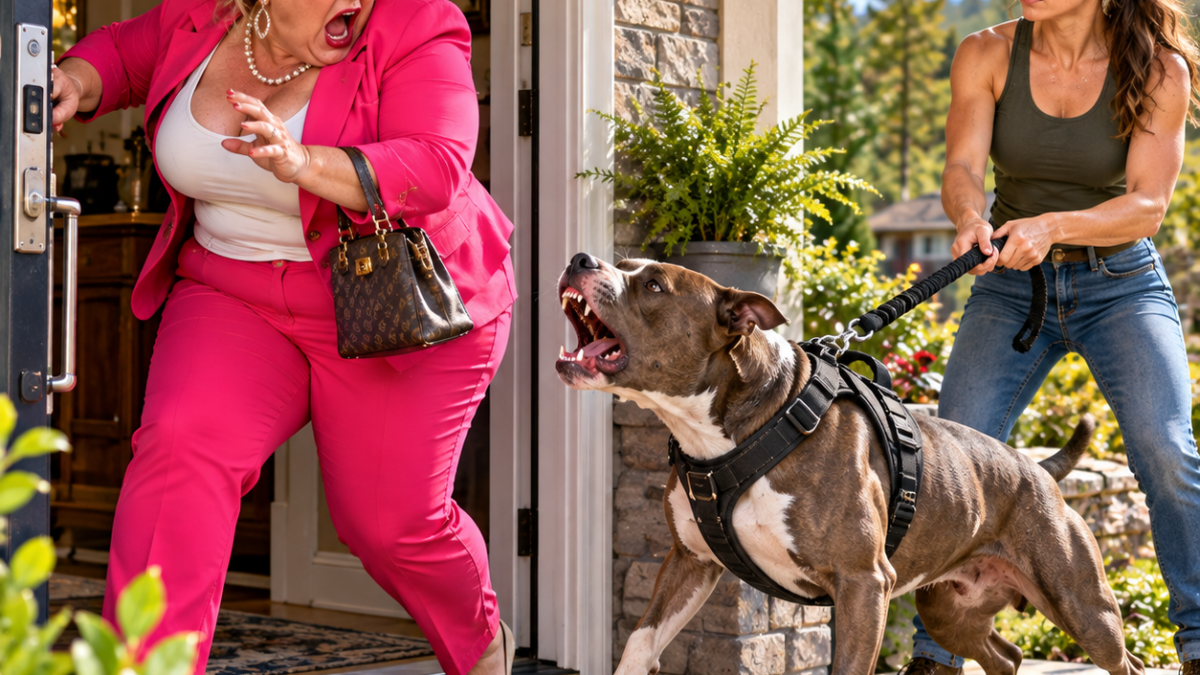
PART 2
I didn’t sleep that night.
At 1:13 in the morning, I was still lying in the guest room at my mother’s house staring at the ceiling.
At 1:47, I opened the footage again.
At 2:06, I stopped pretending sleep was possible.
I got out of bed, took my laptop into the kitchen, and started reading the documents I had signed two years earlier without truly reading any of them.
The CC&Rs.
Covenants, Conditions, and Restrictions.
Forty-seven pages.
When I bought the house, those pages had been little more than paperwork standing between me and the keys.
I had just come through a divorce that left me financially bruised and emotionally hollow.
My ex-wife and I had spent twelve years building a life together, and then six ugly months dismantling it.
By closing day, I didn’t care whether the neighborhood regulated mailbox colors.
I cared that the house was mine.
No shared mortgage.
No memories from a marriage that had died slowly.
No arguments echoing down hallways.
Just mine.
So when the title-company employee slid the CC&Rs across the table and pointed toward the signature page, I signed.
Now I read every word.
Article 1.
Definitions.
Article 2.
Membership.
Article 3.
Architectural standards.
Article 4.
Common areas.
Article 5.
Assessments.
By three in the morning, my eyes burned.
Then I reached Article 9.
**Inspections.**
I sat up.
The HOA had authority to inspect exterior portions of properties for compliance with community standards.
Exterior.
I read it again.
**Exterior portions.**
Lawns.
Fences.
Driveways.
Exterior paint.
Visible additions.
Nothing about interiors.
Nothing about opening cabinets.
Nothing about walking into bedrooms.
Nothing about inspecting bathrooms.
Nothing about opening filing cabinets.
I searched the PDF for the word **interior**.
Four hits.
Three related to common-area buildings.
One appeared under Article 12.
Emergency access.
That provision allowed entry into a private residence only when immediate action was reasonably necessary to prevent serious damage or danger involving something like a major water leak, fire, gas emergency, or similar threat.
And even then, the HOA had obligations.
Document the emergency.
Notify the homeowner.
File a report.
I checked my email.
Nothing.
HOA portal.
Nothing.
Missed calls.
None.
Voicemail.
None.
Text messages.
None.
No fire.
No flood.
No gas leak.
No emergency.
Just Linda Ashford walking through my house with a clipboard while Bruno barked from behind a closed door.
I went back through the footage.
At 2:14 p.m., Linda opened the kitchen cabinet beneath the sink.
At 2:17, she photographed the window casing.
At 2:21, she entered my office.
At 2:23, she pulled my filing cabinet open several inches.
At 2:24, Bruno began barking.
Linda walked toward the bedroom.
At 2:25, she photographed the door.
At 2:28, she entered the guest bathroom.
At 2:30, she emerged and wrote on the clipboard.
At 2:47, she finally left.
Forty-seven minutes.
There was no emergency that takes forty-seven minutes and includes photographing baseboards.
I opened a spreadsheet.
Column one: Time.
Column two: Linda’s action.
Column three: Possible HOA authority.
Column four: Documentation required.
Column five: Documentation received.
By sunrise, columns four and five made the entire story obvious.
Required.
Missing.
Required.
Missing.
Required.
Missing.
Nothing matched.
I saved copies of the footage to my computer.
Then cloud storage.
Then an external drive.
I took screenshots of the HOA inspection email I had received three weeks earlier.
The subject line read:
**NOTICE OF ANNUAL INSPECTION**
The body referred vaguely to community inspections occurring during a particular date range.
It did not say interior.
It did not say anyone would enter homes.
It did not request consent.
That vagueness suddenly looked less innocent.
Maybe most homeowners read “inspection” and assumed exterior inspection because that was what the CC&Rs allowed.
Maybe Linda read the same word and treated it like a blank check.
I considered calling her.
Her number was in the directory.
My thumb hovered over it.
I imagined the conversation.
“Linda, why were you in my house?”
A pause.
Then the machinery would begin.
Concern.
Misunderstanding.
HOA duties.
Safety.
Routine procedure.
Maybe she would claim someone reported a leak.
Maybe she would say the door was unlocked.
Maybe she would insist the inspection email constituted consent.
And the moment I told her about the cameras, she would know exactly what evidence existed.
She had been president for six years.
People like Linda survive that long in petty political systems because they become excellent at controlling sequence.
Who speaks first.
Who frames the issue.
What gets written into minutes.
Which rule gets quoted.
Which context gets omitted.
I closed her contact.
Not yet.
At six thirty, I booked the earliest flight home.
My mother came into the kitchen as I was packing.
“Everything okay?”
“Problem at the house.”
“What happened?”
I hesitated.
“Someone went inside while I was here.”
Her face changed.
“A burglar?”
“Worse.”
“How is that worse?”
“It was the HOA president.”
Mom stared at me.
“She broke into your house?”
“I’m trying not to use that word until I’ve checked everything.”
“What other word is there?”
“That’s what I’m going to find out.”
She watched me zip the suitcase.
“Ryan.”
“Yeah?”
“Don’t do anything stupid.”
I smiled without humor.
“Apparently everyone thinks I do stupid things.”
“I was there for your twenties.”
“Fair.”
Then her expression softened.
“Be careful.”
“I will.”
The flight home felt twice as long as the trip out.
I watched the footage repeatedly.
Not because I needed to.
Because I kept hoping I had misread something.
Maybe Linda knocked.
Maybe she heard water.
Maybe something happened off-camera.
Maybe my anger had filled in gaps.
But every viewing produced the same conclusion.
Calm entry.
Methodical inspection.
No emergency behavior.
No attempt to contact me.
Forty-seven minutes.
When I pulled into my driveway that evening, I sat in the car for almost a full minute.
The house looked normal.
That bothered me.
Some part of me expected a crime scene.
Yellow tape.
Broken glass.
Something external matching what I felt internally.
Instead, sunlight rested across the front porch exactly as it had every evening.
I unlocked the door.
Bruno hit me like a furry battering ram.
“Whoa.”
He whined.
Jumped.
Pressed his massive head into my stomach.
I dropped my bag and knelt.
“Hey, buddy.”
His whole body shook with excitement.
I buried my hands against his neck.
“I know.”
He licked my chin.
“You had a visitor.”
His ears moved at the word.
I smiled.
“Yeah. I didn’t like her either.”
For ten minutes, I sat on the floor with him.
Then I walked through the house.
Once you know someone has entered your home without permission, ordinary things become evidence.
A cabinet door not completely flush.
A drawer half an inch open.
A chair angle slightly wrong.
I noticed everything.
My office filing cabinet sat partially open.
I always closed it.
Shoes in my closet looked disturbed.
A box of financial records had shifted.
Nothing obvious was missing.
That almost made it worse.
A burglar steals.
Linda had inspected.
Judged.
Catalogued.
The invasion was not about property.
It was about authority.
I sat at my desk.
Opened the HOA portal.
Searched six months of board minutes.
My address did not appear.
No complaint.
No emergency.
No interior concern.
No inspection authorization.
Nothing.
Then I searched every HOA email.
Same result.
The next morning, I called the management company.
A woman named Patricia answered.
“Good morning, Brookfield Community Management.”
“Hi, Patricia. My name is Ryan Cooper. I own 1842 Hawthorne Lane.”
“Yes, Mr. Cooper. How can I help?”
“I’m trying to obtain a copy of an inspection report performed at my property approximately ten days ago.”
Typing.
“What date?”
I gave it.
More typing.
“I’m not showing an inspection report.”
“Could you check whether the board authorized one separately?”
“I can look.”
Hold music.
Three minutes.
Patricia returned.
“I’m sorry, Mr. Cooper. There’s nothing associated with your address during that period.”
“No annual inspection?”
“The annual inspection is exterior.”
That sentence made my spine straighten.
“Exterior only?”
“Yes.”
“Does your company authorize board members to enter private residences?”
A longer pause.
“Not as part of routine inspection.”
“What circumstances would permit it?”
“An emergency may be different, but that would require reporting.”
“Any emergency report for my address?”
“No.”
“Any record that Linda Ashford was authorized to enter my home?”
Silence.
Then:
“No.”
I thanked her.
Hung up.
Then checked state recording laws.
I was permitted to record my own phone conversations.
So I called again.
Different phrasing.
Same answers.
This time Patricia’s confirmation was saved.
No inspection.
Exterior only.
No emergency documentation.
No authorized entry.
I added the recording to my folder.
**EVIDENCE.**
Now I had video proving what Linda did.
CC&Rs proving what the HOA could do.
Management records proving nobody had authorized what she did.
That should have been enough.
But one question kept bothering me.
Why?
Why me?
Why enter at all?
Nothing in Linda’s visit made sense as routine enforcement.
She wasn’t looking at visible exterior violations.
She was examining private spaces.
My filing cabinet.
Cabinets.
Bathroom.
Bedroom door.
What was she looking for?
Or maybe the better question was:
Who else had she done this to?
I started with Jim Holloway.
He lived four houses down.
Seventy-two.
Retired electrician.
Fifteen years in the neighborhood.
Jim answered his door wearing a flannel shirt and reading glasses.
Coffee mug in hand.
“Ryan.”
“Morning.”
“Everything okay?”
“I need to ask you something strange.”
He stepped back.
“Well, I’m retired. Strange is most of what I have time for.”
I followed him inside.
His home smelled like coffee and sawdust.
We sat at the kitchen table.
I didn’t tell him everything immediately.
“Has the HOA ever entered your house?”
Jim stopped moving.
Just stopped.
The mug froze halfway toward his mouth.
Then he lowered it.
“Why?”
I knew.
That reaction told me.
“Because Linda entered mine.”
His jaw tightened.
“You catch her?”
“Camera.”
Jim leaned back.
“Well.”
“What?”
“I wondered how long it would take.”
“How long what would take?”
“For somebody to finally catch her.”
I opened my notebook.
Jim looked toward the window.
“About eighteen months ago, I went to Oregon. Daughter had surgery. Gone two weeks.”
He rubbed his thumb over the mug handle.
“When I came home, papers on my desk were moved.”
“Anybody have a key?”
“Neighbor had one. She swore she never came inside.”
“What else?”
“Window in my office was unlocked.”
“Usually?”
“Always locked.”
“Anything missing?”
“No.”
“HOA connection?”
He got up.
Returned with an old folder.
Inside was a violation notice.
Actually, not exactly a violation.
It claimed a water-damage concern had required an inspection.
“When did you get this?”
“Found it in my mailbox when I got back.”
“Postmarked?”
“No.”
Hand delivered.
“Did you have water damage?”
“No.”
“Leak?”
“No.”
“Did the management company have a report?”
Jim gave me a bitter smile.
“No.”
“What did Linda say?”
“I asked at a board meeting.”
“And?”
“She smiled.”
He stared at me.
“Told everyone there had been no interior inspection.”
“What did you say?”
“I told her about the notice.”
“She denied it?”
“Not directly.”
His expression hardened.
“She said I was probably confused about dates.”
I stopped writing.
“She said that in front of everyone?”
“Yep.”
“How old were you?”
“Seventy.”
I knew exactly what he meant.
“She made it sound like memory.”
“Exactly.”
Jim looked down.
“I went home wondering whether maybe she was right.”
That made me angrier than the break-in itself.
People imagine manipulation as someone convincing you of a lie.
Sometimes it is simply making you distrust your own memory.
“Do you still have anything from then?”
“That.”
He pointed at the notice.
“Maybe emails.”
“Would you be willing to give me copies?”
Jim studied me.
“What are you planning?”
“I don’t know yet.”
“That means something.”
“It means I’m documenting.”
He nodded.
“Good.”
Then he wrote two names.
Megan Porter.
George and Betty Sullivan.
“Talk to them.”
Megan was a flight attendant.
She answered her door still wearing her uniform, suitcase beside her.
When I mentioned Linda, she closed her eyes.
“Oh God.”
“That’s becoming a common response.”
“What did she do?”
“I’m trying to determine that.”
“You first.”
Fair.
I told her.
Not every detail.
Enough.
Megan listened.
When I mentioned the unauthorized entry, she invited me inside.
“Last year I came home from a four-day rotation and my back door was unlocked.”
“Forced?”
“No.”
“Anything missing?”
“No.”
“Report it?”
“Yes.”
That surprised me.
“What happened?”
“Deputy came out. Nothing stolen. No forced entry. Case went nowhere.”
“Did you suspect Linda?”
“Not then.”
“Why now?”
She looked toward the backyard.
“Linda has access to the community rear gates.”
“Meaning?”
“There’s a master key system.”
I stared at her.
“Who has it?”
“Board president. Maintenance chair. Maybe management.”
Now the access question grew larger.
My code might explain my house.
It did not explain Jim’s.
Or Megan’s.
Or anyone else’s.
The Sullivans returned my call the next day.
They spent winters in Florida.
George remembered returning one spring to find several drawers moved.
Betty remembered a closet door she always closed standing wide open.
Neither had reported it.
“We thought we were getting forgetful,” Betty said.
Then she told me something that made the hairs on my arms rise.
“When Linda welcomed us to the neighborhood, she asked when we usually traveled.”
I wrote that down slowly.
Five households.
Five unexplained entries.
Five homeowners selected because they were absent frequently, older, isolated, or less connected.
A retired man.
A flight attendant.
Snowbirds.
Me.
Linda wasn’t wandering randomly through houses.
She appeared to choose people who could be made to doubt themselves.
I mapped everything.
Date of absence.
Known HOA contact.
Access method.
Signs of entry.
Documentation.
No report.
No authorization.
No legitimate purpose.
Then I searched the neighborhood social page.
Two years of posts.
Lost cats.
Garage sales.
Pool complaints.
Tree trimming.
Then one old thread appeared.
**Has anyone else had the HOA enter without notice?**
The original account no longer existed.
The post had been deleted within hours.
Three replies were gone.
But replies to replies remained.
One read:
**That happened to you too?**
Another:
**Call me. Do not post details here.**
The page administrator at the time?
HOA secretary Carol Whitman.
Linda’s closest board ally.
I took screenshots.
Now I had the beginnings of a pattern.
But still no motive.
The answer arrived two weeks later in my mailbox.
Official letterhead.
My address.
**NOTICE OF VIOLATION**
I opened it standing in my driveway.
The alleged offense:
**Unauthorized restricted dog breed maintained on premises.**
I read it twice.
Then a third time.
Thirty days to remove the animal.
Or appeal.
Failure to comply would produce escalating fines.
At the bottom:
**Linda Ashford, President.**
I looked toward the living-room window.
Bruno sat inside watching me.
My first reaction was pure anger.
Not rational anger.
The kind that heats your entire chest.
Bruno had done nothing.
He had never bitten anyone.
Never escaped.
Never threatened a neighbor.
The dog walker adored him.
Children on the street asked to pet him.
He slept with a stuffed duck missing one wing.
And Linda wanted him gone.
I walked inside.
Bruno met me at the door.
“Apparently you’re an outlaw.”
Tail wag.
“Don’t look so proud.”
I sat at the kitchen table and pulled up the pet rules.
Article 14.
Domestic animals allowed.
Owners responsible for behavior.
Repeated nuisance barking could produce violations.
Aggressive incidents could trigger further action.
No breed restrictions.
None.
Pit bull did not appear.
Restricted breed did not appear.
Breed-specific prohibition did not exist.
The violation was fabricated.
Then I noticed something more important.
The letter said evidence of a restricted animal had been observed during a **routine property assessment**.
Observed.
Routine assessment.
When?
The date on the notice was six days after Linda entered my house.
Bruno was never in the yard while I was away.
My dog walker entered through the garage.
No complaint existed.
No public incident.
But Linda had stood six feet from my bedroom while Bruno barked behind the door.
She had photographed it.
I called my attorney contact, Robert Hayes.
I had reached out to him earlier for general advice.
He answered on the third ring.
“Ryan.”
“I got something.”
“Good something or bad something?”
“Both.”
I scanned the notice.
Emailed it.
Twenty minutes later, he called back.
“This helps you.”
“She’s threatening my dog.”
“I know.”
“Then why do you sound happy?”
“Because she just documented knowledge.”
I stayed quiet.
Robert continued.
“The letter references a property assessment. Management says no property assessment occurred. Your video shows Linda inside. You have no breed restriction. The timing links the unauthorized visit to the enforcement action.”
“So we file?”
“Maybe.”
“Maybe?”
“She can still claim someone told her.”
“No one did.”
“I believe you. Court doesn’t operate on my belief.”
“What do you suggest?”
“Get management to confirm in writing that no interior assessment was authorized.”
“I can do that.”
“And decide whether you want to appeal internally first.”
I laughed.
“To Linda?”
“That’s the problem.”
“She signs the violation, then decides whether her violation is valid?”
“Welcome to HOA governance.”
I stared at Bruno.
He had fallen asleep beside my chair.
“What happens if I ignore it?”
“Fines.”
“Lien eventually?”
“Depending on your documents and state law, potentially complications. Don’t ignore it.”
“I won’t.”
“Ryan.”
“Yeah?”
“Do not use the dog.”
I frowned.
“What?”
“I know what some people will tell you. Leave Bruno loose. Let her come back. Let her scare herself.”
“I wouldn’t.”
“Good.”
My hand settled on Bruno’s head.
Robert continued.
“If that dog frightens or injures her, the entire story changes. Right now you have unauthorized entry by her. Don’t create a second case where your animal becomes the issue.”
“He stays contained when I’m away.”
“Keep it that way.”
I didn’t need convincing.
Bruno was family.
I was not turning him into a weapon because Linda Ashford wanted a fight.
That night, I changed everything.
Front-door lock.
Garage code.
Contractor codes revoked.
Side gate lock.
New camera overlooking the back patio.
Camera covering the side walkway.
Motion notifications.
Cloud backup.
Bruno remained safely in the bedroom when I left.
The locksmith asked if someone had broken in.
“Something like that.”
“You file a report?”
“Soon.”
He nodded.
“People wait too long.”
“I know.”
He had no idea how much I had thought about that exact problem.
Waiting looked weak from the outside.
But I wasn’t waiting because I was afraid.
I was building.
Still, every day created risk.
Linda could destroy documents.
Coordinate stories.
Pressure witnesses.
I drafted a sheriff’s complaint.
Video links.
CC&R excerpts.
Management confirmation.
Witness statements.
Timeline.
Then I stopped.
Robert called.
“You filed?”
“Not yet.”
“Why?”
“I think she’ll come back.”
Silence.
“Why?”
“Because she knows I changed the code.”
“How?”
“She won’t until she tries it.”
“You’re expecting her to attempt entry again.”
“I’m expecting someone who believes she has authority to resent losing access.”
“That isn’t crazy.”
“Thank you.”
“It’s also not enough reason to delay indefinitely.”
“I know.”
“Thirty days.”
“What?”
“If nothing else happens, file.”
“Agreed.”
Two weeks passed.
Nothing.
Then the violation against Bruno arrived.
That changed the calculation.
Linda had placed her own signature beneath a statement connecting a nonexistent assessment to knowledge she acquired inside my home.
Robert and I debated whether to attend the appeal hearing.
Initially, I wanted to.
I imagined projecting the footage.
Asking Linda simple questions.
Do you have written permission?
Who authorized the inspection?
Where is the report?
Why did you photograph my bedroom?
How did you know about Bruno?
I wanted the room to watch her answer.
But three days before the hearing, Robert called.
“Don’t go.”
“Why?”
“The board is not neutral.”
“I know.”
“Two members have served with Linda for years. Carol signs enforcement letters with her. If you show them everything, you’re giving opposing witnesses discovery before law enforcement sees it.”
“So?”
“File first.”
I looked at my evidence folder.
“Sheriff?”
“Yes.”
“You think they’ll take it seriously?”
“I think your case is stronger than it was three weeks ago.”
The next morning, I walked into the county sheriff’s office carrying a binder.
Deputy Tom Bradley met with me.
Mid-forties.
Quiet.
The kind of person who listened without performing listening.
I walked him through everything.
Video.
CC&Rs.
No emergency provision.
No authorized interior inspection.
Management confirmation.
Jim.
Megan.
The Sullivans.
Deleted community post.
Bruno violation.
For forty-five minutes, Bradley barely spoke.
Then he looked up.
“You’re certain no one gave her permission?”
“Yes.”
“No spouse?”
“Divorced.”
“Tenant?”
“No.”
“House sitter?”
“No.”
“Dog walker?”
“Has no relationship with HOA.”
“Could dog walker have let Linda inside?”
“No. Different time.”
“Original code?”
“Submitted through HOA contractor paperwork months earlier.”
Bradley wrote that down.
“So she had access information through the association.”
“Potentially.”
“You’ve changed it?”
“Yes.”
He flipped through the binder again.
Then pointed to a video still.
“That’s her?”
“Yes.”
“You know her personally?”
“Enough to identify her.”
“Anybody else identify her?”
“Jim can.”
“Okay.”
He closed the binder.
“I’m going to speak with her.”
The sentence felt strangely anticlimactic.
“That’s it?”
“That’s how investigations usually start.”
“Do you want me there?”
“Nearby.”
“Why?”
“In case she produces something we need you to address.”
At 4:15 that afternoon, Bradley’s cruiser stopped outside Linda Ashford’s house.
I parked across the street.
Not hiding.
Not confronting.
Just waiting.
Linda opened the door wearing almost exactly what she had worn inside my house.
Navy blazer.
Pressed pants.
Hair perfect.
Bradley spoke.
I couldn’t hear the first part.
Then he opened his folder.
Held up a still image.
Linda’s posture changed.
Her arms crossed.
Then uncrossed.
She looked past him.
For one second, her eyes found my car.
She knew.
Bradley asked something.
Linda answered.
He asked again.
The second time, his voice carried far enough for me to hear.
“Do you have written authorization from Mr. Cooper permitting you to enter the residence on that date?”
Linda said something about HOA authority.
Bradley waited.
Then:
“Yes or no?”
Her mouth moved.
Stopped.
She gestured toward her house.
Bradley did not move.
Linda spoke louder.
“Annual inspection procedures—”
Bradley replied.
“Routine HOA inspections do not authorize interior entry under the documents provided.”
Linda’s face reddened.
“This is an internal association matter.”
“No, ma’am.”
Bradley’s voice remained flat.
“Unauthorized entry into a private residence is not automatically converted into a civil matter because one party holds an HOA position.”
For the first time since this started, Linda looked small.
Not physically.
Structurally.
The title had disappeared.
The clipboard was gone.
There was no microphone.
No board table.
No agenda she controlled.
Just a deputy asking whether she had permission.
She didn’t.
Bradley handed her paperwork.
Trespassing citation.
Court date.
Linda stared at it.
Then at him.
Then across the street.
At me.
I expected rage.
Instead, what I saw was disbelief.
People who abuse small authority often stop noticing it is small.
They confuse habitual obedience with legal power.
Linda had spent six years telling homeowners what they could paint, where they could park, how high their fences could stand.
Somewhere along the way, she had apparently decided that regulating property meant regulating ownership itself.
Bradley returned to his cruiser.
Linda remained in the driveway.
A neighbor walked past with a Labrador.
Waved.
Linda didn’t respond.
She stood there holding the citation.
I drove home.
Bruno met me at the door.
I sat on the floor.
“You’re staying.”
He licked my face.
“Yeah, yeah.”
I scratched behind his ears.
“You had absolutely nothing to do with this.”
Tail thump.
“That is why you’re the smartest person involved.”
The citation detonated through the neighborhood within forty-eight hours.
No official announcement.
Neighborhoods don’t require official announcements.
Someone saw the cruiser.
Someone asked someone else.
Someone looked at public court records.
By Friday, Linda’s name was everywhere.
The emergency HOA meeting was scheduled two weeks later.
Before that meeting, Jim called me.
“You ready for something weird?”
“Apparently that’s my life now.”
“Three people called me.”
“About?”
“Linda entering homes.”
My stomach tightened.
“New cases?”
“Old stories.”
One man believed Linda had entered during a hospitalization.
A widow remembered her spare key disappearing from an HOA lockbox.
Another homeowner found cabinet doors open after a vacation but never connected it.
“Get names,” I said.
“Already did.”
“Don’t promise anything.”
“I know.”
Megan called next.
“Ryan.”
“Yeah?”
“You need to see the neighborhood page.”
I opened it.
A post from Linda.
Long.
Carefully written.
She claimed recent events represented a dangerous attack on volunteer board members.
She said HOA leadership sometimes had to make difficult decisions.
She said misinformation was being spread.
She did not mention entering my house.
She did not mention my cameras.
She did not mention the citation.
Then she wrote:
**Certain homeowners have chosen to criminalize routine community governance rather than resolve concerns cooperatively.**
I read that sentence twice.
Criminalize.
As if I had turned something innocent into a crime by documenting it.
Comments were disabled.
Of course they were.
I screenshotted the post.
Added it to the folder.
The next morning, I received certified mail.
Linda, through an attorney, accused me of harassment and reputational damage.
I called Robert.
He sighed.
“Expected.”
“Can she sue?”
“Anyone can file something.”
“Can she win?”
“Different question.”
“What do I do?”
“Nothing publicly.”
“She’s telling people I’m harassing her.”
“And you have forty-seven minutes of video.”
“She’s threatening me.”
“And you have a sheriff’s investigation.”
I paced my kitchen.
“I want to post everything.”
“Don’t.”
“Why?”
“Because court doesn’t care who wins Facebook.”
I stopped.
“What should I do?”
“Be boring.”
I laughed.
“Everyone keeps telling me that.”
“Boring people win document cases.”
So I stayed quiet.
Linda didn’t.
At the emergency board meeting, the clubhouse was standing room only.
I arrived with Jim, Megan, George and Betty.
Bruno stayed home.
Safely.
Linda was absent.
Carol Whitman sat at the front looking like she had not slept in days.
Board president’s chair empty.
Carol tapped the microphone.
“I’m going to read a statement.”
Nobody moved.
“Effective immediately, Linda Ashford has resigned as president of the Brookfield Meadows Homeowners Association for personal reasons.”
The room erupted.
Questions.
Whispers.
Someone laughed.
Carol raised her hand.
“Please.”
Jim leaned toward me.
“Personal reasons.”
I whispered back.
“Apparently misdemeanor trespassing is very personal.”
He covered a laugh with a cough.
Carol continued.
“The board will appoint an interim president and review association access procedures.”
A homeowner stood.
“What access procedures?”
Carol hesitated.
Another:
“Did Linda enter people’s homes?”
More voices.
“Was there a master key?”
“Did the board know?”
“Who had our codes?”
Carol lost control of the room within thirty seconds.
Then Jim stood.
He didn’t yell.
That made everyone quiet faster than yelling would have.
“My name is Jim Holloway. I’ve lived here fifteen years.”
Most people knew him.
“Eighteen months ago, somebody entered my house while I was in Oregon.”
Carol looked down.
Jim continued.
“I reported it to this board.”
Heads turned.
“Linda told everyone I was confused.”
Carol’s face changed.
“I was not confused.”
Megan stood.
“My home was entered too.”
Then Betty.
“Ours.”
The room shifted.
One story could be conflict.
Four stories became a pattern.
A man behind me stood.
“Mine too.”
Then a woman.
“After my surgery.”
Another.
“When my husband died.”
Carol stared around the room.
Nobody had understood the scale.
Not even me.
For years, homeowners had individually blamed themselves.
Forgotten locks.
Misplaced papers.
Aging memory.
Travel fatigue.
Contractors.
House sitters.
Linda had not needed everyone to believe her.
She only needed everyone to remain separate.
The new interim board suspended all master access privileges immediately.
Codes stored in old architectural-approval records were ordered deleted.
A forensic review of HOA files began.
Then something emerged that changed the case again.
Linda had kept a private spreadsheet.
It wasn’t part of official management software.
It existed in a board cloud folder.
Columns included:
Homeowner.
Travel schedule.
Emergency key.
Pet.
Work travel.
Elderly occupant.
Family nearby.
I stared at the printed copy Robert showed me.
“This is insane.”
“Potentially.”
“What was she doing?”
“Question is whether she’ll explain.”
My name appeared.
**Ryan Cooper — frequent travel — dog — divorced — usually away weekdays.**
Jim:
**Holloway — alone — daughter OR.**
Sullivans:
**Seasonal — FL Jan-April.**
Megan:
**Airline — unpredictable away blocks.**
The spreadsheet did not prove every entry.
But it proved selection.
Linda tracked when people were absent.
Why?
The sheriff’s investigation expanded.
Then a second discovery surfaced.
Receipts.
Some households had received violation notices shortly after suspected entries.
Not exterior issues.
Interior-related observations.
Unapproved plumbing modifications.
Pet accusations.
Storage concerns visible only through windows or interior access.
Linda had been using private information to manufacture enforcement leverage.
Why?
Power.
Some fines generated revenue.
Some homeowners paid.
Others complied.
A few were pressured into upgrades using contractors Linda repeatedly recommended.
That contractor?
Her brother-in-law’s company.
Now money entered the story.
Not huge money.
No million-dollar criminal enterprise.
Something smaller.
More plausible.
And in some ways uglier.
Linda would identify potential “issues,” then recommend remediation.
Homeowners paid contractors.
Association received compliance.
Her family connection benefited.
Sometimes Linda entered during absences to confirm what could be targeted.
The prosecutor now had more than trespass.
Potential fraud issues.
Conflict-of-interest violations.
Possible unlawful access to private information.
The criminal case remained cautious.
Not every unethical act creates a felony.
Robert reminded me constantly.
“Do not inflate the case.”
“I’m not.”
“You are emotionally invested.”
“Yes.”
“That means you double-check yourself.”
I did.
Months passed.
Linda eventually accepted a plea to misdemeanor trespassing involving my property.
Other allegations remained part of civil and HOA investigations but were not all charged criminally.
At first, that disappointed me.
I wanted everything.
Every house.
Every frightened homeowner.
Every dollar.
Every lie.
I wanted one courtroom to acknowledge all of it.
Robert stopped me after the plea hearing.
“You look angry.”
“She got probation.”
“Twelve months.”
“And a fine.”
“Yes.”
“That’s it?”
“No.”
I looked at him.
“She lost office.”
“Okay.”
“She lost access.”
“Yes.”
“Her conduct is public record.”
“Yes.”
“Homeowners are changing the governing documents.”
“Yes.”
“Her recommended-contractor arrangement is being investigated separately.”
“Yes.”
“Your dog stays.”
That finally made me smile.
“Bruno was never leaving.”
“I know.”
Robert put his hands in his pockets.
“Ryan, accountability isn’t always one dramatic punishment.”
“I know.”
“You don’t sound like it.”
I sighed.
“I wanted the ending to feel bigger.”
“Why?”
“Because what she did felt big.”
Robert nodded.
“That’s fair.”
He looked toward the courthouse doors.
“But sometimes the satisfying ending isn’t watching someone suffer.”
“What is it?”
“Watching them lose the ability to do it again.”
That stayed with me.
Linda received twelve months’ probation.
A $2,500 fine.
Community service.
A misdemeanor record.
The HOA accepted her resignation permanently.
She was prohibited from holding association office again under the amended bylaws.
The homeowners passed a new right-of-entry policy with seventy-eight percent support.
No board member could enter a private residence without written homeowner consent.
Emergency entry required documentation.
Access records had to be logged.
Temporary codes had expiration dates.
Old codes were removed.
Any unauthorized entry by a board member triggered immediate suspension and law-enforcement referral.
The master-key system was eliminated except for limited common infrastructure.
Bruno’s violation disappeared.
No explanation.
No apology.
Just:
**RESCINDED.**
I printed it anyway.
Pinned it inside my office closet.
Not because I needed the reminder.
Because sometimes ridiculous victories deserve paperwork too.
A few weeks later, Jim invited us for coffee.
Me.
Megan.
George.
Betty.
The first time we all sat together without a deputy, lawyer, board agenda, or stack of evidence between us.
Jim told stories about what the neighborhood looked like fifteen years earlier.
Children rode bikes everywhere.
HOA meetings lasted twenty minutes.
Nobody cared about matching patio cushions.
Megan talked about how strange it was to travel again.
“I checked my door camera from Atlanta six times.”
Betty smiled.
“Only six?”
“Seven.”
George laughed.
I understood.
I still checked mine too.
Probably more than necessary.
For months after Linda’s entry, the house felt altered.
Contaminated is too strong a word.
But close.
I would walk into my kitchen and picture her hand opening the cabinet.
Sit at my desk and see the filing drawer cracked open.
Pass the hallway and remember her standing outside Bruno’s room.
Home is supposed to be the place where you stop performing vigilance.
When that boundary is violated, your body remembers before your mind does.
A sound at the door.
Phone alert.
Footsteps outside.
Everything becomes a question.
But slowly, the house became mine again.
Not because I changed houses.
Because I stayed.
I repainted the hallway.
Not because Linda touched the wall.
Because I wanted a new color.
I replaced the kitchen cabinet handles.
Fixed the loose stair trim.
Built Bruno a ridiculous oversized dog bed beside the living-room window.
Life filled the spaces where anger had been.
One Saturday morning, I was working in the garage when an unfamiliar SUV pulled into Linda’s old driveway.
Her house had sold quietly.
I had known it was listed.
Never asked where she moved.
A young couple stepped out.
Thirty-something.
Two children.
A little boy ran toward the front yard.
A woman opened the rear hatch and a golden retriever jumped out.
I smiled.
New people.
New beginning.
A week later, they knocked.
The husband held cookies.
“Hi. We’re the Parkers.”
“Ryan.”
“We heard you’re the person to ask about HOA rules.”
I almost laughed.
“Who told you that?”
“Three neighbors.”
“Of course.”
His wife looked embarrassed.
“We’re thinking about putting in a small fence section for the dog.”
“Architectural application.”
“You know the form?”
“I know every form.”
He laughed.
“Apparently.”
I helped them find it.
Then I said something important.
“If anyone ever asks for a door code on an HOA application, don’t give it.”
They both went quiet.
“We heard something happened.”
“Something did.”
I didn’t explain.
Not that day.
They didn’t need Linda’s story as their introduction to the neighborhood.
That mattered too.
Justice shouldn’t force a community to remain permanently organized around the person who hurt it.
Eventually, her name appeared less.
Then rarely.
Then almost never.
Jim became the unofficial historian.
Megan joined a neighborhood safety committee.
Betty volunteered to review records-management policy because, in her words, “Apparently retirement wasn’t irritating enough.”
I declined every suggestion that I run for the board.
“No.”
Jim asked again.
“No.”
Megan asked.
“No.”
George said I should.
“Absolutely not.”
At the next annual meeting, someone nominated me from the floor.
I stood.
“I respectfully decline before this becomes a hostage situation.”
The room laughed.
A year earlier, I would have hated standing in front of that room.
Now it felt different.
Not because the HOA had vanished.
It hadn’t.
There were still fence applications.
Dues.
Landscaping notices.
Parking disputes.
One neighbor spent twenty minutes arguing about mailbox posts.
Normal bureaucratic nonsense.
Wonderful, ordinary nonsense.
No secret entry.
No private spreadsheets tracking absences.
No president treating homeowner property like personal jurisdiction.
That was victory.
Bruno became unintentionally famous.
Everyone knew the story.
Which irritated me because most versions were wrong.
By neighborhood retelling number five, Bruno had supposedly chased Linda through the house.
He hadn’t.
By version twelve, he had cornered her in the kitchen.
Never happened.
By version twenty, he had ripped her clipboard in half.
I wished.
At a block barbecue, a man I barely knew said:
“So this is the dog who took down Linda?”
I looked at Bruno.
He was lying beneath a picnic table begging a six-year-old for hot dog pieces.
“Clearly terrifying.”
The man laughed.
“Still. Bet she almost died when she saw him.”
“She never saw him.”
“What?”
“He stayed behind the bedroom door.”
“Seriously?”
“Seriously.”
“Huh.”
He looked disappointed.
People like dramatic revenge.
Dog attacks villain.
Instant justice.
Simple.
But I always corrected the story.
Because Bruno deserved better.
I wasn’t going to turn the dog I loved into a fantasy weapon.
If I had left him loose intentionally and Linda had entered, several things could have happened.
She could have been injured.
He could have been blamed.
Animal control could have taken him.
The entire case could have transformed from **Why was the HOA president illegally inside Ryan’s house?**
to
**Why did Ryan knowingly create a dangerous dog encounter?**
Linda had already tried to weaponize Bruno’s breed against me.
I refused to help her.
The real weapon was the camera.
The CC&Rs.
The phone call.
The archived email.
The neighbor who kept a strange notice for eighteen months.
Megan’s old police report.
Betty’s memory.
A timestamp.
A signature.
Boring things.
Receipts.
That is what broke Linda’s power.
Not teeth.
Records.
One evening almost a year after the break-in, I sat on my back patio.
Bruno lay beside me.
The sun dropped behind the houses.
My phone buzzed.
Motion alert.
For half a second, my body reacted exactly as it had in Ohio.
Heart jump.
Breath stop.
I opened the camera.
Jim stood at my front door holding a six-pack.
I laughed.
Walked inside.
Opened the door.
“You know you can text.”
“Then I don’t get to test your surveillance state.”
“Come in.”
Jim looked toward Bruno.
“Security.”
Bruno wagged.
“Terrible employee.”
We sat outside.
After a while, Jim said, “You ever think about moving?”
“After Linda?”
“Yeah.”
“Yes.”
“A lot?”
“Every day for a while.”
“What stopped you?”
I looked at the house.
“I bought it because I needed one thing that was mine after the divorce.”
Jim waited.
“If I left because Linda made me feel unsafe here, she would have changed what the house meant.”
“That stubbornness?”
“Probably.”
“Good kind.”
“Sometimes.”
Jim drank.
Then he said:
“You know I almost sold too.”
“After your break-in?”
“Yeah.”
“Why didn’t you?”
“Too lazy.”
I laughed.
He smiled.
Then his face became serious.
“No. Truth?”
“Yeah.”
“I thought maybe I really was confused.”
That hurt.
Even a year later.
“Linda knew exactly what she was doing to you.”
Jim nodded.
“That’s the part I’ll never forgive.”
“What?”
“Making an old man wonder if his mind was going.”
I didn’t know what to say.
So I said the only thing that mattered.
“You weren’t confused.”
“I know now.”
“You were right.”
Jim looked toward the sky.
“Wish I’d known then.”
That was why documentation mattered beyond court.
It restored memory.
Confirmed perception.
Gave people back trust in themselves.
The HOA later held a formal review of Linda’s six years as president.
Not every violation she issued was invalid.
That surprised some people.
It shouldn’t have.
Bad actors don’t necessarily make every decision badly.
Most of Linda’s routine enforcement had been legitimate.
Illegal parking existed.
Unapproved fences existed.
Noise complaints existed.
That made her overreach harder to see.
If every action she took had been absurd, the community would have removed her years earlier.
Instead, she mixed legitimate authority with unauthorized control until people struggled to tell where one ended and the other began.
That was the dangerous part.
She knew the rules.
Then she learned which rules nobody checked.
The review identified thirty-one interior-related compliance actions over six years.
Most had legitimate explanations.
Contractor reports.
Homeowner admissions.
Visible conditions.
But seven cases could not be adequately sourced.
Seven.
Including mine.
Jim.
Megan.
The Sullivans.
Three others.
One involved an elderly widow named Eleanor Bishop.
She lived alone until her death two years earlier.
Her son, Daniel, attended the review meeting.
He brought an old folder.
His mother had received a violation regarding an interior water heater installation while she was hospitalized.
Daniel remembered thinking it strange.
He had paid the contractor Linda recommended because his mother was too ill to manage it.
The contractor?
Linda’s brother-in-law.
The room went silent.
Daniel’s voice shook.
“My mother thought she had done something wrong.”
Nobody spoke.
“She was seventy-nine and sick.”
He looked at Carol.
“She kept apologizing to me for causing trouble.”
Carol’s eyes filled with tears.
Daniel continued.
“The water heater worked fine.”
An independent inspection later found no immediate defect justifying replacement.
That did not automatically prove criminal fraud.
But it exposed the human cost of Linda’s system.
Fear.
Pressure.
Shame.
Money.
Linda had made people feel like offenders in their own homes.
I thought about my mother asking why I didn’t simply call it a break-in.
At the beginning, I had been careful.
Maybe too careful.
A year later, I understood why.
Words matter.
But sometimes refusing to name something also protects the person who did it.
Linda entered my home without permission.
She accessed private spaces.
She used information from that entry in HOA enforcement.
A court called it trespassing.
I didn’t need a softer word anymore.
After the review, the board authorized refunds of certain questionable fines.
Homeowners who could demonstrate unsupported interior-enforcement actions were reimbursed.
The amounts weren’t huge.
Five hundred dollars.
Eight hundred.
One thousand.
But the checks mattered.
Jim received $350 from an old administrative fee tied to his supposed leak.
He showed me the check.
“You framing it?”
“Absolutely.”
Megan received nothing because she had never been fined.
“Story of my life,” she said.
The Sullivans got $600.
Betty bought a new patio set.
“I’m sitting on Linda’s money.”
“It was always your money.”
“Don’t ruin this for me.”
I laughed.
The neighborhood changed structurally.
All access credentials were moved to independent management.
Board members could not retrieve homeowner access data without documented purpose.
Travel schedules were removed from board records.
Emergency contacts were kept private.
Inspection photos required date, location, and visible exterior context.
No more mysterious clipboard notes.
No more private president spreadsheet.
The right-of-entry amendment became the strongest section of our governing documents.
I actually read the revised version before voting.
Every page.
Jim caught me at the meeting.
“Look at you.”
“What?”
“Reading.”
“I have trauma.”
“Character growth.”
“Go away.”
He grinned.
I voted yes.
Seventy-eight percent passed it.
When the results appeared, I looked around the clubhouse.
Same folding chairs where Linda once controlled conversations.
Same microphone.
Same fluorescent lights.
But power felt different.
Distributed.
Visible.
Limited.
Healthy authority should feel boring.
That was something I had not understood before.
If a community leader is constantly dramatic, constantly “saving” people from violations, constantly invoking emergency authority, constantly insisting only they understand the rules—
something is wrong.
Systems should work even when personalities disappear.
Linda’s system depended on Linda.
The new one did not.
That was progress.
Two years after the break-in, I traveled to Ohio again.
Same reason.
Visiting Mom.
Different feeling.
Before leaving, I checked the cameras.
Bruno was older now.
A little gray around the muzzle.
Still seventy pounds of emotional dependency wrapped in muscle.
My dog walker laughed as I gave instructions she had heard a hundred times.
“Yes, Ryan.”
“Bedroom door stays—”
“Closed.”
“Water—”
“Full.”
“No one from HOA—”
“Gets inside.”
I stopped.
She smiled.
“I know.”
“Sorry.”
“You pay me to care.”
“I pay you to walk the dog.”
“Same thing.”
I laughed.
At Mom’s house, we ate dinner.
Then my phone buzzed.
**Motion detected — Front Door.**
Everything inside me froze.
Mom saw my face.
“What?”
I opened the feed.
A woman stood on my porch.
Clipboard.
My heart pounded.
Then I recognized her.
The new property manager.
Outside.
She rang the bell.
Waited.
Looked at her tablet.
Then walked away.
No entry.
No code.
No testing the handle.
Just an exterior inspection.
Exactly what the rules allowed.
I exhaled.
Mom watched.
“You okay?”
“Yeah.”
“Sure?”
I looked at the screen.
The woman had moved to the sidewalk and was photographing my front fence.
I started laughing.
Mom frowned.
“What?”
“That.”
“What about it?”
“That’s what an HOA inspection looks like.”
Mom shook her head.
“You’re strange.”
“You have no idea.”
That night, I slept.
No footage loops.
No CC&R research.
No spreadsheets.
No evidence folder.
That was when I realized how completely the story had ended.
Not when Linda pleaded guilty.
Not when she resigned.
Not when Bruno’s violation was rescinded.
Not when the new policy passed.
It ended when an HOA representative came to my property and followed the rules—and I trusted the process enough to close the app.
A few months later, Linda’s name appeared once more.
I received a letter.
Not from an attorney.
From Linda.
Handwritten.
I almost threw it away.
Then curiosity won.
Ryan,
I have thought for a long time about whether to write this. I know you have no reason to respond.
I read the first two lines several times.
She did not excuse herself immediately.
That surprised me.
She wrote that she had convinced herself her actions were necessary to preserve standards.
That homeowners rarely responded quickly.
That inspections were difficult.
That she began entering properties under what she told herself was implied authority.
At first, she claimed, only emergencies.
Then situations she considered urgent.
Then routine enforcement.
She wrote:
**I stopped seeing the difference between being responsible for the neighborhood and being entitled to control it.**
I sat there for a long time.
That sentence felt true.
Linda apologized for entering my home.
For photographing Bruno’s door.
For issuing the pet notice.
For using information she had no right to possess.
She did not ask forgiveness.
She did not ask me to retract anything.
At the end:
**Losing the board position felt like losing my identity. I understand now that was part of the problem.**
I folded the letter.
Bruno watched me from the couch.
“What do you think?”
Tail wag.
“Very nuanced.”
I did not respond.
Not because I hated her.
Because I didn’t need anything else from her.
An apology does not create a debt.
You can accept that someone understands the harm without reopening the relationship.
I put the letter in my evidence folder.
Then reconsidered.
Removed it.
Put it in a different folder.
Not evidence.
Closure.
That distinction mattered.
I had spent almost two years measuring Linda through documentation.
Timestamp.
Clause.
Video.
Notice.
Citation.
Court record.
Now her letter belonged somewhere else.
The case was over.
The lesson remained.
When people hear the title of this story, they usually focus on Bruno.
**HOA president broke into home. Didn’t know homeowner had a pit bull.**
It sounds like the dog should be the climax.
He wasn’t.
Bruno never attacked her.
Never chased her.
Never cornered her.
He stayed exactly where I had left him.
Safe.
Behind a bedroom door.
And I’m proud of that.
The dramatic version would have been worse.
The real story mattered more.
Linda heard Bruno.
Documented him.
Then tried to use what she learned during an unauthorized entry to remove him from my home.
That mistake connected her own paperwork to what the cameras had already captured.
She built part of the case herself.
The irony still makes me smile.
The dog she tried to turn into my weakness became the detail that helped expose hers.
Not because Bruno bit anyone.
Because he barked.
Because she listened.
Because she wrote it down.
Because six days later, she signed her name beneath a violation based on knowledge she should never have possessed.
People sometimes imagine revenge as doing something to the person who hurt you.
I don’t anymore.
The best consequence I ever gave Linda was refusing to become useful to her defense.
I didn’t threaten her.
Didn’t release Bruno.
Didn’t scream at her doorstep.
Didn’t vandalize anything.
Didn’t post her address.
Didn’t start a neighborhood mob.
I documented.
I verified.
I talked to people.
I listened.
I waited until the difference between her story and the record became impossible to hide.
That was enough.
Because power like Linda’s depends on confusion.
Who has authority?
What does the rule mean?
Did you really see that?
Did you remember correctly?
Maybe you consented.
Maybe the email counted.
Maybe the inspection allowed it.
Maybe the president knows better.
Once every question received a documented answer, the power disappeared.
No interior authority.
No emergency.
No consent.
No inspection report.
No written authorization.
Video proof.
Her signature.
Her notice.
Her spreadsheet.
Her conflict.
Suddenly, there was nowhere for the ambiguity to live.
Years later, my evidence folder still exists.
I don’t open it often.
Footage.
Screenshots.
Calls.
CC&Rs.
Witness statements.
The first time I made that folder, I felt violated.
Helpless.
Like control had left my hands.
Now, when I see it, I feel something different.
Ownership.
The house was never valuable because Linda left.
It was valuable because I stayed.
Because I learned exactly where the line was.
Because when someone crossed it, I made the line matter.
Bruno is asleep beside me as I finish thinking about all of this.
He is older.
Slower.
Still snores loud enough to shake furniture.
Sometimes he sleeps in the hallway near the same bedroom door Linda photographed.
The first months after everything happened, I hated looking at that door.
Now it is just a door.
That may sound small.
It isn’t.
Trauma makes ordinary things symbolic.
Healing makes them ordinary again.
The kitchen is a kitchen.
The office is an office.
The front-door alert is usually Amazon.
The HOA is paperwork.
The bedroom door is where Bruno scratches when he wants breakfast.
The house is home.
Mine.
That was the ending Linda never expected.
She thought authority meant access.
She thought access meant control.
She thought homeowners were easier to manage one at a time.
Jim wondering if age had damaged his memory.
Megan assuming an unlocked door meant fatigue.
The Sullivans blaming themselves.
Me standing a thousand miles away wondering whether an HOA president somehow had the right to walk through my private rooms.
Once we spoke to each other, the system failed.
That may be the most important thing I learned.
Isolation protects abuse.
Connection exposes it.
One camera created evidence.
One old notice created history.
One police report created corroboration.
One conversation created another.
By the end, Linda was no longer facing an angry homeowner.
She was facing a record.
Records do not get embarrassed.
They do not forget.
They do not become intimidated by blazers, clipboards, titles, or board meetings.
They just sit there.
Waiting.
A timestamp doesn’t care how powerful you feel.
A signature doesn’t care how persuasive you are.
A camera doesn’t care whether everyone likes you.
That cold neutrality became the thing that saved me.
And maybe that is why the final moment that stays with me isn’t Linda receiving the citation.
It isn’t the guilty plea.
It isn’t her empty chair at the emergency meeting.
It happened much later.
I came home from a work trip.
Bruno met me at the door.
I dropped my bag.
He pushed his head against my leg.
I knelt.
The house was quiet.
No cabinet disturbed.
No drawer moved.
No strange footage.
No letter threatening my dog.
I walked into my bedroom.
Opened the door.
Sunlight came across the bed.
Bruno jumped up even though he knew he wasn’t supposed to.
I started to correct him.
Then stopped.
“Fine.”
He circled twice.
Collapsed across my pillow.
I laughed.
For months, I had thought winning would mean seeing Linda lose.
I was wrong.
Winning meant being able to come home and no longer think about her.
It meant Bruno sleeping where he wanted.
It meant leaving for work without wondering who had my code.
It meant knowing my neighbors’ names.
It meant Jim trusting his own memory again.
It meant Megan coming home from flights without checking every drawer.
It meant Betty spending winters in Florida without worrying about who was walking through her closet.
It meant new homeowners receiving rules that clearly limited the people enforcing them.
It meant a boring HOA.
It meant peace.
Linda once walked through my house as if I were a temporary occupant and she represented something more permanent.
She was wrong.
Her title disappeared.
Her authority disappeared.
Her access disappeared.
Her name eventually disappeared from every agenda.
The house remained.
Bruno remained.
My neighbors remained.
I remained.
And whenever I remember the image of Linda standing in my hallway listening to my pit bull bark behind a closed door, I no longer imagine what might have happened if she had opened it.
I’m grateful she didn’t.
Because Bruno never needed to protect me with his teeth.
He had already done something much more important.
He made her reveal what she was really doing.
She listened.
She documented.
She overreached.
And she signed her own name to the proof.
That was how the HOA president who believed my home belonged to her authority finally learned the difference between managing a neighborhood and owning the people inside it.
One gave her rules.
The other was never hers.
And when she crossed that line, I didn’t need revenge.
I needed evidence.
In the end, evidence hit harder than anything Bruno ever could.








