PART 2: HOA Ordered My Root Cellar Filled With Concrete—So I Asked the County to Inspect Everything
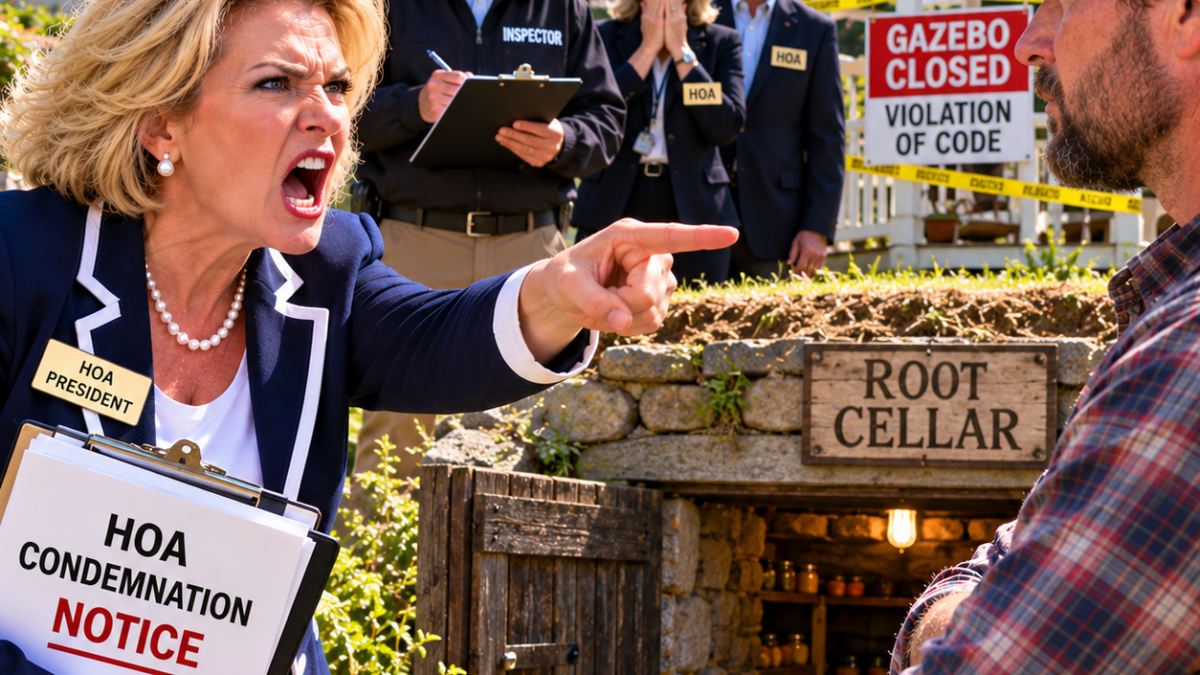
PART 2
I stared at the blank space where the final electrical approval should have been.
At first, I assumed the county had simply failed to copy it.
Government files are not sacred tablets. Pages get misfiled. Clerks make mistakes. Printers jam.
So I wrote the page number down and kept going.
The approved gazebo drawings called for four concrete foundation piers, each extending below the local frost depth.
Four feet.
That was normal.
The structure was open-sided, but it still had to survive seasonal ground movement, wind loads, snow loads, and decades of people leaning against railings while somebody took wedding photographs.
I flipped to the invoices.
Concrete delivery.
Lumber.
Roofing.
Electrical.
Decorative lighting.
The concrete quantity caught my attention.
I took out a calculator.
Then I calculated again.
“Laura?”
She looked up from the other end of the table.
“What?”
“Do we have another calculator?”
She stared at the one in my hand.
“Is this an engineer joke?”
“No.”
“Then use your phone.”
I did.
Same answer.
The amount of concrete billed to the project didn’t appear sufficient for four piers built to the depth shown on the approved plan, assuming the dimensions in the drawings were followed.
Not proof.
But a flag.
I wrote it down.
Then I opened the electrical invoice.
Light fixture.
Outdoor-rated receptacles.
Switches.
Breaker.
Wire.
I leaned closer.
The wire description listed standard nonmetallic sheathed cable.
Interior-type cable.
No underground feeder cable.
No conduit on the invoice.
I went back to the electrical drawing.
The approved plan clearly required underground conduit from the community electrical source to the gazebo.
I read the invoice again.
Then the plans.
Then the missing final inspection.
Laura watched me.
“What?”
“I don’t know yet.”
“That face says you know something.”
“It says I have questions.”
“Is it unsafe?”
“I don’t know.”
That distinction mattered.
I could not inspect underground wiring from a stack of invoices.
Maybe conduit had come from the contractor’s inventory.
Maybe the material invoice was incomplete.
Maybe the concrete supplier made a second delivery under a separate ticket.
Maybe the final inspection existed elsewhere.
Engineering teaches you to distrust both assumptions and excitement.
The fastest way to destroy your credibility is to fall in love with your own theory.
I gathered the documents into three piles.
Confirmed.
Questionable.
Unknown.
Laura came around the table.
“What does the missing inspection mean?”
“Potentially nothing.”
“And potentially?”
“That the electrical work was never signed off.”
She looked toward the window.
The community gazebo stood across the neighborhood beside the pond.
Karen loved that gazebo.
She had called it the “crown jewel of Oak Ridge” in the newsletter.
There had been a ribbon cutting.
A string quartet.
A photographer.
Karen had posed beneath its white-painted roof holding oversized ceremonial scissors.
I remembered Laura laughing when the HOA newsletter devoted three pages to it.
“What happens if the wiring is wrong?” she asked.
“Depends how wrong.”
“Mark.”
“If ordinary interior cable was directly buried, moisture can eventually compromise it.”
“And?”
“You can get faults.”
“That sounds bad.”
“It can be.”
“People use that gazebo every day.”
“I know.”
Children gathered there.
Teenagers.
Older couples.
Neighborhood events.
Holiday lights.
I closed the file.
“I need the county to confirm the records before I say anything.”
Laura nodded.
“Good.”
She touched my shoulder.
“Because I know that look.”
“What look?”
“The one you get when you’ve found an objective.”
“I don’t have an objective.”
“You have three labeled piles.”
“That is basic organization.”
“You alphabetized our freezer.”
“That saved us money.”
“You alphabetized vegetables.”
“There were categories.”
She kissed my forehead.
“Don’t become Karen while fighting Karen.”
Then she left me alone with the papers.
That sentence stayed with me.
The next morning, I drove to the county building department.
Dave, the permit clerk who had processed my root-cellar application, recognized me.
“Back already?”
“I have a records question.”
“Root cellar?”
“Gazebo.”
His eyebrows lifted.
“You’re getting eclectic.”
I showed him the copied inspection index.
“Is there a final electrical inspection in another file?”
He typed into his computer.
Clicked.
Frowned.
Clicked again.
“No passed final electrical.”
“Was one requested?”
He turned the monitor slightly.
“There was an inspection request.”
“Result?”
“Cancelled.”
“By whom?”
“I can’t tell from this screen.”
“Was a certificate of occupancy or final use approval issued?”
“For a gazebo, it might be logged differently.”
He searched again.
Then shook his head.
“I don’t see a final completion record.”
I felt that familiar little shift in my chest.
Not triumph.
Focus.
“What should happen if a community structure is in use without required final inspection?”
Dave leaned back.
“Depends on the structure and what permits were pulled. If there is electrical work, that portion definitely needs to be finalized.”
“Can I request the full inspection history?”
“Public record.”
He printed it.
Foundation inspection: approved.
Framing inspection: approved.
Electrical rough-in: no result shown.
Final electrical: requested, then cancelled.
Final project inspection: no record.
I tapped the page.
“Who enforces this?”
“Building and Safety.”
“Can a homeowner report a concern?”
“Anyone can.”
“I don’t want to file a complaint based on speculation.”
Dave studied me.
“That is unusually responsible.”
“I’ve had a stressful month.”
He smiled.
“If you have a specific safety concern, describe it. An inspector decides whether it warrants investigation.”
I took the forms.
Then I did nothing.
Not yet.
Sarah came over that evening.
She was younger than George by several decades, but she had the same habit of becoming quieter as a situation became more serious.
She read the gazebo file.
Then she read my notes.
“You did this correctly.”
“Meaning?”
“You wrote ‘possible’ a lot.”
“Because I don’t know.”
“Exactly.”
George sat beside her.
He tapped the concrete calculation.
“Can we prove the foundation is shallow?”
“No.”
“Can we prove the wrong cable was actually installed?”
“No.”
“Can we prove there is no final electrical approval in the county file?”
“Yes.”
Sarah nodded.
“That is enough to ask a question. Not enough to publicly accuse them of building a death trap.”
George looked disappointed.
“You lawyers ruin everything.”
“You’re an accountant.”
“Same personality defect.”
I pointed to the missing final inspection.
“What do we do?”
Sarah closed the folder.
“Nothing yet.”
I frowned.
“You told me to investigate it.”
“I told you to gather records. You did. Now we handle your problem first.”
She pulled out her draft cease-and-desist letter.
The letter was much less dramatic than anything I would have written.
That was probably why it was better.
It laid out the facts.
My root cellar had a valid county permit.
Applicable county inspections had been completed.
The cited bylaw expressly concerned above-ground structures.
The HOA had provided no expert basis for its claim of soil instability.
The association was ordered to withdraw all fines and cease threats of self-help demolition.
More importantly, the letter went to every board member.
Not only Karen.
Gary, the treasurer.
Cynthia, the secretary.
Two directors named Roger and Elaine.
Sarah addressed them individually.
“I want each one to understand they are personally aware of the facts,” she said.
George smiled.
“And personally aware that Karen may be driving their bus toward a cliff.”
Sarah looked at him.
“I would not phrase it that way.”
“I would.”
“I know.”
The letters went out the following morning.
Three days later, the violation notices stopped.
At first I thought we’d won.
Then Laura found garbage dumped into her rose bed.
A torn trash bag.
Coffee grounds.
Food wrappers.
Two empty soda cans.
She stood over it wearing gardening gloves.
“Did an animal do this?”
I looked at the bag.
It had been tied.
Cut cleanly across one side.
“Maybe.”
She looked toward the street.
“Karen?”
“No proof.”
“You think it was.”
“I think we have no proof.”
Laura kicked one of the cans into the bag.
“I hate this.”
“I know.”
“I want to put cameras up.”
“That we can do.”
We installed two.
One covered the driveway.
One covered the backyard gate.
The next morning, animal control knocked on our door.
The officer was a young man named Luis.
He looked embarrassed before he even started.
“Mr. Henderson?”
“Yes.”
“We received a welfare complaint about a dog at this address.”
Buddy, our golden retriever, pushed his nose past my knee and tried to greet him.
Luis looked down.
Buddy wagged hard enough to hit the doorframe.
The officer sighed.
“This is Buddy?”
“The alleged prisoner.”
Luis crouched and scratched behind his ears.
“Looks rough.”
Buddy rolled over for a belly rub.
Laura appeared behind me.
“What did the complaint say?”
Luis stood.
“Dog kept outdoors without shelter or water.”
Buddy slept indoors.
He had a shaded run for afternoons and two water stations because Laura worried one wasn’t enough.
Luis photographed everything.
Food.
Water.
Shelter.
Dog.
Vaccination tag.
Then he closed his tablet.
“No issue.”
“Can I know who complained?” I asked.
“Anonymous.”
Of course.
He hesitated.
“Off the record?”
I nodded.
“We get anonymous reports from HOA neighborhoods all the time. Sometimes legitimate. Sometimes somebody weaponizes us in a dispute.”
Laura folded her arms.
“Can we get a copy of the complaint?”
“You can request the incident record.”
“We will.”
After he left, Laura shut the door harder than necessary.
“This is what I meant.”
I didn’t answer.
“Letters were one thing,” she said. “Now someone is dumping trash in my garden and sending animal control.”
“We don’t know Karen did either.”
“Mark.”
“I know.”
“No. You’re enjoying being technically correct.”
That hurt because it was true.
She walked into the kitchen.
I followed.
“What do you want me to do?”
“I want this to end.”
“So do I.”
“Then stop treating it like one of your old operations.”
That hit harder.
“This is our home,” she said. “Not a battlefield.”
“I know that.”
“Do you?”
Her voice cracked slightly.
I stopped.
Laura almost never cried when she was angry.
She got quiet.
Efficient.
The same way she had when our son broke his arm at twelve.
When she looked at me now, I saw something beneath the frustration.
Fear.
“I don’t like wondering who is watching our house,” she said. “I don’t like checking the rose bed before I let Buddy outside. I don’t like feeling relieved when a car passes without stopping.”
I reached for her.
She hesitated.
Then let me pull her close.
“I’m sorry.”
“I know you’re trying to protect us.”
“I am.”
“But protection isn’t only winning.”
That night I moved the HOA binder out of the dining room.
It had been sitting there for weeks.
Letters.
Photos.
Notes.
Highlighters.
A physical monument to the fight.
I put it in my office and closed the door.
Then Laura and I sat on the porch without discussing Karen for the first time in days.
The next morning, George called.
“Board meeting last night.”
“How do you know?”
“My neighbor’s wife is Elaine.”
“One of the directors?”
“Yes.”
“And?”
“Chaos.”
That word sounded promising.
George continued.
“Sarah’s letter scared them.”
“Good.”
“Gary wants the fines rescinded.”
“Better.”
“Cynthia too.”
“And Karen?”
“Karen says backing down will cause an outbreak of bunkers.”
I rubbed my eyes.
“An outbreak.”
“Apparently Oak Ridge is one root cellar away from becoming NORAD.”
I laughed.
“Roger wants independent legal advice before anything else happens.”
“That seems rational.”
“Karen called him disloyal.”
“Also predictable.”
George became serious.
“She is losing the board.”
“Then maybe this ends.”
“Maybe.”
It didn’t.
Two days later, bright pink notices appeared on the community bulletin boards.
**SPECIAL COMMUNITY SAFETY MEETING**
The agenda named our address.
My address.
**Discussion and Vote Regarding Remediation of Unapproved Subterranean Structure at 112 Oak Drive.**
Then the second line:
**County Building Inspector David Evans invited to provide professional assessment.**
I took a photograph.
Then sent it to Sarah.
She called instantly.
“Do not react publicly.”
“I wasn’t planning to.”
“That sentence sounds false.”
“She is bringing the county inspector.”
“I can read.”
“She thinks he’s going to condemn my cellar.”
“Yes.”
“She has no idea about the gazebo.”
“Mark.”
“What?”
“Do not ambush a county official.”
“I’m not.”
“Do not manipulate the meeting into some theatrical revenge scene.”
“I won’t.”
“What are you planning?”
“I’ll bring records.”
She went quiet.
“That is exactly vague enough to worry me.”
“Sarah, if an inspector is present and a public structure may have an unclosed electrical permit, don’t I have the right to ask him about it?”
“Yes.”
“If I provide records rather than conclusions?”
“Yes.”
“If he decides whether to inspect?”
“Yes.”
“Then what’s the problem?”
“The smile I can hear.”
I stopped smiling.
Mostly.
The night before the meeting, I went through the gazebo file one final time.
The foundation issue remained circumstantial.
Concrete quantity.
Approved dimensions.
No proof yet.
The electrical issue was stronger.
Approved plan requiring conduit.
Invoices showing ordinary cable.
No conduit invoice.
No passed final electrical inspection.
Again, not proof of actual installation.
So I changed the wording on my summary:
**RECORDS DISCREPANCIES REQUIRING PROFESSIONAL VERIFICATION**
No accusations.
No “death trap.”
No “fraud.”
No assumptions.
Just questions.
Laura read it.
“Good.”
“You sound surprised.”
“I know you.”
“I can be restrained.”
“You named a folder ‘Counterbattery.’”
“Private organizational terminology.”
She shook her head.
“Promise me something.”
“What?”
“If Evans says the gazebo is fine, you accept it.”
“Of course.”
“No moving the goalposts.”
“I won’t.”
“And if he says your cellar needs something fixed?”
“I fix it.”
She studied me.
“Okay.”
“You coming?”
“Obviously.”
The meeting began at seven.
By six-forty, the clubhouse was nearly full.
Some people came because they believed Karen.
Some because they doubted her.
Most came because neighborhood conflict is more attractive than people admit.
George sat two rows behind us.
Tom, the real estate agent from our barbecue, sat beside him.
Brenda, my next-door neighbor, waved from the aisle.
At the front table sat the board.
Karen in the center.
Gary wouldn’t look at me.
Cynthia looked ill.
Roger and Elaine kept whispering.
And against the back wall stood a man in a county polo carrying a clipboard and flashlight.
David Evans.
Late fifties.
Gray mustache.
Expression of a man who had spent thirty years watching homeowners blame inspectors for things inspectors had not designed.
Karen tapped the microphone.
“Good evening.”
The room settled.
“We are here because Oak Ridge has always been a community committed to safety, aesthetic harmony, and responsible development.”
She spoke for nearly ten minutes.
She called my cellar an unauthorized underground chamber.
A potential soil failure.
A possible drainage disruption.
A liability risk.
At one point she used the phrase “unregulated excavation beneath residential soil.”
That one impressed me.
Technically every excavation is beneath soil.
Laura squeezed my hand.
“Don’t,” she whispered.
“I didn’t say anything.”
“Your face did.”
Karen continued.
“Despite repeated efforts by this board to resolve the matter privately, Mr. Henderson has refused reasonable remediation.”
Reasonable remediation meant filling a permitted structure with concrete.
She finally gestured toward Evans.
“We are fortunate tonight to have a county expert who can give this community an objective assessment.”
Evans stood.
Karen smiled.
That smile bothered me.
She genuinely believed this was over.
“Mr. Evans,” she said, “perhaps you’d like to explain the risks of unapproved subterranean construction.”
Evans looked at her.
“I would need to inspect the structure before offering any opinion.”
A small shift went through the room.
Karen recovered.
“Of course. And I’m certain once you see the condition—”
I stood.
“Mr. Evans?”
Karen’s smile vanished.
“You are out of order.”
Evans looked at me.
“Yes?”
“My name is Mark Henderson. The structure is mine.”
“I gathered that.”
“I have the county permit, approved plans, inspection records, engineering calculations, and site survey with me. I’d like you to review those before inspection.”
Karen struck the gavel.
“This meeting is being chaired by—”
Evans held out his hand.
“I’d like to see the permit.”
The room became quiet.
I walked forward and gave him the folder.
He opened it.
Karen started again.
“Mr. Evans, the HOA maintains that even if an initial permit was—”
He lifted one finger without looking up.
“Give me a minute, please.”
It was remarkable how quickly Karen obeyed an authority she had invited herself.
Evans read.
Checked the permit number.
Looked at the inspection cards.
Structural.
Drainage.
Final building approval.
He scanned my plans.
Then looked at me.
“You drew these?”
“Yes, sir.”
“Licensed engineer?”
“Yes.”
“Army Corps?”
“Twenty years.”
He nodded.
“Explains the rebar.”
A few people laughed.
Karen did not.
Evans looked around the room.
“The documents appear valid. I still need to inspect the physical construction if safety is being alleged.”
“Absolutely.”
Karen leaned toward the microphone.
“Exactly.”
Evans looked at her.
“I haven’t said there is a problem.”
Her mouth closed.
We walked to my house.
Fifty people followed.
It was ridiculous.
A procession of neighbors moving down Oak Drive behind a county inspector as if we were following a tour guide.
Laura whispered:
“Grandpa’s root cellar never got this kind of attention.”
“He needed better marketing.”
We reached the backyard.
I opened the cedar door.
Cool air drifted out.
The cellar smelled faintly of earth, cedar shelving, and Laura’s preserves.
Evans switched on his flashlight.
He examined the entrance.
Retaining wall.
Ceiling.
Ventilation.
Drainage.
Electrical fixture.
Shelving didn’t concern him.
He checked dimensions against the plans.
Karen hovered near the door.
“There’s been concern about settlement along the western edge.”
“From whom?” Evans asked.
“The community.”
“I mean who observed settlement?”
Karen hesitated.
“Residents.”
“Any cracks?”
“Not visible from the outside.”
“Any measurable movement?”
“We believe—”
“Any engineer’s report?”
She went silent.
Evans continued inspecting.
Ten minutes felt like an hour.
Finally he came back out.
Everyone looked at him.
He closed the folder.
“From what I can observe tonight, the structure matches the approved plan closely.”
Karen’s jaw tightened.
Evans continued.
“I see no evidence of structural distress.”
A murmur.
“Drainage appears properly managed. Ventilation is compliant. The roof system is substantial.”
Someone behind me whispered:
“Told you.”
Evans glanced at the cellar.
“Frankly, this is overbuilt for its intended use.”
Laura smiled.
I did too.
Karen stepped forward.
“But is it safe?”
Evans looked at her.
“Based on the permitted design, inspection history, and what I physically observed, yes.”
“Could it collapse?”
“Anything can fail under extraordinary conditions. I see no evidence this structure is unsafe.”
“But HOA approval—”
“That is not a county building-code issue.”
Karen’s face reddened.
“So you’re refusing to condemn it?”
Evans frowned.
“I was not asked by the county to condemn anything. I was told there was a safety concern.”
The crowd began talking.
Karen raised her voice.
“This does not resolve the covenant violation.”
I almost answered.
Then I remembered Laura.
Facts.
Not victory laps.
So I waited.
Evans started gathering his equipment.
I stepped toward him.
“Mr. Evans?”
“Yes?”
“There is another matter while you’re here.”
Karen’s head snapped around.
Her face told me she knew.
Maybe not exactly what.
But enough.
I handed Evans the second folder.
“This concerns the community gazebo.”
Karen moved toward us.
“That is irrelevant.”
Evans opened the file.
“What concern?”
“I pulled the public project records. I found several discrepancies I think require professional verification.”
Karen pointed at me.
“This is retaliation.”
I ignored her.
Evans looked at my summary.
I spoke carefully.
“The approved foundation plans specify four-foot piers. The concrete invoice appears low for the specified volume, although I cannot verify actual depth without inspection.”
He nodded.
Good.
No reaction.
“The electrical plan requires underground conduit. The available invoices show standard nonmetallic sheathed cable and no conduit purchase that I could identify. Again, I don’t know what was actually installed.”
Evans turned a page.
“And?”
“The county file shows a requested final electrical inspection that was cancelled. I could not find a subsequent passed final or overall closeout.”
His expression changed.
Professional concern.
Not drama.
He looked at Karen.
“Who was project representative?”
She hesitated.
“The association.”
“Name?”
“I oversaw construction on behalf of the board.”
“Who was the electrical contractor?”
She named a company.
Evans looked through the documents.
“Was the gazebo energized before final inspection?”
“The contractor told us everything was complete.”
“That wasn’t my question.”
Karen glanced at the crowd.
“The lighting has been operational for months.”
Evans closed the folder.
“Show me.”
Nobody talked on the walk to the pond.
The gazebo looked beautiful at night.
White posts.
Dark shingled roof.
Warm lantern glowing from the center.
The pond reflected the light.
Families had taken graduation photos there.
Oak Ridge held summer concerts beside it.
For a moment, standing there, I hoped I was wrong.
Because being right about a safety problem isn’t satisfying if people could have been hurt.
Evans walked around the structure.
He found the permit tag location.
Checked the service.
Then knelt where the underground electrical feed approached the gazebo.
He did not immediately dig with his hands, as the neighborhood version of the story later claimed.
He called the county’s on-call electrical inspector.
He photographed the installation.
Then he asked whether the HOA had a licensed electrician available to open the relevant portions safely.
Karen folded her arms.
“This is becoming ridiculous.”
Evans stood.
“No, ma’am. Electrical safety is not ridiculous.”
Her face tightened.
“The contractor assured us—”
“I’m asking about inspection records.”
“I relied on professionals.”
“That is fine. Then documentation should resolve it.”
He walked to the disconnect.
Opened the enclosure.
Looked inside.
His expression hardened.
“Who energized this?”
Karen said nothing.
Evans pointed.
“There is no final inspection sticker.”
“It must have fallen off.”
“Inspection records also show no passed final.”
The crowd shifted backward almost as one body.
Parents pulled children away from the gazebo.
Evans turned to me.
“You said you saw standard cable on the invoice?”
“Yes.”
He asked one of the HOA maintenance men to bring a shovel.
Karen protested.
“You cannot start excavating association property without authorization.”
Evans looked at her.
“I can inspect permitted work for code compliance and immediate safety issues. If you object, I’ll close the area until a formal inspection can be scheduled.”
That gave her two choices.
Neither useful.
“Fine,” she snapped.
The maintenance man carefully exposed a small portion of the feeder route at the designated inspection point.
Several inches down, a cable appeared.
No conduit.
Evans stopped him.
He put on gloves.
Examined the marking.
Then stood.
His face had gone flat.
“Everyone step back from the gazebo.”
Karen’s voice rose.
“What?”
“Step back.”
People moved.
He called the electrical inspector again.
Read the cable marking.
Listened.
Then disconnected power at the upstream source with the maintenance man and confirmed it was de-energized.
Only after that did he address us.
“This cable is not approved for direct burial in this application.”
Karen crossed her arms.
“The electrician installed it.”
“Then the electrician has questions to answer.”
She pointed toward me.
“He’s manipulating you.”
Evans looked at her for several seconds.
“No, ma’am.”
His voice stayed calm.
“The wire is in the ground.”
That ended that argument.
He turned toward the gazebo supports.
“Now I want to look at one foundation location.”
The decorative mulch was pulled aside.
At one support, the visible concrete geometry suggested something inconsistent with the plan.
Evans did not declare the pier two feet deep by looking at the top.
Instead he documented it and called for a formal verification.
Then he reached into his vehicle and returned with a red notice.
Not **DEMOLISH IMMEDIATELY**, as people later liked to remember.
The actual language was less exciting and more serious:
**UNSAFE — DO NOT OCCUPY**
He attached it prominently to the gazebo.
The crowd fell silent.
“This structure is closed pending formal electrical and structural inspection,” he said. “Power remains disconnected. Nobody enters until Building and Safety clears it.”
Karen stared at the red tag.
“You can’t do this.”
Evans looked at her.
“I just did.”
“This is the centerpiece of our community.”
“Then you should want it safe.”
“We have events scheduled.”
“Cancel them.”
“You don’t understand what this will do.”
He looked at her.
“To the calendar?”
“To property values.”
Evans’s expression changed.
Not much.
Enough.
“Ma’am, I am responsible for code compliance and safety. Not property values.”
Nobody laughed.
This wasn’t funny anymore.
The lantern in the gazebo had gone dark.
Against the pond, the structure looked suddenly different.
Not charming.
Questionable.
Parents were whispering.
Gary, the treasurer, stared at Karen.
Cynthia had both hands over her mouth.
Roger turned away from the board and began speaking quietly to Sarah.
Karen looked at me.
Hatred.
Pure and simple.
“You did this.”
I shook my head.
“I requested records.”
“You wanted to humiliate me.”
“I wanted you to leave my cellar alone.”
“You sabotaged our community.”
“The county shut down your gazebo because the electrical installation didn’t match the approved work.”
“You went looking for something.”
“Yes.”
That answer surprised her.
I continued.
“You threatened to fill a permitted structure with concrete because you claimed to care about safety. So I checked whether your own project had been completed safely.”
Her eyes widened.
“You vindictive—”
“Karen.”
Laura’s voice.
Everyone turned.
My wife rarely raised her voice.
She didn’t now.
That made people listen.
“You told our neighbors my husband’s work could kill someone.”
Karen stared.
Laura pointed toward the red tag.
“He proved his work was safe.”
Then she pointed toward the gazebo.
“Yours still has questions.”
Karen opened her mouth.
Laura didn’t let her.
“You don’t get to make us ashamed for checking.”
The crowd remained quiet.
Karen looked around for support.
For years, she had always found it.
Gary.
Cynthia.
Her morning-walk circle.
Neighbors afraid of violation letters.
Nobody stepped forward.
Inspector Evans packed his flashlight.
Then he handed me his card.
“Mr. Henderson, if you have any additional records relating to this permit, email them to the department.”
“I will.”
He looked toward the board.
“I’ll issue a written correction notice. The HOA needs a licensed electrician and structural professional to evaluate the installation before any reopening.”
Gary cleared his throat.
“What if repairs exceed the value of the structure?”
“That’s a decision for the owner. The county cares that whatever remains complies with code.”
Karen turned on him.
“Why would you even ask that?”
Gary finally looked at her.
“Because I’m the treasurer.”
Something broke between them in that moment.
Not loudly.
But permanently.
The next morning, George knocked on my door at eight.
He held coffee in one hand and a stack of paper in the other.
“Recall petition.”
Laura looked at me.
I held up both hands.
“Not mine.”
George smiled.
“Mine.”
She let him in.
“What are the grounds?” I asked.
“Selective enforcement. Governance failures. Misrepresentation to homeowners. Potentially unsafe capital project. Failure to follow board procedures.”
“Potentially?”
“I’ve learned from Sarah.”
“Miracles happen.”
George sat at the table.
“The bylaws require signatures from twenty percent of eligible voting households to call a recall meeting.”
“How many?”
“Forty-two.”
“Think you’ll get them?”
He slid the stack toward me.
“Thirty-one since last night.”
I looked at him.
“How?”
“People came to my house.”
The petition passed the threshold before noon.
By evening, it had nearly twice what George needed.
People who had avoided eye contact with me weeks earlier now stopped to talk.
Brenda brought over cookies and apologized.
“For what?”
“For believing her.”
“You came and asked.”
“I should have asked first.”
“So should everybody.”
Tom told us about an elderly couple fined because their trash can stayed visible while the husband was in the emergency room.
Maria from three houses over showed me a letter warning her family that their basketball hoop reduced neighborhood aesthetics.
One woman produced a violation notice over a welcome mat.
A welcome mat.
The phrase Karen used was “nonconforming entryway textile.”
Laura read it twice.
“I hate that I’m impressed.”
“You could never invent that.”
More importantly, board members started talking.
Roger called Sarah.
Then Cynthia.
Gary took longer.
When he finally came to our house, he looked exhausted.
Laura let him in.
He didn’t touch the coffee she offered.
“I owe you both an apology.”
I waited.
“I signed the notices.”
“I know.”
“I trusted Karen’s interpretation.”
“That doesn’t make you less responsible.”
He flinched.
“I know.”
It was the correct answer.
He rubbed his palms together.
“The gazebo was her project.”
“You all approved it.”
“Yes.”
“Did you review the inspection closeout?”
“No.”
“Did anyone?”
“Karen said the contractor handled it.”
I looked at him.
“You’re treasurer.”
“I know.”
“Who selected the contractor?”
“Three bids came in.”
“Lowest won?”
“Yes.”
“Why?”
“Karen pushed hard. Said the higher bids were wasteful.”
“Did anyone ask why it was twenty percent cheaper?”
Gary stared at the floor.
“No.”
“How much was the project?”
He named the figure.
It was enough to hurt.
“Is there reserve money for repairs?”
“Not much.”
“How not much?”
He gave me the approximate balance.
George whistled.
Sarah said nothing.
That was worse.
“What happens if the gazebo needs major reconstruction?” Laura asked.
Gary looked sick.
“Special assessment.”
There it was.
Money.
The thing that turns abstract governance failure into a kitchen-table problem.
The formal county inspection happened four days later.
I did not attend.
I didn’t need to.
The HOA hired its own structural engineer and licensed electrical contractor.
County inspectors observed.
Test pits verified that multiple piers did not match the approved depth.
The electrical feeder had to be replaced.
Other deficiencies appeared once professionals opened portions of the work.
The repair estimate climbed.
Then the structural engineer issued a recommendation that made patchwork less attractive than replacement.
When Sarah received the report through the board’s counsel, she called me.
“Want the summary?”
“Yes.”
“Gazebo remains closed.”
“How bad?”
“The county will allow a properly engineered repair plan, but based on deficiencies and reconstruction costs, the board’s engineer recommends demolition and rebuilding.”
I leaned against my workbench.
“So Karen’s gazebo really is coming down.”
“Probably.”
I waited for satisfaction.
It came.
But less than I expected.
“What will that cost homeowners?”
“Too much.”
That took most of the pleasure out of it.
The residents hadn’t poured the wrong piers.
They hadn’t skipped final inspections.
But HOA money was resident money.
Every mistake eventually reached somebody’s mailbox.
The emergency board meeting was ugly.
Not because people screamed.
Because Gary had to present the numbers.
Demolition.
Disposal.
Design fees.
New permits.
Electrical work.
Rebuilding.
Temporary site protection.
Reserve fund shortfall.
Projected special assessment.
Karen sat at the head of the table.
She looked older.
Not defeated yet.
Still fighting.
“This estimate is inflated because everyone is panicking.”
Gary stared at her.
“We have three estimates.”
“Then get more.”
“We did.”
“The gazebo does not need demolition.”
“The structural engineer says rebuilding is likely cheaper than correcting all deficiencies.”
“He’s covering himself.”
Roger spoke.
“Karen, stop.”
She turned.
“What?”
“Stop blaming everyone.”
“I am trying to protect this community.”
Cynthia laughed.
Not kindly.
“You tried to fill Mark’s legal root cellar with concrete.”
“That is unrelated.”
“No,” Cynthia said. “It isn’t.”
Karen looked toward the residents.
“They are exploiting an unfortunate contractor mistake to attack me.”
Tom stood in the back.
“Who signed off on paying the contractor?”
Karen ignored him.
He repeated.
“Who?”
“I did, on behalf of the board.”
“Before final inspection?”
She hesitated.
Gary closed his eyes.
That was answer enough.
A woman near the aisle said:
“You paid the final invoice before the county signed off?”
Karen’s voice sharpened.
“The contractor represented that the project was complete.”
“Did you check?”
No answer.
Then someone asked the question Karen could not survive.
“How much is the assessment?”
Gary gave the number.
The room erupted.
Not riotous.
Angry.
Real money.
Mortgage money.
School money.
Vacation money.
Prescription money.
All because a decorative project had been rushed and poorly closed out.
Karen tried to regain control.
“The assessment is not solely attributable to—”
A man in the second row stood.
“I voted for that gazebo because you said it was under budget.”
“It was.”
“Because things weren’t built to plan.”
“That is an unfair characterization.”
“It has a red unsafe tag on it.”
She slammed the gavel.
“Sit down.”
He did not.
Neither did three other people.
The recall date was set.
For the next two weeks, Oak Ridge changed.
People talked.
Actually talked.
Not anonymous complaints.
Not whispers.
Neighbors compared letters.
Budgets.
Minutes.
The board’s spending.
Sarah helped residents understand the bylaws without telling them how to vote.
George built a spreadsheet of enforcement actions over five years.
What he found didn’t prove every fine was malicious.
Some were legitimate.
But the pattern was ugly.
Homes belonging to Karen’s friends received warnings.
Homes belonging to people who had challenged her received fines more quickly.
One family had three violations in a month after questioning a landscaping contract.
Another resident had no enforcement for the exact same condition.
Selective enforcement was difficult to prove perfectly from imperfect records.
But the disparities were enough to make residents ask questions Karen had never expected to answer.
Then the HOA’s lawyer sent the board a private memorandum.
It later became available to the membership after leadership changed.
The attorney warned that continued enforcement against my root cellar, despite the bylaw wording and county approvals, created unnecessary litigation exposure.
He recommended withdrawal.
Karen had received that advice before calling the special meeting.
That discovery hurt more than I expected.
She had known.
Not necessarily that she would lose.
But that her own lawyer had told her to stop.
And she kept going.
Because by then, it wasn’t about a cellar.
It was about whether she could be forced to retreat.
I understood that mentality better than I wanted to.
Maybe that was why Laura’s warning kept returning to me.
Don’t become her while fighting her.
The recall meeting filled the middle-school auditorium.
Karen still had supporters.
Fewer than before.
But enough to remind everyone that real communities are not simple morality plays.
Some residents believed she had improved Oak Ridge.
They liked the manicured entrances.
The strict enforcement.
The events.
The newsletters.
One older woman stood and said:
“Before Karen became president, nobody cared about anything. She got things done.”
George nodded.
“That may be true.”
Karen looked briefly relieved.
Then George continued.
“Getting things done does not excuse getting them wrong.”
The recall vote followed the bylaws.
Proxies verified.
Quorum established.
Ballots counted.
Karen lost by a wide margin.
Gary had already resigned.
Cynthia and Roger followed before the vote.
Elaine stayed only long enough to help transition records.
When the result was announced, nobody threw Karen out.
Nobody pointed.
Nobody chanted.
She sat at the front table.
For several seconds, she didn’t move.
Then she gathered her binder.
Her hands shook.
She looked at me.
I was sitting beside Laura.
Karen walked down the aisle.
When she reached our row, she stopped.
“You’re happy now?”
I stood.
Laura caught my wrist.
Not to restrain me.
To remind me.
I looked at Karen.
“No.”
She blinked.
“You’ve ruined my reputation.”
“I didn’t install the gazebo wiring.”
“I did not install it either.”
“No. But you went after my family after your own lawyer told you to stop.”
“That isn’t what happened.”
“It is.”
Her voice dropped.
“You think these people will thank you when their dues go up?”
“No.”
That answer seemed to confuse her.
“They’re going to blame you too.”
“Some might.”
“Then what did you win?”
I thought about the cellar.
Laura’s garden.
Animal control.
The trash in her roses.
The weeks of tension.
“You don’t get to decide what happens to my home anymore.”
Karen stared at me.
Then walked away.
That was the last conversation we ever had.
George became interim HOA president because nobody else wanted the job.
He accepted under protest.
At his first meeting, he said:
“If I start enjoying this, remove me immediately.”
Tom became vice president.
Cynthia agreed to help with transition records but refused office.
Sarah served as a volunteer, non-voting legal adviser until the association hired independent counsel.
Their first formal action concerned me.
George called before the meeting.
“You should come.”
“Why?”
“Because it’s about you.”
“That is usually bad.”
“Not this time.”
Laura and I attended together.
George read a motion.
“All notices, fines, remediation demands, and enforcement actions relating to the Henderson root cellar are hereby withdrawn and rescinded.”
Vote.
Unanimous.
“Second, the association acknowledges that the structure was properly permitted by the county and that the prior board’s application of Bylaw 14.7 was unsupported by its text.”
Vote.
Unanimous.
“Third, the association apologizes to Mark and Laura Henderson for the harassment and distress caused by improper enforcement.”
That one hit me unexpectedly.
Not because I needed an apology.
At least I had told myself I didn’t.
But hearing Laura’s name mattered.
She had carried the part of the fight nobody saw.
The anxiety.
The anonymous complaint.
The garden sabotage.
The fear of what might happen next.
George looked at us.
“I’m sorry.”
Laura squeezed my hand.
“Thank you.”
I cleared my throat.
“Thank you.”
No speech.
No victory lap.
Done.
The gazebo came down three weeks later.
Not because I demanded it.
Because the engineering and repair analysis convinced the new board that replacement was the safest and most economical option.
A demolition crew fenced off the site.
Power remained disconnected.
Materials were removed.
The foundation was excavated.
When the old piers came out, the deficiencies became visible to anyone who still doubted the engineering report.
The new board took photographs.
Documented everything.
Then sued the contractor and pursued insurance claims.
That mattered financially.
The original estimate suggested homeowners might face a brutal assessment.
After insurance negotiations, contractor recovery, and postponing several nonessential projects, the final assessment was smaller than first feared.
Still painful.
Still unnecessary.
But not catastrophic.
The gazebo was eventually rebuilt.
That surprised me.
I thought residents would want the whole thing gone forever.
George disagreed.
“Bad construction doesn’t make gazebos evil.”
“Profound.”
“Thank you.”
The new design went through proper review.
Competitive bids.
Clear scope.
Licensed contractors.
Inspection checkpoints.
Payment retainage until final approval.
Sarah insisted on that last one.
The new gazebo looked almost identical to the old one.
That felt appropriate.
The lesson wasn’t that Karen’s idea had been inherently bad.
People liked the gazebo.
The problem was cutting corners while demanding perfection from everybody else.
The replacement passed final inspection.
Inspector Evans himself came to the reopening.
No ribbon-cutting spectacle.
No oversized scissors.
Just residents.
Coffee.
Children.
A small plaque installed discreetly on one post:
**OAK RIDGE COMMUNITY GAZEBO
REBUILT 2025**
George wanted to add:
**THIS TIME WITH INSPECTIONS**
Sarah vetoed it.
I secretly agreed with George.
Karen put her house on the market before the new gazebo opened.
I found out when Tom texted me a photograph of the sign.
**FOR SALE**
Laura looked at it.
“You going to celebrate?”
“No.”
“You’re becoming disappointingly mature.”
“Give me time.”
We later heard through mutual neighbors that Karen moved to another county.
I never checked where.
I didn’t care.
At least, eventually I didn’t.
For a while, I cared too much.
I’d find myself wondering whether she had joined another HOA.
Whether she told people her version.
Whether I was the villain in that story.
Laura finally caught me searching her name online.
“Mark.”
“What?”
“Close the laptop.”
“I was just curious.”
“No.”
“What?”
“She moved.”
“I know.”
“The board changed.”
“I know.”
“The cellar is safe.”
“Yes.”
“The gazebo is being rebuilt.”
“Yes.”
“So why are you still carrying her around?”
That shut me up.
She pointed toward the backyard.
“Come help me.”
“With?”
“Peaches.”
That year, Laura’s garden produced an absurd crop.
Tomatoes everywhere.
Carrots.
Onions.
Potatoes.
Beans.
And peaches from a nearby farm that she’d bought by the case because apparently she had mistaken a root cellar for permission to preserve food for a frontier settlement.
We spent an entire Saturday canning.
Our son came home from college and immediately regretted it.
“You said dinner.”
Laura handed him a crate.
“This is dinner in January.”
“This is labor.”
“Family tradition.”
“Dad built an underground room and now we’re peasants.”
I pointed at him.
“Respect the vegetable vault.”
He laughed.
We carried jars downstairs.
The root cellar had settled into exactly what it was supposed to be.
Quiet.
Cool.
Useful.
No political meaning.
No legal significance.
Just shelves.
Food.
Earth.
That was what I had wanted from the beginning.
One evening, Laura was arranging peach jars when we heard heavy machinery across the neighborhood.
The old gazebo demolition.
Wood cracking.
A saw.
A loader.
She looked at me.
“You enjoying that?”
“Maybe.”
“Be honest.”
“A little.”
She smiled.
“Fair.”
I stood in the cellar doorway.
Cool air moved past me.
For months, I’d thought the satisfying ending would be Karen losing.
It wasn’t.
The satisfying ending was this.
Laura choosing which shelf held peaches.
Our son complaining upstairs.
Buddy asleep near the cellar door.
Neighbors no longer whispering about bunkers.
The house feeling like ours again.
The new board spent the next year rewriting Oak Ridge’s enforcement procedures.
They did not abolish every rule.
Contrary to George’s occasional fantasies, communities still needed standards.
But vague provisions were clarified.
Fines required documented authority.
Homeowners received meaningful notice and hearing rights.
Anonymous complaints alone could not support serious enforcement without independent verification.
Board members with conflicts had to disclose them.
Capital projects required documented inspections before final payment.
And no president could authorize destructive “self-help” against a homeowner’s property without legal review.
That last provision unofficially became known as the Henderson Clause.
I hated the name.
Naturally, it stuck.
George called me six months later.
“Got a problem.”
“What?”
“Resident built an unapproved gazebo.”
I started laughing.
“You’re joking.”
“No.”
“What are you going to do?”
“Read the bylaws.”
“Disappointing.”
“I learned from a professional.”
“Which professional?”
“You.”
“I built a cellar.”
“Technicality.”
The homeowner eventually submitted plans.
The gazebo was approved.
Nobody threatened concrete.
Progress.
Brenda planted tomatoes the following spring.
She came over asking Laura for advice.
Within twenty minutes, they were standing inside the root cellar discussing ventilation.
Brenda looked at me.
“I still can’t believe Karen called this a sinkhole.”
“Technically she called it an illegal subterranean hazard.”
“Much better.”
“She had a gift.”
“What does it cost to build one?”
Laura immediately said:
“Don’t ask him unless you want seventeen pages of drawings.”
“Twenty-three.”
Brenda stared.
“She’s right.”
I helped Brenda build a smaller above-ground cold-storage pantry instead.
She chose that after hearing my excavation stories.
Probably wise.
The relationship between the neighborhood and the new board changed slowly.
People didn’t suddenly become best friends.
There were still arguments.
Pool hours.
Parking.
Dues.
Holiday decorations.
One meeting spent forty minutes discussing whether food trucks should be allowed during summer events.
I sat through exactly one of those meetings.
Never again.
But disagreement stopped carrying the threat of retaliation.
That difference was enormous.
Gary came by almost a year after the recall.
I was fixing the latch on my garden gate.
He stood awkwardly on the sidewalk.
“Mark.”
“Gary.”
He looked older.
“I’ve been meaning to talk to you.”
“That sentence never introduces anything fun.”
He smiled weakly.
“I owe you an apology.”
I set the screwdriver down.
He looked toward the backyard.
“I signed those fines.”
“I know.”
“I didn’t read the bylaw carefully.”
“I know that too.”
“I trusted Karen.”
I waited.
He rubbed one hand over the other.
“That’s not an excuse.”
“No.”
“I thought being treasurer meant numbers. Karen handled enforcement.”
“You were still on the board.”
“Yes.”
There was more honesty in that single word than in months of Karen’s defenses.
“I should have stopped it.”
“Yes.”
He nodded.
“I know.”
I picked up the screwdriver.
“You know what bothered me most?”
“What?”
“You were at the special meeting.”
“The first one?”
“The cellar meeting.”
“Yes.”
“You watched Karen call my work dangerous before anybody inspected it.”
He looked down.
“I did.”
“You knew Sarah’s letter had warned the board there was no expert report.”
“Yes.”
“And you stayed quiet.”
His face tightened.
“I was afraid of what she’d do to the board if I contradicted her publicly.”
I laughed once.
Not cruelly.
Just tired.
“That was the whole problem, Gary.”
“I know.”
He looked toward Oak Ridge’s pond.
“Everybody thought keeping peace meant not challenging her.”
“That isn’t peace.”
“No.”
We stood there.
Then he held out his hand.
I shook it.
We never became friends.
Didn’t need to.
Accountability doesn’t always require lifelong reconciliation.
Sometimes it requires admitting the sentence you spent months avoiding.
I was wrong.
Years passed.
The root cellar developed its own history.
A scratch on the door where Buddy once tried to follow Laura inside too quickly.
A darker patch on the concrete where a jar of tomato sauce shattered.
Pencil marks on one shelf showing the year our first granddaughter helped Laura stack apples.
The lilac bushes grew tall enough to partially hide the entrance.
New residents sometimes asked what was under the hill.
“Storage,” I’d say.
Nobody called it a bunker.
Inspector Evans retired a few years after the dispute.
Before he left, the new board invited him to a community safety workshop.
I attended because Laura volunteered me.
He recognized me immediately.
“Root cellar.”
“Gazebo.”
He laughed.
“Still standing?”
“Both of them.”
“Good.”
I thanked him.
“For what?”
“Being objective.”
He shrugged.
“That was the job.”
“Not everybody treats authority that way.”
Evans considered that.
“Authority doesn’t make you right. It makes it more important that you check.”
I remembered that sentence.
Because by then I understood the fight differently.
When it began, I thought Karen’s problem was that she was stupid.
She wasn’t.
She could organize.
Persuade.
Run meetings.
Coordinate projects.
She remembered names.
She understood what frightened people.
Property values.
Liability.
Disorder.
Being the neighbor everyone blamed.
Her real problem was certainty.
She had spent so long being obeyed that disagreement became evidence of wrongdoing.
Once that happens, every rule becomes flexible in one direction.
Yours.
I wasn’t immune to it either.
When I found the gazebo records, a part of me wanted them to be wrong.
I wanted the dramatic reversal.
I wanted Karen embarrassed.
If the wiring had been perfect and the missing final inspection turned out to be a filing mistake, I would have been disappointed.
That realization bothered me.
Laura had protected me from the worst version of myself by asking a simple question:
If it’s safe, will you accept it?
Yes.
That is the line.
You don’t investigate to prove your enemy guilty.
You investigate to find out what’s true.
Sometimes truth gives you less than you hoped.
Sometimes it gives you more.
In our case, the facts were enough.
The root cellar was safe.
The gazebo wasn’t.
Everything else followed from those two statements.
Five years after the recall, Oak Ridge held a harvest dinner near the pond.
Someone thought it would be funny to ask Laura to supply preserves.
She brought peach jam.
Pickles.
Apple butter.
Tomato relish.
All stored in the cellar Karen wanted filled with concrete.
George found me beside the new gazebo.
He was older.
Walked with a cane now.
Still complained about budgets.
He tapped one of the posts.
“Solid.”
“You checked?”
“I’ve seen the inspection report.”
“Of course you have.”
“Final payment wasn’t released until approval.”
“Sarah trained you well.”
“No, fear trained me well.”
Children ran through the grass.
Someone had strung lights along the gazebo roof.
Proper outdoor-rated lights.
In conduit.
I checked.
George noticed.
“You can’t help yourself.”
“Quality assurance.”
“Obsession.”
“Semantics.”
Laura came over carrying an empty tray.
“You two criticizing infrastructure?”
“Inspecting.”
“Go carry jars.”
I followed her.
Because after twenty years with the Corps and several years fighting an HOA, I had finally learned which orders were worth following.
Later that night, when everyone had gone home, we walked back through the neighborhood.
The gazebo lights reflected across the pond.
The structure looked almost exactly like Karen’s old one.
That didn’t bother me.
It felt right.
A good idea rebuilt correctly.
Our house sat quiet at the end of the street.
We went around back.
Laura opened the root cellar.
The automatic light came on.
Rows of jars glowed on the shelves.
Red tomatoes.
Golden peaches.
Green beans.
Dark berry jam.
Potatoes rested in bins near the floor.
Apples filled wooden racks.
Laura picked up one jar.
“Peach preserves.”
“I can see that.”
“First batch from the year Karen tried to bury this place.”
“You kept those?”
“One jar.”
“Why?”
She handed it to me.
A date was written on the lid.
I laughed.
“You’re sentimental.”
“Says the man who built a reinforced concrete monument to his grandfather.”
“It’s food storage.”
“Of course.”
We climbed back outside.
The cedar door closed with a solid click.
Across Oak Ridge, I could still see the lights of the rebuilt gazebo through the trees.
Two structures.
One underground.
One beside a pond.
Both legal.
Both inspected.
Both safe.
Neither needed to defeat the other.
Laura slipped her hand into mine.
“Worth it?” she asked.
I knew what she meant.
The fight.
The letters.
The stress.
The months when our dining room looked like a legal office.
The answer wasn’t simple.
“I wish it hadn’t happened.”
“That wasn’t the question.”
I looked at the cellar door.
Then toward the gazebo.
“Yes.”
She nodded.
“Me too.”
A breeze moved through the lilacs.
From somewhere near the pond came distant laughter.
The house behind us was quiet.
No notices taped to the door.
No anonymous complaints.
No one threatening concrete.
I had spent the first half of the fight thinking I was defending a hole in the ground.
I wasn’t.
I was defending the right to require evidence before power becomes action.
That was why the ending mattered.
Karen had demanded that my safe structure disappear because she said so.
The county inspector had shut down her unsafe structure because the facts required it.
One was authority pretending to be evidence.
The other was evidence controlling authority.
Years later, the distinction was still visible from my backyard.
A cedar door resting quietly beneath two blooming lilacs.
And, beyond the trees, a gazebo standing straight beside the pond because this time somebody had bothered to build it right.
[END OF STORY]








