PART 2: HOA Ordered My Private Bridge Demolished—Then the Sheriff Revealed What 214 Homes Had Just Lost
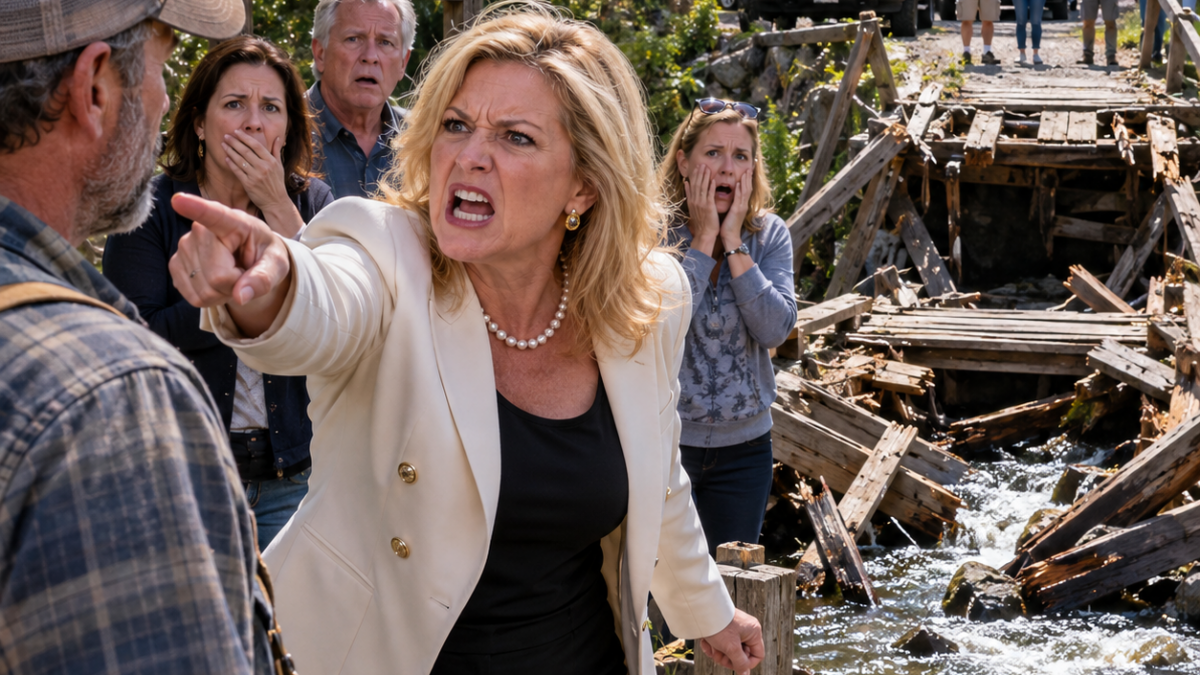
At 6:03 on a gray Tuesday morning, I stepped onto my porch with a cup of coffee and heard chainsaws tearing into the concrete-and-timber bridge that sat entirely on my property, while the HOA president stood across Coldwater Creek in a yellow raincoat watching the demolition crew like she had finally won something.
She had spent three weeks insisting that my bridge was “community infrastructure,” but as splinters dropped into the water and a worker marked the center span for removal, nobody on that crew seemed to know she had never produced a deed, an easement, a demolition permit, or even a lawyer willing to put his name on what she was doing.
I thought I was watching an arrogant HOA president destroy something that belonged to me, but the county records sitting in my attorney’s office contained one fact Delphine Ashworth had never bothered to understand—and once that fact reached the road, the argument stopped being about my property.
My name is Marcus Reyes, and eleven years earlier I bought forty acres along Coldwater Creek, including a small equipment yard where I rented forklifts, generators, scaffolding, compact loaders, and whatever else local contractors needed when their own machinery broke at the worst possible time.
The bridge came with the land.
It was a narrow single-lane crossing built decades before Ridgeline Commons existed, back when a feed mill operated where my rental yard now stood. The mill disappeared, the county abandoned its commercial use, and eventually the bridge became part of the parcel I bought outright. Years later, developers built 214 houses across the creek and began using that same crossing for construction equipment because their secondary entrance was little more than an unfinished gravel cut-through.
I never stopped them.
Once the homes were occupied, I kept letting residents use the bridge.
Delivery trucks crossed it.
Moving vans crossed it.
Landscapers crossed it.
Nobody paid me.
Nobody needed permission every morning.
It worked because everybody understood something simple.
They could use it.
I owned it.
Then Delphine became HOA president.
The first time she asked me to sign an easement, she called it “formalizing an existing community relationship.”
I read the agreement at my desk.
It gave Ridgeline Commons permanent shared control over the crossing and pushed a frightening amount of maintenance liability onto me.
I slid it back.
“No.”
She blinked.
“No?”
“I don’t mind people using the bridge. I’m not giving the HOA ownership rights.”
“You’re benefiting from our neighborhood.”
“I was here before your neighborhood.”
Her smile tightened.
“This bridge is essential to our residents.”
“Then your developer should’ve built one.”
That conversation should have ended there.
Instead, she came back four months later with a revised version.
I declined that one too.
After that, Delphine stopped treating me like a neighbor.
Every conversation became a contest.
Three weeks before the demolition crew arrived, I made the mistake of mentioning at a community potluck that I was considering expanding the rental yard. Bigger forklifts meant tighter delivery windows, and I said I might eventually restrict bridge traffic during work hours so semis could get through safely.
Delphine heard only one part.
“Restrict bridge traffic?”
“Possibly for short periods.”
“You can’t do that.”
I looked at her.
“I can manage traffic on my property.”
“That bridge serves Ridgeline Commons.”
“I know.”
“So you admit it’s community infrastructure.”
“No. I admit people use it.”
Two days later, every mailbox in the subdivision received an HOA notice announcing that the board intended to “reclaim the community’s rightful access corridor” and remove what it called an unauthorized private obstruction.
The obstruction was my bridge.
I called Delphine.
“What exactly are you reclaiming?”
“Our access.”
“Across my land?”
“Continuous use creates rights, Marcus.”
“According to who?”
“Our attorney.”
“What’s his name?”
Silence.
Then she said, “I have another meeting.”
The next morning I took everything to property attorney Priya Nakamura.
She pulled my deed, the original mill records, county maps, and the Ridgeline subdivision approval.
For nearly forty minutes, she said almost nothing.
Then she stopped on one page.
Her finger remained there.
“Marcus.”
“What?”
“You own the bridge.”
“I know.”
“No, I mean completely. There is no HOA easement.”
“Good.”
She didn’t look relieved.
Instead, she rotated the subdivision approval toward me.
“Look at this.”
A highlighted line identified one certified route for emergency and heavy utility vehicles serving all 214 homes.
That route crossed Coldwater Creek at one location.
My bridge.
Priya looked me straight in the eye.
“If somebody takes this crossing out, Marcus, Ridgeline doesn’t just lose a shortcut.”
She tapped the page.
“It loses its only legal emergency access for anything heavy enough to save a life.”
PART 2
I stared at the highlighted sentence until the words stopped looking like English.
“Only legal emergency access?”
Priya nodded.
“For vehicles above twelve thousand pounds.”
“Fire engine?”
“Yes.”
“Ambulance?”
“Depends on configuration, but the route is still designated for emergency access generally.”
“Utility trucks?”
“Yes.”
“Moving vans?”
“Yes.”
“Delivery semis?”
“Yes.”
I leaned back.
“What about their south entrance?”
“That was supposed to become a second full-service access road.”
“Supposed to?”
She pulled another file toward me.
“The developer never finished it to the approved standard. The county inspected the gravel cut-through twice.”
“And?”
“Failed both times.”
“For what?”
“Base depth, drainage, turning radius, and load-bearing capacity.”
I thought about the narrow gravel lane on the far side of Ridgeline Commons.
Residents used it sometimes in pickup trucks.
Teenagers used it constantly.
I had assumed that meant it was legal access.
Priya seemed to read my face.
“A passenger car being able to drive somewhere and a road being certified for emergency apparatus are two very different things.”
“So when they built those houses—”
“The county approved the subdivision partly because this crossing existed.”
“My crossing.”
“Yes.”
“Without an easement?”
“That is the strange part.”
She went through the record again.
“The developer apparently relied on informal access during construction and represented that permanent secondary access would be completed before final buildout. Somewhere between phases, inspections, and turnover, that requirement wasn’t properly closed.”
“How does that happen?”
“It shouldn’t.”
“But it did.”
“It appears so.”
I stood and walked to the window.
Priya’s office overlooked the courthouse square.
People were moving normally below.
Cars stopping at lights.
A delivery truck backing toward a restaurant.
Nothing about the morning suggested I’d just discovered that two hundred fourteen homes had emergency access resting on a bridge an HOA president wanted to tear down.
“What does this mean for me?”
“Ownership doesn’t change.”
“So they don’t suddenly get my bridge because they need it.”
“Correct.”
“Do I have to keep letting them cross?”
“That is more complicated.”
I turned.
“Complicated how?”
“Because historic use, emergency-service reliance, subdivision approvals, and public-safety doctrines can create issues even where there is no private HOA easement.”
“You just said they don’t own anything.”
“They don’t.”
“Then why is my bridge their emergency route?”
“Because whoever approved the development failed to solve the long-term access problem correctly.”
I rubbed both hands over my face.
“So I bought land with a bridge that half the county apparently depends on.”
“Two hundred fourteen houses.”
“That’s supposed to make me feel better?”
“No.”
Priya slid the documents into separate stacks.
“Listen carefully. Do not close the bridge out of anger. Do not physically block emergency traffic. Do not make threats. And absolutely do not let Delphine bait you into saying you plan to strand the subdivision.”
“I don’t.”
“I know.”
“She does.”
“Exactly.”
I sat again.
“What do we do?”
“We send a formal letter.”
“To Delphine?”
“To the association, management company, county planning department, fire marshal, and their counsel if they actually have one.”
“What does it say?”
“It says the bridge is yours, there is no recorded HOA ownership or easement, and county records identify the crossing as Ridgeline’s sole certified heavy emergency route.”
“And then?”
“We ask them to confirm in writing that no action will be taken against it.”
I laughed once.
“You’ve met Delphine.”
“No.”
“You’re lucky.”
Priya’s expression didn’t change.
“I’ve met her type.”
That afternoon she sent the letter.
It wasn’t emotional.
That was the smartest part.
No accusations.
No insults.
Just deed numbers.
Plat references.
County approval dates.
Load ratings.
Inspection failures.
And one paragraph in bold stating that removal or disabling of the bridge could create an immediate emergency-access violation affecting 214 residences.
I read the draft before she sent it.
“You think she’ll understand this?”
“She doesn’t have to agree.”
“What does that mean?”
“She only has to receive it.”
Two days later, Delphine answered.
Three sentences.
**The board considers this issue resolved. The association maintains that the crossing forms part of Ridgeline Commons’ established access infrastructure. Corrective measures will proceed as scheduled.**
No response to the deed.
No response to the failed secondary road.
No response to emergency access.
I called Priya.
“She’s insane.”
“No.”
“You’re going to defend that?”
“I’m going to be precise. Insane would suggest she cannot understand reality.”
“What do you call this?”
“Entitlement.”
I looked again at the email.
“She didn’t read your attachments.”
“Maybe.”
“She couldn’t have.”
“Or she read them and thinks confidence will outlast evidence.”
That sentence stayed with me.
Priya did one more thing that day.
She filed a notice with county planning.
At the time, it felt almost bureaucratic.
She attached my deed.
The plat.
The emergency-access designation.
Photographs.
The HOA letter threatening corrective action.
Then she asked the planning office to flag the parcel and crossing so no permit request or ownership representation involving it could quietly slip through.
“Overkill?” I asked.
“Paperwork is cheap.”
“Legal bills aren’t.”
“That is also why we’re doing paperwork first.”
I didn’t know then that her filing would become the single most important decision we made.
For almost a week, nothing happened.
No letters.
No calls.
No contractors.
I kept working.
A roofing company needed two towable generators.
A warehouse contractor rented a forklift.
I spent Thursday replacing a hydraulic hose on a scissor lift while rain moved over the creek.
Then Friday afternoon, one of my employees, Luis, came into the office.
“You hear about the walkway?”
“What walkway?”
He held out his phone.
Ridgeline Commons had posted a conceptual image on its resident portal.
A landscaped pedestrian promenade.
Stone entry columns.
Decorative lighting.
A footbridge over Coldwater Creek.
Across the bottom:
**RIDGELINE CONNECTIVITY IMPROVEMENT PROJECT**
The illustration showed my bridge gone.
I zoomed in.
“Where did you get this?”
“My cousin lives over there.”
“You know when this was posted?”
“Today.”
I called Priya.
She looked it up while we were talking.
“This is not a permit drawing.”
“I know.”
“Marketing concept.”
“Which shows my bridge removed.”
“Yes.”
“Can she do that?”
“She can draw a picture of the moon exploding if she wants.”
“That isn’t comforting.”
“What matters is whether she’s hired someone.”
We found out six days later.
At 5:58 Tuesday morning, I was standing in my kitchen pouring coffee when I heard diesel engines.
Not road traffic.
Heavy idle.
Then metal ramps hitting gravel.
I walked outside barefoot.
A white flatbed sat near the bridge.
A compact excavator was being unloaded.
Two pickup trucks were behind it.
Men in reflective jackets were setting cones.
For about three seconds, my brain refused to interpret what I was looking at.
Then a chainsaw started.
I set the coffee on the porch rail.
“Hey!”
Nobody heard me.
Or pretended not to.
I shoved my feet into work boots without tying them and headed down the slope.
By the time I reached the yard, one worker had positioned himself near the bridge railing.
Another was measuring the center section.
“Stop!”
The saw died.
A stocky man in a hard hat turned.
“You Marcus?”
“Yes.”
“Wade Kessler.”
He held out a hand.
I didn’t take it.
“What are you doing?”
He lowered it.
“Bridge removal.”
“No, you’re not.”
He frowned.
“We’ve got the contract.”
“From who?”
“Ridgeline Commons.”
“They don’t own the bridge.”
That got his attention.
“What?”
“This is my land.”
He looked across the creek.
Then back at me.
“Mrs. Ashworth said this was association infrastructure.”
“She lied.”
One of the workers stopped uncoiling an extension line.
Wade’s face changed.
“Hold up.”
He turned toward his crew.
“Everybody pause.”
Then Delphine’s SUV arrived.
She parked on the Ridgeline side.
Yellow raincoat.
Black boots.
Coffee in hand.
Exactly as though she’d been expected for an inspection.
She walked toward the bridge.
“What is the delay?”
Wade pointed at me.
“He says this is his property.”
Delphine didn’t even look surprised.
“Marcus is disputing the association’s access rights.”
“No.”
I stepped closer.
“Marcus is telling you to get your contractor off his land.”
Her eyes narrowed.
“This crossing is being removed pursuant to board authority.”
“You don’t have authority.”
“We’ve already discussed this.”
“You got Priya’s letter.”
“Our position hasn’t changed.”
“Did you read the county designation?”
“I’ve reviewed the relevant materials.”
“Then you know what this bridge is.”
“Yes.”
The answer was so calm that I hesitated.
“What is it?”
“A deteriorating private structure interfering with the community’s long-term infrastructure plan.”
That told me everything.
Either she had not understood the letter or she was choosing to pretend she hadn’t.
Wade looked between us.
“Do you have a deed?”
I said, “Yes.”
Delphine said, “The association has established rights.”
Wade rubbed the back of his neck.
“That’s not what I asked.”
Delphine looked irritated.
“We’re losing time.”
Wade said, “I’m not cutting anything until I know whose structure I’m cutting.”
For one hopeful second, I thought the problem had stopped itself.
Then Delphine pulled a folder from beneath her arm.
She showed Wade what she called the board resolution.
I couldn’t read all of it from where I stood.
But I heard her say:
“You were hired by the association. Proceed.”
Wade hesitated.
Then made the mistake that would cost him later.
He believed the person paying him.
He nodded to the crew.
The chainsaw started again.
I took out my phone.
I called the sheriff’s non-emergency line.
The dispatcher asked if anyone was in danger.
“Not yet.”
“What is happening?”
“A contractor is cutting into a privately owned bridge on my property.”
“Do you have an active dispute with the contractor?”
“The HOA hired them.”
“Are you part of the HOA?”
“No.”
“Is there violence or a threat?”
“No.”
“Do you have proof of ownership?”
“Yes.”
“Stay clear of machinery. A deputy will respond.”
I started recording.
The first cut went into the timber guardrail.
Not structural yet.
But deep enough that the smell of fresh wood mixed with wet concrete and diesel.
Delphine crossed her arms.
She looked almost satisfied.
I called Priya.
She answered half asleep.
“Marcus?”
“They’re here.”
“Who?”
“Demolition crew.”
She went silent.
“Are they working?”
“They just cut the railing.”
“Call law enforcement.”
“Done.”
“Do not touch equipment.”
“I know.”
“Do not stand on the bridge while they’re operating.”
“I know.”
“Get the contractor’s name.”
“Wade Kessler.”
“Company?”
“Kessler Civil Demo.”
“Permit posted?”
I looked.
“No.”
“Ask.”
I walked toward Wade but stayed clear of the saw.
“Do you have a demolition permit?”
He pulled one ear protector away.
“What?”
“Permit.”
“Association handled permitting.”
Delphine called across the creek.
“No permit is required for private community improvement.”
Priya heard her through my phone.
“Oh, that’s useful.”
“What?”
“Keep recording.”
I did.
A few minutes later, another worker spray-painted marks near the center span.
I knew enough about the bridge to understand what those marks meant.
They were preparing to cut connections before using the excavator to pull the middle section down.
“Wade.”
He looked at me.
“If you drop that center span, nobody from Ridgeline can get a fire truck across.”
He frowned.
“What are you talking about?”
“It’s the subdivision’s only certified heavy emergency access.”
Delphine snapped, “That is false.”
I looked at her.
“No, it isn’t.”
“The south entrance exists.”
“It failed load inspection.”
She smiled.
“Years ago.”
“Twice.”
Wade stepped away from his crew.
“Wait.”
He pointed at Delphine.
“You told me the other road was the active service entrance.”
“It is.”
“Rated for fire apparatus?”
“It is used.”
“That is not what I asked.”
For the first time, she lost patience.
“Wade, I am paying you to perform a contracted demolition, not reinterpret decades-old planning paperwork.”
He stared at her.
Then at me.
“Marcus, can you prove what you’re saying?”
“My attorney has the county records.”
“How fast?”
A patrol SUV turned onto the access road before I could answer.
Deputy Frank Alvarez stepped out.
He looked from the excavator to the bridge to Delphine.
Then he took off his sunglasses.
“Morning.”
Nobody answered.
He approached Wade first.
“Who’s in charge of the crew?”
“I am.”
“What are you doing?”
“Bridge removal.”
“Permit?”
Wade looked toward Delphine.
She stepped forward.
“This is association infrastructure undergoing authorized improvement.”
Frank looked at her.
“You’re the owner?”
“The homeowners association has jurisdiction over the crossing.”
“That’s different from ownership.”
“It is effectively the same under longstanding use.”
Frank looked at me.
“You called?”
“Yes.”
“Your bridge?”
“Yes.”
“Documents?”
“I have copies.”
I ran back to my truck.
Priya had insisted I print everything after Delphine’s email.
Deed.
Survey.
Old mill parcel map.
Subdivision approval.
County emergency route designation.
I handed the folder to Frank.
He leaned against his SUV and read.
Nobody spoke.
The chainsaws were off now.
Creek water moved beneath the bridge.
Rain tapped against the hood of the deputy’s vehicle.
Delphine became impatient.
“Deputy, we’re operating under a duly adopted board resolution.”
Frank kept reading.
“Ma’am, give me a minute.”
“The contractor is billing by the hour.”
He looked up.
“Then I’d stop the clock.”
Wade raised one hand.
“Already did.”
I almost smiled.
Frank reached the highlighted emergency access page.
His expression changed.
He read it twice.
Then he looked at the bridge.
Then Ridgeline.
Then at me.
“How many houses?”
“Two hundred fourteen.”
He looked at Delphine.
“This is the only certified emergency route?”
She crossed her arms.
“That record is outdated.”
“Do you have a newer one?”
“The south entrance is operational.”
“Certified?”
She didn’t answer.
Frank turned to me.
“You have documentation on the failed inspections?”
I handed him another page.
He read.
“Two failures.”
“Yes.”
He exhaled.
Then looked at Wade.
“How much work have you done?”
“Guardrail notch. Layout marks. That’s it.”
“Nothing structural?”
“Not yet.”
Frank pointed.
“Everybody off the bridge.”
Delphine stepped forward.
“Deputy—”
“Off.”
Wade immediately waved his crew back.
Delphine did not move.
Frank looked directly at her.
“Ma’am, I’m telling you to step away from the work area.”
She finally did.
Then he said the sentence that changed the entire morning.
“According to the documents in my hand, this bridge is privately owned, sits on Mr. Reyes’ parcel, and is designated by the county as the only certified emergency access route capable of serving more than two hundred homes with heavy apparatus.”
Delphine laughed.
Not loudly.
A sharp little sound.
“You’re reading old records.”
“Maybe.”
Frank tapped the papers.
“But until somebody gives me current records saying otherwise, you’re trespassing on private property while demolishing critical emergency infrastructure without a permit.”
Her expression froze.
Wade took two steps away from her.
Frank continued.
“If that center span comes down and a house catches fire over there, do you understand what you’ve created?”
Delphine’s jaw tightened.
“The HOA attorney has cleared the project.”
“Good.”
Frank took out a notebook.
“Name.”
“What?”
“Your attorney.”
She hesitated.
Exactly as Priya had predicted.
Frank waited.
“Ms. Ashworth.”
“Our counsel reviewed the general access dispute.”
“Name.”
She gave him one.
Frank called from the roadside.
The attorney answered.
I couldn’t hear the other side.
Frank identified himself.
Explained the bridge.
Asked whether the attorney had approved demolition.
Pause.
Frank looked at Delphine.
Then asked again.
Longer pause.
Finally he said:
“Understood.”
He hung up.
Delphine said, “Well?”
Frank put the phone away.
“Your attorney says he never advised you to remove the bridge.”
Nobody spoke.
“He says he discussed general questions regarding neighborhood access and recommended a title review before any action affecting the crossing.”
Delphine’s face went pale.
“That is not what he said to me.”
“You can discuss that with him.”
She looked at Wade.
“Continue.”
Wade almost laughed.
“No.”
“You have a contract.”
“And now I have a deputy telling me it might be criminal.”
Frank stepped between them.
“No more work.”
Delphine’s voice climbed.
“You cannot unilaterally stop an HOA infrastructure project based on paperwork handed to you by the opposing property owner.”
Frank looked at her.
“I’m stopping an unpermitted demolition on property you cannot show you own.”
She pointed at me.
“He’s manipulating you.”
Frank remained calm.
“Maybe.”
Then he pointed at the bridge.
“But nobody is cutting another inch until ownership, permitting, and emergency access are resolved.”
I should have felt victory.
Instead I looked at the deep chainsaw notch in the guardrail.
And thought about how close they had come.
Another twenty minutes.
Maybe less.
The center span could have been hanging over Coldwater Creek.
Frank radioed county planning.
Because Priya had filed the notice days earlier, the planner found the flagged record almost immediately.
I heard Frank say:
“Yes.”
Then:
“Two hundred fourteen.”
Then:
“No permit that I can see.”
He listened.
His eyebrows rose.
“Fire marshal too?”
He looked at Delphine.
“Understood.”
He hung up.
“What?” I asked.
Frank pointed to the crew.
“Pack up.”
Delphine stared.
“You have no authority—”
“The county is issuing a stop-work directive. Fire marshal is being notified.”
“Based on his complaint?”
“No.”
Frank held up his phone.
“Based on county records.”
That distinction mattered.
By 8:10, the demolition crew was loading equipment back onto the flatbed.
Wade approached me.
“I need to say something.”
I waited.
“I didn’t know.”
“You should have checked.”
“I know.”
“You walked onto private property with chainsaws.”
His eyes dropped.
“I know.”
I wanted to stay angry.
Part of me did.
But Wade looked like a man who had just realized the confidence he’d mistaken for authority belonged to someone who would leave him holding the liability.
“Give my attorney your contract,” I said.
He nodded.
“I will.”
“And every message from Delphine.”
He glanced at her.
She was on her phone again, pacing.
“Yeah.”
Delphine walked toward me after the trucks began leaving.
“You’re enjoying this.”
“No.”
“Please.”
“You cut my bridge.”
“We attempted to remove an obsolete structure blocking modernization.”
“You almost cut off your own neighborhood.”
“The secondary entrance is sufficient.”
“Then why did your developer designate this one?”
She hesitated.
I stepped closer.
“Why did the county fail your south road twice?”
“I am not an engineer.”
“No. You’re not.”
Her expression hardened.
“This isn’t over.”
“No.”
I looked at the cut in the railing.
“Now it actually isn’t.”
Priya arrived forty minutes later.
She walked straight to the bridge.
Saw the damage.
Said nothing for several seconds.
Then she photographed everything.
“Did they touch structural connections?”
“Wade says no.”
“We’ll inspect.”
“County?”
“Already coming.”
She looked toward Delphine, who had finally left.
“What did she say?”
“That I’m enjoying this.”
Priya gave me a dry look.
“Are you?”
“No.”
“Good.”
“I want her to pay for the damage.”
“That is different.”
“Is it?”
“Yes.”
She knelt beside the cut railing.
“Revenge is usually expensive when you improvise it.”
“What do you suggest?”
“Records.”
Of course.
Priya loved records.
By noon, Ridgeline Commons knew.
Not the whole truth.
Just enough to panic.
A resident named Caleb Morris called me.
I’d rented him a generator the year before.
“Marcus, is the bridge closed?”
“No.”
“Somebody says fire trucks can’t get in.”
“They can.”
“So what happened?”
“Your HOA president hired a crew to remove the crossing.”
Silence.
“What?”
“They started this morning.”
“Why?”
“You’ll have to ask her.”
“My wife is eight months pregnant.”
That sentence hit me harder than I expected.
“Caleb, the bridge is open.”
“You sure?”
“Yes.”
“The neighborhood group says it’s damaged.”
“Guardrail only, as far as we know. County’s inspecting.”
“What if an ambulance needs through?”
“It can get through right now.”
His breathing slowed.
“Okay.”
Then he said:
“Why would she do that?”
I didn’t have an answer.
Not yet.
The fire marshal arrived the next morning.
His name was Thomas Bell.
He looked at the bridge for maybe five minutes before asking:
“Who authorized demolition?”
I pointed across the creek.
“HOA president.”
He closed his eyes briefly.
“Of course.”
He inspected the damaged railing.
Measured the deck.
Looked underneath.
Then drove the south entrance.
He came back forty minutes later with mud on his boots.
“That road isn’t compliant.”
“We know.”
“No. I mean it isn’t even close.”
Priya folded her arms.
“What happens now?”
Thomas looked toward Ridgeline.
“I issue an emergency order protecting this crossing until structural review is complete.”
“To whom?”
“Everybody.”
“Can residents still use it?”
“If the engineer says it’s safe.”
The structural engineer arrived that afternoon.
Fortunately, the damage was localized.
The guardrail needed replacement.
A small surface cut had nicked a noncritical timber component but had not compromised the span.
I finally breathed easier.
Then Thomas gave the HOA something Delphine had not expected.
A formal notice.
Ridgeline’s emergency-access compliance was under review.
The neighborhood’s fire protection classification could be affected if reliable apparatus access wasn’t maintained.
Insurance consequences were possible.
That got residents’ attention faster than anything I’d said.
By evening, the clubhouse parking lot was overflowing.
The board called an emergency meeting.
Priya told me to attend.
“I don’t live there.”
“You keep saying that.”
“Because it’s true.”
“Your bridge is tonight’s main character.”
“I hate that sentence.”
“Still true.”
I went.
The clubhouse was packed.
People lined the walls.
Delphine sat at the front beside three board members.
Treasurer Bonnie Whitfield had a stack of bank statements in front of her.
I’d met Bonnie twice.
Quiet woman.
Retired CPA.
The sort of person who listened until she had numbers.
Those are dangerous people when you’ve been lying.
Delphine opened the meeting.
“What occurred yesterday was a routine infrastructure improvement that was aggressively mischaracterized by an outside property owner.”
A man shouted:
“Did you hire people to cut down the bridge?”
She ignored him.
“The board has long recognized that the current crossing is outdated, visually inconsistent with Ridgeline’s master plan, and unsuitable for the pedestrian-oriented character we want to create.”
A woman near the front stood.
“Can fire trucks use the pedestrian-oriented character?”
Laughter exploded.
Delphine banged a gavel.
“This is serious.”
“Yes,” the woman said. “That’s why we’re here.”
Delphine tried again.
“The south entrance remains available for ordinary traffic.”
Thomas Bell, the fire marshal, was sitting in the back.
He stood.
“No.”
Every head turned.
Delphine looked stunned.
Thomas continued.
“That entrance is not approved for fire apparatus as currently constructed.”
“You told me repairs were possible.”
“I told you reconstruction was possible.”
“That’s semantics.”
“No, ma’am. It’s engineering.”
The room went quiet.
Bonnie lifted one hand.
“I need to address the expenditure.”
Delphine looked at her.
“Bonnie, not now.”
“Yes.”
“Not before counsel reviews—”
“I already reviewed association records.”
She opened the first statement.
“I found thirty-eight thousand dollars committed to Kessler Civil Demo.”
People murmured.
Delphine said, “For community beautification.”
Bonnie looked at her.
“The invoice says bridge demolition.”
Silence.
She held it up.
“Full removal and disposal of existing crossing.”
Someone shouted:
“Thirty-eight thousand?”
Bonnie continued.
“The payment was coded under community beautification.”
A resident yelled:
“Did we vote on that?”
Bonnie checked minutes.
“No.”
Delphine spoke quickly.
“The board granted executive authority for preliminary improvements.”
Howard—no, wrong board, I caught myself mentally. Ridgeline’s vice president, Nolan Price, leaned toward his microphone.
“Not thirty-eight thousand dollars.”
Delphine turned.
“You approved the connectivity project.”
“A concept study.”
“You voted for progress.”
“I voted for drawings.”
Bonnie slid copies down the table.
“The deposit was twelve thousand dollars.”
Nolan stared at it.
“You already paid him?”
“Yes.”
Delphine said, “Deposits are standard.”
Bonnie looked at her.
“Not without authorization.”
The mood changed.
Until that moment, some residents probably still believed the situation was a messy land dispute.
Now it looked like something else.
One man stood.
“Do we own the bridge?”
Delphine answered too quickly.
“We have established rights.”
He repeated:
“Do we own it?”
She looked at Priya.
Priya was sitting beside me.
Then at me.
Then at Thomas.
Finally Delphine said:
“Our position is that longstanding use creates an equitable community interest.”
The man shook his head.
“That wasn’t the question.”
Another resident called:
“Where’s the deed?”
Someone else:
“Show us the easement.”
Delphine’s voice tightened.
“These are legal complexities.”
Priya stood.
“No.”
The room quieted.
“My name is Priya Nakamura. I represent Marcus Reyes.”
Delphine rolled her eyes.
“Here we go.”
Priya ignored her.
“County title records show Mr. Reyes owns the bridge and the parcel beneath it. Ridgeline Commons holds no recorded ownership interest or easement granting the association authority to demolish, alter, or control the structure.”
A resident asked:
“Then why do we use it?”
Priya answered:
“Because Mr. Reyes has historically allowed access.”
Another:
“Can he stop us?”
I shifted in my chair.
Priya glanced at me.
“There are larger public-access and subdivision-compliance issues that may require formal resolution. But that does not transfer ownership to the HOA.”
Delphine seized on it.
“So there are rights.”
“Potential legal issues are not permission to send a demolition crew onto his land.”
Bonnie raised the invoice.
“And they’re definitely not permission to spend thirty-eight thousand dollars without a vote.”
People shouted again.
Delphine slammed the gavel.
“This board cannot operate under mob intimidation.”
I stood.
I hadn’t planned to.
Priya looked at me.
I took that as permission or resignation.
“Delphine.”
She looked at me.
“You keep calling me an outside property owner like that explains something.”
“You are not a member.”
“Exactly.”
A few people laughed.
I continued.
“I’ve let your residents use my bridge for years because it was easier to be a good neighbor than make everything a legal transaction.”
The room settled.
“I didn’t charge tolls.”
I looked around.
“I didn’t put up gates.”
Some residents nodded.
“I didn’t stop delivery trucks. I didn’t stop school buses. I didn’t stop emergency vehicles.”
Delphine said, “Until you threatened restricted access.”
“For business scheduling.”
“You admitted restrictions.”
“For certain periods if needed.”
“You created uncertainty.”
“And your response was to destroy the crossing?”
She opened her mouth.
Nothing came out.
I pointed toward the window.
“If Deputy Alvarez had arrived twenty minutes later, your contractor was preparing to drop the center span.”
Several people reacted.
Caleb Morris stood near the back.
“My wife is due in three weeks.”
His voice shook with anger.
“If she went into labor and needed an ambulance?”
Delphine said, “The south entrance—”
Thomas Bell cut her off.
“Would not be an approved substitute.”
That ended it.
Not the meeting.
Her control.
I saw it happen.
Board members stopped looking at her for direction.
Residents stopped waiting for permission to speak.
Bonnie began handing out copies of the financial records.
Nolan asked for the full contract.
A resident demanded every email about the bridge.
Another asked for the attorney’s written opinion.
Delphine had built her authority on the idea that she always knew more than everyone else.
Now people wanted receipts.
She didn’t have them.
The meeting ran three hours.
By the end, the board voted to suspend her unilateral spending authority and ordered an independent review.
Not removal.
Not yet.
Delphine left angry but still president.
As she passed me, she whispered:
“You think you’ve won because a deputy got confused.”
I looked at her.
“No.”
“Then wipe that expression off your face.”
“What expression?”
“That smug little calm act.”
I almost told her I wasn’t calm.
That my stomach had been tight for two days.
That I couldn’t stop imagining a fire across the creek while engines sat useless on my side.
But I realized explaining myself to her had become pointless.
So I said:
“Have a good night, Delphine.”
She hated that more.
The next morning, Wade Kessler called Priya.
He wanted to cooperate.
Not because he had suddenly become heroic.
Because his insurance company had called him.
Because the county had mentioned unpermitted demolition of critical infrastructure.
Because his lawyer had asked a devastatingly simple question:
**What exactly did the HOA tell you it owned?**
Wade turned over everything.
Contract.
Texts.
Emails.
Site diagram.
Payment records.
I sat in Priya’s office when she opened the folder.
At first, the messages were ordinary.
**Need crew Tuesday 0600.**
**Existing bridge to be fully removed.**
**HOA has authority over site.**
Then one from Wade:
**Please confirm property line/access. My estimator says parcel GIS shows Reyes.**
Delphine replied:
**Owner has been notified. HOA has established access control. Proceed.**
Priya looked at me.
“That’s bad.”
I kept reading.
Another message.
**Do we need county waterway permit?**
Delphine:
**No. Internal community project. Do not contact county directly; management is handling approvals.**
I sat back.
“She told him not to call the county.”
“Yes.”
Then another.
Wade:
**What about maintaining emergency traffic during demo?**
Delphine:
**South road remains available. Center span can come out in one operation.**
My chest tightened.
There it was.
She had known the bridge would be impassable.
Maybe she believed the south road was enough.
Maybe she had chosen to believe.
But she knew they were taking out the center span.
Priya kept scrolling.
Then stopped.
“What?”
She turned the screen toward me.
Delphine had attached a conceptual plan.
Not the pretty pedestrian rendering residents saw.
An engineering sketch.
Downstream, about eight hundred feet from my bridge, another crossing was marked.
**PROPOSED RIDGELINE CONTROLLED VEHICULAR ACCESS**
There was a note beside it.
**User access fee structure TBD.**
I stared.
“Access fee?”
Priya read through the thread.
The plan had been prepared by a consulting firm I’d never heard of.
The proposed bridge would be built partly from HOA reserves and partly through a financing package.
Residents requiring heavy deliveries, commercial vehicles, moving vans, certain contractors, and oversized services could be charged access fees.
I looked at Priya.
“She wanted a toll bridge?”
“Essentially.”
“But why destroy mine?”
She scrolled.
The answer was in another email.
Delphine to consultant:
**As long as Reyes crossing remains available at no charge, adoption of controlled access will be difficult. Existing structure must be decommissioned before launch.**
Neither of us spoke.
That was the moment the story changed for me.
Until then, I’d believed Delphine’s motive was control.
Pride.
She couldn’t stand that something essential sat outside HOA ownership.
That was part of it.
But now there was money.
Or at least a plan involving money.
She wasn’t simply removing what she considered ugly.
She was trying to eliminate a free alternative.
Priya leaned back.
“Do not share this publicly yet.”
“Why not?”
“Because we preserve it properly.”
“It’s her email.”
“I know.”
“She planned to destroy my bridge so she could charge residents to use another one.”
“That appears to be what the documents suggest.”
“Appears?”
“Marcus.”
I exhaled.
“Lawyers.”
“Yes.”
“What happens now?”
“We send this to the independent reviewer, the county, and the association’s counsel.”
“Sheriff?”
“Likely.”
I looked at the screen again.
“Can I be there when Bonnie sees it?”
Priya almost smiled.
“That isn’t how evidence works.”
“Shame.”
The audit took a week.
It felt like a month.
In the meantime, I had to repair the bridge.
The county required inspection first.
Then an engineer signed off on the structural condition.
The railing section was replaced.
The damaged timber was reinforced.
The HOA’s insurer eventually agreed to cover part of the physical repair pending allocation.
I paid upfront because I needed the bridge safe.
Every morning while the repair crew worked, Ridgeline residents crossed carefully.
Some stopped to apologize.
That was strange.
They hadn’t cut anything.
One woman rolled down her window.
“Marcus, I’m sorry.”
“You didn’t do it.”
“We voted her in.”
“That doesn’t make you responsible for everything she does.”
She looked toward the cut railing.
“Feels like it.”
Another man brought coffee.
A teenager stopped his bike and asked:
“Are you going to close the bridge?”
“No.”
“Ever?”
“I don’t know.”
His face changed.
I immediately regretted the answer.
“What I mean is I’m working with the county so everything is legal and safe. I’m not trying to trap anybody.”
He nodded.
“My mom said you might charge us.”
“Who said that?”
“Facebook.”
Of course.
I started to hate that word.
“No tolls.”
“Okay.”
He rode away.
That night, I sat alone in the equipment office.
The yard was quiet.
A forklift battery charger hummed.
Through the window, I could see the bridge lights.
Cars crossed one by one.
For years, I’d barely noticed them.
Now each set of headlights felt like responsibility.
I called Priya.
“Did I screw up?”
“With what?”
“Letting everyone use it for years.”
“No.”
“If I’d required an agreement earlier—”
“Maybe this would have been cleaner.”
“That’s lawyer for yes.”
“No. It’s lawyer for hindsight is cheap.”
I rubbed my forehead.
“I wanted to be decent.”
“You were.”
“And now I have two hundred fourteen houses depending on something I maintain.”
“Yes.”
“That seems stupid.”
“It seems informal.”
“Same thing.”
“Sometimes.”
I laughed despite myself.
Then she became serious.
“The long-term access problem needs a real solution.”
“What does that look like?”
“Possibly a recorded emergency easement with strict terms. Possibly the county requiring Ridgeline to complete the south entrance. Possibly both.”
“I don’t want to give the HOA my bridge.”
“Then don’t.”
“I don’t want people stranded either.”
“That is why we negotiate with the county and residents, not Delphine.”
That distinction helped.
The next emergency board meeting happened Friday.
This one was different.
The association’s outside counsel attended.
So did the independent accountant.
County planning sent an observer.
The clubhouse was even more crowded than before.
Delphine arrived early.
That surprised me.
She sat at the president’s seat.
Still using the gavel.
Still acting as if suspension of spending authority had been a temporary inconvenience.
Bonnie looked at me when I entered.
Her expression said something was coming.
Priya and I sat along the side wall.
The meeting began with the auditor.
He summarized the demolition payment.
Unauthorized.
Poorly coded.
No recorded vote supporting the contract.
Delphine interrupted.
“The board approved the broader connectivity initiative.”
The auditor said, “Not bridge demolition.”
“You’re applying hindsight.”
“I am applying minutes.”
A few people laughed.
Then Bonnie stood.
“We also need to discuss the proposed replacement bridge.”
Delphine went still.
There it was.
The first crack.
Not anger.
Fear.
“What replacement bridge?” Nolan asked.
Bonnie placed copies on the table.
“The one downstream.”
Residents began murmuring.
Delphine leaned toward her microphone.
“That was conceptual.”
Bonnie continued.
“Consultant invoices total twenty-one thousand six hundred dollars.”
Nolan stared.
“For a bridge nobody knew about?”
“It was preliminary feasibility.”
Bonnie looked at her.
“Paid from reserves.”
Delphine’s attorney whispered something.
She ignored him.
Bonnie put the conceptual plan on the projector.
The room saw the label.
**RIDGELINE CONTROLLED VEHICULAR ACCESS**
Then the note.
**USER ACCESS FEE STRUCTURE TBD**
The room erupted.
“What fee?”
“You wanted us to pay to get trucks into our own neighborhood?”
“What’s this?”
“Why weren’t we told?”
Delphine banged the gavel.
“It was one financing option.”
Caleb stood.
“For what?”
“For maintaining infrastructure independence.”
“Independence from what?”
Her eyes moved toward me.
That told everyone.
Caleb followed the look.
“From Marcus?”
Delphine said nothing.
Bonnie changed the slide.
An email appeared.
**As long as Reyes crossing remains available at no charge, adoption of controlled access will be difficult. Existing structure must be decommissioned before launch.**
You could feel the room understand it together.
The silence was almost physical.
I watched Delphine.
She looked at the screen.
Then at Bonnie.
“Where did you get that?”
Bonnie answered:
“From Mr. Kessler’s records.”
“You had no authority to obtain privileged project communications.”
Association counsel finally spoke.
“They are not privileged.”
Delphine turned sharply.
“You don’t know the context.”
“Then explain it.”
Nolan’s voice was low.
She looked at him.
“This was a contingency.”
“You hired demolition first.”
“It was part of the sequence.”
“So Marcus’s free bridge had to disappear before you could charge people to use ours?”
“That is a dishonest characterization.”
“Then characterize it honestly.”
She opened her mouth.
Nothing.
Nolan pushed the plan toward her.
“You tried to spend reserve money on another bridge.”
“Preliminary work.”
“You didn’t disclose it.”
“I was protecting negotiating leverage.”
“Against who?”
Again, her eyes moved toward me.
I didn’t say anything.
I didn’t need to.
Bonnie switched slides.
Another Wade message.
**Estimator says parcel GIS shows Reyes.**
Delphine’s reply.
**Owner has been notified. HOA has established access control. Proceed.**
Then the county question.
**Do we need county waterway permit?**
Her response:
**No. Internal community project. Do not contact county directly.**
Thomas Bell was standing near the back again.
He shook his head.
A resident said:
“You told the contractor not to call the county?”
Delphine’s face reddened.
“I was avoiding redundant communications.”
The man laughed bitterly.
“You were avoiding getting caught.”
Her gavel hit the table.
“Enough.”
Nobody stopped.
Another resident stood.
“My husband is a firefighter.”
Another.
“My father uses home health transport.”
Another.
“We paid reserves for drainage repairs.”
Bonnie froze.
That caught my attention.
Nolan turned.
“What about drainage?”
The auditor opened another folder.
And just like that, the bridge investigation became a financial one.
Over the following hour, residents learned that Delphine had shifted money between reserve categories to keep the secret bridge proposal alive.
Not stolen into her pocket.
The source didn’t support that, and nothing later suggested she personally enriched herself.
Her motive seemed more complicated.
She wanted control.
A signature project.
A piece of infrastructure that would prove Ridgeline didn’t need an outsider.
But she had hidden costs.
Manipulated categories.
Authorized expenditures beyond her power.
And nearly destroyed the very access she claimed she was improving.
Sometimes ambition becomes misconduct long before the person pursuing it feels dishonest.
Delphine still thought she was the hero.
That became obvious when she finally stood.
“You all wanted independence.”
People shouted no.
She raised her voice.
“For two years, I have heard complaints that we depend on a private landowner who can change his mind whenever he chooses.”
I felt every eye move toward me.
She continued.
“He admitted he might restrict access.”
I stood.
“During business deliveries.”
“You said restrictions.”
“For hours. Not emergency vehicles.”
“You had the power.”
“Because it’s my property.”
“And that is exactly the problem.”
There it was.
Her real argument.
Not a misunderstanding.
Not an old map.
She could not tolerate dependence on something she didn’t control.
She pointed toward me.
“One man should not have that much leverage over two hundred fourteen families.”
For the first time all night, I agreed with part of what she said.
“You’re right.”
The room went quiet.
Delphine looked startled.
Priya looked at me sharply.
I continued.
“You should have a second certified road.”
People listened.
“Your developer should have built it.”
A few nodded.
“Your board should have demanded it.”
More.
“The county should’ve made sure it happened.”
Thomas Bell looked uncomfortable.
Good.
“But the answer wasn’t stealing mine.”
Silence.
I stepped closer to the front.
“You could’ve come to me.”
“I did.”
“You came with an easement that gave you control and left me liability.”
“It was negotiable.”
“When I said no, you didn’t negotiate.”
I pointed toward the projected email.
“You hired chainsaws.”
Her face tightened.
“You forced us into dependence.”
“No.”
I shook my head.
“I spent eleven years letting your neighborhood cross for free.”
Nobody moved.
“I could have put up a gate.”
Delphine said, “Exactly.”
“But I didn’t.”
I turned toward the residents.
“Not because Delphine had power over me.”
I looked back at her.
“Because you were my neighbors.”
That sentence hurt her.
I saw it.
Maybe because it reduced all her strategy to something embarrassingly simple.
She had been given cooperation.
She treated it like weakness.
Nolan stood.
“I move to remove Delphine Ashworth as president effective immediately.”
Another board member seconded.
Delphine’s attorney whispered:
“Do not fight this here.”
She ignored him.
“You cannot remove me for protecting this association.”
Nolan said:
“We can remove you for spending money without authority.”
Bonnie added:
“For misrepresenting ownership.”
Another board member:
“For directing unpermitted demolition.”
Caleb called from the audience:
“For almost taking out our fire access.”
The vote began.
Remove.
Remove.
Remove.
Remove.
One abstention.
No votes to retain.
Delphine sat perfectly still.
The gavel remained under her hand.
Nolan reached across.
“Delphine.”
She looked at him.
He held out his palm.
For the gavel.
For a second, I thought she might refuse.
Then she picked it up.
Placed it in his hand.
That was the moment she lost the thing she’d been fighting to prove she possessed.
Authority.
Not because I took it.
Because her own board did.
She gathered her papers.
When she passed me, she stopped.
“You think they’ll thank you when you decide to close the bridge?”
“I won’t.”
“Until you do.”
“I won’t.”
“You can’t promise forever.”
“No.”
I looked toward the residents.
“Which is why they need a legal second entrance.”
Her eyes narrowed.
“You’ll enjoy making them spend millions.”
“No.”
“Forcing them to crawl to the county.”
“No.”
“Then what do you want?”
The question surprised me.
For three weeks, nobody had asked.
“I want my bridge fixed.”
She looked away.
“I want your association to stop pretending it owns my land.”
Silence.
“And I want those families to have emergency access that doesn’t depend on whether you or I wake up in a bad mood.”
Her face changed.
Something tired replaced the anger.
“You think I wanted anyone hurt?”
“I think you wanted control badly enough that you stopped asking what could go wrong.”
She flinched.
Then walked away.
The consequences came in layers.
The county fined the HOA for unpermitted work.
Not enough to bankrupt it.
Enough to hurt.
The association had to pay for a full structural inspection of my bridge and repairs to every damaged component.
Wade’s company faced its own administrative penalties and insurance headaches.
He ultimately covered part of the repair cost through his insurer.
He apologized to me in person.
We stood beside the new railing.
“I should have checked the deed.”
“Yes.”
“I believed her.”
“I know.”
“That’s not an excuse.”
“No.”
He nodded.
“I’ve changed company policy.”
“What policy?”
“No demolition starts without direct owner verification and permit verification.”
“Seems like a good policy.”
“Would’ve been cheaper last month.”
I smiled.
“Probably.”
He held out his hand.
This time I shook it.
I didn’t become friends with Wade.
I didn’t need to.
Accountability doesn’t require permanent hatred.
The county’s response was more important.
Priya forced the planning department to confront the original subdivision failure.
That process became messy.
The developer entity had been dissolved years earlier.
Different companies had owned parts of the project.
Bonds had been released.
Final approvals had been signed.
Everybody had a document explaining why somebody else should have noticed.
For two months, meetings multiplied.
County engineers.
Fire marshal.
Ridgeline board.
My attorney.
My insurance carrier.
Eventually, the county presented three options.
One: bring the south entrance up to full emergency standard.
Two: build a completely new certified crossing.
Three: establish a permanent emergency and utility easement across my bridge while also requiring secondary access improvements.
I hated option three.
Priya knew.
“You don’t have to agree.”
“I know.”
“But?”
I looked at the map.
“If I die tomorrow, what happens?”
She was quiet.
“My sister inherits the land.”
“Yes.”
“She might sell.”
“Yes.”
“New owner might close it.”
“Possible.”
“And then 214 homes are back where they started.”
“Correct.”
I rubbed my face.
“I don’t want the HOA owning the bridge.”
“They wouldn’t.”
“I don’t want them controlling it.”
“They wouldn’t.”
“Then what does an emergency easement mean?”
“Emergency services and defined utility vehicles retain access. Resident convenience use remains revocable under specific terms. Ownership, maintenance boundaries, liability, and compensation are clearly allocated.”
“Compensation?”
“Yes.”
“I don’t want tolls.”
“Compensation to you for permanent burden on the property is not a toll.”
“I’ve never charged them.”
“This would be a legal easement.”
I stared at the bridge through her office window in my imagination.
Cars crossing.
Kids on bicycles.
Delivery trucks.
The problem with being right is that sometimes being right still leaves work to do.
“I’ll negotiate.”
Priya nodded.
“Good.”
“But only if the south entrance gets fixed too.”
She smiled.
“That is exactly what I planned to demand.”
The new Ridgeline board surprised me.
Bonnie became interim president because nobody else wanted the job.
She called me.
“Can we meet without forty angry people?”
“Preferred.”
We met at my equipment office.
She brought Nolan and the association’s new lawyer.
I brought Priya.
Bonnie started by putting one page on the table.
“We acknowledge the bridge belongs to you.”
I looked at Priya.
She nodded.
Good start.
Bonnie continued.
“We acknowledge the association had no authority to demolish or alter it.”
Second page.
“We agree to reimburse documented repair and legal expenses associated with the attempted demolition, subject to insurance payments.”
Third.
“We want to discuss limited easement terms.”
I read.
“Emergency and utilities only?”
“That’s our proposal.”
“What about residents?”
Nolan looked uncomfortable.
“They’ve used the bridge for years.”
“I know.”
“We’d like that to continue.”
“That’s different from a permanent right.”
Priya stepped in.
“We can create a revocable community-use license separate from the emergency easement.”
Bonnie nodded.
“That’s acceptable.”
I looked at them.
“So you finally believe I own it.”
Nolan gave a tired smile.
“Very strongly.”
The negotiations took four months.
Not because anyone was fighting.
Because this time everyone checked everything.
Survey.
Weight limits.
Insurance.
Maintenance.
Snow removal.
Drainage.
Emergency priority.
Inspection schedules.
Utility access.
Resident traffic.
Commercial deliveries.
Construction loads.
If somebody wanted to change a sentence, somebody else asked what happened twenty years from now.
It was tedious.
I loved every boring minute.
Boring paperwork had almost saved us.
Now boring paperwork was going to keep anyone from doing this again.
The final arrangement was simple enough to explain.
I owned the bridge.
I maintained it, with specified cost-sharing for extraordinary public-safety requirements.
Emergency vehicles had permanent legal access.
Utilities had defined access.
Residents could continue using the crossing under a license, not ownership.
No tolls.
No HOA control.
And Ridgeline had five years to bring the south entrance up to full certified standard.
The county recorded the emergency provisions.
A protected critical-infrastructure designation was added.
No future alteration could happen without county review, owner consent where legally required, and emergency-access analysis.
Bonnie signed the association documents.
I signed mine.
Priya notarized nothing herself because, as she informed me for the fifth time, lawyers are not automatically everybody’s notary.
I told her she lacked ambition.
She charged me for the joke.
The financial audit produced another problem for Delphine.
The secret replacement bridge proposal.
She had not personally stolen the money.
That mattered.
But she had redirected reserve funds outside approved purposes and authorized consulting expenses without proper votes.
The association pursued reimbursement for some unauthorized expenditures.
Her homeowners’ directors-and-officers coverage became complicated because deliberate unauthorized conduct was disputed under the policy.
I didn’t follow every piece.
I didn’t need to.
The county referred the demolition incident and financial records for review.
Wade’s messages mattered.
So did Priya’s advance notice.
So did Delphine’s instruction not to contact the county.
There was no movie-style arrest.
No handcuffs at a meeting.
Real consequences were slower.
Fines.
Civil claims.
Legal bills.
Loss of office.
A formal restriction against acting on behalf of the association.
Reimbursement obligations.
And a reputation inside Ridgeline that made staying there uncomfortable.
Six months later, Delphine listed her house.
Before she moved, she came to my equipment yard.
I was loading a generator onto a trailer when her car stopped near the office.
She got out.
No raincoat.
No binder.
No gavel.
Just Delphine.
Luis looked at me.
“You want me to stay?”
“No.”
“You sure?”
“Yes.”
He disappeared into the warehouse but left the door open.
Delphine approached.
“I need five minutes.”
“You have five.”
She looked toward the bridge.
The new railing had weathered enough to blend with the old structure.
“You got what you wanted.”
I set down the ratchet strap.
“Did I?”
“You own the bridge.”
“I owned it before.”
“The documents.”
“Already had a deed.”
“Everyone sees you as the reasonable one.”
I almost laughed.
“This was about public relations?”
“It became that.”
“No. It became about chainsaws.”
Her jaw tightened.
“I made a mistake.”
It was the first time I’d heard her say it.
I waited.
She looked at the creek.
“I was trying to solve a real problem.”
“I know.”
That surprised her.
“You do?”
“Yes.”
“Then why did you fight me at every step?”
“Because your solution was taking something that wasn’t yours.”
“We needed reliable access.”
“Agreed.”
“We were dependent on you.”
“Agreed.”
“I wanted infrastructure the association controlled.”
“Also understandable.”
She looked at me.
“Then you understand.”
“No.”
I shook my head.
“I understand the problem. Not what you did.”
Her mouth tightened.
“There wasn’t enough reserve money to finish the south entrance properly.”
“So you planned another bridge.”
“Eventually.”
“With access fees.”
“To finance it.”
“And mine had to disappear first.”
She looked away.
“That free crossing made financing difficult.”
There it was.
Even now.
Economic logic used to make trespass sound inevitable.
“You know what the strangest part is?”
“What?”
“I probably would have supported fixing the south road.”
She laughed bitterly.
“With what money?”
“Not my point.”
“It is the point.”
“No. You never asked.”
“I knew you’d say no.”
“You assumed.”
“You refused the easement twice.”
“The easement you offered gave the HOA control and left liability with me.”
“It was negotiable.”
“You didn’t negotiate.”
She said nothing.
I pointed toward the bridge.
“You had a neighborhood using that crossing for free.”
She stared.
“You had an owner willing to talk.”
Silence.
“You had a county record telling you exactly why the bridge mattered.”
Her face tightened.
“And instead of solving the access problem, you decided I was the problem.”
She looked down.
For once, she had no answer.
After a while she said:
“I thought once the old bridge was gone, everyone would understand why the new one was necessary.”
That sentence explained everything better than the audit.
Destroy the alternative.
Create the necessity.
Then sell the solution.
I exhaled slowly.
“That was your biggest mistake.”
“What?”
“You thought if you made the situation irreversible, everyone would have to agree with you.”
Her eyes met mine.
“Isn’t that how things get done?”
“Not good things.”
She gave a tired laugh.
“Easy for you to say.”
“No.”
I looked around my rental yard.
“I run equipment. If I break the only forklift because I want everyone to approve buying a new one, I’m not a visionary.”
I shrugged.
“I’m an idiot without a forklift.”
For a second, she almost smiled.
Then it disappeared.
She looked back at the bridge.
“I’m moving Friday.”
“I heard.”
“You won’t have to deal with me again.”
“This was never about wanting you gone.”
“Feels like it.”
“You tried to demolish my property.”
“And now I’m leaving my home.”
“I didn’t make you list it.”
“No.”
Her voice softened.
“People stopped talking to me.”
I didn’t know what to say to that.
Part of me remembered chainsaws.
Another part remembered the expression on her face when Nolan asked for the gavel.
Consequences can be deserved and still sad.
“I hope things go better wherever you go.”
She looked at me suspiciously.
“You mean that?”
“Yes.”
She nodded once.
Then left.
I never saw her again.
Ridgeline spent the next three years rebuilding the south entrance.
Not glamorous.
Drainage culverts.
Base layers.
Retaining walls.
Road width.
Turnaround geometry.
Guardrails.
Inspections.
A lot of residents hated the special assessments.
Some blamed the old developer.
Some blamed Delphine.
A few blamed me.
That’s normal too.
People prefer a person to an infrastructure failure.
One man confronted me at the hardware store.
“Your bridge cost us four thousand dollars.”
“My bridge is still where it was.”
“You forced the county to make us rebuild the south road.”
“No.”
“If you’d just granted the HOA permanent access—”
“You have emergency access now.”
“Then why do we need the other road?”
“Because two hundred fourteen homes shouldn’t depend on one bridge.”
He opened his mouth.
Then stopped.
That was the problem with the truth.
Sometimes it sounded exactly like Delphine’s original concern.
The difference was method.
She had identified a real vulnerability.
Then tried to solve it by creating a bigger one.
The new board solved it slowly.
Legally.
Expensively.
Correctly.
When the south entrance finally passed inspection, Thomas Bell called me.
“You’re no longer the only show in town.”
“Never thought I’d be happy to hear that.”
“Your bridge stays designated secondary emergency access.”
“Fine.”
“You sound disappointed.”
“I’m thrilled.”
He laughed.
The county held a small inspection ceremony.
Not an actual ceremony.
Three engineers, a fire engine, two county trucks, and Bonnie holding coffee.
The fire engine drove the new south road.
Turned around.
Returned.
Passed.
Bonnie looked at me.
“Want to celebrate?”
“Absolutely.”
“How?”
“Go home.”
She laughed.
“Best HOA event we’ve ever had.”
A year later, Wade’s company called.
They needed to rent two generators for a highway project.
Luis handed me the customer name.
“Kessler.”
He waited.
“You want me to decline?”
“No.”
“You sure?”
“Do they pay?”
“Apparently.”
“Then rent them.”
Wade came himself.
When he signed the paperwork, he looked toward the bridge.
“Still standing.”
“Funny how that works.”
“You ever think about replacing it?”
“Yes.”
He looked nervous.
I smiled.
“Professionally.”
“Good.”
The bridge was old.
Delphine had been wrong about almost everything, but not about that.
Age doesn’t care who wins a property dispute.
Priya helped me apply for a county cost-sharing program because the crossing now had formal emergency status.
Ridgeline contributed under the agreement.
Three years later, we rehabilitated the deck.
Not demolished.
Rehabilitated.
New wearing surface.
Reinforced rails.
Drainage improvements.
Updated weight signs.
During construction, emergency services used the completed south entrance.
No neighborhood was trapped.
No politician gave a speech.
No HOA president claimed ownership.
It was boring.
Perfect.
At the new bridge inspection, Bonnie stood beside me.
“You realize none of this would’ve happened if Delphine hadn’t tried to destroy it.”
I looked at her.
“That’s an extremely generous interpretation of her contribution.”
Bonnie laughed.
“I’m serious.”
“So am I.”
She looked across the water.
“We should’ve fixed the south road from the beginning.”
“Yes.”
“We should’ve known we didn’t own this.”
“Yes.”
“We should’ve had an emergency agreement.”
“Yes.”
“You enjoy saying yes now.”
“Very much.”
She pointed at the small sign near the bridge entrance.
After the county required an updated weight-limit marker, I’d added another line beneath it.
Nothing dramatic.
Just:
**PRIVATE PROPERTY — ACCESS BY RECORDED AGREEMENT AND OWNER PERMISSION**
Bonnie shook her head.
“You enjoy that sign too.”
“Very much.”
The board adopted a new internal rule.
Before Ridgeline could authorize any physical work involving property boundaries, access roads, fences, bridges, drainage structures, or utility corridors, it had to obtain an independent title search.
Residents nicknamed it the Reyes Rule.
I hated the name.
Of course it stuck.
At the next annual meeting, Bonnie invited me.
“No.”
“We’re recognizing the new safety policy.”
“No.”
“People want to thank you.”
“Tell them to use the bridge carefully.”
“Marcus.”
“No.”
She sighed.
“You’re impossible.”
“Ask Delphine.”
There was silence.
Then both of us laughed.
My relationship with Ridgeline changed after that.
Not magically.
I was still the guy across the creek.
They were still an HOA.
I still didn’t want to join anything.
But residents started treating the bridge differently.
Not as theirs.
Not exactly as mine either.
More like something they were grateful existed.
Drivers slowed.
Heavy contractors called before crossing.
The board notified me before large moving trucks or utility convoys.
I kept resident access open.
No tolls.
No gates.
No revenge.
That surprised people.
A friend asked me why.
“You could charge twenty bucks a car.”
“I could also set my office on fire for warmth.”
“So no?”
“No.”
“After what they did?”
“One person did it.”
“The board let her.”
“Then the board removed her.”
“You’re too nice.”
“No.”
I shook my head.
“I’m practical.”
Closing the bridge would punish two hundred fourteen households for one woman’s decisions.
That wasn’t justice.
That was Delphine’s logic in reverse.
I didn’t want any part of it.
One evening, years after the demolition attempt, I stayed late at the yard.
Luis had gone home.
The forklifts were parked.
Coldwater Creek was high from spring rain.
I walked toward the bridge.
The rebuilt guardrail caught the last orange light.
Cars crossed occasionally.
A minivan.
A pickup.
A plumbing van.
Then headlights appeared from Ridgeline.
A fire engine.
No sirens.
Returning from a call somewhere inside the subdivision.
It rolled across slowly.
The driver saw me.
Raised two fingers from the wheel.
I waved.
The truck continued up the county road.
I stood there listening until the diesel faded.
That sound did something to me.
Years earlier, the thing that made me angriest was Delphine treating my ownership as meaningless.
After everything, ownership mattered just as much.
Maybe more.
But it wasn’t what stayed with me.
What stayed was how close two hundred fourteen families came to losing emergency access because one person confused authority with certainty.
Delphine never produced a deed.
Never produced an easement.
Never produced a demolition permit.
Never produced an attorney who had approved her plan.
She had confidence.
A board title.
A contractor.
And enough money in the reserve account to make her decision look official.
For twenty minutes one Tuesday morning, that almost became enough.
Almost.
Then a deputy asked for paperwork.
That was all.
Who owns it?
Where’s the permit?
What route replaces it?
Who approved the work?
Simple questions.
The kind people skip when they’re excited about a solution.
The kind that prevent chainsaws from becoming disasters.
I walked to the railing and rested both hands on it.
The timber Wade’s crew had cut was gone.
Replaced years ago.
I could still point to the approximate spot.
Sometimes visitors asked if I’d kept a piece as a souvenir.
I hadn’t.
I had enough paperwork.
A truck approached from my side.
It stopped before entering the bridge.
The driver leaned out.
“Reyes Equipment?”
“Yeah.”
“Dropping a compressor.”
“Come through.”
He drove over.
I watched the bridge take the weight.
No vibration beyond what it should have.
No strange sound.
Just tires on concrete.
Work.
Later that year, Priya called me into her office.
“I have something you’ll hate.”
“That narrows it down.”
She slid a framed copy of a county resolution across the desk.
The county had formally incorporated the bridge into its protected emergency-access registry under the agreement we negotiated.
At the bottom was a line referencing local best practices adopted after “the Reyes access incident.”
I stared at her.
“No.”
“Yes.”
“You did this.”
“I did not name it.”
“Bonnie?”
“Probably.”
“I hate everybody.”
Priya smiled.
“Hang it in your office.”
“Absolutely not.”
“It cost you enough.”
That was persuasive.
I hung it behind a filing cabinet where almost nobody could see it.
Luis found it within a week.
“The Reyes Rule.”
“Don’t.”
“Local legend.”
“Luis.”
“Critical infrastructure hero.”
“You want Saturday shifts?”
He stopped.
Mostly.
Years later, Bonnie finally left the board.
At her last meeting, Ridgeline residents gave her a plaque.
She stopped by my yard afterward.
“No gavel?”
“I gave it away.”
“Smart.”
She handed me an envelope.
“What now?”
“Read it.”
Inside was a copy of the final county certification for the fully compliant south entrance.
No dependency language.
No temporary conditions.
No deficiencies.
Ridgeline now had two legal emergency routes.
I looked at her.
“This is the best thing you’ve ever given me.”
“I thought you’d say that.”
“Frame-worthy.”
“More than our acknowledgment that you own your own bridge?”
“Much more.”
She smiled.
“Why?”
“Because now if mine washes out tomorrow, nobody dies waiting for a truck that can’t get through.”
Her smile faded.
Then returned differently.
“That’s what you were worried about all along?”
“After that morning? Yes.”
She looked toward the bridge.
“You never told people that.”
“Didn’t seem necessary.”
“We thought you were fighting for property rights.”
“I was.”
“And emergency access.”
“Yes.”
“Both?”
“People can care about two things.”
She laughed.
“Apparently.”
We stood quietly.
Then she said:
“You know, Delphine was right about one thing.”
I gave her a warning look.
“Careful.”
“She was right that depending entirely on your bridge was dangerous.”
“I know.”
“What she never understood was that destroying it before building something else was the dangerous part.”
I nodded.
“That’s more than one thing.”
“Accountants count differently.”
She left.
I kept both documents.
The deed confirming the bridge was mine.
The certification confirming Ridgeline no longer depended entirely on it.
Side by side, they told the whole story better than any headline could.
One protected ownership.
The other protected people.
I needed both.
The final time I heard Delphine’s name was almost seven years after the demolition attempt.
A Ridgeline resident told me she’d moved two counties away.
No HOA board position.
No lawsuit.
No dramatic return.
Just another life somewhere else.
I felt nothing.
That surprised me.
For a while, anger had made her seem permanently connected to the bridge.
Eventually, she wasn’t.
The bridge survived her.
So did the neighborhood.
So did I.
That spring, I replaced the weight-limit sign again because sun had faded the numbers.
I removed my extra line about private property.
Luis noticed.
“You getting soft?”
“No.”
“Where’s your warning?”
“Don’t need it.”
“Why?”
I pointed toward the county marker beside the road.
The new recorded-access sign already listed ownership and legal status.
Clear.
Official.
Boring.
Luis nodded.
“So nobody can pretend anymore.”
“That’s the idea.”
He looked disappointed.
“I liked your sign.”
“You can have it.”
He hung it in the warehouse.
Of course he did.
One Saturday morning, I arrived early.
Fog sat low over Coldwater Creek.
Ridgeline was barely visible through it.
For a moment, the bridge seemed to disappear into white air.
I walked to the center.
Water moved beneath me.
Eleven years before, when I bought the property, the bridge had simply been something included in the deed.
Concrete.
Timber.
Access.
I never imagined it would become the most argued-over thing I owned.
I never imagined an HOA president would send chainsaws after it.
Never imagined 214 homes depended on it.
Never imagined county engineers, insurers, lawyers, fire marshals, contractors, residents, and deputies would all spend months discussing a crossing I’d once barely thought about.
That is how infrastructure works.
Nobody notices it while it functions.
Then someone breaks it.
The morning Delphine tried, she’d believed removing the bridge would force the world into the shape she wanted.
A controlled crossing.
A new project.
A community that no longer depended on me.
In one narrow sense, the final result eventually gave Ridgeline some of what she’d wanted.
A second certified entrance.
Clear access rights.
Better emergency planning.
More independence.
But nobody had to steal my bridge to get there.
Nobody had to lie about ownership.
Nobody had to hide reserve spending.
Nobody had to send workers onto private land before sunrise.
They only had to do the boring thing she refused to do.
Ask.
Check.
Negotiate.
Build.
I reached the far side.
A car waited.
The driver was an older Ridgeline resident named Mrs. Parker.
She rolled down her window.
“Morning, Marcus.”
“Morning.”
“Bridge okay?”
“Still standing.”
She smiled.
“Good. I’d hate to take the long way.”
“You have a second entrance now.”
“Yes, but this one’s prettier.”
I laughed.
“Careful. Somebody might classify it as community beautification.”
She stared at me for a second.
Then burst out laughing.
“I remember that.”
“So do I.”
She drove across.
I watched her taillights disappear into the fog.
Then I turned back toward the equipment yard.
The bridge remained behind me.
Mine.
Used by others.
Protected by records nobody had bothered to read until someone tried to destroy it.
The first chainsaw had started at six in the morning.
Years later, what I remembered most wasn’t the sound.
It wasn’t Delphine’s raincoat.
It wasn’t Deputy Alvarez shutting down the job.
It wasn’t even the email proving she’d planned to eliminate my free crossing before introducing a paid alternative.
What I remembered was the moment Priya first turned that county approval across her desk and put her finger on one highlighted line.
**SOLE CERTIFIED EMERGENCY ACCESS.**
Until then, I thought ownership was the whole fight.
It wasn’t.
The bridge belonged to me.
But its survival mattered to people who didn’t.
That was the part Delphine failed to understand in both directions.
Need did not give her ownership.
Ownership did not give me permission to ignore need.
The right answer had always lived somewhere between those truths.
By the time Ridgeline learned that, the guardrail had been repaired, the south road completed, Delphine was gone, and the county had written enough rules around the crossing that no future HOA president could order so much as a bolt loosened without half a dozen people asking questions first.
I could live with that.
I reached my office.
Luis was opening the yard.
A contractor waited for a forklift.
The phone was ringing.
Normal morning.
Before going inside, I looked back once.
A delivery truck rolled from Ridgeline onto the bridge.
It crossed without stopping.
No toll.
No argument.
No chainsaw.
Just a truck using a road between neighbors.
Exactly the way it should have been all along.
[END OF STORY]








